← The Book Review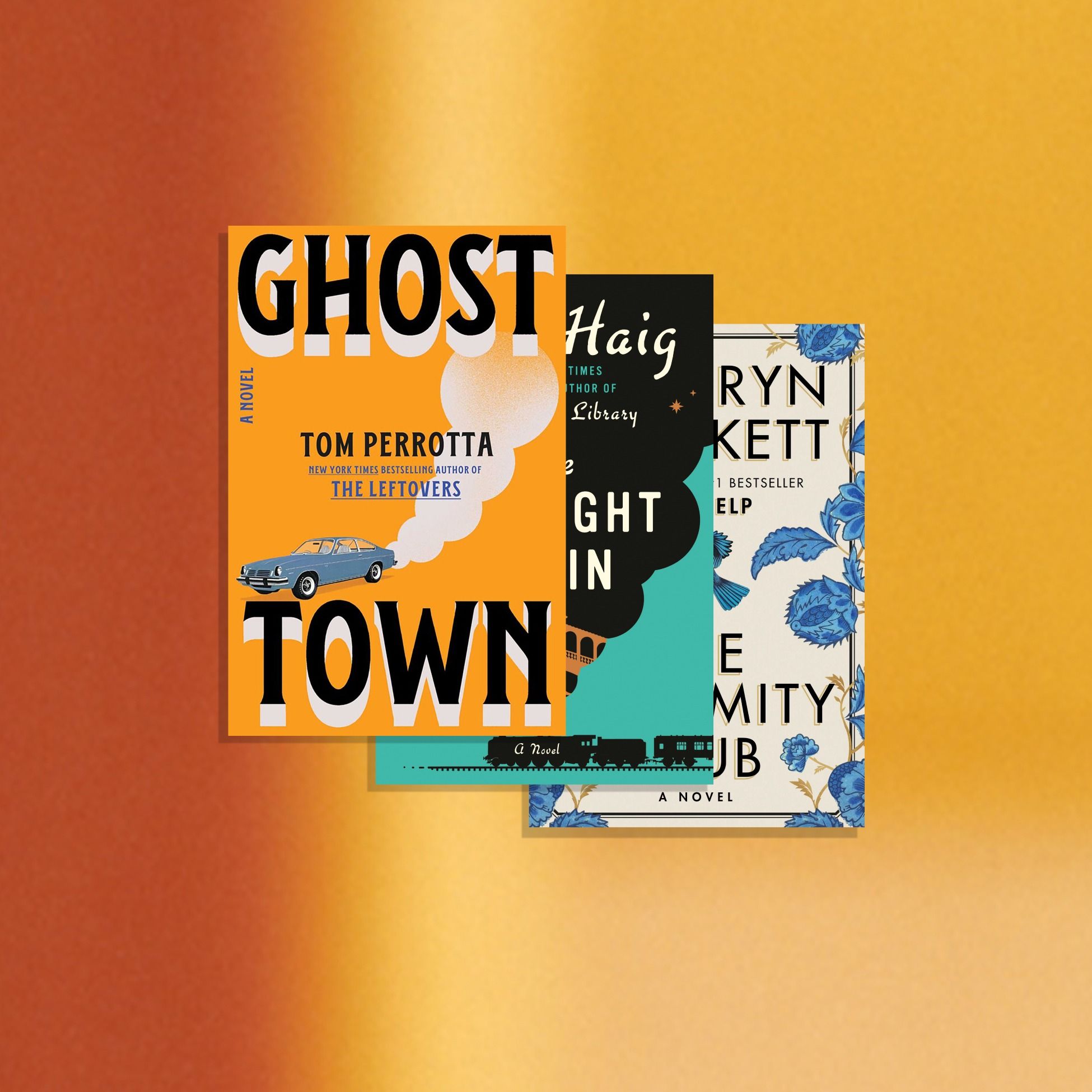
The Book Review
23 Books We Are Looking Forward to This Spring
00:47:35
The Book Review editors discuss fiction and nonfiction that caught their eye. Plus, Ada Limón on the power of poetry.
Loading summary
Transcript216 lines
- [00:01]
Ada Limón
All aboard.
- [00:01]
Joumana Khatib
Choose your perfect Caribbean escape with Princess Cruises. Maybe you spend a day relaxing on
- [00:07]
Ada Limón
the top deck, golden sun, a refreshing
- [00:09]
Joumana Khatib
pina colada, and nothing on your schedule
- [00:11]
Ada Limón
except dinner and a show.
- [00:13]
Joumana Khatib
Other days you embrace a tranquil shore, snorkel mask in hand, ready to explore
- [00:18]
Ada Limón
white sand beaches and crystal clear waters. The best part, relaxation and discovery are both on the itinerary.
- [00:25]
Joumana Khatib
Sail to the Caribbean with Princess Cruises. Visit princess.com or contact your travel advisor to book Princess Cruises shipped registered to Bermuda.
- [00:37]
Gilbert Cruz
Hello, I'm Gilbert Cruz and this is the Book Review from the New York Times. We've all made it somehow to April. We've had our snowstorms, we have survived the cold. And now that the days are getting longer, it feels like there's more time to read. I'm certainly staying up later with the sun out longer. So this week on the Book Review, we've got you covered. We are going to be talking about a few books coming out in the next couple of months that we are particularly excited about. Plus we're going to hear from former poet laureate of the United States, Ada Limone. She is out with a new book where she makes the case for poetry. It is National Poetry Month. That is later in the show, but now Shumana Khatib is here to talk about spring books. Hello, Jomana.
- [01:26]
Joumana Khatib
Hi, Gilbert.
- [01:27]
Gilbert Cruz
We are going to talk about spring books here. We're going to talk about books that are coming out in April and May because in a couple months we are going to have a grand summer book preview episode.
- [01:39]
Joumana Khatib
Dun dun dun dun.
- [01:41]
Gilbert Cruz
Do we have books to tide us over until summer?
- [01:43]
Joumana Khatib
We do. Although I want to preface this by saying that this is a weird season. This particular spring is kind of weird for books.
- [01:52]
Gilbert Cruz
Why is that?
- [01:53]
Joumana Khatib
I'm gonna talk about more nonfiction than I typically do on these episodes, which, you know, it's good. I'm growing.
- [02:00]
Gilbert Cruz
Yeah, that's what spring is for. Well, tell us about the first book that you're excited about.
- [02:04]
Joumana Khatib
Okay, so this one is a novel, although it's kind of debatable, but it is a work of fiction. We'll start there. So this is transcription by Ben Lerner. Ben is the author of Leaving the Atocha station, the Topeka School1400. He's very brainy and intellectual. He's also a really great poet and critic. So his work tends to be very sort of ideas driven and, and the language is very beautiful. And this is a very different kind of novel than what he's written before. This one is a lot looser it's more like a sort of miasma of writing than like a, a book that's motivated by plot. But the framework is this. So there's a middle aged writer who's going back to Providence to interview his mentor with whom he studied in college. So he gets to Providence, he settles into the hotel, he's like FaceTiming his young daughter. And he drops the phone in the sink the night before. He's about to do this big interview. And of course he was planning on using like voice notes to record the discussion. So he's like, okay, well now I have no backup recording device. I don't even know how to get to an Apple store because I don't have a working phone. So this is just sort of like a total anxiety spiral. Anyway, he gets to his mentor's house, he sort of fakes it. He's like, yeah, I'm definitely recording our interview, even though he's not. And his mentor is this like 90, something like German academic who like multi hyphenate who's talking about art and raising children and historiography. And it's a pretty beautiful exchange between the narrator making contact with his younger self and remembering what it was like to study with this man versus the man himself. Now who sort of has this like wizened. He feels almost like ancient and timeless, the way he talks.
- [04:19]
Gilbert Cruz
You know what excites me about this book? Do you know what I'm gonna say?
- [04:23]
Joumana Khatib
Oh, don't, don't say it, don't say it.
- [04:26]
Gilbert Cruz
It is such a short book. It's so slim you could barely notice it. If you put it on a shelf, it's like it's not even there.
- [04:34]
Joumana Khatib
And you know, how beautiful is that? Actually slim but mighty. It really does pack a punch. And like I found a very satisfying. It's debatable whether it's a novel, but it is a very compelling piece of fiction. So that is transcription by Ben Lerner and that is coming out on April 7th. Gilbert, what do you have?
- [04:54]
Gilbert Cruz
I have a book by Tom Parotta, who I feel is someone whose books are pretty beloved. He is the guy behind Election Little Children, the Leftovers. These are all great books in their own right. That side note have all had good to great movie or TV adaptations. He is a New Jersey writer. He is writing sort of a story that is set back when he was a kid. Ghost Town is the name of his latest novel. And this is about a New Jersey writer who is remembering, you know, 50 years ago when he was 13 years old. It's the summer of 1973 or 1974, and there's unfortunately been a death in the family. And he has just become a teenager. He's at loose ends. He doesn't know what to do with these feelings that he has. And he takes up with a couple of older kids. One of them is, you know, an older boy who is kind of a ne' er do. Well, there's another older girl that he starts hanging out with who tries to contact the spirit of his deceased relative with a Ouija board.
- [06:03]
Joumana Khatib
Who among us?
- [06:03]
Gilbert Cruz
Who? Hey, listen, did you.
- [06:05]
Joumana Khatib
Oh, yeah. Oh, Ouija boards. Yes, I was. I was ready to put my faith in things sold to me by Hasbro.
- [06:14]
Gilbert Cruz
There was nothing in my household that was more banned than a Ouija board.
- [06:19]
Joumana Khatib
Oh, was it too. Was it too, like, occult adjacent?
- [06:22]
Gilbert Cruz
Yes.
- [06:23]
Joumana Khatib
Yes.
- [06:23]
Gilbert Cruz
My mother is like, do not bring one of those into the house. Do not use it. You're going to bring the devil into our lives to. So I've actually. I don't think I've ever used a Ouija board.
- [06:33]
Joumana Khatib
Oh, my God.
- [06:33]
Gilbert Cruz
And now what are you gonna do? It's been too many decades. I can't do it.
- [06:37]
Joumana Khatib
What if your kid wants one? Would you let your kid bring one into your house?
- [06:40]
Gilbert Cruz
Absolutely not. I am a man of reason and justice.
- [06:45]
Joumana Khatib
We can only be ourselves.
- [06:47]
Gilbert Cruz
And I still would never let a Ouija board into my house. So, you know, there's a Ouija board in the story. Tom Parotta is someone who doesn't write stories that have sort of like supernatural, unrealistic undertones. He's generally really good at writing about situations that are sort of part comedic, part realist. He writes about schools. He writes about marriages. He writes about parenthood. You know, these things that many of us can relate to. And he is in reflecting mode. It's sort of like, you know, the standby. Have you seen Stand By Me? That movie? It's sort of like that framing. An older writer remembers an important summer in his younger years. So that is Ghost Town by Tom Parotta. And that is out April 28th. Joumana, I know you are uncharacteristically excited to talk about nonfiction. So tell me.
- [07:38]
Joumana Khatib
Yeah, I am, actually. This is. Okay. So one of the books that I'm particularly excited about for April is by one of my favorite Never Miss bylines in terms of, like, international reporting. This is from Life Itself by Susie Hansen. I think she is just like an all star international correspondent. She's been based in Turkey for, I think, over a Decade at this point. And her last book, Notes on a Foreign country, was a Pulitzer finalist. She writes for the New York Times Magazine sometime. And she's just like, the level of analysis and reporting chops is like aspirational. Like, I remember, this is a kind of writing that used to make me want to be a journalist. So this book is really the story of Erdogan's Turkey through one working class neighborhood in Istanbul. And this is not necessarily a totally new narrative of Turkey under Erdogan. She does make a lot of comparisons about his grabs of power and increasing authoritarianism in the country under his tenure. She's very elegant in drawing the parallels between life in Turkey under this, as she says, canny, cruel, autocratic leader and other countries. These are really heady ideas. And like, her book is so grounded in people and life that it actually makes what could other be a very abstract cultural or political analysis feel very real and very relatable. And I think that that is the best kind of journalism. I don't know why I'm feeling so proud of our profession right now.
- [09:34]
Gilbert Cruz
I love it. You should be proud.
- [09:36]
Joumana Khatib
I know. I just. I'm such a sucker for this stuff. It's so important to have access to other lives. That's why we read. Okay. Anyway, so are you getting teary eyed
- [09:46]
Gilbert Cruz
or do you just have something in your eye?
- [09:48]
Joumana Khatib
Unclear, even te. Okay, that is from Life Itself by Susie Hansen, and that is coming out on April 28th.
- [09:56]
Gilbert Cruz
Okay. I'm going to talk about another piece of nonfiction. This is a book called this Land Is yous A Road Trip Through US History. This one is by Beverly Gage. So Beverly Gage is a name that I had not heard until a few years ago when she wrote a book called G Man. This was a book about J. Edgar Hoover. She's a historian at Yale, and it won the Pulitzer Prize for a biography a few years ago. So she has a new book, and as the subtitle indicates, it's structured around a series of road trips. Do you know that this year is the 250th anniversary of the founding of the United States? Did you know that?
- [10:35]
Joumana Khatib
The semi quincentennial?
- [10:36]
Gilbert Cruz
Yes. You mean that is what it is called?
- [10:40]
Joumana Khatib
That's right.
- [10:41]
Gilbert Cruz
It is the semi quincentennial. And so this book is perfectly timed. There's a lot of books about American history coming out in the next six months. She goes to various sort of places and historical sites across this country to write about history, but to also write about how places and historical sites can tell us about history. You know, she goes to Philadelphia and to Founders Hall. She goes to Washington's Virginia, the Alamo, Fort Sumter for a chapter on the Civil War, Montgomery for the Civil Rights movement. And I believe she ends up at Disneyland, which is as we.
- [11:21]
Joumana Khatib
As American as it gets, as we
- [11:23]
Gilbert Cruz
both know, the apotheosis of all things American. I love road trips, and I'm really into this one. I feel like I'm firmly in my middle aged dad mode, reading about history, taking road trips, taking the family out. It's very possible that this would be a good book to listen to while driving.
- [11:40]
Joumana Khatib
While driving.
- [11:41]
Gilbert Cruz
Whilst driving across the country.
- [11:43]
Joumana Khatib
Rather meta indeed.
- [11:45]
Gilbert Cruz
This Land Is yous Land by Beverly Gage. That book is out April 7th.
- [11:50]
Joumana Khatib
I have another work of nonfiction. Actually, I think it might be that every other book I discuss on this episode is nonfiction, which has never happened to me before.
- [11:58]
Gilbert Cruz
So we forgive you.
- [11:59]
Joumana Khatib
Wasn't asking, but noted. So this title is just catnip for me. This is called Prophecy.
- [12:08]
Gilbert Cruz
Oh, here we go.
- [12:10]
Joumana Khatib
Prediction, Power and the Fight for the Future. From Ancient Oracles to AI by Carissa Veliz. And I think this is a brilliant conceit for a book. So basically, Velis, she's a sort of philosopher ethicist at Oxford. She makes the point that the world we live in now, which is increasingly governed by algorithms, is really not all that different from, you know, like ancient Greece and the priestesses at Delphi making predictions and prophecies and staring into orbs. And this delights me to no end because I do think that people write off foretelling prophecies, predictions as sort of like pseudoscience.
- [12:57]
Gilbert Cruz
You know, I'm both fascinated and, and befuddled by your interest in astrology and all things related.
- [13:07]
Joumana Khatib
Hit me.
- [13:07]
Gilbert Cruz
Yeah. What is the appeal here?
- [13:10]
Joumana Khatib
You know, one of the things that was really astonishing to me reading this book is that she makes the point. Everything from like, whether you get approved for a mortgage to like, the people you see served up on dating apps. There's so much of our life that is dictated with like, variable amounts of, like, significance. You know, like a mortgage, health care, things like that, by these algorithms that we think are somehow like, more rational or more reliable than human intelligence. And that might actually just not be the case. That might actually just be an expression of our desire to try to like, control the future. And like, AI is really no different than these old Greek ladies.
- [13:57]
Gilbert Cruz
I'm curious. I'm not convinced, but I'm curious.
- [13:59]
Joumana Khatib
Well, you know, I.
- [14:00]
Gilbert Cruz
Well, I also would like to make Sense of my life.
- [14:02]
Joumana Khatib
Did you ever go to Zoltan when you were growing up in New York?
- [14:06]
Gilbert Cruz
Hell, yeah.
- [14:06]
Joumana Khatib
Okay. See. Okay.
- [14:09]
Gilbert Cruz
On the boardwalk at Ripley Land.
- [14:11]
Joumana Khatib
Thank you.
- [14:11]
Gilbert Cruz
Yeah.
- [14:11]
Joumana Khatib
Okay. All right. So that's all I needed to hear. So this book is Prediction Power and the Fight for the Future. From ancient oracles to AI by Carissa Veliz. And that is coming out on April 21st.
- [14:24]
Gilbert Cruz
I am gonna take us back to the world of fiction. Very brief, briefly, to talk about a book called the Witch by the French author Marie Anzae, translated by Jordan Stump. This particular one, it is a book that was published in France in 1996, so it's just making its way to the States here. It was recently long listed for the International Booker Prize. And that is the Booker prize that is focused on translated fiction. This is a book about a suburban housewife who, in the world of. This book, has magical powers, but they're very mild magical powers. She could sort of tell the near future without any algorithms, but she has two daughters who she finds are much more magically powerful than her, much more proficient at using magic than she is. But this is really a book about people, about motherhood, about marriage, about being a parent, about trying to figure out what to do when your kids are looking to bleed the nest. Get out of the house. They're proven that they're more impressive than you are, which is maybe something that you have feared your whole life. I'm not speaking from experience, so it has all these sort of like real human concerns with a little soupcon of magic.
- [15:40]
Joumana Khatib
You know what I love about this episode? No one could have predicted the total role reversal that we are playing.
- [15:50]
Gilbert Cruz
Yeah. Not even Zoltan.
- [15:52]
Joumana Khatib
Not even Zoltan. Listen, between the two of us, who is far more likely to say soupcon?
- [15:57]
Gilbert Cruz
You.
- [15:58]
Joumana Khatib
Moi.
- [15:59]
Gilbert Cruz
Yeah.
- [16:00]
Joumana Khatib
And I'm just happy to hear you talk about the witchier side of life. Welcome.
- [16:05]
Gilbert Cruz
Welcome.
- [16:05]
Joumana Khatib
We've been waiting for you.
- [16:08]
Gilbert Cruz
I was always going to arrive there. Perhaps. So that is the Witch by Marie Andzaye. And that is out April 7th. Jomana. We're going to take a break. So coming up, we're going to have more books to look out for this. This spring, Every day brings somewhere to be and everyone counting on you to get them there. With seating for up to seven, the 2026 Jeep Grand Cherokee L keeps busy schedules moving from early practices to late night games. And the triumphant ride home. Available 4x4 capability helps you drive safely and confidently. When weather shifts or plan plans change, the laughter, high fives and shared wins become the memories you cherish in the 2026 Jeep Grand Chair. KL Jeep and the Jeep Grill are registered trademarks of FCA US LLC.
- [16:59]
Joumana Khatib
I'm Robin and I am excited to open my Crossplay app. I'm challenging John, my colleague at the New York Times.
- [17:07]
Gilbert Cruz
Robyn played the word grunge, which has
- [17:09]
Joumana Khatib
a G, which is four points. She got that triple word multiplier. I am going to take facts and make it faxes for 30 points.
- [17:16]
Gilbert Cruz
I might just take another two letter word here with whoa gets me at 23.
- [17:21]
Joumana Khatib
I think this will put me back in the lead if my maths are mathing. I like to play it more from a strategic point of view and see where I can block the other player from scoring high. I'm pretty competitive.
- [17:32]
Gilbert Cruz
It's fun to beat friends and coworkers and also you get to learn new words.
- [17:36]
Ada Limón
Crossplay, the first two player word game from New York Times Games.
- [17:40]
Joumana Khatib
Download it for free today. I think he thinks he has this in the bag, but I'm not so sure. All right, Gilbert, I'm waiting with bated breath. What else is there?
- [17:51]
Gilbert Cruz
We have one more book in April that we're gonna talk about. Of course there are many more books coming out in April, but we don't have all day here. This is London Falling by Patrick Raden. Keefe, have you ever heard of this gentleman?
- [18:03]
Joumana Khatib
Sure have.
- [18:04]
Gilbert Cruz
He is a reporter for the New Yorker. You and I and many people probably know him best for his book say Nothing. This is a book that came out in 2018, certainly for journalists and people that love narrative nonfiction. It is one of the greats on our list of 100 best books of the 21st century. It came at number 19. And he is just undefeated in getting me to read books about things that I did not think I'd be interested about. I picked it up mostly out of curiosity. I thought I would bounce from it in a couple chapters and jomana I did not. What a book.
- [18:39]
Joumana Khatib
It's so gripping. He's an amazing writer. You know, one of my favorite books by him is the Snakehead.
- [18:45]
Gilbert Cruz
That's the one I haven't read.
- [18:46]
Joumana Khatib
Yeah, he's like another must read for me.
- [18:50]
Gilbert Cruz
He is. This is an expansion of a piece he wrote for the New Yorker about the death of a young man in 2019 in London. This was an English kid who is pretending to be the son of a Russian oligarch. He fell in with the wrong crowd and then one night he falls from the balcony of a very fancy apartment building. Right on the banks of the Thames. So it starts as this true crime story, and then it really just expands out in every couple chapters. Introduces a new sort of, like, social layer to the whole story. So you learn about this kid and his family and the fact that he was the grandson of a famous Jewish rabbi in London. You learn about the tragedy of his death, and you learn about the people that he got mixed up with. The Russian oligarch scene in London and the gangster scene in London. And it expands out to talk about crime. It's just. It's incredible. It's really good. And it's also about parenthood and grief. I found myself actually sort of, like, very, very taken and distraught at various points in this book, as that's gripping as anything else. But you're also with this family who sort of grieving the death of their child and learning so many things about him that they did not know. It's just really good. And luckily for all of us, we're gonna have Patrick Radden Keefe on the Book Review podcast next week.
- [20:11]
Joumana Khatib
Look at that. Look at that.
- [20:13]
Gilbert Cruz
Look at that. That is London Falling by Patrick Raden Keefe. That is out April 7th. I think we have to move to May.
- [20:19]
Joumana Khatib
All right, I'm gonna take the guesswork out of this for you, and I'm going to tell you I have a very big, large novel that I'm going to talk about.
- [20:27]
Gilbert Cruz
It's so big.
- [20:28]
Joumana Khatib
It's so big. It's so big. And, you know, I happen to like that, but your mileage may vary. So this is the Calamity Club by Katherine Stockett. It's been a long time since we've had a book by Katherine Stockett. She is the author of the Help. And Stockett is returning again to the south for this one. But it's a very different kind of book and a very different scope. And she's grown a lot as a writer, I think. So this one is set in 1930s Mississippi, and it really has two main storylines that actually do converge pretty beautifully. So the first one is Meg, who is this incredibly intelligent and plucky, and I hate this word resilient, but she is the definition of resilient orphan. And Meg is really trying to keep hope alive that her mom is going to come back despite everything. And this is a, like, a horrendous environment. She's bullied by, like, the orphanage director. And, I mean, it's. It's really quite harrowing. Very Tennessee Williams. Okay. But we love Meg. We do. And then down in the Mississippi Delta. We meet Birdie, who is this 20something woman. She lives with her mother and her meemaw. And they're having some pretty dire financial problems. And they are so desperate. I mean, like, Birdie works, she's a bookkeeper, she's earning. But, like, things are just not. Like, the math isn't mathing. And no matter how much creative accounting she's trying to do, it's. They're in dire straits. So her younger sister actually had gone up to Oxford and married a banker and then basically ghosted her family. So Birdie goes up on the train to go beg her younger sister for money. And then. And that really sets in motion, like, the whole book because Birdie starts volunteering at the orphanage where Meg is. Meg's life changes. Birdie's life changes. This was a book that I missed when I was not reading it. Right. I think I read like 700 pages in a day and a half.
- [22:40]
Ada Limón
Brag.
- [22:41]
Gilbert Cruz
You said it was how big.
- [22:42]
Joumana Khatib
I'm not going back to that. And I texted a colleague of ours who had recommended it to me and I was like, do I like plot now? Like, like there's so much that happens in this book that I was like, oh my God. Like, I used to think that I liked only like amorphous books with no structure, but now I think I might like things happening in books.
- [23:02]
Gilbert Cruz
So this is a sprawling, messy, plot, driven.
- [23:06]
Joumana Khatib
Yeah. And like very memorable characters. And there's a lot of information and she does a lot to build out her universe. So that's the Calamity Club by Katherine Stockett. And it is coming out on May 5th.
- [23:20]
Gilbert Cruz
Okay. I have a piece of fiction that I think a ton of people are gonna read this spring because it is sort of like a sequel. Not sequel to a giant book that came out a few years ago. That book was called the Midnight Library. That was by Matt Haig. And this book, which is out at the end of May, is called Midnight Train. So they're related somewhat. They're sort of set in the same midnight universe, but they're not direct sequels to each other. So Midnight Library, did you ever read that one?
- [23:49]
Joumana Khatib
I did.
- [23:49]
Gilbert Cruz
So that one was about a middle aged woman. She finds herself, as happens to some of us, in a magical library. And each book in that library takes you into a different version of your life. So this book is a little different. It's about an older man. He is at the end of his life, he actually dies, which is not a spoiler. He dies before, however he gets to whatever his version of the afterlife is he gets on a train, and that train allows him to relive moments from his past. Would you ever relive moments from your past?
- [24:24]
Joumana Khatib
Oh, my God, no. Like, no.
- [24:28]
Gilbert Cruz
Okay. I think there are many people in their life who would like to.
- [24:31]
Joumana Khatib
Are there episodes of your life you would like to revisit?
- [24:34]
Gilbert Cruz
No. That seems dangerous. Seems like. Why would you. Why would you? Every moment that we have lived has led us to this point, and that is where we are, and it is where we are supposed to be. And I'm totally fine with that.
- [24:48]
Joumana Khatib
Namaste.
- [24:48]
Gilbert Cruz
Namaste.
- [24:49]
Joumana Khatib
You don't need a Ouija board.
- [24:50]
Gilbert Cruz
This is Midnight Train by Matt Haig that is out May 26th. I predict that there's some people who are gonna find this a little too sugar sweet, but given how popular the Midnight Library was, I can see this on the bestseller list all through the summer.
- [25:04]
Joumana Khatib
Okay. I have something that is not sugar sweet. And I have something that is all about revisiting past episodes of your life, Arguably the most dark and harrowing episodes of your life. This is a memoir called. Well, I say memoir. It's a work of nonfiction. Let's. Let's not split hairs. Called Dog days by Emily LaBarge. And the story behind this book is. Is rather harrowing. So we should get that out of the way up front. She and her family were on vacation in an. An island around Canada, tiny little cottage somewhere, and held hostage at gunpoint for hours back in 2009. And the book opens with LaBarge. She's also, like, an arts critic and arts writer, and I think that's important for the eventual structure of this book. So the book opens with her at her family osteopath. God love Canada, man. Like, I, like, everybody needs an osteopathic. This I believe. Okay. And he's like, emily, why don't you get down in the position you were during the hostage situation? And she was like, no, I don't want to do that. But what ends up happening is that she really talks about how for the last 15 years, she's been sitting with, like, how do I tell the, like, good story of what happened to me? The short version that doesn't make anyone too uncomfortable. And I think one of the things that I really appreciated about this book, it's not maudlin, it's not self deprecating. It really, like, entirely sidesteps the sort of, like, trauma economy we see in a lot of cultural material right now. It's really smart. And I think because she has like made a career as a critic looking at why art works or why people decide to express themselves in a certain way. She's able to really grapple with like how we talk about traumatic events or how we talk about episodes in our own history or how we even like, make sense of our own lives. I think it's really, really smart. I think this is just a book that really should not be skipped, if you ask me. And that is Dog days by Emily LaBarge, coming out on May 19th.
- [27:28]
Gilbert Cruz
I have one more book that I want to talk about. This is the Land and its People. And it is by David Sedaris, one of the, well, most famous elf, one of the most well known writers of essays in America. There's an essay in here, of course, about his boyfriend, Hugh. We love him. Don't even need to say his name.
- [27:52]
Joumana Khatib
No, that's what I'm here for.
- [27:53]
Gilbert Cruz
About Hugh. His boyfriend Hugh has to have hip surgery. And David writes about that very winningly. He writes about friendship as you age, loss as you age. He has had a generation of people sort of grow up with him as they've read his essays over time. And this is just gonna feel right for a big portion of his audience. So that is the Land and its People by David Sedaris. That is out on May 26 and Jumana. There's so many books. I know we can't talk about them all, but what we wanted to do. I think we should do a lightning round.
- [28:27]
Joumana Khatib
Yeah.
- [28:28]
Gilbert Cruz
And what we're going to do is mention a few more titles that are coming out in April and May. Title author, maybe a one line summary, if that, of the book. So, you know, it used to be easier to flip a coin when we actually carried coins. Do we want to flip this water bottle top?
- [28:48]
Joumana Khatib
Yeah, we can.
- [28:49]
Gilbert Cruz
Are you top or bottom?
- [28:52]
Joumana Khatib
Bottom.
- [28:54]
Gilbert Cruz
Shumana.
- [28:54]
Joumana Khatib
Okay, so on the calculation of volume book four by Solvay Bala. This is the sort of runaway hit that's like Groundhog Day but more existential. This actually has quite a bit of plot. So if you've been reading along up until now, like, you could really strap in for some something exciting to happen on November 18th. And as a fun little bit, book five is coming out later this year in November. I think they're translating them as fast as they come out.
- [29:27]
Gilbert Cruz
I really like those books.
- [29:28]
Joumana Khatib
Yeah, I do too.
- [29:29]
Gilbert Cruz
I'm going to mention Fame Sick. This is a memoir by Lena Dunham. I think we all know who Lena Dunham is. I believe that the Show Girls is a very good show.
- [29:39]
Joumana Khatib
Never seen it. Okay, I have another celebrity adjacent memoir. This is the sane one by Anna Kunkel. She is a co creator and co star of Pen15. This is about her dad who was a manager at 711 and I am just hooked by that alone.
- [29:57]
Gilbert Cruz
Jomana. I woke up this morning after having had several dreams about our 100 best books of the 21st century. And I remember that Jesmyn Ward, the author Jesmyn Ward had three books on that list. Incredibly impressive. She has a new book out this spring. It is called Unwitness and Respair. This is a collection of essays. The name of that book is not on Witness and Repair, which I thought it had been for several months. It is on Witness and Respair.
- [30:24]
Joumana Khatib
Everybody's running to the dictionary. I have John of John by Douglas Stewart. You might recognize that name because he is also the Booker prize winning author of Shuggie Bain.
- [30:36]
Gilbert Cruz
I am going to mention the things we never say. This is the latest by Elizabeth Strout. Strout is a very prolific author. You probably know her best for Olive Kitteridge which won the Pulitzer Prize many years ago. And she has another book about characters living in New England. She is a beloved author.
- [30:56]
Joumana Khatib
I'm gonna talk about Yesteryear by Caro Clare Burke. This is a sort of head trip of a book about this.
- [31:03]
Gilbert Cruz
Sounds interesting.
- [31:04]
Joumana Khatib
Yeah, yeah. It's about this trad wife influencer who is like homesteading and she wakes up one day and her historic farmhouse that she lives in, that's also her content studio where she raises her like 12 kids. She wakes up and it's 1805.
- [31:22]
Gilbert Cruz
I can't wait to read that one.
- [31:23]
Joumana Khatib
Yeah, I mean it sounds like it's a really good concept.
- [31:27]
Gilbert Cruz
So there is an episode of the Simpsons Treehouse of Horror and there's a joke in which the last book on earth is a book called Arsenio A memoir by the former late night host Arsenio hall. And now 15 years later, how many
- [31:45]
Joumana Khatib
things has the Simpsons predicted?
- [31:47]
Gilbert Cruz
15 years later. So there actually now is a memoir by Arsenio hall called Arsedio. I love it.
- [31:56]
Joumana Khatib
I love this one. Okay, so Five Weeks in the country by Francine Prose. A historical novel based on the real life friendship between Charles Dickens and Hans Christian Anderson.
- [32:09]
Gilbert Cruz
They were tight.
- [32:10]
Joumana Khatib
They were buds, huh? Yeah, who knew?
- [32:13]
Gilbert Cruz
I'm going to mention a book called the Ending Writes Itself. So this is a thriller written under the bus pen name Evelyn Clark. And two writers came together to write this one, V E Schwab, who is a very well known genre author and Cat Clarke.
- [32:27]
Joumana Khatib
Maria Semple, who is best known as the author of Where'd you go? Bernadette has a new novel coming out called Go Gentle.
- [32:34]
Gilbert Cruz
Patricia Cornwell is a very well known mystery writer. She has written a bunch of novels starring Kay Scarpetta who is sort of her star character. She's a forensic pathologist. They actually just made a series starring Nicole Kidman that just came out. Patricia Cornwell has a memoir about her life and her early career and that is called True Crime Jomana. That was so many books.
- [32:57]
Joumana Khatib
So many.
- [33:00]
Gilbert Cruz
As always, thank you for coming on.
- [33:01]
Joumana Khatib
Thank you for having me mixing it
- [33:03]
Gilbert Cruz
up here with me.
- [33:04]
Joumana Khatib
Nonfiction I don't even know who I'm gonna leave this studio a changed person.
- [33:08]
Gilbert Cruz
This is your nonfiction year. After the break, former Poet laureate Ada Limone.
- [33:20]
Joumana Khatib
If you're a parent of a teen or have teens in your life, it can be hard to figure out the right way to approach social media and technology. Ultimately, if you feel like your teens are ready, there are tools to help. Instagram teen accounts have automatic protections for what your teens see and who can contact them. Plus time management tools like daily time limits and sleep mode. And Instagram will continue adding built in safety features to help create age appropriate experiences. Learn more about teen accounts and Instagram's ongoing work to protect teens online@instagram.com teenaccounts that's instagram.com teenaccounts
- [33:58]
Gilbert Cruz
and Doug, there's nowhere I wouldn't go to help someone customize and save on car insurance with Liberty Mutual.
- [34:04]
Ada Limón
Even if it means sitting front at a comedy show.
- [34:08]
Joumana Khatib
Hey everyone, check out this guy and his bird. What is this, your first date?
- [34:11]
Gilbert Cruz
Oh, no. We help people customize and save on car insurance with Liberty Mutual. Together we're married. Me to a human, him to a bird.
- [34:18]
Ada Limón
Yeah, the bird looks out of your league.
- [34:19]
Gilbert Cruz
Anyways, only pay for what you need@libertymutual.com Liberty.
- [34:23]
Ada Limón
Liberty. Liberty. Liberty.
- [34:28]
Joumana Khatib
In theory, I knew that this kind of thing can happen in any family.
- [34:32]
Ada Limón
Upstanding citizens are always turning out to be secret criminals.
- [34:35]
Gilbert Cruz
And I wouldn't even call my cousin Alan an upstanding citizen.
- [34:39]
Joumana Khatib
But it's one thing to know and another thing to understand.
- [34:42]
Ada Limón
Alan. Murder me. What the hell was Alan thinking? From Serial Productions and the New York Times, I'm M. Gessen and this is the idiot. Listen, wherever you get your podcast. Truth be told, anytime I begin to write anything these days, my whole life flashes before my eyes. Do I want to break something or do I want to Mend something or simply try to carve out a small place to breathe. Then, if I'm lucky, lines of poems I love start to move through me.
- [35:23]
Gilbert Cruz
Last May, Ada Limone gave a speech at the Library of Congress. It was her closing lecture, her final talk as the 24th United States poet Laureate. And in that speech, she made a case for why poetry matters.
- [35:37]
Ada Limón
Would it be an exaggeration to say that poetry saves lives? Maybe, maybe not. During my tenure as the Poet Laureate, I've come to realize that not only are people hungry for poetry, language, and connection, but that for so many people around the world, it serves as a much needed lifeline.
- [35:59]
Gilbert Cruz
Already, that speech has now been published as a book titled Against Breaking on the Power of Poetry. Given that April is National Poetry Month, we had to have Ada on to talk about her speech as well, hopefully as to read us a poem. Ada, welcome to the Book Review.
- [36:17]
Ada Limón
Thank you so much for having me.
- [36:19]
Gilbert Cruz
Ada, I'm gonna ask you a question that I hope you do not take offense at at the beginning here, because you write about it in your book, and it has to do with the fact that I don't think many Americans know what the poet laureate is. What did you think this honor involved, and what did you learn in the doing about what the Poet Laureate actually has to do?
- [36:44]
Ada Limón
Yeah, the Poet Laureate is a position named by the Librarian of Congress, and you're asked to promote poetry and the library and put poetry in the public sphere, but really the role is whatever you make it. I think that's why each poet laureate like Joy Harjo, Tracy K. Smith, Juan Felipe Herrera, everyone has done such a different job because there is really only two obligations. The one is to do an opening reading at the Library of Congress and a closing lecture at the Library of Congress.
- [37:23]
Gilbert Cruz
You just named the three people who occupied the chair before you. Joy Harjo, Tracy K. Smith, Juan Felipe Herrera. Did you reach out to them and say, like, hey, guys, I don't know what to do here. Can you give me some advice?
- [37:38]
Ada Limón
I did. I did, specifically to Traci and to Joy. And Joy specifically told me to clear any ideas I had about the laureateship and really make it my own. And Tracy said, always speak through poetry, that when you feel lost, find poems and write poems. And that was really also amazing advice.
- [38:10]
Gilbert Cruz
What did you learn about how poetry is regarded or perceived in America over your years as the Poet Laureate? We're here. It's National Poetry Month. It's wonderful that it gets a whole month in which we can try to Focus a little more on it. But you went across this large land of ours and encountered people all the time, and your job was to be sort of the avatar for poetry. Did you come away feeling more optimistic about it? Did you come away feeling like the scales had been ripped from your eyes in some way? Tell me about this.
- [38:47]
Ada Limón
You know, it's funny because every study I see says that we are reading less as a nation and that poetry readership is down. But my experience in the wild, if you will, is that people are reading poetry and writing poetry everywhere. Everywhere I went, someone was doing a project. Someone was teaching kids to write poems and putting them on rocks and putting them around trees. Someone was having people take pictures and write poems toward the pictures. There were so many collaborations that I felt really inspired. And my job seemed to switch from being someone who was supposed to be out there making a case for poetry. And instead, I had this moment where I got to receive what people's experience with poetry was. And it was very deep.
- [39:53]
Gilbert Cruz
There was a paragraph from your speech from this book. Do you mind if I read it back to you?
- [40:01]
Ada Limón
Go ahead.
- [40:02]
Gilbert Cruz
Just to get some further thoughts on it. You said, and then you wrote in this book. And there are certainly days that I do not want to write a poem. Why is that? Because there are days when I don't want to feel, or rather, I only want to feel safe and soft things. Poetry does the work of opening us up to our feelings, and it's not surprising that it can often make people cry, even those of us who very much wish not to cry. It's my belief. This is the part I found very interesting, that this is why adults often think poetry is for children. Not because they want it to be taught to children, but because they think that children have more of an emotional range. I'd argue this is exactly why poetry needs to be more integrated into the lives of adults. There are, like, five different things to ask about here. But I was particularly interested in why you think adults associate, or some adults associate poetry more with children when, as you were just describing, it really can encompass the full range of adult emotion in ways that other forms maybe can't.
- [41:15]
Ada Limón
You know, I love that you read that passage because, first of all, I'm glad it still rings true to me. But the moment that I was named the poet laureate, the first thing that people asked me was, oh, so are you going to work with children? And every time I talk about poetry, there is. For people who are unfamiliar with poetry, the first thing they ask is about whether or not it's poetry for kids. And I realized it was a way of distancing themselves from poetry. And it made me wonder if perhaps we feel as if as adults, we aren't allowed to access all of our emotions, that that kind of vulnerability or rawness or the full spectrum of human emotions, which are a lot. We're not supposed to access that. We're not supposed to delve into that. We're supposed to be stoic, we're supposed to be brave, we're supposed to be courageous, and we're supposed to get our job done right. We're supposed to go to work and keep a smile on our face. And when someone asks us how we are, we're supposed to say, fine, you
- [42:44]
Gilbert Cruz
just described my morning.
- [42:45]
Ada Limón
Whereas if you ask a kid. Yeah, exactly. And if you ask a kid, they'll say, well, this is the way I'm feeling. Or, you know, and so we sort of train that out of us. And I think that's why I was so adamant that a lot of the work I wanted to do was, of course, included children, but that it was primarily for adults.
- [43:11]
Gilbert Cruz
I'm curious, how much of what you just described do you think is this sort of social training? And how much of it is, I don't know, maybe some inherent, like, human desire not to, what a. Engage with emotion more than you need to?
- [43:29]
Ada Limón
Yeah. I had a friend who once said he was going through a hard time, and he said, I can't even listen to music right now because every time a song comes on, I burst into tears. And I really relate to that. And so I think there are times where art, we know what it does. It is supposed to open us. It's supposed to pierce us. Right. So sometimes there's places where we feel, at least for me, at least in my reality, I know there are times when I don't want to read a poem because I know that it will make me weep. I can see the first line, and it's like, driving towards something. You think, no, no, no, no, I don't want to feel that right now. And I think there's a great permission to do that. But also remember that sometimes that breaking open and that feeling and that grieving or that openness to wonder or joy, that's really important. And we don't heal and we don't continue if we don't grieve. And a lot of times the poems that hurt us are the poems that actually give us joy, remind us of joy, remind us of sweet things, because that can pierce us, too. I Remember when I was grieving this death of my stepmother and the deli when I lived in New York, the deli downstairs, there was a wonderful couple that worked there. And I walked in and this woman had said she was so nice and she just said, how are you? I haven't seen you in a while. And I'd been home, it was a home death. And so I'd been home helping my stepmother die. And the sweetness of this woman behind the counter just destroyed me. I had, you know, gone to work, I had ridden the subway, I'd kept it together. And then this kindness, you know, this human kindness just wrecked me. And I think poetry is a lot like that interaction where sometimes it just gives you permission to take a deep breath. And you'd be surprised at how many of us are walking around holding our breath.
- [45:53]
Gilbert Cruz
Well, Ada, I am going to give you permission to take a deep breath. Hopefully you're going to give us all permission to take a deep breath by reading a poem.
- [46:04]
Ada Limón
I'd be so happy to. This is a poem that I feel like it was given to me by a tree. And every time I say that out loud I think, oh, this is what people think poets say.
- [46:23]
Gilbert Cruz
I just thought the same thing, like,
- [46:26]
Ada Limón
oh, a tree gave me this poem. You know, I can just hear collective eye rolling. And this is, this is who we are. So you know, we're here to stay. Instructions on not giving up. More than the fuchsia funnels breaking out of the crab apple tree, more than the neighbors almost obscene display of cherry limbs shoving their cotton candy colored blossoms to the slate sky of spring rains. It's the greening of the trees that really gets to me. When all the shock of white and taffy the world's baubles and trinkets leave the pavement strewn with the confetti of aftermath. The leaves come patient plodding, a greenskin growing over whatever winter did to us. A return to the strange idea of continuous living despite the mess of us, the hurt, the empty. Fine, then, I'll take it. The tree seems to say, a new slick leaf unfurling like a fist to an open palm. I'll take it all.
- [47:48]
Gilbert Cruz
Ada, I'm very uncomfortable with the. With the feelings I'm feeling right now.
- [47:55]
Ada Limón
You're just gonna have to take it all. You're just gonna have to feel it, my friend.
- [47:59]
Gilbert Cruz
This is not what I signed up for. Can I ask you possibly to read another one?
- [48:07]
Ada Limón
Yeah, I'd be so happy to.
- [48:09]
Gilbert Cruz
Thank you.
- [48:09]
Ada Limón
How do you wanna feel?
- [48:13]
Gilbert Cruz
You know, I'm putting My heart in your hands here. So you choose.
- [48:17]
Ada Limón
Okay. This is a poem that I wrote thinking about language and poetry. And so I wanted to give it a really obnoxious title, so I called it Literary Theory.
- [48:33]
Gilbert Cruz
You succeeded.
- [48:36]
Ada Limón
Literary Theory. Somehow the word allow is in the word swallow and in swallow, two wholly different meanings. One to take in through the mouth and another what we call the common winged gnat hunter who is in all probability somewhere near us. Now, once I thought if I knew all the words, I would say the right thing in the right way. Instead, language becomes more brutish. Blink twice for the bird. Blink once for tender annihilation. Who knows what we are doing as we go about our days, lazily choosing our languages? Some days my life is held together by definitions. Some days I read the word swallow and all my feathers show.
- [49:42]
Gilbert Cruz
Ada Limone. Are you just used to like reading poems and seeing people in the audience, like, get teary eyed and stuff?
- [49:52]
Ada Limón
Well, yeah. And the worst is I'm. And then I attend poetry readings all the time and then I weep. So, yeah, I love it.
- [49:59]
Gilbert Cruz
Oh, boy. You gotta stay hydrated.
- [50:01]
Ada Limón
Oh, it's true. I'm always drinking water. I cry all the time. My superpower is crying and laughing at the same time.
- [50:09]
Gilbert Cruz
This was great. Thank you very much for joining the Book Review to remind us all of the joy and value of poetry. This has been a delight.
- [50:18]
Ada Limón
Thank you so much for having me.
- [50:26]
Gilbert Cruz
The Book Review is produced by Sarah diamond and Amy Pearl. It's edited by Larissa Anderson and mixed by Pedro Rosado. Original music by Dan Powell and Elisheba Etoup. Special thanks to Dahlia Haddad and Paula Schumann. We want to hear what you think about the show. Send us an email@thebookreviewytimes.com I'm Gilbert Cruz. Thanks for listening. And Doug, there's nowhere I wouldn't go to help someone customize and save on car insurance with Liberty Mutual.
- [51:11]
Ada Limón
Even if it means sitting front row
- [51:13]
Gilbert Cruz
at a comedy show.
- [51:14]
Joumana Khatib
Hey, everyone. Check out this guy and his bird. What is this, your first date?
- [51:18]
Gilbert Cruz
Oh, no. We help people customize and save on car insurance with Liberty Mutual together. We're married. Me to a human, him to a bird.
- [51:25]
Ada Limón
Yeah, the bird looks out of your league anyways.
- [51:27]
Gilbert Cruz
Only pay for what you need at libertymutual. Com.
- [51:30]
Ada Limón
Liberty. Liberty. Liberty. Liberty.