← The Book Review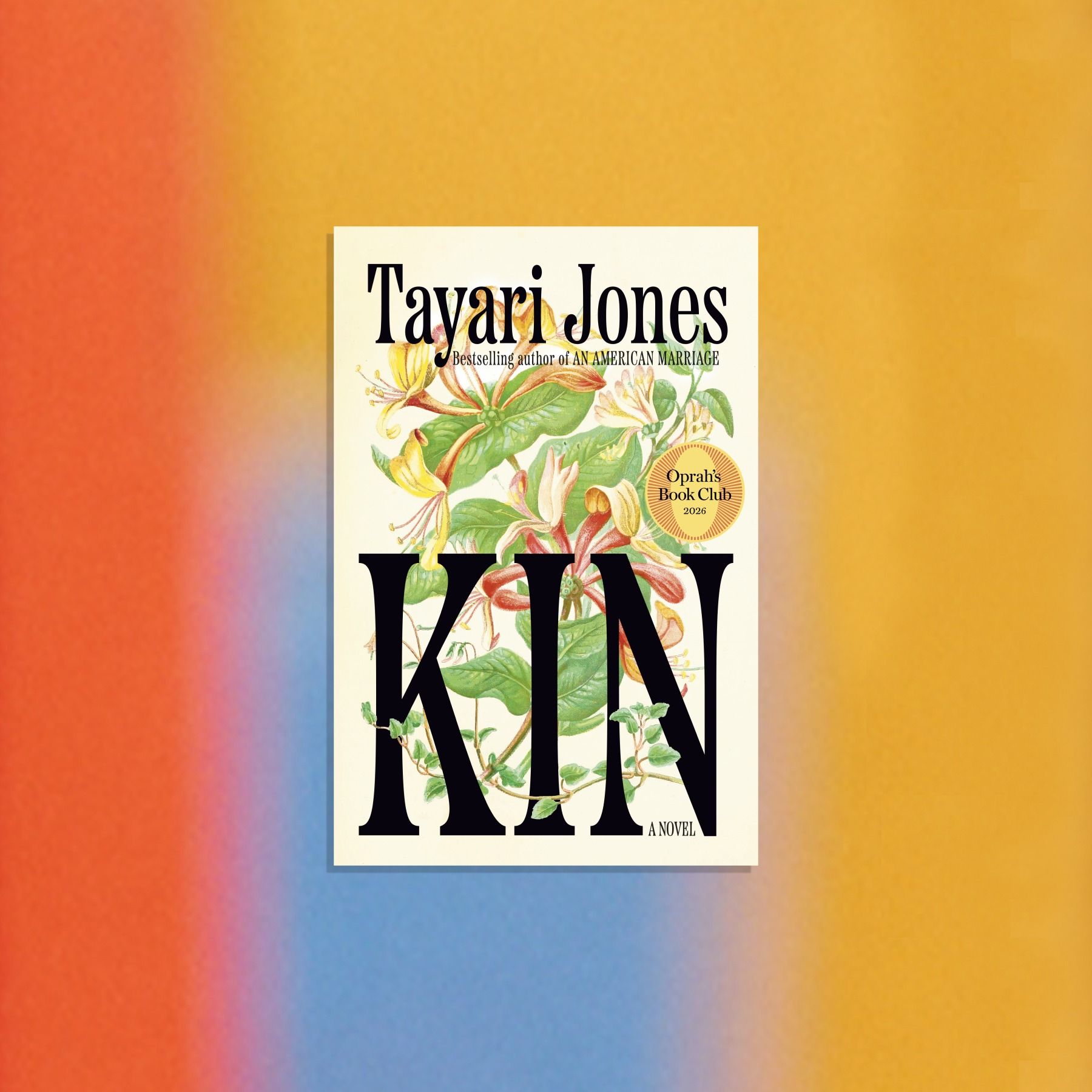
The Book Review
Book Club: Let's Talk About 'Kin,' by Tayari Jones
00:47:17
On this week’s episode, book club host MJ Franklin leads a discussion about Tayari Jones's latest novel, "Kin."
Loading summary
Transcript147 lines
- [00:00]
MJ Franklin
This podcast is supported by the Freedom From Religion Foundation.
- [00:03]
Liz Egan
The First Amendment guarantees freedom of religion
- [00:05]
Lauren Christensen
and protects us from government imposed religion.
- [00:07]
Liz Egan
But across the country, officials are pushing prayer into public schools and blurring the line between church and state in ways
- [00:13]
Lauren Christensen
the Constitution doesn't allow.
- [00:15]
Liz Egan
The Freedom From Religion foundation exists to
- [00:17]
Lauren Christensen
hold the government to the law to
- [00:19]
MJ Franklin
keep public institutions neutral on religion.
- [00:21]
Liz Egan
Visit FFRF US NewYear or text NYC to 511511 NYC to 511511 Text fees may apply.
- [00:30]
MJ Franklin
Gilbert I'm Gilbert Cruz and this is the Book Review from the New York Times. On this week's episode, our monthly book club discussion. This time, our host, MJ Franklin leads a conversation about Kin, the wonderful new novel from Tayari Jones. MJ over to you. Hello and welcome to another book club episode of the Book Review. My name is MJ Franklin. I'm an editor here at the New York Times Book Review. And this week for Book Club, we're chatting about K by Tayari Jones. I'm just gonna lay my cards out on the table and say very early, I love this book. I love this book a lot. And I've been sitting on this book for a while because as editors, we get to read early copies of things. And I've just been so eager to talk about this with other readers. You can check me on that. In January, we published a Winter Books preview episode and I mentioned how much I love this book there. But I want to say I'm not alone in my enthusiasm. This book, Tayari Jones's fifth, was an instant New York Times bestseller. It was an Oprah Book Club pick, too. It received a spate of rave reviews. It feels like it's kitten season. A lot of us are reading it and now three of us are talking about it. I am joined in the studio by a panel of my esteemed colleagues. First with us is Liz Egan. Hi, Liz. Thank you for joining us.
- [01:56]
Liz Egan
Thank you for having me.
- [01:57]
MJ Franklin
Liz, you are gonna be kind of in the hot seat as an expert because you profiled Tayari Jones, correct?
- [02:03]
Liz Egan
I did, yes.
- [02:04]
MJ Franklin
Tell us, what does that mean?
- [02:05]
Liz Egan
Well, I flew to Atlanta for the first time ever and I joined Tayari Jones at a dinner for booksellers. And then I went to her house the next day and interviewed her there for for about two hours and thoroughly enjoyed myself.
- [02:23]
MJ Franklin
So you really got the story behind the story.
- [02:25]
Liz Egan
I did. I did.
- [02:27]
MJ Franklin
So I'm excited to hear your expertise and also just your opinions on the book. Also with us is Lauren Christensen. Hi, Lauren.
- [02:33]
Lauren Christensen
Hi. Thanks for having me welcome back.
- [02:34]
MJ Franklin
It's been a while.
- [02:35]
Lauren Christensen
Thank you. Yes, I'm very excited to talk about this.
- [02:38]
MJ Franklin
So that's our great panel of readers talking about this book. But before we dig in, I have my typical admin notes first. There will be spoilers in this episode, but we want to keep this book club episode accessible. This book just came out, so the first half of this discussion will be spoiler light. We're going to set up the book so that we're going to reveal some basic things, but we're going to keep the big reveals till the second half of the episode, which will be spoiler filled. So that's admin note number one. Admin note number two is that at the end of the episode we will reveal our April book club book. So stay with us to the end to find out what we're reading next. With that, let's dive in to get started. Lauren in the hot seat. Can you give us a brief setup on Kin? What is this book?
- [03:24]
Lauren Christensen
Yes. So again, I will be trying to keep this as light on spoilers as possible, but just to set up what the book is that we're talking about. So this is, as you said, Terry Jones fifth novel. Her most recent book was American Marriage. This one is about two young women named Vernice and Annie. Vernice goes by the nickname Niecy. They've been friends from their infancy and grew up together in small town Louisiana in the 1950s and 60s. Both girls are motherless. Furnice's mother was murdered and Annie's abandoned her to be raised by her grandmother. This fact really shapes their paths over the ensuing decades as well as their ongoing closeness. Jones tells this story through their alternating perspectives as Nisi makes her way to Spellman and meanwhile, Annie runs away from home to travel with a sort of band of unemployed teenagers. She goes up to Memphis, which is where she is told her mother lives. And so she spends most of the book longing to see her mother again, to meet her mother, even though by all accounts her mother does not want to be found. Though the narrators actually spend most of the book apart, they remain really intimately connected in each other's thoughts and also in letters, which are A particular gift of this book is the epistolary relationship between them until a tragic circumstance draws them back into each other's presence later on, which we will discuss for the second half of this episode.
- [04:54]
MJ Franklin
Bum, bum, bum. I love that teaser. Liz, is there anything that you would add?
- [04:58]
Liz Egan
Well, just building off the epistolary part of this book, I will begin by saying that, I learned about Teari Jones something interesting. She is a huge correspondent herself and she belongs to a pen pal society. And she exchanges letters with strangers as well as people who are in her life. I keep hoping she might write me a letter or maybe I'll write her a letter. But, yes, that was a big part of her backstory on this book.
- [05:29]
MJ Franklin
I love that. And Tayari, if you're listening, you've received the call. But, Liz, can you give us a little bit more background about who Tayari Jones is?
- [05:36]
Liz Egan
As Lauren mentioned, this is Tayari Jones fifth novel, and her fourth novel was her big breakout. The novels she had written before that, which all either take place in or touch on Atlanta, were moderately successful, but not huge breakout hits. There was actually a point in her career where her books were out of print. And with the help of Judy Blume, who made a very crucial introduction of Tehari to the publisher of Algonquin Books, Tehari was able to get her career back off the ground. But after that fortuitous introduction to an editor named Elizabeth Charlotte at Algonquin Books, Tehyari wrote her fourth novel, which was called An American Marriage. It came out in 2018. It was an Oprah pick. It sold over 1 million copies. It was on the bestseller list for more than six months. And when we here at the Book Review did a project a while back where we asked readers to weigh in on the best books of the 21st century so far, An American Marriage appeared on the list. So it was a huge success. And as anyone who is a writer would know, it was a stressful book for her to follow up on. So in the years leading up to the publication of An American Marriage, Tehari had been living in various cities across the country. She was teaching in New Jersey. She taught in Texas, she taught in Tennessee. And once she landed this big fish with An American Marriage, the one thing she really wanted to do was move back to Atlanta to be closer to her parents.
- [07:20]
Lauren Christensen
And.
- [07:21]
Liz Egan
And she went back there with the idea of writing a book about a woman who returns to Atlanta and moves to a gentrifying neighborhood. And that was where that book was going to begin. And she worked on it and she worked on it, and it was not coming into focus. And these two girls came into her head. They became Nisi and Annie. And at first, as Tehari told it to me, she thought that these girls were the grandparents of the characters she was writing about in this fledgling follow up to An American Marriage that ended up not getting off the ground. Those voices in her Head became louder and louder and she became more and more transfixed by their stories. And those girls are the ones who form the backbone of Kinn.
- [08:18]
MJ Franklin
So that's how this book came to be Kin. But before we dive in, are there any perennial themes that Tayari constantly explores throughout her work? Are there any commonalities between her books or anything that you associate Tayari Jones with Atlanta?
- [08:32]
Liz Egan
Atlanta. Atlanta. Atlanta is. It's become very trendy to say that a city is a character in a book, but it really is a character in Tehari Jones books.
- [08:43]
Lauren Christensen
And.
- [08:43]
Liz Egan
And I mentioned that I went to this bookseller's dinner when I was in Atlanta and I was so glad that I went down a day early to join this dinner because it was mostly booksellers from Atlanta. And the pride in the room before this book even came out was. It was palpable. And she had a story about each bookstore. This was the bookstore where she had the launch of her first book. This was the bookstore where she was having the launch of Kin. And she could trace the story of her career through Atlanta. And that is a major through line in all of her novels.
- [09:23]
MJ Franklin
That sounds so special. Just like the concept of roots and homecoming and all through books. That's why we're here.
- [09:29]
Liz Egan
Yes.
- [09:30]
MJ Franklin
So that's our setup of who Tayari Jones is and that's our setup of what Kin is. And now I want to dive into our top level thoughts. So just give me a vibe check. What do you think of Kin? Love it, Hate it? Feel mixed. What are your opinions? I'm gonna start with you first, Lauren.
- [09:49]
Lauren Christensen
I would say this is one of my favorite novels that I've read in the past decade. This really blew me away. I was a huge fan of American Marriage. I also really loved her earlier novel, the Untelling. And this one, I had high hopes for it and this book exceeded those hopes.
- [10:06]
MJ Franklin
Can I ask many follow up questions about that? Because that's high praise. That's really high praise. When did you start feeling that Enthusia, one of your favorite novels of the past decade? Was it as you were reading it? Was it when you finished and it was sitting with you?
- [10:19]
Lauren Christensen
No. When did this settle? It was when the big thing happens that we are not going to reveal. This book has so much heart and soul. She is a hilarious writer. There is incredible voice and distinction to those voices. I think it is so beautifully plotted. It's really hard to pull off as intricate a plot as this is. There are, as we've been talking about, two divergent threads. These Women do not overlap physically for very much of the book, so to keep them so closely tethered is a real feat, and she absolutely does it. I cared about each of them equally, which I think in so many polyphonic, whatever, novels that have multiple voices, it's so common for me, at least, to just be itching for one of the voices to come back, to come back around. In the rotation in this one, I was equally riveted by both paths. We can talk about how the original cleaving of the two is really based on sort of class distinction that begins when their mothers are gone. You know, that they are raised by two very different influences, and that sets them on different class paths. Anyway, I just. Yeah, top level, it was. It blew me away.
- [11:40]
MJ Franklin
I think this is partially why I loved it so much, too, because I feel like this is a deceptively complex book. Right? Like, it's we. Top level, we say it's this, like, sweeping story, a friendship of two motherless girls. Right. But as you pointed out, it's about family. It's about sisterhood, it's about class. It sweeps through time. It's juggling different narratives.
- [12:03]
Liz Egan
It's about the civil rights movement.
- [12:04]
MJ Franklin
It's about the civil rights movement. It's both informative and efficient, but voicey and accessible. Those are a lot of things. And Terry Jones juggles it so well, in a way, to use a word that we've used before, effortlessly. It's so hard to do all of that and make it feel so seamless.
- [12:26]
Lauren Christensen
I was so glad to hear what you said about her kind of not knowing initially that she was writing a book about Annie and Niecy. You can tell she loves these women, loves them.
- [12:35]
Liz Egan
And you could also tell.
- [12:36]
Lauren Christensen
So obvious and beautiful and contagious.
- [12:39]
Liz Egan
It was very endearing to me that she wasn't one of those writers who says, it just flowed out of me. It was. No. She described how she laid out all the pages. She wrote their sections separately and then wove them together. And she described bringing all the papers onto her really long island in her kitchen. And she said she had to do the work down there because she needed to put her mouth under the coffee spigot. She needed so much coffee. Like, she was not. She was very real about the process, which is incredibly refreshing.
- [13:12]
MJ Franklin
And so to hear that it's like that arduous, like, that much work, and to feel something that feels so. I'm gonna say, like, airy, right? Generous, open. It doesn't feel labored. It feels. It's a book that's fun and enjoyable and thought provoking without being like a seminar. What about you, Liz?
- [13:33]
Liz Egan
Okay, this is gonna be a boring conversation because I really loved it too. And I also have loved Tayari Jones's other books, although my favorite before A tie. For me, my favorites are An American Marriage and Silver Sparrow. But now this has outpaced those and I give me a book about two friends. I will read it. I will usually love it, but this one has. I kept thinking of that image of a duck floating calmly across the water, but underneath their feet are paddling furiously. That's the way I felt about this book. And it's. I would describe it as a book club book. For some reason I feel like the idea of a book club book has evolved into an idea that it's somehow lighter or more accessible. In some ways, this book is accessible to anyone, but the themes in it are huge. But once I in the spoiler part, once I saw what she was working towards, I had a new a new respect for this book. I always respected it. I really couldn't put it down. I've read it twice and loved it. I loved it even more the second time.
- [14:49]
MJ Franklin
I'm gonna ask you many follow up questions as well. My first is you said this kind of outpaced your previous favorites, Silver Sparrow and American Marriage. When did that happen again? Similar to Lauren? Was it as you were reading? Was it when you were finished and it was sitting with you? Tell me about that journey immediately.
- [15:08]
Liz Egan
Like almost from page one, really. Before I knew anything about the writing of the book, before I knew I was writing about Teari, I just picked it up and thought this is a supremely talented writer at the top of her game. I love when writers take seven or eight years between books. I am probably not going to endear myself to the publishing community by saying that, but I'm not dying for a book a year. Give me your best stuff and give it room to breathe. And this book feels like a loaf of bread that was allowed to rise.
- [15:45]
MJ Franklin
That's a perfect metaphor.
- [15:47]
Liz Egan
Yeah, it really works that way.
- [15:49]
MJ Franklin
I'm going to quote my English professor that I had, which is show it in the text. What was it about that start? What was it that you saw that indicated this has had time to percolate, be perfected or what was it in
- [16:02]
Liz Egan
the writing and the prose itself, the chapters, alternate perspectives. You do not need the word at the top of the chapter head that says Nisi or Annie, you know, their voices. And also that's really well put. There are A lot of characters in this book, these girls, these women, live in big worlds. They build big worlds for themselves. And Terry Jones approaches those worlds the way we approach life. Like in life, you don't say, I already know five people. I can't meet any more people. She just hits you with person after person after person. And some of them only come in for a sentence or a paragraph or a scene. And yet they stick with you. And you definitely don't need a family tree at the front of the book to remind you how the three Irenes fit together. There are three Irenes in this book. You know exactly who they are.
- [17:01]
MJ Franklin
I want to quote from our review of this book, because Radhika Jones, no relation to Tayari Jones, reviewed this for us, and she said in the review something similar to your point about her character work. She says, quote, her repertoire of characters feels inexhaustible in the best way, as if she could go on for decades populating her fictional universe with women and men at once wholly unique and also bound by their authors, sensibility and purpose. Right. Like, she builds whole worlds. And you don't need the names at the top to distinguish them, but let's distinguish them here in this room. I'm gonna pivot and talk about Annie and Niecy, our anchors. Who are these women and how did you connect with them? How did you think about them? Lauren, I'm gonna.
- [17:48]
Lauren Christensen
You.
- [17:48]
MJ Franklin
Cause we made eye contact.
- [17:49]
Lauren Christensen
One thing that I keep thinking about after reading the book is the distinctions between their motherlessness. Right. Like much is made of the fact that they both lost. They. They both lost their mothers in very different ways. Niecy's mother was murdered, tragically by her father, who also killed himself. And it's just this horrific crime to happen before Niecy can remember her mother. Whereas Annie's mother just abandoned her and moved, we think, to Memphis. We're not really sure, but, you know, left her by choice. Annie really harps on this, right? The two girls obviously talk about this. They are what they call each other's cradle friends. They are sisters. They are real family to each other. And so they don't shy away from saying, annie says, niecy, you're lucky your mother died. There's finality to that. I'm paraphrasing. She can't be found, and everyone feels sorry for you. It's a very sad thing that happened to you. For me, it's this mark of shame. You know, my mother's out there, and she doesn't want me. There's this just these two, of course, the reader doesn't feel like one is better than the other. These are two just unspeakably sad realities that these girls have to reckon with from a very young age. And it sets them off, as I keep saying, on really different paths. And the sort of substitute mothers, the women who very, you know, lovingly raise them. In both cases, Nisi's Aunt Irene, who reluctantly. Mothers, you know, Irene is. Is. Was her sister's child. And. And she has to come back from her life, her independent life in Ohio to raise this girl who she really always has very high hopes for. Irene wants Niecy to be a successful, independent woman. She wants Nisi to get out of Honeysuckle. She wants Nisi to have a life. Annie's grandmother raises her, and it's really all Annie's grandmother can hope for, that Annie doesn't become a sex worker. You know, that Annie is alive and healthy and makes an honest living. And that is really the extent of what is hoped for for Annie. And so Annie, she gets out of the town, but she's not gonna go to Spelman, is what I'm saying. And those class distinctions prove extremely influential on the rest of their lives, obviously, but in ways that we will talk about later. But, yeah, so I think their motherlessness, the distinctions in the ways that they are mothered or not, are so rich for me.
- [20:22]
Liz Egan
To me, it's a reminder. You find there are many ways to find maternal connection. And the young Niecy and Annie at the beginning of the book have a very, very clear vision of what motherhood looks like. And what Niecy doesn't realize is that when she left for Spelman, this village of women rose up. They collected suitcases, the parish collected clothing for her. They equipped her with everything she needed to go to college materially and just non materially. And like any 17 or 18 year old, she's happy to take the suitcases, but she doesn't really think of all the hands that touched them and brought them to her.
- [21:08]
MJ Franklin
Yeah, Liz, you said this very succinctly about. In a book about motherlessness. We were talking off mic and you
- [21:17]
Liz Egan
mentioned this in a book about motherlessness. There are more mothers in this book than I think I've seen in any book I've read recently. Also, there's a lot about abandonment. And one of the reasons Annie's grandmother is slightly hands off is because she says to Annie over and over, I keep raising these kids and they keep leaving. And then Annie, I'm not giving anything Away. Really? This happens at the beginning of the book. Annie leaves in the middle of the night and doesn't even say goodbye to Niecy. And so. And there are all these examples of people disappearing and letting each other down. And yet there's something really unsinkable about both of the girls. They just keep. They keep rising up and they keep finding more people to connect with.
- [22:06]
MJ Franklin
I love that you mentioned the word abandonment, because that was something I thought of a lot while reading this. I feel like it was one of those things where motherhood was the story, but abandonment was the soul.
- [22:20]
Liz Egan
Yes, completely.
- [22:21]
MJ Franklin
Time and time again, these women are facing abandonment, finding family, and then having to choose who to stick with or who not to. And time and time again, people are talking about abandonment. So there's a point later on in the. In the book where I think it's Annie says, like, finding my mother is the point of my life. And I think Niecy says, if finding your mother is the point of your life, and you. You start reading this quote and you're like, you think that she's going to say, what about you? What about your hopes and dreams? But what she says instead is, if finding your mother is the point of your life, what about me? And you feel like the connection of these two girls and their feeling that they're on paths to find their mothers together, but they are together. Don't abandon me. Similar to Aunt Irene who's like, I can't raise any more children because they leave it.
- [23:14]
Liz Egan
Who says I can't talk to children? It's the grandmother who says, I can't raise any more children. And Irene says over and over, I don't. Don't look at me. I don't know how to talk to children.
- [23:24]
Lauren Christensen
She says wildly inappropriate things to 10 year olds. Sorry, I don't know how to talk to kids.
- [23:28]
Liz Egan
She was one of my favorite characters. I really, really loved her.
- [23:31]
Lauren Christensen
Totally forgot about that. It's really good.
- [23:34]
Liz Egan
Yeah.
- [23:34]
Lauren Christensen
So can I just. We are talking about abandonment and the thing that sticks out to me so much, and it goes back to your. One of your first questions to me, which is, when did you know you love this book? These two. The bond between these two women is so complex. It's not. Yeah. We can look at the title of this book as kin. They are, of course, not related by blood, but they are each other's kin. They are each other's closest people. They are sisters. They are also in some ways in love with each other. There's a real undercurrents overcurrents in some places of something more than just platonic sisterly friendship. And but Jones doesn't need to hit you over the head with that. It's there. It is real. It's not black and white. It's just this kind of astonishing complexity that she draws so nimbly and you don't even have to say, wait, are they, are they lesbians? Do they? It's not. That would be so reductive. And she doesn't even invite that. It's just this is what humans, this is what a real human relationship looks like. It is so deep that it doesn't need definition. I just thought that was amazingly done.
- [24:43]
Liz Egan
I completely agree.
- [24:43]
Lauren Christensen
They never abandon each other is why I got to this.
- [24:46]
Liz Egan
And I've been watching in the coverage of this book to see how that incredibly deep connection is covered and also the relationship that Niecy finds with her roommate Spellman. And I feel heartened that that is just people are not really drilling down on that. It's understood like these women are incredibly connected and I found that so moving.
- [25:13]
Lauren Christensen
Very real.
- [25:14]
MJ Franklin
That's a great point. And we're gonna dive in more. I really, really want to talk about Joette, but first I think we should take a quick break.
- [25:22]
Lauren Christensen
If you're a parent of a teen or have teens in your life, it can be hard to figure out the right way to approach social media and technology. Ultimately, if you feel like your teens are ready, there are tools to help Instagram teen accounts have automatic protections for what your teens see and who can contact them, plus time management tools like daily time limits and sleep mode. And Instagram will continue adding built in safety features to help create age appropriate experiences. Learn more about teen accounts and Instagram's ongoing work to protect teens online@instagram.com teenaccounts that's instagram.com teenaccounts when you use the
- [25:59]
MJ Franklin
trusted investing and savings app Betterment to help grow your money automatically, you have more time for new niche hobbies like collecting miniatures. The joy that brings helps you sleep better at night and even motivates you to always use your PM moisturizer. Now you've got a dewy glow and a sense of balance to match, not worrying where your money is growing. That's the Betterment effect. Get started today@betterment.com investing involves risk, performance not guaranteed. Your new home is now ready.
- [26:30]
Lauren Christensen
Dr. Horton, America's builder, has new homes
- [26:33]
MJ Franklin
that are ready today, with new construction communities throughout the Puget Sound and Central
- [26:37]
Lauren Christensen
Washington areas and more coming Dr. Horton
- [26:40]
MJ Franklin
has the right home for you. Dr. Horton, we're still building with more construction, more communities and more homes available every day.
- [26:48]
Lauren Christensen
Tap your screen now or visit drhorton.com to find your new home. Now ready?
- [26:54]
MJ Franklin
Dr. Horton, America's builder and Equal Housing Opportunity Builder. This is the Book Review Podcast. I'm MJ Franklin. I'm talking with my colleagues Liz Egan and Lauren Christensen, and we're talking about Kin by Tayari Jones. Before we return to our conversation in the studio, I just wanted to share some reader comments. We've also been talking about this book online with our book club community. Right now we have up an article headlined Book Read Kin by Tayari Jones with the Book Review. People are leaving their thoughts about the book there, and I just wanted to read a few Jill from Indianapolis writes, tayari Jones is doing so many incredible things in this book. I keep peeling back layers in my mind when I think it over again. One specific theme I think will stick with me is how she's exploring the violence this country enacts on black women and how it manifests inside their bodies. Jennifer from Chicago writes, the details of these characters were so well written and the focus on the different choices women make and how that can reverberate through our lives and was so specific and truthful. And last but not least, Heather from Haley writes, An American Marriage is one of my favorite books, and Ken did not disappoint. So many sentences that take your breath away, quote, revealing every truth that language allows. Tayari Jones, thank you for sharing the unforgettable Niecy and Annie with us. So those are just a few comments. Keep up the conversation. I'm loving hearing what you're thinking about the book. But now let's go back to our conversation in the studio. So before the break, we were talking about, like, our main theme, motherhood, sisterhood, our main characters, Annie, Niecy. And now I kind of want to talk about some of the other things that we find really interesting that's sitting with us in this book. Liz, right before the break, you mentioned Joette, who is Niecy's roommate at Spelman and then turned into her lover. She was one of my favorite characters, so I want to talk about her for a little bit. Is that okay?
- [29:03]
Liz Egan
Absolutely.
- [29:03]
MJ Franklin
Embark on this adventure. O.C.
- [29:04]
Liz Egan
absolutely. I'm always interested in characters who grew up in a funeral home.
- [29:08]
MJ Franklin
Yeah. So Joette, her story is that she comes from this, like, Spelman family and her family owns a funeral home, and that's where Joette grew Up. What I loved about Joette is she is. She's a queer lover set in the 50s. And I love how Tayari Jones approached this queer love story. It feels so raw and honest, and she is someone that Niecy has to decide, does she want to have this taboo love or does she want to marry this man, Franklin, who represents the family that she's always wanted? And I found that tension so interesting and dynamic and also an interesting type of pairing. Right. Like, we have the pairs of Annie and Naeci as foils for each other, and then within their storylines, they have, like, lovers who are foils. And so in nieces, we have Joette and Franklin. What did you think about Joette overall?
- [30:08]
Lauren Christensen
Joette plays a hugely important role across the entire second half of the book in terms of the plot, and I think the way Jones handles that is so difficult to pull off, and it does not feel contrived at all.
- [30:24]
MJ Franklin
What I loved about Joette is you mentioned abandonment before in this book where we're thinking about family and the family you choose and the family you yearn for. I feel like having Niecy find a love that she has to then choose, do I sacrifice this for a family that I want or not, added an interesting texture and dynamic to it. And that is echoed in Annie's storyline because she is dating this guy Bobo, who she's been traveling with, and she's searching for her family, she's searching for her mother, and Bobo's like, enough, be with me. And so for me, what I loved about Joette and I guess Bobo and these storylines is you see how these women are yearning for family and motherhood, but what does that yearning lead to? So that's something that I really loved, and I think it's. We talked about careful and seamless and intricate, and that's what I think is going on with these characters. So that's my idea that I wanted to pose, but now I'm gonna throw out what I call free swim. I wanna hear what you're interested in. I've been guiding the conversation. Now I'm gonna follow your lead.
- [31:31]
Liz Egan
One thing that also struck me on the second read is how, in addition to the main action in the book, there is this undercurrent of the civil rights movement unfolding across the US And Joette's cousin is very active in the student movement and talks about Rosa Parks and talks about a sit in that's happening in Oklahoma City, where a girl named Barbara Ann Posey is part of a group that's sitting at a lunch counter in Oklahoma City every day for two years to integrate the lunch counter. Well, fun fact. Barbara Ann Posey Jones is Tehari Jones mom. And that's. I just. I didn't even realize it until I reread the book that she gives her mom that little shout out. We talked about her mom in our interview, but she describes the world they're living in as. I think I might be botching this, but under the dirty wing of Jim Crow. And everything they do is in the shadow of the progress or lack thereof, that is happening around them. And she does it with an incredibly subtle hand, but it's there and it's powerful.
- [32:56]
MJ Franklin
I feel like this is the refrain of the episode. Look how subtly she does this incredible
- [33:01]
Liz Egan
thing, like who shouts out their mom who is a civil rights hero in their book? It's amazing.
- [33:07]
MJ Franklin
Lauren, I was gonna ask about what your big idea is that you wanna talk about, but I feel like you wanna talk about what happens in the second half of the book. Is this true?
- [33:15]
Lauren Christensen
Most things I want to talk about have to do with this big, big event that is the turning point.
- [33:23]
MJ Franklin
So take us there, readers. This is your spoiler alert. We are about to dive into the spoiler filled section and I'm belaboring this point to give everyone time to sign off. If you don't want spoilers. Now we're diving into spoilers. Lauren, just give us the setup. Reset the table.
- [33:39]
Lauren Christensen
Yes. So Annie, as we've talked about, leaves Honeysuckle in the thick of night and absconds up to Memphis with three teenagers, including a boy, Bobo, who becomes her boyfriend up in Memphis. She gets a job at a bar. She's a bartender. Bobo abandons her. Speaking of abandonment, Bobo breaks up with her and she is single and really missing his company and ends up having sex with her much older, married boss. It is a very poor decision, but, you know, she's in her twenties at this point and it's. It's no harm, no foul until she finds out she is pregnant. She knows she cannot have this child and really is intentional about not wanting to repeat mistakes of her own mother. Not having a child she does not feel that she can raise and be there for. Abortion is illegal at this time in Mississippi. She has to resort to an undercover operation, literal operation, back at Lulabelle's brothel in order to pay for this. This is how she comes back into contact with or. This is how she is physically reconnected with Nisi. She needs money. And who has money? Nisi. Nisi's in laws have money. And of course, in hindsight, you're like, how did I not see this coming? I was just bowled over. During this operation, which she technically survives. She wakes up from the operation, she's woozy on painkillers, and she's gonna be reunited with Niecy.
- [35:19]
Liz Egan
And she calls her.
- [35:20]
Lauren Christensen
And she calls her. She's talking. She's woozy from whatever there was. I mean, it was a botched surgery. She had severe internal bleeding and died. The moment she dies in this book, I feel like I may as well have just thrown the book on the floor. I couldn't. I could not believe it. I couldn't stomach it. It felt like I had lost a friend. Jones could have left it at that. It already landed. We were already completely bowled over by this death. On top of this, we find out in hindsight in a belatedly narrated chapter from Annie's perspective. She says, I never told anyone this, but my mother came to the bar. She met her mother. We only find this out when we know that she is. When that Annie has died. Her mother came to the bar, ordered a Coca Cola.
- [36:10]
Liz Egan
Coca Cola.
- [36:10]
Lauren Christensen
Coca Cola. That's how she pronounces it, and tips Annie 3/4, which she vows to hold onto for the rest of her life, which turns out to be extremely short. I have chills thinking about this. It is. I think it's a span of six pages or something. And, I mean, I could read it over and over again. It is endlessly rich. There is so much just pure sadness and love in that passage. It really takes.
- [36:42]
MJ Franklin
Unpack it for me. What an amazing writer to pull that off. Yeah. Like, how does that come through? Like, what is it?
- [36:47]
Lauren Christensen
This entire character's motivation for the whole book. Everything you know about Annie, the top line is she wants to find her mother. Every woman who comes into that bar, she thinks, is this my mother? Is this my. I mean, it's like the children's book, Are you my Mother? She's. It is just a primal searching for this missing piece of her life, and you don't find out until after the fact. It's such a precious moment to her that she can't even speak it until this moment when she dies trying not to repeat her mother's mistakes. And you realize it's been foreshadowed ever since Nisi's mother died. Right. They are cradle friends. There is this original death, the mother dying before she can ever have a relationship with her child. And then you end with Annie dying before she can ever become a Mother. I mean, it is so poignant. The layers are laid so perfectly. I just. Yeah, I'm a broken record on this. I just. I love it so much.
- [37:52]
Liz Egan
The very end, to me, had real Our Town vibes. I don't know if you remember the play. Our Town, where Emily, who has died, can see the world as it's ticking along, and it's excruciatingly painful for her. And I loved. I would never have abandoned the book, but when Annie. You're so invested in the characters, and then Annie dies. I couldn't believe that this was the move, but you end the book in Annie's voice, you get to hear from her again. And it didn't make it a happy ending, but it felt. It was just. It was so beautifully done, so poignant. Yeah.
- [38:36]
Lauren Christensen
Yeah.
- [38:36]
MJ Franklin
What I love about the structure of that ending, because it does happen pretty quickly. Right? Like, the chapters are short, and you're flashing between these flashbacks and the grief of what's going on in the present. It happens pretty quickly, those vignettes. But it doesn't feel rushed to me. Instead, it feels like a haunting almost. It's very well paced, and it sits with you. And then there's one small foreshadowing thing that I loved, and I was reading into it for a second time, and I noticed it, and it appears on page 21. And I think it's Annie is talking to her aunt, and her aunt says, listen here, and don't you get yourself confused. The road Vernice is walking is paved different from yours. It ain't fair, but that's the way life takes us. But remember always that every path leads to the cemetery, and it's up to you to be ready to see the Lord. Like, there's a lot of, like, early on, these parents are talking about, like, the grave is coming, the grave is coming. Or I'm gonna try to find this quote. Cause it's about Annie and Niecy not giving up on each other and appreciating each other. Oh, I have it. Aunt Irene is talking to Niecy. It's sad to never have a mother. And then Aunt Irene says, that's what you and Annie have together, that silly sadness. I'm sorry you didn't get to know Arletha. Although she couldn't have lived up to your imaginary mother adoring you from heaven Hattie Lee was trifling from the day she was born. But I guess Annie will figure that out in her own time. But listen, y' all both are so devoted to your mothers. But you have been more to each other than what either of your mammys ever gave. So give Annie some of that devotion that you have been wasting on a daydream. Write to her. Don't wait till one of you is dying to try and understand. Oh, that's on page 63.
- [40:25]
Lauren Christensen
Thank you for reminding me of that. Yeah, that's amazing.
- [40:27]
MJ Franklin
So this like urge appreciate each other before one of you dies.
- [40:31]
Lauren Christensen
It's the voice of wisdom. I feel like that's a lesson.
- [40:34]
Liz Egan
That's Saritobi telling her characters and it's a lesson.
- [40:38]
Lauren Christensen
Yeah, completely.
- [40:40]
Liz Egan
If there's a moral to this story, which thankfully is not delivered in a heavy handed way, that's it.
- [40:46]
MJ Franklin
That moral, I think is a great note to end on. We could talk about this book all day. It's so complex, as we've noted many, many times and so well done. So continue the conversation again online. We have an article up headlined Book Club Read Kin by Tayorra Jones with a book review. But we, before we end this episode, want to talk about some book recommendations. I want to know for anyone who's read Kin, what would you recommend they read next? This could be for whatever reason. Maybe it's another book about sisterhood. Maybe it's another book about searching for family. Maybe it's another book signed in Atlanta. I will follow your lead. But I'm curious, what would you recommend readers pick up after they have read Kin? I'm gonna start with you first, Liz.
- [41:32]
Liz Egan
Can I give two recommendations?
- [41:33]
MJ Franklin
Of course. This is a books podcast. More books.
- [41:35]
Liz Egan
The better one is Clutch by Emily Nemens. It's a book about a group of friends and it is and follows naturally on Kin. It's very different, but it's about a group of friends and a bunch of travails they go through together. And the other one is by Allegra Goodman. It's called this is Not About Us.
- [41:59]
MJ Franklin
Both these are brand new.
- [42:00]
Liz Egan
Yes, yes. This one, the Allegra Goodman book has a bundt cake on the COVID which I think is one of the great covers. And it's about a family in the aftermath of the death of one of the matriarchs. And you hear about the family dynamics from several different perspectives in the family. It functions as a novel, but each chapter could be its own story. And like Kin, it's about what family means to us and how family comes in many different forms, which is one of my favorite subjects and I just loved it.
- [42:36]
MJ Franklin
I love both of those recommendations. And again, brand new book. So I feel like breaking news here on the book for your podcast. What about you, Lauren? What would you recommend?
- [42:44]
Lauren Christensen
So I also have two. The first is a book by Stacey Stephanie Wambugu. It's called Lonely Crowds. It came out last year. This One is about two friends who are moving through the art scene of 1990s New York City. It is similarly a very complex portrait of what a sisterhood, friendship, romantic relationship between two women can look like. It is very real. It defies easy categorization, the love between them, the connection. It is similarly a Ferrante ish dynamic between two women. Really smart, quite different, endlessly devoted young women. The other one is Brit Bennett's the Vanishing Half, which is about school sisters who similarly they begin life together. Obviously they're twins and they, they are set off on wildly divergent life paths because one of the sisters decides to pass for white and the other does not. She decides to embrace her, her black identity. And Bennett is looking at the kind of long term implications of that, that very seminal decision that these sisters make. The storytelling really reminds me of this book and I think anyone who likes Ken will definitely find something to love in Brit Bennett too.
- [44:07]
MJ Franklin
Excellent, excellent recommendations. I read Lonely Crowds last year because of you and I loved it. And I've been beating that drum too.
- [44:14]
Liz Egan
What book would you recommend?
- [44:16]
MJ Franklin
I also have a few.
- [44:18]
Liz Egan
I have two more if we have time. But not to be an overachiever, my
- [44:22]
MJ Franklin
main one that I wanted to mention is it's not a sisterhood story, but it is in its own way a sweeping family novel. It is the Love Songs of W.E.B. du Bois by Honore Fanon Jeffers. You follow a young black girl, Ailey Pearl Garfield, as she's just growing up with her family between D.C. and Georgia and she's grappling with her own family. How she fits in, how she fits in with her surroundings or how she doesn't fit in. And then the other storyline is you flashback to the past, to her indigenous ancestors here before like America is even America. And you follow the family line up up through to the present moment. It is a really smart, well done, immersive, heartfelt, coming of age story anchored to family. And it's also just one of my all time favorites. And so I had to shout that out here. And then the other was Lonely Crowds. You mentioned Liz, you mentioned that Tayari had a comp for this. It's Sula meets Beaches.
- [45:30]
Liz Egan
Yes, I definitely would recommend Sula.
- [45:34]
MJ Franklin
Love Sula.
- [45:35]
Liz Egan
I'm not sure that I would recommend Beaches. It was kind of A funny mashup that I think she said partially in jest, but it does, it does apply here.
- [45:45]
MJ Franklin
Well, I have been thinking a lot about Toni Morrison because of the new Toni Morrison books that came out, including on Morrison. And then that made me think of sula, which is also an all time favorite and that has very close lifelong friendship as well. So those are my recommendations. Liz, we have time for Lightning Round just to flash out some titles if you have them. You mentioned you had some others.
- [46:05]
Liz Egan
If you're a die hard reader of books about pairs of friends, two classics are who Will Run the Frog Hospital by Laurie Moore and Cat's Eye by Margaret Atwood, which of course is about a pair of friends gone wrong. Who can resist?
- [46:22]
Lauren Christensen
Mine is a little forward looking. It's not out yet. It's gonna come out in May. It is the new novel by Katherine Stockett. It is also a historical novel. This one is about they're not two friends, but they are two young women who come into contact with each other and change each other's lives in 1930s Mississippi. Sorry, it's called the Calamity Club. I should probably get the title, Katherine Stockett's the Calamity Club. There are a strange number of resonances across both books. Different sensibilities, different stories, of course, but I think the same reader would enjoy both.
- [46:54]
MJ Franklin
And then my other recommendation, I guess it's not even a recommendation because I haven't read it yet, but it's on my reading list because of this. I was really thinking, and we didn't dive into this aspect of kin, but I was thinking about like the American south as a cultural space and a history and a heritage. And I wanted to learn more about that because that really comes through in this book. And so I wanted to read south to America by Imani Perry. And I was like looking more into it and guess who reviewed it for the book review.
- [47:22]
Lauren Christensen
Gary Jones.
- [47:23]
MJ Franklin
Gary Jones.
- [47:24]
Lauren Christensen
What a great pairing.
- [47:27]
Liz Egan
Did you assign it?
- [47:28]
MJ Franklin
No. Yeah, I was like, I don't know who. I didn't assign. I don't know who assigned it in this room, but I want to read that. And then again, thinking about the American South. Another book that is coming up is Witness and Repair by Jesmyn Ward. This is not necessarily about friendship or anything, but I was just thinking more books about the American South. I think that's all the time we have, unfortunately. This is really fun.
- [47:50]
Lauren Christensen
This is so fun.
- [47:51]
Liz Egan
Now I want to read it for a third time.
- [47:53]
Lauren Christensen
Yeah, I want to read it for a second time.
- [47:55]
MJ Franklin
You're going to pick up so many other notes. It's such a careful book. It's such a careful book.
- [47:59]
Liz Egan
There's a movie coming. Do we know? This was an Oprah pick, I should say, not only was it a pick of the book club book review, the
- [48:07]
Lauren Christensen
other book club, it was a different
- [48:08]
Liz Egan
book club called Oprah's Book Club. I do wonder. I hope there's a movie. There must be.
- [48:12]
MJ Franklin
If anyone, any producers are listening to this, you heard it from us first. Make this movie. Yeah, but that's all the time we have for today. Before we go, though, I want to reveal, as promised, our April book club book. In April, we will be reading the Renovation by Kanan Orhan. This is a debut novel about a Turkish exile. She's living in Italy. She's doing a bathroom renovation and the workers leave. She opens the door and sees they didn't make a bathroom, they made a prison cell. And it's not just like a facsimile of a prison cell. She steps into it and she's actually in this infamous prison in Turkey. It transports her. It's so weird. It's so thoughtful. It's so good. I'm so excited to talk to you about it.
- [48:50]
Liz Egan
We'll be back next month.
- [48:52]
MJ Franklin
We'll be back next month. Right now up online, we have an article headline book club, Read the Renovation by Kanat Orhan with the Book Review. Join readers there, leave comments. We are so excited to talk with you about this. But until then, happy reading. That was MJ Franklin leading our monthly book club discussion, this time about the new novel from Tayari Jones. I'm Gilbert Cruz. Thanks for listening.
- [49:24]
Lauren Christensen
Instagram teen accounts come with automatic protections for who can contact teens and the content they can see. Learn more about teen accounts@instagram.com teenaccounts.