← The Book Review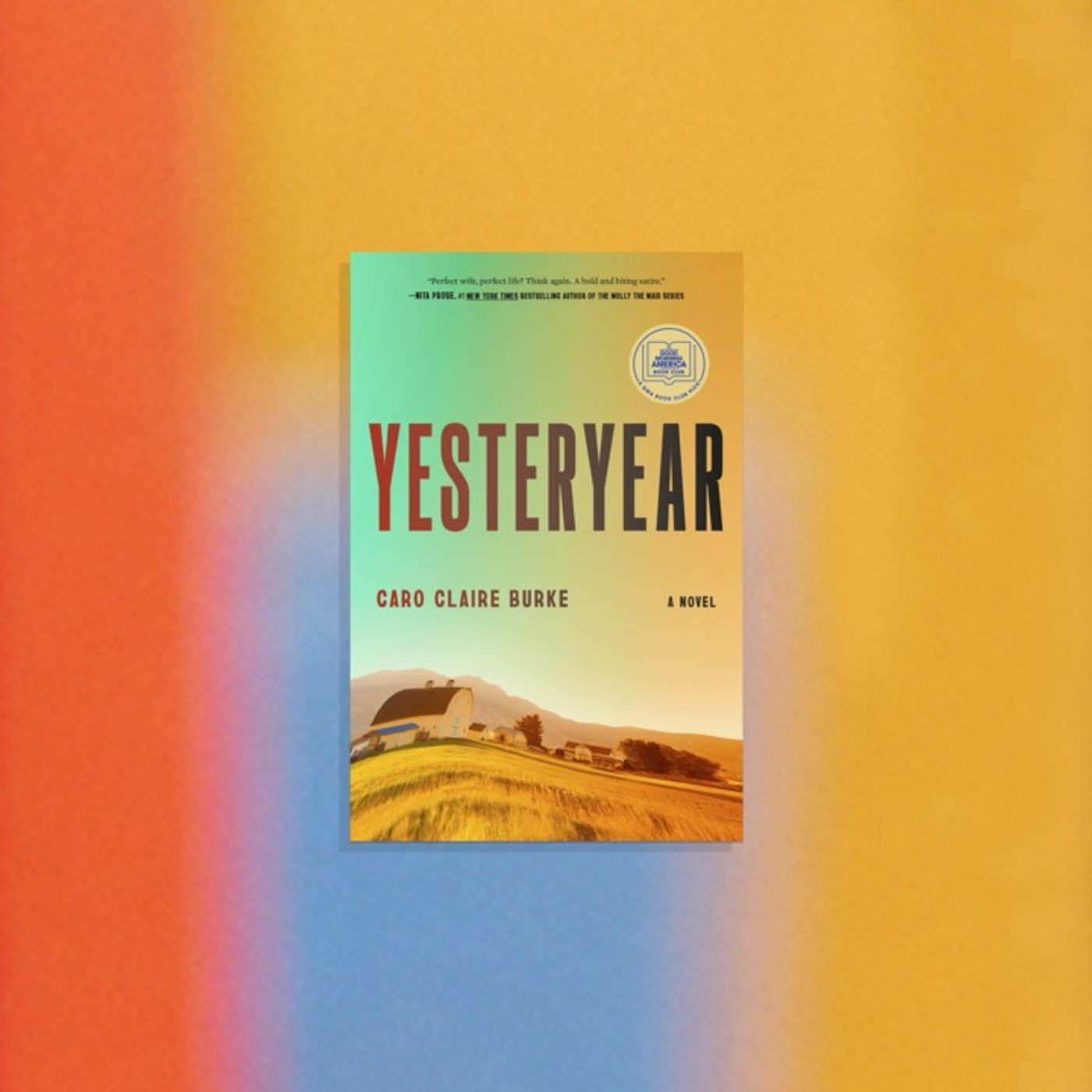
The Book Review
Book Club: Let's Talk About 'Yesteryear,' by Caro Claire Burke
00:58:19
Burke’s best-selling novel, about a tradwife influencer with some surprises in store, is one of the buzziest books of 2026. On this episode, MJ Franklin discusses “Transcription” with fellow Book Review editors Jennifer Harlan and Joumana Khatib.
Loading summary
Transcript249 lines
- [00:00]
Podcast Sponsor
This podcast is supported by BetterHelp. Summer can feel like a sprint. Kids home, trips to plan, routines flipped upside down. It's easy to slip into survival mode just trying to get through it. Then suddenly it's over and you're wishing you enjoyed the days just a little bit. More. Therapy can help you slow down and actually be present for the moments that matter. With BetterHelp, you can connect with a licensed therapist from anywhere on your schedule. Don't just survive this summer, thrive. Visit betterhelp.com newyorktimes.
- [00:36]
MJ Franklin
Friends, Romans, Countrymen, Book Club has convened. Hello and welcome to the Book Review. I'm MJ Franklin. I'm an editor here at the New York Times Book Review and the host of the Book Review Book Club. Today.
- [00:50]
Jumana Khatib
I am with I'm Jumana Khatib. I'm an editor and newsletter writer here at the Book Review.
- [00:56]
MJ Franklin
Thank you for joining us.
- [00:57]
Jen Harlan
And I'm also Jen Harlan. I'm also an editor and a columnist at the Book Review.
- [01:02]
MJ Franklin
And this week we are doing our long anticipated Yesteryear showdown.
- [01:08]
Jumana Khatib
It's time.
- [01:10]
MJ Franklin
You know the saying, curiosity killed the cat. In this case, I feel like Curiosity chose the book club book because Yesteryear is without a doubt the buzziest book of the year. So far. It has been on the bestseller list at the time of this recording for 10 weeks. It was already a Good Morning America Book Club pick. It's already been optioned for a movie starring Anne Hathaway. And they're just anecdotally for the readers in my life just around, they're always asking me, have you read Yesteryear? What do you think about it? Is this true for you too?
- [01:42]
Jen Harlan
Yes. Undeniable. Every single event I feel like I've been to in the last two months, someone has brought this book up.
- [01:49]
MJ Franklin
And the other fun thing about it is also I'm curious if this is true for you too. Everyone's divided about it.
- [01:54]
Jen Harlan
Yes.
- [01:54]
MJ Franklin
I've heard people love this book and talk about how much it unpacked thematically and other people hate this book.
- [02:02]
Jen Harlan
Like, like viscerally.
- [02:04]
MJ Franklin
Yes.
- [02:05]
Jen Harlan
Which I do think is interesting given the divisiveness of the subject matter. Also, you know, there are a lot of I've met a lot of angry women and angry men and angry non binary folks about this book. And also people who are like, this is the greatest, most revelatory thing I have ever read.
- [02:22]
MJ Franklin
For me, that just made me so curious, if I were to read it, where would I land? So therefore I have to read it and I feel like both of you have talked about it independently in the office, wanting to read it as well.
- [02:36]
Jumana Khatib
It's been a long time, I think, since at least I've seen a book that is so clearly the favorite of the moment. You know, there was a time where, like, I could not get on the subway without seeing yesteryear on every single trip. It's just like hearing how kind of omnipresent it was. I thought, why not? Yeah.
- [02:56]
Jen Harlan
I feel like we've been talking among ourselves recently about there's a tier of book that we've that we feel like everyone is talking about on the desk or like in the book world. And then there's a book that everyone, everywhere is talking about. And I feel like yesteryear has definitely ascended to that kind of second realm. I've had friends and family members and baristas, and everyone is talking and not just reading and interested in this book, but then interested in talking about it.
- [03:23]
MJ Franklin
And so because of that, we're like a book everyone is reading and interested in talking about. A book that we are curious about and don't know where we'll land that is a book club.
- [03:33]
Jen Harlan
I feel like this is a conversation that I would want and would be having with both of you anyway.
- [03:38]
Jumana Khatib
Regardless.
- [03:39]
Jen Harlan
Just that we're doing it with microphones.
- [03:41]
MJ Franklin
But before we dig into the book, I just want to share my typical admin notes up top. First, there will be spoilers in this episode. However, we know people are still coming to this book on their own time, and the journey of this novel is part of the fun of it. So to keep this conversation accessible, the first half of this podcast will be spoiler light. We're gonna do some setup. So there will be details. We'll talk about characters, we'll talk about, like, teasers of stuff as what sets the story in motion. But we will save the big reveals, any big twists, any of that stuff.
- [04:11]
Jen Harlan
And there are big twists in this one.
- [04:13]
MJ Franklin
We will save that to the second half of the conversation, which will be spoiler filled. So choose your own adventure based on what you wanna know. The second note is at the end of the episode, we will reveal our July book club book. So stay to the end to find out what we're reading next. And without further ado, can someone give us a setup? What is this book Yesteryear about?
- [04:34]
Jen Harlan
I can take that. So Yesteryear is a debut novel by Carol Clare Burke, and it is about a woman named Natalie Heller Mills, who is a mother of five, lives on yesteryear ranch in Idaho with her kind of cowboy husband. And she is what I think we would call a trad wife influencer. She has this giant social media following. Both of people who are obsessed with her and think she's sort of the ideal of American womanhood, and also people who hate her and think she's everything that's wrong with American womanhood, but can't stop watching her. And you very quickly, pretty much as soon as you meet her, start to see that there are kind of. This is a facade, this like picture perfect, wholesome rustic life is something that she is constructing and performing very deliberately and that there are some, some cracks and things happening more than cracks behind the scenes.
- [05:28]
MJ Franklin
Huge canyons of drama and gorges chasms there.
- [05:33]
Jen Harlan
She again is kind of trying to project this sort of wholesome back to the land, all natural, good old days vision of life. But she has modern appliances which are hidden tastefully behind cabinet doors. She has two nannies and a producer and a bunch of farmhands. They use pesticides in their crops. A lot of her merch is not made in America, much less by her and her family.
- [05:57]
Jumana Khatib
The family she married into is unthinkably rich.
- [06:00]
Jen Harlan
Yes, yes. Her husband.
- [06:01]
Jumana Khatib
Details, details. Is the.
- [06:03]
Jen Harlan
The scion of this incredibly wealthy family. His father is this conservative politician. His mother is this perfectly coiffed woman with a pill addiction. So everyone's got some, some secrets, some things they're hiding. And then pretty soon into the book, Natalie wakes up one morning. She is in her farmhouse, the. But it has somehow. And she has somehow been transported to 1855, which is the year when the house is built. So that means no nannies, no fridge, no running water, no toilet, no electricity, different kids. And she has no idea how she got there or what is going on. And the book from there sort of flashes back and forth between Natalie's upbringing. You find out more about her childhood. Being raised in the evangelical church by a single mom with her sister. She eventually ends up at Harv and has kind of a difficult time adjusting there. And then meets Caleb, who will become her husband, drops out of school, and then how she sort of constructed this life for them and for herself. We follow her backstory while also being very in this present moment as she's trying to figure out what in times the. In parlance, what on earth is going on?
- [07:15]
MJ Franklin
Can I just say, when I heard the premise of this book, like chills, I was so excited.
- [07:21]
Jumana Khatib
It was so good.
- [07:22]
MJ Franklin
Just short version, trad wife gets sent back to the past. Can she actually do It. Yeah, I'm in.
- [07:28]
Jen Harlan
Cosplay becomes real life.
- [07:30]
Jumana Khatib
It's a brilliant setup. Totally.
- [07:32]
Maddie (Engineer)
Yeah.
- [07:33]
MJ Franklin
I have a follow up question. We've already mentioned this term many times. Trad wife. What is that? Can I say my definition what my understanding is? Because I feel like I have a rudimentary one and I want you to educate me, fill me in. So a trad wife is just someone who. It's a woman who is imitating traditional values and traditional living. So it's like we don't use modern appliances, we don't use modern amenities or food. We make everything from scratch by ourselves. For me, the trad wife that I was most familiar with was Nara Smith, who was like, my kids were craving nerds and so I like grew my own sugar.
- [08:14]
Jen Harlan
I grew hot dog, so I ground my meat and made a sausage, all while wearing a fabulous ball gown.
- [08:21]
MJ Franklin
So for me, my understanding was that it was like a TikTok trend, basically. But it's more than that. And what do I need to know?
- [08:31]
Jumana Khatib
I think you have a good handle on the basics.
- [08:33]
MJ Franklin
Okay.
- [08:34]
Jumana Khatib
Your understanding is my understanding. I'm oddly fascinated about the tension between the practical reality for a lot of these trad wives, I think, is that they end up being the breadwinners. They're businesswomen, whether you like it or not. They are running a show. They are running.
- [08:51]
Jen Harlan
They are working moms.
- [08:52]
Jumana Khatib
They are working moms. Yeah. And for something that originated out of the idea that women wanted. That these women wanted to return to traditional values.
- [09:02]
Jen Harlan
Ones that quote unquote, simpler.
- [09:05]
Jumana Khatib
Yeah, simpler life or like, you know, a return to a lifestyle that harks back to like, you know, 50s or earlier, actually, it's not quite bad. You still can't really do it. And. And also, I think, unsurprisingly, these women have become a total lightning rod for a lot of people and kind of a Rorschach test.
- [09:26]
Maddie (Engineer)
Right?
- [09:26]
Jumana Khatib
Like, your feelings about trad wives, I think can say so much about your feelings about. Fill in the blank.
- [09:34]
MJ Franklin
So this is the milieu that we are diving into with this book. That's our setup. Now I'm just curious. I want the vibe check. I want the. The drama of opinion. I want to know. People are divided about this book. Did you or did you not like this book? I'm gonna start that level. Thumbs up, thumbs down.
- [09:51]
Jumana Khatib
I did not like it. But interesting, interesting. I also read it probably in 12 hours. So, like, I don't. Maybe I did. You know, by another metric, I could not wait to get further along because I Love the premise. I love the premise. But almost everything I learned from the story felt like the laziest possible narrative choice.
- [10:17]
MJ Franklin
Lazy because obvious or lazy because I'm
- [10:21]
Jumana Khatib
fighting with myself about this. You know, because on the one hand I'm like, realistically, we should just like Occam's razor. It like the most likely explanation is probably the one that actually is the case. But I don't know. I wanted the screws to be a little tighter on this book.
- [10:39]
Jen Harlan
I think this sort of gets to my main feeling about the book, which is a. I will say I had a great time. I read this basically in 24 hours. I could not put it down. I was inhaling it. Like when they give you like the giant bucket of popcorn at the movie and you're just eating and eating and suddenly you look down and the previews aren't even over and there's nothing left in your bucket. Like that's how I felt reading this book. I was like totally engrossed both by the premise and the plot, which is a complete rollercoaster, and also by the narrative voice, which I found like from the jump, you can see the darkness. There's a moment in like the first few pages where she's going to see the chickens on their farm. Who she calls when the camera is rolling. She calls my ladies or the ladies. And she's like, I love to. I like to stroke their silky necks, let them peck softly at the feet and my cupped palms. And then the next paragraph is, we'd be killing them soon in the darkness. My mouth watered and I was like, what? I don't know what is going on with this woman, but I'm here for it. So much of what I found really compelling about it is about this idea of performance and the public expectations, particularly for traditional gender roles. Both for women, which we see mostly through Natalie, but also through her mom and her mother in law and her sister. And for men, which we see especially with her husband Caleb, who goes from at one point being this very sweet guy who wants to be a kindergarten teacher. Cause he loves hanging out with kids and then gets sucked into this kind of miasma of online conspiracy theories and is trying to perform this very particular version of maleness, particularly American maleness. And then there's a moment later in the book when she's in the present moment where we meet her when they're married and they have these kids. She's like, he never plays with the kids anymore. Like I see him maybe think about it and then he. He doesn't and there's something really sad about watching these two people. And many of the people around them have these sort of impossible boxes they're trying to fit themselves in and trying to sort of navigate how much of this is what I really want. How much of this is what I think I'm supposed to want.
- [12:41]
MJ Franklin
That flip that you just mentioned, that he wants to be a kindergarten teacher but doesn't play with the kids, is the inverse of what Natalie is dealing with in that he's like, I will do this domestic thing for work, but I will not do it in my home. And Natalie's like, I will do this home thing, but I will make it work. That conflation is really fascinating, though, I think very subtle.
- [13:07]
Jen Harlan
I think where it's started to lose me or where I have some gripes. And I think maybe part of why people are having such divergent responses and experiences to this is I don't know that I think. I wish that Carol Claire Burke had a little bit of a firmer grasp on who Natalie is. There are moments where she seems to be very calculated and smart and, like, in control, and then moments where she seems totally at sea and mystified and not at all in control. And. Which is not to say people can't be in both of those states at once, But I felt like I got sort of a less and less clear beat on who she was as the book went on and things started to get a little messy as it went along. It is a debut novel, and I feel, especially for a debut, I'm like, this is an incredible idea. And I feel like she mostly pulls it off, but there are some ways in which it is, you know, debut noveling.
- [14:07]
MJ Franklin
I love that it sounds like you two are saying similar things but have landed at different places in your evaluation. Like, good concept, inhaled it. One person was like, I was fine with it. Jumana, you were like, no, not fine with it.
- [14:21]
Jumana Khatib
Not fine with it, but also fine with it enough to be here, you know, like, I'm not gonna die on my sword about this, but okay. But, mj, what do you think?
- [14:29]
MJ Franklin
Well, before we get to me, I have a special guest that I want to hear about.
- [14:34]
Jumana Khatib
Is it a trad one?
- [14:37]
MJ Franklin
Oh, my God.
- [14:38]
Jumana Khatib
I would love to meet one.
- [14:39]
Jen Harlan
Natalie joins us for this. That's Natalie.
- [14:41]
MJ Franklin
No, it is our engineer, Maddie, who, number one is just incredible. But then two, after our recordings, here we are always chatting, and I'm like, maddie, what were you reading for your book club? And you're always reading the most interesting things and last month I asked you, and you're like, we're reading yesteryear and welcome, Maddie.
- [15:01]
Maddie (Engineer)
Thank you. Yeah, no trad wife's here, but my book club was kind of just as split as this one, which is so. It's so interesting. It's like another point in the data.
- [15:11]
Jen Harlan
I love data. Women in stem.
- [15:13]
Maddie (Engineer)
Exactly. I feel like I was really conflicted as well. For me, what I really liked is when it got to the twist, it was something that I did not expect, so I was surprised, which I appreciated. But I kind of understood what you were saying, Giovanna, about almost a laziness. Yeah, there was a lot of commentary that I thought could have been really massaged and worked out. And then at the end of the day, when it got to the end of the book, I feel like it just wasn't realized because of how Natalie turned out.
- [15:44]
MJ Franklin
It always makes me happy, Maddy, when you join.
- [15:46]
Jumana Khatib
Same.
- [15:47]
Maddie (Engineer)
Thanks for having me, guys.
- [15:48]
Jen Harlan
Yeah.
- [15:49]
Maddie (Engineer)
Mj, tell us more.
- [15:50]
MJ Franklin
I agree with what everyone has already said. My take is I had so much fun with this book. I think the book as a novel is a mess. It's a mess. It's uneven. I did keep telling myself it's a debut, and this is gonna sound condescending, but I promise it's not. Just writing a novel is hard and we take that for granted. I think Carol Clare Burke is really smart. The commentary in here, and she's firing at so many different targets. She's talking about trad wives. She's talking about misogyny and the rise of the manosphere. She's talking about religion, religion, what it means to be a parent, what it means to feel alienated, all of these things. Politics, politics. And she has really interesting, sharp observations about all of them. I loved seeing where Carol Clara Burke's eyes light upon. There are some really, really sharp scenes, as someone mentioned, some really great.
- [16:55]
Jen Harlan
Like the chickens when she wakes up and then tries to escape. One moment that I have been haunted by since I read it is right after she has given birth to her first child and is sitting in the hospital and is very clearly experiencing some sort of postpartum depression or maybe even psychosis. Like, she is not connecting with her child. And the nurse in the room tries to say, like, oh, you know, like, we have a psychologist on staff. Maybe it'd be good if you spoke to them. And her mother is like, you've never liked being lazy. Like, why don't you, like, get up, like, put. You should put your running shoes on and, like, go for A jog around the parking lot and this woman has given birth like two hours ago. There are some really sharply defined moments that really stick with you.
- [17:38]
MJ Franklin
And then just the voice, the voice of the novel. I was immediately compelled and can I read a quote? It's Natalie introducing herself. And she says, the only thing more valuable than a person with God given traits is a person who's willing to learn. And my husband, that man had been willing to learn. And who was I? A flawless Christian woman. The manic pixie American dream girl of this nation's deepest, darkest fantasies. The mother every woman wanted to be and the wife every man wanted to come home to, like a nun in a pornhub. It didn't make sense, but also, by God, it worked. My name is Natalie Heller Mills, and I was perfect at being alive. That is a perfect.
- [18:19]
Jen Harlan
What a way to introduce an introduction.
- [18:21]
MJ Franklin
But then we get these other moments that just don't seem to land. Natalie, I think as a character flits between being very cruel and being very vulnerable and lost and being in control. And I know that humans are multifaceted. But that change didn't seem to be coming from Natalie. It seemed to be coming to me from the demands of the story, what the scene required to get to a certain point. And that's the trick of novel writing. How do you make those moments feel real, earned, convincing, coming from not the author, but from the character themselves, especially in a character driven story like this.
- [18:59]
Jumana Khatib
But also I think that shows that the book was a concept first and then she just sort of reverse engineered everything to, like, make the concept right. That's not necessarily a bad thing. But, like, I do think that accounts for a lot of the shortfalls.
- [19:14]
Jen Harlan
I totally agree with that. And I think you can especially see it in the moments where Natalie has very extreme emotional reactions to things a lot. Particularly like these sort of surges of rage that are mystifying to her and seem to kind of come out of nowhere. And I think it is fine for, like, the character to not understand where this emotion is coming from, but the writer needs to know where that emotion is coming from. And I feel like I wasn't always clear if that was the case here.
- [19:41]
Jumana Khatib
I also didn't totally get a great handle on her spirituality or her relationship to religion. That felt kind of. That felt really underdeveloped. I knew she was devoted, but I didn't actually know what her beliefs were. And I saw a lot of people online being like, what denomination is she? Is she Mormon? Is she Catholic? Like, is she evangelical? That doesn't need to be necessarily spelled out for me. And maybe that was an intentional decision on Burke's part. It felt really flimsy for, like, something that is ostensibly the, like, guiding principle of her life. Even at Harvard, she kind of made herself out to be this renegade who was flying in the face of her roommates who were focused on misogyny and women's oppression and all of that. But I never really got much more than the basics.
- [20:33]
MJ Franklin
My thought is what I wanted from this novel is for Carol Clare Burke to go there. Natalie is occasionally very cruel. Make her so mean and monstrous consistently, just so we get a sense that it's not just a flash of cruelty, but it's Natalie. That's who she is as a person.
- [20:55]
Jumana Khatib
It's her nature.
- [20:56]
SoFi Sponsor
Yeah.
- [20:56]
MJ Franklin
If you're making this commentary about religion, totally go there and dig in. And I felt like I could feel her making concessions, which is, I found frustrating as a novel. But then also, have you listened to her podcast at all? She has a podcast called Diabolical Lies.
- [21:13]
Jumana Khatib
Yeah, I haven't.
- [21:14]
MJ Franklin
I dipped in for research for this book club, and she is so smart and so pointed. That's why I said earlier, novel writing is hard. It's a different skill set. She has all of those ideas, and she's articulated all of these ideas in a different form. How do you translate them into the vehicle of a novel? That's tricky.
- [21:33]
Jen Harlan
I think also you can see to what you were saying earlier, Jomana, about. I think she had this idea for this great premise and clearly, like, fell in love with that. I think there's a little bit of rushing to get to that. And I found myself wishing that we had spent a bit more time with Natalie particular. We get a lot of sort of backstory of, like, how she got into this career, like, how she launched this. You get a bit of her childhood, the college years, which actually, I. I found that part really interesting. Like, the sort of. The cruelty of her classmates to her, I thought was, like, handled as someone who comes from a totally different background from them that they are mystified by. Like, that I found.
- [22:11]
MJ Franklin
Can you explain this a little bit more?
- [22:12]
Jen Harlan
So, basically, Natalie gets to Harvard, and she is rooming with this woman who's from, like, somewhere on the. She's like an east coast elite, essentially, and is surrounded by these girls who are, like, what you would think of sort of as your, like, stereotypical liberal arts freshmen women. They have, like, fairly liberal politics and talk a lot about political issues. They are drinking on the weekends. They're going to parties, they're hooking up with guys and want to have these aspirations for like academic success that will be followed by this career. And Natalie is like, that sounds miserable to like be a consultant and like sit and work insane hours in an office and never have any life. Why is that the dream? And they are so cruel to her and she is so confused by them. And then also has moments where she is very cruel, particularly to her roommate Rena who becomes this kind of lifelong obsession. So we get like that I feel like was an area where I could see Brooke digging into this idea that both there. I think it's very easy to think of the sort of trad wife side of things where these as these women who have one idea of what a woman should be, but her roommates and these women who she meets meet in college also have a very one sided idea of what a woman should be. And neither one of them is open to having their perspective or worldviews changed on that.
- [23:31]
Jumana Khatib
It's interesting in that it's one of the few times that we see Natalie in an environment that is not her home turf or an environment that she has literally manufactured to her own tastes and needs and to accentuate whatever she wants to. And so I think that's useful in terms of setting up this idea of Natalie as this kind of pugilist where she's, you know, she's gonna fight, but
- [23:53]
Jen Harlan
also this person who is so desperate for approval and to succeed. And then when she fails or like can't fit in and succeed with these people, then does a total 180. She was like, well then I hate them and they're wrong and they're evil and they're mean and I have different values. So I don't care about their approval. But it almost seems like a bit of a defense mechanism. But what I was sort of trying to get at earlier is I think we spent a fair amount of time on that run up, but we don't actually get much time of her at the height of her powers. What is her life at running this empire. I wanted more time of what is her life like in the present and who is she in that world before we jumped back to the past. And I think maybe that would have helped to sort of understand her motivations and why she's reacting to things. She's like a bit of a cipher, the whole thing. Time.
- [24:37]
MJ Franklin
I want to hear more, but first I think we should take a quick break.
- [24:45]
Olly Sponsor
Your gut isn't just about digestion. It's the command center of your whole body. New Olly Precise Probiotics are made with clinically studied strains to provide targeted benefits beyond digestive health. By supporting your metabolism, skin health or stress response, start giving your body what it needs. Shop Precise Probiotics with skin, stress or metabolism support at your nearest Walmart. These statements have not been evaluated by the Food and Drug Administration. This product is not intended to diagnose, treat, cure or prevent any disease.
- [25:14]
Podcast Sponsor
This podcast is supported by BetterHelp. Summer can feel like a sprint. Kids home, trips to plan, routines flipped upside down. It's easy to slip into survival mode just trying to get through it. Then suddenly it's over and you're wishing you enjoyed the days just a little bit more. Therapy can help you slow down and actually be present for the moments that matter. With BetterHelp, you can connect with a licensed therapist from anywhere on your schedule. Don't just survive this summer thrive visit betterhelp.com newyorktimes mortgage refinancing might sound complicated
- [25:49]
SoFi Sponsor
sofi makes it easier with refinancing options designed to fit your goals. You can explore lowering your mortgage rate, access, accessing cash from your home's equity with your cash out refi, or shortening your loan term. Whatever your next move, SoFi can help you find the right fit. Ready to Explore refi? Visit sofi.com powermove Mortgages originated by SoFi bank in a member FDIC NMLS 696891 Terms and conditions apply Equal Housing Lender.
- [26:23]
MJ Franklin
And we're back. This is the Book Review. I'm MJ Franklin. I'm with Zumanica Teeb and Jen Harlan, and we're chatting about Yesteryear by Carol Clare Burke. Before we jump back to our conversation, I just wanted to read off some thoughts from our book club community about the novel. Right now we have up an article headline Book Club Read Yesteryear with the Book Review. Readers from all over are sharing their thoughts about the book, and they are just as divided as we are. Some people love the book, like Leanne from Atlanta who wrote I loved reading a feminist book from the perspective of such a strong antihero. As a character, Natalie subverted my expectations of a religious tradwife. As a protagonist, Natalie is the perfect vehicle for the real main characters. We, the readers, we are standing in as the voyeuristic followers of her shiny online Persona, here to relish what we suspect will be her downfall. Whether we identify as an angry woman or an acolyte, Natalie's spiky edges and self Righteous internal dialogue ensure that we hold her at arm's length. So that's Leigh Ann, who loved it. Others hated it, like Cheryl from Reno who wrote, I enjoyed the novel at first, but then it bogged down in the middle and the ending was contrived, lazy and disappointing. There were no likable characters, not one, and way too many plot holes. I wound up wishing I could get back the hours I spent reading this one. Harsh, but a lot of readers agree. Others still, though, felt mixed. They didn't love the book, but they felt that something was interesting about it, something sticky. Joanne from Ontario wrote an easy read, but flawed, not good literature. Characterization and plot are trivialized. However, interesting points of discussion what makes a good parent? Why try to sell someone's lifestyle? Who follows these influencers and why? So those are a few responses. That said, the comment section on that article is really, really popp. A lot of debate, a lot of people pulling apart what did and didn't work for them. So I say keep up the conversation everyone, and I just want to say a big, big thank you to everyone for digging into this book with us. And now back to our discussion in the studio. So a lot of complicated feelings overall in this room, in part because there are a lot of complicated thoughts in this book that I think we would agree or disagree on the success of how they're conveyed. I want to pivot a little bit and talk about themes. As we mentioned, Carol Clare Burke is looking at a lot of different things. Parenting, tradwives, misogyny, religion, et cetera. Was there a theme that stood out to you the most in the book that you were most interested in?
- [29:02]
Jen Harlan
I think the thing that really jumped out the most to me is the impossible standards that are set societally for both men and women. Women, but especially women in like how to perform the ideal version of this role and the sort of track that you're supposed to be on and the like metrics that you should be measuring the success or lack of success of your life by, and the ways that those crush everyone.
- [29:32]
MJ Franklin
Talk to me a little bit more about that. Like how does that appear in the book and what does the book seem to be saying about that?
- [29:39]
Jen Harlan
Well, I think maybe part of the issue is that it's trying to say a lot of different things about that. But I think the parts that I found most moving and resonant related to Natalie and motherhood. She is trying to perform this very specific version that's sort of like 1950s, like she can do it all. She's the Perfect wife and the perfect mom. And she, like, keeps the house clean, and she has a roast dinner and a martini waiting when her husband gets home and the children are perfectly scrubbed and everything is lovely. And she is someone who clearly has some mental health issues, particularly like postpartum issues around the birth of her children, and has a really difficult time connecting to her children and to herself in this role that she has envisioned as her sort of end goal for her whole life. And then when that experience doesn't match up, there was this, like, one passage that I. I might read. Cause I found it really striking. She's talking about, like, thinking about the experience of when she had her first kid and this conversation that she has with her mom, where she's been. Natalie is sort of trying to express some difficulties that she's having connecting with her child. And her mom really brushes it off and is basically like, you need to start getting your figure back immediately and be the picture perfect version of a mother. And Natalie says it's the long golden string of insincerity that threads together the entire human race, a shared agreement between women to insist back and forth in endless conversation that this thing we spend our whole lives preparing for, this thing we were born for, is anywhere close to what we thought it would be. And then later she says, your mother lies to you, and then you lie to your children, and then your children lie to their children, and then you are an old woman looking back at your own life, lying to yourself. A lifetime of drowning. And then you are dead.
- [31:23]
MJ Franklin
Oof. So good. When we talk about sharp moments in the book, I think that's a sharp moment.
- [31:28]
Jen Harlan
Yeah, it's just, like, totally devastating. She's like a hamster running as fast as she can on this wheel and is never gonna get anywhere.
- [31:36]
Jumana Khatib
Do you think she's a misogynist?
- [31:39]
Jen Harlan
That's a great.
- [31:40]
MJ Franklin
That's a great question.
- [31:41]
Jen Harlan
She does hate a lot of women and herself.
- [31:45]
Jumana Khatib
I mean, she really punishes herself.
- [31:47]
MJ Franklin
Yeah, I think she is. And I think this gets at one of my gripes about the book, which is so she is really railing against the constraints that are put upon her as a woman, as a Christian, as a mother.
- [32:03]
SoFi Sponsor
And.
- [32:04]
MJ Franklin
And she's right. She's put in these boxes and she's forced to perform, and it's impossible to be a person under these constraints.
- [32:13]
Jen Harlan
I think that's part of what is so tricky and also divisive about this book is there are parts where there were moments where I was like, this is, like, deeply sympathetic. And I, like, really feel for her. And she's really struggling with these impossible systems and standards, which is the part that I liked.
- [32:26]
MJ Franklin
I think this book is getting at that irony that we all kind of live with the idea of performance and we're putting ourselves into boxes for variety of reasons. My gripe is then Natalie kind of not just puts herself in the box. It's how Natalie talks about Caleb and what is a good job for Caleb or what is not a good job for Caleb. Because as. Not to be like, think about the men, but it's like, Natalie is reflecting those same types of gender norms and creating a more entrenched gender system overall that then ultimately hurts herself. And again, I keep saying. I keep looping back and forth. That may be the point of the book, but am I bringing that to the book, or is that just something that the book kind of stumbles over? And I say that because the stuff with Caleb is played for jokes. The idea that, like, that's also so
- [33:23]
Jen Harlan
sad, I found, like.
- [33:24]
MJ Franklin
But she's like, you can't be a kindergarten teacher because that's not a job for them.
- [33:28]
Jen Harlan
Then we'll be a kindergarten family.
- [33:30]
MJ Franklin
And that's played for a joke, not played for part of the overall critique of, like, okay, how are we creating these gender norms that then Natalee is railing against?
- [33:40]
Jumana Khatib
It's impossible for me to disentangle my feelings about how Natalie and Caleb fall into gendered roles in the family without taking into account how Natalie's like, oh, my husband's really dumb and I'm really smart. And I don't think she's that smart. I was not smart.
- [33:58]
MJ Franklin
You get her Zumana?
- [33:59]
Jen Harlan
No, but I was sort of like.
- [34:00]
Jumana Khatib
I was like, you know, you're not Machiavelli in a nap dress. Like, okay, you're gonna, like, sort of.
- [34:04]
Jen Harlan
She certainly thinks she is.
- [34:05]
Jumana Khatib
Yeah.
- [34:05]
Jen Harlan
Yeah.
- [34:06]
Jumana Khatib
And it's like, yeah, I guess this is what happens when you don't really, like, go outside and go into the world. One of my biggest points of contention with this book was how Caleb evolved as a character.
- [34:19]
MJ Franklin
Before we get to spoilers, I want to ask. We've talked a lot about in this conversation so far, the modern storyline. What do we think about the other half of the book, which is the flash to the past?
- [34:32]
Jumana Khatib
That was what I could not get enough of.
- [34:35]
MJ Franklin
Really? Tell me more.
- [34:36]
Jumana Khatib
Yeah, well. Cause I was just like, I wanna know what happens. And when they found the microphone, the little nub of the microphone, I was like, oh, my God, I'm so.
- [34:45]
MJ Franklin
And this happens early on. She's lost in the past. She's like, where am I? How do I get out? What's going on? And she's in the field, and she finds the nub of a microphone she
- [34:55]
Jen Harlan
thinks is the nub of a microphone,
- [34:56]
MJ Franklin
and she's not sure. And then that introduces a complication in the narrative. What is going on? Bum, bum, bum.
- [35:04]
Jumana Khatib
That's when I was like, I'm excited about this.
- [35:06]
Maddie (Engineer)
I also think.
- [35:06]
Jen Harlan
I don't know if we've mentioned this, but when she goes into the past, she doesn't recognize the children who say they are her children, of which there are four. But her husband does seem to resemble Caleb, but is much older than she remembered him being, which is also like, there's sort of an uncanny something happening there.
- [35:26]
MJ Franklin
So that wrinkle really hooked you.
- [35:29]
Jumana Khatib
Totally. Cause then I was like, oh, this is gonna be something more interesting than just what the book actually is.
- [35:39]
MJ Franklin
What I loved about that wrinkle, too, is the narrative complication. But what she thinks about, she stumbles on that microphone and she's like, was this actually a reality TV show that I was in? And then she debates herself.
- [35:51]
Jen Harlan
She's like, or am I currently in a reality TV show? Like, where are the hidden cameras? Am I performing currently? Someone is watching me. And so this is my chance to really perform the, like, pioneer woman.
- [36:05]
MJ Franklin
And that's part of the overall mystery. But then she starts thinking, talk about that gender critique. She's like, this would be so cruel. They wouldn't let me be this harmed on tv. And then she's like, actually, they would. They would.
- [36:17]
Jen Harlan
First she gets knocked unconscious by her husband while trying to run away, and he hits her so hard that he knocks her out. And then she tries to run again. And yes. Gets her foot caught in a bear trap.
- [36:27]
Podcast Sponsor
Yep.
- [36:27]
Jen Harlan
And her 10, 12, how old? Like, very young daughter ends up stitching her back together.
- [36:34]
MJ Franklin
And I like the idea that Natalie is saying, actually, society would watch this for entertainment. A woman get this hurt. That seemed to me to be an example of the book really firing all cylinders. An interesting plot concept, an interesting commentary coming together. Where the past storyline lost me is like. I was like, what are the stakes here? I know she wants to figure out what's going on and she wants to leave. She's just gonna walk. She doesn't wanna go back to the present. She just wants to, like, walk. What are the stakes? What is she hoping will happen? What are we as readers kind of looking forward to other than solving, Finding an answer to what? That's where it lost me. So I felt mixed about it. What about you, Jen? How did you feel about the past storyline?
- [37:20]
Jen Harlan
Yeah, I felt similarly. I was intrigued by the mystery, and there's a big twist, which we will talk about later, that had been, like, semi spoiled, or at least I thought had been spoiled to me. And so I think I was reading it through a particular lens, given that piece of information that I had heard. So I was intrigued, trying to figure out, like, sort of the breadcrumbs of the clues of this, some sort of big reveal that I thought was gonna happen. But there's this, like, real urgency when she first wakes up there. Also, in the last thing she remembers in the past, she was pregnant. Now she's no longer pregnant. She's like, what happened to my child? There's a lot of things going on there, and. But then she just sort of, like, settles in to the past, and it's like, now we are just, like, playing, like, little house on the ranch. And the urgency, I think, is not like the sort of momentum doesn't get sustained as consistently as I would have liked.
- [38:13]
MJ Franklin
Yeah, that's a great word, momentum. I feel like she sets the world. Something is askew. I'm in the past. What's going on? So the world is interesting, but there's a lack of momentum there.
- [38:24]
Jen Harlan
Yeah. And I think to what you were saying, it's, like, unclear, like, what her goal is eventually, like, initially, it's to get out. I'm not supposed to be here. I'm gonna leave. And then she's sort of like, I'm quiet, quitting my, like, mom life. I'm just gonna, like, lie in bed and hang out with the littlest kid and maybe go see the chickens. And then eventually she's like, okay, maybe I will try and be a mom, but it's a little muddy.
- [38:47]
MJ Franklin
All right. We've been teasing this great big conclusion, this great big twist, all of that, and I think we should just dive in. So this is your spoiler alert. We're going to spoilers, like, really big,
- [39:00]
Jen Harlan
like, flashing siren klaxon. Like, big, big spoilers ahead.
- [39:05]
MJ Franklin
If you don't want spoilers, now is the time to go, because we're diving in. Can someone just set us up with what is the end of this book? What's the twist? Where does the book go?
- [39:19]
Jumana Khatib
Okay, I'll do it.
- [39:20]
Maddie (Engineer)
Yes.
- [39:21]
Jumana Khatib
Let me take this on. So the twist is that Natalie and Caleb basically decided to live without modern implements in the modern world. They decided to basically strip their lives back to what would have been available to them in 1855, which is to
- [39:42]
MJ Franklin
say we're not in the past. We have flashed to the future.
- [39:45]
Jumana Khatib
Yes. We are fully in the future. And the children that Natalie is surrounded by are actually her children. And the original brood of five that she had left and went to go live with Natalie's mother.
- [40:03]
MJ Franklin
Yes.
- [40:04]
Maddie (Engineer)
Yeah. The oldest.
- [40:04]
Jen Harlan
Her oldest daughter, Clementine, who was always the one who was the most clued in and suspicious, took the other when it became clear of the path that Caleb and Natalie were going down, took the kids. Except for Mary, who is the baby that Natalie was pregnant with at the beginning. And she was a toddler when the siblings left, and she is now a teenager.
- [40:24]
Jumana Khatib
Adolescent.
- [40:25]
Jen Harlan
Yeah.
- [40:25]
Jumana Khatib
Yeah, Adolescent. And I think the inciting reason for this return to, like, 1855 way of life is a really damning expose where the producer that was living with the family and helping Natalie finesse her online appearance and shoot her videos and her reels came forward with an allegation of abuse and against Natalie. Against Natalie. And what prompted Natalie to, you know, assault the producer was that her husband was threatening to leave Natalie for the producer and move to Brooklyn.
- [41:08]
MJ Franklin
And this is after he's been like, new York City is a city full of rats that will get you sick. You should never go there.
- [41:14]
Jumana Khatib
I mean, there are rats. Like, I saw one in a Knicks jersey after the parade.
- [41:19]
MJ Franklin
Oh, my God.
- [41:20]
Jumana Khatib
So there are rats. But, yeah, this is not a man who's conversant with, like, you know, like, a Bushwick loft, but that's part of
- [41:28]
MJ Franklin
his journey, which is that he has been slowly sucked into both the manosphere and also this deeply conservative conspiracy theory side of the fringe Internet.
- [41:37]
Jen Harlan
He's also. He's. He's a very malleable person who I think ultimately, like, even though he is performing this macho version of masculinity, in fact, doesn't want to have to make decisions about his life.
- [41:51]
MJ Franklin
So we think we're in the past. It's actually the future. He, Caleb, is off in a shed that has the Internet and all of this stuff. Natalie is unaware in part because she's had a mental break and is also being drugged. And so that's the big twist. So my question is this. What did you make of the ending? What did you make of the twist? Jumana. You were making a face in the studio.
- [42:14]
Jumana Khatib
I just was so. I was so irritated. I just could not. I was just like, oh, my God. This was like. We were all rooting for you. We were all rooting for you. And I was so distraught that this is the direction she took. Now, to be fair, I was starting to get a little disappointed sooner than the twist, you know, where I was like, oh, really? Caleb and Shannon? Really? He's gonna fall in love with her to the point that he's gonna leave his family and move to New York. I don't buy it, though.
- [42:48]
MJ Franklin
To the book's credit, Natalie didn't buy it either.
- [42:51]
Jen Harlan
Yeah, neither did Shannon.
- [42:53]
Jumana Khatib
Yeah, so. But right. So then I'm just like, what are we doing here? Why are we putting all this filler in here when actually there could have been a very taut and nervy.
- [43:04]
Maddie (Engineer)
It gets so.
- [43:05]
Jen Harlan
It gets very soap opera.
- [43:06]
Jumana Khatib
It's overstuffed and like, I used to love 60 Minutes when I was a kid. Like, I could totally picture that sit down. Interview with the producer where she accused Natalie of assault. But even still, I was like, I don't like this. And then there was a moment where old Caleb's this is before we realize what's going on. Says something to Natalie about how one of their daughters isn't vaccinated. I'm like, oh, God, like, ugh. And then I do think that Caro, Clare Burke, was trying to leave herself the possibility of a sequel. Because the last thing we get in the book is that Mary has sort of reclaimed her story and is like writing a little bit about what happened.
- [43:50]
Jen Harlan
Has written a memoir, I think written
- [43:51]
Jumana Khatib
a memoir after her eldest, Clementine, basically like broke her out of her parents homestead. So. And then I was just like, maybe she signed a two book deal. Like, it's like not the worst thing to do is set yourself up to explore this from another angle. But I was so disappointed. So disappointed.
- [44:12]
MJ Franklin
What about you, Jen? How did you feel?
- [44:14]
Jen Harlan
So I mentioned before that I thought someone had spoiled the ending for me. I had been told before I read this book, someone had said to me, and then, you know, you find out at the end that it's all in her head, that she's not actually in the past. And so I interpreted that in a lot of different ways. And as I was reading, there was a long stretch where I thought she had had some sort of psychotic break and is now living in a mental hospital, which in her head has become this cabin. And that the children and the doctor are in fact like the nurses and the. Sorry. The children and her husband are in fact like the nurses and doctors who are taking care of her. Then when she finds the manosphere, there was a while where I thought perhaps the civil war that Caleb and His dad and all the manosphere influencers keep talking about had actually happened, and that they were living not by choice but by necessity in this post apocalyptic now, like, infrastructure has been destroyed and we're back to the land. Either of which, I think would have been a more interesting and exciting ending to this book. And so then I also was a little bit disappointed by the end, and I think it gets very convoluted and muddy, and you're like, is she. Are they doing this because was it all a PR move? How much has she really fallen for this, like, illusion that she has crafted? How much does she really not know that this is their life? They're not actually in 1855. How much of it is the drugs that they're giving her? How much of it is her own brain? The muddiest to me is that both when Shannon, the producer, is leaving the ranch, and also in the end, when Mary writes the memoir which she dedicates to Natalie, they both have these lines where it's like, I forgive you. I know it's not your fault. And I was like, you know what?
- [46:02]
Maddie (Engineer)
Yeah, it is.
- [46:03]
Jen Harlan
Like, this was your idea, and you did this to. To yourself. And, you know, you spend a lot of time with a protagonist. I can understand. Like, you get really attached to this character, and so maybe you want to, like, extend more empathy to them than it really makes sense narratively. And I'm like, she needs to just be, like, full monster. And we're like, you did this? And now, I mean, at the end of the book, Natalie is in prison for 30 years for child abuse, which also did not. Also, I don't understand why Clementine shows up and she's like, I have a warrant to take the children.
- [46:33]
Jumana Khatib
I'm like, are you a cop? Like, where is. Where is the law enforcement?
- [46:37]
Jen Harlan
Is this how warrants work?
- [46:38]
Jumana Khatib
I don't think so.
- [46:40]
Jen Harlan
I just. I. Yeah, I had a lot. I felt it did not quite. Quite stick the landing to me. What did you think, mj?
- [46:46]
MJ Franklin
I'm in the same boat. I didn't think the landing worked, but for different reasons, actually. I actually. So you find out. Plot twist. We're in the future. It's been a mental break. And I put my book down, I walked away, and I was like, I just need to be away from this for, like, an hour. And I played a bunch of video games. And then I came back to it. I was so annoyed. I was so annoyed. And I think that's because I felt like it did let her off the hook.
- [47:15]
Jen Harlan
Yeah.
- [47:16]
MJ Franklin
In that it took away so much agency from her to be like, oh, actually, plot twist. She's been drugged and had a mental break all along. And that bothers me because so much of the book in the first half is the idea of what will someone do for a bit of power when they are feeling alienated, when they are being suppressed because of sexism. So much of the first part of the book is about power and choice. And so just to strip that away felt so annoying to me.
- [47:50]
Jumana Khatib
Yeah, it was annoying. It was objectively annoying.
- [47:53]
Jen Harlan
It's also like, so much is made throughout the book of Natalie's intelligence and of how smart she is. And then at the end to be like, she's actually not. It makes her seem so weak at the end. And I was like, no, I was on board with this.
- [48:06]
MJ Franklin
Not my Natalie.
- [48:07]
Maddie (Engineer)
With this.
- [48:07]
Olly Sponsor
Yeah.
- [48:08]
Jen Harlan
No, not my Natalie.
- [48:09]
Jumana Khatib
Not my Natalie.
- [48:10]
Jen Harlan
My Natalie. Terrible person, but fat and interesting and, like, she becomes so, like, milquetoast at the end. And that was not satisfying.
- [48:18]
MJ Franklin
The one thing I will say that I did like about the twist of specifically the future timeline, I hate the mental break idea of it all, but so I knew that twist going in as well. And so I was also looking for clues. And Jumanu, you mentioned Occam's Razor. The simplest thing is probably what's actually happened. So I was like, okay, that's probably it. The mental break sent back to the. She's imagining she's in the past. I truly could not predict that it would have been plot twists were actually in the future. I thought that was legitimately creative. I think it did some weird things to how the story pays off. Same thing I've been saying about the entire book. Creative twist, great idea, weird execution that does strange things to how the book flows. There were other things you mentioned, Grace, or not Grace, extended to Natalie. One thing that really bothered me about the end, Clementine comes back, she gives this great speech, and she's like, I left, and I saw the world, and I had so much anger and all that stuff. But what really gets me is not what you did to me. What gets to me is that the world is so beautiful and you won't be able to see it. And Natalie's like, I've been drugged. I have this moment of clarity. Please take me with you. And Clementine's like, no, you deserve to suffer. And that didn't make sense to me. Yeah, that felt like something the story needed to say for us to get to certain points. But it is so different than the motivation and feelings that our character has just given us and just didn't make sense for me. So the ending really got to me.
- [49:54]
Jen Harlan
Again, I think this is part of what, as a reading experience, even with all the frustrations makes this book so great and so fun, is that there is so much to. To talk about and to dig into.
- [50:05]
Jumana Khatib
I have been perhaps even the loudest person in the studio, being like, what a good conceit. I also have to recognize that the concept of Tradwives is so quicksilver. I do think that there is a baseline understanding of what it is, but the actual emotional ramifications or dimensions to it are gonna vary so much on person to person. And there are. There are so many ideas in this book. Too many even, like the. Like, the queer baiting, you know, where
- [50:34]
Jen Harlan
they were like, oh, yeah, we didn't even get to that.
- [50:38]
Jumana Khatib
You know, basically, there's like, a not so subtle insinuation that, like, Natalie's assault of the Prof. Of the producer was sort of, like, sexually motivated. Like, don't buy that.
- [50:50]
Jen Harlan
Too many very funny moment where Natalie, like, turns the TV off when this comes up and is like, nobody actually thinks I'm gay, do they?
- [50:57]
Jumana Khatib
And then one of the lawyers, like,
- [50:58]
Jen Harlan
well, I think they do now.
- [51:00]
Jumana Khatib
Yeah. It's just. But, like, too many ideas. But, like, maybe that's the problem when a novel starts with a concept instead of a character. I don't know. I don't know. I submit that for your consideration.
- [51:12]
MJ Franklin
Well, I feel like we can keep talking and debating and waffling back and forth. I know I've waffled being like, I love this, I hate this, I love this, I hate this. I'm going crazy. I want to talk about it. We could do that forever, but we're running out of time. But before we go, I always like to do recommendations. So I am curious. What would you recommend anyone who's read yesteryear pick up next? That could be, for whatever reason, it could be another book about Treadwives. It could be another book about the manosphere. It could be another, like, time travel book. I defer to you. I just wanna know what you would recommend people read next.
- [51:47]
Jen Harlan
Okay. There is one book that I thought of immediately as soon as I heard the premise of this book and kept thinking about the whole time that I was reading it. Did any of you as children read the novel Running out of Time? Oh, yeah.
- [52:00]
MJ Franklin
I did not. What is this novel? Oh, my God.
- [52:01]
Jumana Khatib
Mj, you're in for a treat.
- [52:04]
Jen Harlan
So Running out of Time by Margaret Peterson Haddocks is a children's book that came out in 1995 and it is about this 13 year old girl, Jessie, who is living in what she thinks is the 1840s in this like tiny village. And there is a diphtheria outbreak in her town on people very sick. And at that point her mom reveals to her that the town is actually a tourist attraction. They are in the modern day and they are living in this town. All of the paintings and mirrors in their homes are actually one way windows through which tourists can come and watch them live in the past. And the town has sort of been turned also into this medical experiment and the people who are running the experiment. So all of the adults bought into this and know what's happening, but the kids did not.
- [52:49]
MJ Franklin
I like how I'm gooped and gagged about this twist. Even though you. By being like, there's a big twitch.
- [52:54]
Jen Harlan
And so they're refusing to like give them medicine. And her mom sends her out into the real world to get. To try and get medicine to this real world that she did not know existed until now and that has cars and telephones and all sorts of things. This book imprinted so deeply on my brain was so formative for me as a child.
- [53:13]
MJ Franklin
Wait, and jumana, you read it too?
- [53:15]
Jumana Khatib
I read it. I can remember that elementary school classroom I was in when I read it. Yeah.
- [53:20]
MJ Franklin
That's impact.
- [53:20]
Jen Harlan
This is a foundational text that everyone, I think we should all be talking about. And this book in particular, really, for obvious reasons, made me think of. I'll mention a couple other ones. The other book which I really thought of, I think you also did. Mj, I think is an obvious comp. Is Gone Girl by Gillian Flynn. Wanna talk about unreliable narrators? You wanna talk about sharp intelligence? You wanna talk about the idea of performance? Yes. Incredible voice. The idea of like performance, of this idea of perfect womanhood. If you want a really immaculately executed version, I think of what this book is kind of trying to do in a very different kind of story. Go read Gone Girl.
- [54:00]
MJ Franklin
And we talked about this a lot, like as we were digging into yesteryear. But Amy's like Gone Girl's about Amy
- [54:06]
Jen Harlan
and Nick done at the beginning of the book. They're married and have had this kind of like picture perfect, but also we think tumultuous marriage. Amy has disappeared. You spend the first book thinking that Nick has maybe killed her and then you find out and then it swaps in the middle.
- [54:19]
MJ Franklin
And Amy is so angry, she is so manipulative, she's so mean. But she feels like a fully realized character. So all of the hijinks that ensue do feel like they're anchored in something which I really loved.
- [54:34]
Jen Harlan
Yeah. And then I'll just briefly mention one more, which is the Power by Naomi Alderman, which is a speculative novel about this world in which one day women wake up with this idea to, like, sort of conduct immense electrical power through their touch. And it is a very different kind of book, but I think is exploring a lot of the same ideas about gender roles and patriarchy and structures of power that gets channeled in a very different way and is also just. Is like, a totally gripping and propulsive read.
- [55:03]
MJ Franklin
I love that book. I love that book. What about you, Jomana? What would you recommend?
- [55:07]
Jumana Khatib
I think. I think that Eileen by Ottessa Moshfegh could be a good fit for. You know, it's like, I've never read it. Me neither. It's the only Moshfag novel I like,
- [55:19]
Jen Harlan
so this is good for me. Cause I. The one novel which is not that one that I've read was really not for me.
- [55:25]
MJ Franklin
What was that novel?
- [55:26]
Jen Harlan
My Year of Rest and Relaxation.
- [55:28]
MJ Franklin
I loved My Year of Rest and Relaxation, and I had that on this list as something.
- [55:32]
Jumana Khatib
Oh, my God. That's so funny.
- [55:33]
Jen Harlan
Twist ending that I viscerally, like, threw my book across the room hated.
- [55:38]
MJ Franklin
That's fair.
- [55:39]
Jumana Khatib
Yeah.
- [55:39]
Jen Harlan
That I. I read it for my, like, outside of work book club several years ago, and to this day, it is infamous. It is like the book that everyone has hated the most that we've ever read.
- [55:48]
Jumana Khatib
That's a taco.
- [55:49]
MJ Franklin
But what's Eileen about?
- [55:50]
Jumana Khatib
So Eileen is. I think it might have been OTA's first book. It's about a young woman named Eileen who works at a prison as a secretary. It's like she's care. What reminded me of it was they
- [56:04]
Jen Harlan
make this into an Anne Hathaway movie also.
- [56:06]
Jumana Khatib
Oh, my God. Like, this is. She's gonna become the new Kevin Bacon. So basically, Eileen is, like, caring for her father, who's an alcoholic and, like, kind of verbally abusive. So there's a, like, care. Like, resentful, caregiving. There's a, like, unstable narrative perspective going on, and there is a twist, and there is, like, actual legitimate queerbaiting. But I just. For some reason, I just. They feel like. Like the Eileen and yesteryear feel like they're chiming a little bit to me. I don't know why. What about you, mj?
- [56:37]
MJ Franklin
I have a bunch of wrecks. I have A list. I'm gonna go fast.
- [56:41]
Jen Harlan
Let em rip.
- [56:41]
MJ Franklin
The first is the Compound by ailing Ral. I hope I'm saying her name correctly. This is doing for reality TV what yesteryear does for trad wives and the Internet. It's this book about this completely demented reality TV show that's part Survivor and Hunger Games, but like Bravo and Love Island. It's all of these things mashed into one. It's insane. And we follow this woman, Lily, who is playing the game. And the game is basically like find love, compete for material riches, but you also need to compete for basic survival stuff. And then off in the background there are the wars and the fires and you don't know what's going on. And Lily knows about this game. She's playing the game. She knows it's all an illusion. But is the illusion better than what's out there in the real world? What would you sacrifice for even a facsimile of paradise? It's so good, it's smart and that's why I think it's a good comp. It's a page turning summer thriller with a lot of really big social ideas. So there's that and then a few other books that came to mind based on what you're in the mood for. If you are looking for books that deconstruct Internet culture and the idea of like audience, I recommend Hot Girls with Balls by Benedict Nguyen.
- [57:57]
Jen Harlan
Incredible title.
- [57:58]
MJ Franklin
It's about queer volleyball players, specifically trans volleyball players who are forced to play in a men's league and they're like these great big stars and they are these social media influencers and it really dramatizes the idea of the social media feed and giving yourself up for attention. But for what reasons and what does that do to you and your relationship? All of that stuff. And then just Watch Me by Lior Torenberg, which came out earlier this year. It's about a girl who, to raise money for her sister who's in a coma, decides to livestream her life for seven days straight and the audience becomes this symbiotic relationship that she has and they're like her companions, but they're also taking advantage of her, but they're also paying her. It's really good. If you're looking for mean, deranged, quote unquote unlikable narrators. A Good Person by Kiersten King. Did you read this?
- [58:50]
Jen Harlan
No, I haven't, but it's been on my list.
- [58:52]
MJ Franklin
It's about a woman who curses her situationship with a spell from an Instagram witch. And then the next day he dies.
- [58:58]
Jen Harlan
And I will an incredible premise.
- [59:01]
MJ Franklin
So good and she does some crazy things. And then I also thought of the Guest by Emma Cline scamming and scheming your way through the Hamptons being very mean, very judgmental, but also so fun. So those are my recommendations and friends. That's unfortunately all the time we have today. This has been really fun. I say that's all the time we have. We've gone long and we could keep
- [59:23]
Jen Harlan
talking for literate for hours I think.
- [59:26]
MJ Franklin
But I just want to say thank you for joining.
- [59:28]
Jen Harlan
Thanks for having thank you so much.
- [59:30]
MJ Franklin
And thank you again to everyone who read with us this month. And speaking of reading with us, now it's time to reveal our book club book for July. In July, the Book Review Book Club will be reading dawn of John by Douglas Stuart. It's the Booker Prize winning author's third novel, this one about two lost men. Cal, a young gay Scottish man who returns to his conservative village and has to hide a that he's gay and is trying to figure out how to be and exist. And his father, John, who is Cal's chief antagonist but who is hiding secrets of his own. Right now there is an article up headlined Book Club Read John of John by Douglas Stewart with the Book Review. Join the conversation there and we'll be discussing the book also on the podcast that airs on July 31st. We're excited to chat about the book with you. Until then, happy reading.
- [60:22]
SoFi Sponsor
Funny thing about your mortgage, it kind of runs on autopilot. Same payment, same rate, month after month. But SoFi can help make it work harder for you. Explore refinancing options like lowering your monthly payment or tapping into your home equity for cash so your mortgage is a better fit for your lifestyle. Take your mortgage off AutoPilot today. Visit sofi.com powermove Mortgages originated by Sofi Bank NA member FDIC NMLS 696891 Terms and conditions Apply. Equal Housing Lender.