← The Book Review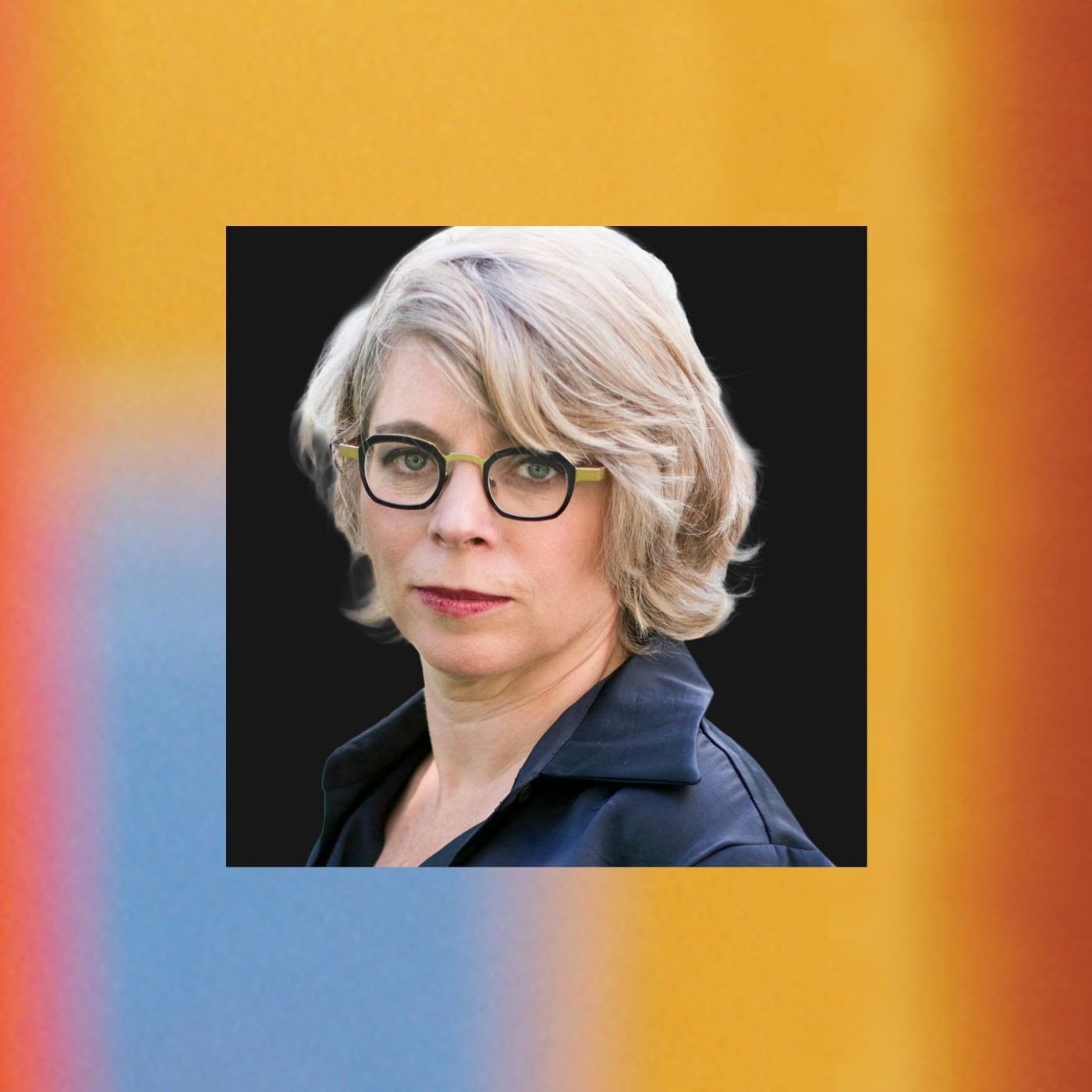
The Book Review
Jill Lepore on What to Read This Fourth of July
00:52:14
As America celebrates its 250th birthday, Jill Lepore, a Pulitzer Prize-winning historian, offers a reading list for the occasion. Then we round up some of the summer’s most anticipated beach reads.
Loading summary
Transcript153 lines
- [00:00]
Apple Card Announcer
This message is brought to you by Apple Card Spring always feels like a reset, clearing things out, simplifying what you don't need. Apple Card is built with that same idea in mind. No annual fee, no late fees, and no foreign transaction fees. No fees, period. Get started and apply in the Wallet app on your iPhone today. Subject to credit approval. Variable APRs for Apple Card range from 17.49% to 27.74%, based on creditworthiness rates as of January 1, 2026. Existing customers can view their Variable APR in the Wallet app or@car.apple.com Apple Card issue by Goldman Sachs Bank USA Salt Lake City Branch terms and more@applecar.com
- [00:38]
Jill Lepore
My Girl Scout troop, we had to paint the fire hydrants in our town red, white and blue, which was a really fun b I think we got off school to do it and c the fire hydrants actually looked a lot better.
- [00:50]
Gilbert Cruz
I'm Gilbert Cruz and this is the Book Review from the New York Times. It's a prime beach weekend for many, as well as a major birthday for America, the big 250-and-we have a packed episode later in the show. My colleague Liz Egan, our beach reads maestro, lays out her list of books not to miss this summer, but first for the history buffs. I cannot think of a better person to talk with about America's birthday than historian Jill Lepore. She recently won a Pulitzer Prize for her book we the A History of the U.S. constitution, and like many in her field, she has spent a lot of time over the last year thinking about the semi quincentennial and what it means to look back at American history at this complicated moment. Jill, thank you for being here.
- [01:36]
Jill Lepore
Thanks so much for having me. Happy July 4th.
- [01:39]
Gilbert Cruz
Happy July 4th. We are in milestone birthday mode here. We the people are 250 years young, and as you've written about these big celebrations, there's always something going on in America that undercuts maybe the celebratory nature of these events. You wrote about this recently in terms of the last big one, the Bicentennial, which obviously was in 1976, that had the shadow of Watergate and the Vietnam War hanging over it. What was that celebration like? How did everyone experience it back then?
- [02:12]
Jill Lepore
Yeah, yeah, it was sort of like your usual July 4th, but kind of on steroids. So more historical reenactments, much bigger parades. A lot of people remember what was called the Bicentennial bu y because there was so much merch. You're bicentennial seven up. Can you couldn't go into a restaurant without your placemat being the faces of every president or, you know, I went and looked at this bicentennial schlock collection at Yale for this piece I wrote for the New Yorker. And they had, like, bicentennial sanitary napkins in it. Like, it was just like everything was stamped somehow with the Bicentennial. But there was, like, a lot of.
- [02:54]
Gilbert Cruz
That seems like the most American thing of all to me.
- [02:56]
Jill Lepore
That's the most American thing of all I saw. There was a lot. There was a lot of cynicism about that. Excessive profiteering, really, from just the kind of branding. But I found in the National Archives this film that the National Park Service had made in 1974 that I don't think anybody had really ever seen since then, where they just asked people on the street, you know, what do you think of the bicentennial? And it really was truly cynical. People were like, ah. Like, what's the difference between 199 years and 201? It's just a year. What is there to celebrate? The economy is terrible. You know, a lot of people said they felt left out of the country. So much division. And that was really about the low point. I mean, so December 1973 was the 200th anniversary of the dumping of the tea in Boston Harbor. And just to give you an example of how contentious the bicentennial had been, there was a sort of replica ship sailed across the Atlantic to arrive in Boston for this big parade. And then people were gonna dump to reenact the dumping of the tea dressed as Mohawks, as the Sons of Liberty had been. And so a lot of people showed up. It was a huge, big parade. But the boat in the harbor was surrounded by little rafts that were peopled by protesters dressed in those rubber Richard Nixon masks going like, I am not a just protesting Nixon. There was a Gay American Revolution counter protest. There was a Vietnam Veterans against the War counter protest. There was a Women for the Equal Rights Amendment counter protest. And the whole thing just nearly descended into utter political chaos. But in a way, it was also beautiful. Right? Like, I think actually that's kind of the best of America. Like, here was. Here was a celebration of the nation that allows unfettered dissent.
- [04:51]
Gilbert Cruz
So you sort of briefly described the mood, the vibe, as we say these days, going into the bicentennial. What would you say is the mood vibe going into the semiquin?
- [05:03]
Jill Lepore
Yeah, you know, I did a project for the New Yorker Radio Hour with this incredible organization, Transom. They sent reporters around the country to go ask People the same questions that the National Park Service had asked people in the 1970s. You know, it was everything you could possibly imagine. There were people who said, this doesn't feel like my country anymore, but we're still having a barbecue. There were people who said, I'm really excited to stay home and watch it all on tv, and I'm so proud of my president. And I'm really. I feel like I'm going to spend the day with my president. And then there was this one woman from New Orleans who was 75, and she said this thing that I thought was really beautiful. This one woman said, you know, when you're. When you're going to shoot an arrow and you pull back the bow. Okay, so I've never shot an arrow, except, like a kid's kit. But, like, I don't even know where she got this metaphor, but, like, it has to be at a point of tremendous tension before you let it fly. And she felt that we were just at this point of tremendous tension and that maybe this would be the moment when we would let the arrow fly and it might fly. True. And I loved that.
- [06:13]
Gilbert Cruz
God, that's a beautiful metaphor. Good job. That lady.
- [06:17]
Jill Lepore
That lady. I know. I have nothing to say.
- [06:20]
Gilbert Cruz
You had a great comparison. You talked about these celebrations, these national anniversaries, as a yardstick, a way of measuring whether or not America, all of us, have lived up to the country's founding ideals. And I'm wondering if you think our previous celebrations, the bicentennial, do we come up short every time? Do we find in each of these that an ideal is just that it is something that can never be achieved?
- [06:45]
Jill Lepore
That's an interesting notion. I mean, you know, it's sort of a nation, half full nation, half empty. Optimism, pessimism, account. I mean, I think at each of those moments, there's been much to celebrate and many who wish to celebrate, and there have been much to decry as unfinished, or much that seemed to many people to be a betrayal of the nation's founding. I mean, if we just kind of work through them. I think each of those occasions is reflective of the national mood at the time to the degree that such a thing can be said to exist. The centennial in 1876 was really quite an extraordinary amount of hoopla because there was this giant centennial exhibition in Philadelphia, and it was really framed as a celebration of American progress, by which was meant to technological progress and also the expansion of white settlement across the North American continent to manifest destiny. And that celebration really papered over what many at the time, including Frederick Douglass, the great American statesman and former abolitionists. The leader of the abolitionist movement understood was the betrayal of Reconstruction, which was taking place even as the Centennial Exposition was being held. So you could, you know, you could look at it in those two different ways. Well, look at all the railroads we've built. Look at all the canals we've built. Look at all the factories we've built. Or you could look at it. Well, we actually just portrayed what we fought the Civil War over. Right. So you could take any of these occasions and see both sides.
- [08:22]
Gilbert Cruz
Well, I'd love to ask you a little more about that, because you said maybe we should be using these occasions to talk about the future, talk about what should America be, not what America has been. And I'd love if you could sort of enlarge on that idea, which I think is sort of a great alternative version of what the nation could be thinking about this weekend.
- [08:45]
Jill Lepore
Yeah, and actually, you see a lot of bits and pieces of that, like, in you go to. I don't know, I was at a museum recently, and they had, like, a wall of ideas. Where are you supposed to write on a sticky note what you want the country to, you know, stick it up there? So I do think there's a fair bit of that. I mean, partly to the degree that it's an occasion to think about history, I think it's useful to use it on occasion to think about how change happens. That's one of the questions that the study of history is meant to answer for you. And I think it's difficult in this moment to think that change happens in any other way except technologically, because we're in the throes of such a technological upheaval. And so there's a sense that the only way change happens is when the new version of Claude comes out or the new version of your iPhone comes out. But having conversations that are about other forms of change is a way to talk about a different possible future. And that, honestly, is why I wrote this book about the history of the Constitution, because it seemed to me, although the 250th, we're chiefly celebrating the anniversary of the Declaration of Independence, we're also celebrating the anniversary of the first US Constitutions, that is the state constitutions. New Hampshire wrote the first in January of 1776, and the other states followed. Many of them wrote their first constitutions in 1776. And one of the things that came out of that work of, okay, unlike England, we're going to write down our Constitution was Oh, if we write it down, what happens if it doesn't really work? We need to have a mechanism to change it. And so Americans invented this idea of the Constitutional amendment, which the states use all the time. And my fantasy about 2026 that it would be an occasion for Americans to deliberate about constitutionalism. A lot of change happens in this country by way of constitutional change, and yet we don't really know how to do it very well anymore. Certainly federally we don't. We haven't meaningfully amended the U.S. constitution since 1971. So I actually think amendment, which is an idea about the future, like, how do we make amends? How do we make repairs, corrections, how do we update things? I argue in this book that the country was founded on what I call the philosophy of amendment. The idea that the people can actually. That we can improve our own lives and we can learn to live together more fairly, more justly, and with more prosperity by revising our own constitutions. So that's a kind of future thinking that I wish we were engaged in.
- [11:10]
Gilbert Cruz
Are we ever going to see another amendment?
- [11:13]
Jill Lepore
I think we'll see a wholly new Constitution.
- [11:17]
Gilbert Cruz
Do you want to say a little more about that?
- [11:18]
Jill Lepore
I mean, I don't know. I just. I guess I don't see how we get from here to there, but I think. I think we will. Maybe not in my lifetime. You know, nothing lasts forever. Like, really. Why do we like. It's bizarre that our Constitution has lasted so long and has not been amended. Is very odd.
- [11:41]
Gilbert Cruz
Just before we move on, I can't let this drop. What. What would that look like? Have you given thought to what that would even resemble? What would be in it? What would it focus on?
- [11:51]
Jill Lepore
So, yeah, I'm not calling for a Constitutional convention. I don't think we have the civic capacity. I don't think Americans can sit in a room together and deliberate. We'd have to start in the states. We'd have to have. There's a fairly sizable movement for citizens assemblies for the idea that getting a random sampling of people together to debate possible legislation is an important political tool that we have abandoned and need to regain in order to rebuild civic capacity. So when I say I think we might one day have a second federal Constitutional Convention, I don't mean tomorrow and I don't mean absent a whole developmental process whereby we regain a commitment to the idea of citizen deliberation.
- [12:38]
Gilbert Cruz
Easily done, I'm sure. No problem there. We are going to move to some book recommendations in a moment, but before that, I wanted to ask you you know, most people, let's be realistic, probably just going to drink a bunch of beers and grill some dogs in the backyard, as they always do. Even though it is this milestone birthday of America. What is one thing you think Americans can add on top of that that would just note the occasion? Should they read the Declaration of Independence out loud? Like, what's the thing they can do?
- [13:09]
Jill Lepore
Yeah, I think reading the Declaration of Independence is a meaningful thing to do. I would also recommend Monticello Jefferson's home runs a thing called the Declaration Book Club, which facilitates gatherings where you can discuss. Like, I think just reading something on your own is really not in the spirit of celebrating a political community and its ideals. I think it's better to find a way to do that together with other people, especially with people that you do not necessarily have much in common. So I would recommend maybe doing that.
- [13:46]
Gilbert Cruz
Are you going to do that?
- [13:47]
Jill Lepore
Gilbert? I have spent so much of the last years of my life trying to tell a coherent story about the history of the United States and the history of its Constitution and the idea of a liberal nation state that I am doing exactly nothing.
- [14:02]
Gilbert Cruz
You're gonna take a nap?
- [14:03]
Jill Lepore
Yeah, I don't think I'm even gonna be in the United States.
- [14:08]
Gilbert Cruz
That is a real flex. Well deserved. Well deserved, by the way. So we have asked you to recommend a few books to help us understand this moment. I was wondering if you could run us through a few of these books.
- [14:22]
Jill Lepore
Yeah. So if you wanna have a good readable history of the Declaration of Independence, there are some fantastic books out there. But the one that I love best is Pauline Mayer's American Scripture. I learned a lot from that book when I read it at the time. And Pauline Maher was a fabulous historian. I also wanted to suggest that people read a very new book by Mark Stein. I believe it's simply called Bicentennial. I don't forget what the subtitle is. Stein is like a 20th century American historian, and he wrote an account of the bicentennial in Philadelphia that situates it within just really. I found this utterly illuminating within kind of the politics of urban renewal and the struggle of a growing gay rights movement in Philadelphia to have a place on the stage for that celebration. Those two factors really important to Stein's storytelling that set the controversy over the bicentennial within the kind of racial and class politics of Philadelphia. Just a really revelatory book. To me. I just. I would say True Confession. I read a lot more fiction and poetry than history.
- [15:36]
Gilbert Cruz
Is that so?
- [15:37]
Jill Lepore
Absolutely. Absolutely.
- [15:40]
Gilbert Cruz
That's Great. Yeah. You just need something to take the edge off.
- [15:45]
Jill Lepore
So in answer to the problem, what book explains the moment that we're in? I thought of Ali Smith's glyph. Glyph with two Fs. This is from 2024. It's not even set in the United States. Right. But it is a dystopian near future in which our story begins with a family waking up to find that someone, presumably working for the government has painted a red line around the perimeter of the building in which they live. And they immediately have to flee. And they get in a camper van and they go to a parking lot for the first night. And then the government comes with the red paint and paints a line around their camper van. Because they are uv, they are unverified. Their data has not been entered into a massive corporate owned database of the scanned irises and entire biometric and biographical and demographic data of every person in the nation state. And so they begin living underground. I love Ali Smith. And I just felt the world built by Ali Smith and Glyph felt a lot more like the world that we live in now than the world that I've seen written about in recent history books, which I think misses the terror of a government that sees people within its borders as enemies to be hunted. And to me, as sad as that is to say to you on a day when we're talking about celebrating 250 years of a nation founded on the idea that we are all born free and equal, it is a part of the nation story that is what's rising to the surface of the pond of my own imagination right now.
- [17:41]
Gilbert Cruz
We have to have you back on. Just to talk about fiction, we're gonna have you back on not a single history question and I'm sure you will appreciate it.
- [17:50]
Jill Lepore
That's the dream, Gilbert. That is the dream.
- [17:51]
Gilbert Cruz
All right, all right. This is for the future, but for now, Jill Lepore, thank you for joining the Book Review.
- [17:57]
Jill Lepore
Take care, everybody. Happy 250th.
- [18:00]
Gilbert Cruz
Take a long nap. Jill Lepore is the author of we the People, A history of the U.S. constitution and the forthcoming the Rise and Fall of the Artificial State, which is out in August. If your fourth of July weekend plans involve less historical reflection and more sunscreen application, we have got you covered. After the break, Liz Egan joins me with some summer beach reading recommendations. We'll be right back.
- [18:26]
Apple Card Announcer
This message is brought to you by Apple Card. Spring always feels like a reset. Clearing things out, simplifying what you don't need. Apple Card is built with that same idea in no annual fee, no late fees and no foreign transaction fees. No fees, period. Get started and apply in the Wallet app on your iPhone today. Subject to credit approval. Variable APRs for Apple Card range from 17.49% to 27.74% based on creditworthiness rates as of January 1, 2026. Existing customers can view their Variable APR in the Wallet app or@card.apple.com Apple Card issued by Goldman Sachs Bank USA, Salt LA City Branch terms and more at applecar.com MeTV is America's number one classic TV entertainment network, airing over 60 of the greatest TV series every week. Now METV presents the Golden Girls of Summer, showcasing the best of the Golden Girls. Watch Dorothy, Blanche, Rose and Sophia weeknights on MeTV at 10pm 9 Central.
- [19:21]
Liz Egan
Log on to metv.com now to find
- [19:23]
Apple Card Announcer
out where to watch MeTV free over the air and on cable, satellite and select streaming services. METV is memorable entertainment telev I'm here
- [19:33]
Gilbert Cruz
with Liz Egan, a writer at the Book Review who every year does a roundup of great beach Read. She publishes this at the beginning of the summer. She spends months checking out all the new books that are gonna come out over the course of these three months. She is the person to have to talk about these things. Liz, welcome back to the show.
- [19:55]
Liz Egan
Thank you for having me. Hi Gilbert.
- [19:57]
Gilbert Cruz
So we're going to talk so much about a lot of the books that you recommended, but I think we should go back. We should go back in time.
- [20:05]
Liz Egan
Let's do it.
- [20:06]
Gilbert Cruz
And we should talk about being young, really getting into reading over the summer when we were kids, when we were teenagers. Tell me about what summer reading meant to you when you were younger.
- [20:21]
Liz Egan
For me, summer reading really grew out of complete boredom and unplanned summers in the 1980s with nothing going on except a day at the South Orange Pool near where I grew up in New Jersey, getting dropped off there at noon, getting picked up around 8pm and spending my entire day either in the water or reading books plucked off this rusty yellow spinning book rack where people left their cast off paperbacks. And it was a motley crew of books from Danielle Steele to Mary Higgins Clark to Rosamund Pilcher to John. I actually remember getting one John Updike book from that rack, the thornbirds by Colleen McCullough, and just sitting in an Adirondack chair all day without sunscreen, immersed in these waterlogged books.
- [21:22]
Gilbert Cruz
Do you think you were able to do that because you did not have a phone? You did not have distractions. There was a time when you were
- [21:31]
Liz Egan
forced to be bored 100%. Not only did I not have a phone, I didn't have a quarter for the payphone to ask somebody to come pick me up. So I was completely stranded for the entire day.
- [21:45]
Gilbert Cruz
And books were your babysitters?
- [21:46]
Liz Egan
Books were my babysitters. And for me that was the beginning of the. I thought my life's dream was to become a lifeguard, which I did eventually achieve. And then not long after that, I decided my life's dream was to find a way to do something in books. And here I am. Here we are. What about you? How did it start for you?
- [22:07]
Gilbert Cruz
So I have. There are two poles that these two memories from my childhood represent. So one is going to live with my grandmother who lived in Puerto Rico one summer. How old were you, boy? 11, 12. That's probably incorrect, but I was, I was a kid. I had a lot of siblings, I think. You know, there was one summer when my mother was like, I, there's too many of you. You go, you go with your grandmother and go to her house in Ponce where she lived. And I spent either the whole summer or a couple months there and I just sat in a hammock in the backyard reading mass market paperbacks. Tom Clancy, John Grisham, stuff like that. There was a giant book that Tom Clancy wrote called Red Storm Rising. Oh, I remember World War three. I don't know why the heck at that age I would have been so interested in like an incredibly detailed imagining of the military maneuvers that would accompany a third world war in the 1980s. But I was. So there's sort of that side of me.
- [23:15]
Liz Egan
Yes.
- [23:16]
Gilbert Cruz
And then the other pole, which was me for a very long time, is I don't want to be outside during the summer. I'm going to stay inside. I would go with my father. My parents were divorced. I would go with my father and his family to a timeshare condo in colonial Williamsburg. Oh gosh, there was a pool there.
- [23:36]
Liz Egan
That sounds like a lot of fun.
- [23:38]
Gilbert Cruz
There's a pool there and everyone just loved going to the pool. I absolutely hated the pool. I hated the sun. I hated the pool. There was one summer I remember vividly. I reflect on this all the time, reading a 600 page biography of Theodore Roosevelt inside.
- [23:55]
Liz Egan
Gilbert, you were made for the job you have now. Was your dad like Gilbert?
- [24:00]
Gilbert Cruz
Yeah, they all thought I was a weirdo. You know, my step siblings, like, what
- [24:04]
Liz Egan
the heck was wrong with this kid?
- [24:06]
Gilbert Cruz
No, Edmund Morris is telling me about the Rise of young Theodore Roosevelt. Did you know that TR was sickly and that he made himself into the strong man that he would be later on when he was president? Did you know that? I know that because I read this
- [24:19]
Liz Egan
book, and those are the kind of books that stick with you. Like, I know more about Australian clergy from the Thornbirds, and I won't go any deeper into that than anyone needs to know. And I barely remember what I read last week. But those books that carried you through the summer, at that age, they stick with you for life.
- [24:40]
Gilbert Cruz
It is summer now, however, and we are the ages that we are, and we are both familiar with the concept of a beach read. And I'd love to unpack that a little bit. What do you think that means to people, and what is it?
- [24:55]
Liz Egan
Actually, to me, a beach read is an escape, and it's a book that takes you someplace else. As you mentioned a few minutes ago, I have the very challenging job of being the person who writes about beach reads every summer for the Book Review. And even before I worked at the Book Review, I wrote about beach reads for Glamour magazine. I'm reading all the big beach books in February when other people are, you know, immersed in winter. And in one column years ago, I landed on a description that I stand by to this day, and I'm going to forgive me for quoting myself, but I said beach reads are the cool aunts of the literary world. They're the book equivalent of the family member who has the convertible and whisks you away. That's what I think of as a beach read. I fear that in the publishing community, there's a pejorative intimation around the term beach read. In my definition, it does not mean dumb. It means that it's a book that holds your attention for the afternoon and keeps you glued to your chair. For some people, that's a thriller. For some people, that's a classic. For some people, it's a romance. For me, it's usually a book about a dysfunctional family or a book about an adventure. It kind of depends on the summer. But it is a. It's a term that is specific to the person who's experiencing it in that moment.
- [26:33]
Gilbert Cruz
All right, I need to sort of break down the definition here a little bit more, Liz, if you can bear with me, do you think it needs to be set in summer?
- [26:41]
Liz Egan
Absolutely not.
- [26:42]
Gilbert Cruz
Okay.
- [26:42]
Liz Egan
Absolutely not. In fact, one of my favorite beach reads was Into Thin Air by Jon Krakauer, which takes you to the top of Mount Everest. In fact, maybe it's better for it to be set in a cold place if you're in a hot one. But no, I don't think it matters.
- [26:58]
Gilbert Cruz
Question number two. Does it matter where you are reading it? Are we talking more about a state of mind here because we say beach reads? I'm not the biggest beach fan. I'm not.
- [27:07]
Liz Egan
I don't know that I'm going to
- [27:07]
Gilbert Cruz
be reading on a beach.
- [27:09]
Liz Egan
Yeah, beach reads are a state of mind. You could be at a lake, you could be in a pool, you could be on your couch, you could be on your porch, you could be in your basement. If you are landlocked, bless your heart, you can still enjoy a beach read.
- [27:22]
Gilbert Cruz
Yeah.
- [27:23]
Liz Egan
So I'm very glad that we are having this conversation to define the fact that it just means escape.
- [27:30]
Gilbert Cruz
Do you find that by the time summer actually rolls around, and I'm asking this in relation to a couple books, we're gonna talk about sort of the big beach read of the summer has already been established at that point, which I feel like maybe is already happening this year.
- [27:45]
Liz Egan
I think it has often been established because it takes a while for the so called book of the summer to gather steam and to make it into the hands of the civilian reader on the beach. I have a suspicion that this summer, the big book that people will be reading up and down shores or on lakes, you know, sitting next to the air conditioning is a book that's been out for a few months. I think it will be Yesteryear, which is a story about an influencer who is a trad wife and suddenly wakes up in the very world that she's been writing about and posting about is up against the challenge of trying to exist in this universe that she's been touting and making very precious and realizing that it's much more hardscrabble than she imagined it. It's a very complicated book with an amazing twist at the end.
- [28:45]
Gilbert Cruz
Yeah, I feel like that twist, and I haven't read the book yet, but I've sort of observed the discourse at a distance. That twist is landing with some and landing not with some very hard in other cases, like it's very divisive.
- [28:58]
Liz Egan
It certainly is. And I listened to the audiobook of that one and I've spoken to a number of people who listened to the audio and it's very well done. But I think it's a better book to read with your eyes on the page because the twist at the end was a little confusing. I had to rewind and listen again. Do people still say Rewind.
- [29:20]
Gilbert Cruz
You're saying it. And so that's fine.
- [29:22]
Liz Egan
I had to go back. Yeah. It's really an amazing book. It's a debut novel, and I think it will have legs this summer.
- [29:33]
Gilbert Cruz
Another book that appears to have legs is one that came out literally at the beginning of the year. It is a nonfiction book. It's a memoir. Tell us about that one.
- [29:42]
Liz Egan
I think you mean Strangers by Bell Burden. That came out, I believe, the first week of January and has lasted all this time. I feel like wherever I go, people are talking about this book. It's a memoir by a woman who is a lawyer in New York City who escaped to her home on Martha's Vineyard early in the pandemic with her husband and two of her three kids. And soon after she got there, her husband told her he was leaving. He was no longer in love with her, no longer wanted the life that they had together, and was basically washing his hands of it all. And he went back to New York City. And the memoir is the story of their divorce, which is very rocky, very complicated, very emotional. It started as a modern love column here at the New York Times, and the book is almost like a Rorschach test. I feel like people are seeing different things in it. I mean, there are plenty of people who see Bell Burden's incredible privilege, and there's been a lot of debate about whether or not her financial worries and woes were real or whether her emotional whiplash cancels out all the financial worries. It's really a rollercoaster of a book, and that is one where I highly recommend the audiobook. Belle reads it herself, and you can really hear the pain in her voice. And again, the whiplash of what happened.
- [31:29]
Gilbert Cruz
These are two books that people have heard a lot about already. There are possibly some people feel as if they've heard too much about them. But there's a reason we continue to talk about those, because people continue to read them. They've both been on the bestsellers for quite a while. And I imagine, as you say, people are going to continue to read them throughout the summer. The point you make about audiobooks sort of begs a question in my mind, which is, should you be listening on the beach? Is there something different about losing yourself in the physical copy of a book that gets sand in it and gets a little wet, as opposed to you with your AirPods in which is what you're doing half the time when you're working or what have you. And does one speak more to summer than the other?
- [32:12]
Liz Egan
You know my answer to this question. As a complete audiobook devotee, I don't think it makes a difference. Of course I love the fat, waterlogged paperback. And of course, I go into a panic when I'm at the beach and I realize that my phone is running out of juice or my AirPods are.
- [32:31]
Gilbert Cruz
It's too hot.
- [32:32]
Liz Egan
Yes, it gives you that, but just keep it in your backpack. It's not. It'll. It'll be fine. I mean, the pros of listening to an audiobook on the beach are you can walk while you're listening to it. You can walk for miles and miles.
- [32:46]
Gilbert Cruz
Can I tell you a big con?
- [32:47]
Liz Egan
Yes.
- [32:48]
Gilbert Cruz
You can't hear the waves if you're at the beach.
- [32:51]
Liz Egan
Here's the truth, Gilbert. I spend most of my beach time at the Jersey shore, and the beach that I go to has so many radio, so much music playing, so much Jimmy Buffett, so much Bruce, and I actually don't want to hear that on the beach. I have very strong opinion about music on the beach. Just keep it in your ears. Nobody else needs to hear it.
- [33:14]
Gilbert Cruz
What if you just got a big Bluetooth speaker and started playing your audiobook at top volume? Do you think people would find that weird?
- [33:21]
Liz Egan
That is a great idea. I might try that.
- [33:24]
Gilbert Cruz
Is that too passive aggressive?
- [33:25]
Liz Egan
It might be, but I think it's also passive aggressive to be blaring Jimmy Buffett.
- [33:30]
Gilbert Cruz
I mean, you're gonna be bad for the beach once they hit us.
- [33:32]
Liz Egan
I know, actually. Okay, I'll stop talking about this now.
- [33:36]
Gilbert Cruz
Coming up, more beach Read recommendations.
- [33:48]
Apple Card Announcer
This message is brought to you by Apple Card. Spring always feels like a reset, clearing things out, simplifying what you don't need. Apple Card is built with that same idea in mind. No annual fee, no late fees, and no foreign transaction fees. No fees, period. Get started and apply in the Wallet app on your iPhone today. Subject to credit approval. Variable APRs for Apple Card range from 17.49% to 27.74% based on creditworthiness rates as of January 1, 2026. Existing customers can view their variable APR in the Wallet app or@car.apple.com Apple card issued by Goldman Sachs Bank USA, Salt Lake City branch terms and more@applecard.com when
- [34:25]
Gilbert Cruz
you own your own business, you own every decision. Catch the red eye or take the
- [34:29]
Liz Egan
6am, make a new hire or promote internally.
- [34:32]
Gilbert Cruz
Celebrate a win with the toast at the gate or unwind at the lounge. Big props to this team. Some decisions are a win win, like earning eight times points on Chase Travel Chase Sapphire Reserved for business the business card that gives back all you put in. Visit chase.com Reserve Business to learn more. Cards issued by JP Morgan Chase Bank. Any member of the IC subject to credit approval terms apply. METV is America's number one classic TV entertainment network, airing over 60 of the greatest TV series every week. Now METV presents the Golden Girls of Summer, showcasing of the Golden Girls. Watch Dorothy, Blanche, Rose and Sophia weeknights on MeTV at 10pm 9 Central. Log on to metv.com now to find out where to watch MeTV. Free over the air and on cable, satellite and select streaming services. METV is memorable entertainment television so in your beach reads roundup this year you have a ton of stuff, so let's start going through it. What is the first book that you think going to be seeing on beaches this summer and that you recommend?
- [35:36]
Liz Egan
Okay, if you've already read yesteryear, the perfect chaser is Whistler by Ann Patchett in which a 50 something English teacher runs into her former stepfather at the Metropolitan Museum of Art. She hasn't seen him since she was an adolescent and they were trapped upside down in a car together. And very soon after that, her mother, her name is Daphne. Daphne's mother divorces this man named Eddie Triplett and they go for decades without seeing each other. And this chance reunion in the museum sparks an excavation of not only their brief relationship as stepdaughter and stepfather, but a look at the intervening years and what the divorce did to the family. And it is classic Ann Patchett. I think our reviewer said that it's a book about happy people being nice to each other, which I agree with, but I think it's a lot more nuanced than that. There is a lot of goodness and decency in this book, but there's also a lot roiling beneath the surface. Forgiveness, loyalty, found family, compromise. And if you're looking for a one size fits most novel, I think this might be your best bet. And also I have to mention, even though it has a horse on the COVID it is not about a horse.
- [37:05]
Gilbert Cruz
Yeah, this is important to note. There's a horse in the book, but the horse is a passing reference. It's sort of metaphorically important, yes, but it is not about someone whistling for a horse.
- [37:16]
Liz Egan
Seabiscuit fans, this is not a sequel. Be forewarned.
- [37:19]
Gilbert Cruz
Yeah, be forewarned. So I feel like a lot of people are already buying Whistler, starting Whistler. There's another book by an author who, if not writing a book every year, just writes a Ton and also has this very immediately recognizable voice, recognizable tone. She's writing about real people in a way that is very different from a lot of other books on your list. I know you're a fan of Elizabeth Strout. Tell us about her new one.
- [37:51]
Liz Egan
Elizabeth Strout specializes in grumpy, stalwart New Englanders. And for some reason I have a real weakness for that type of character. Before she wrote about Olive Kitteridge, she wrote about Lucy Barton. Her new book is called the Things We Never say. And here she introduces a new character, a man. His name is Artie Dam, and he is a high school history teacher who lives with his wife in the house she grew up in on the water outside of Boston. So it has sort of a watery theme. He has a boat. He has a fairly happy life. He loves his son. He is close to some of his students. But something is missing in his world, you know, kind of from the start that something is missing from his marriage and the connection he feels with his son is not what it used to be. And he cannot figure out why. There's a about 100 pages or so into this book, and I need to navigate that carefully because it's a big spoiler, but it's important. And this secret that he learns changes everything for Artie, and it's very much worth the wait. I'm making it sound very heavy, but it's full of beautiful water views and Elizabeth Strout's kind of wicked sense of humor and her observations about what everyone is tired of calling the moment we are in. And I read this one, I think in February, but it would be the perfect book for a late afternoon magic hour on the beach with a cold beer.
- [39:32]
Gilbert Cruz
Let me ask you this. How much better is a book as a beach read if it is set on or near the water?
- [39:37]
Liz Egan
I love when a beach read is set near the water because it just feels very meta to me. If I'm reading near the water, which I often am in the summer, it's not a must. It doesn't have to to happen. But in this case, Artie spends a lot of time out on his boat with his son. And I'm never out on a boat and never have any interest in being on a boat. So it gives me a vicarious thrill.
- [40:01]
Gilbert Cruz
Got it. The next title on your list is one that falls right in the boat zone.
- [40:07]
Liz Egan
It does. Speaking of boats, I would like to tell you about Man Overboard by Kathleen Rooney. This book pairs very well with Emma Straub's latest book, which Came out this winter. It was called American Fantasy and it was about a cruise. For fans of a washed up boy band. Cruises are another thing I like to read about but not participate in. And they just make for a great frame for books. In Man Overboard, we meet a man named Kick who has just either fallen or jumped, he's not sure, off a massive skyscraper sized cruise ship that he's been on with members of his extended family, all of whom are complicated and quirky and annoying. And it's a family vacation that has been very much driven by his stepmother, who is kind of a nightmare. And we don't know what brought him to the water, but we spend hours and hours, nights and days with him as he's waiting and hoping for help. It's a really funny book. It's also very moving. He flashes back, as one is supposed to do as they might be drowning, to certain scenes in his life, including the departure of his mother from the family when he's a very young kid. That's the sad part of the book. And then you learn about his work as a physical therapist and his relationships with his co workers, his relationships with his sister, with his dad. And now this required a bit of a leap for me. But as he's bobbing around in the water, becoming increasingly waterlogged and, like, full of salt and misery and worries, various sea creatures come up to him and start speaking to him.
- [42:03]
Gilbert Cruz
Nope.
- [42:04]
Liz Egan
I know this is a book that will be beloved by fans of remarkably bright creatures, which.
- [42:12]
Gilbert Cruz
The octopus book?
- [42:13]
Liz Egan
Yeah, the octopus book. And I don't usually do that. I'm not a talking animal kind of gal. But here it really, really works. And you have no idea how this book will end. I thought, how is Kathleen Rooney gonna get herself out of this pickle? And it was a surprising ending. I'm not gonna give it away, but I really loved this book. It's short, it's propulsive, which is a word I hate in book reviews, but I'm using it here. It just takes you out to the middle of the ocean and gives you this feeling of being completely disconnected from everything but this guy's determination to survive.
- [42:56]
Gilbert Cruz
I really want to read this book. Except for the talking animals.
- [43:00]
Liz Egan
Yeah, I mean, they're a decent part of the book.
- [43:03]
Gilbert Cruz
All right, I'll keep this. I'll take this into consideration.
- [43:06]
Liz Egan
I know, I know you loved Marriage at Sea, right?
- [43:09]
Gilbert Cruz
I did. This was a nonfiction book that came out last year as one of the book review's top 10 books of last year, which was about a couple in the 1970s, a British couple who try to sail around the world, their boat gets capsized by a whale and they need to survive on the high seas in the middle of the Pacific Ocean for quite a while.
- [43:28]
Liz Egan
It's such a wonderful book. If you're looking for a short, quick hit of nonfiction, you have one more
- [43:36]
Gilbert Cruz
that you really want to go hard on. This is a book by the author Jenny Jackson. This is her second book and it's called the Shampoo Effect.
- [43:44]
Liz Egan
Yes, this is her second novel. Absolutely. It qualifies as a beach read. She introduces us to a young woman who is in love with a guy who is taking her to his grandmother's house in a place called Greenhead, Massachusetts. And it's one of my favorite setups. The outsider going into the long established world. And I think when I was writing about this, I compared it to a book that came out in the 80s by Ann Rivers Siddons. But she arrives in this community, it's on the beach, and learns that her boyfriend's longtime girlfriend, ex girlfriend, now is pregnant. And she's finding her way in this group of friends and. And very much in love with this man, but has to deal with the pregnant girlfriend and chaos ensues, as one might expect.
- [44:43]
Gilbert Cruz
How important is messy drama to a beach read?
- [44:47]
Liz Egan
I think messy drama is a must for my beach reads. I just love it. I love to sit and read in the summer and think, thank God it's not me.
- [44:58]
Gilbert Cruz
Can we talk about our gal a little bit?
- [45:02]
Liz Egan
Yes, absolutely. And we both know who we're talking about. Her name is Ellen Hildebrand. Yeah, she was an early bond of ours. We both love Ellen. I think I've written and spoken about Ellen at every possible opportunity in the past 10 years.
- [45:18]
Gilbert Cruz
Ellen Hildebrand is a Nantucket based author who has written many a book published in summer that someone called Beach Reads set on Nantucket. And many years ago, I cannot even remember why I came upon the first
- [45:33]
Liz Egan
It's Possible who recommended her to it.
- [45:35]
Gilbert Cruz
It's Possible. An editor or her editor sent me years ago and I was like, wow, Nantucket, awesome place, messy drama, rich people. I love it.
- [45:47]
Liz Egan
Great food, great.
- [45:49]
Gilbert Cruz
All these elements sort of came together.
- [45:50]
Liz Egan
Great real estate.
- [45:51]
Gilbert Cruz
All these books sit on Nantucket. Even though I've only been on Nantucket maybe for three hours in the dead of winter, I started to come up with in my mind a mental map of what this incredibly she island actually looks like.
- [46:04]
Liz Egan
I've only been there once in January for the Ellen Hildebrand Bucket List weekend which I wrote about for the Times and I didn't need Google Maps while I was there. I knew the whole. I felt like I had been there a hundred times. The quality control in an Ellen Hildebrand novel is off the charts. You can pick up any one of these books and lose yourself. They are always good. They always have the drama. They always have that little bit of undertow. Forgive me. That to me is a must in a beach read. But two years ago, she wrote her final Nantucket novel. I think she had finally exhausted her material, which you have to hand it to her that she admitted that she was ready for a change and she pivoted to boarding school novels. And she wrote a novel called the Academy with her daughter, whose name is Shelby Cunningham. And Shelby had gone to boarding school. She has since graduated and regaled her mom with all the crazy things that happen at boarding school. And they turned that drama into a novel. And coming this fall, we have Ellen's sequel to the Academy, and it ended on a wonderful cliffhanger, which I won't get into. But her new book coming out this fall is the Thoroughbreds. I have the Galley. I have not read it yet. I'm saving it for my own vacation, along with Dave Eggers new book, Contrapposto and Amy Bloom's first thriller, Blunt Instrument. What are you bringing on vacation, Gilbert?
- [47:42]
Gilbert Cruz
Well, I. That's a good question.
- [47:45]
Liz Egan
So sorry to put you on the spot.
- [47:47]
Gilbert Cruz
No, this is a conversation. Yes, you can interview me now.
- [47:50]
Liz Egan
Exactly.
- [47:51]
Gilbert Cruz
Well, let me first, I'll start by telling you what my philosophy is. When I go on vacation, I try to bring four or five books and one of them is a classic. Often one of them is a real used bookstore, mass market paperback, crime fiction, thriller, something like that. One is a piece of nonfiction and then one is something that feels sort of more historically beach ready. So there's one summer where I had Shutter island, the Dennis Lehane novel. I had Hiroshima, which was the John Hersey book that was originally published in full in the New Yorker about the atom bomb. I think it was around the time of Oppenheimer. I think I had a Taylor Jenkins Reid. And then I had a fourth book.
- [48:37]
Liz Egan
What a combo.
- [48:38]
Gilbert Cruz
I think I brought Pride and Prejudice because they have been a very long time since. So those were the four books I brought this summer. I'm excited for Colson Whitehead's new book. It is called Cool Machines. It is the third and final book in his Harlem trilogy. These are books about a furniture salesman who does a little crime on the side they're all set in New York, they're all set in Harlem, but each of them are set in a different decade. So. And each of them also are essentially several short stories that are threaded together into a novel. So the first one is set in the 60s, second one is set in the 70s. This new one, Cool Machine, is set in New York, in Harlem, in the 80s. That is my decade. That is the decade I was born in New York. And I just want a real nostalgia bomb. I want some crime, but I also want to go back and be reminded of what New York was like then. I also think something we haven't touched on that much is nonfiction. And I have to imagine that a bunch of people will be reading the new Patrick Redden Keefe this summer. It's called London Falling. We previously interviewed him on the podcast here. And I feel like every time one of his books comes out, it is something that you see all over the place. And I predict we'll see it a bunch this summer.
- [49:51]
Liz Egan
I wish I hadn't already read it. I wish I'd saved it for the summer. I think that's the nonfiction book of the summer. Yeah, it is about a 19 year old boy who falls from the balcony of a luxury apartment building in London into the Thames and dies.
- [50:10]
Gilbert Cruz
And.
- [50:11]
Liz Egan
And Patrick Radden Keefe, who brought us say Nothing and Empire of Pain delves into the mystery of Zach Brettler's death. And it's a mystery. It's a work of exquisite journalism. It's full of empathy. And this is a true story. And it is completely devastating.
- [50:34]
Gilbert Cruz
It does this amazing thing where it is, even if this is a derogatory term to some, and maybe Patrick doesn't like it, it does feel like a great true crime story. But it also has what a lot of true crime stories lack, which is a real sense, as you say, of empathy. There is a ton of emotion in it, particularly if you're a parent. It just surprised me that this thing that could have just been this sort of wild murder mystery crime story also made me, at least I'll speak in I terms. Think about what it means to be a parent and how much can we know our own children and stuff like that.
- [51:14]
Liz Egan
I cannot say enough nice things about this book. I read it right before I read a book that is by the son of the New York Times chief White House correspondent Peter Baker. This is a book called how to Rule the World and it's by Theo Baker. It's a really interesting bookend, also nonfiction, to London Falling because here you get in the head of a college aged boy. Theo Baker was a freshman at Stanford when he wrote a series of articles for the Stanford newspaper about the Stanford president who ended up leaving his post as a result of these bombshell articles. It's really about the importance of truth and journalism. And I thought it was just an extraordinary book. I just, I also couldn't put it down.
- [52:10]
Gilbert Cruz
It also seems like it touches on the whole like masters of the universe moment that we're in where you have all these tech geniuses, tech giants, people who maybe one day will be tech giants in their own right, and how they are groomed to think about themselves in terms of how they can make a lot of money.
- [52:31]
Liz Egan
How the tech giants are really preying on the young engineering students at Stanford and grooming them to come work for them. And I'm using grooming in the old fashioned sense, really, not in the terrible sense. But there's something icky about it and it's just a window into a world I knew very little about.
- [52:54]
Gilbert Cruz
Okay, I'm gonna close out by asking you a question to make everyone jealous, which is what is a book that you're gonna read this summer that you're reading ahead on, that's coming out this fall that you're excited to dip into. I'll start first cause I have one at hand. As you know, Liz, I am a Stephen King aficionado. I've read every single one of his books, several of them, many times. And he has a big new book coming out this fall, it's coming out in October and it's called Other Worlds Than these. It is the third in the Talisman trilogy. The Talisman is a book from 1984 that he co wrote with Peter Straub, an author who died in 2022. They wrote a sequel that came out in 2001. And now all the, you know, 25 years later there's a third book in the series and it's a big fat novel that I'm so excited to read. If I could go home right now and just cut myself off mid sentence and pick it up, I would. That is how excited I am for it.
- [53:55]
Liz Egan
I feel similarly about Chad Harbach's new book. He wrote a book about 10 years ago called the Art of Fielding and he has a book coming out this fall called the Brightness. It's sitting on my dining room table right now. I cannot wait to read that. And I've already started a book called Luna Phoenix Queen that's coming out I think in October. And it's by Julie Orringer. And that is a book about a man dealing with his wife's early onset dementia by adopting a dog. It sounds depressing, but it's not so far and I'm loving it so far. I can't wait to actually have a long weekend or some vacation so I can lose myself in those two.
- [54:41]
Gilbert Cruz
Whether you are on a beach, by a pool, in a park in front of your air conditioner like I will be, we have given you a bunch, a bunch of beach read recommendations. Thankfully, we have the beach read expert on Liz Egan.
- [54:55]
Liz Egan
Thank you for having me.
- [54:56]
Gilbert Cruz
Thank you so much for joining. Again, the book review is produced by Sarah Diamond, Amy Pearl and Patricia Sulbaran. It's edited by Tracy Mumford and mixed by Pedro Rosado. Original music by Dan Powell and Elisheba Itu. Special thanks to Dalia Haddad. We want to hear what you think about the show, so send us an email@thebookreviewytimes.com I'm Gilbert Cruz. Thanks for listening.