← The Book Review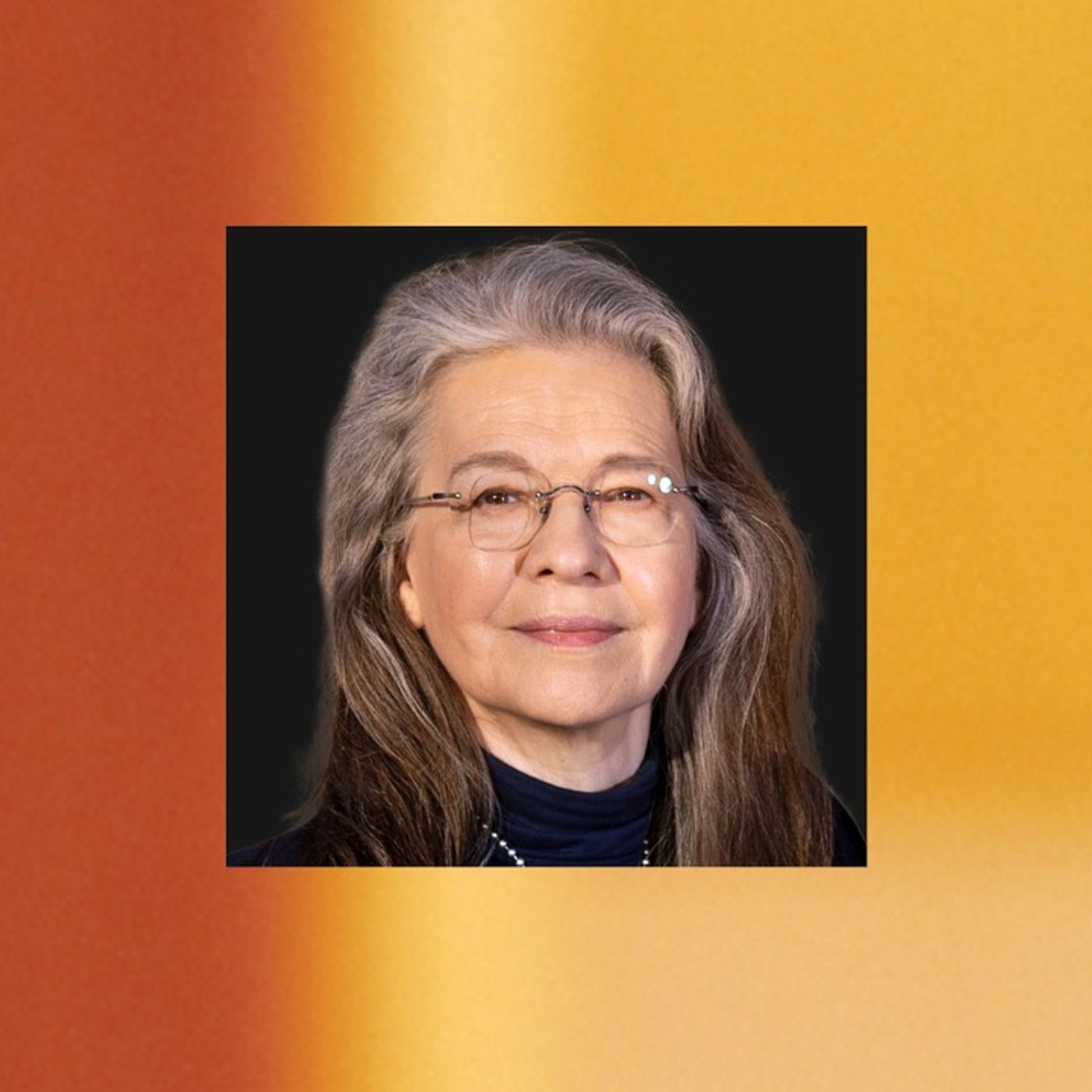
The Book Review
Louise Erdrich on Her New Story Collection and the Mystery of Writing
00:34:17
The Pulitzer Prize-winning author talks process and “Planet of the Apes.”
Loading summary
Transcript101 lines
- [00:00]
Alexa Advertisement Voice
Say hello to the all new Alexa and see how Alexa can do so much more for you. Need last minute concert tickets? Craving your favorite restaurant? Just sit back, relax and talk naturally. Alexa's on it. Alexa remembers what you love, anticipates what you need and makes it all happen. Alexa brings thousands of possibilities to life, ready whenever inspiration strikes. And now Alexa is free with prime on your Amazon devices like echo and Fire TV. Amazon.com Alexaplus I was going to ask
- [00:31]
Gilbert Cruz
you about one story in particular. The love of my days that I read somewhere was written over eight years. It's a 10 page story. What are you doing to these stories over that time? Like, are you leaving them for a year? Are you coming back and changing a sentence? What is the work that is being done on them?
- [00:50]
Louise Erdrich
Well, it's hard to know about this story because I started it, you know, quite a while ago and then I put it away. I didn't even know I had it. And I think I was changing from Microsoft to pages. I thought, what is this?
- [01:07]
Gilbert Cruz
That's the real truth right there.
- [01:10]
Louise Erdrich
There it is. That's how it came to be.
- [01:15]
Gilbert Cruz
It's the Book Review from the New York Times. I'm Gilbert Cruz and today on the show we are talking to Pulitzer Prize and National Book Award winner Louise Erdrich. Since the publication of her first novel, Love Medicine in 1984, Louise has made her mark in just about every corner of the American literary scene. She's one of the most prolific Native American authors and has published a couple dozen books, from fiction to nonfiction to poetry and books for kids. Her latest is a collection of short stories that she wrote over the past two decades. It's called Python's Kiss. So when I sat down with Louise, that's where we started. So I want to talk about stories for a bit.
- [02:00]
Louise Erdrich
Yeah.
- [02:00]
Gilbert Cruz
What, what are the nuggets? How do you find that there's a thing that turns into a story?
- [02:07]
Louise Erdrich
I like how you ask what are the nuggets? Because that is, that is really what happens. I, I have a set of words just randomly pop up and I'll write, I keep notebooks, I write something down and sometimes something keeps going for a while, but it always fizzles out. And I think, wow, that's gone. That energy is gone, whatever was there. But for these stories, something came back. And then I would, would write a little more and a little more. It just crept along, just, you know, army crawled along the forest floor somehow until it got to the end.
- [02:52]
Gilbert Cruz
And you, I mean, the answer is obviously yes because you have finished these stories, but you have the patience to army crawl through years of working on a single story intermittently.
- [03:05]
Louise Erdrich
It isn't really patience. Really everything I do is to amuse myself in so many ways. So I probably got impatient with the story because it wasn't getting anywhere, and I went on to something else, and then I lost my patience with it there. And then I came back to something, and then maybe I get a little bit of a reward or I get a wine or even a paragraph, and then I'm hooked again, easily hooked.
- [03:42]
Gilbert Cruz
I'm wondering, how do you know when something is a story as opposed to a novel or a poem or a children's book? What is it that in your mind leads to you saying, this is going to exist? In this box,
- [04:02]
Louise Erdrich
it announces itself. I. You don't have a way of changing it. If it's not going to be what. What it wants to be. If it's going to be a. A novel, then keeps going. It simply won't stop. If it's a story, it evolves toward an ending in the next 15 or 20 pages. And I. I can't really explain it better than that. I mean, it's a. It's a process that seems to happen outside of my will or exactly what I want to be doing. I mean, it's what the writing wants to do with itself. You can't really control everything that's going to happen in your. In your writing life, in your art life, in whatever you do. And you have to be comfortable with that. And I always. I think I always was because I was never a very in control person. It's never been me.
- [05:07]
Gilbert Cruz
Can I ask what you mean by that?
- [05:10]
Louise Erdrich
I mean, I didn't have a lot of control over my. I didn't really know how to control a lot of my behavior, how to work with people around me. A lot of awkwardness. I have a lot of experience, but I have a very rudimentary ability to process my experience, except through writing. That's my only. That's always been my only real way of processing. It's changed as it goes along. And I keep a lot of diaries, probably because it's helped me.
- [05:49]
Gilbert Cruz
Mm. Are those diaries things, you know, like daily reflections that. These are things that happened to me. Are they sort of more philosophical?
- [06:03]
Louise Erdrich
Well, they started as cries of woe. That's how a lot of diaries start.
- [06:10]
Gilbert Cruz
Oh, it's a great place to start.
- [06:13]
Louise Erdrich
It's a cry of woe every. I. I mean, I've looked through my old notebooks and they're very funny because nothing as dramatic or stupid has ever happened to anybody else but me or that Louise from back then. But then they slowly became more invested in taking note of what was happening. And what really has been helpful for me in looking back is that I, to a surprising extent, did write about things that were happening around me, about not so much people, but about little travels. I did. I wrote lots of detail down.
- [06:58]
Gilbert Cruz
And this is from an early age, from when you were a teenager, from when you were in university. Like, when did you start this?
- [07:07]
Louise Erdrich
I started it in fifth grade.
- [07:09]
Gilbert Cruz
Oh, my. That's very early.
- [07:12]
Louise Erdrich
Yeah. Because I was so overwhelmed. I worked in a movie theater, and I was so overwhelmed by seeing Planet of the Apes. The end of it really knocked me over.
- [07:25]
Gilbert Cruz
It's one of the great movie endings of all time. It's a great movie, you know, Damn you. Damn you. You did it. You know, hopefully I'm not spoiling it for anyone. We all know what happens at the end of Planet of the Apes. Do you remember why it was so jarring for you?
- [07:42]
Louise Erdrich
I do. Because then you immediately assume, okay, it was a nuclear war. This is what happened. At the time. Growing up in North Dakota, our state was the third largest nuclear power in the world. We were surrounded by hundreds of ICBM missiles. Just so much nuclear power. It was astounding. We were kind of proud of it in some perverted way, because we were a national sacrifice area. So the end of Planet of the Apes was. I decided that I should really take this seriously. And then I started thinking a lot more about it. Throughout my life, I would return to it.
- [08:34]
Gilbert Cruz
And you're referring to all of, you know, all of the ICBMs that are in missile silos underground, that on the off chance something we got into a nuclear conflagration with someone, they would all launch from all of those around you.
- [08:48]
Louise Erdrich
They would all launch from North Dakota. But North Dakota was the sponge that would pick up all of the ones that were launched at us. It's come back to me a lot now. I'm working on a different book, but. Well, I don't want to get into it, actually. It's okay. Let's just leave it.
- [09:07]
Gilbert Cruz
Okay. We'll move away from it for now. So I ask. I feel like I ask authors all the time about influences, their favorite writers, their favorite books. But actually rarely, or in this job at least, I've rarely gotten a chance to talk about short stories, hear authors talk about short stories. I'd love to hear, you know, writers or stories that have influenced you in writing in this particular form.
- [09:36]
Louise Erdrich
Anton Chekhov, number one. I mean, most writers say Anton Chekhov. I mean, that's one person I go back to all the time to read. George Saunders, of course.
- [09:51]
Gilbert Cruz
A man who himself loves Chekhov.
- [09:54]
Louise Erdrich
Absolutely. Yeah. I think everyone I admire always, always goes back to Chekhov. I read Lauren Groff's Brawler, the first story that's a collection, and I cried. I don't usually cry. It's unusual. But that story. Who else.
- [10:20]
Gilbert Cruz
Can I interrupt you to ask what it was? What was it about it that made you emotional?
- [10:29]
Louise Erdrich
Yes. There's a part in the story where you think that something has happened, but then it turns around and says, if only that it happened, and then tells the truth of what happened. And at that point, you know, your heart starts beating a little differently, and by the end of it, you're wrecked on the page. Because it's also about. This is something that I love in fiction. That's the child hero, a child who is a hero, and this hero is trying to save her family. And it does. You know, I don't want to say exactly what happens. It makes you cry.
- [11:13]
Gilbert Cruz
I feel like right after this interview, I'm gonna go read the story. I think we have a copy downstairs in the office.
- [11:19]
Louise Erdrich
Yeah, we have to.
- [11:21]
Gilbert Cruz
I'm curious, just off that note, off that feeling, that emotional feeling, reading that Lauren Groff story, do you. Do you ever get readers of yours telling you that they got emotional, cried at certain parts, and is that something that if and when it happens, is it surprising to you? Do you know that things are going to have a certain effect with readers? Or can you never tell?
- [11:48]
Louise Erdrich
If something I write surprises me into tearing up, then I think maybe it will. And for instance, the End of Love of My Days did get to me that way.
- [11:59]
Gilbert Cruz
It's wonderful to hear that, because it strikes. As someone who doesn't write fiction never has the. The idea that I would. Something would come out of me, I would write something. I would be the person whose brain invented it, and yet it would still strike me or surprise me in such a way that I would have an additional emotional reaction. It's another reason why art is amazing. It's just like you. The writer put something down on paper. It wouldn't exist without you, and yet you are tearing up at the thing that you invented.
- [12:35]
Louise Erdrich
It is very strange because I. I know you hear this from other writers, but it's very true. There's. There's really no way to control everything that happens in a piece of art. So whatever is in you that's writing down the words can take over. And you. Sometimes I don't even think I wrote it sometimes. For instance, when I look back at the story that I was talking about, how it took me for a long time to write it, some of these stories, I wasn't sure that I had written it or I had. It didn't seem like something I had written. And yet obviously it was in my handwriting.
- [13:19]
Gilbert Cruz
So how does that. Is the creation part of it still mysterious to you in some way?
- [13:27]
Louise Erdrich
Yeah, thank God. I mean, we have to have a mystery. I don't think I'd like it if I knew. If I knew much more about it than I do. I like working on a level that isn't all me. I'm in my real life, a boring person. I don't have interesting things to. I'm sorry, anyone who's listening. Interesting things to say. I don't really have a kind of, don't apologize, magical personality. But the stories write themselves. The. The novels, they. And I. I must have something to do with it because I'm. I, I do have an immense amount of research that goes into everything and thought and emotion, but there's some piece of it that belongs to some other world, some other entity. Not an entity, but that place where art happens, whatever it is.
- [14:37]
Gilbert Cruz
After the break, Louise explains why crawling around on the floor was part of her writing process.
- [14:51]
Alexa Advertisement Voice
Say hello to the all new Alexa plus and see how Alexa can do so much more for you. Need last minute concert tickets? Craving your favorite restaurant? Just sit back, relax and talk naturally. Alexa's on it. Alexa remembers what you love, anticipates what you need, and makes it all happen. Alexa plus brings thousands of possibilities to life, ready whenever inspiration strikes. And now Alexa is free with prime on your Amazon devices like echo and Fire TV. Amazon.com Alexaplus for adults with Crohn's disease
- [15:23]
Tremphya Advertisement Voice
or ulcerative colitis symptoms, every choice matters. Tremphya offers self injection or intravenous infusion from the start. Tremphya is administered as injections under the skin or infusions through a vein every four weeks, followed by injections under the skin every four or eight weeks. If your doctor decides that you can self inject Tremphya, proper training is required. Tremphya is a prescription medicine used to treat adults with moderately to severely active Crohn's disease and adults with moderately to severely active ulcerative colitis. Serious allergic reactions and increased risk of infections and liver problems may occur before treatment Your doctor should check you for infections and tuberculosis. Tell your doctor if you have an infection, flu like symptoms, or if you need a vaccine. Explore what's possible. Ask your doctor about tremphya today. Call 1-800-526-7736 to learn more or visit tremphyaradio.com Instagram Teen accounts come with automatic protections for who can contact teens and the content they can see. Learn more about teen accounts@instagram.com teenaccounts.
- [16:44]
Gilbert Cruz
In Python's Kiss, your collection, you have one story that read to me for much of it. Like a, like a ghost story. There's a story called Borsalino. You have two interlinked stories that are essentially science fiction. I'm wondering, do you think about genre when you're writing or is it just this is the story I wrote and I am Louise and these are the elements and let someone else categorize it.
- [17:11]
Louise Erdrich
I love how you say that I'm Louise. Let someone else figure it out. Yeah, that's how it is. I don't, I didn't really think about the genre, to be honest. I. I don't know. I felt like this is the way things are trending, that there'd be an afterlife that's run by various competing corporations and you wanted to get in. And I even have more of it that's about that. I wrote a long time ago about giant data centers that have to be tended by low wage workers. And so I didn't think of it as science fiction. No, I thought of it as a possible. A speculative fiction. I like that kind of. That term.
- [18:00]
Gilbert Cruz
I'm curious, if I were to ask your children what it looks like when you're writing, what do you think they would say? Are you lost in your thoughts while you're walking around? Do you have to disappear into a room of your own? Or have you sort of. Have you been able to integrate it into your daily life in a way that know where you don't have to remove yourself?
- [18:23]
Louise Erdrich
Well, I do prefer to remove myself, but I rarely can really remove myself. And I think they would just say that either I have a glazed look and you know, I have sort of a glazed affect or I do. I. When, when one of them asks me, you're. You seem a little, seem a little off today. Are you crawling around on the floor again? Because that's how I find myself sometimes. I just have to throw everything on the floor that I have. All these notebooks, these crazy notes and everything that I've taken and I have to crawl through them and put them in order, and I'm crawling around on the floor. That's part of my process.
- [19:10]
Gilbert Cruz
That's incredible. I. It's, you know, physicalizing this intellectual act.
- [19:17]
Louise Erdrich
Is that what it is?
- [19:19]
Gilbert Cruz
I feel like it's what it is. You know, you have these little. All these little scraps of paper, and you need to. There needs to be a part of your body that's sort of working with it.
- [19:26]
Louise Erdrich
Yeah, I'm like, putting them in stacks, and then I'll find one that maybe, you know, I forgot. It might be the beginning of a story or something. Yeah.
- [19:39]
Gilbert Cruz
So I had the chance last year to interview Isabel Allende, and she talked about the fact that she had decades worth of letters from her mother. She estimated that she had more than 20,000 letters. We're not here to compare numbers, but I know that you, in your own way, have a real cache of letters from a parent, letters from your father. I'm sort of jealous of the both of you. To have something that you could refer to, go back and refer to time and again. I'd love to hear about those letters and what that relationship was like, this written relationship. Did your dad consider himself a writer?
- [20:17]
Louise Erdrich
I think he did. I mean, I considered him a writer. He included poems, stories. He would make a story out of anything that happened in our family. Like your mother is canning again. And he would enlarge it to. She's canned the toads in the garden. She's canned the. The slugs on the plants. She's canned everything in. And he keep going this long list of things that she canned. And he would, you know, they're wonderful letters. He also started this project that I eventually made into a booklet, which was he. Which was to write a limerick about every town in North Dakota. He did that. So I was. His letters are really one of the treasures of my life. I have stacks of them. My mother also wrote letters. We were a letter writing family. My grandfather have. My grandfather's letters from when he was a tribal chairman for the Turtle Mountain Chippewa. And he went through. It's what the Night Watchman is based on. The personality that I knew from the letters and knew from being around him.
- [21:46]
Gilbert Cruz
I know when you have spoken about the Night Watchman Again, the book whose main character is based in part on your grandfather, which won the Pulitzer Prize. You've said that the award didn't go to you. The Pulitzer Prize didn't go to you. It went to the book, and maybe by extension it went to your grandfather. And I'm Curious about the way that you've talked about this book because it seems, even though each of the books that you've written are surely personal in some way, that there's something about this one in particular and all the accolades that it has gotten that has made you talk about it in a very specific way.
- [22:26]
Louise Erdrich
Well, it's very special to me because I wasn't. For instance, this happened to me later in my life when I knew that I shouldn't attempt to take control of a book when I had less ego invested in it. When I wrote, say, the Master Butcher Singing Club, I had too much of my own ego invested. I thought I had some great ideas, but I could have done a much better book if I'd been older and if I'd understood that sometimes the book is very simple, the story is very simple, and you have to stay with the simplicity. That's what happened with Night Watchmen. I just decided that I would stay simple.
- [23:25]
Gilbert Cruz
Can I just ask you one or two questions about your bookstore, which I've never been to and I would love to go to one day?
- [23:30]
Louise Erdrich
Yes.
- [23:31]
Gilbert Cruz
In 2001, you opened a bookstore in Minneapolis. It's been open for a quarter century now, and there's nothing to guarantee that any business, let alone an indie bookstore, is going to succeed. I'm wondering, how involved are you in the bookstore and whether or not owning this store and mingling with customers and doing all that stuff, has it made you think differently about books and the way they exist in people's lives?
- [24:00]
Louise Erdrich
It's entirely changed my way of looking at books and the way they affect people and how they. How, you know, the survival of this bookstore has been. It's been a levitating act. It really has. There were times I thought I didn't know how it could go on. It was very hard, rough going. I'd started it right when Amazon started taking over so much of the industry and so much of book life. But when I first started, there was only one set of shelves that had any Native titles on them. And they were mostly by non Native authors about Native people. And now we could fill the whole bookstore. It's not a huge bookstore. It's small, but we could fill it all with Native books. It's a general bookstore, but something has happened and indigenous writing has just exploded into. Into view. And I knew this was going to happen because I knew that once a lot of people from a lot of different tribes began to write about their backgrounds. There would be some similarities, but they would be so uniquely different that people would want to read them and there would be book after book after book. And that's what's happened, is there?
- [25:27]
Gilbert Cruz
As you said, you could fill your entire bookstore with native authors if you so wished. I'm wondering if there are either a few authors or a few categories that you would recommend to our listeners who maybe their experience of native authors starts and ends with you, or starts and ends with you and Joy Harjo, or goes as far as Stephen Graham Jones, but who are some other people that we should be reading?
- [25:59]
Louise Erdrich
Well, first of all, this is a writer I return to over and over and read his book over and over. This is James Welch and his book Winter in the Blood. All of his books are excellent. He's not with us anymore, but his book Winter in the Blood, published I think, in 1974, should have won the Pulitzer Prize that year, the year it wasn't given out. But it's the most beautiful, bleak, short, funny, intensely personal book. It's a novel that I would love to have written. It's an amazing book, begins and ends and wraps up in a story that goes back and forth through time. But it's really the story of a kind of. It's kind of a binge story, but it's funny and it's beautiful. I don't know. It's one of my favorite books of all time.
- [27:10]
Gilbert Cruz
Coming up, you might be as surprised as I was to learn what book Louise currently has on her shelf.
- [27:21]
Alexa Advertisement Voice
Say hello to Alexa and see how the experience is tailored to you. Alexa learns your preferences to serve you better. Planning a vacation? Ask Alexa to recommend a trip to check off your bucket list. Use Alexa to find the name of that song you love, discover new favorite shows or recipes, and do so much more. Ask Alexa anything and now Alexa is free. With prime on your Amazon devices like echo and Fire TV, get started at Amazon.com Alexaplus day or night. VRBoCare is here 24? 7 to help make every part of your stay seamless. If anything comes up or you simply need a little guidance, support is ready whenever you reach out from the moment you book to the moment you head home.
- [28:08]
Louise Erdrich
We're here to help things run smoothly
- [28:11]
Alexa Advertisement Voice
because a great trip starts with the right support. And hey, a good playlist doesn't hurt either.
- [28:20]
Tremphya Advertisement Voice
Instagram Teen Accounts have built in protections for who can contact teens and what they see. Learn more about teen accounts@instagram.com teenaccounts.
- [28:49]
Gilbert Cruz
We're going to talk a little bit more about books for more than a decade, I think as you know because you participated in this feature almost exactly 10 years ago in April 2016. For more than a decade, the New York Times Book Review has been doing by the book. It is a series in which we ask authors a set of recurring questions about their reading, their reading habits, books that they love. We do an audio version of that now and I want to ask you a few questions.
- [29:19]
Louise Erdrich
Okay.
- [29:19]
Gilbert Cruz
Okay, let's start with this one. What's the last book that you've recommended to member of your family? And you said you have to read this.
- [29:33]
Louise Erdrich
So my, my family, a lot of my family have insomnia. So we do, we listen to books to put us to sleep. And I have one that is perfect for sleeping too. It's Sai Shan's book. So it's, it's not somebody who's going to listen to this. The pillow book was written in around 1,000. It's very old. It's incredibly fresh and new, everything about it. It's a book of miscellany and it is a book with entries like hateful things, depressing things, Splendid Things. And there's this beautiful list and this beautiful, beautiful descriptions of the sliver of a moon at sunrise and things that just are so evocative but they're disconnected. So they're perfect for falling asleep to.
- [30:32]
Gilbert Cruz
Louise, I'm going to give it a shot. I often have to listen to something myself to fall asleep at night. Okay, next question. Are there books that you find yourself returning to time and again?
- [30:45]
Louise Erdrich
Well, I do return to Winter in the Blood by James Welch. Death of the Death of the Heart by Elizabeth Bowen. I've read several times. I've read this story collection called Save Me Stranger by Erica Kraus. There's something about it. It's like a very traditional set of story form stories and they are just, they'll just blow you away. Bluest Eye and Austerlitz. I get back to Austerlitz all the time.
- [31:24]
Gilbert Cruz
Tell me a little more about Austerlitz. This is the WG Sebald book.
- [31:28]
Louise Erdrich
Yeah. I find it one of the most capaciously, endlessly fascinating books I've ever read. There's so many parts of it that you just want to read over and over and over. There's a part about moths, there's a part about something called a nocturama. There's parts of it that take you off in these long side pieces. But it always returns to this central theme of Austerlitz. Trying to put together who he is, where he's from and when he finally does it's a wrenching part of the book. There's a line in Austerlitz that's so predictive of what happened on 9 11. And it's a line that goes something like giant buildings always have in them a preview of their own destruction.
- [32:38]
Gilbert Cruz
Oh, wow. That's incredible. Because Austerlitz, I believe, came out three weeks after 9 11.
- [32:44]
Louise Erdrich
Right?
- [32:45]
Gilbert Cruz
Yeah. Early October 2001. I must admit, I've never read it. I've always wanted to. I've read the Rings of Saturn, which I thought was one of the more amazing and surprising reading experiences I've ever had in my life. This was gorgeous and. And you never knew where it was going. And the mixture that he does of photos and real stuff and fictional stuff is quite unique.
- [33:10]
Louise Erdrich
Right?
- [33:12]
Gilbert Cruz
I guess you answered this one already. The last book that made you cry, you would probably say it was that story in Brawler, but is there another book that would fall into this category? What is the last book that made you cry?
- [33:25]
Louise Erdrich
Well, now, I don't often cry at stories. It's unusual. But this was not too long ago also. And it's the end of a book that's not out yet. I got to see it in a advanced reader, and it's Ann Patchett's next book, Whistler. It's extraordinary.
- [33:46]
Gilbert Cruz
All right. That's quite a tease, Louise.
- [33:48]
Louise Erdrich
Yeah. I'm not gonna say anything else. You gotta read it.
- [33:51]
Gilbert Cruz
These bookstore owners slash authors are colluding right here.
- [33:55]
Louise Erdrich
Oh, yeah. That's both Lauren and Anne.
- [33:58]
Gilbert Cruz
It's the three of you.
- [34:00]
Louise Erdrich
You wonder when do we have time?
- [34:04]
Gilbert Cruz
I do want. I continue to wonder that. I'm curious. Do you think your reading tastes have changed over time?
- [34:11]
Louise Erdrich
Yes. I am more critical and I'm. I will throw. I will just, like, put a book down if it doesn't interest me enough in the beginning or. Or if it has. If it has certain things I don't like. I don't like any snorting. I don't like any giggling. I don't like overused things like giggling. I mean, can't you find a better word? Or if it's repeating. People are repeatingly gasping at something they hear or. So there are certain things that if they repeat them more than once, I can't take it. Or if there's a word that is always repeated by a character and. Or if someone says something, say cavalierly, and then it happens again two pages later. I can't take that. So I.
- [35:10]
Gilbert Cruz
It sounds like you're. It sounds like your standards have just increased. The more you know, the more you. The more books you've read. Yeah, that's fine. That's just taste, maybe I support this.
- [35:23]
Louise Erdrich
Thank you.
- [35:24]
Gilbert Cruz
Are there any books that you think people would be surprised to find on your shelves?
- [35:28]
Louise Erdrich
Yes, and it's right here. It's make the Golf Course a Public Sex Forest.
- [35:35]
Gilbert Cruz
Make the Golf Course a Public Sex Forest. Please tell me what this book is about.
- [35:44]
Louise Erdrich
This book is a Minneapolis book. It is one of the reasons I love Minneapolis so much. There is a controversy about a golf course that's in the city and is taking up a lot of green space and is polluting a lot of water. And it's in our public park system. And it's only, you know, it's used more sp by a few. It's used by golfers. But some. A lot of people want to keep it, but a lot of people who'd rather have public sex would not want to keep it. So this book is. This is a compendium of essays on how to change this into a public sex forest, this part of the golf course.
- [36:29]
Gilbert Cruz
You know, I'm glad to have done this interview with you, Louise, if only. If only for me to have learned what a public sex forest is.
- [36:38]
Louise Erdrich
Well, I'm glad you know too now. And I'll just tell you that it's a book published by Maitland Systems Engineering. So the engineering problems may be also addressed in here. I'm not sure.
- [36:55]
Gilbert Cruz
Louise Erdrich, thank you so much for coming on the Book Review to talk about your new collection of stories, Python's Kiss. This was just a delight of a conversation. It's a joy to have you on.
- [37:06]
Louise Erdrich
It's been a pleasure for me to talk to you. Thank you. Thank you very much.
- [37:13]
Gilbert Cruz
The Book Review is produced by Sarah diamond and Amy Pearl. It's edited by Larissa Anderson and mixed by Pedro Rosado. Original music by Alicia Ba? Itu. Special thanks to Dalia Haddad and Paula Schuman. We want to hear what you think about the show. Send us an email@thebookreviewytimes.com I'm Gilbert Cruz. Thanks for listening.
- [37:46]
Tremphya Advertisement Voice
You compare prices when shopping for flights, hotels, cars. So why not small business insurance? At Simply Business, we'll show you policies that fit your business and a range of prices to help you save. Who knew buying insurance could be so simple? Visit simplybusiness.com for your free quote today.