← The Book Review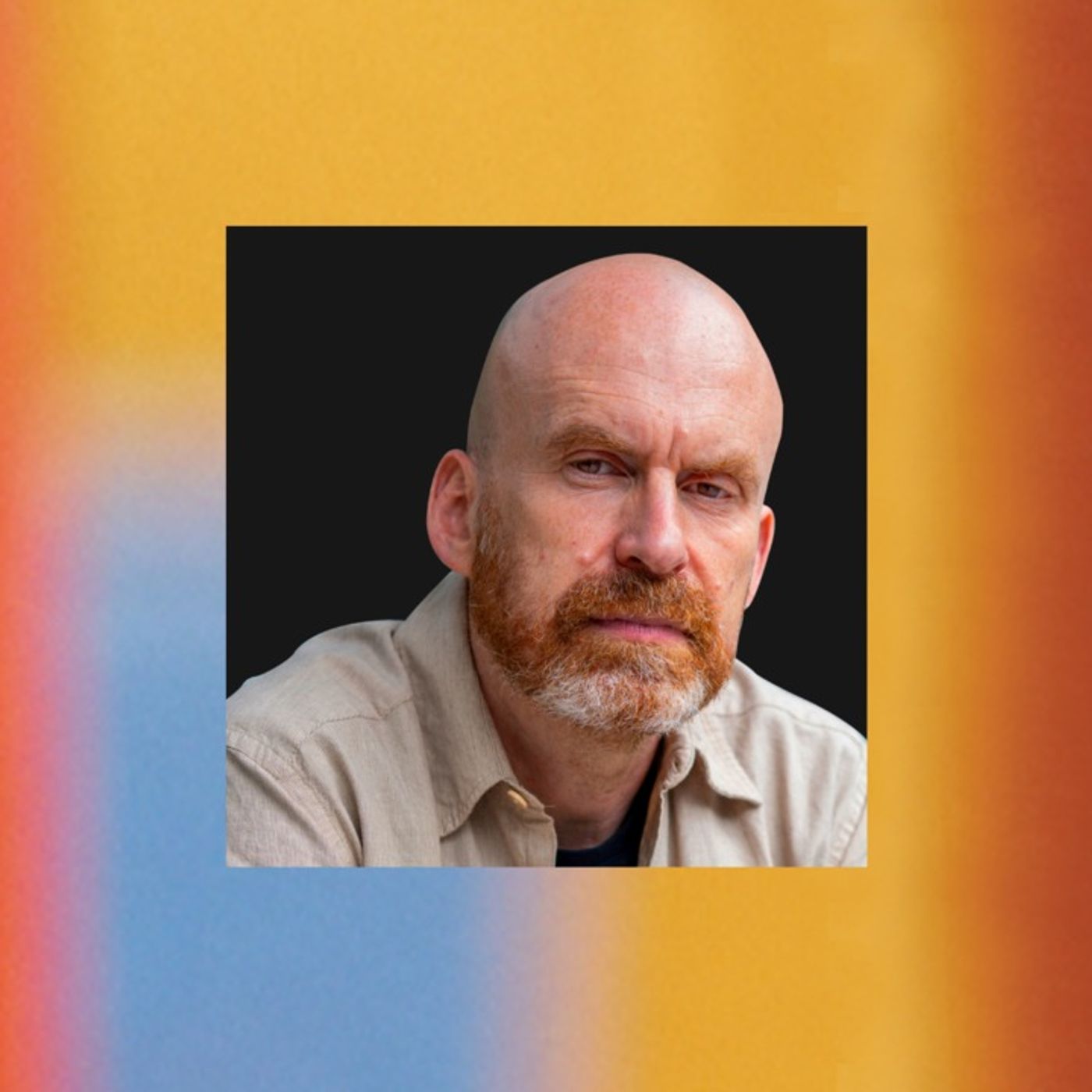
The Book Review
Matt Haig on ‘The Midnight Library,’ Mental Illness and Winnie-the-Pooh
00:42:07
The best-selling author joins the “Book Review” podcast to discuss his new novel, “The Midnight Train.”
Loading summary
Transcript77 lines
- [00:01]
A
I'm Gilbert Cruz, and this is the book review from the New York Times. Today on the show, we've got some book recommendations for you. We're gonna get into those a bit later, but first it's author Matt Haig. Matt, you live in Brighton.
- [00:14]
B
Yes, Brighton.
- [00:15]
A
He's most known in the United States for his smash hit, the Midnight Library. That's the story of a woman who has reached a breaking point. She ends up in a library filled with books that each hold a different version of her life. If she opens one, she can step into the life she would have lived if she had made different decisions. That book was published in 2020 and became hugely popular, selling more than 10 million copies worldwide. Matt is now out with a new book, something he sees as kind of a sibling to the Midnight Library. It's called the Midnight Train. I'd love to start before we talk about the Midnight Train with the Midnight Library. Since they are connected. This is a book that really took you to another level in your career, at least in terms of your notability. How many people are reading your books? It's a story about a woman named Nora Seed. She has experienced, as have we all, many regrets in her life. And on one particular night, she decides that she doesn't wanna live anymore. She finds herself, however, in, quote, the Midnight Library, where each book is such a great concept. Each book transports Nora into a life that she could have lived had she made different decisions. The little decision trees that branch off from everything we choose. Where did that idea come from, this idea that you can open a book and maybe enter a different version of your own life?
- [01:35]
B
Well, it was an idea that was bubbling away in various forms in my head for ages and ages and ages. I mean, obviously there's sort of literary influences. You've got the Sylvia Plath idea of the fig tree branching off. You've got barta's idea of labyrinthine libraries. And I always loved that sort of stuff. With me, I was really struggling until I got the title, until I got the Midnight Library. I think it was the Library of Lost lives for quite a while. And I think, you know, unconsciously, perhaps it came around from me spending too much time on social media and on the Internet and that feeling that there's a life elsewhere or that we're constantly comparing ourselves to something else. So it was a pre Covid book. I mean, it's often seen as a Covid novel because of when it arrived, but it was pre pandemic. So it wasn't quite that existential moment. It was more this idea that we weren't living our best life. And I was doing a lot of wishful thinking, a lot of regretting, a lot of feeling like time was passing by. And in the uk, I was already a bit known for writing about mental health and I'd done so in nonfiction. I'd written a memoir, slash slight self helpy territory book called Reasons to Stay Alive. And that felt quite cathartic to write because that was kind of a release. But at the same time, nonfiction confines you in certain ways. You know, you were writing about real people, you're writing about your own parents. And so to take a story with mental health, mental illness themes and to fictionalize it again, that was another thing I wanted to do with it.
- [03:30]
A
I do want to go back a few years because you made reference to a nonfiction book that you had written that had received good notices and acclaim in the United Kingdom. It was a book about your younger years. And I was wondering if you could talk about how that book in particular came to be. So many of those themes are connected to so many of the themes in the fiction that you've been writing over the past few years, right?
- [03:55]
B
Yes, absolutely. Of all the books I've written, it was the most accidental. It was called Reasons to Stay Alive, which is a very typical me, sort of two on the nose kind of title. A little bit ambitious, but yeah, it was accidental in the sense that I was a novelist, I saw myself as a novelist. Then there was a charity in the uk, a very good charity called Book Trust, and I was their writer in residence for a while, which basically meant I had to write a blog once a week. And so I started with your basic blogs about being a writer, writing tips. And I was, I was starting to bore myself about three months in repeating myself over and over, so. And I'd had a recent mental health wobble. And so I sort of like publicly came out in a small way on the Internet as this person who had been suicidal, who had depression. I'd never really publicly talked about my mental health, but I wrote a single blog called Reasons to Stay Alive at one point and it was a sort of bullet pointed list of little sort of aphoristic advice. And it went sort of semi viral, certainly in the UK book world. It sort of took off a bit and was shared around and I had a lot, a lot of feedback about it. And a woman who worked in publishing got in touch with me and she said I should write a book about it. Then one summer, feeling very happy, in about 2014, feeling very different to my younger suicidal self. I mean I, I literally nearly, you know, ended my life at the age of 24 and it was a long way out of that. So I, I needed to be in a very different place and I was in a very different place physically and emotionally and I just poured it all out. Without ever having had therapy at this point in my life, without knowing I was neurodiverse, which, you know, I've since been diagnosed with autism and adhd. Without knowing that much really about my mind. I wrote this very quite clumsy at times choppy book that was working out what it was. As I was going I was like, is this a book of advice or is this a book about memory and what I remember? And the only straight line through it was me remembering myself at 24, wanting to die. Not out of any sort of pre planned death wish, but being suddenly thrown into the state of panic and depression and physic, really physical feelings, even the brain stuff felt physical a lot of the time. And the line between mental and physical was so sort of blurred and I didn't know what was happening to me. So it was like being in a burning building. You don't plan to throw yourself out of a window. But suddenly the situation had massively changed. So it was that. It was a desperate thing that had come on the back of years, I think, of low level depression, undiagnosed masked mental health issues masked by alcohol and drugs. It was very sort of cathartic to write all that stuff and to speak to that person. That was what I was sort of trying to do. I was trying to write a sort of message in a bottle back through time to this person to see if there are words that could keep someone in, in that state or someone next to someone who's been in that state to see if anything could get through. A lot of the people who responded to it, obviously yes, there's a lot who had gone through something similar. But what really sort of touched me was people who had been struggling in relationships with like their children or parents or partner, understanding what had gone on in their sort of darkest moments. And I think that was another incentive of mine to provide a kind of window because I can remember being unable to articulate what I was feeling. Often it was like a physical heaviness, like I could hardly speak because of a sort of weight. And so I think to visualize it and to use a lot of similes and metaphors to take this very invisible thing which doesn't come with crutches, doesn't come with a wheelchair, you kind of have to describe it for people to empathize with it. And often in the state of depression, you're unable to describe it. So hence stigma rises and that inability to see someone. So I was trying to make the invisible visible in that sense. And I genuinely wrote it thinking it was going to be a very niche book that only a few people. So the thing that took me aback, and it's obviously what you want, you want a lot of people to read your book, but because it was that book and not a fictional book, it was suddenly me out there. It was suddenly me being reviewed. It was suddenly me having to sort of offer my life story everything so that I think I had a bit of time adjusting it and to sort of claim myself back as a novelist at a point.
- [09:06]
A
After having a breakdown when you were in your early 20s, you moved back home, as you write, and I'm particularly curious about this. You say that you moved into your childhood bedroom and you started rereading books that you had loved as a teenager. This is a book podcast. We have to talk about books. And I'm curious what you were rereading, how it was making you feel, what you were getting out of it, and then how that sort of led to you continuing to realize that you wanted to be a writer or that this is what you were meant to do.
- [09:37]
B
Well, I love now, looking back, that it was just children's books because I don't think I could have been reading. I mean, it wasn't just children's books. There were some classics on there as well, but it was basically books like proper childhood books like Winnie the Pooh and the House at Pooh Corner and teenage books like the Outsiders and things like that. Why I could read them was because everything else in terms of television, magazines, I found it so over visually over stimulating. And I was in such a soft. It sounds pathetic, but I was in such a sort of fragile state that books were the sort of, like, calm place. And the fact that they were all books I'd read before meant that I could retreat into a sort of time before I could retreat into that space before mental illness. And also it was. It was kind of training as well. I was training my mind to concentrate, to read was like, you know, it was like strength training of a mind in terms of trying to build up attention. And children's books are great for that because they kind of lead you in. You know, they're not. They're not asking you to come to it. They sort of like Meeting you where you are, it was like building myself up again. It was like sort of like going back. And there's something pure about the way you read a book as a child. And even now, even in the sort of midnight books, I try and have that voice. I want the sort of best of both worlds where you have the freedom to write about whatever subject you want as you would do in a novel for adults, but also to have the freedom that comes with children's fiction, which is a sort of imaginative freedom where you can have fantasy trains and fantasy libraries and things. Children's books for adults.
- [11:32]
A
What were your early writing years like? When did you say, you know, I'm really gonna try actually to make a go of this?
- [11:40]
B
Well, I'd always written and my mum's one of those embarrassingly proud moms. Who's got the shoebox.
- [11:46]
A
Oh yeah.
- [11:47]
B
Full of self illustrated attempts. My early writing when I was a kid, it was always heavily, heavily Americanized. It was more American than American. You know, it was like westerns and there was always a cowboy called Jake in Arizona and you know, it was just like as American because everything I watched on TV was American or every book I was reading was American. I had zero confidence in myself growing up as teenager. I wasn't the most academic teenager at school. You know, some of the teachers said, oh, special needs for certain subjects. Because I'd be staring into space or chatting and just not concentrating on anything. So you know, when I sort of spoke to a careers advisor about wanting to be a writer, it was just, you know, I wasn't from the sort of school where people went to the sort of universities where you'd imagine you'd go to be a writer. So it happened in the moment really when after I was ill. I don't want to turn this into a therapy session, but I was still in a sort of agoraphobic state. And although I'd had quite short lived jobs previously, I was at a point now where I genuinely felt I couldn't go out to work at that point. This was very early in the sort of working from home revolution. There wasn't social media, the Internet was very new. There weren't many options of what you did from home. And so I thought, you know, ridiculously, I thought, right, I'm gonna make my money writing novels. Which obviously didn't go down well with the parents or anything else at that time. And to be fair, it took a long while before I saw any money from it. But the one thing I felt comfortable doing was writing So I suppose it's 22, 23 years ago, I started writing a very strange novel, which in America is called the Labrador Pact. My title for it was the Last Family in England, which is what it's called here. Very strange, quite pretentious. Young man's first novel about a. Well, it's told from a perspective of a dog.
- [13:56]
A
Good start.
- [13:57]
B
And. But it's not. But it's not a children's story, and it's about a dysfunctional family of humans falling apart. And it's to up the pretentiousness a little bit further. It's a retelling of Shakespeare's Henry iv, Part One with Labradors.
- [14:12]
A
Not pretentious at all. I agree with you.
- [14:17]
B
And yeah, but I had fun writing it. I started to realize I like writing short chapters, which I still do. I still write short chapters. And I wasn't consciously thinking about depression or anxiety or worrying about the sky falling in. I was in the world that I was writing. I wouldn't necessarily recommend anyone to go and read that word world I was writing. But at that time, it was what I kind of needed to do.
- [14:46]
A
You in the Midnight Library. You know, Nora, the main character, has all these interests, and one of them is philosophy. The book is studded with all these quotes from famous thinkers, and one, of course, that keeps popping up is the American philosopher thinker Henry David Thoreau. What was it about him in particular that was important to have as the focus for this character? And why even put all these philosophical musings in the Midnight Library?
- [15:14]
B
Well, I think Thoreau is like a very attractive figure for a 21st century mind that feels overwhelmed by modernity and contemporary society, capitalism, everything else. Just not necessarily the real man who he was, but the idea of Walden, the idea of going into the woods, building a cabin, retreating from society and then enriching yourself more. And I suppose the theme of the Midnight Library, without being too spoilerish, is, is essentially about valuing the minimalism of your own existence and seeing that as, you know, the things that look shiny, like the Olympic medals or the high flying careers or the infinite riches, you know, they might not be the answer. And maybe the answer is sort of already inside you and retreating. And I feel like Walden in particular, it's about the practicalities of nature and living in nature, but it's also on that spiritual level, about stripping everything else way and seeing what's there.
- [16:29]
A
We're going to take a short break, and then Matt Haig talks about his new novel, the Midnight Train, in which an 81 year old man boards a magical train that allows him to relive the most significant moments of his life. We'll be right back. A phrase and a term that has become very popular in the past couple decades, of course, is world building. What was the impetus to take your Midnight Library world, for lack of a better description, and extend it or, you know, complicate it in some way and present a different perspective to the way that someone might re experience their life or experience their life in a different way?
- [17:15]
B
Yeah, good question. All I can say to answer that is it happened very organic. It didn't happen in a I'm going to write a sequel sense. And it's not a sequel, it's a companion at best. Or a sibling. I like to call it a sibling. The Midnight Train started as a very, very different novel. I mean, all my books sort of end up with different titles and different things. The Midnight Train originally started as a novel called the Memory Thief. And it was quite dystopian science fiction about AI. The only thing that's been sort of preserved from that first draft is the fact that there's a character called Agnes. And also there's a honeymoon in Venice. Everything else was new and sort of redrafted. And along the way it became something else. It became this, you know, about your life flashing before your eyes. And then there was a vehicle for that, a train. And that came in a minute. It was the yesterday train. And then I was starting to talk about the science of your life flashing before your eyes. And I was starting to realize I was actually having an argument a little bit with the Midnight Library. I feel like it's coming to a different conclusion about life and it has slightly different lesson. I feel like the Midnight Library is very much just about acceptance. And I agree with. I agree we shouldn't always imagine progress as greener and stuff like that. But I feel like this book represents a desire to act or to change things. So it's a different approach to regrets. It's about how you would live if you had that future perspective of your last day. How would that change the course of your life? What point of the train would you want to get off and change things? So this one is saying something different. It's saying, let's try and step off the train. Let's try and change things. So in its own subtle, gentle way, it's having a little falling out with the Midnight Library.
- [19:17]
A
I have to imagine this is a question that you will get a bunch, but I have to ask because the idea of the book demands it, which is, have you given thought to the moments you would like to look at again in your life? You don't need to change them, you don't need to intervene, just observe.
- [19:36]
B
Well, yeah, I'm gonna be boring and go. Quite recent history. I would go back to the sort of early parenting years because it was just the era before everyone videoed everything. So we don't have much sort of video content of that. And I don't have much memory. Like, career was just getting off the ground. I'd just been dropped by a publisher and then I'd found a new publisher and I was just focused on providing and doing all that stuff. And so I sort of regret not being there. I did an event recently with a British poet you may not be aware of, called Harry Baker, and he's just written a lovely, sweet poetry collection. And each page, each poem is a different day in the first 100 days of his baby son, I think's, life. And so just to remember and record. And I was thinking, oh, I wish I'd written something down that had happened every single one of those days. Because those early times just go down, like, they just. Not just fast, but it's kind of this impressionistic blur and you can't. And it's very hard to sort of remember back. So I wouldn't mind looking back at that. I think if I went right back to childhood, I'd find that quite, quite distressing.
- [20:50]
A
Sure.
- [20:50]
B
I wasn't a happy teenager, particularly. I think before that I'd been quite happy. I'd been at quite a small village school and stuff. But when I went to big school, I struggled fitting in. I was. You know, in Britain, there's a lot of sort of class dynamics and I was like this very quite tough school. And I was seen as quite posh because my mum was a teacher, my dad was an architect, and I sort of struggled fitting in there. And I was often quite sort of like, downwardly mobile. And I got into shoplifting and I ended up getting arrested for shoplifting at the age of 16. And so I was a bit of delinquent for a while at the same time as retreating to the library and being bookish. So it was this strange combination. So not happy times at that point in time, and not, you know, giving my parents quite a lot of grief as well. So.
- [21:39]
A
Not that.
- [21:40]
B
Yeah. But the thing is about having a sort of, like, difficult teen years. I think Graham Green said that childhood is like a miserable childhood. It's the bank you keep on My childhood wasn't that miserable all the time, but I had enough of it in my teenage years to sort of like, okay, I can write forever. I can process.
- [21:59]
A
Yeah, that quote is the only thing that makes me feel good about certain years in my childhood as well. So thank you for bringing that up. We're approaching the end of our conversation here, Matt. It's been a wonderful conversation. I want to turn to our weekly segment. The New York Times Book Review, for more than a decade has asked authors, new and old, a recurring set of questions about their reading. It's a series we call by the Book. And Matt Haig, I have some extremely specific questions for you. Are you prepared to answer them?
- [22:28]
B
I am prepared to answer them.
- [22:30]
A
Okay, first question. What book might people be surprised to find on your shelves?
- [22:36]
B
I think if you looked at my shelves, you'd be surprised. I've got a lot of very strange history books. Like, I've got the History of the Amusement park, and I've got the History of Las Vegas architecture. And I've got lots of sorts of, like, pop culture history kind of books. Is a niche of mine that I'm very interested in. It's probably less surprising. I've got lots of music biographies and things like that, but my dad was an architect, so I'm kind of interested in architectural history, so I've got a bit of that. I've also got quite a lot of manga because my son's got me into manga.
- [23:10]
A
Very cool.
- [23:10]
B
So that might be surprising.
- [23:12]
A
Matt, what is your favorite book that you think no one else has heard of?
- [23:17]
B
I'm going to choose one called Paris Trance by Jeff Dyer. Not much happens apart from four young people. I think Americans and British and French are in Paris, hanging out together, going clubbing together, chatting together. It's very 90s. It absolutely summed up my sort of life at that point in time. It just captures Paris. There's a lot of talk about jazz in it and there's lots of conversations. If someone wanted to capture that sort of youth era 90s and get a flavor for it, there's a lot of places to go, but I think Paris Trance would be it. So that was a novel I read at a time when I was hardly reading anything, and it got through and not many people, I don't think, know of it, even if they've heard of Jeff Dyer.
- [24:08]
A
So I'd say Paris Trance, that is a great recommendation. If Jeff Dyer is just one of the most diverse authors there is, he's written so many books that are sort of all different. Okay, Matt, what is the best book that you have ever received as a gift?
- [24:23]
B
The best book I've ever received as a gift. I've got it here. For those who can actually see this, I am holding up Alice's Adventures in Wonderland from the 19th century, but not a first edition. Alaska. It is possibly a third or fourth or fifth edition, but it's from 1890, so it's pretty near over two decades after it was published. But this is from my grandmother on my dad's side, and it was from her grandmother, so it's the closest thing I've got to a family heirloom. And it is through the Looking Glass and Alice's Adventures.
- [25:06]
A
Okay, make sure you don't lose that one. Matt, what books do you find yourself returning to time and again?
- [25:11]
B
I would say two different ones. I would say Invisible Cities by Italo Calvino, which is basically. Every page is a different city, and it's an imagined city. They're fantastical cities. The actual setup is Marco Polo talking to Kubla Khan about his travels, but essentially he's just talking about Venice, and they're all imaginary, fantastical versions of Venice, so you can sort of open it up on any page and disappear into a fantastical city. So it's like a travel book for the imagination. I love that. And it's very rereadable because it's not really a book with a story. You can sort of pick it up anywhere. I'd also say, you know, lots of children's books, but I'll go with Winnie the Pooh or the House of Pooh Corner, because I think you read it as a child and you're just enjoying the adventures, and then you read it as an adult and you see all these hidden depths. And I'm fascinated by AA Milne and the fact that he had a very sort of troubled life. He probably had what we would call ptsd, you know, shell shock from the war. And he'd created the world of 100 acre wood to sort of retreat into that. So it's incred. It's sort of designed to be a comforting read, and it's got a lot of wisdom. And I also like the fact that each character is a kind of. Now looking at a 21st century lens is this kind of mental health archetype. You've got anxiety with Piglet, you've got depression with Eeyore, You've got the sort of neurodiversity coming in with, like, Kanga and Tiggers, adhd. So you. You. You can see in so many different lights and in philosophical terms as well. So I'd say Winnie the Pooh's a good one to go back to as well.
- [26:56]
A
I believe it's celebrating its hundredth. There's a hundredth anniversary this year.
- [26:59]
B
Yes, it is. There's been lots of sort of celebrations on BBC Radio and things, but yes, I think so. But I think the original bear. Isn't the original bear in New York?
- [27:10]
A
Well, the Queen of England is visiting New York next week, I believe, and it's possibly going to pass by the New York Public Library.
- [27:18]
B
Oh, and put it in a handbag and take it back.
- [27:21]
A
Maybe gonna steal it. It's just gonn Ocean's Eleven type heist. It turns out the Queen did not steal the bear. Instead, she brought with her a replica of the original little Roo, Pooh bear's smallest friend. And put to rest the question of whether A.A. milne's original stuffed animals would return to their homeland. Pooh, Piglet, Tigger, Eeyore, Kanga, and now Roo are on permanent display at the New York Public Library. Coming up next, my colleague Jen Harlan has some recommendations for your reading list, especially if you like books by Matt Haig. Okay. Jen Harlan, hello.
- [28:09]
C
Hello.
- [28:10]
A
Hi. I asked you to come on the show because you're one of the editors at the Book Review who is particularly good at. At recommending books to people. We tell you what we're looking for, what we've liked, what we've read recently, and then you say, how about these?
- [28:27]
C
It is my favorite game, both at work and outside of work.
- [28:30]
A
You're perfectly matched here. I'd love to hear your thoughts on some books to read that are similar to the work of Matt Haig.
- [28:38]
C
So I think when people talk about Matt Haig's books, there are few things that really draw the fans of those books to them. They are life affirming, they're heartwarming. They have some sort of like inherent tenderness at their core. And also maybe have a little bit of a speculative element, not full blown fantasy, but there's something funky going on with time or space or portals into other parts of your life. And so those are sort of the things I'm thinking about with these books that I'm going to talk to you about today. The first of which is the Invisible Life of Addie Larue by V E Schwab, who is predominantly a fantasy writer. She's also written some sci fi. She had a book about vampires last year. She's written about superheroes. She's written about wizards. Addie Larue is, I would say, probably the least heavy fantasy of her books. So, again, if you like that sort of, like, light touch of magic that a Matt Haig book brings, but you don't want to learn any 10 syllable names or encounter any dragons, don't worry. There's not gonna be any of that here.
- [29:37]
A
Noted.
- [29:37]
C
So Addie is a young woman living in the early 1700s in France. Very unhappy with her circumstances. She's being forced into a marriage she doesn't want to be in, and she essentially makes a deal with the devil, who in this case is a God of the night, who she names Luke. And the bargain. She, you know, a classic God demon name.
- [29:56]
A
I don't know why that name strikes me as so funny in this context, but it does.
- [29:59]
C
And so Luke offers her a deal. She can live forever. She can live all of the different lives she wants to live. She doesn't have to be confined to her circumstances, but everyone she meets will immediately forget her. So she agrees to this and essentially spends centuries moving through the world like a ghost. She has these little touches of influence on people's lives. She inspires art, she inspires music, but isn't able to make any sort of lasting human connection. And then one day in the 21st century, she stumbles into this used bookstore in New York City owned by this guy named Henry, who sees her and remembers her. Um, she's not really sure what is going on there. This has never happened to her in centuries of life. And it turns out that he has made his own bargain with Luke. He had gone through some disappointments, including a proposal that did not go well. It was when it was in a very dark place, didn't feel like he had a reason to go on living. And so he made this deal with Luke that whenever people see him, they see what they desire most, which, in Addie's case, is to be recognized and remembered. They're sort of this, like, perfect. These two perfect puzzle pieces who fit together.
- [31:05]
A
There's a lot of the Midnight library in here.
- [31:08]
C
Yes. Yeah, yeah, yeah, definitely. You're. Again, that sort of, like, touch of something supernatural, but not really in this idea of, like, finding your puzzle piece and also about, like, what are the things that make life worth living? The other catch with Henry is that he turns out he has a very short amount of time left to live. And so he and Addie end up in this race sort of to try and save his life, to maybe try and get freedom for themselves out of this bargain. It's this magical story about human connection and what you would do for someone who you love.
- [31:39]
A
Tell us about another book that you feel like you would recommend to people who are looking for those sweet, sweet Hague vibes.
- [31:45]
C
Yes, another very Hague esque book which is a term a hagorific novel. Maybe we'll stick. We'll keep workshopping it. This is one of my all time favorite books and one of the books I recommend to everyone I know, which is the History of Love by Nicole Kraus. This book came out in 2005. I think some of the hardest characters to get right in literature are often children and old people. They can be very one note and this book has two unforgettable narrators, one of whom is 14, one of whom is in his 80s, I believe, an older man, and both of whom are so memorable and so lively and wonderful. You have Leo Gursky, who is a Holocaust survivor. He was a locksmith for most of his life and has lived in New York and is also a writer who wrote this amazing book called the History of Love, which was inspired by this woman, Alma, who was the love of his life. And though they both survived the war, they lost each other in that process. And he's basically spent his whole life having lost the love of his life and tried to figure out how does he move forward, how does he build a meaningful life even despite that loss. So something that I think shares some parallels with the midnight train especially. He is kind of a hoarder. He lives in this apartment that's full of piles and stuff and has this big fear of dying. One of those horrible New York deaths where it'll take several days before the smell brings people to the apartment. He's afraid of being forgotten and disappearing. So he takes a job as a nude model for a figure drawing class so that at least for an hour a week he will be seen by people.
- [33:22]
A
I did not expect that to happen.
- [33:24]
C
An extreme reaction to that scenario. And he also has this really beautiful friendship with Bruno, who was his neighbor back in Poland, who he thought died in the war. They didn't see each other. And then there's this amazing moment where they run into each other outside a grocery store in New York and rekindle their friendship. Bruno moves into this building and they've developed this kind of morse code where they tap on the radiator to check in on the other person, make sure that they're alive. So that's one story. And then you have alma, who is 14. Her dad has died of pancreatic cancer and she is a very precocious, very smart girl, but trying to sort of hold her family together. Her mom is a translator who has never really moved on from this loss. And Alma decides that she's gonna make it her mission to try and find her mom. Love again. There's a mystery at the heart of this book about a novel called the History of Love that kind of pops up in different places, but it's really about, again, about, like, loss and grief, but also the different kinds of love that can fill our lives. Not just romantic love, but also love between parents and children and friends and all those, again, those little wonderful little things that make life worth living.
- [34:31]
A
We talked about V. E Schwab. Now I think we should move to Another recommendation by T.J. thune.
- [34:38]
C
Another one of my favorites from the fantasy sci fi world.
- [34:41]
A
Yeah, what's up with the initials here? Tell me about T.J. klune.
- [34:44]
C
So. So, T.J. klune. Whenever, if someone asks me, like, I want a comfort read, I want a book that's gonna, like, make my. Give me that, like, warm, happy heart feeling. TJ Klune is one of the first people I think of, and I love a lot of his books, but I'm actually gonna talk about his newest one, which just came out in April. It's called We Burned so Bright. It is a little bit more sci fi than his typical books. It's basically an apocalypse road trip novel, which may not sound terribly heartwarming off the jump, but basically the premise of the book is there's a black hole that's headed towards Earth. We've tried everything. There's no solution. And so in 30 days, the world is going to end. We're all going to get sucked into a black hole and burn up and go into the ether wherever people go after the heat death of the universe. And you have dawn and Rodney, who are two men in their 70s who've been married for several decades, living on the east coast, and they decide to pack up their lives in their RV and drive across the country because there's some sort of important promise or thing that they feel like they have to do before the world ends and they and everyone they know dies. And so you spend the book traveling across the country with them as they're reflecting on their life and relationships and the sort of big loss that's at the heart of their story. You're trying to figure out as the book goes along what it's about. And they also meet people on their journey who all have very different reactions to Knowing that their time is limited. Some people go full hedonism and are like, I'm gonna do all of the drugs and have all of the sex and go skinny dipping in a lake every night and who cares? There's no point to anything because the world is ending. Some people go in a really dark direction, and there may or may not be a serial killer who is convinced that she's doing people a favor by killing them early so they don't have to experience death by black hole.
- [36:34]
A
Oh, my God.
- [36:36]
C
Some people really lean into tribalism. Some people are looting. And some people react with incredible kindness and decide that they want to use whatever time they have left to enjoy all of the things that have made humanity what it is. It is a sad book, but also really tender about how all the ways that humans can be both selfish and horrible, but also unexpectedly generous and kind.
- [37:02]
A
Yeah. Which path would you take?
- [37:07]
C
I think there would maybe be like a. A temptation to go in the like, well, the world's ending, there's no consequences. Let's do whatever for a little bit. But then I think ultimately, I don't know, I mean, not to like, bring the pandemic into the conversation again in 2026, but I feel like if that is any guide, it would be like I'd want to be with the people that I love and make the most of that time. Ideally somewhere beautiful. Probably not as much as I love New York. I think I would want to get away from the millions here if the world is ending.
- [37:34]
A
That's very nice. Tell me about your next recommendation for people who are looking for, you know, something a little Matt Hagee, a novel love story.
- [37:45]
C
Yeah. So I, as followers of the book review may have heard. I am also a big romance reader. I cover a lot of romance and I think the reason that a lot of people are drawn to romance novels is similar to the reason why people are drawn to Matt Haig books. Sometime you want to know that you're in no matter what happens along the way, for a happily ever after. You want to know that things are going to work out okay. And the like joy and discovery comes from figuring out how you get to that point. Ashley Poston is a author who writes primarily what I would call paranormal romance, but again, with this sort of like light magical realism touch. So no vampires, no werewolves, but usually something. Something going on with time or space that's a little unmoored from reality. A novel love story is about this woman named Elsie whose life has kind of fallen ap she has been left at the altar. She's depressed. She's been really living for this trip that she and her friends in her book club take every year where they have a weekend where they just go and read together for a few days, which is honestly, like, maybe my dream weekend.
- [38:44]
A
Incredible.
- [38:45]
C
But at the last minute, all of her friends bail on her. And so she's sort of like, picking herself up by her bootstraps and is like, I'm gonna go do this on my own. Drives into a storm, almost runs this guy over, and then finds herself in this very charming, idyllic small town that seems strangely familiar. And she eventually realizes that she has somehow gone through some sort of portal and is in the world of her favorite cozy romance books series. So she recognizes all the landmarks.
- [39:14]
A
It's like romance schmigadoon.
- [39:15]
C
It's. Yes, yes, exactly. It's like romance on romance. And so she recognizes she can see, like, all of her favorite couples whose books she's read, but they're all living after their happily ever afters in this town. And this is not A Christmas Carol or It's a Wonderful Life kind of situation. She is actually in the town interacting with people and starts to have these ripple effects on the characters and on the town. And there's one character there who she cannot place, who is Anders, who is the very grumpy owner of the bookstore. Classic romance hero trope. And he has not appeared in any of the books and is very unhappy with the way that she is disrupting the kind of homeostasis of this little pocket universe. But the more she gets to know him, she starts to figure out how she got to the town, why she's trapped there, how he might have gotten there and gotten trapped there. And it becomes this very moving and tender story about, again, like, grief and healing and love, and also not just about the sort of stereotypical happy ending, but about the real life that comes after that, which can be messy and complicated, but it is also more human and real and satisfying for.
- [40:33]
A
That sounds very charming.
- [40:36]
C
It is very. She is a very charming writer. And if you like her, she has a new book coming out on June 16th called the Someday Garden, which is a secret garden. Again, like a little. A very teeny, tiny pocket universe. In this case, about a woman who moves to Maine to be the sort of head groundskeeper at this nature estate. At this, like, mansion with all these beautiful gardens that has some sort of mystical history. People hear strange rumors about the garden. You can hear the voice of the people you love. You can get lost in the hedge maze forever and end up somewhere strange. Yeah, and she stumbles upon a secret pocket garden that nobody else seems to know about.
- [41:12]
A
Swinelike gardens can't be trusted, you know. Jen, thank you so much for coming on. You are just a master recommender. You read so much. You can like read a person, know what they would like. I feel like anyone listening to this who is into Matt Haig is going to come away with at least one book that they are going to love.
- [41:33]
C
That is my sincere hope.
- [41:38]
A
The book review is produced by Sarah Diamond, Amy Pearl and Patricia Sulbar. It's edited by Larissa Anderson and mixed by Pedro Rosado. Original music by Dan Powell and Elisheba Itu. Special thanks to Dalia Haddad. We want to hear what you think about the show, so send us an email at the book review@nytimes.com I'm Gilbert Cruz. Thanks for listening.