← The Breakfast Club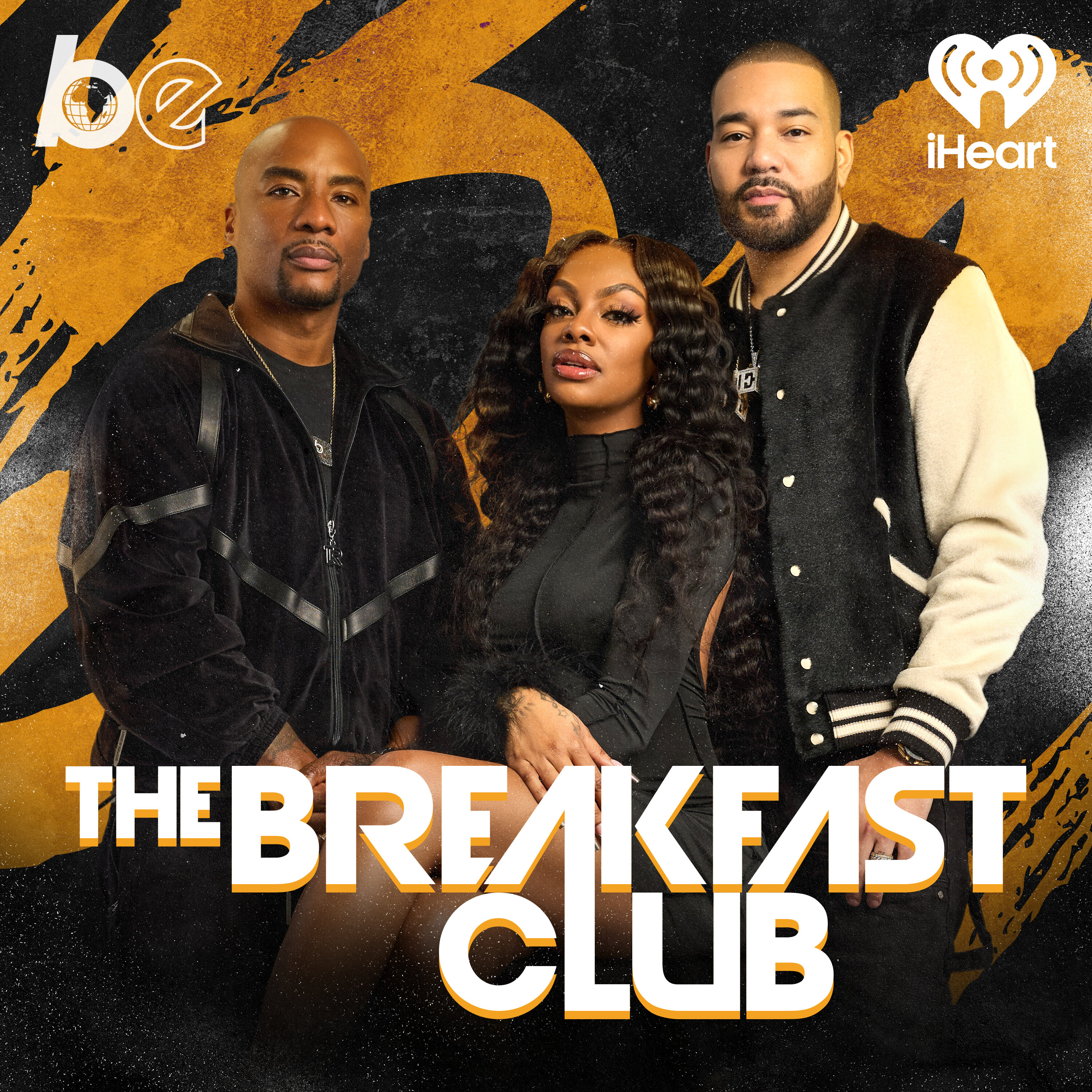
The Breakfast Club
Best of Full Interview - Lil Jon Opens Up About Mental & Physical Transformation, Origins Of Crunk, Meditation Album + More
01:04:37
Loading summary
Transcript361 lines
- [00:00]
Narrator/Announcer
This is an Iheart podcast.
- [00:02]
Lil Jon
Guaranteed human peace of the planet.
- [00:05]
Charlamagne Tha God
Charlamagne Tha God here. And the end of the year is the time to set the foundation for next year. New ideas, new product drops, new goals. And when I'm building anything meaningful, I need the right tools. That's why I always tell folks, especially black entrepreneurs and small black owned businesses, Shopify is the move. We use it at the Black Effect Podcast network. And I've seen firsthand how it helps creators and business owners grow with confidence. Okay, Shopify is like having a whole team behind you. Your chief of staff, your personal assistant, your co founder, all in one platform. Wherever your people are, Shopify makes sure your business can meet them where they're at. So if you're ready to take the next step in your life, whether it's merch products or anything in between, get on shopify.com ben and make it happen. It is time to stop putting off your future and start your new role as your own boss.
- [00:48]
Narrator/Announcer
Today, the holidays are the most wonderful time of the year. A season filled with family dinners, laughter, and holiday shopping. But even in the middle of all of that joy, everyone needs a moment to slow down. The little pause between the music, the memories and the madness. And nothing makes that break better than an ice cold Coca Cola. It's that quick refresh that turns the holiday rush into calm, making the moment feel just right. It's the breath between the laughter and the late night rapping sessions. Because the best part of the holidays isn't having it all together, it's enjoying it while it's happening. Enjoy your Coca Cola refresh your holidays.
- [01:24]
State Farm Representative
This weekend, one of the homers mentioned he closed on a new crib. While everyone's asking about a housewarming, you're asking the real questions. Like, who is his State Farm agent? See, homeownership is one thing, but the right coverage is the real game changer. It's how you protect your legacy. A State Farm agent can help you with finding the right coverage for your new place. And even help you file a claim over the phone, in person, online, or on the app. They're ready to help you and they don't drop the ball. You know what I mean? Like a good neighbor, State Farm is there.
- [01:56]
DJ Envy
Hey, what up, y'?
- [01:57]
Charlamagne Tha God
All?
- [01:57]
DJ Envy
It's DJ Envy. And the holidays are here. The time of year that's all about connecting with loved ones in person or over the phone. In fact, hearing someone's voice can evoke a similar emotional response as a hug. And while most of us can Hop on a video chat to really bring that connection to life. Using tech isn't easy for everyone, especially some of the older folk in our lives. AT&T has been doing something special here to help. They offer digital literacy workshops that help older adults learn how to use technology to do things most of us take for granted, like video conferencing and sharing photos. Take Nancy Shand. She joined one of AT&T's workshops to learn how to video chat for the first time this holiday season, Nancy won't just be hearing about family gatherings, she'll be a part of them, sharing stories, opening presents, and making memories all through a screen. Nobody should have to go through the holiday season alone. So be sure to connect and stay connected to your loved ones. This holiday season.
- [02:52]
Narrator/Announcer
Connecting changes everything.
- [02:54]
Charlamagne Tha God
AT&T.
- [02:56]
Lil Jon
I'm Carolyn.
- [02:57]
Cascali Patient
I have metastatic breast cancer.
- [02:58]
Lil Jon
I was concerned after my diagnosis. Cascali gives me more life for living. Since I've been prescribed, I've seen a daughter get married. I now have a grandchild and another one on the way.
- [03:07]
Cascali Patient
Gascali ribociclib, 200 milligram tablets with hormone therapy is for adults with HR positive metastatic breast cancer. Do not take with tamoxifen. In the clinical study, at 80 months, women taking Cascali plus letrozole lived over a year longer versus letrozole alone. Individual results may vary. Qasqali may cause serious skin reactions, liver problems and low white blood cell counts that may result in serious infections. Life threatening lung problems and abnormal heartbeats can occur. Your doctor should test your heart and blood before and during treatment. Tell your doctor if you have new or worsening cough, chest pain or dizziness before taking Kiskali. Tell your doctor all your medical conditions, medicines you take and if you're breastfeeding, pregnant or planning to be as it can harm an unborn baby. Common side effects include nausea, headache and tiredness. Real patient compensated for her time. Learn more@cascali.com.
- [03:57]
Charlamagne Tha God
Every day I wake up. Wake your ass up. The Breakfast Club.
- [04:03]
DJ Envy
Morning, everybody. It's DJ Envy. Just hilarious. Charlamagne the guy. We are the breakfast club. Lauren LaRosa is here as well. And we got a special guest in the building.
- [04:12]
Charlamagne Tha God
A motherfucking icon guy.
- [04:15]
Lil Jon
Don't play with him.
- [04:16]
Charlamagne Tha God
I thought he was up here. This is his first time up here, which is crazy.
- [04:18]
Lil Jon
Yeah, that's seeing you on the road.
- [04:21]
DJ Envy
I know, but I thought. I thought you'd been up here.
- [04:23]
Lil Jon
Ladies and gentlemen, Little John.
- [04:24]
Charlamagne Tha God
Little John. What's up, brother?
- [04:27]
Lil Jon
Hey, man. Hey. Thank you all for having me. Thank you. Yeah. Good morning.
- [04:30]
DJ Envy
It's about time.
- [04:31]
Lil Jon
Good morning, everybody. We don't say good morning enough to our fellow brothers and sisters. That is true.
- [04:37]
Pluvicto Representative
That's right.
- [04:37]
Lil Jon
I was a victim of that until I started to change my mindset. Sometimes I would come down, get in the car, going. You know, on the road, I didn't say, good morning. And once I started to change my mindset, I realized that's a good way to start your day in a gesture to someone, whoever you riding with, you know, the driver, whoever.
- [04:55]
Charlamagne Tha God
Ask them how they're feeling, and then ask them how they feeling.
- [04:58]
Lil Jon
Yeah, yeah, yeah. Sometimes that's also the case. Sometimes just say, how is your day going? You know, because I found myself. Sometimes I'm a. I'm a. I'm really in tune to my spiritual side. I've been for a long time. Sometimes I might just be in. I remember being in the club, and I might walk by a random person, and I can feel their energy, and I'd be like, let me just give you a hug. Oh, wow. And sometimes that just changes somebody's life.
- [05:26]
DJ Envy
Absolutely.
- [05:26]
Charlamagne Tha God
What about the. What about when you were the person that might have been creating the energy, though? Like, if you felt, like, some aggressive angriness from this person, but it was your fault because it was your set that you just did?
- [05:36]
Lil Jon
Well, you know, I'm gonna tell you. One time, I was in South Carolina and a Hole in the Wall club way back in the day, and it was supposed to be a night where cash money was supposed to be there, and they called me because cash money couldn't come. So these folks in South Carolina was mad than a motherfucker, and we was not cash money. Little Johnny Eastside boys show up.
- [05:58]
DJ Envy
Damn.
- [05:59]
Lil Jon
And so I understand it's a hostile situation, but I said. I looked out on that crowd, and I said, the biggest dude in this crowd, I'm about to make him my best friend. And I made him my best friend during the show. Like, playing to him, giving him drinks, and hyping him up. And then he turned. Like, it turned the whole crowd around. And then they were fans of us after that.
- [06:21]
Charlamagne Tha God
Absolutely.
- [06:22]
Lil Jon
But it was a way. You can always change the energy of a situation if you approach with a calm manner. That's why good security don't go and, like, try to fight somebody. They try to diffuse the situation. That's the first rule is diffuse, not be the aggressor.
- [06:36]
DJ Envy
Right, Little John, I want to go back. So this is your first time.
- [06:39]
Shopify User/Entrepreneur
Hold on.
- [06:39]
Charlamagne Tha God
Real Quick though. What is a Little John morning routine?
- [06:41]
Lil Jon
Like, I knew you were going to ask me that.
- [06:42]
Charlamagne Tha God
Yeah, what is the Little John morning routine?
- [06:44]
Lil Jon
So this morning I woke up, had a little water because, you know, I do my. I do this Korean facial stuff. So I do skin. You know, my skin is very important.
- [06:58]
DJ Envy
Skin looks very good.
- [06:58]
Lil Jon
How do my skin look, ladies?
- [06:59]
Charlamagne Tha God
It looks really good.
- [07:00]
Lil Jon
Love it. One, one rule for that is positivity. Positive energy, positive thoughts. Because if you're a negative person, all this negativity is going to wear the flesh down. So get up in the morning, do my skincare routine, brush my teeth, all that good stuff. And then since I'm on the road, a nice healthy breakfast for me was two hard boiled eggs, some yogurt, some berries and a grapefruit. Wow. That simple, easy. And start with a positive mindset. It's going to be a great day. I'm always in my mind saying affirmations for the day, even before I go to bed in my dreams. Like last night I was like, it's going to be a great interview. It's going. This is. I look at this as one of the biggest interviews I've ever done in my life because it's like, it's 50 minutes, 45 minutes, 50 minutes, a long interview. It's a lot to talk about. Charlamagne, you seen me grow from. I think one time we talked, you were like, you came to the radio station in South Carolina one time. That was early on. He wasn't even on air yet. Right. Were you on air?
- [08:06]
Charlamagne Tha God
I think it was a phoner. You called in, you had just put out. I think you had just put out BIA. BIA.
- [08:11]
Lil Jon
Wow. So that's 20 years ago.
- [08:14]
Charlamagne Tha God
We were talking about you having the Confederate flag in the video and I was talking about that.
- [08:19]
Lil Jon
So that's. You've seen the growth. And I think it's important because, yeah, you've seen the growth. You've seen it from a different angle. You've seen it from a different angle. You've seen it from a different angle. And you know, you guys moved the needle of culture and you had everybody and their grandmama on this show. So I think it's one of the most important and, you know, best interviews I think I'm gonna have because. Because of all of that.
- [08:43]
Charlamagne Tha God
Let's claim it.
- [08:44]
DJ Envy
Let's claim it. I want to go back. I want to start from the beginning. These are the interviews I love because for some reason I thought you've been up here before. So I want to Start when you first got in the music industry, right?
- [08:53]
Lil Jon
Yeah.
- [08:53]
DJ Envy
Let's start with. You started working for Jermaine Dupre.
- [08:56]
Lil Jon
Yeah, 93.
- [08:57]
DJ Envy
Start from there. So how did you hook up with Jermaine Dupri and what did you do for Jermaine Dupri?
- [09:01]
Lil Jon
So I used to be in Atlanta in the 90s. I was like the hottest DJ in the city. I was the man. I did all the parties and I would see Jermaine all the time at the clubs. And then I did this one club called the Phoenix Nightclub, which was the hottest nightclub in Atlanta at the time. We brought Biggie. We brought Biggie. I got Biggie and Craig Mack together when they did the Big Mac tour. Wow. So I got them. That's an interesting story because we got. We. We. I worked on the radio station, but I wasn't the pd. And you know how back then you had to go through the PD because you wanted to get the spins for your artist? So Diddy, you know, we. He let us get Biggie and Craig because he thought I was like the pd. And he get there and the club is slammed like a million people. And he's like, yo, what the heck, yo, we need some more money because this thing is packed. And then he found out that I wasn't the pd. Oh, damn. And so he was extra pissed. And then he even tried to get the rep that worked for BMG at the time fired because she got. Cause we got Craig and Biggie for free. Wow.
- [10:11]
Charlamagne Tha God
So, yeah, that was normal back then when artists were on promote all.
- [10:15]
Lil Jon
Yeah, but you had. You wanted to go through the station so you can make sure you get the spin and get the look. And we wasn't that, but we were hot promoters. So I was doing all the hot parties and I would just see Jermaine all the time. Like, even if I wasn't DJing, I was everywhere. Like, I had a thing where I was. I wanted to be from. I called it from Bankhead to Buckhead. I was from the bougie spots to the. The most hood you can get in Atlanta. So I was literally everywhere. And Jermaine came to me. Well, for one thing, people don't really know. Dallas Austin's brother came to me first. So his name was Claude Austin. He passed away, but Claude Austin came to me first and wanted me to work for Rowdy. But then Jermaine came to me around the same time and Claude ended up passing. And so. And Jermaine came because I was just everywhere. And he was like, I need you, someone like you to represent, you know, my label. Cause you everywhere. So he hired me in 1993. I started working at so so Deaf and I was hired to do A and R and street promotions because I was everywhere, right. So he wanted. He wanted someone that had respect in the city, that could go anywhere and someone like me that I was always out. So that was represent Social Death from Bankhead. Like I said to Buckhead.
- [11:31]
DJ Envy
And what artist did you have being anr for Social Death at that time?
- [11:34]
Lil Jon
I. I had. I put together all of the so so Deaf Bass All Stars.
- [11:39]
DJ Envy
And at night, I think the whole.
- [11:41]
Charlamagne Tha God
Very slept on era of Atlanta, by the way.
- [11:43]
Shopify User/Entrepreneur
Yeah.
- [11:43]
Lil Jon
And that changed. That changed music too. Like it gave us a whole genre that had never been created, like, had never been done before. And that all started because in Atlanta we used to do like, it was DJ Jelly, Shout Out, DJ Jelly, Shout out, the J Team, DJ Smurf and all of those guys. They would take like slow jam acapellas. Like say one famous mix was can you stand the rain New edition? And put it over a bass beat. So they used to do all of these mixes like that. They would just do a whole mixtape. It'll be all bass beats and then these R and B acapellas. And so I was like, we love this so much in the city. Let's take that and make a. A record from that. Nobody made an actual song. So I came up with that concept and I went to my boy, DJ Cool Kali, AKA Rodney. And then at the same time I met Carl Mo. He used to call the phone that's so, so deaf and. And play his tracks on the phone. Interesting story about that. So one day I'm like, these tracks is dope. So I called him to the. To the office and he comes up there with a freaking keyboard and plays the keyboard. Like just playing the keyboard. Not like no CDs, no cassette tape, just playing the keyboard. I'm like, this is crazy. So I ended up using him and we did My Boo. And so yeah, I did all of the Social Death Base All Stars. And then out of that we had Play a Poncho. He got signed and we did a couple records with Player Poncho. And Player Poncho is actually how I met the Eastside Boys.
- [13:22]
Charlamagne Tha God
Wow.
- [13:23]
Lil Jon
Because Player Poncho would always, when he would go out, he would have a whole like 2010, 20 guys with him. And the Eastside Boys was always with him, even if it was just like two or three guys with him. And so I was always with Pancho because he was my artist, you know? And so me and the Eastside Boys, just one day we were in the club, and I think we're in Club 559, and we just start chanting this chant, who you with? Who you with? Get crunk, who you with? And then everybody in the club start chatting it. And then I look at Big Sam, I'm like, we need to turn this into a song. And so I know I have access to people with labels and stuff. So I called somebody I knew, actually, I called cool Ace, this guy named Cool Ace. And cool Ace connected me with this guy named Carlos Glover. And we ended up going in the studio and we made the song who you with? And that started everything for Lil Jon as an artist.
- [14:17]
DJ Envy
When did you start producing? When did the production bug come in?
- [14:22]
Lil Jon
Probably like 92.
- [14:25]
DJ Envy
And you never. You never made beats at that time. You just bought a machine and said, I'm on.
- [14:28]
Lil Jon
No, it started off with me and my partner. I used to do a show in Atlanta called reggae jamming on the, like, main station in Atlanta, B103. And me and Paul. I was in the sound system with Paul Lewis called four Seasons. So I was like a selector, like, for the Jamaican sound system.
- [14:47]
DJ Envy
Did Jamaican music, every type of genre of music.
- [14:51]
Lil Jon
We had a. We had a dance hall. We had a reggae show on Friday nights on the station. And what we would do is I would take hip hop acapellas and put them over dancehall beats and dance all acapellas, put them over hip hop beats. Through that, we got linked up with Signet Records to. And we got. We convinced them to give us the Cableton tour acapella. That's how I got to do the Cableton tour remix.
- [15:13]
Charlamagne Tha God
Wow.
- [15:14]
Lil Jon
Like, when I did verses, I remember playing it, and people were like, you ain't do that. Like. And I remember, like, in real time, DJ Scratch pulled the vinyl out and he put in the chat. Like, I'm looking at the credits. He actually did produce it. So crazy what we did at that time. We would kind of tell somebody how we wanted to produce the records. And later on, we bought a drum machine. I learned how to produce. By the time we got to who you with? Which was 95, 96, but before that, we kind of just told somebody like, yo, chop this, chop that, do this.
- [15:44]
Charlamagne Tha God
Yo. Did you have production credits on my boo as well?
- [15:46]
Lil Jon
I did not.
- [15:47]
Charlamagne Tha God
Okay.
- [15:47]
Lil Jon
I. I should have gotten some because I really co produced the song with them. But I thought as part of my job description as an A R It's the first project I'm doing that that was just part of the job. But I was really there every step of the way of inception of putting that song together.
- [16:05]
Charlamagne Tha God
I'm glad you mentioned Sam and Bo too, because people always seem to forget about the Eastside Boys. Yeah, what did they bring to the table? What made Little John and the Eastside Boys such an amazing group?
- [16:15]
Lil Jon
We was just like. Because we were. We were the sound of the rowdy guys in the back of the club. That's what we were. We was them niggas that was turned up in the back that you just be looking back like, make sure they ain't coming over here with that bullshit. So we were that. And what people don't understand about crunk music, I know some people are like, why was. Why did it do what it do? Why did it spread? Why did it become big? Because it was an outlet of energy for black youth.
- [16:46]
Charlamagne Tha God
Yes.
- [16:46]
Lil Jon
When you went to the club, you had a hard ass week. You had a hard life. Whatever the fuck was going on in your life. You hear that fucking crunk music and you get in that damn mosh pit and you let all of that out and you feel amazing, you know what I mean? So that's why crunk music was able to. To reach so many people. That's why I still like going like I see you talking about all the time about Knuckles. You buck as a negro spiritual. And it is like, it touches your soul in a certain way. And I think we do and. And like crunk music tap into music to their ancestors because they were chanting and so on and so forth.
- [17:25]
DJ Envy
What did you do when you were banned from clubs? I remember in college there was some clubs that were like, you cannot play none of that in this club.
- [17:32]
Lil Jon
Yeah, put your hood up and all that stuff. We just kept going. Cause when you tell somebody they can't have it, they wanted more, you know. But it was crazy that the music got people so rowdy that they were like losing. I've seen people. I was in Louisiana one time, we did a show and they got so turned up, they start fighting the police in the club.
- [17:55]
Charlamagne Tha God
Amazing times. Amazing times, man.
- [17:59]
Lil Jon
Yeah, it was crazy. It's. I want to just talk about one thing real quick that I've. It's been going viral. It's the. The video of the two dollar bill concert that we did in Atlanta. It's a viral video of. It's be performing Get Crunk and that whole concert. And you can see the energy on each and every. If y' all look at the video. Each and everybody in there's face is turned up. It ain't nobody, not one cell phone in the air. Everybody's enjoying the moment. Everybody is energized. And even you can see that the ground was shaking because the camera, when it's steady is like moving. That's how much energy was in that place. And I think it's just a testament to like we just brought something different, you know. And like the kids now think they are turning up, but they have no idea what a real turnt up time was from the 2000s.
- [18:59]
Charlamagne Tha God
And get crunk was such a great record because I didn't think you could get crunker than Kings of Crunk, you know, I'm not even joking. I didn't think you could get crunking that. But as soon as you hear who am I? Bohegan being me, motherfucker. You like God.
- [19:12]
Lil Jon
God killed that. Salute to Bohagan out there.
- [19:15]
Charlamagne Tha God
How did you. How did you even have the mindset to take that to another level? How did you take that energy to another level?
- [19:20]
Lil Jon
That beat was produced by Lil J, who produced you, Buck.
- [19:24]
Charlamagne Tha God
Wow.
- [19:25]
Lil Jon
So it was time to, you know, come and work on the album. And you know, everybody down with bme, of course, people that don't know Crime Mob, part of that was through bme. So we are part of putting them out there. So of course I call all of the squad, you know, Trioville helped me write some of the songs. And yeah, I. Lil J sent me. I think he sent me some beats and that was one of the beats. And I was like, this is insane.
- [19:50]
Shopify User/Entrepreneur
Wow.
- [19:51]
Lil Jon
I thought it was one of the correctest beats ever too.
- [19:53]
Charlamagne Tha God
Absolutely.
- [19:54]
Lil Jon
I think my favorite beats that I've produced or co produced or been on is Get Crunk. And what you going to do and what you going to do is unique. I was in New York when I did that beat. I remember I was on TBT and Steve Gottlieb and shout out to Brian Leach, my boy Brian Leach, he was the A and R at the time. He was like, Brian Leach. Brian Leach was like, yo, you got to go in and knock out this song for this. I think it was like a Christmas album or something. Christmas Crunk album that Steve Gottlieb wanted to put out. And I'm like, he can't put no fucking album out called Crump without me. So I'm like, fuck this guy. And so I was in the new. I was in New York and Brian was like, you got to go in and record this song. So I was angry when I made that beat. I'm never mad when I make tracks, but that's one of the only beats I've ever made when I was angry. And that's why I sound so aggressive, because I was mad that I had to go in the studio and record this. I want to just go out. Like. I was like, I ain't. I'm going. Going to the club. He was like, no, you got to go in and do this song. And so that's my anger coming out through the drum machine.
- [21:02]
Charlamagne Tha God
Did you ever trademark the word crunk?
- [21:05]
Lil Jon
I can't remember. Probably did all my ad libs.
- [21:09]
Charlamagne Tha God
I know that because you're the face of crunk. But to me, I would have to give. I would say Three Six Mafia are probably the.
- [21:16]
Lil Jon
So that's another argument going around. It's an argument that says Memphis started crunk. Here's what I will say. We in Atlanta. You couldn't be Atlanta in the 90s and not be listening to Eightball MJG. You couldn't be riding around not listening to Master P. Master P. Master P changed the landscape of the South. The south, period.
- [21:41]
State Farm Representative
That's right.
- [21:42]
Lil Jon
He was the first one that really got us rowdy. I would say it was Master P, but we was listening to Ball and G. And of course, Three Six Mafia came around that.
- [21:51]
Charlamagne Tha God
You think he got his roddy before 3 6.
- [21:53]
Lil Jon
I think for bout it. Bouti bouti bout it.
- [21:55]
Charlamagne Tha God
Yeah, but tear the club up. I bet you won't hit a motherfucker.
- [21:59]
Lil Jon
Club was 97. What year did Bouti Bout it come out?
- [22:03]
DJ Envy
I was in college. Had to be 95.
- [22:04]
Lil Jon
I think it was like 95. I remember what happened was in the club in Atlanta, it was playing bass music. And then when Master P came, that was over about.
- [22:13]
DJ Envy
That was 95. Definitely. I was a freshman in college.
- [22:15]
Lil Jon
That was the record in the hood. Was getting no limit tattoos.
- [22:20]
Narrator/Announcer
1995.
- [22:20]
DJ Envy
95.
- [22:21]
Lil Jon
Yeah, exactly. That's true. That's what changed it for us. So I will say Memphis is part of the influence, but our sound is different. Yeah, Memphis was getting buck.
- [22:30]
Charlamagne Tha God
They say body was 97. That seemed late, though.
- [22:32]
DJ Envy
No, no, no. It came out in 95.
- [22:36]
Lil Jon
When we got. When we got Terry Club, it was. When they redid it, that was 97. Because I remember it says on the vinyl, tear the club up. 97. So. But it started for us with Master P. Master that body shit just changed everything. But we are influenced. But it's all different sounds. But it all Intertwines and works together.
- [22:57]
Charlamagne Tha God
So what would you call what Three Six was doing?
- [23:01]
Lil Jon
They called it in Memphis. Memphis Buck. But Three Six was doing it even. We weren't even Buck music. I think it was just 36 created their. 36 created their own lane of Memphis music. And then they changed the landscape of what Memphis music is. So salute Paul, Juicy and the whole squad. That's family, too.
- [23:21]
DJ Envy
You know what I want. You know what I want to ask, too? When you made. When you were making these tracks, did you try to make it your business not to sound the same? Because, you know, when you look at your discography to see some of the records that you did, like, I'm so amazed. Because they don't sound the same. Right. You can go to the window, to the wall. You could blow your whistle over here, and then you like. The shit is amazing.
- [23:43]
Lil Jon
Yeah, well, it depends. Well, a lot of it. So. So let's talk Get Low. Interesting story of Get Low. Get Low became. Because I was trying to make Party Up, I was inspired by Party up. I love DMX's party up so much. I was like, I want to make something like that. Let me go in the studio. This was like 99. And so I go in and I come out with Get Low. If you listen to it, it's got the whistle, like Party Up. It's some similarities. I'm inspired by it, but it. I sat on the beat, I couldn't really come up with nothing. And then I. I had a session with Yin Yang and I pulled that beat out, and we make Get Low. So it comes out like that just came, like I said, because I was trying to do something different. But it turned from, like a rowdy Party up type song to a twerk song. Yeah. But then, like, say, tell me when to go E40. We were in the studio together, and that's the energy of what he's giving me and his squad is giving me, and it comes out into the drum machine. So every time I make the best stuff when I'm in the studio. Young bloods, Damn. We were in the studio together, and it took two days for us to get that song done. Like, I did the beat the first day. We had the verses the first day, but we did not have the hook. And then the second day, we just threw a party in the studio. And then Bohagan again. Shout out. Bohagan. He was like. Everybody was throwing hooks out, and then he was just kind of mumbling something. I was like, what you got? Cause I'm shooting Everybody down like that shit's trash. And then he just mumbling, son. I was like, what's that? I said, that's it, that's it.
- [25:17]
Charlamagne Tha God
If you don't give a damn, go lay that.
- [25:19]
Lil Jon
And then I got the second part, you know, and sometimes that's how some of the records happen too. Like you just stumble onto it. Blow the whistle, blow the whistle. I did that bit that I did that beat the same week that I did. Tell me when to go.
- [25:33]
Shopify User/Entrepreneur
Damn.
- [25:34]
Lil Jon
Yeah, so I was working on E40s album and I think we had done Muscle Cars that day. So Too Short, Too Short had came to the studio a couple days after that. So before, like earlier in the week, I was making beats and I was going through sounds and I found that sound and I was like, oh, this sound like freaky tails bass line like this, a bass like that. I was like, let me make something with that. And I don't know what made me. Instead of making it slow, make it fast. Because I like to do stuff different. I don't like to be expected. So I was like, let me make it 100 whatever bpms. 100 bpm. So I put it to the side.
- [26:13]
Charlamagne Tha God
Piece of the planet Charlemagne, the God here now. You know, the end of the year is when, like a lot of business owners, I really lock in, all right? This is the time to set the foundation for next year. You got new ideas, new product drops, new goals. And when I'm building anything meaningful, I need the right tools. That's why I always tell folks, especially black entrepreneurs and small black owned businesses, Shopify is the move, okay? We use it at the Black Effect Podcast network. And I've seen firsthand how it helps creators and business owners grow with confidence. Entrepreneurship is very important to me, okay? There's nothing wrong with working for people. There's nothing wrong with partnering people. But you should strive to own your own as well. And Shopify can help others grow into entrepreneurs. It's like having a whole team behind you. Your chief of staff, your personal assistant, your co founder, all in one platform. Whether you're running a side hustle or a full storefront selling locally or worldwide, Shopify takes all the guesswork out. Shopify brings everything into one place. You can sell on your website, on social media, and even in the real world. Like some of our partners at our Black Effect Festival coming up in April. Wherever your people are, Shopify makes sure your business can meet them where they're at. Plus, you got Shopify, Sidekick and their AI tools. Total game changers. I love how it's like having an assistant giving you insights, content, ideas, edits. Shopify's got your next move covered. So let me ask you this. If you're ready to take the next step in your life, whether it's merch products or anything in between, get on shopify.com ben that's shopify.com ben and make it happen. It is time to stop putting off your future and start your new role as your own boss today.
- [27:47]
DJ Envy
Hey, what up, y'?
- [27:48]
Charlamagne Tha God
All?
- [27:48]
DJ Envy
It's DJ Envy. And the holidays are here. The time of year that's all about connecting with loved ones in person or over the phone. In fact, hearing someone's voice can evoke a similar emotional response as a hug. And while most of us can hop on a video chat to really bring that connection to life, using tech isn't easy for everyone, especially some of the older folk in our lives. AT&T has been doing something special here to help. They offer digital literacy workshops that help older adults learn how to use technology to do things most of us take for granted, like video conferencing and sharing photos. Take Nancy Shan. She joined one of AT&T's workshops to learn how to video chat. For the first time this holiday season, Nancy won't just be hearing about family gatherings, she'll be a part of them. Sharing stories, opening presents, and making memories all through a screen. Nobody should have to go through the holiday season alone. So be sure to connect and stay connected to your loved ones this holiday season.
- [28:43]
Narrator/Announcer
Connecting changes everything.
- [28:45]
Lil Jon
@&T. Whoo.
- [28:48]
Coca-Cola Announcer
What a vibe we've got, y'.
- [28:49]
Lil Jon
All.
- [28:49]
Coca-Cola Announcer
As always, it's classic HBCU energy. Nonstop action. The band is rocking and the crowd lit. Chants echoing, drums beating, everybody showing that school pride. Moments like this. Yeah, they call for an ice cold Coca Cola. Crisp and refreshing. That's a game changer right there.
- [29:07]
Shopify User/Entrepreneur
Mmm.
- [29:07]
Coca-Cola Announcer
Yeah, that taste always hit the right note. Just like the band at halftime. Passionate fans, school colors everywhere, and an ice cold Coca Cola. That's a winning combo. No matter the place, no matter the moment, everybody knows fan work is thirsty work. So grab a Coca Cola and keep that HBCU pride going.
- [29:25]
State Farm Representative
You've been working in the garage with your dad every week, Monday to Sunday, trying to get the old school up and running. Today, after all the hard work, y' all finally finished it. So you have that feeling of accomplishment. You did it. Then your dad throws you the keys. He says those three magic words. All yours, son. Yup. Same car that belonged to your grandpa and that your dad helped him fix. It's yours. Three generations right there keeping the tradition alive. But if you ask dad to really keep the tradition going, you need to get insurance. And you already know you need to get State Farm. Because your agent, well, he gets tradition too. His dad was an agent, his grandpa too. So he gets you generation to generation. Remember to choose the agents that your family counted on. Like a good neighbor, State Farm is there.
- [30:21]
DJ Envy
The holidays are heating up on pick six DraftKings newest fantasy pick' em game. Make your NBA picks for a shot to win big cash prizes this holiday season. Here's how it works. Just choose more or less on two or more player stats. The more accurate your picks, the bigger your payout. It's the kind of upside you'll only find on Pick six, not those other Pick' em sites. And it's available in most states, including Texas, California, Georgia and more. Download the DraftKings Pick Six app now and use code BREAKFAST. New DraftKings customers can play just $5. Get $50 in Pick Six credits with code Breakfast. Ride the Upside in partnership with DraftKings Pick Six. The crown is yours. Gambling problem. Call 1-800- gambler, help is available for problem gambling. Call 888-789-7777 or visit ccpg.org in Connecticut. Must be 18 plus. Age and eligibility restrictions vary by jurisdiction. Pick Six not available everywhere, including New York and Ontario. Voidware prohibited. One per new customer bonus awarded as non withdrawable. Pick Six credits that expire in 14 days terms@pick6.draftkings.com promos Limited time offer and.
- [31:32]
Lil Jon
When Too Short came to the studio a couple days later, I was like, here you go, you know I got something for you. But first, 40 turned it down.
- [31:39]
DJ Envy
40 didn't want it.
- [31:40]
Lil Jon
40. 40 had to remind me of this the other day. He was like, you know you gave me that beat first. And I was like, this sound like Todd. So give it to Todd. So that's what happened.
- [31:50]
Charlamagne Tha God
Basically he should get corporate credit as well.
- [31:55]
Lil Jon
No, I ain't no credit. I did the beat I gave it to. He ain't want it.
- [31:58]
Charlamagne Tha God
What moment made you realize crunk had officially crossed from sovereign energy to a global movement.
- [32:05]
Lil Jon
Coming up doing mtv, they let me get in Times Square on a double decker bus with little scrappy on TRL doing what you gonna do bruh? Mtv.
- [32:20]
Charlamagne Tha God
I was gonna say MTV too. Cause I remember watching the Video Music Awards, I forgot what year it was. They played Get Low going in the commercial break and the audience went crazy. And Justin Timberlake Was wilding. And I just remember thinking to myself, oh, get Low is out of here.
- [32:36]
Lil Jon
Yeah. And then we end up performing Get Low at the MTV Video Music Awards. Get Low. Yeah. Lean back. And what else we did that year, I can't remember, but that was. That was a big time. And Dave Chappelle was the host. So that was pretty insane. That was a pretty insane year for me.
- [32:54]
DJ Envy
And when. When you touched. When you started doing R B, did you think you could do R B or wasn't one of the things. How did you get introduced to? Say, let me try to make R B records for doing all of this.
- [33:03]
Charlamagne Tha God
He was already doing them with the social bass also.
- [33:05]
Lil Jon
Well, that was different. So here's what happened. So Sean Garrett, Shout Out. Sean Garrett, incredible songwriter. He reached out to. I guess he was trying to get in touch with me and he couldn't get in touch with me. So he knew somebody that worked with me. Her name was Delicia. Delicia had all my beats. So she gave him a beat cd and that's how he got the beat. Basically the Freak Elite beat, which turned into yeah, so she gave him the beat. So thank you, Delicia, for giving Sean those beats. And Sean wrote, yeah, to that Freak Elite beat. So crazy thing about that is that beat was for mystical. Freakily's beat was for mystical. So I did, though, I. I used to, like, have labels book me in Circle House, Shout Out BB Circle House in Miami. And I like, take a week and I just go and do as many beats as possible. And the label could take all the beats, put them on whatever artist they want. So these particular sessions was for mystical. That beat was in there. He passed on it. And so I think co Shout out co he got the beat and he wrote Freak A Leak. My. I don't even know this, but he wrote that and submitted it to the label. Petey Pablo, he ended up recording, but I don't even know this. So Sean Garrett has the beat. He writes, yeah, Usher don't want to record no more songs. He done with the damn album. He's like, I'm good, I got burned. I got all these other songs. I'm good, we good. L A read like no go record the damn song. So he goes and records the song and we come out with it. I remember going into doing the sessions too. Like, we. I think we record in la and we were like, this is a smash, right? And so the song is in the can. And then I remember it was around Christmas time, the album was done. LA Reid is in Miami. And he calls JD Going insane. And JD Called me on three way. And L A Reid is like, why am I hearing this Usher record on the radio? And basically it was the Freaka League instrumental playing as a bed. They had released the song as a single, Freak A League. And we didn't even know. I didn't even know they had used the beat. So L A Reid's going crazy and then we like, all right, we just gonna go in and do a new beat. Thank God we did. Because, yeah, over Freaka Leak is not as good as yeah. As yeah. Now that's how God worked. Yeah. And crazy story is when I went into the studio to like redo the beat, I'm like, ah, that Petey Pablo record ain't gonna be that big. Just take all the keys off. Let's just play a new. I don't know. Because it's Usher, you know? Yeah. And I don't. You know, I just didn't think it was gonna be that big. It could have been a cool record.
- [35:58]
Pluvicto Representative
Right.
- [35:59]
Lil Jon
But I didn't think it was gonna be a number one song like it was. So that's why the. The beats sound similar, is because I just use the same exact drums, but I played a different synth line. So. Well, got my boy Elrock. My boy Elrock played the synth line. So we just played a new synth line. And here we are with two monsters at the same time.
- [36:20]
Charlamagne Tha God
Well, yeah, probably help frequent league though, because. Yeah, you play. Yeah. Now you want to play frequently.
- [36:25]
Lil Jon
Mix them together, all that.
- [36:26]
Shopify User/Entrepreneur
Yep.
- [36:26]
Narrator/Announcer
Lovers and Friends.
- [36:27]
Pluvicto Representative
Ah.
- [36:28]
Lil Jon
So that I was gonna get to that.
- [36:30]
Narrator/Announcer
That origin story. Tell them.
- [36:32]
Lil Jon
So when we. When I came, we were working on my album Crunk Juice, right. So instead of going with another up tempo, I like to be different. I could have certainly went to Usher, John and Luda with another fast song. I said, let's do something different. And at. In Atlanta, we go to strip club for everything. So we always in. You know, I was in the strip club one day and the DJ played the Michael Sterling Lovers and Friends. And I was like, huh, that could be pretty cool for Usher to do. So let's back up. So this is before Usher's album is done. I give Usher the Michael Sterling on the cd. Like, check this out. We should do this over this. Don't listen to it. He don't listen to it. So we on my album. So I'm like, I'm gonna take that Lovers and Friends idea and do it for my album. So I do the beat over and I let Usher know, yo, I got this joint for us. Like, come, you know, let's do it. So he flies in, he records it, and he's out. And after he does his part. So I'm just like, wow, this is a smash. So I call Luda. I'm like, bro, we got another one. Like, I need you on this asap. Send it to Luda. He did his part, and then I go in last because I'm not the rapper. And so I was like, I need to take my time to make sure my verse is as catchy as possible, because I can't compete against Ludacris. And then it's Usher, like, come on. So I was like, let me take something from this record. We had a record called. It's a record we did with ubi. I forgot the name of it.
- [38:11]
Charlamagne Tha God
Nothing's Free.
- [38:12]
Lil Jon
Nothing's Free.
- [38:13]
Charlamagne Tha God
How you forget that?
- [38:14]
Lil Jon
That's a classic. Nothing's Free. So we did Nothing Free, like, in the 90s. And so I was like that. Sade park was really catchy on that song. But it was regional. Nobody really heard it out of the South. So I was like, let me take that same little thing and put that in Lovers and Friends. And that will be the little catch for my verse to make it catchier. And little did I know that that was going to be, like, people's favorite verses because it's so simple. It's so simple and it's catchy. And yeah, that's one. That song went number one without a video because it was the labels and superstar this and superstar that and da da da, da da. But number one song, rap song of the year without a video in the 2000s is impossible.
- [39:00]
Charlamagne Tha God
I was real quick. You got three of fan, and you made me think of it when you said nothing is Free. You got three artists that I feel like should have been way big.
- [39:07]
Lil Jon
Yeah.
- [39:08]
Charlamagne Tha God
China White.
- [39:09]
Lil Jon
Yeah.
- [39:09]
Charlamagne Tha God
UBI and Bohegan.
- [39:11]
Lil Jon
Yeah.
- [39:11]
Charlamagne Tha God
Would you. What do you think was. Why did those dots didn't connect?
- [39:15]
Lil Jon
We. We worked hard. Like, UBI was with me for a long time. We did a lot of records, but we just never got the right one. Just how. It just happens like that sometimes with artists. Chyna went to jail right when we shot the video for Bia. Bia and me and my boy Rob Mack left the video at the end of the video shoot. We drove her to prison after the video shoot, all the way in Louisiana. So how much time did you get? I don't remember how much time. It was at least five years.
- [39:45]
Charlamagne Tha God
That sound on Brand, though, when you did, I went out here trying to put that back.
- [39:48]
Lil Jon
No.
- [39:50]
Charlamagne Tha God
Based off the lyrics, she went to.
- [39:52]
Lil Jon
Fed Time for Gun Running.
- [39:54]
Shopify User/Entrepreneur
Damn.
- [39:55]
Lil Jon
Yeah. So she. She didn't even get to perform the song at his peak at all. So that. That messed her window up. And then Bohegan, the same thing. We were just trying to get the records. We just never got the records. I, you know, we set him up nicely on Get Crunk and, you know, he did the hook on Dan, but we just never was able to translate. I. That those are things that, you know, hurt me to this day, because those were people that dined with me for a long time. And I was pushing, pushing, pushing and working to make the records, but sometimes they just. It just don't come out.
- [40:27]
Narrator/Announcer
You know, I was gonna say with the Lovers and Friends video, When I talk. When I watched you tell the story you talked about. I know you mentioned labels loosely, but you said that the labels didn't look at you as a comparable artist to.
- [40:39]
Lil Jon
Yeah.
- [40:39]
DJ Envy
Which.
- [40:40]
Narrator/Announcer
When I heard you say that at that time, like, I just. I mean, I don't know. It made me upset when I heard you say it.
- [40:45]
Lil Jon
Well, you gotta think Ludacris is a rapper. Def jam in the 2000s. Usher is Usher at monster. Biggest guy in R B. And I'm this guy doing crunk music. You got it? It's not the time. It's not the same times now as I'm. I'm known, I'm established. I've proven myself over and over again.
- [41:07]
Narrator/Announcer
Yeah.
- [41:08]
Lil Jon
But early in those. In those days, it hadn't happened yet, so.
- [41:12]
State Farm Representative
Really?
- [41:12]
Lil Jon
Yeah.
- [41:13]
Charlamagne Tha God
I feel like you helped define that whole sound of the early 2000.
- [41:16]
Lil Jon
But they didn't. I. I don't feel like, you know, Def Jam, you know, I mean, they didn't get it. Usher.
- [41:22]
DJ Envy
I don't think nobody got it back then.
- [41:23]
Lil Jon
No. Yeah.
- [41:24]
DJ Envy
Little John was. It was. He was looked at as an artist, per se, like Luda or.
- [41:28]
Lil Jon
Exactly. Usher.
- [41:29]
DJ Envy
He was a host. Dj. Like, you used to love his music production. Yeah, that's what it was.
- [41:34]
Lil Jon
Hype man. Producer.
- [41:36]
DJ Envy
Yeah.
- [41:36]
Lil Jon
You know, that's how I think.
- [41:37]
Charlamagne Tha God
I can't imagine the clubs without you. What was the clubs without crunk music, Little John back then like? No.
- [41:46]
Lil Jon
A lot less energy.
- [41:48]
DJ Envy
Was there ever a low period for Lil John?
- [41:50]
Lil Jon
Yeah, I got burnt out probably after. After E40s album. And I think I tried. We tried to do a second trillville and scrappy album, and I just was fried from all. You know, you got to think about I've been going for since the 90s, 93, you know, producing to. Was that 2008 or 9? 2008. And I'm. I'm just depleted. I have no creative juices left. I go in the studio, I'm trying to produce and trying to make stuff. I think, yeah, nothing's coming out. I think that's also what happened with two with those artists too, because I. I might have gotten to the point where I was just. Yeah, I had nothing left. I couldn't. I couldn't created. And then so what I started to do was just go back to the foundation dj, go back to the clubs, right? And what happened was Reggie Bush invited me out to the first game in the Superdome after Katrina. So I went there, and that night he had after party, went to the after party, and it was a DJ DJing. And I was just like, this dude is freaking dope. So I met the dude, and he was cool. And so the next day I was in. Yeah, no, no, I'm gonna say his name. Okay, all right. His name is DJ Spider. So the next day we were. I was in the airport, and this nerdy white dude come up to me like, hey, remember me? I'm like, who the are you, bro? He's like, oh, spider. I was DJing last night. I was like, oh. So what happened was he really inspired me to get back into DJing by the way he was mixing. So me and Spider linked up. He, like, got me on Serato. He started, like, gave me help me get my music library up, and we started DJing together. So I started to kind of get back into DJing. And so DJing brought my producer creative energy back.
- [43:39]
Charlamagne Tha God
Is that when the records, like, shot, shot shots and all that stuff came?
- [43:42]
Lil Jon
That came just by me being out and meeting people and. And, you know, learning this, you know, open format world and EDM world, and. And, yeah, I ended up meeting lmfao. I was kind of following their story, and a mutual friend of ours named Eric Deluxe, who kind of. He wrote shots too, he reached out to me and sent me the record. I was like, this record is a smash. But around that time, I think I first met them when we did a Pitbull video. We were on, like. I think it was crazy. I think they were in that video. So I was kind of working with Pitbull because we did the anthem. We did crazy. Then, yeah, shots came. So I was still. I started to move into another world because I saw that EDM world. I kind of jumped in right at this. Starting to get crazy. Yeah. And I end up getting a DJ residency in 08 in Vegas. So I've been in Vegas doing a DJ residency since 08, and I'm still there now. So that was a place where I could really, you know, learn a different style, this open format world, and just get my energy back from just being in. In the midst of the people and understanding what makes people move and groove again. Because DJing is the foundation of my production. Like, I think I started playing the drums when I was in elementary school. So drums and djing are the two key elements to my production style. That's why it's more beat driven and, and that's why they're all club records. Because the DJ side, when, when you.
- [45:15]
Charlamagne Tha God
Choose to pivot, because, you know you pivoted a lot. When you choose to pivot, is it because of where music is going or where you're going as a person?
- [45:22]
Lil Jon
Where my spirit leads me. My spirit. You know, when I started to get back into DJing, God put these people in my path to say, okay, you should now start moving over here. And I remember, like, telling my. My manager and my lawyer, I want to go over here and do this DJ stuff. They like, bro, you making 100 grand a beat. What the hell is wrong with you? I was like, I can't do it no more. But I saw the future and I just trust, I always trust my spirit. Ladies and gentlemen, don't listen to your mind. Listen to your spirit. And you got to learn the difference between the two. And when you learn the difference, your spirit is never gonna lead you wrong. Trust it and it's gonna be fine. And that's what I've been doing, you know, pretty much my whole life. And I've. Everything's been okay, you know, I mean, like, I've been able to now have a number one EDM song, hip hop song, R B song, AC song. How many people you know had a hit song in every. In four decades, right? I don't. I don't know. You know, we had a hit with even the Usher Glue song. I think it was an AC hit. Number one. I'll take it. And then I had a song with Pitbull that came out two years ago called Jumping that was like number one on some charts. So, yeah, since the 90s, I've been doing this. And I'm just thankful every day to wake up and to still be able to do this and to also, like, right now is the time where the 2000s is on fire. It's on. Like, I'm doing so many shows that and, and for crowds that I haven't seen and, you know, or maybe not have done as a headliner. I have never headlined for 10,000 people until, like, the last couple years.
- [47:09]
DJ Envy
They just headline this week. Tacos and.
- [47:11]
Lil Jon
Tacos and tequila. Yeah. So it's like, it's amazing that people, the, the memories that people have from that era, the, the fun times they had. It's making this music, you know, now come back and it's in a major way. What made you do the meditation album? So that's totally far the other end of the spectrum. Yeah. Turning 50. Turned 50. A lot of things started to happen in my life. First thing I, I. It hit me was like, I asked myself, what makes you happy? And I said, damn. Making sure everybody else good. But that's not what makes me, like, what makes me happy. I couldn't really tell myself. And so I was like, you know what? I need to kind of put myself first. Like, I'm not happy in this marriage. It's like. So I said I wanted to divorce. And also around the same time, me and my, My good friend Doug Davis, we talk like every year because he calls and gives me shit because he's. He's like a couple months younger than me, so he's like, oh, yo, man. So we're talking and he was telling me he wanted to introduce me to somebody that was in this space. And I was like, oh, that's interesting because I've been listening to, like, all of this, like, Binaural beats to sleep and relax and ocean and rain and all of this type of stuff. So me and this guy, Kabir, his name is Kabir Sego, we connected. And so I'm going through the divorce and, like, I didn't like where my mental state was at because I'm angry. I'm like, why can't she just do this and that? And so I'm like, mad. And I don't like, that's not me. I'm a positive at all times person. I don't think negatively. So I'm like, I started to, like, meditate every day. I started to say affirmations every day. And it helped me to be in a better mental state as well as having good people in my corner, like my queen, her name is Jamila. She was there for me at that time. And she would give me, like, also, like, just positive. She would just keep me, try to keep me in a positive mindset. And she had been through a rough Divorce too. So she can give me some insight and just, you know, help me keep my head up. So the affirmations. Every day I would literally get a cup of tea and I had a copper pyramid on my deck. I would drink, get my tea, go sit in this copper pyramid and meditate and just say these affirmations. I'm happy, I'm healthy, I'm at peace every single day and throughout the day. And so all of this happened at the same time. I meet Kabir and me and Kabir talking. He's like, let's do. We should do meditation stuff. I was like, yeah, let's do that. I'm down with that. I think that's great because I was saying these affirmations. I meditated. So we went in, we recorded a bunch of stuff. But yeah, it was because I needed. It was time for a change in my life. I needed to be in more positive mindset. One thing that I also did was I was like. I would say affirmations of I. Negativity can't live inside of me. I. I like, I don't. I try to get rid of all negative thoughts, right? And when I did that, when I really got rid of the negative thoughts, I ain't not even saying the word hate. I didn't even use that word. So I'm always trying to change anything that happens to me in any negative situation. It's some positivity you can pull out of that. Yeah, absolutely. Focus on that. So I would always pull that positivity out. And I've learned if you pull that out, pull the positivity out of any negative situation and you let God drive. Don't try to drive and trust God, everything gonna always be all right.
- [51:15]
Shopify User/Entrepreneur
That's right.
- [51:16]
Lil Jon
And so we went in, we recorded these albums.
- [51:19]
DJ Envy
And.
- [51:21]
Lil Jon
You know, this time of my life is feeling like I'm doing what God intended me to do. But what's amazing is everything that got me here, I was supposed to do, right? And even, like all of the music that I've given people gave people positivity. So it's always been positivity, but it, it's meaning more now when someone tells me I never meditate.
- [51:42]
Pluvicto Representative
What a magic we got, y'.
- [51:44]
Lil Jon
All.
- [51:44]
Pluvicto Representative
This is that classic HBO VCU vibe. Non stop action. The band is rocking and the crowd lit. Chance echo drum beat, everybody showing that school pride.
- [51:54]
Lil Jon
A game like this, yeah, it calls for an ice cold Coca Cola.
- [51:59]
Pluvicto Representative
Ah. Crisp and refreshing. That's a game changer right there. M. Yeah, that taste always hits the Right note. Just like the band at halftime.
- [52:10]
Shopify User/Entrepreneur
And just.
- [52:11]
Pluvicto Representative
Just like that, we're back at it. Passionate fans, school colors everywhere.
- [52:15]
Lil Jon
And in ice cold Coca Cola, that's.
- [52:17]
Pluvicto Representative
A winning combo, no matter the sport.
- [52:20]
Lil Jon
No matter the yard.
- [52:21]
Pluvicto Representative
Everybody knows fan work is thirsty work. So grab a Coca Cola and keep that HBCU pride going.
- [52:29]
State Farm Representative
You've been working in the garage with your dad every week, Monday to Sunday, trying to get the old school up and running. Today, after all the hard work, y' all finally finished it. So you have that feeling of accomplishment. You did it. Then your dad throws you the keys. He says those three magic words. All yours, son. Yep. Same car that belonged to your grandpa and that your dad helped him fix. It's yours. Three generations right there, keeping the tradition alive. But if you ask dad to really keep the tradition going, you need to get insurance. And you already know you need to get State Farm, because your agent, well, he gets tradition, too. His dad was an agent, his grandpa too. So he gets you. Generation to generation. Remember to choose the agents that your family counted on. Like a good neighbor, State Farm is there.
- [53:23]
Lil Jon
You know, I love a fresh start.
- [53:25]
Shopify User/Entrepreneur
And the end of the year, that's when the kings and queens of entrepreneurship lay the foundation for what's next. I've been doing the same thing with my own Shopify store, reviewing what worked this year and mapping out how I'm leveling up in 2026. Shopify is the best place to start and grow your business. Which is exactly why I chose it for mine. Whether you're running a side hustle or building an empire selling locally or globally, Shopify takes the guesswork out of all of it. With Shopify, everything lives in one place. I can run my store from my phone, tag and sell across my socials, and stay connected. Whether my team is down the street or across the country. Shopify has thousands of templates ready to go. All you gotta do is pick one that matches your vibe, and then you're off running. Plus Shopify Sidekick. In their AI tools, those two are total game changers. It's like having your own personal assistant, okay? Giving you direction, helping with reports, content, ideas, baby, everything. So here's my question for you. What's one big move you want to make in the new year? If you're ready to build something in 2026, Shopify's ready to make that next move with you. Whether you're just wanting to test an idea out or you're getting serious about launching your own brand, it's never been easier to get started on shopify.com b e and it's time to see what you can do with Shopify by your side.
- [54:57]
Pluvicto Doctor
You know what I always say? Pressure makes diamonds. Whether it's on the court or in life, when things get tough, you've got to step up.
- [55:05]
Pluvicto Representative
That's right. And if you or someone you love is dealing with metastatic prostate cancer, stepping up means knowing your options. There's a treatment called pluvicto lutetium LU177 vapipotide tetraxitan and it's worth talking about.
- [55:19]
Pluvicto Doctor
Plavicto isn't chemo. It's a different kind of treatment that targets PSMA positive cells, including prostate cancer cells. Pluvicto can be used before chemotherapy for some people.
- [55:34]
Pluvicto Representative
Pluvicto is a prescription treatment used to treat adults with prostate specific membrane antigen positive metastatic castration resistant prostate cancer or PSMA positive MCRPC who have already been treated with hormone therapy and are considered appropriate to delay chemotherapy.
- [55:51]
Pluvicto Doctor
Plavicto involves contact with radioactivity, which may increase the risk for cancer and cause fetal harm. You've got to drink plenty of fluids, urinate often, use contraception and talk to your doctor about how to reduce the risk of exposing others to radiation during and after treatment.
- [56:13]
Pluvicto Representative
It can also cause low blood cell counts, kidney problems and infertility. So if you're feeling weak, short of breath, bleeding or bruising easily, or notice changes in urination, tell your doctor. Side effects include decreased blood cell counts, tiredness, dry mouth, nausea, appetite loss, joint or back pain and constipation. Look, this isn't about being tough. It's about being present. It's about being there for the moments that matter, both big and small.
- [56:40]
Pluvicto Doctor
So if you're in the fight or know someone who is, ask your doctor about Plavicto. Because when the pressure's on, you don't fold. You find a way.
- [56:51]
Pluvicto Representative
Visit pluvicto.com to learn more. That's P L U V I C.
- [56:56]
Lil Jon
T O.com 10 athletes will face the toughest job interview in fitness that will push past physical and mental breaking points. You are the fitness is to the fifth. Only one of you will leave here with an IFIT contract for $250,000.
- [57:17]
Narrator/Announcer
This is where mindset comes in.
- [57:19]
Lil Jon
Someone will be eliminated.
- [57:21]
Narrator/Announcer
Pressure is coming down.
- [57:23]
Charlamagne Tha God
Trainer Games on Prime Video January 8th watch the trailer on trainer games.com you help me meditate.
- [57:29]
Lil Jon
I was having trouble getting over this grief of losing someone. Your meditation about grief helped me. I'm inspired to you know how Many people have called me about getting in the gym. Yeah, it's insane. Like, celebrities, all kind of people are like, you inspired me to get healthy, so I feel now like I'm doing what God intended me to do. It took me a long time to get here, but this is this the time it's supposed to be. And crazy. I was thinking about this the other day. I met Mr. Farrakhan at the Source Awards one time, and he basically told me. He said, you got power. You got a voice. And he basically was kind of trying to tell me, like, use it. And that, like, that stuck with me. Like, I'm like, okay. But now I'm using my voice and my power in a good way to push positivity into the world. So that is what makes you happy. That's what make. That's what you know. Yeah, it makes me happy that. Okay. Just to be. Just to do good, you know? Just to do good. Because all that comes back and when you like. A guy came to me. I did the cola guard thing, right? A guy came to me in the club one night in the club and was like, I did that color guard test because of you, and I. It came back positive. And he did.
- [58:59]
Charlamagne Tha God
He.
- [58:59]
Lil Jon
He didn't have colon cancer, but he had polyps. So just stuff like that. It just makes me feel like I'm doing good in the world and being a good role model to my son. I have a daughter now, you know, she's 10 months old. Congratulations. I look at life like, with health, like, I gotta be here for her. You know what I'm saying? I gotta be here for her first day of school. I gotta be here for high school graduation, walk her down the aisle. So health is even more important to me. It was something I was doing to just, you know, live a long, full life. But even more so now I have even more motivation because of my daughter and her mother. I got to be here for them. You know what I'm saying?
- [59:42]
Charlamagne Tha God
So it's crazy to see you cry, because a lot of people who never even thought you had eyes.
- [59:47]
Lil Jon
No, you know what, black man? We need to cry more. I agree. Absolutely. We need to cry. When you get more in tune to your higher self and you stop vibrating at these low frequencies, you can let yourself. Let the energy flow, because we should. We don't have to be tough all the time. And you're an advocate for therapy. I push all brothers to. We don't have to suffer in silence. We suffer in freaking silence. Call your homie sometimes and just be like my, you good? How you doing? Not just period, but how you mentally doing, bro? Because that one little conversation could make him not go do some stupid or take his life or whatever, you know? So I started doing therapy. I pushed anything. Any knowledge that I got, I try to share with everybody because we got to help each other.
- [60:34]
Charlamagne Tha God
That's right.
- [60:35]
Lil Jon
We all. We got, for sure.
- [60:38]
Charlamagne Tha God
What's the gym? What's the gym mean?
- [60:40]
Lil Jon
This is citrine. This is positivity, abundance, and it's also my dirt, my daughter's birthstone. Yeah.
- [60:49]
Charlamagne Tha God
I want to ask you a question about. About marriage. Like, you never hear men say they were tired of the marriage, like, they wanted to walk away.
- [60:56]
Lil Jon
It's what happens is when you start to walk on those eggshells, it's just not. It's just not a positive environment. And then when you get to the point where a lot of times in marriage, we're just there making sure everything's good, and who the hell. Checking on us? Yeah. Who's making sure we okay? Who's making. Who's coming to us and saying, what do you need today? What can I do for you to make you happy? You know, I know we're the providers and all of that, but we need that love, too. We need that assurance. Sometimes women go to your men and just make them feel like, appreciate it. Because to live in today's society, to go out and make that money and all of the things a husband and a father has to worry about every single day, Like I said, suffering in silence that y' all have no clue about, just be that positive light. Make that house a home. Make it radiate positivity, you know? So, yeah, man, y' all got me up here crying.
- [62:00]
Narrator/Announcer
You said today was gonna be a good day. Great interview. You might have needed to release.
- [62:03]
DJ Envy
Really good, you know? You know what I wanted to know when Dave Chappelle was doing the skits at first, did you take it as disrespect or did you always was like, oh, this is great.
- [62:11]
Lil Jon
No cypher sounds called me. And he was like. When he did the first one, he was like, yo, Dave Chappelle did this skit on you, bro. It's crazy. It's hilarious. I was like, on me. I'm like, why he do a sketch on me? Like, I ain't nobody. And he's like, bro, trust me. And so when I saw it, I was like, that's really me. That is really me. And I got on the show because I went one day to just tell Dave thank you for doing the sketches because we have a mutual friend, his name, Corey Smith.
- [62:43]
Charlamagne Tha God
Salute to Corey.
- [62:44]
Lil Jon
And Corey is the reason Dave is part of the reason Dave does the sketch too, because I think Dave might have heard this. Like, what song was it? I don't give an F. Yeah, I don't give a. He. He might have heard it. And he probably was like, this would be interesting if that's all he says, but he's actually intelligent. And then Corey was like, yeah, John, Corey thought, I went to Morehouse. I just was always hanging out in the AUC because back in the 90s, if you're from Atlanta, you went to the AUC, Clark, Clark, Morehouse, all of that, to just get girls, you know what I mean? So you just used to go holler at the girls. So I used to be always up there. So Corey was like, nah, he's smart. He come from this and that. So Dave ran with it. And so I went to the show to thank Dave and Dave was like, man, hang out. I want you to. Let's do a sketch. Like, he didn't even have an. He didn't even know I was coming. And so we would just. We did one sketch and then we. He had an idea to do another one. So he just had me on camera and he was off camera, and we was improving back and forth, and that's how we got the Little John and Lil Jon sketch. And to think that I was able to improv with one of the greatest comedians of our time. How many people get to do that? Not many, you know, so that was. That was amazing. And Dave took me places that music would never, ever be able to take me.
- [64:03]
Charlamagne Tha God
How did that change everything for you?
- [64:05]
Lil Jon
Yeah, just that sketch, it just opened me up to more people that didn't get it or didn't. Would have never listened to the music. I remember just being in the airport and like all kind of white people coming to me, like the whole families and all. Just all types of people. Because he was moving the needle at that time of the culture. So. And it just. Yeah, it just opened up a lot more doors. And that's when they started putting the T's in the name Little John. That's when you started hearing that. Yeah. Okay, so. And shout out to Cat Williams too, because he. He co signed me too when he did his Pimp Chronicles. I think that's his greatest special too.
- [64:42]
Charlamagne Tha God
Absolutely.
- [64:43]
Lil Jon
I'm going on record saying that. And, you know, we. He brought me out and let me do my catchphrases and we Ended up going in the studio, working on some songs together. He was come by the house, shout out to Cat, I need to get you in the gym with me. Cat. Yeah, you can go work out. You can run, but can you put some weight up? Yes.
- [65:03]
DJ Envy
Do you get tired of doing that, too? Do you. Do people come up to you all the time? Like, come on, one time.
- [65:07]
Lil Jon
Oh, my God.
- [65:08]
DJ Envy
Does that bother the issue?
- [65:09]
Lil Jon
Yeah, man. They don't do it as much as they used to.
- [65:12]
DJ Envy
Okay.
- [65:13]
Lil Jon
But, like, people that used to hang out with me, like, say, tooth. Early 2000s or, you know, 2010s, used to be like, bro, you don't get tired of that? I'm like, I don't even hear it no more. I zone the people out. But like, yeah, I used to be at, like, tsa. A grocery store. Yeah, exactly. And they do it today till they expect me to do it. So they keep doing it. And I might just be like, what's up, bro? But even in the meditation album, you do.
- [65:40]
Charlamagne Tha God
It's a soft.
- [65:40]
Lil Jon
Yeah, but you say telling Universe Ea.
- [65:43]
Charlamagne Tha God
Yeah.
- [65:44]
Lil Jon
So that's the new. The new meditation album. Yeah. So when we did the first, we. We recorded a bunch of stuff when we, you know, early two. Well, sorry. When I did the first meditation album, I recorded a couple other projects. Got you. So one of the projects was something that my. My guy, Doug Davis came up with. He was like, you should take your songs and remix them into meditations. And I was like, okay. So we recorded it, but I was like, this don't need to come out first because nobody's gonna take me serious. I'm doing, like, say yeah to life. Right? Get low and ground, you know? So I was like, we not gonna do that first. So now's the time we're gonna drop that. I think it's a fun project, but it's real meditations. But it's just a play off of the song that, you know and love.
- [66:34]
Charlamagne Tha God
I just got a couple more questions. You know, the industry rewards constant energy, right? Like, you got to always be on. How did you learn the difference between performance energy and just personal peace?
- [66:45]
Lil Jon
I just am myself. It's spiritual again. Like, I'm just. I just know when to be crazy Little John. I know. Be when to be just cool, chill. It's just. Just let my spirit guide me everywhere. You know what I'm saying? So.
- [66:59]
Pluvicto Representative
And.
- [66:59]
Charlamagne Tha God
And you. You're talking about the meditation and the mindfulness, Like. Well, no, I would ask, when you were at the height of crunk, did you even have the language for, like, stress and anxiety and burnout back then.
- [67:09]
Lil Jon
No, I didn't. I was just, go, go, go, go, go, go, go, go, go, go, go, go. It was all just because I don't. I don't know where the peak is, you know? I mean, and I don't expect to get where I got, you know, because I just started off. Me and the Eastside Boys, we did that first song, who you with? Just to make something for the clubs of Atlanta. And then that turned into, okay, now you got to do an album. And then that turned into being on anger management tour with Eminem and 50 Cent. And then 50 Cent even took me to Australia. I went on tour with 50 in Australia. You know what I'm saying? So it's like, I'm just happy to be here. I'm just gonna keep going because. And that's how I am. Like, I just. I gotta work. I gotta keep working, you know, because these are opportunities that are coming to me. So I don'. One of, you know, somebody's sitting at home right now wishing they could be out or somebody else could take this opportunity and use it. If I don't use it. So I'm gonna take advantage of all of that now.
- [68:03]
DJ Envy
You were a big drink at one time and totally stopped.
- [68:05]
Lil Jon
Yes. Yeah.
- [68:06]
DJ Envy
What made you stop that?
- [68:07]
Lil Jon
Drinking. Turning 50.
- [68:10]
DJ Envy
She waited till 50 to stop drinking.
- [68:12]
Charlamagne Tha God
Man, why you judging yourself? Goddamn judgmental.
- [68:14]
Lil Jon
You still drinking? I turned 50, and for a while, like a year or two, I had this constant, like, discomfort. Excuse me. Discomfort in my side, and I didn't know what it was. So 50, like, I need to go get a. I need to go to the doctor, right? So I went to the doctor. The doctor is like, okay, for one is. I thought it was my liver because I'm like, I drink too much. It's got to be my liver. And I'm scared as. So he's like, your liver's on the other side. It's not your. And then he's like, I is probably inflammation in your gut. He's like, you're. You're 50 years old. You need a colonoscopy anyway to check for polyps. So when I'm in there, I can check. I can do an endoscopy and check your gut, right? So comes back, and I have inflammation in my gut. So I had stopped drinking because I was scared of the liver. So I had already stopped. So by the time I had the colonoscopy, it had been like six months. And I was like, I'm Good. I'm just gonna not drink no more. So I think I was going, like, three months, and I was like, ah, six months. I was like, nah. Then I was like, maybe I go nine months. Then I went to a year, and I was like, when I got to the year mark, I was like, I'm good. I don't even need to drink no more, you know? And I think one thing that kind of. That. That, like, brought some insight to me. Like, health has been, like, important to me for a while because I know, like, a guy that had a triple bypass. He was, like, 35. So that started me first on my. Like, I need to start correcting stuff with myself before it's too late, because the older you get, the harder it is to reverse what's going on. So that's. That started. And then when I was dating my partner, Jamila, she really pushed me into. I think she saved my life because she pushed me into getting my blood work done and getting lab work done. I found out I had inflammation in my gut. Like, I knew I had inflammation in my gut, but I. Candida, gut is the key to a lot of problems in your body. So you got to get the. I saw the Rock talking, and he said his gut was messed up, too. So no healthy bacteria in my gut. Candida, inflammation. And then I found other, like, markers in my blood work that I was like, oh, I gotta change this or take this out of my diet. So all of that helped me to, like, hone in on exactly what I needed to do also to. To get my health, like, more tuned. Tuned into.
- [70:52]
Narrator/Announcer
I saw you say it was like you came up out of a. Like a. A haze or a fall when you stopped drinking.
- [70:57]
Lil Jon
Because if you think about it, I was drinking every weekend, so I never fully got over the drinking. Like, I would drink a bottle of 42 a night. Jesus.
- [71:07]
Shopify User/Entrepreneur
Jesus.
- [71:08]
Lil Jon
Like, so Friday, Saturday, a bottle of 42.
- [71:11]
Charlamagne Tha God
First of all, I ain't gonna let none of these alcoholics in here talking.
- [71:13]
Narrator/Announcer
About some goddamn Jesus drinking. But all the nights, a whole bottle.
- [71:17]
Lil Jon
Every day I'm doing shots.
- [71:21]
Narrator/Announcer
We might do a couple shots, but we ain't doing a whole bottle.
- [71:24]
Lil Jon
I'm the party guy. You don't want to drink with me right now. And I gotta drink with everybody. If I turn down a shot, they were like, bruh, come on, man. Yeah. So I got. It's damn near a bottle a night. So I'm always constantly getting over the hangover or the getting. My body is still trying to recover, so I never am Recovering. So when you lay off the alcohol, you come out of that fog and it's like, it's like everything is clearer. Everything. You know, So I just, I like the way that felt. And then, you know, when I started working out, it's like, I can work out. Like you can't work out when you're hungover and then you put an alcohol in your body. That's sugar. That's not gonna help you get the goals.
- [72:09]
Charlamagne Tha God
So if you write a book, it should be to have a chapter turned down for what? And you talk about exactly all the reasons why your ass should turn down.
- [72:15]
Lil Jon
Yeah. Especially when you get in your up there in the years. Because. Right. I'm 53, I'm going down the hill. You know what I mean? I want to have. That's another thing. In my 50s, I was like, I'm over that top. I don't know how much time I got. I want to enjoy my life. I want to enjoy my life. I want to do stuff that makes me happy. Right.
- [72:34]
Charlamagne Tha God
Do you think people truly understand the loneliness that can come with success in entertainment?
- [72:40]
Lil Jon
No. Because they just see the private jets and the trips and all that. They don't realize sometimes you can't go nowhere because people bugging you. You can't spend time with your loved ones without people bugging you. Or the, the you, I gotta make another hit record. Or, you know, I mean like, or even when you start to go down, you're not as hot as you were. People not picking up the phone and all that. Yeah, it's a lot of. Most people couldn't deal with this life. They could not deal with it because it's too much pressure. Then people on the Internet with all their opinions and all of this and that. And it's a lot of pressure that you cannot be built weak to be in entertainment industry.
- [73:23]
Charlamagne Tha God
Yeah.
- [73:24]
Lil Jon
So.
- [73:26]
Charlamagne Tha God
Yes, sir, when you. My last question. When you think about legacy now, how much of it is about peace and purpose rather than, I guess, the plaques and the parties and all of that.
- [73:35]
Lil Jon
I think my legacy is going to be all about positivity. Because every step of the way it's been crunk was positive. It was a positive release. Then EDM stuff was positive. Positive part. Just it was all partying based initially. But it wasn't like I was saying, go do a drive by on the ops, you know what I mean? It was just like, hey, go release, turn up. You know. And then, you know, now in my latter years, it's meditation, mindfulness, get therapy, fellas. I'M gonna tell everybody out there. Get therapy.
- [74:13]
Shopify User/Entrepreneur
That's right.
- [74:13]
Lil Jon
Get a therapy. If you're going through it, you should not be left to your own devices to deal with some serious issues. Sometimes you need to talk to someone that's a qualified person, not the emdr. Did you ever do emdr?
- [74:27]
Charlamagne Tha God
I never did emdr.
- [74:28]
Lil Jon
EMDR is amazing because it taps into your subconscious. When I did emdr, stuff came out that I didn't even really didn't know was there. So it can tap to the. It can find the root of why you got that trauma. And then, like, I did that with Ayahuasca. Yeah. I have not done any of that yet. I don't want to do it. I'm thinking about it, but I don't want to. I don't want it to change me. It won't, because I. I just feel like I'm already at a certain place. Yeah. But I do want to go tap into those things that I have locked deep, deep, deep away.
- [75:00]
Charlamagne Tha God
A lot of people who've done EDMR tell me that the ayahuasca experience is pretty similar because it just. Everything that is in your subconscious that you suppress.
- [75:08]
Lil Jon
Right.
- [75:08]
Charlamagne Tha God
God is like, no, look at it here.
- [75:10]
Lil Jon
Yeah.
- [75:10]
Charlamagne Tha God
It's all on the table.
- [75:11]
Narrator/Announcer
Is that a scary feeling, though, when you got to face all that stuff?
- [75:13]
Lil Jon
No, it's just. It's profound. EMDR is profound because it's like, that's why I act like that, or that's why my mother treated me that way, or this is why that happened. It helps you. And then, like, emdr, like, when I did it recently, I was able to go to my childhood self and say, it's okay. Wow. I'm here. It's fine. Yeah, you're. You're loved. You're appreciated. You know, all of that. And it helped me to get past whatever that was. So that's why I like it, because it's stuff that, you know, because I was kind of not forced, but I was like. Someone was like, you should, you know, go. You should try it. Yeah. You know, because it helped them. And I did it, and I was like, I'm good. I don't need this. And then I was like, damn.
- [76:03]
DJ Envy
Yeah.
- [76:04]
Lil Jon
Yeah. It's like, I did not know that. And the more you do it, the more stuff comes to you, and you just realize, this is why I'm the way I am. I can now get past this, and I could change these habits, you know, And I can be living. I can live a better life.
- [76:23]
Shopify User/Entrepreneur
Wow, man.
- [76:23]
Charlamagne Tha God
Little John, you are an icon.
- [76:25]
DJ Envy
I love you, man.
- [76:27]
Charlamagne Tha God
You one of the greatest producers of all time. You bought people so much joy in this next chapter of your life where you are helping people heal. I think it's going to be your best work yet, my brother.
- [76:35]
Lil Jon
Thank you. I do, too. I do too. It feels so good when people come to me and say, you help me, you know, without me even directly doing anything for them. I'm helping so many people and inspiring people. Like with the. With the fitness journey, with the, you know, the bodybuilding thing. Coming in third in this competition, I. It was just. It was hard to just do it, period. It was hard to just even get there. And I was just happy to be a part of it. And I just want to inspire people to say that, that say, I can't work out. I don't have time. I'm on the road. I'm a new father. I'm in a studio, I'm doing a million things, and I'm able to go to the gym and transform my body, eat right, do all these things. So you can do it, too.
- [77:25]
Charlamagne Tha God
You could be the new Billy Blanks, man.
- [77:27]
Lil Jon
You can do.
- [77:28]
Charlamagne Tha God
You can do training, hit training. Whether it's your music playlist, all the crunk music.
- [77:33]
Lil Jon
Yeah, we can do it.
- [77:33]
Charlamagne Tha God
Going Body by John.
- [77:36]
Lil Jon
Body by John.
- [77:36]
State Farm Representative
I love it.
- [77:37]
Lil Jon
Okay, help me out with it. Charlamagne.
- [77:39]
DJ Envy
I got you.
- [77:41]
Lil Jon
Come in here if it make you happy, though. Oh, no, I love it. I love to inspire. There you go.
- [77:45]
DJ Envy
Well, Lil Jon, we appreciate you for joining us. And also December 18th, you're performing for our sister station, 96 Point Jingle Ball in Atlanta.
- [77:54]
Lil Jon
Jingle Ball, yeah.
- [77:55]
DJ Envy
So what should the people expect from. For Little John in that show Crunk, period?
- [78:00]
Lil Jon
They want it because it says Little John and Friends. It's Crunk, Crunk and Friends. Crunk, crunk, crunk. I can't wait. Ain't no commercial. Just. It's Atlanta and I gotta hit him hard. You know, Jermaine talking crap all like, Ah, but Jermaine, my. That's family. Jermaine actually called me, was like, who you bringing out? So we. I was gonna ask. Cause y' all got friends that have friends, so. But I'm just gonna bring the krunk. That's what they want. That's what I'm give em. That's what they ain't seen in a while. So that's what I'm gonna give them. I ain't trying to do nothing crazy. Kronk, we're excited.
- [78:35]
Charlamagne Tha God
Could that era ever come back? Like the way metro booming just did. Futuristic summer. Could that crunk era ever come back?
- [78:40]
Lil Jon
If it did, it'll. I don't know if people could handle it.
- [78:42]
Charlamagne Tha God
I think we need like grown people who don't get the release. You know what I'm saying? Maybe you have something. You put everybody. Everybody put their phones up.
- [78:49]
DJ Envy
But you don't heal the same way. You can't be jumping around.
- [78:55]
Narrator/Announcer
And I don't know how that was sprinkled down to the Y ends. Like, how would they.
- [78:57]
Charlamagne Tha God
We don't need y'. All.
- [78:58]
Lil Jon
It's gonna sprinkle.
- [78:59]
Narrator/Announcer
TikTok gonna get it.
- [79:01]
Lil Jon
Think that crunk could be recreated. But I'm glad that we do have these crunk classics that'll never die. So we good? I don't think it could come back. Maybe I'll do something next year. Maybe I do something like why not? You know, Metro did. Maybe I will.
- [79:12]
Charlamagne Tha God
Why not?
- [79:13]
Lil Jon
I was talking about it. But it's just gotta be the right. Everything with me is the right timing. Yes. You know, when the universe tell me it's time for it, that's when it happened.
- [79:21]
Shopify User/Entrepreneur
That's right.
- [79:22]
Lil Jon
All right, well.
- [79:22]
DJ Envy
96.1. Get your tickets. He will be performing at the Atlantis. Jingle ball can't wait to see you guys. It's the Breakfast Club. Good morning.
- [79:30]
Charlamagne Tha God
Every day I wake up. Wake your ass up.
- [79:32]
Lil Jon
The Breakfast Club.
- [79:37]
Narrator/Announcer
The holidays are the most wonderful time of the year. A season filled with family dinners, laughter and holiday shopping. But even in the middle of all of that joy, everyone needs a moment to slow down. The little pause between the music, the memories and the madness. And nothing makes that break better than an ice cold Coca Cola. It's that quick refresh that turns the holiday rush into calm, making the moment feel just right. It's the breath between the laughter and the late night rapping sessions. Because the best part of the holidays isn't having it all together. It's enjoying it while it's happening. Enjoy your Coca Cola refresh your holidays this weekend.
- [80:13]
State Farm Representative
One of the homies mentioned he closed on a new crib. While everyone's asking about a house warming, you're asking the real questions. Like, who is his State Farm agent? See, homeownership is one thing, but the right coverage is the real game changer is how you protect your legacy. A State Farm agent can help you with finding the right coverage for your new place and even help you file a claim over the phone, in person, online or on the app. They're ready to help you and they don't drop the ball, you know what I mean? Like a good neighbor, State Farm is there.
- [80:44]
DJ Envy
Hey, what's up y'?
- [80:45]
Charlamagne Tha God
All?
- [80:45]
DJ Envy
It's DJ Envy. And the holidays are here. The time of year that's all about connecting with loved ones in person or over the phone. In fact, hearing someone's voice can evoke a similar emotional response as a hug. And while most of us can hop on a video chat to really bring that connection to life, using tech isn't easy for everyone, especially some of the older folk in our lives. AT&T has been doing something special here to help. They offer digital literacy workshops that help older adults learn how to use technology to do things most of us take for granted, like video conferencing and sharing photos. Take Nancy Shand. She joined one of AT&T's workshops to learn how to video chat for the first time this holiday season. Nancy won't just be hearing about family gatherings, she'll be a part of them, sharing stories, opening presents and making memories all through a screen. Nobody should have to go through the holiday season alone, so be sure to connect and stay connected to your loved ones this holiday season.
- [81:40]
Narrator/Announcer
Connecting changes everything at&t I'm Carolyn.
- [81:45]
Cascali Patient
I have metastatic breast cancer.
- [81:46]
Lil Jon
I was concerned after my diagnosis. Cascali gives me more life for living. Since I've been prescribed, I've seen a daughter get married. I now have a grandchild and another one on the way.
- [81:55]
Cascali Patient
Gascali ribociclib 200 milligram tablets with hormone therapy is for adults with HR positive HER2 negative metastatic breast cancer do not take with tamoxifen. In a clinical study at 80 months, women taking Cascali plus letrozole lived over a year longer versus letrozole alone. Individual results may vary. Qasqali may cause serious skin reactions, liver problems and low white blood cell counts that may result in serious infections. Life threatening lung problems and abnormal heartbeats can occur. Your doctor should test your heart and blood before and during treatment. Tell your doctor if you have new or worsening cough. Check chest pain or dizziness before taking Cascali. Tell your doctor all your medical conditions, medicines you take and if you're breastfeeding, pregnant or planning to be as it can harm an unborn baby. Common side effects include nausea, headache and tiredness. Real patient compensated for her time. Learn more@cascali.com 10 athletes will face the.
- [82:46]
Lil Jon
Toughest job interview in fitness that will push past physical and mental breaking points. You are the fittest of the fit. Only one of you will leave here with an IFIT contract for $250,000.
- [83:03]
Narrator/Announcer
This is where mindset comes in.
- [83:05]
Lil Jon
Someone will be eliminated.
- [83:07]
Narrator/Announcer
Pressure is coming down.
- [83:10]
Charlamagne Tha God
Trainer Games on Prime Video January 8th. Watch the trailer on trainer games.com this.
- [83:14]
Narrator/Announcer
Is an iHeart podcast. Guaranteed human.