← The Breakfast Club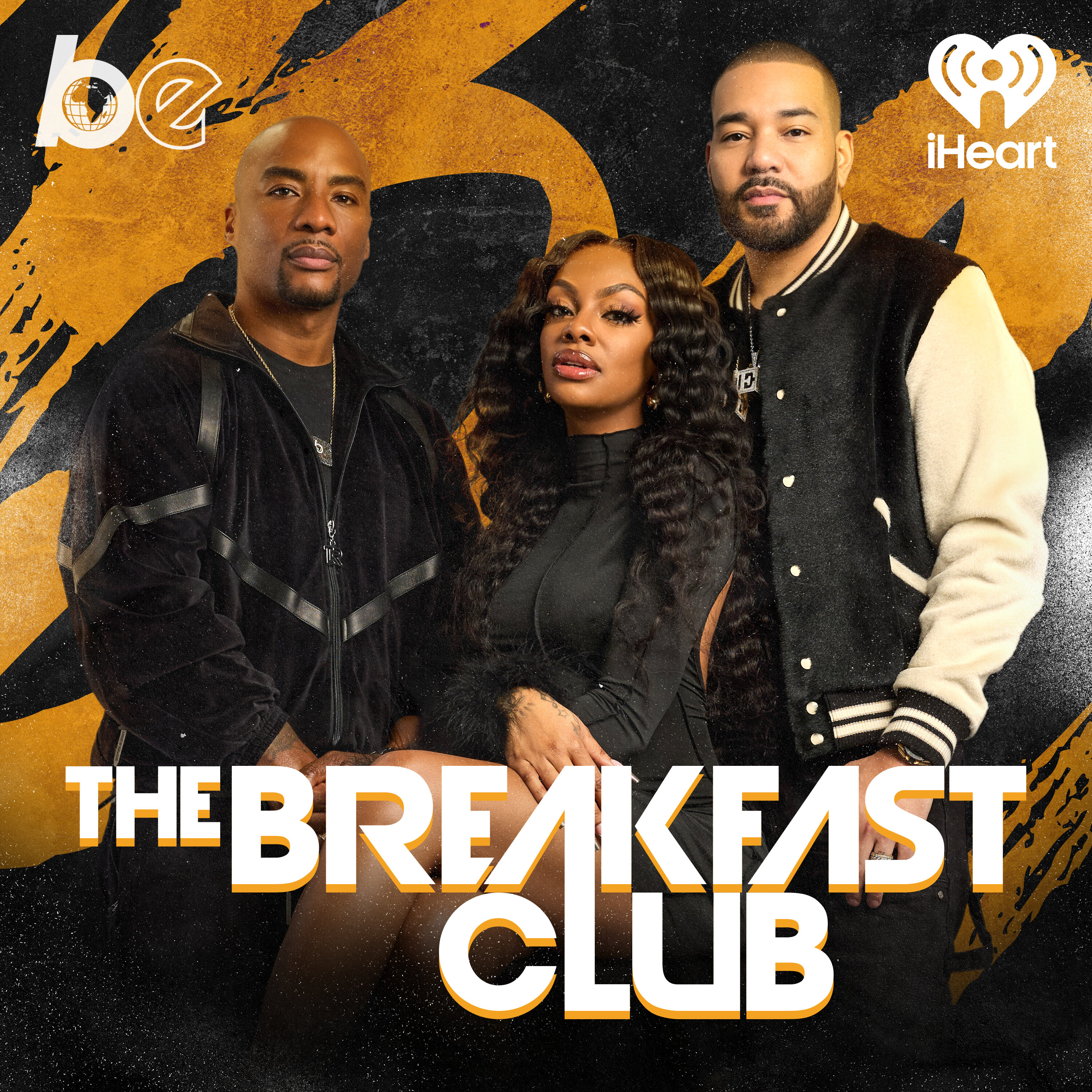
The Breakfast Club
INTERVIEW: D.C. Mayor Muriel Bowser Speaks On Trump's Takeover To 'Clean Up D.C'
00:16:01
Loading summary
Transcript44 lines
- [00:00]
Muriel Bowser
This is an iHeart podcast.
- [00:05]
Carlos Miller
Taking control of your career is empowering. Just don't tell my boss I said that. Just kidding. I am the boss. This is Carlos Miller from the 85 South Show. And building a career isn't just about a job. It's about creating a path that impacts our community and future generations. Whether you're starting out or even making big moves, State Farm is here to support you with resources to help protect what you're working hard to achieve. They've got your back every step of the way. Because like a good neighbor, State Farm is there. Find out more at State Farm. Com.
- [00:37]
Charlamagne tha God
Morning, everybody. It's Dej Envy. Jess. Hilarious Charlemagne, the guy. We are the Breakfast Club. We got a special guest in the building. We have the mayor of D.C. muriel Bowser. Welcome.
- [00:49]
Muriel Bowser
Thank you. Thanks for having me on the Breakfast Club.
- [00:52]
DJ Envy
Thank you for calling in. I want to set the stage real quick so people know why you calling in Mayor Bowser? You know, on Monday, President Trump announced he'd be invoking Section 740 of the D.C. home Rule act of 1973, which is basically giving him temporary control over the nation's capital. And he's also activated the National Guard because he said the crime rate is just through the roof in D.C. why do you think this is happening, Matt Bowser?
- [01:18]
Muriel Bowser
Well, Trump had, the president has had a long fascination with D.C. he left D.C. during the height of COVID and I think he a picture of homelessness that has struck with him. You heard him on the campaign trail talking about DC and in a lot of ways, DC Is a proxy for American cities. And his administration has taken a very aggressive stance against American cities. He thinks that people in cities don't support him. He's very aware of the number of people that voted for him in D.C. and so he, he has taken an aggressive stance. I heard some of what you've said. The numbers just don't justify the action. We have seen a precipitous lessening of crime in the city, violent crime, especially after a post Covid spike that we acknowledge and we got after and we drove down the numbers in 2023. We reported last year the lowest level of violent crime in 30 years. We're not taking our foot off the gas. We're continuing to work. But we think that this action kind of plays into his narrative about cities, about using force, about being tough on crime. And I can say a little bit more about why D.C. is different. But it's times like this when America needs to know why your nation's Capital, a place where 700,000 taxpaying Americans live, should be the 51st state.
- [02:59]
Charlamagne tha God
Now, Mayor, you know, a lot of. We're talking to Mayor Muriel Bowser from the mayor of D.C. now, a lot of people say, well, you know, well, maybe it's needed. You know, when they look at different cities, it does look beat up sometimes. It does look dirty. And I see Trump made an analogy or something about he was like, when I go to a restaurant with my dad and when my dad sees that the door of the restaurant is dirty, we know not to go there. And that's how people look at DC So what do you say to those people that said, well, maybe it is needed. Maybe we do need to clean it up a little bit. What do you say to those.
- [03:27]
DJ Envy
That's not crime, though.
- [03:28]
Muriel Bowser
And it's also not how people look at D.C. when people come to D.C. elected officials, leaders of nations that he likes to point to, they meet with me as well, and they tell me how beautiful the city is, how green the city is, how they were surprised at how many parks and wide avenues that the city Keep in mind, this is the nation's capital, built on l' enfant's plan. That is a magnificent and beautiful city. So this idea that D.C. is dirty, obviously there are places where people litter and we clean up. We have some of the best city services of any city in America. Our Department of Public Works is on top of cleanliness. And our partnership with the federal government is always welcome on issues that we share. Keep in mind that the feds own more property in D.C. than they own in most places, including the national parks, the pocket parks, the circle parks, where we have seen some of the homeless problem and where they're responsible for cleaning up, dumping the trash and cutting the grass. Some things that they haven't been on top of in recent months. So the feds have a really outsized role in D.C. when it comes to keeping federal parks clean. Now, we wanna work with them on that, and we have the teams to do that, but it's just not. It's not right to say that D.C. is dirty.
- [05:06]
DJ Envy
Listen, but you also don't deploy the FBI and the National Guard just because something is not clean. I don't understand that logic. That sounds crazy, but I do wanna ask you something, Mayor Bowser. Do you believe President Trump had the legal authority to deploy the FBI and National Guard into D.C. without the city's consent?
- [05:22]
Muriel Bowser
Well, this is the primer on DC that I like to give in times like this, when we're in the national news, we are unique. We are not a state. And so when you hear D.C. residents talk about we gotta become a state, we gotta become a state, it's not, you know, it's not just an easy topic, because what it says is that we don't have full autonomy. We have limited home rule. And our home rule charter gives the president the ability to declare an emergency, a public safety emergency, for almost any reason. And that doesn't really give him the right to take over the police department. And if you read his executive order closely, what it says is, what the charter allows him to do is direct me, the mayor, to make MPD services available. And that's what it says. Our organization chart, our chief of police, our reporting structure for our police officers has not changed.
- [06:27]
DJ Envy
Were you consulted in advance about the deployment or did you learn of it after the decision was already made?
- [06:32]
Muriel Bowser
I was not. What I was told is that their National Guard decisions would be to bring the D.C. national Guard into D.C. again. The D.C. national Guard guard does not report to the mayor, but reports to the president. So unlike states, the Guards report to the governor. And just what we like. We saw in Los Angeles, there was a fight over whether the Guard or the Marine Corps I think they brought in could be deployed, and the city and state could fight it, because that is a California Guard that reports to. To the governor. That's not the case here. So the Congress has a bill. Our congressman moved, Senator Chris Van Hollen moved in the Senate a bill that would give the mayor of D.C. control of the National Guard. And it's really important, I argued at the time, we saw it back in 2020, the deployment of the Guard and what that could do, where protests were involved. And now the Guard is not a law enforcement agency. And so when they are used, these are men and women that leave their families to support the nation. They have to be used in a way that's lawful and strategic.
- [07:52]
Charlamagne tha God
I was gonna ask, so what is required for this takeover to end? To make sure that you remain in control and that he doesn't get that control. What is required to do that?
- [08:00]
Muriel Bowser
Well, that's a good question, because we're in unprecedented territory. The law says he has 30 days unless the Congress passes a joint resolution to extend it, because there is no real predicate, in our view, for a crime surgeon that that caused the emergency, having. The reasons to end the emergency are also unclear. So that's the conversation that I will have with the person that he has designated as his proxy to request these services. And that's the Attorney General Bondi.
- [08:36]
Charlamagne tha God
Now, you mentioned this, you mentioned this in 2020. So you've seen this coming.
- [08:41]
Muriel Bowser
He's been talking about it for a while. He tried in 2020 to, when you will remember, protest around the killing of George Floyd. And that's when he first intimated that he wanted to take over the police. We pushed back real hard and just explained to him that, that at that time, especially at that time, where the city was a tinderbox would, would be a bad move.
- [09:09]
DJ Envy
Do you think this is a trial run for a police.
- [09:12]
Carlos Miller
Hey, fam. This is Carlos Miller from the 85 South Show. If you're like me, you're always thinking about how to level up your career. Maybe you're fresh out of college, just starting in your field, or even looking to switch things up and find your true calling. Whatever stage you're in, remember that this is your time to grow, to learn, and to build something that lasts. State Farm understands that early career development is key to long term success. They've been a steady presence in our community and they know having the right support early can make all the difference. State Farm is there to help you make smart moves and to help you get the coverage you need. We all know that the journey to success is a marathon, not a sprint. It's all about staying focused, staying grounded, and making sure you're protected every step of the way. Let's build our careers with confidence, knowing that State Farm is there to support us, just like they've always been. Because like a good neighbor, State Farm is there. Find out more@state farm.com from President Trump.
- [10:07]
Muriel Bowser
Listen, I think that what we have to see, nobody should be. A lot of the coverage I've heard, just like one of the callers I heard is making the argument that DC's crime issues are out of control. That's not true. Our police department, best in the business, partners with the federal government, supports the President, supports diplomatic visits to the city, are driving down crime in partnership with the community, and tougher policies, quite frankly, that I have supported over the last several years to help us hold people who use guns in our city accountable. And we have to have that honest conversation, too. We can't have a system where a juvenile or an adult can use guns, hurt people and not face any accountability. So the city has really stepped aggressively in that direction and it was warranted. But you cannot suggest that the MPD is not getting the job done.
- [11:11]
DJ Envy
Do you believe this deployment was driven by genuine security needs or by political motives? And if so, what are those political motives?
- [11:19]
Muriel Bowser
Well, I think they appear to be pretty obvious, but I think that the quick answer would be he wants to send the message to cities that if he can get away with this in Los Angeles, if he can get away with this in D.C. he can get away with it in New York or Baltimore or Chicago or any other place where millions of people live, work, and are doing everything the right way. And it is a step in fascism when the federal government can Bigfoot sovereign states. That's not us. We should be. We should be the 51st state. But right now, I think that is what he is trying to make it normal, where citizens say the federal government should overtake local policing and try to make that a normal thing. So if he tries it in other places, people will be desensitized to it. We can't be desensitized to it because it's not normal.
- [12:28]
DJ Envy
When I hear you, when I hear the cities that you name Mayor Bowser, I have to think to myself, it sounds like I'm asking you, when you look at the cities, do you think that the cities he's targeting, do you feel like it's an attack on black mayors? And if so, why? Because every city you just named has a black man.
- [12:42]
Charlamagne tha God
That's correct.
- [12:43]
Muriel Bowser
Well, I think that he attacks cities with large urban populations, and most of most of them have black mayors. And so, yeah, there I have. I won't comment on whatever the racial component is. I'm sure there's something to that. But I know where there are large urban populations, major American cities have black leadership.
- [13:09]
Charlamagne tha God
Now, guys, I know Mayor has to go. We appreciate you for checking in. And what do you just want to tell the people?
- [13:13]
DJ Envy
Hold on real quick. We have a young lady, Morgan wood. She's from D.C. she's from the Black Information Network. She wants to ask you a question, too, Mayor Bowser.
- [13:22]
Morgan Wood
Yes. Thank you, Mayor Bowser, appreciate you taking the. As a DMV resident, someone who frequents D.C. a lot, how do you. How do. What do you think the presence of this federal law enforcement, how do you think it stands to impact residents? Those of us that are coming from Maryland and Virginia to hang out support local businesses, even businesses that may be struggling from the pandemic. How do you.
- [13:43]
Muriel Bowser
What do you.
- [13:44]
Morgan Wood
What is your take on how this presence of federal law enforcement stands to impact not only the residents, but also, you know, you economically in the District.
- [13:53]
Muriel Bowser
Well, Morgan, what I'm really concerned about is the rhetoric coming from the president. Already the federal government's decisions are having A completely negative impact on our economy by firing federal workers, closing federal buildings, continuing this telework policy that they said they wouldn't continue is having a negative impact on our economy. The Congress limited our own local spending by almost a billion dollars this year. That cost us to cut services in the District. Already having an impact on our economy and spreading lies about how safe the city is will impact our ability to replace that economic activity with private activity, like you're mentioning, just wanting to come to restaurants or clubs. So I feel very confident that our city is safe and you should go about your daily activities and that we are going to work very, very hard to make sure that the federal presence doesn't impact anybody's ability to come to the city, whether they're our residents, people from the region, or people who are coming to visit us. Now, having said that, yesterday, last week and the week before that, everybody who comes here should follow the law. And that remains true. Everybody who comes here should follow the law. And that includes the police.
- [15:29]
DJ Envy
I have one more question about it because I know you got to go. Like the caller caught up here this morning and said he does think it's a good thing that President Trump wants to reduce the crime rate in D.C. but in your opinion as mayor, why is this the wrong way to do it?
- [15:43]
Muriel Bowser
The wrong is the wrong way to do it because federal law enforcement does a different job. We work with the FBI, ATF and DEA all the time, but we work with them on high level criminal organizations bringing drugs and guns to the city. FBI agents don't go out on patrol. That's not what they're trained to do. And that's not what they are good at. It's also not a good idea for our own Metropolitan Police Department, who's worked so hard to gain the trust of communities, for communities to now be scared of the police because when they are, they don't call. When they need help, when they are, they don't cooperate when there's been a crime committed and we need the public support. And so that that in itself makes cities less safe. So that's not the way to do it. And more than that, it's not right to trample on democratic processes. And while our kind of autonomy is limited and our grip on democracy is tenuous in a city that doesn't, that is not a state and does not have two senators, we do have local elected government and we, our own residents know how to make their voices heard.
- [17:08]
Charlamagne tha God
Well, Mayor, we appreciate you for checking in and you may be checking in anytime you need to.
- [17:12]
Muriel Bowser
Thank you.
- [17:13]
Charlamagne tha God
Thank you, Mr. Mayor of D.C. muriel Bowser. And thank you again. And please let us know what's going on and keep us updated.
- [17:19]
Muriel Bowser
Will do.
- [17:19]
Charlamagne tha God
All right, now when we come back, we have the latest with Lauren. It's the Breakfast Club. Good morning.
- [17:24]
Carlos Miller
Hold up.
- [17:25]
Charlamagne tha God
Every day I wake up.
- [17:27]
DJ Envy
Wake your ass up.
- [17:27]
Carlos Miller
The Breakfast Club.
- [17:29]
Muriel Bowser
Y' all finished or y' all done?
- [17:32]
Jess Hilarious
Taking control of your career is empowering. Just don't tell my boss I said that. Building a career, is it just about a job? It's about creating a path that impacts our community and future generations. Whether you're starting out or making big moves, State Farm is here to support you with resources to help protect what you're working hard to achieve. They've got your back every step of the way. Because like a good neighbor, State Farm is there. Find out more@stateforum.com this is an iHeart podcast.