← The Breakfast Club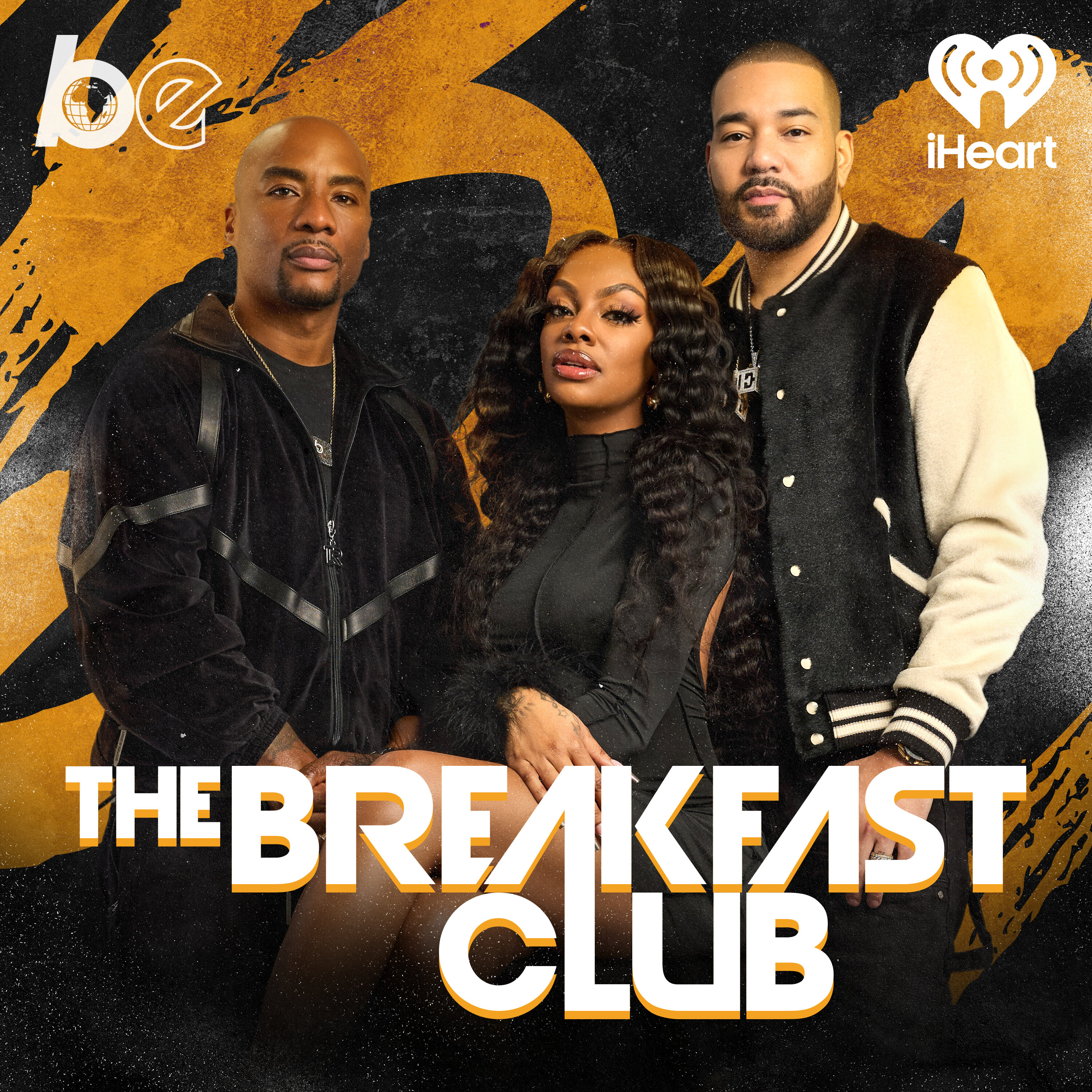
The Breakfast Club
INTERVIEW: Dr. Sesha Joi Moon, Stacey Holman, Maya Tepler & Alphonso David Talk New Doc, 'Declarations: Black Americans and The Revolutionary War + more
00:30:46
Loading summary
Transcript236 lines
- [00:00]
Host
This is an iHeart podcast. Guaranteed Human.
- [00:04]
Tony Ayo
This is Tony Ayo from the Real Report with Tony Ayo and Uncle Murder. You ever notice how everything keeps going up? Rent, streaming, even extra Sosa at your favorite burrito spot. But with Boost Mobile, you don't have to play the Willis Go up soon game. Boost Mobile offers an unlimited talk, text and data plan at a price that'll never go up. It's the same price you'll pay for Life. Switch now for unlimited wireless at a price that'll never go up. Only at boost mobile. After 30 gigabytes, customers may experience slower speeds. Customers will pay $25 a month as long as they remain active on the Boost Unlimited plan.
- [00:35]
Fernanda Echadarri
It's that time to put on your jersey and wave your flag, whoever you root for.
- [00:41]
DJ Envy
Why do I watch the World Cup? That's like asking me why do I breathe?
- [00:46]
Tony Ayo
And it's beautiful.
- [00:47]
Joy Moon
The guys are young and cute and fit.
- [00:50]
Alfonso David
It's not just a game. It's your culture.
- [00:53]
Lauren LaRosa
I like watching it with my dad.
- [00:55]
Joy Moon
It's a connecting force.
- [00:57]
Fernanda Echadarri
From Futuro Studios, I'm Fernanda Chavari, and this is is American Football, a show about soccer culture in the US and its underdog roots. Listen to American football on the iHeartRadio app, Apple Podcasts, or wherever you get your podcasts.
- [01:18]
SoFi Advertiser
High interest debt can be a real vibe killer. Credit cards, personal loans, and more can make you feel uncomfortable, even in the sanctuary of your own home. Well, what if you knew that SoFi can help you leverage your home's equity to feel more at ease? It's called a SOFI Home Equity Loan and could consolidate your debt at a typically lower interest rate than existing debt with lower monthly payments. And all while keeping your existing mortgage rate. View your rate@sofi.com payoffdeb today. Mortgages originated by SoFi bank and a member FDIC and MLS number 696891. Terms and conditions apply.
- [01:46]
WIX Advertiser
Equal Housing Lender Honestly, I put off building a website way longer than I should have. Then I tried WIX Harmony and it was way easier than I expected. I just described what I wanted and I had an incredible looking website. The best part, I could change anything myself or ask my AI agent for help. I had everything my business needed right there. So if you've been procrastinating, this is your sign. Start building a website for free@wix.com Harmony hold up.
- [02:19]
DJ Envy
Every day I wake up.
- [02:21]
Alfonso David
Wake your ass up.
- [02:22]
DJ Envy
The Breakfast Club. Y' all finished or y' all done? Yes, it's the World's most dangerous morning show, the Breakfast Club. DJ Envy. Just hilarious Charlamagne. The God Envy is not here, but Lauren LaRosa is. And we got some special guest here. They have a new documentary, Declarations Black Americans in the Revolutionary War Session. Joy Moon is here. Good morning.
- [02:40]
Lauren LaRosa
And it's.
- [02:42]
DJ Envy
I'm sorry, Ceca. Joy Moon, director Stacy Holman and producer Maya Tepler. Did I pronounce that right?
- [02:48]
Stacy Holman
You sure did.
- [02:48]
WIX Advertiser
Okay, yes.
- [02:49]
DJ Envy
It's crazy because I know your name, but.
- [02:51]
Joy Moon
Crazy. I know you, but.
- [02:52]
Lauren LaRosa
But never calls me that. Because he called me Dr.
- [02:54]
SoFi Advertiser
Moon.
- [02:54]
DJ Envy
Dr.
- [02:54]
Maya Tepler
Moon.
- [02:54]
Lauren LaRosa
He's never said my first name.
- [02:56]
DJ Envy
That is very true.
- [02:56]
Lauren LaRosa
I appreciate you on that. Doctor.
- [02:59]
Host
Exactly.
- [03:00]
Lauren LaRosa
A real doctor.
- [03:01]
Joy Moon
That's right. I know that's right. Stop playing. I know that'.
- [03:06]
Host
Dissertation.
- [03:06]
Lauren LaRosa
Oh, you want to know about it? It's on ProQuest. Available for review. Intersection of Race and Gender and the Career Mobility Patterns of Black Women in Federal Service Facing Executive service man.
- [03:19]
DJ Envy
Okay, Dr. Moon, they have a documentary, Declarations Black Americans in the Revolutionary War. It comes out on my birthday, actually, at 10pm on PBS. Tell them what the film is about.
- [03:31]
Dr. Moon
Well, this film is very special because we know this year is America's 250. However, we are looking at through the lens of enslaved, when we meet them, and eventually freed black men and women who are exercising those tenets of equality, life, liberty and the pursuit of happiness. So we're following them starting in the 1700s up until the end of the 1700s and how they gain their freedom.
- [03:53]
Host
No, but I've been thinking about the America's 250, because all of the cable news channels are like everybody's documentaries and these celebrations that are happening. And the other day I was thinking about it, like, I don't know why I don't feel attached to that, even though I'm here. My ancestors, we deserve to feel like that. But I don't feel attached to that at all.
- [04:11]
Dr. Moon
Well, I mean, and that's rightfully so, because when the framers of the Declaration wrote it, they did not have us in mind. They were thinking about free and independent states, as one of our scholars talks about. I mean, there was John Adams, you know, he was, you know, Massachusetts. So he was interested in freedom for black people. But most of them, it was about independent states. It was about seceding from the British, and it was not about what we, you know, hold true, which is those tenets. Life, liberty, pursuit of happiness.
- [04:43]
DJ Envy
I'd be wondering, if these stories are so important to the founding of America, why did Most of us. Most of us never learned about it in school.
- [04:51]
Stacy Holman
Well, that's. Well, it's something that when we. When we had our world premiere last weekend, everyone came out to us at the end, regardless of race, and was like, I had no idea about these stories. You think about it, we learn about the Revolutionary War like, what, three times? Like, elementary school, middle school, high school. And every time, we basically learn the same thing. And I'm sure we all came out of it with the same thing. Like, George Washington was president. We won. British bad, Americans good, and we get none of the nuance. But really, these foundational documents, you know, the enslaved people that we're covering and, well, eventually free people that we're featuring in our film, they embody those tenets more than George Washington could have ever imagined.
- [05:41]
Lauren LaRosa
Yeah, for sure. My favorite character from my hometown, his name is Abraham Peyton Skipwith. This is a black man who is in the rooms with the founding generation at the time. He's hearing about concepts of life, liberty, being oppressed. It's a very interesting juxtaposition of his life. But when you talk about things we never learned about, I mean, this is the first recorded black Virginian with a will. He executes the will in 1799, and he wills to his descendants a home, parcels of land, gold, silver, horse, buggy, gives instructions to manumit his descendants and educate his granddaughter. And it's just a narrative that you don't hear about what it meant to be black and find agency during the American Revolution. And what I find is that while Abraham Payton Skipwith is a founding father, Jackson Ward, there are Abraham Payton Skipwiths and Jackson Wards all over this country just kind of waiting to be found. So my hope is that through this film, that it actually will inspire and activate people like you, Lauren, to want to be able to connect to our stories because we helped found this joint.
- [06:44]
Joy Moon
Yeah. What was the most. What was one of the most jarring things that either one of you found out while bringing this documentary together?
- [06:52]
Dr. Moon
Oh, well, there is Harry Washington, who I. So he's. I mean, I love all my characters, but Harry, I really love. He was purchased at an estate sale by George Washington. He escaped. And George Washington is documented in his journal that Harry ran away and he was trying to get Harry back. Harry is caught. Harry runs away again, joins the British army, fights. Obviously, the British lose. He heads to New York. Washington is still looking for all his enslaved property, including Harry. At this time. He is married, escapes Nova Scotia. It's not really, you know, a bed of roses for black folks there. He then returns to Africa, which is now Sierra Leone, because the British had established a place there for a colony there. And unfortunately, we lose track of him. But here's a man who understood exactly what freedom was, as did George Washington. And no, but there's so little documented about him. And what we have is just. Is.
- [07:54]
Joy Moon
Is a. Is gold.
- [07:56]
DJ Envy
I wonder how many people realize the Declaration of Independence was meant to free us from the British because nowadays it feels like it's more relevant to freeing us from our own government. What do you hope the documentary motivates people to do and feel?
- [08:14]
Dr. Moon
I want people just to know that, first of all, black folks were active. They had agency in the 1700s. I want them to understand and know that this document still holds true. At least those parts of it is very contentious as you read the latter part of it. But we are all entitled to equality. We all are entitled to life, liberty and happiness. We all are pursuing that. And we can do that without defaming or disrespecting or even holding others back to attain those. So I want people to be. I hope people to be educated, help them to be curious. I help them to be excited and understand that this is our country. When I say our, I mean black people. I mean all people of color.
- [08:56]
Lauren LaRosa
And I can I add one thing. I also hope that people walk away understanding the importance of public media. Yes, this is a local story that is now being engaged at a national level. PBS has been a key partner in this work alongside with vpm, who is the production company behind this. And I feel as though at a time, you know, we're telling a Black story about four Black forgotten four mothers and four fathers. And they are airing this the week of 4th of July. That was a committed choice to make. And so I think that, you know, at a time when public media is being defunded, the fact that PBS is still putting their full weight behind this film, I also hope that it inspires people to donate and to give because this is how our stories get told
- [09:39]
Host
to the everyday person who's going to watch this doc, right, and. And be educated. You, you just brought up public media. A lot of people I don't even know, even when they hear about the fight, if they understand what the difference is between like a PBS versus like, other places that have, like, different rules around what they can do and how they put things out. Can you explain that for people?
- [09:58]
Lauren LaRosa
Well, I will say, for one of the things that we were talking about today is that public media is about truth telling, no censorship, and really fact based narratives and content creation. But I will say I think people now know what PBS is a little bit. From the Meg Thee Stallion situation, PBS became kind of popping out there.
- [10:13]
Host
They know what PBS is. But I don't know if until some of the things now people really understood why it was like so important for us to like. It's almost like a foundation of like our freedom to a certain extent when it comes to media. But I don't think people understood that until.
- [10:27]
Lauren LaRosa
Lauren, that's a good sound bite. Oh, thank you.
- [10:30]
Stacy Holman
PBS is gonna love that.
- [10:33]
Host
I mean, as me working in media and now that I'm older, I know for me being younger and thinking of PBS and now that I'm older, I even understand it a little bit differently now. So that's what I was kind of getting at.
- [10:42]
Lauren LaRosa
I love that.
- [10:43]
Dr. Moon
I mean, pbs, when you look at what it started. Children's program.
- [10:47]
Joy Moon
I remember Reading Rainbow.
- [10:48]
Dr. Moon
Reading Rainbow, exactly. I mean it really. And you look at all these other offshoots of networks and shows. PBS was the beginning of that cooking show. It was the brand Sesame Street. Sesame Street. I was okay. Mr. Rogers and electricity. Mr. Rogers. Oh my God.
- [11:07]
Joy Moon
Mr. Rogers is what Ms. Rachel is
- [11:09]
Lauren LaRosa
to the kids these days.
- [11:10]
Joy Moon
That was my Ms. Rachel back in the day.
- [11:12]
Host
But there's such a revolutionary like, like Sesame street and it being aimed toward like underprivileged children, you know, like the story of it. Now I think people are starting to discover more, which I think is amazing and connecting.
- [11:24]
Lauren LaRosa
When you're talking about Mr. Rogers, I mean, he helped to cross a color barrier on national television. PBS has, has been a key partner in the work of social justice for a very long time. And even this film, it's part of America at 250. And so we will be talking about historical, cultural and children programming all throughout the year. And so this film is just of those pieces to the puzzle.
- [11:43]
DJ Envy
Do you think that when y' all did this doc, did y'.
- [11:45]
Joy Moon
All.
- [11:45]
DJ Envy
Did you. Did you realize that some people see these documents just different? Like to some, like to some folks, yeah, decoration pendant means you got free from the bridges. But to us, like I said, it's like we try to be free from our own government. Was that a shock to you to realize that people see these docs different?
- [12:01]
Stacy Holman
It wasn't a shock. And I think like one thing that was interesting to learn is that black people and black movements have, were the first to use these words in sort of their purest and truest form. And you know we continue to see that in every civil rights movement and every rights movement throughout history. And I think, you know, if. If I were to say, like, what I want people to take away from that is, like, let's keep using these words because it's. The promise is still unfulfilled in so many ways. It was in the beginning and it is now. But, like, let's keep going, because these words do provide an incredible foundation if taken at face value.
- [12:40]
Joy Moon
Yeah. And with that being said, what does the. The research in this documentary say about the resilience of black people?
- [12:49]
Stacy Holman
I mean, so there's one story.
- [12:54]
Dr. Moon
She's our. She's our Lone Star woman.
- [12:56]
Stacy Holman
She's our lone star woman, and she's incredible. She sued for her own freedom. And while she's suing for her own freedom, she is living in her enslaver's home. So it's like, talk about resilience. Being able to live in your. In your truth and in yourself and in your freedom under the roof of someone who's fighting you in court to take it away from you.
- [13:22]
Lauren LaRosa
Damn black women.
- [13:24]
Host
I was literally about to say that Diwali are black women. I can't wait to watch this with my mom and my grandmother.
- [13:29]
Lauren LaRosa
Oh, please do.
- [13:30]
Host
This is something they love to talk about because my grandma comes from the south, and she always tells me about how, like, there's so much that she can't even show me when it comes to my own family because they didn't record certain things at a certain point.
- [13:40]
Lauren LaRosa
Well, I will say the film premieres on Monday, June 29th, your birthday, at 10:00pm EST. We had our world premiere at MCNYC, and your boy Doug Melville joined DM Me with Doug Melville. I heart Black Effect. Thank you. You like my plug?
- [13:55]
Joy Moon
I did.
- [13:57]
Lauren LaRosa
But on Monday, we also have a film screening at the Virginia Museum of Fine Arts. But our festival run begins with this gentleman back here, Alfonso David of the Global Black Economic Forum. Can you come and tell him a little bit?
- [14:09]
DJ Envy
What's up, Alfonso? How are you, brother?
- [14:11]
Alfonso David
I'm good.
- [14:12]
DJ Envy
Yes, sir. I'm good. Yes, sir.
- [14:13]
Alfonso David
I run the Global Black Economic Forum, which is an enterprise that focuses on economic justice for marginalized groups. And we are so proud to have this documentary premiere at the Global Black Economic Forum, which is going to be at the Essence Festival of culture. We have 60,000 square feet of space within the convention center. They are opening up on Friday morning at 11am we're gonna be showing snippets of the film, and then they're gonna talk about the film, why is it important? I mean, we're at a moment where our history is being taken away from us or at least being suppressed. Our jobs are being taken away. Our businesses are being threatened. Access to health care is being denied. So this is a moment where we think it's incredibly important to provide real information to our community because the information that they're being fed is not real in many cases. Right. Our history is being stripped out of schools. So this documentary comes at the perfect time to make sure that we are educating our community, providing them with the information and. And mobilizing them at a moment where, you know, our voting rights are being suppressed as well.
- [15:23]
DJ Envy
That's right. You know, I wanted to ask, right after making this doc, what similarities did you see between Black Americans of 1776 and Black Americans in 2020?
- [15:32]
Lauren LaRosa
Oh, you're your Oprah bag right now.
- [15:34]
Akilah Hughes
It's.
- [15:34]
Host
When he do this. Yeah,
- [15:39]
Dr. Moon
we're still fighting. We're still fighting. We are still looking, fighting for our happiness. We're still fighting for equality. We're still pursuing for all of those things. That hasn't stopped.
- [15:55]
DJ Envy
What about you, Dr. Moore?
- [15:57]
Lauren LaRosa
I know we talked about resilience, but I think for me, resourcefulness, like Skip with is probably the most important character for me because he's just my hometown. But like, it's this document. It's called Variety and the Vicissitudes of Life. And a. The daughter of his enslaver wrote it, and she's. It's a scene where she is watching her parents speak and Skip with is in the room. And the first line says, surely Abram knows to bring me my tea. The parents start talking about what they're actually describing in 1775 as the Boston Tea Party. They don't understand that that's what they're actually talking about. They're talking about being oppressed by the Queen Mother. And this is their favorite line that I say in the. In the film, you know, she sees her parents as the main character because of the white gaze. I saw Skip with as the main character because he's hearing about life, liberty, revolutionary war on the affront. And while he's pouring their tea, he's getting the tea. And then he's taking that information to develop a business acumen, a political savvy, that then he knows to go to the Virginia speaker of the House to then file for his legislative petition for freedom. He's using the information to even know how to put together last will and testament. And so I think it's kind of like, that's the same predicament that we find ourselves in right now. We're resilient, but we're also very resource and how we leverage our agency.
- [17:11]
Host
I have a question. Following that. Sorry, following that.
- [17:13]
Lauren LaRosa
Right.
- [17:13]
Host
Yeah. So when doing this documentary and you see stories like that and you talk about how powerful his story is, when we have people like, well, I'll take Jay Z, for instance. Right. Jay Z works with the NFL or works with whatever organization. And there are some people that will say, okay, well, you have to have someone that is learning certain things, that is speaking up against certain things, that is in the room or in the house to do certain things. Right. But then you have people that are really upset that he does that. But obviously there's some point of it where you do learn things that you can then take back to your people or just help free yourself so that other people can then do it. How do you look at that and compare to what we see now with people like Jay Z or whoever is crossing the line to better educate themselves or fight for other people?
- [17:55]
Lauren LaRosa
Well, it's funny. When I came in here with the cupcakes, I said, me and Charlamagne probably argue every week, because we do. Or at least I'm arguing with him. He's not arguing.
- [18:06]
Fernanda Echadarri
I love the sounds. The buzzing from the stadium, the chanting from the fans, the announcers calling the place soccer, football. It's home.
- [18:16]
DJ Envy
Why do I watch the World Cup? That's like asking me, why do I breed?
- [18:21]
Fernanda Echadarri
I inherited that fandom from my mom.
- [18:22]
Lauren LaRosa
I like watching it with my dad.
- [18:25]
Joy Moon
It's a connecting force.
- [18:27]
Fernanda Echadarri
From Futuro Studios, I'm Fernanda Echadarri, and this is American Football, a show about soccer culture in the US and its underdog roots. We go beyond the game to the people and the stories that make it great.
- [18:42]
Alfonso David
A soccer game is a festival. It's not just a game. It's your culture.
- [18:47]
Joy Moon
I took an elbow to my head,
- [18:49]
DJ Envy
which cracked my skull.
- [18:50]
Alfonso David
It is an American game. The Brazilians don't like hearing that, though.
- [18:53]
Fernanda Echadarri
Are they the only ones that don't like that?
- [18:56]
Alfonso David
Nobody likes that.
- [18:58]
Fernanda Echadarri
As we get ready for the Men's World cup this summer, listen to American Football as part of the My Cultura Podcast network, available on the iHeartRadio app, Apple Podcasts, or wherever you get your
- [19:09]
Host
podcasts,
- [19:14]
Akilah Hughes
Here's something that should not be as complicated as it is getting a racist statue removed. And here's something that should be a whole lot easier than it getting a new one put up in its place.
- [19:25]
Alfonso David
As long as there's a politics of race in America, there's gonna be a politics of remembering the Civil War.
- [19:31]
DJ Envy
To get to school, I had to go down Robert E. Lee Boulevard.
- [19:33]
Joy Moon
Get to the grocery store.
- [19:34]
DJ Envy
I had to go down Jefferson Davis Parkway.
- [19:36]
Host
If you're an historian and you leave
- [19:38]
Joy Moon
out half of what the history is,
- [19:40]
Host
you're not doing your job.
- [19:41]
Akilah Hughes
I'm Akilah Hughes, and Rebel Spirit Season 2 goes deep on both of those things. The fights, the politics, the people who won, and my personal campaign to add something to the Kentucky State House that's actually worth the wall space.
- [19:54]
Dr. Moon
We are more than our bodies.
- [19:56]
Joy Moon
We contain essence.
- [19:58]
Dr. Moon
We contain spirit.
- [19:59]
Joy Moon
How do you represent that?
- [20:01]
Dr. Moon
They are just fueling a fire that is really catching.
- [20:04]
Akilah Hughes
You'll see what I mean. Listen to Rebel Spirit Season 2 on the iHeartRadio app, Apple Podcasts, or wherever you get your podcasts.
- [20:15]
Alfonso David
Keith Giamanca seemed like a mild mannered suburban dad, but secretly he became someone else. A master of disguise who went on a crime spree. At the time, did it seem like a crazy idea? It seemed very crazy, but I felt so desperate that I felt it was the quickest, easiest way out. Did you allow yourself to think about how it could go wrong and what that might look like? No, I didn't want to manifest that. I was trying to manifest success. Every family has its secrets. But what happens when you discover that your dad has been living a double life?
- [20:57]
Lauren LaRosa
That is not the look of an innocent man. This is gonna change my life and my family dynamic forever. Because everything that had existed prior in my reality is now untrue.
- [21:10]
Alfonso David
Listen to Deep Cover the Family man on the iHeartRadio app, Apple Podcasts, or wherever you get your podcasts.
- [21:23]
Drink Champs Host
June is Black Music Month, and on the Drink Champs podcast, we're speaking with the hottest names in the culture, like Swae Lee.
- [21:29]
DJ Envy
Do you realize how legendary you are?
- [21:31]
Joy Moon
I appreciate that I be seeing it, but I'm like, man, I still got, like, so much more to do. Like Prince, he dropped like 30 albums. We dropped like five right now. That's the rate we gotta be going. Yep, that's a good attitude.
- [21:43]
Drink Champs Host
You'll also hear stories from industry legends and hip hop pioneers like Fab five Freddy.
- [21:48]
Maya Tepler
I directed one of Nas's early videos.
- [21:50]
Tony Ayo
Which one?
- [21:51]
Maya Tepler
One Love.
- [21:52]
Drink Champs Host
Wow.
- [21:54]
DJ Envy
Yes.
- [21:54]
Maya Tepler
I literally filmed in his apartment in Queensbridge. His moms was still up in that apartment. Nas was just beginning to take off. His pops used to live near me in Harlem. His dad introduced him to a whole lot of you know, conscious stuff. And he made a young prodigy.
- [22:09]
Drink Champs Host
No matter the era, Drink Champs brings you the biggest names and the most unfiltered conversations. Listen to Drink Champs from the Black Effect Podcast Network on the iHeartRadio app, Apple Podcasts, or wherever you get your podcasts.
- [22:23]
Lauren LaRosa
I don't know how it's working out, but we. Most of our conversations, I always say it's a both. And, you know, like, I'm doing this documentary, and I guess you could say I'm a social justice advocate in certain ways, but it's a both. And my day job is I'm a cabinet secretary for a governor, learning the roles and the rules so that we know how to navigate them so that we can actually. Actually achieve a more perfect union. And so I don't think that it's one or the other. I think that that's the approach in my practice on how I do this work. And I think that's how the film has gone about it. And even in this moment right now, I mean, we are all accomplished women, but we're going to essence. We're the Breakfast Club. We're trying to make history cool. You have to. You kind of have to live at that intersection right now to be able to get the best of both worlds, to be able to achieve liberty at the end of the day.
- [23:11]
Dr. Moon
Day.
- [23:11]
DJ Envy
I would like to hear everybody's response to what Lauren just said. Yeah, actually,
- [23:17]
Stacy Holman
can I have this?
- [23:18]
Joy Moon
Go ahead, Go ahead.
- [23:24]
Host
What you say, Dr. Mo?
- [23:25]
DJ Envy
Like, we at school.
- [23:27]
Maya Tepler
I know.
- [23:31]
Joy Moon
I'm so glad he asked y', all, not me.
- [23:33]
Dr. Moon
Go ahead.
- [23:33]
Host
I guess I'm asking what. How do you guys feel about people that will push back against people being at the intersection of what they think is the oppressor or the oppressing. Oppressing things. Like the character that she's talking about from your documentary. He's in this house with his oppressor, but he's there and he's learning. And then he is creating his own will. He's taking it back to his people. He's educating. And I thought of Jay Z because I remember when he did the deal with the NFL, people were like, you're a sellout. We're supposed to be boycotting. And. But it's like, you need someone there to kind of, like, know what's going on, but also push. So I want to know how you guys feel about it after doing this documentary and hearing that story Spook who
- [24:09]
DJ Envy
sat by the door. Yeah, you gotta be some. We need some people to be there.
- [24:14]
Dr. Moon
I think you have to be in the room to know the playbook. Right? You need to know the blueprint, and we need someone in the room. So I think, as people are maybe mad about it at the same time. Look who's performing at the halftime show. Kendrick Lamar. Now, if he were not part of it, would Kendrick Lamar be there? You know, with all the controversia of Mag Bunny, would he be there? So I think we can get so narrow in our vision. We have to look and see the full view of things and see that this is going to pay off in the long run.
- [24:55]
Stacy Holman
And I guess I'm a person who benefits from people who do that. Like, I learn from the situations, and I think, like, I feel very lucky to. To have the opportunity to learn. And I think that's what's exciting about this film is it gives people who might not otherwise know and might not even be interested the opportunity to learn. And. And I mean, I say learn and I sound like a kindergarten teacher. But it's like, it's cool. It's cool. History. History can be cool. Like I was telling these ladies earlier, I was like, I'm just a dorky documentary filmmaker. I can't believe I get to come here and talk about it. But that's. But that's because of what you're talking about. About people who open the door, about people who allow. Who. Who open the space and let people in with. Embrace.
- [25:41]
DJ Envy
What about you, Alfonso?
- [25:42]
Alfonso David
I'll say that in our history, we have seen this movie over and over again. Whether you're talking about Martin Luther King and Malcolm X or you're talking by Fannie Lou Hamer and someone else all had different approaches to how we think about liberation and how we think about civil rights. And I know that with a lot of information today, it's very easy for us to reach judgment on how people are approaching their own liberation. But I think it's probably behooves us to really take a step back and think about the variety of different ways we can actually get to that promised land. And in some ways, my approach may be different than yours, but if we're all rowing in the same direction, we will ultimately get there. And I think if we focus on that ultimate goal, we might actually reach it at some point.
- [26:28]
Lauren LaRosa
Yeah, a little bit more. Grace, what are you doing? Once you are in the room, I think is really what it's all about.
- [26:33]
Host
Never enough for the people. If you leave it up to the people.
- [26:37]
DJ Envy
I love in the beginning of the doc, it's a piece of the Declaration of Independence. But you have all of these different people of different races and creeds reading that. Why was that important?
- [26:49]
Dr. Moon
Just looking at this document, it's supposed to be for everybody. And I wanted every. Wanted to hear everybody's voice in that and to let everyone know that this is America's document. It's not just white person's document, not just a black person's document or Hispanic or. It's everyone's. And I think just the chorus of voices just. I envisioned it just sounded beautiful in my head. And I'm so glad it paid off
- [27:15]
Joy Moon
when we started filming it.
- [27:16]
Lauren LaRosa
And can I just say, Stacey has worked with Stanley Nelson. He worked with Dr. Gates. This is her first feature film that she is the director. And I think she did such a. Congratulations. And so congratulations, Stacy.
- [27:30]
Fernanda Echadarri
You did that.
- [27:33]
DJ Envy
Is this doc really about the Revolutionary War? Is it about black people constantly fighting to make America live up to his own promise?
- [27:39]
Dr. Moon
It's both.
- [27:40]
Akilah Hughes
Yeah.
- [27:40]
Host
Okay.
- [27:41]
Dr. Moon
Both and both and both and every. Every.
- [27:47]
Joy Moon
Yeah.
- [27:47]
Dr. Moon
And if I can just. I don't want to add one thing. I'll let Maya speak to this. And this speaks to BPM and pbs. We actually used AI in this film. And it's very controversial for many reasons, and the support we got, but the way we used it, we wanted to use it in a creative and ethical. Creative. You know, it's a creative, ethically way. And it was just another way to start a conversation. So you asked what we want the film to do. We want to talk about the conversation of how we depict ourselves, how we are seen during this time period. Because if we are seen, we're seeing serving the tea, we're seen in picking cotton, you know, carrying wheat. So we're excited for. For that part as well.
- [28:30]
Joy Moon
I'll still be carrying your weed, though. But go ahead.
- [28:34]
DJ Envy
I feel you.
- [28:34]
Joy Moon
I feel you.
- [28:35]
Stacy Holman
I mean, I think something that's super exc. Exciting that we're doing in this film is so the way that we're using AI animation is we have a fine artist who's also our AI animator, who's also a historical researcher.
- [28:47]
Lauren LaRosa
Hey, Hudson.
- [28:48]
Stacy Holman
Hey, Hudson Campbell. Amazing guy. Just had a baby. We're so happy for him.
- [28:51]
Dr. Moon
Congratulations.
- [28:54]
Stacy Holman
And he did these portraits of our four main subjects, and he used that to generate the AI animation. So all of it is in his style. All of it is using his art. And throughout the film, something you see is him painting these portraits. And to me, there's something really beautiful about how we're rewriting the history that we know with his Hand. And that's very.
- [29:23]
DJ Envy
Why did y' all feel AI was necessary to tell a more complete story?
- [29:27]
Dr. Moon
Well, I'm not respect to recreations. I'm not a big recreation fan. And, you know, there was obviously some incredible animators. However, we had the opportunity to work with a fine artist and we wanted to continue to use his style throughout and. And also, too, it helped with the budget, you know, full transparency. You know, I think pbs. Pbs, you know, so it was a tool that we used creatively, but also helped us with our budget.
- [29:57]
DJ Envy
I think it makes sense, especially when you dealing with historical figures or, like, fictional characters. The only problem I have with AI is when it's actual real.
- [30:07]
Akilah Hughes
Yes.
- [30:07]
DJ Envy
Things going on now, but for the history, it's just like, yeah, I need that visual kind of to connect the dots.
- [30:12]
Joy Moon
And it's.
- [30:13]
Lauren LaRosa
For pbs, his first time doing it.
- [30:15]
Dr. Moon
Yeah, I mean, to this degree. They did one other project, but this is the first one, and they have a whole. I mean, to PBS's credit, they went through the ringer. We went through the ringer, but they have a whole document that explains the process. We had historian Stephen Seals, who's also interpreter, historical interpreter, look at all of the visuals to make sure that everything was historically accurate.
- [30:38]
Host
What do.
- [30:39]
DJ Envy
How do you balance historical accuracy with the need to make history feel alive, I guess, for the new audiences?
- [30:45]
Stacy Holman
Well, I think one thing important that we're dealing with with this particular subject matter is the materials don't exist. There aren't the portraits, there aren't the paintings. We had to come up with some way to do it, whether it be animation or AI anim or recreations. And so, you know, I think. And we had a lot of discussions in the beginning because the depictions of black people at the time were offensive. Like, how do we breathe life into this in a way that feels honest but also beautiful and agency. So, you know, I think we did do that. And I think in terms of balancing history with. With reimagining is you have to do pbs. The bar for research is high. Very high accuracy, very high. And, you know, we've both worked for many different networks, and I can say it drove me crazy. But the rigor with which we had to, you know, show our historical foundation for everything we did, it's unparalleled.
- [31:52]
Lauren LaRosa
But can I say one thing about that? You know, me and my sister are subjects in the film. And when I saw the AI creation of Skip With, I was boohooing in the. In the theater because, you know, we talked about his will but, like, one of my favorite parts of his will is that he told one of his sons, take 10 of my suits. And I was like, hold on, 10 of your suits? It's 17.99.
- [32:10]
Dr. Moon
You ain't wanting 10 suits.
- [32:12]
Lauren LaRosa
And they had. There's an image of him standing in front of his home, and he just looks like he has pride, like he has freedom, and that he has his own agency. And I appreciate seeing that on film because I didn't have to imagine it. They gave me something to be able to act, you know, to react to. But I will say one thing about Skip With Story that is so disheartening. And the film goes through this. You know, this man had this will. He had very explicit instructions for his family home, stays in the family's custody for over 100 years, passes hands to another family. And then because of Interstate 95, the home is removed from the community because the highway goes right through the nation's first historically registered black urban neighborhood. And they move the home to a former tobacco plantation belonging to the Confederate Army. And so part of the film is also recreating and reestablishing that historic site. And so the AI What I love that Stacey and Maya did was it's so many mediums within the film. You have research, you have primary artifacts, you have AI you have a live accounting of a research project for reparations. And so I think. And you have. You have interviews. I mean, you just have so many mediums of content. So that we hope that all audiences can kind of walk away and feel like it's an enjoyable viewing experience. I know I did.
- [33:35]
Dr. Moon
I hope so.
- [33:36]
Lauren LaRosa
Yeah, you did great.
- [33:37]
DJ Envy
Are you more hopeful or less hopeful about America's ability to become what it claimed to be in 1776? After doing this doc all of this time?
- [33:48]
Dr. Moon
I've done several historical documentaries, and I think what we're going through now is nothing new. We can look through the history, look at the nadir, look at what happened after reconstruction. I'm hopeful because of the Skip withs. I'm hopeful because of the mumbets. I'm hopeful because of Harry, even. Even though Harry left the country.
- [34:10]
Joy Moon
And there's some folks I know who have left the country.
- [34:13]
Dr. Moon
And I'm hopeful.
- [34:14]
DJ Envy
Liberation is liberation.
- [34:14]
Dr. Moon
Liberation is liberation. It's either here or it's back home or would, you know, the diaspora. And I'm hopeful because of James. They were in the pursuit of justice, their pursuit of just.
- [34:27]
Akilah Hughes
Of hope.
- [34:27]
Dr. Moon
And I think, yeah, I mean, you gotta have. It's that hope that mustard seed. Faith, hope for me.
- [34:35]
Lauren LaRosa
Agree. You said that.
- [34:36]
Joy Moon
Well, I got the mustard seed right here.
- [34:39]
Host
We got one right here.
- [34:40]
Joy Moon
Yes.
- [34:40]
Dr. Moon
There you go.
- [34:41]
Host
It's just.
- [34:41]
Dr. Moon
That's all we need.
- [34:42]
Joy Moon
Yes, ma'. Am.
- [34:43]
Lauren LaRosa
I'm really. I'm really shocked at how into this interview you are. This is gonna be a little 10
- [34:52]
Joy Moon
minute in and out.
- [34:55]
DJ Envy
Well. June 29, 10pm Declarations, black Americans and the Revolutionary War. I mean, I guess we can end with what's the biggest lie Americans tell themselves about the Revolutionary War that you hope this documentary dispels?
- [35:10]
Lauren LaRosa
Can I chime in? For me, it's not about the Revolutionary War. It's just about the founding of the country and that we were here, we were a part of it. We were active architects in our own right.
- [35:20]
Dr. Moon
It was a secession document. It was. That's what it was.
- [35:23]
Lauren LaRosa
Yep.
- [35:24]
Dr. Moon
Not a freedom, but a secession.
- [35:28]
Stacy Holman
That it was for the people.
- [35:31]
Joy Moon
You got to throw your fist up when you say that.
- [35:36]
Lauren LaRosa
Maya has been in cultural competency training.
- [35:40]
Joy Moon
She wanted to, but she was like, I don't know. That feels great. I'm so spiral. Inspiring.
- [35:49]
Dr. Moon
My fist is up and sparing my fist.
- [35:51]
Host
Don't let just get you in trouble of you.
- [35:52]
Stacy Holman
Well, before I came on, a friend said, you have an opportunity to go viral in a very bad way.
- [35:58]
Host
I've been seeing you being careful.
- [36:01]
Joy Moon
I know. She puts that hair behind her ear
- [36:02]
Host
and paused for a second.
- [36:06]
Joy Moon
She like, I appreciate it.
- [36:10]
Host
I really do.
- [36:11]
Joy Moon
I love it.
- [36:12]
Host
America ain't done nothing else. You are here.
- [36:15]
Alfonso David
The biggest lie that. That we're told is that we're less than is that people of color and black people are less than. That's what we are trained and told over and over and over again. And trying to deconstruct that and dissect that is the journey. And that's why this film is so important, because it helps deconstruct that lie and show people that we were actually integral to this thing that we call the Declaration of Independence.
- [36:47]
DJ Envy
That's right. Well, alfonso, Maya, Stacy, Dr. Moon, thank you for joining us. Declarations, Black Americans in the Revolutionary War. June 29, 10pm on PBS.
- [36:59]
Alfonso David
And also July 3, 11am at the Black Global Black Economic Forum at the Essence Festival. If folks are there, please come and see. I mean, it'll be in the Great hall in the Convention Center.
- [37:12]
Maya Tepler
All right.
- [37:12]
Joy Moon
Hall in the Convention Center.
- [37:13]
DJ Envy
Oh, all right. It's the Breakfast Club.
- [37:15]
Joy Moon
Yes. Hold up.
- [37:17]
DJ Envy
Every day I wake up.
- [37:19]
Alfonso David
Wake your ass up.
- [37:20]
DJ Envy
The Breakfast Club. Y' all finished or y' all done?
- [37:24]
Host
This is an iHeart podcast guaranteed human.