← The Breakfast Club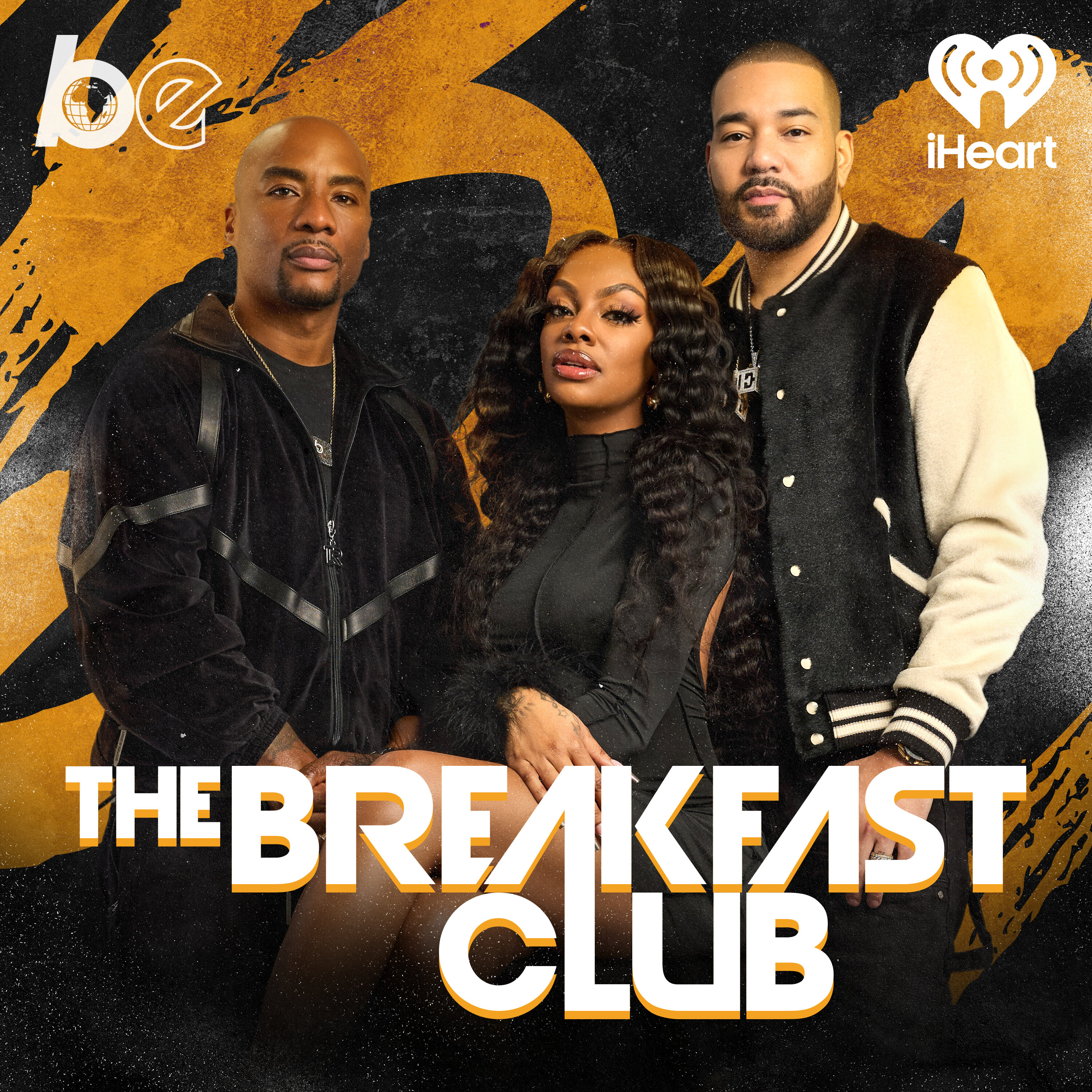
The Breakfast Club
INTERVIEW: Montell Jordan Opens Up About Prostate Cancer Battle, His Journey From Music To Ministry + More
00:41:57
Loading summary
Transcript195 lines
- [00:00]
Enya Umanzor
This is an iHeart podcast. Hi, my name is Enya Umanzor.
- [00:07]
Drew Phillips
And I'm Drew Phillips.
- [00:08]
Enya Umanzor
And we run a podcast called Emergency Intercom.
- [00:12]
Drew Phillips
If you're a crime junkie and you love crimes, we're not the podcast for you. But if you have unmedicated adhd. Oh, my God, Perfect. And want to hear people with mental illness psychobabble.
- [00:26]
Enya Umanzor
Yes, yes, yes.
- [00:27]
Drew Phillips
Then Emergency Intercom's the podcast for you. Open your free iHeartRadio app, search emergency intercom and listen now.
- [00:35]
Enya Umanzor
I'm Dr. Joy Harden Bradford, host of the Therapy for Black Girls podcast. I know how overwhelming it can feel if flying makes you anxious. In session 418 of the Therapy for Black Girls podcast, Dr. Angela Neil Barnett and I discuss flight anxiety. What is not normal is to allow it to prevent you from doing the.
- [00:54]
Unidentified Expert/Guest (possibly a forensic expert or commentator)
Thing, things that you want to do.
- [00:56]
Drew Phillips
The things that you were meant to do.
- [00:59]
Enya Umanzor
Listen to Therapy for Black Girls on the iHeartRadio app, Apple Podcasts, or wherever you get your podcast.
- [01:05]
Montel Jordan
I just normally do straight stand up.
- [01:06]
DJ Envy
But this is a bit different.
- [01:08]
Montel Jordan
What do you get when a true.
- [01:09]
Enya Umanzor
Crime producer walks into a comedy club? Answer a new podcast called Wisecrack, where a comedian finds himself at the center.
- [01:17]
Montel Jordan
Of a chilling true crime story.
- [01:19]
DJ Envy
Does anyone know what show they've come to see? It's a story about the scariest night of my life.
- [01:26]
Enya Umanzor
This is Wisecrack, available now.
- [01:29]
Montel Jordan
Listen to Wisecrack on the iHeartRadio app.
- [01:32]
Enya Umanzor
Apple Podcasts, or wherever you get your podcasts.
- [01:35]
Unidentified Expert/Guest (possibly a forensic expert or commentator)
Every case that is a cold case that has DNA right now in the backlog will be identified in our lifetime.
- [01:42]
Enya Umanzor
On the new podcast, America's Crime Lab. Every case has a story to tell, and the DNA holds the truth.
- [01:48]
DJ Envy
He never thought he was going to get caught. And I just looked at my computer screen, I was just like, ah, gotcha.
- [01:54]
Montel Jordan
This technology's already solving so many cases.
- [01:59]
Enya Umanzor
Listen to America's Crime Lab on the iHeartRadio app, Apple Podcasts, or wherever you get your podcasts.
- [02:05]
Montel Jordan
Hold up. Every day I wake up. Wake your ass up. The Breakfast Club.
- [02:12]
DJ Envy
Morning, everybody. It's DJ Envy. Just hilarious. Charlemagne the guy. We are the Breakfast Club. Lola Rose is here as well. We got a special guest in the building.
- [02:20]
Charlamagne tha God
Yes, indeed.
- [02:20]
DJ Envy
You want to do the intro? You want to sing the intro?
- [02:22]
Montel Jordan
This is how we do it. Jordan, ladies and gentlemen. Welcome, brother. What's up, y'?
- [02:28]
DJ Envy
All?
- [02:28]
Montel Jordan
I'm great this morning, man, you look good. You look amazing. Thank you, man.
- [02:31]
Drew Phillips
I feel good.
- [02:32]
Montel Jordan
I feel good. It's good to Be here.
- [02:33]
Charlamagne tha God
How old are you, if you don't mind me asking?
- [02:35]
Montel Jordan
Yeah, I'm 56. God damn.
- [02:39]
Charlamagne tha God
Give us something to look forward to, man.
- [02:41]
Montel Jordan
Hell you talking about?
- [02:42]
DJ Envy
Absolutely. How's it feel to have one of the. A record that will never go away. It plays in pop culture, in hip hop, in urban, in country, and all types of thing. Your record always get played. Do you know, when you did that record, it was gonna. That was that record. It was gonna be that way.
- [02:59]
Montel Jordan
I knew we had something special. Like I go back to college days and I knew that even long before I was in the music business, like I would go to the fraternity parties or whatever. And any DJ that was really doing his thing, right around that, you know, last call for alcohol, that last hour, the club, that's when they would drop Slick Rick's Children's Story. And that was just already like a timeless record. But I always said, even back then, I said, if I ever get the chance to in the music business, I'mma sing over that record. So I did know that it was already a hit. But the journey of taking that hit and then turning it into a classic, you know what I'm saying? I. I could not have known that. But that was what the goal was.
- [03:35]
Charlamagne tha God
Correct. Correct me if I'm wrong, because I was thinking about it. When they told me you was coming in, you were. You were Def Jam's first R B star, right?
- [03:42]
Montel Jordan
I think they had Allison. Well, when you say R and B star. So they had. Allison Williams was there. They had Orange Juice Jones there. So they had some. Some R B stuff. Yeah. I mean, we were the first. Well, not only were we the first, I think, successful R B, like we were their. Their first number one record that Def Jam had ever. Yeah.
- [04:02]
Charlamagne tha God
In all.
- [04:03]
Montel Jordan
Wow. Yeah. Wow. Amazing.
- [04:06]
Charlamagne tha God
I think, you know, you think of Def Jam, you think of it being a rap heavy label, you know, especially around that time. You even sampling one of their classic rap records.
- [04:13]
Montel Jordan
Absolutely. And the cool thing though, even with that relationship of doing the Slick Rick, the Children's Story kind of pairing, on my second album, me and Slick Rick got together and we did a song called I Like that was on my second album. And we're friends to this day. Him and his wife and me and my wife, we all do life together.
- [04:31]
DJ Envy
Well, tell us how you wrote that record in the process of getting into the music industry. Cause you said you were in college and you go to parties. What made you say, you know what? I want to do music?
- [04:40]
Montel Jordan
Well, the making of that record right there Was literally like capturing atmosphere. So I would study guys like Marvin Gaye and a song like Got to Give it Up. If you listen to that song, Got to give it up even before Marvin starts singing, you hear crowd, you hear atmosphere, you hear energy. And all that is transformative in, you know, into music, especially when music was more analog than digital. And so when you hear this is how we do it, before the song ever comes on, you hear a party, because that's what we did. I put people in the studio, put a microphone in there, games and drinks, and they were all standing around having a party. And then I, you know, the engineers, we click play and we captured the energy of the room before the song ever.
- [05:20]
Unidentified Expert/Guest (possibly a forensic expert or commentator)
Ever kicked in the actual studio. Like live in the studio.
- [05:24]
Montel Jordan
Like live in the studio. They were just kind of. We just captured everything. The. The flirtation, the conversation. Everything that was happening is the undergirding of the track and the lyrics of this is how we do It. So people don't know it's more than hearing the record. They actually feel that record. Which is why, you know, we're talking 30 years, almost 30 years later, a.
- [05:45]
Charlamagne tha God
Record like that is a gift and a cur. Because, you know, a record comes, it becomes such so bigot in life, kind of overshine shines the rest of your catalog.
- [05:53]
Montel Jordan
Right. In a way, it was a gift because it's around 30 years later. It was a curse because it was the first record. And because it was the first record, everybody always wants to put everything up against that record, you know, and that was a phenomenal record. And so even though I've had records that have probably sold more or that have done extremely well, everybody always goes back to that as the first. Yeah.
- [06:16]
Charlamagne tha God
When they're sold more. Was that yeah record that so much?
- [06:18]
Montel Jordan
Well, get it on tonight. Good. I had some records that did really. Probably not sold more, but I mean, as far as Hell no, that has some legs. I got records that have some legs to them or whatever. But that record was so when Something for the Honeys came out, that was a song that had some legs to it, but it could never reach number one because it was like 10 months later, we're like, hey, this is the next single. They're like, no, we're still playing. This is how we do it. And so station. Oh, but this is a pretty cool thing that a lot of people don't know. The reason why this is how we do it got to be so big was because, you know, in the song, I say South Central does it like Nobody does. I remember coming to New York City, getting with all the. Angie Martinez, wh. Wendy Williams, all that I got to Hot 97 and those stations or whatever, they're like, we love you. We love Def Jam, but we're not really kind of playing that record because, you know, the whole South Central thing. So I was like, okay, well, let's. Let's try and fix that. So we went into the. The editing booth, and I re sang, this is how we do it. But I said, oh, New York does it. Like nobody does. And what I normally do, you know, because I was a rapper before I was singing, you know, I would do like, this is how we do it. It's Friday night. I feel all right the party's with Angie Martinez. So I reach for the old school and I turn it up Bunk Buns the flag. And so I started throwing names into the songs and changed it to New York. And so when I did that, now New York, they're playing that song every hour on the hour. And then D.C. hears, and D.C. is like, yo, we heard you did that in New York. We want a DC version. We want a Philly version. And so I end up singing the song probably a thousand times just so that every station had their own customized version of it. So that is.
- [07:52]
Charlamagne tha God
Artists don't put that kind of work in the world.
- [07:53]
Montel Jordan
No, not at all. No, no, no.
- [07:56]
Unidentified Expert/Guest (possibly a forensic expert or commentator)
I was gonna say you talked about you being a rapper a little bit.
- [07:59]
Enya Umanzor
To get into that part of it. Even in that song, you kind of have verses where you're. It's like you're singing it, but it's. It's like a lyric.
- [08:05]
Unidentified Expert/Guest (possibly a forensic expert or commentator)
Like you're rapping it.
- [08:06]
Enya Umanzor
Like, I reach for my. Like, now I understand kind of where that comes from.
- [08:09]
Montel Jordan
Yeah. I was Russell Simmons, rap singer when I got signed to Def Jam. That was one of the reasons why I was documenting street life in Los Angeles. And I was finding to, you know, the R. Kellys were out there, there were other artists out there, the guy was out there. And, you know, I wanted to do the new Jack thing. I wanted to. I was a fan of Aaron Hall. I was a fan of a lot of different things. But the only way I was able to carve my own space into who I would be musically was I had to take rap lyrics and then I would sing them. So if you were to look at this is how we do it, and you say, I reach for my 40 and I turn it up Designated driver take the keys to my truck. Like, lyrically, that's like Rap prosecutor, but that I would take designated driver, take the keys to my truck and say, designated driver, take the keys to my truck. And so I literally would write rap lyrics. My entire first album, I wrote rap lyrics, and then I figured out how to sing them.
- [08:59]
Charlamagne tha God
I just love the fact that you were promoting, you know, having a designated driver.
- [09:02]
DJ Envy
Yeah, back then.
- [09:03]
Montel Jordan
Right, that's what I'm saying. You know, I was very conscious, very responsible. Early on.
- [09:08]
Charlamagne tha God
You went from R and B, you know, superstar to pastor. Like, what was the breaking point that made you step away from the industry?
- [09:17]
Montel Jordan
I was brought up in church. I was a church kid growing up. And so from that standpoint, it wasn't like, you know, I had this great big epiphany and then, you know, flew to the gospel. It was like, literally, I was brought up a church kid. My. And a lot of musicians and a lot of artists have that training ground. It's like a farm league almost for. For the music business, where people are growing up, they're listening. It's the difference between, you know, between rhythm and blues and soul music. Soul is a little more attached to feeling as opposed to just sonic hearing. Uh, and so me going back into ministry wasn't like a, oh, I'm ready to do this. It was more of a God move of saying, hey, man, you've done it this way for so long. You know, why don't you try and do, you know, try and do it my way and give me the opportunity to show you that what accolades and what verification and validation I'm looking for in man and in people, that God's like, I've already verified you. I've already validated you. And so, you know, so I don't have to work for God's grace. I'm working from his grace. And by me stepping away to do ministry, I found out who I was because, you know, in the music business, I didn't know who I was outside of music. If I'm not. I don't have an album. If I'm not on the charts, if people aren't playing on the radio, then who I am, I. And so God was like, you know, well, I'm gracious enough to show you who you are if you never pick up a mic again. So it was during that time I found out, man, I'm a son and I'm a father, I'm a friend, I'm a giver, I'm generous. You know, I'm all these different things. I'm a teacher, I'm a communicator. I'm. I'm a bunch of different. If I never pick up a microphone again, I found out who I was, and I learned that, you know, music doesn't define me. I define music. And that was like a pivotal, you know, pivotal part for me to understand that music doesn't define who I am. I define who music is. And then that's when God says, okay, now I can trust you with music again, because now you know who you are.
- [11:05]
Charlamagne tha God
I was going to ask you what. What did you find in ministry that music couldn't give you? And I guess it was just a sense of self.
- [11:12]
Montel Jordan
What did I find in ministry that music couldn't give me? I think that with music, I was in an abusive relationship. I love something that couldn't love me back. And so literally, you know, I would say, man, I love music so much. I love music so much, I do it for free. I love music, and music never loved me back. Even when I was leaving music to go into ministry, music wasn't like, no, Montel, don't leave. We want you. It was nothing. It was just like, bye, you know, So I was like, okay, cool, whatever. And so I learned that God did love me and he did care about me, and he was there, you know, in those spaces. And so I think what I got from God is I got someone and something that could love me back. And then now I understand that music is something that I can enjoy, I can appreciate and I can create, but it doesn't create me.
- [12:01]
DJ Envy
When. When you got into being a pastor, did you. When you went back to performing, did you feel like I had to take some lyrics out or had to change things up or anything at all or. No.
- [12:10]
Montel Jordan
100%. I. I literally, you know, the. The story goes of, you know, when I left the music business, I literally, I burnt the plow. Meaning I'm like, I'm not coming back. I got all my instrumental tracks. I got rid of everything. I was full ministry for like four or five years. And during that time period, there was a. A promoter who kept calling my wife. Like every single year, several times a year, he would call her, hey, I need Montell. I need Montel. I need Montel. And we didn't even take dude's calls. Like, we are done with the music business. And then about four years in, she finally, you know, takes the man's. My man's call. She's like, hey, you know, kind of frustrated, you know, what do you want? He's like, yeah, I need Montel for this concert. I Got a key, sweat, Silk. I got this whole big thing, and we need Montel. And she's like, you know, Montel is retired. He was like, yeah, yeah, I know. I'm following his career. She was like, you know, he's a minister. He's a pastor now. He's like, yeah, yeah, yeah. I'm a Christian, too. I know that. And so he's like, well, why do you keep calling in? He's like, because my shows are really dark, and I need some light. So when he drops that, now we have to circle back. And we're like, okay, is there a way that. Well, first it was like, okay, well, God, you told me not to sing that song no more. And God said, no, you told you not to sing that song no more. I never told you that. And I was like, oh, my goodness. Maybe it was me, you know, I had to get rid of my own idol. I had to. I had to sacrifice my own idol that I made it. But. But God never told me not to sing that song anymore. So I did have to say, okay, what can I sing and what can't I sing anymore? Can I give people nostalgia without giving them something that compromises who I am? And that was the journey of going back and finding the songs that I could sing. Changing some words, changing some lyrics, because I'm a changed man. And then that became something that was acceptable. And it's very welcomed, actually out, not only for the audiences, but even, like, the artists that I'm out on the road with. I'm like a pastor to the unpastored and a lot, because I'm speaking truth and I'm loving them, and I'm out on the road with them. I understand what they've been through. I've been doing this for 30 years. You know what I'm saying? And so I think that was part of the journey of, yeah, I'm able to change lyrics. I'm able to customize something. Quick story. Like when it comes to let's Ride, I do. That was, you know, pretty nasty song. Masterpiece, Silk the Shocker, Strip Club anthem. Big, big number one record, you know, And I'll do that song, but I don't really sing that song. I'll sing the first verse of that song. I literally do about 45 seconds to a minute of the song to instill nostalgia in people. And then with Masterpiece, go, I get to that part in the song, like, you know, writing the verse, and I go, I don't do that song no more. Cause it's nasty. And the crowd laughs or whatever. And I'll tell them, yo, I told you I'm a pastor no more. You know, but. But, but I can do this song. And then I just kind of shift. So I'm giving them the song and just that much makes them feel like they've heard the entire song. And then, you know, I keep it moving.
- [14:53]
Unidentified Expert/Guest (possibly a forensic expert or commentator)
I love that. So. So it was. So did you feel guilty? You felt guilty before, you know, performing those songs after you had stepped away and did ministry and they wanted you back when that promoter called your wife, it was the fact that you would feel guilty when you did the songs before. Got closer to God.
- [15:11]
Montel Jordan
I. I never felt guilty, which is. Which is wild. I. I felt. I. I maybe felt conflicted. But guilt. Guilt is a. Is, I think, is a. A strong word. I felt like, I know I love the Lord. I know I'm in. You know, this is before ministry. I know I love the Lord. I know God's got me. I know he's given me a lot of ideas, and I took a lot of those ideas and I made them more customizable for different audiences and stuff like that, you know, and. And from that standpoint, I. I had to be two Montels if. If you will, or. And it probably was three or four. You know, I call it spiritual schizophrenia. It was like, literally. And I'm not making fun of any diagnosis. I'm. I'm saying that I had to be different Montel for different audiences. When I hung with my wife, that's one Montale. When I'm at my church, that's a different Montale. When I went my mom's, that's a different Montale. And so because of that, I was trying to keep up with a bunch of different personalities. And so, yeah, I think I could feel guilty from the standpoint of not being authentically who I am. And ministry allowed me to step into a space that is like, it doesn't matter if I am on the Breakfast Club. It don't matter if I'm in church. It don't matter if I'm with, you know, in any setting. I'm going to be the same Montel, authentically me all the time. And that's liberating.
- [16:27]
Charlamagne tha God
So how do you reconcile to Montel Jordan, who's saying about the freaky stuff on the weekends with the Montel Jordan who preaches on Sunday mornings?
- [16:34]
Montel Jordan
Yeah, that. That dude had to die. That guy had to die. And. And I'm okay with that because now who I am, it doesn't mean I Can't look back and. And show the world who I was. Even in my shows, I do a ministry. I do ministry during my shows. Anybody that goes to a Montel show, I don't care. People drinking, getting high, doing whatever they. They do at a show, whatever. I'm literally almost like comedically weaving a story into. I'm just going to sing songs. I'm communicating with the audience. We laugh and telling jokes and. And I'm talking to them. And I get to a point in. In the show where I actually tell them, hey, you know, y' all know I'm a pastor. Some of you don't know. And I. I let them know. I said, hey, music is part of the soundtrack to our lives. If you got a good memory in your life, there's probably a song attached to it. If you got a tragic moment in your life, there's probably some music attached to it. And I said, what I'm doing is I'm giving you nostalgia, but I'm also here to show you what it looks like when God gets a hold of a man's heart and then changes him and puts him back in front of people with great influence and people that know that there's something different about him, but they don't quite know what it is. And I say it's Jesus that changed my life and transformed me and made me a different person. And so in that audience, I'll tell them so. I know some of y' all don't do the God thing. I know some of y' all don't do the church thing. But I'm here to tell you that God loves you and God misses you, and God is not angry at you, and. And even if you wouldn't come to a church, he sent a 90s R B artist to you, wherever you are, to let you know that your life is that valuable to him. And so I literally get to minister in every space that I go to, and people get an encounter with God not even expecting, you know, I just came to hear, you know, calling me bad, singing, I want to sex you up. And Montel's in there talking about Jesus. Wow. How did that happen? You know, it's unassuming.
- [18:17]
Unidentified Expert/Guest (possibly a forensic expert or commentator)
And you never know how many people will actually go to him.
- [18:22]
Montel Jordan
Correct.
- [18:22]
Unidentified Expert/Guest (possibly a forensic expert or commentator)
You know what I mean? Will follow that word because that's what he wants. Acknowledgement.
- [18:27]
Montel Jordan
Every now and then, just, I get a God kiss where somebody will pop in the DM and they'll be like, yo, you were talking to me last night. And, man, God, you know, Pray for me and for my daughter or this or that or the other. So, you know, I'm, I'm pastoring, but I'm just outside the four walls of the church. I just, I'm on the expansion program as an artist.
- [18:45]
Charlamagne tha God
Did being tall hinder you? Because I remember Teddy Riley. I promise you, Teddy Riley told me this a long time ago. Teddy Riley said there's no such thing as a tall superstar in the industry. So think about it.
- [18:54]
Montel Jordan
Yeah. Nah, I think it's, you know, the six eight he stood has allowed me to. To stand out, you know, head and shoulders above, I think, in Guinness. I was like in the Guinness Book of World Records at what time for the tallest R B singer or tallest with a number one record.
- [19:10]
DJ Envy
I can't see nobody taller. He probably still in it.
- [19:13]
Charlamagne tha God
Told me that years ago. He was like, yo, you got it. He's like, no such thing as a tall superstar. I'm like, Snoop, Yeah.
- [19:18]
Montel Jordan
Jay Z.
- [19:19]
Charlamagne tha God
And he's like, those are the exceptions to the rules. A long time ago.
- [19:24]
Montel Jordan
Damn. Oh, yeah. You know, other than shopping off the rack, you know, height is. Height has been an ad, you know, advantage for me.
- [19:32]
Charlamagne tha God
And you've been married for how long?
- [19:33]
Montel Jordan
32 years.
- [19:34]
DJ Envy
Congratulations. Congratulations.
- [19:36]
Montel Jordan
To the same woman. So good.
- [19:38]
DJ Envy
I'm 24.
- [19:38]
Montel Jordan
What you.
- [19:39]
Charlamagne tha God
Well, I've been with my wife for 27. We've been married for 11.
- [19:41]
DJ Envy
Yeah, I'm 24. I've been with my 38.
- [19:43]
Montel Jordan
What took so long with that?
- [19:44]
Charlamagne tha God
We were young, we were kids.
- [19:45]
DJ Envy
He's like, man, we was kids for.
- [19:47]
Montel Jordan
Like 10 or 15 of those years.
- [19:57]
Charlamagne tha God
God wants it to happen. What was the secret sauce to keeping that bond alive, especially in an industry that eats relationships.
- [20:04]
Montel Jordan
Yeah. Yeah. I think recognizing that that marriage wasn't something that humans created. I think marriage is something that God created. It meant. It's meant to be a covenant. And a lot of people go into marriage with an exit strategy as opposed to having an eternal strategy. They go in thinking, well, if this doesn't work, then aisle. And that automatically is to set up for the enemy to be able to know what your. Then I'll, I'll do this or I'll do that. That's the strategy that, that the enemy will use to. To take out your marriage. And so we know that we are going to be married to each other forever. We're going to make it the best forever possible. We're going to be happy. We got family legacy on the line here. And by doing that, I recognize that our marriage ain't just for us, our marriage is for other people to be able to see and be like, man, if they can do it, they can do 30 something years and still be grabbing each other's butts in the elevator and still, you know, excited about each other. Whatever, it can be done. A lot of people don't want to get married or they're kind of shy away from it simply because they don't recognize or see enough that it can be done. And so that's what we're doing. We want to be an example to. We help. A public marriage is healing private. So a lot of couples, when they go into, you know, some challenges or this or that, we have a spot called the Jordan river down in Atlanta and we take, we provide marriage and family therapy with licensed marriage and family therapists, private chefs, all of that. They get a chance to come in and, you know, they can go to montel and kristen.com or I'll go to marriagemasterpiece.com P E A C E if people need help with their marriages. But I love that, you know, that's, that's something that we do to keep us. It keeps us tight together because we recognize other couples need it.
- [21:44]
DJ Envy
God bless you.
- [21:45]
Charlamagne tha God
At one point.
- [21:45]
Montel Jordan
Yeah, yeah.
- [21:46]
Charlamagne tha God
How was that mixing like the, what's the pros and cons of mixing the marriage with the business?
- [21:50]
Montel Jordan
That was hell. That was hell.
- [21:55]
Charlamagne tha God
That's why I became a pa. Well.
- [21:57]
Montel Jordan
No, you know, it was the front.
- [21:58]
Charlamagne tha God
End and the back end.
- [22:00]
Montel Jordan
You know, it was one of those things where, you know, the label had come in and, and in order to, to help be successful, they were like, well, Montel, nobody's going to want an unavailable married R and B artist. You know, you gotta understand, we, you know, we're talking 95, 94, 95. You know, if you're not available, they're not going to want you. And I would always heard that if you want to be successful in the art, in the music business, guys have to want to be you and women have to want to be with you. If you can do those things, you could be successful. And so I had to keep the Persona that I was this single available R and B artist. And for her being in Def Jam and, you know, 160 Varrick those days, being in that building was a, that was a tough building to be in. And she's a woman manager or whatever. And it was like, well, if you are the wife, then people are not going to respect you. So as opposed to being Kristen Jordan, she was Kristen Hudson and she was the manager and being the manager is tough because it's kind of like, is the manager telling the artist what to do? Or is the artist telling the manager what. What do we do? And then when we're not artist and manager, and then we go home. Because remember, there's different Montels at that time. There's Montel the artist, and then there's Montel the husband. And Montel the artist takes president, you know, takes presence over Montel the husband. When we get home, like, then what does that look like? How do. How did we submit to each other? How do we, you know, and so it was. That was. It was very, very tough. And so at some point, something else had to die. And in that, there's something special about.
- [23:21]
DJ Envy
Folks who come through without being asked. Like your coworker surprising you with your favorite coffee just because. Or your friend handing you the aux cord the moment you get into the car. No debate, no fight, just positive vibes. That kind of love. It just hits different. And that's exactly the energy. AT&T is on with their new guarantee. If there's ever a network interruption, AT&T will proactively credit you for a full day of service. No calls, no emails, no jumping through hoops. It's just handled. It's like the universe saying, I got you. Except this time it's not the stars aligning, it's your network. And let's be real, that connection is everything. Whether you're holding down the group chat, checking in on your parents. Scrolling TikTok, your network's gotta come through. And if there's a problem and AT and T is on the case, no stress, no drama, just real backup when it counts. Credit for Fiber downtime lasting 20 minutes or more or wireless downtime lasting 60 minutes or more caused by a single incident impacting 10 or more towers. Restrictions and exclusions apply. See att.com guaranty for full details. AT&T connecting changes everything.
- [24:30]
Enya Umanzor
Hi, my name is Enya Umanzor.
- [24:32]
Drew Phillips
And I'm Drew Phillips.
- [24:34]
Enya Umanzor
And we run a podcast called Emergency Intercom.
- [24:38]
Drew Phillips
If you're a crime junkie and you love crimes, we're not the podcast for you. But if you have unmedicated adhd. Oh, my God, perfect. And want to hear people with mental illness psychobabble.
- [24:52]
Enya Umanzor
Yes. Yes.
- [24:53]
Drew Phillips
Then Emergency Intercom is the podcast for you. Open your free iHeartradio app, search emergency intercom and listen now.
- [25:00]
Montel Jordan
Our iHeartradio Music Festival, presented by Capital One, is coming back to Las Vegas. Vegas, September 19 and 20. Streaming live only on Hulu, Ladies and gentlemen, Bryan Adams, Ed Sheeran, Fade Glorilla, Jelly Roll. John Fogarty, Lil Wayne, LL Cool J, Mariah Carey, Maroon 5. Sammy Hagar, Tate McRae, the Offspring, Tim McGraw. Tickets are on sale now@axs.com get your tickets today axs.com I had this, like, overwhelming sensation that I had to call a right then and I just hit call, said, you know, hey, I'm Jacob Schick. I'm the CEO of One Tribe foundation. And I just wanted to call and let her know there's a lot of people battling some of the very same things you're battling. And there is help out there. The Good Stuff podcast, season two takes.
- [25:51]
DJ Envy
A deep look into One Tribe Foundation, a nonprofit fighting suicide in the veteran community.
- [25:56]
Montel Jordan
September is National Suicide Prevention Month, so join hosts Jacob and Ashley Schick as.
- [26:00]
DJ Envy
They bring you to the front lines.
- [26:01]
Montel Jordan
Of One Tribe's mission.
- [26:03]
Unidentified Expert/Guest (possibly a forensic expert or commentator)
I was married to a combat army.
- [26:05]
Enya Umanzor
Veteran, and he actually took his own life to suicide. One Tribe saved my life twice.
- [26:10]
Montel Jordan
There's a lot of love that flows through this place, and it's sincere.
- [26:13]
Enya Umanzor
Now.
- [26:13]
Montel Jordan
It's a personal mission.
- [26:14]
Enya Umanzor
Don't want to have to go to any more funerals.
- [26:16]
Montel Jordan
You know, I got blown up on a react mission. I ended up having amputation below the.
- [26:20]
Drew Phillips
Knee of my right leg and a.
- [26:22]
Montel Jordan
Traumatic brain injury because I landed on my head. Welcome to season two of the Good Stuff. Listen to the Good Stuff podcast on the iHeartRadio app, Apple Podcasts, or wherever you get your podcasts. Artistry and her managerial capacity, all those things had to die in order for our marriage to live. Because whatever you feed grows, right? And so if we're feeding the industry side of us, that thing was. Was crazy. She was managing, doing fantastic. I'm doing my artist thing. That, and we hemorrhaging at home, we bleeding out, you know, and so we had to figure out what we wanted to live and what we wanted to, you know, to sacrifice.
- [26:58]
DJ Envy
Now, one thing that I think makes me nervous. I know makes Charlemagne nervous. You were diagnosed with prostate cancer.
- [27:04]
Montel Jordan
Yeah.
- [27:05]
DJ Envy
That's something that I think we started. And this was a great thing. We started early checking everything. I mean, we didn't went to damn near every scan you could possibly imagine because I have six, he has four. We wanna make sure we there as long as possible.
- [27:17]
Charlamagne tha God
He was getting his prostate checked, like every week.
- [27:19]
Montel Jordan
Just for fun, with the same doctor. She said, just for fun.
- [27:22]
DJ Envy
See where I work at. Were you sick? Was it just a test or how did you. How did you Find out.
- [27:30]
Montel Jordan
Yeah, never sick, Never sick, never felt sick. Literally, about when I was in my early 40s is when I started going to get. To get checked. And, you know, the whole taboo thing about the rectal check, you know, the finger check and then the blood check. Even when I was diagnosed, it wasn't rectal check that found anything. It was in my blood. From 10 years of getting blood checks, you know, I could see 10 years ago, like, my PSA was like 3.1. It was 3.3 and 3.9, 4.2, 4.5, 4.6, 5.1. And then it was kind of like, oh, okay. And then go from 5.1 to 6.1. Like, oh. And then. So it was the journey of looking at my blood at that PSA levels. Because I had a history because of early detection, because of that, it allowed me to. When I did get diagnosed, it allowed me to have options because they caught it early. And Prostate cancer is 99% treatable when caught early. They have almost 100% success rate of treating it if it's caught early enough. But a lot of men, particularly disproportionately black men, do not go and they do not get checked. And because of that, they normally are finding out too late in the process.
- [28:44]
Charlamagne tha God
What made you decide to share it publicly instead of keeping it private?
- [28:47]
Montel Jordan
That was a God thing. That's 100% a God thing because it is very private, very personal. And I think part of it was what they call a holy discontent, that thing that just makes it something difficult. You can't sleep at night. It was like. I watched when Chatwick Boseman, it wasn't, I don't think, prostate cancer, but when Chadwick Boseman passed away, I was like, what is that? Like, how do you do all the movies? How do you do all those things? And nobody know, like, nobody can tell me nothing, you know, about that. And then when I got diagnosed, I. I didn't have a template. I didn't have anybody that I could look at that was telling, you know, that was telling the story to be able to say, okay, when you get diagnosed, do this, or even though it's not cancer, not the same for everybody. But when this happens, here are the steps, you know, that you can take. I couldn't find nobody. And so even right after we got diagnosed, my wife and I felt like we had. The Lord said to us, film it. Tell everything. Film it. And so we started filming this documentary that eventually be called Sustain. I'll tell you more about that in a moment. But this movie, this film, in this documentary is literally us telling this entire story from diagnosis all the way up through how we vetted doctors, how we fed it vetted treatments, what we chose to do, how I chose to have a radical prostatectomy surgery and have my prostate removed November 5th of 2024, election day, and from that process, the journey afterwards, how I got clear margins and how that journey is and what it is today with a recurrence or reemergence of cancer, which is. I would love to be here telling the story about, yeah, I got prostate cancer. I beat it. I'm on the other side of it. I'm actually right now in the mud. You know, I'm saying this thing right now, and I know I'm good. I know God's got me. I know my wife's got me, my family, my children, my grandchildren. Like, I know that I am good. I got great organizations like 00Prostate Cancer, who I've come along with. They're trying to help a hundred thousand men be saved from, from, from this prostate cancer. And in that journey. And I, if I do want to say this because they're part of re, you know, the reason why I'm here to talk about all this, but people that need to get screened, I want to encourage the wives, the mothers, the sisters, the aunts, the daughters out there, the men in your life need to be checked. They need to be screened. It is not a, it's not a game. It's not something you want to, you want to, you want to play around with. And I know they can go to 0cancer.org september because this is officially Prostate Cancer Awareness Month. I hope I got that, that information right. But in my diagnosis and in the journey that I'm in right now, in the thick of it, I don't want to tell, but if I don't tell, I don't know who else is going to say it. I've watched and I watched Dwayne Wiggins from Tony. Tony Tone had bladder cancer and he died. I don't know what his story is. I don't know if he got diagnosed. I don't know if he got treated. I don't know. I don't know anything about that. I, the world heard, oh, Rennie Moss has liver cancer. And it was like somebody leaked it and then he had it or he's fine from it now. And then they had a week in the NFL where they wore Moss cancer jerseys. But I don't know how he told his wife. I don't Know what. What his kids navigated through? I. I don't know. I don't know anything when it comes to D. Wade, you know, with kidney cancer, I think he's got 60% of his kidney. I don't. I don't know what him and Gabrielle went through. I. I don't know how he told his kids or his family. Like, there's. There's not enough data for me to make the right type of decisions in the. In the thought processes that go behind any cancer, and in particular prostate cancer, which is treatable. There's not a template there. So I'm the template now. I'm the template. So I'm partnering with Zero and I'm telling the. I'm snitching. I'm telling everything that I can, you know, about this. About this process. From diagnosis to when I'm crying and snotting and when I'm shaking my fist at God and when I'm thanking God for life. All of these bits and pieces, man, I'm capturing it all. And this is the crazy thing, though. Last year, from diagnosis up to surgery, I'm out on the road. I'm singing, I'm performing, I'm doing all these shows, all these concerts, and all the money that I'm earning to do this. I'm gathering it so I can tell a story about cancer. I got cancer, and I'm working to tell a story about how I'm going to defeat cancer. And so now, even on the other side, thinking now, I'm about to do this documentary, Sustain. You go to sustainthemovie.com and help partner with us to help take some of this load off of me. Because me and my wife, we've been carrying this thing for a year and a half now. You know, it's been completely on us. And now I'm still, you know, I got film crew, I got people with me. Because now that this reemergence of whatever is back, I gotta continue this story.
- [34:02]
DJ Envy
Thank you for sharing your story first. Thank you so much. Cause there's so many brothers. I'm sorry I cut you off, Charlotte. There's so many brothers that have so many questions, and a lot of times we don't have anybody to talk to, right? There is nobody. We say this all the time. You never go to the barbershop and you be like, hey, what's your prostate like? You know what I mean?
- [34:17]
Montel Jordan
Right, right, right.
- [34:17]
DJ Envy
You don't talk about things like that. I'm just saying.
- [34:21]
Montel Jordan
I'm just saying.
- [34:21]
Charlamagne tha God
But you know what?
- [34:23]
DJ Envy
I mean, but we don't have those conversations about men's health. So the fact that we don't say.
- [34:29]
Charlamagne tha God
Well, we should prostate.
- [34:29]
Montel Jordan
Like, no, we don't.
- [34:30]
DJ Envy
No, we don't do that. No, we do on the radio, but in the barbershop. That wasn't a common conversation. We'd have conversation.
- [34:37]
Charlamagne tha God
Now that we owe.
- [34:37]
DJ Envy
We have conversations.
- [34:38]
Montel Jordan
I've done more funerals the past years than weddings.
- [34:43]
Charlamagne tha God
God damn.
- [34:44]
Montel Jordan
And not just funerals of people that people don't know. Like, known people. Like I was there at for Biz Marquis. I was a Bismarck funeral. I was there for dj Mr. C. I eulogize dj Mr. C over in Harlem. Like, I was there the night that fat man school, you know what I'm saying, was in the hospital up in Connecticut. Like, I somehow I'm around this. And these ain't like 70, 80, 90 year old men. These are dudes in their 50s.
- [35:10]
DJ Envy
Yes.
- [35:11]
Montel Jordan
Early 60s. And so there's a problem with that. Not just in the hip hop, in the urban. There's a problem in the community, especially in the African American community, black community, where. Which is twice likely, you know, I'm saying, for people to not survive from this because of the not getting checked and because not having conversations about it.
- [35:31]
Charlamagne tha God
How did they come back? If you got your prostate removed, though?
- [35:33]
Montel Jordan
Had it removed. And normally when you have your prostate removed, your, your PSA levels are supposed to go to zero. My PSA level did not go to zero. It went to like one point something. And it was kind of like, well, sometimes it takes a couple of weeks for it to go down. And so it did go down after a couple weeks or 1.9, 1.7, couple months, 1.5. I'm thinking that's cool or whatever. But actually that's not what the case is. It just is a situation where even though the prostate was removed and everything seemed like it was isolated and confined in the prostate, there was some bad actors that had probably, you know, like I said, when I got diagnosed, it was early first stage Gleason 6 prostate cancer. When they pulled it out and they biopsied, it was like, oh, it's like stage two aggressive prostate cancer. And so, you know, I'm saying them little dudes I got, they fighters. And so they apparently, you know, I'm saying, wanted to try and hide out or whatever, but because I still get screenings and I still go through my regular checkups or whatever, I was able to detect, hey, there's something in your lymph nodes and something kind of in the prostate bed. Those things don't need to be there. You need to go for some more treatment.
- [36:38]
DJ Envy
I have to go, guys. So if you got a question.
- [36:40]
Unidentified Expert/Guest (possibly a forensic expert or commentator)
Yeah, I saw that you are going to begin radiation.
- [36:43]
Montel Jordan
Yeah, yeah.
- [36:44]
Enya Umanzor
Will you be documenting that process too and talking people through that? Because that's also a fear too. Once people are diagnosed, they're scared of the treatment.
- [36:49]
Montel Jordan
Yeah, I don't want to, but I feel like I have to. So I'll be going through proton therapy in Atlanta. It's seven and a half weeks, 37 treatments, which is like five days a week, an hour a day, going in and getting a very targeted form of radiation on my lymph nodes and in my prostate bed. And I'm not radioactive or nothing afterwards. It's all that radiation is taking place when the machine is on and don't want to do it. But that's the, that's how I get cancer. I am a cancer survivor, but I didn't know there was a such thing as a two time cancer survivor. So now it's like, you know, I'm saying this is the second bout and I want it to be the last one.
- [37:25]
Charlamagne tha God
I just got two quick questions.
- [37:26]
Unidentified Expert/Guest (possibly a forensic expert or commentator)
All right, Real quick, because I haven't asked anything about this yet. Okay. So to Envy's point, no, guys don't usually talk about it.
- [37:33]
Montel Jordan
Right.
- [37:33]
Unidentified Expert/Guest (possibly a forensic expert or commentator)
Like my dad, he is like he knows something is wrong, but he don't know how to relay it to his kids. Okay, so like, how do you, like, how did you tell your wife? How do you tell your other family members?
- [37:49]
Montel Jordan
That's a thank you for asking that question. Hearing it for the first time for myself, you know, with just me and the doctor, that was hard enough because I'm trying to figure out how do I tell myself first of all. Then from there there's also this thing that you realize, okay, I've got this, you know, cancer doesn't have me, but I've got cancer. Now in this process, when I start to share it, do I give cancer to other people? Meaning, do they now carry the weight of what I'm carrying? So in telling my wife, I became freer because I now got somebody to take this journey with me. And a lot of people don't have that, but I got to, you know, I'm saying I got a G riding beside me to help me do that. But then even after I told her, it took us about five months that it was just us not knowing who to tell, who to share it with because we didn't want them to have to carry the weight of that as well. And so eventually we told my, my son, my oldest son and then my oldest son was like, yo, you got to tell my brother and sister. You got, you got to tell everybody. I told everybody I had a 12 year old daughter at the time. She's the last one. You know, I'm saying how do I, how do I tell her?
- [38:56]
DJ Envy
Which is a, put that weight on her. She has school, she has other stress.
- [38:59]
Montel Jordan
You know, how do you tell her who also lost her grandfather to cancer the year before. A different form of cancer. And so now how do I make cancer palatable for a 12 year old? I don't got a rule book for that. There's no template. So I become the template and it's another story for another day. I hope you'll have me come back so I can tell you how I told my 12 year old because it's hilarious. But in that process of telling them and then letting more people know and more people know that were just in our insulated circle of influence, those are the people that were going to be our tribe to help us. Because everybody don't need to know because everybody ain't praying for your health and everybody don't want to see you win. Everybody don't want to see you healthy. I know it's going to be tons of people that are this or that and you know, but I can silence all that noise because I knew who I am. And in this process I'm telling my story because it's important for you and for your dad. Yeah, that's right. I'm telling the. And I don't even know what your dad is going through. But it's important that your dad knows that Montel, the artist of millions selling this or that, the other is saying is saying, please go and get yourself check or share or just tell your kids or tell, tell them, tell them because they're stronger than you think. Right. And, and it would be worse for you not to know and then be wondering, oh, what happened? Oh, you know, they kept this all to themselves. It's, it would be selfish and I understand the reason why, but like I said, this is kind of where I am now. And I had to ask permission for my kids to be able to go and publicly start sharing this story in the mud in the middle of the story simply because it's personal to them. Like, yo, Monte, you know, dad, we appreciate that you sharing this with the whole world. You could save other people's lives and get men checked and this or that or the other. But you're our dad. You. You know, you're our dad. And we want to. We want to keep this, you know, personal. But they understand. They've allowed me to share my music, they've allowed me to share ministry, and now they're allowing me to share my medical journey with the world. And I probably wouldn't have done it without their. Their co. Sign to be able to say, yeah, dad, you know, you've. You've saved people's lives through music. You've saved people's souls through ministry, right? And now you can. You can do this, too.
- [41:12]
Charlamagne tha God
I know you got to go.
- [41:13]
Montel Jordan
You.
- [41:14]
Charlamagne tha God
You talk about God's plan in your life. How is your faith specifically guiding you during this, you know, stage of your life, the treatment, recovery, to re. Diagnosis, everything?
- [41:25]
Montel Jordan
I'm unshakable. I'm unshakable. I recognize that. I know where my soul rests in this. I know that this earthly journey is one that my story is not done being told. So from that standpoint, all I can do is look and be grateful of how good God has been to my life. And listen, it ain't just words like, you should be able to feel being in my presence the same way I'm with y'. All. You. You can feel that. I know without shadow of a doubt how good God is to me and to some of y' all in. In the journeys that you've been through that he's. That he's kept you. And so that's the. That's the foundational piece that has me rooted and grounded, that I already know. I know God's going to heal me. And I know he could do it supernaturally. I know he can do it through doctors, through medicines. He can do it through treatments. He can do it however you want to do it. If it was up to me, I'd be like, God, you know, I'm one of your favorites. You know, just, you know, just get it over with so I can just be able to tell the whole world, yo, Jesus healed me supernaturally, and that's not the story that he gave me. He said, no, I'm not gonna. I'm not gonna do it that way. I was like, well, Lord, let me just get through it and come on the other side so I could be able to say, hey, I had it. I did this. And God brought me through through doctors and technology, and now I'm on the other side of it. And I would have loved that testimony. And God said, no, you're not going to get it that way either. And so in this journey that I'm on right now, I'm great. I'm really, really grateful to be with y' all today. It's like, because I'm not on the other side of it. I'm right in the mix of it. And I want people to see that God ain't just on the other side of it. He's right with me in the mix of it. So while I'm in the midst of it, God is with me, and he's not waiting for me on the other side to come through. Like, he's with me in the midst of it. And so from that standpoint, that's where I can walk with authority. I can walk with boldness. I can walk in a place with my family. I can walk with zero. With zero prostate cancer. And I can tell the story because they're giving me a platform, you know, I'm saying, to be able to. To share in these spaces where my R B or pastoral voice may not have the reach that it could have. Partnerships and things like that allow us to be able to save some lives. This ain't a. There's no money grab here. This is literally. I'm trying to grab your pops, you know, so I'm trying to get your dad. I'm trying to get your uncles. I'm trying to get your brothers. I'm trying to get your husbands. I'm trying to. To tell them if you thought Montel Jordan was cool or you liked his music or you. You thought he might have had, you know, brought something to the game. Now I'm bringing this to the game, and I'm saying it's important for you to not leave a legacy of your family of secrets and of. Of death and of misinformation and of neglect. Don't neglect your family. Don't neglect your body. Find out what's going on. And, you know, because I've had people say, I just rather not know. No, no, that's. That's. That's. That's incredibly ignorant to not want to know what's going on in your body, especially when it comes to prostate cancer. Because. And I keep saying this, man, it's treatable when caught early, so why not catch it early before it catches you.
- [44:32]
Charlamagne tha God
Like you just got another ministry, brother. It was music. It was preaching. Now, you know, you're going through all of this just to have another ministry.
- [44:38]
Montel Jordan
Well, I didn't. I didn't want this one. But that's why God can trust me with it, though. He can trust me with this. I. I don't want this. I don't want to tell this story. I do not. I do not want to be the one to tell this story. And that's why God says, great. So I know that, you know, you'll do whatever you have to say, and do you do what you have to do, you'll say what you have to say. Because I know it's not something that I. I want the accolades for. There's a lot to come along with prostate cancer. You know, I'm saying that Journey or whatever, and the stigmas and the stuff that comes along with that. It's very personal. But from that standpoint, you know, I got a lot to share, a lot to talk about. A lot of it'll be in that documentary. Like I said, I can't. You know, I'm the shameless plug. I. I need help sustain the movie dot com. That's a space where people can partner and. And be a part of coming to help us get this documentary told and get your names on the credits, on the screen and all that type of stuff. I got to get the story told, and I'm either gonna tell it because people are helping sustain the movie, sustain.
- [45:34]
DJ Envy
The movie dot com. Make sure you log on and donate, but we need to close out with a prayer, brother.
- [45:39]
Montel Jordan
Oh, absolutely, absolutely. All right. God, thank you. Thank you for your sons and your daughters. I thank you that you have given them this space and this voice to be able to speak to this generation. God, I pray over their lives. I pray over their health. I pray over their strength. I pray over their families. I pray over their marriages. I pray over the future marri. I pray over their children and their grandchildren. God, I pray that what they speak even as they entertain, Father, that at the heart of what they do, that somehow somebody would hear what they say. And it always points back to you, Father. No matter what they are navigating through personally, I pray that you would be there with them. Let them know you're not on the other side waiting for them, that if they received you as Lord and Savior, that you are there with them in the trenches. In the good days, you're with them. In the bad days, you are with them. And I thank you for the Breakfast Club. I thank you for this space, and I thank you for this platform. I thank you for my life and for my wife and for my children and my grandchildren. I thank you for everybody under the sound of my voice that, you know, you've heard Montel, but you weren't hearing Montel, you were hearing the Lord speak to you today to be able to say, your life matters, your soul matters. And more than your soul mattering in heaven, which is extremely important, your life here on earth matters. And so do something to make sure you're preserving your life here in this earth so that the beautiful things that we get to listen to and experience God, you are the one that allowed that to happen. And we just thank you for this opportunity. We praise you in Jesus name. Amen.
- [47:01]
DJ Envy
Amen. Montel Jordan, ladies and gentlemen, it's the Breakfast Club. Good morning. Thank you so much.
- [47:08]
Montel Jordan
Every day I wake up, wake your ass up. It's the Breakfast Club. You all finished or y' all done?
- [47:15]
Enya Umanzor
Hi, my name is Enya Umanzor.
- [47:17]
Drew Phillips
And I'm Drew Phillips.
- [47:18]
Enya Umanzor
And we run a podcast called Emergency Intercom.
- [47:22]
Drew Phillips
If you're a crime junkie and you love crimes, we're not the podcast for you. But if you have unmedicated adhd. Oh, my God, perfect. And want to hear people with mental illness psychobabble.
- [47:36]
Enya Umanzor
Yes, yes.
- [47:37]
Drew Phillips
Then Emergency Intercom's the podcast for you. Open your free I Heart radio app, search Emergency Intercom and listen now.
- [47:45]
Enya Umanzor
I'm Dr. Joy Hardin Bradford, host of the Therapy for Black Girls podcast. I know how overwhelming it can feel if flying makes you anxious. In session 418 of the Therapy for Black Girls podcast, Dr. Angela Neal Barnett and I discuss flight anxiety.
- [48:00]
Montel Jordan
What is not normal is to allow.
- [48:03]
Enya Umanzor
It to prevent you from doing the.
- [48:04]
Montel Jordan
Things that you want to do, the.
- [48:07]
Drew Phillips
Things that you were meant to do.
- [48:09]
Enya Umanzor
Listen to Therapy for Black Girls on the iHeartRadio app, Apple Podcasts, or wherever you get your podcast. Do we really need another podcast with a condescending finance bro trying to tell us how to spend our own money? No, thank you. Instead, check out Brown Ambition. Your host, Mandy Money gives you real talk, real advice with a heavy dose of I feel useless. Like on Fridays when I take your questions for the baqa. Whether you're trying to invest for your future, navigate a toxic workplace, I got you. Listen to Brown ambition on the iHeartRadio app, Apple Podcast, or wherever you get your podcast. I'm Dr. Scott Barry Kaufman, host of the psychology podcast. Here's a clip from an upcoming conversation.
- [48:51]
Montel Jordan
About how to be a better you. When you think about emotion regulation, you're.
- [48:55]
Drew Phillips
Not gonna ch an adaptive strategy which.
- [48:58]
Montel Jordan
Is more effortful to use unless you think there's a good outcome. Avoidance is easier. Ignoring is easier. Denial is easier. Complex problem solving takes effort.
- [49:09]
Enya Umanzor
Listen to the psychology podcast on the.
- [49:11]
Montel Jordan
Iheartradio app, Apple Podcasts, or wherever you get your podcasts.
- [49:15]
Enya Umanzor
This is an iHeart podcast.