← The Breakfast Club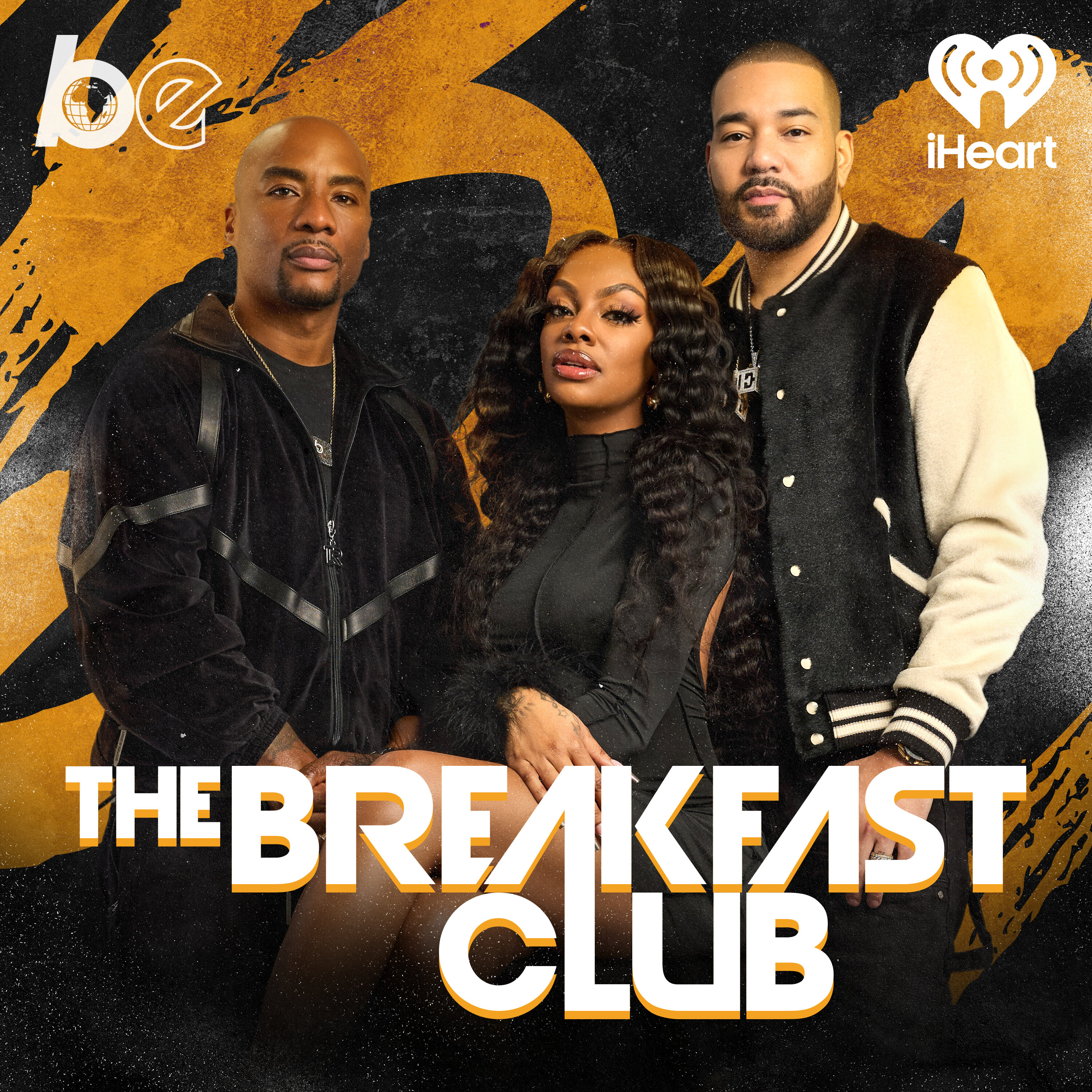
The Breakfast Club
THROWBACK INTERVIEW: Malcolm Jamal Warner On The Cosby Show Legacy, Musical Expression, _Accused_ Show + More
01:01:24
Loading summary
Transcript336 lines
- [00:00]
Charlamagne Tha God
This is an iHeart podcast.
- [00:04]
DJ Envy
Meetings, deadlines, emails. Don't you wish you could escape the chaos? That's where the all new Nissan Murano comes in. With available features like the relaxing, massaging seats to ease stress and the beautiful skyline views that bring in natural light. It's like cruising in your personal oasis. And if you need to set a vibe, 64 colors of personalized lighting and a Bose premium sound system have you covered. Hands down, the all new Nissan Murano is your stress free getaway. Sometimes the greatest rush isn't rushing at all. Drive the all new Nissan Murano today.
- [00:31]
Charlamagne Tha God
Panoramic moonroof, ambient lighting, bows and massaging leather.
- [00:33]
DJ Envy
Appointed seats are optional features.
- [00:35]
Angela Yee
Wake that ass up early in the morning.
- [00:37]
Charlamagne Tha God
The Breakfast Club.
- [00:40]
DJ Envy
Morning, everybody. It's DJ Envy Charlamagne, the guy. We got a special guest in the building.
- [00:45]
Angela Yee
You know what's interesting? I was thinking about, you know, organically, who was going to be the first guest in the new Breakfast Club studio. Cause to me that's important because you're setting off a new generation, you're setting off a new chapter. So who would be the first guest? And I'm honored legend. We should be honored icon. Come on, man.
- [01:03]
DJ Envy
Grew up on him.
- [01:04]
Angela Yee
Come on, man.
- [01:04]
DJ Envy
Ladies and gentlemen, Malcolm Jamal Warner.
- [01:06]
Charlamagne Tha God
Welcome.
- [01:07]
Angela Yee
Word.
- [01:08]
Charlamagne Tha God
You know, you said first guest and it didn't really register. Yeah, before we started. Yeah. But now. Okay, I got it.
- [01:15]
Angela Yee
Yeah.
- [01:15]
DJ Envy
You are the first guest in our new studio.
- [01:17]
Angela Yee
Ladies and gentlemen, first guest of the year, first guest in the new studio.
- [01:20]
DJ Envy
Some of y' all know him as Steel Huxtable. Ladies and gentlemen, welcome.
- [01:22]
Charlamagne Tha God
Word. Thank you. Thank you very much.
- [01:24]
DJ Envy
I wanna. For people that, that don't know, I want to.
- [01:27]
Angela Yee
First of all, you ain't ask the most important question. What have you played the mega Millions. That's the most important question.
- [01:34]
DJ Envy
I thought you were gonna say, how you feeling? How you doing?
- [01:36]
Angela Yee
How you holding up? Happy New Year.
- [01:38]
Charlamagne Tha God
I guess I need to, huh?
- [01:39]
Angela Yee
You need to. So about Billy.
- [01:41]
DJ Envy
1.3 billion.
- [01:43]
Charlamagne Tha God
Okay. I did one. I did. I don't know. The last one was in billions a couple months ago.
- [01:48]
Angela Yee
Yeah.
- [01:48]
DJ Envy
How'd you do?
- [01:49]
Charlamagne Tha God
Well, I thought I was doing good. Like I went there, I was like, yo, give me. So my wife has numbers that like her lucky number. So when the numbers get real big, she wants to play those numbers. So. And there's like three. So I was cartoon cards and I was like, you know what, Play these. And I was like, I'm a splurge. Give me three more. You know, I think I'm doing good. And this cat next to me in the next lane, he was like, give me 200. Do, do, do, do. And I'm like, it's like that. So I'm not, you know, I'm. I didn't win. I don't have my own Breakfast Club. I didn't win.
- [02:27]
DJ Envy
So you win $2, $4, $8, $10.
- [02:28]
Charlamagne Tha God
Nothing. Nothing. So you didn't do good that you didn't do good. I might go back in, though. I mean, if it's in the billions.
- [02:33]
Angela Yee
Again, it's a Billy right now.
- [02:35]
DJ Envy
Now you're from Jersey City. Now, for most people that don't know, how did you get your start in show business? Because we heard that you were a rapper at first. You were in a rap group almost signed by Def Jam at the time. Any truth to that?
- [02:49]
Angela Yee
That was after Cosby, though, right?
- [02:50]
Charlamagne Tha God
Yeah, that was after Cosby.
- [02:52]
DJ Envy
How did you get your start with show business?
- [02:54]
Charlamagne Tha God
I was doing basically community theater. My mother was always looking for me to. Looking for things for me to do outside of going to school and coming home and hanging out. So, like, I played basketball, and that was my thing. I thought I was gonna be a basketball player. And then one season, one year basketball season was over. My mother's friend suggested this community theater and asked me if I wanted to go. So I went down, auditioned, got in, and found myself doing theater and just absolutely loved it. So, like, at nine years old, I was like, oh, this is. This is what I want to do. And what it was, it was really. It was the. The first curtain call. Like, the first play I did was called Alice, Is that you? And it was basically a takeoff of the Wiz. Like, Dorothy gets the Oz and everybody thinks she's Alice from Alice in Wonderland. Right. And I played the Tin Man. And I just remember the first opening night, coming out for curtain call, coming out and people clapping and standing up, and I'm like 9 years old, and I'm like, yo, I got that bug. I can get into this. People stand up and clap for you. Yeah, I like this.
- [03:59]
DJ Envy
And at the time, Jersey City wasn't Jersey City now with these big skyscrapers and people dying to.
- [04:05]
Charlamagne Tha God
Yeah, it was a whole different.
- [04:06]
DJ Envy
It was a whole.
- [04:07]
Charlamagne Tha God
Yeah, it was nasty. No one was scrambling to give to Jersey City. No. But this was la. I left Jersey when I was five. My. My parents separated and my dad went back to Chicago. My mom took me back to California. So the acting thing started in la. But then when I, you know, years later, when I booked Cosby we obviously moved back to New York.
- [04:29]
DJ Envy
How did you book Cosby?
- [04:30]
Charlamagne Tha God
How.
- [04:30]
DJ Envy
What was that. That process.
- [04:32]
Charlamagne Tha God
Like, that's funny. So my, my. When my agent first submitted me, they were looking for a 6 to 15 year old.
- [04:40]
Angela Yee
Jesus. Yeah, they was all getting ready for the NBA.
- [04:43]
Charlamagne Tha God
They was clear. Well, because. Because Ennis at, you know, Ennis was 15 and was 6 2. Mr. Cosby's son.
- [04:49]
Angela Yee
Oh, okay.
- [04:50]
Charlamagne Tha God
So in the original, like, in the original script, like, there was this, this running joke like, you know, Theo would, you know, get in trouble, something. And Cliff would be like, theo, stand up. And Theo stands up and he's towering over Cliff. And Cliff be like, theo, sit down.
- [05:04]
Angela Yee
Okay.
- [05:04]
Charlamagne Tha God
So they were trying to get that. They couldn't find that kid.
- [05:07]
DJ Envy
Okay.
- [05:07]
Charlamagne Tha God
And literally at the side, you know, she submitted me, they didn't want to see me. And at the last minute, she resubmitted me because they couldn't find the guy. And they were doing network callbacks. This is crazy, because it was Good Friday 84. I auditioned at 6:30 on Friday afternoon, and the network callbacks were that Monday. So they were already flying in somebody from Chicago, flying in somebody from New York, somebody. So I was literally the last person they saw. And when I went in for the network callbacks, I went in and I did the audition. Like, you know, you see, you know, I was watching Different Strokes and whatnot. So you see kids being smart Alex, and talking back to the parents and rolling their eyes. So I was doing the scene like that. And in the room is, you know, network, you know, producers, studio. And I'm killing in the room. Everybody's like, I'm hitting all the beats and everybody's laughing and I'm killing. And I finish. And everybody's like, cool.
- [06:07]
Angela Yee
And.
- [06:07]
Charlamagne Tha God
Except Mr. Cosby. And he's looking at me and he's like, would you really talk to your father like that? And I said, no. He said, well, I don't want to see that on the show. So you go back out and you give me something else and come back later. And because it was the network callbacks, like, everybody was there. So they had, you know, auditioned everybody for other parts. And then finally I came back in and gave them 180 degree turn.
- [06:31]
Angela Yee
Well, clearly he saw something in you, though.
- [06:32]
Charlamagne Tha God
Yeah, yeah, yeah.
- [06:34]
Angela Yee
And.
- [06:35]
Charlamagne Tha God
And, you know, they gave me the shot to come back and redo it, and that's how I booked it.
- [06:39]
Angela Yee
You know what's interesting about what you said earlier, you said that you was in theater at nine years old. So people see these gifted Young actors on shows like Cosby back in the day, and we don't realize the background because nowadays it feels like it's no point of entry to, you know, get on these TV shows or anything.
- [06:57]
Charlamagne Tha God
Or social media. Or social media becomes like, you actually.
- [07:00]
Angela Yee
Went and were perfecting your craft before you got to that point.
- [07:03]
Charlamagne Tha God
Yeah, and I still do. Like, I've always. Every couple years, I'll do theater. Even when I was on Cosby, like, I always go back to theater because that is the. I mean, that's the. That's the foundation, you know? So I always say, like, theater is my favorite platform, television is my favorite paycheck. But theater is really like. Like, that's. I mean, that's. That. That's. That's the shit right there.
- [07:25]
Angela Yee
Have you ever just sat back and reflected on what you and the Cosby show meant to black people in, really, the world from 84 to 92?
- [07:35]
Charlamagne Tha God
Yeah. Yeah. I mean, we. It's something that we still talk about. Right. So who's we?
- [07:42]
Angela Yee
When you say we? The cast?
- [07:43]
Charlamagne Tha God
I mean. No, I'm saying we, like. Like, worldwide. The culture. Yeah. You know, because it's had a. An indelible, irreversible effect, you know, on the culture. So, I mean, it's something I'm very proud. Like, no matter what, I'm very proud to, you know, have been a part of that and part of that, you know, just to have that kind of, I guess, influence, if you will. And when I was younger, you know, it was always. I was always trying to escape this role model, you know, title, because I was like, oh, Malcolm was a role model. And my thing was always. We always equate perfection with role model. So I never wanted the pressure of being, you know, being seen as flawless because I just. I didn't want that. Like, that wasn't me. So I used to kind of. Kind of shy away from that, you know, that title, but. And now that I'm older, not that I want to be considered a role model, but I do understand the, you know, having the platform. I understand having the ear of young people. Like, you know, fortunately, I'm still at a place where I'm still relevant enough, where, you know, what I say can still have influence.
- [09:05]
Angela Yee
People always listen to you because of that time period.
- [09:08]
Charlamagne Tha God
Sure, yeah. Yeah.
- [09:09]
Angela Yee
Straight up.
- [09:09]
Charlamagne Tha God
Yeah. And that's something I take seriously. So I was. I was really fortunate because we shot Cosby here in New York. And, you know, during. During the 80s, man, you know, y'.
- [09:21]
Angela Yee
All didn't show the other side Of Brooklyn. That wasn't Brooklyn in the 80s.
- [09:27]
Charlamagne Tha God
No, we. So we. We shot in Brooklyn, then we shot in Queens. But that. That stoop. That front stoop was actually in the Village.
- [09:34]
DJ Envy
In the Village, Yeah.
- [09:35]
Charlamagne Tha God
That wasn't even Brooklyn.
- [09:36]
DJ Envy
Right by the old station.
- [09:36]
Charlamagne Tha God
Yeah.
- [09:37]
DJ Envy
I was gonna ask Theo, you being, you know, always looked at as Theo, does that ever bother you? Cause with certain characters that we always look at, whether it's Steve Urkel. He's always going to be Steve Urkel, and you're always Theo, does that ever bother you?
- [09:50]
Charlamagne Tha God
No, it doesn't bother me, but there's, you know, there's been this, I guess, this. This. This wave of interpretation that it bothers me because somebody calls me Theo. I'm like, no, my name is Malcolm, or. But I've always done that. But some people, they misinterpret it as, like, I get mad when people call me Theo. My thing is like, no. And even when I was on Cosby, I wouldn't answer to Theo, because as far as I was concerned, Theo was not going to be the end all be all for me. Like, at 15 years old, to think, like, oh, if this is gonna be the height of my career, that's a depressing thought. When the show first aired, you know, I'm 14. You know, the ratings are out the box. And my mom sat me down, she said, baby, it's great that this show is the phenomenon that it is, but you know how this business is. This show could be over next year. What are you going to do when the show's over? She said, I can type. I can always get a job. But what are you going to do when the show's over? So she impressed upon me the concept of longevity. So I wasn't, you know, I. When I was on the show, I never answered to Theo. And especially now, you should know, right? Like, now if somebody calls me Theo, they're being a dick.
- [11:00]
Angela Yee
Yeah.
- [11:01]
Charlamagne Tha God
Because they know my name.
- [11:02]
Angela Yee
And I also don't think people look at you as Theo. I get what it's saying.
- [11:06]
Charlamagne Tha God
They shouldn't at this point. Yeah.
- [11:07]
Angela Yee
Like, you've done a. You've done a lot other than Theo. I mean, you had a whole other show with your name in it, man. How long did it take you to adjust to life after Cosby Show? Like, how did things look in 92?
- [11:20]
Charlamagne Tha God
Well, I'd always prepared for it. That was the thing. I was. From that conversation that my mom had with me, we literally spent each year of that show as if it were the last year. Because we didn't know. So I had always prepared for. For life after Kazi. So when the show was over, I had my own show for a half a season on NBC, and then from that, I went straight to theater. So I was. I've always. I've always worked. Now, there may. There may have been, you know, longer stretches of unemployment than I would have liked, but we're talking like, maybe, you know, two, three years, you know, But I always knew that the transition from being seen as child star to being taken seriously as an adult actor wouldn't necessarily be a smooth one. And that's why I started directing early. Like, I started directing, like, 16. By 18, I was directing Cosby episodes. I was directing music videos. I was directing Fresh Prince of Bel Air. So when I came off of Cosby. Yeah, what episode? I think it was episode with Raven, one of Raven Simone's episodes.
- [12:28]
Angela Yee
Okay.
- [12:29]
Charlamagne Tha God
Yeah, I was.
- [12:31]
DJ Envy
Did you look at Bill Cosby as a father figure? Because you were around him so much. You did so much acting, like.
- [12:36]
Charlamagne Tha God
Right.
- [12:36]
DJ Envy
And, I mean, you were a good actor, but it was believable. It seems like you admired him as a father. When I. When I would watch the show or even see you behind the scenes of the show.
- [12:45]
Charlamagne Tha God
Whatever. Well, maybe I was doing theater. I was. I was perfecting my craft at night. That's a great job, right? No, because I, you know, I. My father has always been, you know, an integral part of my life. So I have a father. He was, you know, Ms. Cosby was obviously someone I worked with, someone I respected. But Ennis was also, you know, a close friend of mine, so he was also like, Ennis's dad.
- [13:07]
DJ Envy
Gotcha.
- [13:08]
Charlamagne Tha God
So it wasn't. I mean, I would definitely say he was a mentor because he, you know, he schooled me on a lot of, you know, on a lot of things. But the I love the father son relationship between Cliff and Theo, but that wasn't. That wasn't our relationship. But, you know, we're Matt. Cool. But it wasn't the. Wasn't the father figure.
- [13:28]
DJ Envy
Now, as a mentor, did he school you on to contracts and negotiations? Because. No, that thing he said. No, it's still on. Now, do you still get paid and was everything taken care of the right way, or is it. You're a new actor.
- [13:40]
Charlamagne Tha God
You got got. Yeah, yeah, we got. Now, I won't say we got got. That's not true. That's not. That's completely unfair to say we got got. But I will say this. So, yeah, so we get residuals. Right? But the thing that, that. That people don't necessarily understand about residuals is every time an episode repeats, you get a percentage of what your original paycheck was and that show has repeated forever.
- [14:05]
Angela Yee
Correct.
- [14:06]
Charlamagne Tha God
So let's say, to put things in perspective, about 10, 12 years ago, I remember getting an episode check for $64.
- [14:17]
Angela Yee
I thought a residual check sometimes.
- [14:19]
Charlamagne Tha God
Yeah. Like at some point, the sending the check out costs more than what the check is.
- [14:25]
Angela Yee
Correct.
- [14:25]
Charlamagne Tha God
So for a period of time, though, that lump sum was a nice padding. But then after a while, you know, once it just keeps airing. It's not a whole lot. But when you have points, when you've got back end, that's when you're forever making money. Because when they syndicate the show, however many times they syndicated, you have a piece of the show. So you're getting that kind of money. We didn't get ownership. We had no. No back end. We didn't know about back end. And even if we did, we didn't have any leverage to negotiate that.
- [14:59]
Angela Yee
Y' all all knew. You said something that made me feel like I'm a fail. A black history trivia question. What show did you have on NBC for half a season?
- [15:05]
Charlamagne Tha God
Oh, man, it was. Trust me, you're not a failure. They, they, they, they, they. They dicked me on that, too. It was a show called Here and Now.
- [15:13]
DJ Envy
I definitely don't remember that show.
- [15:14]
Charlamagne Tha God
Yeah, it came on it. So it came on. It came on Saturday nights. It was. It came on after. Or there was a show called Out all night with Patti LaBelle.
- [15:26]
Angela Yee
I remember out all Night.
- [15:27]
Charlamagne Tha God
So, yeah, so we were on.
- [15:28]
Angela Yee
I was on there.
- [15:29]
Charlamagne Tha God
Were you really? Yeah, with Morris Chestnut.
- [15:32]
DJ Envy
He thinks he's Morris Chestnut.
- [15:33]
Charlamagne Tha God
Oh, got it.
- [15:35]
DJ Envy
He looks like Morris Chestnut. It's so disrespectful to Morris Chestnut.
- [15:41]
Angela Yee
But he swears Morris said he gets mistaken for me sometimes.
- [15:44]
DJ Envy
Just recently happened.
- [15:45]
Angela Yee
You were the only one like, well, it happened. I'm only net dope. All right.
- [15:49]
Charlamagne Tha God
Oh, God, that's hilarious.
- [15:50]
Angela Yee
I remember out all Night. I definitely remember that. Patti LaBelle. Mars chestnut.
- [15:53]
Charlamagne Tha God
Yeah. My God. So it was during that time. So here. So this is something that's really interesting. So we had that show. The. The president or the programmer at NBC at the time didn't like the show. Right. And didn't think the show was going to do well. And it was basically, you know, it wasn't Theo, but, you know, my character worked in the community center in Harlem, and the program of NBC didn't think it was going to be A funny show. Didn't think it was going to work. We shot the pilot and they do what's called pilot screening week, where they get all their pilots, they screen them, then they get rated, and then that's how you decide what's gonna go on there. My show came in number two. So really the only question was, do we put this show on Thursday night before Different World or after Different World. Right. Cause for eight years, if my face is, you know, if America is used to seeing my face at Thursdays at 8 o', clock, it makes sense that if my pilot does well, you're going to put me on Thursdays, either at 8:00 or 8:30. They, the programmer still didn't like the show and he put me on Saturday night, which is why nobody ever heard because, you know, nobody watches. My audience is not going to be watching on Saturday night. And then when the number one rated, the number one pilot, they put in that 8:00 clock slot. They canceled after two weeks.
- [17:19]
Angela Yee
Wow.
- [17:20]
Charlamagne Tha God
So we're like, okay, cool. They're putting number two in that slot. Kept me on Saturday night. Then they put out all night in that slot.
- [17:25]
Angela Yee
Wow.
- [17:25]
Charlamagne Tha God
Like NBC just. They were not trying to hear that show, no matter how well it did. So we got, we got canned half a season in.
- [17:32]
Angela Yee
I think NBC dropped the ball because you know how Different World was. Lisa, growing up, being in college, they could have did that with all the kids. Like, they could have did that with you growing up. I feel like your adult life should have been explored in that way.
- [17:42]
Charlamagne Tha God
But, you know, it's interesting. Different. Oh, so let me go back just real quick. So since. So what you don't know about that show here and now this cat named Dante Bizet was on the show.
- [17:53]
Angela Yee
I don't know who that is.
- [17:54]
Charlamagne Tha God
Right. Everybody knows him as Yasin Bey right now.
- [17:57]
Angela Yee
Oh, wow.
- [17:58]
Charlamagne Tha God
Lauryn Hill was on the show.
- [18:00]
Angela Yee
Wow. What?
- [18:01]
Charlamagne Tha God
Yeah. Omar Epps was on the show. Yeah, but they, they. NBC just did. They didn't dig the show. And so of course, this is before they blew up, but. Yeah, but they were all on the show.
- [18:11]
Angela Yee
If they'd have made one little adjustment and made you Theo on that show and you older now, I bet you it would have worked.
- [18:16]
Charlamagne Tha God
You know what? It's possible.
- [18:19]
DJ Envy
I want to ask, you know, out of all your episodes, I asked Charlamagne. So my most memorable Cosby show is.
- [18:25]
Angela Yee
Of course the Gordon Cattrall Season 1, episode 8.
- [18:27]
DJ Envy
And of course that's not the most.
- [18:28]
Angela Yee
Memorable for maybe, maybe two of them.
- [18:31]
Charlamagne Tha God
That was Episode eight, I think it.
- [18:33]
Angela Yee
Was season one episode cost the airing. The airing. Dance Mania.
- [18:36]
DJ Envy
I did the same thing when I got my Eric. So what was. What was your favorite?
- [18:42]
Charlamagne Tha God
All of those. But I think that at the top of the list would be the pilot when Theo was getting D's in school and they did the whole Monopoly money thing. And, you know, Theo gives this whole. That was the earring. Yeah, it was the earring. And, you know, Theo gives this speech, you know, like, you know, dad, I just want to be regular people. Like, I don't want to be a doctor like you. I don't want to be a lawyer like, like Mom. I just want to be regular people. And why can't you love me for me? It was like this beautiful, heartfelt.
- [19:14]
DJ Envy
Yeah, I remember that.
- [19:15]
Charlamagne Tha God
And the audience claps and the whole nine. And Cliff looks at Theo and so.
- [19:20]
Angela Yee
Still.
- [19:23]
Charlamagne Tha God
That was the dumbest thing I've ever heard in my life. And so for me, that was significant because it set the tone for the show. Like any other show at that point, the music would have started.
- [19:33]
DJ Envy
Correct.
- [19:33]
Charlamagne Tha God
The father and son would have hugged, but he, you know, he went left with that. And I just love that because that set the tone that this was going to be a different kind of show.
- [19:44]
DJ Envy
Gotcha.
- [19:45]
Angela Yee
We're gonna talk to you about other stuff other than Cosby. I just wanna, you know, as a fan, I gotta get something.
- [19:48]
Charlamagne Tha God
Let the night come.
- [19:49]
DJ Envy
First time here.
- [19:50]
Charlamagne Tha God
We gotta go. No doubt. They're all good.
- [19:52]
Angela Yee
Did you ever keep the Gordon Gartrell show?
- [19:54]
Charlamagne Tha God
I think it's in the Smithsonian, if I'm not mistaken.
- [19:56]
Angela Yee
Wow.
- [19:56]
Charlamagne Tha God
Yeah, it should be. Yeah.
- [19:58]
DJ Envy
That was a classic.
- [19:58]
Charlamagne Tha God
Yeah, that was one of our. That was definitely one of our most fun and for me, most memorable episodes.
- [20:05]
Angela Yee
Did you ever get approached about doing a Gordon Gartrell clothing line? Malcolm Jamal worn his Gordon Garrell clothing line.
- [20:09]
Charlamagne Tha God
I'm surprised. I have not. But I see there's a Gordon Gartrell, like, T shirt line out somewhere. Yeah, yeah.
- [20:16]
DJ Envy
I was asking how much of the show was freedone and how much was actually written? Like, were you allowed to go off script? Because some of that stuff just seemed like y' all were going.
- [20:25]
Charlamagne Tha God
We had to often go off script because it. So it takes. It typically takes five days to do a sitcom. We were doing. We got down to like three and a half days. And, you know, most of those storylines came from Mr. Cosby's monologues. Right. So we were a very under rehearsed show. So when it was time to tape the show, Oftentimes, you know, if Mr. Cosby had, like, a monologue or something, he wouldn't know the monologue. So he'd, like. He'd go left. And the fun part for us was when he went left, we had to go left with him. So, you know, for me, it was great. Cause I was like, oh, this is theater now. We just, you know, we. You know, you follow the leader, you follow the followers, what we call it. So, you know, and I love seeing those moments with him and Olivia are cool, but, like, those moments with him and Keisha, you know, because at the time, you know, Keisha was four, so she didn't know how to read. So she had to know. She had to remember what to say, how to say it, and when to say it. And the when was always based on the line before. So she's doing scenes with Mr. Cosby, and she's waiting for her line, and he's just talking. And they would just make. It was just really cool to watch her. And if you go back, you could just see her little brain processing how to maneuver through, you know, what's happening. So though stuff was written, you know, there was stuff that had to be kind of off book because we were following him. And Felicia was the best at that. When you look at those episodes.
- [21:56]
DJ Envy
Absolutely.
- [21:56]
Angela Yee
Do you believe Malcolm and Eddie gets overlooked when it comes to the conversation of, like, classic black sitcoms?
- [22:04]
Charlamagne Tha God
Ah, I don't know. I don't know. I mean, because people do talk about it a lot, you know, and that was an interesting time for me, you know, having come from NBC, where, you know, everyone was made to be ultra aware of the images of black people we were putting across the airwaves and then going to upn, where their whole approach was the antithesis of that. So it was a difficult shift for me because I was thinking that I was of the mindset that they knew where I come from. They knew I was on a show that made history, where black people. That showed that black people could be funny without being stereotypical. And when I got to up and I realized they weren't interested in any of that. And, you know, and for eight years, I watched Mr. Cosby, like, all of the things that. All of the stereotypical things that we did not see on that show was not because the writers were not writing them. It was because Mr. Cosby was like, no, that's not what we're doing. That's not the tone of the show. That's not who the Hucksables are. We're not Doing that. So I saw him do that from season one to season eight. So I figured, okay, I'm at upn. I know how. How it works. But, you know, I was not Bill Cosby, and we were not doing Cosby numbers. So nobody really cared about what I cared about in terms of trying to you know, not be, you know, not do the same typical black sitcom approach. And, you know, I fought with writers, producers, studio, network, and, you know, the show was not as, you know, it was not 100% what I wanted, but, you know, it wasn't as, you know, stereotypical as they were trying to make it.
- [24:01]
DJ Envy
Gotcha.
- [24:02]
Charlamagne Tha God
That makes sense.
- [24:02]
Angela Yee
Yeah. I love talking to, you know, people from that era. You know, we had Kadeem, Hardison and Jasmine Guy up here. Erica Alexander's been up here. And I asked them all the same question. Do you think it was an intentional shift? I'm just gonna say by they. Cause I don't know who it would be to change that kind of content. Cause when you think about that era, it was all positive black content. Intentional, positive black content. But then it just seemed like it just shifted.
- [24:27]
Charlamagne Tha God
Yeah.
- [24:27]
Angela Yee
You think that was purposely done?
- [24:29]
Charlamagne Tha God
Yeah, it was. It was like a. Like a reaction to, like, we had this couple of years of, like, you know, family and positivity and not just in black sitcoms and sitcoms, period. Like, you know, it was the. It was the family values positivity. Then there was the Simpsons, then there was Roseanne. Right. So that kind of kicked off. It was almost like there was a backlash to the. The family values and positivity. So I. I 100% wholeheartedly believe it was. It was intentional. Now when it comes to. When it comes to black sitcoms, you know, I think the thing that everybody missed was, you know, people looked at the Huxtables and was like, oh, this was. This is an upper middle class black family. So we can do black sitcoms and we can give these, you know, black characters professions, but the execution of the comedy was still the same. Like, the thing about what made Cosby different is the. The comedy wasn't predicated upon being black black sitcoms. The comedy is predicated upon being black. So I think that's the. The missing piece that the, you know, following black, black sitcoms missed out on. They're like, okay, well, let's make them a professional. But it can still be, you know, we can still jig. Right? You know, I just never understood how.
- [25:51]
Angela Yee
Things went backwards because Kobe show's big as hell. A different world. Hugh. All you Know, Martin, all these shows, Big Living Single, and we go back to. We go back to nonsense. Like, I feel like you would build upon that.
- [26:03]
Charlamagne Tha God
Yeah, yeah, yeah. It was. It was. I. I definitely wholeheartedly agree. It's a. Intentional. It was an intentional shift.
- [26:10]
DJ Envy
I was gonna ask, you know, we.
- [26:11]
Charlamagne Tha God
Shot some by they.
- [26:12]
Angela Yee
By they.
- [26:14]
DJ Envy
Now, Charlamagne talked about it before, about the influence, but, you know, looking back at it now, do, you know. Do you guys know that you guys. And this was maybe what you were setting out to do. You got. You guys raised so many families of what to do, how to act, how to talk to kids, how to have difficult conversations, how to, you know, speak to each other. And then even with a different world, like, I tell everybody, that was the reason why I went to Hampton University, because of a different world was Hampton to me.
- [26:39]
Charlamagne Tha God
Yes. Yeah, man.
- [26:40]
DJ Envy
You know, so do y' all look back and say, damn, we raised a generation.
- [26:43]
Charlamagne Tha God
Yeah, but that was. That was his intent. But he was very clear on what he was doing, and he was very clear that he wanted those shows to be timeless. That was something he talked about consistently. Because there were times, you know, I'm 15, 16. I'm trying to use, you know, whatever slang we were using at the time, he was like, no, don't. That's gonna date the show. Let's make up our own slang. So in 25 years, when people are still watching the show, the show is still relevant. So, you know, our credit to him because that's what he. That's what he set out to do.
- [27:16]
DJ Envy
How did you feel when, like I would say a couple years ago, they tried to take the show off? Yeah, it bothered me because although everything that was going on the show was so positive for our culture. So how did you feel when they started taking the shows off of syndication and were threatening to pull the shows off different networks?
- [27:32]
Charlamagne Tha God
Yeah, well, I mean, you know, real. You know, the real. It hit us all financially because now we weren't getting Those residuals that 64. Yeah, but that lump, you know, you talk about. You talking about eight years of residual. So that's still a nice little padding. So it's interesting. I did A. In 2015, I put out my third record. Right. And on that record, I mean, I got. I got Layla Hathaway. I got Robert Glasper. Let us see. No, this. That was. That. That's. This one that's out now.
- [28:00]
Angela Yee
Okay, okay, okay.
- [28:01]
Charlamagne Tha God
That was called selfless. Okay, so Layla Lettuce Stokely, Rahsaan Patterson, Robert Glasper. Like, the album is like, it's a banger. I could not book any press unless I agreed to answer at least one question about Bill Cosby was the only way I was gonna be able to get my record covered.
- [28:19]
DJ Envy
Wow.
- [28:20]
Charlamagne Tha God
So I do this. That's crazy. This, this, this interview with. With AP, right? We spend 25, 30 minutes talking about my career, talk about my music like it's a dope interview. And then at the very end, the last question she asked me is, what do you think with the Bill Cosby controversy that the legacy of the show has been tarnished? So I said, well, yeah, of course it's been tarnished because they've taken it off the show. And whenever we talk about stereotypical black images on television, we've always had the Cosby show to hold juxtaposed against that. But we no longer have that. The next day, all of the headlines read, malcolm, Jamal Warner says the legacy of the Cosby show has been tarnished. I'm like, fuck, that's not even what you said. Yeah. So then I remembered a couple months later, seeing Keisha on some. Some talk show, and they asked her the same question, and she said, no, it's impossible to tarnish the legacy of that show because there's a generation of kids who sought out higher education because of that show. Facts. There are a generation of kids who grew up and got married and had loving families because of that show. There's no way that you can reverse the influence that that show has had on the culture. And so now I always bite her. I always bite her response now. But, yeah, I mean, it's undeniable and it's irreversible. It's had a huge impact on our culture, and it had a huge global impact on how black people saw themselves.
- [29:59]
Angela Yee
I was gonna ask you, what's the pros and cons of having your name in the title of a sitcom in reference to Malcolm and Eddie? But to me, it's the same thing with that. I think if that show was called the Huxtables, it wouldn't even be a conversation. I think if it was called the Huxtables, people would easily be able to separate the art from nars. So what do you think the pros and cons are?
- [30:20]
Charlamagne Tha God
Probably that really, you know, I think probably anybody who's. Who's having their own show and their own sitcom. Because. Because also remember, you know, so many sitcoms are usually based around a stand up, right? And, you know, either they can handle the job or they can't. You know, that's. That's what the success of the show depends upon. So I think for any stand up to have your own show and have it be your name, like, that's the dream. But I think to your point, that's. That is. That's a huge con. But of course, no one goes into it thinking that, you know, there's going to be the end result of.
- [30:55]
Angela Yee
Yeah.
- [30:56]
Charlamagne Tha God
Of that.
- [30:56]
Angela Yee
I remember they did that with the new. The. The new Roseanne relaunch.
- [30:59]
Charlamagne Tha God
Oh, the Connors.
- [31:01]
Angela Yee
Yeah. After. When she got into her situation. Now, are you still cool with cockroach call Anthony Payne?
- [31:09]
Charlamagne Tha God
We're cooler. We're cooler as adults than we were during that time. Really?
- [31:13]
Angela Yee
Well, y' all didn't get along?
- [31:14]
Charlamagne Tha God
No. No, we didn't.
- [31:15]
DJ Envy
Not at all.
- [31:15]
Charlamagne Tha God
No.
- [31:16]
Angela Yee
This young eagle and.
- [31:17]
Charlamagne Tha God
Yeah. Yeah, that's what it was.
- [31:19]
Angela Yee
All right.
- [31:20]
Charlamagne Tha God
Yeah. And it was. And it was. Yeah. Yeah, it was. It was. You know, when I talked about earlier, the original callbacks for Cosby, the. They flew in an actor from Chicago and flew in an actor from. From New York. Carl was the actor. They flew in from New York. So had I not auditioned for the show, Carl would have played Theo.
- [31:48]
Angela Yee
Damn.
- [31:49]
DJ Envy
I look at you every day and.
- [31:50]
Charlamagne Tha God
See you took my part and then I got to come back and play your best friend. Damn. So, you know, I think on one hand, you know, that may have had something to do with it. No, that was part of it. And he decided he had a huge ego from New York, you know. Yeah, he had a huge ego. So. And I didn't come from that kind of place. And, you know, the way I've. And the way I felt then and the way I feel now, you know, based on my career, if anybody, you know, should walk around with a huge ego, it should be me, right? And if I don't roll like that, I don't really. I have very little tolerance for people who roll like that. So we never really. We really. We just never really got along back then. But, you know, we're grown now and, you know, and Carl's been through a lot. Like, his journey is, you know, it's. It's been, you know, he's had a journey and as adults, we've been able to, like, sit down and have conversations, and we're in. We're in a very cool grown man place now. Then we were, you know, then we were teenagers and, you know, I feel.
- [32:59]
Angela Yee
Like you had to be broken up or something, the way you sounded. I had to be broken up before, like, some furniture Moving like, no, no, no, no.
- [33:06]
Charlamagne Tha God
That wasn't that bad. Wasn't that bad.
- [33:07]
DJ Envy
Do you still speak to anybody from the show any. Anymore, and, you know.
- [33:11]
Charlamagne Tha God
Yeah, Keisha.
- [33:12]
DJ Envy
So you still cool?
- [33:13]
Charlamagne Tha God
Keisha's my. I mean, Keisha was my girl when she was four years old. It's always my little homie, you know, we both live in Atlanta. Just Saturday, her and her husband over at our house. Her daughter is a couple of months older than my daughter, and our daughters absolutely love each other. So it's. It's very surreal because Keisha and I, like, we'll look at our daughters playing and look at each other like, yo, this is bananas. But, yeah, that's dope. Yeah. So she's one I talk to the most. But we're all. We're all cool. I mean, we. We had an experience that no one else in the world has had. So that experience has really bonded us forever. So even if we don't, you know, if we don't talk for a year, you know, whenever we talk, it's just always. It's always love.
- [34:02]
Angela Yee
It never will have again. Because I tell people all the time that 80s 90s celebrity was different. Like, there's not too many people black, all white, that was that famous in the 80s and 90s who aren't icons.
- [34:13]
Charlamagne Tha God
Yeah.
- [34:14]
Angela Yee
You might can run for an office.
- [34:15]
DJ Envy
Without social media and win. I'm saying without the Internet back then.
- [34:18]
Angela Yee
Joking like, you possibly. What was the difference between now and then, celebrity wise?
- [34:23]
Charlamagne Tha God
Social media. Social media changed the whole game. Like, for me, what I started to say earlier, growing up here in New York in the 80s, being on that show, for me, it was the time of my life. And partially because I'm, you know, I'm 14, 15 years old. I'm. I'm in the area. I'm in Studio 54. I'm at Latin Quarter. Like, I'm in all these places I'm not supposed to be. So there was so much of the being the celebrity hood, if you will, that I enjoyed so much, but because of not just the success of the show, but what the show represented, I also understood that when I walked through the world, I was not only representing my mother and my father, I was also representing the show and everything the show stood for. So it allowed me to not be a knucklehead, like, be able to enjoy everything but responsibly and, you know, do stuff under the radar. But even whenever, whatever I was doing under the radar wasn't, like, knucklehead stuff. And, you know, my parents had instilled a foundation. You know, my foundation of who I was was very strong.
- [35:45]
DJ Envy
I was gonna ask you, you never got caught up in the drug world or the alcohol. Cause Studio 54 lack quarters back then was.
- [35:51]
Charlamagne Tha God
No. I could be around it, but it just wasn't. That wasn't me. I mean, you know, look, my father named me after Malcolm X and Ahmad Jamal. Like, my father was not playing. Wow. So that's why I say, like. Like before the fame, my foundation was so solid that I could be. I could be around all that stuff and not have to participate in that. So to be able to enjoy everything that being famous had to offer without being a knucklehead. And again, being in New York is different from growing up on television in la. Cause in la, your best friend is on the same lot on stage next door. Whereas here in New York, there weren't other shows here. So I wasn't hanging out with actors.
- [36:35]
Angela Yee
Now, I gotta give all props to your parents, though, because, you know, even when you talk to somebody like Kim Fields, it's the same thing. She gives all her credit to her. Her mom. Cause y' all had every. Y' all had every right to wild out. Y' all were the biggest things moving.
- [36:49]
Charlamagne Tha God
Yeah, but we also, we also came on the heels of Gary, of Todd Bridges and Dana Plato. So, like, we overlapped their, you know, their journey. So for. I always felt like, well, we got no excuse.
- [37:06]
Angela Yee
You learn from that.
- [37:07]
Charlamagne Tha God
Yeah, like we're seeing, like you hear about stuff and throughout history. But this was happening right now. Like, I'm, I'm, I'm looking at Todd Bridges. So there was really no excuse for us to wild out like that same mist. But again, I also say because we lived in New York and not la, we weren't hanging around other Hollywood kids. When we were shooting in Brooklyn, the NBC studios on Avenue M and East 14th street, they didn't have a commissary. So at lunch we had to go out into the neighborhood and get whatever we were going to eat. We moved to Kaufman Astoria. Their commissary was whack. So we went out into the neighborhood and went and got. We could get our lunch. So it was just a very different experience that we had being able to grow up in New York rather than grow up in television in Hollywood.
- [37:56]
DJ Envy
You said something earlier and I wanted to ask you about, and you were saying that when you were promoting your jazz album, a lot of these outlets were saying that the only way that you can come up here is if you ask a Question. If you answer a question about Bill Cosby, how were you able to navigate all those questions? Because although you have your own stuff going on, you're doing plays, you're acting, you're doing movies, sitcoms, you know, you have your music, but you almost kind of want to be like, I get it, but this is what I'm here for. So how did you navigate through all that without, you know, going down those lanes?
- [38:27]
Charlamagne Tha God
By turning the, you know, by whatever the question is, answering it, you know, the best way I could. Like, they want to know, did you.
- [38:35]
DJ Envy
See him do this? What about this?
- [38:37]
Charlamagne Tha God
You know, and the reality is I'm not in a position. Like, whatever it is you're trying to ask. I don't know. I was. I was. When I was a kid, and again, I. You know, that was. That was Ennis's dad, you know, So I am not in a position to defend him at all. And there's no need for me to try to throw him under the bus, because the rest of the world is doing that. And, you know, like. Like, you know, the real shit is I. I know what everybody else knows, and everybody else knows what the press has told them. So I don't really have. I don't really have a real ground to stand on, to speak on it as much as anybody else does, you know, so.
- [39:22]
Angela Yee
And you might be biased because you didn't. You saw a whole different side of him that none of us are privy to.
- [39:27]
Charlamagne Tha God
Yeah. Yes. And. And I saw a. I saw a very human side of him. Like, what everybody else is like, you know, he's America's famous, you know, favorite dad. And, you know, they. They. As people do with celebrities, you know, they put us on a pedestal. And again, that's why, as a kid, I don't want to be considered a role model and be perfect. I'm like, that's not me, but that's what we do to people. So while everyone is, you know, rah, rah, rah, I'm like, he's a man. He's got. He's got his own. Got his own fault. And whatever faults I saw, though, it wasn't that I. You know, like, I saw a man. Absolutely. So it's a different. It's a different experience for me than it is for everybody else.
- [40:12]
Angela Yee
I've always loved how black your name is, man. And finding out that you named after Malcolm X. And you said, with me, Abu Jamal. Jamal. Okay. I'm not familiar with.
- [40:22]
Charlamagne Tha God
He's a. He's a renowned jazz pianist. Got you but he's a. If you could be a jazz pianist and be militant as. That's a mod. Jamal. Yeah. Yeah. My dad was, My dad was. I used to go to Chicago during the summers, see my dad. And during my summer vacations he had this, this thick book called Great American Negroes. And they're, you know, chapters on Langston Hughes, Richard wright and Ray McLeod Bethune, Marian Anderson. And he would make me read these chapters and write book reports. And this is during my summer vacation. I'm 6, 7, 8, 9, 10 years old. I'm like, I don't want it, but it's my dad, so I have to. But he was, he was hardcore on making sure that I under. That I understood my history and understood where, where I came from. And also he was, he went to, he went to Lincoln University and he was there with Gil Scott Heron and Brian Jackson.
- [41:18]
Angela Yee
Jesus.
- [41:19]
Charlamagne Tha God
And my dad went to Lincoln because Langston went to Lincoln. So the whole poetry thing that I do, like, like I was really, I was, I was a poet before I was an actor because my father was instilling all of these things in me and he was doing it through the arts. Like my favorite book. I remember being in fifth grade and I used to carry around this book, poems on the Life and Death of Malcolm X. And I used to have it on my, on my, my desk at school. And kids would like, laugh and tease me like, oh, somebody wrote a book about you. Hahaha. And I'm in fifth grade and I'm realizing, wow, these. Not only do these kids not even know who Malcolm X is, if they're reading poetry, they're not reading poetry. As sophisticated as I am. And it was then, like, that was the, that was when it registered for me what my father was doing. Like all those summers of not wanting to read these books and write these book reports, I understood what he was instilling in me. And then when I was about 15, you know, the show's popping and now I'm, you know, I'm going to schools, I'm talking to kids, I'm at churches, I'm talking to kids. And it was, that's when it hit me how my dad named me and what he was doing. Because now I'm having this influence talking to young people. I remember being 15 years old, I called my dad, I was like, yo, man, you set me up. And he laughed. He was like, you damn right for greatness though. Yeah. And he didn't even know, you know, he didn't know that I was going to have this platform or what my platform was going to be. But yeah, he set me up for greatness. Absolutely. Whatever my path was going to be, he set me up for that.
- [42:52]
Angela Yee
Why?
- [42:53]
Charlamagne Tha God
Why?
- [42:53]
Angela Yee
When it came to musical expression, it was jazz. Because you, you know, you, you, you a hip hop baby. Like you came up in the hip hop.
- [43:00]
Charlamagne Tha God
Yeah.
- [43:00]
Angela Yee
Like why?
- [43:00]
DJ Envy
I just heard you rap about a month ago.
- [43:03]
Angela Yee
I'll call that a rap.
- [43:04]
DJ Envy
He was rapping? Yes.
- [43:05]
Charlamagne Tha God
What was that? What was that?
- [43:06]
DJ Envy
Some legends.
- [43:07]
Angela Yee
When he was naming all the names, I wouldn't call it.
- [43:08]
DJ Envy
He was rapping in that?
- [43:09]
Charlamagne Tha God
Yes, he was. Okay, so he put it together spoken word for that. But let's go. But, but that's a plan for dmx.
- [43:13]
DJ Envy
But he was rapping.
- [43:14]
Charlamagne Tha God
That's not me. That's not me.
- [43:17]
Angela Yee
That's not you?
- [43:18]
Charlamagne Tha God
No, that was a. That's this, this cat on Instagram, Cash flow Harlem. He put that video out, right? And I would see this video and people were doing these remix videos. So you see the video on one side and you see people just kind of bobbing ahead. Nobody's saying the names, they just kind of nodding. And there's one guy, he was counting names, but then he lose count, like, that's it. And I was like, that's it. So I was like, you know, I'm gonna take the time, I'm gonna memorize what he's doing and then I'm gonna make it a challenge. Nobody took me up on a challenge, but the video went viral.
- [43:50]
Angela Yee
Cuz that's the first time most. I never, I never even knew somebody else made that. I thought, yeah, right.
- [43:54]
Charlamagne Tha God
No, that was not.
- [43:55]
Angela Yee
That was you.
- [43:55]
Charlamagne Tha God
That was not me. That was not me.
- [43:56]
Angela Yee
Wow.
- [43:57]
Charlamagne Tha God
No, but why jazz though? So the jazz. So it's. When I started my band, you know, I was always doing, already doing poetry, right. I was in the, the spoken word scene. I was doing spoken word with other bands and whatnot. But when I started my band, it was to, I was playing bass and it was to kind. I wanted to do like this jazz funk kind of thing. And then ultimately I ended up infusing my poetry with my own band. And neo soul, you know, was big at the time. And you know, people, because of the spoken word and what I was doing, they want to call it neo soul. And at the time I was like, nah, Neo soul is a fad when that, you know, I don't want to be associated with a fad because when that runs out, you know, people might not be as interested in what I'm doing. If I call it jazz funk, then I could. It's something I could grow into. So when I'm 50, 60 years old, I could still be doing that. And at the time, I'm 26, 20. I'm like 28 now. At the time, I was like, besides, no one's gonna want to hear a dude rapping at 50 years old now. Well, now, fast forward, fast forward. You know, Cass is still nice, but at 28, we get. We. At 28, we didn't see it. We couldn't see that.
- [45:13]
DJ Envy
Correct.
- [45:13]
Charlamagne Tha God
But so the jazz funk, spoken word was just kind of my way of having this. This lane. But it's really. What I do is really. It's, you know, it's soul, R and B and hip hop at the end of the day. Because I'm not, though. I'm a jazz student. I'm not. I wouldn't consider myself a jazz musician, but I just wanted to use that title because I didn't want to get lumped in. In neo soul. I didn't want to just call it, because it's not just R and B. It's not just. And it's not just spoken words word. It's not just hip hop. It's really a combination of all of that. So when I describe it, I describe it as a jazz, funk, spoken word band, but it's probably more of a, you know, rb, soul, spoken word.
- [46:01]
Angela Yee
And Hiding in Plain View is Grammy nominated, right? What? Yeah, yeah, yeah. How's that feel?
- [46:05]
Charlamagne Tha God
Yeah, it's dope. I got a Grammy in 2015 with Robert Glasper and Layla Hathaway.
- [46:13]
Angela Yee
Man, I did not know.
- [46:15]
Charlamagne Tha God
Yeah. On Robert's Black Radio 2 album, he does a cover of Stevie Wonders, Jesus, Children of America, and Layla sings. And then I do a poem in tribute to the kids from Sandy hook. And in 2015, that won for best traditional R B performance.
- [46:34]
DJ Envy
Oh, wow.
- [46:35]
Charlamagne Tha God
So for this album, Hiding in Plain View, which is my fourth album for that to get Grammy nominated, you know, like that, I mean, you know, takes it to a whole nother level. Like, of course, getting a Grammy, that's amazing. It means everything. But to have my own work recognized and my own work that I did most of the production on myself, even though I don't do this for validation, it's so validating, you know, and it feels.
- [47:06]
DJ Envy
Well, congratulations.
- [47:07]
Charlamagne Tha God
Thank you, man.
- [47:07]
Angela Yee
Now, now, another thing that people might not know. The Magic School Bus.
- [47:11]
Charlamagne Tha God
Yeah.
- [47:11]
Angela Yee
What made you get involved with the Magic School?
- [47:13]
Charlamagne Tha God
I mean, I'm. I've been trying to do voiceover you know, also my whole career. So I, I get voiceover work here and there, but it's a nut. I'm still trying to, I'm trying, still trying to crack, but, but I would say, you know, I know you cats are busy, but whenever you get a chance, I implore you to listen to Hiding a Plain View.
- [47:37]
Angela Yee
I would love, I definitely would.
- [47:39]
Charlamagne Tha God
It's an album that I say it's an album that can shift the way we raise black boys. On the album I have featured throughout the album is award winning novelist and he's the assistant professor of African American studies at Clark Atlanta, Dr. Daniel Black. And I have this one piece after this poem, Asante Silence, A Long Music Bed. And I knew I wanted to get a statement from him because he's just a, he's, he's a beast. And we had this hour long conversation that I recorded, but he dropped so much knowledge that I had to put him throughout the whole album. And I would dare say, I would go as far to say that the Hiding and playing View is one of the most important albums to come out in 2022. And a lot of that I attribute to him and the knowledge he's dropping because like the, the album opens, the first track is called Love Song and it's just him. And he says, the thing about a black boy is you don't necessarily want to beat a black boy. What do you want to do is you want to love him so divinely, you want to love him so fiercely that your disappointment will kill him. You want him, you want to adore him so much that the last thing he wants to do is disappoint you. That's how the album opens.
- [49:01]
DJ Envy
Wow.
- [49:02]
Charlamagne Tha God
So this is an album, as I said, it has, you know, this is an opportunity. It provides a shift in how we raise our black boys, which will then have a profound impact on how black boys relate to each other. And black girls, which in turn have even more profound impact on how black men relate to each other and how they relate to black women. And it's a, it can all be a, a significant step in our own self healing. So when I talk to people about the album, I say, this album is for us. It's for black boys, it's for black men, it's for black people, it's for non black people who have the foresight to see that our self healing is an invitation for them to examine their own necessary healing.
- [49:52]
Angela Yee
Why do you call it hiding in plain view?
- [49:54]
Charlamagne Tha God
Because it's something that we all do. There's Actually, a poem. The title track on the album is called Hiding in the Plane of youf. And that's the only piece without music. I just do that poem strictly a cappella. And I talk about, you know, hiding in plain view is something we all do. We all wear these masks, right, because we're all trying to hide what we think other people won't like about us, you know, Like, I spent, you know, six years in a relationship, you know, halfway hiding because there were things I didn't think that, you know, she would like about me. And, and at some point I allowed myself to be disrespected, you know, but I look at it, I'm allowing myself to be disrespected because I'm disrespect. I'm disrespecting myself because I'm hiding things about myself that I'm. I'm afraid that she's not gonna like. And in a relationship, like, that's the last place, right, you should fear being vulnerable. So, so that, that poem, Hiding in Plain View is, is all about vulnerability and how vulnerability, you know, vulnerability is a scary thing even when you're on the mend. Black boys boast bravado not to seem broken. And often so do black men. So I. So that poem itself, just in itself, I get so many responses from people who aren't black that, that resonates with. So it's an album that on the. Though on the surface, it seems like I'm only talking about black boys. There is a universality to the album that, you know, the responses, like I said, I've been getting from non black people, it resonates with them too.
- [51:36]
Angela Yee
I know you, I know you probably got to go, but when it comes to healing, what was it, therapy? Was it a spiritual leader? Was it just. What was it?
- [51:47]
Charlamagne Tha God
People who I call spiritual leaders. My wife is a. She got a master's imaging family Family therapy. She's getting her PhD in clinical psychology. Oh, yeah.
- [52:00]
Angela Yee
Okay.
- [52:01]
Charlamagne Tha God
And not even, and, and, and not even that. And not that she's been doing work on me, but just I, you know, just I watch her, you know, and I watch her with our daughter. So that's what's helped me like presently. But even before she and I met, you know, once I got out of. Broke up with my six year relationship, I spent like two years. I spent two years like a man who had been in a six year relationship. And then at some point I was like, I need to, I need to stop. Like, I need to go on hiatus and not do any dating, you know, not be in a relationship, not even dating. Try not to have sex. But I had. There was a space where I needed to get clarity for myself. And the only way I was going to get that clarity was by, you know, sitting down and really dealing with, you know, whatever things in here.
- [52:53]
Angela Yee
That's right.
- [52:53]
Charlamagne Tha God
That I was busying myself from dealing.
- [52:55]
Angela Yee
With, because keeping busy as a response to trauma a lot of times. All the time.
- [53:00]
Charlamagne Tha God
All the time.
- [53:00]
Angela Yee
Yeah, yeah, yeah, all the time.
- [53:01]
DJ Envy
We gotta talk about Accused. The reason you're here. You gotta new show on Fox called accused. It starts January 22nd. Yeah, man, tell us about Accused. Cause there's not much on it. I looked at the trailers. We all looked at the trailers. We see you in an orange jumpsuit. So break down Accused.
- [53:17]
Charlamagne Tha God
So Accused is a courtroom anthology series. So every episode is a standalone episode, like Twilight Zone or Black Mirror. My particular episode is I play a man whose daughter is sexually accosted in a park, and I choose to mete out justice myself.
- [53:45]
DJ Envy
Handle things on your own.
- [53:46]
Charlamagne Tha God
Yeah, and we know how that typically goes, which is interesting because we always talk about, man, if somebody touches my daughter. And I remember saying that, like, probably 10 years ago, before I even really thought I was ever going to really have kids, I remember saying, my man. Yeah, man, you know, if I have a daughter, man, you know, I go to jail for my daughter. And he said, yeah, and what good would you be to your daughter then? Right? And that's what changed my whole. Like, I was like, you're absolutely right. Like, we talked that.
- [54:14]
DJ Envy
But now I still feel like that, though. I got four daughters. I still feel like that same.
- [54:19]
Angela Yee
I got four daughters.
- [54:20]
Charlamagne Tha God
I don't.
- [54:20]
Angela Yee
You know, no matter how much therapy you do on yourself, no matter how much healing you get, you know, no matter how high your emotional IQ gets, I don't know what you would do in that situation.
- [54:28]
Charlamagne Tha God
Right, right. And. And. But his point was, when you. What good are you gonna be to your daughter when you're sitting there in jail?
- [54:33]
DJ Envy
That's facts.
- [54:34]
Charlamagne Tha God
Like, you're. Now, you really cannot protect your daughter. Yeah, damn. You know, like, that's.
- [54:39]
DJ Envy
I ain't think about it, like.
- [54:40]
Charlamagne Tha God
Yeah, that's what I'm saying. Right. And he told me that, like. Like 10 years ago. And I was like, ah, that kind of changes the. Doesn't make it any easier, but, I mean, the feeling is still there, but it makes you really go, like, yeah.
- [54:52]
DJ Envy
So you're only on one episode.
- [54:54]
Charlamagne Tha God
It's only one episode.
- [54:54]
DJ Envy
One episode.
- [54:55]
Charlamagne Tha God
Okay. But It's a, it's a, it's, it's a powerful episode. It's, it's hard to watch because of the, the subject matter. And I think it's, that's what it is with all the episodes. They're, they're tough to watch because the subject matter is really tough. But the show is really good and I'm, I'm very proud of the work on the show. And again, it's just another side, like with the Resident as well. It's just another side of me that people don't normally get to see because of, you know, most of the roles I get cast for.
- [55:30]
DJ Envy
I was gonna ask, before you get up out of here, would you mind doing a poem?
- [55:35]
Angela Yee
Why don't we just play one from the album?
- [55:37]
DJ Envy
He could do one.
- [55:37]
Charlamagne Tha God
He could do one.
- [55:39]
Angela Yee
Would you rather do one? Would you rather do one or play?
- [55:41]
Charlamagne Tha God
Yes, actually, I, I, I'd like to do one and you play one. Okay, let's do it for you.
- [55:48]
DJ Envy
So to the gentleman that calls every morning with a poem. This, this is how it's done.
- [55:53]
Charlamagne Tha God
I appreciate it. Okay, this piece is Asante sana abadigani, comrade. What, you still on that freedom shit word? Well, yeah, you know, me and his poetry, we still be on that weed em shit that birthing inspirational couplets and breed em shit that I spit cat should heat em shit that words can't break my bones. But if you cut me homes, I bleed em shit. Atonement for the masses of hard asses and heads that tread on civil liberties in the most uncivilized of fashion is said to be dead. Can we afford to be dumb for free? See, that's the question I'm asking As I beg for an ounce of truth Amongst the aloof surrounding me, my vices are proof that these demons keep hounding me. Reality keeps pounding me almost astounding me into this strange hypocrisy. You see, I preach the same hope that I'm losing daily. Like my religion peep how deep I bear my soul. I stand on the precipice of this crossroads. It's like I want to give my life to the cause. But which one? Ignorance is running so ridiculously rampant I can't tell if I'm hating or merely debating just for fun. But I do know my heart heaves heavy upon hearing the fluttering hum of the feeble footsteps of fear stamping out the ferocious flames of our dogged desire and determination to outpace the perilous prophecy our captors have programmed to be our Faith and thus our fate. I know my soul Soul rise with anxiety aches Lies no longer need the skies when they start looking like the truth. Like how do we ignore cries of ill guided youth Spitting dope bars of self hate over beats that bang harder than strange fruit hangs. Meanwhile her breasts hang and her booty bangs harder than the gun claps of rival gangs fighting over territory they don't even own. And in magic cities everywhere she feeds her babies based on her ability to shake what her mama gave her because her pops was too busy breaking in his disappearing act to save her from these mean streets that eat the meek in one swallow. Lies no longer need disguise when the truth is viewed as hollow through the eyes that need it most. We descendants of stolen legacies, children of ancestors who cannot be broken. Birthers and bearers of a culture that has been repeatedly robbed and ransacked to feed the spiritually famine like a black woman's bosom. We who become a pre existing condition simply because we pre exist. We who realize we are worthy. We are the guardians, we are the gardeners, we are the soil, we are the toil. We are the protectors of our seeds who need to be protected. Who need to see true love and black excellence redirected not through fame and fortune, but redirected through character and deed. And indeed it is those who stand on the front line fighting for the minds of our young, black and gifted. It is you who are an inspiration to me because you are the revolution we do not see on tv. Asante sana. Nice.
- [59:48]
DJ Envy
Ladies and gentlemen, Malcolm Jamal Warner.
- [59:51]
Angela Yee
This interview, this whole conversation, conversation just. Is a reinforcement to just be intentional about your art. Yeah, words, everything you've been talking about, from the Cosby show to your spoken word. Just be intentional about your art because this is the way we reach people.
- [60:03]
Charlamagne Tha God
Yeah. Yeah. And especially now, like, you know, especially in the music business, you know, or really any art, no one is making the money that they were making before.
- [60:12]
Angela Yee
That's right.
- [60:13]
Charlamagne Tha God
And now with streaming, we don't make money off streaming. Right. So this is an opportunity for artists to just really be about the art, you know, like that's really all we have. Like what legacy can you leave? And I'm just. I'm just really big on, you know, there's so much nonsense out there. We talk about the, the part of hip hop that's, that's just trash. And I'm of the mindset of, you know, let them have that. Let's provide something else. Let's show. Let's show that There is another way, you know, to express yourself through poetry. Let's show, let's highlight. Let's highlight the dope.
- [60:57]
Angela Yee
That's right.
- [60:58]
Charlamagne Tha God
You know, and if people, you know, see enough of the dopeness, you know, they can make a choice.
- [61:03]
DJ Envy
All right, well, we appreciate you for joining us, brother.
- [61:05]
Charlamagne Tha God
Yo, thank you for having me.
- [61:07]
Angela Yee
You want us to get it too.
- [61:10]
Charlamagne Tha God
Man? I should have done hiding in plain view because that has. Doesn't have music. Asante Sana has music. What's your, what's usually your time length on?
- [61:20]
DJ Envy
Well, we can't play a nine minute song if you got a nine minute.
- [61:22]
Charlamagne Tha God
No, it's not nine minutes, but like this black fit's beautiful. That might be like six minutes.
- [61:28]
Angela Yee
We can play some of it. Dope, dope, dope.
- [61:31]
DJ Envy
We can play some of it. We can play two, three minutes of it.
- [61:33]
Charlamagne Tha God
Okay. Yeah, yeah, yeah. See, the thing about my, you know, this particular album, it's hard to do snippets to get the full story. But you know what though? But honestly, on the real, what would be dope for me if y' all listen to it and decide which one.
- [61:49]
Angela Yee
Okay, okay, okay.
- [61:50]
Charlamagne Tha God
Resonates with you enough to play?
- [61:51]
DJ Envy
Enough said.
- [61:52]
Charlamagne Tha God
Yeah.
- [61:52]
DJ Envy
I appreciate it, ladies and gentlemen.
- [61:53]
Charlamagne Tha God
I definitely appreciate it. Malcolm, Jamal, thanks for having me.
- [61:57]
DJ Envy
Good morning. Meetings, deadlines, emails. Don't you wish you could escape the chaos? That's where the all new Nissan Murano comes in. With available features like the relaxing massaging seats to ease stress and the beautiful skyline views that bring in natural light. It's like cruising in your personal oasis. And if you need to set a vibe, 64 colors of personalized lighting and a Bose premium sound system have you covered. Hands down, the all new Nissan Murano is your stress free getaway. Sometimes the greatest rush isn't rushing at all. Drive the all new Nissan Murano today.
- [62:25]
Charlamagne Tha God
Panoramic moonroof, ambient lighting, bows and massaging leather.
- [62:27]
DJ Envy
Appointed seats are optional features.
- [62:28]
Charlamagne Tha God
This is an iHeart podcast.