
Podcast
The Bullvine Daily Brief
Hosted by The Bullvine · EN
Every article from TheBullvine.com — read aloud so you can keep up with dairy while you're milking, hauling, or driving fence. Daily dispatches on genetics, milk economics, herd management, policy, and the stories the trade press won't touch. No fluff, no PR, no filler — just our journalism in your ears.
New articles go live in audio within hours of publication. Subscribe and the day's Bullvine comes with you.
140episodes
Episodes
Newest firstAll episodes
E558 The $427,500 Diesel Hole McCarty Locks Shut Before January 1
May 1400:23:55Tap to summarizeA 50-cent diesel move costs a 19,000-cow dairy $427,500 a year. McCarty Family Farms books roughly 90% of next year's diesel before January 1 — and the playbook scales to 500 cows.With U.S. retail diesel at $5.64/gallon as of May 12, 2026 — up 61% year-over-year — fuel risk is now a lender conversation, not just a line item. This episode breaks down McCarty's three-pillar hedging system: proactive layering, historical benchmarking, and mitigation over speculation. We walk through the barn math on a 50-cent move ($11,250 on 500 cows, $112,500 on 5,000 cows), the hidden exposures a hedge doesn't cover, and the 30-day on-ramp you can start today with no working capital required.What You'll Learn:How a 50-cent diesel move translates to $0.09/cwt on a 200-cow herd — and why that tips marginal lenders from green to yellowThe three exposures that leak through even a 90% hedge: hauling adjusters, the processing paradox, and embedded energy in feed and partsWhy McCarty treats beating the spot price as luck, not skill — and books 20–25% layers across 18 months insteadThe Jan 1, 90% rule: how to layer forward gallons in quarterly increments without betting on one price pointWhat lenders are starting to ask for before renewing a line of credit — and the one-page energy-risk plan that improves your profileWhy pairing fuel hedging with DRP and LGM-Dairy is the only way to lock margin across all three legs: milk, feed, and energyThe FMMO Make-Allowance 2025 update trimmed an estimated $0.85–$0.93/cwt off Class III–IV values. Stack that with a $1.00 diesel move and you're looking at budget derailment, not inconvenience. McCarty's system — built with Compeer Financial economist Dr. Megan Roberts — shows how forward-booking diesel at any scale shrinks the surface area of things you can't control. Whether you're milking 500 or 5,000, the question is the same: where does your fuel coverage sit on January 1, and what are you changing this month to get it closer to 90%?Full article and sources: https://www.thebullvine.com/farm-economics-management/the-427500-diesel-hole-mccarty-locks-shut-before-january-1/Subscribe for straight-talking dairy analysis. Share this with a producer who needs it.
Transcribe →
E557 A $45 Test, A $149,840 Gap: Inside Kansas’s 700-Cow Genomic Trap
May 1300:23:48Tap to summarizeThe $45 line on your genomic testing invoice is the cheapest number in the stack. The expensive number is what that test didn't change in the alley.A 700-cow Kansas freestall genomic-tests 250 heifer calves and keeps every one of them. We break down the modeled dairy economics of this exact scenario on The Bullvine Podcast. When a commercial dairy pays for the data but doesn't enforce a routing rule on the breeding sheet, the execution leak pencils out to a $149,840 annual cash-flow gap. We cover the barn math, the tension with your ag lender, and the 30/90/365-day playbook to stop leaving margin on the table.What You'll LearnWhy paying for a genomic test without a printed routing rule is just buying an expensive decorationHow to calculate the three cash flows moving the wrong way: rearing dollars, beef premiums, and stall valueWhy regional ag lenders are scrutinizing the genomic testing line item at 2026 working capital renewalsHow to tag the bottom 20% of your heifers and enforce tier compliance at the tankWhy the rule isn't the rule until the AI tech is backed up in front of the ownerThe turn in the dairy economy is showing up in Q4 lender meetings, not in the barn. Ag lenders want to know where that five-figure genomic testing bill is showing up on your milk check. We break down the math on the $2,651 rearing cost you didn't avoid, the $450 beef-cross premium you didn't capture, and the $233 per cow genetic opportunity cost of stalls aging in place. Testing isn't the product. The rule is.Full article and ROI Calculator: https://www.thebullvine.com/farm-economics-management/genomic-testing-roi-kansas-trap/ Subscribe for straight-talking dairy analysis. Share this with a producer who needs it.
Transcribe →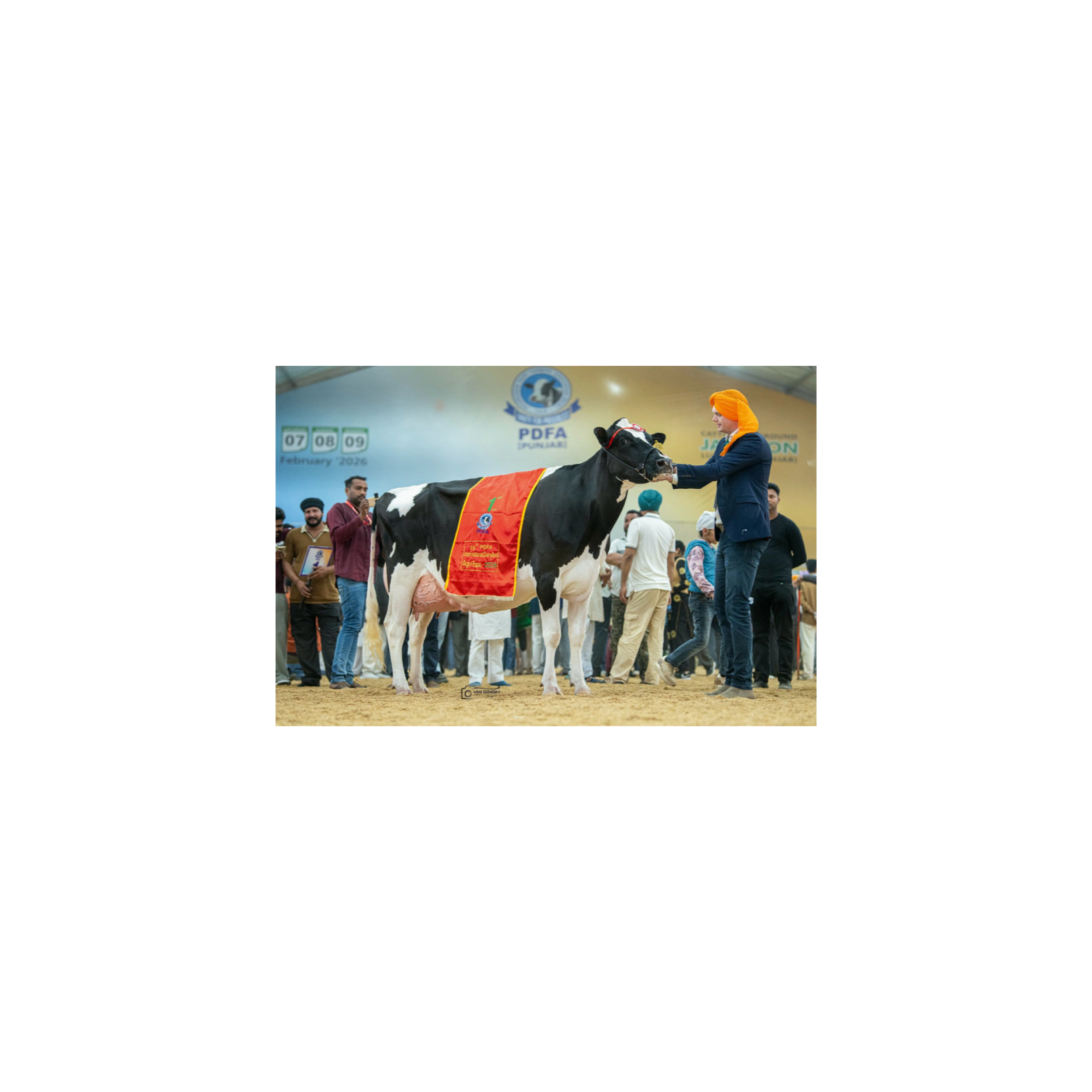
E556 The Punjab Pivot: Why $12 Semen Is Dead in India by 2031
May 1200:28:55Tap to summarizeA senior PDFA officer predicted it in 2018. By August 2025, a university in Ludhiana signed the MOU that turns his sentence into a timeline.In this episode of The Bullvine Podcast, we break down the PDFA-GADVASU deal, the Rs 960 vs projected Rs 200 per-dose math, and the 2029 compression window every North American AI company should have modeled — and didn't. Punjab is about to flip from India's biggest Holstein semen buyer to its biggest domestic supplier.What You'll LearnWhy Rs 960 imported conventional semen faces 75% substitution pressure by 2031How a 50-cow Punjab dairy saves Rs 30,400 per year once GADVASU bulls landWhy ABS India's TPI 3261 Oscar and Chitale Dairy's February 2026 imports mark the top of the marketThe four-to-six-year biological floor from MOU to proven bulls — 2029 to 2031 at the earliestWhy certainty, not price, has been North American AI's real moat in IndiaWhat this means for ABS, CRV, Semex, and ST Genetics strategists still planning past 2027Punjab's milk output is up roughly 172% since 1990 while its cattle count dropped 31%. That gap is genetics, built on 25 years of imported North American semen through the Progressive Dairy Farmers Association. The PDFA-GADVASU partnership ends that dependency. If you breed Holsteins outside Punjab, sell semen into India, or plan emerging-market genetics revenue, your 2031 playbook needs a rewrite — now, not after the first proven bulls ship.Full article and sources: https://www.thebullvine.com/genetics-breeding/the-punjab-pivot-why-12-semen-is-dead-in-india-by-2031/ Subscribe for straight-talking dairy analysis. Share this with a producer who needs it.
Transcribe →
E555 The $221,760 Corridor Trap Hitting 600‑Cow Upper Midwest Dairies in 2026
May 1100:24:25Tap to summarizeThe owner of a 600‑cow Upper Midwest dairy sat across from his lender in early 2026 and watched a robotic milking project sail through a stress test at $20.40/cwt. Same cows that had been profitable for fifteen years. Same management. Same family on the same dirt. And he knew — before the meeting ended — that the spreadsheet was lying to him. Not because the numbers were wrong. Because they were the wrong numbers. By the time he pulled out his last twenty‑four months of milk checks, the conversation didn't just change. The whole future of the farm changed. This episode is about the quiet $221,760 hole he found — and the one question every dairy owner needs to ask before they sign another loan.The Story You'll HearThe morning a clean herd report stopped being enoughWhy the milk check told a different story than the futures screenThe moment a 50¢/cwt basis slide turned into a six‑figure annual dragWhat the FMMO rule change really took off the Class III line — and who's paying for itThe lender meeting that broke the old playbook in halfWhy the High Plains is pre‑selling capacity while the Upper Midwest is rationing itThe contract clause that lets a 2,000‑cow Western dairy keep growing into the same stormThe three honest paths left when your corridor decides for youThe kitchen‑table conversation every dairy family will have to have inside the next twelve monthsThis isn't a story about milk per cow. It's a story about whether your region's plants want your next pound — and what happens to the people who don't see that question coming until it's already answered.The full written breakdown — including the Impact Table, the Running the Numbers box you can plug your own herd into, and the 30/90/365‑day playbook for herds caught in the wrong basin — is live at https://www.thebullvine.com/farm-economics-management/the-221760-corridor-trap-hitting-600%E2%80%91cow-upper-midwest-dairies-in-2026/, alongside our companion analysis on the new FMMO rule, dairy lending at 7% money, and the twelve‑month decision guide for 300–1,000 cow operations.Subscribe to The Bullvine Podcast wherever you listen so the rest of the Corridor Math series lands the moment it drops. Next up: an anonymized real core‑supply contract excerpt, what its base‑excess language does to a 1,200‑cow operator's 2026 mailbox, and a regional ag lender on what corridor‑aware stress testing actually looks like in the room.
Transcribe →
E554 Roxy, Dellia and The Mothers Who Built the Breed
May 900:44:38Tap to summarizeFrom Roxy to Barbie, these 10 mothers built the Holstein breed. Go beyond the pedigree to the cows who never left. In the dairy business, Mother’s Day doesn't look like a card aisle—it looks like a cow family that just keeps paying rent. Travel from 1968 Saskatchewan to the modern genomic era as we trace the stories of the donor cows that stopped standing in the barn and started showing up everywhere else. This is the narrative history of the mothers who gave the breed its direction, its balance, and its future.These ten cows aren't just names in an archival database; they are the architectural structure of the modern Holstein. When you pull a pedigree in a high-performing barn today, you are looking at the echoes of these matriarchs. From the rugged reliability of Harborcrest Rose Milly to the refined type of Regancrest-PR Barbie, their influence is active in nearly every heifer pen and A.I. tank in the world. To understand the breed today, you must understand the mothers who built it.This history matters because it highlights the "eye of the master" over the spreadsheet. It is the story of breeders who saw greatness in a "bankruptcy calf" like Stookey Elm Park Blackrose or a foundation cow like Comestar Laurie Sheik before the rest of the world caught on. Understanding these lineages gives today’s breeder a clearer perspective on repeatability, genetic risk, and the lasting value of a cow family that simply works, generation after generation.Read the complete history profile, view the archival photos, and dive into the pedigree data at https://www.thebullvine.com/donor-profile/roxy-dellia-and-the-mothers-who-built-the-breed/. For a deeper look at these legacies, explore our featured articles on the Altitude revolution and the Comestar empire. Subscribe to The Bullvine Podcast to ensure you never miss a chapter of dairy history. Share this episode with a fellow breeder who recognizes these names in their own herd book.
Transcribe →
E553 Why Your Show Heifer Development Program Starts in the Maternity Pen, Not the Fitting Chute: The 28% IgG Gap That Decides the Class
May 800:26:15Tap to summarizeWaiting six hours to feed colostrum caps roughly a quarter of your show heifer's disease protection. The class was decided at 2 a.m. in January, not at the clipping chute in September.The Bullvine Podcast takes apart the research on why the 28% IgG loss is an absorption efficiency problem, not a colostrum quality problem — plus the hay belly trap, the Jersey-on-Holstein ration mistake, and the Ferrari problem with genomic Feed Efficiency scores. Every threshold, every decision, every trade-off a working breeder needs before next show season.What You'll LearnWhy colostrum absorption collapses by hour six, even when quality stays intactThe Brix and serum IgG thresholds the 2020 Lombard consensus actually requiresHow uNDF240 creates hay belly before your grain program can workWhy Jerseys on Holstein rations freshen with mushy uddersWhat a high Feed Efficiency RBV means for your show prospect's BCSThe 30-day move with your herd vet that tells you if your program worksElite embryos at the tier of Sale of Stars, Sale of the Century, and All Canadian Classic trade in the low to mid four figures, with recipient conception around 30 to 40 percent. That's high four to low five figures per live calf on the ground — before starter, before fitting. Losing 28% of her immunity because you slept through her birth isn't a protocol detail. It's the single highest-leverage decision in the whole development program.Full article and sources: https://www.thebullvine.com/management/why-your-show-heifer-development-program-starts-in-the-maternity-pen-not-the-fitting-chute-the-28-igg-gap-that-decides-the-class/ Subscribe for straight-talking dairy analysis. Share this with a producer who needs it.
Transcribe →
E552 The $28,614 Tenth: Why Upper Midwest Protein Is Now Worth More Than Fat
May 700:30:01Tap to summarizeMarch 2026 FMMO set protein at $2.0905/lb against butterfat at $2.0220 — the first sustained flip in a decade. On a 500-cow Order 30 herd at 75 lbs/day, every tenth of protein is now worth $28,614 a year. That's $938 more than fat.Issue #1 of The Bullvine Component Value Tracker breaks down what the flip means for your sire list, your ration, and your next capital project. The national protein-to-fat ratio hit 0.760 in 2025 — cheese plants were calibrated for 0.82. We've got roughly 16 months before the 0.75 line starts showing up in basis conversations.What You'll LearnWhy chasing a better protein-to-fat ratio costs a 500-cow herd $19.88 per daughter per lactationThe $6.07/lb flip point that kills the "prettier ratio" sire argumentWhich rumen-protected supplements still pencil at $2.09/lb protein — and which ones are a ration taxHow Hilmar, Leprino, and Valley Queen are repricing High Plains and I-29 corridor contractsThe $3.54/cwt gap between USDA's $19.70 all-milk forecast and $16.16 CME Class III — and why it breaks capital projectsA 30/90/365-day playbook scoped to a 500-cow Order 30 shipperComponent revenue doesn't carry the manure tax added volume does — no extra cow, no extra parlor time, no extra lagoon capacity. For a leveraged 500-cow shop, a combined 0.1% fat and 0.1% protein move captures $56,290/year. That's the difference between a lender conversation you choose and one your lender chooses for you. The May 2026 Component Opportunity Score: 58/100 — Maintain and Reposition Toward Protein.Full article and sources https://www.thebullvine.com/dairy-markets/the-28614-tenth-why-upper-midwest-protein-is-now-worth-more-than-fat/: Subscribe for straight-talking dairy analysis. Share this with a producer who needs it.
Transcribe →
E551 The 52-Point Gap Hiding in Every Jersey Sire Catalog in Canada
May 600:28:41Tap to summarizeCanada's top 10 Jersey sires averaged 99th-percentile LPI last year. Their Reproduction Index sat at the 47th — below breed average. Nobody's printing that.Ten bulls sired 29% of every Jersey calf registered in Canada in 2025. On paper they look untouchable: 99th LPI, 97th Conformation, 100% A2A2. Murray Hunt pulled the subindex profile on the same ten bulls and found a 52-point gap between what the catalogs advertise and what those daughters will actually do in your barn. The Bullvine Podcast breaks down the math, the miss, and the fix.What You'll LearnWhy 5 of Canada's 10 most-used Jersey sires sit below average for fertilityHow a 34th-percentile Milkability Index quietly taxes every robot herdWhat $3,010-per-head U.S. heifer prices mean for below-average RI geneticsWhy 97th-percentile Conformation doesn't always pay — per Alcantara et al. 2022How A2A2 adoption proves breeders move fast when the signal is clearThe one-page sire selection protocol to write before your fall semen orderMurray Hunt created the original Dollar Difference Formula and led Holstein Canada's Type Classification overhaul in the 1980s. After six decades in dairy cattle improvement, he's still pushing the industry to select on the numbers it buries — RI, HWI, and MI — not just the ones it promotes. This episode turns Jersey Canada's record registration year into a working playbook with 30-, 90-, and 365-day actions you can run against your own Lactanet login tonight.Full article and sources https://www.thebullvine.com/genetic-evaluation-review/the-52-point-gap-hiding-in-every-jersey-sire-catalog-in-canada/ Subscribe for straight-talking dairy analysis. Share this with a producer who needs it.
Transcribe →
E550 How Albert Cormier Rewrote the Rules of Global Holstein Business – and Made the Whole Industry Catch Up
May 500:54:43Tap to summarizeFall of 1981. A heifer named A Brookview Tony Charity walks into the Designer Fashion Sale with a hock swollen up like a grapefruit. Every buyer in the barn takes one look and starts walking back to the truck. One man stays. He sees past the swelling to the cow underneath — and three years later, she's Royal Winter Fair Grand Champion. That one glance tells you almost everything you need to know about Albert Cormier, the Acadian kid from St-Philippe, Prince Edward Island, who would go on to pry Canadian Holstein genetics open to the world. The co-ops didn't want him doing it. He did it anyway. This is the story of how one man's eye, instinct, and refusal to pick a lane reshaped an entire breed — and what every operator running a dairy in 2026 can still learn from it.The Story You'll HearThe spring visit to a kitchen table in Belfast, Quebec that turned a phone call into a 30-year consulting businessThe co-op system that treated a private Ontario operator importing Dutch, Italian, French, German, and American semen as a problem — and the workaround that made him dangerousThe million-dollar gavel drop that wasn't really about the million dollarsThe mentor who handed two young lieutenants five-year buyouts with no earn-out clawbacks and no private-equity theatrics — and why it heldThe bull born off a half-interest purchase who reached #1 LPI in Canada while the co-op catalogues were still playing catch-upThe polled bet almost everyone laughed at — and why 2026's welfare audits are suddenly making it look obviousThe cold day in Guelph when a stroke had taken his voice, but the sale book was his autobiography written in pedigreesA grandson speaking for a grandfather at Holstein Canada's national stage, and a second Master Breeder Shield presented on the island he left as a young manAlbert Cormier was never the loudest man in the barn. He was the fastest. A bilingual Acadian operator who could work a Quebec kitchen table in French on Tuesday and an Ontario sale ring in English on Wednesday, he refused the binaries that defined Canadian dairy for a generation — type versus production, domestic versus imported, co-op versus private, show ring versus genomic index. He insisted they could all go together. The data, eventually, agreed with him.His story is told in this episode through the voices of the two men who took the keys from him and built their own careers on his operating principles: Dave Eastman, who bought GenerVations over a five-year handshake and sold it to Select Sires years later; and Yvon Chabot, who bought Cormdale Exports on the same terms and went on to build Blondin Sires Inc. Their recollections are warm, direct, and — in places — unguarded. You will hear what Albert was actually like between the handshakes.Read the full written tribute — with photographs of Tony Charity, Lila Z, Champion, Claire, Layla, Miranda P, and the 2019 Master Breeder presentation in Prince Edward Island — at https://www.thebullvine.com/breeder-profiles/how-albert-cormier-rewrote-the-rules-of-global-holstein-business-and-made-the-whole-industry-catch-up/. Related articles on Canadian Holstein history, the Cormdale Genetics Legacy Sale, the GenerVations–Select Sires acquisition, and the polled genetics debate are all linked in the piece.Subscribe to The Bullvine Podcast on Apple Podcasts, Spotify, or wherever you listen. New episodes profile the breeders, operators, and industry builders whose decisions shape how your herd book reads tomorrow.
Transcribe →
E549 $3,110 In, $1,100 Out: The Cull Trap Holding 470,000 U.S. Dairy Cows – CPI Hits 68
May 400:23:23Tap to summarize$3,110 to replace her, $1,100 to ship her. That spread is why The Bullvine’s new Culling Pressure Index just printed 68 “Warning Zone” and an estimated 470,000 U.S. cows are still in stalls they’d have left in 2019.This episode of The Bullvine Podcast walks through the barn math behind a 500‑cow Wisconsin‑style herd modeled bleeding $255,000–$305,000/year, and why a record $3,110 replacement heifer cost versus roughly $1,100 cull value has producers deferring culls across the U.S. We break down the four components of the Bullvine Culling Pressure Index, what a 68 score actually means, and how the Replacement‑to‑Cull Snapshot tool turns your own herd numbers into a 30/90/365‑day plan.What You’ll LearnWhy a 2.83:1 heifer‑to‑cull ratio quietly kills margin over feedHow a CPI reading of 68 signals “Warning Zone” culling pressureThe barn math: $205,500 margin gap plus $50–100K bottom‑quartile dragHow deferred culling and HPAI risk hit the same cows twiceWhich states and herd types sit most exposed when 470,000 cows moveHow to use the Replacement‑to‑Cull Snapshot to map your own 30/90/365 planWhen replacing a cow costs nearly three times what she brings as beef, biology loses to economics. This episode puts real numbers on that reality: a modeled 500‑cow herd leaking up to $305,000/year, a national herd that’s culled roughly 611,600 fewer cows than the five‑year pace, and a CPI “Warning Zone” score that flags where a correction could add $2–$3/cwt in Class III. If you’re sitting on lame third‑lactation cows you’d have shipped in 2019, this conversation and the Snapshot tool give you a way to quantify the drag and decide whether you can afford not to cull.Listen & Connect Full article and sources: https://www.thebullvine.com/culling-pressure-index/3110-in-1100-out-the-cull-trap-holding-470000-u-s-dairy-cows-cpi-hits-68/ Subscribe for straight-talking dairy analysis. Share this with a producer who needs it.
Transcribe →