
Podcast
The Bullvine Daily Brief
Hosted by The Bullvine · EN
Every article from TheBullvine.com — read aloud so you can keep up with dairy while you're milking, hauling, or driving fence. Daily dispatches on genetics, milk economics, herd management, policy, and the stories the trade press won't touch. No fluff, no PR, no filler — just our journalism in your ears.
New articles go live in audio within hours of publication. Subscribe and the day's Bullvine comes with you.
140episodes
Episodes
Newest firstAll episodes
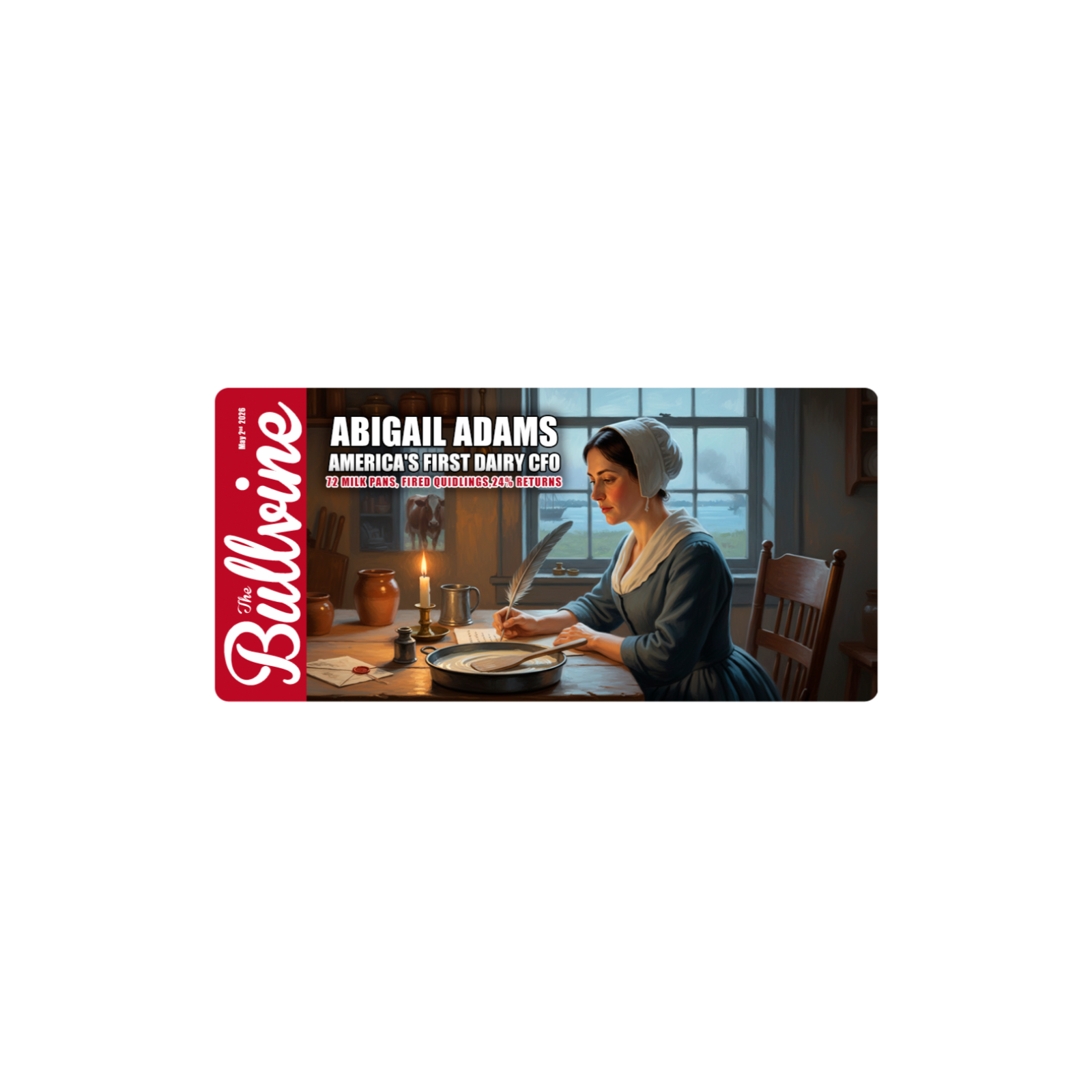
E548 72 Milk Pans, Fired Quidlings, 24% Returns: Abigail Adams, America’s First Dairy CFO
May 200:48:24Tap to summarizeAbigail Adams ran the first Founding-family dairy — and saved it while John built a country from a farmhouse desk in Braintree.April 11, 1776. The cannons had barely cooled over Boston Harbor. Her husband was in Philadelphia arguing independence. And at the kitchen table, a thirty-one-year-old woman dipped her quill in ink instead of cream and wrote about wanting to be, in her own words, "as good a Farmeress" as John was a statesman. She meant it literally. Over the next four decades, she would run the Adams farm through a short-hay war year, fire the quidlings, order seventy-two milk pans in a single 1794 shipment, and — through a trusted middleman, because coverture law forbade her own name on the paperwork — build a bond portfolio that paid up to twenty-four percent while the Adams land paid two. When Jefferson's heirs were auctioning Monticello to settle debts, Peacefield was still in the family. This is how it happened.KEY MOMENTS:The 1777 short-hay year — and the manure, feed, and cull decisions she made alone while John wrote maxims from PhiladelphiaWhy she fired Porter, rotated Arnold and Copland, and vetted the Richards family through Cotton Tufts before hiringThe March 1794 order — six dozen milk pans, six cream pots, eight milk pails, two cheese tubs — and what it tells us about scaleHow she built a transatlantic wartime retail operation from pins, ribbons, and handkerchiefs while John was in EuropeThe climax: 2% from the land, up to 24% from government notes — and the Tufts trustee workaround that made it legalThe December 1783 letter — "let me turn dairy woman" — and the cost of forty years of semi-widowhoodAbigail Adams has been posterized as the First Lady who wrote "Remember the Ladies." What gets left out is the other Abigail — the one who talked hay yields, cheese hundredweights, laborer contracts, and discounted state notes with the same cool attention most Revolutionary leaders reserved for treaties. Her 2,100-plus surviving letters to John read less like a first-couple correspondence and more like the paper trail of a modern dairy CFO.The lost context is what makes this story land. Under the doctrine of coverture, a married woman in 1790s Massachusetts couldn't legally own her own butter churn — let alone buy discounted federal debt on the open market. Abigail worked the edges: pin money, retail proceeds, a country-doctor uncle as trustee. While Jefferson was drowning in land and leverage, she was quietly compounding. The Adamses kept Peacefield. Monticello went under the auctioneer's hammer.For every producer today weighing land versus robots, quota versus cash, or keeping a marginal hire one more season — this is the management story underneath the marble bust. You won't find her in a Holstein pedigree. You'll recognize her anyway.Read the full written feature — "72 Milk Pans, Fired Quidlings, 24% Returns: Abigail Adams, America's First Dairy CFO" — with original illustrations and key takeaways at https://www.thebullvine.com/breeder-profiles/72-milk-pans-fired-quidlings-24-returns-abigail-adams-americas-first-dairy-cfo/. Subscribe to The Bullvine Podcast so you never miss a history episode, and share this one with the woman on your operation who runs the books, signs the financing, and quietly keeps the whole place standing. She'll know exactly what we mean.
Transcribe →
E547 $43 a Test, $160M for the Lab: Why Select Sires and ABS Are Quiet on the GeneSeek Close
May 100:25:49Tap to summarizeForty-three dollars buys one Clarifide Plus test. One hundred and sixty million bought the lab that runs it. Your co-op hasn't said a word about either.Zoetis now sits at four points of leverage in the U.S. dairy genetics chain — the test, the index, the lab, and the processor partnership with Danone. As of May 1, 2026, none of the five major U.S. AI cooperatives most exposed to that shift has published a strategy response. The Bullvine Podcast walks through the full stack, the barn math, and the two questions every member-owner should be asking right now.What You'll LearnWhy a $160M Zoetis–Neogen lab acquisition reshapes every co-op's negotiating position through 2030How DWP$, NM$, and TPI weight methane, heat resilience, and wellness traits differentlyThe barn math on a 1,500-cow vs. 250-cow herd at $0.20 and $0.15/cwt premiumsThe switching-cost trap most testing contracts won't tell you aboutTwo questions to bring to your next district meeting — and what a serious answer sounds likeWhy DWP$ Heat is a software answer to a hardware problem in the SouthWhy This Episode MattersA 2025 Journal of Dairy Science study tied top-quartile DWP$ cows to 12.9% lower methane intensity and 18.1% lower turnover than bottom-quartile herdmates. That's the dataset processors are now building scope 3 programs around. If your co-op can't name partners, dollar commitments, and timelines for heat-tolerant genetics and member-controlled female genotyping capacity, treat that as an unanswered question — and re-raise in 90 days.Keywordsdairy podcast, Zoetis, Clarifide Plus, Neogen, GeneSeek, DWP$, NM$, TPI, Holstein, genomics, AI cooperative, Select Sires, ABS Global, Genex CRI, ST Genetics, URUS, Danone, Partner for Growth, scope 3, methane, heat stress, SLICK, Gyr, CDCB, NAAB, Journal of Dairy Science, sire catalog, milk check, U.S. dairyListen & ConnectFull article and sources: https://www.thebullvine.com/a-i-industry/43-a-test-160m-for-the-lab-why-select-sires-and-abs-are-quiet-on-the-geneseek-close/Subscribe for straight-talking dairy analysis. Share this with a producer who needs it.
Transcribe →
E546 The $6,600 6‑Week Weaning ‘Savings’ Trap: Why It Can Mean an $11,000 BRD and Calving Bill on a 300‑Cow Dairy
Apr 3000:38:19Tap to summarizeA 300-cow Wisconsin dairy thought 6-week weaning saved $6,600 a year. The real cost, once BRD and age at first calving were priced in: $11,190.This episode of The Bullvine Podcast walks through the full ledger on Dave's 300-cow herd — $55 per calf "saved" on milk replacer, erased by 24 pneumonia cases at $260 apiece, plus 60 heifers calving a month late at $82.50 each. When the math is honest, the calendar program burns cash.What You'll LearnWhy 20% post-weaning BRD quietly cancels your milk-replacer savingsThe $252–$282 true cost of a single BRD case in the first 120 daysHow Quigley's 15 kg NFC threshold redefines when a calf is readyWhy weaning at 42 days often leaves calves short on starter intakeThe intake gate that replaced the calendar: 2 lb/day for 3 daysWhat a 10–14 day step-down does to BRD and AFC on a 300-cow herdWhy This Episode MattersAt replacement cow values near $3,110 per head in late 2025, every BRD case is an equity decision, not a vet bill. The ISU 2024 heifer budget pegs an extra month of rearing at roughly $82.50 per head — meaning 60 late-calving heifers quietly cost $4,950 a year. The 2024 Welk, Neave, and Jensen review of 44 studies confirms intake-based weaning outperforms fixed-age early weaning on growth and feed intake.Keywordsdairy podcast, calf weaning, BRD, bovine respiratory disease, milk replacer, age at first calving, AFC, Holstein, replacement heifers, heifer economics, Jim Quigley, NFC, starter intake, rumen development, SCFP, Iowa State, USDA, Penn State, Cornell, Aarhus, calf nutrition, dairy economicsListen & ConnectFull article and sources: https://www.thebullvine.com/management/the-6600-6%E2%80%91week-weaning-savings-trap-why-it-can-mean-an-11000-brd-and-calving-bill-on-a-300%E2%80%91cow-dairy/ Subscribe for straight-talking dairy analysis. Share this with a producer who needs it.
Transcribe →
E545 Stud Wars April 2026 — The Empire Strikes Back
Apr 2900:25:20Tap to summarizeSTgen owns 90 of the top 100 genomic Net Merit young bulls in April 2026 — and that ranking concentration buys them single-digit U.S. semen market share. Why?The April 2026 evaluation reshuffled the entire dairy genetics map. Holstein USA's TPI formula change knocked Garza −125, Captain −72, Sheepster −92 with zero new daughters. The DOJ is "nearing a decision" on the Select Sires + STgenetics merger. Zoetis just bought Neogen GeneSeek for $160M. The Bullvine Podcast counts who actually wins — and who only looks like they're winning.What You'll Learn• Why a 90% ranking share equals less than 10% of straws sold • How the 24P/14F formula change costs your mating program 75–125 TPI points overnight • The 4,000-bull selling universe behind every "elite top 100" headline • Why Zoetis + Neogen is a bigger consolidation story than any bull merger • How United Sires captured 15% of the genomic top 200 in 18 months from a standing start • The $300/head profitability gap nobody publishes for beef-on-dairy geneticsIf the DOJ approves the merger, a single combined entity controls 56.5% of the elite Holstein sire universe — 466 unique NAAB-verified sires across every Holstein USA and CDCB ranked list. That decision shapes every contract, every lab routing call, and every cooperative's leverage for the next decade. Drop your TPI cutoff 75–125 points or rebuild from PTA Protein and Fat directly. The math hasn't changed for milk in the tank — only which bulls your computer flags as elite.Full article and sources: https://www.thebullvine.com/a-i-industry/stud-wars-april-2026-the-empire-strikes-back/ Subscribe for straight-talking dairy analysis. Share this with a producer who needs it.
Transcribe →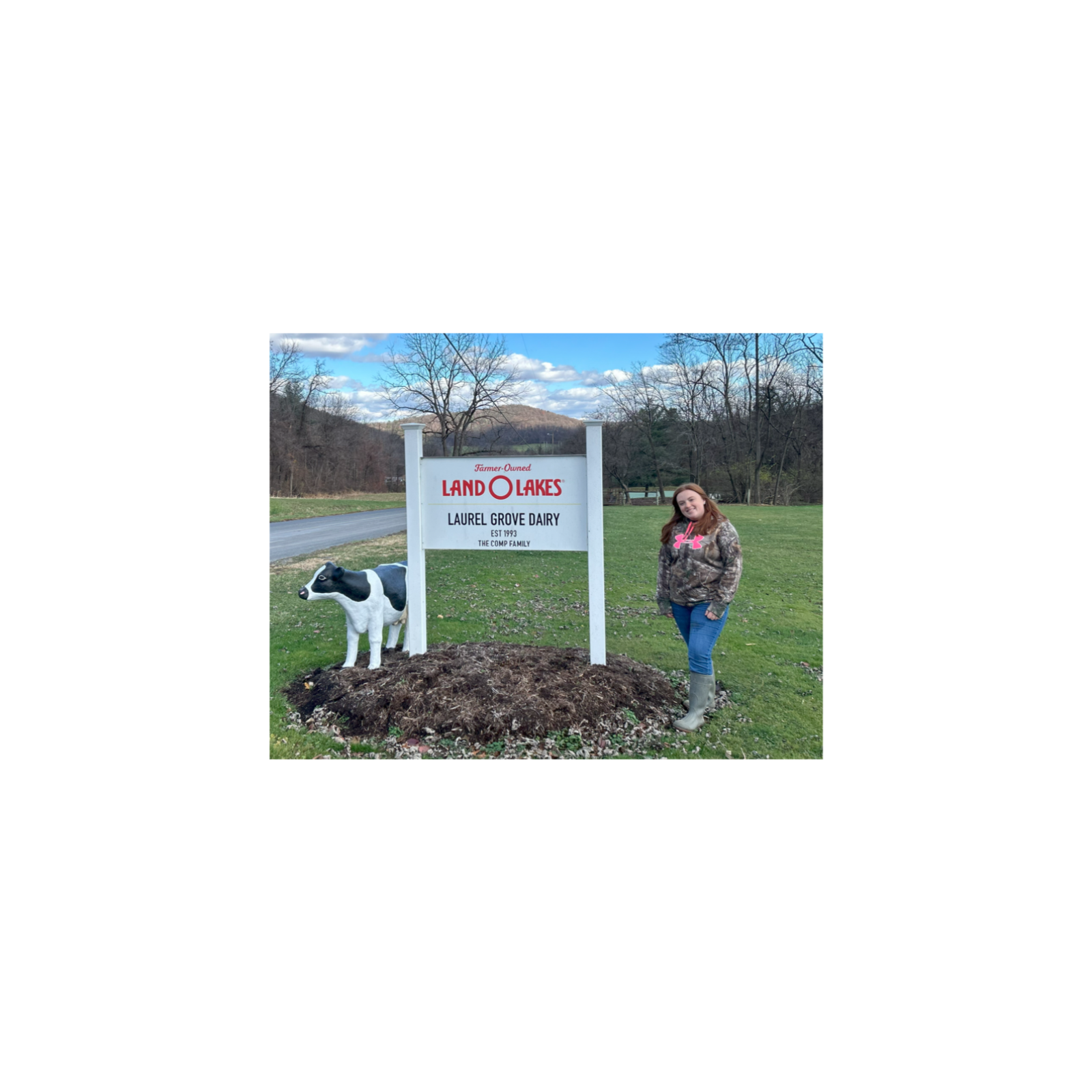
E544 490 PA Dairies Gone in 2025. Two Spent $40,500 to Not Be Next.
Apr 2400:37:32Tap to summarizePennsylvania lost 490 dairies in 2025. Two farms spent $40,500 each to graduate the state's first Dairy Herd Manager apprentices — and the math says they bought stability cheaper than everyone else.Rylee Fuller at Laurel Grove Farm and Kristina Quinn at Zahncroft Dairy each logged 3,000 paid hours stepping from $11 to $16/hour, plus 216 hours of technical instruction. On The Bullvine Podcast, the barn math gets sharp: one sudden herd manager departure costs a 150-cow Pennsylvania dairy roughly $24,750 in the first 90 days — before you hire a replacement.What You'll LearnWhy $11,250 of owner time is the line item most farms underpriceHow two failed cold hires can run $132,000–$221,000 on MSU turnover benchmarksWhy protocol substitution makes experienced hires drift from your systemThe 4 preconditions that separate a teaching operation from a paperwork hostWhat days open at $3.63/day actually costs over a 90-day transitionWhen cold-hiring still makes sense — and when it's the most expensive pathWhy This Episode MattersNortheast management-track turnover hit 41% in the 2024 FARM Workforce Year-in-Review. At the Q1 2026 Pennsylvania all-milk price of $19.40/cwt, every detection miss and SCC creep bleeds margin faster than a year ago. If you've cycled through a herd-level employee more than once in the last five years, the $40,500 apprenticeship isn't sentimental — it's insurance. This episode walks through the decision rule, the readiness gate, and the 30/90/365-day action plan.Listen & ConnectFull article and sources: https://www.thebullvine.com/news/490-pa-dairies-gone-in-2025-two-spent-40500-to-not-be-next/ Subscribe for straight-talking dairy analysis. Share this with a producer who needs it.
Transcribe →
E543 The Economic Reality of Pellet-Free Robotic Milking. A Retrofit Barn Could Lose $71K Trying.
Apr 2200:25:06Tap to summarizeDouble Creek Dairy in Merced, California reports $171,000 a year saved going pellet-free on eight DeLaval V300s. Run the same play in a 240-cow free-flow retrofit and the first-year math points to a $44,000 to $71,000 hole.The Bullvine Podcast breaks down the AMS pellet-free pitch sweeping spring 2026 dealer meetings. Rodenburg's traffic data pegs free-flow fetch rates at 16% of the herd per day versus 8.5% in guided-flow. That gap decides whether pellet-free survives contact with your barn — before a single ration change.What You'll LearnWhy Matt Strickland's $171K pencils at Double Creek but may not pencil at yoursThe 10-week transition curve: 9-12% milk drop and what it costs a 240-cow herdFree-flow vs. guided-flow: the barn-walk test every operator should runWhy pellet cost alone ($132-$500/ton per Vita Plus) misses the real decisionThe four red flags that should trigger a 30-day nutritionist-service-lender meetingWhat USDA ERR-356 actually says about AMS payback curvesMost U.S. AMS installations are free-flow retrofits — long alleys, one robot at the end of the pen, no selection gate. Research from Bach (2007 JDS) and Penner (Saskatchewan) shows pellet allocation has little effect on yield in controlled conditions, but pulling the bribe without fixing the concrete stacks transition losses, fetch labor, and early culls into real first-year drag. The Heeg family's guided-flow build in Colby, Wisconsin works. Most retrofits aren't that barn.Full article and sources: https://www.thebullvine.com/management/robotic-milking/the-economic-reality-of-pellet-free-robotic-milking-a-retrofit-barn-could-lose-71k-trying/ Subscribe for straight-talking dairy analysis. Share this with a producer who needs it.
Transcribe →
E542 Gene-Edited Cows Are Legal. Your 2029 Milk Cheque Isn’t Safe.
Apr 2100:12:13Tap to summarizeFDA cleared SLICK Holsteins in 2022. Health Canada cleared gene-edited pork in January 2026. No processor has agreed to pay base price for gene-edited milk — and you'd own the cows.The Bullvine Podcast breaks down the trap hot-belt dairies are walking into this spring. A 5,000-cow operation bleeding $2–4 million a year on heat stress gets a SLICK semen pitch that sounds like rescue. The math says write a different cheque first. We show you which one, what it costs, and the five questions every producer should put to their milk buyer before a single SLICK straw enters the tank.What You'll LearnWhy cooling capex pays back in 3–5 years regardless of what your processor decidesHow a 4–6% recovery of lost summer milk puts $236–$354 per cow back in the tankWhy Lactanet's April 2026 flip to 40/60 Fat:Protein just reshaped every SLICK decision in CanadaThe Danone–Zoetis template — and why gene-edited dairy procurement will probably follow itWhy SLICK is permanent and your milk buyer isn'tThe five-question procurement letter you can send this monthWhy This Episode MattersIndexes are volatile. Traits are permanent. Once PRLR-SLICK is in your herd, it's there for decades — even if a major retailer publishes a no-gene-edited dairy policy in 2029 that your processor has to honour. rBST was a decision you could stop making. SLICK is a cow standing in your parlor for five more lactations whether anyone wants her milk or not. Real money. But not rescue money.Keywordsdairy podcast, SLICK Holstein, gene editing, PRLR, heat stress, FDA, Health Canada, CTNBio, Embrapa, Danone, Zoetis, CLARIFIDE Plus, DWP$, TPI, LPI, Lactanet, Holstein USA, Net Merit, Cheese Merit, polled genetics, VikingGenetics, ABS Global, Acceligen, Class III, component pricing, Arizona dairy, Brazil dairy, 2029, procurement, BullvineListen & ConnectFull article and sources: https://www.thebullvine.com/genetics/gene-edited-cows-are-legal-your-2029-milk-cheque-isnt-safe/ Subscribe for straight-talking dairy analysis. Share this with a producer who needs it
Transcribe →
E541 The New FMMO Rule Costs a 500-Cow Dairy $97,750 a Year – Before a Mile of Freight
Apr 2000:33:20Tap to summarizeOne of ND's last 18 Grade A dairies now hauls milk 5 hours one way. The 2025 FMMO rule pulls $97,750–$106,950 annually from a 500-cow herd at 230 cwt/cow — before freight.North Dakota lost two plants in 30 months. The Holle family's 1,000-cow operation called it "really, really hard." Federal Order 30 hauling jumped 30% per-farm from $0.6137 to $0.7969/cwt. Stack FMMO's 85–93¢/cwt cut on Class III $14.59, and margins vanish. The Bullvine Podcast walks the barn math and three paths forward.Why ND's Red Zone on the Dairy Farm Extinction Clock signals immediate riskHow FMMO make allowances land on your milk check — $97k gone from 500 cowsRoute erosion math: one farm exits, hauling eats your marginHeifer pipeline at 1978 lows — you can't buy your way out of thin corridorsScale, pivot, or exit: which path fits your debt-to-asset and Clock rowSix checks to run before your lender's next reviewThe 16-state Clock table shows California and Missouri accelerating — even Green Zones aren't safe. AFBF's Daniel Munch pegs Q1 pool losses at $337 million. Run your cwt × 85–93¢ before your route thins further. Full article with tables at thebullvine.com.Full article and sources: https://www.thebullvine.com/dairy-markets/the-new-fmmo-rule-costs-a-500-cow-dairy-97750-a-year-before-a-mile-of-freight/ Subscribe for straight-talking dairy analysis. Share this with a producer who needs it.
Transcribe →
E540 Holstein Canada’s Governance Rewrite Passed. 0.8% of Members Voted.
Apr 1900:26:04Tap to summarizeOn April 18, 2026, sixty-five out of 7,900 Holstein Canada members rewrote 141 years of dairy democracy. Three of the four biggest by-law clauses passed with zero floor debate.The Bullvine Podcast walks you through the Holstein Canada AGM that almost nobody noticed — and the four clauses that now shape the breed's future in this country. A 0.8% turnout adopted Section 4.15, making future member resolutions non-binding on the board. Section 2.05 handed the board unlimited borrowing authority with no cap. Section 2.09 gave them sole discretion over election, discipline, and director-conduct policy. Section 5.05 allows up to two voting directors to be appointed rather than elected.What you'll learn• Why a reported $1.01M surplus is actually a $350K operational deficit • The 5,000-classification drop behind a budget that assumes 10,000 more • How Resolution 5's 85% robotic-milking mandate got zero follow-through • What the 2025 accountability resolutions never got reported on • Why the Young Leader program quietly aged its upper limit to 35 • The branch-level move that could still reverse the April 18 voteCEO Greg Dietrich told members directly: "Our truer position is actually closer to a bit of a deficit." That honesty is rare. What is not rare is a board asking members to approve a 141-year governance rewrite in a ballroom almost nobody filled. Holstein Canada isn't being taken over. It's being left. And under the new by-laws, the board is no longer bound to act on the resolutions members did pass — including the 85% mandate on getting robotic-sensor data accepted as official milk-recording data, the single file that decides whether Holstein Canada still matters by 2035.Full article and sources: https://www.thebullvine.com/breed-association-news/holstein-canadas-governance-rewrite-passed-0-8-of-members-voted/ Subscribe for straight-talking dairy analysis. Share this with a producer who needs it.
Transcribe →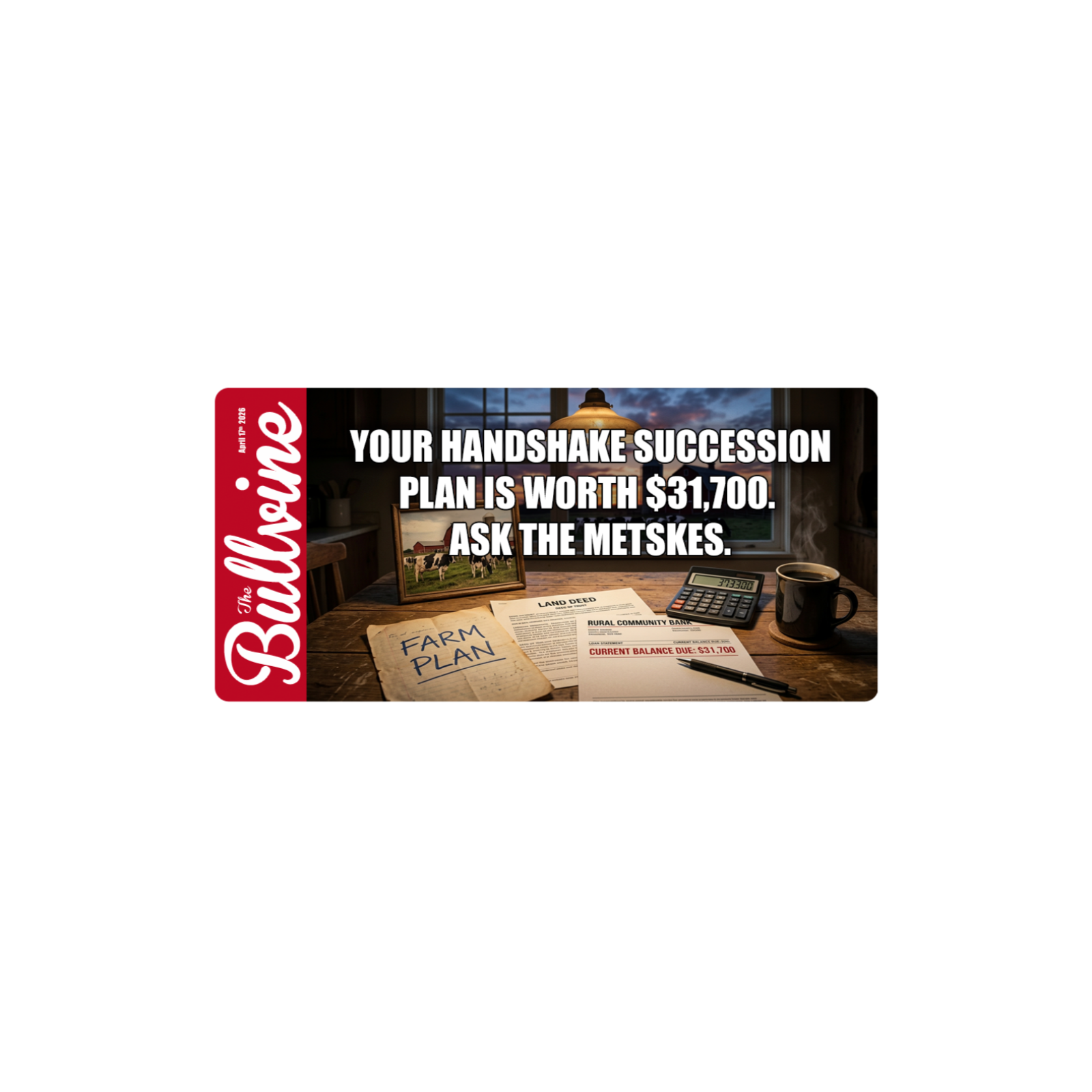
E539 Your Handshake Succession Plan Is Worth $31,700. Ask the Metskes.
Apr 1700:33:58Tap to summarizeA trial judge gave the Metske family $405,000 for six years on their dairy. Ontario's Court of Appeal slashed it to $31,700. That's what a handshake is worth when property rights hit a judge — and the same trap waits in your paperwork.This episode breaks down the Metske v. Metske 2025 ONCA 418 ruling, where informal assurances failed proprietary estoppel tests. Hear how bank documents, undefined "favorable terms," and an "agreement to agree" left Tim and Amanda with just $33,700 in farm upgrades minus $2,000 damage. Get the seven legal documents that make succession enforceable, plus probate math on a $5M Wisconsin dairy and the 66-month Medicaid penalty from a $700K family-discount land deal.Why courts ignore sweat equity without a buy-sell formulaThe probate hit on a $5M dairy: $305K–$390K before taxesHow Medicaid's 60-month look-back turns land gifts into $707K billsYour 30-day action: pull deeds and match names to your family storyFour paths forward — with trade-offs for on-farm vs. off-farm heirsThe $373,300 gap between kitchen-table plans and courtroom realitySuccession isn't a family chat — it's the biggest asset transfer you'll ever do, and Metske proves handshakes lose. On a $5M operation, probate eats 6–8% while a $10K–$25K legal package covers the seven must-haves: deeds, LLC agreement, buy-sell, revocable trust, POAs, healthcare directive, Medicaid plan. Wisconsin DHS memo 25-20 pegs the daily divestment divisor at $352.06 — miss the timing and a "family deal" becomes a 66-month nursing-home penalty at $10,708/month. If your paperwork wouldn't hold up solo, pull it this week.dairy podcast, farm succession, dairy succession planning, farm probate costs, Medicaid look-back dairy, proprietary estoppel farm, dairy family disputes, buy-sell agreement dairy, revocable trust farm, dairy generational transfer, Ontario dairy court case, Wisconsin probate dairy, Metske v Metske, dairy handshake deals, ag law dairyFull article and sources: https://www.thebullvine.com/management/your-handshake-succession-plan-is-worth-31700-ask-the-metskes/ Subscribe for straight-talking dairy analysis. Share this with a producer who needs it.
Transcribe →