← The Business of Fashion Podcast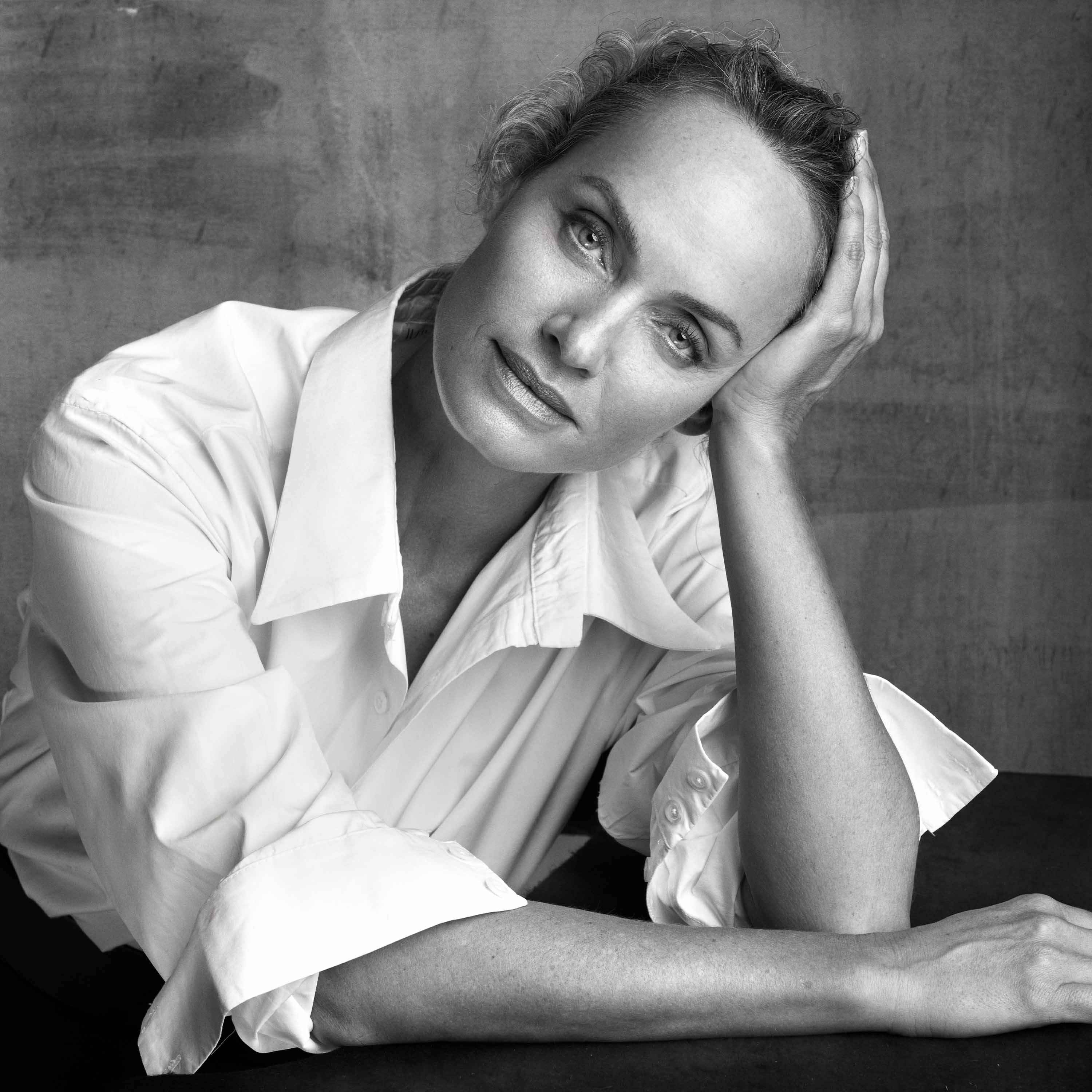
The Business of Fashion Podcast
Amber Valletta: ‘Do What You Love. Serve a Higher Purpose.’
00:42:22
The supermodel joins BoF founder Imran Amed to trace her journey from Tulsa to the world’s runways, how sobriety transformed her life at 25, and why she believes fashion must finally take responsibility for its impact on the planet.
Loading summary
Transcript103 lines
- [00:00]
Shopify Advertiser
Foreign.
- [00:05]
Podcast Host
This is Imran Ahmed, founder and CEO.
- [00:07]
Imran Ahmed
Of the Business of Fashion. Welcome to the BoF podcast. It's Friday, November 14th.
- [00:13]
Podcast Host
Amber Valletta grew up in Tulsa, Oklahoma, spending time on her grandparents farm. Her childhood was defined by open fields, a freshwater creek, and a simple rule from her mother, go outside and use your imagination. At 15, a local modeling class set her on an unexpected path that would take her first to Milan and then around the world. Within a few years, Amber became one of the defining faces of 1990s fashion. The Tom Ford Gucci era, the great editorials and the campaigns that shaped a generation's idea of beauty. But by her mid-20s, success had taken its toll. Amber stepped away from modeling, got so, became a mother, pursued acting, and found purpose in environmental advocacy. Today, as a United Nations Environment Program Goodwill ambassador, she's using her influence to push for real change on climate, biodiversity and pollution.
- [01:15]
Amber Valletta
I don't make my life all about me. I make it about other people, too, and connection and love. And when you have that, it's so much more enjoyable.
- [01:26]
Podcast Host
This week on the BoF podcast, I sit down with Amber to trace her journey from Tulsa to the world's fashion capitals. How sobriety transformed her life at 25, and why she believes fashion must finally take responsibility for its impact on the planet. Here's Amber Valletta on the BoF podcast.
- [01:49]
Imran Ahmed
Amber Valletta, welcome to the BOF Podcast.
- [01:53]
Amber Valletta
Well, thank you so much. Thank you for having me.
- [01:56]
Imran Ahmed
It's such a pleasure. I feel like we haven't done something meaningful with you on BOF since you spoke at the first BoF voices back in 2016. So that's a long time ago and lots has happened since, so there's a lot to cover. But I still wanted to start with Tulsa, Oklahoma, which you've written vividly about, and your grandparents farm and how, how it kind of sparked your imagination. So talk to us a little bit about growing up in Tulsa. Sure.
- [02:37]
Amber Valletta
So I grew up in Tulsa, Oklahoma in, I guess, the late 70s and early 80s. And it was, you know, an oil town that had had its ups and downs, but there was some really cool, you know, architecture. We had Frank Lloyd Wright had built some buildings there and houses and, you know, we had some interesting folks, some cool artists and things like that, and great music. So it's an interesting place. And my grandparents had a little farm outside of Tulsa. Like, you know, it took us like 15, 20 minutes to get out there because Tulsa's huge. It is much bigger now. And my mom was a single parent that worked with two Kids. And so we went out there every single weekend and then spent most of the summers out there. And I had a whole group of cousins that their parents did the same thing. And so we. We all just converged on my grandparents farm and there was like five girls and then a couple boys, and we just, you know, played with horses. And we had a donkey and a billy goat and peacocks. And my grandparents had this amazing freshwater creek that ran through their property with like little, like a cliff and like vines that you could swing on and fall into the water. And we would run from snakes and catch crawdads. It was really like, you know, Huck Finn or.
- [04:08]
Imran Ahmed
I was just gonna say this sounds like Tom Sawyer, you know.
- [04:11]
Amber Valletta
Yeah, it is. We built haylofts or hay forts in the haylofts. And, you know, it's where I saw kind of the circle of life too. I saw animals die and be born and things grow. And we drank the creek water, which we probably shouldn't have, but we were fine. Maybe the planet was okay, I think it was. But we had a amazing time in nature. And even when I was at home and in town, my mom would say to me, go outside and use your imagination. I'd come in, I'd be like, I'm bored.
- [04:46]
Podcast Host or Interviewer
Play with me.
- [04:47]
Amber Valletta
And she'd be like, go outside. Use your imagination. So that was sort of how I grew up. It was before the tech age and digital age. And you went outside and used your imagination.
- [04:58]
Imran Ahmed
Yeah. There were no screens to keep you entertained. It couldn't be further away from Milan or Paris or fashion, it sounds like. But you actually went to a modeling school at some stage, right? At like, at 15 or something. Like, how did. Was this something you were seeking out?
- [05:20]
Podcast Host
Like, how did that happen?
- [05:22]
Amber Valletta
No, I. Since I was little, apparently I've been. You know, you pulled out a video camera or a camera, and somehow I was always looking for the camera. And I see old pictures and you can see family photos, and it's like there's animal finding the light. Yeah. I was a ham. They called me a ham from very early on. And we were always performing. All of my cousins, we were putting on plays. We wrote plays about what was happening in our family, which is a whole nother thing and quite funny. But my mom had been told by several people, oh, she should act or she should model. And the great thing was my mom was super protective and wouldn't let anyone photograph me or do anything. And then she found this local agent in Tulsa, Linda Layman, and she was Connected with, like, Ford and agencies in, like, New York, the big city.
- [06:23]
Imran Ahmed
Yeah.
- [06:24]
Amber Valletta
And Dallas, the other big city in Chicago. And you had to pay to be a model. You had to take modeling classes. And so my mom was like, I think I was, like, 15. Yeah, I think I was, like, 15. Barely 15. And my mom was like, do you want to do this? And I was like, I don't know. I guess I didn't even know what it was. I didn't look at fashion magazines. So I did it, and I thought it was so ridiculous. I thought what they were making me do was so silly. And some of it was really funny, I have to say, because they, like, taught us to mannequin model. So you kind of, like, act like a robot and pop it and lock it, and you in the mall on a box in an outfit for, like, 30 minutes or an hour, and you change these positions like you're a mannequin, but you hold it and then you switch. And, like, that's kind of strange. Can you imagine? Kind of weird and strange.
- [07:16]
Imran Ahmed
Whenever models are in front of a camera, though, like, you guys are always adjusting your position slightly, so you're trying to get as many different angles and, you know, catching light in different ways. But that sounds pretty extreme, you know?
- [07:28]
Amber Valletta
I mean, it was extreme. But even the Runway, when they taught me, like, catwalk, I was so bad. I was an athlete, so I was very, like. I walked like a tomboy, I guess, or an athlete. And, like, just, like, no grace. Because I got kicked out of ballet when I was a kid, I couldn't quit laughing. So, yeah, that's kind of how it started. And some scout came through who was from Milan when I had been in the classes a couple months, and I had no photos, and he just met a bunch of us, and he was like, oh, you're so cute, but you have funny ears. You look like dumbo.
- [08:03]
Imran Ahmed
Oh, God.
- [08:04]
Amber Valletta
And I didn't. I didn't even. I was like, okay. And I wasn't even hurt by it, because I just. I didn't connect. I didn't. I didn't really care what he was talking about because I didn't have any. Anything invested in it. And then they asked me to come for the summer, and I was. My mom let me go because another young woman from Tulsa was going with her mother, and she was 18, and her mother was a school teacher. And so my mom cashed in my bonds that were saved for college and bought me a ticket to go to Italy to model. And I was so excited because I just wanted to go away. I wanted to go to Europe. I was 15. I was like, yeah. And I had the summer of my life. I think I.
- [08:46]
Imran Ahmed
Wait, wait, let's hold up. I want to talk about the boys, for sure. But what was it like for someone growing up on this farm or near with your grandparents farm and the creek and the Huckleberry Finn and nature and then landing in Milan? Like, I just. What was going through your head when you. Like, it must have felt like outer space or something.
- [09:13]
Amber Valletta
I don't know. You know, it's weird, Imran. I have this strange thing that I've always had. It's like wherever you plant me, I grow. I'm like a weed or something, like an Oklahoma weed.
- [09:26]
Imran Ahmed
I don't know.
- [09:27]
Amber Valletta
I just. I just. I'm okay wherever I'm at almost. And I'm also Italian. And I would go and see my Italian side of my family growing up. They lived in. In San Diego. So there. It wasn't completely foreign to me because I was used to these kind of w. Crazy European loud folks. But still I was. It was like a totally different world to navigate, for sure. But there was some sort of like, wow. I felt like my world had opened and I loved it. And don't forget, I had another young woman with me and her mother. It wasn't like I was over there by myself because the next summer I went back, I was alone with another young model in a pension. And I was so sad and lonely. And that's when it felt actually like I was in a foreign country and really like, wow, this is different. But like I said, there's a piece to my personality even today that's like, I can be anywhere and be okay pretty much.
- [10:30]
Imran Ahmed
And I think that's obviously almost like a requisite trait for someone who's a model because you're constantly going into all of these different contexts and places and cultures. So in those early years when you were going back and forth and eventually I think you relocated to Europe, is that right? You were spending a lot of time there. What did that teach you about being independent? Like, it sounds like that first summer you had that kind of chaperone with you, but after that you kind of had to fend for yourself, right?
- [11:01]
Amber Valletta
Yeah, I think that's actually when it kind of got real for me and a little bit scary was leaving home at 17. I left. I finished high school a year early. I got all my credits done and left because they kept calling for me to work and the teachers were getting more mad and, you know, anyway, it was going to actually be detrimental to school, so I just finished early and went. And I just remember being in Milan. And in Milan I was actually okay because I had friends, I knew the city. And then I went to Paris like a couple months after, because Paris, they had opened a Ford there. Then they were calling, saying, it's time to come to Paris. And that was like stepping into a whole nother world that was really lonely. So much so that when I go back to Paris now, I'm like, I can't believe that I don't. Of course I remember Paris, but I can't believe that I don't have the same recollection and feeling that I do now. When I'm there. I'm like, oh, my God, this city is like magic. Then I was just like, how do I make it on the subway to get all the way out to God knows where for a casting? And how do I try to buy some food? I could barely speak the language. And yeah, it was just very isolating. And. And then fashion is a grown up world. You know, you guys are all adults that are running. You know, if you think about it, I mean, I'm an adult now, but when I started modeling, I was, you know, a child and I wasn't traveling with a parent. And so you are put in an adult world and expected to behave and to work and to be a professional. And no one's really, especially back then, no one was really holding your hand and protecting you.
- [12:56]
Imran Ahmed
Yeah.
- [12:57]
Amber Valletta
So precarious situations for sure.
- [13:00]
Imran Ahmed
So how did you know? How did you go from the awkward athletic girl doing the robotic stuff in the mall?
- [13:08]
Amber Valletta
I don't know about that.
- [13:10]
Imran Ahmed
How did they teach you to model? How did you. Because you became a top Runway model. You became a top editorial model. You became a, you know, major advertising campaign model. Like you had all the big three, those three things, you know, I didn't.
- [13:27]
Amber Valletta
I never got the body. I never. Shit. Maybe there's still time.
- [13:31]
Imran Ahmed
What do you mean you never had the body? I don't.
- [13:33]
Amber Valletta
Well, like, you know what I mean? Like, I didn't get into the, like Sports Illustrated or the Victoria sequel.
- [13:38]
Imran Ahmed
Like the Giselle thing like that.
- [13:40]
Amber Valletta
Yeah, I mean, well, Giselle kind of went all over, right? You know, she had sexy and fashion. But yeah, I was just being silly. Anyway, no one taught me. I just started figuring it out. You know, you look, you watch, you listen, you observe. I don't know, I. I liked being in front of a camera. I knew I liked expressing myself kind of acting. So I just did that. And whatever they told me to do, I would try to do it. Right. So if they were like, you know, I want you to run and jump through the sand and be happy, I would be run and jump through the sand and be happy. And then as my career shifted from sort of trying, you know, working and trying to. You don't even really try to become something. It just happens, right. I wasn't at the time. I don't think that was sort of part of our culture and dialogue to be famous. I know people would say, I'm going to Hollywood to be famous. But you didn't do that in fashion. You didn't. Like, I wasn't going to be a model to be famous. I was just trying to work and make some money, right?
- [14:43]
Imran Ahmed
Yeah.
- [14:44]
Amber Valletta
And I knew that there was a type of art and photography I wanted to do. That was kind of my goal. So I just watched and I listened and I did what they told me to do. And then when you have that breakthrough moment and you start working with the caliber of people that I've been so blessed to work with, that's when the learning is like, that's another level to the learning. Right. It's like going from high school to getting your master's.
- [15:11]
Imran Ahmed
What were the breakthrough moments that if you, when you look back now, you're like, I learned so much from that person or that moment shifted my career or where did that transition to your master's in modeling begin?
- [15:23]
Amber Valletta
I think there's so many moments, it's hard to pinpoint one. I think all of the work I did leading up to when I cut my hair short in the pixie haircut, and then my career kind of changed overnight. All that work sort of was the bedrock to getting to that point. And so I have to thank all the people along the way. Those, the people that we don't really know their names in fashion, that really taught me so much. Magazines and photographers and other models or makeup and hair people that are doing day to day work. And then when I cut the hair short and I was living with Shalom, Shalom was a great teacher for me. We've always said, you know, we were great, we were like sisters. We're competitors, great competitors, but we're also the best of teammates. And she always pushed me to be better at my craft because she's so good at her craft. And so that's one I would say. My agent has always inspired me. Didier. He was a great teacher of culture and art and building relationships. And understanding the folks that we should work with. And better to step back and say no instead of doing everything. And then all of the incredible stylists and makeup artists and photographers and other models and designers, and I've had the privilege to work with these incredibly talented and smart people, and I'm a sponge. I just tried to absorb as much as I could from them. And I kind of sometimes wish I had asked more questions. I think that would be, I wouldn't say, a regret, but it's a little bit of, like, when you're young, you don't really think you're too. I was too shy to say, hey, what kind of camera are you using? Or, I don't know, what books have you read lately? Or, you know, I was just so painfully shy, it didn't occur to me to say something like that to learn even more.
- [17:22]
Imran Ahmed
Yeah, but you're so indelibly, inextricably linked to some of the biggest fashion moments in the 1990s. You know, I think about Gucci by Tom Ford, and, you know, you're kind of imposing presence in that moment. And then just the other day at the CFDA Awards, you were wearing the Versace jungle dress, and that's another moment, you know, and then there was, of course, like, the first of many Vogue covers. Like, those kinds of big moments as you're going through them. Like, do you understand or really realize what's happening to your career, or do you only realize that in hindsight?
- [18:05]
Amber Valletta
Yeah, I think it's impossible to realize it in the moment. So I remember very distinctively opening the Tom Ford Gucci show, and when I walked out on the Runway, it was probably one of the few times I've had that adrenaline rush, what I imagine probably, like, I don't know, a musician or somebody would feel when they walk on stage. When you have all this energy coming at you and you're pushed, it's kind of like an exchange of energy with the audience and with. With yourself back to them. It was like this, like, whoosh moment. I remember that very distinctively. That spotlight came on and boom. It was like, wow.
- [18:47]
Imran Ahmed
Why do you think it happened at that show at that moment? Like, what was it about that?
- [18:52]
Amber Valletta
I don't know. I mean, I remember just looking around. Everybody looked amazing, but also, at the time, nothing looked like that. Everything was very minimalistic. I mean, besides, obviously, Versace had a lot of sex appeal, and Alaia was sexy and structured, but it wasn't mainstream. And so most of what was mainstream was either kind of coming out of grunge or going into that whole, like, kind of very minimal look. And I think it just. It was something we hadn't seen. We hadn't seen sex appeal in a way like that in a while. And I think it just. Just everybody needed, like. It was like a shot of adrenaline for everybody. And the colors and I mean, everything about it, the hair, the makeup, everything, was just spot on.
- [19:41]
Imran Ahmed
Yeah. You know when you're lucky enough to be present at one of those moments where you feel fashion shift. Yeah, kind of. You feel it. You know, I was. I was not anywhere near the fashion industry when that happened. I think 1995. But, yeah, I can't imagine what that must have been like around that. Like that time. You know, all of this amazing stuff is going on. You're also starting to get a bit disconnected from fashion, too, right? You're feeling it became too much, right?
- [20:18]
Amber Valletta
Yeah, for sure. I. You know, I was definitely feeling this sort of disconnect, and I. I think between being really young and also not having the time to cultivate sort of my values and who I was, and then jumping right into something and then seeing sort of excess in a way that we don't even actually today, far past, like, surpasses it by miles and miles. But even then I was like, wow, this is really excessive, and what are we doing? I don't fully understand it. What I was interested in fashion for, yes, I'm so grateful to. For the career and the financial stability. But what I loved first and foremost from fashion was the creative process and being involved in that. That's what's always kept me here. It is not about the paycheck. It's really. I love what I do. And so, yeah, there was a big disconnect for me. And I also come from a totally different world. You know, again, rooted in nature, rooted in connection to people and community. And I think it can be a lonely place at the top. Right. You know, community can get distorted, and fashion is very political, and there's a lot of fickleness. And I just felt like inside there was like, a split for me, and it was hard for me to stay in my body and to stay grounded.
- [21:54]
Imran Ahmed
So what did you do? Like, how did you resolve that?
- [21:58]
Amber Valletta
Well, I was having a good time. It was the early 90s, and there was. And I was young, and I think. Think I probably would have done some of the partying that I did in. In modeling. I would have in fashion. I would have done that in college, you know, I mean, I know me, and I Would have done it anywhere. But I think for me, it was excessive because one I've just. That's how I'm built. I come by it naturally, But I think it was also a coping mechanism. You know, I needed something so I could feel confident to talk to people and to feel I belonged. And, you know, when you have all of those kind of, I think, insecurities and immaturity, it's really. It's like something's gotta ease it, right? And I turn to. Alcohol's a social lubricant. And, you know, the drugs that I chose were a bit of a social lubricant. And that helped me at the time until it stopped helping me. And for me, it was fun. It was partially about fun and connection to my friends and things, but then there was another piece to it, which was coping and dealing.
- [23:13]
Imran Ahmed
And so when did you realize it had become a problem and that you needed to take action to deal with addiction?
- [23:23]
Amber Valletta
I knew I had a problem when I was living in New York. I was 25, would have been 1999. And I remember feeling like I was so over what I was doing, like, waking up with hangovers and kind of putting my job on the line and feeling super disconnected from my family and from real friends and real connection. But it was like I couldn't not do it. And so I wasn't a daily drinker user. But, you know, the days bled in together. That was sort of my. My pattern, which was, like, days on end and then you know, kind of come to and get. Try to sober up and all of that. I was just sort of sick and tired of. Of being sick and tired. And I hit a bottom. Why it was that time, I don't know. I just know that I had what I believe was a spiritual experience. Walking home from. From a hospital, having checked myself in, or from some friends the night before, and walking home all alone and thinking, I'm either gonna die or I've got to choose to live. And, you know, I was like, I don't want to die. And when I had that kind of spiritual moment, it was. You know, the sun was setting in New York on the west side Highway. It was that golden hour, and I was walking home. And, you know, I don't know. That golden light has always been sort of a spiritual place for me. Kind of reminds me. Well, it does remind me of Oklahoma sunsets. And it just was like the grace, what I call grace, kind of said, no, you want to live, so let's get to this. And I haven't had a drink or a drug since, so.
- [25:16]
Imran Ahmed
Wow. Yeah.
- [25:18]
Amber Valletta
And it's not by like, you know, I don't do it alone. I have a community and I think I've already mentioned community quite a bit already in the podcast. And I believe that community is so important to us as human beings. And that community of people who are working on bettering themselves and helping each other through this disease of addiction I think is actually the foundation and the bedrock of best part of who I am is this because I wouldn't have done that work on myself as a human being. I think I would have been lazy and bypassed it. But you can't when you're. You're sober and you're faced with your own.
- [26:05]
Podcast Host
We'Ll be right back with more on the BOF podcast.
- [26:11]
Shopify Advertiser
It's that time of the year again. Everyone knows that the holidays can become overwhelming quickly, so the sooner you get things done, the better. For both shoppers and businesses, the best time to score great deals during the holidays is Black Friday Cyber Monday weekend. Whether you're an established business or someone who's going to experience their first Black Friday Cyber Monday this year, you know that the most important thing you need is a platform that can handle everything that is about to be thrown at you. You don't want to find that your inventory is off as orders keep streaming in, or that your point of sale system just can't keep up with all your requests, many from new customers who are buying your products for the first time. You need to make sure that your tools and platform are ready for anything that comes your way during the busiest weekend of the year. And that's why you need Shopify. Shopify is the commerce platform behind millions of businesses around the world and 10% of all e commerce in the US from household names to entrepreneurs who will be participating in the first Black Friday Cyber Monday this year, don't have time to spend hours poring over every little detail. Shopify has thousands of templates and tools to help streamline website creation, making sure that your website isn't just aesthetically pleasing, but functional at the same time. You can also stress less knowing that Shopify's award winning customer support team is on standby 247 to help with any issues that arise, allowing you to get back to business as fast as possible. If you want to give customers the best experience possible this holiday season, you need Shopify this Black Friday Join the thousands of new entrepreneurs hearing for the first time with Shopify. Sign up for your free trial today@shopify.com BOF. That's shopify.com BOF. Go to shopify.com BOF and make this Black Friday one to remember.
- [28:09]
Darina, Co-founder of Quo
Hi, I'm Darina, co founder of Quo. You might know us as openphone. My dad is a business owner, and growing up, he always kept his ringtone super loud so he'd never miss a customer call. That stuck with me. When we started Quo, our mission was to help businesses not just stay in touch, but make every customer feel valued, no matter when they might call. Quo gives your team business phone numbers to call and text on your phone or computer. Your calls, messages, and contacts live in one workspace so your team can stay fully aligned and reply faster. And with our AI agent answering 24. Seven, you'll really never miss a customer. Over 90,000 businesses use Quo. Get 20% off@quo.com tech that's Q-U-O.com tech and we can port your existing numbers over for free. Quo. No missed calls, no missed customers.
- [29:04]
Paige Desorbo
Hey, I'm Paige desorbo and I'm always thinking about underwear.
- [29:08]
Hannah Burner
I'm Hannah Burner, and I'm also thinking about underwear, but I prefer full coverage. I like to call them my granny panties.
- [29:14]
Paige Desorbo
Actually, I never think about underwear. That's the magic of Tommy John.
- [29:18]
Hannah Burner
Same. They're so light and so comfy. And if it's not comfortable, I'm not wearing it.
- [29:22]
Paige Desorbo
And the bras, Soft, supportive, and actually breathable.
- [29:26]
Hannah Burner
Yes. Lord knows the girls need to breathe. Also, I need my PJs to breathe and be buttery, soft, and stretchy enough for my dramatic tossing and turning at night. That's why I live in my Tommy John pajamas.
- [29:37]
Paige Desorbo
Plus, they're so cute because they fit perfectly.
- [29:41]
Hannah Burner
Put yourself on to Tommy John.
- [29:42]
Paige Desorbo
Upgrade your drawer with Tommy John. Save 25% for a limited time at tommyjohn.comfort. see site for detail.
- [29:56]
Imran Ahmed
And around the same time you became a mom, you moved to California, and you began to work for the Natural Resources Defense Council. Like, you completely kind of distanced yourself from the whole fashion world.
- [30:12]
Amber Valletta
And I started acting.
- [30:13]
Imran Ahmed
Exactly. There was the whole Hollywood thing that happened. So this became like a whole new transition for you, right? Was it hard to leave that lifestyle, that and that. That creativity and that the parts of it that you loved behind?
- [30:28]
Amber Valletta
Absolutely. Absolutely. I definitely, for a moment, didn't really know who I was and where I was going, which I think most new moms can relate to. But I. I had another creative outlet. I was starting to go down the road of acting, and so I had another place to Express myself. And luckily, my agent always was sprinkling in like a big story with Steven Meisel or something with Peter Lindbergh or an advertisement. So I though I was quite removed and for all sense of purposes was out of fashion. I still had little tiny connections, so I never felt like I had fully left. But everybody else when I came back to work was like, oh, you're back. And I'm like, but I haven't really left. I did, you know, but it. I think all of the work in sustainability, starting, you know, with the NRDC and then having my son and acting, those were all parts of myself that needed to come to the surface and that needed expression and that needed and wanted and that I was suppressing. And so it did bring me a lot of joy to explore new parts of myself that I think I had. I hadn't seen and didn't know.
- [31:47]
Imran Ahmed
And with a bit of distance from fashion, did you perceive it differently? Did it start to change the way you looked at it as an industry?
- [31:58]
Amber Valletta
Well, what happened in the period of 10 years when I kind of was somewhat removed from fashion? The industry completely changed. It went from a set of like a big set, was like 10 people, you know. And when I went back to work for real, I remember going. And I don't know if it was maybe a David Yurman advertisement or something, because I remember Auden was little. There was like 50 people and cameras and like. Like video cameras. And it was just like there were people everywhere, computers. And I was like, what is happening? Why are all these people here? And then I went to, you know, like, even a fashion shoot and the same sort of thing. There would be like 30 people on set. I'm like, what? We're just doing an editorial. And then the rise of fast fashion, which did not exist. It was sort of. I remember working with Zara when they were brand new, when they were just in Spain, and the rise of the other, you know, big, really big behemoths in fast fashion was really coming up. And I just. Fashion just was so different. When I came back to it, it had really grown in size, both in people, but also, like I said, the industry had just widened. It was just enormous.
- [33:26]
Imran Ahmed
And why did you come back, like, so what? You know, after those 10 years away?
- [33:32]
Amber Valletta
Well, I got divorced, and I'm with Teddy, who's in fashion, hairdresser Teddy Charles. And Teddy was like, why aren't you working? And I was like, I don't know. Just not really sure I want to be in fashion because I had Started Master and Muse, which was an online store with yukes. And it was the marriage of my values with sustainability and fashion. And he's like, but why aren't you doing fashion again? And why can't you bring all of this with you? And I was kind of like, well, yeah, he's right. If I'm going to step back into fashion, which I missed, I was starting to miss it, why can't I bring all of myself to it? And that was sort of for me, it was a general suggestion from him and another couple friends. And it's like, sure, why not? Let's see where this goes. And I mean, I knew I wasn't like, I never felt that far away. That's what's so funny to me. I was like, of course I'm here. I never felt like I really left.
- [34:36]
Imran Ahmed
And 20 years after you came back, you're still here and you're still relevant and you still look amazing on a Runway. I mean, thank you. Doing what you do now with the wisdom and the life experience and the kind of confidence about who you are, how is modeling now different from what it was like as a 17 year old landing in Milan?
- [35:04]
Amber Valletta
Oh, gosh, so different. So, so different. I ask questions, I show up with a lot of gratitude. I think I'm very professional. I can't even imagine showing up in not the best state of mind to. And if I'm not in personally, I leave it at home. I choose wisely. I try not to do too much so that when I show up to work, I'm fully present for everybody and I enjoy what I do. And I feel I've been given a gift, that I've had a career that's lasted 35 years. That's insane. Most people don't even stay at a job, like a normal job that long. I feel like I'm going to get like one of those weird. I don't know what they are. What do they give people when they, like, a watch or something? A bad, like lifetime award? A bad clock?
- [36:00]
Imran Ahmed
Yeah.
- [36:01]
Amber Valletta
I just, I feel tremendously blessed. And I also feel like this is such a great time in my life to be able to be a woman who's, you know, 51 and be able to show that this is what 50 looks like, you know, and this is what getting older looks like. And this is, you know, we can still be creative and sexy and beautiful and have fun. And I want to empower women. And I love fashion and design and working with people. And the last part of all of that is Using my platform for something good. And I've always just wanted to do good. That's it. I've never wanted to be famous. I never wanted to be. I don't know, I never had. I just always wanted to do good in the world. Whatever that meant. Whatever I had, whatever my career was, I knew that it had to be something that brought joy but helped other people. And so this part of my life feels like that's my focus is like, how can I empower young people? How can I help be a part of changing the industry to become more sustainable? How can I plant seeds for a better future? You know, that's that for other people, that's for me. It's not about me anymore. It's really about. I think that's what happens when you get older. It's like you stop living.
- [37:31]
Imran Ahmed
It definitely does. You stop thinking about yourself and you think about more about what you can do in service of.
- [37:37]
Amber Valletta
Of others.
- [37:37]
Imran Ahmed
Right. You.
- [37:38]
Amber Valletta
What's it's interesting is you stop thinking about yourself in a way that's sort of like ego driven and, and more like self love and self care. Right. Like, the more I take care of me right now, eat well, exercise, you know, do all the, you know, the meditation, all the things I know that take care of me part, I'm in service to others so much more than, than if I'm driven by my ego and like, how much more can I get? So I think that's the wisdom of when we get older. It's like you love yourself enough to take care of yourself, but then you're like, what I want to do now with my time is be in service to others.
- [38:19]
Imran Ahmed
Which kind of brings us to the United Nations Environmental Program. And you've recently been named an ambassador for this organization. Can you talk to us a little bit about what the UNEP does and why you decided to focus your attention and your platform on this organization?
- [38:41]
Amber Valletta
Yeah, so they just recently asked me, this is a very new appointment to unep. I'm super excited. We've just literally kicked it off a month ago or so. Their work is really about bringing awareness to sort of the three main issues that we're facing right now, which are climate change, biodiversity loss and waste and pollution. And they have specifically targeted fashion and textile industry as being one of the biggest polluters, as we know on the planet. And so I think because of my platform and I'd done some work for them before, that's partially why they asked me if I could help uplift their messages and work with them and the fashion industry to. To change it. And they specifically are working with countries and policy, and all of what the United nations does is to better our planet. They're the good guys, and it's just a real honor to be working with them.
- [39:53]
Imran Ahmed
I mean, we need organizations like the United nations first, the United Nations Food Program, the United Nations Environmental Program, the United Nations Refugee Program. But the United nations is an organization that is. It's just under pressure right now because of all the geopolitical discontent, conflict, misalignment in the world. And so I think it's really great that someone like you comes to get involved, because I think part of what these kind of big bureaucratic organizations need is a way of connecting with people and culture. Right. And so for. The messages are so valid, but I don't know that they're being received. And I feel like our industry is. I don't know, does it feel a bit dissonant to you that, you know, we have this, like, incredibly large, wasteful, damaging industry and it doesn't seem to be really changing?
- [40:53]
Amber Valletta
Yeah, the numbers are really scary. And it's something, you know, that now I feel, working with unep, I am really obliged to share the numbers and the data because it is staggering. I think we were on a trajectory that was really good, and we were making some impact through the Paris Protocol, but also through the fashion pact and some other huge initiatives. And I think because of regulations, especially in the United States, have rolled back. It's given a lot of businesses this sort of like, well, we're not being forced to do it. I don't need to do it. And there's some pushback in the eu, There's a lot, of course, you all know, with their regulations, and people are kind of hemming and hawing like, we can't do it, we can't do it. And the truth is, is we can do it. We need to invest in innovation and investment in decarbonization. This industry can do it. There's a finite amount of suppliers in the supply chain, and if we just helped half of them transition to decarbonization, I mean, the industry would change completely. And I can't imagine that, you know, the big. Let's say we're just talking about the luxury fashion houses that. That many of them use that many different suppliers. And the thing is, we're putting the pressure on the supply chain to transition, to clean up their act, and yet we're not helping fund that. And we have to, as an industry, help them to help ourselves. It's sort of like everybody's pointing the finger at everybody else. And I think this is where we need all hands on deck. We need collaboration. It just doesn't make sense to me because we're losing so much value in these garments, right? Because we see them in this linear way that, you know, we, once they're made and sold, they just die, basically. They just die to the brand. And if we think about it in a much, much more circular way, this industry could totally change and would remain very viable. And right now we're just losing value immediately. Immediately. As soon as it leaves the store, actually, before it leaves the store, the, the brand has lost all value in the resale market, in the take back program, you know, it just makes no sense. And in the recycling. So it needs to change, it should change. If it doesn't change, we're going to implode on ourselves. And that to me terrifies me that there could be no industry with creativity and substance in 10 years that we will be actually looking at like everybody in a uniform.
- [43:43]
Imran Ahmed
Well, I'm super grateful for the time we spent together. But before we finish, I always like to seek a little bit of wisdom. And now you're this wise 51 year old supermodel. What?
- [43:57]
Amber Valletta
Still lots to learn.
- [43:58]
Imran Ahmed
What have you learned in your career that you'd like to share with others? Seeking personal fulfillment, success, alignment with purpose?
- [44:11]
Amber Valletta
I think do what you love, serve a higher purpose and enjoy the moment, Enjoy where you're at.
- [44:22]
Imran Ahmed
And advice on longevity. Having a sustained career and still being really excited about it, you know, still being. Not being jaded.
- [44:36]
Podcast Host
How do you do that?
- [44:38]
Amber Valletta
I still am inspired by other people. I still look at other things in fashion and art and architecture and in the world that I find beautiful. And beauty inspires me. And so I'm always inspired by great creativity. Well, I find nature to be the most inspiring, most beautiful and most intricate. But I think I just stay excited because I think life, I want to take it all in, you know, I don't know if I get to do this again. And you know, right now this moment is an adventure. The next moment I'm in is an adventure. I've never been there before. I mean, that's how I stay excited. And I think that also I think the other piece is that I don't make my life all about me. I make it about other people too, and connection and love. And when you have that, it's so much more enjoyable than when it's just about you.
- [45:36]
Imran Ahmed
Sure is. All right, Amber. I'M so grateful. Thank you for chatting.
- [45:41]
Amber Valletta
Thank you.
- [45:41]
Imran Ahmed
I hope our paths cross in person soon.
- [45:44]
Amber Valletta
I know. Well they will. They always do.
- [45:46]
Imran Ahmed
They will. Hopefully at some point soon. But thank you for your time. Enjoy the rest of your day.
- [45:52]
Amber Valletta
Thank you so much. You too.
- [45:55]
Podcast Host
The BOF podcast is edited and produced by Olivia Davies and Eric Brea.
- [46:07]
Verizon Advertiser
This holiday Verizon is helping you bundle up incredible gifts and savings. You'll get the latest phone with a new line on MyPlan and a brand new smartwatch and tablet. No trade in needed even on our lowest price plan. That's two gifts for your family and one for you. Or two for you and one for someone else or three gifts for you and only you. Either way, you save big on three amazing gifts at Verizon, all on the best 5G network. Visit Verizon today. Rankings based on Root Metric Truth score report dated 1 2025. Your results may vary. Service plan required for watch and tablet. Additional terms apply.
- [46:37]
Podcast Host or Interviewer
When you're a forward thinker, you don't just bring your A game, you bring your AI game. Workday is the AI platform that transforms the way you manage your people, money and agents so you can transform tomorrow Workday moving business forever forward.