← The Business of Fashion Podcast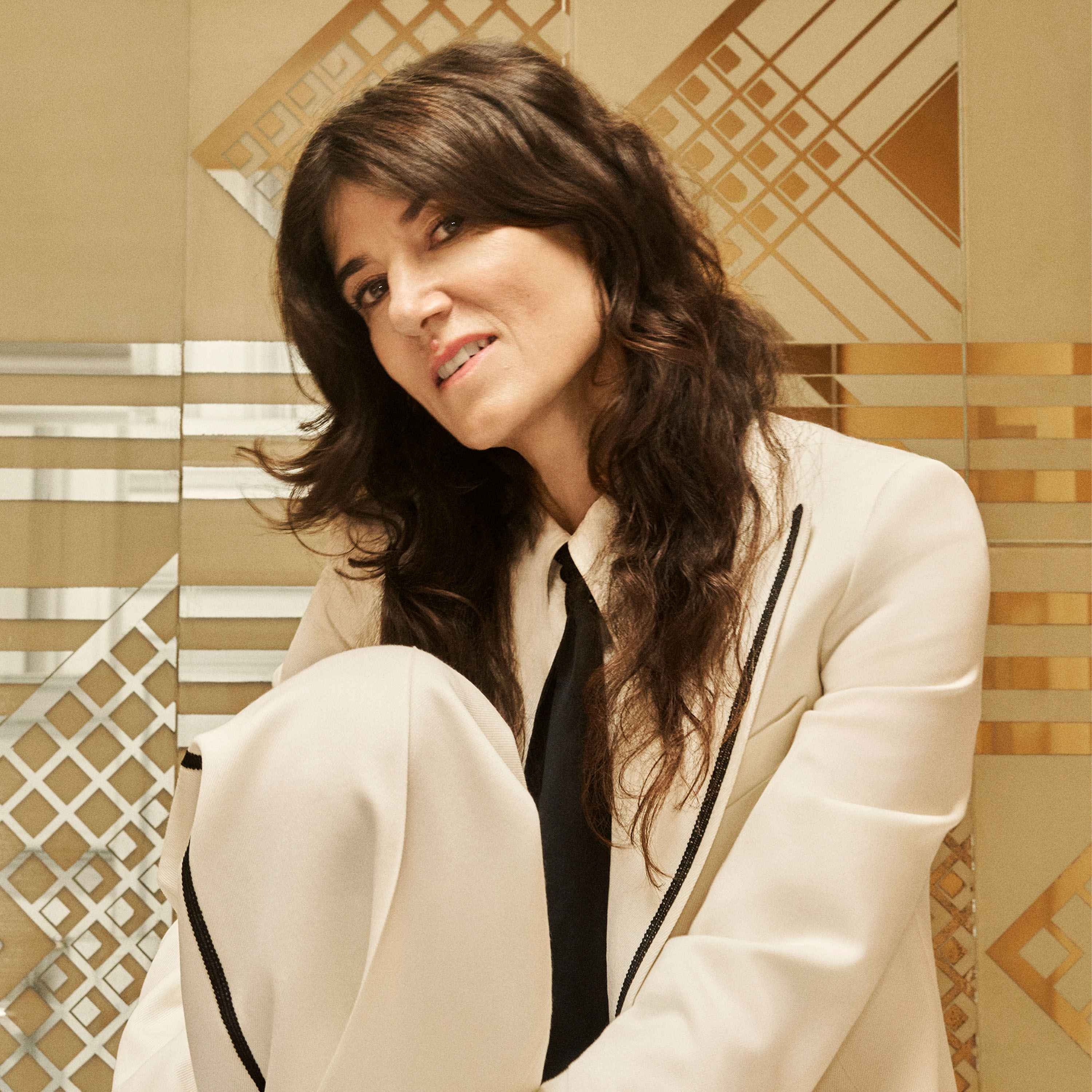
The Business of Fashion Podcast
Bella Freud on Fashion and the Art of Getting People to Open Up
00:52:21
The designer and podcaster joins Imran Amed to reflect on the emotional power of clothes, what Vivienne Westwood taught her about rebellion and how Fashion Neurosis has unlocked a new chapter in her creative life.
Loading summary
Transcript172 lines
- [00:00]
Bella Freud
I always think spring is the perfect excuse to dress a little softer and a little bit more romantically. And apparently Macy's fashion experts are saying that pastel dream is the trend. To know right now what I love about it, it's not really going like full head to toe pastel. It's more about those softer details that make an outfit feel fresh and a bit elevated. Think delicate florals, lace ruffles and sheer layers alongside flowy dresses or tailored pieces in lighter tones. It feels polished, pretty and very spring, but still easy to make your own. And you'll find it all at Macy's.
- [00:43]
Imran Ahmed
Hi, this is Imran Ahmed, founder and CEO of the Business of Fashion. Welcome to the BoF Podcast. It's Friday, March 20th. Bella Freud's path into fashion was shaped by instinct. Despite her family name, she describes an upbringing without privilege or pressure, drawing inspiration from the people around her. After studying fashion in Rome, Bella launched her own brand in 1990, starting with knitwear and tailoring. Over time, she built a small, agile label while navigating the realities of cash flow, wholesale pressures, and a constantly shifting industry. But it's her more recent creative chapter that has captured a whole new audience. Fashion Neurosis. Her podcast, now in its third season, invites guests from fashion, art, film and literature to literally lie on a couch and talk about how clothes have shaped their lives. Rick Owens, Kate Moss, Zadie Smith, David Cronenberg. Each of the episodes has the quality of something intimate and slightly cinematic. Less interview and more confession. Bella says she didn't anticipate how much the format would change her, too.
- [01:58]
Bella Freud
When someone's lying down, their thought process changes. You sort of start to think from your heart more than your mind. I want to exchange. It is a conversation and it's quite exciting to find oneself saying things that you weren't necessarily expecting to. It feels emotional and I like that.
- [02:24]
Imran Ahmed
Here's my conversation with Bella Freud on the BoF podcast. Bella Freud, welcome to the BoF podcast.
- [02:34]
Bella Freud
Thank you, Imran.
- [02:35]
Imran Ahmed
We're reversing seats today because you've become known for asking some, like, beautifully incisive, interesting questions in your own podcast. So I'm glad to be the one to get to ask you some questions today. Thank you for coming here.
- [02:54]
Bella Freud
It was a pleasure. What do you want to know?
- [02:57]
Imran Ahmed
I want to know a lot, I guess. Maybe, maybe we should start with this kind of gift that you've developed for asking these incisive questions. What have you found works when you're trying to kind of go, you know, people have so many Layers. You found a way of kind of getting people to let those layers go.
- [03:23]
Bella Freud
Well, I suppose it's partly practicing in our industry, where everyone has so many layers and they're rarely explored or. No, everyone wants to know the same old thing about people in the fashion industry, and it's so limited. And who's in the front row? Or where do you get your inspiration? And then that's the most boring question.
- [03:48]
Imran Ahmed
I hate that question.
- [03:49]
Bella Freud
It's the worst question. There's no thought behind it at all.
- [03:53]
Imran Ahmed
Do you know, I was backstage. I was just saying. We were just saying. I went to 59 fashion shows this season. 59. And I went backstage for a number of those shows. Do you know how many people still ask the what was your inspiration? Question?
- [04:06]
Bella Freud
Yeah, it's so lazy. And there are these people who've just presented this extraordinary body of work with, you know, they've climbed hills and gone into abyss. You know, there is so much in it. And yet they ask. They don't bother to look themselves and imagine what might be. A bit of. There's no kind of acknowledgement of, oh, it struck me as being like this. And so they just dump this question. And then the poor designer is sort of thinking, well, I just showed you what my inspiration was, and why aren't you giving me some sort of. There's nothing. There's no to and fro. And I've always thought that that's so. There's so much to tell about what we do in our industry.
- [05:01]
Imran Ahmed
Our industry is filled with some of the most incredibly special human beings. But you're right. The way. The way those people are often covered by media or the press or whatever, podcasts, social media, whatever, is quite uni. Dimensional. And I just think you've done such an amazing job at getting people to reveal themselves. So I hope today that I'll be able to do the same with you and kind of live up to the example you've set, I guess. You know, maybe I wanted to start with your upbringing and your family and how you, you know, you've grown up with this kind of legendary name. Freud. Right. And multiple generations of Freuds who've gone out and done really important things, made contributions to the world that, you know, people still talk about. How has growing up in that kind of environment, with that kind of family history shaped the way you are as a human being?
- [06:11]
Bella Freud
Well, my upbringing was very different. You know, it wasn't like that at all. We never lived as a family. My parents weren't married. The name Freud most of it until probably in my early 20s, was an unpronounceable name.
- [06:30]
Imran Ahmed
What do you mean, unpronounceable?
- [06:31]
Bella Freud
Well, most people would call. If I went to the doctors, it would be Ms. Froude, Ms. Fraud, Ms. Fiend. No, it was just meaningless to most people, apart from intellectuals, who I obviously didn't mix with as a tiny child or teen. So I knew there was something there. And then there was my father, who, even though I didn't grow up with him, he was. He seemed like somebody and he was incredibly compelling and I was really interested in him. But mostly, you know, there was no golden.
- [07:12]
Imran Ahmed
So you weren't conscious of this kind of family history as a child. You kind of grew up kind of really unburdened by it or unshackled from it.
- [07:21]
Bella Freud
Yeah, it wasn't a thing. I mean, we weren't privileged in our upbringing. So our preoccupations were about how to get some Jaffa Cakes or something. I mean, it really. You know, those were the burning issues. And my mother was quite a sort of. You know, she come from a Catholic background and was exploring different ideas of spirituality and ways of living and food. So we didn't have any fun snacks. So really I was more interested in that kind of thing. And the name Freud, it just wasn't. No one was. You know, there was no response. It was. That's what I mean by it being a difficult name to pronounce. That's how it landed, which I think was good because I think I made my own way and I looked to people who were able to sort of accomplish things, including my dad. I saw that he was an artist and that was his. That was the most important thing in his life. And then other people who I would admire were made things. So that was what I.
- [08:42]
Imran Ahmed
That's. You were drawn to that.
- [08:43]
Bella Freud
Yeah, yeah.
- [08:45]
Imran Ahmed
Growing up, I also read that you were quite interested or kind of obsessed with language.
- [08:52]
Bella Freud
Yeah, I was. I. I felt so much impotence and rage. And I realized that if you chose your words well, you could have an effect. And as a sort of titchy little girl, that seemed to me the way I could affect things in my immediate life. And then I remember reading Jack Kerouac when I was about 14 and thinking, God, you know, there's all these different ways of using language and it can be just played with and it can be so sort of agile. And that had a big effect. And that, you know, apart from the words of songs which I was interested in, because it managed to sort of hit how deeply you feel about things generally. I mean, especially as a teenager. But it never really goes away. And I was. I just thought how I noticed what really struck me and how people were able to use language, and it. I felt like they were speaking for me and how could I do this? And how did it work and all that stuff.
- [10:12]
Imran Ahmed
So this kind of interest you had in people who made things and this interest in using words to have impact, how did that shape some of the decisions you took as you were thinking about what you wanted to do with your life? I mean, and when did fashion enter the conversation?
- [10:35]
Bella Freud
I think fashion came in when I met Vivienne Westwood.
- [10:39]
Imran Ahmed
Okay, how did you meet her?
- [10:42]
Bella Freud
I met her in Club in Camden Palace. I think it's Coco's now, but it used to be called the Music Machine. And it was really grungy and great. They had great people. Like, I saw Iggy Pop and Nico and all sorts of people. And one night I was there and I had really long hair, and then I cut it all very short like a punk. And I must have been 16 or 17, and I was a bit drunk, and I went up to her and said, you had any chance of a Saturday job? And she kind of looked me up and down. I met her before once or twice, and then she said, oh, you cut your hair. Okay, you can have the Wednesday afternoon job, or whatever that was. There was one, like, staff vacancy. And so that's how I got into it.
- [11:38]
Imran Ahmed
Was that the store on the King's Road?
- [11:40]
Bella Freud
Yeah, that was Seditionaries.
- [11:43]
Imran Ahmed
That must have been amazing.
- [11:44]
Bella Freud
It was amazing. And. And there were three people that worked there. There were two girls, one called Tracy. And then there was Little Debbie, who was so beautiful and tiny, and she just had this blonde candy floss hair, like, all sticking out in a perfect halo and these pitch black eyes and this tiny red mouth and this amazing figure. And she was minute. And everyone was just, you know, they were so intimidating because they were just so cool. They didn't say anything much. So people would come in the shop, or if I went into the shop, and they'd be there just, like, looking you up and down as if you were just nothing. And it was so exciting. And I suppose it was a bit like school in a way, but they looked and, you know, their clothes were so powerful. So I. That's how I got in. And then Vivian would sometimes bring in a new T shirt. And there were these odd words like, that didn't. Nothing always made sense. And some of them were quite obscene. And they Were just fantastic. And I realized that these clothes had this huge power, that as a young person, they could kind of mask your naivety and they could shock people and give you a chance to figure out what to do next. And that was my education.
- [13:27]
Imran Ahmed
How long did you do that for?
- [13:29]
Bella Freud
Not that. I think maybe six. It wasn't that long. Maybe less than a year.
- [13:37]
Imran Ahmed
But it had so much of an impact. I mean, I can even tell by the way you're talking about it. What do you think it was about the clothes that they wore, the clothes that Vivian west would design that gave them that power?
- [13:50]
Bella Freud
They were just so beautifully designed. They were like rebel uniform, but everything was different. And they had so much swagger and they were really, really well made. And so they weren't just, you know, rags. They were this. They were like couture, you know, and this whole thing of punk. And so there you were in this anti establishment kind of movement. But you had to be an individual within that, Otherwise you would just kick, you know, people would despise you for being a copycat or naff or whatever.
- [14:33]
Imran Ahmed
So you had to find your own style.
- [14:35]
Bella Freud
Yeah.
- [14:36]
Imran Ahmed
What was your style?
- [14:38]
Bella Freud
She made these things called bondage trousers with the zips up the back, and there was a strap behind the knees, which was just the right length to walk fast like you were a soldier. But it made this amazing silhouette with this strap there and gave you this kind of authority, how you looked. And then she made a kilt that went over it, but it was not the whole way around. It was like the front and back. So the whole thing was. It was light and you had these different panels and it felt like you had hidden weaponry. It was just an aura of kind of unfathomability. And people were afraid. They were afraid of young people who had no nothing apart from the clothes. And that was exhilarating. I mean, most. Most people were very, you know, courteous and law abiding and. But it was interesting how people reacted. And so that made you understand that there was really something in these clothes and they gave you kind of dignity.
- [15:56]
Imran Ahmed
So doing that for six months or less than a year, how did you go from that to creating your own brand? Like, what was the path?
- [16:07]
Bella Freud
Well, then I went to fashion school in Rome, and then when I was there, Vivian was working in Italy and we reconnected and I started. She would come and stay sometimes in Rome, and then she was preparing the mini crinney collection. And I went on the train with her to Paris, and we had all these samples in suitcases and back in the day when you went through customs and hoping no one would check anything, and sleeping on the seats and then sewing backstage. And then when I left Rome and moved back to London, I started working as her assistant. And there was only me and her then, because she had her shop, which had become World's End, had closed down for a bit. So I worked for her and really learned everything. And because I'd lived in Rome, I used to cook her these lunches every day and take ages, which probably was quite annoying, but we'd have, like, pasta
- [17:10]
Imran Ahmed
with full Italian spread.
- [17:11]
Bella Freud
Yeah, yeah.
- [17:12]
Imran Ahmed
Amazing.
- [17:13]
Bella Freud
Yeah. And I. I enjoyed that. So I really learned everything from her.
- [17:20]
Imran Ahmed
But when did you break out on your own?
- [17:23]
Bella Freud
And then in 1990, I left and I thought, oh, I'll make some accessories. And I started doing that, and I bumped into this man who owned, or was the head of a factory in Scotland who did knitwear. He said, oh, if you need any knitwear, you know, come find me. So I did. So I sort of started making. I made this little tiny knitwear collection and invited beams at the time, run by Japan. Yes. And they came in and they looked and said, got out the order book. And I nearly. I. It was just so exciting.
- [18:06]
Imran Ahmed
It's such an endorsement. Right, Because Beams for those people listening who don't know Beams, it's like such an authority.
- [18:12]
Bella Freud
And, yeah, in Japan, they were amazing, and they still are, and they were incredible to be chosen by them.
- [18:22]
Imran Ahmed
Yeah.
- [18:23]
Bella Freud
And then I did. I was really popular in Japan at first. I sold much more there than I did anywhere else.
- [18:32]
Imran Ahmed
Not a bad place to be popular.
- [18:33]
Bella Freud
I mean, I think those are the
- [18:34]
Imran Ahmed
most discerning customers on the planet. So building a fashion business is different from working with Vivienne Westwood. I think maybe when you and I first met, you had really become known for knitwear.
- [18:49]
Bella Freud
Yeah.
- [18:49]
Imran Ahmed
Like how. Talk about the evolution of your business and some of the ups and downs along the way.
- [18:57]
Bella Freud
Well, I started with the knitwear, and then I'd always had this idea of tailoring. I loved tailoring, and I was really interested in all the messages and the code and the. And I thought, well, I'd like to have. Tailoring is almost the accessory to knitwear, which is the soft center and how knitwear can be kind of concealing and revealing at the same time. And I loved that idea, and I loved everything that Coco Chanel had done in knitwear. And then I started making these tailored things and I made this short film called There at the Races. And then somehow or other, it Just was like a thing, a train. And I was trying to keep up with it all the time.
- [19:52]
Imran Ahmed
And kind of feels like that right when, you know, sometimes the fashion businesses that grow quickly, suddenly it's really hard because there's the whole cash flow part of it. People place these orders, but they don't give you money to make the collection, to figure out how you're gonna make the collection in the right quantity. And it's this thing, if you keep growing, you keep needing more cash to like make it, make it work.
- [20:19]
Bella Freud
I mean, that's the hardest thing in the fashion business. And the kind of skewed way of how you get paid and you have to pay for everything. And then retailers more and more have a conditions and sell through and so they really use you as stock. And I think it's partly why the whole system is collapsing now, because they over order because there's no, you know, they don't have any accountability.
- [20:49]
Imran Ahmed
There's no consequence for them because it all falls on.
- [20:53]
Bella Freud
It all falls on the designer. So suddenly your making this work that you've had in your system and you've had this idea of how you want someone to look and then all your, you're just frantically firefighting and all your attention has to go there. And it's brutal in that way. And I mean, in the 90s in Japan, sometimes they would pay for their order up front to fund it. And people were really supportive of each other in a way that I don't see that happen or that didn't happening. And now, you know, everyone has their own burdens.
- [21:37]
Imran Ahmed
I feel like the industry has changed. Even in the period that I've been working in the industry, I've seen this system move faster, faster. More product, more drops, more collections, more brands. How has that been for you? Navigating? Because, you know, you've been so focused in what you do. It still feels very special what you do. I mean, and the little shop on Shelter Street, I mean the scale at which you operate, correct me if I'm wrong, it's still, it's small.
- [22:10]
Bella Freud
Yeah. And it's, it's served me well actually, because I'm. I can be more agile and I don't, you know, like when we were in Covid, I was able to adapt to that and knitwear and everything. Knitwear was very good. And the homeware that I do and, and I didn't have a huge, you know, the things that you think you want when you start shops all over the world, you know, all these, these huge kind of emblems of success. I. I had very small amount of that. So there wasn't a huge, you know, being like, Atlas holding up the world, I was able to be more adaptive. And so some of it's good, the change, like, the way you can. You don't have fashion dictates like skirt lengths and color options. You can actually do a more concise offering, and it makes it more desirable in some ways.
- [23:13]
Imran Ahmed
Yeah. And this idea of trends is kind of dead because.
- [23:16]
Bella Freud
Yeah.
- [23:17]
Imran Ahmed
I always say it's about tribes, not trends now.
- [23:20]
Bella Freud
Yeah.
- [23:20]
Imran Ahmed
People feel like they want to be part of some kind of aesthetic, and, like, that might be their style for a very long time. It's not something that necessarily changes from season to season.
- [23:33]
Bella Freud
Yeah. I think that suits people better. And then they'll. They'll always be exciting trends that are created by someone who does something that you think, oh, my God, I love that. I want that. I have to have some reflection of that. If you're a designer, you want to find your version of that or you want to buy it or. And then, you know, that's the joy of fashion that it kind of reminds you of. It's always, you know, there's lots out there, and it can revitalize you in all these mysterious ways.
- [24:09]
Imran Ahmed
Is there a designer out there right now that you're loving a lot?
- [24:14]
Bella Freud
Well, I do love what Demna does. I love the rigorousness and the kind of the way he'll just change things up. And I love what Peter Muller does, and I love what Phoebe Philo does. She's always someone who seems, like, radical and with a kind of Chicago. And so I think that the garb of going against the grain is a chic garb that you can wear when you're on the streets and, you know, protesting.
- [24:56]
Imran Ahmed
So that kind of brings us to Fashion neuroses, which is now kind of a sensation in the fashion world. You know, I think as a podcast. We launched the BoF podcast in 2016.
- [25:13]
Bella Freud
Right.
- [25:14]
Imran Ahmed
So I think we're into, like, 600 plus episodes now.
- [25:17]
Bella Freud
Yeah.
- [25:18]
Imran Ahmed
And it's been really interesting to see how the whole podcast space in fashion has developed, and it's become very crowded, so it's, I think, very hard to create something that. That genuinely feels different, that people want to listen to and that people want to be a part of. So congratulations, because, I mean, it's been such a pleasure to see it happen. And I'll never forget when that first Rick Owens episode dropped, because instantly, it just felt. Felt really intimate, you know.
- [25:53]
Bella Freud
So how Did.
- [25:54]
Imran Ahmed
How did a. An erstwhile fashion entrepreneur, designer, former Vivienne Westwood assistant, become a podcaster? How did that happen?
- [26:08]
Bella Freud
Well, I've always written, and sometimes I. And I've been asked to write about, you know, some people. Like, I've written things about Kate Moss. I've written things about people in our world, but only a few, because what I feel like I'm good at about writing is a personal thing. And then I started to, you know, all the stories that we hear in fashion are so interesting and very funny. And I thought, you know, there's so many things that if I could see them in a miniseries or whatever, I've never seen those. You know, the only person that's come close is Isaac Mizrahi on zip, where you really get to see the code and the. The bonkers and the craziness and the craziness and what people manage to achieve under such circumstances. So I just thought, I gotta. I want to write something. I want to show people. And it took me a while to figure out. I'd never heard, really, of podcasts. You know, I just didn't pay attention. The main thing I knew I wanted was that it should be filmed. And originally I thought it would be a chat show, but it had to be very, very short, like 12 minutes. So everyone would be dying to know what happened next. And of course, you know, nobody wanted that. There was no platform. And I tried all these. Had all these different thoughts and ideas. And then eventually somebody said, why don't you do a podcast? And I thought, oh, well, of course I could film it. And then when I was figuring out the setup, which was about, I think it was the Christmas before lockdown. And then I was doing these setups with a filmmaker friend, and he said, you need some props. And I thought, okay, they'll lie down. I'll sit in the chair. I know it's cheesy, but I'm gonna do it.
- [28:13]
Imran Ahmed
It's quite Freudian now.
- [28:14]
Bella Freud
Totally. And I just. I'd had quite a lot of resistance to. Because of the way. What upbringing I had had was about what you do for yourself. You can't capitalize on a name. You just have to prove yourself. And my father was all about his work. He never talked about anything. Sigmund Freud, he once said, the two things he ever said about him. Once he told a joke and the other that he was funny. And so it was a kind of unspoken lesson that you're only as good as your own last bit of, you know, output. But then I thought, okay, this will be immediately recognizable. If I move around, if I go to LA and do interview someone I could, they'll know that it's this, because this is the shape, this triangle. And then I always knew I wanted to. To have an overhead camera so that the person could watch someone forming their thoughts or see how they responded to that. And that was how it came about. But what I didn't know was that when someone's lying down, their thought process changes in themselves and that you sort of start to think from here, your heart more than your mind, and you can't read. You know, when Jonathan Anderson came on, he said, it's so different because I can't get any clues from seeing your eyes or watching you, because they don't.
- [29:57]
Imran Ahmed
They're not making eye contact with you, they just hear your voice.
- [30:00]
Bella Freud
Yeah. And they're lying down and looking up into the overhead camera, which is just a small thing. And I really wanted it to be intimate. I wanted sort of no one to be in the room. And I mean, there's only two people or three.
- [30:17]
Imran Ahmed
You can really feel it. I mean, you can in those conversations. I mean, someone like Rick Owens, for example, who on the one hand is maybe the easiest interview in fashion, because no matter what you ask that man, he says something interesting, he's just incredible. On the other hand, the hardest person to interview because he's done so many interviews, everyone's spoken to him, like, how. How did you prepare for that first interview? And how did you kind of penetrate, Go past the kind of Rick Owens mythology? Now that we all know.
- [30:51]
Bella Freud
I just knew that I thought he was completely wonderful and I felt. So I bumped into him and Michelle at a party that was for. It was in Clarence House for Save the Elephant, and it was hosted by. He was then Prince Charles. And do you remember that party?
- [31:11]
Imran Ahmed
Yes.
- [31:12]
Bella Freud
And then Rick was there and I was. I saw him and just sort of latched on, like someone at school.
- [31:19]
Imran Ahmed
Did you know him?
- [31:20]
Bella Freud
I knew him a tiny bit.
- [31:21]
Imran Ahmed
Okay.
- [31:22]
Bella Freud
And we just hung around, the three of us, and I saw Michelle was wearing this amazing hat with a sort of huge point. And she nearly. She didn't notice this, but I saw Queen Camilla, like, just sort of nearly get her eye poked out by the hat, and it was just so funny. And I thought, this is a wonderful person because he's so intimidating in a way, to look at, but. So, you know he'll let you in.
- [31:53]
Imran Ahmed
Yeah.
- [31:54]
Bella Freud
But you still have to prove yourself.
- [31:56]
Imran Ahmed
Yeah.
- [31:57]
Bella Freud
And then I always had the idea that he would Be someone. I'd love to. You know, he sort of brought the whole thing to life. So when he arrived, and I remember it was about 5 o' clock in the evening and it was June and he walked in and he was, he seemed like an angel with his long dark hair and his black clothes and his elevated shoes. And he said, oh, thank you for inviting me into your home. And it was, I just felt so ecstatic. And I knew that I wanted to start with him because he represented so many aspects of fashion. The originality, the success, the intelligence, the humor. And coming from this really unlikely background with an authoritarian father and I don't know, it just all happened, it clicked.
- [32:58]
Imran Ahmed
I mean, they landed on something that really resonated with people. And whenever I'm looking at kind of podcast rankings and stuff now, like Fashion Neurosis is always up there, you know, with some of the, the best podcasts in the world. The other thing I've noticed in some of the episodes is that you're quite open also about your own experiences and emotions and in a way your openness helps the other person to open up.
- [33:27]
Bella Freud
Well, I, I wanted to do that because when I was thinking more in terms of fashion, I thought, well, I have stories too and I think that could be a good, it could be fun to. And in a way it's nerve wracking because I'm like, oh God, am I going to join in? And I thought it's about time that I stop holding back. And you know, out of shyness or preoccupation with that, what I say won't be, it'll be boring. You know, everyone's obsessed with being boring, especially in our world. And I, I don't just want to get things out of people. I want to exchange. You know, it is a conversation and, and it's quite exciting to find oneself saying things that you weren't necessarily expecting to.
- [34:23]
Imran Ahmed
Yeah.
- [34:24]
Bella Freud
It feels emotional and I like that
- [34:27]
Imran Ahmed
you can feel it. And it feels like there's almost like a self discovery process that happens in the conversation for both people, which is why it makes it so beautiful to listen to, you know, especially in this, like as you said, in this industry where so much exists at the surface, it's nice to go deeper.
- [34:48]
Bella Freud
Yeah. And there's a lot of depth.
- [34:50]
Imran Ahmed
There is. You just need to know how to bring it out.
- [34:53]
Bella Freud
Yeah.
- [34:54]
Imran Ahmed
And you're, you've, you've done such a great job at that. So you have this business, a fashion business, and all of a sudden you have this podcast which is getting A lot of attention and a lot of people are listening to it. And. And now you've actually done a partnership or a deal around the podcast with Vox Media in New York.
- [35:15]
Bella Freud
Yeah.
- [35:16]
Imran Ahmed
Like, tell us a little bit about how you're imagining the future of Fashion Neurosis and, like the business of podcasting, in a way.
- [35:26]
Bella Freud
Well, God, I. It's all so kind of every day or every week, some kind of possibility seems to make itself visible. And I've always liked. I mean, before I did Fashion Neurosis as it is, I imagined it as a performance thing in an art. Like, I wanted to do three nights in a gallery, and I wanted to have Debbie Harry, Andre Leon Talley, and then I hadn't thought of the third person because I'd met this performance artist known as the Wolf man, and his name is Rob Roth, and he's a friend of Debbie Harrison. And he did a performance where he covers himself from head to toe in this black hair and he sings an 80s ballad. And I thought, okay, I'll be talking to Debbie Harry and she's lying down on the couch, and then Rob will appear as a wolfman from behind the couch and be almost like a dream scenario and serenade her with a. With an 80s ballad. Anyway, we never got round to doing this, and so I'd like to do stuff like that or. And live shows I'm planning and other things. It just feels so. When something goes well, all these other ideas seem to sort of be possible in a way that's always been really difficult in the fashion industry, that you're tied to the mill, like your donkey going around grinding and grinding and. And then this is like heaven, you know, for that. And it feels. It just all feels like ideas are suddenly, you know, like one of those Disney things where all the flowers are opening and it's so much fun.
- [37:28]
Imran Ahmed
How do you feel about reading ads? Because they do that on Vox Media, right? Yes, I've always been very resistant to that.
- [37:38]
Bella Freud
I quite like it. I mean, obviously it's really important to sort of feel like. Well, I try to personalize it. I've only read a couple of ads, and then the ad I read for Claude Anthropica is. The thing that I find it useful for is probably things that people know how to do. Filing, I don't know. Whenever I create a file on my computer, I just can never find anything again. I don't know what I've tried to call it. This thing I'll never forget, but I forget. So I want to make it as genuine as possible. And it's kind of weird and a new frontier.
- [38:32]
Imran Ahmed
We'll be right back with more on the BoF podcast.
- [38:38]
Grainger Advertiser
Starting a business sounds exciting until you realize how many roles you suddenly have to take on. You're the designer, the marketer, the operations team. All at once it can feel overwhelming fast. That's why having the right tools from day one makes such a difference. And for millions of businesses, that tool is Shopify. Shopify powers millions of businesses worldwide and 10% of all e commerce in the US from established household names to founders launching their very first product. Marketing is built in too, with easy email and social campaigns to help you reach customers wherever they're scrolling. And everything lives in one place, from inventory and payments to analytics, making it easier to manage and grow your business. Start your business today with the industry's best business partner, Shopify, and start hearing. Sign up for your $1 per month trial today at shopify.com bofpodcast go to shopify.com bofpodcast that's shopify.com bofpodcast.
- [39:44]
Farnoosh Tarabi
Hi, this is Farnoosh Tarabi from so Money with Farnoosh Tarabi and today I want to talk to you about Boost Mobile. Quick Money Tip Stop paying a carrier tax if your phone bill feels trapped in a pricey plan, this is your sign to unlock savings. Boost Mobile helps you reset your spending with the $25 Unlimited Forever plan. You can bring your own phone, pay $25 and get unlimited wireless forever. And that simple switch can unlock up to $600 in saving. That's money you could put towards paying down debt, investing or something that actually brings you joy. Those savings are based on average annual single line payment of AT&T, Verizon and T Mobile customers, compared to 12 months on the Boost Mobile Unlimited plan as of January 2026. For full offer details, visit boostmobile.com if
- [40:34]
Grainger Advertiser
you work in university maintenance, Grainger considers you an MVP because your playbook ensures your arena is always ready for tip off. And Grainger is your trusted partner, offering the products you need all in one place, from H VAC and plumbing supplies to lighting and more. And all delivered with plenty of time left on the clock. So your team always gets the win. Call 1-800-GRAINGER visit grainger.com or just stop by Grainger for the ones who get it done.
- [41:09]
Imran Ahmed
So where do you go from here with the podcast, you know, live shows and a new partner? Do you think at some stage it kind of eclipses the work that you're doing in the Fashion side or do they work together? Like, how do you.
- [41:25]
Bella Freud
They work quite well together that I can. I mean, I do have sort of two full time jobs now and I have a, you know, with my fashion business. I, I think I, I have a really great people I work with and this is just a small team, but I'm enjoying giving people more autonomy and just enjoying what they are capable of making from this thing that I've been working on for ages and gone through all these permutations of, you know, tiny, bigger media, all the things that have kept it going. And then in a funny way, fashion neurosis brings up other things to the table. And yeah, I mean, it couldn't be more harmonious because it's. Fashion is my kitchen and I feel it's the lens through which I relate to things. And then I find more and more people. There are all these things that you wouldn't imagine that are, are kind of responding to fashion. And fashion is a huge, you know, young people, fashion is how they get. You know, they might come to an art gallery through fashion and realize there's a connection. Whereas, you know, the hard liners are like, oh, fashion is just frivolous and can never lead to anything, but totally the opposite. And it's.
- [43:03]
Imran Ahmed
Yeah. I mean, you had that school from working with Vivian back in the day. You understood that. Yeah, there was power in fashion.
- [43:10]
Bella Freud
Yeah.
- [43:11]
Imran Ahmed
When you think about the industry today, what do you think it needs to do to reclaim some of that power? Because it feels a bit diluted to me, fashion now. You know, like someone recently said to me, fashion is dying.
- [43:27]
Bella Freud
I know it's never gonna die. I mean, people are always interested in fashion and it seems to go through phases of big business being the thing and then small designers kind of crumble, but not all of them. And I was just looking, I found this old issue of do you remember Dutch magazine?
- [43:54]
Imran Ahmed
Yeah, of course.
- [43:55]
Bella Freud
What? The precursor to Fantastic Man. And I was looking through that and I think it was 2001 and it was so tense and so full of beauty and the polish was just in unexpected places. So it was like there was the big advertisers and then all the other stuff. And it didn't seem like there was such a big divide between them. And I think if there was a way to bring that closer, I suppose it's maybe. I mean, I think fashion sort of does that naturally because it's so cyclical. If you think of the Tom Ford Gucci era, where if you didn't have a million Rolls Royces, Waiting to take you to work. You were nothing. And then that changes. And suddenly it's embarrassing to have all the Rolls Royces or I think, everywhere.
- [44:54]
Imran Ahmed
I think we're on the precipice of that again, aren't we? Like, the world feels like a world of excess, a world of over consumption, a world of deepening inequality. I was reading this thing that Ray Dalio. It's like this, like, very famous investor was saying about. We're at this. He was talking about, like, multiple cycles. The sixth cycle is when everything collapses, Right?
- [45:20]
Bella Freud
Yeah.
- [45:21]
Imran Ahmed
We're in the fifth cycle right now.
- [45:22]
Bella Freud
Okay. Yeah.
- [45:23]
Imran Ahmed
And I look at our industry and I think there's something happening right now, because for me, at least, it's the smaller things that are better. It's those independent brands that are so exciting. There's so many people doing such good work.
- [45:38]
Bella Freud
Yeah, yeah.
- [45:39]
Imran Ahmed
And all these big brands have kind of like, priced themselves to the rafters. And so people are motivated to go find interesting things and they want something that's different from what they can find everywhere.
- [45:55]
Bella Freud
There's room for both, you know, And I think. I agree, it does feel a bit like a world of excess. And that's when people start to look for meaning. And I think that is what we're on the edge of or what's already happening. And do you think those big brands
- [46:14]
Imran Ahmed
can find meaning now in the. At the speed and the scale and the pace and the. The way they exist?
- [46:22]
Bella Freud
I think it depends if someone's allowed to have some kind of ownership within. So, you know, looking at Dior and Jonathan Anderson, who's a very, you know, person of integrity and has values and how. Whether business will allow him to kind of give that momentum. And I. That's why he's there, because he is that person. And I think, you know, looking. You look at people who. Alessandro, Michaela, you know, people who are really driven by, you know, making beauty accessible in all these different ways and their dedication to it and obsession. Yeah. Of that.
- [47:15]
Imran Ahmed
That I love. That's what I love about our industry. I love the obsessiveness.
- [47:21]
Bella Freud
Yeah.
- [47:22]
Imran Ahmed
It's incredible, you know, and when you see the level of thought and attention to detail that goes into things to create incredible things, I love that.
- [47:34]
Bella Freud
I mean, you look at her mess, who were the. The masters of that? Everything is about something that's exquisitely created and just moves you and is,
- [47:49]
Imran Ahmed
you know, when something's made that way. So if you were Bella at 19 or 18, working at Vivian's today, and, you know, there's all these young people that are still drawn to our industry, what do you think they need to know about how the industry works now to be successful?
- [48:08]
Bella Freud
I mean, the thing I didn't know, and it's taken a long time, is about cash flow and margin. And they're just. So they. They can kill you. But if you can understand something about them, then that's your.
- [48:29]
Imran Ahmed
I mean, so what's. What's your crash course on cash flow and your crash course on margin? Like, what. What are the two things people need to understand?
- [48:37]
Bella Freud
I mean, margin, everyone talks about that. And you can be quite small if you have a good margin. And it's a hard thing to know that you've actually got. You need someone who's a master of margin. And normally you'll be fighting with them because you can't do, because you want
- [48:58]
Imran Ahmed
to use a more expensive fabric or you want to use a more elaborate method.
- [49:06]
Bella Freud
Yeah.
- [49:07]
Imran Ahmed
You know, to create something, but you have to either be able to charge for that or so you can make a profit. Because basically, margin is profit.
- [49:16]
Bella Freud
Yeah.
- [49:18]
Imran Ahmed
And margin also needs to consider not just the costs of all the materials you're putting in, but the time to create it. Yeah, right.
- [49:26]
Bella Freud
I know. So.
- [49:28]
Imran Ahmed
So margin and then cash flow.
- [49:30]
Bella Freud
Then cash flow. Sometimes, you know, someone will place an order and the terms are just really destructive and it's so inviting and you're dying to do it and you just pretend it will be fine, but it won't be because that will be the thing that dilutes you so much that you'll never get to the end. And, I mean, sometimes you just do it anyway and everything goes wrong and somehow you'll save from the brink of the abyss. And it's very tricky, all that, because it's so boring when you're dying to make something. So. But it is all about.
- [50:16]
Imran Ahmed
It's boring, but it's existential.
- [50:18]
Bella Freud
Yeah. I mean, it's a complete. If you're going to have a business, then you need to know that. And if you can make the more you can make yourself as an artist. I mean, that was. What's so Brilliant with Alexander McQueen is he made all this stuff and there it was, you know, killing people with its beauty. It was.
- [50:41]
Imran Ahmed
Yeah.
- [50:42]
Bella Freud
So that's. I think you have to keep your hands, you know, dirty with material, whichever way it is, you know, and just try and listen to the. The kind of mathematics of it as well.
- [51:01]
Imran Ahmed
It's important. Getting paid is important. Yeah, Getting paid on time is important.
- [51:06]
Bella Freud
It's amazing how. And Also, when you earn money from making this, it's makes you feel incredible. It's to be actually paid for. What you make is really something, and it kind of speeds up your understanding of business because you suddenly find this new thing that you quite enjoy, which is being profitable, and you become automatically more interested in how that happens.
- [51:35]
Imran Ahmed
Absolutely. Okay, so, Bella, let's finish with a final question about fashion neurosis, which is, you know, you've been able to create this podcast that is so revealing about people. You get them to say things they may not have said before or help reveal things to themselves that maybe they hadn't realized before. What. What have you learned about yourself through fascia neurosis that maybe you hadn't expected? I mean, when we started this conversation, you said that you didn't want to coast on the. The surname Freud, and it wasn't part of your upbringing. It was really about doing your own thing. Like, well, what have you learned about yourself now?
- [52:18]
Bella Freud
That's a difficult question to answer. I. I've learned maybe to be visible in a way that I didn't dare before.
- [52:32]
Imran Ahmed
Yeah. And because you were very private.
- [52:35]
Bella Freud
Yeah. And also, as a designer, you're behind the scenes. You're, you know, you want to make someone else the shiny one and finding a way to feel sort of private and to. To say things and to be open and.
- [52:55]
Imran Ahmed
Do people stop you on the street now?
- [52:57]
Bella Freud
Sometimes, yeah.
- [52:59]
Imran Ahmed
How does that feel?
- [53:00]
Bella Freud
It's really nice. It's lovely because they say that they love listening to the podcast and the diploma, you know, it brings them something. So, you know, as a designer, you see someone in your clothes. Like when we were at that crazy party and your gorgeous partner was Nikhil, he was so lovely about wearing my stuff. You know, you'd given him one of my jumpers, you know, so that really is meaningful to make something that makes someone else have some pleasure.
- [53:37]
Imran Ahmed
Yeah.
- [53:38]
Bella Freud
And so trying to do that with clothes and then with the podcast, that. That's happening, too, is. It's wonderful. It feels great and makes me think of, like, I always remember when I worked for Vivian, and people were very critical of her for a long time, and even. And with my dad's work, everyone, you know, when I was growing up, they were like, oh, everyone's so ugly. They're really ugly. And. And then when Vivian was made designer of the year and she got recognition, and I saw that it had a wonderful effect. And that's nice for everyone. You know, people feel good, they then feel better. And that is a, you know, such a contrast with the rhetoric of today in our political world and what's happening. And so it's nice to be, you know, contributing.
- [54:42]
Imran Ahmed
It's nice to create something people value, whether that's a piece of clothing or a podcast. And yeah, you've done both, so.
- [54:50]
Bella Freud
Or just like care for each other, you know, that's everything. And it's stimulating and it's radical. It's fantastic.
- [54:58]
Imran Ahmed
Well, I'm so happy for you and it must be so exciting at a, you know, midway through a career to find something else that you're good at, because you're damn good at it. So congratulations.
- [55:08]
Bella Freud
That means a lot coming and thank
- [55:10]
Imran Ahmed
you for taking time to come chat today. It's been, it's been very nice to go a bit deeper in your story.
- [55:16]
Bella Freud
So thank you. Thank you so much.
- [55:19]
Imran Ahmed
The BoF podcast is edited and produced by by Olivia Davies and Eric Brea.
- [55:30]
Farnoosh Tarabi
Hi, this is Farnoosh Tarabi from Sew Money with Farnoosh Tarabi and today I want to talk to you about Boost Mobile. Quick Money Tip Stop paying a carrier tax if your phone bill feels trapped in a pricey plan, this is your sign to Unlock Savings. Boost Mobile helps you reset your spending with the $25 Unlimited Forever plan. You can bring your own phone, pay $25, and get unlimited wireless forever. And that simple switch can unlock up to $600 in savings a year. That's money you could put towards paying down debt, investing, or something that actually brings you joy. Those savings are based on average annual single line payment of AT&T Verizon and T Mobile customers, compared to 12 months on the Boost Mobile Unlimited plan as of January 2026. For full offer details, visit boostmobile.com if
- [56:21]
Grainger Advertiser
you work in university maintenance, Grainger considers you an MVP because your playbook ensures your arena is always ready for tip off. And Grainger is your trusted partner, offering the products you need all in one place, from H VAC and plumbing supplies to lighting and more. And all delivered with plenty of time left on the clock. So your team always gets the win. Call 1-800-GRAINGER visit grainger.com or just stop by Grainger for the ones who get it done.