← The Business of Fashion Podcast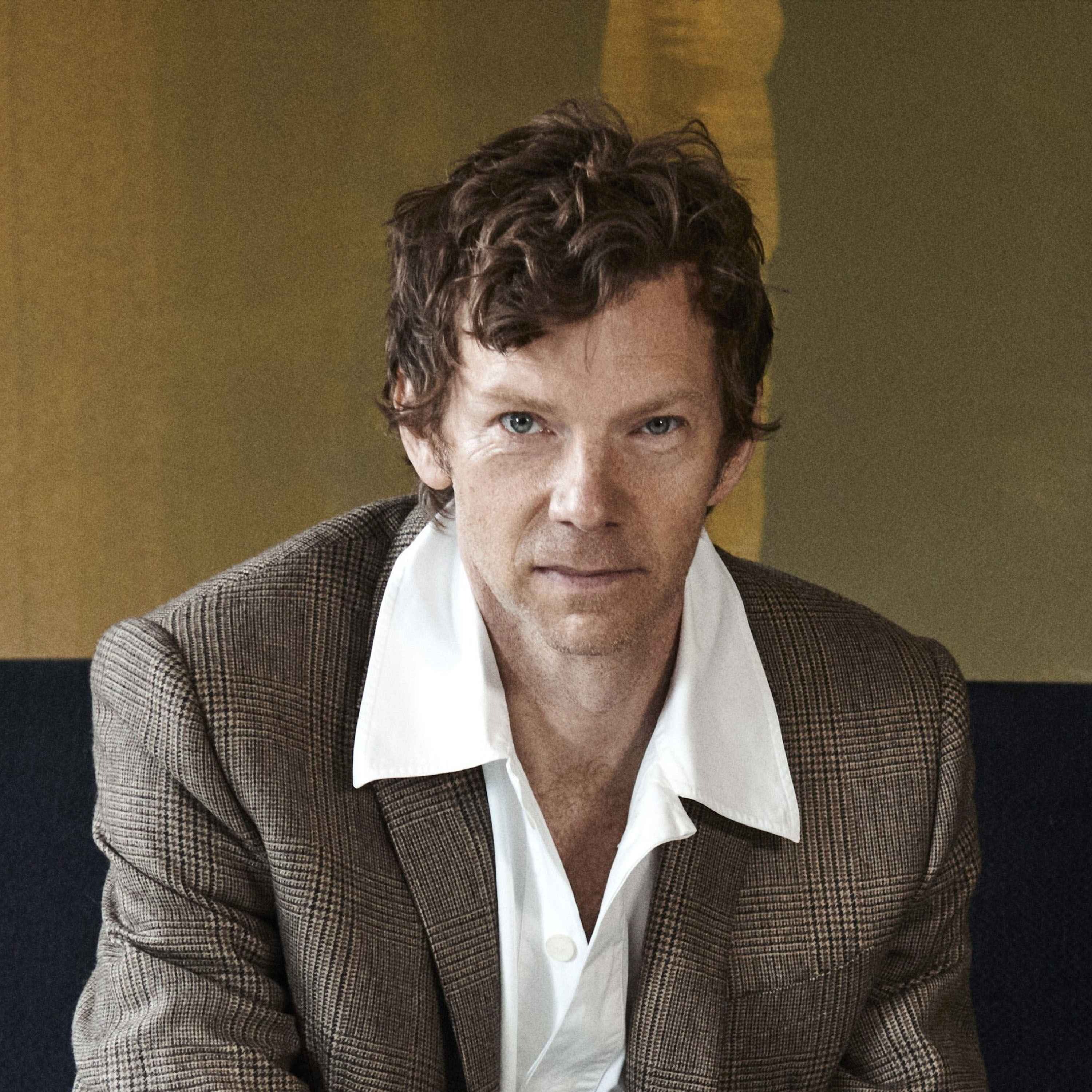
The Business of Fashion Podcast
Britt Moran on Why Atmosphere Is a Real Luxury Product
00:43:57
Dimore Studio’s Britt Moran joins Imran Amed during Milan Design Week to discuss fashion’s design blind spots, why physical spaces still matter, and how a post-romantic partnership became one of the world’s most influential studios.
Loading summary
Transcript224 lines
- [00:00]
Brit Morin
Foreign.
- [00:05]
Imran Ahmed
Hi, this is Imran Ahmed, founder and CEO of the Business of Fashion. Welcome to the BoF podcast. It's Friday, April 24th. This week we're in Milan. It's Design Week, aka Salone del Mobile. The moment every year when this city transforms from a fashion capital into the center of the global design world. And if you've been to Salone in the past decade, you've almost certainly experienced the work of Di Mori Studio, co founded by Brit Morin and Emiliano Salci. Britt is originally from a small town in North Carolina. He came to Italy over 30 years ago for what was supposed to be a gap year, but he never left. Together with Emiliano, he's built Di Mori into one of the most influential design studios in the world, spanning interior design, furniture, textiles, and now a new gallery space in a former bank in central Milan, complete with the original vaults. But Di Maure's real product isn't furniture. It's atmosphere. The scent, the lighting, the music, and the feeling you have when you walk into one of their spaces. And as fashion's biggest brands increasingly try to enter the world of home and hospitality, Britt has a sharp perspective on who's doing it well, who's just using Salone as a marketing platform, and what it actually takes to be credible in this space. This week on the BoF podcast, Brit joins me to talk about his unlikely journey from the American south to the heart of Italian design, why atmosphere is a real luxury product, and what the fashion industry keeps getting wrong about Design Week. Here's Brit Moran on the BoF podcast.
- [01:52]
Interviewer
Brit Morin. It's the Tuesday of Salone del Mobile. It already feels like three weeks have been going by. It's been a lot. We saw you over the weekend in Lake Como before the Salone storm began. This is probably the busiest moment of the year for you. So I'm so grateful that you've taken time out of what is an insanely busy schedule.
- [02:19]
Brit Morin
Thank you.
- [02:20]
Interviewer
To share a little bit about your personal journey, the meaning of salon in Del Mobile, and, of course, to learn more about De Mora Studio. But before we get into all of that, it's really clear that you're not from these parts.
- [02:37]
Brit Morin
Yes.
- [02:38]
Interviewer
Tell us a little bit about where you grew up.
- [02:42]
Brit Morin
So I'm originally from North Carolina. Where in North Carolina? So the name of the town is called Ashboro. It's very small, I have to say. It's a really beautiful small town. There's. It's a really. It's a beautiful place. There's A lot of tradition, very green. There's a huge pottery culture. So it's a perfect place, I think, to grow up. I'm happy that I've kind of made the move. I did part of my university in North Carolina at Chapel Hill. I did another part at the University of Edinburgh. I met some people from Italy whilst I was at Edinburgh, hence why I'm in Italy.
- [03:14]
Interviewer
That's how you ended up here. Okay, so. But before we move to your Milanese phase in life, you've become known for the spaces that you and Emiliano create.
- [03:27]
Brit Morin
Yes.
- [03:27]
Interviewer
And we're going to talk about that in a minute. What do you remember about the home you grew up in and the space that you grew up in?
- [03:35]
Brit Morin
So my family, they still are. They love going to auctions. So my sister and I were. We got up. We were woken up very early on every Saturday morning. We were drug out of bed, drugged, to auctions of. Really? Yeah, yeah. So fantastic. Flea markets, auctions. And so my mom and dad, they loved collecting early American primitive furniture. And so I remember whenever I was going to kindergarten, my father and I would have breakfast on this very, very old, early primitive American table, which was a little higher than probably a normal table. And so why was it higher? I don't know why it was higher. I just remember it being higher. It still is higher than my parents. Our house is exactly the same. Yeah. I still sit at the exact same place where I always had breakfast, lunch and dinner with my parents when I go and visit them. Yeah. I think I always. I kind of grew up loving antiques and.
- [04:35]
Interviewer
Yeah, but you went and you studied biology in university, is that right?
- [04:39]
Brit Morin
Yeah, I wanted to. I really wanted to do medicine. I thought that that was what I wanted to do. So I studied the classics and biology at Carolina. I think universities in the US Are very competitive. I think they're different from perhaps European universities also, because there's the campus life. I was on the crew team. I did my biology labs. I was. You know, I think you have to be very active in US Universities and colleges.
- [05:06]
Interviewer
And then you decided to do this term in Edinburgh?
- [05:10]
Brit Morin
Yes. So I was an exchange student in Edinburgh. It was really fantastic. It was a year abroad. I stayed a little bit longer. I lived in an amazing international house. So on one side it was all of the undergraduates, on the other side it was all of the graduate students. So there was a real mix of who was kind of there just to have a lot of fun and who was really studying.
- [05:27]
Interviewer
Which one were you?
- [05:28]
Brit Morin
So I was. I have to say that my classes at Chapel Hill were really, really fantastic. So I felt really prepared, so I was able to have a little bit more fun. And I made so many good friends that I still keep up with. And like I said, there's one guy who still lives here in Milan, so I came to visit him and I thought, how fantastic. And I. The idea was that I was going to take just a year off before applying to medical school because. Just to have a break, and I wanted to learn another language. I thought it would be amazing just to kind of do a gap year. And so whenever I moved, I wanted to be kind of very completely independent. And so I taught English the first year, and I really liked it. And so I told my parents, I'm just going to stay one more year. And my kind of this staying one more year has turned into now living here for 31 years.
- [06:18]
Interviewer
Wow.
- [06:18]
Brit Morin
Yeah.
- [06:19]
Interviewer
You know, this isn't a culture that's, like, known for being super. I mean, it's a very specific culture, Italian culture.
- [06:27]
Brit Morin
Right.
- [06:28]
Interviewer
You have to speak the language. You have to understand the ways.
- [06:30]
Brit Morin
Yes.
- [06:31]
Interviewer
That Italian people socialize.
- [06:33]
Brit Morin
Yeah.
- [06:33]
Interviewer
Fraternize.
- [06:34]
Brit Morin
Yeah.
- [06:35]
Interviewer
Therefore, do business. So, like, how was it for you, kind of integrating?
- [06:39]
Brit Morin
The first couple of years were so difficult, you know, so Italians, they're so. So extremely friendly, and they really do try to, I think, make you feel welcome, but if you don't speak the language. I mean, I moved here when it was 1994, so it was less international than it is than it is here now.
- [06:56]
Interviewer
Yeah.
- [06:57]
Brit Morin
And, you know, you would go to dinner and you would have, you know, people would. There would be a little bit of small talk at the beginning where people would really, you know, say some things in English. But then inevitably, people would switch into Italian. And so you're basically spending entire dinner or whatever, just completely quiet. And you. I felt so. So stupid because you're not able really to communicate with anyone at the beginning. So I bought two books. One was 501 Italian Verbs, completely fully conjugated. So I would study at night, a page. And then I bought another book about the structure of the grammar. And so I started studying. I think it's easier if you live here. And I completely surrounded myself by Italians. And so I didn't, you know, as soon as I heard someone speaking English, I would go to the opposite end of the room because I didn't want to have anything to do with people who spoke English because I wanted to really learn Italian.
- [07:48]
Interviewer
Well, the listeners will know we're in Milan because you'll hear the church bells clanging in the background, which makes it atmospheric. So when did you start feeling like a visitor here?
- [08:01]
Brit Morin
I think maybe after five years, you kind of feel like you're becoming more integrated. You're always a foreigner here in Italy. I think you'll always be a foreigner, even if you've lived here forever. Some people joke with me now that I am completely Milanese, but you feel.
- [08:16]
Interviewer
It seems like it to me.
- [08:17]
Brit Morin
I do feel. I feel very much like this is my home. Like, whenever I go and visit my family, which is so nice. I love going back home and I still have friends who live there. But I think you do feel a little bit out of place because not living, I think, not living in the US And I only go back about twice a year. Once a year sometimes. I think you miss a lot of the. Maybe the cultural things in television, and they're like. I go to dinner parties and they're like inside jokes that I have no idea what people are talking about. So I do feel very at home here. And, I mean, I've been living here since I was 20 something, so I think it's kind of those formative years where I was here.
- [08:56]
Interviewer
Yeah. Okay. Well, clearly the single most important relationship that you established here was with your business partner.
- [09:06]
Brit Morin
Yeah.
- [09:07]
Interviewer
Former life partner.
- [09:08]
Brit Morin
Emiliano.
- [09:09]
Interviewer
How did you meet and how was Dimora Studio born out of this relationship?
- [09:16]
Brit Morin
So Emiliano and I, we met through mutual friends. There was an introduction. We got along so well. We still do get along really well. I think. I really do think that life reserves for you a soul partner. Be it romantic, be it business, be it whatever, platonic. And to me, Yana really is fine. He drives me crazy sometimes, but I think that's completely normal because we've known each other now for, I mean, more than 25 years.
- [09:43]
Interviewer
And was it romantic at the beginning, and then it became a.
- [09:46]
Brit Morin
A kind of professional thing. It was romantic. We. Then it was no longer romantic. And it was actually after it was no longer romantic that we started the company. I mean. Yeah, so. And every. I mean, everyone at the beginning was like, you two are insane. I mean, you are. This is not like. This is not the way you're meant to be doing this.
- [10:08]
Interviewer
Yeah.
- [10:09]
Brit Morin
But I don't know. I think Emiliano and I, we even last night, I was at a really lovely dinner with some friends with. It was one of the Solon dinners, and one of the ladies that I had just first met, she was like, wow, you can really tell how close the two of you are. I Think we really understand each other and I think we compensate each other. So perhaps certain things that, how I see them are different from how Emiliano sees them. But there's a really good, I don't know, we there, we understand each other.
- [10:39]
Interviewer
So, you know, having studied biology and classics and then moved to Milan and then studied Italian label where, you know, how did the actual business emerge from that?
- [10:53]
Brit Morin
So I think in me, I'm. I'm very, very methodical and pragmatic and I like people, I like talking to people. I think I'm quite good with the clients. Emiliano is amazing in terms of the. The creativity. And again, I think whenever we first met, there were a lot of things that we liked. You know, books and art and design. And so I think we kind of transformed this, all of our passions into what is Dimores Studio today. I mean, obviously when we first started, it was different. I think it was easier.
- [11:27]
Interviewer
What were you doing at the beginning exactly?
- [11:29]
Brit Morin
Yeah, so I taught English. I mean, I was teaching English for a couple of years before I met Emiliano. And then when we met, I. He said, why don't. I mean, I think we kind of both do. Kind of agreed. Why don't we. You know, would it be fun to do maybe a design studio or just setting up atmospheres? I mean, that's what we would do. We would also go to flea markets, we would buy things.
- [11:51]
Interviewer
Setting up atmospheres. That's so interesting that you say it that way, because I remember the first time I came to a Salone.
- [11:58]
Brit Morin
Yeah.
- [11:59]
Interviewer
Installation that you guys had done, it was really like walking into a completely different universe.
- [12:06]
Brit Morin
Yeah. So Emiliano and I, from the very beginning, before we were doing Salone, we would go and visit Salone. And, you know, at the beginning you would go and you would walk forever and you would get to the place. Sometimes the installations were a little disappointing. And so we had promised ourselves, I think, quite early on that whatever we do, we wanted to make sure that if people came, it was really amazing for them. And so I think that we've tried to keep that promise. And again, I think. I think we both have a certain eye for things that we like and dislike. I think each of our eyes really works together. The combination of the things that I like, I think are much more classic than Emiliano is much more conventional, maybe much more traditional. He's very forward thinking. I mean, he. Despite the fact that he's so Italian, I mean, he's from Tuscany, he's in the very heart of Italy. It could not be more Italian, the city where he grew up. But I think he really loves this kind of very urban edge to things. So I think this combination really works.
- [13:12]
Interviewer
So imagine you're completely outside this Milanese context where Du Maurier Studio has become so well known, so highly regarded. One of the highlights of Design Week here in Nimad. How do you explain what you do? Like, maybe just for people listening who are not familiar, what do you guys do? How is the business broken down?
- [13:31]
Brit Morin
Right, so our core business is that we have a design studio. So we do architectural, interior design projects for hospitality, residential, retail installations. So that's where we started. The collection itself started because we were designing things for clients. A lot of the things that the clients didn't want, we were keeping for ourselves and repurposing. I think we put together our first collection in 2005. It was a really nice salon in Mobile. We did a collaboration with Enzo de Cortes. He invited us to participate on the space that he was taking. We had three pieces. No one came the entire week. I think we may have had five people, but it was such a nice way to. I don't know, it was a nice creative output, which I think for Emiliano is always really important. That's what I think. Salone. I think that's why Salone works so well for us, is because it's basically just us doing anything and everything that we want to do. So I mean, obviously with clients there are, There are limits. So here it's kind of the full expression of our creativity, which I think is very nice. I think it gives you also that kind of freedom and the input for the year to do everything else.
- [14:54]
Interviewer
It's interesting. Okay, so you have the design studio business, which works with clients.
- [15:00]
Brit Morin
Right.
- [15:01]
Interviewer
And then you have the collection. Yes, Objects, Yes.
- [15:06]
Brit Morin
Furniture, lighting. So one is Di Mori Milano, which is our first one. It's much more decorative. It's kind of an easier collection. It was always designed so that you could insert any of the pieces into your pre existing home with your furniture, etc.
- [15:21]
Interviewer
Pieces that are designed and crafted here in Italy.
- [15:24]
Brit Morin
Yes, here in Italy. So there's an amazing beautiful area just outside of Milan called Brianza. It's where all of the furniture makers are located. So Casina, Poliform, Monte, all of these people are located there. And the artisans that they work with are oftentimes the same artisans that we work with. So the quality of the materials are incredibly high, the craftsmanship is incredibly high. I think that's one of the real advantages of working in Italy, is that you Start still have these artisans, and the craftsmanship is. The level is amazing. And in terms of pricing and quality, there's really no comparison. We've done projects in the US and France and the Middle east, and it's difficult to find the same quality, price result than here compared to Italy. So I think that's one of the things that really sets Milan and this entire area kind of. I think that's what's made it. The design, furniture, kind of capital. So that's. That's. We're very lucky in that alongside of this, we created a brand of fabrics because we're near Como, so they have all of the silk factories. So this is a really kind of fertile crescent area to do anything aesthetic with furniture. And yeah, we're. We're very lucky. So we have the furniture collection in Monte Milan. We have the fabric collection. We created another collection called Interne Venosta,
- [16:48]
Interviewer
which I went to the other day.
- [16:50]
Brit Morin
Yes. So it's in a beautiful apartment here in Milan that's never been used, that was commissioned by the original family that still has the house today by Borsani. And this is a much more architectural line of furniture. So clean lines, inspired by Donald Judd. All of these very, very simple, apparently simple pieces. But where there's a lot of details, the color palette is narrow. There's only a few materials that we like to use. And here the idea was to do something a little bit younger and maybe for a crowd that doesn't want so much of the decorative pieces. So this was the idea behind Antenna Menos. Our first exhibition was in a really beautiful location. It was a gypsum cast factory. Really beautiful. A lot of people hadn't seen it before. There was no electricity, so in the evening we had to light candles. Really, really beautiful. Last year we did an amazing collaboration with Phillips, the auction house. We've lent them some pieces again this year. And then this year we've taken the Borsani house. Our offices are in Via Solferino, which is where we are today and which are. We've been here since 2004. And so these are where all of the office and the interior design is. We took a space near the central train station. It's. It is very large. It was very big to manage. Really, really beautiful. We no longer have the space. We've since then sold the space and we've now taken another space in the city center.
- [18:25]
Interviewer
That was the Demora Gallery.
- [18:26]
Brit Morin
Yes.
- [18:26]
Interviewer
That I went to the other day.
- [18:28]
Brit Morin
Yes.
- [18:28]
Interviewer
Okay.
- [18:28]
Brit Morin
So this space is near the stock exchange, the Borsa and it's easier to manage. It's smaller, it's about half the size. It's a former bank.
- [18:39]
Interviewer
So in that it's an insane bank vault.
- [18:44]
Brit Morin
Yes.
- [18:45]
Interviewer
There's two.
- [18:46]
Brit Morin
There's two huge vaults of Vault. Yes.
- [18:48]
Interviewer
And you've kind of built into those spaces.
- [18:51]
Brit Morin
Yes, yes. Because it was a difficult space to work with because being a bank, all of the walls are lined so that they are, you know, thief proof, let's say. So everything that we did, we kind of had to adapt to the bang. There was very little that we could change in terms of electrical outlets and things like that. So. And the vault, for us, when we saw the space was kind of the. The cherry on top.
- [19:16]
Interviewer
Mind blowing.
- [19:17]
Brit Morin
Yeah.
- [19:17]
Interviewer
Okay.
- [19:18]
Imran Ahmed
All right.
- [19:18]
Interviewer
So I understand the different parts of the business, the design studio, the two different collections, and the idea that you use Salone as this kind of creative outlet. Almost like how we in the fashion industry, like designers have those fashion shows, and often the fashion shows are like what pushes their creativity to the extreme.
- [19:39]
Brit Morin
Yes.
- [19:40]
Interviewer
From that very first Salone moment that you had back in 2005, can you talk about how Dimore, alongside Salone del Mobile, has become such a big global moment?
- [19:54]
Brit Morin
Yeah, I think we're very lucky because, I mean, we have so many people that still come every year and, you know, they wait in line, which was never our intention to. To have people wait in line. It's just that lots of the installations we do to allow people to enjoy them to their fullest, we don't allow in lots of people at the same time. So it's maybe also the space itself, sometimes it doesn't lend itself to huge numbers of people coming in. I don't know. I really think the fact that we've created these experiences, I know that's the word that everyone uses now, but I think you go into a space, there's a lot of emotion. I mean, there's. We have always have a music, we always have a song smell the things that we display. I don't know. There's a. There's always a. A lot going on. I think a lot of people are touched some way. Immediately after the first exhibition we did in 2005, we did an exhibition here in. Yeah, so it was just on the opposite side of where we're sitting today. And, you know, we were still very much at the beginning, so we had, you know, I think maybe €10 to spend. So everything we did was very kind of rough and crude and raw, but it worked really well because at the time it was when everything was kind of gray and beige and very clean lines here in Milan. And so I think it was nice. It was a little bit of a disruption of what people were seeing. Yeah, yeah. And we did an amazing collaboration with a really good friend of ours who still. Today we collaborate with, who she kind of let us come in and take a lot of pieces of antique furniture from her warehouse. We had done a small collection of things that were a little more contemporary. So I think the mix really worked. I think that's what the comments we receive all the time from people is that it's the mix that really works. Even in the Borsani house, which itself is so stunning and incredibly beautiful, I think people have been pleased with the way we've positioned the collection of vases that we've done and the pieces of furniture that we've done.
- [21:52]
Interviewer
Well, it's in. It was incredible for me because there's obviously a lot of antique pieces in
- [21:58]
Brit Morin
that house as well.
- [21:58]
Interviewer
And like the new pieces that you've created, they blend in so well.
- [22:03]
Brit Morin
Thank you.
- [22:04]
Interviewer
The kind of vintage pieces, and you have no idea, because it all feels like part of this incredible universe.
- [22:11]
Brit Morin
Well, so that's what we've also tried to do. I mean, I remember everyone always comments on how it's really difficult to distinguish what's old and what's new and what's been done for the installation. So, yeah, we're. I think we've kind of tapped into what a lot of people like. I think that's what's how. We're very lucky to have such a nice following of people and talk to
- [22:34]
Interviewer
us about the design industry. You know, in the fashion industry, we saw this huge explosion of demand in the kind of. During COVID and then after Covid, and I think likewise in the design world, when everyone was spending so much time at home, people were thinking more about their environments. This is massive explosion. How is the industry faring now? The fashion industry is clearly challenged at the moment.
- [23:05]
Brit Morin
I think everyone's challenged at the moment. It's a really difficult time. I bumped into a friend last night on my way home, and it seems like every single day you get thrown a new challenge of something that you have to solve. Obviously, I think this helps, creatively speaking, because you have to find new solutions. I think the design industry at the moment is perhaps a little. Maybe enjoying a little more success in terms of numbers and popularity with regard to fashion, because maybe it is a little. I don't know, maybe it's longer lasting in terms of people feel that if you purchase a piece of furniture or invest in a very beautiful one off piece, it's something that you're going to take with you and maybe it does feel a little less. There'll be something new in six months.
- [23:52]
Interviewer
Trend driven.
- [23:53]
Brit Morin
Yes.
- [23:54]
Interviewer
Yeah.
- [23:54]
Brit Morin
So maybe that's the. That's one aspect. Yeah. I think. I think design, much like fashion, has some of the same problems in terms of. There's a lot of people who are maybe copying a lot of people. So I think that's probably one of the things that.
- [24:13]
Interviewer
Lack of originality.
- [24:14]
Brit Morin
Lack of originality, I think sometimes is a problem. I think that's one of the reasons Emiliano and I kind of felt the necessity to do something completely different with the gallery. I think it's a very. It's almost a 180 of where we are today in terms of what we were doing before. I think we wanted something very clean, very, maybe more artistic. We did a really beautiful collection collaboration with one of the galleries here in Milan called Carde Gallery, and they lent us pieces by Bonadoumi, by Kunellis. So we did want to do something completely different. It's less of an installation this year and it's more kind of a statement of, I think, positioning the brand at a certain level.
- [24:59]
Interviewer
And what do you make of all the fashion brands that have made their presence known during Design Week here in Milan? But also they're all really focusing on trying to get into this market. How do you. How do you observe that? How do you make sense of it?
- [25:21]
Brit Morin
So last year we did. And we were. We were incredibly lucky and we were able to do a collaboration with Louro Piano. So if I compare it to what we did last year, it was such an incredible opportunity because obviously the economic stability and the economic possibilities that a fashion brand brings to the Design Week is important. So for us, last year was again, an incredible opportunity and I think it was very nice because they basically gave us carte blanche. Yes. So that was something, you know, that's really important from a creative standpoint. Some of them, I think the fashion houses, obviously, they bring to the table their knowledge of craftsmanship that they can do. I think if I think, for example, of Louis Vuitton, that I think they do a very curated selection of crafted pieces, which I think makes sense. Gucci, I saw yesterday, which was really beautiful. It's just around the corner from the office. I love the idea of this tapestry. So I think what they're able to do in terms of, with the resources they have, it's amazing. I think it would be wonderful if there was a connection to actual objects or furniture.
- [26:35]
Imran Ahmed
Yeah.
- [26:35]
Interviewer
It's interesting. I had the same observation yesterday because I went to see the Loro Piana installation.
- [26:42]
Brit Morin
Yeah. I haven't seen it this year.
- [26:43]
Interviewer
It's incredible.
- [26:44]
Brit Morin
Yeah.
- [26:45]
Interviewer
And, you know, they've created, I guess, what in the design world they call plaids.
- [26:49]
Brit Morin
Yes.
- [26:50]
Interviewer
Of different fabrics, different embellishments, different patterns, and there's so many different techniques. And it was, like, mind blowing. But I thought it was one of those Salone installations where you go see something beautiful and it's not connected back.
- [27:07]
Brit Morin
Yeah.
- [27:07]
Interviewer
To the business, but in fact, it is right next door. You could go look at the cushion cover that had the same techniques. And it was very interesting to me because what I. What I've observed at Saloni is that there's all these fashion brands that try to have a presence here.
- [27:21]
Brit Morin
Yeah.
- [27:22]
Interviewer
But then you can't really connect it back to their business, and you can't really connect it back to their core of what they do, which is fashion.
- [27:29]
Brit Morin
Yes.
- [27:30]
Interviewer
But with Laura Piano, it was actually, I thought, like, really beautifully integrated and very clear. That's not true for everybody.
- [27:37]
Brit Morin
It's not true for everybody also, because I think some of the fashion houses, unfortunately, it just doesn't lend itself to also having, let's say, a homeware company. I think some. I think oftentimes people are also a little bit dubious of. Of the connection. Sometimes it does feel a little bit like a reach, and you just want to be present to take advantage of the people that are here. Completely. Completely. I think it's interesting to your point that they have the resources to highlight certain craft, certain abilities, the artisanal aspects of certain things. I do think it's difficult then, to parlay that into something that has to do with furniture.
- [28:18]
Interviewer
So if you were going to compare Salone and Design Week 10 or 15 years ago and Simone and Design Week now, what are the biggest changes you've observed?
- [28:28]
Brit Morin
Well, obviously, I think the people, the amount of people that come, the interest, the presence of the fashion brands, I mean, this was not something that was happening 10 or 15 years ago. I think it's become a little. I think it's become much more sophisticated. The people who are here, you completely see them that. I mean, they're very, very knowledgeable.
- [28:47]
Interviewer
They're very, very knowledgeable. And they're very, very stylish in a way that you don't see during Fashion Week.
- [28:55]
Brit Morin
Yes.
- [28:55]
Interviewer
Which is one of the. I mean, apart from going to all the installations and meeting with, with people like you, what I find exciting is just looking at the people.
- [29:05]
Brit Morin
Yeah, I think it's a completely different crowd. I think it's people who are very interested in art and architecture and incredibly beautiful things. Not to say that people who work in the fashion industry aren't, but I think that it's also, it's a week of 10 days, because now in Milan, Salone is right after another art exhibition called My Art. So I think we have kind of a good two weeks, a very, very generous two weeks of having the city full of people who have a completely different interest. Because also during Fashion Week in Milan there you see a lot of people, but it's different. There's a really high concentration of people coming from everywhere. And I also think the fact that it's so inclusive because basically you have access, everyone has access to everything. So I think everyone knows this coming in. And so there's a lot of people who come. There's so many, so many visitors and tourists. And I think that's probably why.
- [30:03]
Interviewer
Yeah, the whole, the whole city feels alive. So alive. So different.
- [30:07]
Brit Morin
Buzzing.
- [30:08]
Interviewer
Yeah, it's. I mean, it's much more exciting than Fashion Week, which is one of the reasons I like to come here. So. So where do you see the design world going from here, Britt? Because, you know, there's kind of an inflection point happening economically at the moment. There's a huge amount of technological change which we haven't even touched upon with artificial intelligence. And, you know, there's a democratization of what's happening. I mean, what's the trajectory, do you think, in design?
- [30:37]
Brit Morin
I mean, I think in terms of what we're doing, Emiliano is very good at this. He's very good at kind of understanding where we need to be ahead of the, ahead of the curve. And so I think we're working on several different projects. On the studio side, we're working on several different projects at the moment. We're doing an amazing hotel in Istanbul, which is going to be a young hotel. It's a very democratic young place. We're also working on another hotel in Greece, which is going to be five star luxury. So I think what we're trying to do is really expand our portfolio in terms of hitting all of these various areas just so that we're making sure that we are understanding everyone. It's the same way with the gallery space. I mean, ideally we have pieces that are very expensive from the historical collection because they are important pieces from historical design. We have our collection The Interne Venosta collection is slightly less expensive. Expensive. We're wanting to create certain price points so that it does feel very exclusive. I think one of the issues that Emiliano and I have with technology is that with a younger generation, they are, I think Instagram is for them, very much a tool for learning. And I think it worries us a little bit that they see things through the eyes and through the lens of Instagram without seeing them really in the spaces and perhaps not picking up on certain details. And so I think that's why we wanted to create a space that's a real platform to see things. So over the fact we've had, I think, 2,000 visitors in two days. And this morning I was there before I came here, and there were so many young people. I mean, it was so. It was really fantastic because that was what Emiliano and I were really hoping to do, is to. To create a space where you actually look and feel and see the things here in our offices, we try to surround the people that work here with beautiful objects. It's not a traditional office. I mean, I think it's important for the people who work here that we try to contaminate them as much as possible. With Dimore, I mean, that's what we're trying to do in the projects. That's what we kind of want them to, you know, eat, sleep, breathe, dream, di. More. That's. Yeah, that's the. And I think just for them as well. I mean, especially with the historical pieces of furniture, even when we're designing our own collections, we really encourage all of our fantastic employees here to. To look at the details. I mean, open the drawers, look underneath the drawers, look at the hinges.
- [33:10]
Interviewer
Yeah, no, absolutely. I mean, that's the way you learn, right?
- [33:14]
Brit Morin
Yeah.
- [33:14]
Interviewer
World of design.
- [33:15]
Brit Morin
Yeah. And I completely understand how important Instagram is. I mean, even for us. I love. I love Instagram. And I've gotten so many. There's so many profiles that I follow that I find very inspiring. I just worry, I think Aman and I worry sometimes that that can't be the only tool to learn things.
- [33:32]
Interviewer
Well, it's literally two dimensional.
- [33:35]
Brit Morin
Yes.
- [33:35]
Interviewer
So, like, no matter how beautiful the video looks or how immersive the content is, you can never get a sense of the physicality of the space. So I think the fabric, the way it takes, you know, your. Your installations, as you said earlier, there's often a scent that goes with them.
- [33:53]
Brit Morin
Like, maybe we're. Maybe we're hungrier for the three dimensional spaces, I think.
- [33:59]
Interviewer
Well, I Think that's what's happening now? Because as. As we look at from the fashion industry's perspective, at least, you know, everyone's talking about experiences.
- [34:07]
Brit Morin
Yeah.
- [34:08]
Interviewer
Right. And so why are experiences so in demand? Why are people longing for that? It's because there is a limit when it comes to what you can see on your own.
- [34:19]
Brit Morin
Completely.
- [34:20]
Interviewer
It's very. Although it's something also that sits in your palm of your hand, it feels very far away. Sure.
- [34:27]
Brit Morin
Right.
- [34:28]
Interviewer
When I'm seated here in your beautiful meeting space, I mean, that feels like, you know, a wonderfully curated home. Like there's a detail everywhere for me to look at that I would never see.
- [34:41]
Brit Morin
Yeah.
- [34:41]
Interviewer
Or capture or even grasp from a photograph.
- [34:44]
Brit Morin
Right. I think even in the new space in the gallery, there's the two vaults, or one right back. So that's the central part of the lower floor there, the two vaults. So to get from one space to the next, you have to go down this very long, narrow corridor.
- [34:59]
Interviewer
I almost missed it.
- [35:00]
Brit Morin
Yeah. I was really worried that it was going to be very claustrophobic for a lot of people, and there are some people who don't want to do it, but the majority of the people, People really like this experience. They.
- [35:09]
Interviewer
I loved it because it felt there was a sense of discovery, too. Because when I went down.
- [35:14]
Brit Morin
Yeah.
- [35:15]
Interviewer
I went on my own. Like, your wonderful team offered me a tour. I ended up going on my own and I was poking around and then I noticed that little narrow corridor and you start walking down and just you would turn a corner and there's a whole other world. World there. And then there was another vault.
- [35:35]
Brit Morin
Yeah.
- [35:35]
Interviewer
It's that kind of sense of discovery.
- [35:38]
Brit Morin
Yeah. This is very much a Milano. I mean, he has a very. He's very good with spaces. He understands spaces. I don't know how his head works, how his brain works, but I think he's completely already in the spaces.
- [35:50]
Interviewer
Yeah.
- [35:50]
Brit Morin
Yeah.
- [35:51]
Interviewer
You were talking just now about trying to make what you do more accessible, not just in terms of, like, it being open to other people, but it being lower prices. Like, one of the things I see happening in the market, it's not just, you know, Laura Piana and Vito and I mean, those kinds of brands that are here. Like this week, there's an H M installation by Kelly Werstler, which I visited yesterday, which. Kind of mind blowing.
- [36:16]
Brit Morin
Yeah.
- [36:17]
Interviewer
Did you see it yet?
- [36:17]
Brit Morin
Haven't. Yeah, I'm going tonight.
- [36:19]
Interviewer
It is incredible.
- [36:21]
Brit Morin
Yeah.
- [36:21]
Interviewer
I don't know if you know Kelly.
- [36:22]
Brit Morin
Yeah. She's so generous with us. She Always comes and says hello.
- [36:26]
Interviewer
It's amazing what she's done here this. This week.
- [36:29]
Brit Morin
Yeah.
- [36:30]
Interviewer
You know, I. I had the chance to walk through the space with her yesterday, and, you know, they. They've exhibited nine pieces.
- [36:37]
Brit Morin
Right.
- [36:38]
Interviewer
And one of the really interesting things was H and M gave her constraints. She had to work with. So everything had to be under a certain weight and everything had to fit into a certain size.
- [36:51]
Brit Morin
Box.
- [36:51]
Interviewer
Box of a certain size, so that when they produce it and then deliver it to people, it is economically feasible. Which is maybe a constraint at Dimori that you don't often have to work with.
- [37:03]
Brit Morin
Right.
- [37:03]
Interviewer
Because you have these, like, quite big pieces sometimes. But the way she's thought about modularity and creating things that can fit together or can be, you know, seen as an object on its own or be seen with, like, many other objects.
- [37:17]
Brit Morin
Right.
- [37:18]
Interviewer
It's really amazing.
- [37:19]
Brit Morin
Yeah.
- [37:20]
Interviewer
I can't wait. I mean, I can't wait for you to see it because it's. You know, I think what I really appreciated about that is, you know, sometimes I'm looking at all of these incredible pieces and then you go and you find out what the price is, and you're like, wow.
- [37:33]
Brit Morin
Yeah.
- [37:33]
Interviewer
Right. So that's clearly a certain clientele. But as with fashion, as with design generally, like, I think there is a whole population that now sees things on Instagram.
- [37:43]
Brit Morin
Oh, yeah.
- [37:43]
Interviewer
And so to be able to kind of be part of it, to share in something that, you know, you've created or that Kelly Wurstler's created is, like, really amazing.
- [37:52]
Brit Morin
Yeah. I mean, I think that's probably. We're still creating the program for the gallery space, but I think at one point that's one of the things that we would very much like to do. I mean, it's kind of. We have this idea of maybe doing a Christmas market where, you know, there's kind of a price point for everyone, just because I think it's. It's fine. It's nice that you kind of go into a place where, you know that you're going to be able to find something. And, you know, the packaging is beautiful, the space is beautiful. You're able to enjoy the experience and take away something. So I think, obviously, that's a thing that we would like to do and that we need to kind of build on.
- [38:26]
Interviewer
Yeah. So I always like to conclude these conversations with some wisdom.
- [38:33]
Brit Morin
I hope I may want to help.
- [38:34]
Interviewer
Well, the thing is, especially from far away, worlds like these can seem so hard to penetrate. And, you know, you came from really far Away from.
- [38:47]
Brit Morin
Yes.
- [38:47]
Interviewer
This world.
- [38:48]
Brit Morin
Yes.
- [38:48]
Interviewer
And I think the industry that you operate in now has also become so much bigger, but I think it's also become a lot harder to break in. It's become much more institutionalized. It's become much more professionalized.
- [39:01]
Brit Morin
Yeah.
- [39:01]
Interviewer
There's not necessarily a path for a young man from North Carolina.
- [39:05]
Brit Morin
Right.
- [39:05]
Interviewer
To break in. So, first of all, for people listening around the world who want to be part of the world of design, you know what. What advice do you have to offer?
- [39:15]
Brit Morin
I think it's still the same thing that even in Ayana myself, every single day. I think you just have to completely trust your instinct, nurture the passion, do it only for the passion. Not thinking that you're going to become incredibly wealthy. Doing it always tells me we're not doing this for the money. We're only doing it because it's something that we love. The money will come. The money will come. So I think. I think every day you just have to remind yourself why you're doing this is because it's something that you love. And again, I think it's Salone del Mobile. When we see all of the people who have come and they've been so generous with their time and they still make us one of their main stopping points, I think that's what makes it really worth it. I mean, there's so much work that goes into preparing for Salon and preparing for even projects. We have a presentation tomorrow with a new client. There's just always so much work, like anything that has a beautiful end result. So I think you just have to keep reminding yourself, don't give up. Keep going. No matter what life throws, you just keep going.
- [40:23]
Interviewer
Yeah. And love the work.
- [40:24]
Brit Morin
And love the work.
- [40:25]
Interviewer
Yeah, it really. I mean, that's really, really good advice because I think sometimes in these worlds that seem like it's all about the image or the superficial bit, like the amount of effort.
- [40:40]
Brit Morin
Yeah. But I also think that we're kind of all in the same boat. I have this conversation so many times with so many people, and sometimes I'm really surprised because I think, oh, I think maybe, maybe everything just seems kind of like on fire here in the Mori behind the scenes. And whenever I have a conversation with other people that I know or that I really respect, and on the outside, to me it looks like everything is perfect. And I chat with them and they're like, oh, yeah, no, it's crazy.
- [41:05]
Interviewer
It's hard.
- [41:06]
Brit Morin
Yeah, I think it's crazy. I think it's crazy hard for everybody now.
- [41:10]
Interviewer
Everybody but Somehow from that crazy hard work where everything doesn't always go to plan, where there's differences in opinion. It's like a. Creative industries.
- [41:19]
Brit Morin
Sure.
- [41:20]
Interviewer
That tension.
- [41:21]
Brit Morin
Yeah.
- [41:23]
Interviewer
I mean, it's something really interesting with Italians actually. Just generally, like sometimes in Italy it seems like everything is kind of all over the place and you don't know how it's gonna look. I remember I came to the opening ceremony here for the Olympics.
- [41:35]
Brit Morin
Yeah.
- [41:36]
Interviewer
And just getting into that stadium that day, it was just chaos. And then somehow, yeah, everything just kind of clicks into place. The pleasure of meeting the gentleman who, you know, organized the opening, Marco Balic, the other day. And I was like, wow. Like, it was incredible.
- [41:53]
Brit Morin
Yeah.
- [41:54]
Interviewer
But that's kind of a metaphor for how everything works here in Italy.
- [41:57]
Brit Morin
Completely, right? Completely. I think. You know, so I, I'm a huge, huge believer that the universe always kind of has everything mapped out for us. And I think my being here in Italy has really taught me maybe to let go of things a little bit and just realize that it'll work out. It always does. You know, and that's, I think that's such a philosophy here in Italy is that, you know, it'll be fine. So, you know, it'll, it'll come together.
- [42:24]
Imran Ahmed
They have.
- [42:24]
Interviewer
What's the expression in Italian for that? That like, oh, everything will work out.
- [42:29]
Brit Morin
Yeah. I mean, it's kind of this. It's called Arte da rangarci. You know, it's going to, it'll come together, you'll find a solution. You'll find a way to get around it. It's because it's.
- [42:41]
Interviewer
That's.
- [42:42]
Brit Morin
I think that's one of the things that's really interesting whenever you speak a language, when you're so immersed in a culture that you understand. Because I mean, even going to the post office, when you would go to the post office, you know, there are no lines there. You know, it's like a crowd. It's crazy, it's insane, but it works out. I think that's the fun of living in Italy. Once you, once you get over the hang ups, you're able to make it.
- [43:05]
Interviewer
Well, you've made it.
- [43:06]
Brit Morin
Thank you.
- [43:06]
Interviewer
You've done an amazing travel. Absolutely inspiring to, to, to be in your spaces.
- [43:15]
Brit Morin
Thank you.
- [43:16]
Interviewer
And I'm so grateful that I had the chance a few years ago. I think we met through JJ Martin
- [43:22]
Brit Morin
the first time when you did something
- [43:23]
Interviewer
with jj but been really amazing to get to know you. So thank you very much for your time.
- [43:30]
Brit Morin
Thank you for thinking of us taking
- [43:31]
Interviewer
time out of your schedule during this very busy week. And so many congratulations to you.
- [43:37]
Brit Morin
Thank you very much. It was a pleasure speaking with you today. Thank you.
- [44:01]
Verizon Mom Advertiser
Hey honey, it's Mom. Did you know if we switch to Verizon, we can get four phones for $0, plus four lines for $25 a line? Call me back me again. That's just $100 a month for four lines on unlimited welcome plus four phones. No trade in needed. Call me. It's Mom. America's best network, Verizon. That's the one we're talking about. I'll send you text.
- [44:22]
Brit Morin
America's best network based on RootMetric's best overall mobile network performance. US second half 2025, four new lines and unlimited welcome and autopay. See verizon.com for details.