← The Business of Fashion Podcast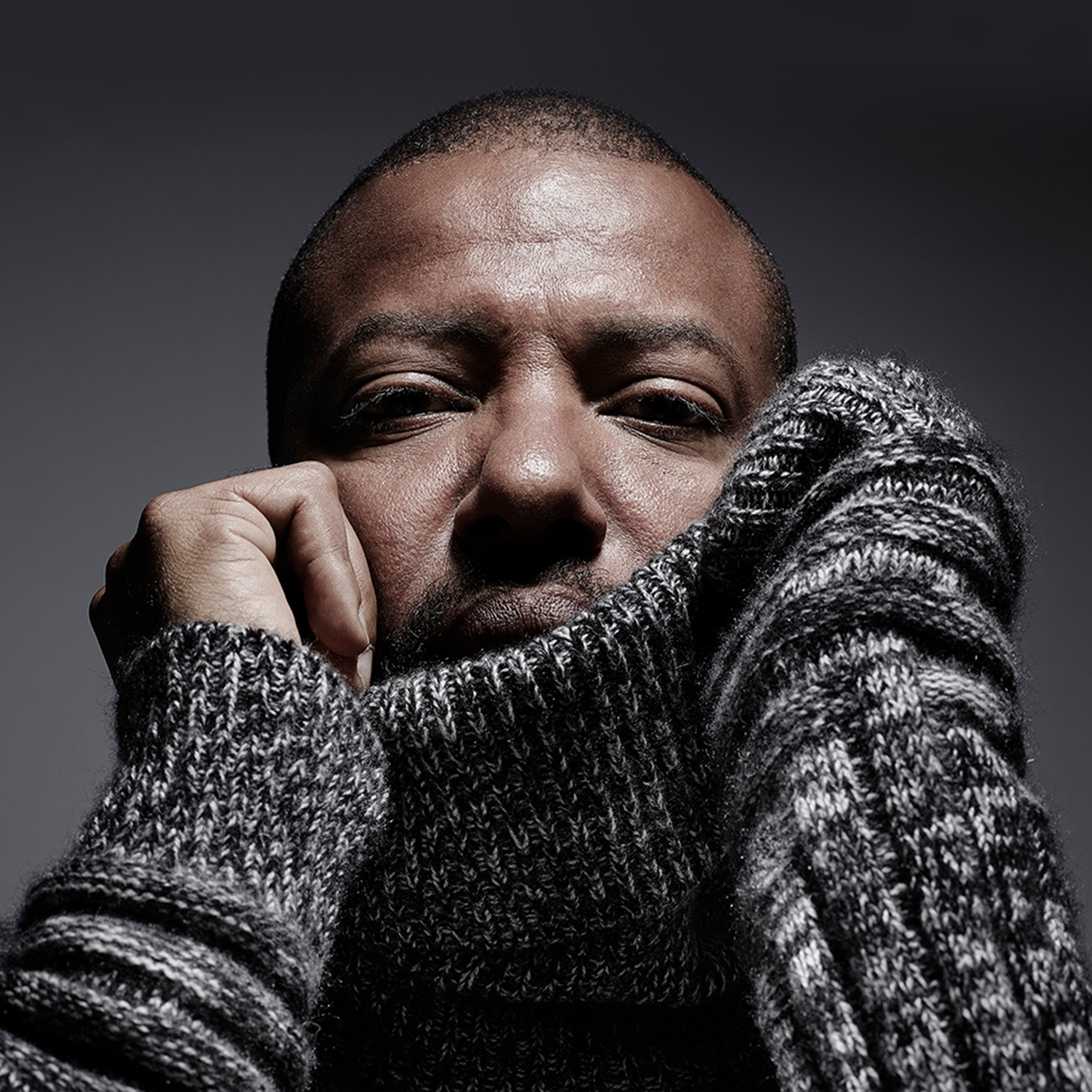
The Business of Fashion Podcast
Edward Buchanan on Being Written Out of Fashion History
00:51:45
On The BoF Podcast, the designer retraces his formative years from Ohio to New York, his years at Bottega in Milan and explores how young creatives can succeed in fashion today.
Loading summary
Transcript217 lines
- [00:00]
A
Foreign.
- [00:04]
B
Hi, this is Imran Ahmed, founder and CEO of the Business of Fashion. Welcome to the BoF podcast. It's Friday, September 26th. Growing up in Ohio, Edward Buchanan always knew he would have a creative career. That interest first led him to art school at CCAD in Cleveland and then to the Parsons School of Design in New York, where he juggled jobs in visual merchandising with school and the city's inspiring, pulsating nightlife. He got his big break in fashion when he was hired as the first design director at Bottega Veneta, which was then a small family run business led by Vittorio and Lara Moltedo. Since relocating to Italy in 1995, Edward has been building a professional career in fashion, making him one of the few black creatives in the Italian fashion system and giving him a unique vantage point of on the real value of inclusivity.
- [01:06]
C
Being inclusive on the inside means that you have different ideas, you have different cultures, you have people that can say, oh, maybe Gucci, that that's not a good idea to do, or maybe Prada, that's not a good idea to do. You know, you don't have people that are working on the internal structures of these companies, but they have no problems, Imran, putting black and brown people as a window display in their advertising campaign because that's a flex and you can hire them to put in your advertising, but you don't necessarily have to have them working on the inside. Here lies the problem.
- [01:41]
B
This week on the BOF Podcast, I sit down with Edward to retrace the designer's formative years. Look back at his time at Bottega Veneta and quiz him on how young creatives and people of color can succeed in fashion today. Here's Ed Edward Buchanan on the BoF podcast.
- [02:02]
A
Edward Buchanan, welcome to the BOF podcast.
- [02:06]
C
Thank you very much, Imran.
- [02:07]
B
We're here in Milano.
- [02:08]
A
We are seven minutes away from the Prada show by car at home.
- [02:13]
D
Yes.
- [02:13]
B
And we found this little, they would say in French, this little slot in.
- [02:19]
A
Your very busy schedule.
- [02:20]
C
Also in your very busy schedule.
- [02:22]
A
Yes, both of our schedules are busy. But you know, to try to find overlapping time to sit down and have a meaningful conversation is not easy in the middle of Fashion Week. But we did it and I'm really grateful.
- [02:35]
C
And I'm here for it.
- [02:36]
A
Exactly. I'm glad you're here for it. And you know, a lot of people listening to this all around the world won't know anything about you. You're such a pivotal force in fashion. Here In Italy. And that's why I'm so excited to have this conversation with you. I want to start with Cleveland, Ohio.
- [02:59]
B
Born in Cleveland.
- [03:00]
A
That's right. And then, you know, you stayed in Ohio for quite some time, even into, like, the initial part of studying. So walk us for people who don't know Ohio.
- [03:11]
B
Like, what do we need?
- [03:12]
C
It stinks.
- [03:13]
A
What do we need to know about Ohio?
- [03:15]
C
Well, yeah, I mean, that was my foundation, you know. I mean, I'm in Ohio where Ohio was. The Great Lakes. It's a very big state, Very divided state.
- [03:27]
A
Divided.
- [03:28]
C
Divided in terms of there's a Chinese neighborhood, there's a black neighborhood.
- [03:32]
A
Well, it's segregated.
- [03:33]
C
Very, very, very, very. Especially considering that I grew up in the 70s, so, you know, we had neighbors that had crosses burned in their backyards still at that time. Yeah, it's a tricky state. You know, it's also a state where one of the initial, let's say, beginning stages of the Ku Klux Klan was in Ohio, but at the same time, it was one of the exits of the Underground Railroad. So you have this real interesting divide in Ohio. I was born in Cleveland, Ohio, but I grew up in the suburbs, which is a city called Bedford, Ohio. And actually, I graduated from the same school that Halle Berry graduated from, which was. She was Bedford, Ohio. Bedford High School.
- [04:08]
A
Oh, you went to the same high school as Hallelujah?
- [04:11]
C
Yeah, we were, like, you know, in the same.
- [04:13]
A
Were you there at the same time?
- [04:15]
C
No, I didn't really know her. My brother graduated with her. I didn't know her, but I knew about her, especially when she left. She went to Los Angeles, I think. So we shared the same airspace. But Ohio was. It was a great foundation. I grew up with a single mom. I have two brothers. We had a beautiful and loving. Loving, I would say childhood struggled, lower middle class, African American family, living in the Midwest. My mom working, you know, two, sometimes three jobs. She was also a pianist. But, you know, in those early stages, I always knew that creativity was gonna be my animal. That is because I'm from a family of creatives. My mother, yes, is a pianist. Lots of musicians in my family, but I was always drawing, and I was always.
- [05:02]
A
Did she cultivate that in you because you wrote somewhere?
- [05:06]
B
I was fortunate to have been raised.
- [05:08]
A
By a single mother who, by all means necessary, surrounded me and my two older brothers with love and possibilities well beyond her.
- [05:18]
C
That's Deborah.
- [05:19]
B
Did she see your creative side from a young age?
- [05:23]
C
I think that she saw in all of us potential and desire, and she was Very open about allowing us to kind of drift in the direction where we wanted to drift, which is not always the case with parenting.
- [05:37]
A
So she didn't have a plan for you?
- [05:39]
C
She didn't have a plan. And she allowed us to kind of, like, float into the areas that we wanted to float into. And mine was creativity. As my middle brother, who's also a Gemini, was creativity. She didn't instill or force us and say, you have to go to college. You have to do this. I just happened to do that. That's what I wanted. But I think in those early stages, to step back. I think that was kind of in her way of parenting. That kind of love and ease that we experienced as children kind of instilled in us the desire to want to do. Yes, to make her proud, but for ourselves as well. So it was a. It was. It really was. It was a beautiful childhood. It was very difficult childhood. You know, we didn't always have lunch money. We didn't always have dinner money. It was a struggle. But there was never, ever a moment where I felt unloved as a child, which is a big thing.
- [06:30]
A
So when you decided to go and kind of pursue design, it was at ccad.
- [06:36]
C
It was at ccad.
- [06:37]
A
Where is that?
- [06:38]
C
In Columbus, Ohio. So what happened? After I graduated from high school, I knew that I wanted to go into art school. Fashion was nowhere in that space at this point, so my foundation was going to be in fine art. I was entering school, I think, with a major in fine art and a minor in illustration, which wasn't fashion illustration. It was illustration as the art. And so I entered into Columbus College of Art and Design. And it was great because I got the basics of being an artist. So that was the art history, that was the color concepts, the moon seal, color chart, all of those things that I needed. Those four corners of. The real core of art education was at ccad. And I'm so glad I was there. And it was very interesting because this was also the time that I was kind of familiarizing myself with my sexuality and leaving home. No struggle. You know, I have a gay uncle. There was never any pressure about my sexuality. And this is another thing which I think relates to the love that I had in that home, because I never felt odd or out of place in any environment. So when I went to Columbus and I was like, okay, well, I'm gonna start going out to clubs, it was a very, very big and important part of me becoming an artist, because I was meeting other people that, yes, looked like me. And Also were artists or in that art world like me. So my experience at ccad, which was my foundation in art, in art history, and all of those things that surrounded it, was somehow central in where I am today, because I use a lot of that information that I have that found it.
- [08:16]
A
You know, they talk about foundation, Right.
- [08:18]
C
It's fantastic.
- [08:19]
A
So this is kind of a selfish question, because I've always been curious, because Ohio has three big cities, all of which start with the letter C. Cleveland, Columbus and Cincinnati.
- [08:34]
C
Exactly.
- [08:34]
B
So when you go from Cleveland to.
- [08:37]
A
Columbus, like, are they different from each other? Like, how are those.
- [08:41]
B
Give us a little bit of that map of, like.
- [08:42]
C
Yeah, they are different. Cleveland is. It's a lake city, and there's a downtown area. You don't have as many colleges. Columbus is colleges. It's Ohio State University. It's ccad. There are all of these colleges that exist. So there's a youth culture that doesn't really exist in Cleveland.
- [09:00]
A
And Ohio State's where that big football team is, Right?
- [09:03]
C
Exactly. Exactly. So red and white. So that existed, but, you know, it was really funny in Columbus, that existed, but, you know, there were a lot of. There's enormous gay community in Columbus, central to a lot of the smaller colleges that exist in the area. But when you have a big college city, I think it's going to be always really divided. So what happened at Ohio State for us was like, on the other side of town, we were like downtown kids, you know, and then Cincinnati, which in Ohio, in Cleveland, we call them a Stake on the Lake. But I don't know Cincinnati very well. The Limited is in Columbus, Ohio.
- [09:39]
A
That's.
- [09:39]
C
That was like, one of the centerpieces of that city.
- [09:42]
B
So, like, you're at ccad.
- [09:45]
D
Yeah.
- [09:45]
A
You're getting this foundation, and at some point, it's not enough.
- [09:49]
C
Yeah.
- [09:50]
A
And you decide you need to make your way in to New York to Parsons and into fashion. Like, what precipitated that?
- [09:57]
C
What precipitated that was that I was friends with a lot of people who were older than me, and many of them were moving to New York City, and they were moving out and away. And I was still at Columbus College of Art and Design, learning and having a great time. But I was like, what's on the other side? One of my very good friends at ccad, who was a graffiti artist named Blust, is from New York City. So in my junior year, I started going to New York City. I started to kind of feel out that city, and I was just seduced.
- [10:27]
B
So what year Would this have been.
- [10:28]
C
I was seduced. This would be 91. Right. I started going back and forth to New York City. I started going to the clubs, I started meeting people. The first time, I think I have to Polaroid. I definitely have to Polaroid. The first time that I went to New York City, I was walking down Broadway, around Broadway and Prince street, right. And I always carried a Polaroid camera with me at the time, right. Walking down, take a Polaroid of pictures. You know, we put them in our things. And later on I looked at that Polaroid and it was Keith Haring and his boyfriend.
- [11:01]
A
Wow.
- [11:02]
C
I still have the Polaroid. So that just shows you how potent.
- [11:05]
B
Yeah, Give us a.
- [11:06]
A
Like New York downtown, 1991. It couldn't be more different than that intersection today. What was it like back then?
- [11:18]
C
My experience first going to New York City was just this curiosity. I had no money.
- [11:25]
A
Okay.
- [11:25]
C
You know, I mean, just to. Just to preface in a way, I moved to New York City after ccad with a job because I was doing visual merchandising. That's how I got the transfer to New York. I didn't really intend in the beginning stages to go to Parsons. I thought I was going to move to city and maybe find a job doing something. So I was doing visual merchandising, got a transfer with the Gap and landed in New York City. New York City. I was couch surfing, so I was living in Washington Heights. I was out every evening. I was having french fries for dinner. You know, it was like it was the real New York survival city. But it offered me so much, that city. It was just. I was so, yes, inspired by the creativity, inspired by the people, inspired by the nightlife. But it was just this mecca of. It seemed possibility, you know. And that possibility I didn't see in Ohio at the time. I loved being Ohio. But when I arrived in New York City, it was like, oh my gosh, how do I climb this tower? You know, it was. I was meeting these incredible people. It felt. I don't know, I felt related immediately to that city.
- [12:33]
B
It was in that essay you wrote for Perfect.
- [12:35]
A
You said you became an adult in New York City.
- [12:38]
C
Yeah, 1,000%. I was born in Ohio and I really became an adult. It taught me everything about me as an individual, what I wanted out of life. It taught me how to find my way, find my space. It taught me also that I was a black creative in a space that wasn't always going to welcome me in. I learned that in New York City already. Already very, very early stages And I learned that at Parsons School of Design when I was one of few. I was one of few that was in that space at that time. At that same time as me, there was Aaron Potts, who has a line in New York City. A Potts. All of the rest of them were the mentors. You know, there was Marc Jacobs. There was Gordon Henderson, who was my mentor. There was Tracey Reese. Yeah. So there was a slew of designers. Isaac Mazarhi was also one of my mentors. And they had already graduated. They had their businesses. But really, in the space being educated, I was really one of very few.
- [13:45]
A
And while you were at Parsons, where did the decision come that, okay, I'm gonna become a designer? Cause you'd gone from this kind of general art.
- [13:54]
C
Fine art.
- [13:55]
A
Yeah, Fine Art Foundation.
- [13:56]
C
I didn't have a fashion portfolio.
- [13:57]
D
You.
- [13:58]
C
I didn't. When I came from Columbus College of Art and Design, I had a general art portfolio. So when I moved to New York and I started working in visual merchandising. And almost after half a year that I was there working, I said, I'm going to go back to school, and it's going to be design. The seduction of design. And the idea of design came from me, I would probably say. And this existed early on, loving the idea of style and the way that people dress themselves. You know, I was always watching and discovering how people put things together. I knew that there was somehow a relationship with me and clothing, you know, And I didn't know was going to be actually making clothing or understanding the make of clothing. But I knew fashion had come into my life. When I decided to go back to Parsons, I sketched. I was always a good illustrator. And that foundation at CCAD was really based on the figure learning the figure, learning how clothing should drape on the body. You know, all of those things. I know the figure top to bottom. I put together this portfolio, and they accepted me on scholarship. I had a convincing portfolio. I didn't know how to make anything but. And I entered into Parsons, and it was like fashion. And this was the time when you waited in long lines. We didn't have tickets. We would stand outside the Todd Oldham show or the Isaac Mizahi show and just wait and then bulldoze our ways in. We wanted to see Linda. We wanted to see Naomi. We wanted to see the girls. You know, it was really. It was like. That time in New York City was so potent. There was so many. I mean, there was Indochine. There was, you know, club it. There was the nightlife. There was the restaurants, culture, just culture, you know, it was, it was. And I'm obsessed with culture, so I wanted to know everything. I wanted to see everything. People used to always tell me because I was. I didn't do drugs and I don't drink. I was the last one always at the club and I was always awake.
- [15:53]
B
And where did you get that?
- [15:54]
A
You got the energy from just being in that environment?
- [15:56]
C
Yeah, it's just. It was always so inspiring, you know, I really wanted to know and see more, you know, it wasn't. I'm also a Gemini, so I kind of. I love sitting back and just watching, you know, kind of studying what happens in the space and then you know it. But I feel like if someone has to tell me about it and I didn't experience myself, it's less interesting, you know, you really need to be in it.
- [16:21]
A
Okay, so you kind of narrow your focus on design. And you're very lucky to be at Parsons at that time and get the scholarship and. Amazing. And being in New York in the 90s, I mean, wow. What did you do when you finished Parsons? Like, what happened next?
- [16:41]
C
Very interesting story because while I was at Parsons, I had two mentors. One for silver thimble and one for gold thimble. My first mentor was Isaac Mizrahi, and he kind of coached me through it and to receive the silver thimble. But then as a senior, Gordon Henderson was my mentor. And for those of you who don't know Gordon Henderson, African American designer, the chicest, most handsome man. I was like, wow, this is my mentor.
- [17:12]
A
Did he also study at Parsons?
- [17:13]
C
He also studied at Parsons, yeah. Gordon Henderson, who at that time had his own line. Gordon Henderson. He also had a diffusion line, which is called But Gordon that I started kind of interning in, but he ushered me into every door. I mean, I. I loved being a student and I think because I had done college before when I was at Parson, I excelled. I really, I really loved being there and learning, you know, the core design education, you know, the pattern making and the cutting and the fabric and the fabrications. I love that process. You know, it was really. I was holding the pains. The technical bits, the technical aspects of design, I was just obsessed with because I didn't know that I had a great hand and I could do all of those things in terms of convincing people in a two dimensional design that they might like it, but I really didn't know how to make it, you know, in Gordon, because at that time I was still doing visual merchandising. Full time. I'd started working for Giorgio Armani, right? So I was doing Armani Exchange, Emporio Monte, Giorgio Armani. We were in window dressing. And window dressing in the 90s was like. It was the T. I don't know if you remember the Barney's windows.
- [18:21]
A
It was.
- [18:22]
C
Our budgets were enormous, so we were building airplanes and putting the windows. It was just that window dressing was, yes, an art of its own, but it was also a community. So I met a lot of people that worked within that space. So I was working full time and going to school full time, but I needed to get an internship. And so Gordon, who had worked at Calvin Klein before he started his own line, introduced me to Calvin the Calvin. He introduced me to Donna, the Donna Karan. I have a story about Donna Karen. He introduced me to the Ralph Lauren. And none of them hired me.
- [18:56]
A
You met them?
- [18:56]
C
I met them. I met them. I showed my portfolio. None of them hired me. But Donna Karan, who was also a critic at this was a game changer, who was also a critic at Parsons School of Design. She came in and talked to us as seniors one day. And so she comes in and she just looked amazing. The hair pushed over to one side. Right. And she had on black cashmere, like head to toe, like a dress and a six.
- [19:19]
A
Easy basics.
- [19:20]
C
Amazing, right? Like, the cashmere was like, you know, like three gauge cashmere. Right. And it was a. I always remember this. It was a crewneck sweater that she had on, and she had a coffee cup. And I mean, her language. I was just like, oh, my God. I was, like, seduced. I wanted to hear and learn everything. But at a certain point, she puts her coffee mug down on the table and she pulls open the neck of the sweater and pulls one arm through the top of it. So it turned into one shoulder. And I lost my fucking mind. I lost my mind. Just the idea, I mean, that. That for us is something like. Okay, but as a student that just like, you know, staring at someone that you, like, admire and desire to be. And just this kind of the convertible ease of that action, really. Kind of.
- [20:11]
A
And in a way that only a woman designer could do. Right? Because she's, like, wearing it and she. And were you already on the knitwear path by this stage or did this help to kind of.
- [20:23]
C
That's the freaking deal.
- [20:25]
A
Okay.
- [20:25]
C
No, I mean, I thought, like, the ease of that. And to take something that we think is one thing and to transform it.
- [20:33]
A
Yeah.
- [20:34]
C
Immediately into something else. And you can do that with a sweater. I was like, okay, here we go. I mean, that was black cashmere. I'm like a gray cashmere guy. But that was like. It was. It was outrageous.
- [20:47]
A
Okay, so you do these internships.
- [20:49]
B
Well, you don't get any jobs.
- [20:51]
C
I did get any job.
- [20:51]
B
You didn't get any job at the Big Three?
- [20:53]
C
I didn't get any job at the Big Three, but I started interning at the Gap. Who was paying me for internship, which was very interesting because it did.
- [21:02]
B
They have a design studio.
- [21:03]
A
A design studio.
- [21:04]
C
They had a design studio in New York.
- [21:06]
A
And this is Mickey Drexler days.
- [21:07]
C
Mickey Drexler days, yes. And what was very interesting about that, I think probably it served me more probably than working in a real 7th Avenue design house in that period, because it really taught me merchandising. It was a whole different thing. This is, you know, a mass market company, so you really have to know how to build a collect. It taught me the nuts and bolts of building a collection, which I would have learned at a design house. But that was core experience in that same period, though, I tell you this. I applied for a internship at Marc Jacobs when he was at Perry Ellis. This was the season. And it's a story that I tell now, but I'm like, wow, I got an internship at Perry Ellis under Marc Jacobs. Listen. Yeah, it was right before the grunge collection. The grunge collection happened. And my internship never stopped because he got fired. He got fired? Yeah. I think his design, I think, was it Robert Best or Robert Pedro. One was at Isaac Mizrahi and one was at Marc Jacobs. But I got hired on my portfolio because they loved my illustrations. I had those funny legs which were similar to Mark's, who came from Parsons also. And I never got the job. But I was entering into my final year at Parsons, and I didn't really know where I was gonna go. I didn't know what job I was gonna do. I was interning. I was making at that point. Okay, Money, working in visual merchandising. But I wanted to be a designer, you know? So I was, like, searching. I was hitting the streets, trying to meet everyone, you know, it was.
- [22:35]
A
And no luck. No luck. No luck.
- [22:37]
C
No luck on 7th Avenue. And so what happens is, I talked before about my relationship with the visual merchandisers or the window dressers of the world. And my friend Rodney Patterson, who is also a designer, a hat designer that lives in New York City, was doing windows for Bottega Venet. Bottega Veneta, at that time was a Family owned business, the Malteos. And he told them that he had a friend who was a designer. It sounds very basic, you know, he introduced me to them and I came in and I prepared this portfolio and in my head the concept was to create this capsule collection which were the accessories to the accessories. I knew that it wasn't a desirable company for me at that moment. I remember when he told me Bottega Veneta, I was like, did you even.
- [23:31]
A
Know what it was?
- [23:31]
C
I knew what it was because they had the store on Madison Avenue, which I worked up and down Madison Avenue doing windows. But for me it wasn't valid. You know, you have to remember that that was a time when it was like I was just obsessed for Helmut Lang and there were so many other things going on and it wasn't in my kind of visual or, I don't know, identity. I didn't really relate to what was going on there, but I knew that.
- [23:55]
A
Did they even have ready to wear?
- [23:56]
C
They didn't have ready to wear.
- [23:57]
A
So it was just leather goods.
- [23:58]
C
It was just leather goods, yeah.
- [23:59]
A
So you eventually you go to Milan, right, and you, you get this job?
- [24:03]
D
Yeah, yeah.
- [24:03]
C
Well, I presented the portfolio and they hired me. And then, you know, not even a month later I was flying to Vicenza.
- [24:12]
B
We'll be right back with more on the BoF podcast.
- [24:20]
E
Did you know adults 60 plus lose more than $60 billion each year to financial exploitation? Greenlight's new Family Shield plan empowers you to monitor your accounts for suspicious activity, protect yourself with up to $1 million identity theft coverage and reassure loved ones that you're safe with location sharing and place alerts. Get peace of mind today@greenlight.com protect. That's greenlight.com protect.
- [24:46]
F
Think enterprise software is too, too complex and takes too long to get up and running? Think again. Workday Go makes simplifying your small or mid sized business simple. HR and finance together on one powerful AI platform right at your fingertips. Workday Go gets you live fast and fits the needs of your business. Find out what Workday Go can do for you. Go with Workday Go.
- [25:19]
A
Okay, so you arrive here in Italy.
- [25:21]
D
Yeah.
- [25:22]
A
Paint a picture of what Bottega Veneta was back then. Because the Bottega that people know today is like multi billion dollar, caring owned luxury mega brand. Probably the only thing that they've kept is the Intrecciato and the idea of your own when your own initials are enough. Exactly those two things they've kept exactly. The business varied. What was it like back then.
- [25:46]
C
Well, I arrived, and this is to preface. I arrived at the Venice airport and I walked out with dreadlocks and a sweatshirt on. And they stopped me. This is my first day. They stopped me and they held me for two hours. They did a cavity search. They were convinced that I had drugs. Held me for two hours. I had to call someone from Ortega to come and sort it out. And sort it out to make this happen.
- [26:09]
A
That's the first impression.
- [26:10]
C
That was my first impression of arriving in Italy. And I have to tell you, Imran, that that experience that set an outline of what were my expectations in going into a place where I wasn't familiar or there were not many others that looked like me. And it informed the creative that I am today and the individual that I am today. So I put that in my handbag and I always carry that with me, that experience. But I walked in and this. You have to remember that Bottega Veneta was a family owned business and you felt like you were in a family.
- [26:43]
A
Tell us about the molten. I mean, I've had the pleasure. I know Corto and I guess of course had dinner with his father once. Yeah, but like the Moltedo family, like, they kind of incubated that thing, such an attention, you know, it was like.
- [27:00]
C
1,000% we were, we were their family. And when I say this, walking into a family, it was like, you know, Laura and Vittorio were like our parents, you know, and. And the design studio at that time was set up with. There was me, there was Manuela Morin.
- [27:12]
A
Who was doing shoes.
- [27:13]
C
Eduardo Wangvalle, who was the historic handbag designer. Gabe Gabriele or Corto was still a child at that time, you know, and there were other family members that existed and worked within the business. But, you know, my contact and who I really worked with every day was Laura Moltedo. In the beginning stages, we were kind of petrified of Vittorio because he was the business, you know, and it was like, what are you guys doing? You know, you can't just like, do anything you want. You have to like follow a structure. We didn't know what structure was. I was in my 20s, you know, and you come in and you tell me I have to create a ready to wear business from scratch. There was nothing. There was no ready to wear. They had no factories, nothing. So I arrive in there and we sit at a table and we kind of looked at each other. And I love Laura Motero because, you know, she gives you this kind of like beautiful, seductive eyes and what are we going to do? And I just start sketching. I really. I start sketching with in mind the project that I showed to them. I said, okay, let's create this kind of capsule, right?
- [28:12]
A
Accessories to the accessories.
- [28:13]
C
It was the accessory to the accessories. And in my mind, it was like American sportswear meets Italian manufacturing. So the first thing that I did was cashmere sweaters. You know, there were fine gauge and there were three gauge. There was a hoodie in cashmere. You know, there were gloves and cashmere.
- [28:30]
A
Kind of pioneering because we all have cashmere. Many of us have cashmere hoodies now. But like back then.
- [28:36]
C
Yeah, right. Which was odd. And I thought to myself, okay, and then we have to incorporate leather. It's a leather goods company. And one of the first things that I saw when I went into the factory, they had this kind of like. It was almost like this huge, like twirling assembly line of leathers from crocodiles to nappas and all of these leathers and they were color coded, you know, so you kind of press this button and this thing goes around and you pick the color of leather that you want. Which was, for me, Imran. I was like, mind blowing. It was mind blowing, you know, and so we started from there. And so I created these leather separates, you know, skirt and pants and Napa. Really pliable, beautiful Napa. I didn't know how to make these things right. So I went to Milano and I had to find a factory that was going to produce the knitwear after I had the sketches. And I met this incredible factory. Silvana Galbuzera was her name. And she became essentially my mother in teaching me the real technical aspects of knitwear, because I wasn't a technician going in. And I found a company that really, in exchange from design to technical aspects of making leather goods, I also found. So it was kind of like. And I don't think Laura really understood this, and maybe she understands it now, but it was kind of my third school. I was really learning luxury goods while I was working at Bottega Veneta. And I had to be fast, I had to be rapid because there was no time. I had to kind of show improve. I didn't know really what I was doing. I went in with taste and an idea and understanding what this brand is or potentially what this brand could be. But it was show and prove and. And it was a retail business at that time, remember, not until our first show, it became a wholesale business. So everything that we were doing, we were kind of testing in spaces. We Had a very good relationship with Japan. We had a distributor in Japan, which was Aoi at that time. And so we were able to test things in Japan, things that worked. They were very kind of commercial ideas that they kind of instilled in us that we had to kind of respect. You know, there was what's called the makolato. And I don't know if many people know this, but back in those times, there was to kind of this leopard print that was on nylon that was printed nylon. That was a big, huge seller at Bottega Veneta. So we had to incorporate that and everything. The ever present intrecciato was always there. So everything that we did there needed to be a translation of what that meant. Maybe as a concept also, but also as a material. So the material, whether it be Lana, whether it be cashmere, whether it be the napa that we use, had to be interpreted in interciato. So I started to learn the codes, you know, but at the same time, I started to invent my codes. Because I was the first designer there that was doing apparel. And that thing doesn't really sink in until much later that I was really the first one that was designing apparel. I was just doing a job.
- [31:35]
A
Well, you had no idea what it was going to become, right? So at some point the Brits arrived. What happened?
- [31:41]
C
Well, you know, listen, before the Brits arrived, I was there for what, four years almost, right? You know, we did our first three shows, I think, without a stylist. It was just kind of me and Manuela, you know, putting these things together. I remember the very first show we did, which was at Palazzo Serbeloni. It was the very first ready to wear show that we did. I'm gonna say, I don't know, 90 something, all kind of white butter napa, very clean. This was the time when the Gucci's were happening. It was excessive. Everything was excessive. And here we are with this kind of like minimal, like Suniva snatched back hair. It was very clean. And I made the error in that show of only showing a few bags. And there was only one interrechato handbag, which was the last look. And we looked at it after, and I was like, what the fuck was I thinking?
- [32:38]
D
What the.
- [32:39]
C
I mean, it was trial and error, you know. It was a beautiful show and it was very well received. But after that show, I learned that this has to be the centerpiece. And everything that we do will work around that, because Bottega Veneta is exactly that. And I really learned from a Marketing perspective, also from a design perspective, how important it was to support and believe in what those signatures were. So that taught me a lot.
- [33:06]
D
Our.
- [33:07]
C
Our approach, I think, at that time was kind of we loved fashion and what was going on in fashion, but we had to figure out how we respect the brand in relation to what fashion was happening around us. So when we decided to have a stylist in that period, it was because it was also becoming necessary. We were just working so internal, you know, I mean, as I was the ready to wear designer, there was also the accessory designer. There was also these other people that were working in the space, and we needed someone to kind of pull it all together.
- [33:36]
A
Because you're also in a kind of of Bottega bubble, right? Because you're working in your own world and you need that outside person to come in and be like, okay, here's how we could put this all together. Here's what to take out and edit out. Here's what to focus on.
- [33:52]
D
Yeah.
- [33:53]
C
And so my press agent at the time, Cooper Ray Kay Cooper Ray, said, you guys should meet this gal, Katie Grand. And so we met in New York for the very first time. We sat down at a table that looks kind of similar to this one. And I didn't know her, she didn't know me. We were both very young, and I was like, kind of like, oh, so what are you feeling? You know? And she was like, what the fuck? What is this feeling? I remember it specifically, but we started working with her. This was for this season. The collection was already done. So she came in as a pure stylist to kind of style that first collection. But you know what it was. I had been there for so many years. My respect for the brand was enormous, you know, because it was my home, you know, and I. I wasn't really necessarily thinking out of the box. So when you start working with a stylist and don't really know what that means, and they come in with ideas and actions, and you somehow are like, is this right? You don't know whether to say, okay, let's go with it, or to fight it. We were very different. We come from very different places. Here's Katie, who's coming from the Face and Dazed and. And has a very different community and a very different idea. And in retrospect, I always say, I look at that collaboration and I think, wow, they created. She came and she started cutting the fingertips off of woven hand gloves and leather. And it was so punk in the approach. Yeah, it was so punk in the approach. But you know what? It really taught me how important knowing and understanding a community, even within the fashion space is because they had a real and honest and supportive community. And the boom after those collections were huge. And the elements that she brought in, you know, Dayglo came into Bottega Veneta because of Katie grand, you know, and that moment was. It was very different from what I had been doing prior. It was very highbrow and you. Or liked it, or you didn't like it, but there was a lot of people who liked it because it was.
- [36:07]
A
Brash and it had a point of view. Right.
- [36:08]
C
It had a clear point of view. And I was charged with making sure that the quality stayed very high. And Katie was charged and Giles was charged with bringing in these kind of like, you know, heavy hitter style elements. And. And that was like, wow, you know, was I kind of feeling in a way misplaced within that. Yes, at the time, of course I was. But I'd known later, looking back into that space for two reasons. This was kind of my time to move out onto something else. I'd been there for a very long time. I was becoming a real Milanese. I wanted to do other things exterior of that with Manuela, who was working in there. And you kind of feel like that was my experience and I had it and I really enjoyed it, but I need to start thinking about what's going to be tomorrow. And it became routine somehow. I didn't still at that point understand what I'd actually done.
- [37:14]
A
Yeah. And what it meant to be a foreigner.
- [37:17]
D
Yeah.
- [37:18]
A
A black man coming into this family owned business and the respect that they gave me. Italian, which you didn't probably speak Italian when you came here. Right. So this might be a good moment to just take a pause on the journey and just reflect on the Italian fashion system. I mean, you've been so constructively and honestly vocal about the system here.
- [37:45]
D
Yeah.
- [37:45]
A
And I'm just curious, Edward, like, in the last. Is it 30 years?
- [37:50]
C
30 years. Three decades.
- [37:52]
A
Three decades you've been here now. You know, from arriving at the airport in Vincenza and being treated the way you were to today, both Italy at large and the Italian fashion system in particular. Like, are we. Have you seen progress when it comes to meaningful inclusion and belonging for people of color in this industry? I mean, I was at a Camera de la Moda breakfast the other day. And I'm just thinking back, everyone who was there, anyone.
- [38:25]
C
Was there anyone of color there besides yourself?
- [38:29]
A
I think there was only me, actually. I don't know for sure. I'm just like scanning the room.
- [38:35]
C
I was invited to go to that breakfast and I couldn't attend. But I. How many times I walk into spaces and I'm the only one still still working in the Italian space. How many times am I invited to events and parties and these are not only fashion related, you know, Design week is even worse. I walk into these spaces and I find I'm the only one. Let's just hark back to George Floyd for one second and what happened during that period and five years ago. Five years ago. Yeah, and only five years ago because prior to that, the space was in design specifically. There was really no one working in the space, in the interior structures of these companies. Even when I started working, there was Lauren Steele, who's still here. There was Warren Davis who was working at Jill Sander, There was Eric Wright, who back in the day was at Trisardi. But, but up until then, before George Floyd happened, and then after George Floyd happened and everyone said, we're going to put up those black boxes, we're here with you, we're going to support you. After those black boxes started to fade down, it was back to business. And what happened during that period, though, I have to say this is when a little bit after Maximilian was hired, Ferragamo, Sarah Hatt and Benjamin were at Trussardi. There was a movement, if you remember, in that space, and this is just only a few years ago, and Stella.
- [40:02]
A
Jean had become quite a strong voice.
- [40:05]
C
Stella is central, she was in Rome, one of the first ones to really actively speak out about being Italian, Afro Italian and being black and being a woman working in this space. But so there were these conversations that were happening around, but there was really no active community to say, we're here, we work in this space, we want opportunity as others have within this space. So, Imran, I feel like if I'm not encouraged and charged to speak in first person about my experience and reach out my hand to the others that look like me or are like me to actively kind of collectively create an open conversation about what's happening, then there's no one else that's going to do it. We had to create this community activation where we were making companies aware of it. We were attempting to create institutional connections so we can feed in young designers into these companies as interns or find jobs for people. It just still wasn't happening. And that inclusivity conversation with these companies, they don't really see it as a plus. They don't understand the necessity of having Being inclusive on the inside means that you have different ideas, you have different cultures. You have people that can say, oh, maybe Gucci, that that's not a good idea to do, or maybe Prada, that's not a good idea to do. You know, you don't have people that are working on the internal structures of these companies, but they have no problems, Imran, putting black and brown people as a window display in their advertising campaign, because that's a flex. And you can hire them to put in your advertising, but you don't necessarily have to have them working on the inside. Here lies the problem.
- [42:10]
A
Yeah, and, you know, I was chatting with about this with Edward and in full a couple weeks ago when. When we sat down for the podcast, the same podcast that you're now on, and we were kind of reflecting back on the kind of intention or stated intention around change back in 2020, and kind of where we are now, and I guess, you know, where Edward and I ended up getting to, is like, we just have to keep going. Right. And that's. That's the point. So you were recently in a campaign.
- [42:44]
C
I was.
- [42:45]
B
Let's talk about that. Because it's kind of full circle for Bottega.
- [42:48]
A
Like, it must have been interesting for you, seeing the explosion of this brand, first under Thomas Meyer, then under Daniel Lee, more recently under Mathieu Blasi, and very soon on Saturday, under Louise Trotter. I mean, as you've been watching Ortega from the outside, like, what are your reflections? And how did this. How did you become the face of Bottega in a campaign?
- [43:12]
C
One of the faces.
- [43:13]
A
One of the faces, yeah.
- [43:15]
C
You know, Bottega has remained a house that I am close to.
- [43:22]
D
Yes.
- [43:22]
C
In terms of aesthetic and also in terms of the brand. You know, that motto, when your own initials are enough, really always stuck. It sat with me. But after I left Bottega, I didn't really have a relationship with Bottega. You know, through all of those years, through the Thomas Meyer period, through the Daniel and then Mattieu period, I didn't have a relationship. They didn't contact me. After I left Bottega, I kept everything. I kept all of my drawings, like, from first collection to the last when I was there, all the fabric swatches, the samples, everything, I kept everything. And I kept it for me, as I do, I'm a pack rat. But what ended up happening is that Luke Leech wrote the story for Vorvogue. And I know that Leo had been asking about me because I think he was internally building a comprehensive story of Bottega Veneta. And this Edward started.
- [44:11]
A
So, just to explain, Leia is also known as Bartolomeo. He's the CEO Leo Rongone of Bottega Veneta.
- [44:18]
D
Yeah.
- [44:19]
C
I heard internally that he started to put together this comprehensive story of Bottega Venetian. This Edward kept coming up, you know, and these things in this period that they had nothing from. They had no really real history about that. And so at the bof. At the BOF party, or I think it was a lunch.
- [44:36]
A
No, during salone.
- [44:38]
D
Yeah.
- [44:38]
C
Tammu McPherson said, you don't know Leo. I was like, no, I've never met Leo. And then we looked at each other and he was like, edward, Leo, Edward. No. We shook hands and we talked, and that was kind of the beginning stages of this relationship. I didn't have any expectations. You know, I never thought that we would end in campaign. But I think also internally, they were. Also. When they started to work on this, the head of PR at Bottega is Terry. Terry.
- [45:08]
A
Oh, yes. Who worked very closely with Mathieu.
- [45:10]
C
Exactly. So Terry contacted me, and they said that we're having this kind of internal conversations, and we'd like to have a conversation with you. And so I started having conversations with him. And it was interestingly therapeutic to talk about that time. I hadn't talked about that time in so long. And this was before they'd even asked me to be in the campaign. But it was just looking back. And then I got excited. I started looking at old Polaroids, and I was like, oh, my God, there's Kirsten Owen. Oh, my God, there's Kirsten. You know, I worked with all of these people and these things, and I had these things. And so I started getting excited. And then a few weeks later, I got an email, and they said, we're working on 50 years of intrechato campaign, and we'd like you to be in the campaign.
- [45:52]
A
Wow.
- [45:53]
C
And I sent the email to my boyfriend, and I was like, what the hell is this all about? You know, first I was like, is this a good thing? I didn't really know, but I. I thought that this is kind of an honest way of saying you did that job. You were here, and we respect the work that you did. Because prior to that, the job that I did was unknown and erased.
- [46:19]
A
It was kind of written out of the story.
- [46:20]
C
It was written out of the story. It didn't exist.
- [46:22]
A
Well, what's nice is that campaign kind of wrote you back into their story, but it also wrote Bottega back into Your story, which is.
- [46:32]
D
Yeah.
- [46:32]
A
Which is beautiful. And the campaign. I was actually here in Milan the day that campaign dropped, and Leo showed it to me on his phone, and it was so beautiful.
- [46:43]
C
Gorgeous.
- [46:44]
A
It was Jack Davison.
- [46:45]
C
Yes.
- [46:46]
A
Gorgeous photos.
- [46:47]
C
Beautiful.
- [46:48]
A
And, you know, I think really hearkened for me into, like, the history of this brand, which, you know, it's gonna be very interesting to see what Louise does with it. I mean, by the time this episode comes out, Louise's collection will drop later that on Saturday, and this is gonna drop on Friday.
- [47:07]
C
So I'm excited about it.
- [47:09]
A
Yeah, I think it's gonna be cool because I think she comes from such a strong, ready to wear background and actually so similar to what you were tasked to do way back when. I think it's gonna be interesting to see how ready to wear becomes potentially a bigger part of what they're doing.
- [47:25]
C
Yeah. I love that she's a woman. I love that she's lush, and I love that she's sensitive and talented. And, I don't know, I think that the two pieces come together really well. And I've known Louise from La Coste, and I've known Louise from Carvan. We weren't friends, but we shared a lot of conversation. And I think that I was so happy with this appointment. And, you know, and it is not only because this, but she was the only one that contacted me after she started. She sent me a message, and she was like, edward, you were the first. And what was really beautiful about this, going into this period is all of the response from young, incredible creatives that didn't know I existed. Of course, I'm kind of a recluse, so I'm not this kind of of in your face, have to. I'm not a narcissist in that sense. But it was such a beautiful response to see how much storytelling was important for young creatives to see a reflection of themselves in spaces that they want to occupy.
- [48:39]
A
We have to run to Prada really soon. So I want to talk directly to those young creatives because I think given your experience and where you've come from and what you've accomplished here, and I know you teach this master's knitwear course. You're interacting with young people all the time. What mindsets do young people trying to make it in a fashion need to have to succeed now? That industry is so different from what it was 30 years ago when you arrived here. Like, what does it take to succeed now?
- [49:08]
C
That's a big question. I think it's necessary to be Multifaceted as a creative and know the business. Knowing the business means from the ground up, you know, know the make, know the, the nuts and bolts of being a designer is really not knowing the creative part from, from, from bottom up. Being a designer as an independent or creating your own collection is a shit show right now. You know, if you, if you're not, you don't come from independent wealth and you step into this stage. We know that marketing is an enormous part of what makes a designer successful or not. And, you know, if you don't have an understanding of the business from all corners, it's really difficult. But I always instill in my students, find the honesty in your design. Find the honesty in your design. Find what is the thing that you really believe in. And I think that you can really see it in design when it's honest. And that's very simple.
- [50:15]
A
What you mean honest? I love that word. And actually Phoebe Filo used to use that word a lot when I spoke to her about honest. Like when you use that word, honest, what do you mean?
- [50:23]
C
Because, you know, because I see the stages of design, from inspiration to final product in the students work. I know what they're thinking when they build it up. And a lot of the stories, of course, comes from what they're inspired by on the outside and what the, you know, how they're refined families or it could be salt, a grain of salt or water. But honesty means for me, when it. The story that you're attempting to tell comes instinctively, it's not. You're talking about, I don't know, Red Bull box, just because basically it's your story, it's your story. It's a.
- [51:05]
A
Only you can tell yours 1000%. Got it?
- [51:08]
D
Yeah.
- [51:09]
A
All right.
- [51:09]
D
Right.
- [51:10]
C
Which is hard to do.
- [51:11]
D
Yeah.
- [51:11]
A
And on a more kind of practical basis, if a young black or brown designer lands in Milan tomorrow, what advice do you have for them in terms of like, breaking through, cutting through with some of the gatekeepers and like the structural barriers that still clearly exist?
- [51:32]
C
I think it's so necessary to reach out to community and that's why me and Stella and Michelle attempt to be these kind of pillars.
- [51:41]
A
Michelle from the Afro Fashion Association. Yeah, exactly. Who's also doing incredible work here.
- [51:45]
C
Yeah, she's doing incredible work.
- [51:46]
D
Yeah.
- [51:47]
C
And I think it's so necessary to reach out to people that are in the space, that know the space that can assist you in understanding how do we navigate this space, you know, who do we talk to? How can we attempt to kind of get in, you know, there's through experience, you know, and being shut behind closed doors. There's a voice that knows and understands and I think that's a major part of it. You know, the beautiful work is beautiful work. You know, it shouldn't be determined, you know, sexuality or race to say that that's great work, you know.
- [52:21]
A
Yeah. The work needs to stand for itself 1,000%. Edward, I'm so grateful.
- [52:27]
C
Thank you.
- [52:27]
A
Thank you for this time.
- [52:28]
C
Thank you. Prada calls.
- [52:30]
B
Prada's calling.
- [52:31]
A
All right, bye.
- [52:32]
D
Bye.
- [52:32]
C
Bye.
- [52:34]
B
The BoF podcast is edited and produced by Olivia Davies and Eric Brea.
- [52:48]
F
Think enterprise software is too costly, too complex and takes too long to get up and running? Think again. Workday Go makes simplifying your small or mid sized business simple. HR and finance together on one powerful AI platform right at your fingertips. Workday Go gets you live fast and fits the needs of your business. Find out what Workday Go can do for you. Go with Workday Go.
- [53:17]
G
Imagine a world of extraordinary comfort where Bolen Branch bedding wraps you in the softest. Embrace the coziest experience made from the world's finest 100% organic cotton, all so you can sleep better. Start building your fall sanctuary with Bolen Branch's iconic signature sheets made with a buttery, breathable weave that gets softer with every wash. Enjoy 15% off your first set of sheets with free shipping and returns at B O L L& Branch.com with code BUTTERY. See site for details and exclusions.