← The Business of Fashion Podcast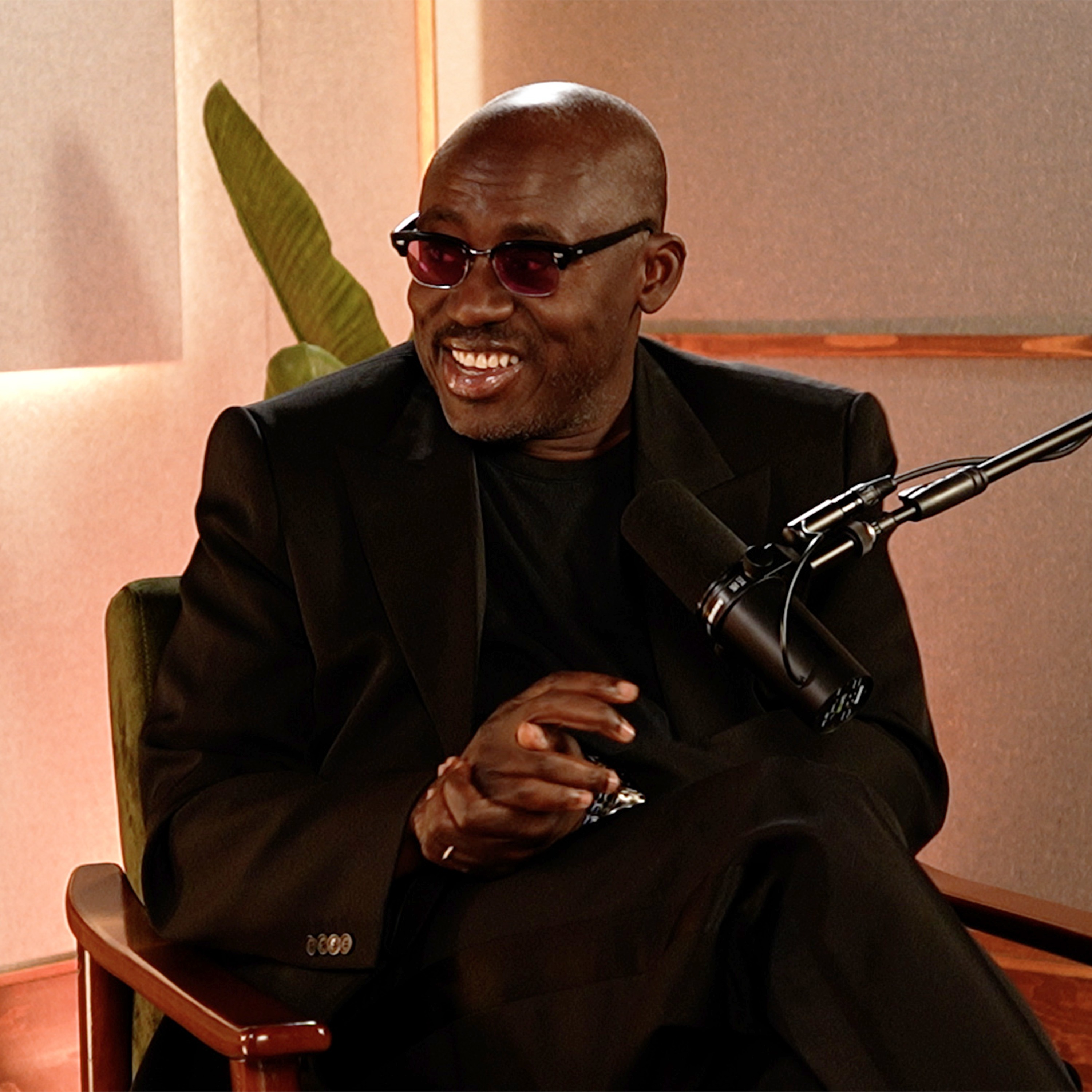
The Business of Fashion Podcast
Edward Enninful on Moving From Editor to Entrepreneur
00:48:37
In an in-depth conversation with BoF’s Imran Amed, Edward Enninful introduces EE72 — a new, culture-led media company — and opens up about leaving Vogue, building a business from scratch and advising the next generation of creatives.
Loading summary
Transcript154 lines
- [00:00]
Fiji Water Narrator
As it starts to get warmer outside. I love to keep Fiji Water on hand to keep hydrated and refreshed. It really is from the islands of Fiji. Drop by drop, Fiji Water is filtered through volcanic rock 1600 miles away from the nearest continent, protected and preserved naturally from external elements. In this process, it collects a unique profile of electrolytes and minerals, resulting in more than double the electrolytes as the other two top premium bottled water brands, giving Fiji Water its soft, smooth tast. Unlike some other premium bottled waters, Fiji water's electrolytes are 100% naturally occurring and this water even has a perfectly balanced ph of 7.7. Visit your local retailer to pick up some Fiji Water today for your next backyard party, beach or pool day hike, or even your home office. Fiji Water is Earth's finest water.
- [00:58]
Imran Ahmed
Hi, this is Imran Ahmed, founder and.
- [01:00]
BoF Podcast Host
CEO of the Business of Fashion.
- [01:02]
Imran Ahmed
Welcome to the BoF PODC.
- [01:04]
BoF Podcast Host
It's Friday, September 12th. This week, former editor in chief of British Vogue Edward Enenful unveiled EE72, a new media platform and consultancy that blends a print magazine, a slow digital publishing platform, and a creative agency to tell fashion and lifestyle stories through the lens of culture.
- [01:26]
Edward Enenful
EE72 for me is a culmination of everything I've done in my career. It's really where I wanted to be now. I wanted to move away from a masthead where I'm sort of confined, if you want to say, I wanted to be free. I could have created something that was very avant garde, very sort of specialist, but I wanted something that any woman could pick up, any man could pick up and feel welcomed. That was very important to me.
- [01:54]
BoF Podcast Host
This week on the BoF podcast, just as his first cover was being revealed online, I sat down with Edward to discuss why he launched EE72, what it means to build a fashion media company at a moment of existential challenges for both media and fashion, and how his newfound freedom is shaping his strategy and creative decisions. From a quarterly publishing cadence to choosing Julia Roberts as his first cover star, here's Edward Enenfull on the BOF Podcast.
- [02:28]
Imran Ahmed
Edward Annenful hi Imran, welcome to the BoF podcast. Literally one minute ago, the first issue of 72.
- [02:39]
Edward Enenful
Yes.
- [02:40]
Imran Ahmed
Went live.
- [02:41]
Edward Enenful
Yep, it went live.
- [02:43]
Imran Ahmed
I know you don't have time to see the reaction just right now, but.
- [02:46]
Edward Enenful
Well, I'm quite glad I'm here with you.
- [02:48]
Imran Ahmed
I'm glad you're here too. This is a conversation long overdue.
- [02:53]
Edward Enenful
Long overdue.
- [02:54]
Imran Ahmed
How do you feel?
- [02:56]
Edward Enenful
You know, I feel good. You know, I've had sort of almost. Yes, almost two years to sort of find my way, post my last job, start a new company. But really excited, I have to say, really, really excited.
- [03:18]
Imran Ahmed
Now there's a lot to discuss.
- [03:21]
Edward Enenful
I mean, where do we start?
- [03:22]
Imran Ahmed
Well, where I want to start actually is thinking about this shift from being an editor to being an entrepreneur. So this is your first issue, but the magazine is only part of what you're building.
- [03:42]
Edward Enenful
Yes.
- [03:43]
Imran Ahmed
You have this background, Starting in styling, ID magazine. W magazine, editor in chief of British Vogue. Talk to me about the decision to leave and what you were looking for in your next incarnation.
- [04:02]
Edward Enenful
Yes, I mean, as you said, I've got. I feel like I've been around forever, but I have been in this industry since I was 16 years old, like you said. Worked at ID, where I learned the craft. You know, I learned how to put a magazine together, literally. You know, from the advertising department to writing, styling the covers, writing the chopping pages, I learned on the job. And then, of course, later Italian Vogue, then American Vogue. Like you said, W. And then British Vogue. So I feel like 72. EE 72 for me, is a culmination of everything I've done in my career. It's really where I wanted to be now. You know, I turned 50 and I decided I needed another challenge. I did another challenge. I wanted to do something for myself as well as the community. And really that's what propelled me to where I am now.
- [05:04]
Imran Ahmed
And when you think about the community, who is that community that you're thinking about as you move into this next iteration?
- [05:14]
Edward Enenful
I mean, the community for me is people who love the idea of sort of creativity, people who love, you know, culture, people who love fashion, beauty, luxury, but also people who have really followed me my whole career, because I think I'm one of those people. You know, I've had so many. So many sort of incantations of who I am, and just people who are kind of open to sort of inclusivity and being open to what the world has to offer, really.
- [05:46]
Imran Ahmed
What were you looking to change from what you did previously? Because, you know, in this role, you've made it very clear that you're not operating as a stylist or an editor. You are the chief creative officer. What, as you thought about this step, what was it that personally you were looking to achieve? What was the challenge you were looking for?
- [06:09]
Edward Enenful
For me, I wanted to sort of create a company that was based on empathy, because that's obviously something that be the part of who I am was based on inclusivity. And I wanted to have a team of people that, you know, we've been, you know, we've been around to sort of, you know, use the little knowledge I have to help shape sort of who they are. And also a company that really is quite disruptive in a way. But right for now, I wanted to create something that wasn't just an old media company. Had I wanted to do that, I would have brought probably bought one of these many titles that are sitting around and trying to inject a life into it. But instead I chose to go the difficult way and start something from scratch. But someone like you will understand, because what I wanted to do really was to just not be tied down by rules. I wanted to be able to learn, make mistakes, pivot when I need. So that's how e72 was born. And yes, it's sort of three arms, if you want to call it that. The first arm is a platform. And when I say platform, it's not a magazine website. It's, you know, where I really would love community together, where we can have sort of, you know, podcasts, live alongside editorial, live alongside, you know, commerce. Sort of the heart of the ecosystem. And then in the beginning, I thought that was all we were going to do. We were going to do that. Of course we have an arm. That's because consultancy arm, which is really what I've done my whole career, sort of consult with clients. So as you see, you know, we did a consult. You know, I did a collaboration with Montclair that was about design, working with in the art world with a Tate next year, sort of curated a 90s exhibition. So that's culture. So we needed that arm. And for me, I never thought I would go back to creating a magazine. I mean, we all know the industry now. I never thought I'd create a magazine. But then everybody who heard that I was sort of creating a company was like, is there a magazine? We need that from you. So I thought, okay, but how do you create a magazine in a time where everyone's saying, you know, magazines are done? First of all, I knew I couldn't go to the grind of 12 issues. No, people don't need that from me. But what I thought was to do something that was quarterly, something that was really about creativity, and really give voices to sort of the young, the old feature covers, icons meet sort of new generation, just sort of give the industry something that I feel is new. Also, I wanted to move away from a masthead where I'm sort of confined. If you want to say I wanted to be free.
- [08:59]
Imran Ahmed
Free from what? When you're not?
- [09:01]
Edward Enenful
No, free from, you know. You know, sort of meetings. You know, you can't do this because, you know, commercially it might not be viable necessarily, but I've never really listened to that anyway. I've never really listened to what was commercially viable. I always went with my instincts and somehow they paid off. And, you know, just freedom. Just being able to do whatever I feel is right in the moment.
- [09:28]
Imran Ahmed
Yeah. Not commercially viable. There is not a single advertisement in this issue. How do you make a company like this work when there are no ads?
- [09:41]
Edward Enenful
Yes. So this is the interesting thing. First of all, I wanted to create a magazine that is about creativity. Sort of give the reader sort of the experience of going through a magazine without being interrupted by advertising. I wanted to give that experience of what it felt like for me when I started in the industry, which is just. I wanted just to breathe creativity. So really, it's a love affair to print the first one. And the reason why there are no ads is. I mean, you know, I also wanted to sort of. I sat down for a while with my team and we wondered, how do you create a company, a magazine? You know, I mean, I think, first of all, I have to say that it's not magazine first. Right. It's a platform. The platform that's powering this magazine. How do we work with clients in a way that's new and holistic? So we thought, you know what, let's work, let's create partnerships. So the partnership that won't necessarily rely on an ad page, but why don't we do a podcast together? Why don't we create a video together? Why don't we have an event together? So even though you don't see pages, it's powered by some of the most incredible companies out there. But it's just. I'm not saying that moving forward, there won't be ad pages, but they'll be part of a holistic package. But for the first time, we've been lucky enough to work with partners who just, you know, we're doing these events in New York. We're partnering with them. You know, we're partnering with Google, you know, we're working with Tiffany, we're working with Levi's. But it wasn't like, give us an ad. It's like, what can we create together? And for me, that's the way of moving forward.
- [11:33]
Imran Ahmed
Is that something that you heard from the market, that that's what these kinds of companies are looking for, are ads? Basically, not No, I mean, you know.
- [11:41]
Edward Enenful
It is the fashion industry. Like I said, ads are important. And moving forward, you know, we will accept ads, but it will be with, you know, sort of as part of a holistic package. And for me, it just feels like that's what's right for me and my company. I can't speak for anybody else, but it's working really, really well for us.
- [12:00]
Imran Ahmed
So, for example, in this first issue, we were just flipping through it, and there's a shoot with Adut Akech, our friend for Moncler. And that kind of brings us to the second pillar of this company. So there's the platform bit. The second pillar is this kind of consulting agency. What kinds of things are those clients looking for from you? And how do you then take that and then interject it into the platform, the magazine, and the kind of the media?
- [12:34]
Edward Enenful
I mean, I think what they want from me is like, it's my point of view. I've always had a very strong point of view about sort of fashion, about culture, about, you know, beauty. So that's the point of view that they want. And I mean, take it, you know, Montclair, for example, we wanted to create sort of a collection that was really about my history in fashion, what I like wearing, what I like to project. So that was sort of. We did that. We didn't even think what was going to come out of it. It was a genius project. And then from there, we were like, oh, my God, this has worked out really well. So Moncler and I decided, okay, now let's go to the Met Ball. What does that look like? EU72 in the Met Ball. So we went to the Met Ball. We dressed Serena Williams, we dressed, you know, Alicia Keys. So we went as a team. So again, that was something new that we worked on together. Then we worked on the ads, billboards everywhere. So each client is different. But what I'm saying is it's a conversation. It's something we create together. And then essentially, what we did with Montclair, what we will do with clients in the future, then goes into the magazine. But I'm not saying to one, Claire, give me a page of ads.
- [13:49]
Imran Ahmed
You're creating some editorial, some content or some.
- [13:52]
Edward Enenful
Exactly. Content. So important. And, you know, like, you know, like we said, you know, they might, you know, there are videos coming. We're partnering on an event in New York, you know, for the launch of EU72. So there's all these interesting ways of working with clients, and they seem to be loving it as well. I Feel like, you know, the old way of just being in print magazines, I'm not sure how that works anymore. But I'm saying for my company, this way of working, so exciting. It seems very exciting for clients.
- [14:25]
Imran Ahmed
So apart from the lack of advertisements, which I think is genuinely different, this doesn't seem all that different from what you did at British Vogue. Like, events were a big part of what you did. You worked with a lot of clients. You did the Forces for Change product project. How do you see this as being different from what you did there?
- [14:45]
Edward Enenful
For me, what. What is different about it now is it's even more of a conversation for me. It's like, what events do I want to have as opposed to what events does a company need to have? What kind of videos do I want to see with my company? So it's more. It's. Maybe it's even more personal this time around. Does that make sense?
- [15:07]
Imran Ahmed
So outside the corporate confines of a Conde Nast, you can go with more of your instincts.
- [15:14]
Edward Enenful
Yeah. And also, like I said, make mistakes. So I might say, oh, my God, maybe for the next one somebody's going to come in and challenge me and say, you know, we want to do 10 pages and this is the reason why, and we can have a conversation about it. But what I didn't do this first time I run in was houses with holies. I didn't go around to any houses to ask for ads because in my head it was clear what we needed to do, how we needed to start. And of course we're going to grow and things are going to change and we're going to be sitting here in a year's time and you're going to be saying, why are there so many ads? But it's the. It's the whole idea of growing.
- [15:48]
Imran Ahmed
Right.
- [15:48]
Edward Enenful
Organically.
- [15:49]
Imran Ahmed
Yeah.
- [15:50]
Edward Enenful
You know, and even talking about the platform. You know, I'm not. We're not here to build a platform with. With, you know, all information, all times of the day. It's got to be very specific. When we have something to say, we will say it. I call it slow digital. We're going to learn. We're going to sort of. Yeah. Not build something ginormous, waiting for people to come.
- [16:13]
Imran Ahmed
You're not feeding the Internet.
- [16:15]
Edward Enenful
We're not feeding. No, we're not doing that.
- [16:17]
Imran Ahmed
So if it's not British Vogue, that's kind of the model.
- [16:21]
Edward Enenful
I mean, I'll tell you the model. I mean, to be honest, I wanted to create a magazine that was a combination of everything I've Done. I was at ID for 20 years, so we had to have that sense of youth and cool. So that's got an aspect of that. I was at W Magazine, Italian Vogue, with a sense of narratives and beauty, so that had to be a part of it. And then I was at the, you know, British Vogue, American Vogue, where we had to marry creativity and commerce. So everything I've learned over these years resulted in 72 magazine. But I wanted to create something that was welcoming to sort of people, inviting. And I didn't want to really create something that was. I could have created something that was very avant garde, very sort of specialist, but I wanted something that any woman could pick up, any man could pick up and feel welcomed. That was very important to me.
- [17:15]
Imran Ahmed
So this is not some, like, highfalutin fashion magazine.
- [17:18]
Edward Enenful
No, for me, it's about culture.
- [17:20]
Imran Ahmed
Okay?
- [17:20]
Edward Enenful
It's always been about culture. Even the work I did at British Vogue was always about culture. How do we tell stories about fashion? You know, how do we tell stories about architecture, film, how do we tell stories about food? But through the lens of culture? So for me, I've always been about sort of culture. Anyway.
- [17:38]
Imran Ahmed
It strikes me when I was, you know, looking through it just now and, you know, thinking about it yesterday, that it's more like a how to spend it style magazine or a tea magazine that they take like a broader cultural lens than just going through the lens of fashion first.
- [17:57]
Edward Enenful
I mean, you know, to me, even a British folk, I never really took to sort of look through the lens of fashion. It was always culture. It was with the politicians we featured, the women we featured, from all backgrounds, you know, all ages, you know, women from different religions. For me, the world is such an incredible place that it was always about culture first and foremost. Just carry that on, really. It doesn't feel like something new. Also, you know, I wasn't. I'm not out here to reinvent. Reinvent the wheel, but I just wanted to really sort of use everything I'd learned over the years or everything I loved over the years.
- [18:39]
Imran Ahmed
Right.
- [18:40]
Edward Enenful
And have it all in one pill.
- [18:45]
BoF Podcast Host
We'll be right back with more on the BoF podcast.
- [18:52]
Imran Ahmed
So let's put that into practice and talk a little bit about this issue.
- [18:56]
Edward Enenful
Yes.
- [18:58]
Imran Ahmed
Julia Roberts cover star. Not what I was expecting. I'll be interested to see when we're finished this today. I'll go on Instagram and see what the kind of digital reaction is. Why Julia Roberts, the first cover star of your magazine, why she the right one?
- [19:16]
Edward Enenful
So, I mean, I think this Conversation's gonna be very interesting because people have an idea of who they think is going to be the first cover. Is it Naomi Campbell? Is it Kate Moss? Is it Beyonce? Is it Rihanna? I know, yeah. But for me, Julia represents something that society really, really needs. She is one of the biggest movie stars in the world. She is outspoken. She's a mother. You know, she is herself, 100% herself. I say to people, I mean, we're friends now. I don't even think Julia has a housekeeper. She drives, goes to the supermax. She's a real woman. And for me, inclusivity was never just about race. People always talked about race. For me, it was about age. It was about socioeconomic background, it was about religion. It was about sort of anything that's seen outside of what is, quote unquote, the Eurocentric norm. Right. So Julia, for me, represents the invisible. The invisible women. Women in their 50s who are being told day in, day out, it's about youth who are being told when you're 50, in your 50s or 60s or 70s, that you're invisible. So for me, the first message that I wanted to put out there was that everybody's welcome, regardless of age. So that's why Julia was there. And also, she was always my. What do you call it? When I was at Vogue, I always thought I needed Julia Robert cover year one, two, three. I couldn't get her for the penultimate issue. I thought, let me try again. And this time she was. She was willing. She said, okay, let's do it. And I remember as she walked out of the studio, I said, whatever I do next, you will be the COVID I'm sure. She was like, sure, sure, whatever. And I called her and I said, it's time. But it's for all those incredible women out there who are aging. I think age is a beautiful thing. So, yes, that's why Julia's on the COVID And it's as inclusive as can be.
- [21:16]
Imran Ahmed
And she's wearing Phoebe Filo, another independent woman.
- [21:19]
Edward Enenful
Phoebe Filo is a dear friend of mine. Another independent woman who was institution and decided to go out and sort of do things on her own. And I have so much respect for Phoebe. She's been so instrumental in. In 72. Because the number, you know, we'll sit there and I'll be like, I'll pick her brain. What is it like? You know? And Phoebe was such close friends and really, what an amazing talent.
- [21:42]
Imran Ahmed
Yeah.
- [21:43]
Edward Enenful
So for me, it was a no brainer. Julia, in Phoebe, you have a lot and Judge Clooney and Julia. The interview's been done by George Clooney interviews Julia. And it's. I mean, we couldn't even cut it down, but you literally feel like you're in the living room of two mega stars.
- [22:02]
Imran Ahmed
Yeah, well, they've worked together so often.
- [22:03]
BoF Podcast Host
Right.
- [22:04]
Imran Ahmed
So they must know each other really well. And great interviewers are often the ones that can create a sense of comfort for the other person, not be afraid to ask them challenging questions, but also know the person really well, so know where to push. So that's. I'll be. I'll be interested to read that.
- [22:22]
Edward Enenful
That interview for you to read it.
- [22:24]
Imran Ahmed
Let's talk about the cadence. Because, you know, if at first you weren't even necessarily thinking about a magazine, and then, you know, maybe popular demand convinced you that. That you should do one. You know, this is a big debate in the media industry right now.
- [22:39]
Edward Enenful
Yes.
- [22:39]
Imran Ahmed
Recently, you know, American Vogue appointed its new head of editorial content, Chloe Mao. And in her first interview with the New York Times, she talked about doing fewer issues. Is like, where do you see the magazine industry going in terms of print? Is that where we're going? Where we're gonna have fewer?
- [22:59]
Edward Enenful
Yeah, I mean. I mean, I always even believed that fewer issues, really well curated, beautiful. I mean, we've got, like, 500 hardbacks of this, and when you look at it, it's like the most beautiful book. Just fewer issues, highly curated, things you want to own. That was always, for me, you know, when we announced in. Earlier in the year, that was always what I wanted to do. Fewer issues that were collectibles. And I feel like the magazine industry, you know, I mean, look, they said books were, you know, when the Kindle came, books were, you know, done right. But I feel like the magazine industry will carry on, but we have to sort of look at things differently, how we work with clients. Like we spoke about and, you know, cadence. For me, I don't have the energy or the strength to do more than four. Spring, summer, autumn, winter. But four times a year, you know, when the shows happen, you take inspiration from the bus or take inspiration from the world at large. But I think four is perfect. Four is perfect. You know, you can see a lot with four issues. I remember working on certain issues at British Vogue and thinking, oh, my God, this could actually be sort of two issues in one. So the beauty of, you know, sort of coming back and doing this is that we'll do less issues, but each issue will be sort of hopefully arrived and packed with information.
- [24:28]
Imran Ahmed
Your role in the magazine this time is Different. Sarah Harris is editorial director. How are things different in terms of the way you contribute to the magazine? Just now you said to me, I don't do any styling anymore.
- [24:42]
Edward Enenful
No.
- [24:42]
Imran Ahmed
So what is your role in shaping the magazine and where do you let Sarah and her team?
- [24:49]
Edward Enenful
So my role, like I said, you know, everybody gets focuses on the magazine. But you know, like I said, the platform for me is where a lot of my energy goes. I also work with Simone, who is the head of digital and she lives in America. There's a team in America.
- [25:03]
Imran Ahmed
Simone Oliver, right?
- [25:04]
Edward Enenful
Yeah, Simone Oliver in America. A team in London. So I spent a lot of time sort of working with sort of the platform team. I spent a lot of time sort of liaison with sort of clients on, on, on the other side, I also spent. And when it comes to magazine, I got the best in class. I got some of the, the greatest people I've worked with. I mean, including my husband, you know, you know, Alec Kloss films, he's a visuals director. Sarah Harris as well as so many incredible young talents. So, I mean, you know, what's my job? Not really, you know, make phone calls.
- [25:42]
Imran Ahmed
And it sounds like your job is to. Is also like building the right team.
- [25:47]
Edward Enenful
Building the right team.
- [25:47]
Imran Ahmed
And then also you're taking on more of the publisher role, which is to build the relationships that. This is the entrepreneur side that I wanted to talk about.
- [25:56]
Edward Enenful
It's, you know, it's when you're a founder, it's a different hat you wear. You know, before as an editor, I'm so involved in the pages. I want, you know, everything that's in my head, I have to get out. But now there are things I can literally walk away from. If you, if Sarah believes in it or the team believe in it, then I believe in it. And then, you know, the ideas that I'll sort of encourage, they can, you know, take it or leave it. I'm not here to try and do everything myself.
- [26:26]
Imran Ahmed
Are you signing off on pages and images and covers and.
- [26:30]
Edward Enenful
Yes, I mean, I am signing off with Sarah.
- [26:32]
Imran Ahmed
Okay.
- [26:33]
Edward Enenful
Because you know, at the end of the day, you know, people also, you know, no matter what I say to you, you still think it's Edward Adam Full. So it's quite great that I know sort of, I know the end product. I'm not just working at the end and. But it's so amazing, Imran working with a new team in something that's never. Doesn't have a history. We can really create as we're moving along. You did this with your bedroom. I remember. Yeah, I remember you in your bedroom. And for me, when I turned 50, that urge to sort of create what I did at I D magazine when I was a kid, what I did when I went to W magazine when they said the magazine was closing down, that challenge, you know, I never went anywhere that was already working. You know, I don't know. I was always called in when a place needed help, and there were times growing up when I thought, oh, my God, why can't I just go somewhere that works? But I realized that that is a superpower.
- [27:31]
Imran Ahmed
Yeah, you're kind of a turnaround expert.
- [27:33]
Edward Enenful
A turnaround artist.
- [27:34]
Imran Ahmed
Yeah, and a turnaround artist. But this time, you're actually creating something from certain. What's been the hardest part, like, doing something from zero.
- [27:43]
Edward Enenful
I mean, let's face it, I've been in golden handcuffs for quite a while. Right. You know, whether it's as a stylist with the best clients you could think about, whether I was, you know, working as an editor for Vogue, creative director for W. I've always sort of had access, but not with my own business. Now, looking at the. Looking at the. What do you call it? The fine line. Look at the spending, you know, what you can spend, what you can't spend, what. Where the team can stay, you know, even during the shows, all those problems that before I were never really a problem, Right. You're like, it just has to happen. I need this now. People are coming up to me going, we need this. And I'm like, why do you need this?
- [28:23]
Imran Ahmed
Right?
- [28:23]
Edward Enenful
So, I mean, there's that. Of course, that's the whole idea of, you know, you always have these insecurities. Is it. Is it going to work? Is it the right time? But then, you know, that's. That's human. And then. And then they pass. And I'm not really somebody to sort of dwell on problems. I'm a problem solver, so I'm very good at solving problems. And thank God, I've built quite an amazing group of colleagues and friends. I can also lean on calling in favors or whatever. The budgets we have. It's not Vogue budgets, but somehow everybody I called and asked to work for the magazine was like, no problem.
- [29:04]
Imran Ahmed
I mean, I guess that's a testament to your relationships in the industry, which I think are really helpful when you're starting something.
- [29:11]
Edward Enenful
Oh, my God. It's the best. It's the best. I mean, over three decades of relationships and friendships. Very thankful. I never take that for granted.
- [29:22]
Imran Ahmed
Yeah. What do you think of Fashion media.
- [29:26]
Edward Enenful
Right now, I think it's in flux. We're going through a very tough time for fashion media. I think outlets like yours, like wwd, all those kind of sort of outlets that sort of feed the industry information are really what people are focused on right now, and rightly so. And I feel like there's also room for creativity. I think a lot of people have gotten. I've gotten scared about creativity or I've gotten scared about, you know, being different. You know, I've gotten scared about even talking about, you know, being inclusive, all those things. I think we need. We need to sort of examine, you know, and for me, you know, fear has never been an option. Right? Fear has never been an option. I've never been scared. You know, I've never. I've never done anything in the perfect time. I came to British, it was after. It was after Brexit and through Covid. Through Covid. It's almost like I've had to go through the hardest times, but that's when I do my best work. That's when I really sort of. Yeah. Sort of rise and meet the moment for me. So it was about meeting the moments. And so that's really. Yeah, we're going through a hard time in the media, but I also feel like we're just sort of learning how to be kind of a new industry. At the same time, I look at all these designers, you know, we're learning to be a new industry. We're learning to maybe let go of sort of things we knew from the past and figure out how to create a new industry.
- [30:57]
Imran Ahmed
Yeah, I mean, the creativity question is not just one that's an issue in magazines, which, you know, I just know from, you know, my own relationships in the industry, like budgets are being cut, like it's hard to get shoots done. There's so many limitations. And, you know, like it or not, you know, at some stage, if you want to do really creative things, you need. You need resources to do it. Not everyone has the relationships you have. The same thing is true in the kind of design part of our industry where there's a lot of change happening. I mean, as we look towards this September, October, what's running through your mind?
- [31:38]
Edward Enenful
I mean, Imran, I've been away from when almost two Septembers now. I've been to a couple of shows. I am so excited. I mean, to come into the industry right back into the industry right now with all these changes, all this excitement. Look, I've been around for a long time. I've been around where Calvin Klein was at his house. St. Laurent was at St. Laurent. Jill Sander was at just so. I've seen the industry go through so many changes, and I feel like this moment is very exciting for a new generation who are not attached to the designers we knew from back when. So I am so excited that I'm launching in an industry in flux. Yes. But also an amazing creative moment. I mean, I get to see Pierpaolo, I get to see Demna, I get to see so many great young designers sort of for the first time in new houses. So I'm quite excited by that.
- [32:32]
Imran Ahmed
And then do you think that will help to address the challenges the industry is facing?
- [32:40]
Edward Enenful
I hope it's new thinking. I hope it's new, you know, new ways of existing fashion houses exist. I think we, you know, we all went. It just became a lot about sort of numbers, more is more. And, you know, I get it. But maybe now there might be a pivot to creativity. Like, you know, for me, creativity was always the answer from day one since I started. You know, the business side will always be great, but the business side, it's at its best when it's sort of arm in arm with creativity. And I think these designers have to be bold now. You know, I remember a time when, you know, McQueen was at Givenchy, John Galliano was at Dior, you know, all these bold designers. And I feel that we have to allow that. We have to allow that again. You know, they have to be bold, and there has to be a sense of fearlessness.
- [33:29]
Imran Ahmed
What do you think got in the way? I mean, just now you said that, you know, it became, you know, we became too focused on the money side. I mean, what.
- [33:39]
Edward Enenful
I mean, yes, you know, we need, you know, every business needs to survive. But I feel that maybe that took precedence over designers being creative. And a lot of designers were scared to. You know, I remember I grew up in a time when, you know, in one season, you know, skirts were high, skirts were to the floor. Anything went. And I felt like people felt that they had to follow a pattern B. Almost a B. Be part of a flock. And I feel like now really calls for individuality. And the last couture show seems was quite exciting, I thought, you know.
- [34:14]
Imran Ahmed
Yeah. There seemed to be the start of something interesting happening.
- [34:18]
Edward Enenful
Something interesting happened. I remember reading Tim's review, and it was just. I've been at home so excited, like, oh, my God, something is happening. I remember the 90s. I remember when grunch was happening as a reaction against the 80s and everyone was like, what is this? I remember, you know, when, you know, Tom Ford came along and all of a sudden glamour was back, you know. So I keep. And I feel like that we're in an exciting time right now. Exciting time for creativity. So that's all I can really hope.
- [34:45]
Imran Ahmed
What do you feel is coming from what you've seen?
- [34:47]
Edward Enenful
I mean, from what I saw at Couture, from the people I've been speaking with, sort of the editors, the photographers. It seems like everybody feels there's something in the air. And, you know, I will be right there alongside you reporting it and being a part of the industry really. So I'm very excited.
- [35:05]
Imran Ahmed
You haven't done Fashion Week for a couple of years. You're ready for the slog. It's gonna be.
- [35:09]
Edward Enenful
I don't know if I am. I'm not doing every show. Cause now, you know, there's a team in place who will go to everything. You know, Anders Madsen, who I love, Sarah. They'll be going to everything. But I'll be going to. I'm not going to miss these debuts, so to say. But so, you know, we're still gonna be sitting next to each other, we're still gonna be gossiping, but not at every show maybe. Cause you still have to go to a lot.
- [35:30]
Imran Ahmed
Yeah, I also have a team. So like we kind of spread the workload as well, because it's impossible to do everything.
- [35:36]
Edward Enenful
One thing I wanted to say also about the platform and the magazines, it's global, okay. It's sort of British. You know, it's not America, it's global. We have, you know, offices in. We're going to have offices in the US as well as in the uk. We live in an exciting time where lots of my team are working from home. So you don't need to be in an office. But the brilliant thing about the magazine is it will drop the same day, 26 countries, the same day. So you don't have to wait a month to receive your copy. So that's also a new way. That's really exciting.
- [36:12]
Imran Ahmed
Let's talk about the business model a bit, because I understand now that the focus is on building these more 360 degree partnerships. It might be helping create a collection or organizing an event and there might be some content you create. But the magazine cover price is £15 or $20. So it's pricey compared to a typical magazine. As you were going around raising money to launch this venture, what was your pitch to the investor community to say this is what I'm building. And this is why it's. Why it's different and why it's successful. What's the business model?
- [36:51]
Edward Enenful
I mean, it was very interesting because the business model. The first thing I said was, the business model doesn't exist. It doesn't exist. But what I want to create, based on my track record, I wanted to create something that was disruptive because I guess the word disruption is always a part of who I am. So they knew that whatever I did was going to be disruptive and it wasn't going to be like following.
- [37:15]
Imran Ahmed
A.
- [37:16]
Edward Enenful
Or following B. I wanted to create something that was unique and different. So, yeah, that was really it. And it was very interesting. It was very interesting because in the end I realized I just needed sort of a few sort of friends and I needed to use my own sort of investment because I wanted to be my own boss. And my sister, who is, you know, we can't talk about this. I'm talking my sister, who's a business. Sort of a business genius. She was my agent for 18 years. We made every decision together, even the decision to come to British Vogue, the decision how long I was going. We made every decision together, as well as my husband. So there was always three of us. It wasn't just the Edward show. It was always three of us. And you know us very well. So it's like, you know what? Let's do it our way. And then for me, I always say to the next generation, what I learned from more than success is my failures. I'm like, let's do it this way, let's do it our way, and then let's learn from our failures. So I wasn't really bothered about what was out there already. I really, you know, I wasn't really worried about how businesses are supposed to work. This is what sort of worked for me. And, you know, I hope. Yeah, and I hope that people would meet me along the way and they. They have. So I'm very excited by it. But you know me, I was never going to do anything that was the norm. And don't forget, I could have taken so many jobs at magazines and, you know, gone to shows and been an editor. But I wanted to create something that wasn't just for me, but also for a new generation. You know, a new generation of, you know, Edwards and Imran's in their room saying, look at them. If they can do it, we can. That's very important because that's what I had when I started in people like Terry and Tricia Jones. That I did. You know, Simon Fox and Franco Sanzani, all these people really took me under their wings and really taught me about the industry and protected me. So that's kind of what I wanted to give back alongside a business model.
- [39:19]
Imran Ahmed
You know, Edward, one of the issues that you become so well known for in the industry is around representation, around diversity, around inclusion. You know, I've been reading a lot these past few months about shifting sentiments around. You know, if you think back to 2015, 2016, when, you know, people like you and me were first raising the awareness around, around these topics, I mean, it felt like we were. We were kind of creating some kind of awareness and change.
- [40:02]
Edward Enenful
Yes, we were.
- [40:03]
Imran Ahmed
But, you know, more recently, it feels like a lot of that change is backsliding. You know, there's, you know, in the U.S. you know, a lot of companies are erasing the words, you know, chief diversity officer or diversity inclusion from their websites and from people's titles. What do you make of the state of the industry as it pertains to this topic that I know you care about so much?
- [40:28]
Edward Enenful
Oh, of course. The representation is so important to me. I feel like it's become one step forward, two steps back. I feel like the fashion industry, you know, we love trends, so I feel like that's become a trend. But I'll tell you something, Imran. I was black before dei. I am black now, and I will be black. So for me, I'm not a trend, you're not a trend. So there has to be people in place who will still be fearless and. And sort of fight the fight. And that's what we're here to do. It's very sad that things go, you know, back after a few years. But then I've been here since the 90s where there were no black models anywhere apart from Naomi Campbell. And we addressed that the 2000s, where all shows were totally, totally, you know, Eurocentric. So Franco Sozani and all of us had to create a black issue. Fast forward to, you know, 2011, 12, 13, whatever, when again, we go back to the same problem of a lack of representation. And Betha, Naomi, they come back. So there are those of us who will carry on fighting. Look at what you've done with voices. Are you going to stop? No, you will not stop. Because I think at the end of the day, we will be on the right side of history. And I'm very interested in being on the right side of history. So for me, it's not a trend. For me, it's not. Let's Move on. It's who we are. It's who we are. People of color. So I'm so happy to be coming back now because I will carry on challenging. It's just a sense of maybe as a new generation who are growing up and they might not have sort of the feeling that's of the background we do. So we have to be there for them as well.
- [42:25]
Imran Ahmed
Yeah. And I think that there's an element of it which is, you know, regardless of what you call it and what you're allowed to call it, what the law says you should be doing within the company, I think what the most important thing is that the work is still being. Still being done.
- [42:40]
Edward Enenful
The work is being done.
- [42:41]
Imran Ahmed
You know, they can call it whatever they want. Whatever you call it, they can call it whatever they want.
- [42:44]
Edward Enenful
I've always believed in pluralism anyway. You know, everybody's welcome. All Voices are welcome. That's always been sort of what I believed in it, and I feel now more than ever. Yeah. We have to practice that. Whatever you call it.
- [42:55]
Imran Ahmed
Yeah.
- [42:56]
Edward Enenful
But I'm so proud of you. I remember when you started Voices, and it's so important. It's become one of the most important things in. Not just in our industry, but in culture. You can't stop.
- [43:08]
Imran Ahmed
No. And. But the thing is, the people who are part of it, you know, this is our 10th. It's our 10th year of voices this year. So I've been. Yeah, can you believe it?
- [43:17]
Edward Enenful
No way. And the 500, too.
- [43:19]
Imran Ahmed
Yeah. And I've been thinking about it a lot because obviously, like, it's a. When these milestones come along, you really think about and have been going back to the old talks and, you know, the very first topics that we talked about at voices in 2016, those are the same topics. Same topics that we're still talking about now.
- [43:36]
Edward Enenful
The same topics I'll be talking about my whole career. We're still talking about that. And it's a little bit sad. Like I said, one step forward, two steps back, you know, but there are people who, you know, we're here for a reason. We're not just here for ourselves. Yes, we have great businesses, and, you know, we will. You know, they have to succeed, but we also stand for something, and I will always stand for something.
- [43:59]
Imran Ahmed
So just before we wrap up, I'm curious, you know, what success in this new venture Edward the entrepreneur, looks like for you? Like, have you got a picture in your head about what?
- [44:16]
Edward Enenful
Oh, my gosh.
- [44:17]
Imran Ahmed
Like, you must think about it a little bit.
- [44:20]
Edward Enenful
Imran, I'll tell you something. I remember being a teenager, being 18 years old and being asked to be fashion director for I D magazine. And everyone was saying, oh my God, what are you gonna do? And I just did it. I didn't think, I just did it. Same thing happened when I got calls to work with Steven Maisel for Italian Vogue, this incredible, you know, photographer, Italian Vogue, you know, Franco Sanzani. I just shut everything out and just did the work. When I did W magazine, when I did American Vogue, British Vogue, I just, I'm quite able to shut up the noise and just propel. And I know I'm in a different position now, but for me, if, if somebody looks at the company and think, you know, thinks, you know, they've done good, they've done good in a tough time, I'm happy. If it's commercially successful, even happier and influential, I'll be in heaven. But success for me is really, am I happy? Because if I'm not happy, I'll do something else. I always go back to this as a child of immigrants with a father, a middle class father who was in the army, having to leave everything we had to come to England penniless. That has taught me that, my God, if I can survive that I can survive anything. And that's really what keeps me going. If something doesn't work, I can pivot, I can learn. But that comes from being that little kid who arrived in England from an all black country and got told he wasn't good enough. So for me, success really is am I happy? More than anything else? I'll say.
- [46:06]
Imran Ahmed
And for the aspiring editors, entrepreneurs, stylists who are thinking about building a career in this industry. And by the way, you know, fashion is challenged right now and media is challenged right now and fashion media is super challenged right now. Like, what advice do you like? How does someone find their way in this industry at such a challenging moment.
- [46:36]
Edward Enenful
Such a challenging time? On one hand, you know, you have, they have all these platforms, Instagram, TikTok, but also it makes it so difficult for them. I always say, you know, I mean, it's easy for me to say, you know, believe in what you believe, follow your dreams. Yes, we know that, but practically surround yourself with like minded people. Surround yourself with people who can really help you when you're down. Because it's going to, to be a tough journey. It's not an easy. You don't just get up and end up being a superstar. Learn from your mistakes, try new things because that's the only way you're Going to learn. If you're playing it safe your whole career, that's, that's a problem. And not everybody is going to be encouraging. Right, you're going to come again. So many naysayers like I did, you know, but something in me was meant to do what I did. If you're meant to be in the fashion industry, if you're meant to be in the media industry, you won't even have a choice. I remember I'd walk from Labborough Grove to, to East London to return. Close that. That's how passionate I was. So passion will see you through practicalities. If you can work with somebody in any of those industries, if you can get work experience, a BoF, if you could get work experience, take it. Because that's how I got into the industry, through Simon Foxton and id. That's become more important now as an entry, you know, yes, you can have all the degrees you want, which is amazing, but you need the first steps, you know, and great people around you, people can lift you up and help your, you know, your mental health, really protect your mental health.
- [48:14]
Imran Ahmed
It's good advice. You have a big four weeks ahead of you. Oh, tell me your first launch is on Friday.
- [48:23]
Edward Enenful
Friday we're in New York, we're launching in New York and then every Friday, then London's the next Friday, then Milan, then Paris and each launch is different. So New York is sort of, you know, sort of around technology, London's around music, Milan is sort of around fashion and Paris is really sort of an incredible cocktail to see all my friends I haven't seen in a while.
- [48:49]
Imran Ahmed
Well, we're all super excited and proud.
- [48:51]
Edward Enenful
I'm so excited to see you.
- [48:53]
Imran Ahmed
Thank you for agreeing to sit down with me to talk me through it.
- [48:57]
Edward Enenful
Thank you.
- [48:57]
Imran Ahmed
Imran.
- [48:57]
Edward Enenful
It's been long coming, but I wanted to come when I could really give you something.
- [49:02]
Imran Ahmed
Yeah. Well, this is exciting. I look forward to digging in.
- [49:06]
Edward Enenful
Thank you.
- [49:07]
Imran Ahmed
And I look forward to sitting down with you and exchanging entrepreneur war stories.
- [49:13]
Edward Enenful
I am very excited. Thank you so much, Imran.
- [49:17]
Imran Ahmed
All right, good luck, Edward.
- [49:19]
Edward Enenful
Thank you.
- [49:19]
Imran Ahmed
All right, take care.
- [49:21]
BoF Podcast Host
The BoF podcast is edited and produced by Olivia Davies and Eric Brea.
- [49:33]
Trimble Advertiser
Every day there's a new challenge to face, so meet Trimble, the technology company that connects your physical and digital worlds, allowing you to make decisions and take intelligent action to get the hard work done. And the best part, you can do it all faster than you've ever thought possible. Check them out@trimble.com you ready to turn data points into decision points or turn deadlines into finish lines? How about turning possibilities into profits? Then turn to Trimble.
- [49:59]
Bolen Branch Bedding Advertiser
Imagine a world of extraordinary comfort where Bolen Branch Bedding wraps you in the softest. Embrace the coziest experience, made from the world's finest 100% organic cotton, all so you can sleep better. Start building your fall sanctuary with Bolen Branch's iconic Signature sheets, made with a buttery, breathable weave that gets softer with every wash. Enjoy 15% off your first set of sheets with free shipping and returns@bollandbranch.com with code buttery. See site for details and exclusions.