← The Business of Fashion Podcast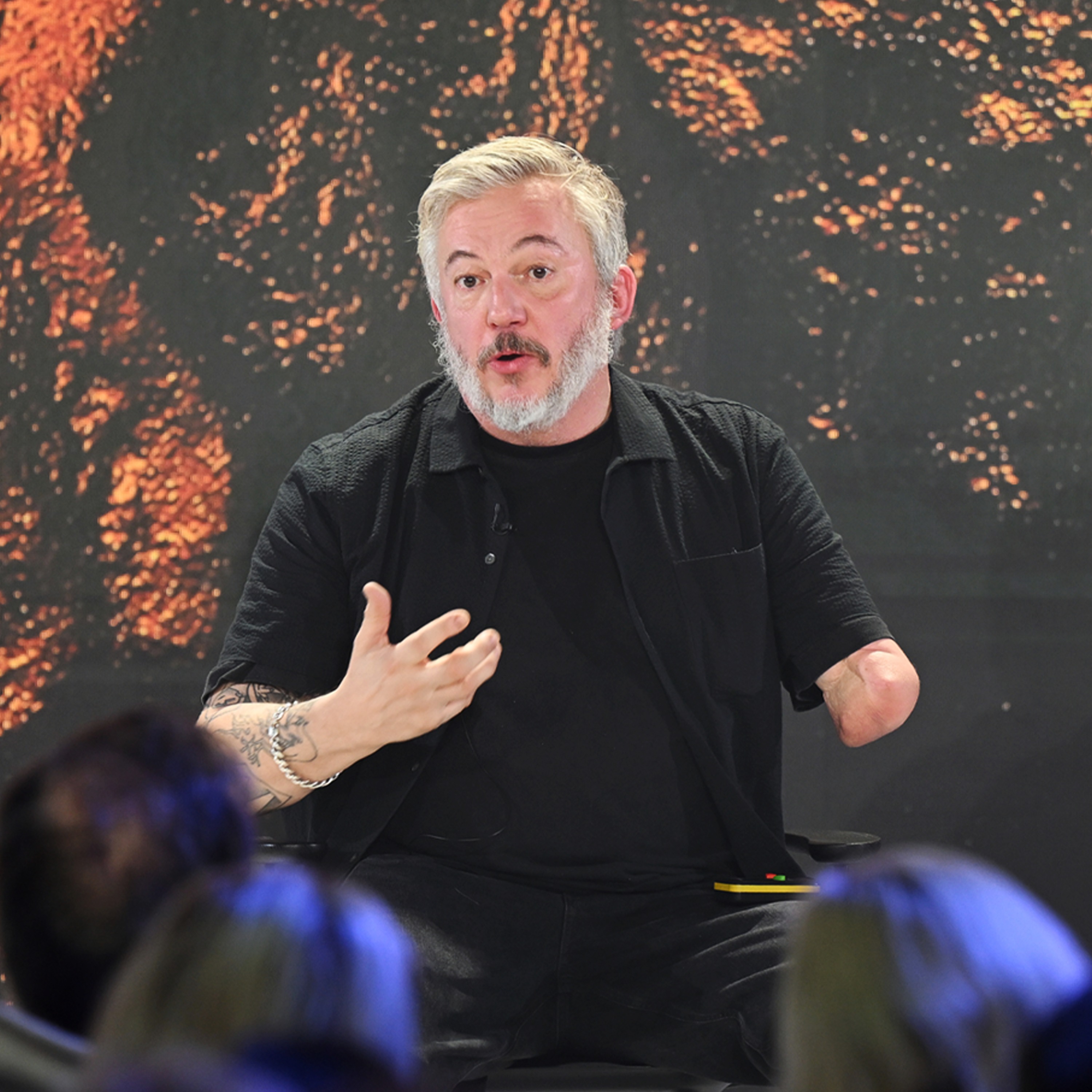
The Business of Fashion Podcast
Giles Duley Shares a New Lens on Purpose
00:16:27
From early success in fashion photography to a life-altering injury in Afghanistan, photographer Giles Duley reveals how creativity and empathy can reshape how we document — and transform — people and communities.
Loading summary
Transcript7 lines
- [00:00]
A
Foreign.
- [00:05]
B
Hi, this is Imran Ahmed, Founder and CEO of the Business of Fashion. Welcome to the BOF podcast. It's Friday, February 21st. In his early 20s, photographer Giles Dooley was already shooting for the likes of GQ and Vogue and even touring with Oasis as their photographer. But eventually he found himself unfulfilled by the high flying world of fashion and celebrity and turned his lens to document the long humanitarian impact of conflict when an injury in Afghanistan changed his life forever. In this powerful talk from BoF Voices 2024, Giles shares how his roots in fashion photography helped shape his eye for human stories and why he believes creativity and empathy can break down barriers.
- [00:55]
A
There is a connection from where I started to where I am now, which is stories, which is empathy. And I realized that there's a connection. There's the story, there's the storyteller and then there's the amplifier. And what brands and individuals can do is be those amplifiers to make sure those stories are heard around the world. I've realized the way I live my best life is to make sure others are living their best life. And that is my purpose.
- [01:22]
B
Giles reflections carry important lessons for all of us on how we can use our talents and the platforms at our disposal to drive meaningful change. I hope you'll find histories story as moving and inspiring as I did. Here's Giles Dooley on the BoF podcast.
- [01:43]
A
I've been on the road for four and a half months and I'm losing my voice, so hopefully we can hold out for another 15 minutes. It's interesting to be here to talk about war in a room which is connected to fashion, but actually the two worlds are my two worlds. I'm going to tell a few stories. There's a lot I could tell and I'm going to talk about creativity and the power of creativity to create change. I'm going to talk about resilience and I'm going to talk about love. My story starts when I was 18 years old. I'd gone to America on a sports scholarship. I was the world's worst boxer. I thought I was great. I remember my coach saying, giles, you take a punch really well. But at 18 we take everything as a compliment. The sport was my life, but I was involved in a minor car accident in America, flown back to the UK and told, you're not going to do sport anymore. Lying in a hospital bed at 18, I was an incredibly angry young man. And then two small gifts were to change my life forever. Lying in that hospital bed, I was given an Olympus OM10 camera and a book by the war photographer Don McCullen, by my godfather. And I'd never seen photographs like Don McCullen's. These really stark black and white images. The wars in Vietnam, famines in Bangladesh, Biafra. And I was so moved that I decided there and then that's what I wanted to do with my life. I wanted to become a war photographer. So I taught myself photography, lying in a hospital bed and left full of really great intentions, to become the next great war photographer as we know 18. It's very easy to get distracted. I had a few friends that were musicians, that were in bands. They said, come and photograph our gigs, which I did. And literally by mistake, I became a rock and roll photographer. I was on the road with Oasis at 18. I started shooting for GQ magazine. I moved into fashion. I was shooting for Vogue. I was living a dream life. The idea of going to a war zone suddenly didn't seem very interesting at all. I'm traveling around the world doing these amazing things. But as the years went on, I found myself increasingly unhappy, and I could not figure out why, because on paper, I really did have a dream life for somebody in his early 20s. To be doing what I was doing was incredible. Earning ridiculous amounts of money for having fun. But I remember when I was 28, doing a shoot with Lenny Kravitz at his house in Miami, and sitting in my hotel room that night and inexplicably crying because something inside me was missing, and I couldn't figure out what it was. It was the 90s, which was not a great time in many ways, in celebrity culture and a lot of the magazines I worked for. I'd grown increasingly cynical about the way that women were portrayed in a lot of the magazines that I worked for. And all these things came to a climax. Doing a shoot in the Charlotte Street Hotel in London. There was a young actress. The editor of a magazine was shouting at her about whether she should have her top on or not. And I was sat in the other room setting my lights up, watching this. And I remember thinking, this is not why I became a photographer. So the rock and roll story is, I took all my cameras and I threw them out the window of the Charlotte Street Hotel. They smashed in the street below. I'm not that rock and roll. I'm more Radio 4. You know, I had, like, a little hissy fit and threw them on the bed. Lesson learned is the Charlotte Street Hotel has the bounciest beds in London, because they did bounce and smash in the window. Below it was, though, a symbolic end of my photographic career. I thought I was 28. I moved out, moved down to small town Hastings, got a job in a bar. By now I was using a lot of drugs and alcohol and for the next couple of years really went into a bit of a spiral of depression. And then at the very lowest moment, when, honestly I wasn't sure if I wanted to continue with my life. I remember those two small gifts and how they made me feel. That Olympus OM10 camera and the book by Don McCullen. And I realized that's where I'd gone wrong. I had not followed my purpose with photography. So I moved to Angola and I started to document the impact of war. I'm not a war photographer in a traditional sense. You'll never see pictures of tanks, soldiers, explosions. My work is. Is about the impact of war on everyday people. Ten years after doing that work, I was in Afghanistan. And I had what I really call the worst day you could have at an office. I was with a group of American soldiers. We were ambushed. And as we ran for cover, I stepped on an improvised explosive device, a landmine. I was thrown in the air. When I landed, I was still conscious. I could see I lost both my legs and my arm. I remember thinking, these are going to be the last moments of your life. And I thought, keep going for a minute, just focus on your breathing. And then after a minute, you'll probably die. In five minutes, I was like, I could do 10 minutes. And miraculously, 40 minutes later, I was still conscious. When they got me to Kandahar Military Base and they put me into an induced coma. But that's not the interesting part. The interesting part, what relates to everybody in this room is what happened next. I want you to imagine this for a moment. When I woke up three days later from this induced coma, I had no idea which country I was in. I knew what had happened to me, but I was in an intensive care unit, which means the lights were on full. There's no windows, no clocks, people rushing around, there's bleeps going off. I did what any of us would want to do. I tried to scream, but no sound came out. I soon realized I had a tube into my throat, into my mouth, into my nose. So I went to raise my hand, but it was broken in a plaster cast and strapped to the bed. I tried to sit up and couldn't move. I was in what I call ultimate lockdown. If you imagine that was my life for the next 46 days, the only bodily function I Could control was blinking. And in fact, for 24 hours, nobody even knew I was conscious. On two occasions, my family was called in to say their final goodbyes. All I could do was blink back at them. At first it felt like I'd been thrown in a freezing cold ocean. I was in a panic. I couldn't think straight. My mind was going every which way. And I thought, no. I have to create a world in my mind to keep my sanity. And this is where I learned about the true power of creativity and imagination. I started to create projects. There are quite a few projects. My favorite was called 100 Portraits before I Die. And I imagined the hundred people I wished I'd done portraits of in my career. I would imagine meeting them. What would I say to them? Would we have a glass of wine, a coffee, go to studio location? Color, black and white digital film. I would imagine every single detail of that shoot so clearly I could taste it and smell it. And I would see the end result. And I'd critique it. And I'd say, you know what? Next time why don't you try lighting it slightly differently? You know what is crazy is if I look at how I worked as a photographer before my injury and after, it's completely and utterly changed. Because as creative people, even in ultimate lockdown, we cannot be stopped. As creative people, we always think about the barriers that are stopping us achieving what we think we want. But trust me, there is no barrier that can stop you. There are no chains that can hold you down. Because creativity is greater than anything else now. I left hospital. I was struggling to find work again. I spent a year in hospital, 37 operations. But 18 months later, I was back in Afghanistan, carrying on my work. But I want to tell what came next in my kind of journey from fashion photographer to where I am now. What came next was a story I did in Lebanon. It was of Syrian refugees. This was about eight years ago. It was the first time I worked full time again, traveling on my own, carrying on my own gear. And I wanted to tell the stories of some people injured like myself. People who had survived Syria were now living in Lebanon. One person I met was called Khouloud. Khuloud had been shot by a sniper in the neck. She was paralyzed and neck down. Her family managed to get her out, get emergency medical treatment. But when I met her, she was living in a homemade tent. A tent made of bits of plastic, cardboard, even billboard posters. Can you imagine a tetraplegic woman living in that situation? I remember asking her, what's your One hope for the future. She said, giles, I just want to be a mother again. That picture was published around the world. It was used by UN agencies, a lot of NGOs. Two years later, I went back and I found Khouloud living in that same tent. I will never forget that feeling of walking back in that tent, bursting into tears, and looking at her lying on this bed where she had not moved for two years. And I said, I failed you. But Khouud is like an angel. She just smiled at me. She said, it's okay, because we knew you'd come back. And so I decided the best thing I could do was to photograph that family in a better way. And that's what I did. I spent the next couple of weeks, every day with Khouloud and her family. I'm not sharing the photographs today. You can find them online. But I wanted to focus on the story today, away from the images. Because what really hit me was this house was so positive. This tent. I mean, it literally is a tent with a tiny little kitchen on the side. Jamal's a great cook, but when we're in the kitchen, he whispers something to me. Now, if you imagine he's lost all his home in Syria, many of his family, can you imagine what his greatest fear is? What would your greatest fear be in that situation? He loves saying it to me. So often he's learned to say it in English. He'll whisper to me, giles, my greatest fear is that Khalu does not love me as much as I love her. And I'd done this photograph of them holding hands that I'd done two years before. And she's on the bed and he's holding a hand. And I had that photograph with me, and I'd been wondering about giving it to them. And I thought, well, no, I have to. I like to take pictures back to the people I've documented. But I thought, maybe it will upset them because nothing's changed. But I thought, no, I have to. So I reached into my bag and I took out this photograph that I had taken two years before of them holding hands. And I looked at them. I said, when I made this photograph, I did not make a photograph of refugee. I did not make a photograph of a woman living with disability. So when I made this photograph, it was a photograph of a couple in love. And this is a photograph of love. And if you go online afterwards, you'll find that photograph and you'll see what I mean. And that was the moment I realized I'm not A war photographer. I photograph love. I photograph a grandmother brushing granddaughter's hair. Mother feeding her baby. A father on this floor doing lessons with his kids. A couple like Khouloud and Jamal holding hands and dreaming of a different future. But this time, I said, I can never walk away again. And I realized my purpose was to set up a foundation that directly supported communities. And so we set up the Legacy of War Foundation. Again, I could tell you a lot about this, but I want to tell you one story, an example of what we do and how we tried to change the whole system. We set up an organization that does things like Land for Women in Rwanda. Land for Women supports genocide survivors and female survivors of sexual violence. And we set up cooperative farms. Well, there's nothing new in that. But what's unique about what we do is we buy the land and we hand the land ownership back to the women. We never say we give them the land, we say we return the land to them. I'm a big believer that you cannot empower anyone else. I'm a white guy from South London. Trust me, these women in Rwanda, I'm not empowering them. They're my inspirations. What I realize my job is, is to break down the barriers that stop people empowering themselves. And that's what we do as a foundation. And I've kind of come full circle because now I'm working with brands. I'm working with Angelina Jolie and her brand atelier, Jolie. I'm working with citizens of humanity. Banksy's one of our biggest donors. Because I realized there is a connection from where I started to where I am now, which is stories, which is empathy. And I realized that there's a connection. There's the story, there's the storyteller, and then there's the amplifier. And what brands and individuals can do is be those amplifiers to make sure those stories are heard around the world. I am going to share a photograph now. This was literally taken three days ago. I just got back from Beirut. This is Ivana. Ivana's house was hit. She was badly burnt. It was actually her third birthday two days ago. She's still in hospital, recovering. But the thing is, this is why I became a photographer covering conflicts. I remember in the 90s when I was doing fashion and music, I would look at wars around the world, and I would think, what can I do? I remember I was in the middle of a fashion shoot when nine, eleven happened, and thinking, somehow I want to find a way to make a difference in the world. And honestly, it seemed crazy. I was a fashion photographer, had no idea what I was doing, but here I am. These life lessons have taught me various things. I've reached this point. As I say, love is the key to all of this and also a sense of purpose. And when it comes to living your best life, I've realized the way I live my best life is to make sure others are living their best life. And that is my purpose. And there's one life lesson I wanted to share. Three months after my injury, I was well enough to be moved to a wheelchair for the first time. To have a shower. It was the first time I saw myself in a mirror. I was repulsed and disgusted. My missing limbs, the scars across my body. I remember looking at myself and thinking, I don't want to be that man. I don't want to live with disability. I don't want to look like that. But the next morning, I woke up, and I'm notoriously stubborn. When I woke up the next morning, something had changed in my mind. And I said to myself that day a mantra that I've repeated every day since, a mantra I want to share. The next day I woke up and I said, from this moment on, I will never think about the things I can't do, but I will focus on what I can, and I will be the very best at that. And that I repeat every day. If I was to ask most people in this room, what is your biggest challenge? What is bothering you the most? 80%, 90% of you will tell me something you have no control over. From the wars in the Middle east to Ukraine, to elections, those things have to be in our periphery vision. They have to inform what we do. But when we allow them to overwhelm us, we miss the opportunities to create change every day. I can't stop what's happening right now in Beirut, but I can say we're going to rehouse that family. In fact, next week, they're moving into house that we're supplying. And I can sit here and I can ask all of you to have a think. How can you collaborate with me and my organization? What can we do together? Because I really do believe that love is the answer. Thank you.
- [16:17]
B
The BoF podcast is edited and produced by Olivia Davies and Eric Brea.
- [16:29]
C
Do you feel overwhelmed when it comes to makeup? Charlotte tilbury has bottled 30 years of artistry into easy to choose, easy to use beauty products. You can't go wrong. They are flattering for everyone everywhere. That's the reason why she is the queen of glow. Take her iconic Hollywood Flawless filter. With one product, you can blur, smooth and illuminate the look of skin. Plus, it's skin care infused for clinically proven hydration for up to 24 hours. It's like nothing else. Charlotte's products are magic confidence bottled. You can use code Connecticut Podcast15 for 15% off on CharlotteTilbury.com plus new account holders get free delivery. This ad is brought to you By Charlotte Tilbury USA customers only and valid until March 2, 2025. For full terms, conditions and exclusions, see the Charlotte Tilbury website.