← The Business of Fashion Podcast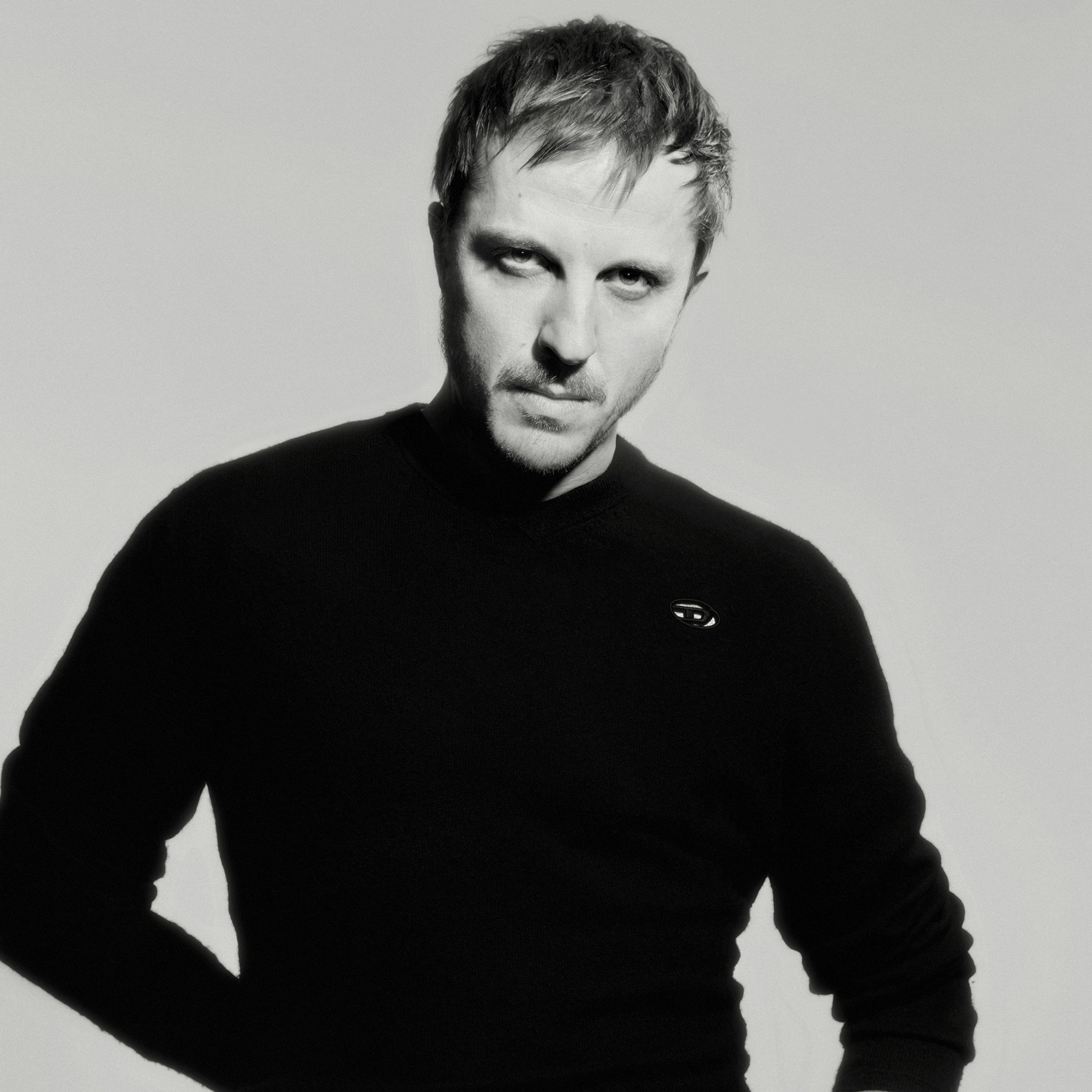
The Business of Fashion Podcast
Glenn Martens: ‘Social Media Has Turned Fashion into the Hunger Games’
00:54:31
On the eve of his Spring/Summer 2026 shows, the Diesel and Maison Margiela creative director speaks with Imran Amed about finding his voice, transforming an iconic brand from the 1990s for today and why fashion should include everyone.
Loading summary
Transcript70 lines
- [00:00]
Fiji Water Narrator
As it starts to get warmer outside. I love to keep Fiji Water on hand to keep hydrated and refreshed. It really is from the islands of Fiji. Drop by drop, Fiji water is filtered through volcanic rock 1600 miles away from the nearest continent, protected and preserved naturally from external elements. In this process, it collects a unique profile of electrolytes and minerals, resulting in more than double the electrolytes as the other two top premium bottled water brands, giving Fiji Water its soft, smooth tast. Unlike some other premium bottled waters, Fiji Water's electrolytes are 100% naturally occurring and this water even has a perfectly balanced ph of 7.7. Visit your local retailer to pick up some Fiji Water today for your next backyard party, beach or pool day hike, or even your home office. Fiji Water is Earth's finest water.
- [00:58]
Imran Ahmed
Hi, this is Imran Ahmed, founder and CEO of the Business of Fashion. Welcome to the BoF PODC. It's Friday, September 19th. Belgian designer Glenn Martins grew up in Bruges, studied in Antwerp and cut his teeth in Paris, where he learned about the fashion business from the ground up. From pattern cutting to PR at Y Project, he made the best of resource constraints, creating modular shape shifting designs for women and men. At Diesel, he has reset the brand around its original founding spirit of joy, cheekiness and denim, replacing muddle codes with a clear manifesto and democratic shows that speak to a global community. Now Glenn is balancing creative director roles at Diesel with another creative director role at Maison Margiela, and he argues that in this pivotal season with a slew of designer debuts, fashion should make people happy while resisting the dopamine culture of instant judgment.
- [02:04]
Glenn Martens
We just are consuming visuals and visuals and visuals and we don't really have the time to go deep into the clothes, the storytelling, the construction, where it comes from. It just needs to be like a hit. So it's quite. It gets a bit more superficial. 2025 a creative director has to be a socialite, has to be the king of social media. Post whatever. There's so many more things that all my colleagues and me have to do, which is outside of that Runway and within the lapse of six months, you have to own this whole new team or whatever and then also like explode the Internet with a show. I think, yeah, it's hard. I think I've had a lot of phone calls with people which are stressing the beauty of fashion is it's a process and it's a buildup. And I think this is not happening at one show, this is happening in three, four, five shows. So we need to respect that and celebrate that.
- [02:54]
Imran Ahmed
This week on the BoF podcast, I sit down with Glenn to talk about learning every job in the studio, to preview his Spring Summer 2026 Diesel show in Milan next week, and to understand the pressure and possibility of this high stakes fashion season, here's Glenn Martins on the BoF podcast. Glenn Martins, welcome to the BOF Podcast.
- [03:21]
Glenn Martens
Hello, everyone. Nice to be here. Thank you for having me.
- [03:24]
Imran Ahmed
Nice to be here with you too. I know it's super busy at the moment for you.
- [03:29]
Glenn Martens
Yeah, I'm in Diesel show prep, so it's the first of the multiple shows I will have this season. But we are, for a very strange reason, extremely on time. I mean, it's my second day of style art, and I kind of have my lineup ready. Ish. So this is a perfect moment to speak, basically.
- [03:47]
Imran Ahmed
I'm glad we found some time. It's always a privilege to talk to someone before their show or in the middle of their final preparations. And we'll get to the show a bit later. But as always, here on the BoF podcast, I want to share a little bit first about your journey into our industry, this great industry called fashion, which is going through so much change at the moment. And when I was reading a bit about you today, I didn't know you were born in Bruges or you were raised in Bruges.
- [04:22]
Glenn Martens
Raised, yeah, raised. I'm born in Germany. I'm born in Germany, but my family is completely from Belgium. Bruges. My dad was working in Germany, actually in the middle military camp. You know, like after the Second World War, the. A lot of the Allies had base camps in the country, and my dad was a judge there for all those Belgian military people, which would have maybe done something bad. So they were. They were still being judged by the. The Belgian law. And my mother was a nurse in a military hospital. And I'm born in that hospital, but moved to Bruges, back to home at the age of three, and grew up there.
- [04:57]
Imran Ahmed
Okay. I mean, for people who don't know Bruges, I've only visited once. Pretty small place. Tell us a little bit about what it's like to grow up in that beautiful place.
- [05:09]
Glenn Martens
I mean, it's like Disneyland. Imagine it's really like reality is completely not the truth. I mean, also, we were living downtown the city. It's for people who know Bruges. It's actually a medieval little pearl in Flanders. It was, let's say, like in the 1400, 1500s, a bit like the Metropole of Europe. It was a very, very rich city. A little bit like a Manhattan kind of vibe of Europe. But then it died because the harbor going into the city sanded. So basically it fell asleep. We call it the Sleeping Beauty because there was no Renaissance and no Baroque, no industrial revolution. The whole city stayed kind of exactly how it was. So you really walk around in Cinderella land. It's not like everything is like Gothic and churches and cathedrals and decorations and it reality, which definitely like colors you intensively. And I. I remember like my very first holidays I did outside of Bruges, because you didn't travel that much as a child. So I remember at 18, I went to London with my. My best friend. My very first trip, yeah, outside of this kind of world. And I was so shocked that cities were not. Actually. Not everything was always so perfectly aligned and. And symbiosa and gorgeous. So I was. I was kind of disgusted. Actually happens outside of Bruges. But, yeah, it's amazing. It's really amazing because it's so protected and it's. And you're just surrounded by beauty.
- [06:35]
Imran Ahmed
So when you're growing up in a place like that that's kind of stuck in a different era and is really, you know, this pearl of beauty, like, how do you think that impacted you as a young creative person?
- [06:49]
Glenn Martens
I mean, you don't become the most edgy person. I really was a geek, that's for sure. I was very much into. Into classic music and history and classic be. So I wasn't very much aware of what was happening, of all the excitements outside. Inside of the world, you really. You're quite traditional, actually come out quite classic. And I do remember that in the very beginning of my creative excursions, trying to figure out what my tone of voice was, I would always actually reconnect with classic beauty in the Western standards. I remember my Antwerp Academy collections were very pristine. It was all done in muslin and white muslin and beautiful wool. And it was all very rich and fancy, of course, conceptual, but it was definitely reflection of that kind of beauty that I grew up in. So it's only like later that I kind of started understanding that excitement can be found in something less expected.
- [07:45]
Imran Ahmed
That puts it very lightly, Glenn, because, like, no one would call you traditional or classic now. So was it at the Academy or after the Academy or where was it that you began to discover the edgier side of Glenn Martens?
- [08:03]
Glenn Martens
I mean, definitely after the Academy, to be honest. I think. And during the Academy also, I was still very. I mean, I really Love this gorgeousness and beauty. Obviously. I mean, when you're in Antwerp Academy, you're between like a whole bunch of international people coming from all over the world. And of course you're all fashion students. So you all go for the most crazy expression because we want to be unique and gorgeous. And I also have my moment wearing like lederhosen combined with like golden leather boots and I don't know. So we, we definitely, I mean, that's the whole beauty of an academy that you experiment. But I think within, within my, my, my craft, I was still a bit more, I wouldn't say boring, but it was, the aesthetic was quite classic. I think at a certain point when I was in, in Paris, because I moved straight to Paris after graduation. I started working for Jean Paul Gaultier. Then I worked for like a brand in Istanbul. Actually, I was living in Istanbul for a year and I started discovering different facets of art and fashion because I, again, I would say, like, I went from Bruges to First Gans because I did interior design, first interior architecture. Then I went to Antwerp. But I always stayed in kind of bubbles, you know, like, I was never really. I mean, even though the Antwerp Academy is an eclectic kind of community of lots of crazy people, we just live together and we, we work together. So, yeah, I think like, it's, it's in that process, in my first years of working that I, I saw all the beauty and the colors of the world and I started becoming very bored of gorgeousness. And I was a bit like, let's try to do something else to spice my life up. And then I had my own brand for a second, for three seasons. And I think that's where I started pushing it a bit, you know, like.
- [09:47]
Imran Ahmed
You'Re clearly seen as a boundary breaker now in terms of your aesthetics. And we'll talk a little bit about Y Project and Diesel and you know, the other bigger jobs that you've had since later. But in this current moment in fashion, a lot of people are observing that the edge or the kind of raw creativity that kind of made and continues, I'd argue makes fashion tick has been lost. You know, I'd love to hear your thoughts about, you know, like, why we need that kind of unexpected aesthetic in our industry.
- [10:28]
Glenn Martens
I mean, I don't know if we all need it. I know I need it personally, and I think maybe you need it also because you really get excited by it. I will agree, of course, that fashion has become much more consumption driven, so it has to be easier to be understood. I Guess. And since it needs to be easier to be understood maybe through social media, because we just are consuming visuals and visuals and visuals and we don't really have the time to go deep into the clothes, the storytelling, the construction, where it comes from. It needs to be like a hit. So it's quite. It gets a bit more superficial. And that's the reality, of course that we have been seeing in the last 10 years. I know that from my point of view. I do understand the power of social media and the power of like the hits, but I didn't fell in love with fashion for that reason. I mean as a creative director, of course you need to play your 2025 roles and I think Diesel works very well on that. I'm sure Magella did these things at Y Project also, but. And I engage it because I think it's part of our reality and we have to obviously evolve. You can't be stuck in the past. But there is definitely a big part of me which is that kind of old fashioned designer which loves to deep dive into storytelling in the construction, which likes to challenge constructions and try to find new ways how to create beauty and new ways how to create clothes. Because that is the person who I am. And I'm very easily bored. I'm very, I need to, to challenge myself. I love experimentation and that makes me happy. And I guess for some people that's the same for other people maybe less. But I do think there's, there's a, there's a run like this though. I think there's a. I see a lot of creatives, younger creatives reconnecting with that. I think this whole logomania is disappearing. This whole like one hit ones are disappearing. I think people, I mean also when I go to schools and everything for juries, I feel that the integrity is being revived.
- [12:24]
Imran Ahmed
I'm glad to hear that. So when you think back to those three seasons you did under your own brand, is there a specific look or show or moment that stands out as something that kind of was a seminal point for you in terms of like discovering that edge?
- [12:43]
Glenn Martens
Imran, I mean being a young independent designer in Paris without any backing of the family or anything, like working freelance everywhere to like make some money to put into your collection, having interns cutting all the patterns on your beds. Because I was living in like 30 square meters, I didn't enjoy it. I have no idea. Actually I tried to completely forget that part because it was a nightmare. You know, like it's always like asking everybody to do things for free, working Seven days a week, cooking soup because you don't pay your interest. So cooking for lunch, like, making this big, massive lunches. So at least you can give that to the kids. So I don't know, really, the big highlights there. There was one highlight I could say is maybe that I did a show. And that's also still a link to, of course, to. To where I come from. But I did, like, a presentation in La Chapelle Expiatoire de Louise and Marie Antoinette, which is basically a chapel, which is a national monument in the middle of Paris, but close to public. And it's a chapel which is built on the site where Louis XVI and Marinette were buried after their decapitation. And it's a very mystic venue because it's really to celebrate their life and their death. And I managed to. I don't know how I found a loophole in Paris to actually do present there, like, really between those tombs. And it was very emotional. But for the rest, I tried to forget those three seasons. They were too traumatizing.
- [14:11]
Imran Ahmed
But what did you learn from that time, Glenn? Because it's often in those moments where you have to be super scrappy, super enterprising, inspire other people to work with you for almost nothing, maybe a bowl of soup. Like, what did you learn from that time?
- [14:27]
Glenn Martens
I mean, you definitely learn to become a creative director. I think being a good creative director, I hope I am a good one. I don't get too many complaints. But I think to be that, you need to understand which people's jobs are. So you have a massive team and a whole democracy of people working around you, doing specific, specific crafts. And I think to understand what it is to do production, to understand what is to guide the studio, to understand what is to be a PR or to sell or to be a merchandiser, because you've done all those jobs yourself, all alone. I think it's a really big plus point because you really are able to collaborate with your teams and to understand what they're going through. And the communication gets much easier. And you learn also to fight. You learn to bite into something and not let loose. And that, I think, is one of the key things you need to have as a designer.
- [15:13]
Imran Ahmed
How do you know when to keep clenching or biting and kind of fighting and when to compromise?
- [15:21]
Glenn Martens
I mean, I. I always fight. But the thing is, I think it's often really a discussion at start. I clinched into my creativity because that's, of course, my moments on the Runway. And of course, what we have on the Runway is not always A reflection that we have in the store. And that is fine because of course, you need to also create this dream and you also want to create a story and a world which doesn't always need to have a commercial value. So there I will really push myself. But then, of course, that moment of Runway kind of loosens up. It's really about collaborating and understanding each other, understanding each other's needs and helping each other. I mean, helping the teams to reach their goals with the needs that they have. But of course, not losing the artistic direction that set from the beginning. So to still stay integer to, of course, the tone of voice of the brand.
- [16:17]
Imran Ahmed
Yeah. I mean, you're so good at that, Glenn, because your shows are these genuinely immersive experiences for people. You know, anyone who has attended a Diesel show or a Y Project show or your most recent Margiela show, the first one that was in July, like, you managed to transport people somewhere. And I think a lot of companies have stopped using the Runway that way. You know, they've. The Runway has just basically become a commercial lineup of product. You know, every model has a bag and every. Every piece of merchandise available is somehow styled into the collection. So people are like, overweighed with so much stuff that the creativity is sometimes lost.
- [17:05]
Glenn Martens
Yeah, it's often product. But thank you very much. I mean, yeah, I think the whole beauty of fashion is that we have to make people happy. That's the main reason why this industry exists. Even if it's like lifestyle, like Diesel. A very sexy, well fitted pair of denim empowers the person wearing it. There's not real, there's not a big fashion story value to it, but the garment is there to make that person happy and joyful and empowered in their everyday life. And then there's different moments where it's about dreaming away. And I'm very much aware that when I work at Magello or at Diesel Runway shows, I'm proposing clothes that are not going to be reachable or accessible to so many people because by heart, they're very expensive. But I do know that a lot of people are dreaming through it because they're watching it forever and ever again on YouTube or whatever, and they see the show and. And it's. It's entertainment. It's like, it's. As I was saying, it's again going maybe back to Disneyland. I love fairy tales. But it's all there to make people happy and to make people enjoy life. And I think that's, in my opinion, one of the most beautiful things of fashion. And what I try to give them. So yeah, I wouldn't be happy with just a product shoots but I'm very happy with a very basic product. I think a really nice sexy shirt that everybody when the people like wear. I think it's good. It's great. Or a very comfortable sweater.
- [18:20]
Imran Ahmed
Yeah, we need both.
- [18:21]
Glenn Martens
Yeah, we need both.
- [18:25]
Imran Ahmed
We'll be right back with more on the BoF podcast.
- [18:31]
Shopify Advertiser
We used to dream of being anything an astronaut, the president, a prince or princess. But as you get older your dreams change, focusing less on running the world and more on how you can turn your ideas into something real. Maybe that dream is owning your own business. You'll need a website, a payment system, a logo and a way to reach new customers. It can feel a bit overwhelming, but that's where today's sponsor Shopify comes in. Shopify powers millions of businesses worldwide and 10% of all E commerce is from the US from household names like Mattel and Gymshark to brands just starting out. Worried you can't design a website? Shopify offers beautiful, ready to go templates. Need a hand? Shopify's AI tools can enhance product images, write descriptions and even generate discount codes. Not sure of where to find customers? Shopify makes it easy with email and social media campaigns and if you ever get stuck, their award winning Support is available 24 7. To find out more, go to shopify.com bof.
- [19:42]
Paylocity Advertiser
When your workforce, tech stack and business needs are evolving all at once, you need HCM software that moves just as fast. That's why paylocity builds what's next, providing innovative and simplified solutions for clients to tackle the real challenges they face every day. From AI driven insights to automated workflows across hr, finance and it, Payloff platform doesn't just keep up, it leads. It's time to simplify complexity, drive results and move forward together. Start now@paylocity.com simplified are you a financial advisor?
- [20:14]
Schwab Advisor Services Advertiser
Considering the Independent Registered Investment Advisor or RIA model and wondering where to start? Start with Schwab Advisor Services. Schwab has helped thousands evaluate the full range of options and can help you determine your best path forward. Navigate the big and small decisions by tapping into Schwab's decades worth of insights on what fuels RIA Schwab Advisor Services. You have a custodian that will support you every step of the way. Start your journey today@advisorservices.schwab.com paths.
- [20:48]
Imran Ahmed
Before we talk about Diesel, I want to talk about yproject because that was such a defining era in your career. And I think a lot of the industry first came to know you through the work you did at yproject. And I remember maybe about a year ago, Glenn, maybe a year and a half ago, you and I had a coffee at the Hotel Regina in Paris, I don't know if you remember, and we sat down and it was at that time when you were grappling with figuring out what was going to happen with Y project. And you really helped to really place that brand on the map. I mean, I think so many people thought you were the founder of that brand, even though you weren't. So many people associate you with that brand. And you played such a big part in building it from the ground up into kind of a really notable and important part of the fashion calendar. Talk a little bit about your experience there because you joined the business, you helped to build it up, and then commercially it just didn't work. I mean, what did you take away from that experience?
- [21:50]
Glenn Martens
I mean, it was one of the most beautiful moments in my life for sure. I mean, and it's definitely also because I had a very good friend of mine, Gillet Lalouf, which was the founding father, the CEO of the brand, as a CEO for the majority of this period. And Jill passed away two years ago from a cancer and said which then evolved to the whole story of why projects dissolved. But the amazing thing of that moment was that Gilles was a CEO, but he had never worked in fashion before. So he had a Harvard master into business or whatever. And he had companies which were more focused on informatics and pharmaceutics. So somehow he managed to launch my product, which are original founder creative director Johan Seferati, the Y of Y project. And. And then Johan passed away. So it was all been very strange brand. So basically Johan and Jill launched it. Johan passed away after two years. Then I became the creative director. And basically we were two juniors there, like a junior CEO, junior creative director, which had no idea what to do with the brand. And that was amazing because that's why we did all this kind of crazy designs, because nobody was really. We didn't have a roadmap. I never really had worked for long term in a big. We just had fun and we were experimenting and making mistakes and embracing the mistakes and we had no money. And that's why, for example, all this versatility of the garments came from because we had an idea of presenting men's and women's in the same season. But there was of course no budget at all to create two collections. Also no designers on our team big enough. So I invented twists or I was kind of imagining twist how to change the garments enough that you could actually during menswear show the exact same piece as women's wear, but then style them completely different because there were wires in there and then they were standing like this or snap buttons and it became a whole different jacket. So through this, of course, scarrity of budget or resources, we managed to do something quite unique. And that became also the language of the brand, like versatility. It was really amazing. And we were growing and growing. Of course, the thing is that it was never like a multi billion company because first start the clothes were quite complicated. So you sometimes had to find, I mean, yet you could have needed manuals to wear it. But also because, yeah, I think Gilles was not as our thing, we were not a real fashion CEO, so we didn't know where to invest. We always were in delays for delivery. The deliveries were horrible, always like months too late. So. And that's the core thing, of course. I mean, you need to make sure your clothes reach the sales floor at a good time so people can buy into it. Can they have their six months on the sales floor to be bought and to make sure you can have a good contact with your retailers and wholesalers. And that's where we kind of felt a bit in any kind of way. I think we had a lot of very, very passionate people around us and a very passionate community. The community was really obsessed by Wired project and we had a lot of potential. We had a new CEO coming in after Gillespie. But the story was basically that I think it was a very emotional brand for the brother of Gilles, which was the president, who became the president after the passing of Gilles. And it was too emotional for him to have this brand still alive after the death of his brother. So he decided to close it. So. And that's how we finished my project. But I'm still, I mean, this is really one of. I mean I became who I am thanks to this brand. And the second best part of it is that when I left the company money, my whole team, the whole wire project team, like gathered money together to buy me a dog as a good buy presents. So that came out of it. And I'm a dog daddy. And I'm extremely obsessed by my dog. And I will for the coming 15 years think of y project every morning when I clean the poo on the ground.
- [25:46]
Imran Ahmed
There's beauty and there's beauty and stuff. But I mean that seriously, because some of the constraints that you're Mentioning like, the challenges you face, the lack of resources, the lack of experience. Sometimes there's real beauty that comes out of those moments. No, there's like, if you don't have all the resources, if you don't have all the budgets, that's when sometimes magical things can be created.
- [26:12]
Glenn Martens
That's the same thing with Diesel, for example. Diesel is not a brand which has a heritage of pattern making. And I mean, like, it's a lifestyle brand which is doing denim and T shirts and very, very, quite, quite essential fits. And obviously me coming from a brand like Y Project or whatever, it's all about construction and manipulation, construction. There was a bit of a. A clinch there, you know, because it was not my forte, but. Or they couldn't do my forte or they couldn't really follow me in that. And then that is where. Where I decided to focus everything on treatments and graphics and things that I've never done before. Whitewash was never known for, strange for. I mean, we did a bit of prints and things like that, but we. That was not the core of our brand and of lack of resources in that we managed to be extremely successful brands. Diesel for all of those treatments and new manipulations on 2D and layering and peeling things off and whatever and correlating it and burning it. And so it's true. I think, like, creativity comes from there. It's really like, it's one of the most sexy parts.
- [27:14]
Imran Ahmed
Well, let's spend a bit of time on Diesel because is. It couldn't be more different than Y Project, not just because the codes were different and you had to focus on other elements of creativity to kind of discover and define what you wanted. But when you arrived there, so many of us who grew up in the 1990s, we remember diesel in the 90s as this super provocative, desirable brand with those, like, really, like, edgy advertisements and like all of the, like, denim treatments and the kind of distressing and all of that. I mean, there's quite a rich vein of stuff to explore there when you arrive, even though the brand isn't that old. So when you first got there, what did you decide to kind of protect or keep? What did you decide to kind of amplify or emphasize, and what did you decide to abolish and get rid of?
- [28:17]
Glenn Martens
Well, I obviously joined Diesel for the same reasons that you just said. I think the brand's DNA and what we remember from the 90s 2000s was so rich and gorgeous and sexy that it sounded like a lot of fun. It's like this is Going to be a good moment. Obviously, when I arrived at Diesel, it was not exactly anymore the reflection of those 2000s. It was a healthy brand, meaning like the turnover was there. But I had a feeling it was definitely going through a midlife crisis. I was there for 40 years, and I think it happens to so many brands and to people also. I mean, also to me. I mean, I'm also 40. I mean, at a certain point you may be a bit like, tired of looking at yourself and you try to actually reinvent yourself and be a whole new person. And I think Diesel had gone through a period of processes which were that. So it was quite interesting because I arrived at Diesel and I asked all my heads off and also all my designs. Designers, in the middle of COVID we were. Or like, what is needle for? You make a mood board or whatever. Every single person had a very different. A total different creativity around the brands. And I was like, okay, there is definitely something problematic, very big problematic at least because, I mean, of course somebody arrived in 2015 and then the brands, the CEO was going that direction and then somebody had arrived in 2008 and it was in that direction. So they all were hired in different moments of the brand and nobody actually spoke the same language. So my biggest thing I did was actually resetting the whole thing and actually trying to remember everybody, why Diesel was big for the first place. And I think that's something that is really important to never forget that the success of a brand is the core reason why the brand is there. And we should always connect to that and stay close to that. That's something Francesca Benitini told me, the new CEO of Gucci, when she was my mentor, godmother after I won the Undama Awards. You know, when you win this French award, at the end of the award, you get a mentor for you. And Francesca was my mentor. And she. She was. And I was obviously at Y Project and I was asking her, like, Francesca, what do we do? I mean, Y Project is so complicated. Clothes are so twisted and difficult to wear. Should I simplify it? Should I go into this more. A bit like more minimal vibes and logomania and why Project? She was like, no, never. So, like, you really have to. I mean, you've been celebrated. You won this award, People want you for that. So you have to stay true to your founding values. So that's what I did. Literally great CEO Francesca. So that's what I did. And at Diesel, I brought back the focus on what the brand trust. And it is basically for successful living It's a denim brand, which was always about joy, about cheekiness, about being very loud and straightforward, about talking about issues, because those cheeky campaigns were often discussing social problems in the 2000s, but with joy and happiness. And we went there and then we also, of course, did the whole study of the archive. You know, like, because denim brands, you have so many denim brands in the world and they all have. They mostly are actually quite connected to more Americana styles. Diesel wasn't like that, actually. Diesel in 2000s was more like the lines were round, that were more poppy, were more MTV day. So try to bring back again those hero cut lines into fundamental archival pieces or like wardrobe pieces. So it was very much building a brand bible again, like redefining the brand bible, all based on the archive to be. All based on the founding values. Also, like, I wrote a very big manifesto which I sent to the whole group about how we. Our tone of voice, who are we talking to? What is our social values that we're standing for? And voila. And since then, actually, to be honest, since then, it's almost five years I'm here in October, will be my fifth birthday. We just keep on reconnecting with that brand bible I've built in the beginning and that manifesto in the beginning. And we just celebrate it and make it bigger and try to reinvent it and push it further. Because obviously, obviously it takes time. I mean, like, it's a really big brand. We have 500 stores. We have. It's also extremely unique in the industry because we are so diverse in our markets. Meaning that we have moments, of course, of fashion, alternative to fashion, like beyond Fashion Week. But then we also really lifestyle. But then we also just denim bed and brother, like really just sexy denims on T shirts. So we are talking to so many. We're actually basically talking to everybody. Just every single person in the world could in theory be a detail person. But we do that with one message and with one collection. So it's quite unique. Voila. So that's what I did. I did throw away something quite important, which was quite painful. I think I know you maybe, you know, but like the institutional logo was a Mohican, was a Mohican. And Renzo Rossa has a tattooed on his. On his shoulder. The Mohican was not originally Mohican, when it was made in the 80s. It was actually a punk from East London. And I have all the files, you know, all the files were there and the design were there. It's really like a punk from East London, which I Think fits very well with the brands. But sadly in the 20002010 some one of the CEO, they had a few CEOs decided that punk was too complicated and wanted to join into the hype of Levi's and Lee talking about Americana. So they turned the marketing into Mohican. And it's very complicated in 2020 to have the face of, of a murdered tribe of the face of a brand. So I decided to take that away. And that was of course very complicated and very painful. But I mean that's what it is. It's not my mistake that some strange marketing has been done in the past. And, and I brought, I replaced it with the oval D. So I brought in the oval D. I designed a.
- [33:55]
Imran Ahmed
New logo that's on the belts now too.
- [33:57]
Glenn Martens
Right. The oval D is basically everywhere. I mean it's really everywhere. Is this one? Yeah.
- [34:03]
Imran Ahmed
For some reason I think about on the Bells, I guess, you know, you bring up Renzo, Renzo Rosso, the founder, the founder of the brand, the kind of the genius basically who kind of came up with this thing. What's it like? You know, you have this like towering figure associated with the brand and you're trying to reinvent or like maybe reestablish or re energize the brand brand. But he's also there. Like you have to have a conversation with the team, of course, but like how much of a dialogue do you have with Renzo about the journey you're taking Diesel on?
- [34:40]
Glenn Martens
I mean Renzo is a genius. And first of all, it's actually a pleasure to have the founding father of the brand quite close to you. You know, it's like having your fairy godmother always somewhere flying around you. And I have to say also I think all the. I was talking about the founding values for successful living, all what the brand stands for. This is literally a one to one reflection of Renz. He is that person. The thing is, of course I'm the very first creative director of Diesel at large. They never had a creative director which actually is in charge of every single item that carries the logo and he gave it to me. Coming from Y project, I was not at all trained for being at the helm of such a big company which is doing underwear and living and gadgets and trunk shows or whatever. So I don't know. This guy is really quite magic because I think he looked into my eyes and, and he felt we had a connection. And I have to say that we do have. I think I'm quite similar to Renzo. I think I see life in the very same way and I think I have that cheekiness also in me. And obviously in the very beginning he, he needs to know that you understand what the brand is about. He needs to know that you love the brand as much as you do as he does. So there's a lot of. The starting year of Diesel was definitely weekly dinners with him and discussing everything I wanted to do and where I wanted to go. But on the other hand he wasn't the CEO in those days and he of had to let me if I managed to. To. Well, he kind of had let me do what I wanted to do, to be honest. He also let me do what I want to do. But I think he also kind of saw that I was very passionate. I mean it is a very. A brand you fall in love with really for some kind of reason. Everybody gets very addicted to Diesel when you work here, I guess it's maybe also the ethos and there this fun factor and life is the best and sense drink and party but work hard. So. So I don't know, it went quite easily. I mean I don't think he did. He started coming either to be honest. I think he expected me to be a frankly creative record to bring a bit of spice into his ready to wear. But he didn't see the 360 turnaround that I've managed to do in very first year and also I didn't see it coming so fast. It all happened quite magically and I don't understand either so much though I do understand I know what we did but I wasn't expecting it to catch so fast and to be so successful. So it's really lovely to work with him and I think it's. Yeah, it's a cheeky, funny guy and I have to say also, I mean I was saying not so long ago, I think Renzo of course is the person who he is and he has so many companies but he's a very unique person. Meaning that he's quite alone in this whole world because he's the owner of all this kind of companies he has. I. In my situation at the end it's a little bit similar to be honest. I mean as a creative director you're also, you're overviewing all the different departments, you're reviewing all the different collections and different categories and you take in the problems of every single person because you're aware of all these problems and obviously marketing has problems but they can talk in their team but they don't have to take care of the problems of merchandising. But I overview all of this together and it gets quite lonely at most moments. You know, it can be quite lonely because you really, like, there's. Nobody really understands all the shit you're actually going through because it's love, shit management. And then having Lorenzo next to you, which completely understands exactly what you're going through, is. Makes it feel a little bit less lonely. So it's kind of. It's quite joyful to have a CEO because Renzo is an interim CEO, Diesel. And yeah, it's quite nice to. I mean, but even if he's not a CEO, I mean, I will always have him somewhere next.
- [38:15]
Imran Ahmed
He's always there for you.
- [38:16]
Glenn Martens
I could always call him, yeah.
- [38:18]
Imran Ahmed
A big part of the transformation that you've undertaken at Diesel has, at least for industry people, has come through the shows that you've done. You know, these like, massive installations of inflatables and a graffiti park and a denim mountain. And first of all, like, what role do you think fashion shows play for Diesel? Now, we talked about what's on the Runway, but I'm also interested in. In, like, the overall experience of it. And how do you ensure that that big installation doesn't distract from the ultimate goal, which is to, like, focus on the clothes?
- [39:02]
Glenn Martens
I mean, it might distract sometimes. That's part of the deal. I'm also not very known to be a minimalist. You know, like, I mean, I'm quite pure. My. I'm very conceptually pure, but I'm quite opulent. That might come from rouge, where everything is rich and beautiful and gorgeous. So I like to create this kind of world. The thing is that I think a fashion show for us is very important because it accelerates the awareness of the brand and the brand direction you want to go to. Because, of course, it's a moment that everybody looks at, everybody is together, and you can convey your message really fast and intense and you can speed up the process of change. And you can also speed up the process of, again, making the statements, what do you stand for? Or what do you want to talk about? So Diesel, in theory, did not need, business wise, a Runway show, because a Runway show collection is a fraction of our turnover. But we really wanted to do it because it would speed up the process of awareness. And I think this brand is talking about democracy. It's actually, by heart, a lifestyle brand. It's really lifestyle. Yeah. So it talks about the community. But everybody, as I was saying earlier, it doesn't matter how rich you are or which sexuality you have where you come from, where you're born. You can be part of Diesel as long as you have first successful living as an ethos that you, you enjoy life and you, and you, and you want to, you want to, you want to nail it. So that's kind of what we did with the fashion series. And of course that was a whole challenge because easily when you like in Milan Fashion Week, yeah, you easily turn into, I mean, the classic, classic way of doing a show is of course making a beautiful set, make people dream a bit and have gorgeous models on there. You know, like in the beginning, all our models, Diesel, none of them are models. I really wanted them to reflect. I wanted them not to be influences either, but I wanted them to all be busy with something. That's why, for example, the very first girl we've ever seen on a digital Runway or for my collection was Ella Schneider, which is a transgender woman. Because I think that's important to celebrate women and all women that they can be. That's why I really wanted to always talk about the community and talk about that process of acceptance and the process of like, we have to create a bigger world because that's really what the lifestyle brand can do. I mean, again, and I think one of the reasons why I took Diesel also is because, you know, like when you work in luxury, Margiela or Versace or Chanel or whatever, it's great, it's fantastic, it's beautiful. But you will always speak to a certain part of the population. When you work with Diesel, you speak to so many more people. So it's true that during my Covid period, I was of course also when I was in Covid, I was of course triggering the idea of taking another brand and I was more thinking about luxury, classic luxury, French luxury. And then when Renzo came with Diesel, Diesel, we all went through an existential crisis in Covet, of course. And that's when I was a bit like, okay, maybe I want to do something. I mean, I love fashion, I love clothes and I love the artistry and the conceptualization of garments, but maybe I want to do something more. And that's where Diesel was for me, the best platform. And that's what we try to do now also every day. So that means exactly as I was saying, like, we are loud brands, we're always going to be loud. But like, let's try to, within the Fashion Week on Milan, do a one way show. We actually have something more to say than just cute clothes. So that's why, for example, thank God for that.
- [42:25]
Imran Ahmed
Thank God for that.
- [42:26]
Glenn Martens
Not bad. And I think it's amazing because we did this one show one day and it was quite interesting for me is because I heard from Ariana Rosso, which is the wife of Renzo, that HIV positivity is growing with kids, Gen Z, basically, because they don't. They of course, didn't live the whole 90s pandemic. And I mean, I, when I was 18, I didn't dare to have sex at all because, I mean, I thought I was going to die in a second because we were. We were literally like scared. Yeah, they were so scared. And I think they don't have that, that. And it's actually growing quite intensively with kids. So I was, okay, this is my responsibility at Diesel, which is Love by Gen Z to talk about this. So I did a show with like a mountain of condoms in the backdrop. And then all those condoms, like millions of condoms, were sent to all the Diesel stores worldwide and everybody could get free condoms. And it was a way of discussing it and talking about it and taking and making. Making sure that we speed up the awareness. So there's a lot of these kind of things that we try to do to always include maybe to bring a good message or to include the community. As you were saying, like last, last show was one of the most biggest shows ever. But it was also very lovely because we had recycled an installation from three years ago which was the biggest Guinness Book of Records blow up doll in the world. So the biggest blow up doll was there and we had cut it into pieces, sent it to the seven parts of the world and had more than 1,000, I think, I don't know how many. There were kids in the street coming to tag it and they could all tag whatever they wanted to tag. And it was basically quite beautiful because the art direction of that show was done by everybody in the world. And all of that was like the biggest common street art piece ever made. In theory. Guinness Book of Record didn't sign it off because it was too complicated to count all the numbers of people.
- [44:11]
Imran Ahmed
But you know, what was like, the sheer scale was impressive. But the thing that I took away from that show, Glenn, was like, you'd sent that installation in seven parts all over the world and it came back and it was so united. Yeah, it was such a collective experience because you got to see that there is this kind of culture of graffiti everywhere. It's a universal language, really. And you brought it all together and it really, it really struck home for me.
- [44:41]
Glenn Martens
Me, I agree with You, I mean we did give them color guidelines.
- [44:45]
Imran Ahmed
Okay, I didn't know that.
- [44:47]
Glenn Martens
We did give them like, we gave them like color guidelines. They were only allowed to use this like that 15 different colors they could work with. But it's true that it felt very uniform. You couldn't really see what came from China or what came from Cairo. I was a bit, you could really see it. And it was also very impressive that there was a lot of political messages in there. We actually had to, we had to spray some off because we would have some situations. Of course it's still a public moment but the kids are busy with what is happening with the world and they're fighting for the rights and they're fighting for love and they're fighting for love globally. And that was amazing to see that. And so it was very emotional. Yeah, it was a really lovely, lovely concept.
- [45:27]
Imran Ahmed
So what can we expect next week? Glenn, what can you tell me now.
- [45:33]
Glenn Martens
That'S again a whole thing? Well, of course, I mean like I don't make myself life easier. I mean like if I always have, I mean I wish I would have just done a nice set. I wish my, my brand Diesel at least would have been a. But a nice beautiful set colors and hahaha good music. And then so of course I, I, I, I put the bar quite high. So obviously after this very immersive show we had last season I was a bit okay, let's do something completely different because that's also again who I am. As I was saying earlier, I think I'm a bit add. I get bored quite fast and I want to change things and I want to test things. So this time we decided to actually not do to completely kill the lit history of the show and to. So even though of course we love all of you guys and, and you will have your moment to see the collection because you have to do your work, of course you have to see the clothes and study it and, and, and critic me and, or celebrate me or whatever. It's up to you. We'll see that next week. But I didn't want to it to be an exclusive experience so I, the lounge of that collection will be in the streets of Milan. I'm not doing a classic fashion show. It's going to be like, like three hours and a half egg hunt. So the models will be hidden all over the city in big crystal eggs and all over the city, but really also. And all the places we love. So meaning bars, clubs, sex clubs, gay bars, churches, like again showing the whole diversity of the Town. And. And everybody can participate in looking and doing this little Pokemon Go moment. So everybody can go and find those eggs. You have to register it on diesel.com and then it's all by when you find them. And there's of course prizes to be won because the first five people who find all of the eggs, they can choose whatever look they want to have from the Runway and we will make them to measure by Christmas for them. So fully measured method. And the second batch of people can go to Diesel stores worldwide and have a total full look without any budget of clothes that they want to have. And then there's more presents to find. But I think the main thing is, what I really like is that it's really including everybody. Of course, you can also do the egg hunt without registering, but to win prizes. But also all over the city there's going to be like bars and it's like one little hub on one square. I forgot the name. Where there are going to be free drinks for everybody, free food for everybody, music. Music. Like we make it fun. I mean, like, I think it's kind of cute to. It's another way again to, to. To really again not forget what Francesca Bellettini would have said to me. Don't forget the reason why Diesel became big. She didn't say, but what she would have said is like, you are alive lifestyle brands. You are a democracy at the heart. You're talking to, to the community and this is why you're strong. So include them, bring them together and celebrate life. So I think, I think it's gonna be fun. And for me, I mean, I'm very sad also because I think the collection is really gorgeous and as I said, I'm quite traditional. So I love a good classic fashion show and work together to the edge of the moment and then throw these models on the, on the Runway and then cry and sweat or whatever. So we will do that. Little sexy moments. And also the clothes look really good. So of course like classic fashion show with all the hay sets. It's quite nice and they worthy to be on a fashion show. But I'm also quite happy that I'm going to be with all of the company, with all the friends of Diesel. We're going to like with a Negroni, walk around the city, do the egghead ourselves, meet people, talk to people, enjoy. And voila, the next season, something completely different again. I guess next season back to classic show because, I mean, my team is done.
- [49:02]
Imran Ahmed
Yeah. Well, that, that sounds amazing and I look forward to experiencing it. We'll be right back with more on the BoF podcast. It'd be remiss of me not to talk to you a little bit about sharing your time now across two brands. So, like, at some point, Renzo came to you again and said, hey, hey, I have this other brand, Margiela. Or you went to him and said, hey, you have this other brand, Margiela, and how are you splitting your time across? Those are two really important brands. I know you did this when you were at Y Project, but the scale of what you're talking about, it's quite different now.
- [49:45]
Glenn Martens
Yeah, it's a different scale for sure. And specifically because, of course, the first year at the helm of a brand is, of course, the most intense one, because you have to find again, your tone of voice, how do you want to approach with the heritage and how do you want to translate it? And it's, of course, even more challenging and stressful because it's Maison Magella. It's like one of the most loved houses in the industry. I think every single designer, regardless if they're more classic or not classic, they love Mella and they love Martin. And because Martin was definitely one of those figures which has forever and ever changed the way how we look at fashion. And it's so, it's. It's extremely humbling and extremely stressful to actually. Actually be part of that story and not to continue that story and respect them. And, of course, the second one is John Galliano, which is the biggest couturier that we have in our lifetime now. So it's. I have two people in front of me, which I respect ultramost, which now I'm. I'm following up to. So it's very stressful just already for that soul factor, because I don't want to disappoint any of them, but I think I'm. I'm going for it. And. And also because I love both of them and I love Mel, I think it's really. I definitely am one of those children of the Manjana generation. I think it's quite clear in every single work I've done. I think Martin is more than designer. He's really school, as I was saying. I think, yeah, it's really cool. I mean, conceptualization of fashion concept goes first. A whole part of my colleagues of my age look at fashion in a similar way because of Martin. So, yeah, I need to try to find my own way in there. So it's a lot of. Of work. The amazing thing is that it's amazing how you have an amazing CEO Gatanya Shuto, an amazing team. So all of this is quite settled. So it's not that I have to somewhere somehow clean up anything. Also the amazing thing is that what John has done and what everybody has done at the House of Margiela is that they always stayed integral to the brand values. So there's also no miscommunication. We all know what the brand stands for. So yeah, I just need to make sure that I do a good creative director job.
- [51:54]
Imran Ahmed
Yeah, it's a different challenge from the one that you face when you arrive at Diesel. I guess just to conclude, you know, we're on the cusp of what is quite a monumental season for fashion. You know, I've been talking to a lot of industry people about it, but as a designer, how do you feel about it? And you were just talking now about the, you know, having these two big jobs is being quite stressful. Like it's a lot of pressure, a lot of expectation. Everyone's placing on all these designers right now, you know.
- [52:26]
Glenn Martens
Yeah, no, that's true. And I think that's really where you have your point because the thing is that we are in 2025 so you're not getting judged by professionals only. We're not getting judged by you who understands fashion where the House of Magellan comes from because you. We're getting judged by 18 year old kids on TikTok which has millions of followers and which then is going to be telling saying that I had that actually with my couture show, Martino show and Magella had like one of the biggest tiktokers which was like giving shits about the fact that the Magella show that everybody was veiled and it's not cool to feel a woman today. But the men were also via wear masks. But I'm also like them. I mean poor kid doesn't have, has no understanding of the, of what the brand is about. But he does have millions of likes and hits and people who are screaming about it and it spreads the world. So. So I think that's one of the social media and this kind of things because now by at large everybody can be a fashion critique and those things can actually have a very negative turn on your turnover. Can have a negative impact on the turnover. But so yeah, so that is really where it becomes a bit painful because I think it is because of this whole hazard becomes the Hunger Games. I think I'm very blessed to be frankly honest that I have my debut in July with the couture and, and I feel it was very, very well received. I'm extremely blessed that all of this happens. And I'm not one of them who has to debute in September because it's really. I mean, I think again, we should really remember that fashion is about enjoying and by celebrating and fun and empowering people. And it should start from the designer because it should be fun, it should be joyful. And I'm not sure the situation is giving a lot of support to any of my colleagues to actually really enjoy these moments because you know you're going to get slaughter day after another. Somebody comes in and all your amazing work process you have been done is going to be killed by sometimes really irrelevant people which actually have no idea what they stand for. So it's a little bit. I mean, I'm also going to watch it with popcorn, to be honest. I'm also. It's also entertaining. It's of course, it's of course, now Hollywood somewhere, somehow. It's like a popcorn moment. But I'm going to be happy and I think all of us are going to be happy when we are next season and this special is going to be gone and we can actually really focus on our work and really do our work and really study what we. What is our tone of voice, what you want to say, not think about the hits. Because voila. Because we have to do it. Because that's what social media wants. No. So hopefully everybody is making as is trying to enjoy this a very complicated September.
- [55:01]
Imran Ahmed
I hope so. I mean, we did this story a few months back. I don't know if you saw it like a really smart story that Mark Bain on our team wrote about how fashion has changed because of dopamine culture, because of these, like, instant takes that everything, you know, like everything that we were used to about fashion from the past, everything's just moving so much quicker. The, you know, the way information travels has changed. The way marketing happens has changed. Even the way designs, as you point out, the way designs are judged has changed. So you're not the first designer to use the analogy of Hunger Games with me. And I, you know, I. I think at a time like this, what's most important is that we just give everyone just time and space to. To really hone their vision. Like, no vision is defined by a single show. And so, like, let's give everyone some space and time to kind of establish all of the things that you were talking about. Let's. But that takes time also.
- [56:02]
Glenn Martens
We are 2025. We have a creative director has to be A socialite has to be the king of social media. Post whatever. There's so many more things, but that all my colleagues and me have to do, which is outside of that Runway and within the lapse of six months, you have to own this whole new team or whatever and then also, like explode the Internet with a show. I think, yeah, it's hard. I think. I'm not sure. I mean, I'm fine to be honest, because I just did it, but I've had a lot of phone calls with people which are stressing. So, yeah, let's all be nice and lovely. And it's true, as you said. I mean, like a tone of. Of voice. The beauty of fashion is it's a process and it's a buildup. And I think this is not happening at one show. This is happening in three, four, five shows. So we need to respect that and celebrate that.
- [56:51]
Imran Ahmed
Absolutely. Okay, well, Glenn, I'm going to let you go and get back to your lineup. I'm always grateful for the time you and I spend together. Thank you for chatting.
- [57:01]
Glenn Martens
That's super nice to talk to you also and to you all, your team.
- [57:04]
Imran Ahmed
And I hope to have a Negroni with you next week in the streets of Milan and look for some of those eggs.
- [57:10]
Glenn Martens
I will love that. I will love that. I will love that. No, hopefully we for sure see each other next week. Have a lovely recovery of your little colds and things like this and, and be all fresh and ready for I'm ready questions. Alcohol.
- [57:23]
Imran Ahmed
All right.
- [57:24]
Glenn Martens
Okay.
- [57:25]
Imran Ahmed
Have a good day.
- [57:26]
Glenn Martens
Thank you so much for having me. Bye.
- [57:28]
Imran Ahmed
Bye. The BoF podcast is, is edited and produced by Olivia Davies and Eric Brea.
- [57:41]
Paylocity Advertiser
When your workforce, tech stack and business needs are evolving all at once, you need HCM software that moves just as fast. That's why paylocity builds what's next? Providing innovative and simplified solutions for clients to tackle the real challenges they face every day. From AI driven insights to automated workflows across hr, finance and it, Paylocity's platform doesn't just keep up, it leads. It's time to simplify complexity, drive results and move forward together. Start now@paylocity.com Simplified.
- [58:12]
Capella University Advertiser
Is it time to reimagine your future? The right business skills may make a difference in your career. At Capella University, we offer a relevant education that's designed to focus on what you need to know in the business business world. We'll teach professional skills to help you pursue your goals like business management, strategic planning and effective communication. And you can apply these skills right away. A different future is closer than you think with Capella University. Learn more at Capella, Eduardo.