← The Business of Fashion Podcast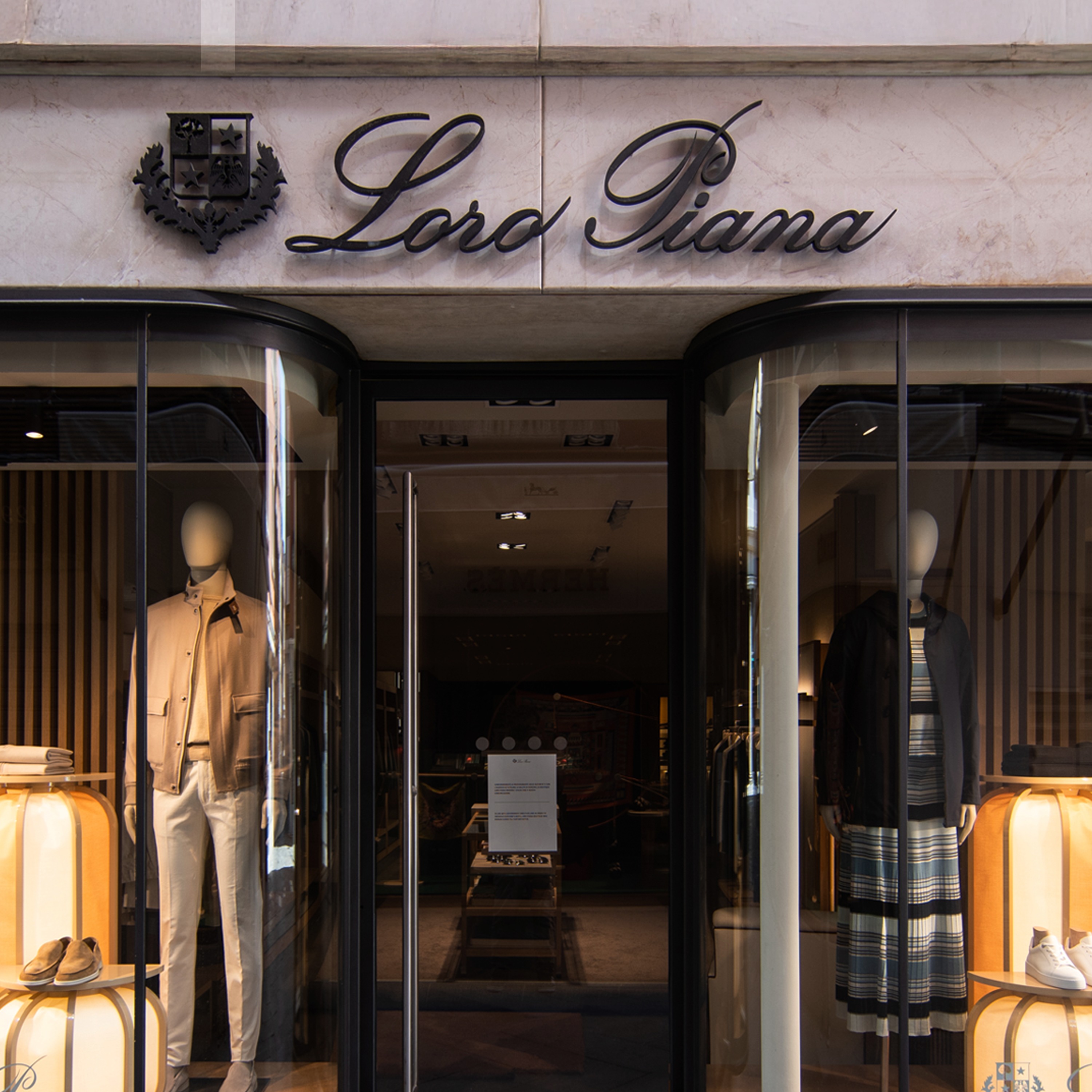
The Business of Fashion Podcast
High Luxury, Cheap Labour: Inside Loro Piana's Sweatshop Links
00:24:19
The LVMH-owned cashmere brand is the fifth luxury label to be caught in an Italian scandal that has raised questions about the integrity of the sector's vaunted supply chains. Sarah Kent joins The Debrief to unpack.
Loading summary
Transcript41 lines
- [00:00]
Fiji Water Representative
As it starts to get warmer outside, I love to keep Fiji Water on hand to keep hydrated and refreshed. It really is from the islands of Fiji. Drop by drop, Fiji water is filtered through volcanic rock 1600 miles away from the nearest continent, protected and preserved naturally from external elements. In this process, it collects a unique profile of electrolytes and minerals, resulting in more than double the electrolytes as the other two top premium bottled water brands, giving Fiji Water its soft, smooth tast. Unlike some other premium bottled waters, Fiji water's electrolytes are 100% naturally occurring. And this water even has a perfectly balanced ph of 7.7. Visit your local retailer to pick up some Fiji Water today for your next backyard party, beach or pool day hike, or even your home office. Fiji Water is earth's finest water.
- [01:01]
Sheena Butler
Hello and welcome to the Debrief from the business of Fash, where each week we delve into Our most popular BoF professional stories with the correspondents who created them. I'm senior correspondent Sheena Butler. Young Luxury fashion prides itself on exclusivity, craftsmanship and impeccable standards. But a recent scandal surrounding one of LVMH's most revered luxury labels, Loro Piana, has yet again thrown the credibility of the entire sector into question. Last week, court documents alleged that jackets sold by the label for thousands of euros were made in illegal sweatshops just outside Milan. Prosecutors say these allegations expose a pattern of widespread labor exploitation. It's the latest blow to luxury raising important questions about transparency, supply chain oversight, and whether the industry can truly justify its ever increasing premium prices. Joining us to unpack this is chief sustainability correspondent Sarah Kent, who has been following the developments closely. Hi, Sarah. Welcome back to the Debrief podcast.
- [02:05]
Sarah Kent
Hi, Sheena. Thanks so much for having me.
- [02:08]
Sheena Butler
Yeah. So I want to start with, for the uninitiated, why Loro Piana is so special. This is not garden variety luxury. This is baby cashmere. And all of these extra, extra special refined luxury elements. Talk us through what sets this brand aside. Right.
- [02:25]
Sarah Kent
I mean, Loro Piana is such an interesting brand because obviously when you're talking about luxury, you're already talking about this rarefied group of brands that can command prices that for many people are beyond aspirational. But there's a very small elite club within this already rarefied group which Loro Piana belongs in, and also includes companies like Hermes that are really considered untouchable in terms of their commitment to quality and craft. That goes down, as you were saying, Sheena, to this rare Mastery over their supply chains and ability to source the most exquisite raw materials, provide the most perfect textiles and turn them into these products that are really justified in terms of their pricing. And a lot of that is connected to a narrative of craft and connectivity to supply chains and raw materials and really still controlling your sourcing in a way that many, many brands cannot. And that is why companies like Loro Piana set in a category apart and also why it is so jarring when companies that are set in this elevated category fall down to earth in a way that is quite troubling.
- [03:56]
Sheena Butler
Yeah, it's like in, back in my day we would say this is one of those, if you know, you know, brands now, they call it quiet luxury. It keeps evolving, but this is like the, the original exclusive, exclusive brand. So I want to talk now at a high level about those very jarring allegations that stand in contrast to this image you just described. At a high level, what are the Milan prosecutors allege and what happened?
- [04:19]
Sarah Kent
Right, so to step back for a moment, just to scene set. So over the last year and a half, local prosecutors in Milan have been conducting an investigation into labor exploitation in the fashion industry's local supply chains. And so far they have found issues that link back to five brands that have been named. And several of them are very big name brands that, you know, most people would recognize and would not expect to be linked to factories where people were being paid below. Well, Italy doesn't have a minimum wage, but sort of very low wages, working 14 hour days, no holidays, sleeping in the factories. This is not your image of how luxury products are made. So brands that have been named so far that a lot of people recognize are Dior, Armani, Valentino and now Loro Piana. And as we've just discussed, all of those names I think would be shocking to your average fashion follower. But Loro Piana, because it has this very elite status, is especially shocking. And there's also the cumulative effect of, okay, one brand gets caught, maybe it's an aberration. Two brands, oh dear, five brands, wow, that's really a pattern. But what is happening is essentially brands are working with direct suppliers who are then subcontracting out to factories that are operating illegally very close by, and the brands are just not catching it. And so their products are being made in factories with very bad conditions where workers are not being treated correctly but being presented as though they are, you know, the height of luxury.
- [06:11]
Sheena Butler
I want to double click on the part of, you know, brands being completely in the dark about how these things were being made or that they were being subcontracted. There are some allegations in the report that brands may have attempted to figure out how this factory process would work.
- [06:27]
Sarah Kent
Yes. So what the prosecutors in Milan are alleging, and the crux of these cases is that big luxury brands are not really doing their homework to ensure that the products that they are making are not being made in these illegal factories. And so in the case that was brought against Loro Piana, what the prosecutors highlighted was that the company had, in effect, been working with shell companies that had no real manufacturing capacity in and of themselves, and it was giving contracts to make thousands of cashmere jackets to these factories and had in fact, sent a third party auditor out to look at these factories to inspect them, to give them a clean bill of health. But this auditor had not flagged that these factories would not be able to produce these products. And therefore, if you were paying attention and asking the right questions, argue the prosecutors, you would have known something was amiss. These products were going somewhere else to be made, and you as a brand did not have oversight of that. And so this is the kind of sanction that the prosecutors are making, is, you know, in this instance, you, Laura Piano, but they've sanctioned several other brands for this. You're not doing your due diligence properly. Your processes are not up to scratch to ensure that your products are not being made in these sweatshop conditions. And therefore, we're going to impose a third party administrator on you for the next year until you clean up your processes, make them a little bit more robust so that we can trust that you're doing the appropriate checks.
- [08:16]
Sheena Butler
Yeah. So if you walk into a factory and there are five people there and you're placing an order for 2,000 cashmere sweaters, good chance that they might not be able to see that they're not those five people. At least you probably need a little.
- [08:27]
Sarah Kent
It seems unlikely. And, you know, to be sure, we should sort of see say here what Laura Piana and other brands have been caught up in this say, is, you know, they do have robust systems in place. They're constantly trying to improve them. They, you know, cooperating with authorities to figure out where things have gone wrong and are continually trying to address issues when they arise. And in Laura Piana's case, you know, they said the minute they were made aware of any issues, they cut ties with the factories and tried to ensure everything is being done as above board as possible.
- [09:02]
Sheena Butler
Also, for the uninitiated listeners, you mentioned this process of Milan prosecutors working with these brands or working for the past year or so to look into these supply chains, is this as far as they would go when they find these kinds of things? Is it to put them in administration? Could they have done something else? Are there other quote unquote punishments that can be issued out on these kinds of things?
- [09:23]
Sarah Kent
So to date in these cases, the extent of accountability that brands have been held to is to to face this court appointed administration where you have an extern overseer come in and figure out where you're going wrong and help you improve those processes. No fines have been given out, there's been no criminal liability. Brands are not being accused of being responsible for labor exploitation themselves. The allegation is simply that they did not do enough to ensure that their supply chains were free of this exploitation, but they were not responsible for it. That you know, this is, this is happening at subcontractors not directly related to the brand. What is interesting is up until a few months ago the EU was pushing forward with new due diligence regulations that were quite radical and would have required companies, not just in the fashion industry, large companies across all industries, to put in place very wide ranging due diligence, really down to the raw material level, a level of visibility over supply chains that most fashion companies certainly do not have at the moment. So the idea was that companies would have to check that things were being done in the right way. Where they found problems, they were meant to address those problems. And if regulators found that they were failing to do so, the potential liability for brands was going to be 5% of global revenue. Over the last few months, the EU has proposed sort of very significant reductions to the scope of that regulation and it's unclear if it will come in at all. And without it, the extent to which brands could face liability beyond what they have so far is kind of questionable.
- [11:22]
Sheena Butler
And do you have a sense, Sarah, as to why the rollback of the legal teeth that was behind some of this regulate what happened?
- [11:29]
Sarah Kent
It's politics.
- [11:31]
Sheena Butler
Yeah. There's something happening in the USA as well that kind of goes into that around all of these, I guess we call them values driven or environmental, social governance kind of regulations that are all being sort of rolled back. So it's happening at a global level, it's all interlinked.
- [11:46]
Sarah Kent
So what we had last year in the EU were elections. You had a more right wing parliament brought in. It's more focused on ensuring competitiveness of business rather than looking at environmental and labor protections. And the EU is also responding to what is going on in the US where there's a regulatory rollback and they're seeing that American companies are not going to have to adhere to these kind of rules that do put a big compliance burden on companies and they want to make sure that European companies remain competitive.
- [12:23]
Sheena Butler
We'll be back with more of the debrief right after this.
- [12:28]
Shopify Advertiser
Starting a business sounds exciting, but it can quickly get overwhelming. Suddenly you're in charge of everything. Branding, websites, logistics, marketing. The list keeps growing. That's why so many businesses turn to Shopify to help make things simpler. From day one, Shopify powers 10% of all US E commerce from names like Skims and Gymshark to to brands just getting started. Build an online store that matches your brand with hundreds of ready to use templates. Create content quicker with AI tools that write product descriptions, headlines and enhance photos. Launch email and social campaigns like you've got a full marketing team and manage everything with expert level tools. If you're ready to sell, you're ready for Shopify. Turn your big business idea into With Shopify on your side, Sign up for your $1 per month trial and start selling today at shopify.com BOF Go to shopify.com BOF shopify.com BOF.
- [13:29]
Nordstrom Advertiser
This episode is brought to you by Nordstrom. The Nordstrom Anniversary Sale is on from July 12th to August 3rd. It's a once year opportunity to save up to 33% on brand new arrivals across fashion, beauty, accessories and more. This isn't a clearance event, it's a limited time chance to shop new season pieces from brands like Madewell, Charlotte, Tilbury, New Balance and Free People. Nordstrom offers a seamless shopping experience with freestyling help, free shipping and returns and easy online pickups. Plus in store events and daily beauty activations are happening throughout the sale. The sale ends August 3rd, so visit Nordstrom.com to shop now.
- [14:12]
Progressive Insurance Advertiser
This episode is brought to you by Progressive Insurance. Do you ever think about switching insurance companies to see if you could save some cash? Progressive makes it easy to see if you could save when you bundle your home and auto policies. Try it@progressive.com Progressive Casualty Insurance Company and affiliates. Potential savings will vary. Not available in all states.
- [14:31]
Hannah from Giggly Squad
Hey guys, it's Hannah from Giggly Squad. You know I love beauty and that's why I go to Sephora. It's not just shopping, it's like a glam experience. The beauty advisors actually get beauty unlike those big box stor and they give me all the advice I need and I love going with the products. You can only find at Sephora, like my new favorite Kayali fragrance, my perfect shade of Haus Labs foundation, and finally restocked my Lineage lip mask, all with the help of real experts. Oh, and if you haven't tried day shampoo, go try it. It's a game changer. Sephora isn't just a store, it's the beauty destination.
- [15:05]
Sarah Kent
Go.
- [15:05]
Hannah from Giggly Squad
You'll thank me later.
- [15:11]
Sheena Butler
I want to talk about the court of public opinion a little bit. So this is not just staying in the Milan prosecutor's office or in those ESG regulatory meetings. This is trickling into social media. People are talking about it, and this is happening in tandem with a lot of frustration around the ever increasing prices of luxury goods. And maybe Laura Piana has always been in that uber luxury end and maybe does feels like people that buy that will be willing to pay more, but they're not immune from the conversation of luxury products are costing more and more and more. And when we see the news, the supply chains that these products go through to end up before the consumer are not what luxury brands say they are. Allegedly.
- [15:51]
Sarah Kent
Right. And this, I think, is a really interesting question because on the one hand, you know, as I've just said, it's not clear from a regulatory standpoint that there's going to be hefty penalty on brands for being linked to these sweatshops deep in their supply chain. What may be more damaging is this reputational piece. And as you rightly say, big luxury brands have faced scandals in the past and they've been very good at deflecting, sidestepping, distracting. There's always a new campaign, always an exciting new shiny object that consumers can latch onto that will help them forget about whatever uncomfortable, unsavory allegation has been made about the brand. What is different about what is happening at the moment with luxury supply chains in Italy is that it's not been applied to only one brand. Cumulatively, over the course of nearly a year and a half now, five different brands have been brought into this. Prosecutors are saying this is a systemic problem. Just because a brand, a luxury brand hasn't been named in these cases doesn't mean it's not an issue for them. And this is playing into a much bigger conversation that is already playing out especially loudly on social media where, you know, people are seeing how much luxury brands have increased their prices over the last, you know, since the pandemic, and they are already questioning whether they are getting what they're paying for. They're already saying, we don't think that these Products are the quality they used to be. They're much more expensive than they were. You add into the mix that they're not being produced in the conditions one would expect and it all creates this kind of toxic soup for the luxury narrative. Add on to that as well. Within some of these court documents, there have been sort of prices put out there about how much brands are paying to their manufacturers for products that they sell for thousands of dollars. In Laura Piano's case, according to the court documents, they were paying one particular supplier a little over €100 per jacket for garments that could retail for an ex of €3,000. For a consumer seeing that, that's quite a stark difference. Loro Piana would contest those numbers and indeed they are a little bit misleading because there's a lot that goes into the price of a jacket. The cost of manufacturing doesn't include the cost of raw materials and it doesn't include the cost of having a shop in one of the most expensive districts in Milan or London or New York. And it doesn't include the cost of marketing. So the price you pay for a luxury product has to include all of those things. It's not just the price that is paid for actually making it, but nonetheless, that difference in price is very, very stark. And there is an expectation that you, if you are charging that much for a product embedded within that is a manufacturing cost that is sufficient to ensure people are at a minimum, being paid the legally required wage and getting the appropriate benefits.
- [19:06]
Sheena Butler
And there's a lot of euros between 100 and 3,000, that's for sure.
- [19:10]
Sarah Kent
There are many euros of difference.
- [19:12]
Sheena Butler
There are also some, you know, very shocking allegations and anecdotes. And one you pulled out in your story was particularly disturbing. And it was. Can you tell us about it? It was a, that allegedly ended up in the hospital.
- [19:27]
Sarah Kent
So the, the reason this particular case ended up coming to light was because there was a Chinese tailor who had been working at one of these subcontracted factories for a decade. And in that time he had been working 13 hour days, no days off, sleeping in a dormitory right next door to the factory, being paid about $5 an hour. So, you know, these are not the conditions you expect someone who's making a €3,000 jacket to be working in. But at the end of last year, he claims he stopped getting paid altogether. And when he went to his employer and sort of said, I need my money, he was beaten so badly that he was hospitalized. He then filed a police report. And when the police went to inspect this factory they found these Loro Piano jackets and that was how this particular inspection ended up sparking the case that came out last week. And again, this is not something that Loro Piano was perpetrating. It was happening in a subcontracted factory that they say they had no knowledge of. But this is exactly the problem the prosecutors are sort of raising is what is happening in these factories is very stark and it is not what one would expect to be happening in luxury supply chain. And at best, the luxury industry is letting things fall through the cracks. And at worst, which is what the prosecutors allege, that they're just turning a blind eye because it is more convenient and cost effective and efficient to continue to rely on this supply chain that produces things at very high quality and very low costs.
- [21:20]
Sheena Butler
Yeah, beyond obviously complying with the court ordered administration, beyond, you know, the statement that they ended immediately that contract with subcontractors or that factory that was doing those things that were alleged. What else does Laura Piano say? Anything at all? Like there's something happening on social media where people are reading what you just described and are asking the questions they want. This is wrong. We want to hear from you brand that sells something for €3,000 that puts forward this image. Do they say anything to that? I know the answer, but I say anything at all, Sarah, to that.
- [21:58]
Sarah Kent
Look, I think as we've discussed before, Sheena, the luxuries, historically historic strategy, and I don't particularly see it changing, is do not engage, ignore and assume people will move on. And honestly, you know, that's not been a bad strategy historically. People do move on.
- [22:20]
Sheena Butler
So this does not then represent, and this is just me asking you to sort of predict the future. But does this feel like something different that could represent a turning point in the myth making that luxury has done for a long time? You know, we've seen allegations, not to this degree, but the similar situation with Armani and Dior, but Laura Piana is special. These are particularly damaging allegations. Again noting that they did not personally have a relationship with that factory where those things were taking place. But these are very disturbing allegations. Do you see this representing any kind of turning point where the consumer is now becoming so disillusioned that they can force companies to be more transparent or make some significant changes in how they operate at a systemic level?
- [23:08]
Sarah Kent
I think it's really hard to call at this point, you know, first of all, because there is a vocal conversation going, an active conversation going on, especially in social media around this topic. Are the people having those conversations, Laura Piano's Customers, maybe. Some of them maybe do. Do Laura Piano customers care? I don't know. Hard to say. Even if some of them do, is that enough for it to be a turning point? Equally hard to say. On top of that, there are many, many things affecting the luxury industry at the moment that are extremely distracting. You've got the trade war, you've got a broader downturn in luxury consumption. You've got new designers coming in. To my point about what's the next new shiny object, it isn't necessarily something brands want to talk about, but the news cycle moves at a very, very fast pace at the moment and it's easy for people to get distracted. So I think hard to say if we're at a turning point. What I will say feels different this time is there is more jeopardy than there has been historically. This is feeding into a bigger conversation that's already happening in a dangerous way. This is not just a one off scandal affecting one brand that can fade into the background. This has been going on. This is an investigation that has been going on for a year and a half. It's already embroiled by brands. Maybe others will be connected to it too. It is not something that the industry as yet has been able to kind of brush under the carpet and move on from.
- [24:52]
Sheena Butler
And you mentioned the trade war and tariffs. But also this idea of where things are made because of those two things is becoming more important than ever. And in terms of public discourse, what does this mean for the Made in Italy label, this very esteemed label that stands for something, is that eroding in a way that is irreversible now?
- [25:11]
Sarah Kent
I mean, that's such an interesting question. I think Made in Italy still stands for something. And by the way, you know, one of the things that is very interesting about all of this is no one is impugning the quality of the products being made in these factories. You know, the working conditions terrible, but the quality of the products coming out of them. No one is saying they're not good enough. And I would imagine were the quality of products coming to the brands not up to their standards, they would be cracking down on those factories much more swiftly than if there were sort of question marks of the labor conditions. So from a quality perspective, this isn't necessarily a black mark against Made in Italy. What it does do is erode this image of the atelier and the croft. You know, Made in Italy is facing challenges, but those go beyond one particular scandal. There are deep seated economic challenges for an industry that is still largely made very fragmented made up of mom and pop shops who are ultimately competing now on a global stage with countries that have much lower labor costs. And that's part of the reason why you end up with this situation where there is a cottage industry of, you know, cut price suppliers that are not meeting like Italy's own labor laws because it means that they can offer lower priced goods and compete on that global stage. And that is a, that is a systemic challenge that, you know, made in Italy needs to tackle.
- [26:53]
Sheena Butler
Absolutely. I mean, it's a question that we've asked as well when we say no one wants these jobs, that's why manufacturing will never come to America. What are we really saying? We're probably saying we don't think that these jobs are being done in conditions that we would love either. I think this is not the positive place you want to end on, but it's also not everything's positive. This is a fascinating conversation as usual. Sarah, thank you so much for joining me.
- [27:18]
Sarah Kent
Thank you for having me, listeners.
- [27:20]
Sheena Butler
Please be sure to check out Sarah's articles how Laura Piana was linked to Labor Exportation and if you can't trust Laura Piana, who can you trust@businessoffashion.com these and other stories are available to BOF Professional subscribers only and you can find the links in the episode notes. You've been listening to the debrief produced and edited by Olivia Davies and Eric Brea. I'm Sheena Butler Young. We'll be back next week week with a new episode. Thanks so much for joining us and be sure to follow us wherever you get your podcasts.
- [27:56]
Hannah from Giggly Squad
Hey guys, it's Hannah from Giggly Squad. You know, I love beauty and that's why I go to Sephora. It's not just shopping, it's like a glam experience. The beauty advisors actually get beauty, unlike those big box stores. And they give me all the advice I need. And I love going with the products you can only find at Sephora, like my new favorite Kayali fragrance, my perfect shade of Haus Labs foundation, and finally restocked my Laneige Lip mask. All with the help of real experts. Oh, and if you haven't tried Day shampoo, go try it. It's a game changer. Sephora isn't just a store, it's the beauty destination. Go. You'll thank me later.
- [28:32]
Progressive Insurance Advertiser
This episode is brought to you by Progressive Insurance. Do you ever think about switching insurance companies to see if you could save some cash? Progressive makes it easy to see if you could save when you bundle your home and auto policies. Try it at Progressive. Com, Progressive Casualty Insurance Company and affiliates. Potential savings will vary. Not available in all states.