← The Business of Fashion Podcast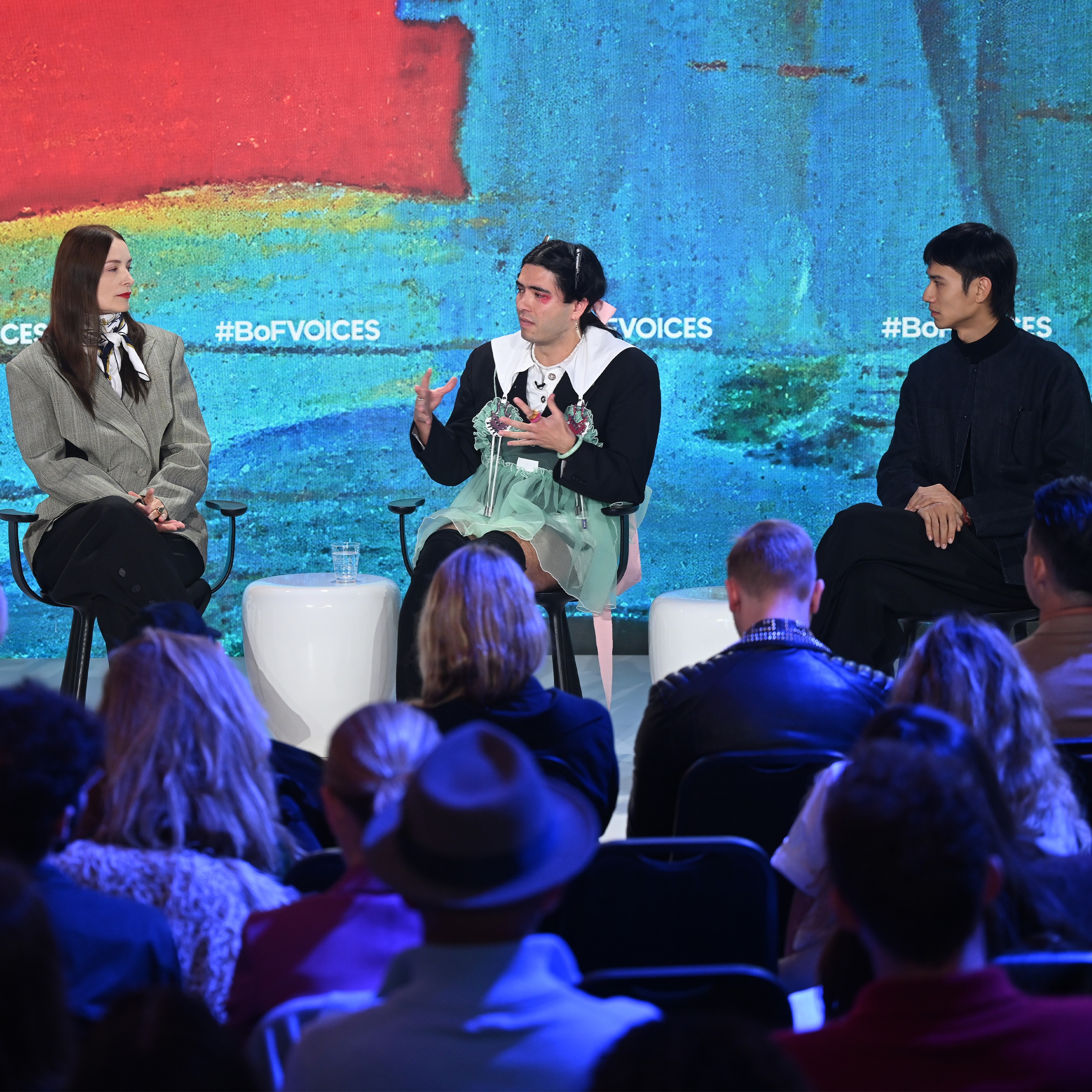
The Business of Fashion Podcast
How Independent Brands Can Thrive in a Fashion World Ruled by Giants
00:20:51
At BoF VOICES 2024, 1 Granary founder Olya Kuryshchuk hosted a panel on independent fashion with designer Roksanda Ilincic, consultant Bohan Qiu, and Antwerp Royal Academy director Brandon Wen.
Loading summary
Transcript43 lines
- [00:00]
Brandon Wen
Foreign.
- [00:04]
Imran Ahmed
Hi, this is Imran Ahmed, founder and CEO of the Business of Fashion. Welcome to the BoF podcast. It's Friday, December 13th. In a slowing luxury and fashion market, it's not just the big brands and e commerce companies that are being impacted. Independent fashion designers around the world, from China to the US to Europe are facing a barrage of challenges too as more multi brand retailers shut down. This not only puts tremendous cash flow pressure on small fashion businesses, but they are also losing their main channel to reach customers. Alongside other factors like inflation, Brexit and growing geopolitical turmoil, it seems almost impossible to build a sustainable independent fashion business today. But there is hope.
- [00:52]
Roxanda Ilincic
It's very, very hard for young designers. I don't know how to young ones are starting and I was thinking about that. You can be seen, you can be heard, but how do you bridge that next level unless you're supported by big companies?
- [01:05]
Bo Han Chu
I think young designers starting out, they need a lot more business advice and opportunities rather than because I think all the schools are training them to become artists, but I think they also should know how to use an Excel make a budget sheet.
- [01:19]
Imran Ahmed
At BoF Voices 2024 One Granary founder Olya Kurishuk hosted a panel on independent fashion brands, bringing together designer Roxanda Ilincic, Chinese publicist and consultant Bo Han Chu and director of the Antwerp Royal Academy Brandon Wen. To explore this topic. Here's Olya, Roxanda, Bohan and brandon on the BoF podcast.
- [01:46]
Olya Kurishuk
To kick off this section, I think it's important that first we actually define what thriving even means for independent brands in the country and climate. Roxander, from your perspective, is it all about revenue or are there any other metrics that actually we can apply when we think about independent brands and success?
- [02:05]
Roxanda Ilincic
Well, I think each obviously brand has different ways and goals of what thriving means, but I think it's definitely not just about the top line. I think particularly in recent years, it's much more important at bottom line. So it doesn't matter if we are growing at the speed and pace as we used to. It's more about how much profit we have, are we sustainable? Are we profitable? And it's also other elements. For example, are we inspirational for society that we live in? What is the community that we are building? So I think it's not just about the pure profit and particularly for independent brands, I think building that aspirational community, other aspects that are much more human.
- [02:46]
Olya Kurishuk
Are more important and from the side of industry. Do you think they should be deciding who they support, looking at the bottom line or there are other things that they should care about.
- [02:57]
Roxanda Ilincic
You mean the industry as a whole?
- [02:59]
Olya Kurishuk
Yeah.
- [02:59]
Roxanda Ilincic
The value of the independent. I think it's very important. Actually, we are having this talk right now because I think it's so important to support independent designers because later on we will talk about why they're so important and what they're bringing to the table. So therefore, I think for industry, of course, it's very important to support it bottom line and designers and everything that they bring to the table.
- [03:21]
Olya Kurishuk
Brendan, a lot of your students entered fashion education because they had a really big dream. But right now they're entering the industry that basically being monopolized by fashion giants. Fashion giants whose practices are very often not aligned with the sustainable future we need, but they're still rewarded for that. Right. So what's the mood within your students and how do you see them defining the new type of success? Like, what are they aspiring to achieve after graduation?
- [03:51]
Brandon Wen
I think it's difficult because there's a lot of fear that happens. There's like a huge split between sort of a Covid generation and those who came afterwards. I think those who were within Covid or studied within that moment have a lot of apprehension about what design even is and what kind of design is wanted. I think before you felt a lot of people trying their own projects and now most of them are very desperate to even just get an internship. And I think not because they specifically align with the brands, but because that's how they view security, sort of being able to be in a house and have a job and just coast in a way. But there is, I think, a certain hope in the younger generations that are a bit more interdisciplinary and their practice is much more artistic based than purely design. And I think they, if I don't know exactly, they do have a more specific and personal view on what the success is. Whether that means collaborating more with other people, bringing people together, and rather than just sort of replicating what bigger brands look like or kind of the structures that they have.
- [04:56]
Olya Kurishuk
And you mentioned fear. Do you feel it stifles their creativity in any way or you don't see that?
- [05:02]
Brandon Wen
Absolutely. It's difficult because I think teaching design, you have a lot of times where people will come with one idea and as they develop it, they start to pull back. And it's really, it's in that moment where they start to, oh, but this, this is maybe too much. And this was too. It's not commercial when these are words that we never use, you know what I mean? But it really comes into the design and the choices that they make, and it's waning, I will admit, but it does happen a lot, and it's.
- [05:29]
Olya Kurishuk
Mohan, in your experience through the last years, what were the main changes that happened in the industry? Was it always this, or was there specific challenges that arise in the last few years?
- [05:41]
Bo Han Chu
Well, coming from China, I think during COVID we kind of had a few years of really exciting, booming period. I think that's when Covid happened. And then all the Chinese students who were studying, all the top leading academies in the world returned home. And then all of a sudden you're having this moment of like, what do we do now? And then. So then everybody, you know, started their own business, started their own brands, and there was this huge kind of the glorious few years that we had. And then after Covid, a lot of them start to struggle because now they kind of get dispersed. They start traveling. They go to do shows in Paris, in London, in Milan, they do showrooms. But then they also encounter such almost like an institutional difficulties to truly establish themselves in the global market. Some succeeded, but some actually retreat at home and then start to develop their own ecosystem. And then, of course, now with the Chinese economy slowing a little bit, everyone is facing the same challenges that luxury brands are facing. So then they are also seeking other ways to think and rethink. Maybe this is not the best model to go through, because it felt as.
- [06:43]
Olya Kurishuk
A golden era for a few years pre Covid. And actually, even during COVID there was such a crazy wave of new brands that kept emerging every every day. It felt like the industry had so much space for them. So only in the last two years, everyone started being a bit anxious and seeing a real impact. But it feels like no one speaks in words. Actually, what is making that change? Like, what's happening? What are those specific changes that affecting design, is why none of them can break through anymore or shutting down?
- [07:12]
Bo Han Chu
I think there's a few factors. I think previously how a lot of young designers, they would look up to this trajectory. You know, that you would build your brand, your business, establish your name internationally, and then potentially one day, the big LVMH or the caring groups will give you a chance to work and be the creative director of a maison. We're seeing all these prizes, and we've been nurturing young designers for so long with LVMH prizes. That happens every year. They're nurturing classes of classes of really, really talented people. But how many are the LVMH brands really giving an Opportunity of a job to any of the designers that they have raised in the previous years. I think that's a really interesting question we have to look at. And also I think this historic model that the multi brand stores now really decreasing in their business scales globally. I think also showrooms and then brands themselves, they're able to develop their own ways of storytelling their own content instead of relying on media to tell them what's cool and instead of relying on multibrand stores to tell the customers what is cool. I think the brands now and the young designers, they have a much stronger and direct channel to talk to the consumers. And I feel like this is really exciting shift that's also happening around the world.
- [08:19]
Olya Kurishuk
Roxanne, with your own brand counting that large brands, the large players are pretty much dominating at the moment. Distribution, production, media, space. What are your main challenges and are they becoming worse at the moment?
- [08:35]
Roxanda Ilincic
It's very tricky. It's been very tricky, particularly post Covid Brexit. Everything that Timran has mentioned, obviously all the wars happening in the world, but there is always a way to find, to thrive and you know how to build your community and how to grow in a certain way. I think what is the beauty of independent brand that you can quickly adopt and you can quickly change and you can try to find a solution maybe quicker than a big giant. What is I think important is just to kind of talk to your consumer. I think that kind of very personal, very intimate relationship that as a smaller brand you are able to have with your consumers is so important. And obviously we heard this before with E Com platforms as well. I think that's definitely one of the ways of staying in the game. But the challenges are certainly there because let's say more than 90%. I don't have necessarily the data, but I think that more than 90% of majority of advertisements and even placements in the stores and E Com platforms is paid or in some way subsidized by the big brand, either by the power that they have simply by amount of volume that they're selling or by money that they're having. So it's really kind of thinking outside of the box and trying to find a way how you can still engage, how you can still be visible. Because going back 20 years ago when I just started, for example, being on a platform, let's say Magnetta Porte, they loved featuring young brands just for sake of them being independent and representing that kind of very different unique point of view. Now obviously they grow drastically like all the other retailers. So you know, the Landscape has changed quite a bit. And it's kind of how do you find your way to still be present and be in the forefront of your customers, of the new customers?
- [10:28]
Olya Kurishuk
It's interesting because even though you gave a few challenges, I thought your perspective will be way more negative. My personal is like that we work with a lot of designers. I think production is becoming probably the biggest bottleneck in the industry. So interesting to hear that you actually still positive around it.
- [10:47]
Roxanda Ilincic
I think you have to be positive. I think if you don't have the positivity, if you start from a negative note, probably the outcome might end up like that as well. I think the times are dark. It's very, very hard for young designers. I don't know how the young ones are starting. And I was thinking about that, particularly before this talk, and I felt lucky that I started 20 years ago.
- [11:08]
Olya Kurishuk
And it's actually really easy to start now. It's that it just becomes really tight.
- [11:11]
Roxanda Ilincic
But then how do you last. You can be seen, you can be heard. But how do you bridge that next level where actually you last for decades and decades and grow into something much, much bigger, unless you are supported by big companies like in lvmh, Kering, et cetera. So, you know, there's. There's kind of lots of questions to answer. But as I said, I'm optimist. I have to be. I don't have another choice. I think when you start on your own, you always have to find solutions.
- [11:40]
Olya Kurishuk
Brendan, fashion schools pretty much became an incubator of this industry. Majority of brands we're talking about all got launched from the graduate shows. Do you think fashion institutions carry responsibility for the overcrowded market that we are in now? And also how can they prepare their students to navigate the space if they're launching them into it?
- [12:04]
Brandon Wen
I think the way that we work, I'll speak about Antwerp specifically, is that it's a very broad sort of curriculum and education, and sometimes it's critiqued because it's not so specific and because we don't have such a standardized way of doing things. But what happens is everyone is allowed to have a very idiosyncratic way of doing their own work and finding their own design. And it creates people that are extremely resourceful that can come up with solutions and withstand a lot of pressure. And that's, I think, what they need. Because the industry is always changing. This conversation is never the same every year. And to prepare them for one thing or one specific setup, it's also not worth anything. So I think the resilience and sort of the resourcefulness that we help them to grow and incubate is really the most important part of it. Because sometimes they don't all become designers. Not everyone who studies design has to be a designer. They can be a photographer. There's so many other ways to express the things that we're expressing. And I think we work to make sure that they know that that possibility is open. But it's always hard because you see this sort of, I want to be a designer and that's where I'm going. So you have to try to keep the narrative very open. But it's not easy.
- [13:15]
Olya Kurishuk
I think we can speak forever about the negatives. So let's actually look at solutions and opportunities and if they even exist at the moment. Right. Bohun, do you feel there's anything that's working right now? And are there any specific markets or niches where actually designers do have an opportunity?
- [13:34]
Bo Han Chu
The independent brands, I think probably, you know, in the previous decade where I think fueled by of course netball team is supported the luxury E commerce essence. You know, all the young designers had a big break, you know, around first or second season when they start into the business and also getting into different really good multibrand stores around the world. But that model has shifted, shifted and then all the multi brand stores are becoming so similar nowadays all over the world. I remember my team, who's Gen Z Chinese, going to Paris and then they go into the broken arm for them. They're like so uninterested in the offering there because they see everything in the same in Shanghai, downstairs of our office. So then when this is becoming so homogenized as well, you know, designers can no longer rely on the multi brand stores and retailers. So then they actually have to really learn to build their business from the beginning. And I think in the previous economic downturn we saw this rise when people got super bored of minimalism. And then came the rise of when streetwear took over luxury. And I feel like right now there's going to be this next movement where it's coming from the streets, it's coming from the underground, it's coming from the youth culture that are so sick and tired of this current system and they want to overthrow and they want to build something that is so strong that our current system can no longer neglect and have to adopt. So I feel like that is coming from, you know, authentic storytelling all across the world. China, India, you know, like all these emerging markets, Africa. And I feel like everybody will have their own strong voices that can rival that can have first and foremost a really strong hold in their home market. And then they will develop it through social media, through TikTok, through their, you know, these platforms that they're so innately good at and then to communicate to the global audience. So they almost like maybe they don't need the magazines or the multi brand stores anymore to set up their business. Maybe they can set up their business digitally first and build their own communities first.
- [15:28]
Olya Kurishuk
And the question actually for all of you, do you feel AI might potentially and the new technologies become any sort of equalizer for the industry at the moment? Do you see any successful user cases of how brands of students use it to getaway ahead?
- [15:46]
Roxanda Ilincic
I personally don't. I come from generation that was very much about craft and handwork and I started drawing my own designs. I drape them on a dummy with my team. All of my prints are made by hand. And then of course with the help of digital help, of course I get some. But I think that that kind of hand human touch is so important. I try to stay stay away from it as much as possible. Obviously I can't stop the progress and I can see good things in it as well. But I don't think that AI will necessarily help us get out of this situation that we are at the moment. I don't know if you disagree with your students because obviously they're much more. They grew up with it.
- [16:30]
Brandon Wen
I will agree with you. I on a personal level feel the same way about AI and we as a school do not push for a lot of the digital. It's really a traditional arts education. But what I will say is I think there is an opportunity with AI with sort of chatgpt, especially in its ability to make very complex language easy to understand. There's an opportunity for the students or the young designers to find more information, access to things. I think what they need is more subsidies, more support to know which competitions can support them, can give them a boost. And people are quite lazy to do this. But if you can generate it from the AI, as much as I don't love that it does give them access to it and it can translate these very complex worded government documents or competition requirements to something that they can digest into emojis.
- [17:23]
Bo Han Chu
Genmojis.
- [17:26]
Brandon Wen
So in that sense I think there's an opportunity.
- [17:28]
Olya Kurishuk
And Bohan, you're the same because from my side I see so many ways of designers using it to create contracts, to do more business type of stuff. I don't mean designing through AI. Do you think it can help just save the amount of money and speed with which they can operate.
- [17:43]
Bo Han Chu
Definitely. They can find out so much already through AI. But I think even with designing there is actually a movement amongst a lot of the Chinese designers that are starting to really use it. In the end, it's not about having the AI replace the designer, but more so for them to act like almost like a design assistant for them, that they can generate infinite ideas and they still have to curate and pick in the end and then tell the AI to maybe try a bit more of this and then input another reference and inspiration so then they're able to have maybe a smaller design team and maybe use that budget to hire a legal person.
- [18:16]
Olya Kurishuk
And guys, if you could leave a message to retailers, media, anyone in this room, what will it be? What would you want to ask them about specific shift that you think needs to happen in the industry?
- [18:31]
Roxanda Ilincic
Well, I think it's really understanding what independent brands bring to industry as a whole, which above all it's creativity, it's a unique point of view that can be replaced. And I think just understanding that and educating the consumer to understand this as well. For example, the quantities that we produce are much smaller than the quantities of the big brands. So just understanding that you're buying a very, very unique and specific product and that should be championed.
- [19:04]
Brandon Wen
I think that and that curation has to come, need more support, but I think that support has to be more curated and that curation has to come from a dialogue between business, creative, art, politics, that the support isn't so singular in the sense that, okay, we see this potential that the people who are giving the sustained support have like a wider diversity of says and viewpoints on what creativity is important, what business aspects are important, what sort of other aspects are there. So I think it's about like a sustained support, but that comes from a very curated dialogue.
- [19:40]
Bo Han Chu
I think young designers starting out, they need a lot more business advice and opportunities rather than. Because I think all the schools are training them to become artists. But I think they also should know how to use an Excel, make a budget sheet and also, you know, instead of maybe asking them to do shows in Paris Fashion Week, maybe Paris Fashion Week can also be a bit more flexible to provide, let's say a pop up space for a young designer to test out their own retail capability or maybe give out an opportunity to work in a big house for a few months and so that they can really learn, you know, how the big machines work so that they're not struggling with.
- [20:15]
Olya Kurishuk
Their own machine thank you so much guys. I have just last message for the audience. I think it's important you guys also ask yourselves as consumers, as the industry players, what actually you can do to advocate and support independent brands and answer to yourself why you think it is important that you do it. Thank you so much.
- [20:41]
Imran Ahmed
The BoF podcast is edited and produced by by Olivia Davies and Eric BREA.
- [20:54]
F
More than 125,000 podcasts trust Acast to connect them with their audience. Your brand can speak to your perfect audience too, by advertising with acast. We're home to the biggest names in podcasting, reaching millions of engaged listeners who can only be accessed through acast. From true crime to comedy finance to fitness, your next customer's favorite podcast is an ACAST show. Your audience is already here. Speak to them with Acast. Visit go acast.com ads to get started today.