← The Business of Fashion Podcast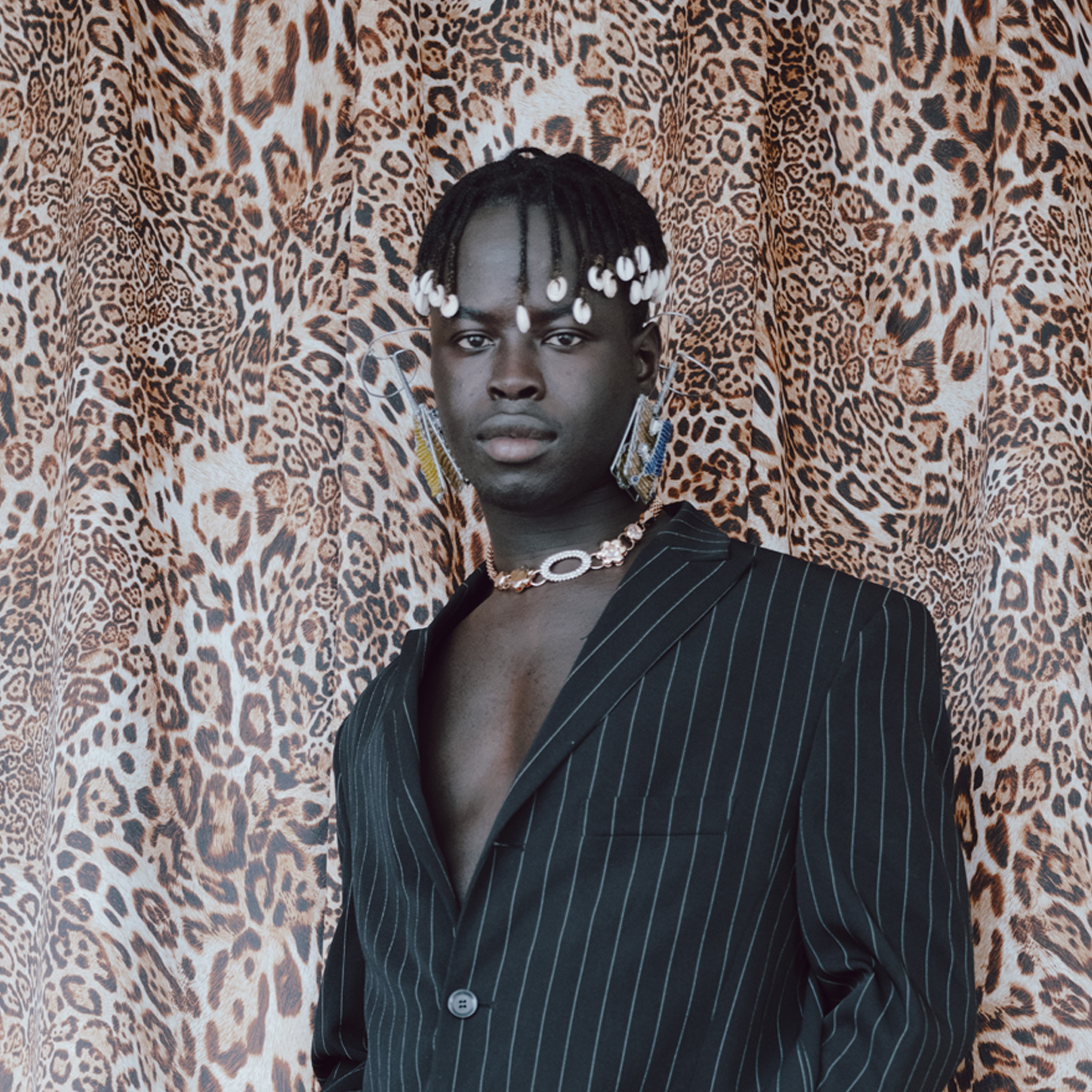
The Business of Fashion Podcast
Ib Kamara: ‘Europe Is Not the Centre of Everything. Where You Come From Matters.’
00:27:22
Ib Kamara reflects on migration, image-making, Virgil Abloh’s legacy and why young creatives from the Global South should trust their own taste.
Loading summary
Transcript95 lines
- [00:00]
Ad
Foreign.
- [00:04]
Imran Ahmed
Hi, this is Imran Ahmed, founder and CEO of the Business of Fashion. Welcome to the BoF podcast. It's Friday, February 13th. From a childhood in Sierra Leone to navigating London as a teenage immigrant, Ibrahim Kamar's cross cultural journey has greatly shaped his creative identity. In this conversation, recorded in Abu Dhabi during the launch of Tea magazine mena, he recounts hiding his artistic ambitions while studying science, breaking through with the Beyonce Commission in his early 20s, redefining dazed as a global publication, and ultimately stepping into the role of art and image director at Off White after the death of Virgil Abloh. Our conversation spans authorship, responsibility, design versus styling, and why young creatives today must reject young Eurocentric hierarchies and build with their peers. Here's Ibrahim Kamara on the BoF podcast. I'm delighted to be here with Mr. Ip Kamara.
- [01:12]
Ibrahim Kamara
Thank you. Thank you.
- [01:13]
Imran Ahmed
We've actually been wanting to do a chat like this for a while and we never managed to align it in London, but somehow we're here. We made it happen in Abu Dhabi. So why don't we start by going way back? You and I both have African heritage.
- [01:33]
Ibrahim Kamara
Yeah.
- [01:34]
Imran Ahmed
My family's from Kenya and Tanzania. Your family is from Sierra Leone?
- [01:37]
Ibrahim Kamara
Yeah.
- [01:38]
Imran Ahmed
Tell us about Sierra Leone. I know you moved to London at some stage, but what was that journey and experience like from Sierra Leone to the uk?
- [01:49]
Ibrahim Kamara
I always say I had one of the best childhood growing up because I was out in the street till 11pm running around with my friends. And Sierra Leone is beautiful. Sierra Leone have had war over the years, so it's, it's a beautiful island with so much talent and so much possibility, but the world doesn't get to see that. So I feel like I'm one of the luckiest people to come out of one of the most poorest place in the world, but also with so much potential. And moving to London, of course, was a culture shock. You know, I come from an environment where authority is a thing and you don't question anything and you find yourself somehow. But then in London, I'm thrown into a school where.
- [02:30]
Imran Ahmed
How old were you when you arrived in London?
- [02:32]
Ibrahim Kamara
I was 15, going to 16. So I was pretty much in my early teenage years where I'm finding myself and all of a sudden I have to abandon everything that I know and keep up with all the young people and be more outspoken and. And then you're shy because you're, you're raised in an environment where you're nurtured to not speak. So London was definitely a culture Shock, but also the best shock that could have ever happened to me. I think I needed that shock and that tension to be Ibrahim right now, I think so.
- [03:03]
Imran Ahmed
Take us back to that 16 year old once he kind of settled or kind of found his. His way in London. What was 16 year old Ibrahim Kamara dreaming about? What did he want to do with his life?
- [03:18]
Ibrahim Kamara
I was dreaming of not going to study medicine because that's what my parents wanted. So I was finding every way to get out of it. But I ended up studying science at 16 and chemistry and biology of everything. But I always bought fashion illustrations. I was on illustrations. Illustrations, yeah. It was the early. I think ebay had just started or something. It was the early years of ebay, I think, or buying stuff online. I'll buy fashion book. I will watch like America's Next Top Model, if that was even a thing. I will watch Ugly Betty. I will research on stylists, I will see Barry Kamen's work, I will see Simon Foxton's work. And I was interning at the other youth culture magazine because outside my house I could be whatever I wanted to be in London, but at home I couldn't. I had to put. Put up this medical brain to just be so like Dr. Kamara. Dr. Kamara. Not far off, actually. I do have a doctorate now, but.
- [04:17]
Imran Ahmed
You do.
- [04:19]
Ibrahim Kamara
But I think, you know, I had to hide to be able to be autistic outside and find my people. Yeah.
- [04:27]
Imran Ahmed
And what was it about fashion that was so interesting to you? I mean, you already mentioned styling. How did you. There's so many different roles in our industry, right?
- [04:41]
Ibrahim Kamara
Yeah.
- [04:42]
Imran Ahmed
People sometimes think it's just about designers, right?
- [04:45]
Ibrahim Kamara
Yeah.
- [04:46]
Imran Ahmed
Or models. But there's hundreds of roles. Why styling?
- [04:51]
Ibrahim Kamara
I thought it was the easiest thing for me to do than going into other routes. But also I loved images and I was fascinated by how people put things together. And the people I work with were all artists. So I feel like I could develop my style quicker than going into other forms that I was a little bit afraid of in the beginning of my career. So styling and image making. But also when I was young in Sierra Leone, I used to see a lot of magazines come from Europe because they just dump them there. So naturally I was used to. I understood images quicker than design because there was no sort of a design school or artistic design, like language, you know, you. You take what you're given. So, yeah, that felt like the most natural thing to start with.
- [05:45]
Imran Ahmed
What was the first opportunity you had to exercise that muscle, tell us that story and how it felt.
- [05:56]
Ibrahim Kamara
You mean the first time I ever styled the story? I think I was in college. I had quit science.
- [06:02]
Imran Ahmed
So you're studying medicine?
- [06:03]
Ibrahim Kamara
I'm studying medicine, so I quit.
- [06:04]
Imran Ahmed
You quit?
- [06:05]
Ibrahim Kamara
I quit at 19. And then I was Internet for a youth culture magazine called Life magazine, which have produced A lot of the young London editors come from Life magazine. So it was a youth culture magazine for. For poor kids from poor backgrounds. And then all of a sudden, I stepped her into a styling thing. And then I called a couple of my friends who weren't even doing anything fashion. And then I started to style them. They'll come to my house, I'll take photos of them and style them. And that was my very first move into trying something that I was hiding my whole life to do. And it was liberating.
- [06:48]
Imran Ahmed
And tell us about how that felt.
- [06:51]
Ibrahim Kamara
It was liberating. I felt like I could do this forever. I mean, then I started buying, spending all my money on vintage pieces. And not like designer, just like normal in just buying stuff and counting them up and really playing with styling, but just making as I'm playing with styling. Because when you're 19, you don't have access to Givenchy or all the PR clothes. No one gives them to you. So you have to, like, imagine your own sort of like images and styling. But it was limitless of what I could create. So it was fun.
- [07:26]
Imran Ahmed
Do you have a moment where you feel like you had your big break? Like, what was that moment when you went from innovating with pieces from, like vintage markets on your friends? Like, what was the moment where, you know, someone else saw your talent, your potential and recognize that in you?
- [07:50]
Ibrahim Kamara
I think the very first time, I mean, I was. I think I was 23, 24 the very first time I did my university project and I showed that at Somerset House. But after that, I have never really worked on a bigger project. And then Beyonce's team called to get me onto la, so. So I never thought anyone will want.
- [08:15]
Imran Ahmed
Say that again. So Beyonce's team called you, called me.
- [08:19]
Ibrahim Kamara
To get to head to.
- [08:20]
Imran Ahmed
Like, they just found your phone number?
- [08:22]
Ibrahim Kamara
No. Well, through people, through friends. Hey, on the Internet. Okay. So someone from her team called me, but I was 24, 25, I have quit my retail job. No job. I'm like, I'm at home styling, but I'm putting up my work. And then all of a sudden, I'm on a plane to LA to do a video for her. But I took all my friends and that was one of the most incredible Time of my life. I took four of my friends who were not stylists, but they had great minds and great vision. And so we all came to LA to Style B. And it was. I was nervous as hell. I was completely out of my debt. But I. When my people were there to give me the courage to do it. And it was one of the most fulfilling exercise at a very young age to what I've dreamt of doing.
- [09:10]
Imran Ahmed
Okay, so what did you put her in?
- [09:12]
Ibrahim Kamara
I put her in custom stuff from my friend's collection. So I put her in a lot of St. Martin pieces. Like Edward. There was some wills bonnet there.
- [09:23]
Imran Ahmed
Edward Crouchley.
- [09:25]
Ibrahim Kamara
Edward. Edward. No, Edwin. Edwin was a year below me.
- [09:29]
Imran Ahmed
Okay.
- [09:30]
Ibrahim Kamara
And Duara Allen feather. So these were all my friends at the time. So we just, we just made custom stuff and I took it to her and it was, it was a fun project, but that was a big break for me, I think.
- [09:42]
Imran Ahmed
Amazing.
- [09:43]
Ibrahim Kamara
Thanks.
- [09:45]
Imran Ahmed
And then from there it's been. I mean, as an outside observer who's seen. I mean, your images have this instantly recognizable quality to them.
- [09:59]
Ibrahim Kamara
Thank you.
- [10:00]
Imran Ahmed
There's so much power in them, but they're also very approachable and understandable even to people. You know, sometimes fashion imagery is. In America, they have this term called highfalutin, which means it's kind of over intellectualized. Your images are at the same time high fashion, but they're so understandable to everybody.
- [10:25]
Ibrahim Kamara
Thank you.
- [10:25]
Imran Ahmed
Why, why do you think that is?
- [10:28]
Ibrahim Kamara
I think it's my upbringing. I think I didn't come from elitism. So I think there is a. I love humans, I love real. I love real stories. My parents worked real jobs. You know, I worked real jobs. And I have people in my life that have been friends for 20 years that are still the same. They do everything real out of my universe. And I. And I'm always consistently inspired by them. I'm inspired by simplicity, even if you're trying to send a global message. But I also grew up watching the news. I understood politics at a very young age because it was installed in me to know. So I think that helped me navigate how I tell stories. And I. And as a purpose of my time at days, to really tell the stories because of my background. And I grew up watching CNN on BBC and those uncles were my heroes. So just growing up, I loved this. I adored people that told information much more beyond anything else. So. So all of that plays a role in my. In my universe. And.
- [11:30]
Imran Ahmed
Well, it's, you know, the, the imagery, as I said, it's it's so striking. So say you're outside the fashion context and you need to explain to a layperson what you do. You're at a dinner and there's no fashion people there. Nobody knows Dazed or Givenchy or any of that. And you have to sit and they're like, well, what do you do? How do you describe it?
- [11:55]
Ibrahim Kamara
Now, I would say I'm kind of like an expressionist, but a creative expressionist, I think. I don't think I am limited to a medium. As long as I respect it, I learn the craft and I take my time and develop my own language. I think eventually you express yourself truly and. And with anything. It takes time. It takes time to truly express yourself. So I'll say I'm an expressionist. Just give me a medium and give me a couple of years. I feel like I will master it and I'll be fine to do it. Yeah.
- [12:30]
Imran Ahmed
Okay. Well, let's talk about the two most kind of recent media that you've been immersed in. I mean, you mentioned Dazed very briefly. Dazed has this. In London especially, I think, has this history of being a youth culture bible. Right. And you came into Dazed at a time when there was a wider racial reckoning going on in the world and in fashion. I mean, what. When you. When you took on that role, you know, to head up Dazed, what were you trying to bring to Dazed that was missing, I think, for a long time.
- [13:08]
Ibrahim Kamara
Days was foul because the Internet, before 2016, the Internet was not so Instagram was not so global. To me anyway. I was. I mean, I got on Instagram at the age of maybe 21, 22. But I think when I took days over, the whole world communicated with each other. Kids from Nairobi to South Africa to London to West Africa, China, Middle east, all are talking. All. Everyone is doing something on the same platform. So it didn't make sense that days did not reflect that. It was so London centric, it was so London biased, and the whole world was cut off. And I think being an immigrant in London, I do feel pushed out sometimes by publications growing up because it did not represent me at all or my perspective. So I think taking on days, I realized London is so diverse and welcome from the most incredible places in the world, and it will make sense for us to reflect that. And we're at an age where the kids are all talking online and everyone is sharing and collaborating. So I set out to make a magazine that was global, has a sense of culture, has empathy, take out, you know, brave enough to do stories that could potentially get me fired a couple of times. But I did not see why I shouldn't talk about it. It's a reflection of where I come from. You know, my parents are outspoken, my parents are involved in injustice and making sure, you know, it's a fair world. So I felt my time at DAYS had to reflect a lot of my background and my team reflected that as well. It was a diverse rainbow of teams, but I had the best time making it.
- [14:52]
Imran Ahmed
For people who don't know what it takes to put together a magazine. Can you just walk us through quickly just the process of coming up with a concept for an issue and how it all comes together and choosing someone to be on the COVID or multiple people to be on the COVID Like how did that process work for you? Where did, where did the ideas begin?
- [15:16]
Ibrahim Kamara
Honestly, the ideas will sometimes sprung from text messages from. Because I have a group chat with all my friends that we're working on the magazine. So I mean we'd send a lot of stuff happening globally and then it could come from a 4 year old kid. I was looking out on Apple TV that is a photographer in Vietnam and all of a sudden I remember that issue and I'm thinking, okay, maybe now we need to just, there must be other people like this kid. So let's go find them around the world and then we start debating, we start sharing ideas. But you know, like magazines, you have to work at a budget. So going blowing my whole money on one cover does not make sense. But we find ways, you know, and then there's a lot of debate. And I'm so open with my team. I like when things attend. There's a tension as I am being pushed by people, I'm being asked questions and I feel like the issue becomes stronger. There's a lot of debate, a lot of late night conversations, a lot of like, no, yes, not sure, let's do it, let's do it. But at the end it's, it's the best feeling to put a magazine with a group of people that you all align mentally and you all have a goal to kind of change the world in your own little way. So I think everything we did at days was a purpose to communicate something to the user or to the kid that's speaking of the magazine. So that's the way I can describe it. Shooting everywhere, deadlines, print, missing deadlines, not sure, canceling stuff. I mean, I'm very tough on the covers when it comes to days. I drop so many things people would kill me for. But I had to be Tough as an editor to be like, I had to edit myself after. After two years of days, I had to, like, I was doing less covers. It was like, five is enough, four is enough. Nine. No, we don't need so much to communicate one idea. So.
- [17:06]
Imran Ahmed
So at some point in this journey, you met Virtual Abloh. Yes. Tell us a little bit about how that relationship formed.
- [17:17]
Ibrahim Kamara
Honestly, Virgil and I were in the same universe for a long time, but we did not sort of interact, but we just liked each other's work, and we complimented each other here and there. And I think I was somewhere doing something one day, and he just DM me, hey, you want to come? Style Vuitton. I was like, okay, Cash. I was like, okay. Then the next day, I was on a train to Paris and. And I styled the collection during lockdown. Couple of shows during lockdown. But he was the kindest, sweetest, attentive, present, saw everybody. And he just had this very childlike energy of anything is possible. And I carry that energy with me of anything is possible if you really want it, if you really dedicate to it. So, I mean, that's how I met him on the Internet.
- [18:07]
Imran Ahmed
And did you continue styling all the shows after that? Did that seed the beginning of a long time?
- [18:13]
Ibrahim Kamara
Absolutely. It seated a longer collaboration with him, and pretty much everything was in fashion. I was involved, and I was, like, consulting and researching and bringing him ideas. What do you think of this? And he was the master of creating this universe, and we all contribute the best we could to it. We gave everything because he created a whole visionary concept that we all felt so freely to contribute into. And there was no right or wrong. There was always a new thing coming out of what we're making, and that was a learning for me.
- [18:48]
Imran Ahmed
It's so interesting because I think so many of us had these interactions with Virgil that were very special.
- [18:55]
Ibrahim Kamara
Yeah.
- [18:56]
Imran Ahmed
It wasn't until he died that I realized how many people had that vibe with him. There was something about him that was so welcoming, and he seemed to be available at any time of Day on WhatsApp. And he'd reply right away when he passed away and off White approached you not to fill his shoes, because no one can fill his shoes, but to kind of continue his legacy and, you know, keep the brand alive. How did that feel?
- [19:33]
Ibrahim Kamara
It was not the easiest decision for me to make, because you cannot. No one can really feel someone else's shoes. You know, there's only one Virgil, and that was beautiful, and that was magnificent, and it was a very scary decision for Me to make. Because for a long time I was just happy to not. So my work was forward and then I get to just hide in the back and like.
- [20:00]
Imran Ahmed
You were never the. Yeah, I front person.
- [20:02]
Ibrahim Kamara
No, I've never. I've always shy away from it because.
- [20:05]
Imran Ahmed
This is uncomfortable a little bit, right, with you.
- [20:08]
Ibrahim Kamara
It's fine because I feel. I feel seen. Yeah. I feel safe. But, you know, I've always sort of like, not. I like my work to talk to the talking. And I can have the craziest life outside of it. And I think when Virgil, when I was asked to do this, I had to think of a lot of stuff socially as well. You know, what it means for me also stepping into design. I respect the design so much and. And whilst I help shape a lot of people's perspective, I started to find mine. You know, making clothes is very personal. It's. And then making clothes in the spotlight is even more difficult when you have to. The way Virgil was. Was, you know, the way people came for Virgil. You know, I was putting myself in the. In the front, in the light for the very first time. So I had to take all those decisions. But I thought to myself, I also have nothing to lose. You know, I. I feel like I work with so many people and I've got so much experience and I've. And it was just time for me to find my own voice, find my own voice within my own universe. And. And, yeah, it was a lot of debate within me. And honestly, the day they announced it, I was probably shaking in my room thinking, what have I done? Like, it was also simple. It was going good. I didn't need to. But I don't think you can live life like that. I think you have to take a chance. You have to try.
- [21:27]
Imran Ahmed
And sometimes doing the things that make you uncomfortable, those are the moments when you really stretch yourself and understand your real. The breadth of your talent. Right. If you stick to doing what feels easy or comes easy, then you'll never know what else you can do.
- [21:48]
Ibrahim Kamara
Absolutely. And I. And I was walking into a brand that had a very strong identity already. So there's so many codes and. But within all. I think finding yourself is the key and finding your own perspective and standing behind what you create. So, yeah, those were all things.
- [22:06]
Imran Ahmed
What's the biggest difference between being a stylist and being a designer?
- [22:12]
Ibrahim Kamara
I think with design, you can't cheat. With styling, you can cheat. I think. I think design is. Yeah, no clams. I think design is like, if it's good, it's good. We all know when it's not. I guess this is like subjective, but I think with design, you can't hide. It's out into the world. I think with styling, you can cheat in a picture, you can cheat in the style and you can tweak things. But design is respect. You know, it's a craft. You know, a craft is so raw that it's real. And that's what I've learned.
- [22:46]
Imran Ahmed
The ownership of the brand recently changed.
- [22:50]
Ibrahim Kamara
Yes.
- [22:50]
Imran Ahmed
And obviously, you know, when a founder is no longer present in a brand, it creates all sorts of questions, like, how are you coping with the shifts that are happening? It's a really challenging moment in the industry right now. There's so many different things that, that we're all contending with. And you specifically at this brand, like, how's that going?
- [23:14]
Ibrahim Kamara
Honestly, I've been very lucky to have an incredible CEO. I am so blessed to have somebody that understands the brand and understands my perspective as well. And it's encouraging me to own in even more and shape my perspective. So I think with all the chaos in the industry and the business side of it, and I think offwear still have a chance to propel, I know a brand beyond its own. I still have to move into a newer perspective and I think I'm owning my own voice at all for it. I am making a stamp to my own perspective, but within the universe that was created. So in terms of just helping team, I've been very lucky to have a, you know, like a strong team and a CEO behind you. Mix makes creativity flourish and, and gives you the peaceful mind to create and give all you can. So I've been very lucky so far over the past two years of also just finding my actual self and what I love, what I don't like and people around me to facilitate that, to also push me, to interrogate me. And I'm learning in the process and spend the most incredible learning experience on a job I've ever take home.
- [24:32]
Imran Ahmed
No regrets, right?
- [24:33]
Ibrahim Kamara
No regrets. I would do it all over again. And I hope to get even more, learn more and build my craft more and find my voice even deeper.
- [24:46]
Imran Ahmed
Last question. Say there's a 16 year old Ibrahim somewhere. Maybe they're in Johannesburg or they're in Jakarta or they're in Jaipur.
- [25:00]
Ibrahim Kamara
Yeah.
- [25:01]
Imran Ahmed
What advice do you have to a young creative person who wants to break into fashion now at such a moment of disruption? Technological disruption, economic disruption, political disruption, societal disruption. Like everything seems to be shifting at the moment.
- [25:21]
Ibrahim Kamara
I would say, I think from the Global South, I would say Europe is not so much the center of everything of culture. I think it's also very. It's also to acknowledge that to yourself that where you come from, matter and taste is not subjective to one part of the world. It's global taste. And I think being consistent, if you like this, I think for my story, I wanted this. I did not stop. You know, I've got back problems because of styling. On being in fashion, you know, I was hungry for this. And I love when I meet young people, they're so hungry because I know you're gonna make it because you actually really want it. You are not here because of gimmick, you know, and so I think if you really want it, it's consistency. Work with your friends. There's nothing wrong with working with people your age and creating your own perspective, your own language. The greats work with their counterpart. You know, they were all the same generation. And if the time comes you have to work with the older generation, so be it. That's good for you. But I think create with your people. Bring your people up, because there's nothing more beautiful when you're at a table and you've known US people for 20 years and 30 years or 15 years, and you're all doing what you set up to do. So I think also be on the Internet, collaborate with people everywhere in the world and be kind as well. Be nice a little bit if you can, please. We don't need more monsters in the industry. That's what I would say.
- [26:45]
Imran Ahmed
That's beautiful advice.
- [26:48]
Ibrahim Kamara
Thanks.
- [26:51]
Imran Ahmed
Thank you.
- [26:51]
Ibrahim Kamara
Thank you too. Thank you.
- [26:52]
Imran Ahmed
This is sweet. That was very sweet.
- [26:55]
Ibrahim Kamara
Short and sweet.
- [26:56]
Imran Ahmed
I wish you all the success.
- [26:59]
Ibrahim Kamara
Thank you.
- [26:59]
Imran Ahmed
Thank you and thanks for your time. Thank you and thanks to everyone for. For coming.
- [27:05]
Ibrahim Kamara
Thank you.
- [27:13]
Imran Ahmed
The BoF podcast is edited and produced by by Olivia Davies and Eric Brea.
- [27:25]
Ad
If you're not using ironclad for contracts, you could be leaving millions on the table without knowing it. Every contract holds renewal dates, pricing terms and obligations you can't afford to miss. But good luck finding them when it matters. Ironclad's AI instantly surfaces what matters so you can act before opportunities slip away. That's why they're trusted by OpenAI, L' Oreal and Salesforce. Find the savings hiding in your contracts@ironcladapp.com podcast. That's ironcladapp.com podcast par le tu francais hablas espanol?
- [28:01]
Ibrahim Kamara
Parl italiano.
- [28:03]
Ad
If you've used Babbel, you would Babbel's conversation based technique teaches you useful words and phrases to get you speaking quickly about the things you actually talk about in the real world. With lessons handcrafted by over 200 language experts and voiced by real native speakers, Babbel is like having a private tutor in your pocket. Start speaking with Babbel today. Get up to 55% off your Babbel subscription right now at babbel.com acast spelled B-A B B E L.com acast rules and restrictions may apply.