← The Business of Fashion Podcast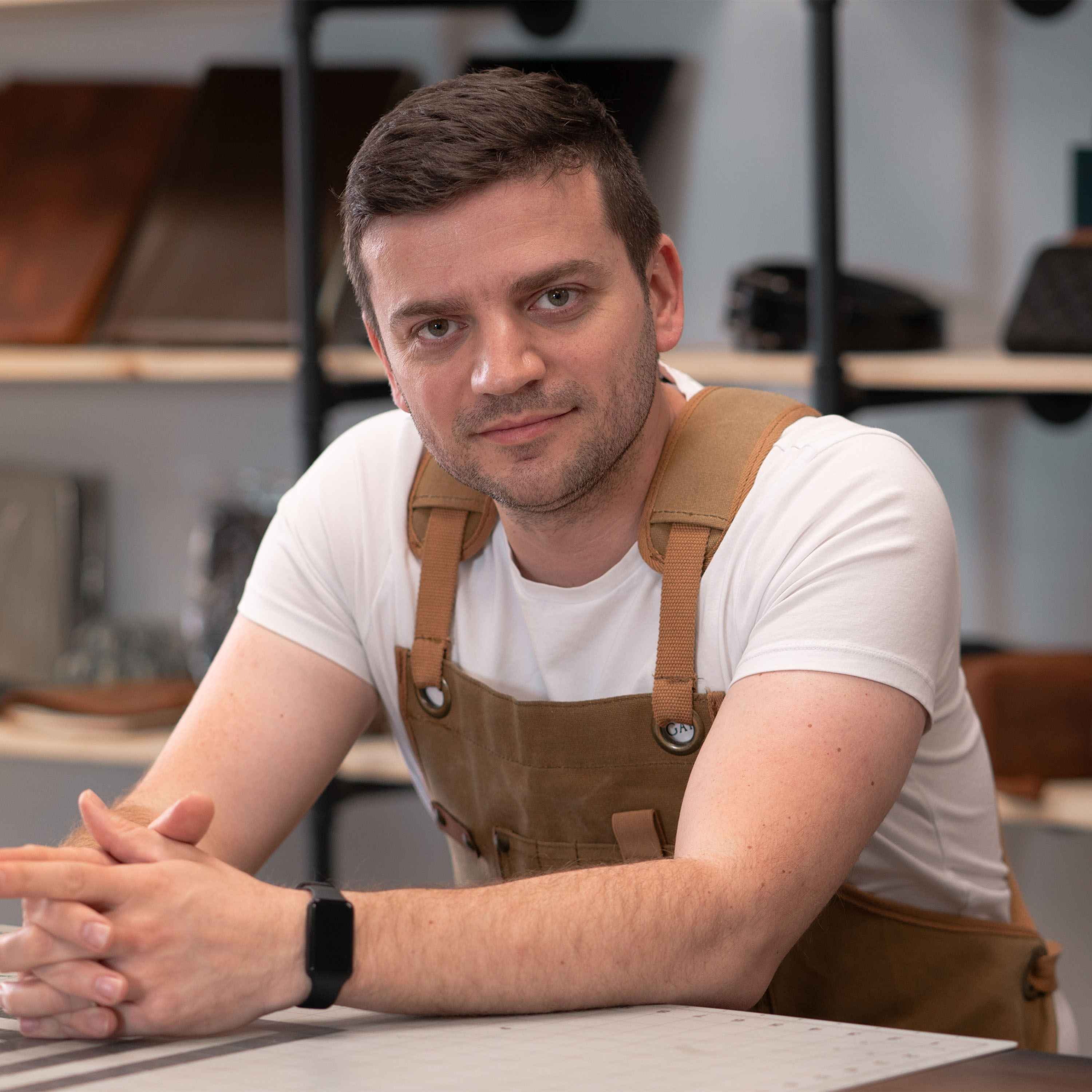
The Business of Fashion Podcast
Is Your $3,000 Handbag Worth It? Tanner Leatherstein Has the Answer.
00:47:35
The leather expert and BoF 500 member joins Imran Amed to unpack the making of luxury handbags and why consumers are often paying for status over substance.
Loading summary
Transcript199 lines
- [00:00]
Volkan Yilmaz
I always think spring is the perfect
- [00:03]
Imran Ahmed
excuse to dress a little softer and
- [00:05]
Volkan Yilmaz
a little bit more romantically. And apparently Macy's fashion experts are saying
- [00:09]
Imran Ahmed
that pastel dream is the trend to know right now.
- [00:13]
Volkan Yilmaz
What I love about it, it's not really going like full head to toe pastel.
- [00:17]
Imran Ahmed
It's more about those softer details that
- [00:19]
Volkan Yilmaz
make an outfit feel fresh and a bit elevated.
- [00:22]
Imran Ahmed
Think delicate florals, lace ruffles and sheer
- [00:26]
Volkan Yilmaz
layers alongside flowy dresses or tailored pieces in lighter tones.
- [00:30]
Imran Ahmed
It feels polished, pretty and very spring,
- [00:33]
Volkan Yilmaz
but still easy to make your own. And you'll find it all at Macy's.
- [00:43]
Imran Ahmed
Hi, this is Imran Ahmed, founder and CEO of the Business of Fashion. Welcome to the BoF podcast. It's Friday, March 27th. Volkan Yilmaz, known to his millions of followers as Tanner Leatherstein, grew up in his family tannery in Turkey, learning to convert raw animal hides into finished leather from the age of 11. That foundation took him through an improbable journey. A failed business venture in Turkmenistan, a green card lottery win, years of driving trucks and cabs across New Jersey and Chicago, an mba, a brief stint in management consulting, an Etsy shop he built from scratch, and eventually, almost by accident, a viral video that changed everything. He started cutting luxury bags open, applying acetone to test the finish, burning the leather to verify tanning claims, scratching the hardware to see what's underneath and asking what are you really paying for?
- [01:45]
Volkan Yilmaz
I know the level of quality can be sold at 5$600. A very decent leather bag. The upwards of it is for the portions of status signaling. They're not selling you a le bag, they're selling you a signal of status loaded on a hopefully ideally good leather bag. If I'm a customer of this brand paying $3,000, I know I'm buying a status signal, but at least I deserve the best of quality of materials and craftsmanship. What surprised me in these dissections is sometimes I couldn't even find that.
- [02:18]
Imran Ahmed
Tanner joined me at our London offices to discuss what he's found inside some of the world's most famous handbags, what it tells us about the relationship between price and quality and lux luxury, and what he believes comes next for an industry under growing pressure from consumers who are no longer willing to take marketing at face value. Here's Tanner Leatherstein on the BoF podcast. Tanner Leatherstein, welcome to the BoF podcast.
- [02:47]
Volkan Yilmaz
Thank you for having me.
- [02:49]
Imran Ahmed
You have spent the last few years tearing up and cutting up leather luxury leather bags and asking the deceptively simple question, what are they worth. And I'm so excited to dive into this with you because I remember when I first came across your videos, like, unlike so many things that I scroll, I stopped and watched the whole thing because you have, like, a really interesting and a really interesting perspective, starting with your family's tannery in Turkey. So that's where I want to begin. What was that like growing up? How did, like, tell us about your introduction to leather making?
- [03:34]
Volkan Yilmaz
My dad had a tannery in Turkey, and that was, you know, his own business. He started when he was 17, and he loved taking me around when I was like, eight, nine. And it's that magnetism. It's hard to explain. When I was in there, I was really wanted to be in there. Like, I was attracted to it. And were you.
- [03:58]
Imran Ahmed
Were you drawn to it because it's what your dad did, or were you drawn to it just because of it?
- [04:04]
Volkan Yilmaz
It's like, it just. It's leather tanning is like cooking. It's a lot of chemistry involved, and it's a long process, like cooking for a month kind of thing. And I was so fascinated how at smelly, dirty, bloody trash turns into a luxury fabric at the end of that process. Like, it's like alchemy. So that process attracted me a lot.
- [04:29]
Imran Ahmed
And what was it actually like in there? Like, describe it to us as a. With the kind of young person's perspective. Like, how did it look? What did it smell like? Like, what was it like inside? Most people haven't seen the inside of a tannery for good reasons.
- [04:44]
Volkan Yilmaz
So you are not automatically gonna like it. It. It's stinky. Like, you imagine meat leftover outside. Under heat, it petrifies and bacteria and, you know, smell. That's what leather is in the raw form. And that smell is all over the place because that flesh, the fat, the. The dirty parts are in the first stages of tanning. It's not an appealing or easy place to be at the beginning, but after a while, magically, it grows on you. Like, you start to feel like, oh, I kind of miss that smell. And I feel home with that smell. Almost addictive, but it's disgusting at the first sight.
- [05:28]
Imran Ahmed
And when did you first start practicing the kind of the art or the craft or the science of tanning and. And making things with leather? How did that happen?
- [05:42]
Volkan Yilmaz
Age of 11, I remember, like, yesterday, like, this was summer holiday started. You know, my friends were going to, you know, summer houses and all that stuff. I was like, this is my time to work at the tannery. And that summer, my dad said, like took me to the warehouse where we keep the raw sheepskins. Like pick five, whichever one you like and pick the good ones. Because like he's always trying to teach me how to pick that and then tenets. In our little lab we have smaller machinery for testing purposes. At the end you're gonna make your own jacket with it. At the time we were making what you call shearling or double face with the fore on sheepskins. I did that at the age of 11. Yeah. With helps from masters. You know, I'm asking, I'm trying to learn from these technicians and writing my recipes. I did that. It turned out okay. And we. I ended up making a leather jacket with those five skins. And it was, it was me going in full, full time after that. I was like, I was very into what I was able to produce then. I just wanted to learn more after that.
- [06:47]
Imran Ahmed
So basically this whole idea of making things with leather was kind of embedded within you from a very young age. Partially because your family was connected to it, partially because you were kind of viscerally drawn to it. But somehow you ended up becoming a management consultant. So how did that happen?
- [07:11]
Volkan Yilmaz
So that's unexpected twist in the story. So we moved our tannery to Turkmenistan around 2007. Leather industry was kind of going downhill in Turkey and we were looking for different things. We did that a year there. It didn't turn out the way we expected. We had a local partnership. We ended up leaving everything. I got a green card lottery from US when I was in Turkmenistan and things were not going well. And I think.
- [07:40]
Imran Ahmed
How old were you?
- [07:42]
Volkan Yilmaz
This was 2009. 23.
- [07:44]
Imran Ahmed
Okay.
- [07:45]
Volkan Yilmaz
And I'm like, okay, this is my ticket out of here. And when I went to US it was meaning started life from scratch basically. And leather is not really a huge industry in U.S. i tried. I couldn't find a tenant related job.
- [08:01]
Imran Ahmed
So from Turkmenistan you went to where in the U.S. new Jersey. Okay. Two different worlds, right?
- [08:08]
Volkan Yilmaz
Big time.
- [08:08]
Imran Ahmed
What did that feel? Had you ever been to the US before?
- [08:11]
Volkan Yilmaz
Yeah, that's how like in 2006 I spent a summer in US with work and travel program. I was the lifeguard in New Jersey and I enjoyed it like. And that's when I applied for that green card thing. And it turns out I paid a company to keep applying for me on like five years or something. Completely forgot about it in the third year. They let me know when I was in Turkmenistan. I got it. So it was completely out of blue. And that's how I ended up in Us. I was a truck driver first delivering textiles to hotels and motels in New Jersey, New York, Pennsylvania area. Six months later I moved to Chicago. I became a cab driver. I was a cab driver for three years. That's where I heard about consulting. Driving consultants around. You would know, I guess, kind of, yeah. Talking to like, what do you guys do? We solve business problems. Well, that sounds interesting. How do I become a consult? And then they said, you probably gotta get an mba. And that's how I ended up in uiuc, got a consulting job.
- [09:13]
Imran Ahmed
And what were like, what were you consulting about and which company were you with?
- [09:18]
Volkan Yilmaz
I was at West Monroe Partners in Chicago.
- [09:20]
Imran Ahmed
Okay.
- [09:20]
Volkan Yilmaz
Fairly new but fast growing at the time. Like best consulting firms to be at. And it was a nice place. My first corporate experience, we were helping pharmaceutical companies project managed there. There are some sales of some drug brands and stuff like that.
- [09:37]
Imran Ahmed
Oh, I did a project like that once in the Netherlands. And we were counting the. How the sales reps were interacting with
- [09:45]
Volkan Yilmaz
the doctors, recording, dashboarding. Like that's what I did for, for a whole year.
- [09:51]
Imran Ahmed
How did that feel?
- [09:53]
Volkan Yilmaz
I didn't like it.
- [09:54]
Imran Ahmed
Why?
- [09:54]
Volkan Yilmaz
Not to say the least. It was super easy. Like great pay, like probably the easiest job I've ever done in my life. Long after tannery and track driving, cab driving. I almost felt like, like why am I getting paid this much? Like I didn't feel like I was doing enough and it didn't make me feel comfortable. For some reason I was dying inside. I was able to hold until one year just thinking maybe I would like it later, but I couldn't. And then.
- [10:22]
Imran Ahmed
So you stayed only one year?
- [10:24]
Volkan Yilmaz
Yeah, and I quit. I'm like, I didn't know what I was going to do afterwards, but there was an itch in me. Wanted to go back to leather so bad because it's been like six, seven years now I'm in the US and I'm far from leather. I went back to Uber driving after consulting. In that time I'm exploring Etsy. People are making wallets and things selling like maybe I just watch YouTube, learn how to make a wallet.
- [10:49]
Imran Ahmed
So tell us how you found your way back to, to leather making.
- [10:55]
Volkan Yilmaz
I guess I was really missing leather in that six, seven years that I was away doing other things, building a life in US and by understanding what I don't like that I tried. I'm glad I tried the corporate and all that. In the meantime, I learned a lot for business, like MBA and all that. But that was the time for me, like I really Want to go back and do something with leather this time it's Etsy designing small goods, wallets, belts, phone wallets, things like that. And that my initial goal is like, can I sell two, three of these a day? And it took off so quickly. Like I'm selling 20, 25 a day.
- [11:38]
Imran Ahmed
So you were actually making products and selling them on Etsy.
- [11:41]
Volkan Yilmaz
I got it in hand. Like I was uber driving, got a sale, stopped for an hour and then make a wallet and then ship it out. Like that's how it started in 2017.
- [11:51]
Imran Ahmed
Okay.
- [11:52]
Volkan Yilmaz
And my brother at the time in Turkey was also looking for like what to do. And I said why don't you guys like rehabilitate a little bit of the our old Tenery building and then get a sewing machine and do these things for me. I design and then I sell it here. That's how I started the brand Pigalli at the time Content come like four years after this.
- [12:15]
Imran Ahmed
Okay, so how did the like when did the content layer come in?
- [12:19]
Volkan Yilmaz
So we did this four years. It grow to a point that I would never imagine. Like Etsy shop, Amazon. And we were doing pretty well. And this almost like an inspiration. Like I remember the moment we were coming back from Hawaii, a trip in the airplane. I had to write it down like some, some feeling almost my life purpose. I wrote this one page and I still keep reading it. Like why am I here? Like what's my mission with life? And it's like adding the dots together. Up until that point, everybody who knows my involvement with leather, my excitement about leather that keep coming me, hey Vulcan, look at this jacket I just bought. And look at this shoe wallet. Is it the real thing? Did I pay too much? That kind of gives me like the idea of people like leather, they want to use it, but they don't feel comfortable about assessing the quality themselves. And at that moment, maybe I can use social media to share what I know, help people understand it better. That was the clarity. Like literally on a plane I had to write down and then I start executing afterwards.
- [13:30]
Imran Ahmed
Okay, what did you do
- [13:34]
Volkan Yilmaz
first? Change. I had to change a belief, a self limiting belief, which I'm not good in front of camera, which I wanted to do a lot of things with social media before, but that was the stopping point.
- [13:46]
Imran Ahmed
Myself I'm like, how did you identify that as a self limiting belief?
- [13:52]
Volkan Yilmaz
By trial and interestingly enough, like coincidentally some. I had my second child born at that time and right at that week I ran into this family who were trying to raise funds with their kid which was like a year old with some really weird disease, super expensive treatment,
- [14:17]
Imran Ahmed
like a GoFundMe or something, something like that.
- [14:19]
Volkan Yilmaz
And I wanted to make a video to help them. And I had a social media team in my business. Like, okay, we're going to do this now. Like, okay, put the camera over there. I'm going to try to make this speech and ask for donations from people for that story. Literally, my voice was shaking, like, I was so insecure in front of the camera. And then I was like, oh, it's not that bad. It wasn't that difficult. Why do I think this way? I start questioning this. And through a bunch of readings and all that stuff, I realized, like, this is just the decision I had before and I could change. And it changed like that.
- [14:56]
Imran Ahmed
How did you change it?
- [14:59]
Volkan Yilmaz
I think that identifying that that was a decision that I made myself was the point. It just disappeared like, as easily I could say, like, I am good in front of camera. I actually enjoy talking to the camera. And that became the reality afterwards.
- [15:14]
Imran Ahmed
It's so interesting. Right? Because this self talk that we all have as human beings, the voice in our head, the things we say to ourselves, can sometimes be really hard on ourselves.
- [15:30]
Volkan Yilmaz
Very hard. And we don't even notice. Yeah, Those are like, decisions. Those are choices. Some of them. Most of them, actually.
- [15:37]
Imran Ahmed
Yeah. It's such an important point because I think simply by changing what you say to yourself, you can change the way you feel about yourself.
- [15:47]
Volkan Yilmaz
Yeah.
- [15:47]
Imran Ahmed
It starts with how you talk to yourself. And we need to speak to ourselves with more kindness. Okay. So that's all amazing. So you have this moment doing the GoFundMe video or the supportive video for your friends, and you realize all of a sudden, oh, it's not that bad. I can do this. How did you come up with the format? Because that's for us. For a content creator, you. There's so many of them now. Like, recently I was. I was with that guy on the ladder doing the, like, career. Do you know that format? They.
- [16:23]
Volkan Yilmaz
No.
- [16:24]
Imran Ahmed
There's this. There's this ladder guy and he's known around the world, and you go up the ladder and you like, talk to him about your career and he tries to guess what your job is. Or there's the ones that there's like these influencers or creators on the street and they like, stop you on the street and they ask you a bunch of questions. Like each of these formats, you know, they're. They're made to look spontaneous or. But actually a lot of thought goes into like, how you created. Tell us how you created your format.
- [16:52]
Volkan Yilmaz
Mine was based on a hunch and a coincidental click. I did videos prior to that concept that, you know, worth it concept, destroying the bags. I was doing videos that explains what leather is, types of leather, you know, more luxury, informative only. But one day we were thinking, with my social media guy in the business, I was like, chanel is interesting. Like, we should probably look into it and talk about it. So I had a phone call to Chanel customer service asking about their zip wallet, which is $1200. It was a very interesting conversation for me. Like, did it make sense what I heard? And then I made.
- [17:38]
Imran Ahmed
Why didn't it make sense?
- [17:40]
Volkan Yilmaz
I asked my. Because probably my question didn't make sense to them. No one calls them and asks, like, why is it $1200? And then the answers were like, well, because it's caviar leather. Like, what is caviar leather? And knowing what leather is, like, the answer didn't make sense at all. And all that. I was like, I reported this interaction that was my first vital video. And the next day we're like, what happened? Like, how did it happen? I had probably 200 followers. Never made a video of that scale before.
- [18:11]
Imran Ahmed
How many people did that video reach?
- [18:13]
Volkan Yilmaz
400,000, 500,000? Immediately my account was like, from 200 to maybe 2,000 followers. It was shock.
- [18:20]
Imran Ahmed
Okay, so you knew you were kind of onto something.
- [18:22]
Volkan Yilmaz
Yes, yes. That was the first signal. And next morning, we sit down with my team there, which is just another person. What happened there? And I had this consulting project with Brandon Cain a year and a half before this, prior to this. And it was completely about how can I do better advertising on social media for my brand, Pigalle. I picked up some concepts from them, like how to identify what worked in a successful video once you run into it and then try to formalize it. So I approached it with that mindset, and we had a bag laying out there. Brooks Brothers, I think at the time that my friend had, why don't we destroy this and look into it? That whole concept came with that idea. Like, we had other team members there. Girls. I asked, like, anybody has acetone? Because I wanted to see what's under the finish. And I didn't even know if it's going to work. And it worked great. Like, I was able to remove it.
- [19:21]
Imran Ahmed
So it's like a spontaneous thing.
- [19:23]
Volkan Yilmaz
Like the test that I do to check the finish, like, acetone just ripped the finish. And I was like, oh, this is great. This is super easy. Way I can check these finishes now, like, the whole concept, the ash test, everything born in that first video. And it was more vital than yesterday's Chanel commentary.
- [19:40]
Imran Ahmed
You know what's really interesting about your story is it reminds me of the story of how Christian Louboutin came up with his red souls. You know, one day he basically turned over a pair of shoes and just put some nail polish on the bottom and that became his signature. Like these moments of discovery where you're like trying to figure out what you're known for. Like, he became known for the red soul, and you've become known for this tear down video. So for people who aren't familiar with your videos, walk us through what that format is now. Now that you've had millions of views, hundreds of thousands of followers. Like, break down the formula and the format for us and help us understand why you think that works.
- [20:26]
Volkan Yilmaz
So now I call that one worth it concept. Is it worth it?
- [20:30]
Imran Ahmed
Is it worth it?
- [20:31]
Volkan Yilmaz
And the video opens with a thing that you don't expect or see people to do. Just cutting into an expensive bag immediately recognizable with logos or shape. Louis Vuitton X. Is it worth your $2,000?
- [20:50]
Imran Ahmed
And that's the. That's the. What I call in a viral video. I call that the scroll stopper.
- [20:55]
Volkan Yilmaz
Yeah.
- [20:55]
Imran Ahmed
Basically, it's a thing that once someone sees that, they just have to.
- [20:59]
Volkan Yilmaz
They have to stop. Yes, exactly.
- [21:01]
Imran Ahmed
Like.
- [21:01]
Volkan Yilmaz
Like, hold on.
- [21:02]
Imran Ahmed
Okay, so that's your scroll stopper is like taking a really expensive bag and like ripping through it. Okay. Then what comes, happens. Then.
- [21:09]
Volkan Yilmaz
Then I give a little bit context to familiarize it. Like, what is this video gonna be about? Like, I just bought this, you know, very popular tote from this from Dallas mall. I paid that much. In the meantime, the visual. Because it has to be a quick video, like less than three minutes. Right. In the meantime, the visual showing me destroying it apart. So they are already queuing in. Okay, we're gonna go into details of this. Then I do initial feelings about the bag. Okay. Craftsmanship. I found these little issues here, but we're gonna go deeper. Then I apply acetone to the leather. See how natural or standardized the leather is.
- [21:49]
Imran Ahmed
So what? Tell us what the acetone does exactly?
- [21:51]
Volkan Yilmaz
Acetone removes the finish layer of the leather, which in fashion there is almost always. There is a level of finish for, like, standardization of color and protection purposes. Because leather is way too naked and natural otherwise. And the more that finishes on it, it kills the naturality of it. It becomes more of a commodity. You can Use super normal available rowhides to accomplish it.
- [22:21]
Imran Ahmed
So the finish that you're trying to kind of establish or discover with the acetone, that's what's kind of hiding or disguising the, the underlying quality of the leather 100%.
- [22:33]
Volkan Yilmaz
So finishes the makeup on the bag. I'm trying to see how much makeup is on it because if it's too much, then you don't need a great material to start with. But some leathers are naturally pretty. You can get away with like super tasteful finishes and it's just perfect and it's.
- [22:52]
Imran Ahmed
So the higher the quality of leather, the less finish you need in general,
- [22:57]
Volkan Yilmaz
we can say that. Yes.
- [22:58]
Imran Ahmed
Okay.
- [22:59]
Volkan Yilmaz
Especially in fashion.
- [22:59]
Imran Ahmed
So you do the acetone bit. You're establishing how much makeup they've put on this bag. And then.
- [23:05]
Volkan Yilmaz
And then I go into other aspects of the craftsmanship, edge paint. And then I analyze the quality of the hardware in the quickest or dirtiest ways possible. You know, in a table, trying to scratch the coating off the hardware because it's also a huge range. There is softer, cheaper metals with cheaper coating, whereas stainless steel with, you know, gold plating and all that stuff. Understand that. And then understanding or checking if there is any claims of certain types of tannages like vegetable tanned leather, which may be a premium depending on what you're doing with it. So I burned the leather. That's the quickest test you can do to get a fairly accurate feeling of it's accurately vegetable tanned leather or not. And sometimes it doesn't check out with what the brand claims. So I check whatever I read in the product description and then I lay out all the letters. I see materials inside. Try to make a cost estimate from my industry knowledge.
- [24:11]
Imran Ahmed
Like how much does it cost to make this bag?
- [24:13]
Volkan Yilmaz
Yeah. From labor, hardware and leather standpoint, again, completely business models and overhead costs or marketing is out of this equation. I'm just estimating. Or cost of goods.
- [24:28]
Imran Ahmed
Yeah. The raw materials.
- [24:29]
Volkan Yilmaz
Yeah. And then I tried to find a multiplier to the price. So yeah, 3x4x5x20x sometimes depending.
- [24:36]
Imran Ahmed
What's the highest multiple you found?
- [24:41]
Volkan Yilmaz
15 to 20. I, I would say it's not atypical in, in luxury fashion today. You know, Louis Vuittons and pradas and sometimes YSLs around that.
- [24:57]
Imran Ahmed
We'll be right back with more on the BoF podcast. Hi, I'm Daryna, co founder of Quo.
- [25:08]
Volkan Yilmaz
If you run a business, you know
- [25:09]
Imran Ahmed
the team that responds first wins the customer.
- [25:12]
Volkan Yilmaz
You've probably opened your phone to a bunch of missed calls and no voicemails. Those are missed opportunities and exactly why we built Quo Cuo is the business phone system that helps your team handle
- [25:23]
Imran Ahmed
every call and text right away.
- [25:25]
Volkan Yilmaz
Join over 90,000 businesses that win more customers with Quo. Try Quo for free@quo.com tech that's quo.com
- [25:35]
Paige Desorbo
tech shipping, billing, admin, Payroll Marketing. You're managing all the things, so why waste time sending important documents the old fashioned way? Mail and ship when you want how you want with stamps.com print postage on demand 247 and schedule pickups from your office or home. Save up to 90% with automated rate shopping. That's why over 1 million small businesses trust stamps.com go to stamps.com and use code podcast to try stamps.com risk free for 60 days.
- [26:11]
Imran Ahmed
So in your view, Tanner Polkan is Luxury fashion handbags? Are they worth it?
- [26:23]
Volkan Yilmaz
So it depends, right? The best consulting answer so what are you trying to do? Like what's your purpose of buying a luxury bag? If you're trying to buy a good bag, you want to get a good quality bag that you're going to use for a while. It's not justifiable. The luxury prices today are not justifiable with that motivation alone. But we have another need. We don't only need bags. We need status. We need personal and psychological things. We need to show the world where we are in life, how well we're doing. That's the status signaling. And if that's the motivation, that's your only option.
- [27:07]
Imran Ahmed
Like there's so basically you're saying for most luxury fashion handbags, the price you're paying is for the branding and the related status and kind of self worth that that you might as a customer attach to having something from that brand and much less to do with the quality 100%. The interesting thing is when these brands talk about what they're selling, when you look at their marketing language, when you look at their credits and descriptions, it's all about quality and craftsmanship. And there's a really interesting tension there, right?
- [27:49]
Volkan Yilmaz
Yes it is. And so there's two aspects. That's one aspect that proves this is completely not driven by the quality of the materials or craftsmanship is very prominent in the market in the past 10, 15 years. There are brands that are doing same level or above crafts, newcomer brands that experience great growth in the past 10 years. And I compare them. I compare the materials, workmanship, I know where they are being made. I live in the town now. I see the same bags being made in the same ateliers by the same people using same material. So I know the level of quality can be sold at 5, $600, a very decent leather bag. So the upwards of it is for the portions of status signaling. And again, I'm not being disrespectful to the brands who can do this because it's a very difficult business to build that status onto a logo and then put it on a leather bag. It's super expensive.
- [28:58]
Imran Ahmed
It takes decades and lots of marketing money and lots of, you know, investment.
- [29:02]
Volkan Yilmaz
Enormous.
- [29:03]
Imran Ahmed
Yeah.
- [29:03]
Volkan Yilmaz
And it's risky because these are like super ongoing high costs. If something goes wrong at some point, these businesses are hard to turn around. Like, you are locked into super expensive rents and locations and teams. So high risk, high reward, like it's a different game. They're not selling you a leather bag. They're selling you a signal of status loaded on a hopefully ideally good leather bag. On the other hand, with the incentives of corporate world, these brands, some of them became too much, incentivized by, you know, quarterly growth and profit margins that push the quality down to below what's minimally required in my opinion, for that price point. You know, if I'm a customer of this brand paying $3,000, I know I'm buying a status signal. But at least I deserve the best of quality of materials and craftsmanship. What surprised me in these dissections is sometimes I couldn't even find that. Like, that kind of pissed me off a little bit. Like, this is what you really owe to your customers. If you're selling these bags, that needs to be changed.
- [30:16]
Imran Ahmed
So in some cases you're saying even leaving aside the value you might be getting from status signaling, some of these bags from some of these brands don't even meet the minimum standard of quality.
- [30:31]
Volkan Yilmaz
Yeah, yeah, exactly.
- [30:32]
Imran Ahmed
Okay, so I want to do a speed round with you.
- [30:35]
Volkan Yilmaz
Okay.
- [30:36]
Imran Ahmed
This is going to be our little viral moment. I'm going to list a bunch of bags.
- [30:41]
Volkan Yilmaz
Okay.
- [30:41]
Imran Ahmed
But from different brands. And I want you to tell me worth it, not worth it. And I want you to keep in mind the combination of like underlying basic level of quality that you think is important and status signaling together like a combined, like a real customer would. But you happen to be a very, very, very informed customer.
- [31:06]
Volkan Yilmaz
Right.
- [31:06]
Imran Ahmed
Who understands from the age of 11.
- [31:09]
Volkan Yilmaz
Right.
- [31:09]
Imran Ahmed
How to make beautiful things with leather.
- [31:12]
Volkan Yilmaz
Right.
- [31:14]
Imran Ahmed
And you understand now because you've been poking around this industry now for a little while, like certain brands and like, what they do. Chanel255 Flat bag, not worth It. Louis Vuitton Speedy bag.
- [31:29]
Volkan Yilmaz
Canvas or leather?
- [31:31]
Imran Ahmed
Canvas.
- [31:31]
Volkan Yilmaz
Not worth it.
- [31:32]
Imran Ahmed
Leather maybe Prada Galleria bag.
- [31:37]
Volkan Yilmaz
Not worth it.
- [31:38]
Imran Ahmed
YSL Cassandra bag, maybe Gucci Dionysus bag.
- [31:45]
Volkan Yilmaz
Worth it for the price. Again, I'm always thinking price and what they are worth it.
- [31:52]
Imran Ahmed
Bottega Veneta Intrecciato Andiamo bag.
- [31:56]
Volkan Yilmaz
Worth it. I am very impressed with a lot of Bottega and that's a lot of Bottega bags I looked into. I found them worth it.
- [32:06]
Imran Ahmed
Coach Tabby bag.
- [32:07]
Volkan Yilmaz
Worth it.
- [32:09]
Imran Ahmed
And finally Hermes Kelly bag.
- [32:12]
Volkan Yilmaz
Worth it.
- [32:13]
Imran Ahmed
Okay, that's so interesting because we just kind of covered a broad spectrum of brands at all different price points. Generally speaking, how did you end up where a Coach bag is worth it? An Hermes bag is worth it. A Bottega Veneta bag is worth it. But a Prada bag is not worth it. A Vuitton bag is not worth it.
- [32:35]
Volkan Yilmaz
So my approach, when I'm looking into holistically quality of the products price and the signal power of the logo, the we can go on the examples like if Speedy is on canvas for the price, I can't justify from the material quality standpoint, that fails there. So for me it's, it's not worth it. But when we're talking about Bottega, I, I'm very impressed by leather selections. Like they really use top of the line leathers. Their design language is quite unique to themselves. And the bags looks different. The bag itself has the signaling power. Although they're expensive, they're giving you everything they're supposed to. So to me that's worth it. Coach on the other hand, is like completely different game. For $400, $500, this is a super well made bag. Most of the leather selections, I'm quite impressed with Coach's leather selection expertise. It's absolutely worth it. I mean, signal power is not to the level of these luxury labels, but for the quality of the bag, it's a no brainer.
- [33:53]
Imran Ahmed
So that's all been super interesting. Thank you for that education. The same time that you've been developing this format and becoming known for your expertise, you've started building a business around what you do, right as a creator. So how do you respect the independence of what you do? You know, you've got your own brand, plus you're doing work now with this company called Stowe in the uk, which is I think a brand you might have discovered and rated highly. And that's how they came to you. But you know, while you're kind of juggling Both building this audience and trying to get engagement. And you've really built an odd. A reputation of trust. Like when we added you to the BOF 500 is because we really felt like you developed this strong reputation that people trusted you. And as a creator, that's priceless. Right.
- [34:46]
Volkan Yilmaz
So thank you.
- [34:48]
Imran Ahmed
At the same time, you're building your own businesses, you have commercial interests, you're trying to like, have make a living. Like, how are you balancing that?
- [34:57]
Volkan Yilmaz
So, you know, the one personal guiding principle to me, I'm trying to stick to my mission, which is that one sentence summary of what I wrote in the airplane from. From Hawaii. I want to help people understand and experience leather better understand is through the content. You know, I'm looking into bags and I am sharing what I know without any, you know, underlying motivation so far. And experience part is I'm trying to make my own interpretation of what a good leatherback should be. So I help you with my content to understand and shop or make better informed purchase decisions on other brands. And. But I also love working with leather. And when I find a good leather, I could make a good bag with this leather. And this is my understanding of what a good leather bag should be, which probably doesn't exist in the market. And that's why I want to make it. That's the second part of the mission. So I think it doesn't really challenges each other. It complements in my mind and I'm trying to stick to that idea the most so far. I didn't hear complaints about these really like, overriding each other. Hopefully I can keep it that way.
- [36:19]
Imran Ahmed
Yeah. And tell us a bit about your audience. Like, who, who's watching? What have you learned about the community of people that you've built?
- [36:31]
Volkan Yilmaz
So I'm not big on analytics. Like, I. I don't look at my analytics that. Who watched it? Like, you could ask me. Like, I would have no clue. Sometimes brands ask me. I'm like, I have to look at it, but I know them from the street. Like, today probably four people stopped me at the airport, like, since I left Obrique. Like, oh, I'm watching it in a store. I'm watching her. Aren't you the guy cutting the bags? Like, and they tell me why they're watching it for. Like, this is the best feeling I get about my audience. Like, I think I heard it twice from two of these people today. Anytime I want to buy a bag, I go to your page and I just like, did you review that? I really want to make sure if you Watched it. If you did that review, I'm going to watch it and then decide. And that makes me very happy because that was my intention. That was my intention to help people understand what leather is there so they can make better decisions. I'm not making a judgment on these bags. I'm just sharing what I know, which is beyond the marketing that you get otherwise. So you decide because you value different things than I do, that makes me happy. That's the audience. I think that's what they were watching it for and that's what I'm making it for. But perhaps going back to your earlier question a little bit now. I'm almost there now, kind of like consolidating these ideas into a overarching business model which is going to be live next week or in two weeks under eternal leatherstein.com website instead of my separate brand, separate websites, which is like a digital magazine that's full of these stories of explorations, leather space and leather fashion, which leads to those products, either mine or other brands that will be refreshed every two weeks or so. It's almost like a direct mail catalog with extensive stories and information about the leather.
- [38:28]
Imran Ahmed
Will there be reviews on them and like your ratings of saying like I.
- [38:31]
Volkan Yilmaz
Yes. Like for my own catalogs it will start with that and then later on I will incorporate other things I do with other brands as well. So the goal is to almost make it like a media business that, that is hyper focused on leather space and time to time. It either produces its own products when it sees there is a need for it or an experimental concept, or it
- [38:59]
Imran Ahmed
refers you to other places where you can buy a product. And will you get an affiliate commission for that?
- [39:03]
Volkan Yilmaz
Yes, yes, that's the. Now I haven't think much about monetization on the content and so far I was almost riding fully on my brand income to subsidize this. But now with this new business model that will open some avenues for me to find monetization models with brand partnerships. Like, okay, this is a brand I discovered from, you know, X Country. I loved it for these reasons. And you can go and shop in their own stores with referral income. Maybe.
- [39:34]
Imran Ahmed
Well, that's really interesting. I didn't know that. But that's good timing for this podcast because maybe this is the first place
- [39:39]
Volkan Yilmaz
you're talking about 100%. Like this is literally the first place.
- [39:43]
Imran Ahmed
Okay, well, I, I'm really looking forward to seeing that. Tell me, have you heard from the brands you talk about? You know, you had a pretty clear point of view on a bunch of big brands and very well known bags. Like do they get in touch with you? The brands?
- [39:56]
Volkan Yilmaz
Many times, none of whom were negative. Like nobody came back to me saying that like how dare you? Or it's not true or it's, you know, just take that bag. Never heard that from any brand. Many times if it was like a not really great review, they reached out and was like tell me more like what can we do about this? Can you help us improve the material selection? Can you help us what was wrong with it? Sometimes they didn't even know. There was occasions that we discovered something that was not what brand was.
- [40:30]
Imran Ahmed
In a way you could go back to your management consulting days and give advice to some of these companies about how they can improve their products.
- [40:39]
Volkan Yilmaz
Time to time I'm doing as much as they request like as a result of these videos or they come to me again as much as I can find time as well. So I offer that little bit advisory kind of role in the quality and production side to some brands.
- [40:58]
Imran Ahmed
Right. So fascinating. Congratulations. I mean what a way, what a way to start a business with a real. Well it wasn't even a business to like to find your mission and purpose and then to, to somehow turn it into a company. Yeah, that's actually doing really meaningful work. You know, before we finish up, I'm just, I'm curious about what you think of the state of the luxury market right now. There's like such a crisis of confidence amongst the luxury brands. There's a growing mistrust amongst customers just because, you know, as you mentioned earlier, they've prices have increased a lot. In some cases quality has gone down. Like as someone kind of navigating this space, like what, what do you make of what's happening now? And if you were advising brands in the luxury leather space like what would you tell them to focus on?
- [41:54]
Volkan Yilmaz
I think because of these hyper financially focused incentive structures in the corporate world, the some areas like the quality and ethics in the production side gone out of balance and this wasn't visible up until 10 years ago to customers and they were totally fine at the face value of marketing, assuming everything is right. But now with social media, with more people looking into like what's going on behind the scenes and all these scandals, it's a natural result of chasing ever growing profit every quarter. Like the quality suffers, the people who make these stuff suffers at the end of the day because those are the weakest points of the chain that needs to be I think in a proactive way addressed by the brands right away because it's unacceptable. If you're going to charge a premium and sell your customer status signal that needs to be checking so many boxes automatically. Like it's not even optional. Quality, ethical things, sustainability, it shouldn't be only a talk but a very serious effort within the company to make sure that that is being delivered. Even that is not going to be enough to. I think most luxury labels that we know so far is going to make through this change. I think because the Challenger brands in the space has been so successful 10, 15 years now, proving that that quality is now achievable at 5, $600 price points. And many people are like, well then I'm only going to pay that because I'm really not into that status game anymore. Which means this pie in the luxury and will shrink. It will move into more fragmented mid market levels. I think more people will shift towards these brands which means some of these bigger players have to really invent their unique value proposition. I don't think it's an end of the luxury kind of thing. It's just an evolution. It needs to become something else. There is a big amount of like figuring out like what's next, what that next thing is going through for each and every brand because you can't even replicate what others did and become successful. You need to find your own new version of yourself. So that's what I'm expecting to see in the luxury like highest end of this modern luxury space in the next 10 to 15 years. And I wouldn't be surprised some of the really big names if they can't figure it out. So that's, that's a fun thing that I'm watching right now.
- [44:47]
Imran Ahmed
So what happens to them then?
- [44:50]
Volkan Yilmaz
I don't know. They might just lose relevance with you know, if they can't figure out like what's that next reason people keep desiring them? Because this, this mistrust that that is growing sometimes triggering other moments like you know, the dupe culture. Like some people are so feeling angry about this thing. Like I'm now it's okay for me to use the fake because I feel like I'm hurting you.
- [45:18]
Imran Ahmed
Yeah.
- [45:18]
Volkan Yilmaz
Like, like or like if yours, your
- [45:21]
Imran Ahmed
product that you're selling me at an inflated price at a lower level of quality is essentially a dupe.
- [45:27]
Volkan Yilmaz
Yeah.
- [45:28]
Imran Ahmed
Why don't I just get a dupe?
- [45:29]
Volkan Yilmaz
Yeah. And that's why this dupe culture is like yeah, crazy.
- [45:33]
Imran Ahmed
Are there any brands you would call out as saying like really doing it right? You called them Challenger Brands earlier. Like what brands do we need to know and look at that are offering. I know you really like Stowe and you're working with them, but apart from Stowe, like are there companies that many.
- [45:52]
Volkan Yilmaz
There are many.
- [45:53]
Imran Ahmed
So
- [45:55]
Volkan Yilmaz
great examples. I admire the work done by Songmont from China is one of the unique examples. You know China, amazing quality. But I got their bags way before I knew anybody in the company and I was so impressed. Like I really need to know where you got this leather from. Like I want to use that leather kind of thing.
- [46:17]
Imran Ahmed
And are those bags made in China?
- [46:18]
Volkan Yilmaz
Yes, all of them. Great hardware, stainless steel, the hardware that I'm expecting to find in $3,000 bags. But sometimes I'm failing to find it interesting. They use it interesting and they are using this, China's enormous ability of production efficiency and quality creating this beautiful example. I'm so impressed what they're doing. Strawberry is, is a great example.
- [46:43]
Imran Ahmed
And where are they based?
- [46:45]
Volkan Yilmaz
Scotland based. They have many stores in London here. I think they're very, very successful in this new new game.
- [46:53]
Imran Ahmed
Strathbury.
- [46:54]
Volkan Yilmaz
Strathberry. Yeah. They're also made in Urique. Poland is a good example. Although I haven't checked their bags for the last three years. Maybe like very early on in my content I was very impressed with what they were doing. I'm hearing some quality concerns and issues because they became huge. They are making a lot of bags and things get rough when you scale very quickly. Maybe it's a period growth pains kind of thing. There are other brands like on top of my. Like those three came to my mind. The quickest Manoa Tillier from Turkey.
- [47:34]
Imran Ahmed
Yes.
- [47:34]
Volkan Yilmaz
Was another impressive one. Like a good family doing very impressive work from Turkey, which is my home country. And I tried doing it. I hit the ceiling of quality in Turkey and that's why I moved.
- [47:46]
Imran Ahmed
They managed to do it.
- [47:47]
Volkan Yilmaz
They managed to do it. It was, it was a great eye opening experience for me to learn what they accomplished there. So.
- [47:53]
Imran Ahmed
Okay, well, Tanner, Leatherstein, Volkan, thank you so much for your time. That was so interesting. I really appreciate you and I will never forget when we first met at the BoF500 gala a couple of years ago and we had this lovely little chat. There's like a lot of stuff happening in that room but what you're doing is so great. So thank you.
- [48:16]
Volkan Yilmaz
Thank you so much. Thanks for inviting. Thanks for having me at the gala at the list. Thank you. It's an honor. And again, I remember like yesterday as well.
- [48:26]
Imran Ahmed
What do you remember?
- [48:28]
Volkan Yilmaz
You said like the work, like literally, almost verbatim. You said to me, the work you have done and you're doing is so important to keep some of these brands accountable and, you know, inform customers. That means a lot. So that was my intention and that comes across and being recognized just makes it worth it.
- [48:51]
Imran Ahmed
Okay, well, hopefully we'll see you again. Thank you for coming to our offices and good luck with everything. I'm sure this is just the beginning.
- [48:59]
Volkan Yilmaz
Thank you. Yeah, it is like I'm I'm doing what is a game for me and I'll keep playing.
- [49:04]
Imran Ahmed
So great. Thank you.
- [49:07]
Volkan Yilmaz
Thank you.
- [49:08]
Imran Ahmed
The BOF podcast is edited and produced by Olivia Davies and Eric Brea Foreign.
- [49:21]
Paige Desorbo
Hey, this is Paige Desorbo from Giggly Squad, and today I want to talk to you about Boost Mobile. Quick question. Why are we letting our phone bills bully us? Here's a money tip. Stop paying a carrier tax when you bring your own phone and Switch to boost mobile's $25 unlimited forever plan. You can unlock up to $600 in savings. That's real life money, not money trapped in a pricey phone bill. $600 is a trip, a shopping spree, or paying something off. Your money belongs in your life. You get unlimited data, talk and text for $25 a month with no contracts and no minimum line requirement. Your phone, your rules. Head to boostmobile.com to switch today and unlock the savings you actually deserve. After 30 gigabytes, customers may experience lower speeds. Customers pay $25 per month while active on Boost Mobile Unlimited Plan savings claim based on a January 2026 Boost Mobile survey comparing average annual payments of major carrier customers to 12 months on the Boost Mobile Unlimited plan. Visit boostmobile.com for details.
- [50:15]
Imran Ahmed
Hey, this is Adam Grant, host of Ted's podcast Rethinking with Adam Grant. Let me share with you why smart finance leaders turn to Bill. They know that clarity isn't just helpful, it's strategic. As the intelligent finance platform, Bill uses AI to automate the busy work for nearly half a million businesses so they can focus on intentional growth, eliminate the friction and start scaling with the proven choice. Visit bill.com proven to talk with an expert about automating your business finances and get a $250 gift card as a thank you. That's bill.com proven terms and conditions apply. See Offer page for details.