← The Business of Fashion Podcast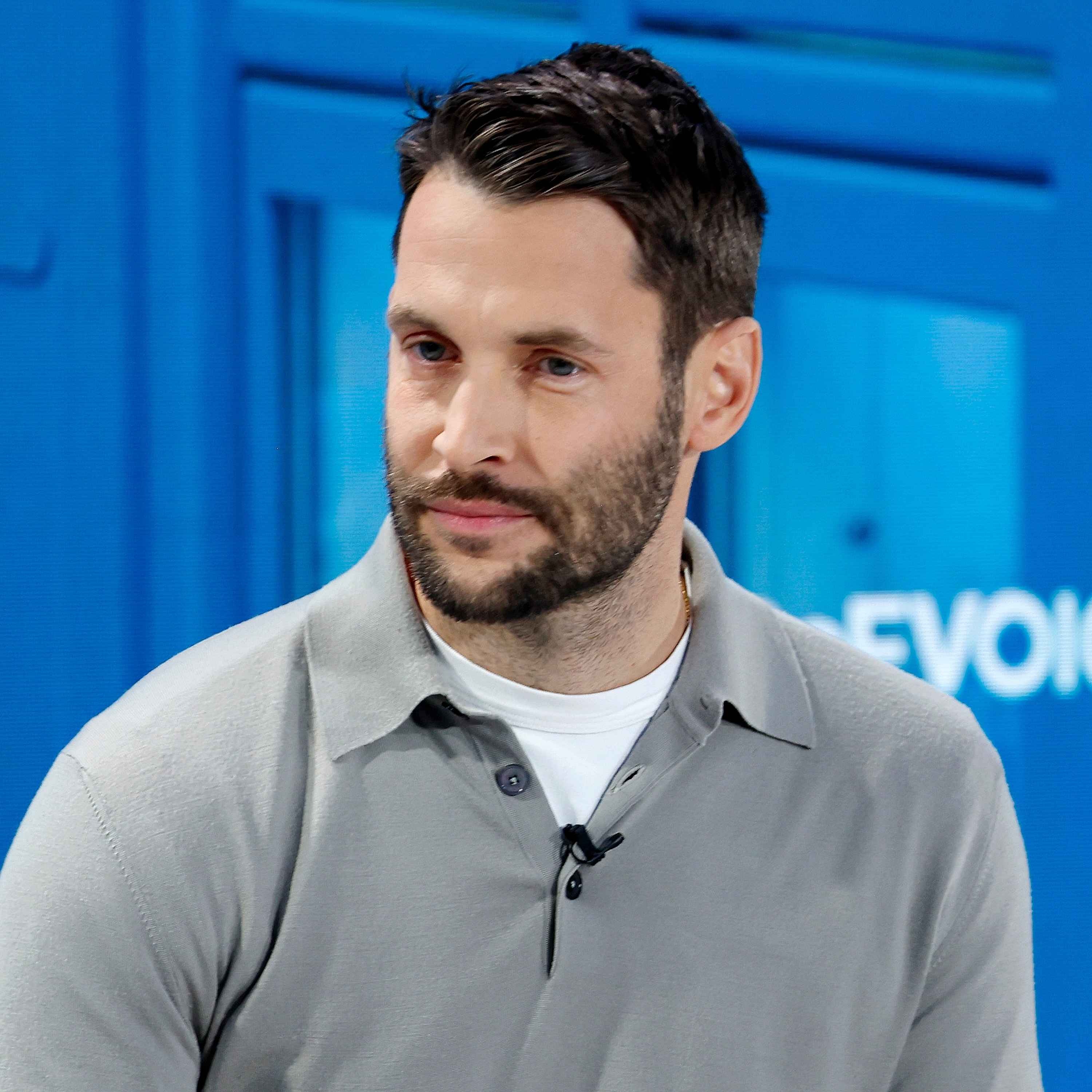
The Business of Fashion Podcast
Jacquemus: A Coming of Age Story
00:24:56
The designer joined BoF founder & CEO Imran Amed on stage at BoF VOICES 2024 to share how he has built a successful independent business in such a competitive environment, understand his plans for the future and settle some of the rumours and speculation.
Loading summary
Transcript106 lines
- [00:00]
Imran Ahmed
Foreign.
- [00:04]
Simon Porte Jacquemus
This is Imran Ahmed, founder and CEO of the Business of Fashion. Welcome to the BoF podcast. It's Friday, November 22nd. When Simon Port Jacquemus first came onto the fashion scene in 2009, he did so with a bang. His brand's playful surrealist creations inspired by the French New Wave, 20th century sculpture and sunny afternoons in the south of France became a viral sensation, leading him to build an independent business with more than 200 million euros in annual turnover. His highly visual fashion shows have been staged off schedule in sprawling lavender fields, modernist villas and even the Chateau Versailles. Recently, he has opened his first stores in New York and London, drawing the kind of crowds that are more often associated with pop stars. Meanwhile, there have been rumors that he was shortlisted to become the new Creative Director of Chanel. And he recently confirmed he is seeking an investor to help finance an ambitious global retail rollout.
- [01:09]
I don't have time to be snob. I can't. When you're independent, you have to make noise. I would love to be Haydn in my Provencal castle. I didn't have the opportunity to, you know, I need to be visible. I need to make fun things. And I think there is a part of me that I love that.
- [01:25]
At BoF Voices 2024, I spoke with Simon to learn how he has built a successful independent business in such a competitive environment, understand his plans for the future and settle some of the rumors and speculation. Here's Simon Porte Jacquemus on the BoF podcast.
- [01:47]
Hello.
- [01:48]
Imran Ahmed
Hi.
- [01:49]
Simon Porte Jacquemus
How are you?
- [01:49]
Imran Ahmed
Good. How are you?
- [01:51]
Simon Porte Jacquemus
Very, very good. Mongeau. Hello, everyone.
- [01:53]
Imran Ahmed
This isn't your normal environment, Simon. You prefer the Mediterranean, you told me.
- [01:59]
Simon Porte Jacquemus
Yeah, I do.
- [02:00]
Imran Ahmed
What are your impressions of the English countryside?
- [02:03]
Simon Porte Jacquemus
I feel home. You know, I grew up in a farm, so I was like, oh, we're back. We're back to the countryside.
- [02:12]
Imran Ahmed
Okay. Well, there is a lot to discuss and you have been a very, very busy. I want to start. You know, we've just heard this conversation with a few independent designers. We've heard this theme over the course of voice. Yeah. If you're looking back now, how many years have you been in business now?
- [02:32]
Simon Porte Jacquemus
15 years.
- [02:33]
Imran Ahmed
15 years.
- [02:33]
Simon Porte Jacquemus
I started 19 years old.
- [02:35]
Imran Ahmed
Okay. What do you think are the core drivers of success for your brand? Why has it endured? Why has it lasted 15 years? Why is it 200 million years?
- [02:46]
Simon Porte Jacquemus
I think when I start, my kind of naivety was helping me. And I only have one rules. Like, when I start, I need to be visible. I start to do strike in front of dior show going into Avenue Montaigne and like showing my collection with my best friend. And this was my rules. The next show needs to be more visible, I need to have more visibility. People need to know my name. That was my only rules.
- [03:14]
Imran Ahmed
So that was kind of a goal to build a brand that people would recognize from the start but you didn't have the resources to do so.
- [03:23]
Simon Porte Jacquemus
I started with a thousand and thousand five hundred euro. I went to a sewing machine lady and I asked her to make a skirt for €100 and she said yes. And I started the collection the next day. I designed my website, I published it on Facebook. And a week after, I got called by the press because it went viral.
- [03:42]
Imran Ahmed
So your ability to go viral, it's kind of innate in you?
- [03:47]
Simon Porte Jacquemus
My mother let me too much time in front of the TV in front of Sex and the City at 9 years old. And it was a culture pube. It was a TV show referencing only like TV ads. So I'm kind of obsessed with images. It's so also the thing that make me want to do fashion. I wanted to build images and to create the sensation of this young boy looking at magazine.
- [04:12]
Imran Ahmed
So tell me when you're coming up with. We have some of these campaigns, by the way. I mean, I'm sure everybody has seen some of these. How do you come up with these ideas? I mean, these are cgi, right?
- [04:24]
Simon Porte Jacquemus
And so it was a year and something and it went like 100 million view and it became a big reference in the AI. I came to the office and I say, oh, guys, can we have just a bag rolling in the street? And we recite it and like half of the team was like, oh, it's a bit cheap, I don't know. And I watched and I was like, I love everyone calling. Even my grandmother was like, oh, I saw your little bag in the street, like in our own company. They were like, oh, wow. I didn't know you were doing bags in Paris. I was like, wow. And comments were like, crazy. So it went viral.
- [05:05]
Imran Ahmed
Well, so you know when you said. You know when you said just now.
- [05:09]
Simon Porte Jacquemus
I love.
- [05:10]
Imran Ahmed
Yeah, I love, like, so why did you. How do you know it's fun?
- [05:14]
Simon Porte Jacquemus
I don't have time to be snob. I can't. When you're independent, you have to make noise. I would love to be Haydn in my Provencal castle and being like, I can't. I didn't have the opportunity to, you know, I need to be visible, I need to make fun things. And I think there is a Part of me that I love that. But I think my brand, the value and the authentic we share are not a luxury code. I think it's more or less beauty.
- [05:44]
Imran Ahmed
Well, talk to me about the codes because you and I had a little lunch in your new office in Paris earlier this year when we were first talking about this talk. And we talked about just a few of the running threads that come through everything that you do. What are the codes of the Jacquemus brand? When you want to explain the concept, it's easy.
- [06:05]
Simon Porte Jacquemus
When I start at 19 years old, I was feeling that there is so much boundaries between creative and the audience.
- [06:14]
Imran Ahmed
What do you mean by that?
- [06:16]
Simon Porte Jacquemus
It was too far. It was always so dark, so full of concepts and my grandmother couldn't get them.
- [06:23]
Imran Ahmed
You mean from the big luxury brand?
- [06:24]
Simon Porte Jacquemus
Yes. It was too complex. So I was like, let's do something that everyone can understand. Like the post guy, my grandmother, but as well having reference of more like niche thing. But people need to enter in my world. So I was imagining just collection with French name and a big smile. I think it was important to be so positive and the person I am as well, like. So I will say solar and open.
- [06:53]
Imran Ahmed
The other thing that comes through and we were seeing some of the images of your shows is that there's this whole Mediterranean. You said you love the sea, so you really inject your own personal things that you just personally are drawn to. You somehow make it part of what you do. And you decided to stage these shows completely outside the fashion system. Right. Most. Most fashion brands, a lot of emerging fashion brands, they die to show on the Paris schedule or the London schedule or the New York schedule, because it's a statement of having been approved or arrived in the system. You never did that.
- [07:30]
Simon Porte Jacquemus
I think it's going to be one of the answers of today. From my side, it's having fun. I think having fun is being creative is going one step aside and it's playing with the system. I was obsessed to have a 360 lavender field as like a David Hockney painting. I was obsessed with one painting in particular. And I went there and I went there with a car and I passed days and days to find it. I didn't want a field like this. I wanted a field like this. So it was really precise.
- [08:00]
Imran Ahmed
Why did you want a field like this?
- [08:02]
Simon Porte Jacquemus
Because I want everyone to be360 inside the Jacques Mousse world. Like Infinity model coming up and down, but with an infinite immersion feeling.
- [08:13]
Imran Ahmed
And are you seeing how that's going to look on social media in your head, is that part of what helps to influence.
- [08:21]
Simon Porte Jacquemus
When I was 13, 14 years old, I had a blog that was famous in France, and I was shooting myself, like, in my garage, thinking I was like a part of Eddie Sliman campaign. The next day, I was shooting my little cousin in oversized jacket, barefoot with flower heels that I was doing. And then I was thinking I was doing a Mar Jacobs campaign. I always have the image very accessible for me. So this is a continuity, I guess.
- [08:52]
Imran Ahmed
Okay, so on the one hand, when it comes to the fashion shows, you did your own thing, you chose your own way. You created a huge impact. When it came to retail, though, you decided to go straight into the heart of the system. So you opened in Avenue Montaigne. You're opening in Bond Street. You know, you're going straight inside the domain of those luxury houses and you're saying, I'm here. Why is it important for you?
- [09:16]
Simon Porte Jacquemus
People say, oh, it was strategic. No, it was just a dream. When I was 18 years old, I was coming in Paris with my best friend, going to all the shop and asking Lookbooks, as we all did, I'm sure, like asking free lookbook. And I was like, oh, that's the street. I want to open my store. And you need more cash, more money to do it than just wanted. So it took time, but it was important. When I look back, and their first year was strong, so we were happy queuing. We have the queue every day, kind of. So it was. Now it's becoming a problem to have the queue. But back in the day was cute.
- [09:55]
Imran Ahmed
Yeah, it was cool to have a queue there. And now it's not cool?
- [09:58]
Simon Porte Jacquemus
No, now it's not cool.
- [09:59]
Imran Ahmed
But when someone walks into a Jacquemus store, like the one you're opening in London on Bond street on Friday, or the one on Avenue Montaigne, how do you want it to feel different from some of those maybe more intimidating luxury store environments that are your neighbors?
- [10:17]
Simon Porte Jacquemus
Yeah, I mean, I didn't think so much of that. I hope we are very solar and we give a big smile and we. And we can showcase the Jacquemus lifestyle in it. But I don't know what exactly you mean.
- [10:33]
Imran Ahmed
Well, what I mean is, you know, I do my regular visits to Bond street and Avenue Montaigne and Fifth Avenue and these places when I travel because I just want to kind of get the sense of what the customer experiences. And I go incognito. And I walk into these stores and sometimes I just find them very unwelcoming.
- [10:54]
Simon Porte Jacquemus
Yeah.
- [10:54]
Imran Ahmed
You know, they have these very long queues outside them. Sometimes you have someone following you around everywhere in the store, which is so annoying because they're like, no, we want to help you. I'm like, no, if I want your help, I'll ask for your help. Often the experience in those stores, the way they're designed, is designed to kind of intimidate. There's a security guard outside. There's a lot of things that make that experience.
- [11:18]
Simon Porte Jacquemus
When I design the store and in partner with oma, it's. I want them to feel like a home, like a South France home. Like, you can see the materiality, like the windows is just an old Provencal bank with like a piece of linen and a yellow bag there in London. This is going to be more like a bed, an old bed that you have in South France, a bit like a metal broken bed. So I hope people don't feel this way.
- [11:45]
Imran Ahmed
Okay. On top of all of these creative things that you're leading, the marketing, the design, selecting the fashion show locations and, you know, thinking about the store experience, you are also the CEO of your business and you've been working on a brand and product elevation strategy. You know, you're leading your search for an investor, which we'll talk about a bit later. But how is it that you're balancing this?
- [12:13]
Simon Porte Jacquemus
Sometimes it's unfair. The balance is way more business and then fashion. So you need to control that. What is true is that recipe helped me to build this brand. Like to have half every time, you know, very balance. I'm interested in everything. You know, I wake up every morning looking at the sales, not because I love money, but because I want that my work becomes something real and realistic. And because I'm independent as well. Like, you know, to finance my third collection, my second need to be shipped produce. So it was one fabric, you know, so we arrived to that. Because I also think that to arrive to that point without anyone. When we talk to banks and they like, oh, you lied. There was some like, you have a rich uncle or something, you know, and it was always that in mind to, you know, to build and to be balanced. So sometimes it's harder than.
- [13:15]
Imran Ahmed
Yeah. To do both. Right.
- [13:17]
Simon Porte Jacquemus
Yeah.
- [13:18]
Imran Ahmed
The luxury slowdown or the, you know, the fashion slowdown that we've been talking about a lot at this voices. How is it impacting your business?
- [13:26]
Simon Porte Jacquemus
What? It was odd this year. It was, I think the. The war we were seeing on with the wolf sale and the etailer. So when one is starting to have sales the other one were aligning themselves.
- [13:42]
Imran Ahmed
So this was lots of discounting.
- [13:45]
Simon Porte Jacquemus
This was super tough because even some partner, it was like, you know, and you can't control their price. This is illegal. It was something you know and you can see that being independent and not having the power of like a big group, it's. That's what's tougher this year. It's how I felt this way. So yes, on that part we lost some point. But I'm happy that we were very strong on our etail on our shop.
- [14:16]
We'll be right back with more on the BoF podcast.
- [14:21]
Ryan Reynolds
It's 2025 and you're wondering how can I make this year different? How can I turn my business idea into reality? Shopify is how Shopify makes it easy to launch your brand, get your first sale and manage everything from shipping to payments all in one place. Don't wait. Start building today and make 2025 the year your idea becomes a reality. With Shopify. Your first sale is closer than you think. Established in 2025 has a nice ring to it, doesn't it? Sign up for your $1 per month trial period at shopify.combof all lowercase go to shopify.combof to start selling with Shopify today. Shopify.combof.
- [15:05]
Unknown
Hey, I'm Ryan Reynolds. Recently I asked Mint Mobile's legal team if big wireless companies are allowed to raise prices due to inflation. They said yes. And then when I asked if raising prices technically violates those onerous two year contracts, they said, what the are you talking about, you insane Hollywood? So to recap, we're cutting the price of mint unlimited from $30 a month to just $15 a month. Give it a try@mintmobile.com Switch $45 upfront.
- [15:30]
Simon Porte Jacquemus
Payment equivalent to $15 per month. New customers on first three month plan only taxes and fees, extra speed slower above 40 gig.
- [15:35]
Unknown
More than 125,000 podcasts. Trust Acast to connect them with their audience. Your brand can speak to your perfect audience too, by advertising with Acast. We're home to the biggest names in podcasting, reaching millions of engaged listeners who can only be accessed through acast. From true crime to comedy finance to fitness, your next customer's favorite podcast is an ACAST show. Your audience is already here. Speak to them with Acast. Visit. Go Acast to get started today.
- [16:14]
Imran Ahmed
Talk about the role that this retail rollout. You know you've been on kind of a mission this year. You already have the store in Paris.
- [16:23]
Simon Porte Jacquemus
You've now Opened your Paris, Saint Tropez, New York, Courchevel, London.
- [16:28]
Imran Ahmed
How does this fit into your strategy? Is that in part to take more control over business?
- [16:35]
Simon Porte Jacquemus
Yeah, it's a dream. It's not the same journey, it's not the same. It's a part or so of my personal, like since last January, you might see the show and the elevation of the product and it was like two years work that have been done. So it's a part of the process.
- [16:56]
Imran Ahmed
So in order to do all of that, in order to build all of those stores and I know you want to open more stores, I know that's part of your ambition.
- [17:03]
Simon Porte Jacquemus
I don't want just like replicate and having all the good big city and having store there. Like when I say expand the retail, I want to have a lot of fun. Like this thing at Selfridges, I loved. This was incredible. Like the Galerie Lafayette takeover, like for the first time they let us all the windows that was, you know, 24 hour, 24 hour bag shop in Milan. Like, I want to have a lot of fun next year.
- [17:31]
Imran Ahmed
It seems to be the key running theme.
- [17:33]
Simon Porte Jacquemus
Yes.
- [17:34]
Imran Ahmed
How much fun is it? Looking for an investor.
- [17:39]
Simon Porte Jacquemus
Good one. Well, it was not supposed to be public first, you know, I was not trying to make a post like, oh, I'm looking for someone, you know, so that was fun first to have like this sort of drama. But no, it's, it's good. I'm looking for a minority. So for me, my mood today, it's like, it's insane to be at this stage without anyone. That's insane in a way. Now I'm 34 years old and I realize that it's a bit crazy.
- [18:13]
Imran Ahmed
Yeah. So when you're sitting down with investors, I think a conversation with an investor is always interesting. Right. Because part of it is they're trying to ask you all these questions about your business. But at the same time, it's a really great opportunity for you to learn about that investor. Because anytime the proverbial, as we say in English, the proverbial shit hits the fan or something goes wrong or there's challenges. That's the person or the people that you're going to be sitting in front of to navigate those challenges ahead. What are you looking for in an investor? What are the attributes? It's not just about money, it's about people who can help you. So what are you looking for?
- [18:57]
Simon Porte Jacquemus
A long term partnership first, like it means like a beautiful value that I share. You know, like if you come in the office and you came like, everyone is really surprised by the spirit of the house. So I want to have this value in front of me that is share your values.
- [19:19]
Imran Ahmed
Have you thought about a strategic partner, like a big group versus a private equity partner? And like, what, that many options? Yeah, but what do you think is better for you?
- [19:30]
Simon Porte Jacquemus
It's a good question, but what do you think? You.
- [19:34]
Imran Ahmed
What do I think?
- [19:35]
Simon Porte Jacquemus
Yeah.
- [19:37]
Imran Ahmed
I wasn't expecting.
- [19:39]
Simon Porte Jacquemus
No, but it's true.
- [19:41]
Imran Ahmed
Listen, I think a lot of it depends on what your long term ambition is. Like when you choose one of those strategic partners, it really is for the long term because, you know, you get an LVMH or a Kering or another big group to buy into your brand, and that's pretty much almost a lifelong decision because it's very hard to unwind those things. But also, those groups can bring a lot of expertise, right? They can help you with retail, they can give you advice. On the other hand, you take money from private equity and they are like chomping down. They're on you every day saying, where are the sales? Where's the growth? They want to sell it in three to five years. They want to know triple or quadruple, you know, that what their investment. So you don't want the private equity.
- [20:25]
Simon Porte Jacquemus
I mean, there is maybe other options.
- [20:29]
Imran Ahmed
Okay.
- [20:30]
Simon Porte Jacquemus
That you didn't mention, but could be like an angel coming from the sky.
- [20:33]
Imran Ahmed
Okay.
- [20:34]
Simon Porte Jacquemus
You never know in fashion.
- [20:36]
Imran Ahmed
Well, the third option, you know, we saw recently the row, you know, they took a. They did a investment deal, right. Which was not private equity, not a big group, but people from the industry with expertise, done at a very healthy valuation where they still maintain, I think, a majority stake, like you want to do. But there's people, expertise. That's what you want to do. Is that what you do?
- [20:59]
Simon Porte Jacquemus
I will do. Yeah.
- [21:00]
Imran Ahmed
Yeah. Okay. So at least we learned that today. That's good to know because I think.
- [21:04]
Simon Porte Jacquemus
That is not negotiable. We're talking about minoritaire.
- [21:07]
Imran Ahmed
Okay. The other big speculation, which I'm sure you're tired of talking about, but I have to ask about it, is you're this very busy guy. You're running the business side, the creative side. You know, you're driving to Lavender Fields looking for the right location because you care about everything. And some people think that you could be a candidate for the creative director of a big house like Chanel. Is that even possible with the time that you have?
- [21:36]
Simon Porte Jacquemus
Yeah, that's a good question. No, that's a good question. Like, my week are really busy even picking like the furniture inside the store, you cannot be precise and you cannot make it all, you know, like, also, that's why I stopped Beauty, like, three years ago to focus on my leather and to, you know, move all the factory to Italy in the best place. Like, there is so much to do. It's like, I feel my job is like, infinity, in a way. It's insane. You. The same question. Who you think will go to Chanel? Because I would love to hear from you.
- [22:18]
Imran Ahmed
I actually will. I have some theories, but I actually'll be very honest. When I heard your name, I said, well, that's just not possible, because I've met the guy. He is incessantly focused on his business, as he should be. He's built something of real value. Why would he distract himself from something he's building on his own to go work at something that someone else owns? That's what I thought. What are your reactions?
- [22:49]
Simon Porte Jacquemus
Wait, I'm just connecting things. Yeah, you're probably right. Maybe I'm too busy.
- [22:56]
Imran Ahmed
Yeah. This is one of the funnest interviews I've ever done.
- [23:04]
Simon Porte Jacquemus
I listen you, you know.
- [23:06]
Imran Ahmed
No, I know. Well, okay. This is the part of the interview we're almost out of time where I get to ask a bit of your advice. One of the running themes of BoF Voices 2024 has been how tough it is to navigate this environment. The reason your name comes up in all those surveys where people want to hear from you is people are keen to understand what advice do you have to offer, you know, to a designer that's 19 years old and, you know, is obsessed with. Maybe you were obsessed with watching television advertisements. Like someone's obsessed with something else. What's the advice you have to offer?
- [23:40]
Simon Porte Jacquemus
Before, I was getting the advice of no advice because I was always pissed off when I was going to someone like, oh, any advice for a pr, Because I want to work with Lucien Pages. Oh, no, you're too small. And I was like, no, I actually want. So I was always, like, taking my own decision and my balls, you know, and like, let's go. I'm gonna. So listen yourself, I think. Listen yourself and don't lie because people feel it. Don't force yourself to do social if you're not an expert. If you are super comfortable, do it. Because sometimes also people, they don't want to play and. Yeah. And try to be visible. I think it's really important. And nowadays. I heard, like, the interview before, it was great to hear that, yes, we can be visible. We can be there. We. That Is super important.
- [24:36]
Imran Ahmed
Why is that visibility so essential for a small brand? Because that's one thing. That's like having fun is one thing like that. Visibility, breaking out, getting attention. When the big media, the big fashion companies.
- [24:48]
Simon Porte Jacquemus
Now you create your community what is super strong and you see like, we are one of the top 10 brand of the world, most liked on Instagram, for example, with Porsche, Nike and a lot highest engagement. Yes. Because I talked to a community since like 15 years. You know, it's a true relationship and people want that. They want to feel like something is authentic and makes sense, you know, so that is super important to be visible but real. Not being visible for being visible, that won't last. But being real and tell your own story. I think people love to see the awaking, can we say, of a maison, of a new house in Paris. I think it's what they love to see. They don't care if I open a shop in New York. It's like literally. But this sea that I'm opening my first shop in New York as an independent brand that they follow since 15 years, that difference. It's not like, okay, maybe in three stories we'll be like, oh, Salah, we understand.
- [25:52]
Imran Ahmed
Well, we'll find out on Friday. Yes, we'll see what happens. But even when we post something Simon, about you on our Instagram, I can't explain it. The engagement is just off the charts. So it's not just your community. I think the broader fashion community, like the people who follow BOF on Instagram, people are very interested in what you do. And I want to congratulate you because what you've done in 15 years is pretty remarkable. Thank you so much and very, very impressive. And I wish you the best of luck for that search for your investor. Thank you for that and I'm really glad to hear you're not going to go work for Chanel.
- [26:28]
Simon Porte Jacquemus
Thank you. Thank you for the company.
- [26:37]
The BoF podcast is edited and produced by Olivia Davies and Eric Brea Foreign.
- [26:50]
Unknown
Did you know that two out of three listeners say podcasts are the best way to learn about the things they care about most? That makes podcasts the perfect place to introduce your brand, where ads are more relevant and trusted than any other media channel. Want to learn more? Download the Full podcast polls 2024. Report now at podcastpulse2024acars.com and see how you can make your brand part of the conversation.