← The Business of Fashion Podcast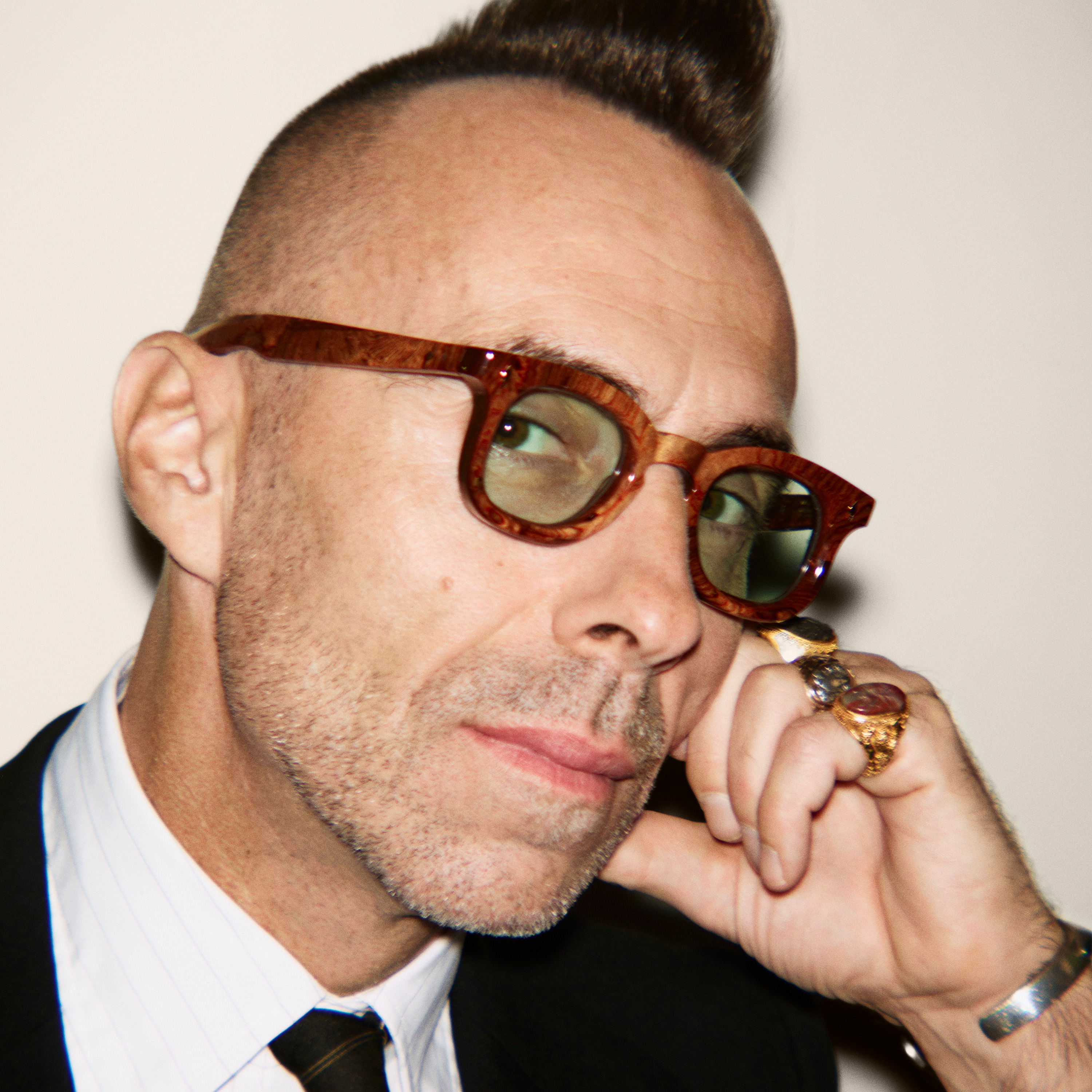
The Business of Fashion Podcast
Jacques Marie Mage and the Transformative Power of Sunglasses
00:51:38
Designer Jérôme Mage speaks to Imran Amed about how he built a cult luxury eyewear brand rooted in scarcity, storytelling and craftsmanship — and why having an outsider’s perspective is his greatest creative strength.
Loading summary
Transcript98 lines
- [00:00]
Fiji Water Representative
As it starts to get warmer outside. I love to keep Fiji Water on hand to keep hydrated and refreshed. It really is from the islands of Fiji. Drop by drop, Fiji Water is filtered through volcanic rock 1600 miles away from the nearest continent, protected and preserved naturally from external elements. In this process, it collects a unique profile of electrolytes and minerals, resulting in more than double the electrolytes as the other two top premium bottled water brands, giving Fiji Water its soft, smooth tast. Unlike some other premium bottled waters, Fiji Water's electrolytes are 100% naturally occurring and this water even has a perfectly balanced ph of 7.7. Visit your local retailer to pick up some Fiji Water today for your next backyard party, beach or pool day hike, or even your home office. Fiji Water is Earth's finest water.
- [00:58]
Imran Ahmed
Hi, this is Imran Ahmed, founder and CEO of the Business of Fashion. Welcome to the BoF Podcast. It's Friday, July 18th. Jerome Maje is the founder and creative force behind Jacques Marimage, the luxury eyewear brand known for its distinctive silhouettes, limited production runs and deep rooted storytelling. Originally from the Auvergne region in France, Jerome relocated to Los Angeles in pursuit of creative freedom and with a deep passion for California's action sport culture. The brand he has created comes from a personal mission to reimagine and luxury through the lens of collectibility, history and craft, starting with an obsession for sunglasses that began at a young age.
- [01:45]
Jerome Maje
When I was 10 years old, my brother was 15. He came back with a pair of viorna at my house and I remember like looking at that pair of viorna and I've never really seen my brother with glasses before and I was like, wow, looks so cool. My brother looks wow. This is how you look cool. You put glasses on. I think for a lot of people it's transformative. We live in a modern world that can be quite intrusive and people all day long their life are on display and I think it's very nice to hide behind a pair of sunglasses.
- [02:16]
Imran Ahmed
With each design, Jerome channels his vast array of influences, from American mythologies to Napoleonic tailoring and iconic personalities and transforms them into expressive objects with enduring emotional power. This week on the BoF podcast, hot on the heels of the brand's latest retail opening in Paris, I sat down with Jerome at his new gallery on Rue de la Paix to explore how he built a cult luxury eyewear brand rooted in rarity, storytelling and craftsmanship, and why having an outsider's perspective is his greatest creative strength. Here's Jerome maje on the BoF podcast. Jerome.
- [03:02]
Jerome Maje
Oui.
- [03:02]
Imran Ahmed
Welcome to the BoF podcast.
- [03:04]
Jerome Maje
Thank you.
- [03:05]
Imran Ahmed
We're here in this very special place today in Paris. Just opened your latest gallery.
- [03:12]
Jerome Maje
Yeah.
- [03:12]
Imran Ahmed
And I want to talk all about the rollout of these new special retail experiences.
- [03:19]
Jerome Maje
Yes.
- [03:19]
Imran Ahmed
But we need to start with your story. I mean, there's a song by Sting which is like, an Englishman in New York, but you're a Frenchman in Los Angeles. Can you tell us a little bit about your journey? You went to design school and then you moved to Los Angeles. Tell us a little bit about how you ended up in LA and why you've stayed there.
- [03:40]
Jerome Maje
Yeah. You know, my journey started simply with a love of sketching and drawing since a very young age. And when I was.
- [03:50]
Imran Ahmed
How young were you when you started sketching?
- [03:52]
Jerome Maje
I can't really remember. I was with a pencil in my hand forever. Since a very, very early age. That was my passion. I spent all my day, all my weekends drawing, drawing, drawing, drawing. That's how I got into everything else that followed design, you know. And around 15 years old, I made the decision and I forced my parents to relocate me to Paris.
- [04:20]
Imran Ahmed
So where had you grown up?
- [04:22]
Jerome Maje
I grew up in Auvergne. It's the center of France. You know, a bit like, I guess, the Midwest. There's lots of farms and a lot of farms. It's rolling hills, some mountains. You can snowboard, you can ski. It's very cold in the winter, very hot during the summer. It has a bit. It's a. It's a. In middle of beautiful volcanoes. It's the largest chain of volcanoes in.
- [04:45]
Imran Ahmed
The world in the middle of France.
- [04:47]
Jerome Maje
Yeah, yeah, yeah, yeah. It's gorgeous. Where I come from, it's a bit of a French Wyoming, if you want to compare it to. To something that you can find in America. Obviously, we don't have cowboys, we just have simple farmers. But he had a very, very similar spirit. Coco Chanel is from Ovan. Yeah, yeah. Jean Cocteau famously said that if you want to understand Coco, the first thing you have to understand is she's from Ovan. So it's a volcanic place, and it's a very tough place. So I think it forged very strong characters in general. So I moved to Paris at 15, lived by myself. I did all my studies, my high school and then my college there and my design school in Paris. And I always felt very much like an outsider in France. It's hard to explain that feeling, but I was at the same time very passionate. But the Californian lifestyle I grew up really loving action sport, surf, snowboard, skate, motocross, dirt bikes. And so from a very early age I was very motivated and made the decision that I would move to Los Angeles because the entire action sport industry was in Los Angeles.
- [06:11]
Imran Ahmed
Had you been to LA before?
- [06:13]
Jerome Maje
Yes, yes, yes, yes. I did a formative trip to America when I was 17 year old where we visited with a friend of mine the entire west coast.
- [06:24]
Imran Ahmed
Like a road trip?
- [06:25]
Jerome Maje
Like a road trip, yeah. And it was very. It left a very powerful impression on me, especially the nature. Actually, you know, my, my best memories are Bryce Canyon, Zion Canyon, Monument Valley, Death Valley. I of course, really like San Francisco more than Los Angeles. During my first trip, went to Las Vegas, but really the national parks, the space, it felt like it was a place where I could express myself fully.
- [06:59]
Imran Ahmed
What prevented you from having that feeling of self expression in France?
- [07:05]
Jerome Maje
I don't know, I never really felt welcome, you know, I felt people in France, I was too loud, I dressed too crazily, my ideas were too controversial. In design school I was already. I felt like always a problematic subject. Not to my teachers or my professors that really adore me, but I think the student in general, they were very divided around my personality, my character. And yeah, I felt under a microscope at all times because I think I was not very much your typical Frenchman in the way I dress, carrying myself in, how maybe how loud I was about my dream, my vision, my ambition. It was not something that really resonated very well with my French colleague as a student. So I drove everyone crazy. And when I would come to America, I felt that people very much welcome and madness. It was the opposite. There was, you know, at 21, I got offered a creative director job for Spy, which was at the time an upcoming eyewear action sport company. You know, it was. There was Oakley, there was Arnett and Spy. We were the smallest of the three, but we were one of the leading eyewear companies in that field. And at the time, Arnett, especially when the Beastie Boys made the COVID of the face magazine in 1995, I think Action Sport and the design that happened within Action Sport with I think sneakers and eyewear at the time was the strongest fashion force, design force across the field.
- [08:57]
Imran Ahmed
Were you drawn to eyewear yourself or was it just through the experience of having had that professional opportunity that you kind of.
- [09:08]
Jerome Maje
Yeah, at first it was just an opportunity. I grabbed the first opportunity to get the hell out of France and that was a job. And it was a fantastic job at a crazy Salary as a 21 year old kid coming out of school. The crazier I was, the better it was for my boss. So it was just a great opportunity. And after that I stayed at SPY for two and a half years. Then I moved to Los Angeles to start my product design studio. And then we expanded for many years.
- [09:42]
Imran Ahmed
What kind of products were you designing?
- [09:44]
Jerome Maje
Everything. We did so many things. We did footwear, we did watches, we did technical garments for snowboarding, for motocross. I designed burn Hardware from 2006 to 2021.
- [10:02]
Imran Ahmed
Oh, wow.
- [10:03]
Jerome Maje
So I spent 15 years working with my friend Greg Dykeshan and Jake Burton. And I love that experience.
- [10:09]
Imran Ahmed
Like the slopes, basically.
- [10:12]
Jerome Maje
I really love designing hardware. I love how it was merging functionality, fashion, graphics, colors. We designed the Olympic uniforms that Shaun White wore for two of his gold medals. They were very fun things. It's fun to do fashion, but that has that specific performance aspect. So tried with Greg and Jake. The idea for the, for the US Olympics was to always be as bold and as extravagant and crazy as we could. Obviously have an American theme, but at the same time he had to be functional so Sean could pull the amazing tricks that he did and win the Olympics. So it's a fun place to design, you know, when there's an intersection of different things that can be actually opposite or contradictory. Right. Because fashion and performance, they don't really go well together. But trying to put it together and you see it now more across fashion, you know, whether it's, it's in running, it's in tennis, any sports now as an aspect of fashion. So I did a lot of things like that. We grew the studio at about 15 employees. And yeah, I was, you know, my, my life has been in California since 1996. And I love the Rockies. I love the west of the Rockies. I'm a lover of the American west, from Ed Ruscha to Hunter S. Thompson to Dennis Hopper to New Mexico to, you know, the, the Grand Tetons in Wyoming to, to Los Angeles to the deserts. I, I, I love the West Coast. I love what it represent as that last frontier of the expansion of Western civilization. And you, it's like sort of the place where it comes, you know, it dies off there. That's it. There's a barrier. Cannot go any further. Yeah, you know, so it's an interesting place. There's a, I think, mysterious force about that place also. Los Angeles has some sort of mythology that is hard to put really your finger on. But most of the people come to Los Angeles like me, without a family, without friends, but with dreams, right? With dreams, yeah. And you can sort of reinvent yourself or shape yourself to try to attain that dream. It's also a very desolate place. It can be very ugly. It is very lonely. In your suv, in your air conditioning, all day long, you can spend days without seeing anyone. But for a character like mine who likes also his solitude to create, it's also a great place to be. So, yeah, I mean. I mean, everything. I mean, I think it was a. It was my destiny. I was just, you know, my path was to. To end up in. In California and obviously didn't lead me to fashion or luxury right away. I. I love fashion and luxury. Growing up, I was highly exposed to it when I was in Paris. But, yeah, for many years, I did something else. Because you don't work for Chanel from Los Angeles. You work for the clients at Burton, Quicksilver, D.C. shoes, Fox, you know, all those mega big brands that were either streetwear, Action Sport, that were based in California. Those were my clients. I had every one of these brands, wanted to work with me. And so it was a very neat experience.
- [13:53]
Imran Ahmed
So how do you go from this world of, like, performance sports intersecting with fashion and design? How did you identify this opportunity around really beautiful handcrafted eyewear? Because it seems like a different universe. How did that happen? Where did you get the idea?
- [14:16]
Jerome Maje
Yes and no. I mean, it was very simple. In the early 2010, I could see a very quick shift from investing into design, product design, into investing in influencers and social media. The budgets dried off. I don't want to say overnight, but very quickly. Then the attitude really changed from, Jerome, you got to do something creative, to, you know what, Jerome, we have. We have that great person. Just do something that looks like this, just knock it off, and we'll just put it on that person, and they'll sell.
- [14:53]
Imran Ahmed
This is what your clients were saying to you?
- [14:55]
Jerome Maje
Not directly, but indirectly. It was very, very clear also around that time, kind of starting a chase to the bottom line. So every dollar started to get really squeezed in the product, in the margins, in the quality. So I really didn't like the directions that business started to take. And I think it was the same time that really social media started to explode, you know, and I saw the money was moving away from product into more marketing, influencers, social media. And that was obviously some things that I was not doing. And me, I'm very terrible at copying things. That's not my talent. There's designers, other designers that are much better than that. It's actually A talent. There's people that are talented at taking.
- [15:48]
Imran Ahmed
Something and tweaking something and then making it. Yeah. Yes. Yeah.
- [15:53]
Jerome Maje
It's a talent, too, you know, and me, that was not my talent. So I, I. And I didn't want to do that. At the same time, I was approaching my 40s, and I felt I've been around the action Sport World for 15 years, and I wanted to go back to fashion, to luxury. I wanted to return maybe a little bit more to my French roots, you know, rekindle that passion of mine that I felt because I was living in California, I left dormant a bit, and it led me to start considering doing my project. And also because for so many years, for 15 years, I always heard, wow, Jerome, you're crazy. Wow, Jerome, we can never do that. Wow, Jerome, yes, this is great, but this will never sell. And there was also. I was worrying. I was like, am I crazy or are they crazy? Someone must be wrong here. And I was like, I'd be very interested to find out, you know, who's wrong. Am I wrong? Am I that crazy? And so that's it. I started thinking about making my own project, basically.
- [16:59]
Imran Ahmed
But why did you choose this project? You could have chosen any project. Like, how did eyewear become the focus?
- [17:06]
Jerome Maje
Well, the focus, I think my number one focus at the beginning, when I started, it was not necessarily eyewear. I wanted to create a new American luxury house. That was my first focus and my first books that I presented to investors that had many things in it. Eyewear was the original focus. Just because eyewear was a category, I knew the best. I had very limited phone to start. I didn't have a lot of money. I actually had no investor when I started. And eyewear was a place that I knew I could ask the biggest amount of favors, because some of the atelier I work with, some of the factory I work with, I made them a lot of money indirectly by designing good products for all the brands and bringing them to their atelier. So they knew my value. So I knew I could go see those ateliers in Japan. And let's say the minimum order was 500 pairs. I knew I could be, hey, guys, can you help me? And they would have been later on for you, we'll do 100 pairs. So I knew it would allow me to get going and do a little bit of a proof of concept, because when you don't have a lot of money, obviously every door count. And when you start, you, you know, our first year was, I think we ordered maybe 500 pairs of glasses, not even. It was just proof of concept. You know, there was five styles or six styles, and it was just trying to see if people would even like it. You know, you can have a great idea, you can have a great product, but you don't know how people are gonna react to it. People might not like it for maybe the timing is off or maybe it can be a million things. So the first year, year and a half was just proof of concept. And we started very, very slowly and we started to be with a very product specific driven kind of mentality. And then the last thing I wear, because I wanted to go to Japan every three months. So now I had a great excuse with my family to say, every 90 days, hey, guys, sorry, I got to go to Japan. I got to visit the atogi.
- [19:19]
Imran Ahmed
I have to see my suppliers, I have to work with them. We need to work on some samples.
- [19:22]
Jerome Maje
That's right. So that was my excuse in 2015, 10 years ago, to say, sorry, every 90 days, I gotta go to Japan. So it was all these things combined. And we started in a very humble, simple way. No marketing, no branding. 100% focused on product. I always say I'm at the service of my sunglasses, right? I heard that from Cuber Extantly. You say I'm at the service of my films, but I'm still at the service of my sunglasses or any of the other collectible objects we're designing or creating those days. And it's important to know that they don't serve me, I serve them. So we haven't changed that philosophy. I don't want to change it. And we still are very focused on that. I still go to Japan every 90 days.
- [20:13]
Imran Ahmed
I'm gonna have to get some Japan tips from you because I'm going in a few weeks.
- [20:16]
Jerome Maje
And I still, I think I'm one of the only one who goes to the atelier every four months. I don't think there's a lot of other designers that show up in the atelier, but I feel so much happened there and I feel it's so important for the people in the atelier to know who they work for, who they create the glasses for, because then they do not work the same way. I can tell you that.
- [20:43]
Imran Ahmed
We'll be right back with more on the BOF podcast.
- [20:49]
Fiji Water Representative
Starting a business sounds exciting, but it can quickly get overwhelming. Suddenly you're in charge of everything. Branding, websites, logistics, marketing. The list keeps growing. That's why so many businesses turn to Shopify to help make things simpler. From day one Shopify powers 10% of all US E commerce from names like Skims and Gymshark to brands just getting started. Build an online store that matches your brand with hundreds of ready to use templates. Create content quicker with AI tools that write product descriptions, headlines, enhance photos, launch email and social campaigns like you've got a full marketing team and manage everything with expert level tools. If you're ready to sell, you're ready for Shopify. Turn your big business idea into With Shopify on your side. Sign up for your $1 per month trial and start selling today at shopify.com BOF Go to shopify.com BOF shopify.com BOF this episode is brought to you by Nordstrom the Nordstrom Anniversary Sale is on from July 12th to August 3rd. It's a once year opportunity to save up to 33% on brand new arrivals across fashion, beauty, accessories and more. This isn't a clearance event, it's a limited time chance to shop new season pieces from brands like madewell, Charlotte, Tilbury, New Balance and Free People. Nordstrom offers a single seamless shopping experience with freestyling help, free shipping and returns and easy online pickups. Plus in store events and daily beauty activations are happening throughout the sale. The sale ends August 3rd, so visit Nordstrom.com to shop now. And now a next level moment from AT&T business say you've sent out a gigantic shipment of pillows and they need to be there in time for International Sleep day. You've got AT and T5G so you're fully confident, but the vendor isn't responding and International Sleep Day is tomorrow. Luckily. Luckily, AT&T5G lets you deal with any issues with ease so the pillows will get delivered and everyone can sleep soundly. Especially you. AT&T5G requires a compatible plan and device coverage not available everywhere. Learn more@att.com 5G Network these days, clients want it all. A slick looking site that can run their business and scale with their success. The good news? That's exactly what WIX Studio is built for. Plan out your client's whole site in seconds with AI powered site mapping and wireframing. Then when everyone's on the same page, jump into the creative starting off in Figma and exporting it in a click or in the WIX Studio editor with precise layouting tools like Grid Stack and Flexbox. Go above and beyond the brief with no code, animations, custom CSS and built in business solutions and make your whole vision responsive in a click. And there's zero need to break a sweat when clients grow fast, A dynamic CMS with global design settings and reusable assets lets you turn one page into hundreds, design smoother and deliver Sooner. Go to wickstudio.com.
- [23:56]
Imran Ahmed
I discovered Jacques Marimage, like, long before anyone on your team had contacted me. I discovered it in an optician in London, a small one in Soho. It was a tiny little case. I was with my partner. He had found some for his mom. He's like, this brand is really interesting. So we went and we looked, and this optician, they had very few pairs available. But the thing that really stood out to me was it just instantly looked different from everything else. There was a certain design aspect to it. If you look at the space around sunglasses, there's kind of like the brands change, but everyone kind of does kind of the same thing. And yours had really interesting silhouettes. And instantly when you pick it up, you can feel the quality. It was very apparent right away. So I think what you, you know, maybe you had all of those very pragmatic reasons to enter because you had the connections, you had the experience, you had the personal desire to go to Japan. But also there was a gap in the market for something of that level of quality, design, craftsmanship and attentiveness, which you don't see in that world of opticals. But secondly, I think sunglasses in particular, they represent something for people. And I was curious to hear, you know, you meet so many people clearly who wear your sunglasses, and it's become quite a phenomenon with, like, lots of celebrities who've, like, made it part of their identity. People who use sunglasses, a way of almost like a form of armor. But what do you think it is about people and sunglasses and in particular, Jacques Marimage sunglasses?
- [25:47]
Jerome Maje
It's maybe a bit difficult to say because I think it might be different for each person, or everyone has a bit of a different sensibility. But I know when my brother. When I was 10 years old, my brother was 15, he came back with a pair of viorni at my house. And I remember, like, looking at that pair of virne, and because my brother would put them on, and I've never really seen my brother with glasses before, And I was like, wow, looks so cool. My brother looks, wow. This is how you look cool. You put glasses on. I think for a lot of people, it transformative. First of all, the transformative aspect is very important. I think the protective aspect means the functional aspect, obviously, to protect you from the uvs and the arm of the sun. But beyond that, you. You use the word armor. Right. So we live in a. More. In a modern world that can be quite abrasive. Intrusive. I was going to say that. And people all day long, their life on display. And I think it's very nice to hide behind a pair of sunglasses. You know, it feels good to have your own private space behind those dark lenses. And then also I think sunglasses have a sort of archetype qualities that is associated with it. You know, if you think Winston Churchill, if you think JFK or Jackie O or Onassis or James Dean. James Dean, Hunter Thompson with a pilot or even now Johnny Depp. I can see the type of glasses he's wearing with the type of lens, color. Yeah.
- [27:32]
Imran Ahmed
Think about Top Gun and Tom Cruise.
- [27:34]
Jerome Maje
So there's archetype you associate it with. And I think it's an easy way also for people to recognize themselves as tribes, as partner, as opposites. And it's. Yeah, it's transformative. And it goes on your face. I mean, it's pretty important. There's a sensual aspect too. It touch your skin. Yeah, it's the first thing people see. It's very. It's an object that can take many forms and that is an extension of yourself, but that can be put on, put out, changed. Yeah. I think people in general really, really love eyewear. And if you think also what it represents in terms of. You were just mentioning moviemaking, so the mythology behind it, you know, the aspect of dreaming, the aspect of. Of being transported in another character or someone else. Jacques Marimage are. One of our strength from the beginning is to very much associate each pair of sunglasses with a deep human storytelling, with a storytelling. Right. So when I did the first pair, the Dylan that was inspired by the frame that Bob was wearing during his UK tour in 1968.
- [28:55]
Imran Ahmed
Bob Dylan.
- [28:56]
Jerome Maje
Yeah. When he went electric, you know, and the concert in. In London where people are screaming at him, Jude Ass. And he turns around to the band and said, play louder. I dream about that pair of sunglasses for 10, 20 years. There's such a. An admirer of Bob Dylan and I could never find it. I don't know what type of glasses he was. It was not a. A Beau Chalom, not an American Optical. It was, I don't know, like a. No branded glasses. But I always thought I'd love to. To have that pair of glasses. And I had a massive. I have a massive eyewear collection. Over 3,3000 pieces of vintage eyewear. And so I was like, that's the first glasses I wanted to do. And And I didn't do a copy. You know, the idea is not you're doing a copy. You're doing a modern interpretation of those frame and trying to capture the mystique, the essence of that sunglasses and what it represented at the time and what the glasses becomes. When you wear a pair of Dylan, what people tells me a lot of time is like, Jerome. Yeah, we buy the pair of glasses, but beyond that, we buy the mystique behind it. They buy that frame that allows them to be transported in time and space to maybe a bit in the 60s or to have a bit of that mysterious character or mischievous character that Bob had at the time, in the late 60s.
- [30:20]
Imran Ahmed
Just by putting a pair of sunglasses on your face, you can achieve all of that transformative potential.
- [30:27]
Jerome Maje
Right.
- [30:28]
Imran Ahmed
You can feel connected to some iconic person. You can feel protected. You can have a piece of armor on. You can feel cool when you put it on. You can be like your brother putting on those Varnay shades at the age of 10. It's like sunglasses have so much power.
- [30:45]
Jerome Maje
Yeah, they're very transformative, and they really represent archetypes and society still. You know, I mean, we still how we kind of organize and recognize each other, right?
- [30:57]
Imran Ahmed
Yeah.
- [30:57]
Jerome Maje
So I think somehow we. We achieved to do that. And people don't just buy the glasses. They also buy the story. And I think because I put absolutely 100% of myself and 100% of my inspiration in that moment, it's almost like the glasses are charged up with that story. Because in my mind, I never really designed for now. I designed for the second or third generation that will discover those glasses. And always had from the beginning at that, in the back of my mind, I was like, if someone will discover Those glasses in 100 years, I want him to have almost a complete story. So that's why in each box, there's the inspiration, the story behind each design. Because I came to this project as a collector of eyewear. I collect many things, Napoleonic things, and, you know, collect, like, Native American moccasin. I collect BMX from the 80s. I collect vintage car jewelry. I came as a collector, and my story is one of collectibility. And that's why I think people collect those glasses. Because I didn't know exactly. I didn't know how to express it any differently than as a collector. But a collectible object, the difference between a collectible object and a regular object or a dispensable object is really the story that comes with the object. So for me, from the beginning, I was like, each glasses needs to Be charged up, infused with a story, you know, a story of the past, but that is told in a modern way for a new generation. And I also felt that at the time society was so flat, people were losing curiosity. And I felt one of my calling was to make people curious again. You know the project we did with Glenn Gold just two months ago, that's a perfect example.
- [33:09]
Imran Ahmed
Tell me about it.
- [33:11]
Jerome Maje
We did that project, you know, with estate of Glenn Gold, the pianist genius. And I think most of the people nowadays don't know Glenn Gold, but through those glasses it becomes a vehicle to tell his story for a lot of people to discover the genius of Glenn Gold. And I took inspiration from old photos of him, from old glasses he wore. And obviously again, the idea is not to copy them. The idea is to extract the essence of the glasses. The essence of what? Those glasses, how they looked on him and how they portrayed his style and his physicality and his mood and his sensibility and do it in a modern way that makes that story relevant now. And I think those projects are for me, they're always the most feel good stories about this project. And I see all these people that are discovering Glenn Gold through those two pair of sunglasses, through eyewear. It's really beautiful. We did like a limited edition of a vinyl too. And yeah, certainly people are rediscovering his music. And that's so many, you know, it's very touching, but it's very important. The idea of curiosity and taking people places where they have not been is so important, you know, because at the end, the common friends in between all our culture and all of us is a common human history. Whether it's tragic, it's beautiful, it's sad, it's funny. So I'm just trying to connect the dots and try to connect people on an emotional level and tell those beautiful stories that have happened of those amazing people or amazing places or amazing events through collectible objects. And I think then they do become collectible objects because people know the name of the glasses and they know what they represent. They know the time, the inspiration, the places, the personalities that are hiding behind them. And then it becomes a piece of conversation. It's not eyewear anymore. They're not eyewear. Yeah, I started with eyewear, but I don't think eyewear is really eyewear. It's something else, collectible object.
- [35:43]
Imran Ahmed
I mean, part of that comes down to how qualitative it is, how well it's made, which is what I alluded to earlier. And we're in this moment in Fashion and luxury, where the consumer or the customer value proposition is broken, quality has declined, prices have increased, and products are ubiquitous. And your model turned is completely opposite of that. Your quality is high.
- [36:11]
Jerome Maje
Yeah.
- [36:12]
Imran Ahmed
Your prices are high too, but it's worth the quality.
- [36:14]
Jerome Maje
Correct.
- [36:15]
Imran Ahmed
And it's also made in very limited numbers. You only make something like 500 pairs.
- [36:20]
Jerome Maje
20. Sometimes.
- [36:21]
Imran Ahmed
Sometimes 20. So this model, like, I'm curious about your commentary and thoughts on how your model sits within this larger fashion ecosystem, which is. Obviously, you're still operating at a smaller scale.
- [36:34]
Jerome Maje
Correct.
- [36:36]
Imran Ahmed
But you know, the business is growing. So, like, how are you thinking about this model in the context of a wider industry and in the context of a growing business that now has investors and is rolling out stores.
- [36:48]
Jerome Maje
Yeah, Galleries, I think it's not a new problem. I remember a little bit before I started in 2013 or 12, I went to the Champs Elysees to see the Louis Vuitton flagship, and it was huge. I remember coming back of it, calling my mom, I was like, wow. I went to Louis Vuitton, but it felt like a supermarket. I think already the idea of what I called globalized luxury was started. That's what it is nowadays. It's globalized luxury.
- [37:21]
Imran Ahmed
And by the way, they're making products in the hundreds of thousands, the millions of units.
- [37:28]
Jerome Maje
Right.
- [37:28]
Imran Ahmed
So it's globalized and it's kind of mass luxury.
- [37:33]
Jerome Maje
It's mass. And okay, it's made in Italy or made in France, but I don't want to say where all the parts are coming from. But some of the parts on certain bags are surely not done in France or in Italy. Some of the hardware is done in the Far east, in China and things like that. It's very. You don't really see it, but I mean, it's the same with. With many things those days. So, yeah, for me, when I started in 2015, luxury has become very suspicious already. And I really wanted to return to a sense of rarity, because I think for me, there's no luxury without rarity. It's impossible. And the worst example of luxury for me is airport stores. I don't think you can seriously call you luxury if you have a store in an airport. It's the ultimate contradiction. It's not a place to shop, It's a place to travel. It's not a place where. I don't understand how can he has expanded so far that in between candies, Apple headphones, pharmacies, Advil, there's, I'm sorry to say, like an Hermes store. Even Hermes Why in hell Hermes needs to have a store? Terminal 2e in WASI Charles de Gaulle. Yeah, I'm sorry, they don't, they don't. I mean, I, it's, for me, I don't understand it. I don't understand. And I don't understand what I'm about to go fly. Why I have to walk in front of 10, 20, 25 luxury company filled with product that actually don't even represent them because they don't really say, sell like the more high end or beautiful pieces. Right. It's, it's commodity. It's like hundreds of scarves or a hundred of canvas bags or I don't know where the model goes to. Right. Because the idea that it will always continue to grow, I think it's not sustainable. The model right now in, in luxury is not sustainable. So I 100% didn't want to do that. And I did everything limited edition because it was almost guaranteeing me that I wouldn't fall in that trap. Because our model is so complicated, it's so problematic. The effort we have to do, to do what we do, our level is, is, is. I mean, it's impossible. You know, I mean, even when I study after two or three years, that people are like, okay, what time? Also okay, it's all limited edition. When do you stop? When do you start? I'm like, I'll never stop. And it's very difficult.
- [40:25]
Imran Ahmed
But sometimes you'll bring something back, right? So I was, yeah, of course.
- [40:29]
Jerome Maje
But Pasolini last night, never in the same way. Okay, right. The Pesolini, we did a batch in 2016, and then we did a batch for the five years in 2021. But the second batch was the frame was modified. Different colorways, different finishes. Then we did it in Horn this year in Buffalo Horn. So we do bring it back, but in a authentic and different way and for a, for different reason and still.
- [41:01]
Imran Ahmed
In very limited quantities still.
- [41:04]
Jerome Maje
But that's a beauty. The Pasolini is probably the, the rarest and the most expensive GMM frames. And if you have a one that was in 2016, I think it's 5, 6, $7,000, they're on resale. Yeah, they're incredible frames. They're beautiful.
- [41:21]
Imran Ahmed
I mean, they're. I just saw a pair downstairs and.
- [41:24]
Jerome Maje
They'Ll never be made again. And I'm glad, you know, I'm glad for the people that got. Should be special, it should age well. And that was really my idea. The collectibles, they'll pass it on sometimes as we have all groups of collectors on Facebook, and they resell frames, exchange frames, or. It's an incredible thing to see. That was really always the idea, and I'm humbled. And, yeah, it's. It's humbling to see that it. It actually happened. You don't. It's hard to explain, and I. I just try to accept it to the best I can without really quite knowing why it happened. And I don't really want to understand exactly why it happened, because in life, there's a certain magic to things, and sometimes you have to be careful not to understand it completely, because if you. If you dig too deep in it, you will break, maybe that intuitive touch or magic touch. And so sometimes you only want to go too far and try to understand too well what you're doing.
- [42:36]
Imran Ahmed
Yeah, We've been talking a little bit about a lot about intuition on this podcast recently, actually. And I think you can call it intuition, or you can call it wisdom, or you can call it creative judgment, or you can call it taste, or you can call it creativity, but like the marriage between the kind of creative essence of something and then the analytical execution, like all of the operational stuff to make a business like this work is exceptional, you know, and when it works, when it clicks, it's amazing. But you're right, you can't analyze it to death, right?
- [43:14]
Jerome Maje
You cannot. No. I have around me a lot of people that talk in numbers all day long. They look at numbers all day long to understand things. My job has nothing to do with numbers. You cannot explain my job with numbers. But that's what being artistic is, you know? So, yeah, you're right. It can be intuition, can be creative, can be tasty. You can put many words on it, but those are things that are inexplicable. So I don't spend too much time dwelling on it, because at the end of the day, you want to let it be free. And being free, the idea of freedom, Freedom costs a lot of money in general. People in society, especially in our society, they don't really appreciate freedom. They say they do, but people are very jealous of freedom because it's a. It's a thing that is very hard to achieve. So creative freedom also come as a price. We're independent. It's not easy. Fashion is very consolidated. Right. But there's a beauty in freedom. And I'm. I don't want to lose my freedom. I'm very attached to it. And that's also a reason why I started this project after doing freelance for so many big companies for so long. I really wanted my freedom.
- [44:39]
Imran Ahmed
Well, you've earned it. Before we wrap up, I just, you know, we're in this incredible space that you've just opened in Paris, Rue de la Paix. Around us are some of the greatest, biggest watches, jewelry brands in the world. When you're conceiving of this, you don't like to call it retail, but let's call it like brand experience. Spaces where, you know, someone can come into the world of the Jacques Marie homage world. How do you see this retail expansion in terms of like sustaining and building the growth of your business while also keeping what has made it so tactile and special?
- [45:20]
Jerome Maje
Well, I mean for us, you know, obviously retail became very important. We did our first store in Venice. It was just really an opportunity and that I couldn't say no. It was just kind of a.
- [45:32]
Imran Ahmed
That's Abbot Kinney.
- [45:33]
Jerome Maje
Yeah, kind of a rent free, just paying a percentage on sales. Like, oh, let's. It was almost like a improvised pop up at first, you know, and the way we did it, right away people said, well, it's incredible that it doesn't feel like a retail space, feels like a gallery. And I realized, yeah, that's actually what I did. This is a gallery. And it just became the blueprint for what we're doing. It's not easy because every one of our gallery is a very personal expression. It's not a formula, it's not something we repeat. Some people today were asking me, oh wait so how many of the details in Paris are in the gallery in Milan? And I said, zero. There's not one thing, piece of wood detail that is in the gallery of Paris that you can find in Milan, that you will find also in Tokyo that we're opening in August, that you'll find in London. Everything is different. And their personal journey, they're like mini mise en scene movies, script. Each gallery, they're a bit of a alter ego experience. You know, obviously the name of the brand is Jacques Marie Mage, but Jacques Marie is my middle name. My full name is Jeromeage. So I use Jacques as that alter ego, that fantasy person that live in, in another world, in another space. And for me, each gallery is Jacques experience in a different place and culture and a different point of his life. So Milan, for example, was Jacques that spent two and a half years in the southwest with Georgia o' Keeffe at the Ghost Ranch, living in New Mexico and going to see Georgia painting and collecting moccasins. And suddenly he has to come back to Milan. He has a big job in Milan and he rent that fantastic Milanese apartment with marble and high ceilings and those huge double windows that are opening on a courtyard. But he's been completely transformed by his experience in Southwest. He's a different man. He dressed half in beautiful Italian cashmere, but he has Western boots and silver jewelry with harmony pants from the 90s that he's collected too. And that's a beginning of the space. It's a movie like it's creating characters. And Paris was a different experience. And Milan was almost in opposition of the city and the culture. Right. I worked with, in contrast, where in Paris, actually, sometimes I feel, especially in France, there's been a lack of. Especially lately, especially since I've been a kid, there's been almost like a fear of assuming sometime its historical heritage and the beauty we've created. And I've always been a big fan and passionate, devoted to the first and Second Empire. I arrived to that old Napoleonic era by collecting uniforms. I started collecting uniforms in my 30s. From my 30s to 40s, I collected enormous amount of Napoleonic uniforms because for me it's the golden age of military tailoring. Never before men went into battle wearing such beautiful, lavish decorated jackets or trousers or helmets. And for me it's fascinating. There's a, call me crazy, such a romantic idea of facing death while dressed so impeccably. Exactly. And it's not new, right. The Japanese perfumed themselves before going to battle. The Greeks would always cleanly shave before battles. So I had that passion for the First Empire that grew and grew and it was a bit of a return home for me. And during the first and Second Empire, there were literature salons that were very, very famous, like Madame de Stael, who had all the philosophers and all the famous painters that would come to our Salon Chateaubriand and was actually, you know, a place that was in opposition to Napoleon. So maybe the free thinkers that didn't like the Empire or. Or some of his so called, maybe two police regime would go there and exchange ideas. And I always dream about those salons, you know, under the first and Second Empire, those literature salons where you would go and you would meet the most incredible philosopher, romancier, painter. And that's what I wanted to create. I wanted to recreate a salon under the first or the Second Empire with this sort of like all the lavish detail. And at the end with Monsieur Jacques Garcia, who's the architect. It's almost like a Neo Empire style, you know, there was a neoclassical style under the first empire. That's what it was. And now, 200 years ago, it's a Neo Empire style. So here the story is simply, yeah, Jacques was that crazy collector of Napoleon. And where. Rue de la Paix, near Place Vendome, with the Napoleon columns and. And he wants to create a space to invite his friends. A space where all the artists, the free thinker, the philosopher, can come and share a glass of whiskey brandy and exchange stories and debate about their vision on art and fashion. And that was a point of departure. And here it's almost created also a sort of a museum that you can stroll through. And it's all these different small, intimate rooms, like little salon. And you move from one salon to another one and you can hide in one and have that really personal, intimate conversation. You can, even if you want, whisper. And it's. It's a bit darker and then the next room is a bit lighter. And then here we're in the Wyoming room. So at the end, all these rooms lead you to a room that reconnect with my passion for the West. So it's offering all these different little salons under that very, very, I would say, stylistic of the first empire. And it's almost. It's almost an American view on my country, on my historical and heritage. And I think I can only do. And you can only do that store as an outsider, as someone who live in America in 30 years, because it's otherwise, I don't even think any French person would have given himself the. The artistic license of to. To do such a space. So it was very interesting because I recreated a bit of a French mythology that I don't know if it ever existed or if it's only in my dream, while it's in Los Angeles, that you can see it, you know what I mean? Because it doesn't really exist. It's a foreigner view. But as a Frenchman, you know, so.
- [53:39]
Imran Ahmed
This is back to this, like, Frenchman in la. And I mean, I really appreciate all of the layers of storytelling and thinking and feeling and emotion that goes into everything you do. You can really sense it. Last question very quickly, because I have to catch my Eurostar.
- [53:56]
Jerome Maje
That's right.
- [53:57]
Imran Ahmed
But for anyone who feels like an outsider, wherever they're growing up, what advice do you have for them about sticking to their guns and maintaining the essence of who they are in the face of objection and rejection and confrontation?
- [54:16]
Jerome Maje
Yeah, it's a very good question and we talked about it with Lou Doyon last night. I think when you feel wherever you go, you end up being a little bit of an outsider in your younger years, I think can be very challenging because you feel you're behind a little bit in terms of building a group of friends, popularity, etc. Etc. But I think if you don't let go of that, then I don't know if it's a weakness, but this point of difference becomes a strength. If you accept that role of outsider, then you're able to have a point of view or create something that is more tangible, more unique, and that has more value. Because obviously you look at things from a different point of view than others, and that's a true quality in being an outsider. So for everyone who thinks like they are, I would say don't be discouraged if you stick long enough with it, it'll become a great asset in life.
- [55:21]
Imran Ahmed
Merci.
- [55:22]
Jerome Maje
Jerome, thank you so much. Thank you for having me.
- [55:24]
Imran Ahmed
Thank you.
- [55:24]
Jerome Maje
It's a pleasure.
- [55:25]
Imran Ahmed
Such a pleasure. The BOF Podcast is edited and produced by Olivia Davies and Eric Brea.
- [55:40]
Fiji Water Representative
You're a professional web creator who needs a platform that works as hard as you do. Wix Studio is built for you. Whether you're a designer, developer or marketer ready to amplify your impact. Build intuitively with advanced design features and AI powered tools. Manage your clients and projects efficiently from one workspace scale with dynamic systems and fully managed infrastructure. Create exceptional websites with hyper efficiency. On WIX Studio packages by Expedia, you.
- [56:10]
Imran Ahmed
Were made to be rechargeable. We were made to package flights, hotels and hammocks for less. Expedia made to travel.