← The Business of Fashion Podcast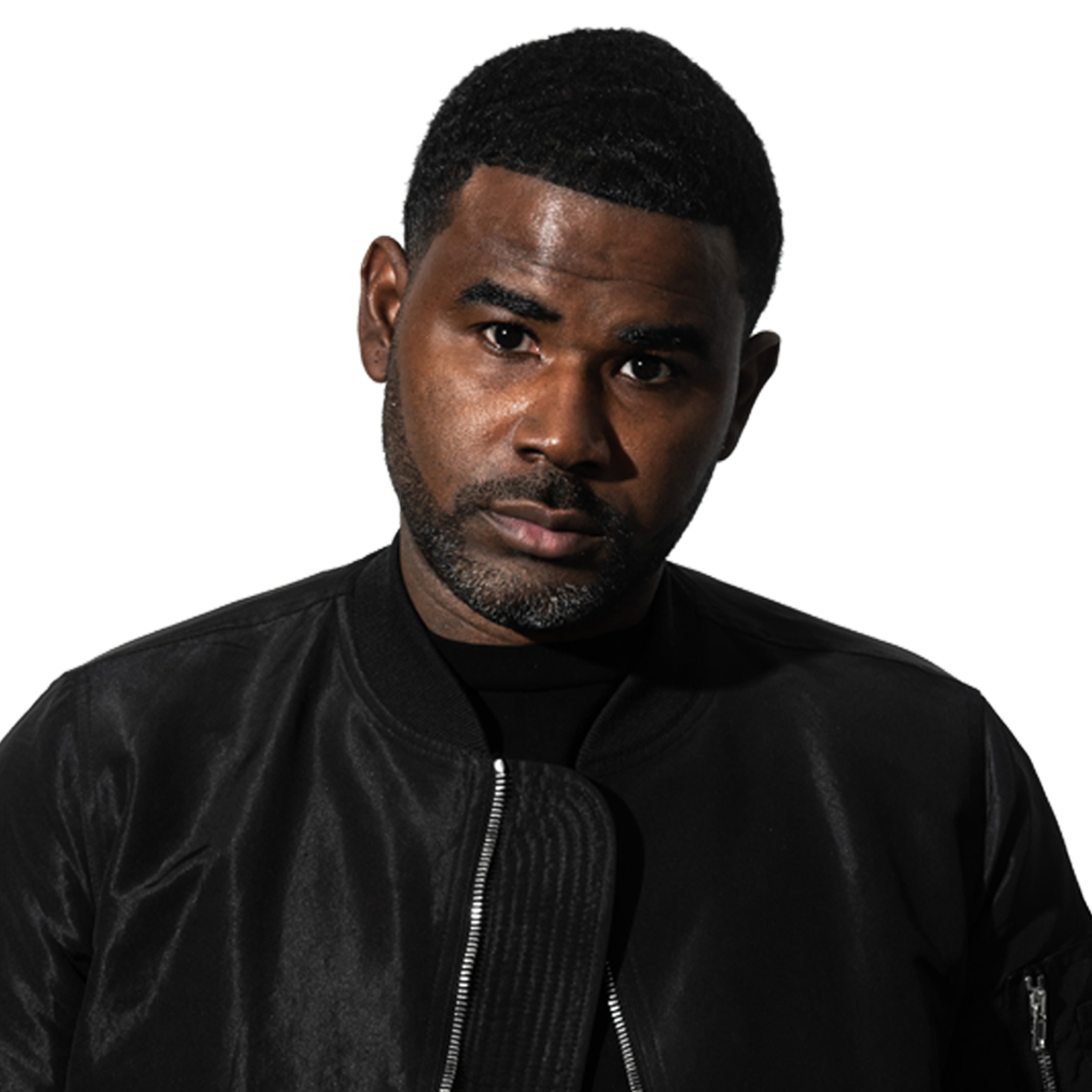
The Business of Fashion Podcast
James Whitner on Culture, Community and Building Brands with Purpose
00:39:54
From the importance of playing the “long game” to staying optimistic amid social and political change, founder of The Whitaker Group, known for boutiques like A Ma Maniére and Social Status, shares what it takes to merge culture, community, and commerce.
Loading summary
Transcript78 lines
- [00:00]
Imran Ahmed
Foreign Hi, this is Imran Ahmed, founder and CEO of the Business of Fashion. Welcome to the BoF podcast. It's Friday, February 28th. James Whitner is the founder of the Whitaker Group and the visionary behind retail banners like Ama Manier and social status. Growing up in Pittsburgh, he witnessed firsthand how marginalized communities often face limited options and life altering challenges. Experiences that shaped his commitment to serving those typically overlooked by the mainstream fashion industry.
- [00:38]
James Whitner
I think what would help me understand life is difficult is just seeing a difficult life, right? Like watching people struggle and seeing that there is privilege and pain. When I look at what we're creating now, it just has purpose and standing up Black culture at the center. Everything is about real experiences and connections to people.
- [01:02]
Imran Ahmed
This week on the BoF podcast, I sit down with James to explore his personal and professional journey, learn about the driving force behind the Whitaker Group's community centric retail experiences, and understand why authenticity and cultural connection are non negotiables in today's fashion landscape. Here's James whitner on the BoF podcast. James, it's such a pleasure to have you on the BoF podcast. We've been trying to schedule this one for a while. You and I have not met in person, but I have been following from afar the business that you've been building and really, really curious to learn about the backstory. I always want to start with the individual and their personal story and with you in particular, I really want to get to the drive that you have and where that came from. Like what were you like growing up? Can you share a little bit about what it was like to grow up in Pittsburgh and what that taught you about community and how it shaped your entrepreneurial spirit?
- [02:12]
James Whitner
That's actually a really good question. And I guess great interviewers ask the things that you've never been asked before in these places. So that's a really good place to start because I don't think I actually talked a lot about my childhood. I was an always inquisitive kid. I think my mom has always considered me her too smart for his own good child. And that school was pretty easy in elementary school and I really enjoyed learning and I still enjoy learning. Remaining curious and not getting bored is something that I struggle with and I have the perfect ADD mind. My brain jumps all over the place.
- [02:56]
Imran Ahmed
Did that make it hard for you when you were in school? Like did you find the kind of constrained environment of a classroom challenging because you had all of these ideas? You know, sometimes people feel restricted in this scholarly environment, not early on early.
- [03:14]
James Whitner
On I didn't elementary school. Pittsburgh is a middle class, east coast Midwestern city. And I say east coast because people always consider Pennsylvania east coast, but western Pennsylvania leans right into Ohio and it's perfectly in the start of the Midwest, but still very east coast. And I just say that to talk about the Rust Belt and everything that happened in crack epidemic. And I think how Pittsburgh in the downturn of the Rust Belt shaped the perspective and personality of so many people. And I think what would help me understand life is difficult is just seeing a difficult life, right? Like watching people struggle and seeing that there is privilege and pain. Like I think sometimes when you're going through a struggle as a child, the struggle is only absolute if it harms you, right? If it harms you physically. And at time you don't know how it's developing you mentally, right. I think how something develops you mentally is how you're able to perceive it. And as a young person, you're still forming like who you're going to become and how it's going to push you. I think as life continued to develop for me, middle school, high school, I began to struggle in school because I was struggling in life some. And I think it was just the nature of what was happening with my family at the time. And I found sport as an outlet and it helped ground me. And it also helped me understand how to grab all the pain and drive and put it into something and see what results I can get. And I learned pretty quickly, like how to take your work ethic and turn it into tangible results. The moment I learned that the light switch went off. Like you put in, you get out, you put in, you get out. And then at that moment is when I was able to tap into all of the pain that I experienced throughout my childhood. And then as I got to college, I realized what I wanted to do with it. And here we are now.
- [05:15]
Imran Ahmed
Yeah, there was some violence in the community that you were a part of and that you grew up in. And I understand that at some point you were hospitalized in 2004, is that right? And that was like a really life changing.
- [05:32]
James Whitner
It was, I think when you 2004, I'd just come home from prison. I think I'd been home for a little close to a year and I was shot helping a friend who inevitably was killed, but I thought he was going to get killed that night. So I was shot trying to protect him from who I thought was going to shoot him. I think what changed in me in that moment was that I Realized it wasn't just me at that time. I think there's millions of people that exist in the world that have to make real life or death decisions too often. And in that moment is when I realized that I needed to change where I lived physically so I can give myself the opportunity to make better choices that can affect the outcome of my life.
- [06:19]
Imran Ahmed
So you have this realization that you need to physically move, to use your words in order to be able to make better life choices. Like, how does this all lead to the flavor factory, the first kind of manifestation of your entrepreneurial vision. 20 years ago now even long.
- [06:40]
James Whitner
Yeah, yeah, 20 years ago. Start. So 25 from ideation. It's everything you're saying. It's interesting how you've asked a set of questions that just like, it jogs my memory. And I could see it like it was yesterday. I can even feel it. It's just pure desperation. I remember middle school being deeply perplexed with the idea that I needed to die. And it wasn't like the death at 80. It was like when you see people dying around you at 16 and 19 and 20, you start saying to yourself, like, my life expectancy ain't that. These are dudes that I'm around every day. So you start to believe that you may not have as long as a life as most other people. So you start to see life and death differently. And at that point, I start looking for like, ways to like, okay, what are the things that I could do that's different and what are the opportunities? And I'm using my 45 year old brain and my 15, 16 year old brain at the same time, right? And I start asking myself, what are the opportunities for me to make it? Like, what's going to happen? So first it was sport, then it was college. And the moment I got to college, I was like, okay, well this is interesting because I want to go to school for business and I don't want to like y'all teaching me how to like, work for people. That does not sound interesting to me. Like, the idea of like, I want to understand how to tinker with it. But I wasn't getting out of school what I was. I wasn't getting out of college what I thought you were going to get. I was just getting like what they were giving me. So I started crafting and curating classes in the business department. I was asking questions I need to take finance, marketing, logistics. And I'm just pulling all these things together and I'm experiencing culture at the same time. And as A kid. I said to myself, like, well, something that would be fun is if I, like, built something that was connected to culture. Like, the best things happen in the barbershop. Most interesting conversations on the block or in the barbershop, right? Or when I would go shopping once I got some money. You sit in spots and how you were serviced and the relationship you had with those people and how good you felt entering the space and exiting. Because your confidence and everything in the social currency that's tied to looking good was about feeling good. So I was like, y'all want to provide this? That was Flavor Factory. I didn't know. I didn't know what the thing was. I knew what the feeling was, though. Does that make sense?
- [09:03]
Imran Ahmed
Makes perfect sense. Because sometimes when I think about the events we do at BoF, I say to the team, like, I want people to feel like this. Like, how do we create that kind of experience or learning or emotion or goosebumps or whatever it might be that sense of community that we want our events to feel like. So that makes absolute sense to me.
- [09:29]
James Whitner
And it's interesting now, right? Because 20 years later, you're still chasing the same feeling, right? That doesn't go away. It's a bad example, but it's a high. You chase once you get that feeling and once you know you're providing it for others. And you can see it when they get it right? You can see when they smell it, you can see when they hear it. You can see when someone learns something new. To me, that's the best joy in life. Giving, receiving, and giving.
- [09:53]
Imran Ahmed
That, absolutely. And it grounds whatever you're building in a sense of purpose. It's greater than the business that you're building or the money that that business makes. It's. It's housed and kind of rooted in a sense of, like, the reason why you do it. Because being an entrepreneur, as you well know, is, like, doesn't stop, right? It's the kind of relentless 247 kind of existence. Because, you know, especially if you're the founder, like, you are, the buck stops with you. So, James flava factory was 20 years ago. Now you've got an organization called the Whitaker Group for people listening who are not familiar with AMA Manier and social status and all the stuff that you've been building. Can you just give us, like, the elevator pitch, as it were, about what this business is today, how it links to that purpose that you and I were just talking about, about community and feeling and kind of how you've built this thing? Because it's really impressive as an independent black owned business.
- [10:56]
James Whitner
Well, it's our version of LVMH. If you look at what Mr. Arnault has built. And at the time I hadn't. Right, my 45 year old, 46 year old brain can say it now, but it was creating experiences to served purpose, creating purposeful experiences that just had meaning to who we connected with and why. We started with Flavor Factory and it was learning and then it became social status because it was about building a brand but not having the resources to build the physical brand. So we needed to build infrastructure for brick and mortar brand and we wanted to connect. Then it was about like, hey, the sneaker thing is really important to us. How do we scale it? Right? Then it was about, hey, we have a point of view on luxury and experience and the things like white space experiences and luxury. I'm a man. Air comes to life, right? And now we want to serve women and serve them the way we do everything else. And here comes Jade and once we start looking at like, hey, we want to do all these things but have a really. We want to be really intentional about how we make humans feel and our connection to humanity and how we can speak about our plight and pain and its privilege, right? And how we can build a community and grow together as a community and create an infrastructure for like, if you go back to listening to the LVMH story, when Bernard Arnault was a developer in just acquiring Dior, there wasn't this idea of creating LVMH as this big conglomerate, right? It was just a thing. And when I look at what we're creating now, it just has purpose and standing up black culture at the center. Everything is about real experiences and connections to people.
- [12:50]
Imran Ahmed
Right. So that gives me the kind of the grand vision, but operationally, what are we talking about here? I think it's 23 stores, is that right? It might be more since the research I did.
- [13:02]
James Whitner
Oh, goodness gracious. 200 people, 30 spaces across, four banners that serves everything from 12 year olds to life's expiration.
- [13:13]
Imran Ahmed
And you know, sometimes people hate the term streetwear as a descriptor of their businesses, but like, how do you. In terms of the segment of the industry that Whitaker Group operates in, is that an accurate descriptor is like a business that sits at the center of kind of streetwear and sneaker culture, or is it gone beyond that now?
- [13:33]
James Whitner
I would say we sit in brand experiences and purpose because I mean, you can't leave culture out, right? I think everything we do is centered in culture, but I think streetwear now, it means something different to everyone. And I've been a part of this debate too many times to debate what even streetwear is or means anymore, because the line has become so blurry. But I think it, you know, it is about culture, but as it connects to purpose and building brand, because without building brand and there's no real connection.
- [14:04]
Imran Ahmed
So I was on Slack with a couple of our team members today. Sheena Butler Young, whom I know you've met in the past, and another one of our correspondents, Lei Takanashi, who's based in New York. And I said, you know, I'm getting on this podcast with James. What's on your mind? What should I ask him? And Sheena's asked me, you know, suggested a really important question. You know, she says, you built such a powerhouse in what you do, but can you talk about the nuts and bolts of the business model? So I know it's grounded in purpose, and I know it's focused in culture, but how have you financed this business and built this business? The key partnerships you've had along the way, like, give us a bit of that entrepreneur journey where, like, the big milestones that helped you create this juggernaut?
- [14:51]
James Whitner
Well, first you gotta not operate. And I think that's like business 101. Gotta be able to operate. If you can't operate, you're dead. You got to understand how to keep costs down, how to build an infrastructure while keeping costs down. And you got to be able to make sure you can hit your nut forever. Right? You can never make a decision that puts you in jeopardy of doing that. We've been able to do that by first thinking about, we didn't start in New York. In New York, it's much harder to say you're going to build in and maintain a business over a long period of time. Just the cost of doing business, take cost of doing business out, the cost of learning is too high. So for us, the business is operating our brick and mortar spaces, right? And it's about doing that in a meaningful way. It's about understanding who we serve and why. It's about having brand partners who also are really sharp in who they want to serve. Because if you work with brands, and this goes back to the very beginning, if you want to work with brands who want to be for everybody, that means you're for nobody. So very early on, I had to realize, like, hey, we need to build relationships with people who want to go play a long game and not people who are chasing money. The moment you start chasing money in this industry, you're dead. You'll never make it. This is an industry that you can scale, but it's not built for scale. And that's a riddle. And it means if you say it to yourself enough times, you'll be able to think through it. So that was the base of the business. Learning how to operate was five years building strong brand partnerships. That was the next five years that helped our business be able to get from a $500,000 business to probably a $50 million business. Does that make sense? Yeah, I think once we had credibility in our space, and I think people meaningfully start paying attention to us and believing we were credible about 13 years ago, that's when the conversation about strategic partnerships kind of started. Like, you don't get a chance to work with big brands if you don't have a point of view, and they can't kind of test it and learn from it. So for 10 years, we worked with brands very closely, like test and learn, Test and learn, Test and learn, Test and learn. And then I think in when is it we got our first brand project probably at 2016, 2017, and it worked. And thank God it continues to work. But I think it continues to work because we have really close proximity to who we serve. We have a really sharp why, and that's continuing to help us rethink the future of the industry.
- [17:29]
Imran Ahmed
You know, I think about the collaborations in particular with Nike as being pretty instrumental for you and for your business. I mean, when I talk to our team sometimes about partnerships and, you know, we're a small independent company, too. In the early days, I was like, if we're going to partner with a company, let's partner with a company that, yes, we have a shared kind of idea of who we're trying to reach, but also a company that's bigger and more established than us. Because if you can successfully execute on a partnership like that, it elevates what you do, especially if you can bring something to that partnership that the partner couldn't bring. So when we're talking about Nike and you've done a ton of really successful collaborations with Nike, what was it that you were bringing to the table that Nike couldn't find in its own tens of thousands of people? Like, what was the value both parties were bringing to the table? And why were those collaborations, why were they so successful?
- [18:27]
James Whitner
I think they believe in who we are. I don't think anyone understood our ability to tell stories. Unless you've, like, sat around and we told stories. And that means just like at a personal level, when someone's connected with you at a personal level and you've worked together for so long that they understand, like, no, this is unapologetically who this person is. And it's why we love them. And I think Nike loves us because we're uniquely us for them. We are really intentional about serving black and brown folks. And we serve more than black and brown folks. Right. We have a huge global audience, but we know who we are. And I think the reason we've been successful is because we've been able to express that through stories. Nothing scales better than a great story. And for Nike, Nike's about authenticity and empowering it. And for us, we're about storytelling and connecting. So it's been a perfect match made.
- [19:20]
Imran Ahmed
Do you have a favorite collaboration with Nike that you're most proud of?
- [19:27]
James Whitner
It's always the thing we're working on next.
- [19:30]
Imran Ahmed
Of course. Of course it is. Can you talk about what that thing is?
- [19:35]
James Whitner
Dad? This is a really good thing to talk about because I think now what was important for me working with Nike, because they're such a behemoth and it's never going to be a perfect relationship. You got to know that going in. They're too big and they're so important to culture and they're doing so many different things that is, it's just tough to like, keep their attention at times. Right? So for me working with them for years before we went into this relationship, it was important for us to say, like, hey, we gotta commit to being in a long term relationship because I don't want to get lost in a shuffle, right? So with that being said, we do a lot of things together and with that, it gives us the ability to just get out years and years and years and years in advance. So for this year, the thing that we're doing that's most important is we're going to be building things that will be exclusively built for us and them. Like for the first couple years, we were looking to just like, hey, serve a big global audience. This year we're going to do things a little different. We're going to serve a much, much, much, much tighter part of the marketplace. And we're going to look to serve it through us. And we're going to do that because we want to be really thoughtful, specifically this year, and being thoughtful to what's happening in the industry to get closer and make sure that people, like, love things for the right reasons. So we got an AJ3 dropping pretty soon. And this love campaign that we're going to start talking about, we're really, really excited because with everything that's going on in the world, it's easy to start to look at, like, everything that's tough and hard to deal with and all the, like, you know, everybody's on the side, like, oh, this side or that side. And I think the thing that trumps all of that is the idea of just love, our love for the industry, our love for people, our love for society, our love for one another. And I'm really excited, our team's really excited to get ahead of this story.
- [21:35]
Imran Ahmed
I'm curious about the decision to kind of really tighten up the distribution. So if I understand correctly, those products that you're working on together will only be available through Nike and through the Whitaker Group. Is that a reaction to, like, the ubiquity of things in the market now? Do we need as an industry to go back to kind of really making things that are more special and not so widely available in order to reignite interest and desire from customers?
- [22:04]
James Whitner
Yes. Yes, 100%. You want people to feel included, and we still want people to feel included, but things have to be special and you want to be intentional about making sure you're creating a connection for the right reasons. Right. Like, I'm all for sneaker resale and I don't judge how anyone makes an income, but we want to touch man's hearts and we want people to connect to what we do in a real way. So I think it's serving a couple purposes.
- [22:32]
Imran Ahmed
We'll be right back with more on the BoF podcast.
- [22:38]
C
It's 2025 and you're wondering, how can I make this year different? How can I turn my business idea into reality? Shopify is how Shopify makes it easy to launch your brand, get your first sale, and manage everything from shipping to payments all in one place. Don't wait. Start building today and make 2025 the year your idea becomes a reality with Shopify. Your first sale is closer than you think. Established in 2025. Has a nice ring to it, doesn't it? Sign up for your $1 per month trial period at shopify.combof all lowercase go to shopify.combof to start selling with Shopify today. Shopify.combof your old or broken phone can let you down. But at Verizon, trade in any old phone from our top Brands and get iPhone 16 Pro with Apple Intelligence with a new line on MyPlan and iPad and Apple Watch Series 10. After all, you don't want your old phone to die on you when you're lost.
- [23:37]
James Whitner
Perfect.
- [23:38]
C
Or for your broken phone to glitch at the worst possible time.
- [23:41]
James Whitner
Hey, can I get your number? Oh.
- [23:44]
C
Trade in your old phone for a brand new iPhone 16 Pro, iPad and Apple Watch. Visit verizon.com today. Additional terms apply. Service plan required for Apple Watch and iPad. If you're a maintenance supervisor for a commercial property, you've had to deal with everything from leaky faucets to flickering light bulbs. But nothing's worse than that ancient boiler that's lived in the building since the day it was built 50 years ago.
- [24:05]
James Whitner
It's enough to make anyone lose their cool. That's where Grainger comes in.
- [24:08]
C
With industrial grade products and dependable, fast delivery, Grainger can help with any challenge, from worn out components to everyday necessities. Call click grainger.com or just stop by.
- [24:19]
James Whitner
Grainger for the ones who get it done.
- [24:27]
Imran Ahmed
So let's step back a bit. I mean, we touched on this a bit earlier, but I think it merits a bit more of your expertise on the matter. You know, like sneakers and streetwear culture become such dominant categories and influences in, in the fashion industry over the last few decades. I mean, I'm just curious about how you think about the evolution of that market today compared to how it was in the past. I mean, where do you see things going now? I saw this crazy video of a. A streetwear company, two streetwear companies based here in London doing a drop over the weekend. And something like, I don't know, 5,000 kids showed up in Soho and created a virtual riot in the center of London. And the police had to be called in and like, someone was arrested. And like, the hype around this market now is so extreme, but it's also so visible and so, you know, as I was saying before, so ubiquitous. I mean, how do you think this market's going to develop now?
- [25:30]
James Whitner
It's going to get more refined because, like, you get a chance to be thoughtful. Like, no one knew what was going to happen when Pandora's box got open. Like in 2012, the box got open. And I think in 16 or 17 and 10 happened with Virgil, the box was open more. Right. And let me go back in 2000 and just be respectful. Once the Air Jordan one done what it done and sneaker culture was created. I think the second coming of sneaker culture was when Kanye west was piping hot. I mean, piping hot. That first Air Yeezy, that was when Pandora's Box opened. Right. The tin was gas, and then you had a blazing fire. That's a bad. Probably a bad analogy right now with everything that just happened in California. So shout out to people who lost. Who lost thing, and I hope everyone's recovering. But Pandora's Box was open at that point. And now, like, I do think it needs a bit of more consideration and thought about how we refine it, because we know who it's for. But now that it's grown, and some of it, let's be honest, some of it's grown too, like, gotten to be too much. Right?
- [26:43]
Imran Ahmed
Yeah.
- [26:44]
James Whitner
So we need to be more thoughtful and more considerate about who we're serving, why, how we're serving them, and what reaction we want to get when we serve them. And what do we do when we don't get the reaction that we thought we were going to get. And I don't mean in a negative way. If it doesn't go well, we don't need riots in Soho do. Right. That's not a thing. We need excitement, we need energy. We need to make sure that we're powering up youth culture. And we want kids to be in the streets and engage and having fun. But it has to happen the right way.
- [27:16]
Imran Ahmed
Absolutely. And I think every market goes through these ebbs and flows of change. And I think this idea of refinement that you're talking about is really important. The other thing that, as I was doing some reading this morning and thinking back to your analogy of the barbershop as being the place that brought you those feelings, I think the idea of the retail experience and the rise of experience in helping to create. So it's not just about the product you're buying. It's about the experience of being part of something bigger than just a pair of sneakers. You know, this is something that you've been leaning into for a while, you know, in terms of innovation and experiences. Like, what are the lessons that you've learned about creating experiences that give people that kind of barbershop kind of feeling? What does it take?
- [28:12]
James Whitner
You know what? Often after fashion week, like, 10 years ago, we find ourselves on a beach and, like, somewhere in Europe. Like, we just take the time. And I was still married at the time, and I remember being on a vacation and sitting there and thinking to myself, like, how is it that I come on vacation and I get a clearer mind here than when I'm working? And I guess that's the relaxing point. And now all I'm doing is sitting on vacation Thinking about everything I want to do at work and. And then I ask myself, how do you create this experience while you're still there? Does that make sense?
- [28:47]
Imran Ahmed
Yeah, I think so. Tell me more.
- [28:48]
James Whitner
Because like at the time there wasn't a real connection between how we wanted to live and how we were living. And maybe at the time my income and how I actually lived my life, there was still a gap. So I started getting infatuated with the idea of like just creating living spaces. Like, hey, what does the perfect cultural living space look like? One that inspired you to like kind of stay in it even when you were like at home. And I think our first step was, well, actually we stumbled upon it like creating AMA Manure living in dc. We happened to rent a space that was a part of a mixed use building that was being developed. I had no clue at the time when we got the lease that we would buy the building and I'm a million year living would be created in that space. It just happened that way. Like that vacation, like, God, engineering is crazy. That vacation happened. We took the lease on the space. Then we were kind of in a conflict with the landlord and he just offered to sell us the building. I was like, well, how the hell are we going forward this? And it just worked out. And then I'm a man year living was like, well there's these condos and what we're going to do with them. And I was like, I know exactly what we're going to do with them. It's going to be I'm a man year living. And people's like, what's that? People going to live there? Like, no, they're going to experience what living is like. There's. And it just was like a light switch. And then the second thing was like food. Like how many times have you been over a meal and over a drink and had the best conversations at lunch? Like lunch meetings, dinner meetings, dinner with your partner family members. Hard conversations always seemed to happen over a meal. So we got really inspired about the idea of AMA man year eats and you know, early Soho House nights, right? Like when early Soho House nights was like nostalgic and a super dope thing and just something that was just like, whoa, how do we bring this into the center of what we're doing and make it less about consumption and all about this. And we started going on that journey and hell, we're still there.
- [30:48]
Imran Ahmed
Yeah. Who inspires you in terms of retail innovation?
- [30:53]
James Whitner
Oh goodness. LVMH for sure. Amman Resorts for sure. And then it's Places like Napa, like the Peace of Napa, Martha's Vineyard. I went to Hawaii for the first time over Christmas break, and I walked, I think, like, 26,000 steps in one day. Hiking, just walking. I mean, just getting lost. And it's like, holy. Like, when you do those things, it gives you so much energy to want to create. I mean, it goes back to wanting to share that experience with others and skip, like, how could I put this in a box and give it to culture? So then they give me something back. It's a shared ecosystem, and we're all part of this shared ecosystem of inspiring one another and building an infrastructure so it holds. Right. So now every time somebody walks in, they're adding something to this shared ecosystem.
- [31:47]
Imran Ahmed
Yeah. One day I hope to visit one of these amazing experiential places that you've got. I also wanted to talk to you about some of the challenges you faced as an entrepreneur. I mean, most recently there was this investigation by the U.S. attorney's Office and subsequent exoneration, I might add. But, you know, when you're faced with a situation like that, that can be pretty destabilizing and debilitating as a human being, as a entrepreneur, as a founder, as someone trying to build a business. Like, what exactly happened in that situation? What do you think they were looking for that they didn't find? And how did you navigate your way through that? Because, you know, when the U.S. attorney's office conducts an investigation, it's pretty serious business.
- [32:34]
James Whitner
So I learned well, I mean, having been through a federal indictment before, I know where I'm from. Right. Like, I've never hidden my background. So I come from a place where a lot of things happen. I've never shied away from my neighborhood is the Whitaker Group is because I grew up in Whitaker Projects. Right. And I don't shy away from my relationships and trying to build back into those places and try to change outcomes for people who come from the place that I come from. When you get that level of proximity, the thoughts don't go away. I think something about the human condition that people want to believe is true, and I want to believe that it's less true is that people don't change. So I think there was an assumption that I could still have some connection to criminal activity. And I think if you look at the scale and trajectory in which our company has grown and over the last couple years, and you look at the amount of cash that was a part of our business, it just rose red flags going through the investigation for Me, it was like, oh, cool. You think I'm doing this? Cool. We're not in time, we'll show it, right?
- [33:44]
Imran Ahmed
Yeah.
- [33:45]
James Whitner
It takes a toll on you because you got to show your hand. And showing your hand in this case costs time, money, and, like, to your earlier point, it takes an emotional tax on you that you don't realize until it's over. I didn't realize how I felt about it until it was done. Does that make sense? Because when I was in it, I'm in it like, I'm used to it. I've learned to manage difficult things, so I'm not a stranger to doing difficult things. You just don't know how it feels until it's over. And once it was over, I just simply learned, like, hey, when you take cash, report it differently. Right? And you can avoid some heartache and pain. Do I believe that if I wasn't a felon, it would have looked the same? Nah, it probably would have looked different. Do I believe that if I wasn't from where I'm from, it would have looked different? Yeah, I do believe it would have looked different. But I am who I am, and I'm from where I'm from, and I'll never hide either of those things. And I can't let anything that happened in the past determine what I'll do next. I could just be smarter because of it and be more thoughtful, but continue to build in a meaningful way and try to push harder, faster to make as most impact as we possibly can.
- [34:56]
Imran Ahmed
Yeah. Sheena was telling me that when she last saw you in Detroit, you showed her around a few black neighborhoods that you had been focusing on. Can you tell us about some of those projects and the work that you're doing? Because I think the thing that I found most inspiring and fascinating about your story is not only have you not hidden where you're from, you're still very, very directly connected to the kind of communities that you grew up in, in order. And you're trying to find ways of giving something back to those communities and bringing creativity and community and art and design into these communities. Because design shouldn't be exclusive. Creativity shouldn't be exclusive to only wealthier neighborhoods or wealthier people.
- [35:42]
James Whitner
Well, I mean, I think you hit it. And it's great to be able to go from talking about purpose and then actually doing community development, like literal community development. Because it's one thing to realize when I was growing up, I used to go into our neighborhoods, and I was the business that helped catalyze growth in our communities, and then at some point realizing that we needed to be the developer that helped shape the community and brought in other versions of who we were at Flavor Factory, social status and along the way to help invest back in and shift the narrative for what literally community building looks like. Right. And the project that we're doing at 901 East Jefferson in Detroit is going to launch soon. We've done a similar project in Charlotte on Tuckaseegee, where we developed a city block. And we're putting one of our brands in as the flagship in those communities. And we're surrounding ourselves with other local businesses with the preference on women and minority and black and brown or people who just don't have an opportunity through finance. Take color, color out of it. It is important for us to drive black and brown, but it's more important for us to drive connection and just try to help people who want to help people. Does that make sense?
- [37:06]
Imran Ahmed
Yeah. And it feels, James, like that kind of on the ground, grassroots work is even more important now in the environment, the political environment in the US and globally, frankly, the backsliding around dei. How do you see the future of black advocacy in this climate?
- [37:30]
James Whitner
It helps change the opportunities. Kinda. And when I say kinda, because people who weren't invested were never invested. Right. You hear about trillions of dollars that were verbally committed but never actualized. Right. For dollars that weren't actualized, those people weren't well intended anyway. So we didn't really have their commitment. Does that make sense?
- [37:53]
Imran Ahmed
Yeah.
- [37:54]
James Whitner
So now we kind of just know what it is. Everyone's showing their hand. Some people may be saying, hey, we're going to do inclusion work and it's going to look different. And some people are saying, we're going to do inclusion work and nothing's going to change. Right. The language used needs to look different based on the current administration. So I'm hopeful that people are intending to do the same work with new language to circumvent some of the issues you may deal with from the government if you depend on them for revenue or for some other reason. But for us personally, nothing really changes. Does that make sense? Like pre2020, we were operating in this space without understanding what's going to happen. I was born black, so not much is going to change about that. Right. The things I'm going to go through are going to continue to be the things that I'm going to go through. And we got to navigate it. I think this is just another opportunity for us to learn and think about everything that we can do regardless of the environment. Right. Like, we got to wake up and work, and we have to be optimistic about the things that we can accomplish because if not, we've already lost.
- [39:02]
Imran Ahmed
Yeah.
- [39:02]
James Whitner
So because. Because an administration changes doesn't mean that my feelings around the work we're doing can change. And it doesn't mean that we can't be as impactful as we've always been or even more impactful.
- [39:15]
Imran Ahmed
I wanted to conclude by seeking a bit of your advice and, you know, for some black or brown kids growing up in some of the neighborhoods we've been discussing or frankly, anywhere in the world who are kind of looking to find their own entrepreneurial path, do you have any advice on how to start that journey and how to find the kind of success and connection to purpose that you've so clearly done?
- [39:43]
James Whitner
I mean, the first thing is start. People spend a lot of time thinking, talking, networking, and doing and being in it and being lost and being in it. Because being in it is going to help you understand some of the questions that are going to get you through it. And you can sit and think about what may happen when you do it, or you can get in it and figure out and how to navigate it. My advice is get in and learn how to navigate it.
- [40:12]
Imran Ahmed
Yeah.
- [40:12]
James Whitner
There's no better time than right now to be in it and trying to help reshape black culture and culture in general. Right. Just because, like, there's winds that may feel like they're not blowing our way. I feel like this is the time where it's kind of best, because if you could operate in this space, you're going to learn in this space, it's going to only get easier. So you want to get in now when a. Some people are running because they can't take tough times. Some people are running because they may think AI or something else is a better opportunity. So now I want to think that the right people are here for the right reasons and this is the right time to get in and learn.
- [40:54]
Imran Ahmed
Well, that's really good advice. This was incredibly inspiring conversation. You're clearly so passionate and connected to your work, which in and of itself is beautiful to see, but that you've also managed to build a successful business is hugely impressive. So thank you for your time and sharing some of your story with us. I'm sure there'll be lots of people who listen to it and feel excited to go and get in it and do it and start. So thank you.
- [41:26]
James Whitner
Thank you for having me. I really appreciate you guys making the time and space.
- [41:30]
Imran Ahmed
The BoF podcast is edited and produced by Olivia Davies and Eric Brea.
- [41:43]
C
Your old or broken phone can let you down, but at Verizon, trade in any old phone from our top brands and get iPhone 16 Pro with Apple Intelligence with a new line on my plan and iPad and Apple Watch Series 10. After all, you don't want your old phone to die on you when you're lost.
- [41:58]
James Whitner
Perfect.
- [41:59]
C
Or for your broken phone to glitch at the worst possible time.
- [42:03]
James Whitner
Hey, can I get your number?
- [42:05]
C
Trade in your old phone for a brand new iPhone 16 Pro, iPad and Apple Watch. Visit verizon.com today. Additional terms apply. Service plan required for Apple Watch and iPad if you're a facilities manager at.
- [42:15]
Imran Ahmed
A university, you know students rely on the cafeteria for breakfast, lunch, dinner and the occasional late night.
- [42:21]
C
So when a dishwasher breaks down and.
- [42:22]
Imran Ahmed
Dirty plates pile up, the mess hall can turn messy in the blink of an eye.
- [42:27]
C
Enter Grainger.
- [42:28]
Imran Ahmed
With over a million industrial grade products and fast delivery, the product you need now is never far away. So you can turn that dishwasher back into a lean, clean washing machine.
- [42:38]
C
Call click grainger.com or just stop by.
- [42:41]
Imran Ahmed
Grainger for the ones who get it done.