← The Business of Fashion Podcast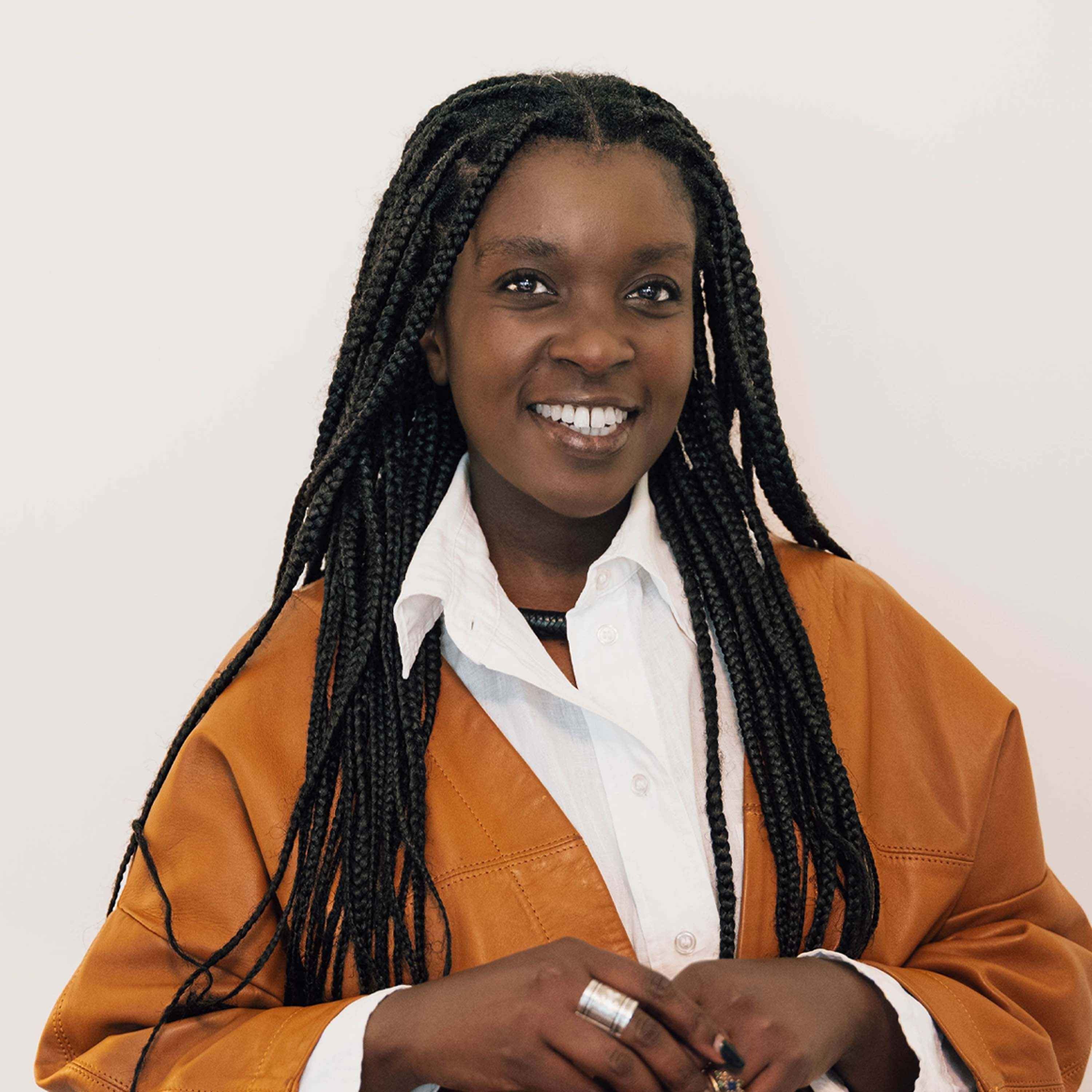
The Business of Fashion Podcast
Kenya’s Katungulu Mwendwa on Building a Made-in-Africa Brand
00:39:08
From Nairobi to the BoF 500, designer Katungulu Mwendwa explains why making locally matters, how to design “everyday armour” people will keep for years and what global buyers must change to unlock the potential African fashion.
Loading summary
Transcript58 lines
- [00:00]
Katungulu Mwendwa
Foreign.
- [00:04]
Imran Ahmed
Hi, this is Imran Ahmed, founder and CEO of the Business of Fashion. Welcome to the BoF podcast. It's Friday, October 17th. Born and raised in Nairobi, Katungulu Mwendwa grew up cradled in the warmth and unpredictability of the bustling Kenyan capital and the hands on craft traditions learned from her family in basketry, pottery, leather and beadwork. A childhood fascination with cherished garden garments led her to pursue fashion studies in the uk, giving her both a technical grounding and a view of the global fashion system. Back home, she gave herself a double challenge to build a contemporary brand with deep cultural roots and make as much as possible on the African continent, working with local artisans and resources.
- [00:56]
Katungulu Mwendwa
You have the Paris Fashion Week, you have New York, and why can't Nairobi be one of those places? I'm not trying to run for president. It's not my thing thing. But I'm now a fashion designer, so how can I have an impact on my environment? How can I be the change I want to see is why I'm so adamant about working with local resources.
- [01:17]
Imran Ahmed
This week on the BoF podcast, I sit down with Kathungulu to understand why making locally matters, how to design everyday armor people will keep for years, and what global buyers must change to unlock the potential of African fashion. Here's Katungulu Mwendwa on the BoF podcast. Hello, Katungulu Mwendwa. Welcome to the BoF podcast.
- [01:45]
Katungulu Mwendwa
Thank you so much, Imran. It's such a pleasure. Feel free to also call me Katush.
- [01:50]
Imran Ahmed
Okay, well, I'll call you Katoush.
- [01:52]
Katungulu Mwendwa
Like the brand.
- [01:53]
Imran Ahmed
Like the brand. Which we're going to talk all about today. But before we dive into the brand, I just wanted to congratulate you on your inclusion in the BoF 500 class of 2025.
- [02:07]
Katungulu Mwendwa
Asante.
- [02:08]
Imran Ahmed
Asante. Which is thank you in Swahili. And the reason I know that is because my family is actually from Kenya and Tanzania.
- [02:19]
Katungulu Mwendwa
That is so cool.
- [02:21]
Imran Ahmed
Yeah, I guess you didn't know that, but my family immigrated from East Africa to Canada from Nairobi actually, in December 1970. And I was born a few months later. So you could kind of say, I'm made in Africa, I guess.
- [02:39]
Katungulu Mwendwa
Yes, you are. Like the clothes.
- [02:42]
Imran Ahmed
Exactly. And this whole conversation today is really going to be about building a made in Africa fashion brand. But before we get into all of that, for people out there listening all around the world who've never been to Kenya, never been to East Africa, tell us a little bit about what it was like to grow up there. Tell us where you were born and how you became the person you are, how it shaped you as a person growing up in East Africa.
- [03:09]
Katungulu Mwendwa
I was born and raised in Nairobi some time back. I'm not going to give you the year. Explaining Nairobi is quite, it's quite a challenge for somebody who's never been here or who's visited East Africa because it's just such an exciting place to be. It's a place where the people are warm, the weather is the best ever anywhere. And you can try convince me otherwise, but that's not going to happen. And it's just lots of interesting things happen. Like you can wake up in the morning and, and not know what to expect by lunchtime. You layer clothing, you, you leave expecting maybe it's going to be a no traffic day. And then of course it's a traffic deal or you expect traffic and not find traffic. This is full of joy and confusion and wonderfulness and unpredictability all in one. And I'd recommend that anyone should come and visit.
- [04:01]
Imran Ahmed
Yeah, there's beauty in the chaos in Nairobi. I've been lucky to spend a lot of time there because my parents eventually relocated back there for about 15 years. And I remember when I first arrived in Nairobi, the African savanna and the kind of landscape and the people and that whole environment is just so unique and so special. And you mentioned that the people are very warm. So as someone who grew up there, like how do you think that shaped you as a person growing up in a place like that?
- [04:39]
Katungulu Mwendwa
I think also my explanation has maybe not done it its full justice because on top of that, Nairobi is also such a diverse and unique space and a melting pot of different communities and cultures. Like as you've said, you've also grown and your family came back here. So I'd say having grown up in Nairobi in particular has, it's sort of given me this very warm sort of welcoming understanding of difference, if I could put it that way. And the kindness and receptiveness you receive from strangers is. It's just remarkable. So like that sense of community I think has definitely informed the way I think and feel about my work. And I would say sometimes it does feel like some of that is changing or we're losing it. And so sometimes I'm always like, how do we make sure we, we keep this, we retain this sort of feeling and culture which, which has been so key to how it is. I define and, and perceive myself as an individual and I think a lot of my peers also having the privilege and ability to also have Traveled around a lot of Kenya. I haven't seen as much of East Africa or the rest of the continent as I'd have loved to. But it's, it's such an amazing place to be able to just drive for maybe even 45 minutes and, and see something completely different. Like you mentioned the savannahs in one direction, Mount Kenya in the other, beautiful white sandy beaches on another, and old towns and on islands. It's Kenya is, is just remarkable. And it's that you can find endless inspiration just from what it has just within its borders, even within its city. It's an exciting place to be. So every time I just cross into the next neighborhood, I'm like, oh my God, this is another one and another endless possibility of excitement.
- [06:29]
Imran Ahmed
Yeah, it's a meeting point. And Nairobi, of course is kind of the main metropolis of East Africa. So so much of what happens in Nairobi is not just a reflection of Kenyan culture, it's a reflection of African culture. Growing up there, however, it's pretty far from the main centers of the fashion industry. So I'm curious how someone growing up in that environment takes an interest in fashion and then decides to move to the UK to study fashion. I mean, that's a big bold step for someone growing up so far away from the center of the fashion system in the West. You know, how did you go about making that leap?
- [07:16]
Katungulu Mwendwa
I don't know. I think the dream is probably the same as many people around the world or youth who want to grow up and become a fashion designer. I think that core remains the same. And that was me, that was 10 year old me saying, when I grow up, I'm going to become a fashion designer.
- [07:34]
Imran Ahmed
Do you remember why? Was there something you saw or someone you looked up to or a moment where that idea first entered your 10 year old head?
- [07:45]
Katungulu Mwendwa
Huh? Okay, there are a few memories. So I remember my mother had this beautiful pink silk satin evening gown that she wore for her wedding. It had some lace detailing on the shoulder. It was so beautiful. And I remember I always wanted to play with it. And she kept it in the cupboard in the corridor where she kept clothing that she just treasured and valued but wasn't probably going to wear. And it was cut on a bias and it had all such beautiful seams detailing. So I remember always wanting to play with it. And I think one day she left the cupboard open, which she never did. And so I picked it up and I tried it on and of course it didn't fit me. And I was like, okay, you know what? I See a stapler. We're going to make this happen. And so I started stapling a dress together.
- [08:34]
Imran Ahmed
Oh, no.
- [08:38]
Katungulu Mwendwa
To make it fit me. And she was so horrified. She was so horrified when she came to find it. That's probably one of them. But I think also just many other similar experiences. My grandmothers had closets like that, and I was always rummaging through them. And I also got lots of their beautiful dresses and my aunts as well. So I knew. I knew for sure there was something like, I just wanted to do this. But I also felt like, particularly when I was trying to do. There was an art project. I had to do an exam because I did the British curriculum so far. O level art project. We were asked to pick a specific topic, and fashion was one of them. And I remember saying, I love. I really love working with my hands and growing up with the background that I had. My grandmother used to work with artisans in my village. And so we grew up making baskets with sisal. We grew up doing pottery. We grew up doing leather work. We grew up doing bead work. And a of that was product that she was making to export to Japan. So she grew up making those in eastern Kenya, in my village in Kitui. And I remember thinking, if I did fashion for my art project, I could incorporate all these different mediums to create something unique and interesting. And I think from then I was hooked. I was like, surely I can't have any other dreams. I must go into fashion. And that's where it started.
- [10:10]
Imran Ahmed
Yeah, but it's one thing to have a dream, and then it's another thing to actually make it happen. And you're reading a little bit about your story. You know, earlier today, I was really struck by the idea of someone having that kind of vision or dream in her head and then actualizing it. So, you know, you studied in the uk. What did that experience there teach you about more the technical side of fashion? Because it sounds like you were very motivated by kind of leveraging and celebrating the local craft and skills in Africa. But you also needed to combine that with some formal education Completely.
- [10:56]
Katungulu Mwendwa
I think I'm very lucky to have parents who were very supportive of my dreams and my ambitions. My father is actually a bass guitarist, but he's also a trained architect. And so for him and also that generation, it was to sort of tie it and be like, we understand that this is what you want to do, but how do we ensure that you have the safety net and the understanding of the importance of what you're trying to Sort of do with your future. This is your future we're talking about. And of course, they encouraged me to seek out that opportunity to see if I can get into fashion school. And at the time, it seemed like the UK might have been the best option so that I could get a full degree and sort of also have that exposure and access to understanding how the global sort of fashion world works. And because I feel like it doesn't operate in isolation because you have all these different capitals. You have the Paris Fashion Week, you have New York, and why can't Nairobi be one of those places? But to get into those sort of process, like that space, you sort of have to understand how it works. And that's what got me into uni. And it definitely shifted the way I viewed the industry. I mean, Nairobi and maybe a lot of East Africa is very accustomed to custom, which is, of course, making its comeback, because why should we also receive things instantly? And so everyone is used to having their own tailor that they go to to make things that they really appreciated. While at that time, understanding how the system worked as a whole has become so critical to how I operate and how it is I can make an impact in the industry here in Kenya and in East Africa and Africa as a whole. And it was by going there and understanding what all those different things are and learning it from that formal perspective, I think it's definitely been very beneficial. And that exposure has helped me build my brand until now.
- [13:00]
Imran Ahmed
Well, tell us a little bit about your brand, because the brand you're building is a multifaceted one in terms of the complexity of building a brand. So it's hard enough to build a fashion brand from scratch as you've done, but you decided to set the double challenge of not just building a fashion brand from scratch, but also trying to make everything on the African continent. So talk to us about cartouche and the kind of founding principles and mission with which you've created this brand.
- [13:34]
Katungulu Mwendwa
So I'd say cartoon is sort of an extension of my experiences and just a way that I'm able to tell stories that maybe are not so typical in those fashion major fashion city capitals. And through it, I sort of experiment with different ideas or thoughts or creative concepts that allow me to sort of show people about what I am thinking, what I am feeling, and also to tell the world of something that's different and unique. But there. So you'll find that I'll find new ways of developing print, borrowing from traditional stories. Like, now we had a print developed, informed by the Guinea Fowl or we'll play around with interesting structural elements. Like there was a collection where I deconstructed a dinka corset which was typically worn by men. And then we sort of found ways of sort of exploring and experimenting the concept of androgyny from that perspective. Because I guess in the Western world corsets are worn by women, but here in this community it was worn by men and the women wore a poncho version. So I was sort of playing around with these concepts that maybe are not so applicable to us and trying to sort of recreate them, to sort of make them relevant to like, let's say, growing up in an urban space like Nairobi or, or Da or wherever. Because I think a lot of the time some of these traditional ideas or some of these traditions are being forgotten because they're not sort of being maintained in the way, let's say, other countries have managed to maintain their traditions because of, let's say, our colonial past. So a lot of our history is not easy to access. And therefore you'll find that some of these practices are forgotten or not celebrated as much. And I sort of use my work to sort of allow me to do so and to reimagine or to re establish some of these traditional practices like basket weaving. How can I sort of make it current? How can I make sure that it's just sort of new and interesting and refreshing and everyone is like, oh, it's not just a basket for the olden times that we used to use in our houses. Now it's also such a new and interesting thing that maybe it's even a piece of clothing. So, yeah, that's kind of how to say I work with cartoosh.
- [15:56]
Imran Ahmed
What I also wanted to cover was just deciding to make everything in Africa. That's a challenging goal in and of itself. Because, you know, as you said, so much of the clothing industry in your part of the world is a custom clothing industry where people have things made by tailors. And that's, you know, kind of a wonderful, in a way, a form of luxury because, you know, you're getting something tailor made for yourself. But when you try to take that kind of approach and you apply it to a business that's actually making clothing for a wider set of customers. And you're trying to make all of that in Africa, where there's not necessarily an infrastructure or a, you know, manufacturing supply chain that operates that way, you know, how have you now navigated making things at scale for a larger group of customers?
- [16:56]
Katungulu Mwendwa
The most Important thing it has, it's, it's what's important to me. So let's say my frustrations on, on what it feels like or what it means to be Kenyan are, are like problems. I'm like, it could be somebody else's problem or it could be my own. And because I work in this field, I'm like, how is it I can make a change in the work that I do? Like, I can't. I'm not trying to run for president, it's not my thing. But I'm now a fashion designer, so how can I have an impact on my environment? How can I be the change I want to see, basically? And it sort of informed the way I work, which is why I'm so adamant about working with local resources. Because I think if I don't, then why would anything change? If we who are in this field don't then work with our local artisans and I call them skilled workers and resources, why would they grow? And I've just been looking for ways of growing my impact in that field. Like how can I develop a product that I can then retail to the local consumer, then also export to the export community. And of course it's a massive challenge, but it's one that either by luck or by persistence or both, I have found that solutions or needs have sort of arisen since the time I started my brand. So I remember and given, let's say Kenya more so than, let's say a lot of the other regions, is not really known for having a strong textile sector, died in the late 80s for various reasons and obviously having a very large second hand market. It also doesn't make it any easier because also the perception of what an item of clothing should cost does not exist because it's almost at a throwaway price. So it's very hard to then sort of communicate to the end consumer and say my stuff is not expensive. It's that you're buying items that people have forgotten or are choosing to neglect the actual value of that item. So that's something that we've really battled with. And I think it's, it's one of those things where I'm not sure how best it can be articulated or communicated to sort of change that perception.
- [19:16]
Imran Ahmed
It's interesting because, you know, I remember from my visits to Kenya, the mitumba. Yeah, they're kind of secondhand clothing options. There's so many clothes that are, you know, end up being shipped from other parts of the world and end up in Kenya in the markets. And that's how a lot of people engage with and buy clothing. Can you talk to us a little bit about, you know, how that mitumba, those markets, those secondhand imports, how they impact the way clothing is perceived there and the way the fashion business works in a place like Kenya.
- [19:53]
Katungulu Mwendwa
So a lot of the time secondhand clothing is imported or sent here back, let's say the Western world, who might have an excess or something is out of season, something has had mild damages. Any variety of reasons you can imagine for why somebody has decided to offset their clothing. It arrives here in Kenya and I believe a lot of it also arrives in Ghana. I think those are the two biggest secondhand markets on the continent. When it comes here, obviously there's different types of sorting. People pick the high grade and then obviously there's items that might not be as well cared for as, let's say, some of others. And sadly a lot of those end up in landfills, which is for me what is also so disappointing because we haven't sort of found a way of closing that loop yet. I know there's a few interesting companies like ACT who are definitely trying to see how to repurpose it and create new fibers from some of these materials. But obviously it's a very long and challenging process. But hopefully it will be achieved because it's also not sustainable. However, on the other side, where there's better quality that is then being purchased and being reused by even a lot of designers who are able to recreate beautiful items and that they're now reselling to the end consumer and also dressing the population who would probably not even have the same or easy access to getting clothing at that quality or even that style. So I'd say Kenya's are quite lucky in that way to have easy access to a lot of brands that maybe don't necessarily yet have an outlet here at quite affordable prices. So it has its pros and it has its cons. And the challenge is that because so much of it arrives here, we're not actually able to absorb as much as is necessary to not leave a negative impact on our environment.
- [21:46]
Imran Ahmed
Yeah, it's simply not possible for that volume of clothing to be kind of properly used or repurposed, as you say, by the population of Kenya, which is like, you know, 45, 50 million people, I think, you know, and so it's like mountains and mountains of clothes. So as an entrepreneur creating highly craft based, well designed clothing in a context where there's this surfeit of so much excess inventory, as it were, how do you go to the market then. So how do you create something that people was like, this is worth buying something new made by cartoon. What's your approach to kind of targeting the customers?
- [22:31]
Katungulu Mwendwa
So obviously it's one of those things that's continuous. Like, I'm always learning, unlearning, relearning. And I think for me, what has become the right thing to do or the right way to sort of approach it as of now and how I'm feeling is to sort of create items of beauty that have greater meaning and purpose in people's lives. So refiguring how I design and creating items that do that for the end consumer. So I'm using that sort of ideology as I sort of process and develop my collections. So, like, yeah, I think we're trying to learn something also new into the market that I feel would, would best even iterate how that will work for us. And I feel, and I'm hopeful that it'll be well received. And I think it's sort of the way I imagine a lot of brands should work, like rethinking from that perspective and just adding that extra touch. So it has cultural relevance or ritualistic aspects that you're like, okay, I know this is how it's worn and this is how it's used and this is where it's worn to. And looking at it from that perspective, I think that's where and I'll sort of be able to solve that.
- [23:50]
Imran Ahmed
We'll be right back with more on the BoF podcast.
- [23:57]
Nordstrom Sponsor Voice
This episode is sponsored by Nordstrom. Fall is here, and Nordstrom has all the latest styles and beauty picks to make updating your wardrobe easy and more affordable than you might think. In fact, thousands of their fall Essentials are under $200. Think oversized sweaters, draped outerwear and boots that will carry you through the whole season. Nordstrom is also a go to for beauty from Mac and Anastasia Beverly Hills to benefit in Westman Atelier so you can refresh your makeup bag along with your closet. And Nordstrom makes it easy to shop. Choose free store pickup if you want your order today or tomorrow, or take advantage of free shipping and free returns if you're shopping online. You can even book a free styling appointment to put together looks that fit your style and your budget. Shop now in stores@nordstrom.com or download the Nordstrom app. We used to dream of being anything. An astronaut, the president, a prince or princess. But as you get older, your dreams change, focusing less on running the world and more on how you can turn your ideas into something real. Maybe that dream is owning your own business. You'll need a website, a payment system, a logo and a way to reach new customers. It can feel a bit overwhelming, but that's where today's sponsor Shopify comes in. Shopify powers millions of businesses worldwide and 10% of all E commerce is from the US from household names like Mattel and Gymshark to brands just starting out. Worried you can't design a website? Shopify offers beautiful ready to go templates. Need a hand? Shopify's AI tools can enhance product images, write descriptions and even generate discount codes. Not sure of where to find customers? Shopify makes it easy with email and social media campaigns. And if you ever get stuck, their award winning Support is available 24. 7. To find out more, go to shopify.com.
- [26:01]
Fall is here and Nordstrom has the latest styles and hottest trends. Thousands of options for under $200. I'm talking about plaid outerwear, oversized sweaters that are cozy, western inspired pieces, prairie dresses, and you know, I love a skirt. Nordstrom has free shipping and returns, which is why I love them. And they have fast options like buy online, pick up in store. Shopping at Nordstrom is always easy. I love that Nordstrom is always high quality and kind of guides me in what's trendiest for the season. And they have the top brands like Veronica Beard, Favorite Daughter, All Saints, Coach Rag and Bone, Tory Burch. So shop now in stores or@nordstrom.com or download the Nordstrom app.
- [26:43]
Imran Ahmed
Every company is racing to put AI to work. Reltio puts you in the lead with a clean, real time data you can trust. For AI Ready to start, visit Reltio AI. So practically speaking, Katush, when you're selling your collections, like how do you take it to market? Are there retailers that carry your clothes or do you sell directly to customers or how does it work? And have you also managed to find an audience outside of Kenya?
- [27:20]
Katungulu Mwendwa
So locally we work with retailers. There's a few different retail partners that we have in Nairobi and I think that's well received. There's also the lodges, luckily because where we're positioned, we have lots of lodges around the country that we also partner with to sort of get access to another consumer. And then we've also been lucky enough to enter, let's say even the US market. So we have a following in New Mexico. We've also had a retailer in Tokyo and we intend to sort of grow that sort of consumer base around the world as we go along. But yeah, I guess people who Sort of relate and understand where it is we're coming from as a brand.
- [27:57]
Imran Ahmed
I really love this notion of imbuing the clothes that you design with deeper meaning, because I think that's not just a lesson for the Kenyan customer, that's a lesson for all customers of fashion. And I think, you know, at a time in the fashion industry where there's so many questions about sustainability and overproduction and over consumption, really thinking about clothes and the purpose and meaning that they can hold in our lives is a, you know, is a beautiful notion. And I think that's actually quite provocative, I think, in a context where we live in this, like, mass consumption society. So, you know, when someone encounters your work, how do you want it to change the way they think about clothing?
- [28:50]
Katungulu Mwendwa
I think I want to meet people particularly like maybe a year later or five years later, even 10 years later, and here they still have it in their closet and they're hoping to pass it on because it's something so valuable, it's well looked after. And I think that's what I want people to think of when they see my work. They're like, this is a piece I'm going to treasure. It's a piece I'm going to care about. It's a piece I'll wear for special occasions, or maybe not, because I just feel special today.
- [29:17]
Imran Ahmed
A little bit like that pink dress that your mother wore to her wedding that she guarded so carefully and kept in her closet, which even as a young person, you saw all of the value and beauty in it.
- [29:31]
Katungulu Mwendwa
I did. And. And I continue even now I have. I have shirts from my grandfathers that I'm just like, I just wear them anyway. And I think that's sort of how we should kind of all consume, like, ensure that the things that we're purchasing just do that for us, make us feel kind of special because we're. We're wearing something that sort of reflects our identity or allows us to feel a certain way or to step into this new space or. Or just to show somebody something that maybe I'm celebrating, and this allows me to show you that I am celebrating. That's kind of how I'm going to go about it.
- [30:08]
Imran Ahmed
I read today that you have said that cartouche is designed for everyday superheroes. And I also saw a video where you talked about everyday superheroes. When you're thinking about these everyday superheroes that you're designing for, can you tell us a little bit about what you mean by that?
- [30:29]
Katungulu Mwendwa
Again, it's sort of like sort of Recognizing any sort of proactive activity and recognizing that as something to be celebrated. Like, now I'm a mother, I've spent the day hanging out with my son. And in that activity, I am an everyday superhero. Because with that comes challenges, it comes joys. But it's something that is important and should be recognized. And similarly, going to work every day is something that you must recognize and celebrate. And. And sometimes it's not the. It's not the things that make it to news and. Or the things that. That make the headline the headlines. It's literally just these everyday activities that. That. That need to be acknowledged. And that's kind of how I look at our work, because sometimes there's also an element of essential wear sort of in the way I develop my collections. So it feels like you're sort of wearing your everyday armor to get you through the things that you do.
- [31:29]
Imran Ahmed
I love that. We're, in a way, then we're all everyday superheroes, right? It's not about the big awards or accomplishments or milestones. It's also about just appreciating that every one of us, in our own way, is accomplishing superheroic things in our daily lives, which are also worth celebrating.
- [31:50]
Katungulu Mwendwa
Precisely.
- [31:52]
Imran Ahmed
So, Patyush, I'm also curious as we examine the challenge that you set for yourself. This double challenge I referred to earlier of building a fashion business and building a fashion business that's made in Africa, give us a sense of, like, what kind of support infrastructure is there for companies like yours, for entrepreneurs like you to build creative businesses in a place like Kenya? You know, one of the things that I think is so exciting about the African continent is it's a young continent there. It's bursting with creativity. But that creativity sometimes lacks the kind of privilege that people in the west have in terms of infrastructure, in terms of incubators and funding and all of those things that kind of help sustain and build fashion businesses in the West? Like, what's it like over there for an entrepreneur like you building a fashion company?
- [32:50]
Katungulu Mwendwa
It's honestly quite challenging, particularly now. I see a lot of young and amazing brands coming up, and I can see them facing some of the challenges that I faced, even just starting up just in the beginning. And I'm like, I wish this was not the case. I wish these are not the same challenges you'd be facing again. Sometimes you feel like, I think through my entire journey, it has been also a case of a lot of luck. You know, sometimes I'm told, you just start and you do. And sometimes things will Find you as you, you go. And I was very lucky to have entered, I think for my first breakout I entered a competition and it was the first and the last of its competitions to air. And I won a bunch of cash and I was like, okay, here I go, I have some money I can sort of put back into the business. But of course I knew very little and that was before uni. And it's only after going to university that I understood what all these different. Not just in university after university and a few years back in Kenya and, and just sort of looking into the fashion industry as a whole because I, I wanted to see how I'd create a ready to wear collection that I could at that time export. And, and it's then that I began to realize that and because I knew I was going to work in Kenya that there are certain things that are not in place. So I went in, thankfully young and foolish, because I believed I could do everything and, and you literally do everything. I was the tailor, the pattern cutter, I was sales and comms. I was learning how to do line sheets and lookbooks, learning how to communicate to buyers in a space or in a language that is not familiar or understandable from here because it's not what we generally do. So it was about a lot of learning and unlearning and, and just even just sometimes reaching out and asking dumb questions to everyone. I'm like, I'm not sure. And then they of course have been like different, let's say programs that have come up since then. So like we definitely had some support from usaid, we had some from the ITC who've run incubators and I was lucky enough to also enter the AFI incubator which had a pilot program in Kenya specifically. And we were three designers myself. A bag brand now called Ramit Beautiful upcycled bags from of course the second hand market in Kenya that's thriving. There's also Hamaji who makes beautiful items as well from a very different perspective, also sustainable. And then there's also support that again time there was a program called Heaverfund who when they first launched, launched by supporting fashion brands. So I also got lucky that the time they did it, I was the first pilot and it has sort of been like that throughout this period. Also the British Council is now currently supporting a lot of young designers. So that's also there. But in terms of the structures in place now, like the fashion weeks, they're sort of popping up now and building momentum and, and professionalizing. So I know there's the first one coming up this weekend that I think is quite commendable, Kenya Fashion Week. And hopefully that will also strengthen the industry as a whole. So that would allow now designers to then be able to showcase their work, work on that platform. Or there's another one, of course, tribal chic, which has for the last few years allowed designers to showcase their work. But in terms of. Of understanding the industry, in terms of pricing, in terms of professionalizing the business as a whole, it's definitely one that's very challenging. And, and I think it has taken more persistence and, and just being sort of that person was like, just help. Like, you look like you know what you're doing. Do you mind sitting down with me and, and giving me some. Some insight on. On how it is I'm sort of going to navigate this space. And, and, and that's what I would sort of see and encourage other younger brands in Kenya to sort of do, to continually ask at any point and across the continent whenever they. They are unsure of something, because a lot of that information is. Is not as straightforward and you can't really outsource it as well. You know, I feel like when the structures exist, you can just be like, I'll outsource the skill. I'll outsource that skill. Here you're kind of doing a lot of it by yourself. And so you're both learning and training and doing at the same time with limited resources. It's a fascinating one.
- [37:16]
Imran Ahmed
Yeah, that's challenging. But, you know, they say you create your own luck. And I think, you know, part of what you said just now about just asking for help is such an important part of the entrepreneurial journey. You know, sometimes we can be shy or hesitant to reach out to someone or bother someone or approach someone, but, you know, it sounds like you've been really not just persistent in terms of, like, working through all of the challenges that you faced as a. As a designer based out of Nairobi, but also you've been out there, you know, pounding the pavement, meeting people, you know, trying to find the resources and the ways to navigate a system. And in fact, I mean, I think that's a lesson for fashion designers, emerging fashion designers everywhere, which is, you know, you really need to work so hard. In those early days, there's so much you need to oversee. There's. You are playing every single role. You have to do everything at the beginning. And so I commend you for that because I think it's really a reflection of your belief in what you're Building, which kind of goes back to the original purpose of building Cartoush. So what does success look like for you now, Cartoosh, as you think ahead? You've come through so much and you've accomplished a lot. You've really established something that's really, really impactful and so impactful that, you know, we included you in the BoF 500 this year. Tell us about what. What you're planning for the future.
- [38:50]
Katungulu Mwendwa
I think I want to be able to. To have people experience cartoon in various spaces. We will not necessarily call it retail, but we'll call it experiencing cartoon. And I think it's. It's a product that has a lot of relevance, not just here, the rest of the continent and in many of these major fashion cities. And I think the cartouche perspective is something that I think could be well received and quite unique and distinct. And so we're looking forward to bringing it to more people around the world.
- [39:25]
Imran Ahmed
If you could send one message to global buyers who are listening about emerging African fashion brands, what message do you want them to understand? Like, what do you want them to really appreciate about what makes what's possible in Africa so special?
- [39:47]
Katungulu Mwendwa
I think I want bias to sort of change the way they work. I think also as the world is changing, as the consumer is evolving, that there's definitely a consumer who does not yet know that they want and want what's on the continent. So to take time and to sort of rethink about that consumer and look at the continent and purchase or bring to that end consumer these beautiful pieces that tend to be so. They're so unique. Like, just the design thinking is so diff. It is so different. I saw a piece recently and I was like, my goodness, that dress was so intricate. And I was thinking to myself, if the end consumer could understand how much work went into that again, they would definitely value that thing and pass it on and for generations. And I think it's important for buyers to start shopping from that perspective or to start stocking from that perspective of what would this mean to my end consumer and how do I make it happen? And we're not talking about big batches. We're not talking about 500. Stop with that thing of we need 250 pieces. Come here and say we are willing to offer a unique capsule batch for a period of time and it is limited and to see what that does. And I think it will be very well received.
- [41:15]
Imran Ahmed
Katush, I'm so grateful for the. Well, it was great and it's really good advice and guidance and I think you're really onto something. So thank you for spending some time with me to share your story here on the BOF Podcast and I really wish you the best of luck. Congratulations on all your success and to many, many more successes in the future.
- [41:39]
Katungulu Mwendwa
Thank you. Thank you so much and thank you for giving me this opportunity and I'm really excited for this and continue the good work. We love it. We absolutely love biof.
- [41:50]
Imran Ahmed
Thank you. And next time I'm in Nairobi I'm going to look you up so it can come check out what you're doing. Yes, it would be wonderful.
- [41:57]
Katungulu Mwendwa
Please do. Asante.
- [41:59]
Imran Ahmed
Asante sana. The BoF podcast is edited and produced by Olivia Davies and Eric Brea. Hi, I'm Adam Grant, host of the podcast Work Life. Did you know paylocity offers one platform for HR finance and it's that means innovative solutions like On Demand Payment which offers employees access to wages prior to payday, flexible time tracking features which enable staff to clock in through their mobile device and numerous other cutting edge integrations are available to all your teams in one single place. Learn more about how Paylocity can help streamline work and bring teams together@paylocity.com One.
- [42:47]
Nordstrom Sponsor Voice
Fall is here and Nordstrom has the latest styles and hottest trends. Thousands of options for under $200. I'm talking about plaid outerwear, oversized sweaters that are cozy western inspired pieces, prairie dresses and you know I love a skirt. Nordstrom has free shipping and returns which is why I love them. And they have fast options like buy online, pick up in store. Shopping at Nordstrom is always easy. I love that Nordstrom is always high quality and kind of guides me in what's trendiest for the season. And they have the top brands like Veronica Beard, Favorite Daughter, All Saints, Coach Rag and Bone Tory Burch. So shop now in stores or@nordstrom.com or download the Nordstrom app.