← The Business of Fashion Podcast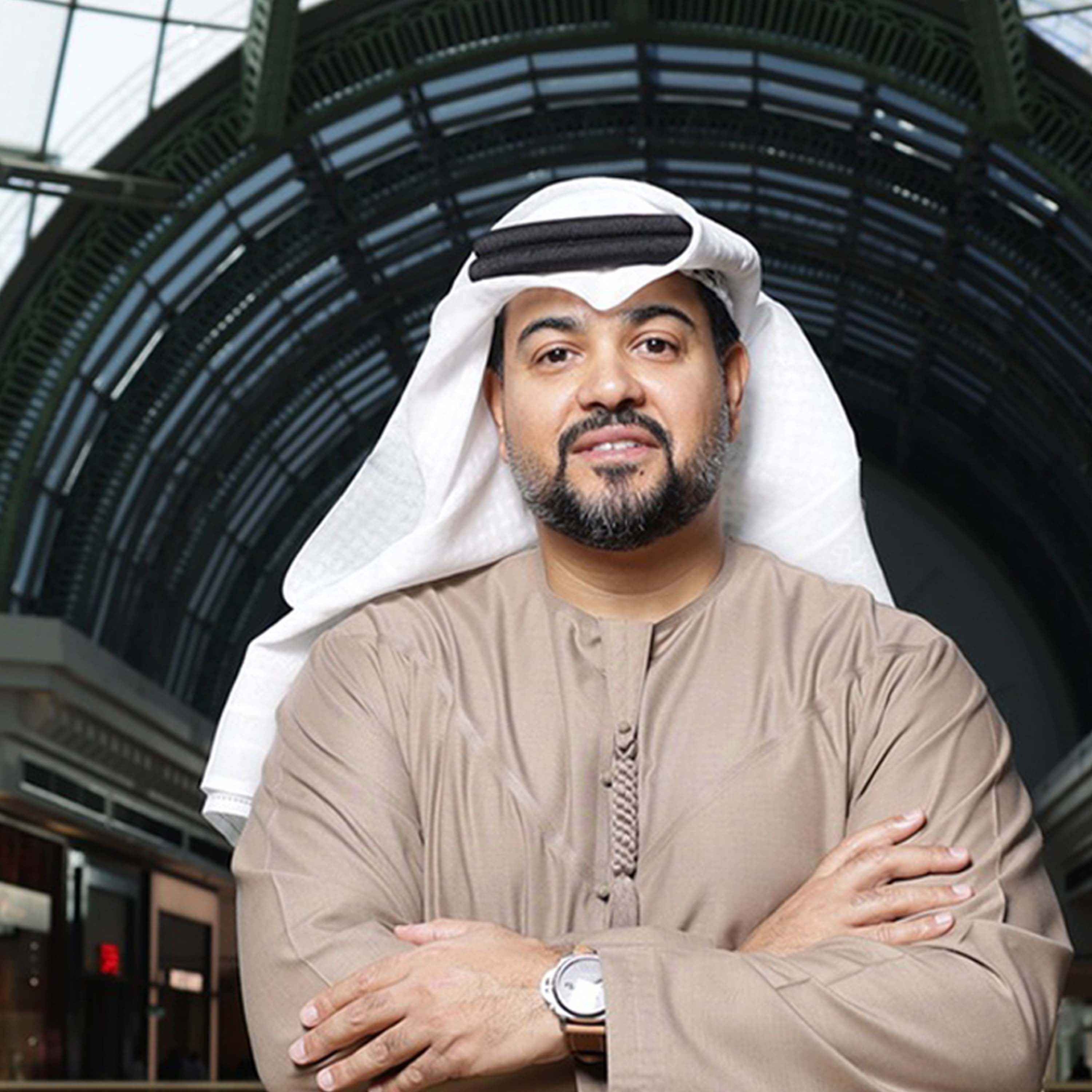
The Business of Fashion Podcast
Khalifa Bin Braik on Dubai’s Transformation and the MENA Retail Playbook
00:30:31
Majid Al Futtaim executive Khalifa Bin Braik joins Imran Amed to unpack Dubai’s transformation into a futuristic global hub, the purpose of physical retail in a post-Covid world and what global brands need to know about expanding into the GCC.
Loading summary
Transcript38 lines
- [00:01]
A
This episode of the BoF podcast is.
- [00:03]
B
Part of a paid partnership with Majid Al Futaim. Hi, this is Imran Ahmed, founder and.
- [00:13]
A
CEO of the Business of Fashion.
- [00:15]
B
Welcome to the BoF podcast. It's Friday, October 31st. Born in Dubai in 1978, when the city was still a modest trading port, Khalifa Bin Break has witnessed the city's rapid transformation into into a 21st century global hub and helped shape its retail landscape. As CEO of Majid Al Futaim Asset.
- [00:37]
C
Management, we only had a handful of paved roads. Shopping was traditionally done in souqs. And in there, however, is a story of Dubai's success. In just over four decades, the economy has grown circa 22 times. But what's even more remarkable is the mindset that has, you know, fueled this, this growth. Dubai, in my humble view, gives you the power to dream, plan and execute flawlessly all in one lifetime. Really. It's a place that teaches you that nothing is too ambitious.
- [01:25]
B
This week on the BoF podcast, Khalifa reflects on the city's post pandemic acceleration and the company's move bricks and mortar stores to immersive third places, detailing the transformation of physical retail and where growth in the MENA region is coming from. Next, here's Khalifa Bin braek on the BoF podcast.
- [01:48]
A
Khalifa Binbrake. Welcome to the BoF podcast, Amran.
- [01:53]
C
Thank you very much for having me. Honored to be here.
- [01:57]
A
I want to start with your reflections on the evolution of of Dubai and the wider UAE over the course of your lifetime, Khalifa. Because there are so many different perceptions of Dubai around the world. But as someone who's been there on the ground and witnessed the transformation of this now metropolis in the desert, how do you describe the changes that have happened in Dubai over the last few decades?
- [02:29]
C
So, Imran, I was born in 1978 at a time when Dubai was still a very modest trading and fishing port. Right. We only had a handful of paved roads. Shopping was traditionally done in souks. And in there, however, is a story of Dubai's success. I have witnessed firsthand the city's transformation into this futuristic global hub, which has been nothing short of extraordinary. In just over four decades, the economy has grown, you know, circa 22 times. But what's even more remarkable is the mindset that has fueled this growth. Dubai, in my humble view, gives you the power to dream, plan and execute flawlessly all in one lifetime. Really. It's a place that teaches you that nothing is too ambitious. You aim at the moon and at times you'll settle on the Stars. We are a true 21st century global city today.
- [04:01]
A
If you think about the last few years now, say in the kind of post Covid setting, there's also been a lot of change, you know, accelerated change. I mean, when I visited Dubai before COVID and when I visited Dubai after Covid, I noticed that the city felt very, very different. Like what was it that happened during this intervening period, you know, between 2019 and say 2022 that just kind of shifted things in Dubai?
- [04:32]
C
You know, Dubai has come a long way since COVID and obviously the last five, six years is a long time. And again, as an organization we evolve year on year. And the shift since then, Imran has definitely been massive. As an organization we have moved from a pure brick and mortar sort of retail to the rise of E commerce to now, I guess, a fully immersive, experiential sort of destination creator.
- [05:05]
A
And when you say we, you're referring to Maajid Al Futaim.
- [05:08]
C
Absolutely. The organization Maajid Al Futaim that's built on the vision of our late founder who passed away back in December 2021. The vision of delivering great moments to everyone, every. And that sort of reminds me of, you know, the Sony turnaround when the newly CEO took over back then. This manifestation of the Kando philosophy, K A N D O. And that is in simple terms the wow factor. Right. And I think delivering the wow factor consistently over the last few years has been something we've in my humble view, done extremely, extremely, very well. Right. Consumers today, you know, demand more experiential, more curated spaces, but most importantly with an intent or a very deep meaning or a purpose. And I think that is something we've been able to sort of double down over the last few years. And the role of a mall has definitely changed, you know, tremendously sort of changed over the last few years.
- [06:13]
A
Well, let's talk about that because I think about the first mall that Majid Al Futaim opened, the City Center, Dera.
- [06:21]
C
That's correct.
- [06:21]
A
And then there was obviously like kind of the world renowned Mall of the Emirates. But now when you think about the role or the concept of like what a mall, a shopping mall has to offer in a city like Dubai where there is no shortage of shopping malls. I mean there is, there's retail everywhere in Dubai. Like what, what's next in the retail evolution for, for in, in the Mena region and in Dubai in particular. What. What is the shopping mall of the future supposed to be in your view?
- [06:53]
C
So again, you know, when I was born, the city had 164000 people. Today, Dubai is home to close to about 4 million and growing. And for us it's this curation of the third place that you've recently sort of introduced in one of your podcasts. Right. I think this is a place where consumers and brand partners can meaningfully sort of connect and, and again, I think there's still tremendous opportunity in Dubai that would allow us to continue delivering on the promise of great moments for all of our consumers every single day and delivering sort of a new generation of shopping malls that have a very clear purpose, very clear intent. We have recently announced as recent as two weeks ago at the Ghaf Woods Mall. That's going to be a super regional mall situated on one of the main highways, Mohammed Bin zayed Road or E3 11. And that's, you know, it's part of our mixed use development that we had launched late last year. But the theming vision of that mixed use development is a mixed use development in a forest, which is a first in Dubai. And what we're trying to do with, you know, the RA Foods Mall is again a new generation of shopping mall that would try and embed this forest theme into the shopping mall. So you bring the outside in with the use of technology and AI and really try and curate and create spaces that would be extremely relevant to the consumers. But most importantly is how do we bring the outside in with technology, the right leisure, entertainment, hopefully first to market brands that would come in the portfolio, the right dining, the right entertainment. So there's still, in my humble view, a lot of demand to ensure that. But most importantly, you need to ensure that whatever you bring into the market is different, it's new, experiential, and again is able to sort of bring the wow factor into what we're planning to do. And we've been in my humble view, consistently delivering that over the last three decades since the opening of Citizenta Data.
- [09:19]
A
Well, when you think about that wow factor, I mean, one of the things that came up in that third place article, and I'm glad you've been keeping up on your BoF reading, is that, you know, there's a risk at times that the kind of elements of third place become a distraction to the core goal of engaging with the consumer. So like, how do you strike the right balance between creating engaging experiences, in this case a forest, I'm assuming it's some kind of digital forest because I don't know of any forest in Dubai. But how do you find the right Balance between creating attractions or experiences that draw people in, but also not losing sight of the main goal, which is to get consumers to engage with the brands that kind of populate your malls.
- [10:06]
C
So for us, Amran, is to stay true to the DNA of curating and creating this immersive lifestyle destination that enables you. And again, focusing on some the right categories that a lot of our consumers have been telling us, you know, blending in retail with dining, wellness, today, that's a new luxury for us and we're doubling down on that specific category, entertainment and most importantly, community. Right. So I think these aspects are extremely important that would enable us to sort of create a new super regional destination. But I guess the bigger question is how can we continuously challenge ourselves in delivering this next exciting project in a place where it does have a lot of shopping malls? Again, it's the reimagination of what a mall of a future would look like. And in that case for us, it's Raf Woods Mall. So there's a lot of work that we need to do on that specific space. But I think if you focus on the DNA of being relevant, future ready and ensure that you are anticipating the trends and anticipating what the consumers of tomorrow would want in an organized shopping mall, I think that in my humble view, is a recipe for a successful shopping mall.
- [11:35]
A
I'm curious to hear your perspectives on the types of customers that engage with you and your various properties across the region. Because I think sometimes when people look at Dubai, they have like a preconceived notion of what the Dubai shopper is like. Right. But actually I think the Dubai shopper is a highly diverse group of people. You know, it's a mixture of locals and expats, of tourists, of young people and older people. Like, so when you're thinking about engaging a diverse customer base like this, how are you shaping your portfolio and the experiences that you offer to kind of meet the needs of such a diverse group of customers?
- [12:24]
C
So the biggest misconception about the GCC and we operate in five countries, the uae, Oman, Bahrain, Lebanon and Egypt. And the biggest misconception is that all of the retail malls today are homogeneous. Right. But each country has unique customer dynamics, demographics and cultural sort of nuances. Even when a new store opens in a specific mall within the portfolio, the approach is different, the strategy is different and the audience is different. Right. Yes, the region shares a lot in common, but there's always going to be a consumer behavior that would differ from country to country. The other misconception is that it's only Luxury that drives a lot of the sales in Dubai, more specifically over the last four or five years. And that is not correct. The mid market and experience driven segments are equally very, very important. I mean a great example of that is we'll be very soon not only would be opening the first primarks in the region, but we'll be housing a few of them in the portfolio. Right. And I suppose the other one is there's this misconception that physical retail is declining. And I think you touched on that in one of your questions at the very beginning. But look in the GCC and more specifically Dubai malls continue to thrive and again strong tourism numbers through national strategies, Dubai, UAE and elsewhere and you know, the evolving sort of customer behavior and the various integrated experiences.
- [14:15]
A
So as you think about this highly diverse customer member base across a variety of different markets across the gcc, what do you see as Masid Al Futem's most important strategic priorities over the next five years? Like where do you see the market going from here now that we're well into the post Covid environment.
- [14:38]
C
So in my humble view for us the strategic priority continues to be on investing in our core portfolio and that is our super regional mall and the, you know, the big assets. Dubai mainly and you know, Egypt as well. But again there's still a lot of growth potential that I see across various categories. Imran. Right, as I was saying, wellness is the new luxury for us. We are doubling down on wellness and perhaps we can talk about that in a bit of detail. But if you look at hard luxury watches and jewelry, the UAE is continuously outperforming the global trend. If you look at Bain and Company recently projected that the growth over the next seven years would be circa 13% CAGR. And that speaks to the region's sort of deep appreciation for craftsmanship, et cetera. And you know, for us as an organization and within Mall of the Emirates specifically as part of our recent announcement of the $1.4 billion, we're actually doubling down on wellness, we're doubling down on luxury and jewelry, you know, allowing you know, specific sort of areas within the Mall of the Emirates destination to ensure that we have a much larger representation of that specific segment, given we're just seeing a huge growth potential within that segment. Another I guess important one for us that we're seeing the beauty category that's also undergoing a renaissance. Right. Growth is also expected, you know, circa 8% over the next seven years, again fueled by emerging local brands, new sort of scientific approaches to skin, hair treatments, et cetera. I mean, the recent announcement is recent as two days ago, L' Oreal acquiring Kering Beauty at circa $4.6 billion. We have doubled our footprint in the portfolio of Sephora. We've launched more recently, a few months ago, the Russian sort of beauty retailer Gold Apple in our second largest asset city center. Meredith. And very soon we will be opening Ulta Beauty, America's beloved sort of beauty brand, first time outside of the U.S. you know, into the region at Mall of the Emirates. And to me, there's still immense opportunity in these three categories I just mentioned.
- [17:33]
A
So, you know, you speak of wellness, you speak of, you know, jewelry and watches, you speak of beauty. What does that mean for fashion, luxury fashion? How is that segment fit into your plans for the future and you know, is the same fatigue that we're seeing in, you know, Western markets in China. Do you still, do you sense that same phenomenon in the MENA region?
- [18:01]
C
On the contrary, we're seeing, I mean, if you look at, for us, you know, the jewelry and watches, very close to those numbers is fashion, right? And we're seeing, you know, again, single digit growth consistently over the last few years when it comes to luxury fashion specifically. And again for us, within the recently announced $1.4 billion investment, you know, to continuously reimagine Mall of the Emirates and ensure it's relevant for the next few years. We've just celebrated Mall of the Emirates 20th anniversary. And within that $1.4 billion investment, we're actually looking at introducing, you know, hundred new stores availing circa 20,000 square meters gross leasable area, you know, adding, you know, fashion brands. We're looking at, you know, dining, casual, dining, premium dining as well. We're looking at adding, you know, more entertainment concepts within the portfolio. And you know, as I was saying, you know, we're continuously sort of introducing new brands into the portfolio. I've mentioned obviously Primark and the list goes on. There still is a big opportunity for a lot of the brands that are still not operating in Dubai, in the region to come and operate. And we're seeing a very strong demand for the region, to be honest. So I'm extremely, extremely hopeful. And I think you know the region today, although 20 years ago, nobody would predict that some of the highest densities would be coming out of Dubai. It's again one of the podcast that you've hosted a few weeks ago on this outsider view, right? Dubai is considered an outsider. You know, 20 years ago, nobody would have been able to predict that you'd be able to get some of the highest densities globally. Coming out of a city that, you know, 47 years ago was this small sort of, you know, trading port into today, you know, a true sort of global city.
- [20:14]
A
It's quite a trajectory. And so as we think to the future and we think beyond Dubai, which has clearly established itself as a really important retail hub, a global hub for many of the brands that you and I've been discussing. What are the other markets where you see growth opportunities? Previously you mentioned Egypt and Bahrain. I know there are plans for Saudi Arabia. How are you thinking of expanding your luxury footprint into other markets within the wider MENA region?
- [20:50]
C
So Egypt is another very interesting market for us. We have a deep understanding of the market. We've been operating in the market for the last 27 years. And the market, you know, is 120 million people, right. We've seen firsthand how resilient and aspirational, you know, Egyptian consumers are and, you know, remain very confident in the country. And as Egypt moves towards greater economic stability, we believe, you know, similar shifts can pave the road for a vibrant sort of luxury proposition within the assets that we currently operate in the market. We see Egypt as part of the next wave of luxury expansion across Middle east and North Africa. But the environment needs to align. We're ready to play a leading role in helping continuously shape the country's next chapter. And again, building on the DNA of Majid Al Fatam, on creating destinations that connect commerce, entertainment, culture and community, right? The country has a sizable base of high net worth individuals. I remember the number circa 40,000 people who spend significantly on luxury, right? And if I remember the stats, it's around 140 to $150,000 a year. Yet nearly half of that spend happens abroad in places like Dubai, Paris and London. The gap between domestic and outbound spending highlights a definite clear opportunity for growth. So look, today Egypt's luxury market is in my humble view, half of its true potential. But of course, right, you do have challenges in the market from, you know, import tariff, foreign exchange, volatility, infrastructure constraints. But again, these are not unique to Egypt. Right. Other markets faced similar issues, but they were able to unlock growth through reforms, investment in infrastructure and modernization. And we're of the view that Egypt would soon move towards greater economic stability. And we believe these shifts will most definitely pave the way for a more vibrant luxury ecosystem. So exciting market for us. And I think very soon we'll start seeing investments into the luxury space within, within the Egyptian market.
- [23:50]
A
And what about Saudi, which is another market that you know, a lot of people have been looking at it's, you know, another country that's going through quite a massive cultural transformation, societal transformation. What are your plans for that market?
- [24:06]
C
Look, Majid Al Futaim as an organization has a significant presence in Saudi Arabia and that is through our entertainment lifestyle brands as well as MAF retail. And MAF Retail primarily for us is the Zikafour brand. And we have a joint venture company between Majid Al Fattaim and Veolia focused on energy and facilities management that's been operating in the market for the last 18 years. So in essence we have close to about 6,000 of our colleagues operating on the ground in Saudi. And yes, undoubtedly Saudi is an exciting growth story in the global luxury space. Through Vision 2030 and some of the mega investments into Al Ula and Dar', Iya, the country is truly transforming itself to a hub for experiential lifestyle destination. We're starting to see investments from fashion houses such as Dolce and Gabbana, Gucci and Prada into the country and that confirms the medium to long term volumes are expected from Saudi. So we're seeing strong momentum. Strong and across, you know, the various business. We have a, you know, cinema company that's been operating over the last six, seven years, Vox Cinemas, which is again one of the most popular with the highest market share as an organization. We have recently partnered with Diriyya to launch, you know, several of our Majid Al Fatim lifestyle brands in Diriyyah Square. And I'm going to be introducing the kingdom's first ever Shiseido boutique which is one of the brands operated by Majid Al Fateh Lifestyle. So again, extremely excited by the transformation of Saudi in line with Vision 2030 and have been in the market for close to about two decades now. And we continuously look for opportunities within the market and when the right time comes will definitely double down on doing even more in Saudi Arabia.
- [26:33]
A
Well, thank you for that. In closing, I just wondered if you had some reflections for kind of non Arab, non Middle Eastern players that want to gain a foothold in the region. I mean the market is so dynamic but as you said, it's not a monolith. It differs from region to region, from customer to customer. What advice do you have for global brands looking to successfully enter and operate in the MENA region?
- [27:03]
C
So the best advice, Amran, I can give global brands wanting to come to the region or the GCC is to strongly lean on, you know, localization and the right partnerships. These two in my humble view are extremely, extremely important. Right. One of, I suppose the most common missteps we see is underestimating the importance of cultural and social nuance. I think that's crucial. Right. Simple examples I can think of the creation of the Ramadan Capsule. Now, it's been embraced by many global brands. So building that genuine cultural connection is key to the success of global brands wanting to come and hopefully flourish in the region. Right. And look, each country in the gcc, as much as there's a lot that unites us, you know, the region has its own distinct identity. Finding the right local partner with similar aspirations is key. But a partner that deeply understands the market and it's part of its cultural sort of heritage. That's another important one. Right. You have consumers today that are evolving. Younger generation want authenticity, this meaning and the sense of pride, individuality. The younger generation, that's very, and it's very clear that I'm not one of them, are extremely selective when it comes to brands that they want to purchase from, but brands that they choose to align with. So that's for me, extremely important. And I think, I suppose the last point, the region has now even more valuing exclusivity and personalization and high spending consumers or customers expect brands to know that, you know, my new details, my sort of preferences, experience alike has to be tailor made. I have to feel that I'm, you know, part of that exclusivity list. Right. So I think the brands that are able to master this loyalty that would last beyond a single transaction are the ones that would be able to sort of really flourish in our markets.
- [29:47]
A
So that's very, very good advice. Khalifa, thank you for your time today. Thank you for sharing your perspectives on this very dynamic, fast growing region, which frankly is a rarity in the current global fashion landscape and so a market that I know everyone wants to understand better. So thank you for your time today and thank you for joining us on the BOF podcast.
- [30:09]
C
Pleasure's all mine, Amran. Thank you for taking the time and again more than happy to have future podcasts if needed. And I appreciate the time again, thank you very much.
- [30:22]
A
The BOF podcast is edited and produced.
- [30:24]
B
By Olivia Davies and Eric Brea.
- [30:34]
D
Jennifer Lawrence and Robert Pattinson star in Die My Love, a ferocious portrait of a woman engulfed by love and madness. Lawrence and Pattinson play a passionate couple who, after moving to an isolated house in the country, find their relationship unraveling following the birth of their first child. Vanity Fair hails Lawrence's performance as astonishing and time calls it the kind of performance you go to the movies for. From director Lynn Ramsey, Die My Love is Only in theaters November 7th.
- [31:00]
E
Rated R. When you're a forward thinker, you don't just bring your A game. You bring your AI game. Workday is the AI platform that transforms the way you manage your people, money and agents so you can transform tomorrow Workday, moving business forever forward.