← The Business of Fashion Podcast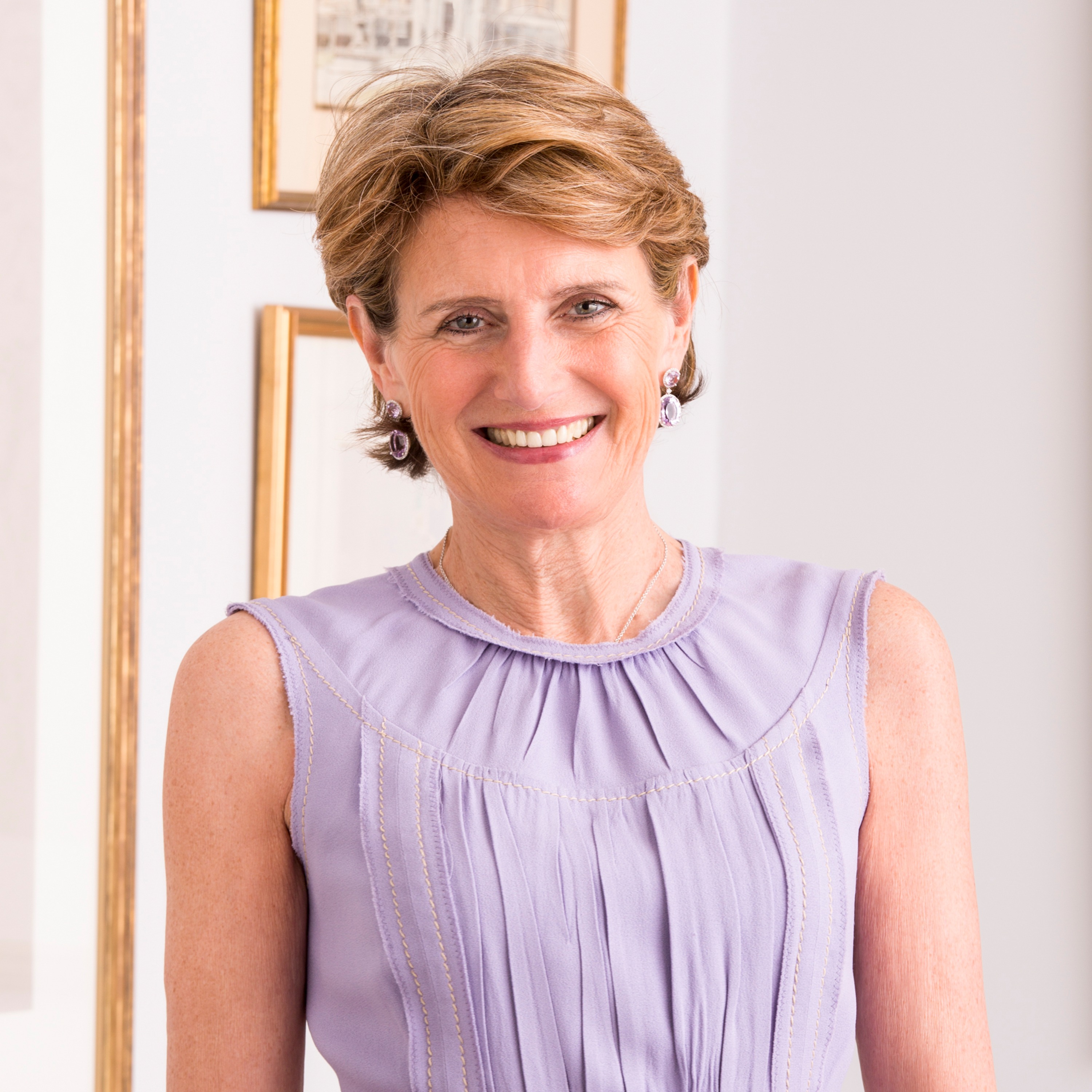
The Business of Fashion Podcast
Kiki McDonough on Changing How Women Buy and Wear Jewellery
00:29:50
Imran Amed sits down with British jeweller Kiki McDonough to reflect on resilience through recessions and a pandemic, the enduring appeal of coloured gemstones, and why jewellery’s longevity and everyday joy set it apart in a challenged luxury sector.
Loading summary
Transcript99 lines
- [00:00]
Ad Voice
Foreign.
- [00:04]
Imran Ahmed
Hi, this is Imran Ahmed, founder and CEO of the Business of Fashion. Welcome to the BoF Podcast. It's Friday, October 3rd. Raised in a family of antique jewelry specialists, Kiki McDonough launched her namesake brand in 1985 with accessible prices and jewelry pieces women could wear anywhere. Her early crystal and bow designs ended up in the vna while her growing client list came to include members of of the royal family. And over time, she helped to normalize women buying jewelry for themselves.
- [00:40]
Kiki McDonough
When I first started the business, a man would come in and buy a piece of jewelry for his wife. Couple of years later, the man and the wife come in together and she says, oh, I really love that. And he goes, okay. And then he rings up and he comes in to get it. And then a woman will come in and say, I love those. I'll ring my husband. Now it's just come in. I need a pair of earrings for my daughter's wedding. Let me have a look.
- [01:01]
Imran Ahmed
This week on the BoF podcast, Kiki joins me to reflect on resilience through recessions and a pandemic, the enduring appeal of colored gemstones, and why jewelry's longevity and everyday joy set it apart in a challenged luxury sector. Here's Kiki McDonough on the BoF podcast. Well, good afternoon, Kiki McDonough. Welcome to the BoF podcast.
- [01:28]
Kiki McDonough
Thank you.
- [01:29]
Imran Ahmed
You're officially the first person to come and join us in the BoF offices to record. So we're. It's a bit of an experiment today. We're testing out our new equipment here so we can do more of these in person. But, you know, you and I have never met before, so this is going to be as informative and educational for me, hopefully, as it is for all of the people listening. I guess I want to start with your family history. You know, everything that I've read about you kind of starts with the fact that you're a fifth generation.
- [02:04]
Kiki McDonough
I am, Yes, I am. My father and grandfather, great grandfather and back we go, dealt in antique jewelry. My father was the world expert in English silver and Georgian jewelry. And in those days, museums used to come over with a piece where they wanted him to talk about it and give a provenance and all the rest. And so I was brought up with, with jewelry. And I think one of the reasons why I, when I started the business, I wasn't fearful of it. I didn't have that thing of a bell on the door and, you know, mahogany cabinets and burgundy carpets and men standing around looking rather stiff because that's where Daddy worked. You know, I didn't have that scary thing, which I think helped me hugely, because when I first started, I hadn't the faint clue what I was doing.
- [02:51]
Imran Ahmed
Right. But when you were young, surrounded by this kind of very rarefied world, did it appeal to you personally or do you feel like this was destiny and you were just meant to do it because you were born into it?
- [03:08]
Kiki McDonough
No, I think really it was part of family life. It wasn't anything special. I mean, my father used to bring the odd piece home and take it out of his jacket pocket and slide it down the dining room table, you know, like a cowboy does with beer on a bar. And he'd say, kiki, what do you think of this? And I'd say, oh, it's really beautiful and everything, and give it back. But then the telephone would ring and say, kiki, it's for you. And, you know, I'd completely forget about it. I think it was so part of family life, jewellery, that maybe somewhere in my bones it is there.
- [03:38]
Imran Ahmed
It was inevitable.
- [03:39]
Kiki McDonough
I'm not sure it was inevitable actually at all, but it was certainly there. And as I will tell you how I started, somebody saw something in me that I didn't.
- [03:50]
Imran Ahmed
So how did you start then? Like, there is a certain stage at which, you know, a young person makes a decision about, like, how they're going to employ their talents and gifts and energy, you know, what was it? At what stage did you decide, okay, this is. This is my.
- [04:06]
Kiki McDonough
Well, I was 30 when I started the business, which is quite late, really, I think, if you're starting a business. And before that I'd been a secretary and a. Well, I didn't call them PAs then. They were always secretary, secretary, secretary, secretary. And my CV was longer than the Bible. I mean, it was just, you know, I used to get very bored after a year. I thought, well, I've mastered this, I've done this, so now let's find something else. I didn't have that feeling that I. I would continue doing something. So it wasn't a very impressive career, I have to say, so far. And then a friend of mine who owned an antique jewelry in Bond street rang me up one day and said, you know, I've got a proposal to put to you. Do you want to come talk to me about it? And I thought, well, he probably wanted a secretary as well. So off I went. And he said, oh, you know, I want to start selling modern jewelry. And I said, well, it's a really good idea, actually, because you women were Beginning to earn a little bit more. And you know, they were beginning to look around, they had fake jewelry, beginning to look around, but they couldn't afford the high end stuff, which was really all there was then. And I said, it's a really good idea. And I literally got. Got picked up my bag to go, you know. And he said, no, no, I want you to do it. And I honestly, I fell through the floor. I said, what are you talking about? You must be mad. And he said, no, no, I think, I think you can do it. And I mean, I had to go home and recover, I really did. And I thought about it for a couple of days and David McDonagh, who I was married to at the time, said to me, you can do it, you definitely can do it. And I was thinking, what is wrong with everyone? You know, so what was it like?
- [05:37]
Imran Ahmed
Why, how did you not. You're born into this industry, you know, you were surrounded by jewelry. But the idea, like, maybe you can tell us what year it was and helps us to understand kind of.
- [05:49]
Kiki McDonough
Yeah. So it was 1985.
- [05:51]
Imran Ahmed
Okay. And the idea of a woman being at the helm of a modern jewelry business was just completely unthinkable.
- [06:00]
Kiki McDonough
Well, pretty unthinkable. I think. I. Mostly it was Bond Street. The whole of Bond street was men. I mean, there weren't any. Which was always thing that slightly puzzled me because they're choosing jewelry for women to wear, and surely women should be choosing jewelry for women to wear, because they'd have. But, you know, it was literally on the periphery. I just thought, oh, well, whatever. And I thought, well, I'd like to give this a try. And it was quite a strange time because we were on the cusp of things changing. It was 1985, the year after Margaret Thatcher. Exactly. And there was an atmosphere in the country which is quite difficult to describe unless you were there, but it was full of can do. I don't know if she was on our side or not, but it came across that there was an atmosphere in the 80s that just give it a go, you know, just fly by the seat of your pan, see what happens. You can do it, we're behind you. I don't know whether they were or not, but you know, you can do it. And I think that was what was happening really. And things were changing quite fast in the 80s, and I think probably if it hadn't been for that, I might have actually said, no, I can't do this and good luck and find somebody else. So it all sort of fell into place. Really?
- [07:14]
Imran Ahmed
So you decide, maybe somewhat grudgingly, a bit hesitant about diving in, like, where did you go from there? I mean, what were your first pieces? And like, how did you start thinking about what you wanted to offer into the market as women were starting to take more of a decision making role?
- [07:32]
Kiki McDonough
Certainly I thought the prices should be under £1,000, it should be sort of £95 to 950. And that's where I started. But I started with a blank piece of paper and a pencil. And actually I felt incredibly foolish, you know, sitting there thinking, my goodness, what have I done? And, you know, this is just. Anyway, Nigel Milne, who's this friend of mine who asked me to do it, had a brooch in his cabinet which was round crystal, a diamond set bow in the middle and pearls around the outside. And it had always caught my eye for some reason. And I thought, well, what I could do is cut the crystal into a heart, put a bow on top, make them in different sizes, the bows, some with diamond, some without. Anyway, I got this manufacturer from Birmingham to come up and have a look and he looked at the piece of paper and he said, well, I'm not sure these are going to sell. And I said, well. And I burst out laughing. I don't know, I think I was just, you know, slightly crazy. Then I burst out laughing, I said, no, I don't think they will either. And anyway, he started laughing and he said, go on, I'll take a punt.
- [08:37]
Imran Ahmed
And they're now in the va. Wow.
- [08:39]
Kiki McDonough
And extraordinary, really. I mean, no one's more surprised than.
- [08:41]
Imran Ahmed
Me, I can tell you, with hindsight. Why do you think that became something that people wanted?
- [08:49]
Kiki McDonough
Well, I think at the time, I think they sold for, if my memory serves Incorrectly, something like £450, I think, because I think there was a market. There was a market, you know, people had done the sort of, you know, I mean, I used to wear Butler and Wilson all the time in my, you know, in my early 20s, but I think women were looking for something else or they were open to wearing something else. So there was Spartan Wilson and there was Cartier and others, but there wasn't really anything in between. And I think women had suddenly started to think about that. I mean, it was all a little bit sort of vague at the time, you know, but it was there. I think it was there and it was waiting to happen. And I think I was probably right place at the right time.
- [09:35]
Imran Ahmed
So one of the things you became known for was serving the Royal Family. So how do you go from doing like a 450 pound, you know, does.
- [09:47]
Kiki McDonough
Seem a strange journey.
- [09:48]
Imran Ahmed
Yeah, like a little bow with, you know, the crystal and whatnot. To kind of designing for like multiple generations of the Royal family and most especially Princess Diana.
- [10:00]
Kiki McDonough
Yes. I wanted to design jewelry for women to buy and wear for themselves. To take that decision themselves that that's what they, they wanted those earrings they were going to we and they could wear them sort of anywhere really. I wasn't into too heavy stuff for the evening and too. So I think my jewellery is not cutting edge edgy and it's not bling, but it's very easy, pretty jewellery to wear and you can wear it, you know, during the day, in the evening. And bearing in mind the Royal family have a huge amount of royal jewels, which are beautiful, but you can't walk around them anymore wearing them anymore. You know, I mean, if you see how they dress, you know, sometimes they're in jeans or sometimes in there in a dress or whatever. And I think it's just very easy jewelry to wear, which was always the decision I made when I started.
- [10:52]
Imran Ahmed
And in a way the ease of wearing that jewelry, whether you're an HRH or you're, you know, a successful career woman, there's a consistency there about the kinds of things that women in particular might want to wear in everyday life.
- [11:07]
Kiki McDonough
Yes, I think so. I think. And also times were changing in there was. People were getting a little bit more casual. Certainly a lot of the jewelry I designed was for my lifestyle. You know, I was obviously I went to parties like lots of other people. I went to dinner, I went to cotton parties, I went to watch my children play football, you know, so I think times were gradually changing out of that. That's for evening and that's for day and nothing, you know, you can't veer away from that. And it's became. Yeah, it's just. Yeah, it was changed, changing. So. And I. It was really nice to see actually, because jewellery should be loved and worn and appreciated. It should put a spring in your step, make life more joyful. And if you've just got a set thing where you wear that for lunch and you're going to wear that for dinner, it sort of rather takes the shine off it really.
- [12:03]
Imran Ahmed
We'll be right back with more on the BoF podcast.
- [12:06]
Ad Voice
Foreign.
- [12:11]
Kiki McDonough
And now a next level moment from AT&T business. Say you've sent out a gigantic shipment of pillows and they need to be there in time for International Sleep day. You've got AT and T5G so you're fully confident, but the vendor isn't responding and International Sleep Day is tomorrow. Luckily, AT&T 5G lets you deal with any issues with ease, so the pillows will get delivered and everyone can sleep soundly, especially you. AT&T 5G requires a compatible plan and device coverage not available everywhere. Learn more@att.com 5G Network.
- [12:41]
Ad Voice
Meet Christine she loves shopping and this is the sound of fashion overload. Too many fabulous things, not enough space. So Christine started selling with the RealReal.
- [12:52]
Kiki McDonough
I've always loved collecting designer pieces, Gucci bags, Prada heels. But my style keeps evolving. Selling with the RealReal game changer. I earn more and they do everything.
- [13:04]
Ad Voice
Seriously. Just drop off your items or schedule a pickup. We handle the photos, descriptions, pricing, even shipping. You just sit back and watch your items sell fast to our 38 million members and I get peace of mind.
- [13:16]
Kiki McDonough
Knowing I earn more selling with the RealReal than anywhere else.
- [13:19]
Ad Voice
Exactly this. That's the sound of your closet working for you. The RealReal earn more, save time, sell fast. And right now you can get an extra $100 site credit when you sell for the first time. Go to therealreal.com to get your extra hundred dollars. Therealreal.com that's therealreal.com we used to dream of being anything. An astronaut, the president, a prince or princess. But as you get older, your dreams change, focusing less on running the world and more on how you can turn your ideas into something real. Maybe that dream is owning your own business. You'll need a website, a payment system, a logo, and a way to reach new customers. It can feel a bit overwhelming, but that's where today's sponsor Shopify comes in. Shopify powers millions of businesses worldwide and 10% of all E commerce is from the US from household names like Mattel and Gymshark to brands just starting out. Worried you can't design a website? Shopify offers beautiful ready to go templates. Need a hand? Shopify's AI tools can enhance product images, write descriptions, and even generate discount codes. Not sure of where to find customers? Shopify makes it easy with email and social media campaigns and if you ever get started, their award winning support is available 24, 7. To find out more, go to shopify.com BOF.
- [14:55]
Imran Ahmed
The other thing that I think is quite interesting because you know, I've grown up in an era when the idea of a woman buying her own jewelry was totally normal. But like in the time that you're talking about, this was considered novel or maybe even radical in some Respects. Because, you know, in the past, you know, jewelry was always purchased by a man for a woman. You know, how did you convince both women and men that, you know, a woman buying her own jewelry is modern?
- [15:26]
Kiki McDonough
Yeah, well, I think clothes had got more expensive so, you know, people were spending a little bit more on their clothes and their handbags and their shoes. So jewelry in that sort of middle of the market, the perception of that jewelry changed. I mean, in the beginning, certainly a man would come in. When I first started the business, a man would come in and buy a piece of jewellery for his wife. Couple of years later, the man, the wife come in together and she says, oh, I really love that. And he goes, okay. And then he rings up and he comes in to get it. And then a woman will come in and say, I love those, I'll ring my husband. Then after Big Bang, when the husbands never came home because we're just so busy.
- [16:05]
Imran Ahmed
Big bang for those listening who don't know what it is. What's Big Bang?
- [16:08]
Kiki McDonough
Well, Big Bang was when the city changed hugely and it became much, much more competitive and men had to work, men and women. Very few women then, I think in the city, but they had to stay until 10:00 clock at night. And the women would say, well, there's no point in telling my husband, he'll never make it before you close, so I'll buy them myself. And that then started the trend. And I think men, I did get a few men saying to me, oh, I can't buy my wife jewelry anymore. And I said, listen, it makes her happy. You know, it's better to have a happy wife buying her own jewelry.
- [16:43]
Imran Ahmed
And so how do you that idea of like self purchase, how do you think that's evolved today?
- [16:49]
Kiki McDonough
Now it's just coming. I need a pair of earrings for my daughter's wedding. Let me have a look. Oh, I think those would be lovely. Those are perfect. And that's the end of the conversation.
- [16:58]
Imran Ahmed
There's no idea of a man being involved at all.
- [17:00]
Kiki McDonough
None too. No. I mean, I think maybe when you're spending huge sums of money, then that's maybe different. But then I've got women who are earning quite. Look at clients who are earning a lot of money and you know, if they wanted a pair of diamond earrings, they buy themselves a pair of diamond earrings. So yeah, I think it's all changed. And as far as I'm concerned, I'm just happy that people are wearing jewelry and not dictated by that for lunch and that for dinner, you know, just Getting on and wearing it and enjoying it. So that's what it's there for.
- [17:31]
Imran Ahmed
In fact, jewelry has been probably the highest performing category in the luxury sector over the last few years.
- [17:42]
Kiki McDonough
It's exploded.
- [17:43]
Imran Ahmed
Yeah. Which is something that I wanted to talk to you about because for those of us who maybe follow the fashion industry more closely, there's a lot of talk about market contraction and inflated prices and declining quality. I mean, what do you think it is about fine jewelry that has made this category more resilient at a time? Now, in a post Covid environment where people are being a bit more discriminating about where they spend? Why does jewelry, fine jewelry in particular, stand out?
- [18:15]
Kiki McDonough
Well, first of all, I think it has longevity and you can buy yourself a very expensive dress, which is lovely, you know, nothing better than lovely, expensive dress. But it probably doesn't have the longevity that jewellery does. That's the first thing. Secondly, I think it's. It does put a spring in your step and you can wear a pretty dress you wear a couple of times and it's fine and that's lovely and people say, you know, what a pretty dress. But then you put on a pair of earrings that are really special and brilliant. You go places and people go, I love your earrings. And by that stage they're ignoring the dress where they will always say they love your earrings. And I think that's because of the longevity. And I've got lots of women now whose children are wearing the jewelry they bought from me, you know, 15 years ago, whereas I don't think they'd be wearing their mother's dresses.
- [19:05]
Imran Ahmed
Yeah, There is something timeless and intergenerational about a jewelry purchase, which isn't always true with fashion.
- [19:15]
Kiki McDonough
Yeah, I think so. I think a lot. I mean, I know I've got friends who've got daughters, you know, borrow a cardigan. Well, they borrowed, you know, I don't know, borrow cardigan or borrow a skirt or something, but it's not. They love borrowing the jewelry. I mean, I remember my mother, I mean, I was quite young, but I remember my mother's jewelry almost more than I remember her clothes. I mean, she was incredibly chic. She was French and she's incredibly chic, but I remember her jewelry and I mean, I can describe a couple of her dresses probably if pushed, but it's her jewelry I remember. And that's nothing to do with my father or his business or anything. It's just. I don't know, it's just. Yeah, I think you, you remember it.
- [19:59]
Imran Ahmed
So as someone who's kind of operating in a market now which is much more competitive. There's like big global brands like Cartier and Tiffany and others. What do you think is the way a client typically comes into contact with a piece of jewelry that they decide they'd like to purchase? Like what's that discovery process or journey that the customer goes on before they show up in your shop and say, you know, I want that.
- [20:30]
Kiki McDonough
Well, I think certainly now the brand is very well known and it's sort of worldwide. We, you know, we export jewelry all over the world, so it has a provenance if you like. So people might easily go to Cartier and go to. But what they won't find there is my stamp and that personality, I think, which my jewellery has. You know, people are beginning to recognize that that's, that's a kiki piece.
- [20:57]
Imran Ahmed
So what is it? What makes a kiki piece? How do I, how do I recognize.
- [21:01]
Kiki McDonough
My, my great love? This are the gemstones.
- [21:05]
Imran Ahmed
Color gemstones.
- [21:05]
Kiki McDonough
Color gemstones. So not ruby sapphires and emeralds. And I love, absolutely love all the peridots and citrines and fire opals and all those tanzanites. Tanzanites and all those gemstones. And I started selling them, I mean, 35 years ago I was selling them and, you know, it was a really hard slog. You had to make people understand that, you know, having those gorgeous colors next to your face is something special. Yeah. So that's really why I think you might recognize peace of mind if it's got a, you know, one of those coloured gemstones.
- [21:43]
Imran Ahmed
I'm curious to talk to you about the current policy tax kind of government landscape in the UK and how that's.
- [21:51]
Kiki McDonough
Impacted which tax you talking about multiple taxes.
- [21:54]
Imran Ahmed
So like on the one hand you have, you know, the VAT refund which has been removed and on the other hand you have additional taxes that have been placed on non doms, many of whom are leaving the uk. I mean, how, how is this all kind of impacting the luxury market here in the uk?
- [22:13]
Kiki McDonough
Well, I think it's impacting everything. I don't think it's just the luxury market. I mean, if you think the vat, for example, I mean, I think it was Rishi Sunak when he was Chancellor who did that. And to me that was the most extraordinary thing ever.
- [22:28]
Imran Ahmed
Extraordinarily bad, bad thing ever.
- [22:30]
Kiki McDonough
It was like signs saying if you want 20% off anything, then I would go to Paris and Milan because that's where you're going to get it. And so they went to Paris and Milan. It was absolutely the most extraordinary thing I've ever seen. So that's been damaging. I think the National Insurance has been immensely damaging and that has a knock on effect. You may think that, for example, the VAT is a luxury thing only, but, you know, those people who come and maybe buy a pair of my earrings, they then stay in a hotel, they then go to another shop and buy themselves some, I don't know, some boots or something, I don't know, and then they'll go and stay. Then they'll go to Edinburgh and then they'll stay up there and they'll have a sightseeing around there. You know, everybody loses out.
- [23:15]
Imran Ahmed
So when you said National Insurance.
- [23:17]
Kiki McDonough
Yes.
- [23:17]
Imran Ahmed
What did you mean? National Insurance.
- [23:19]
Kiki McDonough
So the National Insurance is the tax that you have the employers to pay extra tax.
- [23:24]
Imran Ahmed
They've had to pay extra tax.
- [23:25]
Kiki McDonough
Exactly. And I mean, that was a recipe for disaster because people have lost their jobs all over the place. And, and I think that's terribly sad. I think it's, it's not a good look.
- [23:36]
Imran Ahmed
And on top of that, now there's, you know, additional issue for kind of wealthy customers that actually live in the uk, which is a lot of people are fleeing to Milan or Dubai or other more tax friendly jurisdictions because, you know, have you noticed an impact of all of these?
- [23:54]
Kiki McDonough
I think London has noticed that impact. You know, they, they're probably not investing here, they're not using our goods and services, they're not shopping in our shops, they're not buying a car. Then, I mean, I think it's. Yeah, I think it's huge, but obviously the government thought that was a good idea, so what can you do?
- [24:11]
Imran Ahmed
So if you were whispering into the ear of the current Chancellor, Rachel Reeves, and advising her on what you think is the right tax policy when it comes to some of these decisions they're making. Keeping in mind also there's very complicated fiscal situation here. I mean, what would you tell her?
- [24:27]
Kiki McDonough
Go and work in a business for six months and learn your trade there and then go and be Chancellor. Because business is what grows the economy. It isn't government. Governments have to lay the foundations for businesses to grow the economy and they're not. So I'd go and work in a business for six months and have a good lesson on how to do it.
- [24:47]
Imran Ahmed
So this year marks 40 years.
- [24:50]
Kiki McDonough
Yeah, 40 years, yes.
- [24:52]
Imran Ahmed
That's pretty amazing. Congratulations.
- [24:54]
Kiki McDonough
Thank you.
- [24:55]
Imran Ahmed
I'm curious, you know, if you launched in 1985 when very few women were launching their own businesses. What have you learned as a entrepreneur and specifically as a female entrepreneur along these 40 years? What barriers did you face? What, you know, maybe superpowers did you have as a woman that enabled you to navigate this journey?
- [25:21]
Kiki McDonough
Well, I think, I mean, looking back, it's interesting because there's a book been written about Kiki McDonagh. Are you writing the book or someone else? Yeah, they've done it and it's out and, you know, it's on Amazon actually. But I think that's been a very interesting journey for me. But the book, because I always look forward, I very rarely look back. But for the book, I had to look back. I had to look back at the last 40 years and see, you know, what it took and how and when and why. And I think resilience is from. And I've done two recessions, a pandemic and 10 prime ministers. And I think resilience, a sense of humor and a determination not to let them get you down.
- [26:03]
Imran Ahmed
And where do you find, like, it's, it's, it's one thing to say resilience, it's another thing to be resilient.
- [26:12]
Kiki McDonough
I think you have it in your DNA, you must have it in your DNA. And I think I get it from my mother, my French mother. I think I, I don't think you can teach someone resilience, but resilience coupled with a sense of humor, which I'd like to think I have, is a great combination, I think, because, you know, when something bad happens, you go, oh my God, you know, and then you just think, well, what can we do? And we, you know, you just have a laugh and say, right, let's see if we can put it right. There's no point in going into a spiral of decline because that'll be the end, you know, so you have to sort of balance resilience, sense of humor and common sense. Really. I think common sense is also very, very important.
- [26:57]
Imran Ahmed
So as you look back for a very short period of time. Because you don't like to look back.
- [27:01]
Kiki McDonough
Yeah, well, I don't like to look back.
- [27:02]
Imran Ahmed
And as you look ahead, how do you think about securing the future of the company? I mean, you won't be able to run it forever. How are you thinking about succession and, and think, if this is a brand that you established 40 years ago, what do you do to keep it alive 40 years from now?
- [27:19]
Kiki McDonough
Well, I think 40 years from now, me being in charge is optimistic, I have to say. I think it's a very well known brand now. And there was originally a Mr. Cartier and a Mr. Van Cleef and a Mr. Somebody Else and a Mr. Somebody Else. So, you know, it has got longevity, it has got a fantastic reputation and I. I actually don't believe that anyone is indispensable. I think, you know, there are plenty of incredibly talented people out there and coming up obviously in their 30s and 40s and 50s as well. I think 50s is a really good age. So I think it has longevity and as I say, I'm certain I'm not indispensable.
- [28:03]
Imran Ahmed
Do you have any advice for a new young entrepreneurial fine jewelry aficionado who's looking to start their own company today? Like, how would you advise them so.
- [28:18]
Kiki McDonough
Well, I'm a business mentor for the King's Trust, which was the Prince's Trust or the King's Trust, And I am mentoring a girl now who has just started her business.
- [28:25]
Imran Ahmed
So what do you say to her?
- [28:26]
Kiki McDonough
Well, she's incredibly enthusiastic, which is terribly important in the beginning because, you know, a lot of things are thrown at you when you start a business and you have to have that enthusiasm and that energy to combat those hurdles. So I tell her to pace herself. It's so easy when you've got some money and you've maybe borrowed it from the bank or you, you know, somebody's giving you a bit of investment, right, let's do this, let's do that, and then calm down, calm down and think carefully about what you're going to do with the money and how you're going to preserve it. And my father said to me, when I, when I said I was setting up the business, he. He didn't say anything actually. The only thing he said was, look after the pennies because the pounds look after themselves. And it's more of a, you know, look after those things, the smaller things, because that means the bigger things will be fine. So I think it's terribly important not to spend the money immediately, to think about what you're going to do. And if you've got a product that you want to, I mean, even if it's jewelry, test it on a few people. Build a website after you've tested it on a few people, because if no one likes it, you spend all the money on the we and no one's going to buy it. And yeah, I mean, it is very different because of course, I never had the Internet or social media, Instagram, Facebook or any of those things. When I started, there was only word of mouth and the press, and that was it. There was no other way of getting your name out there. And I don't know whether that was easier and more relaxing than now when you've got everything coming at you from all sides. So I think maybe. I think maybe I was lucky, actually. It's better to have that. And then, of course, the Internet started and so it changed the face of everything, you know, online shopping and. Yeah, really changed everything.
- [30:13]
Imran Ahmed
And what do you advise this young mentee of yours to do when everything starts to go wrong? Like when?
- [30:20]
Kiki McDonough
Well, if you're careful. This is why I always say start slowly. If you're careful, less things will go wrong because you've thought about things and you're, you're pacing yourself and you're doing it gradually. I mean, you know, I've actually probably done it very gradually because I had children in the 90s, so, and I wanted to be with them and people used to say to me, how many shops have you got? And I say, I've got one shop and two children, so that I had able to spend some time with them when they were younger. For me, it was important to do it, build it slowly and surely because I have had the best of time and I think it's because I haven't put so much pressure on myself. You know, people say, you know, how many shots you're going to get, Kiki? How many? And I go, no, I'm fine. I'm really enjoying it. I really love the last 40 years and feel extremely privileged to have had that start.
- [31:10]
Imran Ahmed
So a small, sustainable, profitable business is just fine.
- [31:15]
Kiki McDonough
It's just.
- [31:15]
Imran Ahmed
It doesn't have to be. It grow into a mega brand.
- [31:19]
Kiki McDonough
You don't have to have 50 shops and, you know, I. I mean, obviously you might end up having 50 shops, although with online you probably don't need 50 jobs. But I think it's. Yeah, it's been a. It has been a slow process, but I've learned a lot on the way and I've never, I don't think I ever in 40 years have thought, oh, what am I doing? You know, this is too much for me. I've just so loved it and I would much prefer to, you know, when I'm no longer in this earth, to think to myself, gosh, you're lucky, Kiki. It's been really special, rather than, you know, it's so great Now I've got 40 shops and, you know, it's this and that and I'm knackered and, you know, I've had enough and all that. And why did I do that I shouldn't do that I didn't see my children once, you know, and I. So I think it's good to pace yourself firstly in the first five years.
- [32:09]
Imran Ahmed
Well, Kiki McDonough, many congratulations to you on this milestone and thank you for sharing your market insight, your business journey and your advice with our listeners.
- [32:21]
Kiki McDonough
Thank you too. Thank you for having me here.
- [32:23]
Imran Ahmed
Pleasure. The BoF podcast is edited and produced by Olivia Davies and Eric Brea.
- [32:37]
Kiki McDonough
With cold weather around the corner, go for a jacket that feels like you're wearing a hug. Columbia Sportswear's new Amaze Puff protects you from the elements and feels, well, amazingly warm, cozy and comfortable. You know, Columbia makes tough winter layers, but the Amazepuff jacket is definitely for the girls, built to be soft and warm while also looking great, with tons of colors and lengths to match any mood or look. Visit Columbia.com to get your hands on an Amazepuff jacket. It's tough on cold, soft on you.