← The Business of Fashion Podcast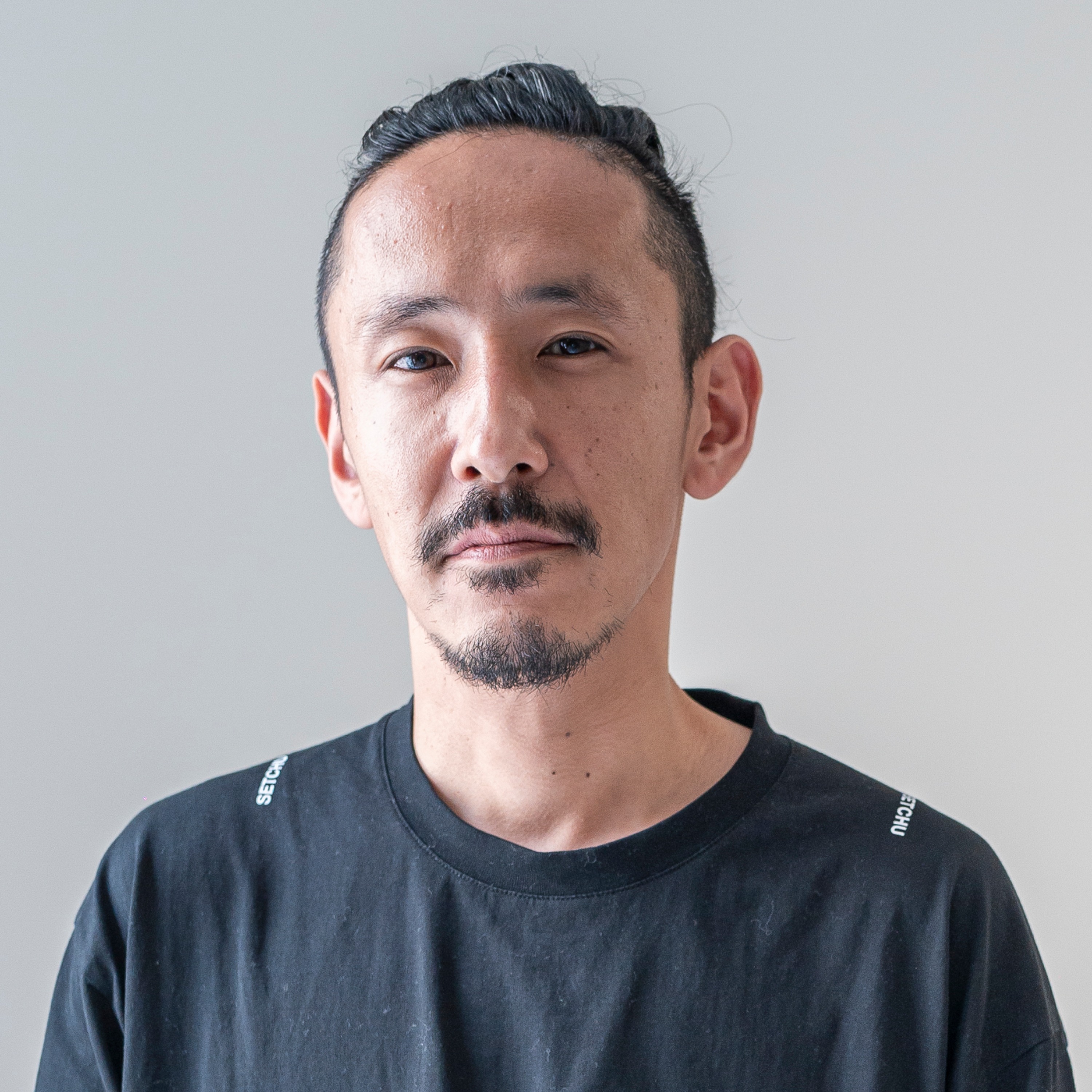
The Business of Fashion Podcast
Satoshi Kuwata Is on a Lifelong Search for Balance
01:00:04
Satoshi Kuwata, founder of Setchu and winner of the 2023 LVMH Prize, joins BoF founder and CEO Imran Amed to discuss the roots of his design philosophy and why finding balance between East and West will be a lifelong pursuit.
Loading summary
Transcript80 lines
- [00:00]
Satoshi Kuwata
Foreign.
- [00:04]
Imran Ahmed
Hi, this is Imran Ahmed, founder and CEO of the Business of Fashion. Welcome to the BoF Podcast. It's Friday, April 4th. After years honing his skills on Savile Row, studying at Central St. Martin's and working for Givenchy, Eden and Golden Goose, Japanese designer Satoshi Kuwata created the brand Setu, a deeply personal response to his passion for blending Japanese and Western ideas. Grounded in precision tailoring and shaped by the poetic restraint of the kimono, Satoshi's work reflects a lifelong pursuit of balance between cultures, between past and future, and between creativity and business.
- [00:48]
Satoshi Kuwata
My aunt was a fashion designer. She used to work for this big department store called Takashimaya, and she used to do license for Pierre Cardin. She was explaining me quite deep things in fashion, how you can make money. You have to understand there is a business behind my uncle, the other side was wearing kimono all the time. And that's how I start being interested in observing people and what they wear. My uncle was like a dreamer. Satoshi, you see the guy wearing the suit, you see she's wearing kimono. The shape, the way they walk, it's beautiful. So I have this kind of balance.
- [01:32]
Imran Ahmed
This week on the BoF podcast, I sit down with Satoshi to explore how his Japanese upbringing shaped his creative vision, how Savile Row and St. Martin's gave him the tools to execute on it, and why he's just as focused on designing a company as he is on designing clothes. Here's Satoshi kuwata on the BoF podcast.
- [01:56]
Good morning, Satoshi Kuwata. How are you today?
- [02:00]
Satoshi Kuwata
I'm very good. Thank you very much, Imran, for this amazing opportunity. The weather is great in Milan. I'm super happy to talk to you.
- [02:08]
Imran Ahmed
Likewise. Well, there's a lot to discuss. The last time you and I sat down, we exchanged so many interesting stories and experiences about our respective journeys into the fashion industry. But this conversation is going to be focused on you and your experience. And I want to start, of course, with Japan. Japan in our industry is revered as one of the most important places for creativity and design, but also for very sophisticated, discerning customers. Can you just tell us a little bit about what it was like growing up in Japan, where you grew up, and how you'd first developed your interest in fashion and clothing and garments and where all of that comes from?
- [03:07]
Satoshi Kuwata
Yes, I think the power of Japan or the importantness of Japan. I figured when I came to London first time, to be honest, it was normal to be a Japanese, and I was born In a village, when you wake up early, you could see monkeys and deer, sometimes bears, you know, surrounded by n. It just happened to be. My aunt was a fashion designer.
- [03:37]
Imran Ahmed
Okay.
- [03:38]
Satoshi Kuwata
She used to work for this big department store called Takashimaya. And she used to do license for Pierre Cardin. So it was like really lucky, I would say instead of toy, I was surrounded by a lot of Pierre Cardan, you know, licensed products. My grandpa, my dad had so many those garments. So those are my toys. And that's my, you know, fast approach to fashion. And when I look at it more, I think it was interesting thing is that my uncle, the other side, was wearing kimono all the time. And he was taking photo. And he was taking me to take a photo together and seeing Japanese as an object. And that's how I start sort of being interested in observing people and what they wear, you know, the shape difference. So I was really lucky to have these, like two people inspired me. One really told me what is the garments, how the fashion works. You need to think about price of fabrics, you know. My aunt was really mature. She was explaining me quite deep things in fashion, how you can make money. You know, in the other hand, you say like, satoshi, don't use too expensive fabric. You're not going to make money. You have to understand there is a business behind and the other side. My uncle was like a dreamer. Satoshi, you see the guy wearing the suits, you see she's wearing kimono. The shape, the way they walk, it's beautiful. So I had this kind of balance.
- [05:18]
Imran Ahmed
I want to talk a little bit more about your uncle and the kimonos, because people who live outside Japan, we. We know what a kimono looks like. And my understanding is that it's not that common for people to wear kimonos every day in Japan. It's quite unusual for your uncle to be wearing a kimono. But can you tell us a little bit about the history of the kimono and how it is incorporated into daily life in Japan now?
- [05:51]
Satoshi Kuwata
Yes, I think you're totally right. It's not common. Even I was born in the 80s. Less people wearing kimono, I would say until 60s I heard that a lot of people were in kimono. It doesn't matter if you're rich or poor, obviously richer that you have more kimonos in a traditional Japanese culture, but almost more like what kind of style you are into. Both dad's side and my mom's side, they're coming from really traditional families and they are not. I wouldn't Say the richest people, but they had a lot of kimonos in the house. So if I go to see my dad's house, they're wearing kimono. My grandma was always wearing kimono. And it was just normal for them. It's almost like we brush the teeth. If you don't wear kimono, I don't think they feel like they spending a day. When you wake up, you need to put the layout of kimono. And as you know, it takes quite a long time. My uncle, he was running small business and more, I think he was wearing kimono on the weekends. And it's all about appreciation too. The history of Japan. As everyone knows that after the second war, lots of Western culture came in, but some side. I think they wanted to protect their culture as well. And kimono was kind of the clothes way to feel, to fit to see the culture of Japan. And it's not the most comfortable clothes, but it's similar to how people react to the clothes you buy. Sometimes you spend a lot of money to buy expensive clothes, and then the feeling is something wow, you know, it makes your day. I still remember when I bought fast suits, it was like, wow. And I think kimono has this power. And my boss, uncle and aunt, they like to wear those too sometimes. And this is why they're wearing it. I never asked them why they are wearing, but they are always wearing. And it's not the same one. They're wearing different things all the time. I think it's really to show the richness of culture.
- [08:22]
Imran Ahmed
The kimono is also such a foundational garment when it comes to the shape, the pattern. Can you talk a little bit about the kimono? And then obviously those of us who are fashion nerds, we also think about the importance of patterns and shapes in Japanese fashion. If you think about designers like Yohji Yamamoto and Issey Miyake and the Japanese have contributed so much to our industry when it comes to introducing these kinds of shapes into the western part of the industry. You know, I'm just curious that when, you know, when you were younger, were you observing all of this and did you know about some of these designers that were, you know, the 80s, the early 80s is when the Japanese first arrived in Paris. Like, how do you see it all fitting together, the tradition of the kimono and Japan's rise in the global fashion scene?
- [09:19]
Satoshi Kuwata
Yeah, my neighbor, you know, like my environment where I grew up, obviously Rei Kakubo, Comme de Gaelson, Yoji Mamoto, Issey Miyake were there. They're Big. If you see fashion magazine, you see. And are you proud of being Japanese? Because those are the ones in a way. You know, the fashion is really competitive industry, but they are always on the top of the game. And I think we are proud of it. But like going back to the story of kimono, kimono is so different. And really that's what we are. The biggest difference is 2D. It's really two dimensional. It's a flat. Western clothing has a really structured, like, you know, it's sculpture, it's a 3D. And that's a big difference. So I think the one way, like Issey Miyake approach to the fabrication and make it like 3D. But when you look at his collection, actually patterns are quite 2D.
- [10:24]
Imran Ahmed
Yeah. You can lay all of those garments out on the ground and it's flat.
- [10:29]
Satoshi Kuwata
Yeah.
- [10:30]
Imran Ahmed
Right. Whereas if you take a western garment, like a suit and you try to lay it down, it's not going to be flat, but literally it will lay flat on the floor. And the kimono is the same thing, right?
- [10:41]
Satoshi Kuwata
Yeah. It's interesting is that Japanese kimono was made within a lot of restriction. That's a really interesting point. It might be a bit too technical, but all the fabric were woven by hand. And the room to weave the fabric had certain width. It's around like 30 centimeter to 40 centimeter. Depend on the city of Japan. So they just have to maximize the fabric. And this is why Japan used to be so called really sustainable. Because to make it one suit, there's no waste. You just have small width of the fabric roll over and you cut it. Make one part in the sleeve, front body, another front body, back body, stick it together. That's how you make a kimono. Okay. And always left sides on top, even men and women. Because right side on top means dead. Only when you die, you put the right side. And so it's like so many restrictions. I think this is what Japanese people became crazy. Because once you meet with the Western garment, it's free. You can do whatever you want. And some people go too crazy. But such as Reika Kubo, Yoji Mamoto, are genius. Like understanding the flow of the fabric, understanding the shape of it, but still remains Japanese ness. And this is why those three design, I mean, there is more designer amazing designers. But those designers, the one I grew up, there's no space. You can deny their identity. And then the creation, to me, they are genius.
- [12:23]
Imran Ahmed
Yeah. Oh, I love the way you talk about that. And thank you for sharing that, because I didn't realize the constraints on a loom, you know, because typically fabric comes and it's a meter long in the West. Right. So you're dealing with, like, a very different surface area here. So little. Satoshi Kuwata, growing up in this village in Japan, exposed to elements of the global fashion industry through a Pierre Cardin licensee in Japan, but also exposed to the tradition of Japan and the traditional clothes of Japan through the kimono and the neighbor that's exposing you to the greats of Japanese design in fashion. Rei Kawakubo, Issey Miyaki, Yoji Yamamoto. All of these things were like a.
- [13:15]
Petri dish where you grew up, you could.
- [13:17]
You're exposed to all of this. So what led you then to decide that you wanted to pursue fashion education and try to build a career in this industry?
- [13:29]
Satoshi Kuwata
Yes. So I was really sensitive. Like, I was getting so many information, and I was. I remember I'm. I'm really happy person. Like, I grew up really happy. I had so much love from my mom, my dad. They didn't give me a lot of things. They gave me a lot of time and to use my hand so, you know, researching those kind of things. I had so much information around, and one day I saw advertisements of John Galliano and some page of Alexander McQueen. And that really woke me up and realizing, like, when I was like 7 and 8, I didn't have a passport. There is a fashion. Of course, I was playing with those jackets as a toy, but I learned that there is a job title called designer, and the designer creates, like, Disney World. You know, it's John Galliano's advertisement or John Galliano's event. You start watching those kind of things on the tv, and I was shocked. This is some incredible power behind it, and you need to be so creative. I didn't even know what creative. But you can make people happy in a certain way. And when I look at it more, more, more. I really loved British designers because of this tailoring. And I was talking to people, of course, my aunt as well. And I learned the importance of tailoring because that's the most complicated garment. And I start studying more, more, more than I learned. The Japanese governments even had taught by British government how to make a Japanese suit for military. So when I was, like, really teen, I really wanted to go to London because that's where tailoring started.
- [15:28]
Imran Ahmed
And that's where McQueen and John Galliano were from.
- [15:31]
Satoshi Kuwata
Exactly. And that's that dot connected.
- [15:36]
Imran Ahmed
So you attended Central Saint Martin's and did your BA in womenswear there. I mean, for someone who is so far away from London and so far away from the whole education system here, did you find the application process for getting into CSM like, very challenging? I mean, because people over here, I guess they have a bit more of an advantage because they know people who've gone to CSM and they can understand. Like, how did tell me about the application process of a little young Satoshi applying from a village in Japan move to London. You know, that's a big shift.
- [16:15]
Satoshi Kuwata
Yes. I have to say it wasn't as complicated as LVMH prize. So like fast, like going to London was already challenge. I didn't even know how to apply to get a passport. So I got a passport and now I have to book a ticket. You know, there wasn't like a lot of website that can help me, you know, finding through those kind of things. But came to London. I didn't go to St. Martin straight away. My first career was working at Savvy Row, Huntsman and Sons. And I start connecting some hairstylists, makeup artists. You know, we gather with some fashion people and then I told them, I'm thinking of going to St. Martin. And everyone said, oh no, Satoshi, it's impossible. It's only like a really, really best student can go. I was like, you haven't even seen my work. I'd like to try. So I just emailed them and they kindly asked me to meet. And so I went there and then I asked all the questions, what do I have to do? What do I need to bring? How much do I have to pay?
- [17:15]
Imran Ahmed
But wait, Satoshi, how was your English when you arrived in the uk?
- [17:19]
Satoshi Kuwata
I couldn't speak a word.
- [17:21]
Imran Ahmed
So how did you teach yourself English?
- [17:24]
Satoshi Kuwata
I think really the best way was Harry Potter's. I kept watching Harry Potter. My friends gave me three DVDs of Harry Potter at the time. One, two, three. And I just kept watching, watching, watching. And that's how I learned.
- [17:44]
Imran Ahmed
Okay, so you're on Savile Row, which is by the way, where Alexander McQueen trained as well. Right. There's this whole story about him going from the east of London to Savile Row to St. Martin's in a way, your story is similar. So people told you it was impossible for you to get in, but somehow you did it.
- [18:03]
Satoshi Kuwata
Yes. I mean, obviously, like I admire, you know, Alexander Markin is God. Okay for the fashion designer. I think it was really good idol. And then what I always say is like, dream bigger. No, it's just like I have to Dream bigger. And then, you know, you get 80% of it, 70% of it. So it was really nice to see those people. Like John Galliano went to San Martin too. So I just wanted to do my best and went to St. Martin and everyone told me to get a job in Huntman is impossible too. But I remember a day after I arrived in London, people Saint Martin, I was just going to knock the door and no speak. I mean, can you imagine Japanese guy coming, can't even speak a word and just holding the card say walk. I want to walk job.
- [18:55]
Imran Ahmed
Did you literally hold a card?
- [18:57]
Satoshi Kuwata
Literally. Literally. I had there because I love the sketching. I had the card and just going to all the stores. I'm sure those time people thought, what's going on with the guide again? He's there, he's there because I got nothing to lose. And fast. One week I was just going there every day, just like smiling them just to let them know that I exist. I'm crazy about it. And then few weeks after I went into other tailor shop in Islington. It's called Joe Allen. It's a small tailor. He just recently retired. And then I asked for the internship and then he gave me the position. So before Savvy Row I started working another tailor in London.
- [19:42]
Imran Ahmed
And then eventually you worked at Huntsman. Can you for. For people listening who don't know about Huntsman and what it represents on Savile Row. Can you talk a little bit about the history of Huntsman and then what it was like to work there as a Japanese man?
- [19:59]
Satoshi Kuwata
Yes. I'm the luckiest designer. I think working for Huntsman really is one of the smallest door to open and the hardest things to get. I was really lucky. History of a Huntsman is started in 19th century. Saviv row is a small street and there's not many tailor making the suits in a classic way. I would say four or five stores. You see, there is like more than 10 tailors, but I cannot give you the name all of them, but Hansmann is one of them. Makes in the most traditional way. Price range is one of the most expensive suiting because they use the best material. British people used to joke it Hantsman is where Rolls Royce stops. That's the Huntsman store, basically, best of best. And the clientele is all the royal families around the world, of course, a lot of celebrities as well. It was so not real. All the things I experienced and I learned their way of speaking. You don't say how are you? Start with how do you do how do you do back? And you start talking about weather and you know, this kind of.
- [21:18]
Imran Ahmed
You are learning the British polite culture of the opera classes here. I mean, you know, it's important to talk about the fact that Savile Row is traditionally, as you mentioned, has been focused on a very specific layer of society that can afford the kind of garments that Huntsman creates. But also it's a very exclusive place. So you're this Japanese guy who doesn't speak a lot of English and you're completely new to that world. I mean, yes, I'm sure it was a really lucky break, but I'm sure it also came with challenges as well. No.
- [21:59]
Satoshi Kuwata
Yes. I like to joke about it. It was difficult. I cried because first of all, I couldn't even pronounce woo. You know, W, O, L. I was like, so what's this fabric? I said woo pattern Woo. No, it's woo. Okay, okay. You know, like this kind of like a challengingness. But people are really kind. They are facing to the fact that there's not many young generation are interested in Savvy Row. And as you know, some generation don't even know that Savvy Road exists. And at the time when I joined, it was like still strong rules that they don't work on Sunday, some of the shops don't work on Saturday. Also you need to be introduced by three current clients, otherwise you cannot even open the door. You're not allowed to come in with a trainers or pair of denims, not hat. There was a lot of rules even for people who works at the store. I remember I got told off, I wasn't wearing waistcoat, I was wearing the shirt and I took off the jacket. I step out and manager told me, satoshi, don't go out without jacket, or at least you wear waistcoat. And I asked why? Because it's underwear. I was like, ah, okay, so shirt is underway. It's a really like they have a strong culture and I think they're business is based on that and their business need to share with their client as well. Now it's changing. Even if you come into the store with denim, it's okay because obviously less people are making suits so they have to adjust themselves to the new world. But when I joined, I think I was the probably last generation to feel or to experience those kind of old culture. And it's nice to remember those because without foundation you cannot build a house. I think their old tradition is still remain as a foundation of their culture.
- [24:16]
Imran Ahmed
We'll be right back with more on the BoF podcast.
- [24:22]
N/A
It'S 2025 and you're wondering, how can I make this year different? How can I turn my business idea into reality? Shopify is how. Shopify makes it easy to launch your brand, get your first sale and manage everything from shipping to payments all in one place. Don't wait. Start building today and make 2025 the year your idea becomes a reality. With Shopify, your first sale is closer than you think. Established in 2025 has a nice ring to it, doesn't it? Sign up for your $1 per month trial period at shopify.combof all lowercase go to shopify.combof to start selling with sh. Shopify.combof this podcast is brought to you by Aura. Imagine waking up to find your bank account drained, bills for loans you never took out, a warrant for your arrest. All because someone stole your identity. Hackers aren't waiting. Why are you? That's why we're thrilled to partner with Aura. Your personal data is a goldmine for hackers, and Aura helps lock it down. Aura monitors the dark web, blocks data brokers from selling your information. Includes a VPN for private browsing and a password manager to secure your accounts before criminals break in. For a limited time, Aura is offering our listeners a 14 day free trial plus a dark web scan to check if your personal information has been leaked, all for free@aura.com safety that's aura.com safety to sign up and start protecting yourself and your loved ones. That's a u r a.com safety terms apply. Check the site for details.
- [25:58]
Your customers are scrolling past your social ads, using ad blockers and paying for ad free streaming. But when they're listening to a podcast, they're hearing Acast ads, which are 4.4 times more engaging than with display ads. So if you want real attention, start advertising on podcasts with Acast. Start today at go.acast.com ads.
- [26:27]
Imran Ahmed
So I want to circle back to the whole conversation about patterns and pattern cutting, because in a similar way, but obviously with a different traditional foundation, Savile Row is also known for its prioritization of pattern cutting. The pattern, every client at a Savile Row tailor has his own or her own pattern and they keep them. It's amazing if you go inside because they keep them in a kind of archive so that once they've like measured you perfectly to your shape, they have that pattern basically forever as you, you know, your body might change and they'll adapt to the pattern, but they, you know, they keep a pattern for every client. And what did you learn about pattern cutting in the western tradition? And how would you compare that to the pattern cutting tradition in Japan?
- [27:22]
Satoshi Kuwata
That's a super interesting point. Western savvy world like a tailoring, not just only uk, they're looking at the body construction with bones. They're looking into inside of the body rather than the surface of the body. They look at it how your posture is, but not muscle. It's the level of the bones. Japan, the other hand, is all about making the garment. So it's really outside. A good example is when I was working at Savvy Road. This really young gentleman came in. He was really shy because he wasn't coming to order a suit, he was coming to alter fix an old pair of suits. You know, in the savvy role, all the garments in the inside of the pocket, chest pocket, there is a date when the garments are made. That suit was made early 20th century, like 1917 or something. I don't remember precisely. So basically he brought his grand grandfather's suits. We fixed it because the grandfather was shorter and slightly skinnier. And so we let it out and we lengthen it and we took in dry cleaning and then we did a final fitting with him. And it looks like it made for him because at the time the pattern cutter observed the shape of grand grandfather's bone construction. If you're born in a certain family, you have a similar DNA. So therefore the construction is similar. And this is why this ajap stability make it perfect. New suits and also Savile roll or in general, you know, fabric used to be better quality after dry cleaning, after brushing it, it became like new suit suits. I doubt about Japanese suiting. Obviously some of the company in Japan can do it too. But the approach of making is different. Yeah, it's British one is really designed to last for 100 years. That's why they use this heavy canvas inside. But it lasts and they understand that future alteration. Even if you take and let it out, if you change it two or three size is different. As long as body construction is similar, it will fit. Because some of the family you have really squared shoulder, then the sun usually have the similar too. It's not 100% the case, but the generation of the family still remained similar body shape. Japanese tailor doesn't look in it that way. Because I own some of really good Japanese suits too. It's more like talking about parts by parts or armholes should be higher. The chest have to be bigger, but it doesn't work. Like that you need to really understand the body construction. Because bespoke tailoring, it's really like a Freemasons. You don't have a recipe. You're given the way to calibrate a pattern. You measure from nape to the end of the hip divided by 2 plus walking scale. Walking scale is 6 times divided by your chest. It's really like every company has a different rule. So that's why Huntsman has Huntsman style. Henry Poole has Henry Poole style. Anderson shepherd has Anderson's Shepherd. And that's really the part of it, because understanding your body, it was a really funny story as well, that one day I was working with my manager and this gentleman came in and the manager looked at the body, said, excuse me, sir, you are in the wrong store. Please go to Anderson Shepherd. You will get better suits.
- [31:32]
Imran Ahmed
Wow.
- [31:33]
Satoshi Kuwata
Because they understand the body.
- [31:35]
Imran Ahmed
Yeah. The other thing that I, you know, that I wanted to just reflect on is what you said earlier, because you illuminated something for me, which is when I think about Japanese clothes, even modern day Japanese clothes from some of these designers we were talking about, they're not meant to fit you. It's not measured to your body. There's a lot of draping and shapes and volume about the way Japanese clothes fit, whereas kind of traditional Western clothes are really. It's all about how it. The tailoring and how it fits you. So, Satoshi, when you think about this incredible training that you had in pattern cutting, which, by the way, is a foundation that. But, you know, a lot of fashion schools don't really teach, you know, Central St. Martin's for example, is not really known for teaching the technical side of fashion. It's really about nurturing the creativity and helping designers to kind of discover their voice and their signature. So when you finally ended up at St. Martin's you studied in women's wear, Right. So that's probably the most creative part of the St. Martin's program. Like what, what was it like to be there with that foundation in pattern making?
- [32:57]
Satoshi Kuwata
I think I was really trying to be Westernized designer in a way, like you say, especially with the volume. Because when you talk about savvy row, it's all about making, you know, your body as beautiful as possible with right fit, so no extra fabric. But me being a Japanese, I grew up with both garments. I used to wear kimono as well. But St. Martin was beyond those kind of the concept because as you described really clearly, we learned a little bit of how to make a garment or pattern. But I think our majority of time we spending was like drawing. Remember the first year, it was just like life drawing. You're giving like five minutes you draw, three minutes you draw. And that's why you keep doing it. I think really observing the body, finding beautiful line on the paper, what you believe in. And then going to second year, you're told to have a story. You need to create beautiful portfolio doesn't mean clean. You can just do the lot of colors. But living like the dream, dream, dreaming, making the story, story, fantasy. That was the things and I kind of remember is that those first two years, I didn't have time to go to school, by the way, that much.
- [34:27]
Imran Ahmed
Why? Because you were still working on Savile Row at the time.
- [34:30]
Satoshi Kuwata
Yeah. And then my professor, Howard Tangi, he told me, satoshi, just stay in the Savile Row. It's a better job. He was lovely person.
- [34:39]
Imran Ahmed
I love flowers.
- [34:40]
Satoshi Kuwata
Yeah, I still keep in touch with him. He was one of the supporter. But yeah, whenever I try to do it, I remember the frustration you taught me. It's a really the great point. Am I Japanese? I trained in Western culture. Am I going this way? But I want to have Japanese feeling. So it was always the frustration what I'm bringing in. Because really the body in the feet really decide if consumer want to buy. But I remember those like a fast two years. I just have to focus on creating story more than the shape of it.
- [35:21]
Imran Ahmed
It's so important because I think knowing your story, understanding who you are, understanding how your experience in life, your lived experience, your identity, your passions, all of those really fundamental questions about really who you are as a person are so important in terms of shaping your identity as a designer. You know, your story as a creative person. So when you were going through this tension between the Japanese side of you and the Western training you had, like, where did you end up in the end at csm? Like, what did you reconcile for yourself by the time you were finishing?
- [36:07]
Satoshi Kuwata
To be honest, I'm still fighting for that now as of now, like someone like you, someone like Howard, those kind of, you know, top people in the industry teach me some of the elements and I'm really finding the right answer. As of now, I have is really where I feel for now. Obviously, I need to think about the business. If the loose fit doesn't sell, I need to make a smaller fit. And at the end of the day, I'm not wearing those. I prefer slightly oversized, but it really shows too Japanese. And so to be honest, like, that's like the hardest answer to bring Every season. Because I don't want to make it too Japanese neither I don't want to make it because that's what Yosechu, my brand stands for. It's really the journey is to find the right balance. It's almost like that's like where we live. Going back the history of Japan too. After second World, you know, Japan became more modern, I would say influence of western culture. But when you talk about 17th century of Japan and now is different, but both Japan is. Is interesting. I think it's really. For me, it's a. That's what you say. It's the things that I'm looking for forever. As long as I do this job.
- [37:37]
Imran Ahmed
That actually makes complete sense. Because it's not like any of us ever completely reconciles our identity. You know, we're all searching for those answers. And you're so lucky in a way that you've had the medium of fashion to help you explore your own identity as a human being first and foremost. Right. Okay. So you're going through this struggle. You're still going through this struggle. After St. Martin's you had a bunch of professional experiences. You know, you did some time with Kanye west, you worked at Givenchy with Ricardo Tisci, you spent some time at the sustainable African influenced fashion brand Eden that was based in New York. You were head of women's wear at Golden Goose. Talk to us about these professional experiences. Because also these experiences helped to shape you and help you understand now the business side of fashion. Right. Really like, how does this work as a market? You know, you're working with top creative people, but you're also working in contexts where the goal was to go back to what your aunt said to you to make money. Right?
- [38:45]
Satoshi Kuwata
Yeah. One of the most important goal for me was to learn to get experience from both business aspect of it and creative aspect of it. Because I had a big dream of having my own company since I was really young. Obviously when I was working for Ricardo, working for Eden, I never say I'm gonna have my own level, you know, that doesn't sound good. So I was like ambitious. But you know, you kept that to yourself. Yes. I mean, some older people I was telling all the time, but you know, in a fashion, it's not really real to keep saying that I'm gonna one day start my own dev and working for that company. You know, it's not really. But every time if I had to pick the opportunity, which company I can work for, I just wrote it down what I can learn from this company. Obviously Eden, like you described, was one of the example you want to learn the chance of sustainability connected to the business. Because as you know, the business and sustainable are not the best friends each other usually. We are living in capitalism. We need to make money, we need to bring as big profit as possible first. When I graduated, I needed to see what is the fashion as working, like as a labor, as a designer or assistant, whatever. And I had a few offers, a few from America, New York base and one from London. And I decided to work for Gareth Thew because he at the time was the hottest young designer. And I knew I'm going to start my own level. I wanted to see what it's like to run a small business in one of the most expensive city in London. And this is really the simple reason. And soon I had offer from Kanye West. Didn't know who he was. Really? No, because I don't have tv, I don't watch it. My idol was John Galliano. Yeah, you know, it's not Britney Spears. But then, you know, he really liked the way I drape. But this was really about what is it celebrity like? It was simple curiosity because I could see even though watching a TV celebrity brings a lot of influence to fashion. Obviously when they wear that garment is going to sell. And that's something I could feel at the time. He was doing collaboration with Nike, Easy Line with Baju Avrohom. And I saw how they work and also was more curious, like curious to see what is it life like when somebody like him given same time as usual, but work on so many projects. It's pretty much like you, you know, you have 24 hours and I have 24 hours. But the task you have to do is much more than me. And that's something I like to meet those people, like how multitask they are because you cannot make a mistake. And then Givenchy, it's the capital of fashion. Of course I was interested in haute couture as well. But I wanted to see what LVMH like how the operation, how big the company can be. And I was a great ambition. Of course I want my company to be a big maison in the world. What kind of department exists is a PR in house, outside law department, CEO, cfo, what do they do, what kind of team constructed. Because even though I was doing my own level in the future, I knew I need to step by my career. Then when I become designer, senior designer, I need to construct my team. I need to understand how to build a pyramid. It's also the political aspect as well, because it's so many people working. What is the stress between the peoples each department has? And I think that's really important to think about both business side and also sustainable in the environment. Because I want my old team to feel comfortable, yet little competitive, but not bitching each other.
- [43:10]
Imran Ahmed
Tell me more about that. Because one of the things that's not often discussed by designers is the role of being a team leader, building a team and then leading a team. And so when you say you wanted to make and create a place where people feel comfortable, but you also want to make it feel competitive, what do you mean by that? Because a lot of the places you've mentioned, the people that you've worked with, that's not always the philosophy in fashion, that people should feel comfortable working in a team. As you said, it can be quite bitchy and it can be quite cutthroat. Even St. Martin's sometimes has a reputation of being quite cutthroat amongst the different students. Where did you resolve at some stage that you said, well, you want to create a different kind of environment?
- [43:59]
Satoshi Kuwata
First of all, I think as you're a more trendy company, it become competitive. I think that's why St. Martin was really bitchy environment. I remember one of my classmates stepped on my portfolio.
- [44:11]
Imran Ahmed
What do you mean?
- [44:15]
Satoshi Kuwata
Somebody stole my work.
- [44:16]
Imran Ahmed
Really?
- [44:17]
Satoshi Kuwata
Yes. But when I was young, I think I was taking that as a great opportunity. I was really confident because it's not me being talented. It. I was lucky to work in Huntsman. I think I'm going to achieve something. You know, it's not my ability. But thanks to Xavier Row gave me a great opportunity. So I was a little confident and putting myself comfortable. I don't have to be over competitive. Competition happen. When they have, I would say less confident, you become competitive. But if you really truly respecting the others, you can step back and observe that. So in St. Martin, yes, I could see lots of competition going on. It wasn't only me, but for example, my garment was stolen right after White Project. White Project is what you think the first project? Yeah, my garment was stolen. I just felt, oh, wow, somebody wanted my garments. That's good. I took it with confidence anyway. I mean, what are you gonna do with that? You know? So then work wise, it's a really tough. When I was in Givenchy, obviously it was hottest time for Ricardo. It wasn't the best experience. I wasn't treated the way I expected, but really taught me, you know, some of the things have to change by being competitive. Yes, you try to get better idea. But that's only designer sucking idea from others. And I don't find it healthy. I'm more like believing in giving a free space for everyone, but not too free because this person might become lazy. I am really trying to create a space where people feel comfortable yet can really work harder. And that's something that's different. I work with a great team for SETU now and it's just all the experience I learned. I'm trying to make it better version of it. And it's not one way of doing it as you can imagine. Everyone think in a different way, but everyone has something. And as a leader, I find it more important is not just designing every single garments. I'd like to design a company as well. I like to design the beautiful relationship as well. And I think I spent quite a lot of time on this matter because if I have a good team, I don't have to ask them to finish certain things on time. They will try to finish it even earlier. We become more proactive and we give them a chance to make a mistake. And at the end, I always, always put all the responsible myself. For example, I give my assistant to come up with the idea and I'm gonna tell her, do you think you can do it? And say, yes, we'll do it. But then I prepare my answer as well too. So not putting too much pressure. But then if she brings it some idea and then, oh, okay, but you could do this better. Then I show my answer as well. And then we start talking idea A and B, which one's better? And we debate and. And I become competitive with her and she knows that I have more experience, but I give her a chance to be the same level. And this kind of different competition can bring a different result. And that's what we are doing now. And then as of now, it is working. We are not bitching each other. We sometimes go for lunch every time we have a new intern comes in. We do this kind of, you know, communication things. They communicate. And I think it's really. I'm trying to create a new way of working from my bad experience.
- [48:12]
Imran Ahmed
That's so wise, Satoshi. Like the way you're thinking about not just designing a garment, but designing a company and the way your team works. There's lots of really important lessons in there. We've kind of skipped ahead because we didn't really talk about really the biggest decision you've made ever since you entered the industry, which was when to finally launch your own brand. You had all of that experience at all of those companies. When did you know it was the right time to start?
- [48:43]
Satoshi Kuwata
Set you my like old memory. I wanted to start my own level when I was 30 years old. And that was like I had you.
- [48:55]
Imran Ahmed
Set that goal for yourself.
- [48:57]
Satoshi Kuwata
Yes, when I was, I would just say like 21, 22 years old. As I talked to more senior people that they taught me, oh, Satoshi, you should go to Saviro, you should do this and this, this and then you know, when you put it, those things, okay, it's gonna take this time, you know, so maybe 30 is the time I should start. But then when I was 30, I think I was working for other company and it's kind of addiction when you work for a company, you don't know where to stop. You're working. And then I love working so non stop every weekend and time goes like this. And the opportunity was pandemic. I cannot say pandemic was the best time. I feel for the people who lost their families, important people. But pandemic really stopped my work. My phone call, my emails, really the time everyone was worried. But in the same time I was super creative. I was sketching every day, I was draping and it was not for work, it was for my pleasure. And then you know, every time, you know, when I start working for Garris, I always had some idea for, you know, my Setu brand. At the time I didn't know the name Setu but for my label. And so I brought back all those ideas and I see is it a good time? Is it not a good time? And then I think I was him, my brother and say what do you think of me starting it? And then he goes, I think it's the bad time, but it's also the good time. It's like love relationship and if you don't start, you never start. And then I was talking to my other classmate from St. Martin, it's Louis Baratamelli, my best friend, he works as an artist and we are like talking often because all of a sudden our phone stopped ringing. We didn't know what to do. And Louis also was like a turning point as well. He was moving to Morocco. What he trying to do is so limited. No, he was stuck in Egypt. I remember he couldn't go back. He missed a flight back to, you know, France. At the time government was preparing the flight and he was going through Ramadan. He was comprehending he was only giving one egg a day and he was really stuffed. And I remember this kind of Conversation now? Yeah. And then we. I talked to a few people. Everyone said, same thing, Satoshi, if you think the time, and that's the time. So I said, okay, I'm gonna start it. And then everyone said to me, satoshi, you're crazy. But then, no, I think this is the time, because I had a time. So really in the middle of the pandemic.
- [51:54]
Imran Ahmed
So you've created setu back in 2020, although it's been in your head for a really, really long time. And, Satoshi, it's been kind of incredible to see the response from the industry to what you're doing. You know, you and I were speaking in Milan earlier this year, and I told you, I've just been so. I've been so impressed and inspired by the way, you know, you've been showcasing and developing your creative contribution to our industry. And obviously, there's been tons of recognition. There's been the LVMH Prize in 2023. You showed at Pitti Uomo earlier this year in January. The response was amazing. But at the same time, as an independent brand, as a young designer trying to build your own business, it's really, really hard, you know? And we recently published a story on BoF where you were quoted and you were sharing some of the experiences of what it's like to be a young designer in fashion today, a truly creative designer with a really, really clear purpose around what you're trying to do. This blend between the Japanese side and the western side, all of it is so clear. And even with that incredible foundation, all the attention you're getting, you're facing a lot of challenges as well. Can you talk to us a little bit about some of those challenges and how you're navigating them?
- [53:24]
Satoshi Kuwata
First of all, I really find a big pressure before I go to bed sometimes, but I'm taking, again, really positive. Fashion is fashion. It's not 100%. People love your collection. There's always love and hate. And, I mean, thanks to mom and dad, create who I am. I was really lucky to bring my team and people around me. I just happened to be surrounded by right people in the right time. And I don't take it as a pressure. I always take it as an opportunity. And I always dream big, you know, and then I appreciate of every challenge, when I'm finished, I achieved something. And I admit mistake was mistake. If I could do better, I always sort of. When I face into the challenge, I really try to analyze the situation, and the challenge is really big. It's. I mean, what happened? You know, like for example, this like the president of America is announcing what is going to affect to our business. I'm scared. Am I going to pay the rent every month? Am I going to be okay? But as long as I'm trying to achieve every step with clear mind, I am, you know, feeling that I'm okay, that it's like a pressure is really big. But in the same time the present is really big. I mean I'm talking to Imran now. Imagine it's that thousand medium designer dream. But I can do this now and this gives me a big energy to face to another challenge. And once you pass the challenge, you experience something new. And again then I would say, Satoshi, well done. You did something. If you couldn't do it, Satoshi, don't do that again. Let's do it this way. I think it just like have to be really reality, but you need to be really positive and really appreciate every step. And that's something I'm trying to face in myself too because as you say, really a lot of things happening. We cannot make a big mistake. Probably we made a few mistakes, but at the end of the day I think I'm surrounded by right people and those right people are the most important people. And this is what I am because I am not the most talented person. I did St. Martin, I did savvy row again. It's not me, it's them. And I really appreciate it and I try to emphasize it and I really try to emphasize the beauty of fashion is teamwork. I think it's including buyers, final consumers, journalists and included in that as a fashion. And that's what I find the beauty of fashion. We can sometimes share this challeng together with those people. If I don't think I can solve it myself. And this is really all the things about fashion to me.
- [56:42]
Imran Ahmed
Well, Satoshi, you know, honestly, the privilege has been mine to get to know you and to hear your story. I find the way you share things that you're almost like a fashion philosopher in a way. And when you were speaking just now, it reminded me of. Do you know the tennis player Billie Jean King?
- [57:02]
Satoshi Kuwata
Yes.
- [57:03]
Imran Ahmed
You know, when she has this really, really famous quote, she said pressure is a privilege. And I think having that mindset, that optimistic outlook, having the kind of internal confidence that you have combined with the humility you have and the clarity you have around your purpose and what you're doing, it's a really, really important lesson for everyone who works in fashion because we are so lucky to work in this industry. And sometimes with everything going on. You and I are speaking the day after Donald Trump announced these huge tariffs that are going to affect the whole fashion industry on top of all the other challenges that industry is facing right now with the slowdown in the market and rapid changes happening at all of these big houses, you know. But to have the clarity of mind and the quiet confidence that you have is, I think it's a really, really good sign of what's to come for you, satoshi. And I'm so proud to know you. And the privilege is for me to speak to you and learn from you. And I'm sure everyone is going to feel the same way when they when they hear this conversation. So before we finish, I'm just wondering two things. Where do you want to take Sachu from here? And secondly, for the young satoshis all around the world growing up in villages trying to make their way in fashion, what advice do you have to share with them about making it and finding their way in this industry?
- [58:43]
Satoshi Kuwata
The first of all, I like to really slow grow. I don't have to rush it. I think it's important thing is that we are in the space that people tired of over shopping. I'd like to make a statue to make people experience of what we do. We are not doing a commercial project. We are doing something meaningful, both creative way and also sustainable way too. And I think I'd like to really want people to stop and see how we are growing. We are not only doing fashion, we are thinking of doing something lifestyle. We are planning to do something in September. It's important thing is I like to keep making a noise but not over grow. I, as you know, the owner of a small company, I understand the limit. I like to make it like real growth. I don't have to grow too fast. But we like to make it into as big company as possible, but in a very peaceful way. Sometimes it just grow too quick. You can't even see the process. I think I like people to even enjoy the process of Setu is growing together with our team. And that's the ideal way of it in 10 years time, 20 years, 30 years time. Each goal is different. But our goal is not to rush, but one day, maybe in 100, 200 years time. Obviously like to make a Setu to be like mess. That's something I feel. And because the word Setu again, it's not my word. While Setu has a big potential, it's a mixed culture of Japan and outside of Japan that's Endless way of coming up with the idea. So not only fashion could be furniture, could be something else. That's something my goal is. And for advice for those younger people who wanted fashion company in the future, listen to people. I think that's the best way. Having your own idea doesn't mean denying other ideas. I always joke about it. If my team comes as better idea for me, I would say, can I just say that was my idea in the future when I become famous, you know, it's okay. Everyone's there to tell you they don't have any extra bonus to give me this idea. They just love you. They give you idea. I think good listener is the quickest way to be successful.
- [61:22]
Imran Ahmed
Satoshi, thank you so much.
- [61:24]
Satoshi Kuwata
No, thank you very much. It means a lot to me. I enjoy so much.
- [61:28]
Imran Ahmed
Yeah, that was such a fantastic chat. I always feel that way after a chatting with you. And I looked. I look forward to many, many more chats in the future. Yeah, and also to your future success and that of your team. You guys are doing some really, really beautiful work that makes fashion just more interesting. So thank you.
- [61:50]
Satoshi Kuwata
Thank you very much. It really means a lot to me. And see you soon in Milano.
- [61:56]
Imran Ahmed
The BoF podcast is edited and produced by Olivia Davies and Eric Brea.
- [62:09]
N/A
Brought to you by Hularius. Stand up comedy now on Hulu. Hey everybody. Hulu has a bunch of new stand up specials that aren't just funny, they're hularious. Very funny, Hulu. Anyway, they're launching new exclusive stand up specials from Austin. Some comedians like Jim Gaffigan, Elana glaser, Roy Wood Jr. Bill Burr and tons more. A new special drops every month and they've got a huge library of stand up specials to check out. Go to Hulu and get your stand up fix. Now.
- [62:41]
Satoshi Kuwata
Acast powers the world's best podcasts. Here's a show that we recommend.
- [62:49]
F
Hey guys. Welcome to Giggly Squad. A place where we make fun of everything, but most importantly our. I'm Paige Desorbo. I'm Hannah Berner. Welcome to the squad. Giggly Squad started on Summer House when we were giggling during an inappropriate time. But of course we can't be managed. So we decided to start this podcast to continue giggling. We will make fun of pop culture news. We're watching fashion trends pep talks where we give advice, mental health moments and games and guests. Listen to Giggly Squad on Acast or wherever you get your podcasts.
- [63:20]
Satoshi Kuwata
Acast helps creators launch, grow and monetize their podcast everywhere. Acast. Com.