← The Business of Fashion Podcast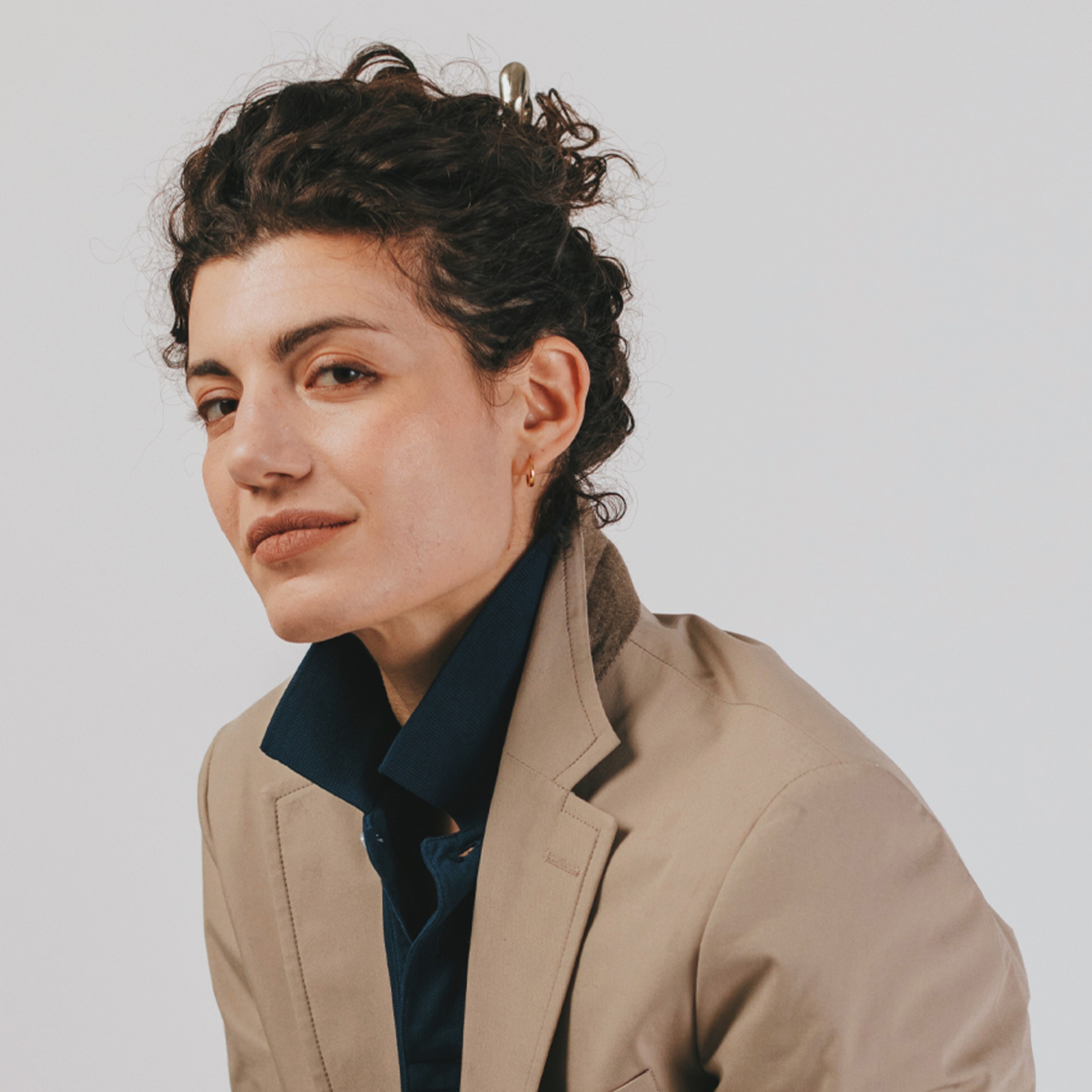
The Business of Fashion Podcast
The Best of The BoF Podcast: Avery Trufelman on the Meaning Behind the Clothes We Wear
00:41:29
Avery Trufleman, host of the fashion podcast “Articles of Interest,” joins BoF founder and editor-in-chief Imran Amed to discuss the multi-faceted layers behind the aesthetics of fashion.
Loading summary
Transcript118 lines
- [00:00]
Fiji Water Advertiser
As it starts to get warmer outside.
- [00:02]
I love to keep Fiji Water on hand to keep hydrated and refreshed. It really is from the islands of Fiji. Drop by drop, Fiji water is filtered through volcanic rock 1600 miles away from the nearest continent, protected and preserved naturally from external elements.
- [00:19]
In this process, it collects a unique.
- [00:22]
Profile of electrolytes and minerals, resulting in more than double the electrolytes as the other two top premium bottled water brands, giving Fiji Water its soft, smooth tast.
- [00:32]
Unlike some other premium bottled waters, Fiji water's electrolytes are 100% naturally occurring and.
- [00:39]
This water even has a perfectly balanced ph of 7.7. Visit your local retailer to pick up some Fiji Water today for your next backyard party, beach or pool day hike, or even your home office. Fiji Water is Earth's finest water.
- [00:58]
Imran Ahmed
Hi, this is Imran Ahmed, founder and CEO of the Business of Fashion. Welcome to the BoF podcast. It's Friday, August 22nd. Today we're continuing our summer break by sharing some of our favorite episodes from the archive. On her award winning podcast, Articles of interest, host and producer Avery Trufelman dives into the stories behind the clothes we wear. From the evolution of preppy style to the origins of wedding dresses, Avery guides her listeners through the multifaceted layers behind.
- [01:28]
The aesthetics of fashion.
- [01:31]
Avery Trufelman
I feel like I am reaching towards the world. It's like bringing me out of the personal and the me, me, me of fashion and understanding that it's crops, it's the earth, it's handwork, it's culture, it's society, it's, you know, you tug on a thread and you get everything. And that's what I'm, I'm slowly realizing.
- [01:50]
Imran Ahmed
This week on the BoF podcast, we revisit my conversation with Avery examining her path into podcasting her lifelong passion for clothes and what they mean and what she's learned about fashion while building one of the world's most popular fashion podcasts. Here's Avery Trufelman on the BOF Podcast.
- [02:12]
Avery Trufelman, it's very rare that I get to have a conversation with a podcast pro like you. I'm so excited for this conversation. Ever since I discovered and listened to articles of interest, I've been hoping that we would have a chance to do a little collision conversation because obviously you have your podcast and we have this podcast and there's intersections and there's so much to discuss. So welcome to the BoF podcast.
- [02:46]
Avery Trufelman
Thank you. Thank you so much. I mean, if I can just right out the gate be a little bit earnest For a second, I just. I can't thank you enough for the support that business of fashion has given the show. I've always considered myself, like, scrappy and not acknowledged so much by the fashion industry. And your recognition has meant the world and, like, opened up all these gates. So I'm so excited to talk to you now on your podcast as well. So thank you for having me.
- [03:14]
Imran Ahmed
Well, that's awesome. So, like, a mutual happy love fest moment. Speaking of sitting outside a little bit, the fashion system, or not being kind of recognized or seen by the fashion industry, I thought we could start a little bit. But with your early relationship with fashion, like when you were younger, like, did you care about clothes?
- [03:38]
Avery Trufelman
Oh, yeah. They were everything to me. I mean, they were so important to me and I never actually understood why. So my aunt lives in San Francisco, and then my grandma lives move to San Francisco so that my aunt could take care of her. So I went out there a lot to visit family and I would always go to Haight street and go thrift shopping. And so I wore just the weirdest stuff. In high school, in this, like, preppy private school that I went to, I was wearing these like gold lame dresses. And then in college, I was wearing fur stoles. And the funny thing was I sort of knew in the back of my mind that it was too much, that I was sort of alienating people. Like, no one made fun of me. People were sort of entertained by my outfits, but I definitely didn't get invited to parties. It just made me realize how powerful clothing was. That dressing in this wild way sort of set me apart. And I was like, I think I'm sabotaging myself. I don't really know why I'm doing this, but I feel so compelled to do this. And I love this feeling of taking risks, even though it feels odd and it feels uncomfortable. And I love that feeling of like, can I pull this off? It always felt like a challenge and a dare, and it made me feel so alive. And then I think later in my career, I wanted to figure that out. I mean, the thing I always say about the show is none of my questions that I pose on it are rhetorical. They're genuine questions. I have so many. I knew it meant a lot to me. I didn't understand why. I think I was embarrassed about it and I was ashamed of it, I think.
- [05:11]
Imran Ahmed
So how has your relationship with fashion and clothes, the clothes you wear, changed since you were younger?
- [05:19]
Avery Trufelman
I mean? Well, the funny thing is I do think I get directly influenced by everything I'M researching. So my parents wrote me about this all the time. If I'm like, I've done a story about corduroy, and I was like, oh, you know, corduroy is the most important thing, like, buying vintage corduroy. And, you know, I just kind of orient myself around the project that I'm working on, because once you find the story behind a garment or behind a designer, you can't help but love it. I find. I find even if the story is not the rosy story that the PR team wants you to tell, I think understanding a brand, a history, a fabric in its full, rich complexity, I mean, you can't help but feel. Feel close to it. I mean, the thing I realized is when I. When I was young, all I had were clothes. I wasn't writing things that anybody read. I didn't. You. I wasn't able to, like, bring myself to the events I wanted to go to or see the movies I wanted to see. You know, all I had was my body. And I think now, as an adult, having found other ways to communicate, I rely less on fashion. So, I mean, you know, I'm wearing all black today. I dress, like, really boring now in a way that I think would probably horrify my younger self. But I've been so fascinated by the sort of psychology of that and how that comes from a place of immense. I mean, privilege is an overused word, but I mean, really, like, the freedom that I have as an autonomous adult to express myself in other ways. And I think that's really. It really shows you how fashion is directly related to that. Directly related to freedom.
- [06:59]
Imran Ahmed
Yeah. Which is the power of fashion 100%, which is the importance of fashion, which is the democracy of fashion. Because everyone, everywhere, whether they're conscious about it or not, is expressing themselves, their identity, their role in society, whatever it might be, through the decisions they make every day about what they put on their bodies. And kind of leads me to my next question, because fashion is such a visual medium, and I think that's why this whole space around podcasting and fashion is still quite nascent. Like, there's not a lot out there, really. So I wanted to understand, like, how did you arrive in this audio space? And then what happened that you took this passion for what's a visual medium and explored it through an audio format where you can't really see any of the things that you're talking about?
- [08:00]
Avery Trufelman
Oh, my God. Well, of course, like, I'll answer, but then I. May I throw your question back at you because I'm also curious about why you wanted to do a podcast. Sure, of course.
- [08:08]
Imran Ahmed
You go first.
- [08:08]
Avery Trufelman
Okay. Okay. Well, so I like to joke that I'm a public radio nepo baby, which is, you know, different in public media than it is in, like, Hollywood. But both of my parents met working at New York Public Radio and they left by the time I was born because there's not a lot of money in it, and there certainly was not then, but they both worked there for like a decade and they, they loved it.
- [08:33]
Imran Ahmed
So even before you go into that, like New York Public Radio, for people listening in Kuala Lumpur or like Johannesburg, like, what is New York Public Radio?
- [08:43]
Avery Trufelman
So New York Public Radio, it's the big radio station in New York City. And it had and still has like live call in shows, live events. I mean, it's, it's this sort of. I think of it as a real lifeblood of the city. And I have a radio in my place still, and I turn it on. And that's how I found out about so many events. That's how I found out about so many artists. WNYC 93.9. It's, it's just this amazing legacy radio station and it has local news and it's phenomenal. And it's always been such a part of my life. I mean, we always listened to it growing up. They'll, they'll do things. They'll be like, hey, New Yorkers, you know, call in and tell us, you know, what you see outside your window right now. I mean, it almost verges. It teeters on the edge of, like, public art. It just feels so. Especially during the pandemic, it was such a, such an incredible. So I love the radio, and I've always loved the radio. My parents always loved the radio and they cut tape with a knife, you know, like Allen Ginsberg was coming into the studio and it just seemed like an amazing time. And I sort of grew up with these stories and, and I think the biggest thing was my parents were like.
- [10:00]
Imran Ahmed
Oh, that's a job.
- [10:01]
Avery Trufelman
You know, like, you can work in radio, I think, and that's a huge. I'm very fortunate. I think I know a lot of friends who work in podcasting whose parents were like, what? How are you going to live? Are you going to eat? And my parents, like, you can live. Like, you can totally. I don't know how long you can live, but you can, you can try. And so this was like, before podcasting, I wanted to work in radio, and then I couldn't get a job in radio. But I was fortunate enough to land at a podcast, one of my favorite podcasts, about architecture. And that sort of introduced me to the crux of your question. It was a show about a visual thing that was non visual. And I reported on architecture for seven years. And the thing that I really liked about it is because aesthetics are so powerful. And I found, like, when I would cover brutalism, it was nice that people couldn't see what the building was because they'd look at it and say, oh, that's ugly. I don't like that. Or, I don't want to learn about it, or that's gross. And there's something really potent about hearing the story first and hearing from the architect and hearing about what went into it. You know, like, you have Google. You can figure it out yourself. Like, the. The images are sort of secondary. Well, not secondary. I don't want to say secondary in my medium. They're. They're secondary.
- [11:16]
Imran Ahmed
Yeah. They're complementary.
- [11:18]
Avery Trufelman
That's a better way to put it. Yes.
- [11:19]
Imran Ahmed
Yeah, I can relate to that. I think. You know, to kind of address your question, I think my route into podcasting was a bit different, which is I became very busy running this company, and I was spending less and less time doing the thing I love the most, doing. The thing that brought me to create the business of fashion was to sit down with the people that were making this industry tick. And it just turned out that podcasting enabled me to still continue doing the interviewing without having to do all the work afterwards about, like, writing everything down and putting it into words. And actually, you know, as someone who didn't grow up or who wasn't trained as a journalist, I was always quite frustrated with the way kind of traditional mainstream journalism takes just one or two quotes of a really long conversation, and you lose all the texture. You lose the way someone said something or the extended pause that was there before they responded to your question. And of course, I could write after a significant pause, such and such person said this. But it's so much more powerful if someone can hear it for themselves. And if I. So I think it started as a way of, like, continuing to, like, be connected to the people in the industry. But then, as you know, I think we're on our, like, more than 400 episodes now. I think that's incredible. Now I feel like the way I bring myself to these conversations is I get to connect with someone like you and learn about you, which is amazing for me because it's inspiring. And I'm always learning from these conversations and Then I can share the full conversation with people all around the world. And I love that. I love that.
- [13:04]
Avery Trufelman
Isn't that beautiful? And that's what I think is so fun that human speech becomes sacred. When you have this recording. You're like, oh, we have this thing, and it's gold. It's like, I worked so hard for this thing, and it's the thing. The goal is a conversation and a connection, and that's the power of audio. It's so cool. And it's fun to hear you nerd out about it and be like, oh, the. The pauses, the silence, the. The cadence. I love it.
- [13:29]
Imran Ahmed
It's so nice. And actually, I think as a medium, podcasts have really emerged as this thing that you can do while you're doing something else. So the number of people that stop me and say, oh, you know, I listen to your voice, and, like, I listen to your voice while I'm cooking, or I listen to your voice.
- [13:50]
Avery Trufelman
Yeah.
- [13:51]
Imran Ahmed
While I'm trying to go to sleep, or I listen to your voice while I'm in the bathtub. And I'm like, wow, that's pretty intimate. You know, and so I really do feel closer to our community because I know that this is one way of just sharing these, like, really intimate moments and conversations and where that person is listening and how they're listening to it is an intimate connection with that person, too. And I love that.
- [14:14]
Avery Trufelman
Yeah, absolutely. Absolutely. That's the fun thing about making podcasts about fashion also, is that it's engaging with the world. You know, people are listening to your voice while they're walking down the street, and they're, like, noticing what people are wearing or they're noticing what people are doing. You know, it's not undivided attention. It is divided attention. But that's beautiful.
- [14:33]
Imran Ahmed
It's great. Okay, so back to audio. So, like, you spent a lot of time at 99% invisible, which is, like, where I think articles of interest was first born. Is that right?
- [14:45]
Avery Trufelman
Yeah.
- [14:46]
Imran Ahmed
So talk to us about the conception of this now monumental. Like, extremely highly regarded. Really beautifully created. It's the. I mean, it's. And for anyone listening who hasn't.
- [15:01]
Avery Trufelman
You're so nice.
- [15:02]
Imran Ahmed
No, I mean, I don't give out false compliments. I really. You know, when you're listening to those episodes, there's so much texture and there's so much insight and there's so much thought that's clearly gone into the creation of every episode. So talk to us first about, like, the idea of creating this podcast, like, why did it need to exist? What were you trying to do?
- [15:20]
Avery Trufelman
So I worked for this podcast about architecture and I didn't know anything about architecture before, so it was really interesting. It was my, my first ever job and it was based in the Bay Area. And so I lived with my aunt who lived in San Francisco and I did this little internship and then it slowly turned into a job and it was, it was just extraordinary. It was the most luckiest thing. It was, it was incredible because it really taught me how to translate visuals in a non visual medium. But the interesting thing was, you know, I was the intern and, and I was really young, I was like 22 and there was a host, a producer and me, and I was the girl. I was a 22 year old girl. And so I had this question in my heart and in my head, which is like, fashion, what's up with fashion? But I didn't want to ask it because I wanted to be like a cool girl. I was like, oh, let's talk about concrete production and parking theory and you know, kerning and like guy stuff like I can hang, I can nerd out, I can be cool. And this question, you know, cause it's a show about architecture and it's a show about design. And obviously architecture and fashion are so interrelated. I mean, I was just looking at pictures, at the dresses that Frank Lloyd Wright designed for his wife. I mean, Virgil Abloh, we don't have to look far to see the inextricable relationship between these inner and outer layers of the domicile, the home and the brick. So I did find myself wondering about this question. And I did a few episodes here and there about fashion, but I always felt like I had to really space it out, go easy on it. And then I think it took five years of working there. I was like, you know what, I want to really think about this. Like, there's so much to ask and there's so much to say. And I thought it'd be really powerful to present a fashion podcast to architecture crowd, you know, for a crowd who wouldn't choose a fashion podcast for themselves necessarily. And that's sort of where the origin came in. And I was like, I kind of want it to be its own separate thing so that listeners aren't like, hey, you've been talking a lot about fashion lately. I think to really put a bow on it and be like, yes, we're doing this little exploration about fashion. And you know, in the beginning, fashion was sort of a dirty word for me. I was like, well, it's not about fashion. It's about clothes. Like, I don't care about fashion. I care about clothes. And the sort of galaxy brain moment is now I'm like, oh, no, it's all about fashion because everything has fashion. You know, obviously, buildings have fashion, cars have fashion, colors have fashion. Fashion is just taste over time. And the most easy way to measure that, when you look at a picture of any era, it's like the cars, maybe, but mostly the clothes, is how you can situate yourself in a place and in a time. It does not last as long as a building building.
- [18:10]
Imran Ahmed
So in your head, what was the difference between clothes and fashion back then? Like, why were you focused more on the clothes as the descriptor?
- [18:18]
Avery Trufelman
That's such a good question. Well, because I thought fashion represented, you know, I worried that fashion would be alienating for a general audience, you know, because no one likes to think they follow fashion. I don't really care, you know, or.
- [18:31]
Imran Ahmed
It'S seen as frivolous, right? Or it's.
- [18:33]
Avery Trufelman
Or like Zoolander world, you know, that it, that it's based in this world of artifice and not reality. So back then, clothing was reality and fashion was fiction.
- [18:43]
Imran Ahmed
So this show is born. And what happens?
- [18:48]
Avery Trufelman
Well, my mentor and my boss, then the host of 99% Invisible, Roman Mars, was extremely generous, and he basically just like, let me go off and make this thing. I mean, he paid my salary, which is incredible, and then gave me an extra chunk of change, which was generous, but it was fair. He didn't want to prioritize me too much over everybody else on staff. So that's all just a long way of saying I functionally went backpacking to make season one. I lived out of a backpack for a month, Literally a backpack. I wore the same thing every day. And I did reporting in the UK and Scotland. I went to Hawaii. I did a lot of traveling.
- [19:32]
Imran Ahmed
So you conceive of this articles of interest. You conceive of it on a seasonal basis. So like, maybe you can talk to us about coming up with the first season. Cause every season has its own thing.
- [19:44]
Avery Trufelman
So the point of season one, the very first season, is it's so rudimentary, right. Cause you, you have to remember it's like not for a fashion crowd. And I think in subsequent seasons, I sort of assume that people want to go deeper and learn more. But the season one was really like, consider close, you know, like making a case for talking about clothes. And then I wanted to sort of boil the lobster slowly. I wanted to arrive at Something rudimentary and end at a designer at Vivienne Westwood, and ultimately sort of take the listener on a journey, not starting in the world of Runway fashion, but ending there and, like, seeing how. How we get there. So it starts with children's clothes. Cause I thought that was a really basic way to begin. And there's so many people posting on the Internet, like, why does my child have pockets? You know, what are they gonna put in their pocket? Like, baby clothes are weird. And so I wanted to sort of solve the mystery of why children's clothes are so strange. And there is an answer, which was fascinating to me, and then kind of iteratively move along in a daisy chain until we get to. At the end, it was about punk and Vivienne Westwood.
- [20:54]
Imran Ahmed
And why are children's clothes so strange? Like, why do you. They have pockets and functional details that a child could never use.
- [21:02]
Avery Trufelman
So if a child's outfit has pockets, it's not that they expect the child to own things. It's a legal technique to prove that the garment is not for sleeping. It's to prove that the garment is for day wear. Because this is a huge source of tension. Again, it depends on the country. Like, I was looking at the guides for Australia, and there are different guides for every country, every company. But in the United States and in a lot of nations, basically, because of past lawsuits, if you make a garment that a child would or could fall asleep in, oftentimes it has to be fireproof. And if it's something a child could fall asleep in, that really just means, like, anything that's comfortable or anything.
- [21:48]
Imran Ahmed
Because kids fall asleep in everywhere.
- [21:50]
Avery Trufelman
Yeah, kids fall asleep everywhere. Exactly. So you have to basically make it uncomfortable by adding sequins and bright colors and things that say, like, this is daywear and pockets are a way that you do that. But these legal requirements have functionally shaped children's clothes. And then, of course, in the podcast, this goes back to the theories of Rousseau and how much we should guide. You know, once upon a time, children wore corsets, and we don't live in that era anymore, obviously. But there is a lot of questioning of, you know, how can clothes regulate how quickly and how well a child turns into an adult? It's very interesting.
- [22:33]
Imran Ahmed
Interesting. So season one drops. You record it all over the world out of your backpack. What did you learn that helped to shape future seasons?
- [22:45]
Avery Trufelman
Well, it's funny afterwards, because, you know, I already loved clothes when I was a kid, and then learning more about it, I was like, oh, wow. You know, this produces a lot of waste. I don't, I don't really end like these labor practices. Really dubious. And then, you know, you dig into the history of anything, it goes back to slavery. The histories are really, really dark and there's no escaping it. And so by the end of season one, I was like, man, I hate this. I never want to do this again. I mean, I was proud of what I did, but I was like, okay, I think that's it. I'm sort of done. And then I'm very lucky. They wanted another one. Season two. And I was like, I kind of said everything I need to say. I don't. But by being forced to go deeper, you know, you kind of get past the. Not past the darkness, obviously, the darkness remains, but you start to see, like different hues in the darkness. I don't know, it's just like, oh, wow, this is a really rich text. And it was funny at the end of season two, I was also like, okay, I think I said everything I need to say now. And then I had to make a season three. I was like, oh my God, this is even deeper. And so like my love, my frustration, my confusion fusion, my amazement, it just deepens. It's just this bottomless well of emotion. Like, to say I love clothes doesn't even begin to. I mean, I'm sure you feel the same. I'm like a clothes. How do I begin to say how I feel? That's like asking how I feel about water. I don't know. I have a lot of feelings about it now, but I definitely ended season one and sort of still skating on maybe not the surface, but like the second layer of the surface without realizing there were 900 layers.
- [24:27]
Imran Ahmed
We'll be right back with more on the BoF podcast.
- [24:32]
Shopify Advertiser
Starting a business sounds exciting, but it can quickly get overwhelming. Suddenly, you're in charge of everything. Branding, websites, logistics, marketing. The list keeps growing. That's why so many businesses turn to Shopify to help make things Simpler. From day one, Shopify powers 10% of all US E commerce, from names like skims and gymshark to brands just getting started. Build an online store that matches your brand with hundreds of ready to use templates. Create content quicker with AI tools that write product descriptions, headlines and enhance photos. Launch email and social campaigns like you've got a full marketing team and manage everything with expert level tools. If you're ready to sell, you're ready for Shopify. Turn your big business idea into. With Shopify on your side, sign up for your $1 per month trial and start selling today at shopify.com BOF Go to shopify.com BOF shopify.com BOF.
- [25:32]
Nordstrom Advertiser
This episode is brought to you by Nordstrom. If you're looking to refresh your wardrobe for that awkward in between season, Nordstrom has you covered. They've curated the best transitional styles from brands like Reformation, Free People and Levi's. Think lightweight trench coats, cardigans and denim. That'll work whether it's sunny or a bit chilly out. And the best part? So many great finds are under $100 from Vintage Fade denim to sporty tees and classic accessories. Personally, I love how easy it is to shop. You get free shipping, free returns and the option to pick up in store or curbside, which is perfect for when you're on the go. Head to Nordstrom.com or visit your nearest Nordstrom store to explore more.
- [26:20]
Carvana Advertiser
Thanks for selling your car to Carvana. Here's your check.
- [26:23]
Avery Trufelman
Whoa. When did I get here?
- [26:24]
Carvana Advertiser
What do you mean?
- [26:25]
Avery Trufelman
I swear it was just moments ago that I accepted a great offer from Carvana online. I must have time traveled to the future.
- [26:30]
Carvana Advertiser
It was just moments ago. We do same day pickup. Here's your check for that great offer.
- [26:35]
Avery Trufelman
It is the future. It's.
- [26:37]
Carvana Advertiser
It's the present and just the convenience of Carvana. Sorry to blow your mind.
- [26:41]
Nordstrom Advertiser
It's all good.
- [26:42]
Avery Trufelman
Happens all the time. Sell your car the convenient way to Carvana Pick up. Times may vary and fees may apply.
- [26:50]
Sleep Number Advertiser
Why choose a sleep number Smart bed.
- [26:52]
Avery Trufelman
Can I make my site softer?
- [26:53]
Imran Ahmed
Can I make my site firmer?
- [26:55]
Avery Trufelman
Can we sleep cooler?
- [26:57]
Sleep Number Advertiser
Sleep number does that cools up to eight times faster and lets you choose your ideal comfort on either side side your sleep number setting it's the sleep number biggest sale of the year all beds on sale up to 50% off the limited edition Smart bed Limited time all sleep number Smart beds offer temperature solutions for your best sleep. Check it out at a sleep number store or sleepnumber.com today.
- [27:23]
Imran Ahmed
So as you go deeper and deeper and examine fashion and clothing and how it impacts the world around us, how it reflects history and culture and sometimes really practical things like fire safety. Where do you take articles of interest next? Because at some point you spun it out from 99% invisible. So are you running it now as like an independent operation and how has that changed your relationship with it? Because you're now having to be the one who has to like monetize it and figure out how it all. Oh yeah, it's sustainable, right?
- [27:57]
Avery Trufelman
Yes. Well such a good Question. I mean, I believe in being really honest about money. And, you know, in the beginning. So I worked for New York magazine during the pandemic when I left 99% invisible. And it was a rough time in the world. I enjoyed that job. I was really grateful for it. And then it came to an end, and I had a really nice severance package, and that's honestly what helped me get it off the ground. And I have to be really honest about that, because it's not like I raised rounds of funding, you know, it just like, it was a kind of a fluke that allowed me to continue on season three, you know, And I also have a bunch of other side jobs that I do. I did a bunch of editing for the LA Times, lots of other little gigs all over the place. But I would say the way that it's changed the show is, you know, saying in that season one was very much like, consider clothes. Like, well, isn't it amazing that we all have to wear clothes and that they say so much about us? And now with season three, which was my first independent season, I was like, okay, like, if you're here, you're on board. You know, you already care, so let's just go. Like, let's go all the way. I'm not going to justify why we're talking about this. We're just going to talk about it. And that has felt really nice. And I do feel like so much of fashion media is apologetic or like, ooh, sorry. You know, fashion. It may sound superficial, but have you considered. And it was nice to, like, really take it seriously. And I also like that I didn't have to do as many conventions. I mean, I didn't have to say my name until the end. I hate. I mean, I like my name. I'm not ashamed of my name. I just think I have a silly name. And it was nice to not have to say that. It was nice to, yeah, just have freedom to say whatever I wanted and put my own music in.
- [29:53]
Imran Ahmed
And so do you basically finance it initially through that severance package and then, yeah, through other things that you do, or are you running it as a commercial enterprise?
- [30:04]
Avery Trufelman
So I have a distributor called Radiotopia, and they're incredible because they're a nonprofit. They're not a commercial company who's looking to make millions of dollars in the podcasting space. Their goal is to keep, like, creative podcasters alive. And so I was very lucky to be incorporated with them. And they gave me a minimum guarantee that also like that with the severance Was like, okay, I can cobble this together. Like, I can mostly live on this. And they paid me a minimum guarantee, and then they sold ads on my show until they made the money back, and then we had a revenue split afterwards. So it's not like I'm going in, you know, I have. I have help in that regard from Radiotopia. And they're, you know, a rare bird. They're. They're incredible. I mean, it's functionally like charity, and I own all my ip, you know, it was just like, kind of them to help me to front a lot of the costs for me in this very, like, baseline way. So that's part of it. But, yeah, you know, like, I set up a little corporation. Like, the money I make from outside jobs goes into the corporation. I'm like this little, little machine now.
- [31:11]
Imran Ahmed
Amazing. Okay, so now that you're several seasons in and you've kind of honed the kind of purpose behind the show, you have a solid business model that enables you to sustain the show. You can focus really on the kind of conversations and narratives and storytelling. Like, what does it take to create an episode of articles of interest? Cause as I mentioned earlier, it's so thoughtful, you know, Like, I record a conversation like this, we edit it pretty quickly, we release most of the conversation. I mean, your show is struck in a completely different way.
- [31:49]
Avery Trufelman
Yeah, but so much of the work that you've already done for this conversation is behind the scenes, you know, like, you sent me an email of, like, the things you want to cover, and you've clearly read a lot about me. You've done all the research. You know what I mean? Like, you've done all this invisible labor.
- [32:00]
Imran Ahmed
And my team has as well.
- [32:02]
Avery Trufelman
Exactly.
- [32:03]
Imran Ahmed
Olivia especially has helped me really prepare for this conversation. Olivia Davies. And I can't, like you, I can't do it without my team. But give us a sense of, like, everything that goes into the creation of an episode.
- [32:15]
Avery Trufelman
Well, it's funny. So I don't have a producer. Like, it's just me.
- [32:18]
Imran Ahmed
So you're doing it all by yourself?
- [32:20]
Avery Trufelman
Well, for season three, I had an engineer and an editor, but for, like, season four, I didn't. You know, season four was 100% just me. I made it by myself.
- [32:30]
Imran Ahmed
And you edited it by yourself, too?
- [32:32]
Avery Trufelman
Yeah.
- [32:32]
Imran Ahmed
Wow.
- [32:33]
Avery Trufelman
Yeah. And I engineer it, I mix it and master it by myself. It's a real labor of love. It takes so much time, but it's interesting. So for this last season, the directive from Radiotopia was to make a show Every other week, which I was like, oh my God, I'm gonna die. How am I gonna do this? And part of it was just like, I needed ideas, I needed inspiration. So I reached out to friends and I worked with friends and it's the first time I sort of let someone else into my process. And it helped me realize what it actually takes. And a friend of mine said, like, damn, you really research this for a year and then make it in a week. And that is 100% true. I would say it takes about a year of. But slowly, like reading, thinking, talking, distilling what I want to say. You know, everything's really, really spaced out. But yeah, I would say a lot of conversation, a lot of reading, a lot of reading. And I just have to make it. I just have to record all these conversations, go to these people's houses. You know, I make these really elaborate prep documents whenever I talk to people. I mean, there's just like hours and hours and hours of work. Work goes into all these.
- [33:44]
Imran Ahmed
Well, you can tell.
- [33:45]
Avery Trufelman
Thank you.
- [33:46]
Imran Ahmed
You can really tell because it shows. And there's. I mean, I think there's so many podcasts now, not just on fashion, but just like there's like podcast overload. So like, I really value the ones that are so thoughtfully crafted and created. I'm not surprised that it takes a year of research and thinking and listening and distilling to come up with what you come up with. It really, really shows. So where does articles of interest go now? Like, what are you planning to do next?
- [34:15]
Avery Trufelman
It's on a tiny pause right now. Cause I'm writing a book, which is a fun experiment to like. It's an exciting luxury for me to be able to meet someone anywhere and be like, I can talk to you in a cafe. It doesn't have to be a, like quiet room with a microphone. So I'm really enjoying that process. And then I'm gonna do like three episodes this year just cause I can't help myself. And it's a little triptych. It's going to be about nudity, modesty. And clergy nudity is being like, why do we wear clothes at all? Modesty. You know, talking to women in the Hasidic, Hijabi and Mormon communities of like, well then what does it mean to be modest? Like, why wear, quote unquote, more clothes? And you know, all these different. Everyone has a different definition of what modesty means. And then the last one is talking to all strains of Catholic priests, talked to Trappists, Dominicans. I mean you name it, they love fashion. It's incredible.
- [35:16]
Imran Ahmed
I love it. I can't wait to listen to it.
- [35:18]
Avery Trufelman
Oh, thank you. So it's that triptych, and then I have another, like, big series coming up after the book. After the book.
- [35:23]
Imran Ahmed
Well, I will be a loyal listener and reader in the future, so thank you. As we wrap up, I'm curious, like, how has working on this show changed the way you think about fashion now?
- [35:37]
Avery Trufelman
Oh, man. I mean, like, Imran, I meant it. They're like. And surely I don't have to tell you this. There's just so many layers of depth. And that's the thing. It just keeps unfurling. And every time I'm like, well, I think I've kind of covered it, and, like, no, there's another thing to learn. And right now, I'm learning how to sew because I realize, like, oh, my God, I'm talking about all these things, but I don't actually understand garment construction. I don't understand. Understand seam finishes. I should really learn these things. And that's unlocking a whole new level of. Of the conversation around labor. And then now that I'm understanding fabric, I'm like, you know, I can just feel it unfurling in a million different ways. And it was so much about me when I was young. It was so much about me and my personal expression and the sort of game of it. And in the Power of Myth, Joseph Campbell talks about how the hero's journey is about from the individual into the world. I mean, that's. Honestly, that's the order of the tarot deck, right? You start as the fool, and you end in the world. And I feel like I am reaching towards the world. It's like bringing me out of the personal and the me, me, me of fashion and understanding that it's crops, it's the earth, it's handwork, it's culture, it's society. It's. You know, you tug on a thread and you get everything. And that's what I'm. I'm slowly realizing, okay, but as a.
- [37:06]
Imran Ahmed
Podcast creator, host, producer, editor, researcher, what. What podcast do you listen to and why?
- [37:16]
Avery Trufelman
My favorite podcast is the Paris Review Podcast. I really like the Paris Review podcast. They do really good sound design, and they have just, you know, good writers, and it's nice to hear beautiful writing in my ears. I really like that. And I've been listening to a lot of audiobooks lately. But, yeah, my favorite is the Parish Review Podcast, and there's so many great fashion podcasts right now. Like, business of fashion, obviously. I love the cutting room floor. I love nymphet alumni throwing fits, Style zeitgeist. I mean, there's so many great fashion podcasts. And the funny thing is I use them all as research for my podcast, you know, so I, like, that's a big part of the diet, too. It's like reading a lot of fashion books and listening to a lot of these.
- [38:07]
Imran Ahmed
In conclusion, you know, we were just talking about all the podcasts that are out there. Like, what do you see happening in this audio space? Like, how do you see it developing? There's this, like, proliferation of podcasts. There's only so much time people have in the day to listen. It's become a really crowded space. Like, how do you see the space shaking out?
- [38:27]
Avery Trufelman
I don't know. I mean, I can't speak for this. Like, I've obviously gotten disillusioned with it, but I don't know. I think. I think there's a very solid metaphor to be made in the way that we talk about sustainability in fashion and sustainability of attention. And you hear a lot in our industry about, you know, that you want people to feel an emotional connection to their garments, that they want to engage them and keep them for a long time. And I have taken on a lot of that into my audio work. I mean, for example, I don't ever kill stories. I love to reuse interviews that I collected years ago. I'm always, like, cutting them up and revisiting them, because I believe that knowledge isn't like, one and done. It isn't a single use thing. I believe in making this, like, long, sustainable living archive. And again, I can't speak for the industry at large, but the thing that I am excited to have proved to myself is that, you know, I think there's so much impetus to be like, oh, you gotta put something out every week and you gotta be in the listener's ear and you gotta fight for that precious, whatever, commute time. And I've just decided to not do that. I mean, I've taken like two years off in between. Not off. I've been doing other things, finding other ways to make a living. But, you know, I take time between my seasons, and they don't come out all the time, but I think they, you know, they're taught in schools, they're taught in classes. I think they're valuable sort of precious resources. And part of it is because I am a team of one. Like, it keeps me nimble. You know, I think part of the reason I do Everything myself. It's not because I'm a control freak. I mean, I love collaborating with people. It's just because it keeps my overhead really low. I mean, I have. I don't have kids. You know, I have a low cost of. Not a low. I mean, I live in New York, but that's the biggest thing is like, paying my rent. I keep it low cost so that I don't feel yoked to it, so that I don't feel like I have to pump it out all the time. So I can really only make things when I feel like there's something that needs to be said. You know, my credo is that I want to be worth people's time and I want to keep it precious and I don't want to just make things for the sake of making things. And so, yeah, industry at large, I don't know. But the listenership and the success of articles of interest has proved to me that it's possible for something to come out rarely, occasionally, sporadically. And if it's made with care and thought and love, it has a fighting chance. I mean, and what a hopeful, beautiful thing that is. So I've found it inspirational for myself. I mean, you know, I have a lot of precarity at the end of every year. I'm like, what, what will happen? What will happen next year? You know, it's not for everyone, but it's cool to know it's possible.
- [41:33]
Imran Ahmed
Yeah, well, it's. You are a role model, like, and for. For someone out there thinking or pondering or mulling over the idea of creating their own podcast. Do you have any advice that you'd offer?
- [41:46]
Avery Trufelman
Yeah, definitely do it. I mean, it's wonderful. It's a beautiful. You know, as you and I were talking about, it's like the most incredible medium. But I think the thing I would say is I consider it a craft. I really do consider it a craft, and I think it deserves the respect of a craft. And if you're doing any, you know, like when I'm sewing garments, you start by making shitty little things that you don't show anyone. I definitely always tell people, like, just start, just do it. Just grab your phone and record a conversation with someone you wanted to talk to. And then upload it into an editing system and see if you can cut it in half. See if you can take that hour long conversation and turn it into 30 minutes, you know, and like, treat it like a, like a practice. Like when you start running, you know, you like start slowly and you build up the Skill for yourself. And that's the thing that I recommend. I think everybody. I'm not trying to be a gatekeeper. I think everybody should do it, but I also think that it should be shown respect and love as a medium as you would with any art form.
- [42:47]
Imran Ahmed
Yeah. I couldn't have said it better myself. That's such great advice. People often ask me, how did you become a writer? And I wasn't trained to be a writer. The only way I became a somewhat decent writer was by just. Just writing.
- [43:03]
Avery Trufelman
Yes, exactly. You have to do it.
- [43:04]
Imran Ahmed
You just have to keep doing it over and over and over again. And with practice and care and attention, you can learn. And that's the same for podcasting.
- [43:15]
Avery Trufelman
Exactly. And even with, like, even if you're not doing some highly edited, you know, artisan stuff that I'm, you know, tinkering around with my. My precious pro tool set, I think even the practice of recording conversations and doing the work that I hate, of listening to yourself and understanding your speech patterns and understanding, you know, where is the conversation going, understanding the kinds of questions you ask, understanding your verbal tics. It's this, like. It's this journey of self knowledge. And I think you know this. As both a writer and the founder of a company, you really have to be clear with yourself. You have to understand your style, whether it's your management style or your writing style. And I think with podcasting, you have to understand your conversation style. And you only get that by doing the cringy thing and listening to yourself and really working on it.
- [44:05]
Imran Ahmed
Do you hate listening to yourself?
- [44:07]
Avery Trufelman
Oh, yeah, of course.
- [44:08]
Imran Ahmed
We all do. Right?
- [44:10]
Avery Trufelman
We all do.
- [44:10]
Imran Ahmed
I hate the sound of my voice. And then these people stop me on the street and they say, I love your voice. I'm like, ew.
- [44:18]
Avery Trufelman
Exactly. And it, like, never gets better. I was like, well, surely one day I'll age into it and it'll be fine. And it's just. It never does. But I think that helps me make peace with it. It's like you're never gonna. Yeah.
- [44:29]
Imran Ahmed
Avery, such a pleasure. I wanna meet you in person when I'm in New York next. Cause I think this. Please. Yeah, I'll be there in March, but let's try to grab a coffee or something. It'd be so nice. Cause I'm sure that there's tons that we can learn from each other. So thank you so much for your time and thank you for what you do. It's really inspiring.
- [44:48]
Avery Trufelman
Ditto. Thank you so much. This is really fun. And it's so nice to meet you.
- [44:52]
Imran Ahmed
You too.
- [44:53]
Avery Trufelman
And I'm serious. I would love to hang out.
- [44:56]
Imran Ahmed
Yeah, let's do it. All right.
- [45:01]
Avery Trufelman
Bye.
- [45:01]
Imran Ahmed
Bye. The BoF podcast is edited and produced by Olivia Davies and Eric Brea.
- [45:15]
Fiji Water Advertiser
Ready to elevate your skincare Introducing Medicaid, a clinically proven dermatologist recommended British skincare brand known for age defying results. You may have heard about growth factors as the must have anti aging ingredient and that's why Medicaid is excited about their latest innovation, the Liquid Peptides Advanced MP Face Serum. This serum harnesses the power of Growth Factor Mini Protein, a cutting edge technology that mimics natural growth factors but goes deeper, delivering visible transformative results. Studies show immediate improvement in expression lines in just 10 minutes and a significant decrease in deep set wrinkles after eight weeks of use. The Liquid Peptides Advanced MP Face Serum not only reduces wrinkles but also gives a filler like effect, smoothing out your skin's appearance dramatically. Visit Medikaite US that's M E D I K and the number 8 US use code podcast20 for 20% off your purchase today.
- [46:16]
Shopify Advertiser
When you think about businesses that are selling through the roof. Sure you think about a great product, a cool brand and brilliant marketing. But an often overlooked secret is actually the businesses behind the business making selling simple for millions of businesses. That business is Shopify. Nobody does selling better than Shopify. They're the home of the number one checkout on the planet and the not so secret shop pay that boosts conversions up to 50%, meaning way less carts going abandoned and way more sales happening. Businesses that sell more sell on Shopify. Upgrade your business and get the same checkout allbirds and skims use. Sign up for your $1 per month trial period@shopify.com startselling all lowercase go to shopify.com start selling to upgrade your selling today. Shopify.com startselling.