← The Business of Fashion Podcast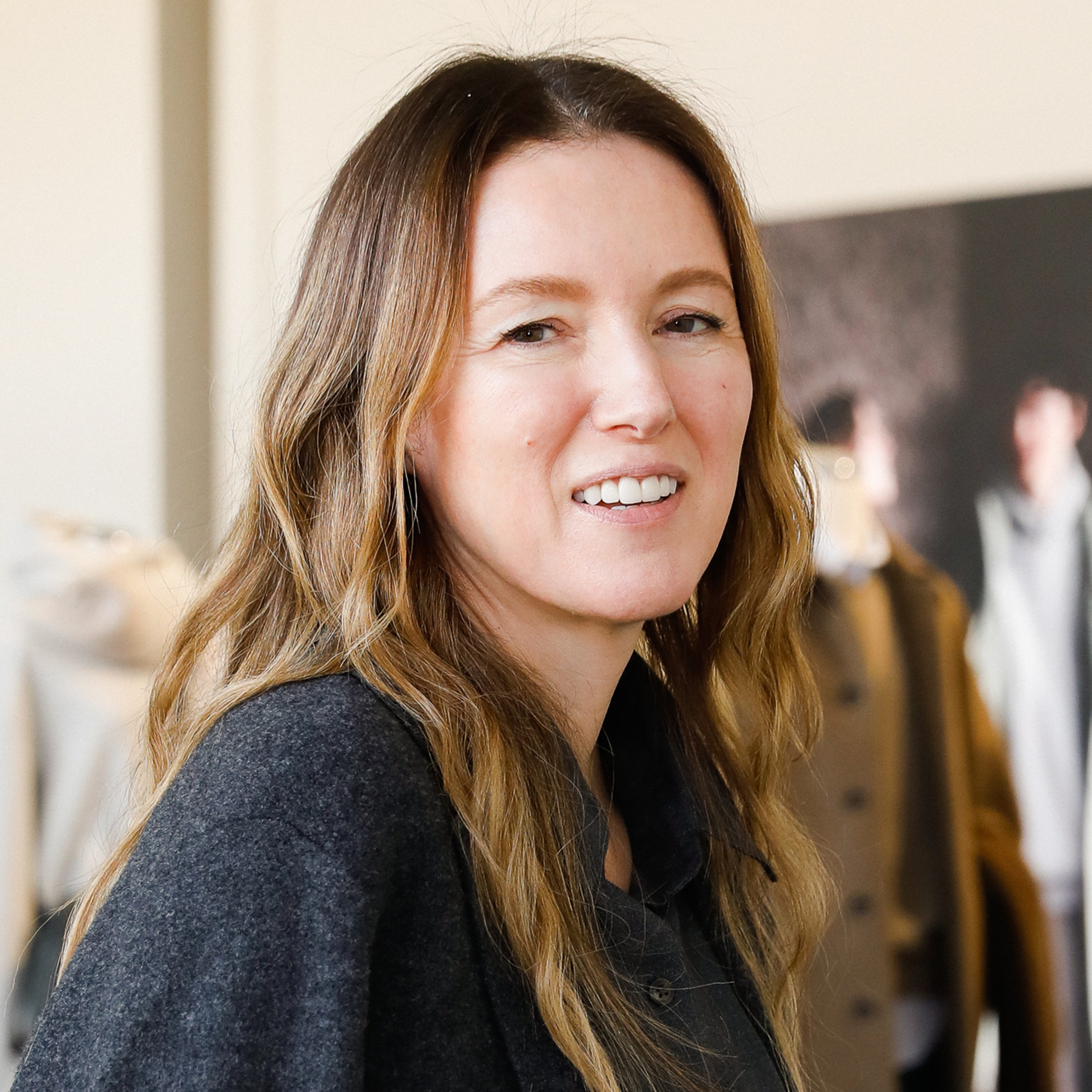
The Business of Fashion Podcast
The Best of The BoF Podcast: Clare Waight Keller on Finding Opportunity in Discomfort
00:52:51
Clare Waight Keller joins Imran Amed to discuss her diverse career, designing for Calvin Klein, Ralph Lauren, Chloé, and Givenchy, and her latest role at Uniqlo as Creative Director.
Loading summary
Transcript84 lines
- [00:00]
Fiji Water Narrator
As it starts to get warmer outside. I love to keep Fiji Water on hand to keep hydrated and refreshed. It really is from the islands of Fiji. Drop by drop, Fiji water is filtered through volcanic rock 1600 miles away from the nearest continent, protected and preserved naturally from external elements. In this process, it collects a unique profile of electrolytes and minerals, resulting in more than double the electrolytes as the other two top premium bottled water brands, giving Fiji Water its soft, smooth tast. Unlike some other premium bottled waters, Fiji Water's electrolytes are 100% naturally occurring and this water even has a perfectly balanced ph of 7.7. Visit your local retailer to pick up some Fiji Water today for your next backyard party, beach or pool day hike, or even your home office. Fiji Water is Earth's finest water.
- [00:58]
Imran Ahmed
Hi, this is Imran Ahmed, founder and CEO of the Business of Fashion. Welcome to the POF Podcast. It's Friday, Aug. 29th, our summer break continues and we're sharing some of our favorite episodes from the archive. This week we revisit my conversation with Claire Waite Keller, whose career in fashion has been defined by her versatility as a designer and her desire to step outside her comfort zone. Seeing new challenges as an opportunity to learn and grow has led Claire to make many unexpected decisions right from the.
- [01:29]
Interviewer
Start of her career.
- [01:31]
Imran Ahmed
Most recently, Claire was appointed Creative Director of Uniqlo, the Japanese clothing retailer known for its high quality basics aimed at the masses, not the classes.
- [01:42]
Claire Waite Keller
Those moments when you are pushed to your boundaries and you you don't know quite how to navigate it. You need to find quickly how to do things. Sort of a survival instinct I suppose. Brings a great sense of drive for me. I really love that idea of being sort of uncomfortable with what I'm working with because it makes me learn quickly. I'm someone who really enjoys the process of change and I guess that's why I've worked in so many different places.
- [02:13]
Imran Ahmed
This week on the BOF Podcast, we'll examine Claire's varied career path and experience working in American, Italian, British, French and now Japanese fashion companies and how this has shaped her outlook on the global fashion industry. Here's Claire Waite Keller on the BOF Podcast.
- [02:33]
Interviewer
Claire Waite Keller, welcome to the BOF Podcast.
- [02:36]
Claire Waite Keller
Nice to be here.
- [02:37]
Interviewer
Imran, where in the world are you today? You're like quite the jet set traveler at the moment with your work taking you from one place to another. I know you were just in New York, but are you back in London.
- [02:49]
Claire Waite Keller
Now or no, still in New York but leaving today, so came back from Tokyo last week. So, yes, been traveling a bit.
- [02:57]
Interviewer
Well, there's so much to discuss with you today and obviously we were very excited and interested to hear about your new role as creative director at Uniqlo. But I wanted to start much earlier on in your life to get a sense of what brought you to this, this new, exciting role at Uniqlo, and wanted to start with Birmingham, where you grew up. That was, I guess, part of what shaped you as a young person. Could you talk to us a little bit about those early days in Birmingh and what you were interested in, what caught your attention and how you ended up deciding to move to London and go to fashion school?
- [03:38]
Claire Waite Keller
It's interesting because actually, growing up in a big city like Birmingham, it's the second city in the uk, it was kind of a rough, industrial kind of city, as most secondary cities are. They're always a little bit the stepsister to the capital. And it was an interesting time because there was quite a strong music scene there. There was a lot of bands coming out of Birmingham at that time, like Duran Duran and some other big names. But also there was a strong sense of fashion there. And I distinctly remember growing up standing at a bus stop, going to college and having punks and skinheads next to me or goths, or people who really express themselves through fashion and really took it to a really sense of ide identity. And there was something that totally captivated me about that. And I always loved making clothes and sort of knitting and doing things like that. So it sort of, through art school, made me gravitate even more towards that industry because they just seem like the most interesting people. I wanted to be part of that. So Birmingham was actually as rough as it was. It had so many fascinating aspects to it in terms of the culture that was going on there on a street level.
- [04:58]
Interviewer
And so were you drawn to that culture or were you kind of observing it from the periphery? I mean, I didn't even know Duran Duran came out of Birmingham. But I have noticed, for example, that in all the uk, cities like that scale, like Manchester and Birmingham up in the north of England, they don't get that much global attention, but they contributed so much to culture in this country.
- [05:21]
Claire Waite Keller
Absolutely. No. And that's the thing that I guess because they are so far from the capital, you have less resources, but you do a lot more with very little. And so people get more creative. And I think the idea that, you know, you sort of try and make your way. I mean, I was really Incentivized by the fact that I didn't want to live in Birmingham anymore. You know, I'd lived in this city of, like, I don't want to be here. I want to be somewhere way more exciting. So it drives you to get out, and so you start to become more fascinated and really get it wrapped up in that. So I suppose I was in more New Romantic, I would say. So it's kind of in that feel, so, you know, the soft blouses and the kind of bigger pants and stuff. But, you know, it was really kind of an interesting time. It's, In a way, it's sort of been lost, that sort of atmosphere of music really influencing fashion, because things now are just much more homogenized in a way. Whereas there, it was much more kind of tribal in that sense. You belong to, like, the New Romantics or the Goths or the Skinheads or. It was very distinct, which was kind of fantastic.
- [06:32]
Interviewer
So how does New Romantic Clare Wake Keller end up in London, or at Ravensbourne, rather, which is not in London, but not far from London, I believe. Like, what was the journey that led you to choose to go to art school there?
- [06:47]
Claire Waite Keller
I really wanted to get to London because I knew that was where everything was happening, and I wanted to really experience it on a much bigger scale. And so I think Ravensbourne really felt like an interesting place to do that because they had a very strong kind of art and textiles fashion courses. And at one point, David Bowie had been there. So I was like, oh, I'm like, sure, this is going to be a cool school. And so I really like the fact that the whole school was about every art discipline. It wasn't part of a bigger university with academics. It was really focused on product design, furniture design, photography, film and sculpture, and then went in all the fashion disciplines. So it was kind of a nice melting pot of different art disciplines. So that really appealed to me.
- [07:36]
Interviewer
I had the opportunity to teach at Central St. Martin's for about 10 years, and I'm not sure how it worked at Ravensbourne, but it was that kind of final collection or final project at St. Martin's that was really designed and structured to really push the creativity of these design students, to kind of discover their own aesthetic, their own creative voice. What was it like for you at Ravensbourne? Did you have a similar project like that? And what was the kind of creative path that you were interested in while you were in school?
- [08:11]
Claire Waite Keller
I mean, I think at that time, which was sort of beginning of the 90s, I had a final collection to Do. And I was very much influenced by what was going on in Europe at the time. And Obviously throughout the 80s, there'd been a huge Japanese influence of all these Japanese designers. So I think we were really at that sort of tipping point of coming out of the sort of excess power shoulder of the 80s and looking for something different. And that really made you try to explore a new sort of sensibility of fashion, which is all about silhouette, it's all about heart, it's all about how you put it together. And I'd really gone for something that really emphasized knitwear because I was really interested in carrying on and doing knitwear in a master's degree. So I really put a lot of effort into doing these amazing, huge hand knitted sweater pieces. And then I mixed it back with suede, actually. So there's a lot of suede and then big sculptural coats, this kind of cocoon shapes. And I think for us at that time, we were a lot of my student friends, we were all obsessed with like, Romeo Gigli and John Galliano. And so these slightly softer, romantic feels to fashion were really pushing through against all that power fashion that we'd had for a decade. So for me, it was a really exciting time to be in fashion.
- [09:39]
Interviewer
And you took that and continued that focus in knitwear at the Royal College, right?
- [09:45]
Claire Waite Keller
Yeah. So it was the inaugural kind of year of implementing this new course for fashion and master's degree in fashion knitwear. So it was everything to be had, really. Nothing had been set before. There was only six of us on the course. It was tiny and we were sort of in a sub room to all the fashion design students who were doing women's wear menswear. But interestingly, what I learned there was one the technicalities in knitwear. So very much about all of the yarns and how to, you know, really understand it from a technical side, but also kind of using knitwear as shape. So not only creating it, which you do with hand knitting through actually physically knitting it yourself, but on a machine, how to structurally sort of create that. So for me, it was a huge learning curve, but gave me unbelievable skills when I left. And actually at the time, I was one of maybe only about four people who got employed after the degree finished. And I think it's because I had a unique skill that not many other people have, because nobody else was doing fashion knitwear at the time. It was sort of kind of a bit like, oh, just do a crewneck. And no one was actually trying to experiment in terms of shape. So I, for my degree show there, I got sponsored by Laura Piano. And so they gave me all this cashmere yarn. And so I did all. Yeah, it was amazing. And so I did all of this fine gauge up to super chunky gauge, massive cashmere sculptural shapes. And based off that, I got hired at Calvin straight away.
- [11:25]
Interviewer
And what was it like at Calvin Klein back then? I mean, Calvin KLEIN in the 90s, that was like prime time.
- [11:31]
Claire Waite Keller
No, it was totally prime time. And he was there, obviously, because I think he left around 94, 95. And so he was really pivotal in kind of driving the whole image at that moment of Kate Mars, Marky Mark, Khaleen Bissette Kennedy was there. So in so many ways, it was like the best time to be there. He won the CFDA award, he opened that amazing flagship on Madison Avenue. It was his moment, honestly. And so for me, it was really, really exciting.
- [12:05]
Interviewer
And as a designer that had just come out of school, probably with very little awareness, based on my experience of the business side of the industry, to all of a sudden be thrust into a marketing LED brand like Calvin Klein in a huge American market. What were your reactions back then to like, oh, you know, I've been focusing with five other students on developing knitwear at Royal College, and all of a sudden you're thrust into the big time. I mean, what was what and what did you observe about the fashion industry as a business at that time?
- [12:40]
Claire Waite Keller
I mean, it couldn't have been further from what I was doing. It was such a steep learning curve. I mean, I was thrilled to be there. There was. I was so excited. It was. It was amazing opportunity to come work directly with him as well, which was also, for me. I didn't think people, you know, worked with designers directly. I thought we were all like the little minions, and then it went up all these, like, layers. But actually, he was really. He loved to pick the fabric and he loved to see things and he had a great nervous energy about him. But actually, the day to day was really very intense. I had to learn about merchandising plans. I've never seen a merchandising plan before. Then I had to understand how to design into all of these products, understand the yarns and the sort of different price points that they needed to work out. So in that sense, it was a sort of steep journey on how to be commercial, basically, but at the same time, really interesting because Calvin was doing those, like, beautiful minimal basics that everybody wanted. I mean, it was one of the coolest brands in New York. And so it was a really interesting exercise in, okay, we do need to make commercial property. We need to make it really cool. And even CK had a Runway show back then, so it was mainline and ck, I worked on both. And so it was great actually, because they, they have very different points of view. I did Cashmere on the main line. I did Marina on the, on the lower line with ck. Kate Moss was sat in the corner doing fittings. It was, it's just, it was a time that it was kind of extraordinary.
- [14:21]
Interviewer
Wow. To be a fly on the wall and see all of that happening. I mean, that must have been very exciting. Especially having grown up in Birmingham, made your way to London and all of a sudden you're in New York City. That's pretty amazing.
- [14:36]
Claire Waite Keller
Especially if you think of the context back then that there were no mobile phones. We didn't have computers at that stage. We had like these really basic things that just did like data input for the spec. But that was something that feels really foreign to people today actually. You really did everything by hand. You know, I measured out, I had to put all of these things together, communicate it to the factory. Starting to work with factories both in the us we did a lot of manufacturing in the US on the West Coast. So I'd be going out to San Francisco, going out to la, and then gradually over the years, they moved things out to Hong Kong. And so it was a fascinating journey on kind of how to sort of deep dive into a brand and in its huge growth moment as well. But also, what was going on with Calvin? I mean, those campaigns, they went viral. He got banned while he, he put these ads up, they were taken down. It was for me, really interesting to observe the power of marketing. And I remember him sitting in fitting after he'd released the CK1 campaign with all those kind of street cast characters. And he said, oh, everyone's calling it like heroin chic and it's going to get banned. And that's the coolest thing to get. And it was just like, oh my God, I would never, you know, just hearing all of this, you realize that, you know, he said there's never good or bad, you know, it's never a problem because just getting your name out there is what's important. And so I just learned a lot from just even the conversations he was having about how he was so excited about this.
- [16:15]
Interviewer
Yeah. And for that to happen in the pre digital age for like a marketing campaign like that, to use your words, to go viral before virality was fueled by social Media and the Internet. I mean, I just remember those campaigns were everywhere. If you didn't have the billboards in your town, you were certainly reading about them in the newspapers, and they were talked about on television. It's kind of incredible. So, okay, we're only like a tenth into your career, and we've already hit Los Angeles, New York, London, Hong Kong, and of course, starting out in Birmingham. And, you know, one of the things, as I was preparing for this interview, Claire, I was thinking, like, really, you've had such a global career touching such a unique mix of American and European fashion, from luxury to the high streets. So this is all very interesting to me. So let's talk about Ralph Lauren. You decided to move from Calvin to Ralph. I mean, another big, iconic American brand, but really different from Calvin Klein, right?
- [17:16]
Claire Waite Keller
Totally. Totally different. And at the time, he was launching menswear for Purple Label. And I'd never done menswear, and actually not even through school either. So it was a kind of right turn, I suppose. I was like, okay, this is going to be different. And I came in initially as a knitwear designer. So I came in to do all of the knitwear cut and sew for Purple Label. But then as I arrived there, we were such a tiny team. There were three of us working with Ralph because it was brand new. So we were looking at the packaging, we were looking at what was the brand structure going to be like. So again, I got immersed into actually then all sorts of areas. So into the shirting, into the tailoring. Because there was only three of us, we had to kind of pull it together because there was just not enough people. And so I ended up going then out to Italy working with tailoring factories, the shirting factories, sourcing the fabrics in Paris and doing fabric development. I have to say, both Calvin and Ralph taught me a lot about fabric in two completely different ways. Calvin about crepe and drape, and Ralph about cotton and wools and sort of luxury textures. And so in two completely different sort of worlds, they have a very strong language through fabric. And so it was really interesting. Ralph is meticulous about fabric. He wants to see every single fabric and touch it. And he was so sort of involved in. In the Purple Label concept because it was his baby. It was the pinnacle of the brand, him. And so we spent a lot of time with him working on that.
- [18:58]
Interviewer
So as, you know, as you're navigating your career and you're making these decisions, about to leave Calvin and join Ralph. And the next step was Tom Ford At Gucci. I'm curious, like, as a person early in your career, like, how are you making those decisions? Like, how did you know what was the right next step for you to make that right turn and go to do menswear at a fledgling part of the Ralph Lauren empire? Like, that's a big change. Like, what was it that made you make that decision?
- [19:31]
Claire Waite Keller
I think for me, throughout my career, and this holds true to today, I always want to do something that's going to take me right out the box and put me in a really uncomfortable place. Because I think that's what. What growing up in Birmingham did. You know, moving to London put me in a really uncomfortable position. Giant city that felt overwhelming. And so it was really those moments when you are pushed to your boundaries and you don't know quite how to navigate it. You need to find quickly how to do things. Sort of a survival instinct, I suppose, brings a great sense of drive. For me, I really love that idea of being sort of uncomfortable with what I'm working with because it makes me learn quickly. I get excited, I ask tons of questions. I want to know more, and I'm really driven by that. And so making these choices. I always wanted to do something that I felt was completely different to what I'd done before. And I like change. I'm someone who really enjoys the process of change. And I guess that's why I've worked in so many different places.
- [20:41]
Interviewer
Yeah. Because the other philosophy sometimes that I hear from people is get known for something and then just continue to build on that. But you keep taking these zigs and these zags. Your next zig was when Tom Ford came calling out Gucci. And this was before Tom Ford was the Tom Ford of today. So tell me, how did this, like, pretty unknown designer from Texas convince you to join him at Gucci?
- [21:10]
Claire Waite Keller
Well, he was starting to really get quite a buzz and I actually wanted to move back to UK or Europe at least. I thought for me, be great to have European experience. I thought, you know what, I've got the commercial bit under my belt. I understand merchandising. I know how to work with merchandise now. I've built a brand from, like a very tiny idea up to what Purple Label was. When I left, it was a really established collection. And so it was an interesting thing now to kind of go, okay, let's go back to Europe, where they don't work from a merchant brief, they work from creativity. And for me, that was something that I really wanted to get back into because I felt all the knowledge I got was an amazing groundwork to how to work in a big corporation. But then I still really wanted to be on the creative side in a much bigger way. And not that Ralph and Calvin didn't have ateliers, but it was a smaller part of their brand. That part was really reserved for shows and not so much for the main part of the collection. And so when they called and said, said, tom wants to meet you, I was like, oh, my God, that would be so interesting. So I was heading out, actually, to Italy at the time, and I stopped off in London, met him, and three days later, they called and said, when can you move over? And I actually moved literally three weeks later. It was so quick, because, as you.
- [22:39]
Interviewer
Know, in America, there's no notice periods and all of that stuff.
- [22:43]
Claire Waite Keller
Nothing. So as fast as you can join, you can exit as fast as you want, too. So I gave a week's notice, and that was it.
- [22:50]
Interviewer
I was like, so you said this was when Gucci was already gaining a bit of buzz. Like, how many seasons in, was it that he'd been at Gucci at that stage?
- [23:00]
Claire Waite Keller
Well, having said that, I think he'd been there a little bit before, but not really making any noise. He must have been about five seasons in, but only two seasons with the buzz starting to really build. So I kind of came at that point where we were really starting to get super big exposure, and he was really getting excited about where the brand could go, and it was growing really, really fast. So that was a great time to join.
- [23:30]
Interviewer
And what was your remit at Gucci? Because I know there was also some very other talented designers working in the Gucci world at that stage. What were you brought in to do specifically?
- [23:43]
Claire Waite Keller
So again, there was three of us and two assistants. It was tiny, so it was Christopher Bailey, obviously, and then Francisco Costa, who then actually went to Calvin, and then myself. And so between the three of us, we sort of divided the women's collection up. So Christopher did all the wovens and leather. We had Francisco doing mostly the evening, and then I did all the jersey, the knitwear. And then then by the end, once Francisco and Christopher left, I was still there. I picked up other areas. So I started to pick up some evening and some of the other parts. But for the beginning, it was just the three of us doing it. And, yeah, we all just sat down with Tom and sort of showed ideas, and that's how it kind of all started. So it was a really small team. And I think that's the interesting thing. People Think that there's giant teams behind this and sometimes it can be so small. But there was a real luxury about that because we got one to one time with Tom, we'd sit there and, you know, exchange ideas. And you learn a lot from that because it's all about the conversation.
- [24:50]
Interviewer
So what did you learn from Tom Ford? Because at this point, you've already worked with two American fashion legends. Now you're onto your third big, in a way, teacher, you know, someone that was like really building a name for himself that's obviously grown into such an important name in our industry. You know, what was it like to work with him? And what did you learn from him?
- [25:11]
Claire Waite Keller
He's an extraordinary stylist in that sense as well. He understands design, obviously, and he's got a very strong point of view on that. But he's also a great stylist. He understands that a lot of what makes a Runway really hit the mark is how you put it together. And so for him, it was really about the head to toe look. And so that was an interesting exercise for me. It was the first time I was getting involved in accessor. And so actually two or three years into when I joined Alessandra, Michele joined. And so he came in and worked with Frida. And so the two of them worked on the bags. And then we had another team that worked on the shoes. And so we all, as a small little group, kind of started to bring together the look. And the look was really important for Tom. So we really work with the accessories at the same time as the clothes and build it all together. So for me, that was again, another really interesting exploration, how you put the collection together, how you build the style, how you build silhouette and attitude. Tom was so much about the attitude of things and he really wanted a look for the girl. And so that then translated into the marketing, just catapulted the brand.
- [26:33]
Interviewer
And how would you describe that Tom Ford look, that Tom Ford attitude? Like, what was it?
- [26:41]
Claire Waite Keller
Sexy Jetson? The best way to describe it, I mean, that girl definitely didn't sort of take the bath. She didn't go running to the supermarket. She was in high heels the whole time. He described it as date night ready 24 7. And so that was his kind of woman that really appealed to him. And I think he kind of hit the mark at the right time. It was a point where there was a lot of muse in the music industry where people were getting a bit more, let's say, ostentatious, sexy. He loved Madonna, he loved women musicians and the risks they took, and so he sort of applied that into a lot of the storytelling too.
- [27:28]
Interviewer
We'll be right back with more on the BoF podcast.
- [27:34]
Shopify Advertiser
Starting a business sounds exciting, but it can quickly get overwhelming. Suddenly you're in charge of everything. Branding, websites, logistics, marketing. The list keeps growing. That's why so many businesses turn to Shopify to help make things Simpler. From day one, Shopify powers 10% of all US E commerce, from names like Skims and Gymshark to brands just getting started. Build an online store that matches your brand with hundreds of ready to use templates. Create content quicker with AI tools that write product descriptions, headlines and enhance photos. Launch email and social campaigns like you've got a full marketing campaign team and manage everything with expert level tools. If you're ready to sell, you're ready for Shopify. Turn your big business idea into With Shopify on your side, sign up for your $1 per month trial and start selling today at shopify.com BOF go to shopify.com BOF shopify.com BOF.
- [28:37]
State Farm Advertiser
As the main character of your life, you know how important it is to make the right choices for you and how sweet it is to feel good about your decisions. With Estate Farm Personal Price Plan, you have options to help create an affordable price for you so you can continue living your best life. Talk to a State Farm agent today to learn how you can choose to bundle and save with a personal price plan. Like a good neighbor, State Farm is there. Prices are based on rating plans that vary by state. Coverage options are selected by the customer. Availability, amount of discounts and savings and eligibility vary by state.
- [29:09]
Sleep Number Advertiser
Why choose a sleep number Smart Bed?
- [29:10]
Interviewer
Can I make my site softer?
- [29:12]
State Farm Advertiser
Can I make my site firmer? Can we sleep cooler?
- [29:15]
Sleep Number Advertiser
Sleep number does that cools up to eight times faster and lets you choose your ideal comfort on either side. Your Sleep number setting it's the sleep number biggest sale of the year. All beds on sale up to 50% off the limited edition smart bed plus free premium delivery with any smart bed and adjustable base ends Labor Day. All Sleep number Smart beds offer temperature solutions for your best sleep. Check it out at a Sleep number store or sleepnumber.com today.
- [29:43]
Interviewer
It seems to me Claire, that you know thus far in your career as we've kind of mapped it out, you worked in places where there was such a strong existing aesthetic or point of view and you had to work to adapt to whatever the creative director was doing. What was going on inside you with in terms of your own point of view at this stage. And did that play a part in your decision to move over to Chloe so you could actually be the person who's bringing the direction and kind of putting out what you're excited about, about your point of view?
- [30:19]
Claire Waite Keller
Definitely. I mean, I think I loved working for all of them, honestly learned so much. Absolutely great experience. But I thought maybe it was good to have a woman's point of view, and so I'd work basically for all men. And I thought, you know, there is such a sensibility that women have that they can bring to fashion because you try it on yourself, you wear it, you feel it. And at all the brands, I'd worn all the clothes from these different brands that I've worked at, and I was very selective about what I choose each brand to wear. And I thought, you know, there's something in that. I'm. I'm putting together what I believe to be, you know, my point of view of fashion, and I'd really love to express that one day. And so for me, that was kind of the natural evolution of where I wanted to go now. Next.
- [31:11]
Interviewer
Yeah, you know, it's an important topic in our industry even today. I mean, you joined Chloe maybe 15 years ago or something.
- [31:18]
Claire Waite Keller
Yeah, about. Yeah, 12, 15.
- [31:21]
Interviewer
But even today, the point of view of female designers in an industry that's largely targeted at women is still missing. Like, what are the hurdles or blockers that are getting in the way for more women taking on creative leadership roles like the one you took at Chloe? And what is it that a female or a woman designer can bring that men can't? Yes, you said that women can try on the clothes and they can experience the clothes themselves, but there's more to it than that.
- [31:50]
Claire Waite Keller
There's definitely more to it than that. And I think we have our own sense of power. I think many women designers go through the industry and just slowly sort of fall away for various different reasons, because the top, it's still fairly male, dominant in management and across the sort of business side of fashion. I think a lot of women choose to have families, and so they might exit the industry for a year or two. And I very quickly realized in my career that that was just not an option. I can't step off the bus. I've got to keep on it. And so I had to make my family work around my career because I knew the minute I went off, even a season out in fashion can put you back a year, and people look at you differently. I really feel a lot of women probably struggle with that, and it's unfortunately because there isn't an openness to flexibility in working still. Potentially a lot of companies don't have that facility or the ability to do that. But even in bigger companies, it's just not in the system. And so how many other industries have kind of adapted to family life and are very open about fathers taking time off as well as mothers taking time off? Fashion industry doesn't operate that way. It is a fast paced industry. So I get it, you do have to keep within the rhythm. But I think women really do offer a very unique point of view. And I think there is a sensibility that comes from having a different approach to fashion and a sort of different, I guess, intelligence of fashion. It's more sensitive and I don't think sensitive means less powerful. I think it's powerful in a very different way. And I think one of the things that one learns, you know, through the industry is that women really bond together. And I think I found certainly once I became a creative director, the following I had from women and the attachment that they got once they really sort of came into the brand, it was so strong. And I feel that that customer sort of connection is really unique with women. I learned it through buying Jill Sander when I was Calvin. That was the designer I bought and I became addicted and I followed her. And I love what she did. And it was, you get a special bond. And I think that's something that's really very powerful with women.
- [34:23]
Interviewer
Yeah. So when you arrived at Chloe, there had been a lot of female designers there before. Phoebe had obviously helped take that brand to a whole new level. But then there was a revolving door of designers I think that came in before you. It was kind of a challenging time to come to Chloe in your first creative director role. What were your goals when you got there? And like, how did you. Because you ended up staying there for six years. Like that ended up being a really important part of your career. Like, what did you set out as your vision for the team when. When you arrived and you know, why do you think it really clicked for so long?
- [34:58]
Claire Waite Keller
Well, right before that I've been at Pringle and so that was a heritage house, a small one that I guess in many ways was still quite low profile. But it let me sort of express a little bit and learn about being a sort independent director before going on to Paris, which is a big stage. I mean, there's no question that Paris is on a different level to everywhere else. And so making that step over to Chloe, it was huge in terms Of I relocated to Paris, so I had to completely move my whole family, my life there. But also just at that point, coming out of, I think it was two or three designers right before me that had sort of chopped and changed over a few years. I felt like the lack language of Chloe had been a little bit eroded away. And so I really wanted to go back into what was the true sort of roots and the attitude of Chloe. It's not a heavily branded brand. There's not big logos everywhere. And certainly at the time, that was kind of also not really prevalent, but it really was a brand that needed to express itself through femininity. And that was the part that really interested me. So I really deep dived into that. And of course, having the access to the atelier is extraordinary because you realize the incredible skills that Paris has from that point of view.
- [36:24]
Interviewer
The accessories were also really important at Chloe. Right. I mean, I think I still see some of your Chloe bags on the street some days. I mean, that was a big part of your success there.
- [36:34]
Claire Waite Keller
It was. It was huge. And, you know, it was interesting because they had obviously ridden a good 10 years on the Paddington, the Silverado, the Marcy. These are like big iconic bags that came out of sort of the tail end of Phoebe's time. And then they, you know, really sort of went for quite a period, sort of reinvigorating those through different kind of fabrications. And when I arrived, there hadn't been a lot of newness in the bags. And so I had to create a new language for what was a new decade, actually, and also a new time at Chloe. And for me, that was, again, learning from Tom. The accessories are part of the look. And so I really started to kind of build my language through, right? This is the look of the clothes and what's the attitude of the accessories that goes with it? And the attitudes of the accessories really brought the kind of Chloe girl together. And so I think people then really bought into those heavily because it just expressed so much of that sort of personality of the Chloe girl.
- [37:40]
Interviewer
French fashion, as you mentioned, or working in Paris, the stage of Paris, fashion is a whole different game. What was that like for you? Because that was like a big change as well. I mean, I always say, like in New York and in Milan, fashion is a real industry. In Paris, fashion is part of the national identity, it's part of the culture. Like, everybody knows about fashion. You know, what. What was it that you learned about French fashion system and how seriously and diligently people think about fashion in Paris?
- [38:17]
Claire Waite Keller
I think because Paris is so revered as a cultural phenomenon in fashion, I mean, they. They have some of the best museums that cover fashion, and also some of the biggest groups are based in Paris. I think there is this elevated feel immediately when you arrive. You sense that, you know, you're really playing at a level creatively as well as in terms of the luxury of it. I think the biggest change for me was just how much emphasis on creativity there is in Paris. It's everything. I didn't talk to a merchant until we hit the showroom. That hadn't happened in my career before then. I mean, there was always merchants kind of coming around and sort of having a chat. And we need this and we need that. And in Paris, you don't even see these people. They're like in another building something sometimes. So I. I really felt that the high creativity level that they really, really expect, but also enjoy in Paris is what sets it apart from the other cities, because they really do let you run free. And that's a really important aspect of why those brands are at the top of their game. I think that the creativity is so critical to the expression of the house.
- [39:40]
Interviewer
When you left Chloe, it seemed like you're just gathering steam and you'd establish this thing. And as I mentioned earlier, it was six years. Like, were you sad to leave in the way that you did?
- [39:50]
Claire Waite Keller
I was. I. I resigned, actually. Really feeling quite sad about it because in a lot of ways I had been on this amazing journey, but I wasn't 100% sure where it was going to evolve to, and I didn't want to keep doing the same thing. And I think, think there is also sometimes a part of brands which they like, the sort of feel and the consistency of who they are. And so Chloe was a brand because it didn't have branding. The look is what is such a primary identity of Chloe. And so in a way, you can't really pivot too far off it. And that sort of femininity is so innate in its DNA that you can't suddenly start doing structured jackets and, you know, big sort of 3D volumes and things like this. It's just not relevant to the brand. And so I felt then at that point, maybe it was an interesting time to kind of make a change again, to go do something that was going to be completely different and a whole nother challenge in itself. And that's when Givenchy came knocking, and that's couture and. And that was just putting me in a really different place in terms of extraordinary ability to really be highly creative at the highest level, but also, again, a challenge I'd never done before. And I felt that. That for me, when. When that came forward, I just thought, right, it's time to move from Chloe and do something different.
- [41:25]
Interviewer
Yeah. And becoming the first ever woman to lead Givenchy, I remember that was a really big deal at the time. And then you had that Meghan Markle moment, I would call it, working in secret to create that dress. And, you know, that story, I know, has been told a thousand times. I won't dwell on it, but it seemed like your time at Givenchy was cut short before you really had time to have a real impact there. Why do you think that things didn't work. Work out at Givenchy?
- [41:56]
Claire Waite Keller
Yeah. I don't know. I mean, for me, I think it's difficult because I think the couture, for me, had such an impact. And I was so happy about the direction the couture was going in. But ultimately, Givenchy had come from what Riccardo had built, which was a feeling of street and sweatshirts and a kind of more sort of edgier sort of point of view. And the pivot, it probably, in that sense, was just too great a pivot at that time. And so even though I think for me, the couture was really building a new message, and the trickle behind it was really coming through. And certainly we saw it in huge growth in the fragrance, huge growth in the makeup from that couture image, which is what couture is there for. It's to build that sort of beauty so that the accessible part of the company really builds and funds the rest of it. It was just maybe taking a different turn at the time. That maybe just took too long, I suppose, to adjust. But at the same time, I left right at Covid. And at that moment, I think it was maybe actually a really good place to step out of fashion and observe, because I think everything went into turmoil, and for so many people, it felt like it was a moment to change, to really start looking and doing things different. And maybe that was a time for me also to think about, well, actually, what do I want to do next and what is the next big challenge?
- [43:38]
Interviewer
And that next big challenge kind of brings us to today, which is another one of those zigzags. When you think about designers that come from your pretty incredible pedigree, working with all of these top houses in Italy, in France, in the US to pop, pop up at Uniqlo is a complete surprise. I know you said earlier that you like to do things where you're doing something completely new. But this is like, you know, if Ralph Lauren and Calvin Klein to Gucci is like a different planet, this is a different universe. The world of mass fashion in Japan, one of the biggest retailers on the planet. How did that come about?
- [44:26]
Claire Waite Keller
It started. A friend introduced me to them and we started a conversation and talked about women's fashion, where I've been, my work at Chloe, at Givenchy, and the fact that actually for Uniqlo, I think they're equally actually a strong menswear brand as much as they are a womenswear brand. And in that sense, there's a sort of menswear influence across kind of everything. There's. Because of the fact there's. There's strength is in a lot of the sort of foundations like T shirts and great jeans and the basic ultra fine cotton shirtings. These are sort of staples of the wardrobe. But there was maybe a lack of femininity and something from a woman's point of view. And I think they'd had Jill for nearly a decade, actually, and at that stage they were looking to make a change. And so Jill was leaving. And I think that was when my conversation started with them. And at the time I started to build a collection of what I felt was a sense of femininity in the world of Uniqlo. So wardrobe building, the idea of these staple pieces that you would have, but have a much more sense of that softness and sensibility that is more of, let's say, more relaxed, I suppose, in that sense, not casual. There was a sense of a sort of sophistication, but. But with the ease that Uniqlo has with the way that they design, and.
- [46:00]
Interviewer
Also a really big focus on quality. I think of all the high street retailers out there, one of the things I appreciate the most about Uniqlo is that there's a sense of Japanese quality in everything that they do. And that means there's also value for customers. So you're buying things at, you know, affordable prices. But you also know that the. These are not disposable, throwaway garments. There's things that you can wear often for a long time before they wear out. Because they haven't put such a big emphasis on fashion with a capital F. It's not about trends or things in the ether for a moment. It's really about foundational wardrobing, which I think is a really important part of our fashion culture. Now, given all of the discussion around fast fashion and the disposability of garments and sustainability. I mean, so when you're making the transition from the luxury world to the high street world, what was the biggest challenge you faced? What was the biggest adjustment that you had to make in terms of the way things worked?
- [47:07]
Claire Waite Keller
Understanding the scale, that was just extraordinary. I mean, I've been used to kind of, you know, in luxury fashion, you work on a much smaller scale. Even though the brands are very big, the image is big, actually behind it, you know, especially ready to wear. It doesn't sell at the quantity that Uniqlo sells at. And so the scale is so impressive. But with that scale comes incredible access to innovation and amazing fabric mills and quality. And that's the thing. They spend a lot of time really developing the quality of their products. So even now, I will finish something as a prototype and it will go through six weeks of wear testing through people in the office before we put it into production. And that's something that I think really speaks to their sort of meticulous detail and their attention to what they do in terms of everybody needs to use and wear these clothes, so we want to fine tune it so it's absolutely perfect when it hits the market and that it will, will last. As you said, I have things from Jill's collections from 10 years ago, and they still look amazing and perfect. So I think that really is a testament to the quality that they work with.
- [48:22]
Interviewer
It's a real benchmark for all of the fashion industry to think about. There's an education for customers about keeping things and wearing them. But, like, if we're making cheap things in poor fabrics that don't last, those clothes end up, up, you know, falling apart after a few washes and they're gone. I'm curious. You worked in American fashion culture, you worked in British fashion culture, you worked in fresh fashion culture. What's it like to work in a Japanese environment?
- [48:52]
Claire Waite Keller
It's very punctual. All right. As you can imagine, everything works. Everything, you know, the meetings, everything's on time. When you are working through the fittings process, I have to say, my prototype stripes come in 90% right the first time. And so it's just that unbelievable attention to detail. They've got fantastic pattern cutters there who've worked in many of the Japanese designer houses. And so the skill levels are extraordinary. But for me, it's the meticulous pride that they have in everything that they do. I mean, they don't. They don't show you anything that they're not proud of. And they really would never show me something that's unfinished or wrong, they always would, you know, go back and find other options and then bring something to the table that they really believe is something that could work. So I really appreciate that in terms of that sort of finesse and high level of detail and finish.
- [49:55]
Interviewer
That brings us to the news of this week. This episode will air next week, so by the time you all listen to this, it'll be a week after Claire and I have spoken. But you decided to double down and take on this bigger creative director role of Uniqlo. You were dipping your toes into this mass world before. Why go all in and why now?
- [50:18]
Claire Waite Keller
Well, I think for me, one, it was the scale. Because, I mean, this is a unique opportunity to see the scale of a company this size and how it works working in a Asia. When you work in Europe, you hear about Asia with, like, one paintbrush. It's like, Asia. Asia is made up of so many different countries. To say that China is the same as Japan is, is. Is not at all correct. And it's as different as the Brits are to the Italians. Each region in Asia is completely different. So to learn that firsthand, how that experience of understanding the markets there, what fashion works there, what doesn't, what is a top seller in this country versus that country is really interesting to me. But also I loved the fact that Uniqlo stands for such quality and innovation and the track record they have with such amazing designers. To me, they really believe in creativity as well. And so that was why I ended up saying that I'd love to join them and work on this sort of bigger project.
- [51:27]
Interviewer
So how does your role change going forward? Like, what stays the same and what's new?
- [51:32]
Claire Waite Keller
So Uniqlo C stays the same. I have 100% control over that. I do everything from the initial concept, fabric development, colors, sketches, I sketch it myself. I work in all the fittings. It goes all the way through to the styling, to the campaign, everything to the end. For the main line, I am over men's and women's, and I'm working on all of the concept and color and the core collection. And then after that, I work on the styling, and then it sort of trickles into the corporate company. So the VM department takes over and the store planning takes over, and the Lifewear magazine takes over in terms of the storytelling. So I have an overarching involvement in all of that. That. But it's not as detailed as it.
- [52:21]
Interviewer
Is on Uniqlo C. Well, many congratulations to you on the role. It certainly was unexpected news this week. But, you know, really interesting, as always, to observe your career. I guess I just wanted to conclude really quickly with some final thoughts from you. I'm curious, you know, we seem to be at this, like, really pivotal moment in the fashion world right now. There's so much flux, so much change. I mean, in the world of the high street, you know, the Gap has appointed Zac Posen as their creative director. You know, H and M is being revitalized. There's the news with you and Uniqlo. This week, Stefano Pilati was announced doing a collection for Zara. And then in the luxury world, there's all of these houses kind of facing this new era, which I think people are still trying to figure out. I mean, what. What's your take on what's happening right now?
- [53:13]
Claire Waite Keller
I think it's a challenging market right now, and I think that's why, for me, Uniqlo was a really interesting company, because as big as they are, their exposure in Asia is very big, but in the Western market, it's still relatively small. And I have to say myself, and when I talk to friends, I think where people really are interested in building their wardrobe right now is the high and at the low. And I think the middle is almost the most difficult area. And so I think there's a lot of brands that are really trying to find their way in that sort of zone. And I think that the brands at the top of the market will always remain there and they always will be iconic and luxury focused and really, you know, at the sort of height of that beauty and craftsmanship, but equally at the lower end of the market. I think people want those everyday things that are just easy. And so the idea of the two, many of my friends said they mix high and low, and I do myself all the time, and I think that's where the intersection of fashion is. So I think that's why there's so much shuffle going on at the moment, because I think people trying to figure out where they fit when it's so extreme right now.
- [54:31]
Interviewer
Yeah. And for young women out there in particular, who are thinking of entering the fashion world world or who. Where you were at back at the Royal College, try to make your first decision of where to go. I mean, what advice do you have to share on kind of how to think about navigating this new era in fashion?
- [54:49]
Claire Waite Keller
I think don't be afraid of a challenge and being uncomfortable in something and having to learn on the ground running. I think that's actually how you actually really get knowledge and become quite valuable and really have incredible skills and so I think think always sort of embrace the challenge. It is a difficult world out there, but also I think we need more women in the market. So I would say really jump in head first and go for it.
- [55:21]
Interviewer
All right, well you've certainly lived that example Claire, and all of the decisions you've made. Very excited for your new role, very grateful for the time we spent together. It's been some time since we've seen each other in person, but hopefully, hopefully it won't be too long till I catch up with you again. And thank you for your time this week on the BOF podcast. Really appreciate it.
- [55:42]
Claire Waite Keller
Thank you so much.
- [55:43]
Interviewer
Emran the BOF Podcast is edited and produced by Olivia Davies and Eric Brea.
- [55:57]
Workday Go Advertiser
Think enterprise software is too costly, too complex and takes too long to get up and run Running? Think again. Workday Go makes simplifying your small or mid sized business simple. HR and finance together on one powerful AI platform right at your fingertips. Workday Go gets you live fast and fits the needs of your business. Find out what Workday Go can do for you. Go. With Workday Go.
- [56:27]
State Farm Advertiser
As the main character of your life, you know how important it is to make the right choices for you and how sweet it is to feel good about your decisions. With the State Farm Personal Price Plan, you have options to help create an affordable price for you so you can continue living your best life. Talk to a State Farm agent today to learn how you can choose to bundle and save with the Personal Price Plan. Like a good neighbor, State Farm is there. Prices are based on rating plans that vary by state. Coverage options are selected by the customer. Availability, amount of discounts and savings and eligibility vary by state.