← The Business of Fashion Podcast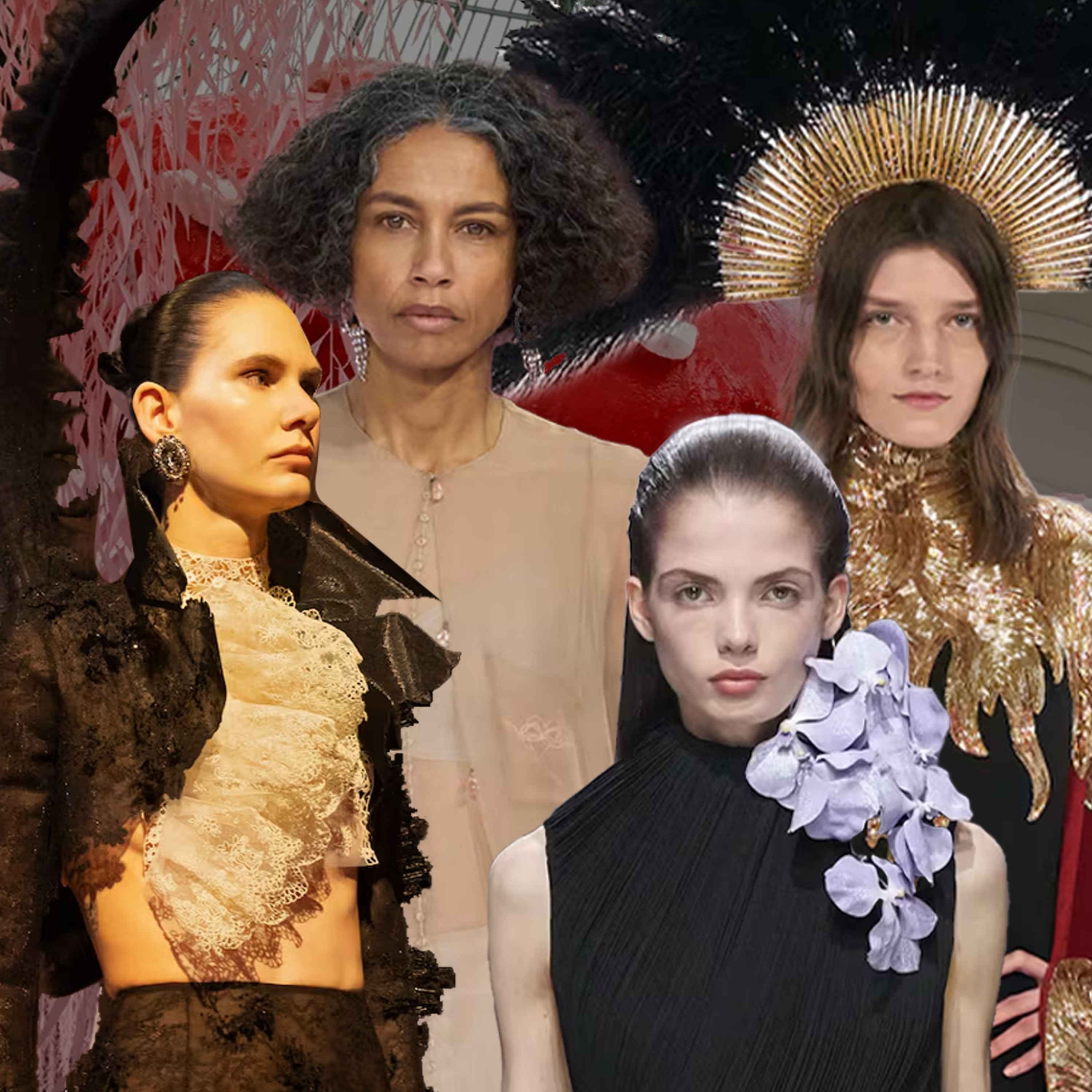
The Business of Fashion Podcast
The Couture Season That Cut Through
00:55:10
Fresh off a week of major moments, Tim Blanks and Imran Amed break down the blockbuster couture debuts at Dior and Chanel and what they signify about the state of the luxury industry.
Loading summary
Transcript88 lines
- [00:00]
A
Foreign.
- [00:05]
B
Hi, this is Imran Ahmed, founder and CEO of the Business of Fashion. Welcome to the BoF Podcast. It's Friday, January 30th. Tim Blanks and I are back from the Haute Couture Spring Summer 2026 shows where the biggest moments of the week actually lived up to all of the anticipation. Jonathan Anderson's debut at Dior reframed couture as a six month creative lab, a backbone that can feed the entire with technique, emotion and ideas. At Chanel, Matthew Blasis stripped away the obvious codes of the house to put construction, movement and the body first, the kind of couture you only fully understand from up close. There was also Valentino's panorama staging and Schiaparelli's turbocharged push for spectacle, all playing out against a tougher luxury backdrop this year.
- [01:00]
A
And I think that's another thing that's struck me about this season, that the energy that everybody we talked to was kind of evoking the words that people used to describe their feelings. I mean, even if it was just Jonathan talking about having a lot of anger he needed to get out or mature, talking about nature and Alessandro talking about the fantasy and fashion, Daniel Roseby talking about turbocharging Schiaparelli.
- [01:33]
B
Without further ado, here's Tim blanks on the BoF podcast. Well, hello, Tim. You have made it back to London and I know you're on route to Berlin tomorrow and I jetted straight from Paris to Abu Dhabi. But we found an hour in between our various travels to connect on Haute Couture Spring Summer 2026, which was quite an important season, I think, before we even get into the specific shows, I'm curious to know what were your expectations before having seen anything before having kind of attended any of the shows? What were your expectations for this week given the big debuts that were happening? They were high. Why high?
- [02:23]
A
Because of the designers who were making debuts in haute couture. The advance word, things we'd seen and heard, I thought were very optimistic. So I was looking forward to it all.
- [02:38]
B
And overall, looking back now, were your high expectations met?
- [02:46]
A
Yes, it's been extraordinary watching the commentary afterwards because, I mean, haters going to hate. But I was, I'm being very positive about what I saw.
- [03:02]
B
Yeah, I have to say I agree with you. I was, I guess, lucky because I'd seen Jonathan Anderson's Dior in December, or at least where it was in December, so I already knew that was looking very strong. I hadn't heard a thing about Chanel, but given how much I respect Mathieu Blasi and what he's doing at Chanel. I had high expectations, too. And I have to say, for both of us to go in with high expectations and coming out feeling like those expectations were met is a very rare thing. It's so exciting to me to see two of the greatest designers working in the industry today at two of the most important brands, and both of them are doing well. And I know there's this kind of tendency to want to pit, you know, Chanel versus Dior or Jonathan versus Mathieu, but I think it's great that both of them are doing such great things.
- [04:05]
A
Yeah, I'm sorry. That gladiatorial aspect that was introduced during all the changes at Ready to Wear, I suppose it's clickbait, isn't it, really? And it just isn't going to go away. There's always going to be that. And then at some point you steel yourself for the told you so's, which will come at some point, I'm sure. But right now, I think given everything that is going on everywhere and when you talk to designers like Alessandra, Michele and Matthieu and Jonathan and Daniel at Rosebery, too, their sensitivity, the world that they're working in is. Seems more acute than it's ever been. And maybe a sense of responsibility and maybe a sense of gratitude, you know, about the positions that they're in and really a very strong intent to make the most of what they've got, what they've been given, which I find very encouraging indeed.
- [05:05]
B
Okay, well, let's dive in a little and let's talk about Dior. You went for a preview the morning of the show. I saw, as I said earlier, the collection in a state of preparation just before Christmas. Now that you've had time to digest it and you've seen the kind of whole cycle, from kind of preview to show to post show reaction, like, dissect it all for me. Tim, what do you make of. Of the Dior reboot, as he called.
- [05:41]
A
Was something great to think about afterwards and just analyze how much of himself he was able to bring into a notion as elevated as Christian Dior haute couture. I love his sensibility. I love Jonathan's kind of magpie. Well, you know, nice way to say it is wunderkammer. The way he can just. He compiles a world from the most arcane sources and then finds incredible artisans to realize very unlikely ideas. And that, you know, his new store for his own. His own brand on Pimlico Road in London. Which combines, you know, interiors and fashion and all the incredible arcana that he likes to collect filtered into Dior in a way that I found kind of heartwarming. But what I also, you know, the fact that, you know, his first looks were inspired by Magdalene Addondo, a ceramicist, a ceramic artist that he loves, to the point where he actually said he would like her career. Those vase shapes that she. Her vases are so beautiful, you could die in the black of her vases, that whatever technique she's mastered for herself. And she was in the front row, and she was holding a bag by the textile artist Sheila Hicks, who designed the bags and bags for those sort of funny Pooley bags for Jonathan's first Ready to wear collection. And so Sheila's in her early 90s. And in my review, I said she is what the Japanese would call a national living treasure. So she was taking photos of Magdalene with her bag across. And Magdalene's a woman of a certain age as well. So this is a moment, a really new moment in couture, I thought, or maybe even thinking back to Christian Dior's relationship with artists. And it's been a thread. You know, Maria Grazia did it, Kim Jones did it. And this kind of looking outward to the. To the world, this embrace of other. Of other aesthetics. I mean, the incredibly elevated handcraft is, of course, a principle of haute couture. But I was just. That was an exciting little moment, I thought, as a little. Kind of a little bracket for the rest of the show. Because the show, I felt, was perhaps one of Jonathan's biggest investments that he'd ever made in beauty. You know, you think of all his work at Loewe, which was so tickled by Surrey all the time, and sort of ambiguous, and that he would play with all sorts of different opposing ideas and do it really, really brilliantly. And that seemed a little bit. When he did it with the Men show a few weeks ago, that was a show that you really had to kind of pick apart later on and try and work out really what was going on. Because it was a very, very ambitious show, I think. And I'm not sure that the ambition was. Was fully matched in what actually appeared on the catwalk. And this time I felt there was a real synthesis. I felt he did what he wanted to do, you know, he achieved what he wanted to achieve. And I think he showed some of the most beautiful things he's ever showed and some of the most joyful clothes he showed.
- [09:13]
B
Yeah, it's interesting, right, because, like, going back to what you were saying just now about Magdalene Odondo and Sheila Hicks and the kind of really almost intimate relationship Jonathan seems to have with these artists who really speak to him. I compare that to the way Maria Grazia, during her very successful tenure at Dior, was inspired by artists, and the inspiration was there, but the way it manifests is very different. Like with Maria Grazia, the artistry would be reflected in the set or those tapestries on the wall that were created by the Chanakya artisans in Mumbai, or a slogan on a T shirt or something like that. That's the way she would channel that inspiration. But for Jonathan, it gets integrated into the actual creations. Like to see those opening looks, those three very striking opening looks in black, white and orange, and then to consider them alongside the vases or urns that Odondo creates, which I wasn't familiar with before. You know, Jonathan had spoke to me about them. You could see this dialogue between artist and designer that was quite interesting and really powerful.
- [10:34]
A
And there's also the way he integrates other sort of historical elements. The accessories in the show I thought were incredible. I mean, just my favorite thing was that weasel bag. Finding a silversmith who could take those silver Victorian bags and actually extend the fringes to the floor as they would have been. I mean, think you learn things in a Jonathan Anderson show, but he created this weasel that actually had a mouth, a weasel bag that based on, I think, a woman with her pet in a Baldini portrait or something. And the weasel's mouth open was just so fabulous. I mean, it's like toys. They're like toys. And then the bags with 18th century fabric and the sort of historicism of it, which is also quite funny, like, witty. It's just a wonderful level that informs the bar jackets being, you know, the bard at the classic silhouette. Yeah. I felt that he got very caught up in just the sort of sheer joy of having. Of being able to create all those things, probably with massive resources that he's never had before. And also talking very much about, you know, being awestruck by the atelier, which was actually a theme of the season. Everybody talking about their ateliers, all these ready to wear designers moving into couture and being confronted with what couture ateliers are capable of. And basically it just becomes a. I dare you to do that. And they go away and they do it.
- [12:13]
B
Yeah. One of the things Jonathan was saying was in the interview that I did with him, he called the ateliers this mini city, and he was comparing the specialized expertise. The very, very specialized expertise between Flu and Taylor and then the kind of embroidery and the feather making and to a mini city like the cheese shop and the butcher.
- [12:37]
A
Yeah.
- [12:37]
B
You know, and it was. It was so. There was almost a sense of awe and wonder that this whole world even exists, you know, completely.
- [12:46]
A
I mean, I. With. When I went to see Alessandro at Valentino before the show, and there were five ateliers working, five separate ateliers working on the clothes. And to go from atelier to atelier, I mean, I can't thread a needle, but I got kind of palpitations when I was walking through. It was. It's just so incredible that that kind of artistry secretly survives.
- [13:15]
B
And Jonathan, actually, I think beyond the kind of expectation that's been placed on him around the kind of re. Energizing Dior, I think he also really felt, or now he feels a sense of responsibility for preserving this craft and challenging those artisans and those ateliers to push their own creativity and create this really interesting situation where he was like, they can do anything. Like, whatever I ask, nobody says no. You know, and that must be. I mean, as a creative person, that must be so refreshing that whatever you want to do, whatever your mind can imagine, whatever you can conceive, someone is going to try to make it possible. And in that way, you know, he said, couture becomes kind of a laboratory for experiments that can eventually make its way into other parts of the operation.
- [14:13]
A
You know, that's always been the cliche that couture is the laboratory and it all filters down into everything else. But he actually laid out a plan that, you know, that couture will be working in the background all the time. And so the ideas will be coming through, will be filtering all the time into other aspects of the business, really using it as a laboratory rather than just saying, oh, we design these things, and then.
- [14:38]
B
Exactly. And instead of trying to do the show in kind of two months between ready to wear shows, he says, I'm going to work on each of those shows for six months, and it's going to be the backbone. And everything else, whether it be a men's show or a women's show or a pre collection, everything else, that they're like almost branches going off of that backbone that can then filter in to the other collections, which I thought was really, really smart and really interesting to go beyond the cliche of it being the laboratory, but to, like, functionally making it work. And I think that's one of the things that's really Struck me the most from our conversation is I know we all think of Jonathan as this incredibly creative individual, but he's also quite operational with the way he thinks about structure, the way he thinks about how it all works together. That is quite rare in a designer. He's thinking about how it all fits together. He's thinking about. At one point in the interview, he talked to me about others, Dior. And then you have the men's that goes off in one direction and the couture that goes off in another direction, and the women's that goes off in another direction. They can all be their own thing, but then they all get united by this Dior thing, which is, you know, kind of different from the way when people talk about one Dior, which is a theme that I think the Dior people have been trying to do for a while. I think kind of people imagined that, like, Dior would feel the same in all of its incarnations, because it's being done by one designer for the first time in a very, very, very long time. I think he sees each of those manifestations or incarnations of Dior as having their own identity. And that's why maybe that men's show, which, you know, admittedly was very polarizing and certainly didn't receive the. The same level of industry or online reception as a couture show. Maybe that's why that show was so polarizing, because he's still figuring out what his men's wants to be. And I kind of respect him for saying, you know, I really want it to have its own thing. You know, I want it to feel. Have its own identity. It doesn't have to feel like it's, you know, maybe that's why they're doing separate shows still. Like, a lot of the brands are just, like, combining the men's and women's together. And he's like, no, this is going to all be, you know, they're all going to fit together, but they're all going to have their own.
- [17:02]
A
Yeah, I think it's better if they exist as separate worlds, to be honest. Not, not, not. Not as radically different as maybe that men's proposition was in. In its delivery. But I. I think the other thing about him is, is that curatorial. Jonathan has this sort of curatorial gene, and he's very good at putting things together. And. And one of the things. One of the little thing, it wasn't such a little thing, but another. That something that I wasn't aware of, and he wasn't even till he went there Which I find quite funny, is that he. He found out he had five in house illustrators at his disposal that he didn't even know existed. So they created that. He told them to interpret the collection in their own way. And did you see. Did you see the wall of pictures that they did, the watercolors and colored pencils?
- [18:00]
B
I didn't see that. I didn't see that.
- [18:03]
A
It was really a throwback to the days when, you know, Dior would have an illustrator. Valentino had an illustrator. Valentino st started as an illustrator. He started as Jean de Se's illustrator in the atelier. And these people would be drawing the clothes, right? They wouldn't. It's pre Polaroid, you know, that they would be capturing the clothes. And these drawings are so beautiful. And he said that when you buy a dress, you will get a drawing of the dress. Just something like that. Finding that. That curatorial way of just. Just seeing what's, you know, in the shadows, that that hasn't been used.
- [18:42]
B
And what did you think, Tim, about this observation that. I think a lot of observers. That's kind of a poorly constructed sentence, observers observing. But people have been saying, well, Jonathan's Dior is not going to fit with the dor client. It's going to alienate that existing client. Do you think that's true for the couture that you saw like that there's not enough kind of pretty stuff. I mean, kind of. You thinking of what Maria Grazia, the client that she really managed to cultivate in her tenure was, you know, there was a lot of pretty dresses, basically.
- [19:26]
A
But how different was the client she cultivated from the client that Raf cultivated? And how different was the client that Raf cultivated from the difference? That's the client that John cultivated. He'll find there'll be another client. I think, yes, it's different from Maria Grazia's. Maria Grazia's aesthetic, I think people pointed out it felt closer to Raph or to John even. There were definitely a few things there that. Some of my favorite things that really did echo things that John had done. And I just loved seeing Jonathan do that. Being able to make those. To make those statements that brought up, evoke, you know, evoke those memories. So he'll find people. I'm sure there were people looking at that who would see things that they'd never thought they would see in Dior before. But also there was quite beautiful, classic stuff, I thought.
- [20:20]
B
Well, interestingly, you know, Ralph's tenure at Dior was quite short. And one of the reasons Why I think it didn't click was although the fashion, the Runway was super strong. And, like, no one's gonna ever forget that first couture show, which, you know, I guess there were echoes of that floral extravaganza in Jonathan's debut this past week. But one of the reasons that, you know, it didn't work is that the. The kind of clientele bit didn't click, you know, and so people said of Maria Grazie as Dior that it had this incredibly strong client resonance, commercial resonance. But perhaps it wasn't setting fashion hearts racing. I think the real question is whether Jonathan can strike the balance where the fashion is really strong, the ideas are really strong. The Runway kind of gets the fashion side of people excited while also being able to engage clients. And what I found was super, super interesting was going, they hosted this cocktail at the. What they called the Villa Dior on the evening of the show. And literally, they had taken all of the looks from the Runway, plus other looks that we hadn't seen, and they merchandise them in an hour and a half in this. In this villa. And we were chatting with Jonathan at the villa, and we were like, how did you get all the clothes? And he said it was chaos. They were running around setting everything up. But when you. When you walked in there, it was filled with clients and all of those, like, upcycled handbags and the. The really, really, like, voluminous Lady Dior shapes that were, like these rounded alligator skin. Like, everything was there. The shoes, and it was all there for. For people to touch and feel. And you could see clients just so excited. And it really. It really convinced me that, actually, I think on the couture side, at least, that there's a real resonance, you know, that that wedding dress that Mona Tugard closed in is already gone in all of the three regions. Because, of course, in couture, they, you know, you can only buy a certain number of those looks from the Runway, and they're allocated by region. And the wedding dress was gone, and I understand a lot of those other looks are also spoken for. So it seems like something is working. And we won't know for sure until the Q1 LVMH results come out for 2026. So that will happen sometime in April, I suppose. But so far, so good. And overall, I think, you know, a really, really promising couture debut from Jonathan. You know, I'm very happy for him. I know he was feeling quite melancholy about the reaction to the men's show, which kind of got, you know, online Audiences up in arms. But, you know, he's, he's got a lot on his plate, that guy. And I'm, I'm really happy for him. I hope he just enjoys the experience because how amazing is it for these guys that are stepping into these houses and like, doing. I feel like we're living a. Through a little bit of fashion history at the moment, which feels quite exciting.
- [23:44]
A
Well, isn't it? Isn't it? It's a bizarre thing to think that they're all young, relatively young. And when you think of how long the grand couturiers or the great designers, two of whom we've lost recently, I mean, in their 90s, is it conceivable that we'd be sitting here in 50 years when I'm in my cryo chamber and Jonathan Anderson would still be at Christian D. Hall?
- [24:15]
B
I mean, who knows? Let's see. I mean, I think this is, this is going to be a test of stamina and energy for him because the amount of work that that man is doing, it's extraordinary. And I just hope he's taking care of himself and. Because it's a lot. It's a lot.
- [24:40]
A
He did say something interesting. I said, I heard you're going to the gym. And he said, it's. He gets his anger out when he goes to the gym. And it's been really helpful. So I thought he has a release. So you're worried about him having a release? He has a release in the gym. But he wasn't the only designer who was talking about anger this week. So that was an interesting, interesting thing, I thought.
- [25:02]
B
We'll be right back with more on the BoF podcast.
- [25:12]
C
If you're not using Ironclad for contracts, you could be leaving millions on the table without knowing it. Every contract holds renewal dates, pricing terms, and obligations you can't afford to miss. But good luck finding them when it matters. Ironclad's AI instantly surfaces. What matters so you can act before opportunities slip away. That's why they're trusted by OpenAI, L' Oreal and Salesforce. Find the savings hiding in your contracts@ironcladapp.com podcast. That's ironcladapp.com podcast.
- [25:50]
B
Well, let's talk now about the other major, major debut, Matub Lazi, who of course has come through the halls of Margiela and worked with Raf at Dior and Raf at Calvin Klein and then became the creative director of Bottega Benetton. Like, notwithstanding all of his experience, stepping into a house like Chanel was also A big, big step up for him. And you and I went to see him on Sunday afternoon for preview. Maybe we should share a little bit about what that preview was like. It's quite magical, wasn't it?
- [26:29]
A
Because he's just very, very, very good at talking about what he does, clarifying what he does, explaining what everything means and how it connects. And what I love is the things that he likes the most out of what he's doing are often quite surprising, I find. So I think mature is a very rare bird in fashion indeed.
- [26:55]
B
And birds were featuring quite prominently on his mood board. There was no fashion lux at all. There was no imagery by fashion photographers. It was literally a wall of birds.
- [27:09]
A
Beautiful.
- [27:10]
B
The most beautiful birds from all over the world. And then he started actually talking about a haiku poem where everything began for his couture.
- [27:22]
A
I'm not going to say the whole poem, but when he said a bird on a mushroom, that's all started with this line from a haiku, a bird on a mushroom. And that reminded me of one of my favorite old Human League songs, a crow and a baby, which was. And a crow and a baby is an amazing song. And a bird on a mushroom kind of. I thought, yeah, I get that. I get that as a starting point. And the bird was the mushrooms. What can you say about those mushrooms? The mycelia. This is a dawning of the age of mycelia. The set was a psychedelic construction of a sort of pink weeping willows and massive, massive mushrooms. Very magical mushrooms. And funnily enough, Alessandro again talking about magic mushrooms when he was bringing up what fashion is confronted by this, the world that confronts us at the moment, a world of war and violence and what couture means. He said it's almost like an escape. You take a magic mushroom and an escape.
- [28:30]
B
And then Daniel Rosebery also was referencing.
- [28:34]
A
The natural world and Jonathan talking about nature.
- [28:38]
B
Yeah, fashion's whole obsession with the natural world and nature this season is maybe a response to, like, first of all, that's where, like, there's so much beauty that maybe we take for granted. But also as a reaction to everything that's happening right now is quite distressing to kind of see interspersed in my Instagram feed, you know, all of the terrible news coming out of Minnesota on Instagram and then couture. Couture shows. But back to Matthieu, it was, you know, the bird and the mushroom. And then also this kind of desire to almost strip Chanel couture back from the codes that we all associate with Chanel and he said he wanted it to look like Chanel, but without the. The kind of codes of the tweed or the chain. You know, he just wanted to take that all out and somehow make it still look Chanel. And he was quite successful. It's still. It's still really that opening look of that super, super light fabric. It still looked like a Chanel suit.
- [29:53]
A
But he said it. He said it a few times just as a salutary reminder that before there is ready to wear, couture was what designers made. And they would dress a woman morning, noon, and night. A couture client only wore clothes that were made for her. And so Chanel would do a lot of things that didn't have the embellishment, all the decorative elements that people associate with couture and with the Chanel codes. So that there was a very strong, I thought, day wear component in the collection, which, of course, had people online saying, that doesn't look like couture, you know, which is exactly Matthieu's point, that couture isn't just a ball gown and.
- [30:47]
B
It doesn't have to look extravagant or crazy. In fact, he said he took some of the more kind of extravagant looks out of the collection because he was trying to underscore this point, that couture and the jewelry.
- [31:01]
A
He took the jewelry out as well.
- [31:03]
B
Yeah. About how things are made, not what the end product looks like. Do you remember that tailored black dress?
- [31:11]
A
Yeah.
- [31:11]
B
The strap. You know, the strap, yeah. He said, you know, we looked at that dress maybe for a few minutes, and he said, this is so complex to make. If you see the inside of it, the way it's constructed is highly complicated. When you see it from the outside, when you see it in a flat image that's not perceptible to people.
- [31:35]
A
A black crepe dress. And the crepe was the crepe that Chanel used, which he had remade. And his actual words were, it's a fucking computer inside. Yeah, that was its actual words.
- [31:47]
B
Yeah. Yes, you're right. And so it was such a important, maybe slightly nuanced point he was trying to make. But when that, you know, although people who, you know, like, you and I, who were, like, super lucky to go and, like, talk to him about it and see it up close and hear the thinking about it and start with the haiku and the birds and the stripping everything away, when that was put onto a catwalk and then transmitted to the masses online, there was a challenge for him because it just didn't. People didn't understand that point for some reason, like it didn't come across. I don't think Matthieu is the kind of guy who's going to really care about that because I think he's, he's not worried so much about how other people perceive it or think about it. You know, I think he, you know, he said he reads a few reviews and he looks at a few things. But do you think that's a kind of tactical error or something that designers must consider now, which is not only engaging the people, the clients who are going to see it up close, but also thinking, you know, couture as this brand building halo, like it has to be this dream factory, it has to be this thing. Or, or do you think it's okay that he's taken this approach?
- [33:09]
A
I was wondering about this afterwards because when you're with them and you're looking at the clothes and you're looking at the logic of them and intelligence of them and the thought that shapes them, I kind of wonder about that Grand Palais situation. In the end, those first few looks, the mousseline, the colored mousselines with that exquisite lingerie, I mean that lingerie is enough to turn anybody into a fetishist. The gorgeous lingerie that was under those outfits because they were quite sheer and the embroidery of the mushrooms and the birds, the delicacy of, the delicacy of a lot of that stuff.
- [33:53]
B
And it was all inset. Remember, it was inset.
- [33:56]
A
You couldn't. There was one look I loved, which it was a shirt and a skirt and the model was carrying her jacket and it was like a, I called it a kind of crosshatch tulle. It was very see through. She was wearing, you know, the underpinnings. But when you got really, really close to it, like microscopically close, all the pockets were anchored with these tiny little budgies on swings. And I mean in the Grand Palais you'd need the Hubble telescope to see those things. And so I was thinking that the spectacle of that the mushrooms were amazing, the pink weeping willows were amazing, the sound in that place is amazing. His soundtrack was, you know, this very resonant. His choice of music is very idiosyncratic. But I just thought how, how much are people missing? You know, then obviously the people start saying that look, that's a ready to wear collection, that's not a couture collection, because it's not tada like that. And then of course it's part of the Chanel brand is the Grand Palais, you know, These big shows. But I. And we'd seen the clothes, but I kept thinking, wow, I really wish, I hope that there would be a way that people could really experience how much work there is in all those things that are so subtle but are so rich. So that was a little thing that was going through my mind.
- [35:30]
B
Yeah, we were talking about that in the car on the way back with Nikhil, who said, you know, like, when you have clothes that are that fine and that subtle, to put them in a big space like the Grand Palais in that set, which, you know, as soon as you walked in, it was like, oh, this is a Karl Lagerfeld kind of set.
- [35:52]
A
Right.
- [35:52]
B
This is. We're back to that kind of massive experience which is quite exciting for those of us who remember those times when you could walk into the Grand Play and it was like a supermarket or an iceberg or a spaceship or whatever it might be. We were like, oh, we're back to that level of production again. But when you're. When you're showing clothes with that level of subtlety and the fine details, maybe it's all a bit overwhelming for like, what is ultimately a clothes about the details.
- [36:19]
A
I guess there's another way to look at it that it does kind of underscore in a very graphic way that couture is the ultimate private pleasure. You know, the clothes are for the women who, as he said, you know, this is about the woman who was wearing these clothes. So the whole notion of the body being so important, that the clothes are designed on the body. Body of a woman who was going to move. And then the clothes are round, you know, these are not flat. These clothes are designed around a body. Which is why when he was. When they were hanging, when he was talking about stripping things, it's been stripping things out. And the clothes were quite long and linear when they were just hanging. I thought they were surprised, looked surprisingly long. But he said when the body starts to move, they move with that. They move up the body, they move. And I thought that was. And they did. It's that sort of the cut, the skill, the sort of magic of all of that. It's quite mesmerizing.
- [37:18]
B
Well, it was magical and it was. I mean, I loved it. I loved the colors, I loved the light fabrics. I loved the whole experience of it. But then I realized, you know, like, it's pretty easy for people like you and me to say that when we've had the kind of up close thing as well. So, like, I do think that maybe more of the consideration Given the role that couture plays in this house, has to be about how do you engage that audience, you know?
- [37:47]
A
But in speaking to Bruno Pavlovski, we did get a sense of how they're engaging that audience. And this is going to be. These are clothes that are made to build relationships with. You know, when people encounter these clothes and all the outreach that Chanel will be doing about them, then you will get that wow reaction. You'll get people who really see how these clothes fit into. And we are talking about haute couture, aren't we? We're talking about the pinnacle of the pinnacle here and the ideas here. You can see how these ideas will make their way into the mainstream of Chanel. His whole notion that he's creating a wardrobe here, that idea will be fully realized when it meets a clientele, a client base. I mean, they're just so beautiful that you can't imagine not. I loved the, you know, like, all the shoes being slingbacks. Yeah, I loved that. Just that statement. And the mushroom heels on the shoes and the tiny little bird sitting on the mushroom heel on the shoe. How long would that little bird last? I don't know when you're kicking around in heels.
- [39:03]
B
But anyway, I don't know how much women who wear couture kick around. You know, like, they're probably going from the. The car to the restaurant to the grand event somewhere in the. In the world.
- [39:17]
A
But just the idea that they're there as a little. They're there for you. They're a little thing that. That's there for you. Oh, and the other beautiful things, those little embroidery things that he made where you can choose the iconography he created. And, Stephanie, the model casting. You have to talk about the model casting in that show, the model casting.
- [39:37]
B
I mean. Cause he found her. She was from Pennsylvania, right.
- [39:40]
A
But she's from half Italian, half Guadeloupe. And he asked her what she wanted, and he said she wanted a little. She'd like a little heart over her heart, because you get a selection of icons that you can pop on your clothes to personalize them. And she wanted a love letter. He made these Mussolini Transparent Mussolin 2255 bags, a classic bag, as a sort of not a functional accessory, but as a decorative accessory with a little Mussolini chain. And she wanted a love letter from her husband that her husband had written her. So they embroidered his words on a handkerchief and put it in just for her. Nobody's ever going to see that. I mean, wow. Talk about making people feel special.
- [40:25]
B
Well, I think that's one of the things Mathieu is starting to become known for, is that relationship he fosters with the models. You know, we saw the impact that that had with Awar Odiang, who closed his Ready to Wear show. We saw the impact that that had Bavita Mandava, who opened the Metier d' Art show and closed this couture show. And now, now with Stephanie, who opened this couture show. Like, he really develops this personal rapport with these models to make them really kind of feel that emotion that he's trying to put into the clothes, which I think is quite a magical way of working with the models. I don't think that he's thinking about couture in quite the same way as Jonathan in that laboratory way. No, you know, for him, it's really this dream factory. Like, he's, like, trying to create these emotions and these. I was kind of cast under his spell. I have to say, it was absolutely wonderful to see those collections and hear him talk about it.
- [41:31]
A
So I wonder, with his bride's look, which of course wasn't pigeon feathers, that. I got that wrong. It was dove feathers and mother of pearl. I got that very wrong. His bride was wearing almost like a pajama shirt and a skirt and she had like, a white raffia bird's nest wrapping her hair. It was so simple. And that was Bovita. That was Bavita, but. I know, but it felt so simple and yet it's so. It felt so completely modern to me that I loved that.
- [42:06]
B
We'll be right back with more on the BoF podcast. Okay, well, congratulations to Jonathan and congratulations to Matthia on their debuts. There were obviously other shows that we should talk about, and since we were talking about staging. Tim, I'd love your take on that Valentino show, which I had to watch on my phone here in Abu Dhabi because I had left Paris by that stage. But I have to say, it really was great to experience a show like that. And on my phone it looked absolutely incredible. You know, it was clearly. He was such a novel way of staging a show with people peeking through those peepholes into those circular little areas he'd created where everyone's looking on. And the lighting, I mean, what did he call them?
- [43:06]
A
But, well, it's actually something in his show notes, really extraordinary show notes this time, even more extraordinary than ever. In the 19th century, they were called. Presumably it was a German innovation because they were called Kaiser Panoramas, but they were sort of movie theaters before there were movie theaters. And they had these moving. Like a carousel, you know, like a stereoscope. So they had a carousel of moving images. And every time the image changed, a bell would ring. So the invitation to the show was actually a little bell. And the show is called Specula Mundi, which means Mirrors of the world. And that was the way people used to experience far off lands and ancient ruins and things. They'd go to a Kaiser panorama and they'd all sit and they'd look in through these peepholes and these images would scroll past them. And when you walked in and saw all these pods, it was really like, wow. I mean, what the hell is this? Because you never know with him. You know, all the sets that we've walked into with Alessandro shows over the years, there's always this set that kind of. What is this? What have we just walked into? And then when it started, they clicked up the thing like a proper peep show in a. You know, when you think of all the, all the associations of a peep show, you know, that, that weird sort of sex in the dark thing. And, and also, and also the whole relationship that people have with movies, sitting in the dark, watching a film.
- [44:40]
B
So wait a minute, when you got in there, those peepholes weren't open yet?
- [44:45]
A
No, they were closed.
- [44:46]
B
So you didn't, you didn't. Like we did. You did it as an audience. You didn't know that you were gonna have to turn around and look inside those.
- [44:54]
A
Well, you sitting there, you were sitting there on your stool and there was this thing behind you. It was obviously it was. Yeah, but I didn't know what, I didn't know how the show was. You know, is it gonna be a movie or what? I didn't know how the show would actually unfold. Then you spun around, the guy lifted up the thing, and the models came in and posed and so on. And you had such an amazing view of them. I, I thought at one point, is the glass magnifying glass? Because they felt so close, but they felt so clear and so close. It wasn't magnifying glass, it's just my eyes playing tricks on me. But they stood and they did. Their little pose went out, another one would come in and the music was. Instead of the little dingling bell telling you where somebody new would come in, there'd be this gust of symphonic techno, which was intercut with classical music. And this, you know, he does love his techno, the blast of thunderous techno. And then Lacmay by Dalib or something would play. And then it was this constant kind of toing and froing between classical and techno and the. And the show. There was a lot of looks in the show, but it felt. It just moved so well. And you saw. He wanted it with the thing about the Kaiser Panorama. In Alessandro's notes, he said it stopped time in a way that you could look at these things that you'd never seen before, like a. The pyramids in Egypt or the rainforests in the Amazon or something. You could kind of contemplate them. And he wanted to slow things down. He wanted people to get a good look at what he had done, because the detail on these things. Speaking of ateliers, my God. And the other thing about looking, the notion of looking, because the mythology of the cinema, you know, that Valentino was obsessed with films, with Hollywood. Alessandro is obsessed with Holly, with Hollywood. That was a big connection between the two of them. And movie stars, you know, Alessandro's favorite mother's favorite movie star was Lana Turner, and I think she was one of Valentino's favorite movie stars. And he talked his entire life about this film called Ziegfeld Girl that had Hedy Lamar, Lana Turner, and Judy Garland. And that was the reason he became a designer, he used to say. And he would make people watch this film for his whole life. He would screen this film for his friends. And so this is. This is Alessandro's feeding into that. And so it was a sort of. It was the most acute fashion fantasy, the whole thing. This was not a sort of tip of the cap to ready to a day wear scene at all. There were some beautiful, very sort of 40s suits, but it was mostly grand, beautiful, spectacular dresses. Everything from a sort of the queen of outer space, huge coronas on the head, to a dress that, you know, Faye Dunaway might have worn in the 1980s in Valentino red. Actually, that was a special little tribute, but it was, you know, all of that was done, obviously, before Valentino died. And in his. He'd written a letter. Alessandro had written a letter that he said that we continue to work within this space, not to fill an absence, but to preserve it. Only by accepting such a void with no intention to fill it, can Valentino's legacy remain what it has always been. An idea of beauty conceived as a noble form of responsibility towards time, bodies and the world we are given to cross. I like that sense of. He is honoring the absence.
- [48:43]
B
Yeah. And the interesting notion in there is that he's saying you don't honor that absence by trying to fill the gap. You know, that's quite interesting.
- [48:53]
A
Yeah, exactly. And what he did was so spectacular. Another thing Alessandro said about his work, he said, there is no fantasy without beauty. There is no beauty without fantasy, and there is no freedom without beauty. Beauty and fantasy. And that feels to me like such a fundamental thing for fashion. You know, if the ongoing debate about fashion's relevance in the world. I mean, it feels to me that those words there kind of at least attempt to establish some kind of position for fashion in a world which seems to really have a smaller and smaller place for.
- [49:39]
B
Well, the mood music around the industry doesn't. Certainly doesn't feel positive. You know, Mr. Arnault got up to kind of at the shareholders meeting, the annual general meeting, I think the day after the Dior show, or maybe it was Wednesday, and basically said, 2026 is not going to be easy. 2025 wasn't easy, and 2026 is not going to be easy. And so there is. It's really interesting to see these creative revivals or attempted revivals play out against a pretty grim financial situation for the industry. And, you know, I think everyone's pinning their hopes that these designers are going to be able to, like, get people back into stores. And there's a whole other podcast conversation, Tim, that you and I could have about the role that fashion is playing right now. I mean, you have been saying to me for a while, and I feel it as well, that fashion is kind of losing its. I don't know, there's something going on. It's, like, really hard to put your finger on it.
- [50:44]
A
I think things are suspended, and I am suspended. This is another thing, a suspended animation. And I think that's another thing that's struck me about this season, that the energy that everybody we talk to was kind of evoking everybody, like the words that people used to describe their feelings. I mean, even if it was just Jonathan talking about having a lot of anger, he needed to get out or mature, talking about nature, and Alessandro talking about the fantasy and fashion, you know, and the freedom. And then Daniel Rosebery talking about turbocharging Schiaparelli he used. He wanted his collection to be turbocharged, which is why he, you know, he mentioned Alien, the model with a shaved head, and that all the protuberances from the scorpion's tail. And he talked about. He said, this is the kind of fashion I wanted to see when I was watching fashion on television when I was nine years old.
- [51:53]
B
And he said. He actually, Tim, you're being humble. He said when he was watching. Watching Fashionphile on television at 9 years old. So many of us can relate to that. But, yeah, he was trying. It felt like, you know, for. For Daniel, who's seeing these two big debuts happening at these two huge couture houses. And we have to remember, Schiaparelli is still only a few years into its resurrection or resuscitation. You know, he was really trying to up his game this season. It seemed like he was trying to, like, shift it into, like, a new direction. It's not even a new direction. A whole new level, really. And he was talking about that kind of fashion, that kind of otherworldly fashion that he grew up watching, you know. Yeah.
- [52:41]
A
And you know that there were echoes of McQueen, like, the horns sticking out of things. And it was a pretty.
- [52:48]
B
It was a really memorable, remarkable show. And actually, when I arrived here, that was one of the shows people were asking me about, how was the Schiaparelli show? Because the way I think that was one of those shows that really resonated with the audience that was watching it from afar. So good for him to really try to keep pushing himself. And I think one of my observations is when you have in the business world, and I guess also in any competitive sport, when. When you bring in new talent and you're kind of creating, you kind of lift everybody up, right? It forces everyone to raise the game. And that's maybe one of the impacts of these new creative directors coming into these houses. Like, we're all hoping for this creative renewal, but part of the way the creative renewal happens is not just individually within each of these houses. It happens collectively as an industry, which is, you know, which has to find its way out of this formulaic rut that we were all kind of complaining about for in the post Covid years, where everything just became about merchandise and selling more stuff. Like, what we're looking for is, like, genuine innovation, creativity and excitement that gets people interested in fashion again. So, yeah, like, let's. Let's see what happens. It was quite a pivotal season, but. But as far as couture seasons go, that was definitely one of the most satisfying for me, personally.
- [54:21]
A
I think it's interesting, too, that there's a. I mean, I love paradox. I love paradox in all things. I love the way that it's such a challenge and it's so creative. It can inspire such creativity. And at its heart, haute couture is something very intimate. It's a relationship between a client and her clothes. But there was a cinematic quality this season. I thought that was a paradoxical element, especially, I think, of each of those shows, we all end up. I ended up talking about movies or just about everybody in the interviews.
- [55:01]
B
Well, I know you have to get ready for your next trip to Berlin Fashion Week. I can't wait to hear about that because I haven't been to Berlin Fashion Week for ages.
- [55:12]
A
No, me neither. Apparently. It's a good time to go.
- [55:15]
B
Yeah, I mean, I think it's nice to step out of the. The kind of regular circuit every once in a while.
- [55:21]
A
It's minus. It's minus 10.
- [55:23]
B
So maybe not that exciting to go now. Maybe I'll go in July. But thanks for your. Thanks for your time, Tim.
- [55:32]
A
And okay, thanks, Amaranth. Have fun.
- [55:34]
B
Goodbye, Tim.
- [55:35]
A
Bye, Imran. Safe trip.
- [55:38]
B
The BoF podcast is edited and produced by Olivia Davies and Eric Brea.
- [55:51]
D
Hi, this is Jonathan Fields from Good Life Project. If you're not using Ironclad for contracts, you could be leaving millions on the table without knowing it. Every contract holds renewal dates, pricing terms and obligations you can't afford to miss. But good luck finding them when it matters. Ironclad's AI instantly surfaces what matters so you can act before opportunities slip away. That's why they're trusted by OpenAI, L' Oreal and Salesforce. Find the savings hiding in your contracts@ironcladapp.com podcast that's ironcladapp.com podcast.
- [56:24]
E
The new year brings new health goals and wealth goals. Protecting your identity is an important step. Your info is in endless places that could expose you to identity theft leading to lost funds. LifeLock monitors millions of data points per second. If your identity is stolen, our restoration specialists will fix it, guaranteed or your money back. Resolve to make identity, health and wealth part of your New year's goals. With LifeLock, save up to 40% your first year. Visit LifeLock.com SpecialOffer terms apply.