← The Business of Fashion Podcast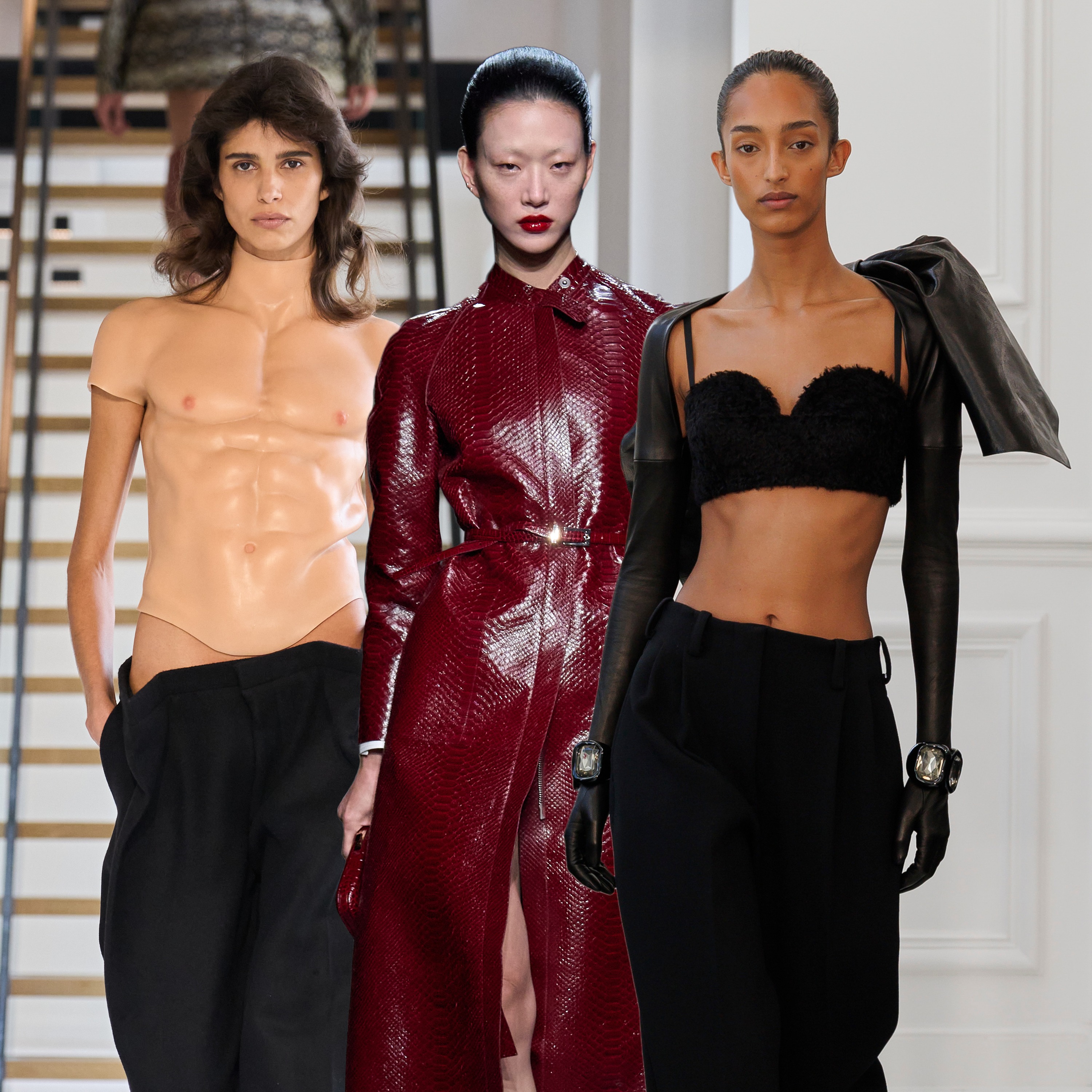
The Business of Fashion Podcast
Tim Blanks and Imran Amed Reflect on Autumn/Winter 2025
00:52:49
BoF editor-at-large Tim Blanks and Imran Amed, BoF founder and editor-in-chief look back at the key moments of fashion month, from Haider Ackermann’s debut at Tom Ford to Sarah Burton’s first collection for Givenchy.
Loading summary
Transcript153 lines
- [00:00]
Tim Blanks
Foreign.
- [00:04]
Imran Ahmed
This is Imran Ahmed, founder and CEO of the Business of Fashion. Welcome to the BoF podcast. It's Friday, March 14th. It's that special time again when Tim Blanks and I review the season that was, in this case, the autumn, winter 2025 shows. But this season, given an unfortunate injury, Tim joined Fashion Month from his laptop instead of the front row, providing us with two different perspectives from which to understand what designers and brands were trying to say. This season, all eyes were on the debuts of Heider Ackerman at Tom Ford and Sarah Burton at Givenchy. Meanwhile, other designers continued to push boundaries with daring silhouettes that either stood away from the body or felt purposely incomplete. Behind the new faces and unconventional shapes was a deeper exploration of eroticism. Designers seemed united by a playful fascination with the body and a desire to subtly challenge its boundaries.
- [01:04]
Tim Blanks
Fashion is a very fetishistic art form, obviously. Its fixations, you know, the body and the way it fetishizes objects and so on. It's a very. It is about fetishizing things, fetishizing beauty and ugliness and a lot of different things coming up over the last few years.
- [01:24]
Imran Ahmed
Without further ado, here's Tim blanks on the BoF podcast. So, Tim Blanks, this was the first Fashion Week that we've done without you since you first joined the BoF team. Was that 2015?
- [01:43]
Tim Blanks
Yep.
- [01:44]
Imran Ahmed
My first fashion week without you in 10 years. And we missed you so much.
- [01:50]
Tim Blanks
Oh, thank you. That's so sweet.
- [01:51]
Imran Ahmed
And everyone was asking about you, like, where's Tim? How's Tim? What's going on with Tim? So for everyone's sake, can you just let us know why you had to miss Fashion Week this season?
- [02:04]
Tim Blanks
Do you think people care? Really?
- [02:06]
Imran Ahmed
The number of people I had to explain what was going on?
- [02:09]
Tim Blanks
I care because it's a story of human frailty and human stupidity. And it's been a real life lesson for me. So maybe it'll help other people. So I was walking down Bond street, gazing upwards, slack jawed at the Cartier Christmas decorations, and I tripped on a curb and I came down so hard. Nobody can understand how I managed to fall so hard, but I guess it was such a little stumble that I didn't even register it until it was too late. And I managed to break my arm in three places and fracture five ribs. So my X ray of my rib cage, it looked like the San Andreas fault running down my ribs. So I was totally out of action.
- [02:48]
Imran Ahmed
And how are you feeling now? Are you getting better?
- [02:51]
Tim Blanks
I'm clawing my Way back to a semblance of humanity. I can move now. I have mobility back, but I'm still in a lot of pain, which is a drag. But I've just got to get back to stuff. But anyway, I did watch Fashion Weeks from afar.
- [03:06]
Imran Ahmed
You know, usually when you and I have this conversation at the end of every season, we've experienced it together, we've been in the back of the car, we've exchanged notes. You know, we've sat next to each other at every show. So we're kind of like going through the season together. But in a way, this conversation will be really interesting this season because we've. You've experienced Fashion Week in a completely different way. Yeah, completely from the way I've experienced Fashion Week. I think that presents an opportunity for a really interesting conversation. So I think we should make the best of the fact that you were away. Not that I'm not hopeful for you to come back and be with us again next season because it was definitely less entertaining and less witty and less fun without you. But just generally speaking, Tim, as someone, save for the moment during the pandemic when we all experienced Fashion Week virtually, because there was no Fashion Week save for that experience, this is the first Fashion Week you've missed in almost four decades. So what was it like?
- [04:14]
Tim Blanks
Well, missed completely like this. Like really not shown up for any of it. It was super interesting. It was very, very entertaining. And, you know, I've been bagging on for years about how fashion. Fashion is an entertainment medium, you know, if it's been an entertainment medium for a long, long time. And this here, it really was, and I would say reducing it to a kind of bare formula, watching the shows as I was watching them in live stream or on YouTube. It's the difference between watching theater or a movie, watching a play or a movie, with all the things that theater involves, the atmosphere, the liveness, are kind of corporeality of a fashion show. And also everything that goes around it, the getting in, the weight, all that stuff that goes on, going backstage, scrums, being jostled, and all the things that would have been completely toxic for me with a broken arm replaced by this kind of clinical cinematic experience without the designers of fashion houses necessarily making things that were cinematic. It's just the way you're responding to them on your laptop in absolute high definition and lots and lots of close ups and a sense of, I wouldn't say a narrative always, but there is a sense of something unfolding. You know, you're going from point a to point Z while you're watching a show. And it's amazing how 10 minutes can suddenly seem like really, really long but fascinating. And I watched a lot of things that maybe I wouldn't normally have paid a lot of mind to. It was a horrible admission. I also got completely addicted to step and repeat because that obviously is part of the thing which that's a big difference between watching fashion during the pandemic and watching it now. That now it is all about a step and repeat and you meet the audience. And that was kind of fascinating. I compared it to being softened up in a way. If you got a really good step and repeat, you were really kind of into the show that came after it. I mean, it sounds so facile, but hey, that's what life, life when you're kind of bedridden is, I guess.
- [06:36]
Imran Ahmed
So, Tim, were you kind of doing appointment watching in terms of like blocking out time and like watching it live or you were you watching it more on demand and did it make a difference?
- [06:47]
Tim Blanks
No, I thought, I thought watch. I watched it live. You know, it's something to break up the day. I know I watched it live as as much as I could. And then obviously some of the shows I wanted to see weren't live. So I had, I had to find them. And then when I'm watching them on YouTube, I'm not sure whether they have been edited and I'm not sure whether I'm watching a show with the actual music or that was, that was from the show, which is a little bit. It's not, it's not the same. The live stream is much more, a much more dynamic proposition.
- [07:19]
Imran Ahmed
And did you get the feeling, I mean, we all know that the brands during the pandemic, a lot of them were like not very digitally savvy about creating content for the Internet, as you mentioned, you know, a 10 minute show in person is okay, but a 10 minute show on the Internet can feel like a long time just because our attention spans when we're looking at moving image. Now, I heard about this concept called jolts per minute at some point, which is like how frequently they cut away to a new angle or a new shot. And so like in a fashion show, like, you just don't have as much chance to do that. But did you get the sense that some brands were better at creating something engaging in terms of the way they captured information?
- [08:04]
Tim Blanks
What you're talking about is that sort of newsroom thing where you never stay on anything for longer than 15 seconds. I learned that when I was doing a show for the CBC and working with CBC editors. I would say, you know, stay on that, stay on that talking head. No, no, no, cut away, blah, blah, blah. So there is a, there is a little bit of that and there. But there are also people who linger, I think more. A more interesting point perhaps. And this is where you thank God for the drone because lots and lots of overheads. You know, the Balenciaga maze, you got a sense of it being a maze, which you probably wouldn't have. You wouldn't have. You would have had a sense of that on the ground. But looking above, you could see the maze, like quality of it. That was a very, very hard show to create a kind of rhythm in because there were people walking in all directions down little corridors. So you never got a sense, you didn't have that complete sense of one look coming on, progressing through the maze and walking off. You know, it was all, it's quite choppy while you're watching it. Whereas other shows is much more, you know, you see the model coming out, coming down, going off and blah, blah, blah. It's much more linear. I don't know if I particularly prefer one or the other. I do like lots of close ups. I'm a close up guy, which is.
- [09:16]
Imran Ahmed
Something we don't get often at a show because we can't see like the details of the clothes sometimes. Cause we're seated, the Runway's really big and we're looking at it from like five or six feet away. So you get, I guess you get a little bit more up close and personal.
- [09:32]
Tim Blanks
Oh, I mean, kudos to say to whoever did the hair and makeup at Alaia, for example. I mean, so, so, so many shows where you really get to appreciate the craftsmanship, you know, the kind of. No, the artistry, I should say that you don't get in a, you know, all the stuff we always talk about in a fashion show, the work that goes into a fashion show, the hundreds of people who are responsible for creating it and how difficult it is to really, really fully appreciate what they do when you're sitting in an audience. Even though this season everything was shrunk a lot and it was all about being close, you know, Givenchy or Balenciaga or, you know, venues where the models snaked through very, very narrow alleyways of people on either side. And when you, when you've got a grand, when you've got an overview you're looking for, what are the new things happening here? What is this season telling me about where fashion is Right now, was there.
- [10:33]
Imran Ahmed
A commercial angle to the way they shot it? Like, would they be really focused on the bags? Or like, you know, would they be, like, did you get a sense that there was any commercial thinking around, like, what they focused on during a show?
- [10:46]
Tim Blanks
No, not really. I didn't actually really look at all the big shows. Maybe I should have, but I didn't look at them in the. In the kind of mesmerized way I looked at some other shows. No, I didn't. I mean, of course they do that, but I would need to have your eyes. I would need to have Robert Williams eyes to look at things and appreciate the commercial details. Because I'm just going, oh, isn't that lovely? You know?
- [11:10]
Imran Ahmed
Yeah, I never. I never really watch fashion shows online, but maybe that would be an interesting exercise for me at some point.
- [11:19]
Tim Blanks
It's the ones you want to. The ones you want to watch again that I think are really interesting, you know, where you think, oh, I'd really like to go back and pick up on that detail or that model or that person in the step and repeat.
- [11:33]
Imran Ahmed
Okay, well, we'll get to step and repeats a bit later because I'm definitely curious to understand because that's something that, you know, we just walk right past those things when we enter a show. We don't really pay attention to them. But I guess as you're waiting for a show to start, that becomes quite a focal point. I wanted to focus at first on the two most important debuts of the season. Heider Ackerman at Tom Ford and Sarah Burton at Givenchy. And both of those brands and designers went to extra lengths to spend time with you from afar and really give you in depth virtual previews of not just the collections, but the shows themselves, the venues, the thinking behind the show, like, everything so that you could review those shows as if you were there. And, I mean, you could feel the response in the room to both of those shows immediately. But I'm curious about how you experience those shows. You know, what you learned about those shows from your conversations with the designers. And, you know, what, you think this bodes for the future of Givenchy and Tom Ford under new creative leadership?
- [12:47]
Tim Blanks
Well, I was very careful, as careful as I could be, that I've always been so dubious about reviewing shows when they're not actually there. So what we have been doing at BoF is doing these kind of previews, which were like a designer profile that would come out the day of the show. We have been doing that for a little while, and I was thinking more along those lines, but this time incorporating a little bit more of the collection, because the designers were prepared to show me clothes, which they're not always prepared to do, and also talk about the venues and the music and all that kind of stuff. So there was more of. It was more of a fully rounded picture. But then when you actually see it, it's like it's inevitably going to be different from what we were talking about. I mean, for one thing, they can tell you what the hair and makeup might be. But then when you actually see it, especially for something like Tom Ford, because that hair and makeup was so dramatic and so specific. I thought one of the most specifically Tom Ford bits of the show because it reminded me of all the work he's done with Stephen Klein in the past. In both cases, with both those designers, the houses that they were taking over needed a heavy, heavy refreshment slash change. And I think both designers brought their A game, I should say, to the challenge. Sarah's was probably more challenging because she had so little time and she didn't have her team. So what she did, I thought was quite remarkable, what she managed to do. She's just such a cool, collected, calm, just a wonderful, wonderful person. Haida thinking about, you know, is that the job Haida was born to do? You know, I thought talking to him was so fascinating because when he was talking about, you think about Tom Ford and you think about Studio 54, it's one of the first things that comes to mind because it was such a big. Such an influence. That whole New York moment was such a huge influence on him. And Hyde is saying, well, you know, the 70s, it's not really my thing. It didn't really mean that much to me. But he did such a good job of taking an essence and then bringing his own rigor. Tom was a rigorous designer as well. And I think they do share a sort of libertine sensibility, which is very intriguing in different ways. I mean, Haida's. Tom's like a sexualist and Haida's a sensualist. But the sort of erotic rigor in both their work I thought was there was a compatibility there. And I think Haida did a wonderful job of doing a Haida Ackerman for Tom Ford collection by honoring the essence of one, but really bringing the dynamism of the new.
- [15:43]
Imran Ahmed
I mean, I was seated right across from Tom Ford at that show, so I was kind of able to gauge and just watch him experiencing it. And, you know, I saw Heider come out at the end and give Tom a big hug, which was kind of like such a beautiful moment, but for me, experiencing that show in person, not only did I get to see the kind of emotion behind it for both of them, because it's such a big moment. You know, when I first heard the Heider Ackerman for Tom Ford announcement, the picture I had in my head of what it would be, that's what it was. Oh, like it was. I just. As soon as I heard Heider for Tom Ford, like, it instantly felt like there could be something really synergistic. And you've put it so well in comparing the sexuality of Tom Ford and the sensuality of Heider, but, like, they do share the same spirit and the reaction and the feeling and the emotion that was in that very, very small show of something like 200 people now, people were ecstatic afterwards. I mean, I've never seen a bum rush like that after a show for a very, very long time in terms of just people waiting and jamming themselves to try to get in. And right. I was standing with Domenico de Soleil, the original founder CEO of the brand, alongside Tom Ford. And, you know, when he was greeting Haidar, he said something like, well, you secured our legacy. And you could just see that they were, you know, Tom was so happy afterwards. Domenico was ecstatic. And there was just a really positive energy in the space because both of.
- [17:19]
Tim Blanks
Those designers have very, very passionate constituencies. You know, there are ardent Tom fans and there are ardent Haida fans. And there would have been concerns, I suppose, in both parties. But then for the. To see them come together like that, I mean, one thing, because we talked about what the set was, I was quite hyped up on what Haida had done with Nicholas Bilstein, who, you know, does Balenciaga's sets, that didn't come across so massively in the. As. As far as I could tell, in the actual physical moment, it was so transgressive. I think the idea for the staging bordering on sort of Basement at Bergen kind of stuff. Every level of that, that show was very finely tuned to the challenge, which was reanimating Tom Ford, you know, the Satyr of. I called him the Satyr of fashion.
- [18:17]
Imran Ahmed
The nice thing about it, though, Tim, was, you know, when you watched Tom Ford's shows, there was energy in those shows, but there wasn't a lot of emotion. But Haider shows always had this. Like, I remember those shows on Saturday mornings, people would die for those. 10, 8. Like, I think it was 10 or 11am on Saturday morning during Paris Fashion Week, and Haider would create these, like, quite special emotional moments and people would cry in those shows.
- [18:45]
Tim Blanks
Oh, yes. Yeah.
- [18:46]
Imran Ahmed
And it was so amazing because there was that emotional aspect of this show that was also there while still keeping kind of the Tom Ford spirit. And it was just. It was like a beautiful show. And I think in a fashion world that's been so. Emotion has been so absent from a lot of the shows that. Where they've just become these, like, massive spectacles designed to entertain people on the Internet and, you know, get virality. Like, this show just had a real intimacy and emotion that was like. Like a wonderful thing that I know Heider is very good at creating.
- [19:22]
Tim Blanks
What did you think of the music? Did you notice the music? I mean, Haida's music. I mean, years ago when he did that show, that just broke the world open for him when Leonard Cohen was singing One Million Kisses Deep on the soundtrack. And then people were crying like babies, you know, grown men sobbing, sort of situation here. Using the Nick Cave song and then breaking it down. So there's that one line picked out at the very end. It's such a high to touch.
- [19:47]
Imran Ahmed
I think you're right. The music plays a huge role. Like, you know, Tom's shows always had this, like, fast paced, like, super 70s, like, vibey disco, like shake, shake, shake, jiggle, jiggle, jiggle. Like I'm walking down the Runway. I'm so glamorous. And the whole pace and spirit of the musical choices that Hudar makes the models don't walk fast. You know, it's like a very. It gives you time to kind of take it in. And it's, you know, it's more about just like feeling the collection in a way. And the music played a. You know, I think you're right. It plays a big part in the emotional reaction his shows tend to get. But it was so great. It was so great. It was amazing.
- [20:31]
Tim Blanks
Yeah. I was so happy that everything worked out that way. And the color I thought of that collection was fabulous. I mean, it was. There was some incredible color stories this season.
- [20:43]
Imran Ahmed
Exquisite. And he's a colorist, you know, like.
- [20:46]
Tim Blanks
Yes, he really is.
- [20:47]
Imran Ahmed
Hyder's got such a strong sense of color, and it was so great. I was so happy. No, I was so happy because I haven't had that feeling at a fashion show for a really, really long time.
- [21:00]
Tim Blanks
Wow.
- [21:01]
Imran Ahmed
Everyone who was walking out, I think people just felt really. And it wasn't about a massive production or like a big spec. It was really about fashion up close and personal and you know, it was beautiful.
- [21:15]
Tim Blanks
All right, well, that is a huge difference between watching it remotely and actually being there that you don't get the ovation when you're sitting alone in your room. You know, you don't get that surge of emotion.
- [21:29]
Imran Ahmed
We'll be right back with more on the BoF podcast.
- [21:35]
Advertisement
It's 2025 and you're wondering how can I make this year different? How can I turn my business idea into reality? Shopify is how. Shopify makes it easy to launch your brand, get your first sale and manage everything from shipping to payments all in one place. Don't wait. Start building today and make 2025 the year your idea becomes a reality. With Shopify. Your first sale is closer than you think. Established in 2025 has a nice ring to it, doesn't it? Sign up for your $1 per month trial period at shopify.combof all lowercase go to shopify.combof to start selling with sh.
- [22:14]
Shopify.Combof Today's episode is brought to you by Nordstrom. If you're on the hunt for fresh on trend spring fashion that won't break the bank, then look no further than Nordstrom. They've curated the best of spring styles, all under $100, so you can refresh your wardrobe and grab the latest. Must have sneakers and bags all from top brands like Levi's, Skims, Nike and more. What's even better, Nordstrom makes shopping effortless with free shipping and free returns plus fast options like buy online, pick up and store and free two day delivery so you can shop confidently without any risk whether you're updating your workwear or searching for that perfect weekend outfit. Nordstrom is your go to destination this spring. Explore more in stores or online@nordstrom.com or download the Nordstrom app.
- [23:07]
Hey prime members, are you tired of ads interfering with your favorite podcasts? Good news. With Amazon Music you have access to the largest catalog of ad free top podcasts included with your prime membership. To start listening, download the Amazon Music app for free or go to Amazon.com ADFreePodcasts that's Amazon.com ADFreeP Podcasts to catch up on the latest episodes without the ads.
- [23:34]
Sarah Gibson Tuttle
Hi. Who here loves when their nails are perfectly done? Me. I'm Sarah Gibson Tuttle and I started Olive in June because let's be real, we all deserve to have gorgeous nails. But who wants to spend a fortune or half their day at the salon? And that's why I created the Mani system so you can have that salon perfect manicure right at home. And guess what? The best part, each mani only costs $2. Yup, you heard me. $2. No more. 30, 40, $50 salon trips that eat up your day. Now you can paint nails whenever you want, wherever you want. And trust me, you're going to be obsessed with your nails and everyone is going to ask you, where did you get your nails done? And here's a little something extra. Head over to oliveandjune.com and get 20% off your first mani system with code perfectmani20@oliveandjune.com perfectmanny20 that's code perfectmanny20 for 20% off at oliveandjeune.com perfectmanny20. You're all set for a nail glow up. Let's get those nails looking fabulous, shall we?
- [24:38]
Imran Ahmed
So let's go a bit deeper into Sarah's show because actually the scale was quite similar to Heider's show, but the whole feeling and spirit of that show was so different, given it's a completely different designer and a completely different house. But it was also a really small show, only a front row in the Givenchy couture atelier where all the, the couture house where they meet clients. Really bright white light and a fresh coat of paint on the walls. And we were all seated on these, you know, without knowing the backstory, which I'll let you share because Sarah told it to you directly. But like, we're sitting on this like, pile of papers, new, old papers, what seemed like old papers. And talk to us about that show and you know, your conversation with Sarah and like, what her intention was in coming into Givenchy in a very short period of time, trying to give this house, which has had so many designers.
- [25:37]
Tim Blanks
Seven. Seven designers. I didn't realize it was, of course it's been seven designers, but when you actually see it written down on paper, you think, wow, that is a lot.
- [25:45]
Imran Ahmed
Seven designers with so many different interpretations of what Givenchy should be. I mean, my ingoing question was like, how would Sarah Burton, who grew up in the school of Alexander McQueen, her whole aesthetic, her whole design process, everything was shaped by her experience of working so closely with him and then taking the house forward after he died. Like, how would she animate a completely different couture house?
- [26:13]
Tim Blanks
She proved what a great designer she is after how many decades at McQueen, I suppose it's inevitable that you imagine she'd bring after she kind of made McQueen her own and that you assume that's her signature in A way. So because she changed McQueen, she sort of mutated it to suit herself. I figured that there would be some of that, you know, the dark romance or whatever. But no, the whole backstory about, you know, during the renovation at the old Givenchy premises, finding a cupboard behind a wall, and in the cupboard were all the original patterns for Givenchy's first show in 1952. So there was a certain kind of preordained element to this because she wanted to go back to first principles. Silhouette, cut, shape. She wanted to go back to the very, very. Almost ground zero. And Givenchy, I guess, in people's minds, if you strip it all back historically, he would be the little black dress with Audrey Hepburn and the Bettina blouse.
- [27:20]
Imran Ahmed
What was the Bettina bloused him.
- [27:21]
Tim Blanks
Oh, but frilly polka dotty blouse.
- [27:24]
Imran Ahmed
Okay.
- [27:25]
Tim Blanks
And that'd be the two things that he would be remembered for. She addressed the Audrey Hepburn, you know, the always the elephant in the room with Givenchy. Imagine comparing Audrey Hepburn to an elephant. But she did that by referencing her years as a dancer before she was an actress, which I thought was so smart. I mean, so she's in there, but she's not in there, you know, in the kind of usual way.
- [27:49]
Imran Ahmed
Yeah. It's not a literal LBD situation.
- [27:53]
Tim Blanks
Yeah, yeah, yeah. And then she went on in that exploration of silhouette and the refinement, the cut. A very, very refined collection. Funnily enough. This is a drum I'm always happy to beat in fashion. And there's a few other collections this season that make me think this way, too. But erotic, rigorous, you know, that we saw it at Heida Ackerman's show for Tom Ford as well, and a few others. You know, fashion is a very fetishistic art form. Obviously, it's fixations, you know, the body and the way it fetishizes objects and so on. It's a very. It is about fetishizing things, fetishizing beauty and ugliness and a lot of different things coming up over the last few years. But. So she was loving these sort of fetishy elements that she'd. The sort of rigor of it. The. I thought that yellow. The yellow that she used is quite a fetish color. That was the only accent. There was black, white, gray, and then there was that yellow and the fishnet and the point. The bullet bra and the nipped waist and the. All these things are sort of not quite Bettie Page, but, you know, it's in that vocabulary. And she. I think she just loved that it was there was nothing gothic. There was nothing kind of Victorian or Edwardian or. There was very little nature in it. In her work at McQueen, nature was always so important. The pagan spirit of nature was very significant in her work at McQueen until her last few seasons there, where she really, really got into that amazing tailoring. So. So, interestingly enough, there was a sort of continuity here that she got into. She said to me that her last Two seasons at McQueen were her favorite in terms of what she'd actually been able to do. So she kind of kept that going here with the really amazing tailoring. Again, doing that without her team. But she was talking about working in Paris and how inspiring it is because of what you have access to and an atelier, which she's used to doing couture. This collection did feel to me like a prelude to a couture collection.
- [30:05]
Imran Ahmed
Yeah, there were a couple of those pieces with the gold timepieces or something. And then there was also the makeup.
- [30:12]
Tim Blanks
The compact dress.
- [30:13]
Imran Ahmed
Yeah, yeah, the compact. Yeah.
- [30:15]
Tim Blanks
Like Bettina's bag had fallen open and all her compacts had fallen out on the floor.
- [30:19]
Imran Ahmed
Exactly. But there was also this other. I think. No. Was it Binks who was wearing it?
- [30:23]
Tim Blanks
Yes. Yeah. With the bricolage.
- [30:25]
Imran Ahmed
Bricolage, yes, exactly. And that was the beginning of an interesting direction for what? When. When the couture really happens in July, I guess.
- [30:34]
Tim Blanks
Yeah. I mean, remember she made that film for McQueen film down on the London Riverbank. She made the movie with Jonathan Glazer on the bank. No, the bank of. The bank of the Thames. And you go. What's it called when you go along the bank of the Thames and you pick up all the little bits and pieces? Oh, it's got a name. Mud Larking. It's called Mudlarking. So that sort of mudlarky thing. Like Judy Blame, some of London's most creative people would get their inspiration on the bank of the Thames. But I loved that. I loved. Like at the end, when she came out, Charlie Mingus was playing. I mean, it just felt. It felt, wow. There is. I would have thought, initially, what can you do to Givenchy? What can you do for Givenchy now to make it relevant? I thought it was a huge challenge she'd taken on, but that was such a good start. You know, it excites you to see what comes next.
- [31:29]
Imran Ahmed
It was an exceptional start. I saw her at the dinner they had later that evening, and I said to her, what was. You know, I think it was so successful because it was so clear, it was so precise. It was so focused. You know, as you mentioned, you could see a little bit of her continuing the story from some of the stuff she did at McQueen, but doing it for Givenchy. And it feels like, in a way I was also thinking, like, why did it take so long for LVMH to find someone who could do for Givenchy what a house like Givenchy deserves and requires? Like, why did it take so long after so many false starts there? It just made you wonder, like, it's been a quite neglected house at lvmh.
- [32:15]
Tim Blanks
I don't think there was a vision for Givenchy. And so she has brought the vision and she wasn't available until a little while ago. So, you know, that's why there was all these false starts, admittedly, like John Galliano and Alexander McQueen and Riccardo Tisci. I mean, calling them false starts is a little bit brassy, but.
- [32:37]
Imran Ahmed
Well, I'm actually thinking more of the more recent past when it went from Ricardo's more street inflected approach to Claire Waite Keller's more classic couture approach, then back to a more street inflected approach under Matthew Williams. It just seemed like they weren't clear what they wanted to do with it. And of course, you know, Riccardo Tisci has his own approach to fashion, which he did at Burberry and he did at Givenchy. And there was a moment for that. But in terms of thinking about a long term future for the house of Givenchy that is still strongly linked to the heritage of Givenchy, like, we haven't seen that. We haven't seen something that's projecting Givenchy into the future, but also really grounded in the past. And I think that's what clicked because the other attempts were either too much in the future and disconnected from the past, or too much in the past and not taking it anywhere new. So for me, that's what really resonated. So before we move on to some of the other moments, as you think, if you were giving advice to Heider and Sarah about what you're looking for from them in future seasons, like, where do you think they need to go from here to continue from these successful beginnings?
- [33:53]
Tim Blanks
If they've made a blueprint with those collections, then they just go forward from this. I thought it was curious that Haida, I don't know if I just got a little sense of something tentative about him when he was talking about how every day is a challenge and so on, that he has to really think about what he's doing. And also he has Canada goose, which I think that's an incredible hydra headed beast there. You've got Tom Ford and Canada goose. But Canada goose keeps him grounded in nature. I mean, once upon a time he might have been whirling around on a dance floor and now he's hiking a glacier in Iceland. His world has expanded enormously. I'm so curious to see how this moves forward. I think it's such a great start and he has such a strong. If you go back, you know, I was reading the first article that Vogue ever did about him the other day, and the point of view is just so strong, has always been so strong. So it's going to be obviously, wait to see what people make of it, what the market makes of it. But there was so much that was so. He uses the word seductive a lot. And I guess the greatest compliment you could pay what he did at Tom Ford would be is that it was really, really seductive.
- [35:13]
Imran Ahmed
Yeah. I think we must never forget how much pressure comes with these jobs and roles. And like that might explain a little of his tentativeness. Even backstage after the show, you could see he was quite overwhelmed. You know, like I was having this chat with someone on the train back from Paris yesterday. It was a really, really smart art journalist from the New York Times. And we were just talking about how much expectation and how much pressure is put on these designers when they're doing their first show for a new house. And I really felt it with him when I was speaking to him afterwards because it's so hard because there's all of this scrutiny and all these people watching online and all of these critics and just the market expectations and then the financial expect and then the industry reaction. And yeah, I just. It's a lot. And so that's why it must feel, must feel like a lot of expectation, you know, but, but he's very.
- [36:14]
Tim Blanks
I mean, he and Sarah, they both obviously have the huge ego that you must have to be a fashion designer, but they're also quite humble as well. And they acknowledge that ego at the same time as they're very, very devoted to bringing a humanity to what they do, which is so interesting in the context of both those houses, Tom Ford and Givenchy, both houses that have thrived off a kind of artifice in the past and are now being made humble with a strong seam of eroticism and rigor. So put all that together, it's going to be a very interesting ride.
- [36:57]
Imran Ahmed
Okay, well, once again, Tim, thank you so much for doing those really in depth interventions.
- [37:05]
Tim Blanks
I tell you something, because I hadn't used my arm and you. And, you know, muscle wastage. You know how quickly it happens. I set myself back by having to force my claw onto the keyboard for like a 12 hour stint, and I set myself way back, so.
- [37:22]
Imran Ahmed
Oh, no. Well, we're not going to ask you to do anything like that. But it was. I suffer for fashion gauging. Gauging by the response to those stories and just the level of connection you have with both those designers and ability to kind of really draw out something special from them. It was amazing to have you do those stories this season, and it really, really was. So thank you.
- [37:44]
Tim Blanks
Well, thank you. It was wonderful to do them. I was very glad I could contribute to such a significant moment in fashion, which is right now spinning a little bit. Spinning its wheels a little bit.
- [37:57]
Imran Ahmed
It is spinning its wheels.
- [37:59]
Tim Blanks
Yeah.
- [37:59]
Imran Ahmed
So those are the two shows where you got special access, where you got to talk to the designers. But then there was a bunch of other stuff as we were discussing earlier that you got to just watch. Like an online observer.
- [38:13]
Tim Blanks
Like a fan.
- [38:14]
Imran Ahmed
Like a fan, yeah. What stood out from that vantage point for you?
- [38:20]
Tim Blanks
Do you know, I thought something maybe I've always believed this, and maybe this is always the way I approach fashion. I'm not sitting here being a critic, and I've never really thought about that. I've never really thought about that as being what I do. But there are just certain people that I am so positively inclined towards, certain fashion designers that I'm just. They're in my head forever. They're in a lovely room in my palace, and I love reacquainting myself with them. Each season. I compare it to the Velvet Underground never made a bad record as far as I'm concerned. And Ken Russell never made a bad movie as far as I'm concerned. I mean, obviously some were a little less good than the others, but. No, there were just people like that. I have a pantheon of Don Winslow. I could read Don Winslow's Cartel trilogy a dozen times. I read it.
- [39:14]
Imran Ahmed
Okay, so who is your fashion pantheon then?
- [39:17]
Tim Blanks
Okay. Alessandra McKelly at Valentino. I thought that show was magnificent.
- [39:24]
Imran Ahmed
Why?
- [39:25]
Tim Blanks
Oh, my God. The whole premise of it was just so. I mean, I know arcane is a word that you can throw around with what McKelly does, but it was so kind of basic in one way, elevated in another way. It was sort of like if the setting of Tom Ford with the mirrors like a hall of mirrors in Versailles, but all kind of porno mirrors was kind of like The Versailles of Vice. Valentina was like the Versailles of bathrooms or something and public toilets. It was just such an incredible notion to conceptualize intimacy by having, like, all these public with people going in and out of the loo. You know, what were they doing in that loo?
- [40:08]
Imran Ahmed
Did it take you back to your club nights, Tim?
- [40:11]
Tim Blanks
Oh, God. If only the loos had been there. That clean, that clinical. Good Lord. Terrified to go into the loser turn. Mills.
- [40:19]
Imran Ahmed
I have to say that, you know, once I was reading the notes in that really. I don't know if you could tell from the online, but it was, like, very red light. So I was, like, trying to read the notes they gave me just before the show started so I could understand the concept. And as soon as I understood it was a public toilet, and then when the music started and it was like this boom, boom, boom music, you could. It was the same kind of slightly muffled boom, boom, boom you get in a toilet in a nightclub. And then all of a sudden, I remembered that feeling of being in a nightclub. And that part of the show was so resonant for me because I just instantly related to the concept. And, yes, there were all the people coming in and out, but the show concept was really, really strong.
- [41:07]
Tim Blanks
And Nicole Phelps told me that it was very hot and very loud. And you're absolutely right. Of course, that's a nightclub. Very hot. And then he puts that collection in that context. And I love the collection. I felt. But, you know, it was. I know it's controversial. I know what he does is controversial. What he does is.
- [41:27]
Imran Ahmed
Well, I don't know if it's controversial. I think the criticism that people have is that. That he's not evolving that aesthetic that was so popular during his time at Gucci. He's not evolving it enough now. And I thought the collection last season was a stronger collection, but I thought the show concept for this season was much more exciting and engaging. But I think the criticism people have. It's not that it's contra. He's not controversial. It's just like, people say they've seen this all before.
- [42:05]
Tim Blanks
Yes, yes. Which I would disagree with, because you could break down all of those outfits, and there's gorgeous pieces of clothing that you can recombine in other ways. And I am, as I said, he's just somebody I'm a huge fan of. There was something unfinished I felt in the collection. I like that sense.
- [42:25]
Imran Ahmed
Yes. The styling had that element of like, I just stumbled out of the loo and I forgot to tie up my.
- [42:31]
Tim Blanks
And snap the crotch on my little onesie and all that sort of stuff, which I felt was quite significant. I mean, he's got a lot of work to do there. It was Valentino. It was. And speaking of step and repeat. So step and repeat there, which was women wearing Alessandro Michele's Valentino. Was that. Was Valentino being worn by real people?
- [42:54]
Imran Ahmed
Yeah. You were texting me as the show is about to start, and you're like, these women look great in these clothes.
- [43:00]
Tim Blanks
Where are they coming from? I mean, they look good. They look like. Well, they looked extremely wealthy, and they looked like they were wearing Valentino. And I think. I told you. I think Sophie Thatcher was there, which was exciting to see. I'd just been watching that movie Companion, and I love her in yellow jackets, and I loved her in Heretic Companion. She's amazing. And I just think, you know, when they're so on it now, like, the White Lotus people were everywhere. Like, whoever. The celebrity wranglers are on it right now. You know, you can turn your eyes away from your television to your live stream, and bang, there was the cast of your new favorite show in the front row of a fashion show.
- [43:38]
Imran Ahmed
I was so excited when I saw that young actor from the White Lotus at the Gucci show, you know, and he's clearly like, this is his first big role. And I clicked on his Instagram profile, and he had, like, 20,000 followers or something. So he's like, right at the beginning. But you're right, you know, when you see those people that you're just discovering.
- [43:56]
Tim Blanks
And I just wonder how. I'd love to ask them how they feel about it all. I mean, Parker Posey was trolling around as well, but I'd love to ask those young people thrown into that kind of. It must be quite. It must be exciting, surely.
- [44:07]
Imran Ahmed
Yeah. I mean, like, if you've never experienced that before, it must be fun. Now.
- [44:11]
Tim Blanks
If I'm gonna move on to other designers who I feel this way about, I would always include Jun Takahashi. I thought the undercover show was exquisite. Taking his own personal favorite collection from all the collections he's done over the years, revisiting it. But also, it was a meditation on the passage of time, I thought, and the models, the different ages of the models. It was such a great mix of models and the clothes felt. You felt them evolving, you felt them aging. You felt the story of the clothing. It was kind of what Dries used to do, in a way. And some of his strongest collections, where you had the collection, was about the life of clothes. But Jun just does that. An extraordinary blend of street and kind of almost couture in a way. I mean, the beauty of it and the idiosyncrasy of it and how unique that is, he is. So I would have Michelle and Jun and I would always. What Muchu Prada is doing at Miu Miu just thrills me.
- [45:18]
Imran Ahmed
I was watching that show that was like the last show for me at Paris yesterday, and it was definitely worth the staying. I just, you know, Vikram and I were talking about it afterwards. He's like, did you like that? And I was like, yeah, I don't know. I just. And it wasn't until later, when I read Angelo's review that I understood what the kind of thinking it was with like even that mew mew young person going into their grandparents closet and like putting things together in that mew mew way. And I just, you know, the styling obviously has a big part to do with the success of that show, but it, you know, it always evokes a certain spirit. And as I said yesterday, it just looked really different from everything else that's going on in fashion, which is, I think, so important.
- [46:04]
Tim Blanks
And go, go back to the step and Repeat. Everybody in the Step and repeat was wearing last season, everybody. It was almost like there was a rack of clothes and they dressed, took it off, and the next person would put on almost the same outfit. They were all wearing exactly the same look. So you can see what they will be wearing next season. Who else has that hold over fashion's imagination at the moment? And it seems so simple in a way, what she does, but it's so loaded. It always was, you know, that's why this Miu Miu reminds. That doesn't only remind me of old Miu Miu going way back when. It reminds me of Prada, when Prada was an entirely personal reflection for her. And it's a lovely. It's a lovely memory.
- [46:52]
Imran Ahmed
We'll be right back with more on the BoF podcast. So, Tim, I think that we're almost out of time, so is there anything else you wanted to mention or.
- [47:07]
Tim Blanks
There was a whole lot of other.
- [47:09]
Imran Ahmed
Yeah, there was some stuff that you said you normally wouldn't see, and we often don't give enough attention to some of those.
- [47:15]
Tim Blanks
In London, I looked at first of all the big shows that I always love to see. I mean, everybody seemed to be doing a great job. I thought Vaccarello's show for Saint Laurent was incredible. I mean, the color, the way he manages to refract all these elements of Saint Laurent just focus and purify and. Yeah, it's very, very impressive. I'm just throwing that in there because I guess he's another one that I come back to all the time and kind of never lets me down. I loved A Liar. A Liar is a show that pushed fashion to an outer limit.
- [47:51]
Imran Ahmed
Yeah. There was a silhouette there I've never seen before.
- [47:54]
Tim Blanks
Big body condoms almost with the kind.
- [47:56]
Imran Ahmed
Of the body condoms. And then those skirts that were like, almost like, I don't know, like a hula hoop.
- [48:02]
Tim Blanks
Well, it's what looked what David. What Daniel Rosebery did for Ariana Grande at the Oscars. It was that kind of. Sure. Kind of.
- [48:10]
Imran Ahmed
Yeah.
- [48:11]
Tim Blanks
Clothes that stood out from the body seemed to be. Seemed to be a story. I mean, they were at Prada and they were at Alaia, where the relationship to the body was kind of ambiguous and being tested. Duranlantic.
- [48:26]
Imran Ahmed
Duranlantic was, for me, the standout show of the whole season. It was so good. You know, in the same way that when we left that Bali show last season, you and I were both like, wow, that was so interesting. That was exactly the, like, same kind of response I had to Duranlantic show. And, like, some of those shapes kind of reminded me of Demna's early Balenciaga shapes. You know, like, they were with their, like, really high collars and those, like.
- [49:00]
Tim Blanks
Rounded or comme des garcons. I mean, I think it's really interesting. I feel that Duran Atlantic has already had an influence in fashion. I mean, look at Mark Jacobs. I feel that was a big Duran element in what Marc Jacobs is doing, but it's just got that wonderful. If he is going to go to be the designer at Gaultier, I mean, what a perfect match. Because there is that provocation.
- [49:23]
Imran Ahmed
There is that craft and the sense of humor, you know, coming out.
- [49:27]
Tim Blanks
Absolutely.
- [49:28]
Imran Ahmed
The prosthetics that. That opened and closed the show, that just.
- [49:32]
Tim Blanks
Yeah. Absolute sense of humor and sex. Sexiness, but fun. I won't say erotic rigor again, even though those words trip off my tongue so effortlessly. But, yeah, it's something erotic and playful. But the clothes that he does, those clothes that stand away from the body brilliantly. But you did see that. Which is a very. What are designers trying to say there? What are they trying to say with these clothes that because of Ozempic, obviously, and drugs and that there is a new body consciousness and people want to show off their svelte new forms.
- [50:08]
Imran Ahmed
Well, there was so much of the body on display everywhere. And Especially like the hip and the waist. And like, there was lots of clothes at Alaia and elsewhere where you could, you know, the silhouettes were such that, you know, you could, you could see a lot more of the body in that, like, erogenous zone of the, like the navel. And there was a lot of that everywhere.
- [50:31]
Tim Blanks
So then the response to that, the logical response to that is clothes that move away from the body, the sort of next move on from that. You've got the skinny body and now you go for the kind of challenge to the Comme des Garcons approach, which.
- [50:45]
Imran Ahmed
Is really, you can only wear if you're really, really slim and make it look good. And so maybe that. Yeah, you're right. It is a response.
- [50:53]
Tim Blanks
Can I just say one more thing about step and repeat? Because we didn't really get into that.
- [50:56]
Imran Ahmed
Oh, I forgot about the step and repeat. Okay, so yeah, yeah, the step and repeat. What's the fascination with the step and repeat, Tim?
- [51:03]
Tim Blanks
Okay, it kind of started I was watching Off White. I mean, I sat down to watch Off White. And I don't know where Mr. Kamara finds that fan base, but where do they go after Fashion Week? Where do all those incredible looking people go? I mean, I know they go dancing with him sometimes, but that eased me into the show in such a positive frame of mind. And I really liked the show after that.
- [51:27]
Imran Ahmed
I thought, yeah, this is what you mean by being softened up by a good step and Repeat.
- [51:32]
Tim Blanks
Yeah, softened up because you see the.
- [51:34]
Imran Ahmed
Constituency, you see the clothes on real people.
- [51:37]
Tim Blanks
You see the clothes on real people. So it's not like, who would wear this and why aren't they in my street, why aren't they outside my house wearing them and making my environment so much better looking?
- [51:47]
Imran Ahmed
That's so interesting because as a customer or someone watching online, if the first thing you see is not the show itself, as you see the step and repeat of the previous season's clothes, or sometimes the current season's clothes, that's almost like the pre fashion show saying, like, this is what you can buy from the collection now.
- [52:05]
Tim Blanks
And that is a really good point worth exploiting in the future for designers to be aware of that, that when you see all these people wearing the clothes, and even if it is celebrities or whatever, in the case of Off White, it didn't feel like that so much. Whereas, you know, for some of the big houses, like a Dior or what was I watching yesterday?
- [52:27]
Imran Ahmed
No, Mew Mew was definitely like that.
- [52:29]
Tim Blanks
Because I didn't mind it though.
- [52:31]
Imran Ahmed
There was this young, amazingly beautiful Asian woman named Momo who was arriving at the show just as we arrived, and, like, the huge crowd outside just went absolutely apeshit. So I looked her up afterwards. Seems like she's an actress, and she was in one of the Miu Miu looks. And I can now see, like, this just clicked for me just now, which is like, you know, we all see those, like, celebrities wearing the previous season's clothes at the show, and you see the pictures. But I can imagine on the live stream, like, that's the fashion show as well, right?
- [53:05]
Tim Blanks
That's like.
- [53:06]
Imran Ahmed
And you can buy those clothes in the moment. Like, those clothes are in the Miu Miu store right now. So if you want that, you can go buy it.
- [53:12]
Tim Blanks
Yeah.
- [53:13]
Imran Ahmed
So that you have the fashion show with your little insight about the Step and Repeat has become two parts. The online fashion show, there's a step and repeat for what's available to buy now, and then there's the show for what's available for the future.
- [53:27]
Tim Blanks
And the thing that is worth remembering about the Step and Repeat is you only get that in the live stream. If you go back to look at the show, you just get the show. So future reference, you have to be there. You know, the show starts at 11. Starts at 11:30, whatever. You get 30 minutes of step and Repeat beforehand, and they also drop it in. You see the people arriving, then you realize they're dropping them in to kind of regularly, like, down there. I have to mention Chapel Roane's efforts on behalf of fashion this season.
- [53:55]
Imran Ahmed
I mean, she was absolutely everywhere.
- [53:59]
Tim Blanks
Did she even sleep?
- [54:00]
Imran Ahmed
I mean, I. I was quite excited to see her because, like, a lot of people, I've become a fan of her music and just a lot of what she stands for over the last year. She's kind of blown up. And I saw her at her first show and then her second show, and then I got to. I interviewed her at Rick Owens. I don't know if you saw that clip. If not, I'll send it to you. But then she was at every single show. She just kind of blew up. And we were having this conversation with our editorial team this week, which is like, when is it too much? Like, when you're first showing up at Fashion Week? Like, how many shows should you go to? And, like, one of the. One of the team's responses to me was like, well, when you're just breaking out, you want to go to everything. Right.
- [54:39]
Tim Blanks
Did you see her sit down at Valentina, though? Did she actually sit. No.
- [54:42]
Imran Ahmed
I mean, I saw she walked by me with a.
- [54:45]
Tim Blanks
She took about a hundred people out as she was walking.
- [54:47]
Imran Ahmed
Yeah, she a huge crowd of people around. I did not. She wasn't sitting near me, but I saw her walk by in that huge.
- [54:54]
Tim Blanks
Oh, Rick's show was wonderful. That's another one that goes on that list of people who are, you know, my favorite albums. My favorite album.
- [55:00]
Imran Ahmed
He's in your panties and fashion. He's in your fashion panties.
- [55:03]
Tim Blanks
But. But he is. But this was a particularly good show.
- [55:06]
Imran Ahmed
It's great. Okay, Tim, thank you so much. That was amazing. I thought it would be interesting. I learned something new in that conversation. I'm going to think about. I'm going to think about step and repeats.
- [55:17]
Tim Blanks
Are you telling me I should break my arm more often?
- [55:20]
Imran Ahmed
No, I'm saying that sometimes when you have two people who come at something from a completely different experience, as you come up with new insights and as because recently you and I have been going to all the shows together and we already talk about everything in real time. So it's nice to get that aha moment with you today.
- [55:37]
Tim Blanks
Well, thank you.
- [55:38]
Imran Ahmed
Thank you so much. The BOF podcast is edited and produced by Olivia Davies and Eric Brea.
- [55:53]
Advertisement
Work management platforms. Ugh. Endless onboarding. IT bottlenecks admin requests. But what if things were different? Monday.com is different. No lengthy onboarding, beautiful reports in minutes, custom workflows you can build on your own, easy to use prompt free AI. Huh. Turns out you can love a work management platform. Monday.com the first work platform you'll love to use.
- [56:24]
I know I'm not alone when I say adulting can be overwhelming. And what we all could use is a drink. That's where Apple and Eve juice comes in. As the rulers of the juice box, they've been making juice joyful for 50 years with refreshing juice blends bursting with bold flavor. One sip sends you right back to childhood. So when the grind dulls your shine, remember to kid yourself. Apple and Eve has delicious juices for at home and on the go shop today.