← The Business of Fashion Podcast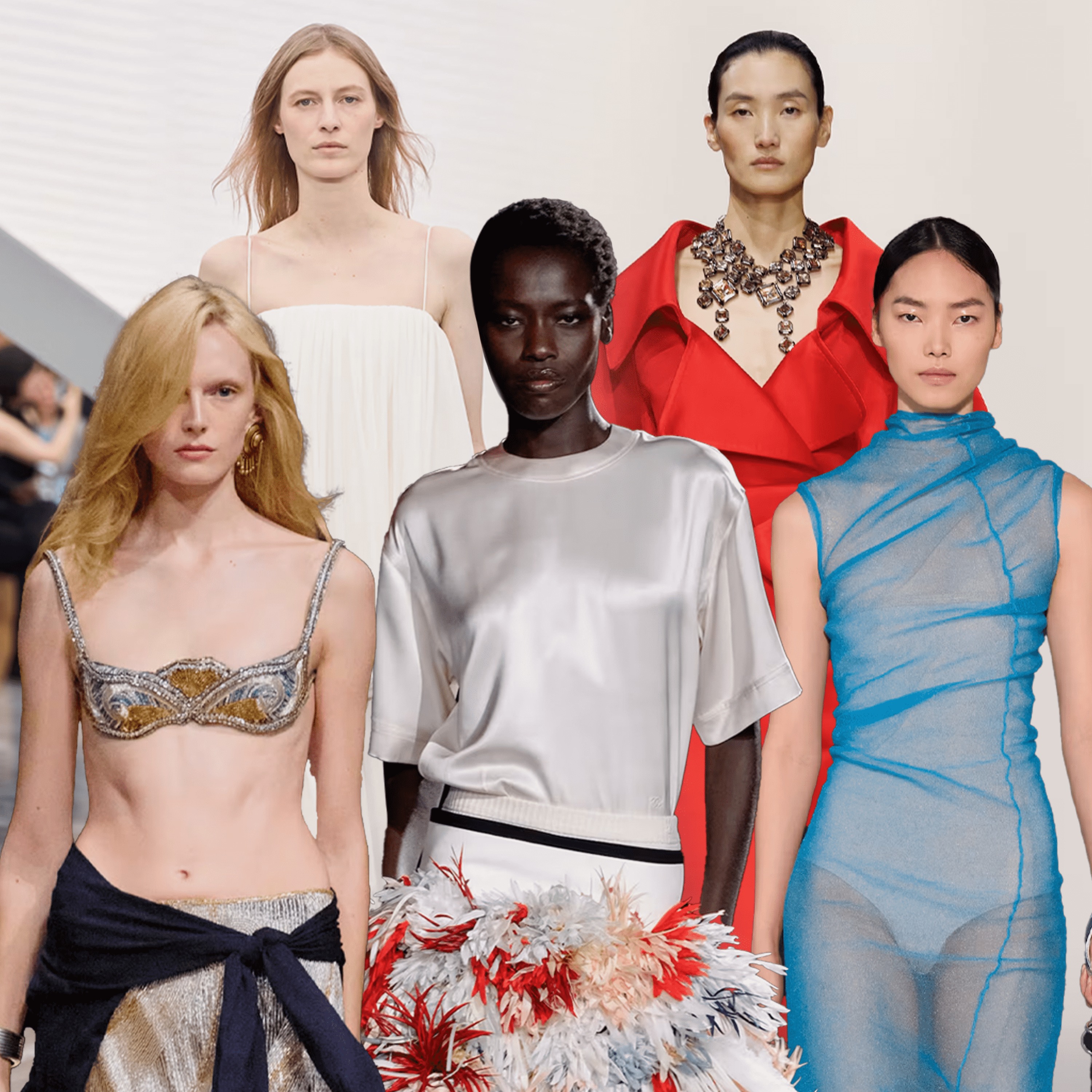
The Business of Fashion Podcast
Tim Blanks and Imran Amed Reflect on the Biggest Fashion Month Ever
00:59:10
BoF’s editor-in-chief and editor-at-large unpack all the shows in a high-stakes season that saw new creative directors debut their visions for Chanel, Dior, Jil Sander, Loewe and Jean Paul Gaultier, among others.
Loading summary
Transcript148 lines
- [00:00]
Tim Blanks
Foreign.
- [00:04]
Imran Ahmed
Hi, this is Imran Ahmed, founder and CEO of the Business of Fashion. Welcome to the BoF Podcast. It's Friday, October 10th. We've just returned from what was undoubtedly the biggest fashion month ever. A high stakes season that saw new creative directors debut their visions at Chanel, Dior, Jill Sander Loewe, Jean Paul Gaultier and many more. So what to make of it all? Much of it was about expectations. For some designers like Jonathan Anderson at Dior and Pier Paolo Piccioli at Balenciaga, expectations were running high, making it almost impossible to please the industry as well as online critics. For others like Dario Vitale at versace and Jack McCullough and Lazro Hernandez at Loewe, they had been kind of written off by some observers even before they showed, leaving them the opportunity to surprise, delight and over deliver. Indeed, only one show seems to have unanimously impressed all around and that was Mathieu Blasi's big debut at Chanel, the last big show at Paris Fashion Week.
- [01:17]
Tim Blanks
It was the one show that incontrovertibly did what it had to do, not just for the brand, but for the business, for the industry. And I think people could leave Paris on the second to last day on an upbeat note because earlier in the week some of the most anticipated shows like Jonathan at Dior or Pierpaolo at Balenciaga had been incredibly polarizing. And I think there seems to be, so far as I can tell, relatively universal agreement on Chanel this week on.
- [01:49]
Imran Ahmed
The BOF podcast, as always, I sit down with our editor at large, Tim Blanks for our seasonal review of all the shows and what this means for the future of luxury fashion itself. Here's Tim blanks on the BoF podcast.
- [02:07]
Hello Tim, how are you?
- [02:09]
Tim Blanks
Well, we're going to be talking about change. I can say one thing didn't change. I have a stinking October cold.
- [02:16]
Imran Ahmed
I know I have a post Fashion Month cold too. I woke up today and my readiness was I would, I don't even want to say it was so low. I got off a plane and in New York yesterday and I'm not feeling well. But this is an important conversation just because the last few weeks I think everyone was entering this season with such high expectations for all of the debuts that we were about to see, but also for a fashion industry that's in flux and looking for some new energy because things have honestly felt a bit flat. And I think that's shown up not just in the kind of editors and buyers response at the collections over the last couple of Seasons, but also because the industry is contracting. So I guess my first overall question for you, Tim, is big picture. Before we dive into individual shows and designers, did this season live up to your expectations?
- [03:23]
Tim Blanks
But what were my expectations? I mean, it never was like a whole wave of new faces. It was just really familiar faces and new places. And to a very large degree, how I felt about what happened over the last few weeks was really about how I felt about those designers in whatever incarnation they take. And I think looking at the whole notion of change, which on the surface at least wasn't as fundamental as the pre publicity might have led you to expect. You know, I had a friend from New York call me to say, must have been the most exciting week ever to be a fashion journalist. And I said, well, why? I mean, there was lots of people whose work I was already very familiar with and the significance of the idea of change. The way I see it, it was for the designers themselves that they were assuming new roles, new challenges, and the enthusiasm and energy and activation was for them. So some of them really, really went for it and used the opportunity. And I think that was probably, you know, where we saw the good stuff in the week.
- [04:38]
Imran Ahmed
I think that's right, because I guess I remained quite excited about this season because notwithstanding what you just said, to see someone like Jonathan Anderson at Dior or Mathieu Blaise at Chanel, like, yes, we've seen those designers at other houses before. I think you and I have both known Jonathan for almost 20 years now, since he first started out in London. It was a real big new challenge for both of them. So yes, of course, like, they both have their own way of approaching designing a collection and that certainly played out in what we saw. But it was a really big step up for them also for someone like Duran, Len to, who has been running a fledgling label to take over a brand like Jean Paul Gaultier, it's a big deal. Or for Jack and Lazeraud, who basically left their own brand, Proenza Schooler, to take on Loewe, which is now, after Jonathan's tenure, like a big multi billion dollar business. So all of them were stepping up into really challenging new roles. But I guess, you know, the biggest debate that I think a lot of the brands have been having is like, who comes first? Is it the designer or is it the brand? And in a lot of the shows we saw, it felt like the designer's own aesthetic, their own point of view, their own handwriting, their own signature, whatever fashion lingo you want to use was very, very Much front and center.
- [06:11]
Tim Blanks
But if you look at a house like Loewe, for example, were Jack and Lazaro going to go into Loewe and do Jonathan Anderson? No, they weren't going to. I mean, Duran and Gautier is slightly different because there's such a fundamental compatibility, I think, and their outlooks on things that you anticipated a symbiosis there, which you wouldn't necessarily. I mean, between, say, Balenciaga and Pier Paolo Paccioli, between Demna's Balenciaga, which is what people know, really, and Pierpaolo, there seemed like a disconnect. Obviously, Pierre Paolo, as a great couturier, would have more of a connection with Cristobal Balenciaga. But that's why I think you saw the designer's aesthetic in a new context rather than them. You know, think of an actor, I suppose, think of a. You know, you have a method actor who goes into a role and becomes the character he's playing. Or you have a movie star who goes into the role, like Elizabeth Taylor, and is Elizabeth Taylor in the role rather than, you know, the method actor being whatever character they're playing. And I think that was. There was a little bit of that guy. That's a rather tortured analogy, but I think there's a germ of truth in it somewhere.
- [07:23]
Imran Ahmed
Yeah. Okay. Well, with that in mind, do you think this season was successful? Like, has fashion got the creative jolt it needs to be awoken, like a.
- [07:34]
Tim Blanks
Sleeping princess or something?
- [07:36]
Imran Ahmed
Yeah.
- [07:37]
Tim Blanks
Well, you know what? We had to wait a long time for the prince to come along and kiss her. And that was the. That was the Chanel show. I mean, I think that's why, partly why everybody is absolutely orgiastic with excitement over that show, because it was the one show that incontrovertibly did what it had to do, not just for the brand, but for the business, for the industry. And I think people could leave Paris on the second to last day if they didn't stay for Merrill Roga, who we've got our fingers crossed for, for the future on an upbeat note, because earlier in the week, some of the most anticipated shows like Jonathan at Dior or Pierre Paolo at Balenciaga, had been incredibly polarizing. And I think there seems to be, so far as I can tell, relatively universal agreement on Chanel.
- [08:35]
Imran Ahmed
And so let's analyze why that is. What was it about that debut that made it incontrovertibly successful? Why did so many people agree that that was successful, like, different people with different perspectives?
- [08:53]
Tim Blanks
I think it was because Chanel is the top. I mean, it is a very interesting coincidence that Chanel and Dior, probably the two top fashion labels in the world, were both taken over by 40 year old male designers in the same 41 year old. Oh, 41. Okay. All right. Well, it was 40 when I made up that analogy. So I'm holding fast to whatever Gregorian calendar or whatever it was I was using. I think everybody saw Chanel as the biggest challenge, and I think there was also an enormous amount of respect that has accrued to Mathieu over the years. I mean, from the time I first saw him at Margiela, the work he was doing at Margiela, when he was totally behind the scenes, it was so incredible. And you just saw, what the hell is going to happen with this? I mean, where will this story end? In my conversations with him, he did this deep dive into Chanel the person, because he was just so overwhelmed by the archive and overwhelmed by the weight of legacy there, that he just focused on the person and things that maybe people had never known about her before from her very earliest days and decided that he was going to tell this love story which was so intimate and so personal. He personalized Chanel and in that way he managed to do a Chanel that reflected her, but also reflected his feelings about what she'd done with his vocabulary, which is very craft oriented and very experimental. I mean, it's interesting that a word that has come up a lot, talking to people because of what's happening with climate change. Maybe that's one reason. But clothes need to be light. And I have never, ever felt such light clothes in my life as they were the weight of the coat hanger, the clothes that he was doing. But it was also, you looked at it and it was Chanel. It told a Chanel story. He struck a balance there that I think the balance was the challenge between what Chanel was and what Chanel needs.
- [11:13]
Imran Ahmed
To be and the balance between Mathieu's craft approach to design and what Chanel has in the metidat. Like all of those incredible things that they have in the Chanel universe that he created for us. I do think that in one way, his challenge wasn't as big as some of the other designers. Now, yes, Chanel is like one of the biggest top three luxury fashion brands in the world, but it was also a brand that was really static, you know, I mean, after Karl Lagerfeld passed away, there was this kind of stage. I forget what Bruno Pavlovsky from Chanel called it to you in his Interview with you. But it was intermission. In intermission.
- [12:05]
Tim Blanks
Between the second act and the third act. Yeah.
- [12:08]
Imran Ahmed
And when you have an intermission and the brand is kind of creatively on pause, as it were, it feels like a bit more palatable to make a big change, like what Mathieu brought in. Whereas if you're Dior and you had this, like, Mario Grazia moment, just like her, she did her last show in May in Rome. You know, if you go into the stores, if you look at the advertisements right now, like, the Mario Grazia product is still in. In the stores. And so, like, all of a sudden, Jonathan's, you know, tasked with making these shifts. And I don't know, I think that, you know, having that intermission period, it's helpful in terms of resetting things. I would also say that because there was such, like, strongly defined. And I would say, you know, you talked about lightness. I'd say some of the codes were really heavy at Chanel. Like, I saw Gaia Repassi after the Chanel show, and she was wearing one of the boucle suits, and we were chatting a little bit about the show, and she said, all of a sudden, this old boucle suit feels really completely out of date now. But we've been. Those boucle suits have been in every Chanel show that I've ever seen, you know, and so in an instant, you know, he was able to make all of that heavy stuff from the past feel kind of outdated. That show was for all of these young people who never really saw themselves in Chanel. Like, whenever you saw young women in Chanel looked a little bit costumey. Yeah. Like, it just. It felt like they were putting on this look. Whereas all of those clothes we saw in that show. I love that show. I mean, they looked like if you saw them on the street, you'd know they were Chanel, but they were not the Chanel that you knew.
- [14:00]
Tim Blanks
Although he did acknowledge that, as well, Mature, was extremely gracious about Virginie when he talked about it, this intermission, as it was called. She grew the business in that time substantially. And also, he said she really did bring back the idea of the wardrobe, which was very, very critical for him, this notion of clothes that were versatile and pragmatic. And so she did some groundwork for him, because when we were talking about disruption, and he said sometimes the most disruptive thing is just to make a little click, little click to the left or whatever. It's not about a punk revolution or something like that. That disruption can be so Small but significant.
- [14:51]
Imran Ahmed
You know, that's that whole thing about balance again. Right. Like, in order to have disruption, you don't necessarily need to turn everything upside down. You just need to nudge it forward, you know, and, you know, make it feel different. And I have to say, part of the reason I think Matthieu's show is so universally appreciated is he also has a ton of goodwill in this industry. You know, he has built. He's just like a genuinely nice guy, and I think everyone's, like, really rooting for him. And there was this joy in that show that I have not felt at a fashion show. At the end, when Awar o Diang closed, that show did that little spin in that beautiful closing look with the huge volume and the. Were those feathers?
- [15:37]
Tim Blanks
Yeah, it was exploding tweed. And, you know, he said pina colada. And everybody said, are you sure he didn't mean pinata? No, he meant pina colada.
- [15:46]
Imran Ahmed
It was just joyful. I have been listening to Rhythm as a dancer on repeat ever since that show. Because it was a good remix. Yeah, yeah. The whole thing was just extremely well executed. And a big congratulations to Metsu because I can't imagine the amount of pressure that, you know, he and some of the other designers were facing this season. The other major debut that people were analyzing, which I agree was a lot more polarizing, was Jonathan Anderson's debut at Dior. And so when you think about that show, Tim, like now with a bit more time and space, you also know Jonathan very, very well. How do you frame that debut with a few days of hindsight?
- [16:34]
Tim Blanks
Well, I think the most audacious thing about that show and the thing that really reverberated was the fact that he chose to collaborate with the filmmaker, journalist Adam Curtis on a short film that opened, that screened before the show began. It was sort of as an act of contextualization for what he intends for the house. I thought it was quite stunning. I mean, I could watch that film over and over again. As Angelo said in his review of the week, if fear is a dominant factor, the fear factor in the fashion industry right now is just eating away at people's souls. Adam Curtis just went hell bent for leather with that. I mean, his blend of fashion and horror, intercutting scenes of stately couture models from the 50s with the little blood spattered child from the beginning of Halloween was so wow. I mean, that was totally in your face. And because Jonathan's decisions throughout his career have always been so in his vision, you know, I guess I'D say visionary in a way that, you know, there are no coincidences, there are no accidents. He was adamant that, you know, he needs time. Everybody needs time in a situation like this. You need time to make what you want to do happen. Mathieu came out of the gate like gangbusters. That was pretty astonishing. But all the other designers said, do not tear us to shreds for one season's work. You know, give us time.
- [18:21]
Imran Ahmed
Well, exactly. And I saw some. I think it was Edward Buchanan that posted this. I don't know if you saw when he posted, but he posted this message saying, like, he's seen some pretty heinous commentary from online critics about the shows. And, you know, I think we're in the age of the quick take. Anyone who read BoF's story on dopamine culture and how it's changed the fashion industry knows that, you know, we've gone from, like, reviews written by Susie Menkez in the Herald Tribune to new reviews on Style.com written by you to quick takes from Hanan and Lute Meager. And, you know, all these, like, online critics. And so I think things are moving at a faster pace. But what's certainly true is that, yeah, I remember. Do you remember Jonathan's first Loewe show?
- [19:09]
Tim Blanks
Yeah.
- [19:10]
Imran Ahmed
I didn't particularly understand that show. You know, I. I remember thinking I've walking out a little bit confused. And I think what I really learned from that was that, you know, the Loewe that he built was really something that he built over time. It took 10 years. And so I think we should expect the same with him at Dior. I think what he put out was daring and notwithstanding the film, which was insane. And I really want to get your view on what that film meant in a second. But there were so many ideas. One of the other things Angelo put in his review of the week was that fashion shows have become this thing where designers kind of throw every idea against the wall. But I kind of appreciate that approach because I think it feels experimental and it feels exciting. And so while maybe not everything, in my view, worked in that Dior show, I think that's kind of the point because you kind of learned from that.
- [20:09]
Tim Blanks
But isn't that. Isn't that what you were talking about? The dopamine culture or the TikTok culture? You know, every song has to hit in its first 15 seconds. There's no. Nobody has time for build up anymore. And that's why you. That's why this is this attitude about throwing all this stuff against the wall. And just seeing what's. I mean, Jonathan did that throughout that. That show. And so you. There was always. Although he did cycle back. I mean, the show definitely could have been edited because he did cycle back through certain looks as the show went on. And I think Mature did that as well. I mean, there were three quite distinct passages in what he showed. And everybody else. You look at Sarah Burton at Givenchy, the range of looks in her collection was quite all encompassing.
- [20:56]
Imran Ahmed
Do you think the film, the Adam Curtis film, was an homage to those designers? And what did you think it was supposed to mean when all of that stuff, like, was supposed to dissolve in a box that was closed?
- [21:10]
Tim Blanks
Oh, yeah.
- [21:10]
Imran Ahmed
Because when we were sitting at the show, you were like, the one word you said to me, you said savage. Like, what did you mean by that?
- [21:18]
Tim Blanks
I thought it was savage. I mean, Adam Curtis isn't a fashion buff, and he made a film of a story that he'd been told or researched. He made a film about beauty, about the quest for beauty through all the decades of people who've designed Dior. He told a story about how fashion. He wanted to tell a story about how fashion enchants people, casts a spell over them, but then also leaves them despairing in a way. I mean, he was telling a very dark story, Beauty and horror. I mean, you'd have to go back to Alexander McQueen to find somebody who did it as savagely and as successfully as that. That always. That there's the balance, you know, the duality and the duality and in fashion. And also, Adam Curtis is an intensely political filmmaker. I don't know if everybody had the opportunity to go back and study that film and contemplate that film in the silence of their own homes, not at the beginning of a fashion show. And seeing it just for that moment and not seeing it again because I don't think they can broadcast it because of rights. I saw it a few times. There's a lot of subliminal imagery in that. That reminds me a bit of Clockwork Orange when Alex the Droog is being desensitized and just being bombarded with imagery, which is what Adam Curtis does in his films. You just get this constant torrent of images and you're subliminally registering. And I think what you subliminally register from that film that he made is the beauty, the enchantment of fashion and the price it exacts from people. The toll. The toll it takes, which is so appropriate for right now, for sure.
- [23:11]
Imran Ahmed
And you saw us, you know, some of the designers. I forget who it was that I think maybe it was Brian boy, that just kind of commented on all the dark moments that, you know, were kind of very quickly flashed. Because obviously some of the designers in those houses in, in Dior have had some challenging moments, you know, not. Not least of which was John Galliano in terms of like the pressure and like the. Just like the commercial machine of fashion.
- [23:35]
Tim Blanks
Yves Saint Laurent, Yves Seller, Art Dior.
- [23:38]
Imran Ahmed
Yeah. So when you spoke to Jonathan and Adam, did Jonathan have a role to play in the editing of the film or was it a completely Adam Curtis thing and Jonathan kind of received.
- [23:50]
Tim Blanks
Was an Adam Curtis thing? Yeah.
- [23:51]
Imran Ahmed
Wow. Wow.
- [23:53]
Tim Blanks
I mean, the way he edits is so particular. I don't know how anybody could. Well, you'd probably sit in on an edit, but you don't. You wouldn't want to interfere with the flow of the master. Because I mean, for anybody. Just as a side side note, if anybody wants to see his. Adam Curtis's genius in full effect, you need to see the Massive Attack concert on their current world, if they are. And then I don't know if it's a world tour or not, but they are playing around the place. And he contributed all the streaming. The streaming graphics for it, which are just really one of the most mind blowing things I've ever seen. But it was interesting to see him distill the enormity of that into the super, super concentrated. I read the whole thing rushing into that shoebox on the floor on the bottom. The film was screened on an inverted pyramid. And at the end the film ran backwards and then cascaded into the shoebox at the bottom at the apex of the pyramid. And I read that as Pandora's box, you know, that you would open that box again in the future and all that stuff would come pouring out again, all that beauty and horror.
- [25:00]
Imran Ahmed
So he was just putting it all away and saying like, this is like.
- [25:03]
Tim Blanks
Yeah, Jonathan was saying, yeah.
- [25:05]
Imran Ahmed
There was one passage in there, like towards the end where I don't know who it was, but they were saying, like, I'm the designer of this house and I will decide where it's gonna go kind of thing.
- [25:14]
Tim Blanks
It was from stage. I think it was from the movie Stage Fright with Marlene Dietrich because, you know, she was dressed by Dior and in a strange way, another very, very famous victim of her industry. It was that sort of stuff. Yeah, you saw flashes of things and there was a sort of current of victimhood. And yeah, it was very, very powerful.
- [25:37]
Imran Ahmed
Well, I think he did an amazing job. And you know, the thing that really, really moved me was the Loic Prigeon video of Jonathan watching the show backstage. And there was like a humanity. I think sometimes when people are like in the comments, usually commenting from anonymous profiles and being really vicious about things, we lose the humanity of the individuals that are being tasked with these like mammoth challenges. And there was Jonathan backstage kind of watching and, you know, just crying, you know. And at the end he takes this like massive deep breath, like, oh my God, it's. Oh. And you could really feel it. Like I saw it in his face and I, I just felt a lot of empathy for him and all the designers who've had to do this.
- [26:33]
Tim Blanks
Yeah, empathy. Empathy, a good word. And everybody needs to know that. Everybody from the CEOs on down needs to. It's that whole thing. They are only human beings.
- [26:47]
Imran Ahmed
They get built up into these like superstars, but you know, at the end of the day, they're human beings.
- [26:55]
We'll be right back with More on the BoF Podcast.
- [27:03]
American Express Advertiser
Discover your secret weapon for younger looking skin from Medicaid, a clinically proven British skincare brand known for age defying results. Collagen is key to visibly firmer, smoother and younger looking skin. As we age, our bodies naturally produce less collagen and the existing collagen we do have breaks down. Here's where Medicaite's new Advanced Pro Collagen plus peptide cream comes in. Formulated with advanced actives that help stimulate the skin's natural collagen production, Medicaite's Advanced Pro Collagen plus peptide cream is an anti wrinkle moisturizer clinically proven to visibly improve skin firmness, elasticity and reduce the appearance appearance of deep set wrinkles. Visit Medikait US. That's M E D I K and the number 8 US. To discover more, use code podcast20 to save 20% off your order.
- [27:56]
The RealReal Advertiser
Meet Christine. She loves shopping. And this is the sound of fashion overload. Too many fabulous things, not enough space. So Christine started selling with the RealReal.
- [28:08]
American Express Advertiser
I've always loved collecting designer pieces, Gucci bags, Prada heels. But my style keeps evolving. Selling with the RealReal game changer. I earn more and they do everything.
- [28:19]
The RealReal Advertiser
Seriously, just drop off your items or schedule a pickup. We handle the photos, descriptions, pricing, even shipping. You just sit back and watch your items sell fast to our 38 million.
- [28:30]
American Express Advertiser
Members and I get peace of mind knowing I earn more selling with the RealReal than anywhere else.
- [28:35]
The RealReal Advertiser
Exactly this. That's the sound of your closet working for you. The RealReal. Earn more, save time, sell fast. And right now you can get an extra $100 site credit when you sell for the first time. Go to therealreal.com to get your extra hundred dollars. Therealreal.com that's therealreal.com.
- [28:59]
Shopify Advertiser
We used to dream of being anything, an astronaut, the president, a prince or princess. But as you get older, your dreams change, focusing less on running the world and more on how you can turn your ideas into something real. Maybe that dream is owning your own business. You'll need a website, a payment system, a logo, and a way to reach new customers. It can feel a bit overwhelming, but that's where today's sponsor Shopify comes in. Shopify powers millions of businesses worldwide and 10% of all E commerce is from the US from household names like Mattel and Gymshark to brands just starting out. Worried you can't design a website? Shopify offers beautiful ready to go templates. Need a hand? Shopify's AI tools can enhance product images, write descriptions and even generate discount codes. Not sure of where to find customers? Shopify makes it easy with email and social media campaigns. And if you ever get stuck, their award winning Support is available 24 7. To find out more, go to shopify.com BOF.
- [30:10]
Imran Ahmed
Okay, well those were the two major debuts, Chanel and Dior. What else stood out to you, Tim, in terms of like really having made some kind of impact this season?
- [30:22]
Tim Blanks
I didn't see Versace, but it is still the show that people are talking about.
- [30:26]
Imran Ahmed
Really?
- [30:27]
So what are people saying to you?
- [30:28]
Tim Blanks
Oh, I think people were just absolutely blown away by it. Funny thing is I looked at it on photo and film, in photo and on film and I didn't get it. You know, how often is it one of those you had to be there situations? I have a funny feeling Jill Sander, which was a show I absolutely loved, was another one of those. When you were in the room it was actually a very different experience. But and the other thing I thought was interesting about Versace is a few people did say this to me, but a few people who didn't like it as much as the people who did like it liked it said that it really seemed to be the people who were a bit dubious were the people who'd been there in the 80s and lived that kind of new wavish. I saw it as this kind of new wave energy. I mean the sort of pleated peg colored trousers say, reminded me of a. I think Madonna used to play the drums in a band called the Breakfast Club, and nothing to do with the movie, but the band was called. I think I sort of was getting. Is that the way the Breakfast Club used to dress? I was just trying to remember. It looked very new, wavy to me. It reminded me of a store that I used to. That I. That I kind of shopped at in various moments when I was living in Toronto, called Le Chateau. But I think if you were there, you would have had a completely different reaction. I know you did.
- [31:49]
Imran Ahmed
I was there and I. Oh, my God, I just wanted to be those kids. They came out, they had this, like, insouciance and, like, cool factor. And I was like, wow, I would love to go hang out where they're going to hang out. I'd like to go listen to music that they listen to. I want to dress the way they dress. I mean, it was this amazing thing, and it took place in this, like, very, very special museum that belonged to, like, some great collector. So it was, like, filled with all of these things. And I think the reason it didn't translate so well online, because when you look at the photos or you look at the videos online, is because that show, unlike Chanel and unlike Dior, that show was not designed as a cinematic show to play out on the Internet. That show was designed for the experience of the people in the room or in the multiple rooms, as it were. And, like, even where I was sitting, like, I had to get a good video. Like, I had to, like, move. Like, it wasn't created so that you could capture beautiful content that would spread all over the Internet, which is what happened with Chanel. I mean, that, you know, that show, like, it was so. The set and everything was so cinematic that it's just made for the Internet in a way. And like, that Versace show was. It didn't translate well online, but there was something in that show. And I think the last time I felt something like that was when Alessandro Michele did his two debut shows at Gucci. That men's show and then that women's show. And, like, although the ideas weren't, like, super well developed or crystallized at that stage, we know what Alessandro managed to do with it. Like, there was a starting point of something really, really interesting. Of course, there were all these rumors in Milan that, you know, his tenure at Versace is in question. Dario Vitale, because obviously the Prada group is taking over and there's a new regime in a way that's going to be making decisions there. But I, you know, I hope they really give him the chance to continue Because I thought that was. It was amazing. It was like, one of the best fashion moments I've ever, ever had. It was so good. So good.
- [34:06]
Tim Blanks
And it's like you said about mature. There's so much goodwill for Dario Vitale. And I also think it's just such a bizarre coincidence that there's a new DV at Versace. It just seems. It's almost too good to be true. Yeah. I mean, how did you feel about Jill Sander?
- [34:24]
Imran Ahmed
I love Jill Sander. I mean, I think the Jill Sander that we got to know under Luke and Lucy Meyer was really. Luke and Lucy Meyer. And I loved it, and I thought it was very alluring and desirable. I thought it was way too expensive, so I never really bought any of it. But I really liked their Jill Sander. But I think what we saw with Simone Belotti's Jill Sander was like a really return to the original. I mean, I was never at those shows, so you should be the one to comment on this. But at least from my perspective, it looked like a return to the real quiet minimalism of a Jill Sander show, which, again, doesn't necessarily create online frenzy, but in the room, it was really impactful.
- [35:12]
Tim Blanks
Well, taking it back to that space, the original space showing there definitely was a huge help because that room really encourages a sort of cerebral state of mind. Yeah, I think he did an incredible job. And, you know, I've never sat, Apart from prior to shows, way back in the day, sat through shows and thinking, God, I really want. I really want those clothes. It's never, ever. It's not ever been a part of the way that I approach thinking or writing about fashion. And there were so many clothes in that collection that I just thought were very, very desirable. And I. You know, the whole thing about Jill is it's less about minimalism and more about this sort of very intense purity.
- [35:56]
Imran Ahmed
Purity, yeah.
- [35:58]
Tim Blanks
Quite emotional. I think Simone just did that. He just nailed that. It was so. So thoughtful. But so it very peculiar, kind of, you know, that the word I love to bring out when I'm talking about these things, sort of eroticism, in a way, this sort of touch. Because everything felt to me very much about touch in that collection.
- [36:23]
Imran Ahmed
Did you see any link between what Simone did at Bali?
- [36:28]
Tim Blanks
Yeah.
- [36:29]
Imran Ahmed
And what he did. What did you see as the link between the two?
- [36:32]
Tim Blanks
Well, he. I think the story he told in Bali was Bali, Bali. He created a compatibility, I think, with the notion of the Swiss shoe brand and other things in the culture. Like, you know, the fact that Dada came from Switzerland originally, Hugo Ball. And he managed to make these really strange. Create these really strange connections that gave the clothes this whole other level of meaning, in a way. And I think that in this collection, he was doing something not obviously not using Dada or surrealism, but he was equally. Even what you saw seemed quite pure and simple. Maybe there were layers of. Layers of thinking that went into what he did. He'd done another very deep dive, I think, into, like, mature Chanel. A very deep dive into Jill. Jill, the designer who she was, rather than what she did. And I think it's so subtle that it's going to be incredibly interesting seeing what happens, because that's going to be a very slow but powerful burn. Because of the way he is. I think he just. He doesn't. He doesn't feel like any other fashion designer when you talk to him, really feels like he's from another. Literally another world.
- [38:04]
Imran Ahmed
I didn't see a connection. What I saw was maybe one of the rare designers who just really immerses themselves in the codes of the house and has the. Where it's not. He's not about putting himself into it. You know, it's not about a Jonathan Anderson Dior or a, you know, Pierre Paolo Piccioli Balenciaga. It's, like, really about that house. And so when you see the purity of what he did for Jill Sander, it just felt really. Jill Sander. Right. That's. That's what I didn't see, the link between the two.
- [38:36]
Tim Blanks
So he's the method actor more than the movie star?
- [38:39]
Imran Ahmed
I think so. I think he's the one who, like, immerses himself into the brand and makes it about the brand.
- [38:46]
Tim Blanks
Except that at Bally, he created that aesthetic. I mean, he built that aesthetic out of, like. Out of this incredible mix of quite perverse ingredients to create something that was subtle and straightforward seeming. Until he kind of looked at it again and thought, oh, my God, that's a cowbell. Or that's a. You know. And you're right. At Jill Sander, obviously, that sort of the extraneous storytelling was muted. But maybe Jill Sanders closer to the way he feels about designing, which I kind of get the feeling it probably is.
- [39:22]
Imran Ahmed
Yeah, it feels like a natural fit for him. Right.
- [39:24]
Tim Blanks
I think that's why we'll see a slow. I think we'll see a wonderful slow burn in that house because he is not like other designers when you talk to him. He is just not like anybody else that you get to talk to. And it's going to be very, very interesting to see how he develops that idea. I hope everybody's really happy.
- [39:45]
Imran Ahmed
We'll be right back with more on the BoF podcast.
- [39:52]
Let's talk about some of the more divisive shows. Probably the most divisive show, I think, this season was the Jean Paul Gautier show by Duran Lantic. Maybe divisive is not even the right word, but he certainly provoked a reaction. And I'm curious, because you also spent quite a bit of time with Duran. You did that Big story. What's your take on what he managed to deliver in the end?
- [40:21]
Tim Blanks
Well, I was very excited when he got that appointment because it was so. Like I said, the compatibility was so. You know, it wasn't a head scratcher at all. It was like. Yes, I totally get that. I totally. His. His attitude to everything is so similar to Gautier's attitude. The sort of provocation, the kind of the sex games and the. And not even gender games. I say sex games, and it's just a. There's a. It just felt so right. So I have to say that I wanted so much more from that show. And in the end, I didn't feel that there was enough Gautier or enough Duran. You know, it sort of felt kind of skimpy to me.
- [41:04]
Imran Ahmed
See, I felt differently. I felt like basically it could have been a Duran show. You know, I felt like it was. You know, if you think about the shapes, the extraordinary, unusual shapes that he added to the body on his shows, around the hips, like, those shapes just moved to other places in this show. I felt like the only real references to Jean Paul Gaultier were, like, the sailor cap, you know, and the Mariniere. Like the stripes.
- [41:40]
Tim Blanks
Yeah. But Gautier reordered the silhouette, too. You know, Like, Durand did his version of the Coen bra, but Gautier did that cone bra.
- [41:48]
Imran Ahmed
Go Cheese opened with that look, right? And his cons are just going to.
- [41:52]
Tim Blanks
Round and out to the side. And he realized that was the elephant in the room. He had to address the Coimbra, so he got it out of the way first. If you looked at, you know, Gautier would print naked bodies on things, and Durand did that. I thought that that naked man bodysuit, anatomically correct. I thought, oh, God, that's gonna be the picture everybody runs from. His debut at Gautier, and my brothers wrote to me. One brother wrote to me from New Zealand. The other one wrote to me from Australia, sent me that picture. God knows how they found it, but obviously They've run in their local media or something, that this is what, you know, look at what Paris fashion is proposing to us now.
- [42:35]
Imran Ahmed
And by the way, that was the look that got a lot of people really riled up online because, you know, they. People thought it was. One critic, online critic I was watching this morning, was very disrespectful to women, and other people thought it was gimmicky. Right. So it's like one of those things that was, like, designed to get that kind of viral attention, but it takes.
- [42:57]
Tim Blanks
Yeah, it takes all the attention away from everything else he achieved in that collection, which was a lot. I mean, I found there was so much to love in that collection. And also a lot that felt like, you know, maybe this is a. There is a new audience for this, for that kind of. For designers like him, that he is actually the face of the future. That out of all the people we saw over the past few weeks, he is one person who's pointed in a direction where he's, you know, he is breaking new ground.
- [43:30]
Imran Ahmed
Absolutely. And that kind of risk taking means that sometimes it's not always going to work the way you want. And I think you. I was lucky to sit down with him for a podcast earlier this summer. It's the first time I properly met him. And he's. That designer. Is a very special designer. Right. So, although the first show wasn't everything that people might have hoped for, I think it's gonna be really interesting to watch how he develops that. And he's a learning person. Like, he'll listen and he'll. I think he'll respond. So I think. I think it's gonna be interesting.
- [44:05]
Tim Blanks
And he is so engaged with the real world and all the initiatives that he does outside fashion. He's just so. His. His work in fashion is part of this incredible continuum of stuff that. Yeah, I mean, maybe he's the future.
- [44:21]
Imran Ahmed
Another show that was polarizing, Tim, was the Alaia show. You know, I think Peter Moulier, that was a big challenge to take on the House of Alaia and try to turn it into something. He was talking backstage about tension. Right. He was talking about, like, the release of tension. What did you make of that show?
- [44:42]
Tim Blanks
I think he's done an amazing job at Alaia for a house that was so. That had such, you know, fanatical fans and a designer who was so. Created his own. His own world and to enter that, you know, he also created a world where. Which was so codified that there wasn't like a million, you know, I remember what Debner said about going into Balenciaga, that the codes were so defined that there wasn't a lot of room to move, maybe. And I think Peter's really moved that collection out in all different directions. Are you talking about the misogyny being that the accusations.
- [45:28]
Imran Ahmed
Well, yeah. It came up in some of our internal conversations around. In the way some people felt about women being put into dresses where they couldn't move their hands, but they were.
- [45:39]
Tim Blanks
It was a cocoon from the front, and it was backless. So you just moved your hands around the cocoon. Your hands were at your side, but they weren't.
- [45:48]
Imran Ahmed
It didn't look like that to me, but I guess some people really perceived.
- [45:51]
Tim Blanks
Well, if they didn't see the back of. Would look like there was no way you could move your arms, but all you had to do was move your. Your arms were just hanging.
- [46:01]
Imran Ahmed
And the fabric was quite light, too. It wasn't like this, like, super.
- [46:04]
Tim Blanks
Yeah. And it was strict.
- [46:05]
Imran Ahmed
It was exactly.
- [46:06]
Tim Blanks
It moved with you. And in the. From the back. I don't know if everybody saw it from the back, but from the back, it was backless with jeans.
- [46:16]
Imran Ahmed
Yeah.
- [46:17]
Tim Blanks
And under that front thing, your body. You could have your arms in front of you. You could have them, you know, inside the cocoon or outside the cocoon. That wasn't exactly. That wasn't necessarily my. The thing that I took away from that collection, I thought there were. I loved the volumes. I loved the stretchy thing with a. I did love the tension, the tense element in that. The idea of restraint and release.
- [46:42]
Imran Ahmed
I've never seen that before. I feel like sometimes at a live shows, we genuinely see things that. We just haven't seen it anywhere. So it's, like, so interesting.
- [46:49]
Tim Blanks
I don't know. Did you notice that Duran did that as well, that he had bodysuits? But they were bodysuits that had been paired back to almost nothing, but they connected to the ankles, like Peter's things did to the hands and stuff. So you had this tense kind of thing up and down your whole body, like, connected with belts and so on. Nobody really picked up on that, but. Which was a very Goji thing. The harnessing. No, I love those dresses at the end of Elia, the kind of Infanta dresses. The motion of those clothes is very, very appealing. You kind of feel like you're seeing something new when you're looking at them, which is always a good feeling. I was thinking, you know, the restraint and release situation, the tension at the beginning of the season, you Know, people were saying fashion is completely. Seems to be completely oblivious to anything other than its own problems, its own, you know, the collapse of the luxury market or whatever. And meanwhile, the world has been in such a parlor state. And there was a time when fashion did seem to make more of a comment. You know, you had McQueen, you had Rei Kawakubo, you had people acknowledging things that were happening. Even I think Valentino did a peace dress during the Gulf War. In couture, for goodness sake. But original Valentino, Valentino Garavanni. But in this collection, in this new collection, Alessandro Michele did make a very explicit statement about fascism.
- [48:27]
Imran Ahmed
And that text, which was, I think, read out by Pamela Anderson.
- [48:32]
Tim Blanks
That's what I read. Yeah.
- [48:34]
Imran Ahmed
Such a powerful text. The Fireflies. And then Alessandro sent you that sweet note saying, we are the fireflies. You know, that was really. I mean, I thought that was a very. You're right. No one's really commenting on the perilous state of just, like, global order. It's just everything seems to be breaking down. And it. You're right that it felt like there was a bit of a disconnect in a way. We're, like, sitting at these shows and quite literally, while we're there, the latest French prime minister, I think the third one in how many months, has resigned.
- [49:11]
Tim Blanks
And Greta Thunberg is being dragged around the floor of his cell.
- [49:14]
Imran Ahmed
I mean, it's just.
- [49:16]
Tim Blanks
It just feels hard. It feels harder and harder to kind of. We started off talking about balance. It feels harder and harder to kind of rationalize that. I would say Alessandro's finale, where the models came out and looked at the lighting intended to suggest fireflies in the sky, you know, flying in the air above them. And the models all just stood there looking upwards. It was a very, very simple but a very, very poignant moment.
- [49:42]
Imran Ahmed
I thought that was so beautiful. I'll never forget.
- [49:44]
Tim Blanks
Simple effect, but a very poignant moment.
- [49:46]
Imran Ahmed
I'll never forget how that looked. It's like, really, really striking. There was another show, Tim, that I didn't actually manage to get to because I had another commitment that evening, but the Balenciaga show by Pierre Paolo. You touched on it briefly earlier, but I'd love to hear your take on it.
- [50:06]
Tim Blanks
Well, like I said, some people loved it, some people just really, really didn't. I felt he was. When he did those incredible couture shows for Valentino that really, really, you know, move the dial for couture, for haute couture, this felt very much drawn from that, like. But this was couture for the everyday. So you'd get a sack of, you know, sack dress with flip flops or whatever. I don't know. I feel he also was one of those designers who was in a situation where he had to do a collection very, very quickly. Demna at Gucci and mature at Chanel. Very wisely held off. Damner still hasn't done his first collection. Yeah. Maybe he should have taken some more time. It felt a bit rushed to me and it felt a bit messy.
- [51:01]
Imran Ahmed
Yeah. There's so much pressure and expectation to move quickly. But I think the designers who say, no, I won't be ready, that's smart. You know, it strikes me, Tim, that we've talked about all of these debuts and not one of them is designed by a woman. So we should talk about Sarah Burton's Givenchy. It was her second collection. You always have something to say about Muchia Prada at Miu Miu. And then, of course, there was Louise Trotter making her debut at Bottega. I mean, what's your take? I know you're. You're a real fan of Sarah Burton, Givenchy and where it's going to.
- [51:40]
Tim Blanks
I was a real fan of this show and this collection. I loved everything about this. Sarah is, you know, still waters run deep. Sarah is. She's really got the imp of the perverse in her, I think. I just love how she. She did that show, which was, I thought, extremely elegant. I thought I could see women wanting those clothes. The way she'd loosened things and elongated things. It just was so flattering and just so simple like. And her inspiration, I just love. Because I. The book that inspired her, I found years ago, and I was equally inspired by it. When I walked in and saw it on her mood board, I was. I love this. I love this story. I love these photos that a Swiss photographer called Rene Grably took of his wife on their honeymoon in 1954. The book's called the Eye of Love. And there's just. There's love in the photo and there's. There's this sort of fabulous slight. This fabulous sort of just a natural kind of eroticism. I'll use the word again. Just two people in love. Him taking photos of his wife either getting dressed or lying on a bed or just putting on a white shirt or something. So Sarah really, really understands all those funny, funny. Balenciaga comes up. Balenciaga always comes up with me. But he always used to cut things back from the nape of the neck because he felt that would elongate his jacket, you know, his jacket stood out at the back of the neck where he felt that elongated a woman's neck. Sarah was doing this. She has got all those little couture tricks. I can't wait to see what happens when she finally does a couture collection. But I really loved her collection. I loved the music I thought was fantastic. Starting off with the clash of all people and having just such an incredible mix of things. And then this is why I talk about being the imp of the perverse, because she reminded me. She actually reminded me about the fetish element in her clothing with those fishnet gowns that I didn't like in her first collection. And I still didn't like them in this collection. But I could really understand why she was doing them. She's such a quiet force. And I really, really would love to see that collection take off. I mean, with her at the helm, I think she has a lot to do there.
- [54:05]
Imran Ahmed
And Miu Miu, I just loved it. Why did you.
- [54:09]
Tim Blanks
What can you say? It just evoked so many crazy. It was sort of like, you know, a Stasi fashion parade or like, you know, the Stasi informers and a little bit of that. A little. And then. And then work where Rosie the Riveter, you know, a time when women, all the men were at war. So women were in the factories in their aprons and their leather arm guards and stuff. It was such a. Mitya said she was keen to paying homage to the power of women who don't often get recognized, who hardly ever get recognized, actually. The people who. The women who are, you know, mothers and tea ladies and nursery school attendants and the sort of soul of their communities. And some people thought that was incredibly patronizing, that a multi.
- [55:09]
Imran Ahmed
Yeah, I mean, we spoke to.
- [55:10]
We spoke to one person saying, I don't think we should be talking about domestic help that way.
- [55:16]
Tim Blanks
Just pay them properly instead of making a fashion show about them. Yeah, yeah, I know, I know. But what that show did for me was it took me back to old Mew Mew shows, which was so just perverse that you'd see characters from John Waters movie. He's kind of. You'd see Chicklet and Concetta from Female Trouble walking down a catwalk. And it always worked. It was always like, okay, everybody's doing kind of elegance and couture, whatever influence. And the big buzz is Chanel and Dior and Balenciaga and so on. I'm going to do my Miu Miu in this sort of. When she's in full cry. She just has the most fabulous fuck you attitude about fashion. And I find it as kind of thrilling now as I ever did then. And she's just a law unto herself. And I mean, those. Those clothes are a challenge. I don't know what's going to. You know, every new Miu show, everybody's dressed in the Miu Miu show. The new me felt really different.
- [56:24]
Imran Ahmed
Yeah, it felt really different from the last few.
- [56:26]
The RealReal Advertiser
Yeah.
- [56:27]
Tim Blanks
Completely complete. Which is why we used to love Prada. It was always so different. And people going to be showing up next season these sort of like Eastern European aprons and head scarves and these kind of housecoats.
- [56:42]
Imran Ahmed
Well, if you worship at the house of Mitya, and I think a lot of people do, certainly, I think we'll see it editorially and some people will make it work.
- [56:53]
Tim Blanks
They're very defiant. I think they're very defiant clothes. And that's one thing, that's something that you do miss in fashion is. Is a little more defiant. Yeah. And she. She is the queen of defiance.
- [57:07]
Imran Ahmed
And then there was Louise Trotter's Bottega Veneta debut in Milan. She clearly immersed herself deeply into the craft of Bottega. And like, I was expecting more of a, like, strong ready to wear focus in that collection, given she's like a really strong, ready to wear designer with all of this experience. I remember we first came across her at Joseph, and then she went to Carvin and Lacoste. So I guess I didn't see it as much as a collection that people could incorporate into their everyday life. So I'm kind of curious to see where she takes it.
- [57:44]
Tim Blanks
Well, everything, everything looked. Looking at it in pictures, everything looked huge to me.
- [57:50]
Imran Ahmed
It was huge. But remember Mathieu used to do those oversized shapes. It was like cartoonish in a way. It was like done in like a comical way. But this was the same shapes with that, but without the humor and kind of wink of an eye, you know? So I. I don't know, I think. Let's see.
- [58:09]
Tim Blanks
Well, it's so funny. I mean, for anyone who. Anyone Canadian who is listening to this. But if I saw Le Chateau and Versace, I saw this Toronto label called Clotheslines in Bottega Veneta who were famous for their trench coats, Huge trench coats and. Yeah, I thought, yeah, Clotheslines. Shelley and Bernard, Wicker, Broad.
- [58:31]
Imran Ahmed
Lots of Canadian fashion trivia. I had my Le Chateau days too, Tim, you know. Did you shop at Le Chateau?
- [58:40]
Tim Blanks
No, I shopped at Parachute. At Parachute, I shopped at Parachute. Okay. I went into Le Chateau every now and again because it was right down on Yonge street there.
- [58:51]
Imran Ahmed
Well, I guess that brings us to the close. New faces, new places. New places. So it's more like old faces and new places. But we're gonna see how this all all develops.
- [59:04]
Tim Blanks
But, you know, we ended on such a high. I think everybody could feel so good that there is still that opportunity, there's.
- [59:12]
Imran Ahmed
Still that possibility to create that kind of moment. Like in a house.
- [59:17]
Tim Blanks
In a house like Chanel. In a house which has had what now four designers in over 100 years and still come across as so inspiringly. Right.
- [59:31]
Imran Ahmed
I think we needed a little joy too. So maybe as we were saying, some of the collections weren't like a commentary on what's happening in the world, but part of the reason I think people responded so well to that show is just made you feel happy in a dark time. You know, I just. I was buzzing after that. I felt so good. And not just because of Rhythm is a dancer. And maybe we should close out with a little sample of that song.
- [59:56]
Tim Blanks
Although Eric sung by you and me.
- [59:59]
Imran Ahmed
Yeah.
- [59:59]
Tim Blanks
No, then there's a dancer.
- [60:02]
Imran Ahmed
We'll have to finish this podcast with that as the outro.
- [60:06]
Tim Blanks
And you know, the other fabulous thing, Mitch's favorite movie is Wally. You know the cartoon about the robot, the lonely robot.
- [60:15]
Imran Ahmed
Oh, yeah, yeah, yeah, yeah, yeah.
- [60:16]
Tim Blanks
And that film is also. Also plucks joy from hard times in a post apocalyptic environment. And when we walked in there and it was all the planets kind of all around us, I thought, oh, my God, could this be Wally for us? You know, mind you, his second favorite movie is Deliverance, so that's quite a space Span. Span, man.
- [60:39]
Imran Ahmed
Well, we'll hang on to that moment of joy for some time. I will. I will never forget that show. That was quite a moment. And congrats to all the designers for all the hard work that they put into their shows this season. Everyone deserves a big applause. I mean, in fact, one of the things I just wanted to conclude by saying is, like, Fashion Week doesn't have to be a zero sum game. Everyone can be successful. I really believe that. And I feel like the more designers and houses that bring creativity and innovation and excitement to what they do, the better. Like, and that's what we need. So it doesn't have to be that I win and you lose or you lose and therefore I win. I think it's all about, hopefully we.
- [61:29]
Tim Blanks
Can all win and empathy and give people a break, you know? Yes.
- [61:34]
Imran Ahmed
Yeah.
- [61:35]
Tim Blanks
Be empathetic. And give people a break that Bruno Pavlovski at Chanel was talking about five year plans and things, you know, like this doesn't have to be bang, you know, not a five year plan, but you know, a long term plan. A long term. It doesn't have to be. It doesn't have to be now.
- [61:54]
Imran Ahmed
Thank you, Tim. I hope you get some rest and that you feel a bit better.
- [61:58]
Tim Blanks
Yeah, me too. Thank you, Imran. Thank you world.
- [62:02]
Imran Ahmed
And thank you, fashion for a great season. It was really interesting. So much.
- [62:08]
Tim Blanks
We're still here.
- [62:20]
American Express Advertiser
Dinner time. It's where little moments are cherished. With blue cash preferred. Get 6% cash back at US supermarkets and bring everyone together. I did say everyone. Learn more at americanexpress. Com. Explore BCP terms and cashback cap apply. With blue cash preferred.