← The Business of Fashion Podcast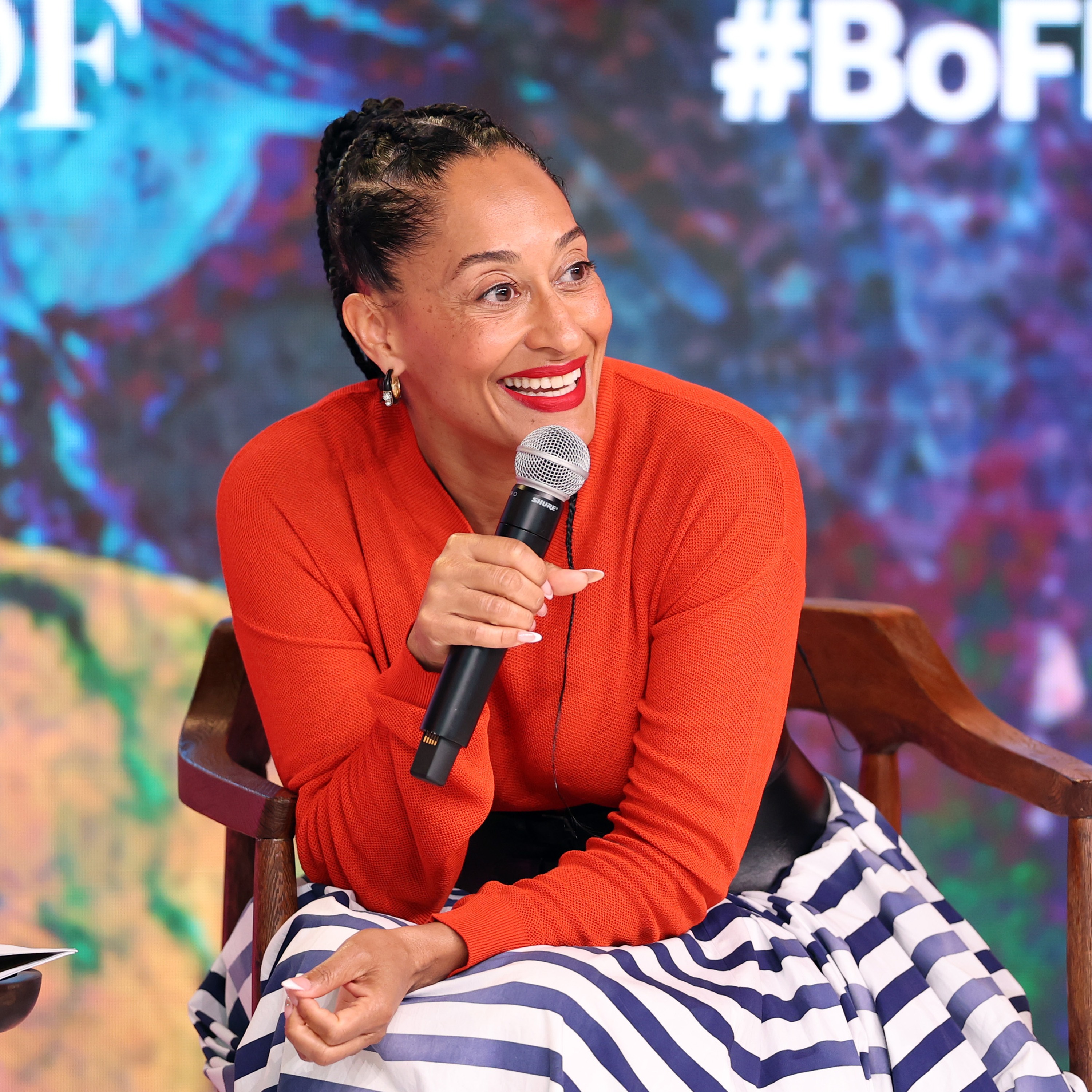
The Business of Fashion Podcast
Tracee Ellis Ross: Understanding the Diversity of Humanity is Good Business
00:34:00
Tracee Ellis Ross shares her journey from Hollywood actress to entrepreneur with BoF founder and CEO Imran Amed, detailing the systemic changes she's driving in the haircare industry.
Loading summary
Transcript75 lines
- [00:00]
Tracee Ellis Ross
Foreign.
- [00:04]
Imran Ahmed
Hi, this is Imran Ahmed, founder and CEO of the Business of Fashion. Welcome to the BoF podcast. It's Friday, June 20th. When Tracee Ellis Ross launched Pattern Beauty in 2019, she set out to challenge the beauty industry's lack of products for curly, coily, and tight textured hair. Despite numerous obstacles, including skepticism about market viability and systemic biases in the product testing process, Tracey has built Pattern into a leading hair care brand, addressing an underserved customer.
- [00:38]
Tracee Ellis Ross
Black beauty and textured hair was not being mirrored back as a celebration, but instead it was a problem. It was not being mirrored back as a sense of joy and a sense of beauty and a sense of power and a sense of history and a sense of legacy and a sense of culture and a sense of selfhood. And so that was what I started.
- [00:55]
Imran Ahmed
To dream of during my conversation with Tracy at the Business of Beauty Global Forum 2025 in Napa Valley, California. She shared journey from Hollywood actress to entrepreneur, detailed the systemic changes she's driving in the hair care industry, and emphasized the importance of humanity in business building. Here's Tracee Ellis ross on the BoF podcast.
- [01:28]
Tracee Ellis Ross
Hi.
- [01:29]
Imran Ahmed
All right, all right, all right.
- [01:31]
Tracee Ellis Ross
Wait. Can we do something first?
- [01:32]
Imran Ahmed
Yes. What's that?
- [01:33]
Tracee Ellis Ross
Can I ask. Can we just take a deep breath for humanity and Los Angeles right now? It's hard for me to shift into other things. I have a really whole sense of looking at the world, and so my heart is heavy and I just. If we could just take a deep breath for humanity. I'm so sorry that all of this is happening.
- [01:57]
Imran Ahmed
Yeah, I want to talk a little bit about that later, because doing what you're doing, operating in this chaotic, constantly changing context, is one part of being a founder. The other part is the origin story. And that's where I want to begin. I've done a lot of reading and, you know, you and I have chatted about pattern before, but I think it's really important to go back to the early formative experiences of having your hair done growing up. Can you tell us some of those stories? Because I found them so powerful and moving as a way for where this brand was first germinated.
- [02:35]
Tracee Ellis Ross
Yeah. You know, I feel like I could chronicle my journey of hair with my journey of self acceptance. The way my hair grows out of my head was mirrored back to me in my family, but not necessarily culturally. And so making sense of as a young girl, how my hair grew out of my head was great. I didn't think about it, but you start entering high school and those years and it's different than the people I went to school with. It's different than the newscasters. I mean, we take it for granted now, but, like, people on TV did not have natural hair. I mean, I could name on my hand the women that were wearing their hair in its natural texture. And so even though my mom in her own right was wearing her hair in its natural texture, I don't care who your mom is, when you're a teenager, you're not trying to look like your mom. And so trying to figure out and master and understand and gain a sense of love and celebration in my hair was difficult to navigate and find. And so some of my early memories, I mean, honestly, we would go to my grandmother's in Detroit for Christmas and for the summer or whatever it was, and all the cousins would be lined up outside of my grandma's nice bathroom downstairs. And she would put mayonnaise in our hair because it was a deep conditioning treatment. And we would all joke that we would smell like sandwiches for the rest of the week. And she would line us up in front of the bathroom, boys, girls, all of us, and we would lay on the sink and she would wash our hair in the sink and condition us with mayonnaise. I would go to a salon as I got older. And on Saturdays, I would go for the never ending journey of getting my hair washed, roller set, sit under the dryer for 45 minutes to an hour, then wait for the good salon guy, Joe, who would blow our hair out. And then I would try and make that work for the rest of the week. And then as I moved into high school, I started to gain this understanding of my hair. I started to gain a relationship with my hair. I started to experiment with everything. I don't know what age I was, but my mother came in my room and she was like, listen here, little girl, you're going to either need to get a really rich husband or a really good job so that I can handle these hair products. And I was like, mom, my hair is dead. Like, I need these. And so instead, I don't have a husband, but I built a beauty company. Yeah, that's right. But so through all those years, I was gaining this experiential knowledge, and little did I know I was not alone, that the hair products that my mother and my aunt and my grandmother were choosing from that shelf space was the same for me that it was for them.
- [05:15]
Imran Ahmed
It hadn't changed.
- [05:16]
Tracee Ellis Ross
It had not changed. I don't need to name the products, but I mean, you know, hair Food pink lotion. I mean, we can go on. But they were the same products. My mom was like, there is shampoo, conditioner combined. We all know what that product was. In your shower with a rubber brush, that's what you've got. Like, get it together and make it work. And so I started experimenting with everything. I put beer in my hair. I had ironed my hair with an actual clothing iron.
- [05:41]
Imran Ahmed
I had friends who did that, too.
- [05:42]
Tracee Ellis Ross
Yeah, I put Keri Lotion in my hair because it was hydrating. I had tried everything. I used to wake up in the morning and dial 1-212-777-1212, and it would say, at the tone the time will be and the temperature and then the percentage of humidity. If the humidity was over 73%, I wouldn't wash my hair. So I was learning that wherever I went, whether the texture of the water was different, the products that I was using would change the way my hair looked. And to wear my hair naturally, there weren't a series of products that existed to help me do that. And so I remember dreaming at that time and thinking, God, wouldn't it be nice if, like, I could have, like, all the same products, like, not like a smorgasbord of other things, but, like, beautiful products on my counter? That worked for me. And so little did I know I was beginning my entrepreneurial business, building experiential knowledge to put together what became my brand bible before I even met my partners. And it really was that I realized that I was not the only one that was not being mirrored back. That beauty and black beauty and textured hair was not being mirrored back as a celebration, but instead, it was a problem that it was not being mirrored back as a sense of joy and a sense of beauty and a sense of power and a sense of history and a sense of legacy and a sense of culture and a sense of selfhood. And so that was what I started to dream of. And I came at this as a shopper. You know, I was just a beauty shopper and a shopper. And this idea of marketing that you have to make you feel bad in order to buy things, I buy the most when I feel good. Like when I feel empowered in my skin, that's when I want to go out and buy.
- [07:22]
Imran Ahmed
So let's talk about that for a minute. Because at that stage in your youth when you stopped relaxing your hair and putting it through all of the. Yes, the rigmarole, we were just hearing right now about how important a category hair is, about the good Hair day. So what was the transformation that happened inside of you when you started accepting and celebrating your hair?
- [07:48]
Tracee Ellis Ross
Naturally, it came from knowledge. It came from knowing myself, and it came from finding the right products. And so I went to boarding school in Switzerland in 8th and 9th grade, and I didn't have access to my mom who could do my hair. I didn't have access to the salon, and there was no one but me that could do it. And so I started to really. I mean, my hair was dead. Like, it was just. It was. You know, you could look at it and see the little white bits on the end. Like it was just fried and dyed and all of it. And so I came home and I was a track runner, and I had to figure out how to condition my hair. And so it just. It sort of became this blossoming of me. And my hair started to blossom. I started to grow out, the relaxed hair. I started to wear my hair naturally. There's early pictures. It wasn't cute. I learned how to care for my hair, how to love my hair, how to accept my hair, how to know my hair. And that was the beginning of. And what is pattern? It is, you know, to allow people to have the access to their most beautiful hair, their most beautiful self, their most conditioned self in their own bathroom or someone else's, as opposed to having to always trust a professional. Even if you wear lace fronts or braided styles or whatever, that. In the privacy and the intimacy of your own home, in your shower, on your wash day, in between hairstyles, when you remove your wig, you have a sense of empowered relationship to your own hair.
- [09:18]
Imran Ahmed
So while the idea of pattern is still ruminating, you move into, you know, what you're most known for is your career. And at the time when you moved into Hollywood, you know, you were talking about the news anchors on television just now. But Hollywood was the same. There weren't that many people who were wearing their hair naturally.
- [09:39]
Tracee Ellis Ross
I'll tell you. So when Girlfriends was On the Air 2000-2010, there was no social media, and we went to the Essence Music Festival, and I was the one of the four girlfriends who wore her hair naturally. Persia wore her hair natural. Ish. As we started to progress through the years, and I remember going to the Essence Music Festival, and this woman said to me, she was like, listen, honey, you're on television. You're representing us. The least you can do is put some heat on your hair. And I was like, what do you mean? And she was like, I mean, come on, girl. And I said, this is how it grows out of my head. Like, God gave it to me this way. I think it's fine. And that was part of the journey is really a sense of joy in expressing yourself in that way and allowing that. I mean, even now, I'm inspired. Like, I watched Solange and some of these other girls coming up at the beginning of their career, wearing their hair in all these natural forms. I used to say, like, you know, I had my movie star hair was with Heat. And then I remember on Girlfriends really claiming in sexy scenes that I was gonna wear my hair braided or natural texture. I wasn't gonna put heat on it. I could use do all different kinds of styles, but that I was going to make an actual choice to be in a sexy scene with my hair in its natural texture and start to change that narrative around what textured hair means and how sexy looks. And so it was after Girlfriends that I wrote my first hair care brand pitch and what existed. And first of all, I was coming from Hollywood, so. And I'll tell you something else that's very funny that I like to say. C Suite. The whole C suite thing, I didn't understand what that meant. This is how much of not business school I went to or understood. I don't have corporate people in my family. There's doctors over there. But, like, the product that is being sold in the world I live in is your creativity and your soul and your voice, you know, so the C suite, I was like, I don't understand. Why would you want to be in the C suite? Don't you want to be in the A suite? Like, I just didn't. I didn't understand. I was like, you want to be A right? Not C. So I really didn't understand any of that, but I knew that I. And the expression white space drives me crazy. There was a void, you know, and there was this gap that existed that was not just me as the customer looking for that thing, but there were so many people that I had had access to on Girlfriends, but again, no social media. So I wrote my first hair care brand pitch, but basically it was a treatment for a TV show. Like, I didn't know I knew how to write a one pager for a TV show. But everything that was on that one pager is what became the initial list of six, seven SKUs that we started with.
- [12:18]
Imran Ahmed
Okay, so let's talk about the creation of pattern, because for any founder, taking something from an idea or a concept into actuality is challenging. You are also a very busy, active Woman in a completely different career. How did you create pattern while continuing your. You know, how you made your day job effectively?
- [12:43]
Tracee Ellis Ross
I mean, the truth is. So the myth that I was like this. This famous actress who had lots of money to start a company is like garbage. I'm a black actress in Hollywood. Let's be clear about my finances. Okay? So it wasn't that. And I had been told. Someone told me, like, don't use your own money. So I was like, okay. But I don't even. I didn't even know what that meant anyway. I didn't know how to make goop. So my journey was actually interesting. It was 10 years in the making. It was a lot of nos. It was a lot of, why you. Why don't you partner with a professional? And I attempted to really explain that the experiential knowledge of people with textured hair that we have learned to be our own best experts, that mostly stylists had actually gotten my hair in trouble. They were not the people that taught me how to wear my hair naturally. The history of my family, the legacy of my life and others is how. And my own trial and error is how I discovered what worked for my hair. And so I was trying to explain this to people and really trying to shift my language to explain something that I felt was unexplainable to a certain extent, because there's this myth around. There's so many hair products. I don't understand why we need another one. And I'm like, because they don't exist in this area. And so I just started going in the direction that I knew how to go, and I tried all these different versions of things. We don't have much time to talk, so I don't want to go into. I'm trying to think of one or two of the interesting stories. My favorite was I wrote this hair care brand pitch, and somebody read it and said, why don't you do a line of wigs? I was like, I think you've misunderstood. And they were like, well, no one can have your hair. And I was like, no, I don't want anybody to have my hair. I want people to have their hair. And the point is that they need the right products to support their hair, and that's what doesn't exist. And so I went into a store, and this was the beginning of me thinking I could make a brand is I was in a beauty supply shop shop, and they have the salon in the back. And the guy said, you have no idea the amount of people that come in here and say they want your hair. And I tell them I'm going to sew it in. And I'm like, no, no, no, no, no. They just need the right products. And he said, well, if you make a line of products, you'll be a millionaire. And now I'm like, why don't I become a billionaire? So the process was a lot of no's. And where I ended up was I met with retail partners first. So I met with two retail partners and I brought them my idea.
- [15:15]
Imran Ahmed
And is this just you solo at this point?
- [15:18]
Tracee Ellis Ross
Yeah, with my Hollywood agents.
- [15:20]
Imran Ahmed
Wow. Okay. All right.
- [15:22]
Tracee Ellis Ross
Just trudging through. And in these 10 years, all these different versions of no's that I got, I decided to take an ambassadorship with a large brand in hair care, thinking that I could make a deal that would get them to create a line for me. Because I had seen that in fashion people do diffusion lines. And I was like, maybe I could do a diffusion line under a larger brand. And that didn't work. Work. And I ended up excusing myself from that and taking my money off the table, which was a scary thing for me to do. But I was like, this is not walking me where I want to go. I didn't want to continue to tell my hair story without having a reason to be telling it. There was something on the other end. And so I went to these two retail partners. One flew to LA to me, the other I flew to and I brought my idea and on that they wanted it. And then came the journey of how do I operationally run a business?
- [16:16]
Imran Ahmed
We'll be right back with more on the BoF podcast.
- [16:21]
C
If you've shopped online, chances are you've bought from a business powered by Shopify. You know that Purple Shop pay button you see at checkout? The one that makes buying so incredibly easy? That's Shopify. And there's a reason so many businesses sell with it. Because Shopify makes it incredibly easy to start and run your business. Shopify powers 10% of all US E commerce. From big names like skims and gymshark to brands just getting started. Shopify offers hundreds of ready made customizable templates. No coding needed. So you can launch fast and stay on brand, manage everything in one place. Inventory, payments, analytics and more. Reach and retain customers with built in marketing and email tools. And don't forget the iconic Purple shop pay button. Trusted by millions and home to the highest converting checkout on the planet. If you want to see less carts being abandoned, it's time for you to head over to Shopify. Sign up for your $1 per month trial and start selling at shopify.com BOF go to shopify.com BOF shopify.com BOF.
- [17:24]
D
When you're starting off with something new, it seems like your to do list keeps growing. Finding the right tool helps and that tool is Shopify. Shopify is the commerce platform behind millions of businesses around the world and 10% of US e commerce. And best yet, Shopify is your commerce expert with world class expertise in everything from managing inventory to international shipping. If you're ready to sell your ready for Shopify, sign up for your $1 per month trial@shopify.com retail go to shopify.com retail Heather is a nurse practitioner from UnitedHealthcare.
- [17:55]
E
We meet patients wherever they live.
- [17:58]
D
During a house call, she found Jack had an issue.
- [18:00]
Tracee Ellis Ross
Jack's blood pressure was dangerously high. It was 217 over 110.
- [18:06]
D
So they got Jack to the hospital and got him the help he needed. He had had a stent placed in.
- [18:11]
Tracee Ellis Ross
His heart preventing a massive heart attack. If it wasn't for my guardian angel, I wouldn't be here.
- [18:16]
D
Hear more stories like Jack's at unitedhealthcare.com benefits, features and or devices vary by plan. Area limitation and exclusions apply.
- [18:27]
Imran Ahmed
You've told me in the past before that a lot of the people you met with said that the textured hair care market is niche. You've also said that this is not a celebrity brand. This is a brand about community. So, so what were you able to say to those prospective retail partners that bought into your vision of this being made for textured hair and built around community, not around your celebrity?
- [18:52]
Tracee Ellis Ross
Non white customers are always underestimated and not always understood. So I came with the expression of this community needs to be supported. And the paradigm of how products are marketed to this community is based on you have a problem that needs to be fixed. And I don't believe, particularly in the paradigm of a black customer that that is helpful or productive or effective or lucrative. However, if you come from the place of supporting and celebrating the joy, the beauty and the power of who this customer is, you actually have an opportunity to take all that wasted space that is not being served for this customer and turn that into money and purpose and value. And so I started with my own routine. This is what I do. And I want to be clear that I want this to service the full breadth of this massive community and not just me. And so that was where we began. And then the question was how operationally do you do that? And so I had to those retail partners suggest to me different business partners that I could work with. I tried the avenue where I was going to do it myself and I realized I have a day job and this is also not my expertise. And as a business builder, one of the things I've discovered is the best thing you can do is not think you know everything, ask for the help where you need it, go to the people that have that experience. That's why I ended up bringing in a co CEO. We were scaling at a pace and at a rate and moving into areas that were out of my expertise. And I needed the support of somebody who actually knew how to do that while I could keep my focus properly on being a guardian of the vision of the brand, creating the culture internally in our organization and also being out in the public talking about it in a way that matched the vision of the brand, Making sure that everyone that we hired, it was like mission critical that everybody, not just the legacy talent that we have, really understands the mission and the ethos of the brand and is passionate about it in that way. And the retail partner that I started with, Ulta Mary Dillon, was the CEO at the time and she has been a very instrumental person in my career and my journey as a business builder. Mirroring back to me the truth of my intelligence as a business person and not treating me as a celebrity. And, you know, 2019 is when, right before the pandemic is when we launched. So we're a mobile first brand and a digital first brand. But now we are, you know, omnichannel. We have 11 retail partners and, you know, it's a big company now.
- [21:34]
Imran Ahmed
So talk to us like in that five or six year period since you've launched, you've hired a co CEO, you've scaled the team, give us a sense of where you've gone from those seven initial SKUs back then to what it is today. The number of employees and the scale of the business that we're talking about.
- [21:53]
Tracee Ellis Ross
Well, in the last year we've grown 25%. Brand awareness is really our focus right now. And from December 2023, we're up 30% in brand awareness. And that's an area of great growth for us, which is such an opportunity for us as a brand to know that people just need to know about the brand. And once they try it, the efficacy brings people back that, you know, I don't know what you call that.
- [22:20]
Imran Ahmed
Some.
- [22:20]
Tracee Ellis Ross
Word that you learn in business school. People come back.
- [22:23]
Imran Ahmed
I don't even know.
- [22:23]
Tracee Ellis Ross
Great, great.
- [22:26]
Imran Ahmed
I went to business school. Now. I don't know what you're talking about.
- [22:28]
Tracee Ellis Ross
Anyway, the people that come back, they come back all the time. You know what I mean?
- [22:32]
Imran Ahmed
Oh, repeat customers.
- [22:34]
Tracee Ellis Ross
Yeah, repeat customers. They come back. You know what I mean?
- [22:38]
Imran Ahmed
Doesn't have to be jargon.
- [22:39]
Tracee Ellis Ross
It could just be once you buy it, once you use it, you come back and you want more. That's what's happening in pattern. So part of what's happened is, you know, we were a startup company and six years in startup means everybody wears a whole bunch of hats and you're scrappy and everybody does everything, but as you get bigger, that does not function well. And so we're like limiting the hats for people so that they can do what they do.
- [23:02]
Imran Ahmed
Specialization, we call it.
- [23:03]
Tracee Ellis Ross
In business school, people are doing more specialized things. What they were hired to do, they do. Yes. And they do it with grace, depth and intelligence as opposed to what do you need? Right. When did it have to be in, you know, so now people are doing those things. So there's a lot more. This is a big word, corporate. Kathy uses this one. Cross functional. Yeah, I do a lot of cross functional meetings now with all the team and the team and the leadership group. Right, I sit with the leadership group. No, so there's a lot more depth there and focus so that we can be much more efficient in what we're doing and so that we can. And also so that I can continue having my career. I will say people are like, how many hours out of a week are you working the pattern?
- [23:51]
Imran Ahmed
I asked you last night.
- [23:51]
Tracee Ellis Ross
I'm like 85% of the week. How many hours of the week are you working on the rest of your career? Oh, I don't know, about 110. So, you know, I don't sleep much.
- [23:58]
Imran Ahmed
But you didn't go to business school because that doesn't add up to 100.
- [24:02]
Tracee Ellis Ross
No, I don't do math. That's what Chris Yawn's for. She does the math. I. I do the feeling. So, like product development, marketing, all the creative, all the packaging, the language and all of that kind of stuff that is under my purview. I mean, everything from writing our onboarding document and making sure that that is a reflection of our soul and who we are as a brand and what I built and what my baby is that my hands are in all of that. I love it so much. And the growth and the new challenges that arise are so exciting to me. And I went to Brown. I'm really smart. I'm 52, I'm a grown up. I get to use all that I am, you know, and it's a fascinating thing. They don't like actors to be smart. I don't know if you know this. They would much prefer we just show up on our mark and look pretty and then give the feeling and they don't know where it comes from. As a business person, I get to be as smart as I am. I get to own that. And someone like Mary Dillon, for example, she was one of the people that. That gave me the confidence to believe in what I have, not what I have to go get. And so much of what I have is. And you know, this thing of like, I know my customer, I am the customer, but I still don't. What we do at pattern, we are grounded in our community and I much prefer calling our community our community instead of the customer. We are grounded in our community and we listen in all ways. We listen digitally, we listen social media wise and go into mining into those comments and then having conversations and dialogue in dm. We then in real life have all of these extraordinary events that is a conversation back with our customer. And so much of our product development is born out of that. Cocktailing is our new sort of launchification that's happening right now because it's something that our community has been doing forever. And the products, I built them, and that's not the right word, but whatever I formulated, menopause did not get me. I formulated these products so that all of our styling products could be mixed together without flaking and pilling, either by layering them in your hair or by mixing them in your hand, which is the way our community uses them. And so we have an entire launch happening around cocktailing. How do you cocktail? What are you cocktailing? And. And putting that together in that way. And that's been a really fun. Are they telling you we have to stop?
- [26:21]
Imran Ahmed
No, I don't want to stop talking. I think we need to go for a few more minutes because there's a few more important things I want to discuss with you. Now that we finished the business school phase because we had a very interesting diversion last night and we were talking about even with your position, even with your fame, even with a successful business that's growing and a very impressive team, there are still systemic issues in the way this industry works. We were talking last night, I wrote it down. Instrumental tool testing, testing. Can you talk about that? Because that blew my mind.
- [26:58]
Tracee Ellis Ross
It blew my mind too. So these are some of the Roadblocks and barriers that we run into all the time. I brought this because this was a report the team gave back to me in October 2024. And so instrumental testing or just consumer testing, testing or product testing that we do. So in order to get those things that come up on your brand, this is my learning, right? Like 4 times the moisture or detangling 10 times more less breakage or 3 times more less breakage. Whatever those things are, it comes from somewhere. So there's tests that have to be done and there's instrumental testing that's done, which is basically instruments that are used to test the hair to determine what the efficacy of that product is. The word efficacy was one of my favorite words I learned when I was originally designing and formulating the goop because I ended up working with manufacturers that were in Los Angeles so I could have face to face in person dialogue with them. Because in order to explain that the efficacy of a product being determined on straight, non textured hair was not a way to determine if a product was efficacy. And so I wanted to have dialogue because I'm not in product development and trained that way to actually talk about what it was that I was experiencing so that I could express that to the manufacturers and the chemists. When we were testing products in the beginning, I would take videos and I would get out of 75 samples. I tried for our first seven SKUs. And I would get out of the shower like four times to make videos so that you could actually, I can. Could say what it was I was trying to say without having the knowledge of a chemist. So as we're doing this testing currently recently 2024, on new products and trying to gain new information as we're launching things, one of the things that was determined and I wanted to read just from the report, so it's not like my version, but so the testing labs had sort of eliminated testing type 4 hair altogether.
- [28:57]
Imran Ahmed
And what is type 4 hair?
- [28:59]
Tracee Ellis Ross
So there's categorizations with textured hair, with hair in general, there's an 3B to 4C, our tighter textured hair. So pattern meets the needs of the curly, coily and tight textured hair. We could have given you the numbers. Most people don't even know their own number. But from the industry standard, those numbers categorize your hair type and how tight your texture is. So the tighter textured hair, they had just stopped testing because the instruments weren't working on them. Doesn't that make you snag a little?
- [29:32]
Imran Ahmed
When Tracy told me this last Night. It reminded me of when I learned about how they created film photography initially only for certain kinds of skin. It's the same thing. It's like systemic things inside the industries that are so culturally important that limit our ability to say, like, well, this is also good for other kinds of hair or other kinds of skin. Correct.
- [29:53]
Tracee Ellis Ross
And the customer doesn't know this is happening. So, for example, it says, we specifically ask that all tests be conducted on type 2 and type 4 hair to ensure that the product worked across all different hair types. And Cristiana and I in the meeting, I was like, hold on, hold on, hold on, hold on. We need to go back to that company and say, you've got to figure this out. Like, you have to figure out how to be able to test all types of hair. And so I want to read, okay, so ease of combing, for example, is a common industry instrumental testing method to determine how well a product conditions the hair. The easier that a comb or brush can pass through the hair with minimal snagging, tangling or friction means that it's more condition. The product being evaluated is applied to hair tressors alongside a control of untreated hair. And that's how it's tested. Dry combing was only offered to hair types 1 and 3. Type 4 hair was eliminated due to the difficulty of managing the hair. Get out of here. Get out of here now. If I was not in me and didn't hear that, that's a dialogue that's not going to come up. Our head of PD Nikita went back and she's worked with them. They had determined that there was no clear way to effectively test the products on 4hair. So now we have silicone fingers that measure the force used to mimic a consumer running their fingers through their hair, which is more in line with our core consumer behavior. And the fine tooth combination is replaced with a wide tooth comb. And hair is lightly misted throughout the test to prevent it. And basically the outcome, the testing laboratory now offers our solutions as a standard method for testing textured hair. I mean, and these things come up in so many different areas and in different ways that we don't realize. And if you're not in that dialogue and don't have the courage, which I learned as an actress, to say, hold on, can we talk about that?
- [32:06]
Imran Ahmed
Yeah, no, I think that's really important because as we learned with our, some of our awards nominees, like the people who are really changing the industry from the inside, those are the ones that, you know, we really have our eye on. And Tracey, you've really done that, you know, to.
- [32:22]
F
Through.
- [32:22]
Imran Ahmed
It's not just a brand at the surface. It's not just a kind of pet project. This is something where you're actually changing the way the industry works and the way hair is tested, which is really incredible. We are 12 minutes over, but I have one more question for you, because we open the session with that deep breath. And as someone who is navigating building a business in this environment where it feels like every hour, there's something else disruptive happening that's changing the context in which we work. What advice do you have to offer to people here around how you navigate all that change and how it's emotional? You said it feels heavy. How do you get through that?
- [33:07]
Tracee Ellis Ross
Well, I believe in a sense of wholeness. Wellness can be challenging at times to me, because it has the connotation that you have. Have to be well. And the reality is, sometimes I don't feel well. But what I want to do is make space for my whole self, for the parts of me that are afraid, for the parts of me that feel hurt, for the parts of me that are confused, that don't know. And I think that's really what pattern is built on. And I think it's at the core of a. Of a really strong business, the idea that. But you can't build a business of purpose and do something with purpose in your life with your eyes closed and your heart closed. Having your world be a part of what you make, I think is incredibly important.
- [33:58]
Imran Ahmed
But how do you do that when you know DEI is being rolled back? Even using the words diversity, inclusivity, all of that has become taboo. Like people are living literally erasing it from their websites.
- [34:08]
Tracee Ellis Ross
Well, it's becoming illegal.
- [34:09]
Imran Ahmed
Yeah.
- [34:09]
Tracee Ellis Ross
Mm. Well, you can't erase me. I can't erase you. I can't erase you. You can't put the genie back in the bottle. You can't tell me, as a black woman that I am not as smart, as powerful, and as important as I am. I don't care what words you use. And I think that this is a time for us to remember that. That we are as strong as the most vulnerable among us. I am as whole and as free as you are. And we are inextricably tied to each other. And I am grateful for that. That, to me, is where the best of life comes from. And so I think whether it's building a business, living a life, being a parent, being a friend, whatever that is, as we as human beings, remember our humanity, we are all better off. And to me, the diversity of our humanity is what makes our world great. And in all honesty, it's also really good business.
- [35:14]
Imran Ahmed
Yes. Thank you.
- [35:20]
Tracee Ellis Ross
Thank you.
- [35:22]
Imran Ahmed
That was amazing. I knew it would be. I mean, we could keep talking for another 20 minutes, but we have lunch.
- [35:27]
Tracee Ellis Ross
We have lunch. But can I say this? So last night I had the honor at dinner of hearing your story. And I've known you for a while and I've sat with you at dinners and I've done things by your side and we know the work that you do. But your journey is really inspirational and quite beautiful. And so I encourage at some point, perhaps I can sit on a stage and interview you. I would love that because really, and you do so much for all of us.
- [35:52]
Imran Ahmed
Thank you so much. The BoF podcast is edited and produced by Olivia Davies and Eric Brea.
- [36:07]
F
Now at Verizon, we have some big news for your peace of mind. For all our customers, existing and new, we're locking in low prices for three years guaranteed on MyPlan and my home. That's future. You peace of mind and everyone can save on a brand new phone on MyPlan. When you trade in any phone from one of our top brands, that's new phone peace of mind. Because at Verizon, whether you're already a customer or you're just joining us, we got you. Visit Verizon today. Price guarantee applies to then current base monthly rate. Additional terms and conditions apply for all offers.
- [36:37]
E
Ready to elevate your everyday. Quince has the luxe staples insiders swear by minus the markup from 100% European linen styles and 14 karat gold jewelry to gorgeous leather bags and elevated home finds, Quince has it all. And by partnering directly with top artisans and ethical factories, Quince delivers premium quality at half the cost of similar brands. Discover everyday luxury without the markup at quince. Go to quince.comstyleupgrade for free shipping and 365 day returns. Quince.com styleupgrade.