← The Business of Fashion Podcast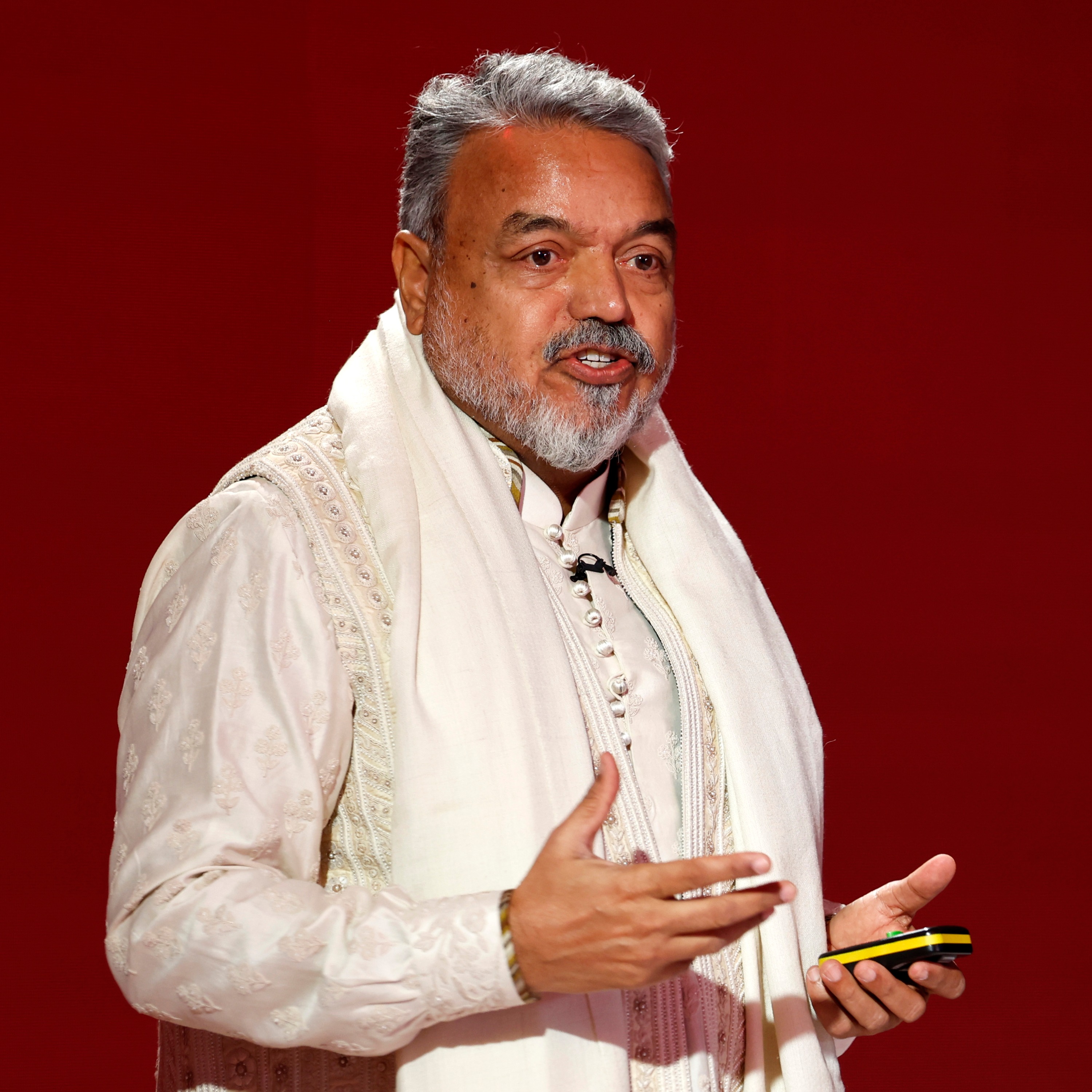
The Business of Fashion Podcast
Why India Will Not Be The Next China for Luxury
00:22:07
In this talk from BoF VOICES 2024, Ravi Thakran unpacks the dynamics of economic growth in India, explains why its path won’t mirror China’s, and shares insights on how to succeed in one of the world’s most complex — yet promising — markets.
Loading summary
Transcript11 lines
- [00:00]
Shopify Ad
It's 2025 and you're wondering, how can I make this year different? How can I turn my business idea into reality? Shopify is how Shopify makes it easy to launch your brand, get your first sale and manage everything from shipping to payments all in one place. Don't wait. Start building today and make 2025 the year your idea becomes a reality. With Shopify, your first sale is closer than you think. Established in 2025 has a nice ring to it, doesn't it? Sign up for your $1 per month trial period@shopify.com BOF all lowercase go to shopify.com BOF to start selling with Shopify today. Shopify.com BOF.
- [00:46]
Imran Ahmed
Hi, this is Imran Ahmed, founder and CEO of the Business of Fashion. Welcome to the BOF Podcast. It's Friday, February 7th. Will India be the next China? That's a question that's circulated throughout the fashion industry for years, even as its population and economy are surging. India's cultural tapestry and fragmented retail landscape set it apart from its Asian neighbor. This week I'm pleased to share a talk by Ravi Thakron from BoF Voices 2024 over coffee last year, Ravi captivated me with stories of pioneering luxury growth for Swatch in 1990s China and how that shaped his leadership of LV age in Asia, giving him really unique insights on the many differences between the world's two most populous countries and why European luxury brands have not yet managed to really crack the Indian market.
- [01:39]
Ravi Thakran
India is now across China and growing faster, but when it comes to luxury market talk of any brand, be it Mercedes Benz or BMW or talk of Louis Vuitton or Cartier or Patek or whatever, India is less than 1% India. Stupendous growth is right in front of us, but bulk of that growth is led by by very young population with a very low per capita income. So if you are in aspirational play, go to India today. This will be our biggest play going forward in luxury. You still have to work.
- [02:10]
Imran Ahmed
In his talk, Ravi unpacks the dynamics of economic growth in India, explains why its path won't mirror China's, and shares insights on how to succeed in one of the world's most complex yet promising markets. Here's Ravi Thakran on the POF podcast.
- [02:34]
Ravi Thakran
Friends Today we'll talk a little bit about the Asian macro, then about China as a benchmark, because often people ask, will India be next China? And then try to demystify India, which is almost impossible. In fact, there is a magic In India staying as a mystery. And maybe there is some good answers for the world in that mystery as such. So let me first clarify. All of us who look at the data of the last 40 years of development of Asia often ignore one major issue. In all of the Data in the 80s and 90s, most of the data presented as Japan and Asia ex Japan in the last 20 years is China and Asia ex China. And often Middle east is combined with Emea. A lot of us do not realize that Middle east as a name was a mistake made by an American in 1854. We all carried is neither in the east nor in the middle of that East. It is West Asia. And if you combine that figure today, Asia is the largest factory of the world and also largest market of the world. So just look at some of these figures. For garments, 77% of the world production is in Asia. Full watches. Of the components, 82% of them are made in Asia. And accessories 83%. And not only Asia has become the factory of the world. When you talk about the consumption as well, Asia now is the largest market of the world. And across all these categories, more than 50%. One big question however is that is the factory of the world. It is also the largest market in the world. How come its share of value in these categories is so low? Only 21% in garments, 7% in watches and 17% of value. Because that value resides in brands. And where do these brands live? The brands are today for these categories are still in Europe and usa. For the first category, little bit of Japan, but otherwise Switzerland and USA for watches and fashion. Access is still there. And you know, we Asians work very hard. We open our stores from early morning to late evening. 363 days of the year. We close either for Diwali or Chinese New Year, two days only. We take much less holidays, work much longer hours while Europeans enjoy 45 days of holidays. I can tell you that Europe is on notice. Within a decade this would change. This would change because we Asians are now starting to learn how to build brands as well. Now of course we don't still have experts like Bob Shard from Fresh Britain, but again we're trying to adopt some of those, but it is already happening. If you have not noticed, some of the categories like airlines. The top three airlines in the world are Singapore Airlines, Emirates and Qatar. All three Asian top hotels in the world. Look at Mandarin Oriental, Six Senses, Rosewood, Amman, all born in Asia. And we are creating a new brand called Jaya now which will be combination Aman with Culture of Soho House. All this innovation is coming from Asia. So if it has happened in those two great categories, it will happen in this as well. So Europe has to watch out. Now talking about the story about India and China. India, China story basically started because of a very serendipitous moment that happened exactly 46 years ago. On this very day, the 13th of November of 1978, Deng Xiaoping was invited by France as a state guest. And China didn't even have a plane that could go directly to Paris. It had to refuel on the way to France, it refueled in Bangladesh. On the way back, it refueled in Singapore. And he met Lee Kuan Yew on that day of 30 November, he asked Lee Kuan Yew, how did you guys develop this country into such an incredibly developed place? And he told him, we did only one thing. We opened up the country to the world. We invited the world to come and trade here. You guys in Beijing are much more intelligent, big Mandarins and titans. If you open up, you could win the world too. He literally from the 30th of November meeting went, took a holiday in Lichen, wrote this famous paper and presented next month in the 11th plenary session of the National Congress. And that paper was called Reform and Opening Up. And that influence of Lee Kuan Yew led to China opening up in 1979. 1980 was actually the first year a first private enterprise license was given in China to a woman who was making buttons called Chang Huame and then started the whole enterprise. And look at in 80s and 90s, 20 years, it goes on to become factory of the world. First start in the Pearl River Delta, the three states and eventually across all of China. Now of course, these two nations have almost same population. India is now across China and growing faster. But when it comes to luxury market talk of any brand, be it Mercedes Benz or BMW or talk of Louis Vuitton or Cartier or Patek or whatever, India is less than 1%, China is about 40%. How did this happen? Could this happen in India going forward as well? That's the big question. But if you look at China, in 1990, China was where India is today, about 1% of the market. It's exactly similar. There were about five malls in China and the rest of the brand had to go to five star hotels to open stores. That's how first big V2 store was in China. World Hotel India is exactly about that. In the 10 years it didn't develop much, in 2000, China's economy was still smaller than New York City's economy. New York city economy was 2.7 trillion. China was still 2.3 trillion. The real takeoff happened in 2002 when China joined WTO and as Americans call things, went off the charts, be it in consumption or exports, all of that. And by 2010 it was clear China was the next big thing. And then came the largest economic expansion ever in the history of this planet. In that decade of 10 to 20 and 10% become 33%. If you go to World bank in Washington D.C. they have the motto to get the world rid of poverty. Entire World bank effort across the world from 1950 brought only 380 million people out of poverty. China alone credit to them took out more than double of that out of poverty in that period. The largest economic expansion ever in the history of the planet. And that leads to this. So it's almost always linked to the basic economy. Yes, number of people same. But if you look at people who earn more than $12 a day, who you can call broadly as consumers, the number in China is exactly similar to number of people who are not consumers, who are poor and vulnerable, earning less than $12 a day. So the starting point is very, very similar to their 1990. Now, if you look at this other data, per capita income 2,700 to 13,000, about 4.8x, let's say 5x. If you look at upper middle class, middle class looks big. When it comes to upper middle class, it's only 30 to 35 million, which is like Germany, middle class. Whereas China is 120 to 150. That's another about 4 to 4.2x. So if you take 5x and 4x, that's your 20x multiple right there. But where the other 2x multiple lies in the fact that like Japan or Korea, China also adopted a lot of Western culture. The men would wear suits with tie like in Japan or Korea, whereas in India it's still very, very Indian. And that's one of the major things about India. India across the segment, be it for men or women, is very Indian and will remain so for a long period of time. And there is a lesson in that. This is another aspect we were just talking earlier about. China starting to get old. And India is still a very young country. But there are two lessons here. China's demographic dividend, which I define as the year when number of people working became more than number of people dependent. In China, that started in 1998. 98 was the first year after 250 years there are more people working than dependents in China. Unfortunately that lasted only till 2018 because of single child policy. Once again the number of dependent are more than number of people working. So they lost that. India in fact the demographic dividend exactly of the same figure started in 2018, same year when China ends that is likely to stay for 41 years. Now India therefore has great raw material of youth that is now getting into workforce and provided India can really employ them well, that is India's challenge. India is today has very large number of people unemployed or partially employed. On the other hand, the other lesson here is China getting old. Not necessarily bad. The older generation having less money to spend on kids, having less money to spend on new homes for new kids could spend much more on themselves. Not only that, China's real problem today is not consumption. China's bigger problem today is the property market. Ever since China became from 1980 onwards, the home ownership didn't exist in the country. 73% of the household investment, 73% of went into property in the last 40 years. This is the highest in the history of humankind anywhere in the world. And that market overbuilt. And today you have an issue that 33% of the economy which is property market is moribund. Seven of the top 10 property makers are likely to go bankrupt and Chinese government decided not to bail them out, but let the pain be absorbed by the economy. So yes, it will be two or three years or probably four years of pain that China will have to go through. The second issue is China is facing geopolitical challenges across the West. Particularly Trump's election clearly signifies that there'll be bigger challenges for China. So therefore anybody who's involved in export led economy is likely to face headwinds going forward. But yet China is growing. How is China growing By the China was smaller than New York economy in 2000, but now it's $18.3 trillion economy and is growing at a slow rate 4% but still that is higher than rest of Asia's growth overall. So what is growing in China still is a consumption. People are richer, people are consuming better. Yes, it has stalled for the time being. And it's less consumption in luxury because you need good mood which doesn't exist today. I think two, three years from now China will go through this cycle and come back better. So do not count the dragon out. Dragon will remain important and therefore in all your strategies do not start taking that out. India. Now all of you saw a few months ago the big ambani wedding. That Ambani wedding did a big service to India, but also disservice. Big service. I put India on the map, put Indian luxury on a show from Kim Kardashian to Mark Zuckerberg, all adorned in Indian attire. Showing up there was great. The disservice with the aspect that they live in a 2 billion home. Four people living in 400,000 square feet of space, right next to the most densely populated, largest slum in the world. I hope Mr. Ambani will take on the mantle of another gentleman who lived in the same city in three bedroom apartment, Mr. Ratan Tata. He managed the equally large empire and he gave away in his lifetime $102 billion to charity. More than Bill Gates and Warren Buffet together. I really hope he takes on that mantle going forward. India needs that service now. Beside India being different within India, India is very different. And here I'm just describing four major arenas of India, but within each of those it's also very different. So north of India is all about pomp and show. Living for the day overspend because India was attacked 64 times, of which 38 times the conqueror was successful in capturing some part of India or entire India as such. So these people are always facing wars. Who knows about tomorrow, live for the day today. So the south on the other hand, was very protected and people in the south live very different life, but there live very, very subtle luxury. Western people are perhaps the most connected to the Western world. So today if you are in Mumbai saying that I bought this particular bag in Palladium Mall or in Taj Hotel, it's really losing the magic. You want to say that I was in Harrods with so and so, or I was in Rue Santana and I bought it there. That's what they want to do. East on the other end is the true intellectual capital of the country. Almost all major philosophers, all major scientists, mathematicians, musicians came from there. Those guys do not want to indulge in so called luxury. If you want to sell a piano or send a violin, yeah, you go to Calcutta. These guys are intellectual to a fault. So much so that they elected a communist party to govern them for seven times in a row. In a multi party system that was the continuously longest serving communist government in the world. Intellectual to a fault, but true genius capital of the country. Even today. The other issue in India is, as in many economies, Africa and Asia, the parallel economy is very large. A very large part of that parallel economy goes into one asset class, that is land or buying apartments. Because India has severe rules to send money abroad. But for a few thousand people, they don't have Swiss accounts or Singapore accounts. And they typically put that corrupt money into land. As a result, land is very expensive. Land is so expensive that to build a mall and make it profitable is very, very difficult. As a result, there are only five malls. Unless, like in China, if government subsidizes or give free land to build malls, it's likely to remain the biggest constraint. The other issue, some of you who have dealt with India realize India also has the big issue of incredibly complex customs, very high duties and also very difficult process. India has got its act put together to really open up on infrastructure and also open up its regime. The other question is not only for general fashion, but is India ready for luxury? You know, once Bernard Arnault told me that you cracked China, but being Indian, how come you didn't ever crack your own market? And I told him that LVMH is not luxury enough for India. And he said, yeah, right. And I said, no, Mr. Anu, I'm actually serious. And then he goes, why do you say so? I said, there was a time when India is a great market for luxury. There was a time when Louis Vuitton sold almost quarter of his sale to India. Cartier sold about one third of his sale to India. But if you go to Cartier headquarters, there's Maharaja of Patiala's picture on the screen with a tutti frutti necklace. It was Indianized jewelry. Maharaj of Kapurthala was the largest collector of Louis Vuitton trunks. Almost every trunk was made for some particular Indian practice. And that Indianization was very, very important piece of that. Even from uk, Rolls Royce sold the largest number. First air conditioned car, first Phantom were all delivered to India. And those are all Indianized in the look. When Birmingham was the biggest center for luxury, a lot of people would not believe that England was ever a center of. It was. And there was a company Baccarat equivalent of the time called OSLA for making crystal chandeliers and all. Nawab of Hyderabad and Maharaj of Udaipur, they will send something made in wood to Birmingham from India so they could copy the same design in crystal and sand. So that has always been a big element. Indian luxury will always remain very Indian unless you Indianize unlikely to crack that market. And you saw in Ambani wedding that aspect. So across the spectrum, be it youth, be it. And you see that not just in Bollywood, every aspect of Indian life. And that is why if Kim Kardashian wore a western dress would have looked like a sore thumb. Same for Mark Zuckerberg. So that is India for you. The other aspect of India, I would say as McKinsey report clearly said, that India, given it has got large youth population now they're getting into workforce a large way and they're becoming a consumer. But bulk of that is value for money consumer. So if you are a value for money player, you certainly Lou Alzara or Nike or H and M, that's a big market for you. Of course the constraint of Malt still remains. If that can get cracked, that's a big play. The other part is Western luxury, particularly accessories can still do so we might make a great costume but don't make good shoes. So you then buy Baluti to go with Indian. And the same thing is true for women with their bags and all. But when it comes to jewelry or garments, it's very, very difficult for questionable brand unless they. Hermes made a sari collection, Dior made a sari collection. It was sold within a week. Within a week. And I wonder why they didn't do another collection after that. Because that was more done for the launch but not followed up on that one. They cleared the lesson customized to Indian way of life. So it's not only basically look India, you take Dior Homme, maybe there are 5000 Indians who can fit into that ergonomics. Our bodies are very different. There is only one company that has done this study very well, which is Marks and Spencer. Marks and Spencer has M and S standards. They're the only ones who study the ergonomics of bodies across Asia, not just India. So those who are into manufacturing try to adopt those standards. They have the best information. And finally manufacturing locally, there are brands like US Polar association at again value for money level or a better value like La Martina, which is a phenomenal brand for Argentina. They are now making it in India and India is now the fastest growing market for them. So many of these elements you have to keep in a strategy to do that. And again other aspect, value for money is often like in China. By the way, 1990 onwards for Dior, beauty was the first segment to enter with where you could indulge in luxury at a very low price point. And that's how India could also be started in those segments. First beauty, accessories and onwards. So overall India has got its act together going forward. But brands also have got their whole agenda in front of them. What to do one to Indianize, second to customize. Both are essential, otherwise not likely to win in India second part. If for example if you are Omega watches, you will sell more Constellation which you can see from a distance to north but you sell Deville to the guy in south. If you're Patek Philip, you'll sell Nautilus to the guy north and you'll sell simple strap watches in the south. And again as I mentioned, if you stand by and sons you would go nowhere but go to Calcutta. So this adaptation is very very important as well. Part of India and India stupendous growth is right in front of us. But bulk of that growth is led by very young population yet with a very low per capita income and therefore bulk of the play is aspirational. So if you are in aspirational play, go to India today. This will be your biggest play going forward in luxury you still have to work. So Slumdog could become very much a millionaire and all of you could have a great play in it. But there is one last thing I will leave with. India has to make sure particularly Mr. Modi has to make sure they do not make the geopolitical darling into a pariah. If they make the democracy into illiberal democracy, as Tina Brown yesterday said, India is going in the wrong direction on that front. You may lose that status. The second message to all of us while we are trying to make India adapt the West, I think there is a message for the west to adopt from India. Two most famous Indians ever have. Still very relevant lesson for us today. Buddha who said all your unhappiness comes from our desires. Less desires, more happiness. And second Gandhi. He gave up his Savile Row wardrobe and Northampton shoes when he died. He had one attache case with three dhotis made with self spun cotton dhotis. Two pair of shoes, one pair of eyeglasses. But he still made it to Time magazine's cover is man of the century. So we can adopt a little bit more of Gandhian simple living Thai thinking. Thank you.
- [22:38]
Imran Ahmed
The BOF podcast is edited and produced by Olivia Davies and Eric Brea.
- [22:51]
Charlotte Tilbury
Do you feel overwhelmed when it comes to makeup? Charlotte tilbury has bottled 30 years of artistry into easy to choose, easy to use beauty products. You can't go wrong. They are flattering for everyone everywhere. That's the reason why she is the queen of Glow. Take her iconic Hollywood flawless filter. With one product you can blur, smooth and illuminate the look of skin. Plus it's skin care infused for clinically proven hydration for up to 24 hours. It's like nothing else. Charlotte's products are Magic Confidence bottled. You can use code CONNECTICUTPODCAST15 for 15% off on Charlotte tilbury.com plus new account holders get free delivery. This ad is brought to you By Charlotte Tilbury USA customers only and valid until March 2, 2025. For full terms, conditions and exclusions, see the Charlotte Tilbury website.
- [23:43]
Imran Ahmed
ACAST powers the world's best podcasts. Here's a show that we recommend.
- [23:51]
Ravi Thakran
This.
- [23:52]
Charlotte Tilbury
Season on the Dream. Supplies are being by nurses who run out in the middle of the night and purchase diapers, but the hospital is still charging as if they still have these items. We are digging into every topic we've ever wanted to cover on this show. It's a spinning plate analogy. The second that you stop spinning those plates that crashes. So you can never stop working. The Dream Season 4 comes at you weekly. Starting Monday, January 20.
- [24:23]
Imran Ahmed
Acast helps creators launch, grow and monetize their podcasts everywhere. Acast.com.