Podcast
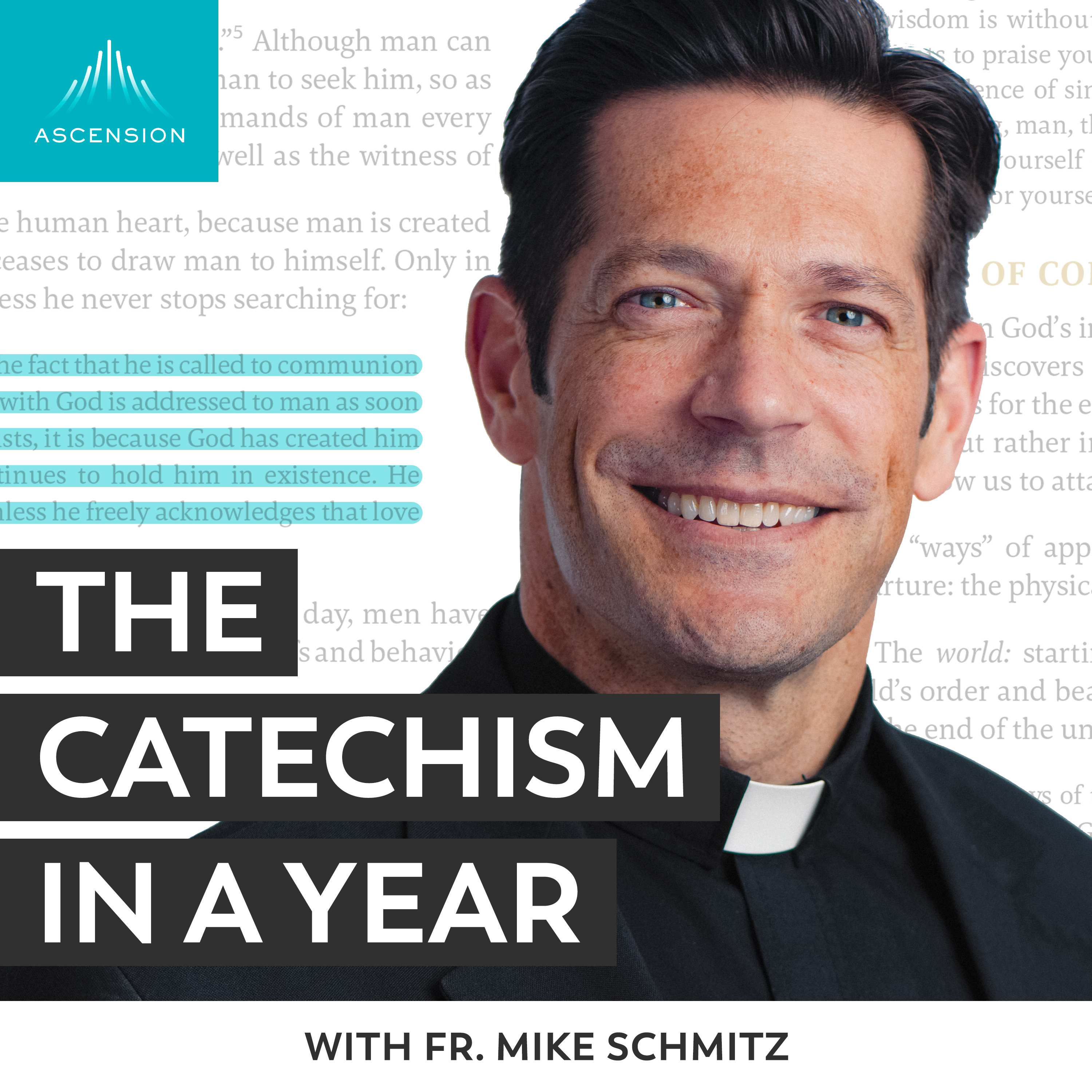
The Catechism in a Year (with Fr. Mike Schmitz)
Hosted by Ascension · EN
In Ascension’s The Catechism in a Year podcast, Fr. Mike Schmitz guides you through the entire Catechism of the Catholic Church in 365 episodes, providing explanation, insight, and encouragement along the way. Unlike any other Catechism podcast, The Catechism in a Year (with Fr. Mike Schmitz) podcast follows a reading plan inspired by Ascension’s Foundations of Faith approach, a color-coded approach that reveals the structure of the Catechism, making it easier to read and understand. With this podcast, you’ll finally understand what it means to be Catholic and how the beliefs of the Catholic Faith come together. Listen and… Read the ENTIRE Catechism of the Catholic Church in 365 days Understand the essentials of the Catholic Faith and why they matter Understand how Church teaching is rooted in Sacred Scripture Absorb over 2,000 years of Sacred Tradition Encounter God’s plan of sheer goodness for your life Each 15-20 minute episode includes: A guided prayer to help you enter into each episode A reading from the Catechism of the Catholic Church An explanation from Fr. Mike Schmitz about the reading The Catechism of the Catholic Church contains adult themes that may not be suitable for children - parental discretion is advised.
646episodes
Episodes
Newest firstAll episodes
Day 216: Who Receives Holy Orders (2026)
1w ago00:24:49Summary readyWe continue our examination of the sacrament of Holy Orders. Specifically, we explore exactly who can receive the sacrament of Holy Orders. Fr. Mike emphasizes that only a baptized man can receive the “sacred ordination”. He then unpacks exactly why the ordination of women is not possible. Today’s readings are Catechism paragraphs 1577-1580. This episode has been found to be in conformity with the Catechism by the Institute on the Catechism, under the Subcommittee on the Catechism, USCCB. For the complete reading plan, visit ascensionpress.com/ciy Please note: The Catechism of the Catholic Church contains adult themes that may not be suitable for children - parental discretion is advised.
SummaryDay 215: Deacons and the Diaconate (2026)
2w ago00:13:31Summary readyTogether, with Fr. Mike, we examine the ordination of deacons and the diaconate. Fr. Mike unpacks each of the essential elements of the rite of the ordination of deacons as well as each of the tasks of the deacon. He emphasizes that only a validly ordained bishop can validly confer the sacrament of Holy Orders. Today’s readings are Catechism paragraphs 1569-1576. This episode has been found to be in conformity with the Catechism by the Institute on the Catechism, under the Subcommittee on the Catechism, USCCB. For the complete reading plan, visit ascensionpress.com/ciy Please note: The Catechism of the Catholic Church contains adult themes that may not be suitable for children - parental discretion is advised.
SummaryDay 214: Priests and the Presbyterate (2026)
2w ago00:18:45Summary readyThe Catechism moves on from bishops—the episcopacy—to priests in the presbyterate, who share in the bishop’s ministry “in a subordinate degree”, to be “co-workers”. Fr. Mike dives deep into the service-leadership that priests are called to. “[A priest’s] whole life must be configured and must be conformed to Jesus Christ the high priest.” Today’s readings are Catechism paragraphs 1562-1568. This episode has been found to be in conformity with the Catechism by the Institute on the Catechism, under the Subcommittee on the Catechism, USCCB. For the complete reading plan, visit ascensionpress.com/ciy Please note: The Catechism of the Catholic Church contains adult themes that may not be suitable for children - parental discretion is advised.
SummaryDay 213: Bishops and the Episcopacy (2026)
2w ago00:16:37Summary readyThere are three degrees within the sacrament of Holy Orders: the episcopacy (bishops), the presbyterate (priests), and the diaconate (deacons). The Catechism begins unpacking ordination with the bishops. Fr. Mike speaks on the special role that bishops play in the life of the Church. Today’s readings are from Catechism paragraphs 1554-1561. This episode has been found to be in conformity with the Catechism by the Institute on the Catechism, under the Subcommittee on the Catechism, USCCB. For the complete reading plan, visit ascensionpress.com/ciy Please note: The Catechism of the Catholic Church contains adult themes that may not be suitable for children - parental discretion is advised.
SummaryDay 212: In Persona Christi (2026)
2w ago00:20:03Summary readyThe Catechism unpacks—by way of comparison—the “two participations in the one priesthood of Christ”: the common priesthood of all the faithful and the ministerial (or hierarchical) priesthood of the bishops and priests. Fr. Mike hones in on the ministerial priesthood as a means for Jesus to minister to his Church. His ministers act on his behalf in persona Christi Capitis: in the person of Christ, the Head. Today’s readings are Catechism paragraphs 1546-1553. This episode has been found to be in conformity with the Catechism by the Institute on the Catechism, under the Subcommittee on the Catechism, USCCB. For the complete reading plan, visit ascensionpress.com/ciy Please note: The Catechism of the Catholic Church contains adult themes that may not be suitable for children - parental discretion is advised.
SummaryDay 211: The One Priesthood of Christ (2026)
2w ago00:17:08Summary readyThe priesthood of the Old Covenant among the people of Israel is fulfilled in the one priesthood of Christ. The Catechism compares the Old Testament priesthood, “powerless to bring about salvation,” with the ordained ministry in the New Covenant. Fr. Mike unpacks the reality that there is only one true priest—Jesus Christ. His “priests” on earth are humble ministers. Today’s readings are Catechism paragraphs 1539-1545. This episode has been found to be in conformity with the Catechism by the Institute on the Catechism, under the Subcommittee on the Catechism, USCCB. For the complete reading plan, visit ascensionpress.com/ciy Please note: The Catechism of the Catholic Church contains adult themes that may not be suitable for children - parental discretion is advised.
SummaryDay 210: The Sacrament of Holy Orders (2026)
2w ago00:17:23Summary readyThe Catechism enters Chapter Three on the “Sacraments at the Service of Communion” which include both Holy Orders and Matrimony. As it introduces the sacrament of Holy Orders, Fr. Mike reminds us that every vocation is a gift, and that—no matter what state of life we are in or have been called to—we should read this chapter with an open heart and a grateful spirit. Today’s readings are Catechism paragraphs 1533-1538. This episode has been found to be in conformity with the Catechism by the Institute on the Catechism, under the Subcommittee on the Catechism, USCCB. For the complete reading plan, visit ascensionpress.com/ciy Please note: The Catechism of the Catholic Church contains adult themes that may not be suitable for children - parental discretion is advised.
SummaryDay 209: Summary of the Anointing of the Sick (2026)
2w ago00:13:08Summary readyThis summary of the Catechism’s teaching about the Anointing of the Sick is concise and rich. This holy anointing brings us hope and courage as we endure illness and the difficulties of old age. While we pray for healing of body and soul, this sacrament also prepares us for death. Fr. Mike ends this episode by explaining three practices of the Church that help her members prepare for death. Today’s readings are Catechism paragraphs 1526-1532. This episode has been found to be in conformity with the Catechism by the Institute on the Catechism, under the Subcommittee on the Catechism, USCCB. For the complete reading plan, visit ascensionpress.com/ciy Please note: The Catechism of the Catholic Church contains adult themes that may not be suitable for children - parental discretion is advised.
SummaryDay 208: Completing the Earthly Pilgrimage (2026)
3w ago00:16:36Summary readyThe effects of the Anointing of the Sick are numerous and deeply transformative. In times of great need and temptation, this sacrament brings us strength, courage, peace, and the forgiveness of sins. Fr. Mike explains that these effects aren’t only for the individual recipient but for the whole ecclesial community. We learn that when a person approaches the threshold of death, joining this anointing with Reconciliation and the Eucharist as viaticum constitute “the sacraments that complete the earthly pilgrimage.” Today’s readings are Catechism paragraphs 1520-1525. This episode has been found to be in conformity with the Catechism by the Institute on the Catechism, under the Subcommittee on the Catechism, USCCB. For the complete reading plan, visit ascensionpress.com/ciy Please note: The Catechism of the Catholic Church contains adult themes that may not be suitable for children - parental discretion is advised.
SummaryDay 207: Celebrating the Anointing of the Sick (2026)
3w ago00:11:08Summary readyThe Anointing of the Sick is not just for those on the verge of death but for any faithful suffering from a grave illness. Fr. Mike explains that because of this, we don’t have to put this sacrament off to the very end; instead, we can enjoy the graces it confers as often as is fitting throughout a lifetime. This section also discusses how we can celebrate the Anointing of the Sick. Today’s readings are Catechism paragraphs 1514-1519. This episode has been found to be in conformity with the Catechism by the Institute on the Catechism, under the Subcommittee on the Catechism, USCCB. For the complete reading plan, visit ascensionpress.com/ciy Please note: The Catechism of the Catholic Church contains adult themes that may not be suitable for children - parental discretion is advised.
Summary