
Podcast
The Christian Podcast Community
Hosted by Christian Podcast Community · EN
The primary feed of the Christian Podcast Community. This feed is an aggregator of shows affiliated with the Christian Podcast Community.
195episodes
Episodes
Newest firstAll episodes
Refuting Calvinism with Phil Bair
1w ago02:42:41Tap to summarizeIn this riveting installment of Apologetics Live, Andrew Rappaport engages in an intense dialogue with Phil Bear regarding the complexities surrounding Calvinism and its implications on free will and divine determinism. Central to their discussion is the assertion that Calvinism espouses exhaustive divine determinism, a principle that claims God's will dictates all events in the universe, including human thoughts and actions. Bear articulates his contention that such a view leads to the conclusion that God is the author of sin and deception, raising profound moral questions about the nature of God and human agency. Rappaport, in turn, defends the notion of human responsibility and the compatibility of free will with God's sovereignty, emphasizing that individuals possess the capacity to choose their beliefs. The episode delves into theological intricacies, including the interpretation of scriptural passages, the nature of God's will, and the existential implications for believers. This thought-provoking exchange challenges listeners to reconsider their understanding of salvation, divine foreknowledge, and the interplay between God's sovereignty and human decision-making, making it an essential episode for anyone seeking to deepen their theological insights.Takeaways:The discussion centers around the theological implications of divine determinism and human free will, with both speakers presenting their views on how these concepts relate to Calvinism and Arminianism.Phil Bear argues that Calvinism's doctrine of exhaustive divine determinism leads to logical contradictions regarding God's nature and human accountability, emphasizing the importance of human choice in salvation.Andrew Rappaport presents a counter-argument that emphasizes God's sovereignty while also affirming human responsibility, advocating for a harmonious understanding of both in the context of biblical scripture.The podcast delves into the nuances of biblical interpretation, examining specific scriptures to highlight the complexities of soteriology and the interplay between divine grace and human action in the process of salvation.Phil Bear emphasizes that the warnings in Scripture indicate a genuine possibility for believers to stray from faith, while Andrew Rappaport argues that these warnings should not be interpreted as an indication of losing salvation.The episode concludes with a mutual respect for each other's theological positions, recognizing that despite disagreements, both participants are committed to a robust engagement with Scripture and Christian doctrine.Mentioned in this episode:What do We Believe by Andrew Rappaport
Transcribe →Matt Slick Live: July 30, 2026
1w ago00:48:00Tap to summarizeMatt Slick Live (Live Broadcast of 07/30/2026) is a production of the Christian Apologetics Research Ministry (CARM). Matt answers questions on topics such as: The Bible, Apologetics, Theology, World Religions, Atheism, and other issues! You can also email questions to Matt using: info@carm.org, Put "Radio Show Question" in the Subject line! Answers will be discussed in a future show. Topics Include:Ephesians—God Choosing and Jesus Saving People From their Sins-Free Will Considerations/Trying to Understand The Trinity/A Discussion on The Nature of Jesus/The Righteousness of God as Part of His NatureDoes God Love The Reprobate?/July 30, 2026
Transcribe →Didaché - Bill Johnson Tells A Lie (And Why He Is The Kamala Harris Of The Evangelical World)
1w ago00:25:59Tap to summarizeBill Johnson told a crowd at the 2026 Southwest Believers Convention that he has personally watched people healed the way the sick were healed in Acts 5, when Peter's shadow passed over them. Justin Peters' answer is blunt: no he hasn't. Everyone carries a smartphone — where is the video? And where does the text even say the shadow healed anyone?Working clip by clip through the Bethel Church pastor's message, Peters tests each claim against Scripture. Johnson's line that recognising "the actual presence of God" is the supreme value collapses under Psalm 139:7-10 and Jeremiah 23:23-24, where God fills heaven and earth. His claim that the Holy Spirit indwells every believer but does not rest upon every believer runs straight into Romans 8:9, 1 Corinthians 6:19-20 and Galatians 4:6 — and Peters argues it is charismatics, not cessationists, who hold the low view of the Spirit, since "spirit-filled Christian" is simply redundant.He also takes on "your shadow will always release whatever overshadows you," the twisting of "seek first the kingdom," and Johnson's heaven-to-earth divine health teaching, which Peters names as an over-realised eschatology — noting, without joy, that Johnson's own wife died of cancer, and that the faith healer still wears eyeglasses.This one matters because meaningless spiritual-sounding platitudes are how false doctrine gets past discerning ears. Acts 3:6 shows what a real miracle looked like.➡️ Click here to find all of Justin’s essential links.
Transcribe →Matt Slick Live: July 29, 2026
1w ago00:48:00Tap to summarizeMatt Slick Live (Live Broadcast of 07/29/2026) is a production of the Christian Apologetics Research Ministry (CARM). Matt answers questions on topics such as: The Bible, Apologetics, Theology, World Religions, Atheism, and other issues! You can also email questions to Matt using: info@carm.org, Put "Radio Show Question" in the Subject line! Answers will be discussed in a future show. Topics Include:Matt Discusses One of The Errors of Annihilationism/Is Punishment Eternal?/Soul Sleep/ A Lengthy Interaction About The Millenium—or Not/ The Beast of Revelation and The False Prophet of Revelation/Amillennialism and Premillennialism/ July 29, 2026
Transcribe →Didaché - Jesse Duplantis Tells One Whopper Of A Lie
1w ago00:10:59Tap to summarizeA preacher claims YouTube demonetized his channel because he was pulling more viewers than Jimmy Kimmel. It takes about two minutes with a public analytics site to prove that false — and Justin Peters does exactly that.Jesse Duplantis is one of the fixtures at Kenneth Copeland's 2026 Southwest Believers Convention in Fort Worth, Texas, alongside Bill Johnson, Jonathan Shuttlesworth, Mac Hammond, Creflo Dollar and Benny Hinn. In his first message of the week, Duplantis told the crowd YouTube had shut off his monetization for too many views and compared him to Jimmy Kimmel. Peters pulls the SocialBlade numbers on screen: Duplantis has 277,000 subscribers to Kimmel's 22,100,000, and 61 million lifetime views to Kimmel's 16 billion — a factor of 262. Average views per video: 13,000 against 2 million.Beyond the numbers, Peters points to the pattern. Word-faith preachers spend almost no time in the text, filling roughly ninety percent of their time with stories about themselves. Scripture describes such men plainly: greedy, eyes full of adultery, many following their sensuality, caring only for themselves. And a man with no fear of putting words in the mouth of the God who spoke the universe into existence and upholds all things by the word of His power will have no hesitation about exploiting you either.This one matters because it hands listeners a concrete, verifiable example of a celebrity preacher lying — and a reason to stop trusting him.➡️ Click here to find all of Justin’s essential links.
Transcribe →STREET TALK THEOLOGY Pastor Dom and Rebecca Berschwinger on Kid's Books Pt2
1w ago00:27:51Tap to summarizeIn today's episode, Pastor Dom is joined by Rebecca Berschwinger, an author of various children's books, and together they discuss various topics including what her books are about and some future books that are in mind.www.onelittlecandlepodcast.comwww.lovintruthbooks.comBooks on AmazonOne Little Candle InstagramLove and Truth Books InstagramFor more info about Pastor Dom and the current church he is pastoring use the link below.Desert Sky Baptist!!!Street Talk Theology has a new sponsor!!!Logos Christian Academy is the proud new sponsor of Street Talk Theology. As Casa Grande’s premier classical education school, Logos Christian Academy teaches from a biblical worldview, equipping students both academically and spiritually.They are passionate about teaching students HOW to think, instead of what to think. To find out how to enroll, or to simply learn more, visit logosclassical.org
Transcribe →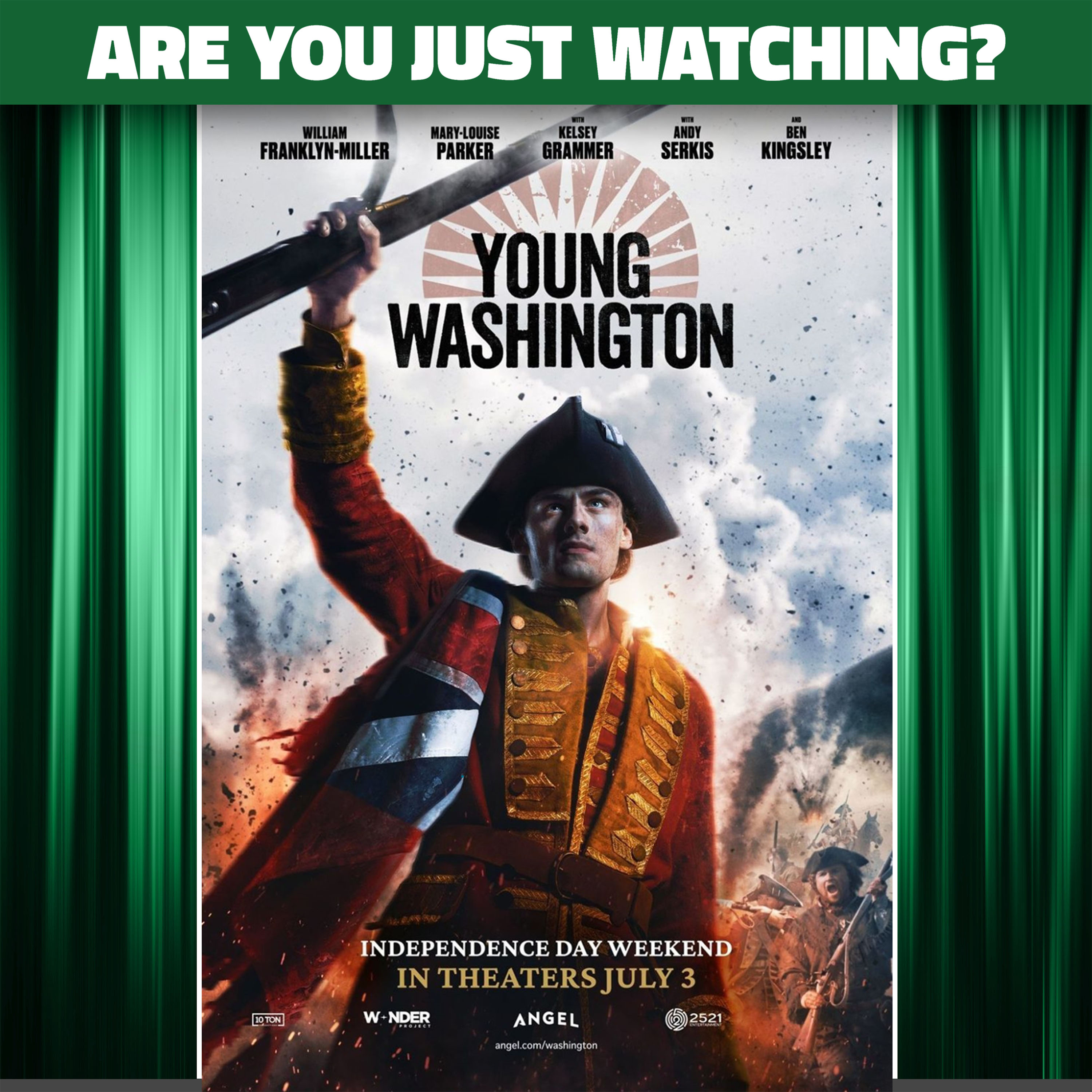
Young Washington - AYJW175
1w ago01:17:22Tap to summarizeYoung Washington is an entertaining Angel Studios film that reshapes history—so guest host Andrew Rappaport and Eve weigh cinematic history vs. truth, God's providence, pride, humility, and the gospel.Are You Just Watching?Episode 175: Young WashingtonFor the full show notes please visit areyoujustwatching.com/175Share your feedback!We would like to know, even if just your reactions to the trailer or the topics we shared in this episode. Or what general critical-thinking and entertainment thoughts or questions do you have? Would you like to suggest a movie or TV show for us to give a Christian movie review with critical thinking?Comment on the show notesCall (513) 818-2959 to leave a voicemailEmail feedback@AreYouJustWatching.com (audio files welcome)Join our Facebook discussion group.Join our Discord server.You can leave us a tip on Ko-fi — every bit helps keep the show going!The discussion presented by Eve Franklin and guest host Andrew Rappaport centers on the theatrical release of "Young Washington," a cinematic portrayal of George Washington's formative years as he embarks on a journey that would eventually shape him into the father of the nation. The film has garnered unexpected commercial success, outperforming various mainstream productions and attracting audiences interested in narratives that align with Christian values and historical patriotism. The hosts engage in a thorough examination of the film's artistic liberties, its deviation from historical accuracy, and the underlying themes of providence and character development woven throughout the narrative. They explore the implications of Washington's pride and subsequent humility, drawing parallels to broader Christian teachings about endurance and the quest for wisdom through life's failures. Ultimately, this episode serves as an insightful critique of both the film and the lessons it imparts to viewers, encouraging a deeper reflection on the intertwining of faith and history in the context of American identity.Takeaways:The cinematic portrayal of George Washington's youth offers a compelling narrative that underscores the formative experiences shaping his character and leadership.While the film is not a documentary, it creatively compresses historical events to engage audiences with essential themes of patriotism and sacrifice.The success of Young Washington at the box office reflects a growing audience demand for films that resonate with traditional values and historical narratives.The discussion emphasizes the importance of recognizing the distinction between entertainment and factual history, urging viewers to seek out the truth behind cinematic portrayals.The film illustrates the principle that failures can serve as valuable lessons, contributing to personal growth and wisdom, particularly through George Washington's experiences.Christian audiences are encouraged to consider the production values of Angel Studios, as they provide wholesome entertainment that aligns more closely with Christian values than mainstream Hollywood.
Transcribe →Lucas Nettles || Revo Financial || Money Mistakes Successful People Make
1w ago00:36:59Tap to summarizeIn this episode of The Caleb Gordon Podcast, Caleb sits down with Lucas Nettles of Revo Financial to talk about the money mistakes even successful people make.From lifestyle inflation and poor planning to overlooked risks and emotional decision-making, Lucas shares practical insight into the financial habits that can quietly hold people back—regardless of how much they earn.This conversation is honest, helpful, and packed with wisdom for anyone who wants to make smarter financial decisions, build with greater purpose, and avoid costly mistakes along the way.This episode is brought to you by:The Nine Minds. -https://thenineminds.com/DrivePoint - https://www.drivepointautos.com/Revo Financial - https://revofinancial.com/Copan Restaurant and Truckstop - https://www.facebook.com/copanrestaurant Reformed Cigars: reformedcigars.org
Transcribe →Navigating Life in Woke America with Joel Rakow
1w ago00:54:08Tap to summarizeAndrew Rappaport dives into the deep end of the cultural pool in this episode, tackling the multifaceted intricacies of wokeness and its implications on American society. He is joined by Joel Rakow, who shares his personal journey from being a long-time Democrat to penning a novel that sheds light on the challenges of navigating a world steeped in wokeness. The discussion pivots to the significant cultural shifts that have occurred over recent years, questioning the ramifications of a society that increasingly prioritizes equity over meritocracy. Andrew and Joel engage in a lively banter, exploring the intersections of politics, faith, and the media landscape, while cleverly dissecting how these elements interact to shape public perception and policy. They also introduce the concept of a "Liberty scorecard," aimed at holding government officials accountable to constitutional values, fostering a conversation that is as thought-provoking as it is entertaining.Takeaways:Andrew Rappaport and his guest delve into the implications of wokeness in American society, illustrating how it has permeated various sectors and influenced cultural values.They explore the personal journey of Joel in relation to his shift from traditional party affiliations, showcasing the complex dynamics of political identity in contemporary America.The discussion sheds light on the concept of ESG (Environmental, Social, and Governance) and its role in driving corporate policies that prioritize social causes over shareholder profit.Listeners are encouraged to reflect on the historical context of political shifts, drawing parallels between past and present movements within the Democratic Party's evolution.Joels novel, ‘Life in Woke America’, serves as a narrative vehicle to address the challenges faced by individuals resisting societal pressures while maintaining their values and beliefs.The conversation emphasizes the need for a strong middle class as a foundation for societal stability and the alarming trends that threaten this foundational element in America.Links referenced in this episode:lifeinwokeamerica.comMentioned in this episode:What Do They BelieveWhat do We Believe by Andrew Rappaport
Transcribe →A Deep Dive into 'Life in Woke America': A Dialogue with Joel Raiko
1w ago00:54:08Tap to summarizeThe discussion centers on the pervasive influence of wokeness in contemporary society, particularly as it pertains to the cultural and political landscape in America. The host, Andrew Rappaport, engages with Joel Rako, who shares insights from his novel "Life in Woke America," a narrative inspired by real events that critiques the societal shifts driven by wokeness. As they delve deeper into the implications of these cultural changes, they explore the erosion of traditional values and the impact on the middle class, emphasizing the necessity of a strong, principled society. The dialogue further examines the intersection of politics and culture, particularly how governmental policies and corporate practices are increasingly shaped by these ideologies. Throughout the conversation, they call attention to the urgent need for awareness and action in order to preserve foundational American values and safeguard the future.Takeaways:The discussion centers around the pressing issue of wokeness in contemporary society, exploring its implications for Christian values and the broader cultural landscape.The dialogue emphasizes the need for critical evaluation of political parties, particularly highlighting the disillusionment with the Democratic Party's shift towards extreme liberalism.A significant focus is placed on the introduction of the 'Liberty Scorecard', designed to assess the alignment of government officials' policies with constitutional values.The episode delves into the author Joel's motivations for writing his novel 'Life in Woke America', which aims to reflect the challenges faced by individuals in a progressively woke society.Listeners are encouraged to engage with the content by visiting the dedicated website for the book, offering insights into the narrative and its socio-political commentary.The conversation concludes with reflections on the future of America in light of current political dynamics, emphasizing the importance of maintaining constitutional integrity and civic responsibility.
Transcribe →