← The Clay Travis and Buck Sexton Show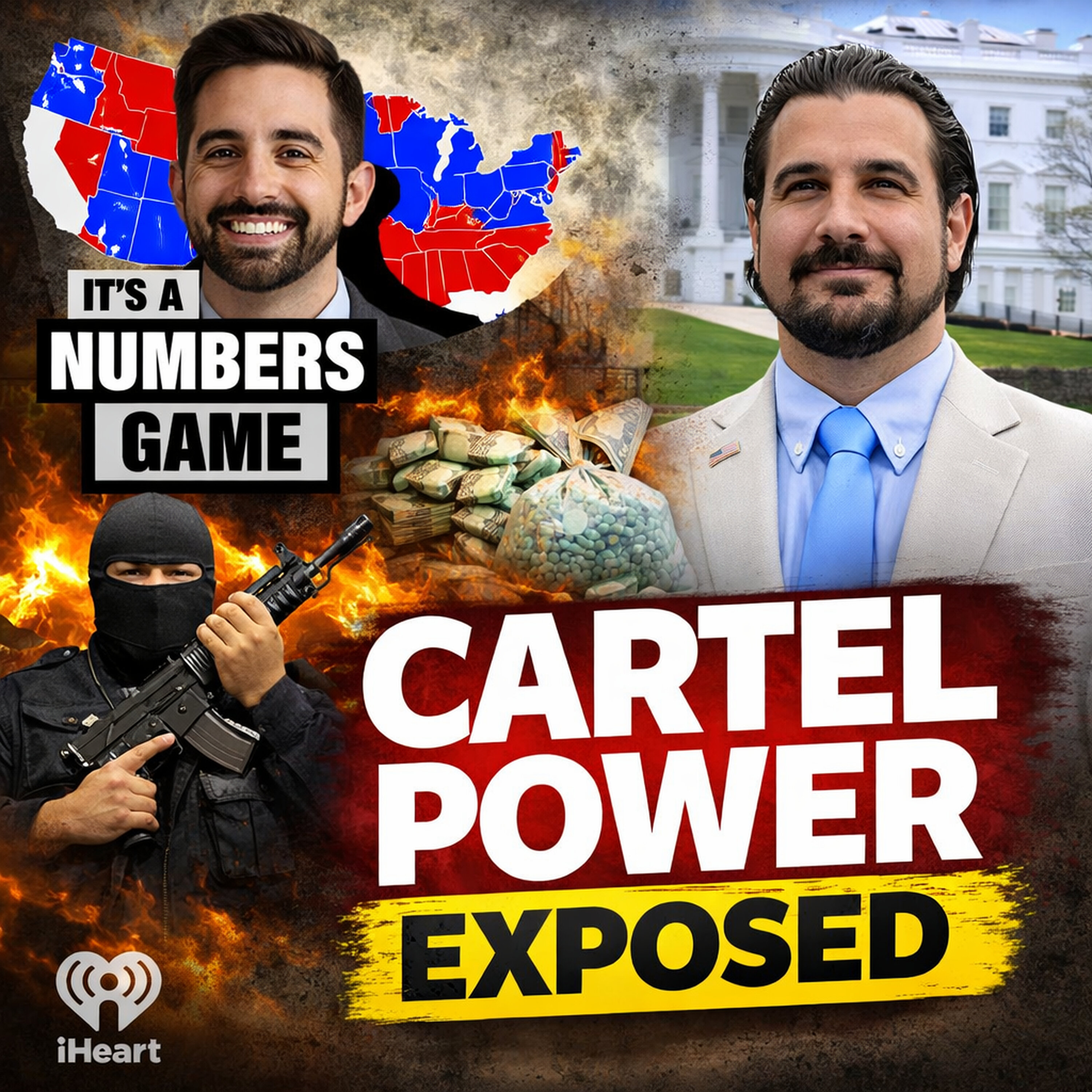
The Clay Travis and Buck Sexton Show
It's a Numbers Game: The Numbers Behind Cartel Power: Assassinations, Fentanyl Profits, and America’s Border Crisis
00:34:51
Loading summary
Transcript52 lines
- [00:00]
Ryan Graduski
This is an iHeart podcast. Guaranteed Human.
- [00:04]
Public Podcast Sponsor
You're a pro at running your life, at committing to your workout, at showing up every day. At Bombas, we're pros too. Pros at making socks. Our sport assortment has specialized socks for whatever sport you're committed to running, hiking, golf, Pilates and so much more. Made with sweat, wicking yarns, blister fighting details and targeted arch support. Bombas sport is pro level socks from the Pros of Socks. For another pro you go to bombas.com audio and use code audio for 20% off your your first purchase. That's bombus.com and use code Audio. Support for the show comes from Public, the investing platform for those who take it seriously. On Public, you can build a multi asset portfolio of stocks, bonds, options, crypto and now generated assets which allow you to turn any idea into an investable index. With AI. It all starts with your prompt. From renewable energy companies with high free cash flow to semiconductor suppliers growing revenue over 20% year over year, you can literally type any prompt and put the AI to work. It screens thousands of stocks, builds a one of a kind index and lets you back test it against the S&P 500. Then you can invest in a few clicks. Generated assets are like ETFs with infinite possibilities, completely customizable and based on your thesis, not someone else's. Go to public.com podcast and earn an uncapped 1% bonus when you transfer your portfolio. That's public.com podcast paid for by Public Investing Brokerage Services by Open to the Public Investing Inc. Member FINRA and SIPC Advisory Services by Public Advisors, llc. SEC Registered Advisor Generated Assets is an interactive analysis tool. Output is for informational purposes only and is not an investment recommendation or advice. Complete Disclosures available at public.comdisclosures Jacob this
- [01:36]
Jacob Goldstein
is Jacob Goldstein from what's yous Problem? When you buy business software from lots of vendors, the costs add up and it gets complicated and confusing. Odoo solves this. It's a single company that sells a suite of enterprise apps that handles everything from accounting to inventory to sales. Odoo is all connected on a single platform in a simple and affordable way. You can save money without missing out on the features you need. Check out Odoo at O D O o dot com. That's O D O o dot com
- [02:08]
Land.com Sponsor
you ever get the feeling the city walls closing in the concrete jungle suffocating your soul? You crave wide open spaces, the chance to connect with nature, maybe chase some elk, fish a private stream? Well, listen up There's a whole world out there and finding your own piece of it just got easier. Head over to land. They've got ranches, forest, mountains, you name it. Search by acreage, location, the kind of hunting or fishing you dream of. Land.com. it's where the adventure begins.
- [02:44]
Ryan Graduski
Welcome back to a numbers Game with Ryan Graduski. Thank you guys for being here. Latin America is going through one of the largest sociological, cultural and political changes in more than half a century. Many cultural things that we associate with the region for a very long time are changing very dramatically, sometimes being washed away. The region is more secular than it's ever been before. A lot of people are abandoning traditional religion, Christianity and Catholicism. That's happened across the west and that's happening now in Latin America. You know, Latin America has been always known for very large intact families. It's almost like a joke. It's like a family guy sketch of how many siblings you have. And it's a whole town that's really changed quite a bit. Most parts of every part of Latin America has a fertility rate under replacement levels. And many parts of Latin America have a fertility rate lower than Western Europe. I mean, it's extremely low. And lastly, Latin America has always had a very, not always, but for very, for a long time. I've had a close association with very left wing governments. You can go back to Juan Peron over in Argentina, or the long standing left wing governments have controlled Mexico, but that has slowly kind of fallen by the wayside. One after the other. Right wing governments and more importantly, nationalist populist governments have won in Argentina, Ecuador, Panama, El Salvador, Bolivia, Chile, Honduras, and a few weeks ago, even in Costa Rica. It's a transformational change over a very short period of life on a number of different fronts that's going to impact an entire generation of our closest neighbors, I mean, aside from Canada. But I mean, what do they count? They came in a hockey game. One thing remains though, more than anything else. The cartel. The drug cartel, which has killed millions of people and trafficked hundreds of thousands of illegal aliens into the United States, remains the only institution firmly in control in most parts of Latin America. But they too are in trouble. Last week, a cartel kingpin named Nemocio Cervantes, also known as El Mencho, which, like, I know I'm, I'm sure there's a nice Latino, you know, rolling of your R's ways to say that. I know I make it sound like a Jewish person thought of a cartel nickname like El Mencho, but I'm gonna say like that because that's the best I got for you guys. Anyway, without getting too much into the weeds of his biography, El Mencho's cartel splintered from the Sonola cartel. They are probably the most powerful cartel in Latin America and have been for decades. They are really responsible for the explosion of black tar heroin in the United States decades ago. And they made billions of dollars and killed millions of people. So he comes from some of the most, I guess, prestigious cartels, you could say in Latin America. It's not like he's a no name kind of man on the side. He comes from a very prominent cartel that he spun off into his own independent organization. Under pressure from the Trump administration, Mexico has increased their targeting of drug cartel leaders. The violence over the, you know, over the Rio Grande has exploded. And when his murder broke out of the News, more than 60 people were killed in almost a single day. Following Al Manchu's death, it's expected that his son in law, who was actually an American citizen, will succeed him. A man named Julio Alberto Castillo Rodriguez. He also has a nickname. I'm not going to repeat it because I can't pronounce it. The Mexican government, which has for years turn a blind eye to cartel's operations. So that striking against El Mencho was a significant strategic victory. President Claudia Sheinbaum, a very left wing politician, by the way, how funny is it that Mexico has a Jewish president and El Salvador has a Palestinian president? Just little joke to from the gods. Anyway, Sheinbaum, a very left wing president who can't stand Donald Trump, said that she's taken an increased actions against the cartel and there's clearly a lot coming from the Trump administration to make her want to, make her have to rather not want to have to take some action against this horrific gang that's killed so many people. While she said America did not play a substantial role in the attack, she actually said they didn't play a role at all in the attack. The New York Times credited the CIA with finding El Mencho his location and sharing with the Mexican military and assisting in his assassination in that way from the intelligence perspective. So America's intelligence did help in the targeted assassination. You know, her hatred for Trump is so real that when President Trump asked her for access to Mexico to have military conduct actions, rather military, you know, plans in Mexico to kill cartel members, cartel leaders, she refused to. So the CIA apparently was able to track El Mencho's location by following his lover and following her location. It's always a shady woman that Will do. And gentlemen, it really is to quell the violence. The Mexican government has closed many roads, and they are, and they've been really, really close, clamping down around Guadalajara. That's been the main epicenter of a lot of violence. But what's interesting about this reaction from the death of El Mencho is, is that Mexican drug cartels have also targeted areas of the country with large populations of American tourists. That was not the case always. It was always like understanding of, you know, between the Mexican government and the cartel. Don't target tourist locations. Keep those tourist locations prosperous. Let's keep the money going in, and you can kind of have run over much of the rest of the country. So this was a big, big, big change in how that understanding has been working. Now, remember, this comes just days after the El Paso airport, El Paso, Texas airport was forced to shut down because of the high usage of cartel drones in the region. A month before that, President Trump requested U. S. Special forces be able to operate action against El Mencho. So I think my guess, and this is just a guess, I think that the CIA probably knew his whereabouts from what I'm reading between the lines for a while, or kind of had an estimated location of where he was. And it looks like the Mexican military slow walked this killing. It's a significant killing, credit to them, a massive amount of credit to them. However, not allowing the best military on earth to take action against the worst crime lords in Mexico, I think is slowing down this process of actually getting the results that we want, which is the eradication of the cartel. President Trump is making it known though, that he, no matter what has happened so far, he still wants more action from, from President Scheinbaum. He wants her to continue. So with this assassination, with this high targeted assassination from a prominent of the cartel, what do they do now? Is there a power vacuum and are they dealing with this as they're grappling with the closing of the American border, which has dug into their profits over human smuggling for certain, and it's probably reduced their profits also from the drugs. I don't know how much the actual number is, but it's pretty, it's. It's substantial enough to notice. Secondly, they're dealing with this vacuum power of not being able to operate as freely and openly in places like El Salvador, possibly one day in Venezuela, with new government and new pressure from the Trump administration in, in Panama, in all these places, there are having a real issue. Could a more desperate cartel which has lost access to funds from human smuggling, which are grappling with new ways and innovative ways to sit there and try to get drugs into the United States and are dealing with Trump's secure border. Could they look to retaliate with more high profile assassinations and how does this all affect the United States? With me to discuss with Lyman from the Borderhawk website. It's a great website. They cover immigration, you know, non stop and I've actually been to the border with wid. We saw cartel members following us and there I guess there was their coyotes following us. It is not a joke. It was during the Biden administration so there's a lot more activity. Not the same with the Trump administration, but nonetheless he knows that border and he knows the cartel very well. He'll be up next.
- [11:30]
Public Podcast Sponsor
Support for the show comes from Public, the investing platform for those who take it seriously. On Public you can build a multi asset portfolio of stocks, bonds, options, crypto and now generated assets which allow you to turn any idea into an investable index. With AI. It all starts with your prompt. From renewable energy companies with high free cash flow to semiconductor suppliers growing revenue over 20% year over year, you can literally type any prompt and put the AI to work. It screens thousands of stocks, builds a one of a kind index and lets you back test it against the S&P 500. Then you can invest in a few clicks. Generated assets are like ETFs with infinite possibilities, completely customizable and based on your thesis, not someone else's. Go to public.com podcast and earn an uncapped 1% bonus when you transfer your portfolio. That's public.com podcast paid for by Public Investing Brokerage Services by Open to the Public Investing Inc. Member FINRA and SIPC Advisory Services by Public Advisors llc. SEC Registered Advisor Generated Assets is an interactive analysis tool. Output is for informational purposes only and is not an investment recommendation or advice. Complete disclosures available at public.com disclosures this
- [12:31]
Jacob Goldstein
is Jacob Goldstein from what's yous Problem? Business software is expensive and when you buy software from lots of different companies, it's not only expensive, it gets confusing. Slow to use, hard to integrate. Odoo solves that because all Odoo software is connected on a single affordable platform. Save money without missing out on the features you need. Odoo has no hidden costs and no limit on features or data. Odoo has over 60 apps available for any needs your business might have, all at no additional charge. Everything from websites to sales to inventory to accounting. All linked and talking to each other. Check out Odoo at o d o o.com that's o d o o dot com.
- [13:14]
Land.com Sponsor
You ever get the feeling the city walls closing in the concrete jungle suffocating your soul? You crave wide open spaces, the chance to connect with nature, maybe chase some elk, fish a private stream. Well, listen up. There's a whole world out there. And finding your own piece of it just got easier. Head over to land.com. they've got ranches, forest, mountains, you name it. Search by acreage, location, the kind of hunting or fishing you dream of. Land.com it's where the adventure begins.
- [13:48]
Coldwater Creek Sponsor
You see it instantly. It's Coldwater Creek, the mark of exceptional workmanship and signature touches inspired by a Mountain west heritage. Distinctive styles created from quality fabrics, silhouettes perfected with just the right drape. Feel good fits offering ease of movement and thoughtful details to elevate your look. For a wardrobe you can count on season after season, visit coldwatercreek.com shop the new spring collection at 20% off $75 or more with code iheart20.
- [14:18]
Ryan Graduski
With me on today's podcast is Wood Lyman, the White House correspondent for Border Hawkwood. Thank you for being here, Ryan.
- [14:25]
Whit Lyman
Great to be with you. Thank you for the time.
- [14:27]
Ryan Graduski
So we saw a targeted assassination of a top cartel member in Mexico last week. And this has caused a lot of violence within Mexico and political instability within the cartel. You know, you have governments changing all over Latin America, much more cracked into the cartel from the Trump administration. Is the cartel changing operations in any way that would seem more desperate?
- [14:50]
Whit Lyman
You know? Right. It's a good question, and I don't want to downplay what has happened. We're looking at the removal of the head of the largest cartel in Mexico and possibly one of the largest international crime organizations in the world. The Jalisco New Generation cartel is in 40 countries across the entire globe and in multiple states. In Mexico, we saw violence creep up in 15 different states, which is completely shocking even by Mexican cartel standards. What's interesting is this is a newer cartel. So when you remove a top boss, normally there's a period of maybe infighting. Perhaps there's a time in place where things can change quite a bit. But Jalisco is very new, so we're looking at possibly some unknown territory going forwards. But it does seem they've already announced a new leader. His name is Seto. Threats. This has been confirmed by a few outlets. He's actually from Southern California. He is a dual citizen. Mexican American. American Mexican. So the connection to the US Is actually pretty potent, which we see from the cartels quite a bit.
- [15:54]
Ryan Graduski
Is that the first time that's happened that there's a. I don't, I don't know if there's been ever a Mexican American. Maybe there has been. I wouldn't know that much, but like cartel leaders. But it seems kind of odd. What are the chances then that there's more interest in trying to get drugs or people or human smuggling to the United States as a form of, of keeping their operations moving?
- [16:17]
Whit Lyman
Yeah, they're very interested in the legal methods and the illegal methods. And when I say legal, I mean, you know. Correct. Businesses. Legal businesses in the United States. You know, if you and I were to see a cartel operative in the US they would probably look like you and I, you know, somewhat well dressed, normal looking guy, going to and from a bank perhaps or another business, you know, laundering money, doing some sort of legitimate activity. You know, we always picture, you know, sicario, you know, holding his ak, walking down the road. And there certainly are those people, but for the most part, cartels are very interested in, you know, getting their feet into, you know, legal endeavors, so to speak, in the U.S. but you're absolutely correct, they do quite a bit as far as human trafficking, drug trafficking, and many other nefarious activities.
- [17:01]
Ryan Graduski
What kind of, what kind of legal businesses do they get involved in?
- [17:05]
Whit Lyman
You name it. I'm pretty sure you could find cartel operatives doing quite a bit as far as politics goes. Casinos, restaurants, bars. You know, we have information that a lot of the adult clubs in Texas are either affiliated or run. You're looking at just involvement in so many different venues across the US and again, with this new leader being, you know, an American Mexican, this is going to be a very interesting dynamic for the US Specifically.
- [17:33]
Ryan Graduski
This sounds a lot like old school mafia, Italian mafia stuff. The way that you're describing it right now, we have yet to see real violence kind of boil over in Mexico. Sorry, in the United States from, from this killing. But there was a situation just two weeks ago where the El Paso airport had to be shut down because there were 500 or I think 500 drones was the number flying in and around from the cartel. I've been to the board, I've been to the border with you, and you see a lot of trackers and you see a lot of people at the border who, who kind of, you're like, what are you doing in the middle of the desert right now? I know what I'm here for, but this is very. That you're here for. Could you see a situation where there's kind of violence in the United States or is that more just keeping into Latin America?
- [18:19]
Whit Lyman
You know, it would go against a bit of what the cartels are trying to do. You know, there's an aspect of they don't want that level of attention, certainly not from the American military. So they're going to have, you know, drone incursions, people incursions into the US to continue their business. However, they don't want direct conflict. They don't want direct conflict with the Mexican military. They lose that battle 99% of the time. So they're going to do these sort of more clandestine guerrilla type operations, burning buses in the middle of streets, taking people captive. So they really don't want direct conflict. In terms of the drones though, you're looking at hundreds of drone crossings, incursions daily across the southern border. The numbers are staggering. Those are mostly surveillance though.
- [19:05]
Ryan Graduski
Okay. What President Trump mentioned in his State of the Union address about the decline in drugs across the border. But there are still drugs coming across the border. I don't know if they ever stop it completely. How much has, between the, between President Trump's crackdown of human smuggling, which has been extremely effective, and, and drugs, how much of like monetary loss are you seeing from like, I mean, not that you would see it, but like how much monetary loss is the cartel feeling right now? Because it must be immense because human smuggling alone was a multi billion dollar business for quite some time under Biden. I could imagine. There's, this is definitely a recession period for the cartel.
- [19:47]
Whit Lyman
It's certainly a regrouping. You know, for many decades the cartel was very interested in coca going from Colombia, from parts of Central America. And they switched to fentanyl. The precursors, as you know, come from China. They can make that cheap and easy and in small quantities are incredibly powerful. And then they switched to human smuggling in the last 10 years or so, certainly during the Biden administration. So I bet they're just regrouping, they're changing their outlets are changing, different methods. You know, they use ports, they use, you know, airplanes, buses, people going to and from. And remember too, maybe there's fewer drugs going north, but the demand for it is not changing. We're not seeing a wide sweeping, you know, improvement as far as drug use. And what's important too, Ryan, is that we fuel a lot of their industry. You know, the cartel industry is fueled by American dollars. We're buying their product to a degree. So as long as that continues, they're going to continuously be wealthy and powerful.
- [20:47]
Ryan Graduski
Yeah, I Don't know if Gen Z now they don't drink or Daypod, maybe they don't do drugs anymore either. I'm not sure. Okay. My, my, my other big question is is that the president of Mexico, a very left wing female president, doesn't like Trump, makes it very well known that she doesn't like Trump there. Trump's been a lot of effort on her to crack down on the cartel and, and has asked for to allow American military to go into Mexico to crack down the cartel, which she's refused. And that's why she's really kind of put bolts to bolts to it. Is she actually doing reform in terms of what the cartel, cracking down the cartel or is this just kind of more window dressing?
- [21:28]
Whit Lyman
You know, it's, it's probably a combination. You know, she is in a really tough spot where she is getting immense pressure from the Trump administration to do something about these organizations. But she's also, you know, said openly as of yesterday, she doesn't want direct violence with the cartel. But again, I don't want to downplay the significance of what has happened. This is in great part to the administration's involvement in Venezuela and many other areas in our hemisphere. You know, the, the, the pressure had to have come from, you know, the administration saying we're going to come in unilaterally or you're going to do this. And they sent hundreds and hundreds of operatives into that area, take El Mencho down. There was also reports of a predator drone being used for surveillance. So not only were we pressuring the admin, we were certainly monitoring how, what and where, you know, they were doing all this. So again, going forwards, I think she's going to hope that everything kind of calms down. We saw pretty much just one day of mass violence, but the future only knows what's going to happen. These people are not going to shift and start operating, you know, restaurants or
- [22:32]
Ryan Graduski
bus drivers or whatever. Well, I mean, and the thing is, if you see Bukele over with El Salvador, Venezuela, Nicolas Fedora is gone, but the government's still basically intact. But a number of Costa Rica, Panama, a number of these countries are electing hard on crime governments. And I think seeing Bukele's success in El Salvador showed, oh, it could actually happen anywhere. We don't have to live like this. I mean, is there a chance that there are just fewer safe havens for the cartel?
- [23:08]
Whit Lyman
You know, this is actually a great point and I want to give credit to all source news and pernicious propaganda on Twitter for doing a lot of the work here because what's, what's really difficult is that these cartels are not like anything that exists pretty much in the world. You know, your, your point about them being more mafia is really closer. You know, they started off maybe as drug cartels, so to speak, but they've become ingrained. They're large. They have billions and billions of dollars. They have tens of thousands of people willing to help them, whether that's sicarios or people on the ground. They have tons of politicians, whether under their control or not. You know, being a journalist there is incredibly difficult. They're murdered at a very high rate. We've seen mayors attacked and killed, you know, beheaded on the day that they've taken office. So I think the size difference and the scope makes the Mexican cartels totally different than, say, you know, the El Salvadorian gangs, which is a smaller area. But you, you're right. We have seen the will exerted onto these groups and see what happens. Again, though, the size of these things, these organizations, it's really not like anything else. I mean, again, 40 countries is a massive, massive area. And I have no clue their money, but it's in the tens of billions.
- [24:21]
Ryan Graduski
Yeah. Would you say that, Would you say that Mexico is a narco state?
- [24:26]
Whit Lyman
Much of it certainly is. And you see that creep into places like Puerto Laerta, where it's kind of more of a touristy area that can see violence at any time. You know, it's, it's a blend. It was certainly worse maybe in the early 2000s, you know, when Juarez was like the murder capital of the world. So there's certainly an aspect of that. But again, the administration is very bent on pressuring the Sheinbaum administration to do something.
- [24:53]
Ryan Graduski
Well, it's funny because Puerto Vallarta is a big tourist destination, and usually in tradition of how Mexico and the cartel work is they always say, leave the tourists alone. Don't distract from, from tourist business. So the fact that they targeted tourist heavy regions is actually a big signal that they will cross barriers because of this killing and other ones like it. And that's why I wonder whether Shine Bomb is fearful to do it again and to double down on another strike.
- [25:26]
Whit Lyman
Yeah, there's a control level.
- [25:27]
Public Podcast Sponsor
Right.
- [25:28]
Whit Lyman
You know, you don't know the predictability of what these groups are going to do. You know, we had cars burning on our southern border in Baja California and Tamaulipas, along both coasts there. So as it encroaches more onto touristy areas, onto government areas, and as it approaches onto the US that is a very difficult spot for the shine bomb administration.
- [25:49]
Ryan Graduski
As, as the cartel is getting more legitimate, are they moving away from drugs or is it just that they're diversifying and drugs is still a major component. Component.
- [26:00]
Whit Lyman
They're definitely not getting away from that. I mean, that's how they make the bulk of their money. Especially with fentanyl now, I mean just small, small particles of it can be potent and very lethal. So they make so much money off of that. But there's still coca, there's still meth, there's still many other drugs I probably don't even know about and don't want to know about.
- [26:18]
Ryan Graduski
But they, they cross meth into the
- [26:19]
Whit Lyman
border certainly all over the place. Whether they produce it here in the US or help produce it or send it north. I mean, everything you can imagine going
- [26:30]
Ryan Graduski
up there, we make our own meth. I thought that was an American made product, so maybe I was wrong. I don't, I've never done drugs, so I'm very far behind on this conversation.
- [26:38]
Whit Lyman
Me neither. For the record, you know.
- [26:40]
Ryan Graduski
Okay, wait, last question. What is something about the cartel that most Americans don't know but should?
- [26:48]
Whit Lyman
Great question. Sort of to add on to what I was saying before, they sort of replaced the government in a lot of ways, whether they control it or they run certain areas. You know, there are areas, Mexico, right off our southern border, just off the coast of the, off the border wall of New Mexico. It's called Anapra and it's basically an abandoned colony that the government has nothing to do with and the cartel runs it. So there's large thousand per thousands of people's town where they control the entire situation there. So I think what's important as an American is that they're very large, they're very powerful, they're ruthless, they do horrendous, disgusting things and they're not going anywhere and they're right across our border. You know, the, the, the proximity is incredibly close, which again I think is why the administration cares so much about, you know, our hemisphere.
- [27:40]
Ryan Graduski
All right, with, thank you so much. Where can we go to read more about Borderhawk and what you report?
- [27:45]
Whit Lyman
Thank you for the time, Ryan. Borderhawk News is the website Whit underscore Lyman is my Twitter. You know, we do our X, we do a bunch there as everyone else is.
- [27:54]
Ryan Graduski
All right, thank you so much.
- [27:56]
Whit Lyman
Cheers.
- [27:58]
Public Podcast Sponsor
Support for the show comes from Public, the investing platform for those who take it seriously. On public, you can build a multi asset portfolio of stocks, bonds, options, crypto and now Generated Assets, which allow you to turn any idea into an investable index with AI. It all starts with your prompt. From renewable energy companies with high free cash flow to semiconductor suppliers growing revenue over two 20% year over year, you can literally type any prompt and put the AI to work. It screens thousands of stocks, builds a one of a kind index and lets you back test it against the S&P 500. Then you can invest in a few clicks. Generated assets are like ETFs with infinite possibilities, completely customizable and based on your thesis, not someone else's. Go to public.com podcast and earn an uncapped 1% bonus when you transfer your portfolio. That's public.com podcast paid for by Public Investing Brokerage Services by Open to the Public Investing Inc. Member FINRA and SIPC Advisory Services by Public Advisors, llc SEC Registered Advisor Generated Assets is an interactive analysis tool. Output is for informational purposes only and is not an investment recommendation or advice. Complete disclosures available at public.com disclosures this
- [28:59]
Jacob Goldstein
is Jacob Goldstein from what's yous Problem? When you buy business software from lots of vendors, the costs add up and it gets complicated and confusing. Odoo solves this. It's a single company that sells a suite of enterprise apps that handles everything from accounting to inventory to sales. Odoo is all connected on a single platform in a simple and affordable way. You can save money without missing out on the features you need. Check out Odoo at o d o o.com that's o d o o.com you
- [29:32]
Land.com Sponsor
ever get the feeling the city walls closing in the concrete jungle suffocating your soul? You crave wide open spaces, the chance to connect with nature, maybe chase some elk, fish a private stream. Well, listen up. There's a whole world out there, and finding your own piece of it just got easier. Head over to land.com they've got ranches, forest, mountains, you name it. Search by acreage, location, the kind of hunting or fishing you dream of. Land.com it's where the adventure begins.
- [30:05]
Coldwater Creek Sponsor
You see it instantly. It's Coldwater Creek, the mark of exceptional workmanship and signature touches inspired by a Mountain west heritage. Distinctive styles created from quality fabrics, silhouettes perfected with just the right drape. Feel good fits offering ease of movement and thoughtful details to elevate your look. For a wardrobe you can count on season after season, visit coldwatercreek.com shop the new spring collection at 20% off $75 or more with code iheart20.
- [30:36]
Ryan Graduski
Now it's time for the Ask Me Anything segment. If you want to be part of the Ask Me Anything segment, email me ryanumbersgame podcast.com that's ryanumbersgame podcast.com first question comes from Bobby Wilson. The second I love that you put that. You are the second he says hi, longtime subscriber of Nap Pop newsletter and listener from the start. Thank you so much Bobby. I really appreciate that. I've noticed in Arkansas that the Democrats have all but left the state. They've run candidates for federal office and governor. I read that the Dems folded up shop in South Dakota and many states. I've seen a trending towards one party super majority rule. If that they aren't here already. This can't be good for our country. It seems like the only place, only the populace and progressives are talking about contending in areas where you will get blown out. Can't think of a question. Just want your thoughts. Also, what are your some of your national public school policies that you would support? Okay, first one, Is it good for our democracy? No, but it's. It's a telling sign of the state of the parties. You know, it was just a couple years ago, four years ago, I believe in Hawaii that the Hawaii state senate had no elected Republicans. It was all Democrats and Republicans have slowly climbed back. I think they have three elected members now out of 25. Not great, but I mean it's not zero. And I think they have nine in the state house, which they were down from four. Like they had almost no Republicans in Hawaii. And in South Dakota I think it's down to two. South Dakota, Wyoming, Idaho, North Dakota, there are close to no Democrats. Arkansas has a few because of the black population around Little Rock and near the Mississippi river, but not much after that. Yeah, what happens a lot of times when you have this uniform partisan control when it's like when West Virginia, which is very few to no Democrats, or South Dakota, as you mentioned, Arkansas, a lot of the times you really see how much the effect of lobbying is controlling local governments. I know members of the West Virginia state legislature who tried very desperately to have really innovative ideas and innovative policies over immigration and family planning and they couldn't even get bills onto the floor because a lot of the same lobbying groups that control Washington control the state houses as well. And it's very, very difficult to change that. Yeah, populists are running in those places, social running those places. I would say libertarians are as well. It's not great when there's no stakes of it, but I think it's just a nature of the fractioning of our politics. I think it's the nature of what the Democratic Party means to a lot of rural red state voters. It's just the gun grabbing, transing your kids, pro illegal immigration party. And I'll say this, they didn't help themselves at the State of the Union when Trump said, stan, if you want believe American citizens before illegal immigrants, I mean they don't help themselves. And I don't know. And by the way, there's a lot of cities, they're not whole states, but there are a lot of cities where Republicans don't compete and don't contend. Either there's no Republicans elected in Philadelphia or I don't think Los Angeles has any Republicans. San Francisco doesn't have any Republicans. Oakland doesn't have any Republicans. Dallas, Texas doesn't have any Republicans. It's a lot. I don't know if even Nashville is any Republicans. So yeah, we've allowed, both parties have allowed themselves to not be forces either in certain states or in certain cities and it's not good. I don't know how you fix that though. And as far as national public school policies go, that's a really, really hard one. I mean, I like that schools are local. I like that schools can make their own decisions. Certain policies I think would be good. I think that, I mean certain curricular questions should definitely be important. If there was a national instead of state textbook purchasing or application purchasing, that would be beneficial for both poor schools. As far as school policy goes, I wish that every school's a little different, so it's not the same. But if I would sit there and say there's a, there's a, there's a national mandate for something it would be on, it would be on enforcing rules and punishment and discipline. I think there should be a national standard on that, on what is qualified for abuse from a teacher versus protecting other students. They're not the same thing. And so often because of fear of litigation, they have been lumped into the same thing. And teachers are completely inactive and there's a lot of violent students in schools. There just are. Right now. I would like there to be a national center on dei National. I would, I think we should roll back a lot of the Bush era and Obama, Obama era policies around, around testing that does not work has not produced, you know, great things. I think phonics has to come back in the classrooms. I think Singapore math is a brilliant way to teach math. I think there need to be AI standards that are way more Detailed I'm going to go into right now and I would like a curricula around history that is not teaching kids to hate our country. That's the best of it. How much of that could be national versus local? I'm not sure, but that's what I would really like to say. Oh, and truancy. Truancy is the other thing that has to be dealt with. So many kids miss so much school and it is the reason why when they've missed so much school, they can't ever get back to the reading level and the grade level. They should anyway. That's a great question, Bobby. Thank you for always being a supporter and a listener. I really appreciate it. Next one is from Holly Hollywood's Ryan when you said a few shows go by, the fact that there was a bad poll living rent free in your head. There's a couple of them, but I know which one you're talking about. It reminded me of an article on fox back in July 2024 that featured a poll by Wallet Hub ranking the states according to how patriotic they were. The poll looked like a number of veterans per 1,000 volunteer rate. Trial and grand jury participation. Last time I looked that, that's not optional. By the way. I have never served on a jury. Not that I haven't gone to like when I get called, I've gone and the defense has always said we want him out of here. Last time I was there is for a double homicide case. I think the guy got found guilty afterwards. I'm not sure. I haven't followed up with it. But in my eyes he was guilty from the circumstance evidence that I, that I read after, you know, after I got kicked off the jury. But, but I wanted to go so badly. I mean it's a lot of time though it was a double homicide. It would have been weeks. And I, I can't kind of give up work for that long. But it's funny the people who don't want to serve on jury duty and the excuses that they made. This one lady said that she couldn't serve on jury duty because she had a vacation to go on three months and had to do a lot of shopping. Another guy flat out said he was a young Asian guy and he was like, I'm racist. Can't pick me. I'm racist. I was like, whoa, they are. They do not care. They don't. And then this one woman with people will tell you their whole biography while you're standing on jury duty line. This one lady said to me she's like my brother was murdered in New York City in 1986 and I always trust the cops. They probably put me in jail for believing something like that. I mean they. These were characters Jury duty is the last refuge of really intermixing with intermixing with the wild wild west of your local neighborhood. Anyway, the poll looked at a number of veterans, whatever, volunteer rate, a trial and grand jury participation, U.S. history requirements. No word on those versions of history. And voter turnout in the 2020 election. They came up with Virginia, Alaska, Montana, Maine, Oregon, Colorado, New Hampshire, Washington, Maryland and Hawaii as the top 10. Seriously, Florida was the near the bottom and no mention of Texas. Now that I vented, how often do pollsters actually talk to people? Or do they usually use extrapolate? Extrapolated. Extrapolated. Sorry. Extrapolated what people believe based on actions and ignore other motivations. Maybe there's a patriarch person doesn't vote because they think there's no point. Whereas a person who hates this country wants to vote. I get what you're saying. All right. That's a great question. I do not know this poll by Wallet Hub. I so take that with a grain of salt. One website polling is extremely expensive. It is very. You want a high quality poll, you're talking 20, 30, maybe $40,000 to do a high quality nationwide peer to peer poll. Peer to peer means one person reaching out to another person. Now how they bring those people in, it could be through digital, it could be through an advertisement, it could be through a text message. But a peer to peer, one on one, you know, getting someone isn't a very, very expensive polling mechanism. My guess, WalletHub did not pay for a $40,000 poll is just my guess. Also, they are clearly going off of qualifications that don't necessarily measure patriotism. Like you're saying it's not your choice whether you serve on a grand jury. Young people, old people, work, mother, stay at home mothers. They don't. They don't. You know, a lot of them don't say, you know, serving jury duty, veterans associations. Some people don't become veterans because they have health issues or they can or because another opportunity open doesn't mean they don't love their country. And voting participation, Voter participation leans heavy, especially in older states. So Florida is not an older state, but Maine is. Maine's a very old state. Maine has such high voter turnout. So yeah, that's just not. I feel like this poll is very, very dumb and how it was conducted was less than smart. And it's probably conducted in A cheap way my guess was. And it doesn't even sound like there was a poll. They just looked at different requirements. It doesn't look like there was a poll at all. So they weren't. Yeah, this is not a poll. This is not a poll. They were looking at certain indicators and judging therefore how patriotic somebody was. So this is not a poll. I would ignore this. If this irritates you, I would ignore this, let this go because this is not a poll. This is somebody using other data points to try and create an article that gets clicks and either rage baits people or excites people. So ignore this. It's just, it's just rage bait. How often do they talk to people? It depends on poll. The high quality poll. I talk to you about maybe a few third to 40% of all their people will be live, live conversations and then others will be either text messaging or emails. And a lot of polling is done based on private business or politicians with a certain angle. So they'll ask about a specific issue before proposing a bill, before lobbying for a bill, before going up for election, what the issues are. They're not always there to take kind of like a be all, end all vibe check of the room. They're there to ask about a particular issue and then see what kinds of convincing language if it's done, if it's a private poll, what kinds of convincing language could make you change your mind about something. That's why pollsters have informed polls. So they'll say if you were to hear that Ryan Graduski is a great guy who volunteers for charity and, you know, eats his vegetables, would you be more or less likely to vote for him? That's an informed poll. So of the first line where everyone thinks you're a jerk and then the last line after you've been informed on how the person's great, but you'd still think they're a jerk. That's what's going on a lot of time with these polling. But yeah, there are a lot of good pollsters. There's a lot of pollsters who try very hard. I wouldn't say motivation is inherently to prove or disprove something. It's a lot of it's a private motivation by a company that's sponsoring or a politician. But ignore this article from WalletHub. It was just to get you angry and it sounds like you did. I got mad with the cross tabs about from CNN about Texas. But you know, whatever. Holly, I appreciate you for writing for the show and if you like this channel. Please like and subscribe on the iHeartRadio app, Apple Podcasts wherever you get your podcast and I will talk to you guys on Wednesday. Thank you.
- [42:55]
Jacob Goldstein
This is Jacob Goldstein from what's yous Problem? Business software is expensive, and when you buy software from lots of different companies, it's not only expensive, it gets confusing. Slow to use, hard to integrate. Odoo solves that because all Odoo software is connected on a single affordable platform. Save money without missing out on the features you need. Odoo has no hidden costs and no limit on features or data. Odoo has over 60 apps available for any needs your business might have, all at no additional charge. Everything from websites to sales to inventory to accounting. All linked and talking to each other. Check out Odoo at o d o o.com that's o d o o.com you
- [43:40]
Land.com Sponsor
ever get the feeling the city walls closing in the concrete jungle suffocating your soul? You crave wide open spaces, the chance to connect with nature, maybe chase some elk, fish a private stream? Well, listen up. There's a whole world out there, and finding your own piece of it just got easier. Head over to land. They've got ranches, forest, mountains, you name it. Search by acreage, location, the kind of hunting or fishing you dream of. Land.com it's where the adventure begins.
- [44:13]
Coldwater Creek Sponsor
You see it instantly. It's Coldwater Creek, the mark of exceptional workmanship and signature touches inspired by a Mountain west heritage. Distinctive styles created from quality fabrics, silhouettes perfected with just the right drape. Feel good fits offering ease of movement and thoughtful details to elevate your look. For a wardrobe you can count on season after season. Visit coldwatercreek.com Shop the new spring collection at 20% off $75 or more with code iHeart20. Premier Protein it's for getting after life, not just Fitness. With 30 grams of protein, 160 calories and no sugar added, helping people fuel their joyful lives with Premier Protein, you can say yes to more. Whether it's crushing a big presentation at work, building an epic fort with the kids, or hitting the hiking trail with friends, Premier Protein offers delicious flavors like cafe latte, chocolate, caramel, vanilla, strawberry and cake batter, to name a few. Find your favorite flavor@premierprotein.com this is an iHeart podcast.
- [45:14]
Ryan Graduski
Guaranteed human.