← The Clay Travis and Buck Sexton Show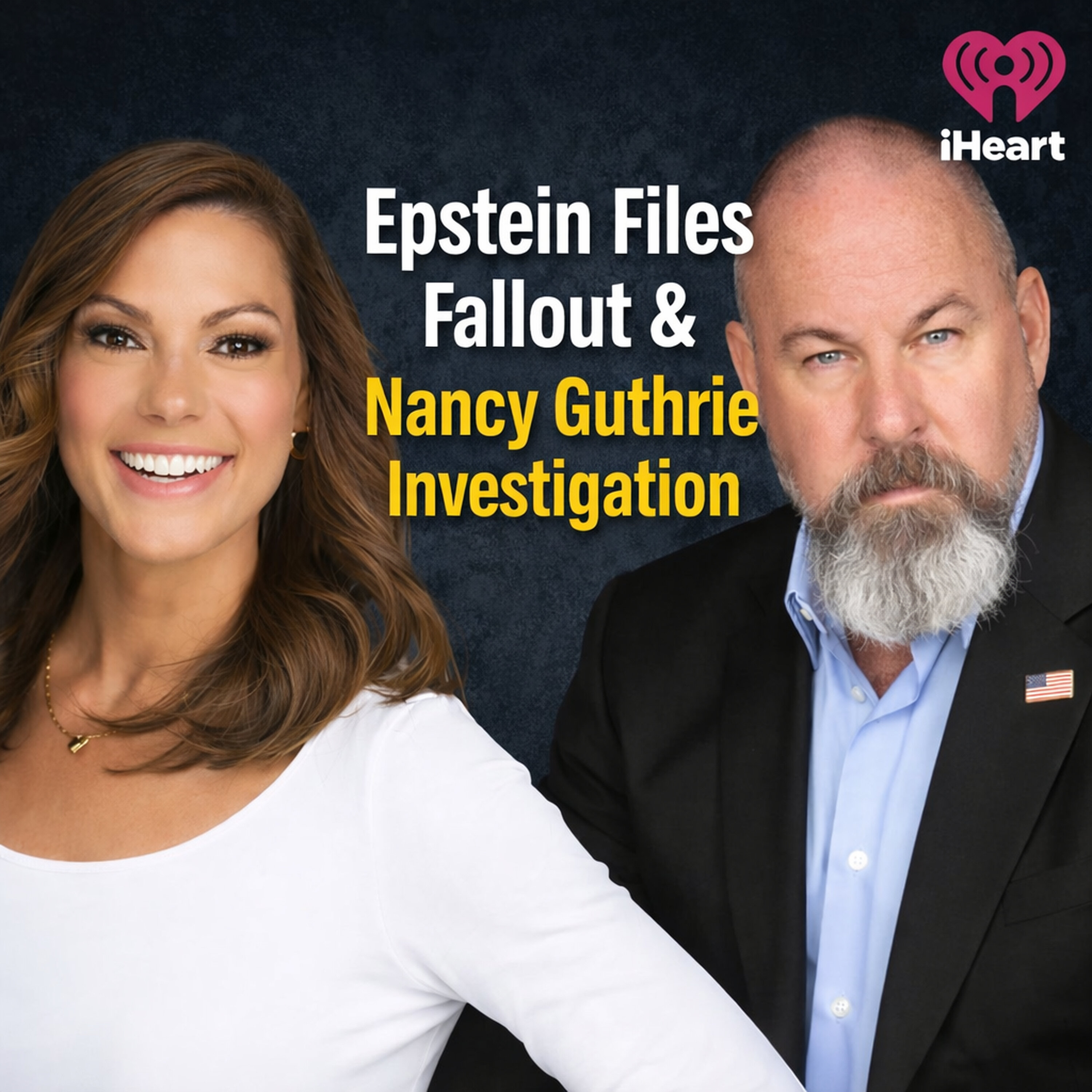
The Clay Travis and Buck Sexton Show
The Truth with Lisa Boothe: Epstein Files Fallout & Nancy Guthrie Investigation: FBI Missteps, Ransom Theories & Intel Secrets
00:29:12
Loading summary
Transcript29 lines
- [00:00]
A
This is an I Heart podcast, guaranteed human. Welcome to the Truth with Lisa Booth, where we get to the heart of the issues that matter to you today. We're delving into the ongoing investigation into what happened to Nancy Guthrie. Of course, she's the mother of TODAY co host Savannah Guthrie, who vanished from her home in Arizona on January 31st. We've got Jonathan Gilliam on the show. He's a former Navy seal, FBI special agent and a crisis management expert. He's a friend of the show. You know who he is. But I'm going to get his perspective on what he thinks happened. You know, what is the state of the investigation? Is she potentially in Mexico at this point, given the proximity to her home in Mexico? And what does that mean if she is? Also, we now have video of the alleged suspect. What can he derive from that? We're going to lean on his background in the FBI for all of that. Also, he's been following the Epstein files. What do you need to know what stands out to him? Stay tuned for all of that and more with Jonathan Gilliam. Well, Jonathan, it's great to have you back on the show. I know you've been, you know, glued in and plugged in and, and on TV and, and paying close attention to the Nancy Guthrie investigation. Where do you see it as it stands now? Kind of like, let's just start sort of like with the big picture of how you see things.
- [01:26]
B
So I think, you know, Adam Sabes there at Fox, he, he's a great writer and he, I collaborate with him a lot and he has some sources and did a story yesterday about this sheriff and how the sheriff is, is really programmed a lot of people into positions based on whether or not he gets along with them in Pinot County. I think that is, that hurt the investigation up front. I think the senior investigator on this case, it only has two years as a detective. So there's, and there's other issues they had with the plane and so on and so forth that were just bad decisions. And along that along with the, the, just the, the information that was disseminated by this sheriff during these press conferences, it fell into that long line of incompetent press conferences that we've had from law enforcement over the past year. It's gotten really bad over the past year. And they lose a lot of things when they, when they have a bad press conference. Just like when you're putting people in positions because you get along with them versus whether or not they're qualified. And I think we lost a lot of evidence at the scene, at least having it quickly so that we could, could get to it. Because I don't think they did a proper search and I don't, I think they let that scene go too quickly. So that was, that was a real problem. So the FBI was playing catch up when they got there. And then on top of that, there was no force multiplier. They did not use the community as a force multiplier. I mean, I heard the sheriff say that very beginning that there's, he did not think this went across the border. Well, he didn't know that he shouldn't have said that. And he said that at one point that the brother in law or the son in law dropped them off. Then he said that he didn't know if they dropped them off. He said that they were there at a certain time and then he said that that afternoon that it was reported and then he, he said another time. So there's all these things that if people were listening, they could have said, you know, I was awake at that time and I remember looking out the window. But they didn't, they lost that aspect of it. And so I think from the very beginning this has been a very troubling case because of that sheriff and his mistakes. I think the ransom issues because this was so publicized globally that these, we, we now see that people are bold. They will go and try to claim a ransom when they had nothing to do with it, like the guy in California. And, and they vetted that out very quickly. But this other ransom, very, it, it seems a lot like a, a, a scam that you see coming out of India or Nigeria where the, it's usually a money scam where they convince elderly.
- [04:11]
A
People to do in the Nigerian prince.
- [04:14]
B
Right? Yeah. So it's, it's, these scams happen all the time. They're, they're convincing elderly people to cash in their life savings, transfer it into gold and then give it to, quote, unquote, these FBI agents to hold because somebody's hunting them. And it happens all the time. So this was very reminiscent of that because it was so anonymous. There was no two way communication. And if you've seen any of the, the kidnappings that happen in Mexico and other locations where they actually do use bitcoin, those are very overt. They, they say, you know, there's a two way communication. They show that they have the individual and that they're under duress and if they don't pay, they're going to be killed. And it happens very quickly. So I think I think that a lot of pressure was put on that timeline and trying to prove whether or not this ransom was real, that we just lost a lot of time between the totality of all these different aspects and once that video was discovered, which is a whole nother backstory that I'm trying to push this wherever I talk, because I think this is going to be a story once this is resolved, which is they didn't subscribe to the Nest camera. Apparently Google owns that. And as we see now that whether you have a subscription or not, it's recording and that recording is being stored, and that is a massive security breach. I think Ring had a. Some type of a commercial during the super bowl that alluded to the same thing with if you lose a pet and you can utilize other people's cameras around the neighborhood. So that's going to be a whole nother side story. But once that video came out or they were able to get that video, they were able to get definitive evidentiary clues as to who this person is, size of the shoe, how tall they are, their gait, how calm they were, which is a very telling thing, along with how much time you. You put that together with how much time they spent in the house, which was approximately that we know, 41 minutes at least. And you start to get a picture of who this person is, but how dumb they are, carrying their holster like they do, not realizing that there's a camera there and then trying to cover it up with weeds. There was just a lot of like, amateur stuff mixed.
- [06:29]
A
Why would the person be calm then? Like, what. What would that indicate to you then?
- [06:33]
B
That they've done this before and gotten away with it. And so even though they're not a professional, they are experienced. And so we see that with criminals a lot. They try something, they get away with it, and then they continue to do that and then they get caught because eventually their, their ignorance catches up with them.
- [06:52]
A
So think is this thing, I mean, do you think the intention based off of everything we know so far, like, was the kidnapping the intention? Or like, do we.
- [07:05]
B
What do you.
- [07:05]
A
Is she still alive, do we think? Or like, what do you think based off of what we saw and the backpack and, you know, the mannerisms and what have you, can we derive from that? I think there's originally.
- [07:18]
B
I think. Well, I think there's a couple things here. I'm not like one of these people that you see, I'm not going to point out any names, but there's a lot of quote unquote experts with Experience that come on these new shows and they say this is what's occurred. Well, they don't know if that's what's occurred. So I look at the possibilities that are there. One of them is that this person was familiar enough with that neighborhood, potentially worked on the home or other homes. I know she has a new roof. So there's a potential there that the person was a laborer and was familiar enough that they came in to rob the place, and that's why they weren't in a hurry, because they were sneaking in and going to sneak back out. There's a potential that they maybe know Nancy or know the family and were kind of keyed in on her and worked their way in, but not with the intention of robbing, but the intention of causing her harm or possibly robbing. Right. I'm not ruling robbing out. A robbery is out as a motive. There's also the potential because I just heard this, and I have not heard this from any of the law enforcement. I heard it from somebody who used to be, I think, an FBI agent that was down there and has contacts. And apparently sometime in the near past, there was a kidnapping of a guy who was wealthy in. In the Tucson area and was taken across the border and held for ransom. So I've not heard nobody else talking about this, and I only heard it while I was waiting to do an interview and I heard her talking. So I didn't get the details or even who she was, but that was on one of the other networks yesterday. And so if that's the case, they should be looking at that closely. So if that's the case, then that would also kind of speak towards the fact that this guy was comfortable and potentially there were other people involved, which we don't know, and other people assuming that there were. And so that brings me to the kind of conclusion of this rant is that depending on what avenue this actually came from would determine whether or not she's alive, and also whether she's alive or not the distance that she is from where she was abducted. And I think if the guy was going to go in and rob the place and Nancy woke up and he injured her or shot her or something, then I would think that she's probably within 30 miles of that of that home.
- [09:37]
A
Well, because to me, like, okay, I mean, I know criminals are criminals, but, like, this is going to sound stupid, but I've seen, like, documentaries where even criminals have, like, their own weird definition of, like, right versus wrong. And it's an absurd moral like hierarchy that they have in their minds. Like even gang members. It's like, oh well, we don't kill innocents or we don't kill so and so. Or, you know what I mean? Like, like, I don't know. I watched this documentary about, I can't remember some like really terrible prison gang and the guy was saying, well, like he fell out with the gang because he was like, I don't kill innocents. I only kill other people who deserve to be killed. Right? Which is like a twisted way of thinking. But like, point of this, point of the question, I guess is that like, who would go and intentionally desire to harm an 80 or 4 year old innocuous woman, right? Like to me it would seem that either the aim was a robbery that went wrong or they knew that she was Savannah Guthrie's mom and there could have been money involved. Like, they know her daughter's rich and famous, right? Like, who, who would show up with the intention of like, let's kill an 84 year old woman just for the sake of it. Is that like, long story, you know, short. But is. Does that make sense to you or is that.
- [10:48]
B
I think that in the world that we live in today, that moral compass, that criminal moral compass is degraded and. And you see, you see it in the Mafia, of course, but you do see it in prison. Pedophiles are not. They used to come into prison and if you were a pedophile, it was almost a death sentence for a lot of people. That is not necessarily the case anymore. And I think as morality degrades around the. And in this nation, you see that people of a criminal mindset have become more of like what we see in. In wartime where they don't have a concept of life and death and they're more self indulged and almost psychopathic. It's almost like that's kind of being programmed in to people in general. That's why you go on X and you see people, you know that they're a mom with three kids and they are cursing people out because they disagreed with a Super bowl commercial. You know, so morals have degraded all over. So I think when we look at who would do this, I think. I don't look at these criminals anymore as potentially having morals. And I think they're all capable of it. We've shown that robbers who haven't killed before will now kill kidnappers. Will. Will take a person out, kill them, and then do a ruse just to put distance between them and the location and saying that they have the person Alive. And then we've also seen where they just brutally torture people and, and send those videos and then people are more apt to, to send the money. So I think if we look at this and we look at these different avenues of possibility, I think that the possibility of her being taken across the border is very high. If she was in fact kidnapped and she could still be alive. If that's the case, she's in bad, although she's in bad health and I don't know how far that is going to go. But I think if this was a robbery or if it was not somebody who's kidnapped before and something occurred, then I would suspect that, that she is not alive anymore.
- [12:53]
A
That's been my concern since day one. I was on Outnumbered, like right when this was breaking. And that was my question to Palmorrow about, like, look, Mexico is right there, you know, like how does that complicate this investigation? Because then you're dealing with the Mexican government, right? And then you're dealing with train that like we're not as familiar with. And so, you know, it's like just adds this whole new layer of complexity. And then you're dealing with, you know, a country with a bunch of cartels and you know, drug dealers and you know, a corrupt state. Right.
- [13:24]
B
So which is why I think the hostage rescue team, you know, the FBI hostage rescue team is not your typical SWAT team, right? So they're usually involved. They're a tier one asset. They have basically the same capabilities as, you know, SEAL Team 6 or Delta Force from a law enforcement perspective. But they, they come in, they're not just there to, to serve a typical warrant. So I think the fact that they were involved, they might have evidence or at least be considering that she is being held hostage and potentially over the border. Because they would be the ones if they had to do this hostage rescue across the border, they would most likely be the ones to do that. So that is potentially why they are there.
- [14:10]
A
Going to take a quick break. More with Jonathan on the other side. You know, obviously it's easy for people like me who have not worked in law enforcement to be like, man, this seems like it's taking forever. And obviously it's getting the 24 hour news treatment which sort of makes it feel like it's been a longer period of time than it has been. Is this lag and sort of the ability to crack the case and figure out where she is or is that normal? Or have we kind of like, like, you know, I, I don't know, like, is this normal to take this long or, you know, from your perspective, where are we in this?
- [14:48]
B
From that, I think, you know, I think if you look at the totality of all these cases, and if people don't watch this, I mean, it, it can, it can get overwhelming. But 48 Hours Mysteries has been on for like, 30 years. And you can go on YouTube or different. YouTube is typically where I watch it, but I think it's one of the best case studies out there of all this type of crime. And most of the time they're related to the person or they just happen to meet the wrong person at the wrong time. And I think when we look at the speed at which these things occur, this is, this is no different. It's just that we're seeing it and it's being reported on in a way that we've. We've never seen before. I mean, you know, these reporters, they're all over the place and they're moving fast and they have social media, so they have the ability to disseminate information now. And it's not just gumshoe reporting where you're writing a quick article and they're reporting on the news. I mean, they're literally there in real time. So if the evidence isn't there, the case is only going to move so fast. And I think what you're seeing is the natural progression of things. As evidence appears, the case will move forward. And most of these cases that I've seen, been a part of or, you know, researched is that they, if they do stall when the right piece of evidence comes in, they just fall in the lap of these investigators. And so that. That could happen. But, you know, Lisa, I was, when I was in the FBI, I inherited the case from the 2000 pipe, Times Square pipe bomber who rode up on a bicycle all around Manhattan and then into Times Square at three in the morning, put a pipe bomb on the. The recruiting. The military recruiting depot there in the middle of Times Square, and then rode off, stashed a bike and got on a train and we've never found him. And that he's probably been videotaped by more cameras than any particular person on a single day. And we were not able to identify him. So. But cameras give a lot of information, but if they don't give fingerprints and they don't give DNA, and if you, if that person's never been seen before, some type of a camera that has recognition, you may not be able to find out who they are, regardless of video. So I think this case is progressing as. As quickly as it can. I think it would have gone faster, though, had it been handled differently at the beginning.
- [17:14]
A
Sad. And then I want to jump to the Epstein files real quick and get your take on that. But before we move off the Nancy Guthrie thing, is there anything I've missed and sort of the questions or anything that should be conveyed to the audience before we get to Epstein?
- [17:28]
B
I think that. So I think two things very important for every. For everybody has a stage to kind of put this out there is that these social media influencers and these sleuths, all these people that are on social media and just people in general, you're a great force multiplier. You can actually make a difference. However, you don't know everything. And to assume that you know that this family member is guilty or that person, you may yourself actually lead other people who could have good eyes on something down the wrong path. So I would. Would guard against watching people who are making definitive statements without the evidence, because those are clickbaiters. And if you are an influencer or you're a sleuth that is trying, that's your thing, I would be very slow and methodical and. But I would not at the same time say no, that this might be an avenue because you yourself may miss it. So I think this. We're in. We're in a weird territory, uncharted territory, where normal civilians have access to almost as much information as law enforcement at times. So I think that. I think this is a very important evolution that law enforcement needs to take advantage of. But I think also people need to be smart and very careful as to who they're listening to and getting their information from, because as they disseminate the information, it may be totally wrong and lead the entire group of people who could be force multipliers in a bad direction. And then the last thing is, Lisa, with this, I really want you to stay on this and everybody else in the news with these cameras. I think this is a huge, huge. I think it's one of the biggest stories that I've seen in recent history that, you know, when Snapchat said that it was everything was secret or WhatsApp or whatever, we know that it's not. I mean, those are text. This is video. And so people have this video in their homes, in private areas in their homes. And now we know that that information is going and being stored, recorded and stored. And that is huge because if. If nefarious people want to get a hold of that, or if Google, which is one of the most powerful Organizations in the world decides it wants to start blackmailing people. I mean, look, it, it could be if the FBI could find this, that means some scammer from India can find it. And that is, I think, one of the biggest breaches of what we deem to be security. Our security by a corporation that I've ever seen. Because these cameras are everywhere.
- [20:05]
A
No, I didn't think about that. And that, that is very scary. I mean, obviously in this case it's helpful, but in the broader scheme of things, it's not. So. And then to your point real quick about getting sidetracked, I mean, I was in the D.C. area during the D.C. sniper and I remember, you know, they told us it was a white van. And so it's like, you know, you're getting gas, you see a white van, you start hiding behind your, you know, and then ended up not being, I can't remember, it was some like beat up car. Right. So, you know, to that point, I remember like getting gas and you'd see a white van. I'd be like hiding behind my car, you know. You're terrified of white vans everywhere. Yeah, it ended up not even being a white van. It was some like old, old school car type thing.
- [20:48]
B
Something as simple as that. A press conference where they say a white van when they didn't know in fact that it was a white van. And so when they put that information out, instead of just saying suspicious vehicles that, that in and around areas where the public is, is moving, it could be a white van. But white vans are everywhere. So don't just limit your vision to a white van. They didn't say that. They said that reports were that a white van was near the area. And so everybody was looking for that. And that's a perfect example of leading the force multiplier that is the community away from being able to think for themselves and discover things.
- [21:27]
A
Quick break. If you like what you're hearing, please share on social media or send it to your family and friends. You know, obviously from what we have seen so far with the Epstein files being released, sort of what are your broad takeaways? What are you still waiting to see? And kind of like, what are you, what are, what conclusions have you drawn so far?
- [21:47]
B
A couple things. First and foremost, again, since we're on the topic of these force multipliers in this, in the citizenry in this country and around the world is I don't mind people being very passionate about this. I mean, I think it's, it's horrific. And the level of the Depravity is still yet to be seen as to what was happening. And I think people putting pressure on politicians is great, but people need to realize that this is, this is a national security issue that goes far beyond. I don't want to say far beyond, but it's more than just a moral issue or a moral or a crime issue. This is, these are world leaders, these are people who are in charge of militaries, people who are in potentially, we don't know the list, but from what we gather, these are world leaders that have influence on importing and exporting business, people's jobs, livelihood, whether wars are started. And if you think that just rolling out a list and going after people like this is not going to have global ramifications, you're wrong. And yes, these underage people were molested and raped and who knows, and potentially killed. I think those crimes should be investigated to the nth degree, to the ends of the earth, but they need to be done smartly. And I see fault in the way people think. Civilians think that can be done, but I also find tremendous fault in the way it has been done by the FBI and other politicians and law enforcement over the years. So these things have largely gone unpunished and not just unpunished, but we're able to continue on. And I think that, I think we're in a real life, interesting place in this case because as this information is released, it's less likely and people don't realize this. The release, release the files. Everybody wants the files released. Well, as that, as those files are released, it's less likely that criminal charges are going to be brought against anyone because once you release that information, it it in the eyes of a jury or a prosecutor, it becomes less valuable and not more valuable. And so if there were good prosecutors that understood the national security ramifications but were dead set on going after these people in some way, shape or form and working with the administration, I think that we could flip this and use this as a tremendous national security tool and intelligence tool to go after and own and handle world leaders, but at the same time hold people accountable. And you know, the masses just want to see blood because they think that's the way things work in the world and that's not the way things work. Bad guys get away with murder and world leaders rape and pillage. And that's the way it has always been since the beginning of time. And if, if people think that that's just going to stop because they have a voice on X now that that is not the case to that point.
- [24:51]
A
To what extent are world leaders manipulated by other governments then? Because if, you know, obviously these emails are there and there's potential wrongdoing and you know, I would imagine that some of these other governments have dossiers on some of these leaders and are potentially aware of some of this wrongdoing. And so to what degree is that information leveraged? Or you know, are world leaders coerced with this stuff? Or am I watched too many movies.
- [25:24]
B
Or you know, like listen, it's. So it's not just the whether or not they're cool, first of all, it's not whether or not they're, they can be coerced. I believe they can. I don't think that's an issue. But I think in a lot of the cases people that you're going to see are people who have access to the top. So a Secretary of State, you flip a Secretary of State or you just get a Secretary of State in a. Which we hear that they're. There are Secretaries of State on this list. If they get in a compromising position, not only do they have access to other world leaders, but they have access to the Commander in Chief. So influence goes a tremendously long ways. So you have, you have that issue. But I think when it comes to the world leaders themselves and being able to control them, most people don't realize this is just a good example is that all the generals and admirals that you see in our military, there's some great ones, right, who earn their way to the top. But even those individuals, none of them got to the position they are because they climbed to the top. They may have climbed to the, to the point of 06, but to get to 07, which is general or admiral, they had to be pulled up. And the same thing with these deputy directors and all these agencies that you see, you may check all the boxes to get to Assistant Special Agent in charge but get to get the sacrifice and above you're pulled up and depending on who's pulling you up, if they're not a good person, then you're going to have to pay the man in order to get that rank or they're just going to go find people who are like minded. And so I think the same thing is in this case, if you can get somebody in a compromising position and that person is hungry for power, then it's easy to pull them up to where you need them to be. So whether that's a world leader or that is somebody that is in their orbit doing Things like this with. Which was able to occur with Epstein, I don't think it would be difficult at all.
- [27:19]
A
So before we go, do you think that was his whole play then, to get these people in compromising positions and then kind of like, own them?
- [27:27]
B
I do. And I think when you look at everything that Epstein was. I. I can't. I can't tell you how this guy made billions. I've never seen any proof on how he made billions of dollars. I can't tell you how he just was ingratiated with the most powerful people in the world. I mean, how do you just become ingratiated like that? I mean, he knew everybody, he flew with everybody, he hosted everybody. And for somebody who. I can't trace his career and how he got billions of dollars, and I can't trace where he was introduced into this community, then I have to assume he. He was introduced with intent and his money, in large part was funded through different means. I mean, his trust on behalf of other governments could be. Yeah, his trust won the lottery in 2008. 20, $27 million. What they took is what they got. That's take home. So that seems like a payoff to me that this guy who's a billionaire, all of a sudden made $27 million in one day through a. Oh, he won the lottery. I'm not buying that. We don't know who controls those lotteries. You know what I mean? So I, I look at this as. It's got all that. The aspects of a. Of an intel operation. It's just we don't know who he was working for or who was benefiting, but we can definitely see who was on the jammed up list, that's for sure.
- [28:55]
A
Jonathan, interesting stuff. Always appreciate you taking the time to come on the show. Thank you for your insight.
- [29:00]
B
You got it. Thank you for the great questions. Very important.
- [29:02]
A
That was Jonathan Gilliam. Appreciate him for making the time to come on the show. Appreciate you guys at home for listening every Tuesday and Thursday, but you can listen throughout the week. Also thank John Cassio, my producer, for putting the show together. Until next time, this is an I heart podcast. Guaranteed human.