← The Clay Travis and Buck Sexton Show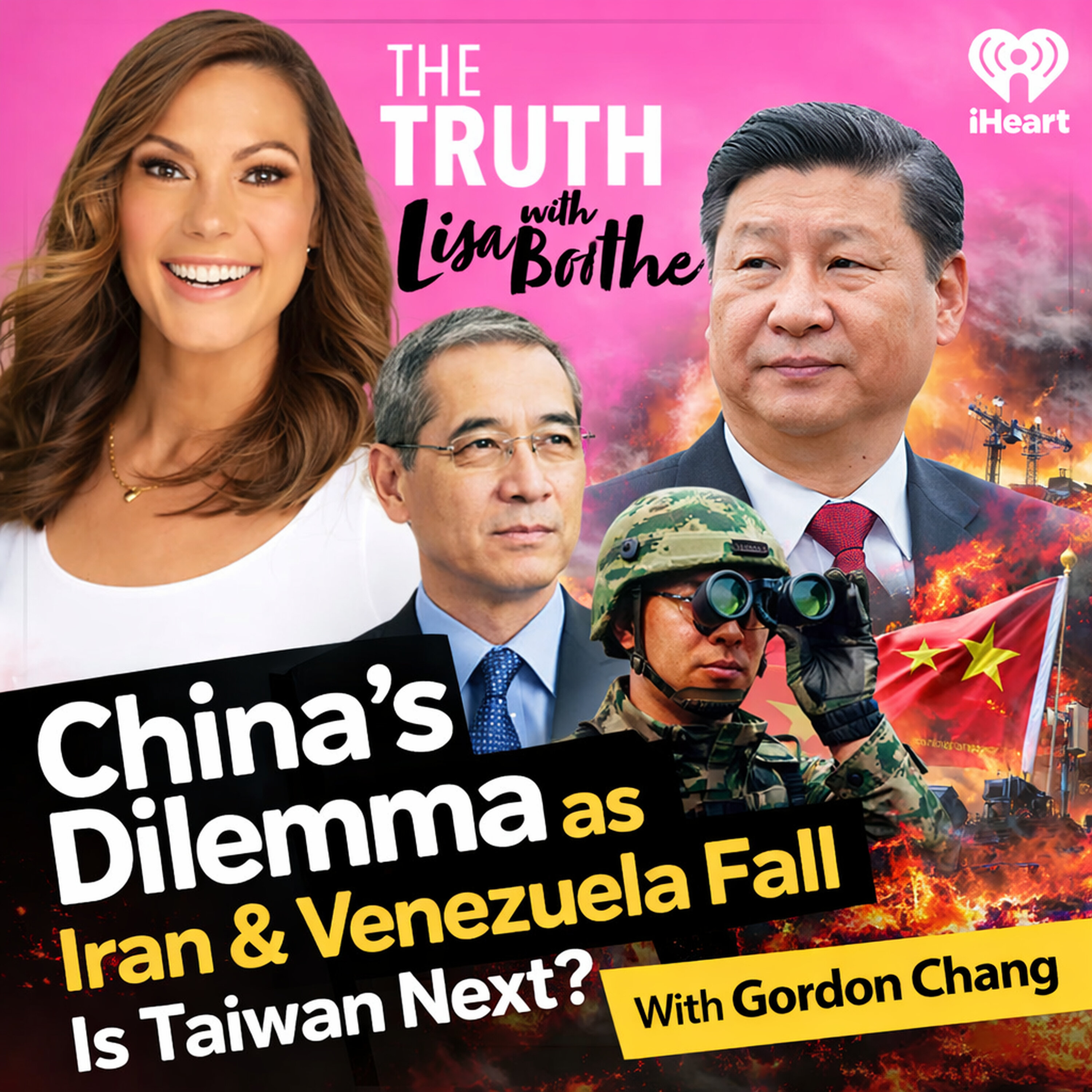
The Clay Travis and Buck Sexton Show
The Truth with Lisa Boothe: Gordon Chang: How Iran & Venezuela’s Collapse Hurts China—and What It Means for Taiwan
00:27:33
Loading summary
Transcript61 lines
- [00:00]
Gordon Chang
This is an iHeart podcast.
- [00:02]
Public Podcast Announcer
Guaranteed Human support for the show comes from Public, the investing platform for those who take it seriously. On Public you can build a multi asset portfolio of stocks, bonds, options, crypto and now generated assets which allow you to turn any idea into an investable index with AI. It all starts with your prompt. From renewable energy companies with high free cash flow to semiconductor suppliers growing revenue over 20% year over year, you can literally type any prompt and put the AI to work. It screens thousands of stocks, builds a one of a kind index and lets you back test it against the S&P 500. Then you can invest in a few clicks. Generated assets are like ETFs with infinite possibilities, completely customizable and based on your thesis, not someone else's. Go to public.com podcast and earn an uncapped 1% bonus when you transfer your portfolio. That's public.com podcast paid for by Public Investing Brokerage Services by Open to the Public Investing Inc. Member FINRA and SIPC Advisory Services by Public Advisors llc. SEC Registered Advisor Generated Assets is an interactive analysis tool. Output is for informational purposes only and is not an investment recommendation or advice. Complete disclosures available at public.com disclosures when
- [01:05]
Take 5 Oil Change Announcer
your schedule sounds like this.
- [01:12]
Premier Protein Announcer
Are you kidding me?
- [01:13]
Take 5 Oil Change Announcer
An oil change is the last thing you have time for. So drive into Take five and let
- [01:17]
Gordon Chang
our techs change your oil.
- [01:19]
Take 5 Oil Change Announcer
Check your tires, top off your fluids and have you back on the road pit stop fast. All while you stay in your car. No putting your entire schedule on hold. No upsells, no problem. So you can get back to your to do list or not. Find your nearest shop@take5.com take5 the stay in your car 10 minute oil change
- [01:35]
Lenovo Pro Announcer
there's no championship league for small business owners, but if there was, you'd be at the top of the standings. Because going pro with Lenovo Pro means you've got the winning formation. One on one advice IT solutions and customized hardware powered by Intel Core Ultra processors help you stay ahead of the competition. Business goes pro with Lenovo Pro Sign up for free@lenovo.com Pro.
- [02:07]
Coldwater Creek Announcer
You see it instantly. It's Coldwater Creek, the mark of exceptional workmanship and signature touches inspired by a Mountain west heritage. Distinctive styles created from quality fabrics, silhouettes perfected with just the right drape. Feel good fits offering ease of movement and thoughtful details to elevate your look. Coldwater Creek's authenticity is embodied in every piece, embracing its confident spirit that carries through to today. Discover Coldwater Creek clothing designed to fit your life the way you want for a wardrobe you can count on season after season. Visit coldwatercreek.com Shop the new spring collection at 20% off, $75 or more with code iheart20.
- [02:49]
Take 5 Oil Change Announcer
There's a fire inside you you can't ignore. Stand still. Not a chance. You're a lifelong learner who's come this far. Now we are here to help you keep going further. Capella University what can't you do? Visit Capella. Edu to learn more.
- [03:04]
Lisa Booth
Welcome to the Truth with Lisa Booth, where we get to the heart of the issues that matter to you. Today we're talking China with Gordon Chang. He is the author of multiple books on China. But with Maduro's removal and Iran's leadership and military decimated in Operation Epic Fury, how does this all impact China? We know that China uses countries like Venezuela and Iran as proxies. So what's the impact on China? Also, Iran and Venezuela have both been armed with Chinese radar and air defense systems that have proven essentially useless against the United States and Israeli attacks. So does that make China more likely or less likely to try to take Taiwan? Also, China has been dependent on crude from Venezuela and Iran at discounted prices because of the sanctions. How does that impact China's economy? We're going to dig into all this, you know, taking on sort of a different angle to the Venezuela and Iran situations from the prism of China. Stay tuned for Gordon Chang. Well, Gordon, it's always great to have you on the show. Appreciate you making time for us. So thank you so much.
- [04:19]
Gordon Chang
Well, thank you, Lisa. I really appreciate it.
- [04:22]
Lisa Booth
Oh, thank you so much. We've seen a lot of development throughout the world. President Trump's been very active. We've seen since we've last had you on the show, President Trump has captured Maduro and Venezuela, and we've also gone to war in Iran as well. When you look at those actions, how much of that is to counter China? Walk us through the China angle to those two specific actions.
- [04:48]
Gordon Chang
Both Venezuela and Iran were Chinese proxies. I'm sure that the Venezuelans and the Iranians didn't view it that way way but the Chinese certainly did. And both of those regimes were able to maintain themselves because of Beijing. So, for instance, when you look at Iran, China was taking about 90% of Iran's exports of crude oil, 87.2% last year. But also China was giving diplomatic support, propaganda support to Tehran, weapons support. When you look at the Iranian drones, they've got computer chips in them. Those computer chips are probably Chinese made or were sent into Iran through Chinese intermediaries. In other words, China was buying those on the black market and sending them to the Iranians. Iran's nuclear weapons program is largely a Chinese program. And Iran's terrorist proxies, Hamas, Hezbollah, and the Houthi militia all have large quantities of Chinese weapons. You put that all together, and it's clear that Xi Jinping was using Iran to disrupt the world. And you can make the same argument with Venezuela because the support there was also extensive. The Chavez and the Maduro regimes were in place because Beijing was supporting them with money and, of course, with weapons, and diplomatic began to support.
- [06:12]
Lisa Booth
And so what does China get out of that? Tell us expand upon a little bit more about how China uses these proxies and why China uses them.
- [06:21]
Gordon Chang
Yeah, I think that Xi Jinping, who reveres Mao Zedong, the founder of the People's Republic, took two pages out of Mao's peasant movement playbook. One of them was Mao prevailed in the Chinese Civil War in 1949 by, quote, encircling the cities from the countryside, a famous phrase now in Communist Party lingo. And basically, Xi Jinping was using Iran and Venezuela to surround the United States, which they considered to be the city. The other page from Mao's playbook was the promotion of chaos. And clearly Iran was creating chaos in the Middle East. Venezuela was creating chaos at our southern border. If you remember during the Biden administration, those caravans that were traveling up through Central America and Mexico into the United States, a lot of part of that was not organic. That was organized by Venezuela with Venezuelan money and subtle support. So clearly we have Caracas and Tehran being used by Beijing. So that's why I think that you can call those two regimes proxies of China, or at least you could now, no longer.
- [07:39]
Lisa Booth
You had mentioned that Iran and its proxies have been dependent on Chinese software, Chinese weapon weaponry. You know, you look at just how easy it seems to be to decimate Iran in short order, as well as its proxies with the United States and Israel. What message does it send China? That the US Outside of the drones, has had a really easy time sort of decapitating Iran's military.
- [08:13]
Gordon Chang
There are a number of messages there. One of them, of course, is the superb performance of the US Military. But more important, it tells the Chinese that the United States is willing to use force to achieve its goals. And those goals also help peace and order in the world. So I think it has an important message for Xi Jinping. I mean, he looks at the United States and even, certainly Biden and even Trump up through last year. Xi Jinping looked at American presidents as things to be pushed around. He pushed around Biden. He even pushed around Trump last year. And I'm not saying that the Chinese view of the United States is right, but they thought the United States was in terminal decline, and that made China very, very aggressive. You come to January 3rd of this year, President Trump extracts Maduro and his wife from Caracas. And I think the Chinese then start to look at the United States and President Trump in a very different light. And I think they're worried right now about our president. That's a good thing, because when the Chinese are worried about us, it means they are cautious. And when they're cautious, they tend not to do things that. That are adverse to our interests or the interests of the international community writ large.
- [09:34]
Lisa Booth
You know, do. Do you think there's any part. Because I. I've been kind of thinking through this question on my head, which you. You kind of just answered it in terms of does this all make China less likely or more likely to try to take Taiwan? Because on the one hand, the United States is bogged down right now, right, from a manpower perspective, as well as, you know, going through our stockpiles, both and being involved in what's going on in Ukraine and Europe, as well as, you know, Venezuela now and then Iran and potentially Cuba. You know, so does China look at that and say, hey, look, they're distracted. Now's the time, or, you know what I mean? Like, I guess, kind of. What. What do you think the thought process in China is right now?
- [10:18]
Gordon Chang
That's a critical question. And I think they look at it from a number of different perspectives. First of all, they do look at the United States as being tied down around the world. And, you know, in a theoretical sense, I do believe that they see that this is an opportunity to, for instance, take Taiwan, but it almost doesn't matter. And the reason is that the Chinese military right now is not capable of starting hostilities by invading the main island of Taiwan. So whatever the Chinese think about us, they know that they are not ready. The Chinese military has been decimated with Xi Jinping's purges. So, for instance, on January 24, the Ministry of National Defense announced the investigation of two generals. One of them was General Zhang Yao Shao, who is then the number one uniformed officer in the Chinese military, the first vice chairman of the Communist Party's Central Military Commission. The Central Military Commission of the party controls the Chinese military. And right now, because of the purges. This seven member group only has two sitting members. That's Xi Jinping himself, who of course is not a military officer and a political commissar. There are no operational officers left on the Chinese Central Military Commission. So the chain of command has been severed. It's been severed for the first time in the history of the People's Republic. And there are a lot of other reasons why I believe that the Chinese are not ready to take Taiwan. Now. This is not to say that the Chinese military won't start a war. I mean, they could easily blunder into a war. And I think the chance of that is extremely high for a number, number of reasons. But in terms of the Chinese waking up one day and saying we're invading the main island of Taiwan, that's just not likely for at least some time. And by the way, the people in Taiwan and the government in Taiwan are cheering on the United States and Iran because they know what's at stake and they realize that successful American outcome in Iran means that they and Taiwan are a lot safer.
- [12:27]
Lisa Booth
Got to take a quick commercial break. More on the other side
- [12:31]
Public Podcast Announcer
Support for the show comes from Public, the investing platform for those who take it seriously. On Public you can build a multi asset portfolio of stocks, bonds, options, crypto and now generated assets which allow you to turn any idea into an investable index with AI. It all starts with your prompt. From renewable energy companies with high free cash flow to semiconductor suppliers growing revenue over 20% year over year, you can literally type any prompt and put the AI to work. It screens thousands of stocks, builds a one of a kind index and lets you back test it against the S&P 500. Then you can invest in a few clicks. Generated assets are like ETFs with infinite possibilities, completely customizable and based on your thesis, not someone else's. Go to public.com podcast and earn an uncapped 1% bonus when you transfer your portfolio. That's public.com podcast paid for by Public Investing Brokerage Services by Open to the Public Investing Inc. Member FINRA and SIPC Advisory Services by Public Advisors llc SEC Registered Advisors Generated Assets is an interactive analysis tool. Output is for informational purposes only and is not an investment recommendation or advice. Complete Disclosures available at public.comdisclosures Pro Drivers
- [13:33]
Lenovo Pro Announcer
Live for race day, but for small business owners every day is race day. That's why going pro with Lenovo Pro matters one on one advice, IT solutions and customized hardware powered by Intel Core Ultra processors keep your business on the right track. Business goes pro with Lenovo Pro Sign up for free@lenovo.com pro.
- [14:02]
Coldwater Creek Announcer
You see it instantly. It's Coldwater Creek, the mark of exceptional workmanship and signature touches inspired by a Mountain west heritage. Distinctive styles created from quality fabrics, silhouettes perfected with just the right drape. Feel good fits offering ease of movement and thoughtful details to elevate your look. Coldwater Creek's authenticity is embodied in every piece, embracing its confident spirit that carries through to today. Discover Coldwater Creek clothing designed to fit your life the way you want for a wardrobe you can count on season after season. Visit coldwatercreek.com shop the new spring collection at 20% off $75 or more with code iHeart20 Premier Protein it's for getting
- [14:47]
Premier Protein Announcer
after life, not just Fitness. With 30 grams of protein, 160 calories and no sugar added, helping people fuel their joyful lives. With Premier Protein, you can say yes to more. Whether it's crushing a big presentation at work, building an epic fort with the kids or hitting the hiking trail with friends. Premier Protein offers delicious flavors like cafe latte, chocolate, caramel, vanilla, strawberry and cake batter to name a few. You find your favorite flavor@premierprotein.com Time for
- [15:15]
Take 5 Oil Change Announcer
a sofa Upgrade Introducing Anabe Sofas where designer style meets budget friendly prices. Anime brings you the ultimate in furniture innovation with a modular design that allows you to rearrange your space effortlessly. Perfect for both small and large spaces, Anabe is the only machine washable sofa inside and out. Say goodbye to stains and messes with liquid inside stain resistant fabrics that make cleaning easy liquids simply slide right off. Designed for custom comfort, our high resilience foam lets you choose between a sink in feel or a supportive memory foam blend. Plus, our pet friendly stain resistant fabrics ensure your sofa stays beautiful for years. Don't compromise quality for price. Visit washablesofas.com to upgrade your living space. Today sofas start at just $699 with no risk returns and a 30 day money back guarantee. Get up to 60% off plus free shipping and free returns. Shop now at washablesofas.com offers are subject to change and certain restrictions may apply.
- [16:17]
Lisa Booth
You had mentioned there are a number of reasons they might blunder into trying to take Taiwan. What would those be?
- [16:24]
Gordon Chang
Xi Jinping, I think, believes that a high degree of tension is in his personal interest now and that's why we have been seeing belligerent Chinese conduct from an arc from India in the south to South Korea in the North. And I think that Xi Jinping believes that this high Degree of tension helps him, not because if it starts a war, he doesn't think it's going to rally the Chinese people. The Chinese people right now do not want war. But I think that he believes that a high degree of tension is in his interest because it will prevent other senior Communist Party figures from challenging or deposing him. You got to think about his mentality, and this goes back to the time that he took power in 2012, when he became the Communist Party's General secretary. In other words, the ruler of China. He inherited a consensual political system where no supreme Chinese leader got either too much credit or too much blame, because every decision of consequence was shared across the top of the political system. In other words, across the Politburo Standing Committee and sometimes even across the wider politburo itself. But Xi Jinping, who grabbed power from everybody else, ended up with total accountability. Now, this is great if you're xi Jinping in 2017, where everything is going China's way and you're getting all the credit for it. But it's not so great in 2026 when things are definitely not going your way. Xi Jinping is being blamed for policies and correctly being blamed because his policies are accelerating China's problems. The other thing, Lisa, is that in 2012, when he became General secretary, he inherited a system where if you got drummed out of the leadership, you got a nice house. But Xi Jinping raised the cost of losing political struggles by jailing his opponents, stripping them of their assets, and going hard after their families. So Xi Jinping's mentality is, look, I'm being blamed for everything and I could lose everything. I think that he can just decide to roll the dice, which means China cannot de escalate. It cannot act constructively if one of these incidents that China is provoking goes wrong. That's why I think China can blunder into a war.
- [18:43]
Lisa Booth
What do you think the probability is that this happens during the Trump administration?
- [18:49]
Gordon Chang
So we're talking about two years. I think it's a little bit better than 50. 50. I think President Trump can stare down Xi Jinping, but it's going to be a very close run thing. So I'm really very worried about what Xi Jinping might do. You know, you get a desperate China, who knows what these guys are going to do. And you got to remember that China right now can't solve its own problems. It has an economy which is failing. And the only realistic way for China to save its economy is to export more, which means they need the United States to keep barriers down. They need the rest of the world to do that. So Xi Jinping has placed his fate in the hands of President Trump and other leaders around the world. This is not a good situation for China right now. And I think that that makes Xi Jinping very insecure.
- [19:44]
Lisa Booth
How strong is China's military? Because what we're seeing with Iran at least, and we saw this during the 12 Day War, and then, you know, now that Iran is sort of a paper tiger, is China.
- [20:00]
Gordon Chang
Yeah, that's. We only will know once we see them in action. I think they're not nearly as good as people say. I think that if you're talking about the first week of a war, they probably pretty good. They've got all sorts of plans, they're just executing them. But when they get counterpunched and that inevitably happens, then I think that they don't do very well. And the reason is that this is a communist military. Communist militaries have two reporting lines, a military reporting line and a political reporting line. Remember, the only other member on the Central Military Commission, he's a political commissar. He's really powerful because he, you know, the political reporting line runs through him. Two lines of communication and authority in a military just doesn't work in at all. And it doesn't work in any organization for that matter. So for that reason alone, I think that China is less capable than it appears with its weapons. It's got some really good weapons, some weapons that we don't have, and that's our fault. But the question is, can China use them effectively? Because tactics are as important as weapons as we've seen in Iran, for instance. So when you put all the. And one other thing is that a lot of the weapons are not nearly as good as advertised as we've heard from Bloomberg and other reporting. You put all that together. I actually think that China's military is really good in intimidating others to back down. But when it comes to a fight, I just don't think that they're up to it. Remember, their rumors are that General Zhang Yao Shao, the guy who was the guy whose investigation was announced on 24 January, he was telling Xi Jinping, we're not ready to go to war. And I think that General Zhang, who was one of the few senior officers who had any wartime experience, and his wartime experience goes back to 1979, when China invaded Vietnam in that failed attempt to punish the Vietnamese. General Zhang was right. The Chinese military is not ready to go to war.
- [22:05]
Lisa Booth
You'd Mentioned China's economy struggling. You know, China has been somewhat dependent on discounted crude from Venezuela and Iran. So how has that impacted China financially on the energy front?
- [22:22]
Gordon Chang
This is not going to be a good story for China. And we saw that in the first days after the US attack on Iran that gasoline spiked 11.0% and diesel, which is more important for the Chinese economy, soared 13.5%. And those numbers are only going to go up now. China will cap prices, but it really has only two avenues of significance. One of them is tapping its Strategic Petroleum Reserve, which we don't know exactly how much is in it, but some people say 900 million barrels, some people say 1.2 billion barrels at most. It's 140 days of COVID of imports. The other thing they can do is buy from Russia, but the Russians are going to jack up the price. And that means, go to your point, China's not going to get discounted crude anymore, and they're going to have to pay in hard currency, which they don't like doing. They'd rather pay in the renminbi, their own currency. I mean, this is not a mortal shock, but considering everything else that's going on, it really hurts China at a crucial time.
- [23:30]
Lisa Booth
You know, what is the likelihood we've seen in Iran, you know, mass protests break out across the nation. We've seen protests recently in Cuba when, you know, as electricity was down and also economic hardship felt in both countries. What's the likelihood of, like, Chinese protests? Could they go anywhere? You know, how do you see that potentially unfolding?
- [23:54]
Gordon Chang
China runs the most sophisticated set of and coercive set of social controls outside of North Korea. The North Koreans are really good at this. The Chinese are second best. And so they're able to control the Chinese people almost all the time. But we have seen periods where the Chinese people explode. The last time we saw this was October 2022, when the workers at an iPhone factory in Zhengzhou in central China just got sick and tired of the COVID controls. They exploded. They scrambled over the fences. They left people around the plant at great risk to themselves, helped the workers flee as they scrambled, you know, across fields and down roads. This was fascinating because it triggered other protests throughout China, and not just on Covid controls, on everything else. So in Shanghai in the following month, people were in the streets chanting, down with Xi Jinping, down with the Communist Party. Which means this. The sentiment was revolutionary. But these protests continued in China until about January of 2023, when they sort of petered out. But we saw Just all segments of society just express their extreme displeasure at the party. Party was able to put this back into the box. But this tells us that the Chinese people are volatile. And this is something that we know because in many traffic accidents in China, they end up in fistfights because there's just so much repressed anger in society. So yes, China is able to control people for long periods of time until it can't. And then, you know, we don't know where this is going. But we've got to remember the Chinese people right now are very unhappy. It's gloomy. The one thing that works in the regime's favor is that they are so depressed. And when people don't have hope, they generally don't protest. But they are getting desperate and that is a factor that sparks protests and they are angry and the regime could lose its grip.
- [26:02]
Lisa Booth
Also, Apple restricted some airdrop features in China during those anti government protests in 2022, which they were using to help circumvent the government or China. What Chinese, you know, people were walk us through for the controls that China has. A large part of that is AI driven. Correct.
- [26:22]
Gordon Chang
Increasingly. So they've got through their way, you
- [26:26]
Lisa Booth
know, their, their means of control.
- [26:28]
Gordon Chang
They've got at last count, which was last year or so, like 700 million surveillance cameras. They use one point, I forget three points, 1.36, whatever. Cell phones for surveillance. They have social credit system. You know, we've got credit, we've got credit reports on every American. But their credit reports are not just credit, they are behavior. So they've got, they're putting together their nationwide social credit system. The Communist Party has what they call the neighborhood grannies, you know, generally older people who watch people coming in and out of their little communities. So it is a. And the Communist Party itself is more than 100 million people. So it is a total surveillance society and it's is AI technology driven. They are very good at that. They are pioneering it. The only country that comes close to surveillance is North Korea, which uses different types of surveillance mechanisms than China. Less technology driven, more person, people driven. But the point is this is the total control society and we should stop talking about China as authoritarian. As a lot of people say, it's at least semi totalitarian. Lisa. And I think even totalitarian would not be inappropriate for describing the Chinese state these days.
- [27:53]
Lisa Booth
Quick break. Stay with us. If you like what you're hearing, please share on social media or send it to your family and friends.
- [28:00]
Public Podcast Announcer
Support for the show comes from public. The investing platform for those who take it seriously. On Public you can build a multi asset portfolio of stocks, bonds, options, crypto and now generated assets which allow you to turn any idea into an investable index. With AI. It all starts with your prompt from from renewable energy companies with high free cash flow to semiconductor suppliers growing revenue over 20% year over year. You can literally type any prompt and put the AI to work. It screens thousands of stocks, builds a one of a kind index and lets you back test it against the S&P 500. Then you can invest in a few clicks. Generated assets are like ETFs with infinite possibilities, completely customizable and based on your thesis, not someone else's. Go to public.com podcast and earn an uncanny capped 1% bonus when you transfer your portfolio. That's public.com podcast paid for by Public Investing Brokerage Services by Open to the Public Investing Inc. Member FINRA and SIPC Advisory Services by Public Advisors llc. SEC Registered Advisor. Generated Assets is an interactive analysis tool. Output is for informational purposes only and is not an investment recommendation or advice. Complete disclosures available at public.com disclosures there's
- [29:01]
Lenovo Pro Announcer
no championship league for small business owners, but if there was, you'd be at the top of the standings. Because going pro with Lenovo Pro means you've got the winning formation. One on one advice. IT solutions and customized hardware powered by Intel Core Ultra processors help you stay ahead of the competition. Business goes pro with Lenovo Pro. Sign up for free@lenovo.com Pro Lenovo Lenovo.
- [29:32]
Coldwater Creek Announcer
You see it instantly. It's Coldwater Creek, the mark of exceptional workmanship and signature touches inspired by a Mountain west heritage. Distinctive styles created from quality fabrics, silhouettes perfected with just the right drape. Feel good fits offering ease of movement and thoughtful details to elevate your look. Coldwater Creek's authenticity is embodied in every piece, embracing its confident spirit that carries through to today. Discover Coldwater Creek clothing designed to fit your life the way you want. For a wardrobe you can count on season after season season, visit coldwatercreek.com shop the new spring collection at 20% off $75 or more with code iHeart20 Premier Protein.
- [30:16]
Premier Protein Announcer
It's for getting after life, not just fitness. With 30 grams of protein, 160 calories and no sugar added, helping people fuel their joyful lives with Premier Protein. You can say yes to more. Whether it's crushing a big presentation at work, building an epic fort with the kids, or hitting the house hiking trail with friends, Premier Protein offers delicious flavors like Cafe Latte, Chocolate Caramel, vanilla, strawberry and cake batter, to name a few. Find your favorite flavor@premierprotein.com Life gets messy
- [30:47]
Take 5 Oil Change Announcer
spills, stains, pet accidents and kid chaos. But with Anabe, cleaning up is easy. Our sofas are fully machine washable inside and out, so you never have to to stress about messes again. Made with liquid and stain resistant fabrics, that means fewer stains and more peace of mind. Designed for real life, our sofas feature changeable fabric covers allowing you to refresh your style anytime. Need flexibility? Our modular design lets you rearrange your sofa effortlessly. Perfect for cozy apartments or spacious homes. Plus they're earth friendly and built to last. That's why over 200,000 happy customers have made the switch. Upgrade your space. Today sofas start at just $699. Visit washablesofas.com now and bring home a sofa made for life. That's washablesofas.com offers are subject to change and certain restrictions may apply.
- [31:46]
Lisa Booth
You know, as we move toward AI and a more technologically driven society or you know, like centralized banking and things like that. How concerned are you that like we could follow in those footsteps in terms of giving me the government ability to, you know, track us and control us?
- [32:04]
Gordon Chang
Well, the US government has marvelous, they would say, ability to con surveil us. And we see this not only in the United States, but in, you know, Britain where all these surveillance cameras, we find all these criminals like the guy who killed the United Healthcare CEO, he's found in Altoona, Pennsylvania because the guy got just tracked as he fled New York City. So yeah, it is in our society. The difference though between America and China is that our government is democratically elected. That means if people don't want the surveillance, they can stop it. Now government has sort of a momentum of its own, but we can stop it if we decide that that's what we want. Now the American people have, you know, there's been a lot of discussion in our society about the proper surveillance and it's not as intrusive as China is because we are a democratic society. But yeah, I worry about that. And it is something that is a discussion we are going to continue to have, especially as technology gives the government more and more means to control. This is now coming down to this idea of a central bank digital currency, which is one of the means that China is now starting to employ to control the Chinese people. That is something that we're going to have to confront. Unfortunately we don't have it now. But this is basically a surveillance issue.
- [33:29]
Lisa Booth
And before we go, is there anything I've missed in my questioning to you that you want to convey to the audience?
- [33:35]
Gordon Chang
I think that this is a crucial time. Xi Jinping always talks about going to war. It's a constant theme that he has. And one of his favorite phrases is dare to fight. We Americans tend to think we're at peace. And because of that, although we are a far stronger society than China, we can lose our country because we're not understanding the situation we're in. This is a crucial time, and we need the President of the United States to talk to the American people in realistic tones about how dangerous the world is right now. Remember, we just found the second of China's biological weapons facilities on American soil. That was on January 31, when Las Vegas SWAT and federal agents descended upon that home in Las Vegas and found over a thousand vials of a reddish substance or substances that was making people deathly ill. This is after December 2022, where authorities in California found secret Chinese biological weapons lab that had almost a thousand mice that have been genetically engineered to spread disease and at least 20 pathogens, some of them for deadly diseases like Ebola. So the Chinese are really moving on our society and we're not protecting ourselves. So we need to start thinking about the world in much more realistic tones, because if we don't, then we will be unprepared for what very well could happen.
- [35:14]
Lisa Booth
How much of that's beef because of open borders under Biden? We know a lot of Chinese nationals made their way to the United States during those four years.
- [35:23]
Gordon Chang
Yes, there are Chinese agents, operatives and soldiers in our country. And there's more. They were there before Biden, but there are more of them because of that open border. If you go back to the early, the first after Biden was elected, the Chinese, there was an unprecedented surge of Chinese migrants in our country. But most of them were family groups. In other words, people who were desperate to live in a free society. Towards the end of the Biden era, U.S. border Patrol noticed that there was a stark change in the composition of Chinese migrants. That towards the end, about two thirds and at some border crossings, 85% of the Chinese migrants were single males of military age traveling without family members, some pretending not to speak English. Border Patrol knew that some of them had links to the Chinese military. And many of these guys were coming across in packs of 4 to 15. And some of these packs of Chinese males, they were actually decked out in identical kit. So, yeah, we've got to be really concerned that there are now more of them here. And it's not just the Chinese. It's the Iranians. Remember that September 11, 2023 deal that Biden had with Iran? Well, as part of that deal, he gave five Iranian operatives clemency, which was in exchange for releasing Americans. But. And so I can sort of accept that. But what I can't accept is that he gave three of those five Iranian operatives, he released them into the United States at a time when other Iranian operatives were trying to kill President Trump, trying to kill Mike Pompeo, former secretary of State. And we're trying to kill other Trump senior officials. So we know these guys are here. And unfortunately, ICE and federal authorities have just been overwhelmed. So we got to get these guys out of our country because they are here to kill us.
- [37:28]
Lisa Booth
Yeah. I mean, I think if they're, you know, doing these bio labs with all these dangerous pathogens, that's the objective. Gordon Chang, always interesting to hear your perspective. Always scary, but. But important warnings for us to heed. And I hope that the Trump administration and our government, I hope they're paying attention. So, Gordon Chang, thank you so much for your time, sir.
- [37:50]
Gordon Chang
Well, thank you, Lisa, and stay safe.
- [37:52]
Lisa Booth
That was Gordon Chang. Appreciate him for joining the show. Appreciate you guys at home for listening every Tuesday and Thursday, but you can listen throughout the week. Also want to thank my producer John Castio for putting the show together. Until next time.
- [38:07]
Lenovo Pro Announcer
Pro drivers live for race day, but for small business owners, every day is race day. That's why going pro with Lenovo Pro matters one on one the end at Advice IT solutions and customized hardware powered by Intel Core Ultra processors. Keep your business on the right track. Business goes pro with Lenovo Pro. Sign up for free@lenovo.com Pro
- [38:32]
Gordon Chang
Lenovo.
- [38:37]
Coldwater Creek Announcer
You see it instantly. It's Coldwater Creek, the mark of exceptional workmanship and signature touches inspired by a Mountain west heritage. Distinct, distinctive styles created from quality fabrics. Silhouettes perfected with just the right drape. Feel good fits offering ease of movement and thoughtful details to elevate your look. Coldwater Creek's authenticity is embodied in every piece, embracing its confident spirit that carries through to today. Discover Coldwater Creek clothing designed to fit your life the way you want. For a wardrobe you can count on season after season. Season. Visit coldwatercreek.com Shop the new spring collection at 20% off $75 or more with code iHeart20 Premier Protein.
- [39:21]
Premier Protein Announcer
It's for getting after life, not just Fitness. With 30 grams of protein, 160 calories and no sugar added, helping people fuel their joyful lives. With Premier Protein, you can say yes to more. Whether it's crushing a big presentation at work, building an epic fort with the kids, or hitting the high hiking trail with friends, Premier Protein offers delicious flavors like cafe latte, chocolate, caramel, vanilla, strawberry and cake batter to name a few. Find your favorite flavor@premierprotein.com sink into affordable
- [39:52]
Take 5 Oil Change Announcer
luxury Anabe is the only machine washable sofa inside and out. With stain resistant slipcovers and a cloud like frame duvet. Everything goes right in the wash. Plus the modular design lets you change the look of your space anytime. Visit washablesofas.com to upgrade your home shop up to 60% off site wide with sofas starting at just $699 and a 30 day money back guarantee. Shop now@washablesofas.com offers are subject to change and certain restrictions may apply.
- [40:20]
Coldwater Creek Announcer
This is Bethany Frankel from Just Be with Bethany Frankel. Most dog food is marketing, not nutrition. That is why Biggie and Smalls eat just food for dogs. Real 100% human grade food with ingredients I actually recog and yes I do see the difference. Better digestion, healthier skin, more energy, dogs that feel better. My babies. If you've been on the fence about switching, stop overthinking it. What's more important than your furry babies and their health? Go to justfoodfordogs.com right now and get 50% off your first box. No code needed, just try it.