← The Clay Travis and Buck Sexton Show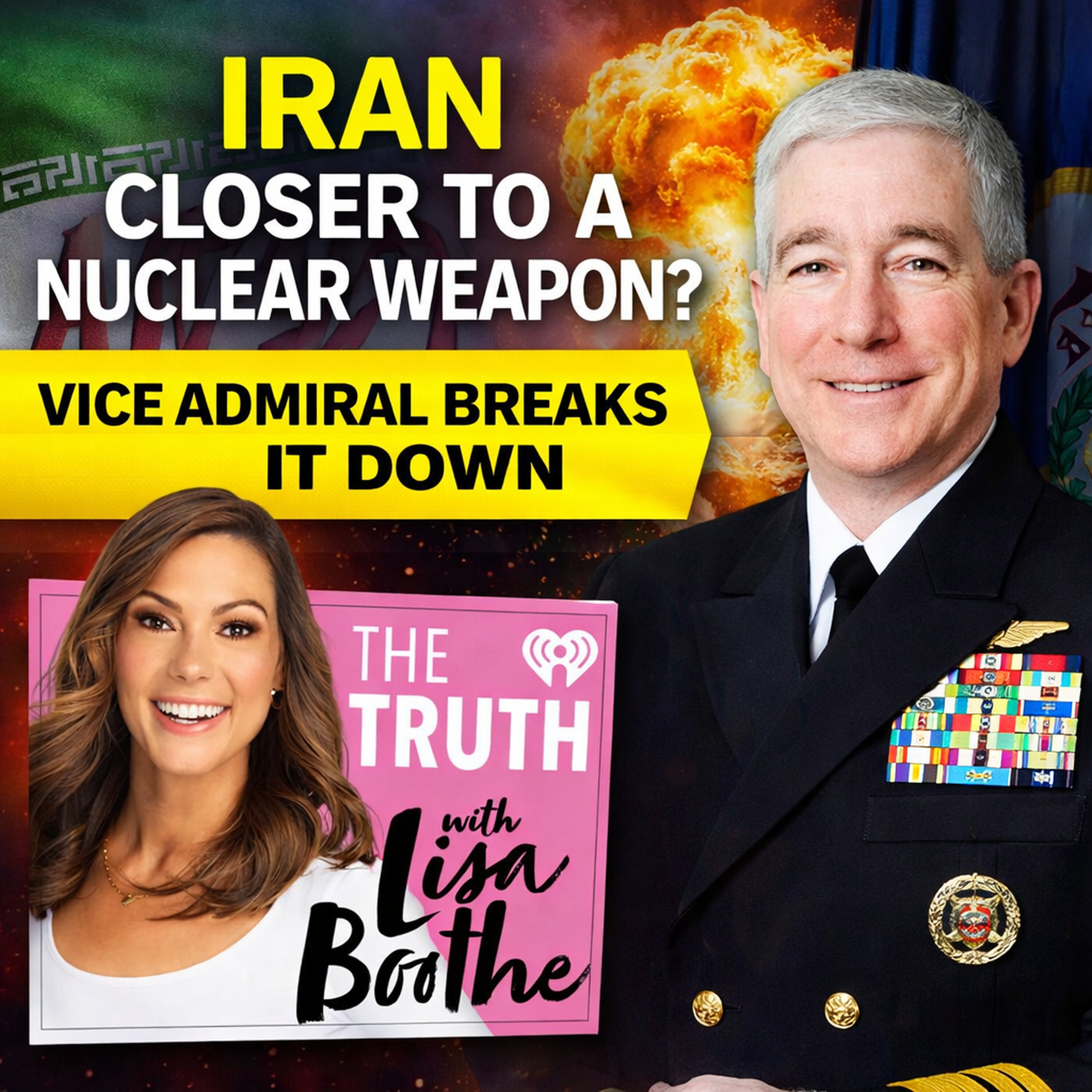
The Clay Travis and Buck Sexton Show
The Truth with Lisa Boothe: How Close Is Iran to a Nuclear Weapon? Breaking Down Trump’s Strategy & What Comes Next
00:19:48
Loading summary
Transcript31 lines
- [00:00]
A
This is an I heart podcast. Guaranteed human.
- [00:05]
B
When someone you love is facing cancer, you want to do more than send a card or flowers that will wilt in a week. You want to actually help. That's where the balm box comes in. Our care packages are built from research with over 500 cancer patients and caregivers packed with items people actually use during treatment. Think soothing, practical. Think thank goodness I have this kind of relief for you. It's not just a gift. It's a way to show up in a moment where words fall short. For them. It's comfort, calm, and a reminder they're not alone. From chemo friendly boxes to mastectomy recovery kits, even options for men, we've made it simple to give something that's elegant, premium and genuinely useful. And yes, domestic shipping's always free on orders over $50 because making someone feel cared for shouldn't be complicated. So skip the empty get well soon. Send real help, real comfort, and maybe even a laugh. Visit thebalmbox.com that's T-H E B A L M B O X.com Balm like healing and care. The balm box because cancer patients don't need bouquets and brownies, they need balm.
- [01:19]
A
Welcome to the Truth with Lisa Booth where we get to the heart of the issues that matter to you. Today we're talking Iran's nuclear clock. Is it ticking faster than ever? I'll talk to Vice Admiral John W. Miller. He is the ex commander of the Fifth Fleet and Naval Forces Central Command for a breakdown on all of this. Iran's breakout timeline, enrichment versus weaponization, intel gaps, or do we actually know? Is President Trump working on deterrence or delay? And what happens if and when talks don't work out? What's next after that? What will President Trump do? What a real deal actually means. So hard truths from a guy who ran the show in the Gulf. Stay tuned for Vice Admiral Jadon W. Miller. Well, Vice Admiral, it's great to have you on the show. We've known each other for a while while as I've noted before when I've had you on, you are one of my best friend's dads. So thanks for making the time, sir.
- [02:23]
C
Thanks for having me. Lisa. It's great to be with you.
- [02:26]
A
You also happen to be an expert on Iran, so it's. That's helpful. So I wanted to ask you, sir, how close we've heard sort of different accounts for how close Iran is to a nuclear weapon. What is the real breakout timeline from your perspective?
- [02:40]
C
Well, a Little bit of it depends on Iran, on how we define breakout. And so here's some things that we know. We know they had about 600 kilograms of 60% enriched material. And once you enrich uranium past about 5%, there is no other use for it other than to use it in a weapons program and as a nuclear weapon. And the way you enrich uranium, if you get to 60% purity, it's just a few short steps to get to the 90 or so percent that you need for a weapon. So we know that they have material that's close. Now, we're not entirely sure what happened to that material in the June midnight hammer attacks. It is probably safely tucked away underneath a large pile of rubble somewhere where they can't get at it. But that's not for sure. Now what we, I have pretty good confidence in is that they don't have an ability to do that last bit of enrichment that takes it from 60% to 90% weapons grade to put into a bomb. And so it's, I think, important for us to be concerned about their ability to, under rather austere circumstances, produce some kind of a nuclear weapon in a relatively short period of time and then find a way to deliver that. And this would not be a nuclear weapon in, in terms of how we think of them. When you see these explosions from the tests that we did in the past, it would be an imperfect weapon, but it would be a large, it could have a large yield and of course it would have the radiation that's associated with it. So it's really difficult to say how close they are, but they still have some sort of rogue ability perhaps to finish the enrichment and put something together, which is why it's important to keep after their program and to get some clarity and surety on what they have, where it's at, how do we get
- [04:43]
A
it out of the country, how effective? Obviously, when we dropped the bunker busting bombs not too long ago, how effective was that? Was it effective if we're aware that they're this close?
- [04:54]
C
I think it was a very effective strike. It accomplished the things that we set it out to accomplish and that the chairman laid out was within the realm of possibility in terms of our capability. So I think it was very successful in that regard. So they're not in these secret underground facilities any longer enriching uranium and getting themselves closer and closer to a point where they have highly enriched uranium that's ready for a nuclear bomb. But there is some material that they did have on hand, and I think that's where really our efforts, our focus is on finding that. And it may be that it's underground in Fordeaux or some other place and won't ever see the light of day again if we don't do anything at all. But we don't know that for certain. And so it would be nice to have better visibility into that. But in terms of what they had as an enrichment program before the strike and what they have today, it was a completely effective strike.
- [05:59]
A
Are they closer or further away today than before the United States pulled out of the jcpoa?
- [06:06]
C
Well, I think they're further away because they've lost the infrastructure that they would use to be able to finish the arrangement and to finally turn that into a weapon. At the same time, since we don't know exactly where this material is at, we don't know if they've got an ability, someplace that we're not aware of where they can finish the enrichment. We just don't know. And we don't know if they have access to the material or if it's part of the rubble that's left over from the strike. And so it's the uncertainty more than anything else. The odds are good that we've set the program back by much more than just a year, but we don't know for certain. And I think with something like this, as much certainty as we can have, it would be useful to have it.
- [06:57]
A
And how do we get that certainty?
- [06:58]
C
Well, that comes with the right deal in terms of the nuclear weapons program in Iran, which means they've got to agree to give up this material and that they have, and they've got to be able to account for it. They've got to be able to allow whatever is negotiated in the treaty in terms of verification to take place. And verification, if you remember back from jcpo, was a real issue. Not only did we not have good verification standards built into the agreement, the Iranians were very reluctant to actually allow the access and verification that they had agreed to. And so we're going to have to have a strong verification protocol, and the Iranians are going to have to follow that. So those are the kind of things that we ought to be looking for in an agreement where they agree to turn over the material, they're not going to stockpile material, they agree to suspend enrichment, they're not going to enrich further material, and they agree to a verification protocol that we find acceptable.
- [07:59]
A
You know, but Iran is publicly stating that it will not give up uranium enrichment. President Trump said that's a non negotiable I mean, those are two pretty hard lines. So is Iran just toying with us? Are they just buying time in these negotiations? Is it worth negotiating right now? How do you see it when you've got these two very hard lines that are polar opposites?
- [08:20]
C
I see it a little bit, maybe more simply and clearly than I did in the past. If you go back to before Midnight Hammer, we were at a similar crossroad in terms of the negotiations where the Iranians said, this is as far as we're going to go, we're going to go no further. That wasn't acceptable to the United States. And the response was Operation Midnight Hammer. So I think the Iranians who would negotiate the nuclear deal for the next 20 years, given the opportunity, I think they have to have a better understanding that they are once again on the timeline. And when the timeline has expired in the mind of the president, the response is not going to be a different kind of negotiating tactic. The response is not going to be a plea to the European Union to. To jump in and to help. It's not going to be an outreach to the Chinese and the Russians to see what they can do. The outreach is the result of. It is going to be another attack by the United States on their nuclear weapons program or the remnants of their nuclear weapons program, so that we can be more sure that. That they can't reconstitute something out of the rubble that currently exists.
- [09:32]
A
Iran's also facing a lot of internal pressure. We've seen protests across the nation and calls to topple the regime. Does that put pressure on the regime to negotiate, or does it make the regime more reckless and more apt to, you know, lash out and behave more incoherently?
- [09:55]
C
That's a great question, and it gets to a great point. And really what we've seen historically over the last almost half century, now that the regime has been in power, is when they feel threatened. The more threatened they feel, the more reckless they become. And someone once described it that the Iranian response to maximum pressure is maximum resistance. And. And that really does sort of define the Iranian approach to doing business. So they're under a lot of pressure, really, on every front. When you. When you look at the global picture, Iran is a country that is entirely without an ally. They have a very transitory relationship, a transactional relationship with the Russians and with the Chinese. And other than that, they. And perhaps the North Koreans, other than that, they have no one they can even turn to that they might be able to call friend. They're surrounded virtually by enemies of their own making. They have a terrible economy. It's in part, in large part the result of decades of very debilitating sanctions. They've got a water crisis. You don't hear that talked about much these days, but they've been able to mismanage the water supply in IR for the last half century and are at a point where they may eventually need to evacuate the city of Tehran because they don't have enough water for the people. So they have a number of problems. The response typically to this kind of pressure on the regime has not been to become more benevolent, not been to go out to the world and say, we could use some assistance, we'd like to have better trade, and we're willing to negotiate in good faith. That's just not what they've done, and they're not doing that today. And I do. I don't see the regime ever getting to a point where they begin to behave like a responsible nation in the community of nations. Remember, General Mattis once said Iran has to decide whether they're going to be a revolution or a country. And I still think that that's true today.
- [12:08]
A
He also said, have a plan to kill everyone you meet. So that's always right. Didn't he say something like that?
- [12:14]
C
He did say something like that, but I've met him, and he's a wonderful man. Had a great leader.
- [12:19]
A
Yeah, but he probably had a plan to kill you. So it's a little. But he did a little scary going to meetings with him, I guess. But how do you think the regime sees President Trump?
- [12:32]
C
I think they have a pretty good understanding of what President Trump is like, and they've had a chance, you know, they got a chance to see him in his first administration and understand where he was coming from with the Iran problem set and where he wanted to go. There was some outreach on the part of the Trump administration, the first one to actually get a good deal that. That we would have been satisfied with, and likely the Iranians would have been satisfied with him. They didn't make the deal. They've seen him in his second administration, where if. If they're not going to make a deal, then he's going to take action. So I think they understand that, but that doesn't necessarily mean, like it would for most people. Most people, if you and I were in the position of the regime, I think we'd be looking at how we can make a deal that keeps the United States from attacking the nuclear program in Iran again and maybe some other things in Iran as well. And how can they reduce some of the pressure on the regime by negotiating with the administration? We just don't see them doing that. So I think intellectually they can understand it. They just don't seem to be able to get to a point where they're willing to say, okay, well we'll negotiate here and we're going to get something, probably not everything we want, but something going to reduce some of the pressure that's on the regime and some of the pressure that's on the economy, which would give them a little bit better footing at home.
- [13:56]
A
Quick break. More on Iran. If you like what you're hearing, please share on social media or send it to your family and friends. You know, if Iran is unwilling to reach a compromise that the Trump administration deems worthy and acceptable, what happens next?
- [14:14]
C
Well, there's a number of things that can happen and it can be something as simple as a strike that's designed just to put more pressure on the regime. So that's a strike that might be relatively limited in scope. It would focus likely on the nuclear problem set, if you will. So parts of that that we want to have a little bit more clarity over, over the condition of it by ensuring that, you know, it's, it's, it's still difficult to get at or nearly impossible to get at. It likely would include their ballistic missile, their missile facilities, their missile production facilities, their storage facilities. Missiles are really the way that the Iranian regime now can defend itself from external aggression of any kind, from anyone because their air defenses have been largely destroyed and haven't been rebuilt. They've tried to rebuild their missile production facilities, their launch facilities. And so there will likely be some targeting into, into them. It's, it's likely that some of the regime leadership would be part of, of a limited strike. And that doesn't have to be a decapitation strike, although that's a possibility. It doesn't have to be that. It's the ability of the IRGC and the Basij forces to command and control their own forces, which then produces a little bit of wiggle room for the protesters in Iran. If you make it more difficult for the Iranian government, particularly the irgc, to operate against its own, own people and to kill them, which as you know, they've been doing in quantity of late. So those are the kind of things I think you would see as a pressure strike. And then it could expand to their impact, the Iranians ability to wage war of any kind. And it could be strikes that are large enough and persistent Enough that they would lend to the effort to eventually force regime change.
- [16:08]
A
Do any countries come to Iran's defense in that scenario?
- [16:13]
C
I don't think so. If you look at who might come to their defense, you know, they've got a kindred soul in the North Korean government, but I don't think that the North Koreans are in any position to come to the defense of Iran. What kind of excess capability the North Koreans might feel that they have is being used up today in Ukraine in support of the Russians. I don't see the Russians being supportive. They were not at all supportive during the 12 Day War, and I wouldn't expect them to be supportive of any further effort. And I certainly wouldn't expect the Chinese to become directly involved.
- [16:47]
A
Well, that's good to hear. Well, it's interesting, too. I assume, you know, because it was interesting because the, you know, a lot of these other Middle Eastern countries were encouraging President Trump to negotiate. How do you think Israel sees it? I assume they probably would rather us be dropping more bombs. Or do you think they support negotiation as well?
- [17:06]
C
Well, Israel, like any country, is, at the end of the day, the responsibility of the government is to do what's in the best interest of the, of the country and of the people. And, and that's where I think the Israelis have been, and that's where they are today. They know that the Iranians pose an existential threat to their existence. The Iranians have been very clear about the fact that they would like to pose an existential threat to the, to the ability of Israel to continue to exist. And so I think that they, they, the various strike options that are available to us, and as much as we can, we think we can possibly do, I think the Israelis would be in favor of it, supportive of. I think it's interesting and important to understand where the Gulf countries are coming from. And, and it's not that they wouldn't like to see a different regime in Iran because I think they're, they're against the regime. They understand the regime as a destabilizing factor throughout the region. And so the activities of their proxies, Hezbollah, Hamas, other, the Houthis, other proxies in places like the Eastern Province of Saudi Arabia, in Bahrain, up in Kuwait, that antagonize the Shia populations and cause the Shia populations to riot or to plant bombs to create instability in their own region, in the countries. So regionally, they're concerned about what Iran does, but they're also concerned about what an Iran where the regime is collapsing actually looks like. And how much instability that you would find during regime collapse inside of Iran spills out into the rest of the Gulf. And so that's to the commerce that's in the Gulf, which is the petroleum products that come out as well as the goods and services that come in. But also it's the Shia populations that are prevalent in a number of the GCC countries that stand to be antagonized by a failing regime. And so I think from a, a regional stability standpoint, that's the concern the Gulf countries have. And they have to live with that in a way that the Israelis don't, which might explain the different approach that each of those two entities are looking to make to the problem.
- [19:25]
A
And then before we go, how do you think President Trump has done so far in navigating Iran?
- [19:32]
C
I'll tell you, I think he's done a very good job, a brilliant job. I'm very supportive of how he's handled the Iran issue during this term in office. Where I'm hopeful is that we continue to keep this problem in front of us and something that we're not going to let just fester and sit over time. There's opportunity here to come out of the current crisis situation that we're in with an Iran that's a better neighbor regionally and is a better neighbor globally. The Iranian population has a lot to offer. They're well educated, they've got a beautiful cult, enormous resources within the country. And so the ability for Iran to become a good partner in the region with the Arab Gulf states and for the rest of the world in terms of the global economy certainly is there. And it would be very helpful if we could get to that in the next year so that we're not looking at 2028 or 2029 or 2030 and wondering what we're going to do about Iran, as we have for, you know, since 1979.
- [20:47]
A
Vice Admiral John Miller, thanks for making the time. Fozzie, I appreciate you.
- [20:50]
C
Pleasure. Have a great day.
- [20:51]
A
Lisa, that was Vice Admiral John W. Miller. Appreciate him for taking the time to come on the show. Appreciate you guys at home for listening every Tuesday and Thursday, but you can listen throughout the week. Also want to thank John Cassio, my producer, for putting the show together. Until next time, this is an Iheart podcast, guaranteed human.