← The Clay Travis and Buck Sexton Show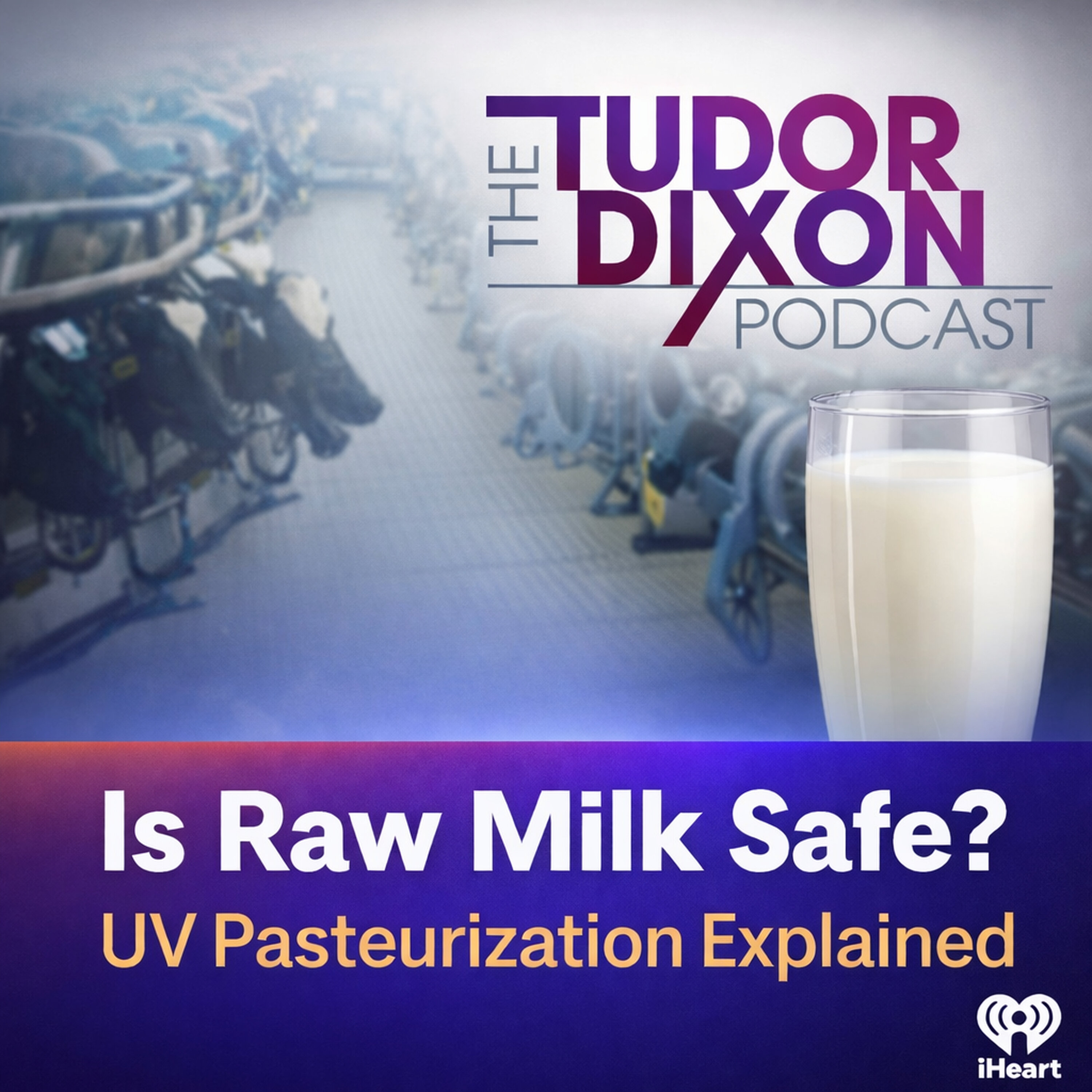
The Clay Travis and Buck Sexton Show
The Tudor Dixon Podcast: Is Raw Milk Safe? UV Pasteurization Explained
00:30:34
Loading summary
Transcript109 lines
- [00:00]
Tudor Dixon
This is an iHeart podcast. Guaranteed Human.
- [00:04]
Alliance Defending Freedom Advertiser
It's happening across America. Men are being allowed to compete in women's sports, robbing girls of scholarships, medals, titles and safety for the first time in history. The U.S. supreme Court heard two cases that could decide the future of women's sports nationwide. Alliance Defending Freedom needs your voice today. Visit joinadf.comdixon or text DIXON to 83848 to add your name and guide with truth and fairness. That's joinadf.com Dixon paid for by Alliance Defending Freedom.
- [00:39]
Sunday Lawn Care Advertiser
People, don't listen to radio ads while
- [00:42]
Bob Comstock
you're driving or making a sandwich.
- [00:43]
Sunday Lawn Care Advertiser
Your subconscious pays full attention.
- [00:46]
Bob Comstock
So relax, let it take over.
- [00:50]
Sunday Lawn Care Advertiser
Sunday makes yard care simple with a custom plan based on your soil, climate and yard size. No pesticides, no harsh stuff. Custom Sunday Lawn Plan. Order today and get your custom Sunday lawn plan ready for the season ahead. A smarter, healthier yard all across America.
- [01:12]
Amazon Small Business Advertiser
Amazon offers hourly employees health care that starts on day one. The health care costs $5 a week with $5 doctor visits. Learn more at aboutamazon.com
- [01:25]
BBC Interface Advertiser
if there was a big red button that would just demolish the Internet, I would smash that button with my forehead.
- [01:33]
BBC Interface Host
From the BBC, this is the Interface, the show that explores how tech is rewiring your week and your world.
- [01:39]
Tudor Dixon
This isn't about quarterly earnings or about tech reviews.
- [01:42]
BBC Interface Host
It's about what technology is actually doing to your work, your politics, your everyday
- [01:48]
BBC Interface Advertiser
life, and all the bizarre ways people are using the Internet.
- [01:52]
BBC Interface Host
Listen on BBC.com or wherever you get your podcasts.
- [01:58]
Tudor Dixon
You are listening to the Tudor Dixon Podcast. And today we are going to talk raw milk. I know you're gonna go, how can you talk about raw milk for that long? But there's this new innovation. You've heard a lot about raw milk, but I know that people are going, you know, we hear the administration and Maha and everybody saying raw milk is safe, but is raw milk safe? And then I've had some people on the podcast who have said, absolutely not. So we found someone who knows how to make raw milk safe. And there's a reason that you want to do that because there's a lot of good stuff in raw milk. But I will have Bob Comstock explain that to you. Bob is the founder and CEO of Tamarack Biotics and he is here to talk to us about UV pasteurization. Right, Bob?
- [02:41]
Bob Comstock
Yes, I am tutor and I'm excited to do so.
- [02:44]
Tudor Dixon
Awesome. Yes. Explain a little bit about we hear everything about raw milk, but I don't think people we've Heard just raw milk is good for you, but I don't think we understand why.
- [02:57]
Bob Comstock
Well, certainly there are a lot of bioactive components in raw milk. And if you think of what milk actually means, mammals, whether from a human or a cow, feed their infant and establish an infant's entire immune system through mother's milk. And we've tried to make it safe using pasteurization for more than 150 years. It was invented before the Civil War in the United States, and it does so, but at great expense to the bioactivity of raw milk. So raw milk has a lot of health benefits, but it is inherently not safe because it can contain pathogenic bacteria that can be very harmful to people.
- [03:43]
Tudor Dixon
So, okay, I've, I've been to many dairies and I will say that as you are, as you watch the cows coming in and out and being milked, there is like this moment where I go, is this all totally safe? And then they say, oh, it all gets heated up and it's just below boiling and everything gets killed. But then you kind of just have a product that you're drinking that doesn't have as much value as it had when it came out of the mother cow. So how do you, how do you get that stuff back without putting people in danger of drinking it?
- [04:18]
Bob Comstock
Yes. So UV pasteurization works by inactivating bacteria and viruses that could be found in milk, in raw milk. So without getting into all the technical details, it is actually safer than heat. It kills the bad bugs better. And it does this while the milk's entirely cold, so we don't heat the milk at all and we achieve a greater level of safety than heat does.
- [04:49]
Tudor Dixon
So this is all just with a UV light. So what's happening is, as someone who has gone to many dairies, we used to have a friend that worked at a dairy. As you watch what is happening in the dairy, you see the milk going through all of these different processes for the UV pasteurization. It's all refrigerated the whole time and it's a thin stream that's going under the light. Or how does that work?
- [05:17]
Bob Comstock
Yeah, there's a lot of technology to how you deliver UV light, which is basically sunshine. So we use the same mechanism by which you can dry apricots in sunlight and it kills the bacteria that could grow on the apricots and it safely dries them. So our technology works by, yes, creating a very thin film of fast moving milk. So the ultraviolet light can inactivate the bacteria and viruses and then not Heat the milk at all as it goes through the process. So this can be used for liquid milk. We just recently received FDA approval for raw skim milk to be used in dairy ingredients like milk protein and whey protein concentrates that you can buy at the health food store Costco. Big bags of whey. And those ingredients will be much more healthful than they are today.
- [06:18]
Tudor Dixon
Interesting. So, okay, but when you say much more healthful, you said healthful, right? Or did you say healthful?
- [06:24]
Bob Comstock
Yes, healthful.
- [06:25]
Tudor Dixon
That's what I thought. I'm like healthy. Okay, great.
- [06:28]
Bob Comstock
Well, I think it's be helpful for your audience to understand some of the reasons why this health giving benefits of raw milk and why people are advocating for it. And a lot of this Stems and Tamarack was originally founded because in Europe over the last two decades, they've shown that children that grow up consuming, as they call it, their farm milk are protected from developing allergies such as asthma and hay fever and eczema and food allergies. And it was very interesting studies and some of them were large enough to include over 27,000 children in seven countries. And what they found was the French kids growing up on a dairy and, and consuming boiled milk because it's a French culture to follow Louis Pasteur and boil their milk before drinking it, whereas German children growing up in a city had access to farm milk from the village store. And what these studies found is it wasn't living on the farm that protected children from developing allergies, it was actually consuming farm milk. And though I certainly don't advocate for drinking raw milk at any time, particularly in a distribution system where you're not sure how old the milk actually is, and that gives bacteria an opportunity to grow. So our technology has shown in clinical trials that have yet to be published. But I've seen the preliminary results show that UV pasteurized dairy ingredients protect children from developing allergies like peanut allergy. And we think that's very exciting for, for health.
- [08:14]
Tudor Dixon
Yes, that's something any parent knows that obviously we went to school, we were, I never had a teacher say, you can't bring peanut butter and jelly. We have full peanut free rooms. We have peanut free lunch areas. We have, we have been told from the time the kids were little, like, they will send home at the beginning of the year. These are the food allergies that we have in class. These are the foods that your students can't bring to our class. So we are hyper aware as parents today that there are all these different food allergies. But we also have been told, you know, kids don't have to be lactose intolerant, they don't have to be gluten free. There are ways to prevent. Wasn't like this in the past, but, but milk was always pasteurized for as long as I've been around. So what is it that we've, what else have we missed? What is it in this? And when you dry it out like you're talking about, and it's in these supplements, is that giving us the same thing that raw milk would be giving if we were drinking on the farm?
- [09:18]
Bob Comstock
Well, no, not entirely, but there are actually. By concentrating some and removing the lactose from milk, you can make ingredients that are put into yogurt or cottage cheese or lots of dairy products that people can easily consume. And so liquid milk only represents about 9% of the dairy products produced today. And all these other products from yogurts and cheeses and a myriad of different products that people have in their store shelf to choose from. And we can make virtually all of those healthier with UV pasteurization by retaining
- [10:03]
Tudor Dixon
the bioactive component of skim milk, right?
- [10:06]
Bob Comstock
Correct. And we're working to expand that approval to colostrum and whey, and those will take some time. We've been collaborating with the FDA for more than 12 years to gain this approval that we have so far. It's the first in the entire world for an alternative to heat for pasteurizing milk.
- [10:27]
Tudor Dixon
So this FDA must be much more receptive to something like this.
- [10:32]
Bob Comstock
Yeah, I think they in general have been fda. It's their responsibility to be cautious and careful and protect the public health. And they have done that very thoroughly and they've ensured that we prove that our UV system achieves what's called a five log reduction. So it's 99.999% of all bacteria and viruses that could be in milk. And we've done with great scrutiny and detail. So, yeah, I think the FDA is very excited about the potential for this to improve the health of the country. And they've been a good partner through the journey to get this approval.
- [11:12]
Tudor Dixon
We've obviously heard quite a bit about the opportunity to have food. Food is health, right? Food is how you grow. Food is healthcare. And that's what we're hearing from this administration. When you look at what the potential could be for this, I mean, obviously it's a big deal for parents to. You could potentially prevent allergies. What if your kid already has allergies? What if you are suffering from ibs? What if you have all of these, what if you have psoriasis and eczema and all these things that we're hearing about? What is the potential here with this product?
- [11:48]
Bob Comstock
I don't know all of the remedial abilities, but it's certainly been proven very thoroughly that raw milk consumption in Europe leads to vastly lower incidence of allergies development. And in the developed world, half of children born today will develop some form of allergy, whether it's asthma or a skin allergy or a food allergy. And that's really sad. And I think this administration is clearly trying to bring back food as health giving medicine. So we're very consistent with that message and we're looking forward to eventually having UV pasteurization be the dominant form of pasteurization of milk.
- [12:33]
Alliance Defending Freedom Advertiser
Milk.
- [12:35]
Tudor Dixon
So you think there's a future where what we're hearing about the benefits of raw milk could actually be what we're getting at the grocery store when I go to the Meijer and I pick up a gallon of milk in the future, there's the potential that that is UV pasteurized and therefore it hasn't been heated up. It's not losing a lot of those things that are passed from mother to baby. There's a chance that this could take off and we could see this implemented into our dairies?
- [13:02]
Bob Comstock
Absolutely, I think so, because there's three big reasons actually. One is the nutrition story. And we do retain all of these bioactive components that are in raw milk. You heard of names like immunoglobulins and lactoferrin and osteopontin. These are proteins that are found in milk and we do not damage them and heat does. So the protective effect for allergies is also we see this in improved gut health. And even UC Davis did a clinical trial showing that our UV pasteurized milk protein concentrate restored immune function in older people. So we gave people a tetanus shot and looked at how many antibodies they developed in response to that tetanus shot. And on average the people that had consumed the UV product compared to the control had 120% more. So more than double the amount of antibodies. And as you get older, your immune system weakens, and we know that very well. And there's no way to restore it until UV pasteurization came around. So the same mechanism by which a mother imparts immunity to her infant works to restore immune function in older people. So we think we're going to keep older people well. So that's an exciting future for us too. And that should reduce a lot of healthcare costs because, you know, as you get older, it becomes more and more expensive to keep.
- [14:35]
Tudor Dixon
Well, let's take a quick commercial break. We'll continue next on the Tudor Dixon Podcast.
- [14:41]
Alliance Defending Freedom Advertiser
It's happening across America. Men are being allowed to compete in women's sports, robbing girls of scholarships, medals, titles and safety. For the first time in history, the U.S. supreme Court heard two cases that could decide the future women's sports nationwide. Alliance Defending Freedom needs your voice today. Visit joinadf.comdixon or text DIXON to 83848 to add your name and side with truth and fairness. That's joinadf.com Dixon paid for by Alliance Defending Freedom.
- [15:16]
Sunday Lawn Care Advertiser
We've been duped, hoodwinked, conned for 50 years. The lawn care industry sold us toxins in a bag and made our yards more toxic than a bad relationship. Sundae helps you ditch the chemicals and feed your lawn the good stuff. Soybean proteins, iron, seaweed, molasses. Ingredients that get your soil giggling like an overserved mom at the block party. Sundae uses clean ingredients in real science for thicker, greener grass. Order today and get your custom sundae yard plan for the season ahead. Sundae for a smarter, healthier yard. Getsunday.com to remind you that 60% of
- [15:48]
Amazon Small Business Advertiser
sales on Amazon come from independent sellers, here's Jess from Planetary Design.
- [15:53]
Bob Comstock
We make coffee shop gear for outdoor adventurers. Amazon helps me reach customers all across the country who are headed to the backcountry shop.
- [16:00]
Amazon Small Business Advertiser
Small business on Amazon.
- [16:02]
BBC Interface Advertiser
If there was a big red button that would just demolish the Internet, I would smash that button with my forehead.
- [16:09]
BBC Interface Host
From the BBC. This is the Interface, the show that explores how tech is rewiring your week and your world.
- [16:16]
Tudor Dixon
This isn't about quarterly earnings or about tech reviews.
- [16:19]
BBC Interface Host
It's about what technology is actually doing to your work, your politics, your everyday
- [16:25]
BBC Interface Advertiser
life and all the bizarre ways people are using the Internet.
- [16:29]
BBC Interface Host
Listen on BBC.com or wherever you get your podcasts.
- [16:35]
Tudor Dixon
So obviously you do believe that this is, this is health care. This is food being health care and improving your system. So if you can improve your immune system, I mean, that changes things for nursing homes, that changes things for healthcare, especially for the older generation. But what have you seen for the younger generation? What, what really led you to say, gosh, I, I think that we're taking all the good stuff out of milk and what, what could be the benefit of doing something different?
- [17:05]
Bob Comstock
Yes, Well, I, I think the, there's definitely, I think, benefits for all generation and even athletes. So sports nutrition will greatly benefit for people in performance recovery and keeping well, because as you exercise, you actually suppress your immune system rather quickly. So many athletes, we call it Olympic Village fever, where athletes get together with suppressed immune systems and they all come down with a cold or a flu. And that's pretty well documented. And we think we'll be able to keep people's immune systems strong so they won't fall victim to this. And I forgot to mention tutor, that there are three reasons why I think store shelves will be full of these UV pasteurized products in the future. The first one is the nutrition story. The second is sustainability, because UV saves enormous amounts of energy that it takes to heat up milk to nearly boiling and then cool it back down to refrigerated conditions. And milk really doesn't like heat. It becomes sticky. So if you've ever heated milk in a pot to make some hot chocolate, you'll notice it sticks to the pot after you've heated it, and it didn't stick before. So what that's showing is these proteins are undergoing what we call denaturing. They kind of unfold, and as they unfold, they become more viscous and sticky. And that challenges dairy operators because they must stop and clean, often because of what's called fouling. So when, when you use UV pasteurization, not only do you save an enormous amount of energy, but you reduce the need to clean so often. And the dairy industry is very excited about this. I'm actually attending a dairy processing conference this week, and I'll be speaking about UV pasteurization later today. But the dairy industry in general recognizes that heat is not their friend and they're looking forward to having, you know, UV pasteurization be fully approved in the US and being able to utilize its benefits. And the third area, as I mentioned,
- [19:16]
Tudor Dixon
outside of the US right now, we're
- [19:18]
Bob Comstock
working with companies in Europe that are preparing installations. So we're designing systems that will be installed this year. So we expect to have UV pasteurized products in Europe soon. But unfortunately, you don't have to get
- [19:31]
Tudor Dixon
approval to do that there.
- [19:32]
Bob Comstock
We do. And we've been working in Europe as we have been with the fda, particularly with the Irish Food Safety Authority for several years, and they're prepared to fully approve our process in the eu.
- [19:46]
Tudor Dixon
So because I was recently in Europe and when I was over there, I was just looking around and thinking, people just naturally seem like they are in better shape, better condition here. I mean, and there is a reality, obviously, I know all the stories of America we're overeating, we have huge portion sizes, we aren't exercising, we don't walk places. So there are those nuances as well. But their food definitely seems different. Do you think that they are more receptive to doing something if they see it as healthier and to making that change faster?
- [20:23]
Bob Comstock
Yeah, I think so. And I think informed consumers here in the United States are also very enthusiastic about having better nutrition in all regards. And we do have way too many chemicals in our food, unfortunately. I'm. And we have this grass generally recognized as safe approval process that allowed companies to self affirm their own safety data about a food chemical and not even notify the FDA that they were going to use this. So Senator Marshall, I'm very supportive of his work, has introduced a bill on the Senate floor to reform the grass or generally recognized as safe process. And part of that reformation, if you will, is to allow UV to utilize the grass approval route, which it is not today.
- [21:18]
Tudor Dixon
Because wasn't there, isn't there some story where in the 50s this was approved at some point and people were using it?
- [21:26]
Bob Comstock
Yes, absolutely. It's actually a very interesting story about vitamin D. So people had noticed that children certainly in the the northern regions of the United States where in the winter they didn't get a lot of sunlight and we didn't understand it, but children would grow up bow legged with weak bones. And vitamin D is very important to enable calcium absorption. And the kids weren't just weren't getting enough sunlight and they weren't getting enough vitamin D. So this scientist named John Steenbach at the University of Wisconsin in Madison developed a procedure that increased the vitamin D content in whole milk by shining huge quantities of vitamin D at the milk. In fact, it didn't taste very good and they used the taste as a measure to make sure the process was effective. But this process increased the vitamin D content in milk and it was utilized in the 1920s and 30s until vitamin D was synthesized. And since then it's been added directly to milk, which is easier and it certainly doesn't ruin the taste of the milk. But in the United States and Europe, hundreds of dairies and millions of children consumed UV treated milk. And we contend to the FDA that this is evidence of UV safety because certainly clinical trials were done at that time and no adverse effects of this UV treatment were shown. So yeah, it's a funny story to see all these pictures of Borden's and Carnation milk cans that say irradiated milk.
- [23:03]
Tudor Dixon
Oh gosh, yeah, that is kind of terrifying. So at that time for those cans of milk, they didn't have any pasteurization that was heated, Correct?
- [23:13]
Bob Comstock
You know, I think they still were often heated, but this was an additional treatment, not always treated, but I think most often they were often heated to do the bacterial reduction. But you know, we, at that time, the knowledge of germs and bacteria and viruses was so limited and we didn't even understand that it was vitamin D that was increasing in the milk. They just observed this effect in raspberry and then eventually in children that if they consumed this UV treated milk, they did not suffer this calcium malabsorption and they had stronger bones. And it was a widespread use throughout the United States and Europe in that period.
- [23:57]
Tudor Dixon
You mentioned a lot of things that I think that we would consider chronic disease. I mean, even allergies and asthma and eczema, those are all really tough things to live with. And I believe the parents who have experienced that or the people who have lived with that would say, yeah, I really wish there had been something. Do you feel so passionately about this? Obviously you've talked about the energy consumption and that that would be down and that you could actually probably move a lot of product faster through these dairies because you don't have to have the cleaning process. But do you think also that this would change chronic disease in the United States?
- [24:37]
Bob Comstock
Absolutely. There's a lot of evidence that chronic disease starts in your gut. And people have been taking antibiotics and eating ultra processed foods so long that their intestinal walls are compromised. And we talk about microbiome and gut health. These are real issues that the scientific community knows lead to a lot of chronic diseases like Ms. And Parkinson's. And we really understand more and more the the gut brain axis and how this leads. If your gut is not healthy, compounds are getting from your food and all the digestive byproducts into your bloodstream because your gut lining is compromised. And we have evidence that these UV pasteurized whey products will improve gut health and potentially reduce chronic disease.
- [25:32]
Tudor Dixon
When you talk about gut lining and you talk about the microbiome, I think a lot of people have concerns that if my gut is not right, how do I get that back on? Is it possible to get that back on track? You have this product that is out there with skim milk. Is that the goal is to improve the microbiome and is that something that you can do once you've gotten off track?
- [25:53]
Bob Comstock
Absolutely. And I think that explains the results we saw in that UC Davis trial. Is that the intervention group that had been consuming our UV treated product found double vaccine responses because their intestinal system was improved and restored to better function. So that probably explains that benefit that we observed in the clinical trial.
- [26:21]
Tudor Dixon
And you think if this were, I mean, I think about the amount of milk that my kids consume and if they were, it's hard sometimes for us as parents to get them to drink the smoothie, to get them to take the vitamin. But if this were something that were on the grocery store shelves, that this is how milk came to us, that would be a huge improvement. But then there's also the opportunity to, to have it in supplements, to have it in, in stores that are selling foods, that are selling smoothies, that are selling health foods. Do you see that as the. There's like a huge market in both areas, whether it is the direct to market milk or it's the after products where we're still looking to increase. We're still looking. I mean, I will say I look at my kids, they drink a lot of milk. I am not as big of a milk drinker as an adult. I don't find myself whipping up some chocolate milk. I don't drink, grab a glass of milk before I go to be. That's just not in my mindset. So I would be more in the category of someone who's looking to get this without having to have it in my have it as a nightly glass of milk.
- [27:27]
Bob Comstock
Is that I'm in the same category? Quite frankly, no. So it's not necessary for the drying process. I think dairy manufacturers will be using our technology for yogurts and cottage cheese and all sorts of dairy products will utilize this eventually. And we're working to the gaining that regulatory approval necessary for all different dairy products. But yeah, I certainly don't drink as much milk. It's in my coffee and rarely will I have a glass of milk. But I do consume a lot of yogurt and cottage cheese.
- [28:00]
Tudor Dixon
Yeah, I guess I don't think I do have a lot of dairy. I have dairy. I'm a big fan of cheese. I have one kid that is absolutely, totally opposed to cheese. So thank goodness she drinks milk. Let's take a quick commercial break. We'll continue next on the Tudor Dixon Podcast. Cast
- [28:17]
Alliance Defending Freedom Advertiser
it's happening across America. Men are being allowed to compete in women's sports, robbing girls of scholarships, medals, titles and safety. For the first time in history, the U.S. supreme Court heard two cases that could decide the future of women's sports. Nationwide Alliance Defending freedom needs your voice today. Visit joinadf.comdixon or text DIXON to 83848 to add your name and side with truth and fairness. That' joinadf.comdixon paid for by Alliance Defending
- [28:51]
Sunday Lawn Care Advertiser
Freedom People don't listen to radio ads
- [28:53]
Bob Comstock
while you're driving or making a sandwich.
- [28:56]
Sunday Lawn Care Advertiser
Your subconscious pays full attention.
- [28:58]
Bob Comstock
So relax, let it take over.
- [29:02]
Sunday Lawn Care Advertiser
Sunday makes yard care simple with a custom plan based on your soil, climate and yard size. No pesticides, no harsh stuff. Custom Sunday Lawn Plan Order today and get your custom Sunday lawn plan ready for the season ahead. A smarter, healthier yard.
- [29:22]
Amazon Small Business Advertiser
To remind you that 60% of sales on Amazon come from independent sellers, here's Jess from Planetary Design.
- [29:28]
Bob Comstock
We make coffee gear for outdoor adventurers. Amazon helps me reach customers all across the country who are headed to the backcountry shop.
- [29:35]
Amazon Small Business Advertiser
Small business on Amazon.
- [29:37]
BBC Interface Advertiser
If there was a big red button that would just demolish the Internet, I would smash that button with my force.
- [29:45]
BBC Interface Host
From the BBC, this is the Interface, the show that explores how tech is rewiring your week and your world.
- [29:51]
Tudor Dixon
This isn't about quarterly earnings or about tech reviews.
- [29:54]
BBC Interface Host
It's about what technology is actually doing to your work, your politics, your everyday
- [30:00]
BBC Interface Advertiser
life, and all the bizarre ways people are using the Internet.
- [30:04]
BBC Interface Host
Listen on BBC.com or wherever you get your podcasts.
- [30:10]
Tudor Dixon
You know, I remember the milk commercials where the people had the milk on their lip and that was like the big conversation. Milk was a big conversation. And I think milk went through a little bit of a phase where it was demonized by people who are like, oh, you've gotta have oat milk. And then we found out that oat milk, oat milk is like just drinking seed oil. So we went back to real milk. And now you have the secretary of health talking so critically about milk and going out and doing workout videos. Maybe a little weird drinking milk in the hot tub. I don't know. That was strange. But obviously making a point that milk is very important. So my question to you about this is if you could talk to HHS or if you could talk to the fda, what would you tell them today that you need?
- [30:56]
Bob Comstock
Well, there's still a regulatory hurdle we have to get through at the FDA. In 1958, Congress enacted the Food Additive act and wanted to regulate ionizing radiation because it was the dawn of the nuclear era and people were just learning what it could do. So they wanted to regulate. And in parentheses and all of the subcommittee transcripts it gamma rays, x rays, and radioisotopes. So ultraviolet light, like infrared or your microwave oven, is non ionizing Radiation, and it's very common. The sunlight is a huge bandwidth of ultraviolet light. So only the United States has a regulation that governs allowed uses of ultraviolet light in food. And this unfortunately inhibits safety. So our food supply would be safer if we could use UV for a lot of different products. And Senator Marshall's bill would enable that. We're working with the FDA also because of this prior use in the 1920s and 30s, we believe that qualifies at what's called a prior use exemption. And we've filed with the FDA to gain that approval. Once we have those steps, and we have to still amend something called the Pasteurized Milk Ordinance that governs interstate state milk shipments. And we're in the process of doing that also. So once we have all of the final hurdles done, I think your dairy shelf will be exclusively UV pasteurized products in perhaps 15 years from now.
- [32:33]
Tudor Dixon
And we are well on our way to kicking the chronic disease in the United States. Once that happens, that excites me. That is very exciting to me. I, I, we will do our best to pass this along to our friends over at the FDA and over at hhs. To me, it is very, it is incredibly interesting to know that there are foods in our environment that are healing and that we're not taking, we're not using them to the greatest benefit. In politics, we have a saying it's sunlight is the best disinfectant. Apparently, we should have it in health food too.
- [33:09]
Bob Comstock
We should have it in our milk. Yeah. Yes.
- [33:11]
Tudor Dixon
Yeah. Liquid sunshine. I mean, why wouldn't we be drinking that?
- [33:14]
Bob Comstock
Yes, it's entirely safe. And I assume raw milk people will be curious and concerned about adding sunlight to milk, but it retains all of raw milk's goodness and makes raw milk safe.
- [33:30]
Tudor Dixon
I mean, I understand what you're saying. I also think that there are a group of people who are, even when I talk to health food nuts, they're like, oh, yeah, you have to be really careful with the raw milk. Like, if you don't understand it, if you don't know what you're getting, you have to be really careful. And that it, for someone like me, it genuinely freaks me out because I'm like, I don't even know what that means. Be careful with your milk. You know, I'm like, I don't know, will the kids leave it out on the counter? And then we're all gonna end up dying, you know, I mean, it is kind of a scary thing when you think about it. So I think maybe if you are hardcore and you understand it. But, but my experience is that community has wanted to share, but they want to share it in a safe way. And you're telling me that essentially your product is going to share all of the benefits of raw milk with none of the scary parts.
- [34:19]
Bob Comstock
Exactly. And we're very excited to bring that health giving technology to the consumers and make raw milk available and safe. And I think the, I guess one of the most surprising things that we've learned in all this is actually how powerful milk is and to appreciate all of the bioactivity of milk that's been unfortunately degraded by heat. I think the clinical research in the future will show, yes, this is actually more healthy than we ever appreciated because no one would do a clinical trial on people with raw milk. It would never be approved. So this is a first chance for us to see the power of raw milk in a safe way. And the people that consume raw milk today are actually not wrong in its health giving properties. It's just dangerous and people have died because of raw milk. So that's kind of Russian roulette. I certainly wouldn't play with my children or my parents. That would not be wise.
- [35:25]
Tudor Dixon
But you mentioned Parkinson's, you mentioned potentially multiple sclerosis, Ms. that this could improve. I mean, we just saw what happened with Eric Dane and als. I think that there's so many people that are saying, why are these things happening? And if we could study it more and we could find a source within our own food system that could make us healthy. That's what so many Americans are looking for. Bob Comstock, thank you so much for sharing your story today.
- [35:53]
Bob Comstock
You're very welcome, Tutor and great to see you you.
- [35:55]
Tudor Dixon
Good to see you too. And thank you all for joining the Tutor Dixon Podcast. For this episode and others, go to tutor dixon podcast.com or the iHeartRadio app, Apple Podcasts. Wherever you get your podcasts, you can always watch it on Rumble or YouTube @Tutor Dixon. But make sure you join us at the Tutor Dixon Podcast and have a blessed day.
- [36:16]
Alliance Defending Freedom Advertiser
It's happening across America. Men are being allowed to compete in women's sports, robbing girls of scholarships, medals, titles and safety. For the first time in history, the U.S. supreme Court heard two cases that could decide the future of women's sports nationwide. Alliance Defending Freedom needs your voice today. Visit joinadf.comdixon or text DIXON to 83848 to add your name and side with truth and fairness. That's joinadf.com Dixon paid for by Alliance Defending Free Freedom.
- [36:51]
Bob Comstock
Get ready for the wildest sight your lawn has ever seen. Sunday, Sunday, Sunday this spring. Unleash soil science like never before. Witness your custom lawn plan and the transformation to a soft green paradise.
- [37:05]
Sunday Lawn Care Advertiser
Sorry, just trying to get your attention. Sunday is a boringly simple way to get a green, healthy yard. No harsh stuff, no big trucks, no chaos. Order today. And get your custom Sunday yard plan for the season of ahead. Sunday Smarter Lawn care for less getsunday.com
- [37:21]
Amazon Small Business Advertiser
did you know that 60% of sales on Amazon come from independent sellers? That's right. Sellers like Jess from Planetary Design Coffee Gear.
- [37:30]
Bob Comstock
Hi, I'm Jess from Bonner, Montana.
- [37:32]
Amazon Small Business Advertiser
And Amy from Blue Track Racetrack in Anamosa, Iowa. And John from Blue Corn Beeswax Candles in Montrose, Colorado. They all grow their business, businesses reaching customers across the country, selling on Amazon.
- [37:45]
Tudor Dixon
It's been quite a thrill ride.
- [37:47]
Amazon Small Business Advertiser
Shop small business on Amazon.
- [37:51]
BBC Interface Advertiser
If there was a big red button that would just demolish the Internet, I would smash that button with my forehead.
- [37:59]
BBC Interface Host
From the BBC, this is the Interface, the show that explores how tech is rewiring your week and your world.
- [38:05]
Tudor Dixon
This isn't about quarterly earnings or about tech review abuse.
- [38:08]
BBC Interface Host
It's about what technology is actually doing to your work, your politics, your everyday
- [38:14]
BBC Interface Advertiser
life, and all the bizarre ways people are using the Internet.
- [38:18]
BBC Interface Host
Listen on BBC.com or wherever you get your podcasts.
- [38:23]
Tudor Dixon
This is an iHeart podcast. Guaranteed Human.