← The Clay Travis and Buck Sexton Show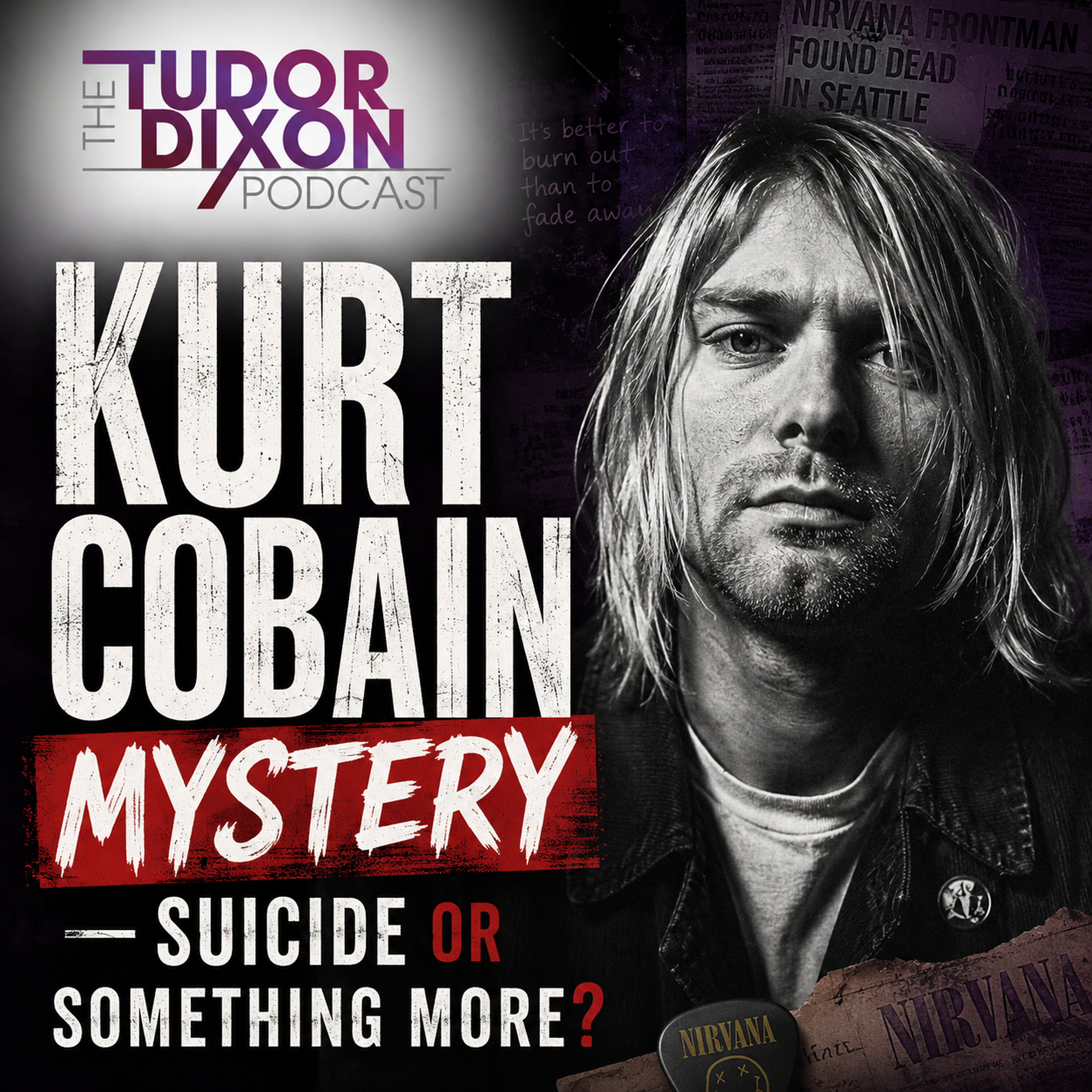
The Clay Travis and Buck Sexton Show
The Tudor Dixon Podcast: Murder? Kurt Cobain Didn't Kill Himself!
00:38:53
Loading summary
Transcript104 lines
- [00:00]
Sophia Donner
This is an iHeart podcast.
- [00:02]
GLP1 Drug Advertiser
Guaranteed Human let's take a minute to unpack the myths behind GLP1. Drugs GLP1 is a long term solution for weight loss true GLP1 can potentially be a long term solution for weight loss. If you want to be on a drug that changes your body's natural instincts, GLP1 can fix your metabolism. False GLP1s fix hunger and this leads to weight loss. But the GLP1s may actually slow down your metabolic rate as your body adjusts to consuming fewer calories. GLP1 leads to a loss of muscle mass True GLP1 can lead to a loss of muscle mass due to losing weight so rapidly that your body is pulling from both fat and muscle to make up for the energy gap from consuming so few calories. If you're looking for a natural GLP1 therapy, you should consider Metabolism Ignite. Metabolism Ignite is powered by plants and can help boost your natural GLP 1. Visit VeracityHealth Co to learn more. That's V E R A C I T Y Health Co and type in promo code IHEART for up to 65% off your purchase.
- [01:05]
Tutor Dixon
For 250 years America has been a bastion of freedom. And as we look ahead to the
- [01:10]
Alliance Defending Freedom Representative
next 250, we're reminded that freedom is ours to defend. Today, Alliance Defending Freedom stands in courtrooms across the country to protect those freedoms we cherish. Life, free speech, religious freedom, parental rights. These freedoms are at the core of who we are are as a nation and they must be preserved. ADF is approaching a critical fiscal year end fundraising deadline. Your support today helps ADF defend those freedoms so they may endure for many years to come. Every dollar you give will be doubled thanks to a special matching grant while funds last visit joinadf.com tutor or text tutor to 83848 to give today, sponsored
- [01:54]
Amazon Advertiser
by Alliance Defending Freedom, Amazon presents Laura vs Fruit Flies. Swarming your fruit and terrorizing your kitchen, these little freaks multiply at a rate that would make a rabbit say yo chill. But Laura shopped on Amazon and saved on cleaning spray, countertop wipes and fly traps. Hey fruit flies. Your baby boom ends here. Save the everyday with Amazon.
- [02:26]
Public Investing Representative
Support for the show comes from Public, the investing platform for those who take it seriously. On Public, you can build a multi asset portfolio of stocks, bonds, options, crypto and now generated assets which allow you to turn any idea into an investable index with AI. It all starts with your prompt. From renewable energy companies with high free cash flow to semiconductor suppliers growing revenue over 20% year over year. You can literally type any prompt and put the AI to work. It screens thousands of stocks, builds a one of a kind index and lets you back test it against the S&P 500. Then you can invest in a few clicks. Generated assets are like ETFs with infinite possibilities, completely customizable and based on your thesis, not someone else's. Go to public.com podcast and earn an uncapped 1% bonus when you transfer your portfolio. That's public.com podcast paid for by Public Investing Brokerage Services by Open to the Public Investing Inc. Member FINRA and SIPC Advisory Services by Public Advisors, llc. SEC Registered Advisor. Generated Assets is an interactive analysis tool. Output is for informational purposes only and is not an investment recommendation or advice. Complete disclosures available at public.com disclosures this
- [03:27]
Tutor Dixon
is the Tutor Dixon Podcast and just before we get into one of the most explosive episodes we've ever had that you are going to find very interesting, I need your attention for just 60 seconds. I want to talk to you about love, generosity and compassion. We say those words all the time. They sound good, they feel good. But here's the truth. Those words don't mean anything unless they turn into action. So right now you need to understand. Not later today, not tomorrow. There's a child in this world who doesn't know if they're going to eat, if they're going to have a chance to learn, if there's any hope for them at all. And while we're busy and while our life keeps moving, that child is waiting. And this is where you come in. With Compassion International, you have a chance to change a child's future. Not with words, not with promises, but with real help that provides food, education and hope through local churches and people already in their community. Put your words into action. Introduce a child to a loving Heavenly Father today@compassion.com. that's compassion. Com. Now I want to get into something pretty fascinating. Here we go. For those of you that don't know, I'm Generation X. So I am the generation of grunge music, and that was my jam. And I went through school in the whole era of wearing flannel shirts in big baggy pants, having a beeper, having the chain wallet, all of those things. So I got this email the other day that was like, turns out Kurt Cobain may not have killed himself. And I was like, what? I have got to talk to this guy. I've got to. So that is our whole episode today. We have got Richard Sarah with us today. He is the host of the Strange Planet podcast and a frequent voice behind coast to Coast AM deep dives into rock's most enduring mysteries. And this is one of them. Richard, thank you so much for coming on today.
- [05:24]
Richard Sarat
My pleasure. Tutor. Great to meet you. Thank you.
- [05:26]
Tutor Dixon
Oh, my gosh, it's so great to meet you. So, I just. A little bit. For those people who don't know, Kurt Cobain was the lead singer in Nirvana. He wrote the songs. He was a great songwriter. I mean, from my perspective, I know not everybody loved Nirvana, but for me, I grew up with this. I still listen to these songs. And his death was like this overwhelming shock to me. But then as I read about his life and it was not. I mean, he was a pretty chaotic person, right?
- [05:57]
Richard Sarat
Well, like a lot of musicians, certainly. I mean, he was filled with creative energy and, of course, was just, I think, overwhelmed by fame and, you know, being thrust into the spotlight, which really wasn't him. He never wanted to be called, you know, the voice of a generation. I don't think he was comfortable with the whole branding of the band, and really the whole music industry was just kind of contrary to. To his sensibilities. But there's so much misunderstanding about, I think, who Kurt Cobain was and what he was all about and what he was trying to do and ultimately what led to his demise. It's one of 16 chapters in the book, but it's in a section called Killer Riffs where I investigate or reopen the case, if you will, for four legends, including Jimi Hendrix and Elvis Presley, Kurt Cobain and Brian Jones, the founder of the Rolling Stones. But Kurt Cobain is certainly, I understand, an interest to a certain generation. The whole grunge thing was a little bit after, you know, I came of age, but I was still very appreciative of his talent.
- [07:10]
Tutor Dixon
I was. Well, Courtney Love was at the first Lollapalooza concert that I ever went to. It was. I was definitely a fan and. And I didn't really know his backstory, but as I was preparing for this podcast, I was reading, he was. He was this happy, go lucky kid. He was an only child, I think, an only child up until seven. I think it was seven when his parents divorced or somewhere when he was in his. When he was still in elementary school, when his parents divorced. And you can kind of see as you read about him, how that shaped his music, because he was sort of a loner at that point. Things kind of changed. He became really close with a young boy at school who was gay, and
- [07:51]
Alliance Defending Freedom Representative
he had Friends that were bullying him
- [07:53]
Tutor Dixon
because he was gay. And he became a real defender of the LGBTQ community. Community. So you see that in his music, too. And then you see that he became a defender of women. His mom, even though his mom seemed to also have a chaotic life, and he let. He ended up going to live with his father. His mom was in abusive relationships. And he sort of had this. You can kind of tell that he wanted a strong maternal figure in his life, but it seems like he never got that. And that sort of plays out in his music.
- [08:24]
Richard Sarat
Yeah, I suppose his formative years certainly informed his music. And a lot of people, I think, also equally important is that's why so many people identified him with him and only also that sort of. That genre of music and that teenage angst that came through Nirvana and his lyrics and his sensibilities, people identified with him. People, you know, wanted to know Kurt Cobain. They wanted to get close to Kurt Cobain. But I'm not sure Kurt Cobain was ready to give all of that back necessarily. And so, like many, many musicians, many people his age, you know, he's part of the Fang 27 Club. So many tragic deaths that seem to happen at that age when artists are at their peak, really. And it just coincides with so much pressure from their fans from the industry and that deadly cocktail mix of giving into temptation, drugs, alcohol. Although, as we discovered, he wasn't this the heroin addict that he was made out to be, which really.
- [09:36]
Tutor Dixon
Wait, how do you know that?
- [09:37]
Richard Sarat
Well, he used to joke about it in the media. He used to sort of play that up. He'd be asked about heroin and he used to say, oh, yeah, we shoot up. We use like turkey basters. That's how much heroin we use. He was being tongue in cheek. He was being sarcastic. Kurt had some physical ailments. He had some stomach issues that I believe was related to, I want to say scoliosis. I have to check back. It's been a while since I wrote that chapter. But he was in a lot of pain and it went undiagnosed for many, many years. And so until he got a proper diagnosis and got the actual medical treatment that he required, he did use heroin. He self medicated. He used heroin, which of course metabolizes in the body as morphine, to deal with that pain. Once he sort of took care of that medically, he was still using, but he was not this hopeless heroin junkie that he was made out to be and that so many musical artists were made out to be, like Jimi Hendrix and others, but particularly with Kurt Cobain. And that fact actually weighs very heavily in the sort of the final conclusion about how he died, where we're told it was suicide, but we'll get into that. But there are a lot of questions surrounding what happened to Kurt Cobain on April 5, 1994.
- [11:13]
Tutor Dixon
So that day he's like, it's kind of an interesting mystery that's surrounding him at that point, because he had been in and out of rehab. Courtney Love, they had their child, Frances Bean, she was just a young toddler at that point, correct?
- [11:31]
Richard Sarat
Yes, yes, he just. He absolutely was a devoted father, loved Francis Bean. Now, there was an intervention with Kurt Cobain, and there were members of the band Nirvana. Were there Courtney Love, was there some other sort of hangers on? Were there trying to convince Kurt to go into rehab. And he went begrudgingly. He checked into a rehab clinic in Marina del Rey, California, but then quickly checked out. And there's some confusion about the timeline. You know, what happened to Kurt Cobain in those days that he was supposedly missing. Courtney Love also had checked herself into at this almost the same time, into rehab in Los Angeles. And she hired. When Kurt sort of went missing for a period of time, she hired an investigator by the name of Tom Grant. And he sort of weighs heavily into this investigation as well a little bit later. But you know, what exactly happened to Kurt Cobain? Where did he go? Who did he interact with? Died April 5, but his body wasn't discovered until several days later, April 8. So there's a lot of confusion about the timeline. But yeah, he was in rehab for a short spell. I think he basically checked in, turned around, and checked out. And anyway, we'll get into what happens after that.
- [13:02]
GLP1 Drug Advertiser
Let's take a minute to unpack the myths behind GLP1 drugs. Myth number one. GLP1 is a long term solution for weight loss. True, GLP1 can potentially be a long term solution for weight loss if you want to be on a drug that changes your body's natural instinc. Myth 2 GLP1 can fix your metabolism.
- [13:19]
Alliance Defending Freedom Representative
False.
- [13:20]
GLP1 Drug Advertiser
GLP1s fix hunger. And this leads to weight loss. But the GLP1s may actually slow down your metabolic rate as your body adjusts to consuming fewer calories. GLP1 leads to a loss of muscle mass. True, GLP1 can lead to a loss of muscle mass due to losing weight so rapidly that your body is pulling from both fat and muscle to make up for the energy gap from consuming so few calories. If you're looking for a natural GLP1 therapy, you should consider Metabolism Ignite Metabolism Ignite is powered by plants and can help boost your natural GLP1. Visit VeracityHealth Co to learn more. That's V E R A C I T Y Health Co and type in promo code iheart for up to 65% off your purchase.
- [14:03]
Compassion International Representative
I need your attention for 60 seconds.
- [14:05]
GLP1 Drug Advertiser
Love.
- [14:05]
Compassion International Representative
Generosity. Compassion.
- [14:07]
Tutor Dixon
We say those words all the time.
- [14:09]
Compassion International Representative
They sound good. They feel good. But here's the truth. Those words don't mean anything unless you've turned them into action right now. Not later today. Not tomorrow. There's a child in the world who doesn't know if they'll eat, if they'll have a chance to learn, or if there's any hope at all. And while we're busy, while life keeps moving, that child is waiting. This is where you come in. With Compassion International, you have the chance to change a child's future. Not with words, not with promises, but with real help that provides food, education and hope through local churches and people already in their community. Put your words into action. Introduce a child to a loving Heavenly father. Today@compassion.com that's compassion.com Colorado is at it
- [14:53]
Alliance Defending Freedom Representative
again, trying to silence free speech A law in Colorado forces businesses to use customers preferred pronouns even if they're biologically inaccurate and even if those incorrect pronouns would violate a person's religious beliefs or conscience. That's a violation of free speech. But as Colorado has proved time and time again, it has little concern for the First Amendment. At Alliance Defending Freedom, they're challenging the law on behalf of a Christian bookstore and a Colorado based sports apparel company, but a court recently ruled against them with ADF's help. They appealed the ruling and they'll continue fighting to ensure Colorado doesn't get away with this next attempt to skirt the First Amendment. Your gift helps protect free speech in cases like this all over the country. And for a limited time, your first gift to ADF is doubled by a special matching grant while funds last text tutor to 83848 or go to joinadf.com tutor to have your gift doubled. Sponsored by Alliance Defending Freedom, Amazon presents Jamal vs.
- [16:00]
Amazon Advertiser
The Shih Tzu Descending from the Gray Wolf. Shih Tzus live by their own untamed primal code of not giving a single Shih Tzu. But Jamal shopped on Amazon and bought dog treats, chew toys and 32 ounces of carpet cleaner. Hey Jamal, you've been promoted to pack leader. Save the everyday with Amazon
- [16:27]
Tutor Dixon
so he gets out of he he. We think he checks out, he gets on a plane and he's flying home and.
- [16:34]
Alliance Defending Freedom Representative
And he was on the plane with
- [16:35]
Tutor Dixon
somebody I can't like, just by chance, I can't remember another band. And the guy said that he seemed off.
- [16:42]
Richard Sarat
Yeah. The musician from Guns N Roses. Yes. Is DUFF, Duff McKagan? Yes, I think it's Duff McKagan. Yeah, yeah, yeah. He seemed a little off for sure. But you know, he was in. He was in a lot of turmoil, I think.
- [17:02]
Tutor Dixon
I mean he's running from rehab, so he must have been a little off. Yes.
- [17:07]
Richard Sarat
And he's. There's also a lot of other things going on. Perhaps thinking about getting out of the music business entirely, which was. We'll get to the so called suicide note. And there's a lot of questions surrounding that as well. But in that note, note, in the first part of the note, he seems to be writing actually to his fans almost like a love letter and a so long to his fans, which is why it was interpreted as a suicide note. It seems like he's getting ready to get out of the business. He's had enough, or at least to step back from Nirvana and from fame and the machinations of the industry for a little while and maybe spend more time with his daughter.
- [17:52]
Tutor Dixon
Interesting, because as you kind of follow through his life, you see that you would think that that's what he wants is to make his music famous. But as it becomes famous, he gets frustrated with the fans. Like, this is. You're not about this. It's bigger than this. And he's kind of like, he doesn't want to be a sellout, I guess. I think that was a big deal when in my generation was like, is your band. Is the band you love going to become a sellout? And he didn't ever want that. It was more about the. He was very creat, was he drew, he was very artistic. And I don't think that. I don't think he wanted it to be huge like that exactly.
- [18:32]
Richard Sarat
In fact, I think he tended to. Or he came to a point where he was almost resenting some of the people that were showing up at his concerts, almost like they were being hypocrites or he just, as you say, this is not what he had envisioned when he formed the band and when he got into the industry. And then all of a sudden he became this voice of a generation and the record label got behind that and really pushed that and he absolutely hated that label and he didn't like the way that the band had been branded and marketed, and he just felt almost as if he was being hypocritical. And I think he was really conflicted with that. And, you know, I think he wanted to step back and, who knows, maybe hit the reset button.
- [19:20]
Tutor Dixon
Wasn't there a point when he tried to create a new band and they had, like, a new name, and some of the band members were a part of it, and then they put out some songs under a new name? It was almost like he was trying to escape what the fame that he had, which I think is always hard for people who. Especially fans, to understand. It's like. But isn't the point of making great music for everybody to hear and for them to enjoy? It's a hard. As a fan, it's a hard thing to comprehend. Well, what did you want to hide your talent?
- [19:50]
Richard Sarat
I don't know about the other band that he was trying to form, but I think artists are always conflicted by that. There is the business, and then there's the art. And unfortunately, or fortunately, that's just the way the music industry works. The people, the machine that gets behind you, they're looking for the commercial aspect of it, and if you want to be the artiste, that's fine, but they need to sell. They need to sell units, right? They need to sell vinyl. So, again, that was at the heart of the conflict, not only for Kurt Cobain, but, you know, this is just kind of one of those timeless stories in the recording industry, that conflict, that tension between fame and commercial success and selling out and, you know, the artistic endeavor and integrity, the integrity of the artist.
- [20:51]
Tutor Dixon
I think there was some torture in his life, too, over things, like I said, the friend that he had grown up with. There were oftentimes interviews where they asked him, are you gay? Even once he was with Courtney Love or when he had other girlfriends, they would say, are you gay? He wore dresses a lot and kind of like. And he was a very big champion of LGBTQ rights, as I said. I think that for him growing up and seeing that there was push back against his friend, he felt like as. And I'm. I'm guessing, but it seems like in his music, he felt like he had to stand for because he was bigger than life. At a certain point, he had to stand for those things in a way that other people couldn't. He did have a platform that it seems like he didn't understand how to use. He's very against racism, very pro women's rights, very pro LGBTQ rights. There was even a proposal in Oregon, which I now find funny, considering the politics in Oregon. But. And maybe this was him having an impact. And maybe today he would look back and go, look, I did change things because there was a proposal on the ballot that was going to have schools teach anti lgbtq, LGBTQ education. And he fought against that, and he came out against that. So you could see kind of this torture of trying to figure out, I have this platform, I feel passionate for these people, how do I fight for them? But you can see that being a huge responsibility, too. So you can kind of see that torture of conversations of suicide in between that massive responsibility and the Art Tudor.
- [22:35]
Richard Sarat
Where were you when I was writing this chapter? You are a font of information. I mean, I don't know a lot about that chapter in his life. I really focused on sort of, you know, the timeline, the days leading up to his. His death, and then all the contradictions surrounding the death scene and so forth. But you mentioned mental illness and suicide. There was certainly that in the family, I think, on both sides, his mother and his father's side. Some horrific examples I give in the book, a grandfather or an uncle. I think in one case, both took their own lives, which obviously that feeds into this, you know, the final conclusion that, yes, it was suicide and you had the suicide note and you had the shotgun and so forth. But despite all that, I think the evidence, and it's interesting, this is very timely because just a couple of months ago, a group of forensic researchers petitioned King county in where Seattle is in Washington, to reopen this case because, you know, they want to desperately, they want to present this evidence that it was not, in fact, suicide, that he met by foul play, perhaps murder.
- [23:51]
Tutor Dixon
So there, obviously, there were immediate conspiracies that this was not suicide. But there were some strange things that happened because they.
- [23:59]
Alliance Defending Freedom Representative
They released some Polaroids, but they had
- [24:01]
Tutor Dixon
film that they never developed in the case, and that has just recently, in the. The 2000s, come to light. It was, like, hidden. Why was that?
- [24:12]
Richard Sarat
Great question. There's a lot of things that were sort of, I think, ignored. And this is one of those repeating themes, I think, in the book, particularly in section three, killer riffs. When we look at whether it's Brian Jones, Jimi Hendrix, Elvis Presley, all of these things that were overlooked or ignored or dismissed outright. That's the common theme here. And it's certainly the case with Kurt Cobain, the death scene photographs, the lack of blood splatter. I don't mean to get too graphic here, but the official narrative is that he took his Own life. He took a shotgun, which he had just purchased days before. He took a friend to purchase the weapon because he. I'm not sure exactly. I can't remember now whether he had a previous conviction. He was unable to buy the weapon. A friend bought it for him. He said it was for protection. And there's some justification for that because he had also been buying security cameras. So that seems to tie in. In other words, he didn't necessarily buy the weapon to take his own life. He had security concerns.
- [25:19]
Tutor Dixon
You don't generally use a shotgun.
- [25:21]
Richard Sarat
Exactly. I mean, I'm not a hunter, but I have held a shotgun. And, you know, imagine trying to turn that around, put the barrel. And also, it wasn't just the barrel. He had a. It was a. Not a silencer, but there was something that is attached to the end of the barrel, which added another six inches to the length of the barrel. So imagine trying to place that in your mouth. Again, hate to get graphic. And then with your outstretched arm trying to pull the trigger. It just. It doesn't make sense. Can't be done, actually.
- [25:54]
Tutor Dixon
It's. So. Okay, so they. So for some reason, they come to the scene, they don't release the photos. They have a few Polaroids. They conclude that this is a suicide. As. As we are hearing more about this. Absolutely. That sounds. I mean, it sounds almost impossible, but in the midst of this, he has had multiple overdoses in his life. And. And so you. So if you're looking at this from the perspective of, like, who would want to hurt him, you could see how someone in the family would be frustrated. I mean, his wife had found him several times, OD'd, and had to revive him several times and take him to the hospital. But he also had so many death threats because of some of the things that he fought for politically. There was a group of religious fanatics that were after him because they didn't like that he was an LGBT supporter. They were after him because he had made these songs about God being gay.
- [26:55]
Alliance Defending Freedom Representative
So there were certainly potential suspects, lots of suspects.
- [27:02]
Richard Sarat
But I'll give you something to think about. If you're a fanatic and you want to murder Kurt Cobain, why go to the trouble of staging it as a suicide? If you're wanting to take out Kurt Cobain for political reasons, you're going to make it a political statement. You're going to murder him in cold blood, and you're going to let all the world see that you murdered him in cold blood. This was, according to, I think, the evidence, a Staged suicide. A staged death scene where it was made to look like a suicide. I want to talk a little bit about his heroin problem. He had, according to some forensic experts, about 10 times the lethal dose in his body. He supposedly injected himself three times. Of course, heroin quickly metabolizes to morphine in the body. Ten times the legal limit or not the legal limit, the lethal limit. That would render someone unconscious within seconds and then they would die shortly after. If you're going to commit suicide, why would you overdose and then place a gun in your mouth? Then, after taking three injections of heroin, he had the. The wherewithal, the ability to carefully place the caps back on the syringes, place them carefully in his drug paraphernalia kit, and tidily put that aside. Again, doesn't make sense.
- [28:43]
Tutor Dixon
So then what? So you said there's not a lot of blood at the scene, so set that up for us. So this is what leads up to it. We're supposed to believe that he was high as a kite but didn't o. D and then decided to kill himself. But you're saying doesn't seem likely.
- [29:02]
Richard Sarat
No, it doesn't seem likely. Unless, of course, he was murdered and he was given this lethal dose of heroin and then expired, and then someone took the weapon and stuck it in his mouth and shot him to make it look like a suicide.
- [29:18]
Tutor Dixon
And this happens in, like, the greenhouse of his home, correct?
- [29:22]
Richard Sarat
That's right. It's a greenhouse above the garage at the house. He was discovered by an electrician.
- [29:28]
Tutor Dixon
Courtney love is in rehab at this time, isn't she?
- [29:31]
Richard Sarat
She is, yes. Well, Tom grant, who was initially hired by Courtney, kind of suggested afterwards that that timing was rather propitious, that she would check herself in to a rehab clinic at the same time that this is all happening. And again, these are alle. Nothing has been proven in court. She's denied all any wrongdoing and any connection with his death. So, you know, I want to make that perfectly clear. They're simply allegations. Nothing has been proven in court. But Tom Grant and others have made the suggestion that she gave herself an alibi by checking into the rehab center. And then she hires a private investigator, you know, to try and find Kurt while he's on the lam from the rehab clinic, if you will.
- [30:18]
Compassion International Representative
Hmm.
- [30:19]
Tutor Dixon
Had she ever done. Had he ever gone missing before?
- [30:26]
Richard Sarat
I don't recall if he had. Certainly not in this. In the period that I was focusing on in the book.
- [30:33]
Tutor Dixon
It doesn't seem like it. From what I've read, it seemed pretty out of character when he suddenly goes missing. And he goes missing April 1st is when he gets on the plane. Right. And then he. So he's essentially missing for days. From the band members at. There's some question in the media, did the band break up? They're talking about canceling their upcoming appearance at Lollapalooza, which they obviously had to do because he was deceased. But they didn't know. The band members didn't know at that point. Correct.
- [31:05]
Richard Sarat
That's my understanding. They were just in the dark as anyone else was as to where he was. Except later it came out, of course, that Duck McKagan from Guns N Roses Head had been with him on the plane. And other than that. Yeah, it's just kind of a massive confusion. That timeline is so important. Whether we'll ever be able to piece that together, I don't know.
- [31:28]
Tutor Dixon
So from April 1st to April 5th, is Courtney with him at all or she just is in rehab?
- [31:34]
Richard Sarat
No, she's in Los Angeles. She's sort of back and forth between a. I'm not sure if she was staying at the Beverly Hills Hotel. Sort of back and forth between the hotel and rehab.
- [31:46]
Tutor Dixon
So are they not living together at this point?
- [31:48]
Richard Sarat
Not at this particular point, no.
- [31:51]
Tutor Dixon
How was that relationship?
- [31:54]
Richard Sarat
Great question. Rosemary Carroll was Courtney's. Well, the attorney for both Courtney and Kurt and Rosemary Carroll and Tom Grant, the investigator that was hired by Courtney. They shared some conversations, and either Rosemary or Tom Grant recorded some of those conversations. They came to light a little bit later. It seems as if Kurt was in the process of changing his will, which becomes kind of an interesting artifact in this whole case. Changing his will, wanting all of the money to go to Francis Bean, his daughter. He never signed it before he died, so it didn't take effect. Had he signed it, all of his money would have gone to. And his future royalties, all of that would have gone to Francis Bean.
- [32:52]
Tutor Dixon
So they had kind of a whirlwind relationship. They fell in love, she gets pregnant, they get married. People are telling her, don't marry him. She's like, I'm in love with him. This is going to be the best decision I've ever made. They get married. Obviously, it's a tumultuous relationship. He's. They're both taking drugs. They have this baby. The police show up at their house and say they don't think they can take care of the baby. I mean, this is like a high stress relationship and a lot of emotions going on. But finding out that he wants to change his will, that he's do. He's in the midst of this. It does make you go, okay, there's. There's been a turn. There's. There's a situation where these two are no longer okay together. He goes to rehab, he leaves, he gets on a plane, he goes back home, mysteriously ends up dead a few days later. But his body doesn't. It doesn't look like he died really from a gunshot wound. It's like his death is more consistent with oxygen deprivation. Do you think that, I mean, does that have to do with the not. No blood spatter. And do you think that someone strangled him?
- [34:10]
Richard Sarat
That actually didn't come up. In the investigation of the researchers, Rich Lee was someone I leaned very heavily on. Rich Lee is a Seattle sort of veteran independent researcher, investigator. He was camped out the Cobain home, like within hours of the announcement of Kurt's death or the discovery of his body. He formed this, or he began this local cable access channel shortly thereafter and just dedicated the entire show, week after week to investigating this case. So that didn't come up in conversations with Rich Lee or some of the other authors I talked to them about. But the lack of blood splatter, the lack of fingerprints on the weapon, again, and the unlikelihood that he would have been able to maneuver that weapon not only in his state, had he been under the influence of heroin in any state, anyone wouldn't have been able to manage that weapon, turn it around and place it in their mouth and reach the trigger. But this lack of blood splatter keeps coming up. It just, it's just surreal to think that someone would be able to stick a barrel of a shotgun in their mouth. I mean, the exit wound alone would just be massive. You know, again, hate to get graphic. Brain splatter. Where's the brain splatter on the wall? None of that. None of that.
- [35:40]
GLP1 Drug Advertiser
Let's take a minute to unpack the myths behind GLP1 drugs. Myth 1 GLP1 is a long term solution for weight loss. True. GLP1 can potentially be a long term solution for weight loss if you want to be on a drug that changes your body's natural instincts. Myth 2 GLP1 can fix your metabolism. False. GLP1s fix hunger. And this leads to weight loss. But the GLP1s may actually slow down your metabolic rate as your body adjusts to consuming fewer calories. GLP1 leads to a loss of muscle mass. True. GLP1 can lead to a loss of muscle mass due to losing weight so rapidly that your body is pulling from both fat and muscle to make up for the energy gap from consuming so few calories. If you're looking for a natural GLP1 therapy, you should consider Metabolism Ignite Metabolism Ignite is powered by plants and can help boost your natural GLP 1. Visit VeracityHealth Co to learn more. That's V E R A C I T Y Health Co and type in promo code iheart for up to 65% off your purchase.
- [36:41]
Compassion International Representative
I need your attention for 60 seconds. Love, generosity. Compassion.
- [36:46]
Tutor Dixon
We say those words all the time.
- [36:47]
Compassion International Representative
They sound good. They feel good. But here's the truth. Those words don't mean anything unless you've turned them into action right now. Not later today, not tomorrow. There's a child in the world who doesn't know if they'll eat, if they'll have a chance to learn, or if there's any hope at all. And while we're busy, while life keeps moving, that child is waiting. This is where you come in. With Compassion International, you have the chance to change a child's future. Not with words, not with promises, but with real help that provides food, education and hope through local churches and people already in their community. Put your words into action. Introduce a child to a loving Heavenly father today@compassion.com that's compassion.com Colorado is at
- [37:32]
Alliance Defending Freedom Representative
it again, trying to silence free speech. A law in Colorado forces businesses to use customers preferred pronouns even if they're biologically inaccurate and even if those incorrect pronouns would violate a person's religious beliefs or conscience. That's a violation of free speech. But as Colorado has proved time and time again, it has little concern for the First Amendment. At Alliance Defending Freedom, they're challenging the law on behalf of a Christian bookstore and a Colorado based sports apparel company, but a court recently ruled against them. With ADF's help, they appealed the ruling and they'll continue fighting to ensure Colorado doesn't get away with this next attempt to skirt the First Amendment. Your gift helps protect free speech in cases like this all over the country. And for a limited time, your first gift to ADF is doubled by a special matching grant while funds Last Text Tutor to 83848 or go to joinadf.com tutor to have your gift doubled. Sponsored by Alliance Defending Freedom, Amazon presents Jamal vs.
- [38:39]
Amazon Advertiser
The Shih Tzu Descending from the Gray Wolf. Shih Tzus live by their own untamed primal code of not giving a single Shih tzu. But Jamal shopped on Amazon and bought dog treats, chew toys and 32 ounces of carpet cleaner. Hey, Jamal, you've been promoted to pack leader. Save the everyday with Amazon.
- [39:06]
Tutor Dixon
So it seems like he's already dead at this point when the gunshot.
- [39:11]
Richard Sarat
I think that is a very reasonable assumption, yes.
- [39:16]
Tutor Dixon
So what's the theory on what happened?
- [39:18]
Richard Sarat
The theory is that. That someone gave him a lethal. Lethal heroin injection or injections, and he succumbed. And then they staged the death scene.
- [39:32]
Tutor Dixon
Why?
- [39:34]
Richard Sarat
Why? Well, one motive is the will. The other interesting thing is the suicide note or the supposed suicide note that was found, sort of. Someone took a red pen and stabbed it into a flower pot. Into the soil of a flower pot. That's where they discovered the note I mentioned. The first part of the note is consistent with Kurt's handwriting. And it seems as if he's saying goodbye, but probably to his fans, talking about his dissatisfaction with the music industry and fame and all of the rest. The last part of the note is where it gets interesting. I come back to Rosemary Carroll, the attorney, and Tom Grant, the investigator. They spoke back and forth. There were recorded conversations about Courtney Love in her handbag or her rucksack. They found samples of handwriting. It appears, allegedly, that Courtney was attempting to practice writing in Kurt's hand.
- [40:48]
Tutor Dixon
That is crazy.
- [40:50]
Richard Sarat
So did Courtney Love finish off the rest of that letter and make it sound as if he was actually not just saying goodbye to his fans and the music industry and Nirvana, but he was saying goodbye to Courtney and Frances Bean?
- [41:04]
Tutor Dixon
Well, because that part looks very much added at the end. Yes, exactly. So if you see the note, the note, the writing, the handwriting is tiny and very consistent in a long rectangle down the page and. And then at the bottom of the page, where he addresses Francis Bean, it's crooked and it's bigger, and it just seems. It seems very much like it was added.
- [41:31]
Richard Sarat
Yeah, that's problematic, isn't it? Very problematic. I mean. And that letter has been poured over by a number of handwriting analysts, and they all come to the same conclusion. That latter portion of the letter was not written by Kurt Cobain.
- [41:48]
Tutor Dixon
Why would the police cover that up, though? I mean, why? Because you also think about the mindset of the people around him are all, there's a lot of drug use that. That I could see someone doing that in that letter and going, yeah, that looks good enough. Because they're a little off as it is. They're. They're taking drugs and they're. And. And think of the stress of this moment, thinking they've just killed this amazing person who is a huge part of their life, but a troubled person as well, why did the police not go into this deeper?
- [42:25]
Richard Sarat
Well, that's a great question. And again, that's another common theme. This book is based on a podcast I did called the Rock and Roll Twilight Zone. I did it, like 40 episodes. And that, you know, unwillingness of the police to pull on certain threads, to, you know, to dig a little deeper is very common. For example, in the mid-1960s, there was an artist by the name of Bobby Fuller, the Bobby Fuller 5. He was out of Texas, and he was found, his body half burned in a car in a parking lot outside his hotel. Again, rush to judgment. There's lots of evidence that Bobby Fuller was met foul play. They ruled it a suicide. And there just seems to be this, I don't know, this archetype that the police and authorities have. Young musician, he's dabbled in drugs. They put two and two together, and they get 37. They just. It's a very common theme that runs, you know, throughout rock history with young artists dying, ruled a suicide despite overwhelming evidence or certainly, you know, compelling evidence that they met with foul play. That's what happened, I think, with Kurt Cobain as to why they overlooked this, you know, the suicide note. Despite forensic analysis, the fact that he had this amount of, you know, morphine coursing through his veins, was probably incapable of handling a rifle. Why? I don't know. Did someone get to them? I can't prove that. Did someone have, you know, influence? Did someone have someone inside the King County Police Department? I can't say that definitively, but again, it's a great question. It doesn't add up.
- [44:15]
Tutor Dixon
So you think that the case will be reopened?
- [44:18]
Richard Sarat
King county is saying no at the present time. They say unless we get compelling evidence. I don't know what kind of compelling evidence they're looking for. Outside of a confession? Outside of a confession. And speaking of confession, there was a local sort of, I don't know, punk metal artist who went by the name of El Duce. And he was featured in a documentary about Kurt Cobain after Cobain's death. And El Duce claims, allegedly, that he was approached by Courtney Love. And Courtney Love asked El Duce to kill Kurt Cobain and that she would pay him X amount of dollars. And he thought she was bluffing. And he said, are you kidding me? He said. He claims Courtney Love said, quote, end quote, I'm as serious as a heart attack.
- [45:15]
Tutor Dixon
Wow, that is wild. So you have a book of multiple stories like this.
- [45:22]
Richard Sarat
That's one of 16. Section three is all about artists who Died mysteriously, including Brian Jones. Elvis Presley. No, Elvis isn't alive and flipping burgers in Kalamazoo. He died. He did indeed die on the bathroom floor in Graceland. The question is, did he die of a heart attack, drug overdose, or was he also in fact murdered? That's a very compelling chapter, I think. A lot of information that came forward and that one really surprised me. Jimi Hendrix. The official story is he aspirated on vomit after overdosing on barbiturates. There's a lot of serious questions surrounding his death. His relationship with his manager, Mike Jeffrey, who was former MI6. Their contract was expiring soon. Mike Jeffrey was indebted to the Mob. He had a lot of pressure. Jimmy was hinting that he wasn't going to renew that contract. So there is a possible motive. Those are four of the chapters. But I also get into sort of the occult and legends of curses and the fabled bargain with the devil at the crossroads, selling one's soul to the devil. The first section of the book is all about the Beatles. The Beatles Enigma. Were the Beatles in fact this organic cultural phenomena that just washed ashore in North America in 1964? Or was there a machinery behind the Beatles? For example, the Tavistock Institute, the British Crown, if you will, in order to attempt to corrupt America's youth, seduce them, and sort of an attempt by the British Empire to retake the American colony, as strange as that may sound. The British Invasion, as it was called at the time, may have in fact actually been a British Invasion.
- [47:22]
Tutor Dixon
That is great. Okay, so what's the book? Where do we get this book?
- [47:26]
Richard Sarat
The book is available for pre order. It comes out on July 9, but you can pre order from Amazon, Barnes and Noble or directly from the publisher, Trine Day. T R I N e day. All one word.
- [47:37]
Tutor Dixon
Tryinday.com and what is the title?
- [47:40]
Richard Sarat
It's called Tales from the Rock and Roll Twilight Zone.
- [47:44]
Tutor Dixon
Tales from the Rock and Roll Twilight Zone. So this is fascinating. Honestly, I had never really done a deep dive into Kurt Cobain. I think we at the time, obviously that was my generation. We were truly all like, how could this have happened? But there was a story like, oh, he had talked about suicide before. So it was like it was a logical conclusion. At the same time, so many people were like, how he. The. The real question was he was also known as this guy who genuinely loved his daughter. Like of rock and roll stars. He was really adored Francis Bean. So it was like it didn't make sense. And now hearing this, I'm like, oh,
- [48:29]
Alliance Defending Freedom Representative
my gosh, he didn't kill himself.
- [48:33]
Richard Sarat
I think that's the case. I think that's the case. I think Kings county needs to reopen this investigation.
- [48:39]
Tutor Dixon
Absolutely. Oh my goodness. Richard Sarat, it's been amazing talking to you. I've really enjoyed this. Thank you so much for being on the podcast.
- [48:47]
Richard Sarat
My pleasure. Tudor. Thank you.
- [48:48]
Tutor Dixon
Absolutely. And thank you all for listening to the podcast. Share this one this one's a good one. You can get it at anywhere you get Your podcast, the iHeartRadio app, Apple Podcast, Rumble, or YouTube. This is a very interesting story. You'll want to tell your friends about it. So please share the Tutor Dixon podcast and have a blessed day.
- [49:11]
GLP1 Drug Advertiser
Let's take a minute to unpack the myths behind GLP1 drugs Myth number one GLP1 is a long term solution for weight loss True GLP1 can potentially be a long term solution for weight loss if you want to be on a drug that changes your body's natural instincts. Myth 2 GLP1 can fix your metabolism False. GLP1s fix hunger and this leads to weight loss. But the GLP1s may actually slow down your metabolic rate as your body adjusts to consuming fewer calories. GLP1 leads to a loss of muscle mass True GLP1 can lead to a loss of muscle mass due to losing weight so rapidly that your body is pulling from both fat and muscle to make up for the energy gap from consuming so few calories. If you're looking for a natural GLP1 therapy, you should consider metabolism Ignite Metabolism. Ignite is powered by plants and can help boost your natural GLP 1. Visit VeracityHealth Co to learn more. That's V E R A C I T Y Health Co and type in promo code iheart for up to 65% off your purchase.
- [50:12]
Bare Knuckle Fighting Championship Promoter
This January Bare Knuckle Fighting Championship takes over the ocean. The inaugural Bruise Cruise sails for Miami Miami to the Bahamas aboard the Norwegian Jewel. Three straight days with pool deck bare Knuckle fights in the Caribbean, massive parties, beach events, DJs, cigars, tequila tastings and non stop action. The lineup reveals coming soon. Cabins are disappearing fast and the prices won't stay this low. Reserve your spot with just 200 down@bkfsea.com
- [50:42]
Reynolds Kitchens Advertiser
Ever wonder how to make hosting look effortless? Here's a secret getting ahead of the mess with new Reynolds Kitchens countertop prep paper. Just lightly wet the counter beforehand so the paper grips and stays in place. Then lay down the Reynolds Kitchen's countertop prep paper so drips and spills stay on the paper, not all over your kitchen counter. You can roll out dough, prep a party spread or cook alongside family. When you're done, cleanup is as simple as lifting the paper and revealing that clean counter underneath. Effortless. You can use it for cooking and baking, prep and even crafting, especially when you need extra working space. Because when the mess is already handled, you can focus on what matters the food, the people, and the moment. It may look effortless, but now you know. It's Reynolds Kitchens Countertop Prep paper Paper. Take a tip from me. Wet it, set it, prep it. Done. Make it easy. Make it with Reynolds Kitchens Countertop prep paper. Available now in the Reynolds Wrap aisle in Walmart, Target, Amazon and Costco.
- [51:54]
Sophia Donner
This is Sophia Donner from OK STORYTIME this summer. Find your next obsession on Prime Video and listen. We're not saying you need another obsession, but there could be a lot worse 1. Steamy romance, addictive love stories, and the book to screen favorites you've already read twice, so why not watch them a third time? Off campus? Elle, the Love Hypothesis and more Slow burns, Second chances chemistry you can feel through the screen, and it makes you wish you were actually in that movie. We've got binge worthy series can't miss movies perfect for when you're ignoring your own problems or procrastinating as one does. Your next obsession is waiting. Watch only on Prime.