← The Clay Travis and Buck Sexton Show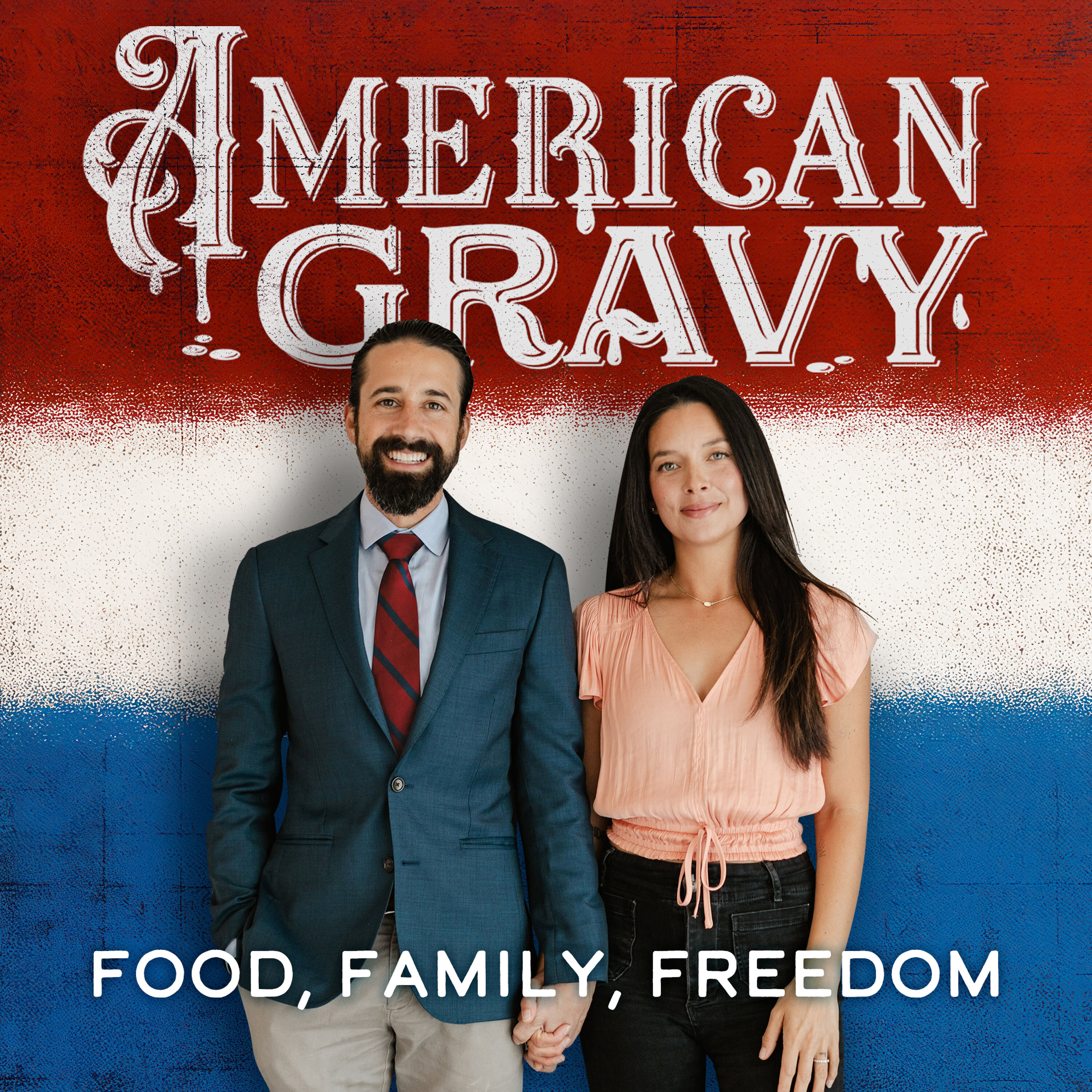
Loading summary
Transcript194 lines
- [00:03]
A
And we're back with another episode of American Gravy. I'm chef Andrew Gruel.
- [00:07]
B
And I'm Lauren Grulle.
- [00:08]
A
And if you listen to the first episode, you know what the format of this show is. But just so you know, we're gonna be covering food topics. Politics, family, freedom, everything in between. This is really just good old husband and wife couple. We're both chefs. We like talking about food. We got kids, we've got restaurants. And here we are.
- [00:24]
B
Here we are. We are back.
- [00:26]
A
I guess you could also say I'm a politician. I am a Huntington beach city councilman.
- [00:30]
B
He is, and I'm so proud of him.
- [00:32]
A
She said that through gritted teeth. It is not even funny. The one thing that you learn when you're on, like, city council is that so in the public comment section of city council meetings, you have to sit there and take it for three minutes. You are not allowed to respond to anybody. They could walk up to the mic and say absolutely anything. Actually, there was a story that went viral from California last week where the lady walked up to the mic and just started taking her clothes off. Did you see that? Yeah, it was in response to, like. It was a. I mean, it was a trans issue. She was, like, trying to make a point about why was her.
- [01:03]
B
Why were her clothes coming off?
- [01:04]
A
I don't know. She's like, if you can see naked people in rest bathrooms or something, I don't understand the full point. She was even a little loopy, but I thought it was pretty.
- [01:11]
B
She didn't even understand.
- [01:12]
A
I think it was emblematic of how crazy these city council meetings have gotten. We didn't plan on talking about this, but city council meetings have become, especially in the open comments section, have become like the old poetry slams, the open mic nights of the 80s and 90s.
- [01:25]
B
Oh, for sure. You should see some of the people that come to these HB city council meetings and what they say. So half of it doesn't even. It's not even Huntington beach related.
- [01:36]
A
No. It makes absolutely no sense. And actually, I mean, this is a bipartisan thing. I think it's. People realize that they've got three minutes that they can get a clip and they can go viral. And so they're using this, and you're having, like, actors and people come in and do funny things. Alex Stein, really?
- [01:50]
B
Who's hilarious.
- [01:51]
A
He is hilarious. But Alex Stein, you know, he'd been working. He's a comedian, and he'd been working on shows and all this stuff, and then suddenly Covid hits and he makes city council meetings his platform. And it's.
- [02:02]
B
It worked.
- [02:02]
A
It is absolutely hilarious. So, in any case, if you want to watch some of our content, you can tune into Huntington Beach City Council meetings every. The first and third Tuesday of every single month. Just watch the public comments section. It's hilarious.
- [02:14]
B
So funny.
- [02:16]
A
And like I said, I learned things about myself I didn't even know I love when I sit up there and they're like, you're bought and paid for. I'm just waiting for the. Where did I miss.
- [02:23]
B
Where's the paycheck, Andrew?
- [02:25]
A
Where is the. You know, the other day there was. After the city council meeting, the next morning, there was a knock on the door, and I opened the door, and there was a white envelope on the. On the mat. And I'm like, this is it. I'm finally getting my envelope full of money. We're. We're late on the utility bill. That's what it was. All right, well, back to food, back to politics, back to all the good stuff. Well, we're already in politics, I guess. So. The story this week that caught my eye, one of them was this global food commodity price shift. So the UN's Food and Agriculture Organization, which is known as the FAO, they reported that global food prices fell in September. All we've been hearing about is how food prices have gone up and up and up, but global food prices fell. Well, guess what they're using to gauge the decrease in those prices.
- [03:10]
B
What?
- [03:11]
A
Can you take a guess? Sugar, wheat flour, some dairy products. But guess what did not fall? Meat.
- [03:19]
B
And actually had the highest recorded or so far is meat.
- [03:25]
A
So one of the points that I've been making over the past decade is how there is a. This is not a conspiracy. There is a motivation to decrease our meat consumption. Now, typically, that's under the guise of environmentalism because of the theoretical carbon output of cattle farting, methane, the way in which they interact with local environments. I have always been a huge advocate of regenerative farming. I've said that farmers and ranchers are stewards of the environment and that when you're properly catt. And you're moving your herds around and, you know, you fallow some land, which is where you lay it, let it lay dormant. But by eating and grazing and walking, they're actually improving the soil health as opposed to stripping it all away and growing like one of our monocrops in place of it, where it's treated with a high amount of chemicals and fertilizers and pesticides, primarily glyphosate et cetera, which ruins the soil health. The soil health is ultimately the health of our environment.
- [04:24]
B
Right. And I don't think people realize that.
- [04:26]
A
So when I saw this report about how all these other prices are coming down on the junk products which create the byproducts that are making us sick and leading to the chronic disease, things like seed oils that come from the soy and that come from all of the corn, high fructose corn syrup. I mean, we only grow, like, four major crops here in the United States. Wheat, soybean, corn, and Cheetos.
- [04:48]
B
And hot cheetos.
- [04:48]
A
And hot cheetos. That's the fourth crop. Right. And that's known as monocropping. So in the 1920s and the 1930s, coming out of the Dust bowl in the Great Depression, the US Government and the USDA at the time said, you know what? We need to give farmers a lot of money. We need to subsidize them growing some of these staple crops. And they realized that in order to get the money from the government and to aggregate our food system, they needed to remove the biodiversity of crops that they were growing, right? The hundreds of different varieties of certain types of fruits and vegetables, and ultimately also raising meat, sheep, cattle, you name it. And instead, if they wanted to really suck on that government teat, then we needed to grow one of these four crops. And you saw this mass consolidation of our farm in the United States, and all of those products are ultimately the byproducts that end up in our food system. And that's why we have so much inflammation in our bodies, is because of the Omega 6 to Omega 3 imbalance, because we eat so many of these omega sixes because they're byproducts of these ingredients. Sorry, Lauren fell asleep there for a second. I went off on a little bit of a tangent. But there is a global initiative in order to continue to globalize our food supply. And the protein that they want us to eat, they want us to develop in labs. This is a fact. This is not conspiracy. And I think that there's some credence to innovation in food. But when I see reports like this and I hear about how expensive beef is and we need to eat less meat because it's not just expensive to our wallets, but it's expensive to the environment, people. What you need to realize is the reason why meat is expensive is because it's not being subsidized. The reason these other products are cheap is because they're being subsidized. And that's not taken into consideration in these reports.
- [06:35]
B
Right. I mean, there is some sort of, like, supply and demand issue, though, because I feel like a lot of people are consuming more beef than they have before.
- [06:43]
A
Bingo. So I see the silver lining in this report. That's a great point you make, Lauren. She's my little macro economist over here. Is that there is less of a demand for a lot of these bad products, and therefore you're going to have higher supply because lower. Right. Supply, demand, basic 101 macroeconomics. 101, Lauren.
- [07:01]
B
Yes, yes.
- [07:02]
A
We maximize our profits at the cost at which marginal cost equals marginal utility.
- [07:06]
B
I don't know what this is, what he does to me. He trips me up. Just let me say supply and demand.
- [07:12]
A
Okay. Yeah, I like that. It was better. So that was an interesting food headline, and I think that that's really something that we need to follow closely. Is this supply and demand curve. The second that I saw this week, which, you know, let's just say it chapped my elbows. I don't want to say it chapped anything else. We don't want to be gross here. Shoot. Lauren, give it to me.
- [07:35]
B
Oh, yes. Chelsea Clinton's podcast.
- [07:38]
A
Chelsea Clinton has come up with an anti Maha podcast.
- [07:41]
B
It's literally. It's everything against Maha.
- [07:45]
A
Yep.
- [07:45]
B
Anything that Maha has been talking about, she's against.
- [07:49]
A
She's against it. And she's actually suggesting this is where everyone always goes. I love this, like, hyperbole that when there's a movie movement, and perhaps it is somewhat related to bringing back individual liberties, like making food choices for yourself and breaking from the aggregated supply chain of food that's making us sick. And suddenly it's, get this dangerous.
- [08:11]
B
So dangerous.
- [08:12]
A
It's a threat. It's dangerous. You know, it's fascist food. And that's what she went into. She suggested that RFK and President Trump want to harm children by pushing these Maha points.
- [08:24]
B
Oh, and also she suggested that it's dangerous to suggest that it's better for mothers to raise their kids instead of a daycare.
- [08:31]
A
Yes. That is a big debate recently. Is that is it healthy to be staying at home for women and raising their kids? Listen, I can't touch on that.
- [08:42]
B
I can speak on that because I work, but I also have, you know, the privilege to stay home with the kids. And I will say, when I was working a lot during, I think it was Jack, he's seven now, I felt so sad that I couldn't be with him because I'm like, I'm his mom. I should be with him. So I don't know where she's coming from to suggest that. And I think, you know, they want to say that it's, you know, it's, I don't know, bad for the woman to stay home because it makes her oppressed. Is that the word?
- [09:15]
A
I have no idea.
- [09:16]
B
Fancy word they're using.
- [09:17]
A
I'm not using any of those words. Don't cancel me.
- [09:20]
B
No, I'm just saying, I just, I feel like you can't say that because then women start questioning their self and their worth and are they doing enough for the family unit. And I think staying home with your kids is the hardest job you can have. Because sometimes, you know, if Andrew's on the road or something and I'm home alone, I'm. I'm like, holy crap, this is so tough to be home with them, like 24 7.
- [09:41]
A
It is funny how like, and I've even heard men, you know, talk about it and they're like, oh, well, you get to stay home, you know, during the day and just watch tv, whatever. Okay. Sometimes Lauren and I will trade off because Lauren's a trained chef. She runs the restaurants with me. People don't realize that is, that's the two of us. We've opened over 40 restaurants over the past 10 years together. Arm in arm, hand in hand. Hand in hand. I was about to go into a song. She usually puts her hand in my back pocket in the kitchen. It's very unsanitary. But the HR department, sometimes I will be at home with the kids and they are running me ragged. And I'll just text her, I'll be like, can I please come to work?
- [10:17]
B
Yeah. He's like, can we please swish? Can I go to the restaurant?
- [10:20]
A
Yeah. And she's bounc around, you know, she's running a $10,000 lunch hour expoing and dealing with angry customers and coordinating everything, flipping bottles, making drinks. It's like an episode of Cocktail. She's my little female Tom Cruise. And she's like, no, I'm good.
- [10:33]
B
Yeah, it is hard. I will say that being a stay at home mom is the hardest job in the world. It really is.
- [10:39]
A
But who is Chelsea Clinton to tell us that whatever women want to do, the decisions that we make. Do what you feel feels right for you.
- [10:46]
B
Exactly. Because I know some moms, like, I talk about this with my girlfriends, and sometimes you're a better mom when you're able to step away from your kids. And that might sound weird, but not stepping away from them, meaning, like, you have, you know, a couple hours to yourself. You come back, you know, refreshed and recharged and, you know, ready to tackle on the rest of the day.
- [11:03]
A
Yeah, well, usually what I do is, is that I will lock the kids in the closet for a little while. That's totally fine. Right?
- [11:08]
B
Don't say that on.
- [11:10]
A
I don't do that. I do not do that. First of all, we have huge closets. Actually, we don't. We have small closets. We don't have closets.
- [11:17]
B
We actually don't have closets.
- [11:18]
A
Yeah, we don't have closets.
- [11:20]
B
Very weird.
- [11:21]
A
We don't have closets and we don't have cabinets. Everything is wide open.
- [11:24]
B
We have.
- [11:24]
A
We're real open family.
- [11:25]
B
We have one closet.
- [11:26]
A
Yeah, I know. And I do sleep in that closet sometimes. I also. I sleep in a drawer. Did you know that Costco dropped a new calzone?
- [11:34]
B
I did not.
- [11:35]
A
Yeah, Costco dropped a new calzone. I think in. What is it about Costco's food?
- [11:40]
B
I don't know. It's so good. The pizza, everything.
- [11:43]
A
And we know, once again, back to our original point, that's not great for you. We know it's not good for you. Like, we're all going to indulge sometimes in this food. I don't think that the junk foods that we become addicted to actually taste good. After eating well for years and understanding what real food tastes like, a lot of that fake, highly processed synthetic food leaves me an acrid and bitter taste in my palate. But there is something about the ooey, gooey, meltingly tender bite of a Costco chicken bake that, like, I can take one or two bites. It really is memorable.
- [12:15]
B
It really is. It really is. Also, can I just touch on this? I saw something the other day that was absolutely crazy. This lady bought. Bought a fountain drink, but she was refilling it over and over again and then like, filling up a Gatorade jug. Like, you know, those big ones, like.
- [12:31]
A
The sports games, the like 5 or 10 gallon ones.
- [12:33]
B
So she was refilling her cup over and over and throwing it into the Gatorade. She was probably on her way to her kids, like, baseball game or something. And I'm like, I don't know if that's genius or like, well, first of.
- [12:45]
A
All, why is she bringing soda to a kid's sports game?
- [12:47]
B
I think she was actually filling up Mountain Dew, I'm pretty sure.
- [12:49]
A
Mountain Dew, that's good. Ooh, I haven't heard Mountain Dew for a while. You know, the only people that drink Mountain Dew nowadays are crackheads and kitchen cooks.
- [12:55]
B
Why is it?
- [12:56]
A
I don't know.
- [12:57]
B
I actually heard something about Mountain Dew the other day. I think it was like meant for a chaser for whiskey.
- [13:02]
A
Oh, see, I thought that Mountain Dew originally was antifreeze.
- [13:05]
B
I don't know.
- [13:06]
A
I like Mountain Dew.
- [13:07]
B
We gotta study Mountain Dew.
- [13:08]
A
Yeah, I actually like Mountain Dew. We'll talk about that on the next episode. We'll get into the scientific formula of Mountain Dew and why crackheads love it. So go check out Costco's new calzone and give us a little bit of your feedback. The point about the soda is really interesting because I think a lot of people think in food service operations or retail operations that people make their money on soda. How many times have you heard that? Like, well, you make your money on the soda. That is not true.
- [13:32]
B
People don't realize that our soda is like 250 and they're refilling like three times.
- [13:37]
A
A lot of the larger.
- [13:38]
B
Do you know how expensive the bibs are?
- [13:40]
A
They're bibs now, which, just so you guys know what a bib is, even though I am wearing one right now because I drool.
- [13:46]
B
Nothing on but the bib.
- [13:47]
A
Yeah, I'm wearing nothing but a bib. We could have probably broke FCC's coming after us. But the bibs are bag in a box. So they're those bags that come in the boxes that then connect to your soda lines and then they mix in carbonated water. Thus your fountain soda. But one bib, which is 5g, 2.5 gallons. 5 gallons.
- [14:04]
B
5 gallons.
- [14:05]
A
One bib now costs about $130.
- [14:09]
B
It's up there now. Yeah, it's about, I want to say like 110 to 130, depending on which one it is.
- [14:14]
A
So that makes like your basic fountain soda. 16 ounce fountain sod, maybe 50 cents. So if you want to make money on that, you've got to charge at least $2. We charge $2.50, I think, for our sodas. So if you're getting even a half a refill, we're losing money on it. It's crazy how it's actually not how you make your money. They're making their money like Coca Cola is making their money.
- [14:34]
B
Oh, they're definitely making their money.
- [14:36]
A
The trick, just so everyone knows this, I'm going to go off on another tangent. Lauren. So take a nap. So the way in which it works in the food service industry and why these sodas and these single, single source food manufacturers are so prevalent and pervasive in every single restaurant and school system is because of rebates. Right? So what they do is that they tell you, okay, how many boxes do you think you're gonna buy a year? Well, I'll probably buy 100. They say, okay, we're gonna chart. We're gonna give you a price of $1.20 a bib. Their real cost is $1.10. And they say, we're gonna give you a rebate of $10 a bib for every one you buy. And they project that out over a year. And then to get you on board, they say, you sign our contract for two or three years, we're gon now up front for the rebate. So they actually pay you to use their product. So that check could be $20,000, 30, 40, $50,000.
- [15:27]
B
I didn't see that check.
- [15:29]
A
Well, you know, we'll talk about that later. But you get that check up front, and then you're in. You're stitched in. They basically, they own you. Well, this happened in the early 2000s in school systems. It was called pouring rights. And before that, they had water and milk, and that was it. Right. Chocolate milk, Milk and water. That's what you got at school. And then suddenly, you started seeing soda being served in all the public school caf, and then ultimately all the potato chips and the vending machines, and it was just everywhere. And that correlated with this increase in childhood obesity and ultimately our chronic disease epidemic. So what they were doing is they were going into school system and saying, oh, you need a half a million dollars for that new football field? Well, if you become an exclusive coca cola distributor through the school systems, we're gonna give you that rebate in form of a check up front for a half a million dollars. Now you can grow. You can build that new library. You can build that football field. So they were touching on people's heartstrings, and they're like, well, we know that we might be getting the kids sick, but we got the football field, we got the library.
- [16:28]
B
Yeah.
- [16:29]
A
And that's how they broke into our school systems in the early 2000s, which led to a chronic element of diabetes across our entire youth.
- [16:38]
B
You have these kids who have, you know, this easy access to all these foods that maybe their parents wouldn't otherwise buy them, you know, and they're eating how many bags? You don't know. You don't know what they're doing at school?
- [16:48]
A
No. When I was a kid, I actually got caught inside of a vending machine.
- [16:51]
B
Did somebody put you.
- [16:53]
A
They Did. I got beat up a lot as a kid, but that's how I learned karate. No one messes with me anymore. So I actually, I will tell you, this is totally off topic, but we created a magic dollar when I was a kid. So you put a dollar into the vending machine, and of course the food comes out. So we put a fishing line on the dollar or duct tape, and you put it in, it reads the dollar, and you rip it out and it still gives you the food plus the change. I was. I'm also a Catholic altar boy, so I was lying. I actually had to. Every week I would make confession with the priest about it.
- [17:21]
B
What did the priest say?
- [17:22]
A
He was like, you need to give that money. So I did community service. But then the next week, I got my vig. I don't do that anymore. But that's just a little story about my past and my history. Lauren, what the fork?
- [17:35]
B
What the fork?
- [17:36]
A
Andrew, what the fork? So this week's what the fork? Food story. Wtf?
- [17:41]
B
This is interesting. So have you seen those viral videos of people doing weird things with food on airplanes?
- [17:50]
A
Like, have you seen that in the bathroom or.
- [17:53]
B
No, like, at their tray table. This one lady was making sourdough bread.
- [17:58]
A
I did see this.
- [17:59]
B
Okay, like what?
- [18:01]
A
I saw somebody making pasta salads. They'll bring ingredients.
- [18:05]
B
Somebody brought their own. Pour over coffee. Little setup. And did pour over coffee 30,000ft in the air.
- [18:13]
A
First of all, just go get on the plane and get to your destination. Okay? Nobody needs to be involved in your culinary experiment on an airplane.
- [18:22]
B
But, like, I don't get it. Like, I would never think, like. And everyone who follows me knows how much I love sourdough. I would never think to bring all of my ingredients and start making a loaf on the airplane on a dirty tray with people coughing behind me, farting behind me. No thanks, people.
- [18:38]
A
First of all, it makes me angry enough when somebody gets some redolent food on the plane to begin with. You know, like a burrito or, like, Mexican tacos, which I absolutely love. But you got the onions, you got the salsas, and it's wafting through the air with that pungent garlic smell. It just. It makes me nauseous.
- [18:52]
B
Like, I just. I. My biggest pet peeve on planes is when people buy food before and it's still, like, steaming hot, and then you sit next to them or behind them and it smells so bad. There's no.
- [19:05]
A
The other day, when I was flying back from New York, I didn't tell you this. Somebody got Indian food. Oh, And I hate curry. Like, you know that I hate curry. Curry anywhere. Like, curry on my food, Curry in a diaper. You name it. Don't love curry in my hair. Curry up. And the whole plane stunk so bad that later in the flight, I think it was either the lady sitting next to me or it was the kid in front of me. Just starts ripping them left and right. Just those hot, rank farts that go on the airplane and just start moving around like Casper the friendly ghost. That was actually a welcome smell against the curry.
- [19:41]
B
I believe it. I believe it.
- [19:42]
A
You know, they also say that eating on a plane is so bad for your stomach because of the pressure.
- [19:46]
B
Who told you this? You did, my little they say, well, you're a they.
- [19:51]
A
You're a they. You're that important that I consider you more than one person. I'm not touching on your binary status.
- [19:58]
B
Don't lump me in with that.
- [20:00]
A
So I'm gonna move on quickly. Lauren, can you sharpen our skills?
- [20:04]
B
I don't know. I don't have any sharpen. I don't have any skills right now. You're better at this.
- [20:10]
A
I'm better at this How?
- [20:11]
B
You just are.
- [20:11]
A
All right, you know what? I've talked about this before. This is gonna be how we're gonna sharpen your cooking skills. So everybody asks me about, when do I salt my meat? So there's this thing called the dry brine, and it's a little play on words. It's really more osmosis. It is where you salt meat. Okay? Any meat. So anything over, like, an inch thick, you salt your meat ahead of time, and you let it sit for at least two hours. The salt actually breaks the meat down. It goes into the meat. It comes back out of the meat. It goes back into the meat. As it's doing so it's denaturing the proteins, it's tenderizing it, and it's also bringing moisture back into the meat. That's what's fascinating about this. So just like a wet brine, where you put a turkey in a gallon of water, salt, sugar, etcetera, you are actually allowing the meat to bring more moisture, to retain more moisture, and it's called the dry brine. Now, if you're doing it for roasts, we're getting into holiday cooking season in the next couple months. You can do it for up to 48 hours, but you've got to do this with roasts. So you do a nice. A liberal salt all over the outside of a roast and put it in your refrigerator uncovered and that's why this is important, because when it's uncovered in the refrigerator, the exterior of your meat actually dries out a little bit, which creates a pellicle. So when you do roast it, you get a better browning on the meat itself. And the salt just keeps going in and out of the meat. And once again, like I said, it's breaking down the proteins as it's going in and out of the meat. So that's my tip this week to sharpen your skills is to pre salt your meat. Steaks up to 1 plus inch thick. You only need to do it for a couple hours and then roast. You can do it for 24 to 48 hours.
- [21:49]
B
I love your tip.
- [21:51]
A
I'm not even going there. I'm not even going there. Lauren, let's 86 that joke.
- [21:56]
B
Hey, I like that joke. Okay, what is your 86?
- [21:59]
A
So 86 it, which is our segment every week where we talk about things that need to end, food trends that need to go. My 86 it this week is. I'm gonna pass you the mic.
- [22:09]
B
Oh, you're gonna pass me the mic. Okay. Just everything.
- [22:12]
A
Everything.
- [22:12]
B
No. Okay. This is my biggest I. I gripe. Okay? There are so many contradicting food trends, especially in the fitness industry. Or, like, lifestyle, diet, whatever. Like, eat, like, eat all this protein. No, you don't need all this protein. Okay. Do this type of diet. No, that's actually bad for you. Like, there's. So all of these things are driving me absolutely up a wall. Because as women, you like. I mean, I'm a woman. I know. I go on Instagram and I try to see, like, okay, I really like that girl's body. Like, what is she doing?
- [22:41]
A
Whoa, whoa, whoa, whoa, whoa.
- [22:42]
B
Not that. Not like that. Like an inspiration type, right? And then you, like, look and you try to, you know, follow her diet, but it's, like, too ridiculous. So then you find somebody who has like a. You know, you. You like how they look, and then they're totally opposite. And all these trends are driving me up.
- [22:56]
A
So fitness trends. So. So social media trends is what.
- [22:59]
B
Social media fitness food trends drive me insane.
- [23:02]
A
All right, you want to know what my 86 it is machine?
- [23:05]
B
Why?
- [23:06]
A
It's just everywhere. Like, Matcha lattes, Matcha smoothies, Matcha baked goods, ice cream, savory recipes. You can't even taste it. It's tea. Like, you can't taste it. How much is a Matcha? What are they called that you get at Starbucks from time to time?
- [23:20]
B
I don't ever get those you did.
- [23:21]
A
That one time and I was horrible. Lauren returned something at Starbucks.
- [23:25]
B
I never return anything, especially being in the restaurant industry. I'll just like suck it up and deal with it. I returned it. It was so bad.
- [23:31]
A
It was one of the most disgusting things I've ever tasted. She had me taste it and it tasted like.
- [23:35]
B
It was like CL of powder. They didn't even mix it. And then he said, that's how they do it. And I was like, what?
- [23:40]
A
Our son was playing in a dirt outside the other day and he took like a cup from the kitchen and then he put dirt in there and then he poured water in there and he was like, dad, taste my chocolate milk. You know, he was just playing being a kid. But of course I'm an idiot. So I tasted it and it was dirt that tasted better than the matcha.
- [23:56]
B
Yeah. I don't know. I'm not a big matcha person.
- [23:58]
A
I think it's the color. I think people like it because of the color.
- [24:01]
B
And it does create pretty layers.
- [24:04]
A
It does create pretty layers. You are right. Emotionally, I have a layer of matcha inside my body. It's soft and sweet and somewhat green. That was incredibly weird. So 86 matcha. That's my point for this week. And keep an eye out for those food trends as Lauren mentioned and make sure that they don't influence and inform your life and every single thing that you do.
- [24:28]
B
Just do what feels good for you at the end of the day.
- [24:31]
A
Do what you do in living color.
- [24:34]
B
Wow.
- [24:35]
A
I just dated myself.
- [24:36]
B
Wow.
- [24:37]
A
Yeah. Lauren wanted. Do you know that Lauren wanted to start a career, wants to be a singer.
- [24:40]
B
Okay, we don't need to go there.
- [24:42]
A
So we went to karaoke one night. This is absolutely hilarious. This is a funny story. We go to karaoke and let's just say maybe that night we were over served and I'm sitting there in the karaoke bar and it's Lauren's turn to sing and I think you were doing. What's that song?
- [24:59]
B
It was from the movie Star Was Born.
- [25:01]
A
Yeah, Star was born or is born. What's her name again? I don't know.
- [25:04]
B
Lady Gaga.
- [25:04]
A
Lady Gaga. Lady Gaga. Lady Gaga. And so Lauren starts singing and I don't know whether it was loud in there or what was going on. So I'm sitting there watching her. I'm like, oh my God. I've been married to her for over 10 years and I didn't know that she had an award winning voice. Something like. I don't know whether there was something broken in my brain. And I remember, I was like, you did such an amazing job. And I had recorded it. And I go home, she falls asleep, and I'm still sitting up. I'm like, we're gonna be millionaires. We're gonna get some. This is gonna be a great story. The recording studio is gonna find out my wife is just this amazing singer, will go on whatever, the voice of those shows. So I wake her up the next morning. This is a true story. I wake her up the next morning. I'm like, why didn't you tell me? She's like, what are you talking about? And I pull up the video and I'm like, listen to your voice. And I press play. And it's like, shall. Oh, you shall.
- [25:51]
B
Okay, first of all, it wasn't that bad, but you definitely were overserved. And I don't know what you heard, but it was. It wasn't me.
- [26:00]
A
Some people have it, some people don't.
- [26:01]
B
I don't. I wish I did.
- [26:03]
A
I do, too. Our son's got a great voice. I think we need to lean on that.
- [26:06]
B
All of our kids have relatively good voices. But I don't know. I really wanted to be a singer, but that's just not gonna be for me.
- [26:13]
A
So I wanna be a professional skateboarder. And there's a guy on Instagram, I'm.
- [26:16]
B
Starting to follow this guy who's, like, learning to professional skateboard at. How old is that? 37.
- [26:20]
A
He's like 45 years old.
- [26:21]
B
Oh, whatever.
- [26:22]
A
In any case, I tried the other day. My shoulder ripped out of the socket, so I'm still moving on that one. All right, well, on that note, what are we gonna have for lunch?
- [26:33]
B
I don't know.
- [26:34]
A
I love sandwiches. Lauren loves sandwiches. But we still yet to find the perfect sandwich for.
- [26:39]
B
If you know of any good sandwich spots in the Orange County, I'll even drive to LA for a good sandwich.
- [26:45]
A
Well, the Vietnamese own the sandwich scene here in the Southern California region. I just want a good sandwich on the East Coast. I'm from Jersey. It was. It was really. It was the Italians, right? Like, the Italians own it.
- [26:54]
B
The delis. Holy moly.
- [26:55]
A
Yeah, Those, like, perfect delis. If anybody knows about the Jersey Joe. The Jersey Sloppy Joe. But, you know, and I'm not talking about, like, a Vietnamese banh mi, which, for those of you who don't know, it's just, like, a soft and warm crusty baguette packed full of braised beef and Vietnamese meats that have been braised and stewed and then topped with Carrots and cilantro, daikon radish, a little bit of vinegar on there, and just some raw slices of jalapeno peppers. And then maybe a slash of mayo or garlic aioli on the bun. And if the bread is hot and you bite into it and meltingly tender short ribs drip into your mouth and drip down your arms, that is the perfect bon me.
- [27:34]
B
This is how he flirts with me, by the way.
- [27:35]
A
I'm staring into her eyes right now, and all she's doing is rolling them back at me.
- [27:39]
B
Why do you act like I'm such a jerk?
- [27:41]
A
I don't think you're a jerk. I think that you're sick of my jokes.
- [27:44]
B
I'm not. I love him.
- [27:45]
A
She is. She's wonderful.
- [27:46]
B
Okay, well, on that note. On that note, make sure to follow us, guys. You can follow me on X at Lauren Gruel and Instagram at Lauren Underscore Gruel.
- [27:58]
A
And you can follow me at Chef Gruel on X. Follow me on Instagram at Andrew Gruel and. And give us all of your suggestions for what you want to see. 86th and some WTF stories.
- [28:07]
B
And a good sandwich spot.
- [28:08]
A
Yeah, we need a good sandwich spot. Let's go have a sandwich.
- [28:10]
B
Let's go. Bye, guys.