← The Clay Travis and Buck Sexton Show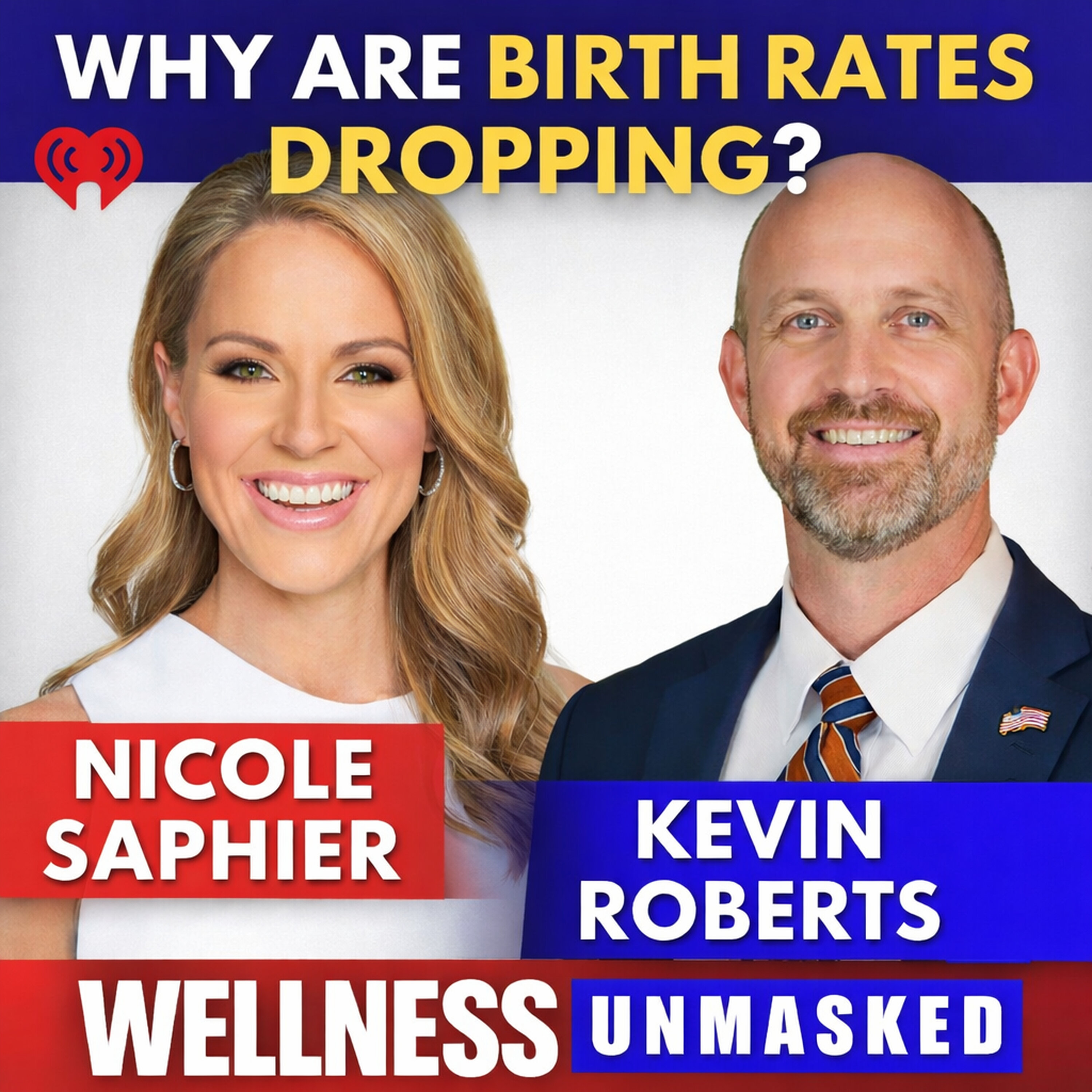
The Clay Travis and Buck Sexton Show
Wellness Unmasked: Marriage, Birth Rates & Pro-Family Policy Solutions with Kevin Roberts
00:30:00
Loading summary
Transcript73 lines
- [00:00]
Commercial Narrator
We try to make healthy choices, but the fat cats hide the information we need to make them big. Insurance companies and hospital executives have been empowered over patients and families. That's not a system, that's a trap. We can't make America healthy again without seeing up front the price of every X ray, every doctor's visit, every pill and every hospital bill. That's why President Trump and Secretary Kennedy are restoring trust by demanding transparency in every part of American health care. Transparency is key demand. It's it's an Olympics you'll never forget. Primetime in Milan the Moments Chloe Kim with the gold medal Flex the Stars.
- [00:41]
Sponsor Announcer
Ilya Malinin out of this World the.
- [00:45]
Commercial Narrator
Spectacle from beautiful northern Italy with very special guests every night of the olympics. Experience the world's biggest show, Prime Time in Milan tonight, 87 Central on NBC and Peacock studies show that 100% everybody in the world wants to curl up indoors and do nothing because it's so darn cold out there. That's why many people are turning to Bombas, whose pillowy plush slippers and warm merino wool socks have been said to be the most comfortable in the history of feet. Bombas products have been found to boost coziness by up to 1 million percent. Okay, enough fake statistics, but could Bomba socks and slippers really be the Cure? Go to bombas.com audio and use code audio for 20% off your first purchase. That's B O M b-s.com and use code audio.
- [01:31]
Sponsor Announcer
Support for the show comes from Public, the investing platform for those who take it seriously. On Public you can build a multi asset portfolio of stocks, bonds, options, crypto and now generated assets which allow you to turn any idea into an investable index. With AI it all starts with your prompt. From renewable energy companies with high free cash flow to semiconductor suppliers growing revenue over 20% year over year. You can literally type any prompt and put the AI to work. It screens thousands of stocks, builds a one of a kind index and lets you back test it against the S&P 500. Then you can invest in a few clicks. Generated assets are like ETFs with infinite possibilities, completely customizable and based on your thesis, not someone else's. Go to public.com podcast and earn an uncapped 1% bonus when you transfer your portfolio. That's public.com podcast paid for by Public Investing Brokerage Services by Open to the Public Investing Inc. Member FINRA and SIPC Advisory Services by Public Advisors llc. SEC Registered Advisor Generated Assets is an interactive analysis tool. Output is for informational purposes only and is not an investment, recommendation or advice. Complete disclosures available at public.comdisclosures welcome to Wellness en Masse.
- [02:35]
Dr. Nicole Saffire
I'm Dr. Nicole Saffire, and today we're tackling a question that really sits at the intersection of health, culture and policy. Why are Americans having fewer children? Why are fewer Americans married? And what, if anything, should government do about it? Now, I'm sure you remember about six months ago we had Emma Waters from the Heritage foundation, and she actually talked about how that we are seeing fewer babies being born in the United States and our birth rate has declined so much that we are entering a level where we're not going to be able to repopulate over time. You've heard Elon Musk talk about it. We need more babies, babies, babies. But the data is real. And what we're going to talk about today is I'm bringing on Kevin Roberts. He is the president of the Heritage foundation, whose organization recently released a sweeping report arguing that declining marriage and family formation are what's central to America's demographic crisis and that policy should actively address it. So we're not just talking about the problem. He's coming up with the solutions. And that's what I like. I don't want just hear people complain about something. I want to go forward with what we can do about it. So we're going to talk about the data, not the dogma and what the evidence actually shows about family structure and child health, where critics say these proposals may go too far and how we can balance values with outcomes, because in medicine, as in policy, intentions matter so much more than the results. So let's get into it. Well, joining us to discuss this very important topic is Kevin Roberts, who is the president of Heritage foundation, who was a part of the effort in putting together this really important report. So, Kevin, thank you so much for joining us today on Wellness Unmask.
- [04:18]
Kevin Roberts
Well, it's a pleasure, Nicole. Obviously, I'm proud of my colleagues. But we're also all grateful to you for all the work you've done over the years to promote these same kinds of policies.
- [04:27]
Dr. Nicole Saffire
So let's dive right in because as you said, I've been talking about this for a while. It is concerning. There's been a lot of conversation as to people just aren't having babies anymore. And part of that is cultural, but some of it's economic as well. In the United States, we look at the birth rates, and while we're now kind of where Western Europe is with the decline in their birth rates, we're not quite as extremely low as East Asia, which by the way, they had some very intentional ways to reduce birth weight rates. We don't have to get into those. But what do you think here in the United States is the main driver? Is it a cultural shift or an economic shift?
- [05:06]
Kevin Roberts
Well, I actually would, without being evasive, I think I would ascribe equal weight to those. I think that you have cultural trends across the west, really across the developed world now, which usually will correspond. That development will correspond with declining birth rates. At least in the United States. We've seen, maybe because of some additional social, cultural, political pressure, a decline in marriage rates. It's the economic area where you really see those factors in the economy affecting both of those things, marriage rates and birth rates. Our claim in the paper is not to be dismissive toward those factors, culture and economy, but also to say there's another factor that has clearly been proven to have an impact on negative, a negative impact on marriage and birth rates. And that's government policy. And so as a right of center policy group, we wouldn't usually look to government policy other than in this case, we think that we might be able to use it to reverse those declines.
- [06:01]
Dr. Nicole Saffire
Well, I mean, that makes sense. You know, in theory when you talk about it right now in the United States, I think our fertility rate is like 1.6, which is well below that replacement threshold. But if, if you look at some of the European countries, like France, France spends heavily on family benefits, much more so than the United States, but they're also sitting at 1.6. So how do you counter that?
- [06:28]
Kevin Roberts
Well, two points. Number one, our thesis is that reversing government policy alone is not going to fix this. That in fact you do need to see those cultural and economics patterns or factors that have gone into declining marriage and birth rates reverse as well. But we also know, getting to the second point, that the law is a teacher. In this case, policy can be a teacher. And so we believe that the cultural and economic trends in the United States, for example, are more positive as it relates to marriage and birth than it is in France. That if all you can do with federal policy is eliminate all the disincentives to marriage and birth, that you might provide a little bit of a boon to both of those rates. But the second thing that we would say too is that if you look at examples other than France, say Hungary, Israel to some extent Singapore, there are some positive examples where those expenditures on incentivizing marriage and birth have worked to be really honest. And we are in the paper, of course, the data is mixed in some of those cases, but it's not wholly negative. And so what we're arguing is, if nothing else, on almost a pilot basis, to see if this one, changing this one element in government policy can be helpful.
- [07:40]
Dr. Nicole Saffire
So what are some of those policy disincentives that you talk about in the report, but also that you are seeing that you think is possibly contributing to the lower marriage and birth rates here in the United States?
- [07:51]
Kevin Roberts
Well, in two big buckets in federal policy, the largest of the two is safety net programs. And there since the misnamed War on poverty of the 1960s, we have had explicit disincentives in, in our federal policy in order for women to receive benefits for most of that time. The one exception would be the 1990s, when there was an excellent work requirement and marriage requirement. For some of these policies, we have for 50 or 60 years explicitly disincentivized women with children from getting married or for getting married, because that would actually have a negative impact on their benefits. We believe eliminating those would be important. But the second thing, and this is the new part, this is the second bucket, is a couple of new proposals we have. One of them is to piggyback on the great idea of the Trump accounts, which have been in the news over the last couple of weeks. And we believe that we as a society should actually plus up those Trump accounts, in essence, by providing additional benefits, $2,500 for men and women who get married by the age of 30. And we believe that if you increase the marriage rate, and you also have some reversal in some of the cultural and economic trends at a macro level, that you can see an increase in that fertility rate from 1.6. But there's a second new idea, Nicole, that I want to touch on. We're equally excited about this. You and your audience may be familiar with the adoption tax credit, roughly $17,000 for the excellent practice of adoption, which we want to continue and expand. We believe that we should expand that to include births, natural births for married couples if they're having children. And we would lower the cost in a single budget year for Congress by extending that credit over three years. Getting into the weeds here in terms of the policy, but we have really smart people at Heritage are trying to weigh all of these details, and we believe that if we make these two changes in policy, that we'll begin to see at least a small incremental improvement in both the marriage and, and the birth rate.
- [09:50]
Dr. Nicole Saffire
Those are both actually very, very interesting. I want to Go back to the first one, the incentives for encouraging marriage by the age of 30. I would imagine that you, from the critic side, you would hear if the incentives are encouraging earlier marriage, how do you prevent higher divorce rates later on? And is there even data on that whether you get married earlier or later regarding divorce rates?
- [10:13]
Kevin Roberts
There is data on that. In fact, the paper looks at that very thoroughly. This is a 150 page paper. So we try to look this from every angle. We took three years to do the research on this, which is a way of complimenting my colleagues for their work. But to your point, you might think that there's more data which would suggest if you're incentivizing people to get married earlier, that there's going to be a higher divorce rate. We actually have a lot of data in the paper which would point to the opposite. And so what we're not trying to do is create some strange artificial incentive for people to get married who shouldn't be getting married. And the reason, to the point that you imply in your question that we would like to have earlier marriages, because that's going to have an increase in the birth rate given the relatively short window for maternity for women.
- [11:01]
Dr. Nicole Saffire
Well, as a physician, obviously speaking, our bodies as women were created to have babies when we are younger. So when you actually are having older women having babies, that's when you're starting to see higher risk of maternal, but also fetal complications. So I for one m for marriage and having children at younger ages because I believe that that is truly how biologically we are created. But here's a question that I have for you regarding the incentive to, for people to get married earlier. Is is there evidence that delaying marriage is the problem or is it economic instability before marriage is a problem? Because we're seeing a lot of people who are waiting to get married these days. And there's a myriad of reasons. A lot of it has to do with women wanting to be professionals, be out in the workplace. Hello, I'm a practicing physician. I'm one of those women. But I also think that we are in a state of economic instability and people are these women or even men too, are graduating college and economically, you know, they're still living at home. You see people living at home longer than ever before. So in parallel, should we also, should specifically the federal government be working on how can we make people more economically stable so that they are wanting to get married, not just relying on credits to get married?
- [12:19]
Kevin Roberts
Well, 100%, you know, both of those trends, the cultural one you outlined which are good things, which is that women like yourself who want to be full time, in your case, as a physician, of course, these are good cultural trends, but they have had an impact on at least the age at which women are wanting to get married, or some women at least. But the economic side is really important too. And so what we're saying in this paper is that while we focus on some policy solutions at the federal level, and we'll be releasing some subsequent papers that focus on similar state level policy solutions, that if the government, as the current presidential administration is doing, is also focused on all of those factors that go into the affordability crisis, then that is going to be an additional boon for this. I just want to put a real fine point on that. I hear this, of course, anecdotally, not just from my own children, but also from the preponderance of heritage colleagues who are under the age of 35. But the data bears this out too. If you look at two industries where one of these, of course, is really important to you, the healthcare industry, where essentially the third party payer system has artificially increased costs. We have a similar phenomenon in education, especially higher education. We believe that if the administration and Congress continue their reforms in both of those, obviously they've made more headway with higher education reform, that you're beginning to eliminate some of those factors and that go into the delaying of marriage and to the, you know, the phenomenon, as you said, of postgraduate young people in their 20s coming back home to live because they literally can't afford rent. I mean, even contemplating a mortgage is completely out of the question. So that's a way of saying that there are five or six or seven factors here. And we're encouraging policymakers to put their hands on all of those levers, obviously on the cultural and social ones. Those are in our control as individuals. And if enough of us start making the same kinds of decisions, then we're going to see those patterns reverse as well.
- [14:16]
Dr. Nicole Saffire
You're listening to Wellness en Masse. We'll be right back with more.
- [14:21]
Commercial Narrator
We try to make healthy choices, but the fat cats hide the information we need to make them big. Insurance companies and hospital executives have been empowered over patients and families. That's not a system, that's a trap. We can't make America healthy again without saying seeing up front the price of every X ray, every doctor's visit, every pill and every hospital bill. That's why President Trump and Secretary Kennedy are restoring trust by demanding transparency in every part of American health care. Transparency is key. Demand it it's an Olympics you'll never forget. Prime Time in Milan the moments Chloe.
- [14:58]
Sponsor Announcer
Kim with the gold medal of Flex the Stars Ilya Malinin out of this.
- [15:04]
Commercial Narrator
World the spectacle from beautiful northern Italy with very special guests every night of the Olympics Experience the world's biggest show PrimeTime in Milan tonight 87 Central on NBC and Peacock.
- [15:21]
Sponsor Announcer
Support for the show comes from Public the investing platform for those who take it seriously. On Public you can build a multi asset portfolio of stocks, bonds, options, crypto and now generated assets which allow to turn any idea into an investable index with AI. It all starts with your prompt. From renewable energy companies with high free cash flow to semiconductor suppliers growing revenue over 20% year over year. You can literally type any prompt and put the AI to work. It screens thousands of stocks, builds a one of a kind index and lets you back test it against the S&P 500. Then you can invest in a few clicks. Generated assets are like ETFs with infinite possibilities, completely customizable and based on your your thesis, not someone else's. Go to public.com podcast and earn an uncapped 1% bonus when you transfer your portfolio. That's public.com podcast paid for by Public Investing Brokerage Services by Open to the Public Investing Inc. Member FINRA and SIPC Advisory Services by Public Advisors llc. SEC Registered Advisor Generated Assets is an interactive analysis tool. Output is for informational purposes only and is not an investment recommendation or advice. Complete disclosures available at public.com disclosures why.
- [16:23]
Dr. Nicole Saffire
Have I asked my H Vac guy I found on angie.com to change my grandpa's trachea tube? Because I was so amazed by how.
- [16:29]
Commercial Narrator
Quickly he replaced our air ducts.
- [16:31]
Dr. Nicole Saffire
I knew I could trust him to change Pop Pop's tube while I was on vacation.
- [16:34]
Sponsor Announcer
Make it quick young man.
- [16:37]
Dr. Nicole Saffire
Aw see Pop up trusts you. I think we should call a doctor.
- [16:43]
Sponsor Announcer
Connecting homeowners with skilled pros for over 30 years. Angie, the one you trust to find the ones you trust. Find pros for all your home projects@angie.com.
- [16:54]
Dr. Nicole Saffire
You know you self admit that Heritage foundation. You yourself are, you know, to the right of center. And so if we want some of these policies to not just be adopted and piecemeal when a Republican's in the White House, but to be continued to carry on, which is, you know, what we would need for our birth rate to go up. It has to be more bipartisan. So for the critics who argue your proposals, you know, implicitly favor traditional gender roles, you know, how can you make the messaging to be supporting women who both want the careers and families without forcing a choice. Because obviously what you have, some of the critics will say, well, if you're just saying family first, marriage first, babies first, then you're not necessarily respecting the women who want to be, you know, have the financial independence of having a profession. How can we. How can we frame that messaging to get a little bit more bipartisan support?
- [17:48]
Kevin Roberts
It's a really important question, and I'll mention something about the bipartisan nature specifically in Washington. But the real core of your question about messaging so that people understand, people who might not usually follow the prescriptions of a Heritage policy proposal would understand. Where we're coming from is we're saying that individual choice is vitally important here for both women and men. And what we're trying to do is to craft a set of proposals that if men and women so choose to get married and have children, that there are at least policies that make that happen. In no way are we suggesting that people must do that. Obviously, this is not anything that we would propose. It couldn't be required. But the second thing is, we know from data, I think, about the great research that our friend Brad Wilcox has done at the University of Virginia on this very question, that a majority of American working women would like to spend at least a little more time at home with their children. And so we know that not just from the standpoint of our own ethos and Heritage, which would be never to foist this kind of thing on anyone, but also from Americans themselves. This is what they're saying. Let me also say, if I may, Nicole, a comment about the bipartisan nature of this. We are philosophically right of center, but we will work at Heritage with anyone, anytime, any political party or, you know, any political movement to get work done. For example, we have great common cause with the Secretary of Health and Human Services, Mr. Kennedy. He's going to be at an event soon at Heritage. But I'll also say one of our heroes and sort of the person who inspired an aspect of this paper is the left of center politician Daniel Patrick Moynihan. And we wish not only for this issue, but for so many that people. There were more people like Mr. Moynihan in Congress today where we might disagree on some things, but on this matter itself, because it's civilizational for the American Republican, it far transcends any kind of partisan affiliation we have.
- [19:43]
Dr. Nicole Saffire
Yeah, I mean, I completely agree, and I love to hear that so many people are being involved. You know, one question that I have for You. Because I saw a couple of articles about some critics in the report. They talk about what a quote, unquote, good family was or, you know, what the ideal environment for children, specifically as a married biological mother and father household. And so for critics saying that you're potentially excluding single parents, LGBTQ families, blended families, whatever it is, you know, what is some of the data that backs up what was put forth in the report?
- [20:19]
Kevin Roberts
Well, there's a lot of data that backs that up. The first thing I'll say, though, is we're not suggesting that anyone is lesser than or, you know, somehow unimportant in American society. We're saying that because of the data, the social science data from Brad Wilcox at Virginia, my friend Mark Radneris, a sociologist at the University of Texas, point to the ideal. And each of us, at least according to my worldview, each of us is going to fall short of the ideal. Right. But the ideal, in terms of what's best for children, what's healthiest for American society, is a family in which there are biological children, if that's possible, for mom and those children to be raised in a stable household. In fact, Wilcox's research over the last 15 or 20 years is entirely convincing on this point. So it's been sort of twofold for us. Of course, as a think tank, we're going to lean on the data, but we also want to reassure Americans that we ourselves you know, the authors of this report are flawed and can't live up to the ideal. But we have to recognize, because of the data and because of history, especially in the United States, that the ideal is something we can aspire to, especially in federal policy.
- [21:29]
Dr. Nicole Saffire
Yeah, I mean, you know, facts matter. And that's kind of the one thing that I try to always get to the point when I speak. You know, this really became evident during COVID You talk about what, you know, what you don't know. You admit when you're wrong. But when you're talking about some of these things, you know, very easily you can be labeled a bigot. I mean, we saw that even with transgender ideology. For anybody who's been speaking against the hormonal and physical mutilation of children in the last several years, like myself, we were called names like a big. A bigot. And then you just saw one of the biggest medical groups, the American Academy of Plastic Surgeons, just come out and say, hold on. We don't think you should be doing it. So it's important to follow the science, follow the data, and admit when you're wrong. And the reality is there is data. There are data that show children in stable married households have better average mental and physical health outcomes. You know, that's not conjecture, that those are facts. Is marriage alone the causal cure for all ailments of children? Of course not. But stability, low conflict and economic security truly explain most of the benefit. And you see that a lot in a two parent household. You know, and so that's one of the frustrations I have because so easily a lot of things that you put forth in this report are just criticized and people try to turn them into some sort of extremism, negating the fact that they're built in objective data.
- [23:02]
Kevin Roberts
No, that's right. And I mean, hats off to you for your work across the board, especially starting with all the COVID emphasis on truly trusting the science. I'll add one element to this. As an educator by training, I've spent a lot of time educating, but also working on policies especially for economically disadvantaged Americans. And across the board in studies, you know, these are studies from left of center groups to right of center to dead in the center. Politically across the board, all of that research shows that the single most important attribute or the single most important factor for educational attainment is stability of the home. And this research that we're doing regarding family policy, now to your point, squares with that data. And so it should be a real boon for anyone who wants to ask big civilizational questions that once again transcend Republican and Democrat. I mean, this goes straight to the heart of being human, obviously, but also this love we have for the future of this great republic to just make those decisions based on the data and put some of the political noise off to the side so that we can do what's best for American families and children.
- [24:15]
Dr. Nicole Saffire
So President Trump, since entering the White House, you've seen a boom when it comes to supporting mothers in the workplace. And I don't think I've ever seen as many children in the White House. But some policy things that he's done, he's established the Trump accounts to seed long term investment funds for newborns. He expanded the child tax credits and related family tax benefits and also signed some orders, I don't remember the details, aimed at lowering IVF costs and really just expanding access. So, you know, while we see that there is some movement to try and increase the birth rate here in the United States, interestingly enough conservative think tank is saying the, the answer to improving the birth rate is more government intervention. So if you, if you had your nethers and you had President Trump's ear. What are the three things that you would say currently that the federal government is getting wrong, not necessarily implemented by President Trump, but just existing policies. And then what are three things that have to be done if we want to take the marriage and birth rate crisis seriously?
- [25:20]
Kevin Roberts
On the negative side of the ledger sheet, the things that government's gotten wrong. And to be clear to your question, I think the Trump administration is trying to fix these. But number one, eliminate the disincentives to marriage that exist in safety net programs. There are several of those and some of those actually could probably be eliminated by executive order. It's better for the long term, obviously, if it's legislative.
- [25:42]
Dr. Nicole Saffire
Can you give, do you have, can you give a specific example of that, just for those of us who aren't sure?
- [25:48]
Kevin Roberts
Food stamps, broadly defined, and also Medicaid, two big examples, not just huge drivers in the federal budget, but huge drivers in human behavior by tens of millions of Americans. And so addressing that which Congress has begun to address. But, you know, we'd like to see a little more of that reform.
- [26:07]
Dr. Nicole Saffire
I'm sorry to interrupt you. Here's a quick question though, for so right now, if you are a single parent, you get, you know, a higher percentage than if you're married. Is that essentially what you're saying when it comes correct.
- [26:19]
Kevin Roberts
And so if you're a single parent, while there are cultural and non government economic factors that may go into your decision along with individual choice, we believe federal policy at least ought not to be aggravating those factors by in essence, paying you more to remain single.
- [26:35]
Dr. Nicole Saffire
So for the people who would say, well, what about the woman who either their husband was tragically, tragically died or husband left them, you know, not she didn't do anything wrong, but now she finds herself single, she obviously shouldn't be penalized to receive less. But I think maybe what needs to happen is people who are married, you know, each individual should receive the same amount as she would as a single parent. Is that what you're kind of that's proposing?
- [27:04]
Kevin Roberts
That's exactly right. We're obviously not wanting to disadvantage anyone in those tragic situations, whatever they may be, but we're just saying that for people eligible for those benefits who are married, the amounts ought to be the same. It's actually a matter of equity for them. The second thing is there are to move from the federal level, Nicole, to the state level. There are state policies that mirror federal policies because of administrative rules by these relevant agencies. The Department of Agriculture, which of course controls a lot of the safety net programs. My friend and one time colleagues, Brooke Rollins, Secretary of Agriculture, is working hard on that. But that is still some work that needs to be done in spite of this early success. And the third thing is, which may seem esoteric for someone or unusual for someone who's focused on hard policy, there needs to be a rhetorical shift among policymakers toward elevating marriage and elevating birth. We know that the law is a teacher, but also the rhetoric of our leaders can be a teacher. And so we're encouraging everybody across the political spectrum to do that. On the positive side of the ledger, there are some real opportunities as we've talked about two of them. The tax credit, basically additional benefits in the Trump account for men and women who get married by the age of 30. Number two, expanding the adoption tax credit to be an incentive for children and your own family. And then the third is this is where federalism is really important to us. We believe that there ought to be federal grants that are block grants to states so that they can mirror those policies at the state level. I cut my teeth in policy work working on state policy. And I can tell you just to really remind you and your audience of something, you know, the state legislatures can be a lot more nimble. They're a lot closer to the problem or to the opportunity. And we think that there's a real opportunity here for the federal government simply to block, grant a lot of this money and let states once again become the laboratory for figuring out this innovation in family policy.
- [29:06]
Dr. Nicole Saffire
More coming up on Wellness unmasked with Dr. Nicole Safire.
- [29:11]
Commercial Narrator
We try to make healthy choices, but the fat cats hide the information we need to make them big. Insurance companies and hospital executives have been empowered over patients and families. That's not a system, that's a trap. We can't make America healthy again without seeing up front the price of every X ray, every doctor's visit, every pill and every hospital bill. That's why President Trump and Secretary Kennedy are restoring trust by demanding transparency in every part of American health care. Transparency is key. Demand it. It's an Olympics you'll never forget. Prime time in Milan, the moments Lily.
- [29:48]
Sponsor Announcer
Kim with the gold metal.
- [29:50]
Commercial Narrator
Flex the stars.
- [29:51]
Sponsor Announcer
Ilya Malinin out of this world.
- [29:55]
Commercial Narrator
The spectacle from beautiful northern Italy with very special guests. Every night of the Olympics experience the world's biggest show, PrimeTime in Milan tonight, 87 Central on NBC and Peacock.
- [30:11]
Sponsor Announcer
Support for the show comes from public, the investing platform for those who take it seriously. On public, you can build a multi asset portfolio of stocks bonds, options, crypto and now Generated Assets which allow you to turn any idea into an investable index with AI. It all starts with your prompt. From renewable energy companies with high free cash flow to semiconductor suppliers growing revenue over 20% year over year, you can literally type any prompt and put the AI to work. It screens thousands of stocks, builds a one of a kind index, and lets you back test it against the S&P 500. Then you can invest in a few clicks. Generated assets are like ETFs with infinite possibilities, completely customizable and based on your thesis, not someone else's. Go to public.com podcast and earn an uncapped 1% bonus when you transfer your portfolio. That's public.com podcast paid for by Public Investing Brokerage Services by Open to the Public Investing Inc. Member FINRA and SIPC Advisory Services by Public Advisors, llc, SEC Registered Advisor. Generated Assets is an interactive analysis tool. Output is for informational purposes only and is not an investment recommendation or advice. Complete disclosures available at public.com disclosures why.
- [31:12]
Dr. Nicole Saffire
Have I asked my H Vac guy I found on angie.com to change my grandpa's trachea tube? Because I was so amazed by how.
- [31:19]
Commercial Narrator
Quickly he replaced our air ducts, I.
- [31:21]
Dr. Nicole Saffire
Knew I could trust him to change Pop Pop's tube while I was on vacation.
- [31:24]
Sponsor Announcer
Make it quick, young man.
- [31:27]
Commercial Narrator
Aw.
- [31:28]
Dr. Nicole Saffire
See, Pop Pop trusts you.
- [31:30]
Kevin Roberts
I think we should call a doctor.
- [31:33]
Sponsor Announcer
Connecting homeowners with skilled Pros for over 30 years, Angie, the one you trust. Define the ones you trust. Find pros for all your home projects@angie.com.
- [31:44]
Dr. Nicole Saffire
So if five years from now, let's say the Trump administration adopts a lot of the, you know, the proposed policy that you're suggesting, not just Trump, but the states as well. You know, what specific data point should Americans look at and say, well, this worked and you know, future generations looking back at now, you know, what do you think they'll say? We actually misunderstood about families to get us to where we are now.
- [32:09]
Kevin Roberts
The specific data point, if you forced us to be focused on one, would be the overall fertility rate. But we're really homing in on the married fertility rate. That's really where we think the, you know, in the control room of American policy, we might see as early as five years. If by some chance Congress were to pass these policies this year, we would see that success. But the other thing is, and we're really clear about this in the paper, two things, if I may. The first is an institutional humility by heritage that we don't believe we have all the answers here. We don't believe that the two policy proposals we've made are the end all, be all. But sort of like you said regarding the COVID data, if we get five years down the road and we realize, oh, actually those weren't the best things to do, we'll say that. And that's what these nations, Israel, Hungary in particular, have done. They've adjusted along the way. So I believe we'll have the humility to say that. But the second thing is we wanted to start a conversation. And so hopefully, what say in the year 2031, we will realize is, gosh, just as the fertility rate had come down to 1.59, we realized this isn't just something that culture and the economy will control. It's something that the federal policy, federal government can actually play a role in. And while it might be small, it might just be one of those factors. It is a factor. And if we succeed in doing that, then I think we're going to be really optimistic about the future of the American family.
- [33:33]
Dr. Nicole Saffire
Well, I think it would be very interesting to get you in a room with Elon Musk, who inarguably is one of the most brilliant humans to walk the face of this earth. But. And while he has been very focused on the birth rate, I think having 14 children, maybe himself. But you're saying it's not just about increasing the birth rate, having more babies. You're saying it is about having more married babies or babies while a product of marriage. So what would you say to Elon Musk? What would your message be to him if you sat down with him one on one?
- [34:03]
Kevin Roberts
Well, first of all, I would look forward to that conversation and that topic and many others with him. We're big fans of Elon at Heritage. I would say I would remind him, and he knows this. So you know, this. This is just a reminder. The family is the most important institution. And we're grateful, I would say to Elon, we're grateful for you're advocating for the birth rate. And so rather than chide him for that or make what might be missing as a sort of moral judgment about that, we would instead say for us as a society, as a civilization, certainly for us as an organization, focusing first on marriage has many benefits that redound to the rest of civilization, not just those of us who also have the benefit of being in married families.
- [34:45]
Dr. Nicole Saffire
Well, you know, I, I don't know if you know my story. I had a son when I was very young, not married, and. But I Am now happily married for about 15 years. And I am a huge proponent of being married, having children. I find it to be much more fulfilling economically, emotionally. It's, it's not ideal having a, being a single parent and I don't wish that on anybody. So I am huge supporter of the message of marriage first and then have babies, babies, babies. Because we need to get this birth rate up if we want to continue on. Thank you so much, Kevin, for coming on. I really appreciate the message. And not just the message, but also you're not just complaining about something, you're actually putting forth solutions which you don't really see a lot these days. And I appreciate all the data forward solutions that you inherited for.
- [35:35]
Kevin Roberts
Well, thanks for the interview, Nicole. We at Heritage to that point believe in being for something and then explaining how we can get there. And I also just want to commend you. Not that you need to hear it from us, but it is heartfelt for your own witness on all of these matters. God bless you for your work.
- [35:50]
Dr. Nicole Saffire
Thank you so much. The declining birth rates, they're not just an abstract statistic. They actually reflect real pressures on the families, real trade offs parents are making and real consequences for the next generation and the following generation. So today's conversation shows just how complex this issue is. Stability in the household matters. It really does. Economic security also matters. It's not black and white. It's not going to be extremely simple to fix because we also have to hone in on cultural matters and policy choices. Whether well intentioned can have ripple effects far beyond what's written in paper. I understand if you have a single mother, you want to give her more credits, more money, anything you possibly can to support her because you know she is struggling. But does this disincentivize someone to actually become married? I don't actually know the answer to that. But the Heritage report is full of data showing that we need to make sure that we are treating people as the individuals and not based on their marriage status. It's an interesting way to think about things. The challenge isn't about choosing sides. It's choosing solutions that will actually improve the mental, physical and economic health of our families, specifically our children, without creating new harms in the process. So that's the lens we're going to keep bringing here on wellness Unmask. I like to ask hard questions, follow the data always, and staying grounded in real world outcomes. Thank you so much for listening to Wellness unmasked with Dr. Nicole Safire. I'm Dr. Nicole Safire. Make sure to listen to Wellness Unmasked on Apple Podcasts, iHeartRadio or wherever you get your podcasts and we and we'll see you next time.
- [37:34]
Commercial Narrator
We try to make healthy choices, but the fat cats hide the information we need to make them big. Insurance companies and hospital executives have been empowered over patients and families. That's not a system, that's a trap. We can't make America healthy again without seeing up front the price of every X ray, every doctor's visit, every pill and every hospital bill. That's why President Trump and Secretary Kennedy are restoring trust by demanding transparency in every part of American healthcare. Transparency is key.
- [38:03]
Dr. Nicole Saffire
Demand it Find home Wherever you roam.
- [38:06]
Kevin Roberts
At Sonesta Es and Simply Suites, stretch.
- [38:09]
Dr. Nicole Saffire
Out and enjoy homelike amenities for however long you need. And when you're a Sonesta Travel Pass member, staying at Sonesta Es and Simply Suites means earning points toward free nights, upgrades and more.
- [38:20]
Commercial Narrator
Go to sonesta.com to book your stay.
- [38:22]
Dr. Nicole Saffire
And unlock their best rates with Sonesta Travel Pass here today, Rome tomorrow. Join now@sonesta.com Terms and conditions apply.
- [38:32]
Sponsor Announcer
Owning a home is full of surprises, some wonderful, some not so much. And when something breaks, it can feel like the whole day unravels. That's why HomeServe exists for as little as $4.99 a month. You'll always have someone to call a trusted professional ready to help, bringing peace.
- [38:49]
Kevin Roberts
Of mind to four and a half million homeowners nationwide.
- [38:52]
Sponsor Announcer
For plans starting at just $4.99 a month, go to HomeServe.com that's HomeServe.com not available everywhere. Most plans range between $499 to $11.99 a month. Your first year terms apply on covered repairs.
- [39:03]
Commercial Narrator
You see it instantly. It's Coldwater Creek, the mark of exceptional workmanship and signature touches inspired by a Mountain west heritage. Distinctive styles created from quality fabrics, silhouettes perfected with just the right drape feel good fits offering ease of movement and thoughtful details to elevate your look. Coldwater Creek's authenticity is embodied in every piece, embracing its confident spirit that carries through to today. Discover Coldwater Creek clothing designed to fit your life the way you want. For a wardrobe you can count on season after season, visit coldwatercreek.com shop the new spring collection at 20% off $75 or more with code iheart20.