← The CMO Podcast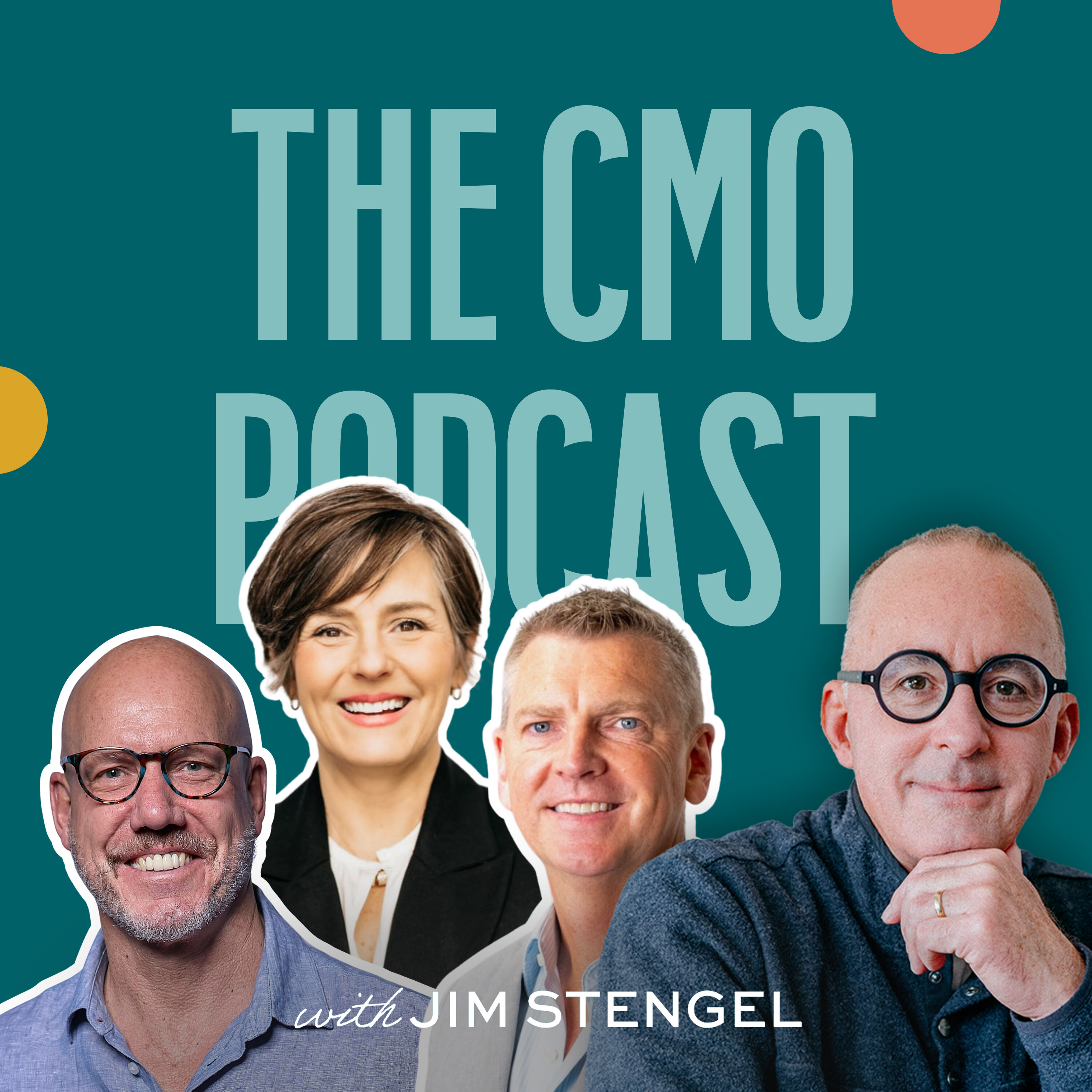
The CMO Podcast
Stop Chasing Attention. Start Creating Desire // Lessons from Best Buy, AB InBev and Reckitt
00:36:51
Loading summary
Transcript208 lines
- [00:01]
Jim Stengel
I spent years at Procter and Gamble trying to answer that question. We had the creative, we had the reach, we had campaigns that genuinely stop people. And then we watched that value quietly disappear somewhere between the moment of engagement and the proof of a business result. That gap between attention and action is where most media budgets go to die. And most digital media platforms have been content to live inside it, just a little upstream from accountability. Infilion is the company that decided to close it. They they started as the original attention company, built on the idea that a consumer choosing to engage with an ad is worth more than one who ignores it. But they did not stop there. They have built the infrastructure to connect the moment of attention to the proof of action across every screen, every format, every vertical. That is not a feature. That is a fundamentally different idea of what an ad platform should be. And it is the one brands have been waiting for. Learn more in the show Notes.
- [00:56]
Matthew Bull
So desire is something that you want but don't have, right?
- [01:00]
Jim Stengel
Well, yeah. Are you one? And finally get Are you one? It's usually scarcity, right?
- [01:06]
Matthew Bull
Exactly.
- [01:06]
Jim Stengel
So it's out of reach a bit.
- [01:08]
Matthew Bull
So there are things I admire, like on running and stuff, but if you ask me for design and I love craftsmanship and I love people that take things personally. And that's why I loved Apple in the early days when Johnny I've was there and Doves was there and you can just see that they loved what they were making. And when you look at great work, you can always see when someone loves the product that they're advertising and marketing.
- [01:29]
Jim Stengel
Hi, I'm Jim Stengel. I've helped hundreds of major brands discover and activate their purpose. Because when a brand's purpose is clear, compelling and authentic, profit naturally follows. Each week I welcome the CMOs, the chief marketing officers of your favorite brands, to speak to how their job is so much more than marketing. These leaders share their inspiration and challenges along with how they try to build a full, healthy and happy life in and out of the office. And it's that energy that reaches everyone they touch. And we're glad you're here to feel that energy and to learn from these remarkable leaders. So here we go. To kick off this episode, Matthew Bull of AB&BEV shared a simple but powerful thought. Creativity is all about creating desire. This week we're returning to our conversations captured at the Havas Cafe during the Cannes Lions Festival. This time exploring creativity and desire. That idea became the thread running through the entire conversation as we explored what it really takes to build brands that People genuinely love. I'm joined first by Ryan Dulea, Chief marketing Officer at reckitt, the global consumer health and hygiene company behind brands including Lysol, Durex Finish, and Airwig. Ryan has spent more than two decades building global brands, previously holding senior marketing leadership roles at Mars and PepsiCo before joining Reckitt. Next is Jenny Weber, former Chief marketing Officer of Best Buy. During her time with the company, Jenny led marketing for one of the world's most recognized consumer electronics retailers, serving millions of customers across North America. And before becoming cmo, she held leadership roles across marketing, customer experience, and retail strategy, helping transform Best Buy into a modern omnichannel brand. And finally, Matthew Bull, chief Creative Advisor at AB InBev, the world's largest brewer and home to brands including Budweiser, Michelob, Ultra Corona, and Stella Artois. Matthew has spent his career at the intersection of creativity and business, previously serving as global Chief Creative Officer at the Mullin Lowe Agency. Together, the four of us explore how leaders create cultures where creativity can thrive, why the best ideas often require permission to fail, how AI is changing the creative process, and why human insight remains the key to building brands people truly desire. Here's my conversation with Ryan, Jenny, and Matthew. All right, we're welcome to the CMO podcast. You're three amazing companies, three amazing leaders in my research, and I want to get you to start Matthew to talk about. We're talking about desire and brands today. You have won a desirable award in Cannes this year, creative market of the year. And it's the only company that has ever won it. Three times.
- [04:11]
Matthew Bull
Three times.
- [04:12]
Jim Stengel
So tell us a little bit about the journey to win this desirous award. I know we could spend the whole show on this, but talk a bit about what you think the two or three most important levers or choices or changes you made to earn that award.
- [04:29]
Matthew Bull
I think the first thing on the subject of desire is you've got to want it, right? So it all started, I think, 2017. We had a big group marketing leadership meeting, and at the end of the meeting, Miguel Patrizio, the global cmo, and Marcel Marcondas, the US CEO who's now our global cmo, stood up and said, let's, let's give ourselves a big, audacious goal that we want to aim now. Remember, at the time, we'd grown enormously as a business through acquisition mainly, but we had all these precious, wonderful brands that consumers loved, and we probably were not doing work that they loved. They loved our brands and our products, but they weren't Doing the work we loved. So we set an audacious goal, a desirable goal for you, Jim, and that was to be the most creative, effective marketer in the world. And we wanted to brutally, you know, as a business, we're always a business that likes targets. Stretch targets.
- [05:25]
Jim Stengel
I know you are.
- [05:26]
Matthew Bull
You know, we love that sort of thing. So we said, we want to win. Can. We want to win, fes. We want to just win. And we knew the way to do that was to create compelling, wonderful, creative work. Because to me, creativity is all about creating desire. Desire for people to want things is to do work that people kind of loved and reacted to. And so far, so good. But we've only just started.
- [05:50]
Jim Stengel
Well, you won it last year, you won it this year, and you won it a couple years ago.
- [05:53]
Matthew Bull
So we won a 22, 23. We took last year off and then.
- [05:57]
Jim Stengel
Oh, okay, you won. Okay, super. Okay, amazing. So before we leave that, to win it three times, what has been the red thread?
- [06:05]
Matthew Bull
Right. So, you know, in order to get those things done, you have to obviously set the ambition up. Very important. Then you've got to change the behavior of the team and almost give them permission to. Interestingly enough, in businesses, you've kind of got to give permission to people to be creative and to take, because it means taking risks. So it was to create, I guess, a culture that allowed that. We obviously put lots of systems in places. We have very interesting systems. We have the Creative X system, which is teaching brains trust, internal, where we really interrogate the work. So before we put work out there in the world, it's gone through a lot of interrogation internally. We have Creative Council, we have outside people that are not associated with the company to look at the work that we put out there. And they go, and they're honest with us. This is where you are. This is where you aren't. And then we have an internal awards thing as well, which also, as an external jury, and they really look at how good it is. So all those parts, and then what that does is it drives healthy internal competition, regional competition. But the most important thing is to turn around and give permission to people. And so the CEOs got to say, I believe in the power of creativity to transform fortunes in brands. And we installed all those systems and. And then, really importantly, we picked great creative partners across the board. We are really, really lucky. And in. In fairness, they're also lucky.
- [07:31]
Jim Stengel
Yeah, yeah, for sure. I'm going to come back to the culture piece and hear from you two on that, but I want to Keep in the introduction phase here about desire. So I want each of you in this podcast panel to talk about one brand for you that compels you. It creates desire within you and not one of your own. So, Ryan, you're smiling.
- [07:54]
Ryan Dulea
I had one of my own. As a leader of a house of brands, it's very hard not to pick one.
- [07:59]
Jim Stengel
Yeah.
- [07:59]
Ryan Dulea
Okay. What would you.
- [08:00]
Jim Stengel
What's the one in your portfolio?
- [08:01]
Ryan Dulea
So the one I would pick in our portfolio, ironically enough, is brand called Vanish. Yeah. If you live in Europe or other parts of the world, you recognize it. If you're from the US you might not recognize the brand, but it's basically a stain fighter. When I joined Wreck It, I actually moved to the uk and as part of moving to the uk, my kids played cricket for the first time, which looks really nice when you get dressed in the all whites and you get ready to go out there on the field and play. When they come back after rolling around in the grass, it's three hours. It is serious amount of grass stains and mud laid in. I was still in the trial phase of some of our products because I was new at record. So I was like, oh, what the heck? I'll give this a try. There's no way this is going to work, but I'll put some Vanish in, we'll let it soak for a few hours and see what happens. Amazingly enough, it came totally clean. And while that's an incredibly functional experience, that magic before your eyes just completely shocked me and changed the way I actually thought about even taking care or doing laundry.
- [08:51]
Jim Stengel
Yeah.
- [08:51]
Ryan Dulea
Simplified things for us dramatically. So that's one that stood out as me. As soon as you had said desire,
- [08:56]
Jim Stengel
I'm glad I asked. Now an external brand.
- [08:58]
Ryan Dulea
Yeah, external brand. For me, I've always been a passionate football slash soccer player. I can never just say one word or the other. Living in the UK now, because if I say soccer, I get corrected and told it's football. If I say football, the first thing people ask me is American football. So that's what I played my whole sport growing up. So Adidas has always kind of been near and dear to my heart and some of the early advertising components of that. I honestly can't put on a pair of football boots or a pair of running shoes. That's not Adidas. So it's just stayed close to me because of everything they've been through my life and wearing that brand, through playing as a child and up through adolescence and through some of my adult years.
- [09:34]
Matthew Bull
Great new work. By the way. I mean, yeah, this one is just a brilliant World cup is brilliant.
- [09:38]
Ryan Dulea
You still play occasionally with the kids. I've left most of the playing now to my children who are doing a better job of it being trained on the European side of the. Yeah, that's good.
- [09:48]
Jim Stengel
Jenny, how about yourself?
- [09:50]
Jenny Weber
I was thinking about this. I think I love Core Power and it's interesting, it's such an interesting brand. I love the experience.
- [09:58]
Jim Stengel
I go what the brand is in
- [09:59]
Jenny Weber
case some are power yoga, they do hot yoga sculpt classes. I think the reason I love it is because the instructors love it and so they create this incredibly welcoming experience. They are very passionate about it and the instructors, you know, it's not their full time gig for the most part. Most of them are doing this on top of something else. But they love yoga and they love the Core Power brand and I think their enthusiasm and love of the brand that they work for just comes into every single class. They treat every single class like a unique moment and then I love the other people that go. It is I think truly a very. Sounds like a cult open and. Well, it kind of is, it is kind of a cult. But they're like neighborhood spots. Like I go to a couple, there's a few in Minneapolis that I go to and so I think they probably have kind of neighborhood feels to them to some degree. But it's a fantastic experience. And you can go, I can go to a Core Power in Denver or in California or in Minnesota and they all feel very similar. Kind of have their own like nuance to them but you know what you're getting, you know what to expect. You know you're going to get an excellent class and you sweat like you're in the middle of France now.
- [11:12]
Jim Stengel
You have a lot of brand partners in your stores.
- [11:14]
Ryan Dulea
Yes.
- [11:15]
Jim Stengel
And E commerce of those. Which one do you admire? Creating desire. I know you'd hate to single one out, but is there one in the
- [11:23]
Matthew Bull
asking for a discount?
- [11:24]
Jenny Weber
Yeah, they will for sure. I don't know, it'd be hard to single out one. I think Apple does an incredible job and not, I mean just they really understand consumers and they, they don't ever put anything out until it's 100% ready. And you, you see that in all the products they do. They're also, they always are raising the bar with us and require us to, to do our best. I think Meta is doing some really interesting things. We have an incredible partnership with them where they now have store within a store experience with us which is something we can uniquely do but they are also bar raising partner that is on the edge. I think they're a little different if you compared them to Apple. Like they're sort of anticipating I think where customers are going to go and are bringing product to market maybe before everyone is there and I think that's great. Like it's like an interesting, you know they're pushing innovation in our environment and getting customers there. So it's fun. I work with some, I mean I work with a lot of amazing brands all the time.
- [12:27]
Matthew Bull
Sorry, I didn't mention.
- [12:28]
Jenny Weber
No, I mean I could list all a lot of them but those two are really interesting brands to work with.
- [12:33]
Jim Stengel
Yeah.
- [12:34]
Matthew Bull
Matthew, so desire is something that you want but don't have, right?
- [12:39]
Jim Stengel
Well, yeah. Are you one and finally get or you want? So I would say it's usually scarcity, right?
- [12:44]
Matthew Bull
Yeah, exactly.
- [12:45]
Jim Stengel
So it's out of reach a bit.
- [12:47]
Matthew Bull
So there are things I admire like you know, on running and stuff. But if you ask me for desire and I love craftsmanship and I love people that take things personally and that's why I loved Apple in the early days when Jony I've was there and Jobs was there and you can just see that they loved what they were making and you know when you look at great work you can always see when someone loves the product that they're advertising and marketing. So I love Patek Philippe because I think they have. You know we had Malcolm Gladwell with us yesterday and he has said an amazing thing. He said hold your principles tight, fit your ideas loosely. And I thought that's so great. And what they do is they hold their principles so tightly. They are such, they're so passionate about the craft and what they build and what they make and you see it in every watch. And of course to me one of the greatest advertising lines of all time, you never really own one, you merely keep it for the next generation.
- [13:40]
Ryan Dulea
So that's my brain.
- [13:42]
Jim Stengel
Yeah, that's good.
- [13:44]
Matthew Bull
Do you have one?
- [13:45]
Jim Stengel
Oh, always does Jim, you know, here I'll keep it close to home. I find France desirable and I find Cannes desirable. I mean I, I love coming here.
- [13:58]
Matthew Bull
Yeah. When did you first come here?
- [14:01]
Jim Stengel
2003. I came to France before that of course, but. But France to me is always something. I don't fully understand it and I wander around thinking how right. And you know, it's just to me it's a beguiling country. When we lived in Europe the last three weeks we stayed here before we moved back to the States and we were here Five years. We, we took a station wagon and drove through France for three weeks and stopped in different places, met different people, went to small towns. I mean, it was magical.
- [14:33]
Matthew Bull
They're living. I have a house near Bordeaux.
- [14:36]
Andrea Sullivan
Yeah.
- [14:37]
Matthew Bull
And what you find about people in France, not everywhere.
- [14:40]
Ryan Dulea
Right.
- [14:40]
Matthew Bull
So the south France is a little different. They, they know how to live. That's what you feel.
- [14:45]
Jim Stengel
Yeah, that's right.
- [14:46]
Ryan Dulea
For sure.
- [14:47]
Jim Stengel
I also, I'll keep it more. I. Alfa Romeo to me is full of desire. The dad of one of my close friends in childhood had one around the time the graduate came out. And I have one now.
- [15:01]
Ryan Dulea
Oh, wow.
- [15:02]
Jim Stengel
I have a 19632600 and it is beautiful. And my wife's on my case to get rid of it because it sits in that garage. Doesn't get driven much. And when I do drive it, it breaks down silver.
- [15:14]
Matthew Bull
Oh, six seats.
- [15:15]
Jim Stengel
You can see the, the, the tie to the Ferrari in the look of it. There weren't many made, so it's, it's rare.
- [15:21]
Matthew Bull
Yeah.
- [15:22]
Jim Stengel
So, but that to me is.
- [15:23]
Matthew Bull
Oh, that's lovely. That's a lovely, passionate brand.
- [15:25]
Jim Stengel
Yes, it is.
- [15:26]
Matthew Bull
That's great.
- [15:27]
Jim Stengel
Okay, let's go back to your own question.
- [15:29]
Matthew Bull
You answered very well, Jim. Well done.
- [15:31]
Jenny Weber
Nicely done. Put them on.
- [15:32]
Ryan Dulea
Keep it coming, keep it coming.
- [15:33]
Matthew Bull
You got it, you got it.
- [15:41]
Jim Stengel
One of the things I have learned from years of talking to the best CMOs in the world is this. The question is never just whether your creative is working. The question is whether your infrastructure can keep up with it. Because a brilliant campaign still has to travel through an ad stack, through data, through decisioning, through supply, through measurement. And every hop in that journey is a place where value leaks out. Most platforms solve one piece of that. A data company, a dsp, a measurement vendor, you stitch them together and pay a fragmentation tax in performance, in speed and in accountability. Infilion built something very different. Demand supply, data measurement and creative connected in a single composable platform. The highest performing opt in attention formats via Infilion's proprietary tech in the industry, Agnostic identity resolution solutions and now Catalina. 130 million US households of verified purchase truth running as live signal through every campaign they execute. No black boxes, no hops, no fragmented vendor relationships to manage. The only company I know of that can take you from the first moment of attention to the final proof of action for any vertical on any screen without leaving the platform open. Composable agentic that is Infilian. Now you talked about the culture and you talk about all the things that you've Done in this journey to be market of the year for the third time at Cannes. I'm going to flip it to you two and talk about what do you do as leaders in your culture to create a culture of creativity that results in creating work and brands that are desirable. So talk about your learning, talk about your journey on that. Jenny, why don't you start?
- [17:25]
Jenny Weber
Okay, well, first of all, I wish I could have been taking notes while you were talking. Matthew, I think you're creating something special which is fantastic. And congratulations.
- [17:34]
Jim Stengel
We won't edit it all out.
- [17:35]
Jenny Weber
Yeah. So that I can go back and listen. Okay. Right.
- [17:39]
Matthew Bull
This part of one big great team. Part of one big great team.
- [17:43]
Ryan Dulea
Right?
- [17:43]
Jenny Weber
Yeah. Okay. Well, I think that's. That's one thing.
- [17:45]
Jim Stengel
Yeah.
- [17:46]
Jenny Weber
Giving. Lifting the team up and giving them credit, I think, and calling out when you see something that is creative and bold and when you see them pushing the envelope, I think that's one thing that I really try to do. I would say the second thing is really being comfortable with failure. You have to create an environment where it is okay to fail and where ideas can come to the table and maybe not see the light of day for whatever reason. And I think when you do that, people are feel safe and willing to bring their ideas to the table. And that's across the board. We have an internal creative team. But I think you need creativity from all the teams around that creative team. And I think, you know, some psychological safety goes a long way. And making people feel like they're heard and trusted and safe to bring any and all ideas to the table I think is very impactful. So, yeah, I think those are some of the things I do.
- [18:38]
Matthew Bull
Sorry, go ahead. No, you're. The interview.
- [18:39]
Jim Stengel
No, no, you got it. You're taking it over. I'm okay with that. I can take a break.
- [18:44]
Matthew Bull
No, just one of the things which is, you know, the, you know, giving people permission and part of that is obviously allowing them to feel relatively safe about it. It's one of the things that we really been very good at as a business is telling people the importance of positive conflict. So, for example, it's really no fun when everyone's just sitting and agreeing, but it's also no fun when everyone's shouting at each other. So if you walk into something and you go, okay, here's my idea. My job here is to have a conflict with you. Positive to make the thing better as opposed to tell you how bad you are or how bad the idea is. So that's great that you and. But you Need a leader that's giving people permission to do that, to be wrong.
- [19:24]
Jenny Weber
Yeah. I agree with you that you don't always have to agree in a conversation and that we can really respectfully push each other to get to better outcomes. And I think I have tried to create this. We talk a lot about it's okay to debate. I've created, I think, an environment where we do have pretty healthy debates and you don't have to be in that functional area to have an opinion on something that you see. And I think that's really helpful too.
- [19:50]
Jim Stengel
A question for all of you based on what you just said, Jenny, you had some P and G experience. I do as well. We, we said at P and G we want to accept failure as a learning experience. I'm not sure we ever activated it because it was a competitive place. You know, if you didn't get the next role, you might be out. So it, I think it. The culture had strong, strong pressure to, to not make a mistake.
- [20:17]
Ryan Dulea
Yeah.
- [20:17]
Jim Stengel
And that's a tough one. And I think, you know, they, they've dealt with that, I think, pretty well, but it was really, it was a big hurdle.
- [20:24]
Jenny Weber
Yeah.
- [20:24]
Jim Stengel
So what have you all done to really walk the talk of failure's okay. Stretching is okay. It's all good. It's all part of who we are.
- [20:33]
Matthew Bull
Oh, I've never failed, so I don't know what you're talking about. Okay.
- [20:37]
Ryan Dulea
No, look, I, I think for us, and I think about. When you reflect on today's landscape in the marketing world, between AI and social commerce, the pace of change is incredible. And I think the learning model for us actually changes. You know, back in traditional marketing, you had time to step back, reflect, think about it, create these nice central modules that you could deploy out to teams for them to activate. The pace of learning is just too fast now to do this, you need to be able to give people frameworks that they can operate in, but let them test and learn. Some of the progress we've made probably in our understanding of how to reach consumers in the next generation has come because our markets have had the freedom to operate in that area, been able to go out and do live streaming that we would have never thought of centrally be on air, you know, 12, 24 hours a day, talking about Dettol to people in China and people buying off of that really disruptive changes that we would not have ever deployed from the center. So I think it's required for today's world and everything you do, because the pace of change and the pace of learning has gotten so much faster.
- [21:31]
Jim Stengel
Yeah, it's good. Jenny, anything on that?
- [21:34]
Jenny Weber
I think the only other thing I would add, I do feel like in retail everything changes so quickly. We have maybe more space to make some mistakes or put something out there that doesn't quite work and be like, okay, that didn't work. What did we learn? Do it differently next time. I can see in packaged goods where it's a little more rigorous, you're manufacturing something like, you can't have a mistake on a package. Like, that's not going to work. So I think there's something to the retail environment that is also conducive to that kind of attitude. Learn and fail and learn.
- [22:02]
Jim Stengel
We're going to move to you in a minute, Ryan. But you two both have creative teams internally.
- [22:06]
Ryan Dulea
Who.
- [22:06]
Jim Stengel
And I've seen both of them and we were. We visited the last year and you can tell when you walk into the room, they're loving what they're doing, they're feeling free. You know, they're. They're communicating well. They're holding each other accountable for great work. I mean, you can feel it.
- [22:20]
Jenny Weber
Yeah.
- [22:20]
Jim Stengel
You know, and yours too.
- [22:21]
Jenny Weber
It's great.
- [22:22]
Jim Stengel
Your creative team.
- [22:22]
Matthew Bull
Yeah, it's a. It's. If you think back to perhaps when I owned my agency, I would say that if you were failed in advertising, you'd go in house.
- [22:31]
Jim Stengel
Yeah.
- [22:32]
Matthew Bull
And. And nowadays it's an aspiration.
- [22:36]
Ryan Dulea
Yeah. I always thought that was the starting place of a great career. Instead,
- [22:42]
Matthew Bull
we do a lot of lang. So now it's just so transformed. I mean, we've hired a guy a couple of years ago as our CCO in the European thing. Top dude, Matt, who. He would be going to top agencies in the past. So now, once again, you have to create an environment where those people feel welcome. They're not the same voice as the finance or the ops department, but they still feel welcome. So we've got a thousand people now in house agency and we've got newsrooms. And every single day they walk inside, they look at what's going on in the world and they have ideas of it if they think it's appropriate for our brand or so there's a huge amount of credible young talent inside there, which we need. That's what we need. And just a thing to reverse a little bit on. One of the reasons we do things like brain trust, et cetera, is failure. One of the problems with failure is everybody thinks failure is something when you put something out there. Failure happens inside here all the time. And that often cripples people in a culture. So if you can create an environment where failure in here is completely and utterly acceptable, and we as a leadership team put things in place to ensure that the chances of it failing ultimately are just minimized significantly. That, I think, is a big part of your point.
- [24:00]
Jim Stengel
So, Ryan.
- [24:00]
Ryan Dulea
Yes.
- [24:01]
Jim Stengel
Put your spin on what you just heard about what the culture you're creating at rektt.
- [24:05]
Ryan Dulea
Yeah. Look for us on the creative side, we actually do something similar, but in a slightly different model. So we partner with a couple of our agency partners, McCann, BrandTech Group, and we have hybrid studios where we're actually doing a lot of the downstream creative for us. So we still partner, think about the big ideas centrally, but then we're activating that locally through these content hubs that we've developed in partnership with them across different areas of the world, it's a nice way for us to maintain some of that level of continuity with the ideas we're creating centrally, but still being able to activate it in a way that's locally relevant.
- [24:36]
Jim Stengel
Are they co located? They work together?
- [24:38]
Ryan Dulea
They are co located and the model varies a little bit depending on the region for us, because we operate slightly differently in the US than we will in Europe, than we will in Greater Asia. So we kind of have different hybrid models across those environments that are best suited to deliver in the local market.
- [24:52]
Jim Stengel
The world of working with agencies is obviously dynamic.
- [24:55]
Ryan Dulea
Right.
- [24:55]
Jim Stengel
You talk about your partners, so could we spend. You're already going there. Can we spend a little more time on that? You know, how has that evolved to help you do better work, to have a more creative culture internally? Are you working with them in a different way? Are you making different choices? So speak a bit about your strategy there.
- [25:13]
Ryan Dulea
Yeah, I can start and hop in. I think for us, as we look at the changing world, we think about generative AI and agentic AI. We always believe it's going to require kind of a human in the lead and you're just accelerated or empowered to a greater level by the AI that's supporting you. So as I think about creative, I think it's very much the same thing. If you leave everything to generative AI, you're going to create a sea of sameness. Everything's going to amalgamate to the same general endpoint because it's collecting data from the same places. So you will always need humans to generate ideas. I do think as you move further downstream, the ability to replicate and localize and adjust that idea to be as relevant as possible becomes incredibly powering. And for the first time, you can really do it in categories like ours, where we exist, where it wasn't really feasibly possible before to try to make those adjustments and changes on some of our brands and business.
- [26:01]
Jim Stengel
Yeah, yeah.
- [26:03]
Matthew Bull
You know, I would just say from us, Marcel did the opening speech. And one of the things he said is, we look at Marcel.
- [26:08]
Jim Stengel
Your global CMO made the opening speech in Cannes this year. Very popular, by the way. I didn't see it, but I'm hearing a lot.
- [26:13]
Matthew Bull
He was great. He was great because he's got. He's a human, and he calls it the sandwich. The human sandwich. So there's humanity, which is us, and then there's tech, which we use all the time. That's filling, and then there's humanity on the other side, which are our agency partners. And we have. We don't choose agencies. We choose people. So we have a thing called the Justice League, where all our top agency friends, partners are part of it. And we meet with them regularly. We get them involved in things regularly. They're all, obviously, our lead agencies around the world. We, for example, have them for three days in New York in a couple of weeks, and then we'll take them to the World cup finals. So we try and show them how much we value them as human beings. And what that does for us, Jim, is they will, most of them, run through brick walls for us. Okay. Which I think is essential.
- [27:03]
Jenny Weber
Yeah, yeah, yeah. That's. I love.
- [27:12]
Jim Stengel
If you are a chief marketing officer in consumer products, I want you to think about something for a moment. You have creative that works. You have campaigns that capture attention. But somewhere between that moment and the register, the signal gets lost. You cannot see what actually drove the sale. You are making optimization decisions on inference, not truth. Well, that changed in February. Infilion acquired Catalina. Four decades of deterministic purchase intelligence. 130 million US households, 70 retail banners, $600 billion in verified annual consumer spending. And here is what really matters. Over 90% of consumable purchases still happen in store. Infilion and Catalina together can close the doop from digital advertising to inlane purchase and incentivize the next one. This is not a measurement tool you consult after the campaign. This is a live signal that runs through your media while the campaign is in flight. You can now optimize from attention to action in real time against people whose actual purchase behavior. You know, a consumer products brand needs return on ad spending. It needs foot traffic. Infilion now delivers all of it, not as separate vendors. You reconcile later, as one connected platform, that is what closing the gap looks like.
- [28:26]
Andrea Sullivan
Hi everybody. I'm Andrea Sullivan, the CEO of Vive and we have produced the CMO podcast with Jim Stengel for many years. And I'm sitting in his seat.
- [28:37]
Ryan Dulea
Right.
- [28:38]
Andrea Sullivan
So exciting. I wanted to tell you a little bit about one of our programs. It's called Vive by Vayner. It's a 12 month program that's designed for C suiters and founders. And we want to help people to grow their businesses, but also to grow themselves. And so we bring in people from Shark Tank to talk to our founders, but we also focus on wellness. We want to make sure that people are leaning into becoming their best selves, their best and happiest selves. So if you are someone that wants to learn how to grow your business and grow yourself, check us out at Vive Co. That's V Y V E Co. We'd love to talk to you.
- [29:24]
Jenny Weber
I think we have a really strong in house creative team. They're amazing. I mean they're second to none from my perspective. And they really embody and know the brand Best Buy and our partner brands better than anyone.
- [29:38]
Jim Stengel
That's in a 70,000 square foot studio.
- [29:41]
Jenny Weber
Yeah, in our amazing, I mean it is a pretty amazing studio. It's incredible. Yes. We have all kinds of TVs, we have all kinds of screens, we have all the equipment. It's pretty, it's pretty spectacular. So they have a playground to play in as well. I do think our partners bring an outside in perspective and they help shake up the thinking and that really is powerful for our inside team as well. And so I think there's like a really nice ecosystem between our partners and our internal team. The internal team, you know, they, they bleed blue and yellow like they love the brand, but then they get pushed and get new ideas from our partners. And I think that's really incredible. It makes the work better all around.
- [30:22]
Jim Stengel
For the senior leaders listening to this, what's the most important thing you do to create the condition in your company for creativity to result in desire for your brands? What's the most important condition that you need to create?
- [30:36]
Jenny Weber
I'll. I'll start. Okay. I think a lot of this has to do with the heart. I just believe deeply that like desire is a heart driven thing. And so I do think like creativity that is on point and brings the brand to life comes from loving the brand and knowing what is unique about it and creating it like, or thinking about it like a being. I mean we are here we're the advocates for our brands. Like, you know, like, we're taking care of them, we're raising them and really bringing them to life. And I think creativity about the brand comes to life when people love the brand. And, you know, and I think that's like a positivity thing too, like just having good, positive vibes around. I think that helps people be creative. And when you love the brand, you can help other people love it.
- [31:20]
Ryan Dulea
I'll maybe build off of that from the heart. I think for me, it comes back to really knowing your consumer, especially if you have a broad portfolio of brands and how high up that benefit ladder you can go. I think a couple of our categories. You have a category like dishwashing. With our brand finish, there's only so high you can go on the emotional ladder with the dishwashing brand. Right at the end of the day, consumers want perfectly clean dishes so they can serve their family or serve their guests and feel really proud of what they put out there. But if you talk about that pride or that self confidence, they reject you a bit and say you're just a dishwashing detergent. But if you flip it on its side and say confidence, the dishes are done right, you have a nice place to play, and they can ladder to that benefit that they want higher on the emotional chain on their own. If you flip over to something like one of our pain brands, Neurofin, you're talking about monumental impact. When you have product failure on your life, you can't pick up your grandchild, you can't go to work that day. So the purpose and the role of that brand plays a very different role in that consumer's life. And actually foundationally ironic enough with pain medicine is if you believe it's going to work, it actually works better. So that sense to me of really understanding your consumer at the core and knowing where that value chain sits for them and how you can communicate them in a way that lets them tap into that part. Piece you're talking about, I think is a real challenge when you have a portfolio of brands and something you need to dig into.
- [32:32]
Jim Stengel
So you have to create the conditions where people feel free to do that.
- [32:36]
Ryan Dulea
Yes, for sure.
- [32:37]
Jim Stengel
Yeah.
- [32:38]
Matthew Bull
So appropriately, I used to play lot of sport. I just think there's. If you want to be successful in anything, whether you're a sporting team or you're a business, your team has to believe. And if they believe in the vision that you've set them and in their ability to achieve that, that's what you've got to do. Which means every single part of it is just build the belief. Build the belief. Build the belief. That's, to me, the confidence.
- [33:02]
Jenny Weber
Ted Lasso away.
- [33:04]
Matthew Bull
Ted Lasso.
- [33:06]
Ryan Dulea
We're getting back to football.
- [33:08]
Jim Stengel
Before we get to the World cup to close this out, I want you, you know, on my show, I always ask people the first brand that made an impact on them as a child. And so I want to ask that with a different twist on it. What's the first brand you remember creating desire for you might be Adidas for you, but the first brand that you cognizant created some desire for you as a child?
- [33:28]
Matthew Bull
I'm going to start so you can have some time to think because mine is so easy as a kid. Remember, I was born in England and unfortunately it has become a brand. But my design, Manchester United, that's where we were from. That was it for me. And to this day, if you anything in the world, if Manchester United came calling, I turn them down. But, boy, it would be difficult.
- [33:51]
Jim Stengel
I love that. And your parents were big fans?
- [33:55]
Matthew Bull
Strange enough? Not really. So it was just, you know, it was my dad less so, my mom, definitely not. But to some degree, when I moved to South Africa, my dad used to send me all these books all the time because he knew I loved football so much. And United was Martin. So that was madness. Madness. My wife, if she ever sees, she'll go, oh, what he's done to this family.
- [34:19]
Jenny Weber
Jenny, maybe Benetton, I think we had. I mean, we're okay. I'm from Fargo, North Dakota. That is not a big place and I don't know why. We had a Benetton in our mall, which is pretty amazing. And I loved it and couldn't get enough of it and had a lot of desire around it. You know, it was like a fashion brand that I wanted very badly and saved all of my money for. So, yeah, that's probably. Probably there in Fargo.
- [34:47]
Matthew Bull
Yeah.
- [34:48]
Ryan Dulea
I actually loved your definition of your question on desire at the beginning of something that's just out of reach, that you really have to strive for it. Actually, when you said that drove clarity as to why I think the Adidas point stood so far out for me. I can still remember the first pale, a pair of Copa Munduals I bought to play football. And I had to save up, use my own allowance to do it. It was one of these things was out of reach. Parents weren't going to get it for me. And when I put those on, it was like I was never going to wear Another brand on my feet again. So as soon as you said that, it kind of came flooding back to me over time. So.
- [35:16]
Jenny Weber
Love that. Such a great definition.
- [35:18]
Ryan Dulea
Yeah. Of course, all black at the time. I tried white well before colored. Colored boots were in fad and it was maybe a fashion faux PA at the time. I like to think I was ahead of my time though.
- [35:27]
Matthew Bull
He's an American.
- [35:30]
Ryan Dulea
Hey now. Hey now.
- [35:32]
Jim Stengel
What do you love about the World cup this year?
- [35:34]
Jenny Weber
The community. Just everyone coming together is pretty spectacular. The Scots. Yes. Taking over Boston. Yeah. Just bringing the world.
- [35:41]
Jim Stengel
Good for brand America.
- [35:42]
Jenny Weber
You need that.
- [35:43]
Jim Stengel
We needed it.
- [35:43]
Ryan Dulea
It's been great.
- [35:44]
Jim Stengel
We need it.
- [35:45]
Ryan Dulea
I tell you what I mean, the way the US team is playing the first half, they played the opening match. I have never seen our team play that way before. So. Love what Pochettin is doing with the team. Love what the team is doing there. It's amazing. And you're my. You might need a mic.
- [35:59]
Jenny Weber
I have beliefs.
- [35:59]
Ryan Dulea
Belief they do. I believe. I believe. I believe, indeed. You're 100% right.
- [36:04]
Matthew Bull
I love it. The world needs. In spite of the fact that, you know, the world needs positivity.
- [36:09]
Jenny Weber
Absolutely.
- [36:10]
Matthew Bull
The world needs people coming together and enjoying themselves and loving something. And I think that's what sport does.
- [36:15]
Ryan Dulea
Yes. Yeah.
- [36:16]
Matthew Bull
And you know, unfortunately, occasionally some people watch sports and behave inappropriately, but that to me is being drowned out by the love and enthusiasm everyone has. So it's just been.
- [36:26]
Andrea Sullivan
Yeah.
- [36:27]
Matthew Bull
A positive for.
- [36:27]
Jim Stengel
Do you have any questions for each other before we wrap up?
- [36:30]
Ryan Dulea
No. You have any extra tickets for the final? Kidding.
- [36:33]
Jenny Weber
Just kidding. Take some friends.
- [36:36]
Ryan Dulea
I'm like, I can join your. Just. I'm not sure what value I'll add to your Justic league, but I'll get a good deal on tickets. We.
- [36:43]
Matthew Bull
No, no.
- [36:44]
Jim Stengel
Well, yes, but you're sort of a major partner, right?
- [36:47]
Matthew Bull
Yeah, we are.
- [36:48]
Jim Stengel
Yeah.
- [36:48]
Matthew Bull
But yes, no, we, we, we. You know what? This will go through Gino and I'll get into trouble. So it's interesting. I worked as a young copywriter on record. Benfiza. Oh.
- [37:00]
Ryan Dulea
Oh, really? All right.
- [37:02]
Matthew Bull
Not domestic Junior lever Haze spray toilet. A whole lot of stuff. Which market in South Africa.
- [37:11]
Ryan Dulea
In South Africa. All right.
- [37:12]
Matthew Bull
Jake maybe no, could have been Jake something along those.
- [37:16]
Ryan Dulea
Yeah.
- [37:17]
Matthew Bull
The one I remember is Hayes. Hayes.
- [37:18]
Jim Stengel
Must have been memorable work.
- [37:20]
Matthew Bull
Now we did do a very good piece of work. It was cruel. I'm an avid bird watcher and we trained this. Oh, we trained this. This double collared sunbird to go up to the haze was natural. It was not Appropriate. But anyway, it was. I thought it was cool.
- [37:32]
Ryan Dulea
Creators, it's impressive.
- [37:33]
Matthew Bull
But it was so tough to work with records. They were so conservative in those days.
- [37:38]
Jim Stengel
Yeah.
- [37:39]
Matthew Bull
Yeah, they were so tr. So what you've done as well is because I don't know how embedded that was in the world, but much like with us, it feels like there's a transformation definitely inside the business.
- [37:50]
Ryan Dulea
Yeah, Look, I think it starts with putting consumers first. And I think especially as we look out with our agencies, just seeing them more as partners than people who are necessarily business affiliates or things along those lines. So it's been a rather dramatic shift for us and said it's been a great journey.
- [38:03]
Matthew Bull
Yeah. Our account guy, poor dude.
- [38:06]
Jim Stengel
We're in overtime now. It's okay.
- [38:08]
Matthew Bull
We're in overtime.
- [38:09]
Jim Stengel
He used to come in, take another shot on golf.
- [38:10]
Matthew Bull
Rene Behrens used to come in and my credit partner and I was a guy called Tony Granger. He became a. Yeah, whatever. Creative parties for many years. And he used to come in and we used to say, this is the work we want you to go and present to the client. And he'd go, and I don't want to present that work. And I said, you're going to go and present that work. Okay. And I was like 25. The poor dude started to hyperventilate and had to grab a brown paper bag and was. That's what creative people were.
- [38:40]
Ryan Dulea
Great. Yeah, it's fantastic. You'll have to let me know if you remember any of the names from down there, if they're still around. Do I know that? No. People.
- [38:46]
Jim Stengel
You know, Mad Men was a popular series. Right. And I have some friends who are rewatching it. I'm like, I didn't. I didn't. I watched a few episodes, but it wasn't as good as real life.
- [38:55]
Matthew Bull
We are much naughtier.
- [38:56]
Jim Stengel
Yes, I know. And much more fun and much more irreverent. So, anyway, we should end on that note. Anyway.
- [39:02]
Matthew Bull
Jim, also, thank you. It's great to see you so involved still and nurturing and helping people going forward. I always tell people, I know there's some other people that take a lot of credit for, you know, PNG transforming, but you were the guy and it's great that you're still involved.
- [39:17]
Jenny Weber
Yeah. Just having such an impact on people.
- [39:19]
Jim Stengel
That's my purpose.
- [39:20]
Jenny Weber
You're a gem.
- [39:21]
Jim Stengel
Thank you.
- [39:22]
Ryan Dulea
Thank you.
- [39:23]
Matthew Bull
Okay.
- [39:24]
Ryan Dulea
Thank you.
- [39:25]
Matthew Bull
Thanks, Jim.
- [39:25]
Jim Stengel
No, really. That was my conversation with Ryan, Jenny and Matthew. Three takeaways from this energetic conversation for your business brand and your life. The first one is great Creativity certainly creates desire. Matthew Bull opened our conversation with one simple idea that stayed with me. Creativity is all about creating desire. Great creative work isn't about winning awards or making people laugh. It's about building brands that people genuinely want to be a part of. The brands that stand the test of time are the ones that consistently create emotional connections with consumers. Second takeaway Creativity thrives in a culture of trust. Trust. Jenny Weber shared that one of the most important jobs of a leader is creating an environment where people feel safe to bring forward bold ideas. That means encouraging healthy debate, recognizing that failure is part of the process, and giving every member of the team permission to contribute. The strongest creative cultures aren't built on perfection. They're built on trust. And third takeaway Creative leaders build belief. Matthew said something that applies far beyond marketing. If you want to accomplish something extraordinary, your team has to believe. Leaders create that belief by setting ambitious goals, giving people permission to take risks, and helping them see what's possible. Ryan reinforced that idea by reminding us that while AI can make us faster, it will never replace the human insight, empathy, and conviction that inspire truly great ideas. That's it for this week's episode of the CMO Podcast. As always, I would be grateful if you shared our show with your friends. Along with subscribing and leaving a review on Apple podcasts, Spotify, or wherever you listen. The CMO Podcast is a Vive original production.