Podcast
The CTO Compass
Hosted by Mark Wormgoor · EN
The CTO Compass is a podcast for CTOs, CIOs, IT directors, and everyone leading technology teams.
The hardest part of leading in tech was never the technology. It's leading people, growing into the job while everyone assumes you already know how to do it. That's what this show is about.
Every guest brings one lesson: the one thing they'd teach every tech leader, backed by their real stories. The growth, the setbacks, and the decisions that made them the leader they are today. Alongside the interviews, there are solo episodes where Mark shares the leadership lessons from his own career and his executive coaching. This is not a hype show, and it's not theoretical leadership content. Real stories, real mistakes, and lessons you can use.
Your host: Mark Wormgoor. He spent 30 years in technology, six of them running global IT teams at JDE, and today he works as an executive coach for IT leaders.
If you lead in tech, or you want to, The CTO Compass is built for you.
23episodes
Episodes
Newest firstAll episodes
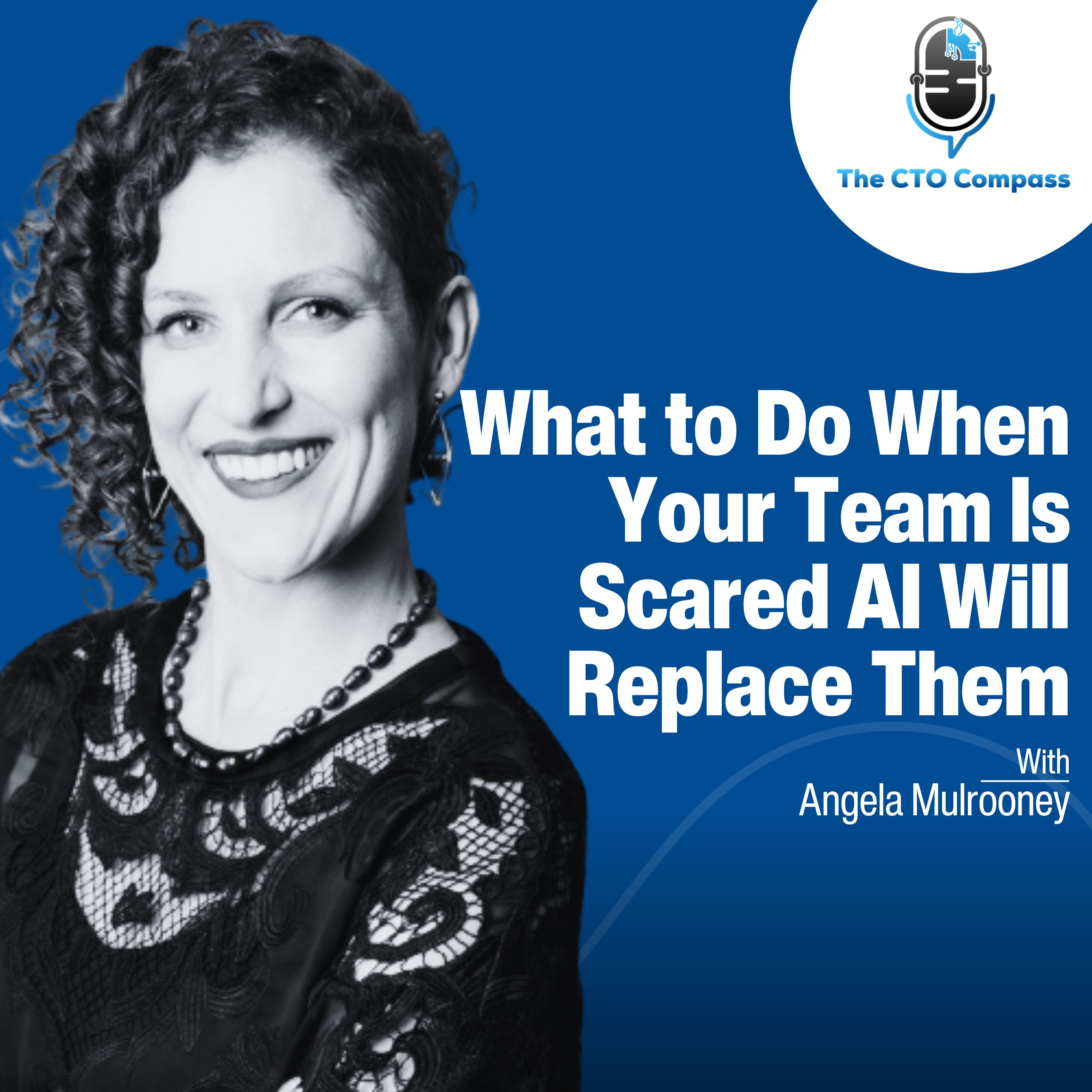
What to Do When Your Team Is Scared AI Will Replace Them ft. Angela Mulrooney
Jun 2600:31:10Tap to summarizeIn this season finale of The CTO Compass, host Mark Wormgoor sits down with Dr. Angela Mulrooney, an entrepreneur who has successfully built five companies and sold four. Angela shares her remarkable journey of navigating sudden career shifts and personal identity crises, proving that major industry turns and external downturns are often the best moments for finding unexpected opportunities.For technology leaders and business owners, this conversation shifts focus away from standard growth tactics toward the fundamentals of personal adaptability and sustainable scaling. Angela breaks down her framework for identifying your unique genius. She details how to package that expertise clearly so the market understands your outcome, allowing you to remove yourself as the operational bottleneck to build momentum effectively. The discussion highlights why rapid industry shifts demand that leaders reconsider their current trajectory and step into self-reliance rather than relying on comfortable corporate titles.The episode also explores the human side of steering teams through rapid technological changes, such as the current acceleration of artificial intelligence. Angela challenges conventional thinking about career progression and ageism, offering practical tools to help leaders refine their focus. By prioritizing alignment with your highest potential and leading with empathy, you can move your engineering teams out of fear states and into productive action.Key Takeaways• Use the sticky note exercise to identify your top three capabilities for the next five years, creating absolute clarity on what to accept and what to reject.• Guide your engineering team out of a state of anxiety during rapid artificial intelligence changes by using human kindness and open conversations.• Identify your unique areas of genius and remove yourself as the operational bottleneck so your business can grow.• Reframe external market downturns and personal identity crises as moments to step back, get calm, and locate new business directions.• Recognize why current economic shifts make corporate dependency riskier than stepping into entrepreneurship.• Apply your accumulated insights to new industries, knowing that your strategic frameworks and diagnostic skills are never lost.About AngelaDr. Angela Mulrooney is known globally as The Arsonist. She works with highly accomplished professionals who are questioning their relevance in a rapidly changing world. Not because they lack experience or results.But because the rules that once rewarded expertise have shifted.After a career ending injury forced her out of dentistry, Angela rebuilt by creating and selling four companies across four industries. Each was successful. Each was rooted in a different skill set. Over time, she saw the deeper pattern. Relevance is not about doing more or branding louder. It is about identity. When markets change, the work that survives is not the most polished.It is the most grounded in lived experience, judgment, and trust.Today, Angela helps leaders architect relevance from the inside out. Her work centers on Identity Architecture. The structure that connects who you are, how you think, and why your perspective still matters. From there, visibility and personal branding become natural expressions, not forced performances. Angela is known for burning away what no longer fits and helping people rebuild identities the machine cannot replicate.Chapters00:00 Working Through Crises09:34 Ad10:07 You're Skills Matter!13:07 AI as a Partner, Not a Replacement15:41 Fear of Change19:22 Ad19:34 Helping People Through Change22:12 Kindness Through Fear23:51 Falling In Love with Your Idea26:59 The Sticky Note Exercise28:43 Unleashing InfluenceWhere to find Angela• Website: http://app.unleashinginfluence.com/v3• LinkedIn: https://www.linkedin.com/in/angelamulrooney
Transcribe →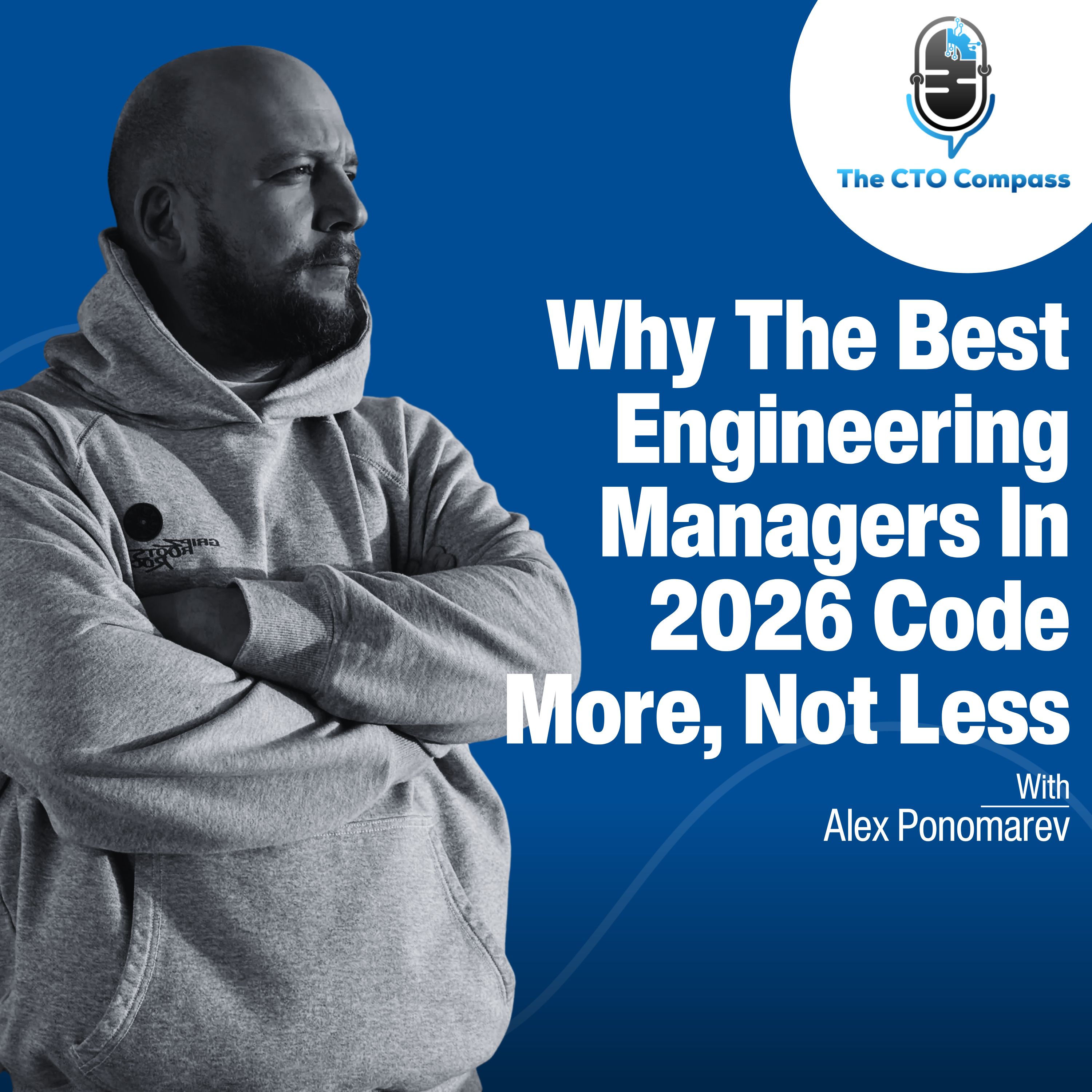
Why The Best Engineering Managers In 2026 Code More, Not Less ft. Alex Ponomarev
Jun 1900:36:43Tap to summarizeAlex Ponomarev, founder of Volt and author of the Thriving in Engineering Substack, joins host Mark Wormgoor to decode the reality of the AI talent gap. They explore what it takes to build AI-native engineering teams and how the role of the tech leader is fundamentally changing. Alex shares his personal transition from an overwhelmed engineering manager back to a hands-on contributor, highlighting how modern coding assistants allow leaders to analyze massive codebases quickly.The conversation dives deep into the mindset shift required for modern tech executives. Listeners will learn why managers must stop delegating from afar and instead get inside the development process by actively experimenting with new AI tools. Alex breaks down how automating mechanical tasks like meeting summaries can free up limited time for actual strategic leadership and team building.Finally, they tackle the future of the engineering workforce and career progression. Discover why junior engineers are more crucial than ever for bringing fresh perspectives and new experimental energy to your team. The episode also highlights why soft skills and end-to-end "agency" are the most critical traits for developers navigating this rapid technological shift.About AlexAlex Ponomarev is the founder and CEO of Volt, with 20+ years building and scaling global technology companies. He leads teams building AI-native intelligence layers for venture capital firms. His focus is bridging human expertise with AI to improve decision-making and performance. Through his publication Thriving in Engineering, he shares practical frameworks that help engineering leaders navigate complexity and build high-performing teams.Chapters00:00 Coding in 202608:56 Utilizing Your Time!13:32 Ad14:04 The Truth about AI Agents16:22 Handling Multiple Teams17:56 Keeping Up With Modern Technology!23:01 What Skill Should You Develop?28:10 Ad28:21 The Future of Engineering Managers32:04 Growing in ComplexityWhere to find Alex• LinkedIn: https://www.linkedin.com/in/alexponomarev/
Transcribe →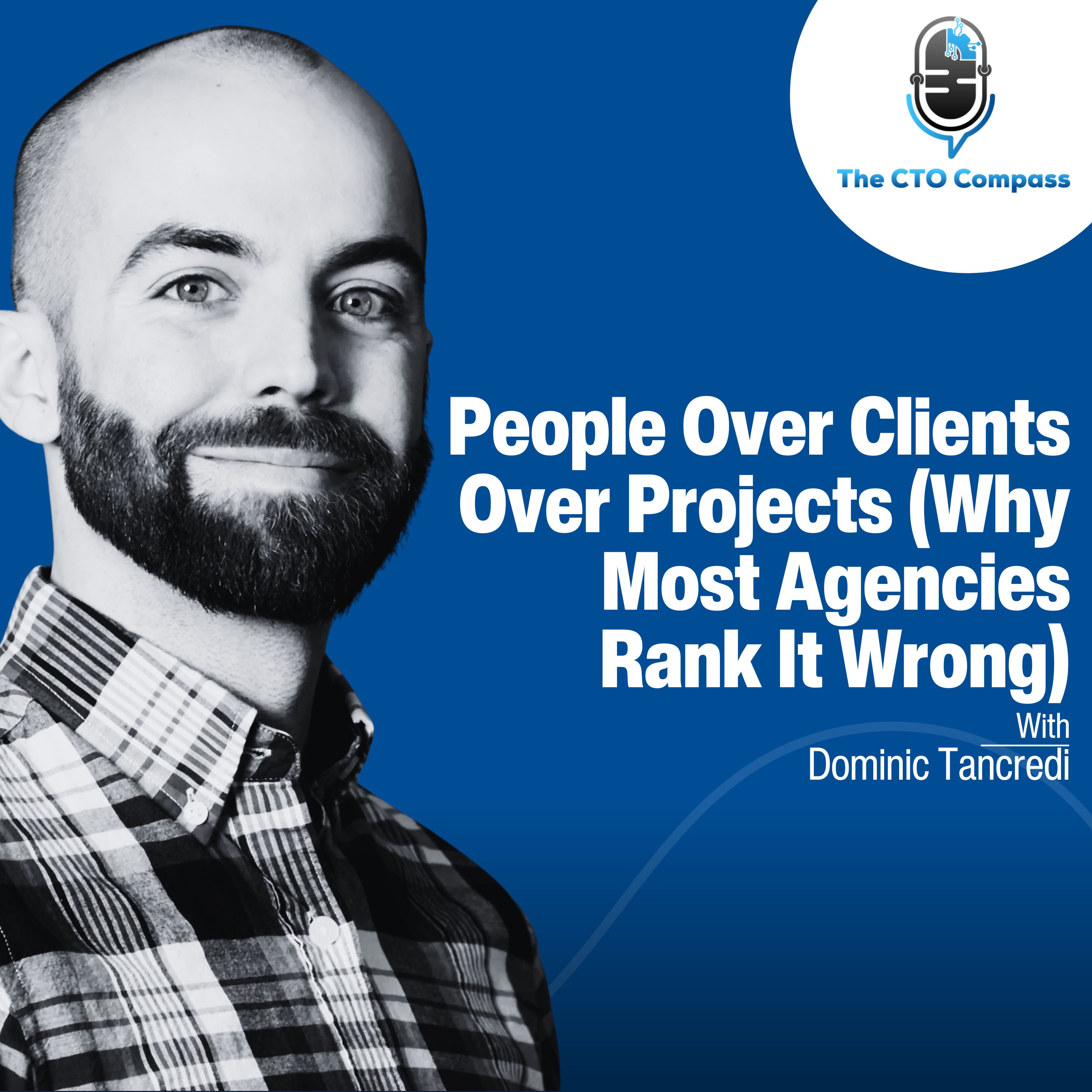
People Over Clients Over Projects (Why Most Agencies Rank It Wrong) ft. Dominic Tancredi
Jun 1200:48:14Tap to summarizeMost digital agencies do not survive past year five. Dominic Tancredi has been running Dom & Tom for 17 years, navigating every technology wave from the birth of mobile to the current AI agent explosion. Surviving that long requires more than just technical capability. It requires making painful leadership decisions when the pressure is highest.Mark Wormgoor pressure-tests Dominic's contrarian approach to technology and team building. They discuss the realities of the current tech market, breaking down how enterprise, mid-market, and startup boardrooms are reacting to the AI shift. Dominic also shares a vulnerable story about a failure in judgment when a major client demanded a brutal deadline, and the hard lesson he learned about choosing his people over a project.Dominic brings nearly two decades of experience helping founders and CTOs build digital products that matter. If you are looking for clarity on how to navigate the increasing cognitive load of tech leadership, this conversation delivers. Subscribe to The CTO Compass on Apple Podcasts or Spotify so you never miss an episode.Key Takeaways• Prioritizing your engineering team over demanding clients is essential, even if it means losing a major account.• Refusing to commit to a single technology stack gives you the flexibility to solve diverse business problems effectively.• Large organizations are cutting headcount and relying on AI agents to fill the gaps, which creates massive opportunities for fast-moving intrapreneurs.• Medium-sized businesses face the highest market pressure right now because they are caught between economic volatility and the urgent need to adopt new workflows.• AI has accelerated product execution so significantly that a founder's primary challenge is now marketing and finding real users.• The cognitive load on tech leaders is shifting from writing code to reviewing output as autonomous agents begin generating daily pull requests.About DominicDominic Tancredi is the Co-Founder and CEO/CTO of Dom & Tom, a digital product agency with over 17 years of experience designing and building scalable web, mobile, and emerging technology platforms. He specializes in bridging product strategy, user experience, and engineering to help organizations launch and evolve high-impact digital products.With a background in both computer science and theater, Dominic brings a unique perspective to storytelling in product design - combining technical rigor with human-centered thinking. He has led initiatives for startups, enterprise organizations, and government entities, with a focus on innovation, AI integration, and user-centric solutions.At Dom & Tom, his team follows a structured 5D methodology - Define, Discover, Design, Develop, Deploy - to ensure products are strategically aligned, technically sound, and built for long-term success.Chapters00:00 Do Good, Be Good!05:55 Widening Your Curiosity07:56 Keeping Up with Technology10:07 The Contrarian's Mindset13:51 Ad14:22 Surviving 17 Years!18:24 Biggest Mistakes and Small Ws24:42 Long Term Professional Relationships27:48 Ad28:00 Tech Market Cross Section!37:12 Agents, Assistants, and Reviewers44:32 Working With Your TeamWhere to Find Dominic• Website: https://domandtom.com/• LinkedIn: https://linkedin.com/in/domtancredi
Transcribe →
The Model Doesn't Matter: What Actually Creates 10x AI Productivity ft. Clive Moore
Jun 500:34:08Tap to summarizeTechnology decisions feel heavy when AI and data privacy collide. In this episode of The CTO Compass, I sit down with Clive Moore, a UI/UX designer with 25 years of experience who became the founder of GPT Studio and Workilo. After experiencing a severe ransomware attack on his agency's self-hosted GitLab instance, Clive shifted his focus to building safer infrastructure for agencies and businesses.We discuss why the underlying AI model does not actually matter as much as the foundation you build it on. Clive details his method of keeping data private by relying on Canadian data sovereignty laws rather than default US cloud services. He also explains why setting strict guardrails on AI agents and keeping a human in the loop is the only way to avoid contributing to the growing volume of AI-generated slop online.Listeners will discover practical ways to adopt AI without getting locked into a single platform. You will learn how pre-trained agents can handle real business workflows, such as checking construction invoices for fraud, while maintaining your brand voice and data security. If you want to move past the hype and deploy AI safely, this episode provides a clear roadmap.Key TakeawaysThe specific AI model you choose matters less than the infrastructure and guardrails you build around it.Hosting data on localized servers provides data sovereignty and protects corporate information from broad surveillance laws like the US Patriot Act.Fully autonomous agents still confabulate, making human oversight necessary to maintain quality and prevent AI slop.Building an LLM-agnostic system lets you switch between models like OpenAI, Claude, and Cohere without losing your historical data.You can eliminate the garbage output problem by pre-training agents with established standard operating procedures and specific brand voices.Practical AI adoption focuses on tight operational tasks, like auditing supplier invoices for erroneous charges or managing an executive calendar.About CliveClive Moore is a Canadian entrepreneur and agency veteran with 25+ years building brands and creative teams. He's the founder of GPT Studio, a Canadian-hosted, model-agnostic enterprise AI orchestration layer built for teams that need speed without surveillance. His work challenges the assumption that better AI means better models—proving that 10–15x gains come from better infrastructure around existing models. He calls this "infrastructure over magic." GPT Studio is built on Canadian soil, for organizations that treat data sovereignty as architecture, not compliance.Chapters00:00 The Designer's Approach05:53 gptstudio and workilo13:15 Ad13:47 AI Adoption Fear16:41 gptstudio's Userbase18:55 Ad19:06 Servers and AI Agents25:08 AI Platform Locking27:50 Teaching in the Age of AI31:08 What's Next?Where to find Clive• Website: https://gptstudio.workilo.io/• LinkedIn: https://linkedin.com/in/clivemoore• Instagram: https://instagram.com/clivemoore1979
Transcribe →
Stop Panic-Buying AI: The Silver Bullet Myth That's Making You Slower ft. Asim Kumar
May 2900:43:56Tap to summarizeMark Wormgoor sits down with network architecture veteran Asim to unpack what 32 years in the technology trenches teaches you about surviving massive industry shifts. Asim earned his CCIE certification in the year 2000, right before the dot-com bubble burst, and later pursued an MBA and CFA prep right into the teeth of the 2008 financial crash. Now, as the industry faces the wave of generative AI and agentic automation, Asim shares how those historical failures forced him to stop buying the industry panic and start building personal resilience.Mark and Asim dive deep into the reality of "vibe coding" and agentic AI, exploring how non-technical founders and seasoned engineers alike are building entire platforms over a single weekend. But with rapid deployment comes massive risk. They discuss the critical "black box problem," why security must be built-in by design rather than bolted on as an afterthought, and why the ultimate tech leadership superpower in the era of AI isn't prompt engineering, it's governance and human oversight.Whether you are a founder rushing a new build to market or an enterprise executive steering a legacy modernization project, this conversation serves as a practical blueprint for balancing your people, processes, and technology when the ground beneath you is shifting fast.About AsimAsim Kumar is a Solution Architect who bridges the gap between deep technical systems and human psychology. Holding the industry’s highest credentials (CCSP, CISSP, CCIE, PMP, MBA, MSIS), I spent 30+ years "unblocking" multimillion-dollar networks for global enterprises.But his most profound expertise comes from a personal battle. For two decades, he lived a dual life—a celebrated Tech Consultant by day, but secretly "blocked" by fear and significant losses in the financial markets by night. This struggle taught him a critical paradox: You cannot fix a blocked mindset with a faster technology.Now, as the author of UNBLOCKED: The Power of Real Intelligence in the Era of AI, he challenge the modern obsession with technology. he helps leaders and entrepreneurs move from "Fear-Based Decision Making" to strategic clarity. His core message is that while Artificial Intelligence offers speed, only Real Intelligence (empathy, discipline, and focus) provides direction.Chapters00:00 What's New In The Era of AI?11:26 Worldwide Technology13:51 Ad14:21 Cybersecurity In The Age of AI16:12 Panic Selling vs Panic Buying22:36 Applying AI in Today's Market29:04 Ad29:15 The Problem With Vibe Coding33:29 Who is "UNBLOCKED" for?37:06 What's the Next Step?Where to find Asim• Website: https://avignallc.com/• LinkedIn: https://www.linkedin.com/in/asim-avigna/• Instagram: https://www.instagram.com/asim.avigna• YouTube: https://www.youtube.com/@asim-avigna
Transcribe →
Why Dropping AI Into a Broken Process Makes Everything Worse ft. Mike Toguchi
May 2200:41:05Tap to summarizeMost technology leaders start by looking at the tool. Mike Toguchi, Chief Strategy Officer at Tectonic, argues that is the wrong beginning. If you drop AI into a broken process, you don't fix the problem, you only accelerate the failure. Mike joins the conversation to discuss why the most critical technology decisions often happen outside the engineering team and how to build systems that scale without drowning in technical debt.Mike brings a unique perspective as a strategist who studied government and politics rather than computer science. Having spent 23 years evolving with the same company, he has seen the transition from simple web digitization to the current age of AI. We talk about the "bad cop" role a partner must play in forcing standardization across departments and why the biggest hurdle to digital transformation is rarely the code, but the legacy silos and people who protect them.We also dive into the reality of AI governance and policy. Mike shares how his team navigates the tension between rapid innovation and protected data in high-stakes environments like university disability services. It is a discussion about judgment, critical thinking, and why the next two years will separate the leaders who aggressively pursue change from those who simply try to limp along.About MikeMichael "Mike" Toguchi is the Chief Strategy Officer at Tectonic, formerly eResources, where he leads platform direction for application management systems that streamline complex processes like scholarships, grants, admissions, and accessibility services. With over 25 years of experience driving digital transformation for universities, non-profits, foundations, and associations, Michael specializes in simplifying internal workflows to help mission-driven teams reduce manual work, scale sustainably, and strengthen compliance. His work powers organizations including Stanford, UC Davis, PG&E, the Roddenberry Foundation, and Google’s Certified Innovator Program. At the core of his mission is a commitment to building technology that enables teams to focus less on managing systems—and more on delivering meaningful impact.Chapters00:00 Politics to Technology?!??!06:08 What is Tectonic?11:55 Ad12:27 23 Years of Growth and Change15:41 The Value of People19:51 Customization Accommodation26:44 Ad26:55 Who Makes Technology Decisions?28:25 AI Implementation and AI Policy Issues36:36 The Future of TechWhere to find MikeWebsite: https://www.teamtectonic.com/LinkedIn: https://www.linkedin.com/in/miketoguchi/
Transcribe →
3 Critical Career Mistakes Engineering Leaders Make ft. Limor Bergman Gross
May 1500:42:43Tap to summarizeThis episode focuses on the transition from technical execution to organizational impact. Limor Bergman Gross shares how many engineering managers get stuck because they focus solely on being good at their jobs. She explains that promotion to director or VP levels requires a shift in focus. It is no longer about how well you code or manage a sprint, but about how well the organization knows your impact.The conversation explores the "trust gap," where leaders mistakenly believe their direct manager is the only one who needs to see their value. Limor and Mark discuss the necessity of building strategic relationships across the company. They provide a framework for stakeholder management that relies on curiosity and solving business problems rather than internal politics. This approach helps technical leaders gain the visibility needed for executive roles.Finally, the discussion covers the practicalities of leadership like delegating effectively and giving direct feedback. Limor highlights the "busy trap" where leaders fill their schedules with low-impact tasks to feel productive. She offers strategies for pushing back on non-essential requests to create space for strategy. The episode concludes with advice on using the Radical Candor framework to build high-performing teams through clear, empathetic communication.About LimorLimor Bergman Gross is a former Director of Engineering with over 20 years of experience across software engineering, engineering management, and organizational leadership. She has led teams through growth, scaling pressure, and complex delivery environments, working closely with CTOs and senior executives to align technology, people, and business priorities.Known early in her career as the “reliable leader” and escalation point, Limor learned firsthand how high-performing leaders can unintentionally become bottlenecks at scale. Today, she works as an executive leadership coach with senior engineering leaders and CTO-adjacent roles, helping them transition from hands-on decision-makers to strategic leaders who build teams that think, decide, and execute independently.Her work focuses on decision-making, ownership, leadership culture, and the real trade-offs tech leaders face as they move from execution to executive impact.Chapters00:00 Software Engineer to Leadership06:33 Getting Promoted14:39 Ad15:11 What are You Busy With?20:26 How to Give Feedback22:53 Female Engineers!24:50 Coaching The Executives29:08 Ad29:19 Getting Unstuck36:54 Working with Different People40:45 What is Your Impact?Where to find Limor• Website: https://limorbergman.com/podcast/• LinkedIn: https://www.linkedin.com/in/limorbergman/• Instagram: https://instagram.com/limorbergman• YouTube: https://www.youtube.com/@LimorBergman
Transcribe →
Your AI Strategy Will Fail for the Same Reason Your Last ERP Did ft. Abhijit Verekar
May 800:36:06Tap to summarizeMost large-scale technology projects don't fail because the software is broken; they fail because the incentives are misaligned long before the first line of code is written. AV, founder of Avira Advisors and author of Start at Zero, joins Mark Wormgoor to discuss why massive ERP implementations, like the Birmingham City Council’s £200 million disaster spiral out of control and how tech leaders can prevent the same history from repeating itself with AI.AV argues that the "abusive" nature of traditional consulting often stems from a lack of "Phase Zero" preparation. Organizations frequently jump into software selection and vendor RFPs without understanding their own internal processes, political buy-in, or desired outcomes. By the time an implementation partner is on-site, the customer has already lost their leverage, leading to endless change orders and "fluffy" risk registers where every red flag is painted green.As we move into the age of AI, AV sees enterprises making the exact same mistakes: chasing shiny "agentic" products before they have established data sovereignty or governance. This conversation serves as a pressure-test for any leader about to sign off on a major digital transformation. AV shares how to reclaim ownership of your data, align consultant incentives with business value, and why the future of consulting belongs to those who can bridge the gap between AI-native thinking and human judgment.Key Takeaways• Success in high-stakes projects is determined before the RFP; spend time documenting processes and securing political buy-in before talking to vendors.• Traditional consulting can become "abusive" when vendors dictate timelines and products based on their own sales targets rather than the client's actual needs.• In the AI era, leaders must ensure they own their data and can move it between third-party tools rather than being locked into a single SaaS provider's ecosystem.• Like ERP, AI adoption fails when it is treated as a product-first purchase instead of a business-process transformation requiring clean data and human oversight.• The traditional billable-hour model is collapsing; value now lies in senior-level judgment, "blameability," and the ability to integrate AI "Lego bricks" into delivery.• While AI can automate the "grunt work" of deliverables, final accountability must always rest with a seasoned human expert who carries the risk of the decision.About AVAV is the CEO of Avero Advisors, a government consulting firm he built from zero to $7.5 million over the last ten years. He's spent two decades helping state and local agencies navigate ERP implementations, AI strategy, and digital transformation, and he's been in the room for a majority of these engagements. He's currently writing a book called Start at Zero and rebuilding his firm around AI agents that handle everything from business development to content production and delivery.Before Avero, AV spent a decade inside the traditional consulting world learning how the machine worked before deciding to build something different. Avero operates as the buyer's agent for government agencies, sitting on their side of the table instead of the vendor's. The firm has grown to a team of around 40 to 50 people, including a Global Innovations Center.Outside of consulting, AV is an active investor. He's invested in BSG Hospitality and Market Square Ventures, applying the same builder's mindset to opportunities outside of govtech.When he's not running the firm or writing, you'll probably find him on a motorcycle. He's an avid rider who uses long rides the same way some people use meditation: to think, decompress, and come back with clarity.AV brings a rare combination to any conversation: deep technical credibility in government technology, real experience bootstrapping and scaling a services business, and an honest willingness to talk about what he got wrong along the way. He's not going to give your listeners a sales pitch. He's going to give them something useful.Chapters00:00 When Consulting Becomes Abusive08:46 Laying Down the Foundation!11:43 Ad12:14 Private Companies vs Private Sectors16:51 Excited AI Implementation20:26 AI's Impact27:09 Ad27:20 How do You see the Future?32:29 Starting Out Today!Where to find AV• Website: www.averoadvisors.com• LinkedIn: https://linkedin.com/in/verekar/• Instagram: https://www.instagram.com/verekar/• Twitter: https://x.com/AbhijitVerekarAV’s Bookhttps://www.amazon.com/Start-Zero-Leading-Stakes-Modernization/dp/B0GZFQLDJ3
Transcribe →
Why Organizational Change Fails: The Hidden Politics and Self-Interest Killing Your Transformation ft. Bud Caddell
May 100:51:11Tap to summarizeMark Wormgoor sits down with Bud Caddell, founder of NOBL, to explore the human friction that often stalls massive technology initiatives. Bud shares his transition from a software developer to a change management expert, triggered by witnessing "shiny" innovation projects collapse under the weight of organizational politics and conflicting incentives. The conversation dives deep into why many digital transformations are dead on arrival, often due to manufactured urgency and a lack of focus that spreads leadership teams too thin.The discussion shifts toward practical strategies for overcoming these barriers, with Bud advocating for a "piecemeal" approach to organizational change. Rather than following a rigid, 200-slide consultant deck, he suggests using "safe to fail" experiments to surface hidden politics and resistance early in the process. They also tackle the evolving role of the CTO in the age of AI, discussing how tech leaders are gaining unprecedented power but risking their internal relationships by failing to build empathy with the teams impacted by these rapid shifts.Finally, Bud addresses the growing issue of organizational cynicism and the "trust gap" between leaders and employees. He argues that the antidote to mass change fatigue isn't better technology, but radical honesty and transparency regarding what an organization can and cannot control. The episode concludes with a look at how leaders can build resilience by moving away from purely visionary "Steve Jobs" personas toward a more grounded, transactional, and honest theory of leadership.Key Takeaways• Many projects fail not because of the tech, but because "manufactured urgency" exhausts the organization’s attention span before the change can take root.• Avoid "rip the band-aid off" transitions; instead, use small, iterative experiments to discover where political resistance and sabotage actually live.• Apply agile experimentation to cultural rituals and habits, but use traditional stakeholder mapping and steering committees for high-risk reorgs or core system implementations.• Recognize that most "sabotage" is actually people protecting their teams or resources; breaking through requires negotiating power and resources rather than just fighting for a meritocracy.• As AI pushes more power toward the CTO, be careful not to burn bridges with other executives; success depends on building a coalition, not just wielding technical influence.• To reduce change fatigue, stop over-promising; be transparent with employees about layoffs, market pressures, and the specific limitations of your control.About BudBud Caddell is the Founder and CEO of NOBL, a global transformation consultancy reshaping how organizations adapt to change. Since 2014, he has led more than 120 engagements across five continents, helping companies in more than 20 industries, including Nike, Ford, CNN, and HBO, navigate disruption, repair dysfunctional cultures, and build resilient teams.Recognized by The Guardian as one of the “strategists to watch” and named one of Business Insider’s “most creative people under 30,” Bud’s work has been featured in The New York Times, The Wall Street Journal, Forbes, and AdAge. Before launching NOBL, he was a Partner at Undercurrent and served as SVP of Digital Strategy and Innovation at Deutsch LA.Bud Caddell is a distinguished speaker and guest, having delivered keynote addresses at SXSW, TEDx, and the Reuters Strategic Marketing Conference. His core message emphasizes that organizational failures rarely result from a lack of ideas. Instead, they stem from cultural, political, and psychological barriers that prevent those ideas from succeeding.He is available to provide expert commentary on leadership and organizational change, including how executives can sustain trust and momentum during crises, why workplace cultures often falter in execution, and how to foster environments where innovation thrives. He also addresses the evolving expectations of employees in the future of work, explains why the majority of brand and business transformations fail, and offers strategies to design change that lasts.Chapters00:00 Getting Into Change Management07:26 What Kills Great Ideas?14:05 Aligning Individual Self-Interests17:25 Ad17:56 The Reality of Reorganization27:35 Unexpected Transformation31:02 Looking for Change!34:50 Ad35:00 Team Capacity vs Company Demand40:30 CTOs Have Power!47:06 Organizational CynicismWhere to find Bud• Website: https://nobl.io• LinkedIn: https://www.linkedin.com/in/budcaddell
Transcribe →
We Sacrifice People for Performance. AI Is About to Make That Impossible ft. Margôt van Brakel
Apr 2400:47:31Tap to summarizeThis episode challenges a core assumption most tech leaders still operate under: that intelligence is our primary advantage. As AI systems begin to outperform humans in reasoning and decision-making, this conversation reframes AI not as another step in the industrial revolution, but as the start of an intelligence revolution. For CTOs and business leaders, this shift forces a deeper question. If machines can think, what is left for humans to lead?You’ll learn why performance-driven organizations are hitting a ceiling and why continuing to optimize for efficiency alone will limit long-term value. The discussion explores a transition already underway, from purely economic thinking toward purpose, connection, and responsibility. It also highlights how board-level conversations are evolving, moving from short-term business cases to broader value-based decisions that shape the future of the organization and society.The episode also brings this down to action. It outlines how leaders and teams can respond today through experimentation, curiosity, and intentional time spent on change rather than just execution. You’ll walk away with a clearer perspective on how to position your organization in a world where AI handles more of the thinking, and where leadership is defined by the ability to rethink strategy, culture, and human contribution at a fundamental level.Key Takeaways• AI is replacing not just manual work but cognitive work, forcing leaders to redefine human value beyond intelligence• Performance-driven cultures are reaching their limits; future organizations must prioritize meaning, connection, and long-term value• Strategy must shift from pure business cases to value cases, balancing today’s results with tomorrow’s impact• Leaders should foster experimentation by allocating time for learning, not just execution, to unlock AI’s real potential• Organizations that combine human strengths with AI effectively will outpace slower, legacy-driven competitors• The most critical leadership skill ahead is not control, but curiosity, responsibility, and the ability to rethink assumptionsAbout MargôtMargôt van Brakel is a keynote speaker, author, and advisor with more than 20 years of experience guiding organizations through complex change. She works with boards and executive teams on the human side of AI — exploring how organizations can use technology as a means, not an end, and find the right balance between people and machines. Her work focuses on what it means to keep human value at the center of organizational transformation. Because this is not the next wave in the industrial revolution — it is a new one. And that changes everything about the questions leaders need to ask.Chapters00:00 Margôt Journey05:42 Treating People as Machines12:38 AI's Societal Impact12:06 Ad20:32 What is Your Responsibility?26:00 What is Homo Conexus?39:01 Ad38:12 The Ugly Phase of Transformation42:25 A Hopeful Perspective!Where to find Margôt• Website: https://margotvanbrakel.com• LinkedIn: https://www.linkedin.com/in/margotvanbrakel/• Instagram: https://www.instagram.com/margotvanbrakel/
Transcribe →